PART 2: They Left Cavalete Unable to Move—But His Eyes Made Me Promise He Wouldn’t Di3 Alone
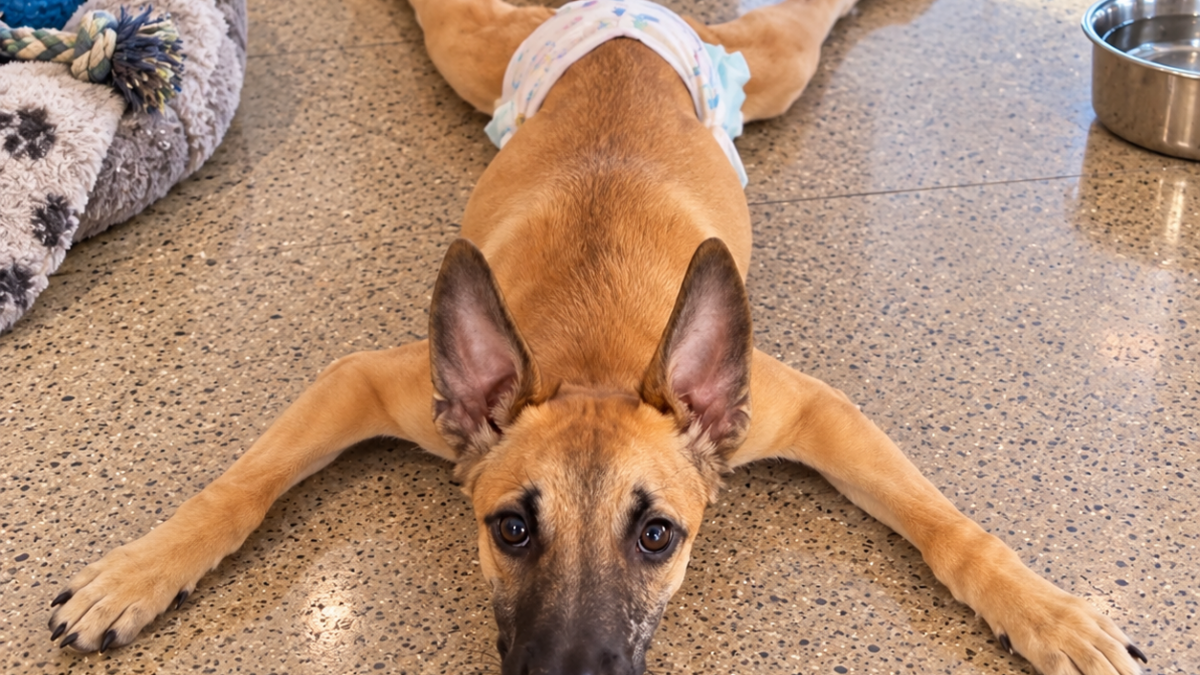
I had seen abandoned dogs before, but I had never seen one trapped inside his own body while his eyes begged me not to leave. Cavalete couldn’t stand, couldn’t turn his head, and couldn’t even shift his weight when my hand touched his shoulder. What we discovered after we carried him through the hospital doors would make me wonder how long he had been lying there, fully awake, waiting for somebody to realize he was still fighting.
He was on his side when we found him.
At first, from several yards away, I thought he was dead.
There was no barking.
No scratching against the ground.
No desperate attempt to crawl toward us.
His body looked unnaturally straight and stiff against the dirt, his legs extended as though every muscle had been pulled tight at once.
Then his eyes moved.
They followed me.
I stopped walking.
“Hey, buddy,” I whispered.
His eyes shifted again.
That was all.
I crouched a few feet away because I didn’t know whether he was injured, frightened, or in too much pain to react.
He looked about four years old. Young enough that I expected some response when I spoke.
A lifted ear.
A tail movement.
Anything.
There was nothing.
I moved closer and rested two fingers lightly against his shoulder.
“Cavalete?”
His eyes snapped toward me.
His body didn’t.
That frightened me more than if he had screamed.
I slid my hand along his side. His muscles felt hard beneath the skin, almost as though he were bracing himself against something I couldn’t see.
One of the volunteers beside me whispered, “Why isn’t he moving?”
“I don’t know.”
“Is his back broken?”
“I don’t know.”
Those three words were beginning to terrify me.
There was no shelter nearby, no bowl, no blanket, no leash tied to a post.
Nothing suggested someone was coming back for him.
The afternoon air was warm, but Cavalete trembled anyway—not the loose trembling of a cold dog, but short, rigid spasms that moved through him without warning.
When a car door slammed somewhere down the road, his entire body tightened.
His eyes widened.
“Easy,” I whispered. “Nobody’s leaving you.”
I don’t know why I said it.
Maybe I was talking to him.
Maybe I was making a promise to myself.
We couldn’t simply pick him up.
Every attempt to change his position seemed painful, so we slid a blanket beneath him and used it like a stretcher. Four of us lifted slowly, keeping his body as level as possible.
Cavalete never fought us.
He couldn’t.
That realization stayed in my chest like a stone.
During the drive, I sat beside him in the back of the rescue van.
Every pothole made his muscles tighten.
Every sound seemed too loud.
I kept one hand near his face without touching him.
“I’m still here,” I said quietly.
His eyes found mine.
“You’re going somewhere safe.”
They stayed on me.
At the veterinary hospital, the staff took one look at him and moved quickly.
A technician lowered the lights.
Another closed the examination-room door.
Someone asked when we had found him, whether we knew his medical history, whether he had eaten, whether he had been injured.
“No,” I kept answering.
No.
No.
No.
We knew almost nothing about him.
They checked his breathing.
His temperature.
His gums.
His reflexes.
When the veterinarian tried to gently bend one of Cavalete’s legs, the resistance in his muscles made her expression change.
“What?” I asked.
She didn’t answer immediately.
She examined his jaw.
Then his neck.
Then his back.
Cavalete’s eyes followed her while the rest of him remained painfully still.
The veterinarian finally stood.
She asked the technician to stay with him.
Then she looked at me and said, “I need to speak with you outside.”
Something in her voice made my stomach drop.
I stepped into the hallway.
The door closed behind us.
And then she told me what was happening inside Cavalete’s body.
PART 2
“She has tetanus,” the veterinarian said.
For a second, I thought I had misunderstood her.
“Tetanus?”
“Severe tetanus.”
I looked back toward the closed door.
I knew the word, obviously. Everyone did. Rusty nails. Vaccines. Muscle spasms.
But I had never personally seen tetanus in a dog.
I certainly had never imagined it could do this.
The veterinarian folded her arms loosely across her chest.
“Dogs are more resistant to tetanus than people or horses, which is why we don’t see cases like this very often. But when it becomes generalized…” She paused. “It can be extremely serious.”
“How serious?”
Her hesitation answered before she did.
“Life-threatening.”
The hallway seemed suddenly too bright.
Through the small window in the door, I could see Cavalete’s motionless body beneath the blanket.
His eyes were still open.
“What do we do?”
“We begin treatment immediately.”
“Then do it.”
She didn’t move.
“There’s something else you need to understand.”
I hated that sentence before she finished saying it.
His muscles were locked in constant contraction.
Swallowing could become dangerous.
His breathing could deteriorate.
A sudden noise, bright light, or unexpected touch could trigger another violent spasm.
He might develop complications from remaining immobile.
Pneumonia.
Dehydration.
Pressure sores.
Respiratory failure.
And even with everything the hospital could do, there was no guarantee that he would survive.
“How long?”
“If he responds to treatment, recovery can take weeks. Sometimes months.”
“Months?”
She nodded.
I leaned against the wall.
I had brought injured dogs into clinics before. Broken legs. Infections. Cars hitting them. Starvation.
Those problems were horrible, but they gave you something visible to fight.
A wound could be cleaned.
A bone could be repaired.
Food could slowly put weight back on an emaciated body.
Cavalete looked almost untouched.
And yet something inside him had turned his own muscles into restraints.
“What caused it?”
“Usually the bacteria enter through a wound.”
She told me they would search his body carefully.
Sometimes the original injury could be tiny.
A puncture.
A cut.
A wound hidden beneath fur.
The bacteria could enter, the surface could begin healing, and nobody would realize what was happening until the toxin reached the nervous system.
“Could whoever had him have known?”
“I can’t answer that.”
“But could they have seen something was wrong?”
“At this stage?”
She glanced through the window.
“Yes.”
That one word stayed with me.
Yes.
Someone could have seen.
Someone could have watched this dog becoming stiffer, weaker, more frightened.
And somehow Cavalete had ended up lying alone outside without shelter.
I felt anger rise inside me, but there was nowhere useful to put it.
Not yet.
“Can he hear us?”
“Yes.”
“Is he aware?”
“As far as we can tell, yes.”
I looked through the glass again.
That was almost worse.
He wasn’t unconscious inside that rigid body.
He was there.
Listening.
Watching.
Waiting.
The veterinarian touched my arm.
“We need to talk about his prognosis.”
I already knew what was coming.
“If his respiratory muscles become involved, things can change quickly. Treatment will be intensive. We can control some symptoms, but we can’t remove the toxin that has already bound to the nerves. His body has to recover.”
“So we wait?”
“We treat him and we wait.”
“And if he gets worse?”
She took a breath.
“Then we may have to discuss whether continuing is humane.”
The word euthanasia wasn’t spoken immediately.
It didn’t need to be.
I stared at the floor.
I understood what she was saying.
I had worked around rescue long enough to know that love sometimes meant refusing to prolong suffering simply because letting go hurt us.
But then the technician opened the door.
“You can come in.”
The room was dark now except for a small lamp turned toward the wall.
Cavalete lay wrapped in blankets.
I sat beside him.
“Hey.”
His eyes moved toward me.
That was it.
But suddenly that movement felt enormous.
I leaned closer.
“I know you’re scared.”
His gaze stayed fixed on my face.
“I am too.”
Another spasm passed through his body.
His front legs stiffened.
His jaw tightened.
I watched helplessly until it passed.
Then his eyes came back to mine.
I remember thinking that if those eyes ever stopped following us, I would understand.
If he withdrew.
If he stopped caring who entered the room.
If there was nothing left except suffering.
I would understand.
But that wasn’t what I saw.
I saw fear.
I saw exhaustion.
And beneath both of them, I saw attention.
Presence.
He was still participating in the world in the only way his body allowed.
The veterinarian stepped beside me.
“We don’t have to decide everything tonight.”
I nodded.
“No.”
I put my hand down near Cavalete’s face where he could see it.
“We’re treating him.”
She waited.
“You’re sure?”
I looked at him.
“Yes.”
Then I said something I would repeat dozens of times during the next three months.
“As long as he keeps showing us he wants to fight, we fight with him.”
Treatment began that night.
The medical team gave him antibiotics to attack the bacteria that might still be producing toxin. They cleaned a tiny puncture wound they eventually discovered near one of his back paws.
It looked insignificant.
The kind of wound most people might have missed.
By then, however, the damage caused by the toxin was anything but insignificant.
Medication helped reduce the worst spasms and kept Cavalete as comfortable as possible.
The room stayed dim.
The door remained closed.
Signs reminded staff to enter quietly.
Nobody dropped metal bowls.
Nobody raised their voice.
Even the wheels of carts were slowed before they reached his hallway.
Cavalete had become a patient surrounded by silence.
For feeding, we had to be painfully patient.
Swallowing was difficult.
Too much at once could cause choking.
A veterinary technician named Jess became one of the people Cavalete trusted most during those first days.
She would sit beside him with a tiny amount of soft food and whisper, “No hurry, handsome.”
Sometimes he managed almost nothing.
Sometimes one swallow took so long that all of us held our breath with him.
Afterward, Jess would smile as though he had eaten an entire Thanksgiving dinner.
“Good boy.”
His eyes would move toward her.
“That counts,” she would tell him.
And we began measuring his life in those tiny victories.
A swallow.
A calmer breath.
A night without a severe spasm.
A temperature that stayed normal.
The absence of bad news became good news.
The first week was brutal.
People imagine rescue as the moment you pick an animal up from the street.
Sometimes that is the easiest part.
The real work often begins when the adrenaline is gone and all that remains is repetition.
Medication.
Cleaning.
Turning a body that cannot turn itself.
Watching.
Waiting.
Wondering whether what you are doing is enough.
We rotated Cavalete carefully to prevent sores.
We padded every pressure point.
We cleaned him when he soiled himself because he could not move away from it.
When his muscles tightened, we stayed near without overstimulating him.
At night, somebody sat outside his room or just inside the doorway.
We wanted him to wake and see someone there.
On the fourth night, I took the late shift.
It was after two in the morning when I heard his breathing change.
I entered slowly.
“Cavalete?”
His eyes were wide.
A spasm had pulled his body tight.
His neck looked rigid.
His chest moved quickly.
I pressed the call button.
Jess came in, followed by the veterinarian.
For several minutes, I stood against the wall while they worked.
I felt useless.
That is one of the cruelest parts of loving a seriously sick animal.
You would take the pain if someone gave you the option.
But nobody does.
You can only watch another living creature endure something you cannot explain to him.
Eventually, Cavalete’s breathing settled.
The veterinarian checked him again.
“He’s stable.”
I slid down the wall into a chair.
Jess looked at me.
“You okay?”
“No.”
She gave a tired smile.
“Me neither.”
When everyone left, I sat beside Cavalete again.
“You scared me.”
His eyes shifted.
“I know. Not your fault.”
I stayed until sunrise.
Around six, a stripe of pale light appeared beneath the window shade.
Cavalete was still alive.
That became our morning ritual.
Before discussing anything else, we said the same thing.
He made it through the night.
Day five.
He made it through the night.
Day six.
He made it through the night.
Day seven.
He made it through the night.
It didn’t sound like much.
It was everything.
During that first week, animal control also became involved.
The question none of us could stop asking was simple.
Where had Cavalete come from?
He hadn’t been wearing a collar when he was found, but the clinic scanned him for a microchip.
There was one.
When the number appeared on the scanner, everyone in the room went still.
A registered animal meant a name.
A phone number.
A history.
Possibly an explanation.
Possibly someone searching desperately for him.
Part of me wanted that to be true.
Maybe he had escaped.
Maybe an owner had spent days putting up flyers.
Maybe Cavalete had wandered away as the illness took hold and had collapsed before he could return.
That would have been painful.
But it would have been understandable.
The microchip registration belonged to a man named Wade Mercer.
The phone number was still active.
Animal control called.
No answer.
They called again.
Nothing.
A message was left.
Hours passed.
Then a day.
Then another.
No response.
Finally, on the third day, the officer reached him.
I wasn’t present for the conversation, but I learned enough afterward.
Yes, he knew Cavalete.
Yes, Cavalete had once lived on his property.
No, he claimed, he had no idea how the dog ended up where we found him.
According to him, Cavalete had “wandered off.”
“When?” I asked the officer.
“About a week before you found him.”
“A week?”
“That’s what he says.”
“Did he report him missing?”
“No.”
“Did he call shelters?”
“Not that we can find.”
“Post anything online?”
“No.”
I felt my jaw tighten.
“Did he look for him?”
The officer didn’t answer immediately.
“He says he did.”
That wasn’t proof of anything.
Dogs escaped.
People panicked.
Some owners didn’t know the proper steps to take.
I wanted facts before anger.
So did animal control.
For the moment, the investigation stayed open.
Cavalete didn’t care about any of it.
His entire world remained a quiet clinic room.
And for ten days, nothing changed.
No leg lifted.
No tail moved.
No head turned.
We would call his name.
His eyes followed us.
That was our answer.
By day eleven, exhaustion had begun changing all of us.
Jess had dark circles beneath her eyes.
Volunteers rearranged work schedules to cover shifts.
The rescue’s medical fund was disappearing faster than anyone wanted to admit.
I spent evenings answering messages, arranging donations and speaking with the clinic.
But I refused to allow finances to become the reason Cavalete died while he was still trying.
We cut costs everywhere else we could.
We postponed purchases.
We borrowed equipment.
One volunteer quietly paid for a full day of hospitalization and refused to let anyone put her name on anything.
“He doesn’t need to know my name,” she said. “He just needs tomorrow.”
Tomorrow.
That was what everyone was buying Cavalete.
One more tomorrow.
Near the end of the second week, I arrived shortly after sunrise.
Jess was already inside his room.
She turned when I entered.
Her face looked strange.
“What happened?”
“I don’t know.”
Those words terrified me again.
I moved toward Cavalete.
“Is he worse?”
“No.”
“Then what?”
She crouched beside his back legs.
“Watch.”
I stared.
Nothing happened.
Thirty seconds passed.
Then Cavalete’s rear paw moved.
Barely.
One small twitch.
I sucked in a breath.
“Was that—”
“I saw it earlier too.”
“Do it again,” I whispered stupidly, as if Cavalete had performed a trick.
Nothing.
Jess smiled through wet eyes.
“I don’t know if it’s voluntary.”
“Could it just be a spasm?”
“Yes.”
My excitement dropped.
Then his paw moved again.
Different this time.
Not the harsh tightening we had learned to recognize.
A tiny flex.
Jess looked at me.
I looked at her.
Neither of us wanted to celebrate too soon.
But after almost two weeks of absolute rigidity, hope does not require much room to enter.
Sometimes it only needs the movement of one paw.
I lowered myself beside him.
“Was that you?”
His eyes found mine.
“If that was you, do it whenever you’re ready.”
He didn’t.
And I didn’t care.
I spent the rest of that day smiling anyway.
The next improvement came slowly.
His jaw loosened enough to make feeding a little easier.
The violent spasms began coming less frequently.
Not gone.
Just farther apart.
His breathing remained stable.
His eyes looked less panicked.
The veterinarian warned us repeatedly not to mistake improvement for recovery.
“Tetanus does not care that we’re optimistic,” she said.
She was right.
Cavalete still had a long way to go.
Then, on day seventeen, we were reminded just how fragile he remained.
I was helping reposition him when his body suddenly tightened harder than I had seen in several days.
His legs extended.
His neck arched.
His breathing became rapid.
I froze.
“Jess.”
She entered immediately.
The episode passed, but afterward Cavalete looked exhausted.
For the first time, his eyes did not follow me right away.
“Cavalete?”
Nothing.
My chest tightened.
I moved into his field of vision.
“Hey. Look at me.”
Seconds passed.
Then his eyes slowly shifted toward my face.
I nearly cried from relief.
That night, his temperature rose.
The medical team worried about infection.
More tests.
More medication.
More waiting.
For two days, we felt as though we had moved backward.
I remember standing in the parking lot after midnight, furious at the world.
Not at the doctors.
Not at Cavalete.
At whoever had allowed him to reach this condition alone.
I kicked the tire of my car.
It hurt.
I deserved that.
One of the animal control officers, Ruiz, happened to be walking toward his truck.
“You all right?”
“No.”
“Bad night?”
I looked at him.
“Tell me you found something.”
His expression changed.
That was the first sign.
“What?”
“We found a camera.”
My anger vanished beneath sudden attention.
“Where?”
“A convenience store about half a mile from where Cavalete was recovered. Their exterior camera covers part of the road.”
My mouth went dry.
“And?”
“We’re reviewing footage.”
“Does it show him?”
“Possibly.”
“Possibly?”
“The footage isn’t great.”
“Does it show Wade Mercer?”
Ruiz held up one hand.
“I didn’t say that.”
“You didn’t have to.”
“I absolutely do have to. We follow evidence.”
I knew he was right.
I hated that he was right.
“When will you know?”
“When we know.”
I looked back toward the hospital.
Ruiz followed my gaze.
“How’s the dog?”
“Still fighting.”
He nodded.
“Then you do your job. Let us do ours.”
So I went back inside.
On day twenty-one, Jess called me before I arrived.
Her voice was shaking.
“You need to get here.”
My heart dropped.
“What happened?”
“Just get here.”
“Jess, tell me if he’s alive.”
She laughed.
That confused me more.
“He’s alive. Drive safely.”
When I entered Cavalete’s room, there was a shallow bowl in front of him.
He was lying on his chest instead of completely on his side, supported by rolled blankets.
“What am I looking at?”
Jess pointed toward the bowl.
Soft food.
Half gone.
“He ate.”
“With help?”
“No.”
I stared at her.
“He ate that?”
“He ate that.”
Cavalete looked exhausted by the effort.
I dropped into the chair beside him.
“You did that?”
His eyes moved toward me.
Jess folded her arms.
“Don’t make him perform again. He’s tired.”
“I’m not.”
“You have the face.”
“What face?”
“The proud parent face.”
I looked back at Cavalete.
“Well, he ate by himself.”
Jess smiled.
“I know.”
For three weeks we had celebrated swallows.
Now he had lowered his mouth toward food and eaten because he wanted to.
No fireworks went off.
No music played.
Cavalete simply finished what he could and rested his head.
But to us, it felt like watching someone unlock the first bar of a prison cell.
Two days later, a volunteer named Maria entered carrying fresh blankets.
She had spent more hours beside Cavalete than almost anyone except the medical staff.
“Morning, handsome.”
She placed the blankets down.
Something brushed softly against the bedding.
Maria stopped.
“Did you see that?”
I had.
Cavalete’s tail had moved.
Not lifted.
Not wagged wildly.
Just one faint sweep.
Maria stepped closer.
“Cavalete?”
His tail moved again.
She covered her mouth.
“Oh, no.”
I laughed.
“What?”
“You’re going to make me cry.”
The tail made another tiny movement.
Maria sat on the floor.
“You are rude,” she told him tearfully. “I wore mascara today.”
Cavalete stared at her.
The sweep stopped.
Nobody cared.
We had seen it.
A dog who had been unable to move a paw had recognized someone he trusted and answered with his tail.
From then on, progress came in inches.
A slight turn of his neck.
A front paw shifting beneath him.
The ability to hold his head up for several seconds.
A deeper, more relaxed breath.
His body was remembering how to belong to him.
But outside the clinic, another story was developing.
Officer Ruiz returned with still images from the security footage.
He didn’t show me everything because the investigation was active.
He didn’t need to.
One frame showed a pickup truck stopping on the shoulder near the location where Cavalete had been found.
Another showed a figure near the rear of the truck.
The timestamp was shortly before sunrise.
The date was one day before we found Cavalete.
“What kind of truck does Mercer own?” I asked.
Ruiz gave me the look officers give people who are trying to conduct their investigation for them.
“We’re handling it.”
“Does he own that truck?”
“We’re handling it.”
“That means yes.”
“That means you need to stop.”
I crossed my arms.
Ruiz sighed.
“The vehicle is relevant.”
“Relevant?”
“That is all I can tell you.”
I thought about Wade claiming Cavalete had wandered away a week earlier.
Then I thought about that truck stopping on an isolated shoulder one day before we found him.
“Did the camera show Cavalete?”
Ruiz was quiet.
My stomach turned.
“It did, didn’t it?”
“A shape consistent with a dog is visible.”
“Being taken out?”
“Again, the quality isn’t ideal.”
“But you can see enough.”
“We can see enough to continue.”
I walked away before I said something that would make his job harder.
For the next several weeks, I tried to keep Wade Mercer out of Cavalete’s room mentally.
Anger had no place there.
That room belonged to patience.
To medicine.
To soft voices.
To one dog relearning movement.
By week five, Cavalete could lift his head reliably.
The first time he turned his neck far enough to look behind him, he startled himself.
I laughed.
He looked back toward me.
“You forgot there was a whole world over there, didn’t you?”
His ears moved slightly.
We began physical therapy carefully.
At first it looked almost absurdly simple.
Gentle range-of-motion work.
Supporting joints.
Massaging muscles.
Encouraging weight shifts.
Cavalete tired quickly.
Sometimes we worked for minutes and rested for hours.
Nobody pushed.
His nervous system had survived a storm.
We were not going to demand sunshine overnight.
One afternoon I sat beside him while a rehabilitation technician helped him maintain a seated position.
Her hands supported his chest.
Cavalete’s legs trembled.
“Three seconds,” she whispered.
Four.
Five.
His body tipped.
She caught him and lowered him gently.
I clapped once before remembering that sudden sounds were still a bad idea.
Everyone glared at me.
“Sorry.”
Cavalete blinked.
“You didn’t see that.”
He had sat up for five seconds.
The next day he managed seven.
Then eleven.
Then twenty.
That was how Cavalete rebuilt himself.
Seconds at a time.
The investigation moved almost as slowly.
Animal control inspected Wade Mercer’s property.
The explanation about Cavalete “wandering off” started falling apart.
Neighbors said they had seen Cavalete there recently.
One recalled noticing the dog walking stiffly several days before he disappeared.
Another remembered asking Wade whether something was wrong.
According to the statement later included in the case file, Wade had answered, “He’ll get over it.”
Then investigators found something important.
A receipt from a farm supply store.
Antiseptic.
Bandages.
Purchased days before Cavalete was abandoned.
It proved nothing alone.
But combined with witness accounts and the puncture wound found on Cavalete, it suggested Wade knew the dog had been injured.
Then investigators recovered clearer footage from another camera farther down the road.
This one showed the truck traveling toward the location where Cavalete was found.
The license plate was readable.
It belonged to Wade.
When confronted again, his story changed.
Cavalete had not wandered away.
Wade said he had taken the dog for a drive because he thought fresh air might help.
Then, he claimed, Cavalete somehow got out when he stopped.
Officer Ruiz told me that version without changing expression.
I stared at him.
“A dog who couldn’t turn his head somehow jumped out of a truck?”
“You see the problem.”
“He couldn’t stand.”
“We know.”
“He couldn’t walk.”
“We know.”
“And that’s his explanation?”
“It was.”
“Was?”
Ruiz nodded.
“There’s more footage.”
That footage became the piece that changed everything.
A delivery truck had passed Wade’s pickup while it was stopped.
Its dashboard camera recorded the roadside.
Not perfectly.
But clearly enough.
Wade opened the rear door.
He pulled a rigid dog wrapped in an old blanket toward the edge.
Then he lowered Cavalete onto the ground.
He stood there for less than a minute.
He got back into his truck.
And he drove away.
When Ruiz told me, I had to sit down.
I had imagined abandonment many times during Cavalete’s treatment.
Reality was worse.
Because Cavalete had been conscious.
His eyes had been following people even when nothing else moved.
Which meant he had almost certainly watched the truck disappear.
He had watched the one familiar person in that place drive away while he lay unable to follow.
“How long before we found him?”
Ruiz answered quietly.
“Approximately twenty-six hours.”
I closed my eyes.
Twenty-six hours.
No water he could reach.
No shade that lasted.
No way to reposition himself.
No idea whether someone would return.
I wanted revenge in that moment.
I am not proud of every thought that went through my mind.
But anger is easy.
Justice is harder.
And Cavalete needed us focused on the harder thing.
“What happens now?”
Ruiz said charges were being prepared.
Animal abandonment.
Cruelty-related counts under the applicable local statutes.
The prosecutor would decide exactly how the case moved forward.
I looked through the glass at Cavalete.
He was resting after therapy.
“Does Wade know he survived?”
“Yes.”
“What did he say?”
Ruiz hesitated.
“He asked who was paying the veterinary bill.”
I laughed once.
There was no humor in it.
“Of course he did.”
Then Ruiz added, “And he asked whether he could have the dog back if the charges were dropped.”
I turned toward him.
“What?”
“He appears to believe surrendering ownership might help his situation.”
“Ownership?”
My voice rose.
A technician looked down the hall.
I lowered it again.
“He left him beside a road unable to move.”
“I know.”
“He watched him get sick, dumped him, lied about it, and now he’s discussing ownership?”
“I know.”
“No.”
Ruiz nodded.
“The rescue needs to make sure all custody paperwork is airtight.”
“It will be.”
That night, I sat beside Cavalete.
He could lift his head now.
When I entered, he watched me approach and gave the smallest tail movement.
“You have no idea what’s going on outside this room, do you?”
His eyes stayed on me.
“That’s probably for the best.”
I sat down.
“Someone might call what comes next revenge.”
I touched the blanket beside his paw.
“But I don’t think you need revenge.”
His paw shifted until it touched the side of my hand.
“You need a life.”
That became my answer whenever people later asked whether I wanted Wade punished.
Of course I wanted accountability.
But the most satisfying thing that could happen was not Wade suffering.
It was Cavalete recovering so completely that abandonment became the smallest chapter of his life.
By day fifty, he could hold himself upright in a sitting position without someone supporting his chest.
By day fifty-seven, he could push his front half upward.
His back legs remained weak and unreliable.
Sometimes his paws folded incorrectly.
Sometimes frustration showed for the first time.
He would try to reposition himself, fail, and breathe hard.
“Easy,” I would tell him.
He would try again.
One afternoon, he tried six times to bring his back legs beneath him.
Six times, they slid sideways.
On the seventh, he gave a quiet sound.
Not exactly a whine.
More like a groan.
I had hardly heard him vocalize since his arrival.
I knelt in front of him.
“I know.”
He stared at me.
“You’re allowed to be mad.”
His ears moved.
“But you don’t get to quit.”
He tried again.
His legs collapsed.
I smiled.
“Neither do we.”
Around day sixty, Wade’s attorney contacted the rescue.
The message was careful and formal.
Wade was willing to relinquish ownership permanently if certain statements were not made publicly while the criminal case was pending.
Our attorney responded.
Cavalete was already being held under the appropriate legal authority.
The rescue would comply with the law.
We would not trade truth for ownership of a dog Wade had abandoned.
That should have ended it.
It didn’t.
A week later, Wade appeared at the clinic.
I was walking toward the front desk when I saw him.
I knew his face from the case file.
He was standing beside the reception counter arguing quietly with an employee.
“I’m just asking to see him.”
“You cannot.”
“He’s my dog.”
“He is under protective custody.”
“I paid for him.”
The receptionist remained calm.
“You need to speak with animal control.”
“I already spoke with them.”
“Then you know you cannot visit him.”
Wade turned.
Our eyes met.
For several seconds, neither of us spoke.
Then he said, “You’re the rescue woman.”
I walked closer.
“I’m one of them.”
“You’ve got Cavalete.”
“We’re caring for Cavalete.”
“He was mine.”
I felt my hands curl.
I forced them open.
“You left him beside a road.”
His face hardened.
“You don’t know what happened.”
“I know what the camera shows.”
He glanced around the lobby.
“People are acting like I tried to kill him.”
I said nothing.
“I couldn’t afford some ten-thousand-dollar vet bill.”
Still I said nothing.
“What was I supposed to do?”
That question nearly broke my restraint.
“You were supposed to ask for help.”
His mouth tightened.
“You think everyone has rescue money?”
“No.”
“You think everybody can drop thousands on a dog?”
“No.”
“Then stop judging me.”
I stepped closer, keeping my voice low.
“I have met people who had eleven dollars to their name and still carried an injured dog through our door.”
He looked away.
“I have met people who surrendered animals because treatment was beyond what they could afford. They cried while they signed the papers because surrendering them was the only way to get them care.”
“I didn’t know—”
“You drove him to a roadside.”
His face changed.
“You placed him on the ground when he couldn’t stand.”
“Keep your voice down.”
“He watched you leave.”
Wade stared at me.
That landed.
I knew it did.
For the first time since he entered the clinic, his confidence disappeared.
I continued quietly.
“That dog could not turn his head. He could barely swallow. Noise sent his entire body into spasms. And for twenty-six hours, he lay where you left him.”
“I panicked.”
“Then tell the court that.”
“I made a mistake.”
“A mistake is forgetting an appointment.”
His jaw tightened.
I could feel the confrontation slipping somewhere ugly, and I stopped myself.
This was not my courtroom.
I wasn’t the prosecutor.
And Cavalete deserved better than having his recovery turned into a shouting match in a lobby.
I stepped back.
“You need to leave.”
“I just want to see him.”
“No.”
“You don’t get to decide that.”
A voice behind us said, “Actually, right now, I do.”
Officer Ruiz had entered through the front doors.
I had never been happier to see him.
Wade looked at him.
Ruiz pointed toward the exit.
“You were specifically instructed not to come here.”
“I didn’t touch anybody.”
“We can discuss it outside.”
“I have rights.”
“Yes. And I will be delighted to explain them.”
Wade stared at me one final time.
Then he walked out.
I stood motionless until the doors closed.
The receptionist exhaled.
“You okay?”
I nodded.
Then realized I wasn’t.
My hands were shaking.
I went straight to Cavalete’s room.
He was lying on his padded mat.
When he saw me, his tail moved.
Not once.
Three times.
I sat beside him and laughed.
“You know what?”
His tail moved again.
“You are already winning.”
Day seventy arrived.
Cavalete was spending short periods supported in a rehabilitation sling.
His legs could bear some weight, but nobody knew when—or whether—he would stand independently.
The tetanus had loosened its grip.
The worst danger had passed.
But surviving and recovering were two different things.
His muscles had weakened dramatically after weeks without normal use.
Balance was difficult.
His movements were awkward.
We were teaching his body patterns it had once performed without thought.
Stand.
Shift.
Brace.
Lower.
Rest.
Repeat.
On day seventy-two, I almost missed the moment.
I had been on the phone in the hallway discussing a court document.
Inside the rehabilitation room, Cavalete was on a mat with Jess and the therapist.
He was supposed to practice moving from his chest into a supported standing position.
I heard Jess whisper my name.
Not shout.
Whisper.
I looked through the doorway.
The therapist’s hands were hovering near Cavalete, but they weren’t touching him.
Cavalete’s front legs were planted.
His back legs were trembling.
His whole body shook.
But he was upright.
I ended the call without saying goodbye.
Nobody in the room moved.
Nobody wanted to startle him.
His head was low.
His legs quivered violently.
One second.
Two.
Three.
Four.
His knees nearly buckled.
He corrected.
Five.
Six.
I covered my mouth.
Jess had tears running down her face.
Seven.
Then Cavalete lowered himself.
The therapist guided him gently onto the mat.
Silence held for another second.
Then I whispered, “You stood.”
Cavalete panted.
I dropped to my knees beside him.
“You stood.”
Jess laughed through tears.
“He did.”
Seventy-two days earlier, four people had carried Cavalete because not one part of him could cooperate with another.
Now he had lifted his own body.
For seven seconds.
Seven seconds doesn’t sound like much until you have waited seventy-two days for them.
The next morning, he stood for twelve.
Later that week, twenty-three.
Then almost a minute.
His first step happened by accident.
Or at least it looked accidental.
He was standing with his weight slightly forward when one front paw moved.
The back paw followed awkwardly.
Everyone froze.
Cavalete stopped as if surprised by what he had done.
“Again,” the therapist whispered.
He stepped.
His legs crossed.
She caught him before he fell.
I laughed.
“Graceful.”
Cavalete looked offended.
“You’ll get there.”
And he did.
His first walks were terrible.
There is no kinder way to describe them.
He moved like every leg belonged to a different dog.
His front half wanted to go left.
His back half occasionally voted right.
Sometimes he took three steps and sat down unintentionally.
Sometimes he simply looked at us as if walking was a ridiculous activity invented by humans.
But every day, he improved.
Three steps became six.
Six became ten.
We started marking distances with pieces of tape.
Five feet.
Eight feet.
Twelve.
The hallway outside rehabilitation became Cavalete’s highway.
Staff members learned to flatten themselves against walls whenever he appeared.
“Coming through,” Jess would whisper.
Cavalete would wobble past with intense concentration.
No one laughed loudly.
We were still careful with sudden stimulation.
But people smiled.
Every person he passed knew what they were watching.
Not a dog learning to walk.
A dog reclaiming movement that disease had stolen from him.
Around day eighty, the criminal case reached its first significant hearing.
Wade entered a plea through counsel.
I attended because the rescue had custody records and medical documentation relevant to the case.
I hated being there.
Courtrooms reduce enormous suffering into neat words.
Date.
Time.
Exhibit.
Charge.
Statement.
Everything Cavalete had endured became pages in a file.
The prosecutor showed still images from the road footage.
Wade’s attorney argued that his client had panicked and lacked the financial ability to provide care.
The prosecutor’s response was simple.
Financial hardship explained inability to purchase treatment.
It did not explain leaving a conscious, immobile animal beside a road and lying about it afterward.
The judge agreed the evidence justified continuing the case.
A temporary order preventing Wade from possessing Cavalete remained in force.
Outside the courtroom, Wade approached me.
His attorney immediately tried to stop him.
“Wade.”
He ignored him.
“How is he?”
I stared at him.
“What?”
“Cavalete.”
I said nothing.
“Is he walking?”
That surprised me.
“How did you know?”
He shrugged.
“Someone said something.”
I considered walking away.
Instead, I answered.
“Yes.”
His face changed.
For one second, I saw something resembling relief.
Then he said, “So he’s fine.”
And whatever sympathy might have existed in me disappeared.
“No.”
Wade frowned.
“He’s walking.”
“After nearly three months of hospitalization.”
“But he recovered.”
“Recovery doesn’t erase what happened.”
His lawyer stepped closer.
“We need to go.”
Wade looked at me.
“I already said I was sorry.”
I shook my head.
“Not to him.”
His expression hardened.
“He’s a dog.”
I looked at him for a long moment.
“Yes.”
Then I said, “And somehow he still understood enough to watch you drive away.”
I left him there.
The eventual resolution came weeks later.
Wade’s attorney negotiated a plea.
He admitted responsibility for abandoning Cavalete while the dog was incapacitated.
He was ordered to pay restitution toward the veterinary expenses, received probation and community-service requirements, and was prohibited from owning or possessing animals for a period determined by the court.
Some people thought the consequences should have been harsher.
Others thought they were too harsh.
I stopped arguing about it.
Because by then, Cavalete had something more important than a court file.
He had a future.
On day eighty-eight, he walked the full length of the rehabilitation hallway without falling.
Jess walked backward in front of him.
“Come on.”
Step.
“Good boy.”
Step.
“That’s it.”
Step.
His tail moved while he walked now.
That complicated his balance.
He nearly tipped sideways.
We laughed.
Cavalete stopped and looked at us.
“Don’t be embarrassed,” I told him. “You’re showing off.”
Two days later, we reached day ninety.
There had never been a magical deadline.
Nobody had promised us ninety days.
It simply became the number we remembered because it felt impossible when the veterinarian first said his recovery might take months.
We took him outside.
It was the first time he had spent more than a few carefully controlled minutes in open daylight since he became strong enough to tolerate it.
The sun was mild.
The air moved through the grass.
Cavalete stood at the edge of the sidewalk.
For a moment, he did nothing.
I wondered if the outside world frightened him.
The last time he had been helpless beneath an open sky, someone had abandoned him.
I crouched beside him.
“It’s okay.”
His nose moved.
He smelled grass.
Wind.
Trees.
Cars in the distance.
Life.
Then he stepped forward.
One step.
Another.
He reached the grass.
His front paw sank slightly into the soft ground.
He stopped.
Then his tail began to wag.
Not the faint sweep we once celebrated against hospital bedding.
A real wag.
His whole back end shifted with it.
Jess laughed.
“Careful.”
Cavalete took another step.
Then another.
He lowered his nose toward the grass.
I watched him investigate a leaf for almost a full minute.
A leaf.
Three months earlier, he couldn’t move his head enough to follow my hand.
Now he had decided a leaf required detailed examination.
I started crying.
Maria noticed.
“Really?”
“Leave me alone.”
“You survived ninety days and the leaf got you?”
“The leaf got me.”
She put an arm around my shoulder.
Cavalete continued walking.
His legs were still slightly stiff.
His gait wasn’t perfect.
Maybe it never would be.
Nobody cared.
He crossed the patch of grass until he reached me.
Then he leaned his body against my leg.
For the first time, Cavalete was strong enough to choose where his body went.
And he had chosen me.
That should have been the ending.
It wasn’t.
There was still one question.
Where would Cavalete go?
During treatment, I had refused to think about adoption.
I told everyone the same thing.
“First he survives.”
Then:
“First he eats.”
Then:
“First he sits.”
Then:
“First he stands.”
Then:
“First he walks.”
I had kept moving the line because the question frightened me more than I wanted to admit.
One morning, the rescue coordinator cornered me.
“You know we have to list him eventually.”
“I know.”
“People have already asked.”
“I know.”
“He’ll need a particular home.”
“I know.”
“Someone patient.”
“I know.”
“Quiet environment.”
“I know.”
“No one who expects him to be a marathon dog next week.”
“I know.”
She stared at me.
I stared back.
Finally she smiled.
“You’re annoying.”
“I know.”
“You’re adopting him.”
I immediately said, “No.”
She laughed.
“That was fast.”
“I rescue dogs. I cannot adopt every dog.”
“You don’t adopt every dog.”
“I already have dogs.”
“They like him.”
“My house isn’t enormous.”
“He doesn’t care.”
“I work too much.”
“He has spent ninety days watching you work.”
“That isn’t the point.”
“What’s the point?”
I opened my mouth.
Nothing came out.
She softened.
“You’re afraid.”
That irritated me because it was true.
“Of what?”
“Taking him home and something happening.”
I looked away.
She had found it.
For three months, every improvement had existed beside fear.
Every time Cavalete slept deeply, I checked whether he was breathing.
Every awkward step made me imagine him collapsing.
Every change in appetite sent my mind back to that first week.
At the clinic, there were doctors nearby.
Monitors.
Medication.
People who knew exactly what to do.
Taking him home meant admitting that the crisis was ending.
That should have been good.
Instead, it terrified me.
“I don’t know how to stop watching him like he’s dying,” I admitted.
The coordinator nodded.
“Maybe you don’t need to stop immediately.”
“What if I miss something?”
“You probably won’t.”
“What if—”
She interrupted.
“You sat beside him when the only thing he could move was his eyes.”
I said nothing.
“You think he’s going to find someone who knows him better?”
I glanced through the window.
Cavalete was sleeping on a mat.
One back paw twitched in a dream.
A normal twitch.
Not tetanus.
Just a sleeping dog.
The coordinator lowered her voice.
“He already picked you.”
Cavalete came home with me three days later.
I had prepared everything like I was bringing home a medically fragile king.
Non-slip rugs covered the floors.
His bed was thick and low.
Water bowls were positioned where he could reach them without slipping.
I installed a baby gate near the stairs.
Then I installed another baby gate because apparently one was not enough to calm me.
When Cavalete walked through my front door, he stopped.
My other dogs waited behind the gate.
They had met him before, but this was different.
This was their house.
Now it was his too.
Cavalete sniffed the entryway.
Then he walked directly toward the living room.
“Okay,” I said. “Apparently no tour needed.”
He inspected the couch.
The coffee table.
A basket of dog toys.
He selected none of the expensive toys people had donated.
Instead, he found an old tennis ball with half the fuzz missing.
He touched it with his nose.
The ball rolled.
Cavalete stared.
I stared too.
He touched it again.
It rolled farther.
His ears lifted.
I laughed.
“No.”
He nudged it again.
Then he took two quick steps after it.
Quick for Cavalete.
His back legs wobbled.
I jumped forward.
He remained upright.
He looked at me like I was the one behaving strangely.
“All right. Sorry.”
He picked up the ball.
That night, I placed his bed beside mine.
At two in the morning, I woke and looked down.
Cavalete was sleeping.
I watched his chest.
Rise.
Fall.
Rise.
Fall.
I knew I should go back to sleep.
Instead, I whispered, “You okay?”
One eye opened.
His tail thumped once against the bed.
I smiled.
“Right. Stupid question.”
A week after coming home, Cavalete learned the sound of my refrigerator.
Two weeks after that, he discovered squirrels.
His opinion of squirrels was immediate and apparently very negative.
He couldn’t chase them quickly, which only seemed to increase his outrage.
One morning, he trotted four steps before his legs became disorganized and he had to slow down.
I watched from the porch.
“Don’t get ambitious.”
He ignored me.
He had spent too much of his life being physically incapable of ignoring anyone.
I secretly loved it.
His medical follow-ups continued.
His strength improved.
The stiffness gradually faded.
Certain movements remained different.
When he was tired, his gait became more awkward.
We learned his limits.
Long walks were built slowly.
Play sessions remained short.
He rested whenever his body asked.
And for the first time, rest meant comfort rather than helplessness.
The court case ended not long after Cavalete came home.
The final restitution would never cover everything spent saving him.
That wasn’t the point.
The most important order, to me, was that Wade could not simply replace Cavalete with another animal and repeat the same choice.
After the hearing, Officer Ruiz met me outside.
“Done,” he said.
“Done?”
“Done.”
I expected to feel triumphant.
Instead, I felt tired.
“That’s strange.”
“What?”
“I thought I’d feel happier.”
Ruiz nodded.
“Cases don’t undo things.”
“No.”
“They just draw a line afterward.”
I looked toward my car.
Cavalete was at home waiting.
“That’s enough.”
Ruiz smiled.
“How’s he doing?”
“Stealing my side of the bed.”
“I thought he had his own bed.”
“So did I.”
“Sounds serious.”
“Terrible prognosis.”
He laughed.
Then he became quiet.
“You know the best part?”
“What?”
“The first report described him as ‘unable to ambulate.’”
I remembered.
Unable to ambulate.
Clinical language for a dog lying on his side, eyes wide, body rigid.
Ruiz pointed toward my phone.
“You showed me that video yesterday.”
It was a clip of Cavalete walking through my yard with the tennis ball in his mouth.
“He ambulated all over your flower bed.”
“He destroyed three plants.”
“Justice.”
I laughed.
“Yes.”
Maybe that was revenge after all.
Not vengeance.
Not cruelty returned for cruelty.
Life.
Cavalete’s revenge was waking each morning in a house where someone noticed when he entered the room.
His revenge was having water before he became thirsty.
Food before he became hungry.
A blanket before he became cold.
Hands that touched him to comfort rather than discard him.
His revenge was becoming inconvenient.
He stole pillows.
He tracked mud into the kitchen.
He barked at delivery drivers.
He learned that standing between me and the television almost always resulted in attention.
He developed a habit of bringing his battered tennis ball to guests and dropping it directly onto their shoes.
Everyone who entered the house was required, by Cavalete law, to acknowledge him.
One evening months after his recovery, Maria visited.
Cavalete heard her voice from the kitchen.
He appeared around the corner.
His entire body changed.
His tail whipped from side to side.
Maria dropped to her knees.
“Cavalete!”
He walked toward her.
Then, for perhaps six feet, he did something I had never seen him do.
He ran.
It wasn’t graceful.
His back legs still had their peculiar rhythm.
But it was unmistakably running.
Maria caught him against her chest.
“Oh my God.”
I stood frozen.
She looked over Cavalete’s shoulder.
“Did you see that?”
I nodded.
“Did he just run?”
“I think so.”
Cavalete backed away.
Maria held up both hands.
“No pressure.”
He looked between us.
Then he ran toward me.
I crouched just in time.
He hit my knees harder than expected.
I wrapped my arms around him.
Months earlier, when I touched his shoulder, he had been unable to move even slightly toward me.
Now I was telling him to slow down.
That contrast never stopped affecting me.
People often imagine the biggest rescue moments are dramatic.
The moment a dog is carried from danger.
The moment a judge announces a decision.
The moment a sick animal stands for the first time.
Those moments matter.
But the moment that broke me came on an ordinary Sunday afternoon.
Nothing was wrong.
No cameras.
No veterinarians.
No court dates.
I was reading on the couch.
Sunlight crossed the living-room floor.
Cavalete was asleep in the center of it.
He had chosen the warmest patch.
His body was stretched completely loose.
His legs were relaxed.
His neck rested at an awkward angle against the rug.
His mouth hung slightly open.
I stared at him.
For months, I had associated Cavalete’s stillness with terror.
When he didn’t move, something was wrong.
Stillness meant locked muscles.
Stillness meant pain.
Stillness meant checking his breathing.
Now he was completely motionless for a different reason.
He felt safe enough to sleep deeply.
I put the book down.
Cavalete opened one eye.
“Sorry.”
His eye closed again.
I smiled.
“Go back to sleep.”
And he did.
That was when I finally understood that he had recovered in a way no medical chart could measure.
His body had learned movement again.
But his mind had learned rest.
A year after we found him, I drove past the place where he had been abandoned.
I hadn’t planned to stop.
I did anyway.
The shoulder looked smaller than I remembered.
Grass had grown high along the ditch.
Cars passed without slowing.
I stood there for several minutes trying to imagine Cavalete lying in that exact place.
Twenty-six hours.
Unable to follow anyone.
Unable to search for water.
Unable to understand why the truck had disappeared.
I felt the old anger return.
Then I heard scratching from inside my car.
I turned.
Cavalete was standing with his front paws against the window, staring at me.
“Yeah, yeah.”
I walked back.
When I opened the door, he tried to climb into the front seat.
“No.”
He tried again.
“You have an entire back seat.”
Cavalete stared at me.
“You’re spoiled.”
His tail wagged.
I helped him down instead.
For a moment, we stood together near the place where his life could have ended.
He sniffed the grass.
No fear.
No recognition that I could detect.
He didn’t know this place was supposed to matter.
Maybe that was another gift.
I did not want the worst place in Cavalete’s story to become sacred simply because terrible things happened there.
So we didn’t stay.
I opened the car door.
“Come on.”
He climbed into the back seat.
I drove us home.
That evening, Cavalete carried his tennis ball into the kitchen while I cooked dinner.
He dropped it behind me.
I ignored him.
He picked it up and dropped it again.
“No.”
Again.
“Cavalete.”
His tail wagged.
“You almost died and this is what you chose to do with your second chance?”
He dropped the ball again.
I laughed.
“All right.”
I threw it down the hallway.
His paws scrambled against the rug as he followed.
That sound is still one of my favorite sounds in the world.
Paws moving.
Because there was a time when Cavalete had none.
Not really.
He had legs.
He had muscles.
He had nerves.
But tetanus had taken control of all of them.
For weeks, the only part of him we could clearly see reaching toward us was his gaze.
People sometimes ask how we knew not to give up during those first nights.
I never have a perfect answer.
We didn’t know the outcome.
We weren’t brave because we knew Cavalete would survive.
We were frightened because we knew he might not.
There is an important difference.
Hope is not certainty.
Hope is sitting beside a dog at three in the morning while his body shakes and admitting that tomorrow is not guaranteed.
Then staying anyway.
Hope is watching a paw twitch and allowing yourself to believe that movement might someday become a step.
Hope is feeding one bite slowly when you have no idea whether the animal will ever eat normally again.
Hope is seven seconds standing after seventy-two days waiting.
And love?
Love was much less dramatic.
Love was cleaning blankets.
Measuring medication.
Missing sleep.
Holding a bowl.
Driving to appointments.
Covering slippery floors with rugs.
Learning that Cavalete preferred chicken over beef.
Discovering he hated rain but loved lying near open windows.
Giving him the battered tennis ball even though there were five better ones.
Allowing him onto a couch I had once sworn dogs would never be allowed on.
That was the life beyond the hospital room.
Ordinary.
Messy.
Beautiful.
Exactly what he deserved.
One afternoon, long after the case had closed, Officer Ruiz stopped by during a rescue event.
Cavalete was with me.
Ruiz crouched.
“Remember me?”
Cavalete sniffed his hand.
Then dropped the tennis ball at his feet.
Ruiz looked at me.
“What does that mean?”
“You’ve been selected.”
“For what?”
“Throw it.”
He did.
Cavalete chased it.
Ruiz watched him walk back.
“I really didn’t think he’d make it.”
“Neither did I sometimes.”
“You never said that.”
“I didn’t want him hearing me.”
Ruiz laughed.
“You know dogs don’t understand prognosis, right?”
I looked at Cavalete.
“Maybe.”
Ruiz threw the ball again.
Cavalete returned.
This time, instead of dropping it, he carried the ball past Ruiz and placed it at my feet.
Ruiz shook his head.
“Apparently I’m second choice.”
“Very distant second.”
Cavalete leaned against my leg.
I scratched behind his ears.
That was all.
No dramatic music.
No crowd.
No speech.
But when I looked down at him, I remembered the dog on the roadside.
Same eyes.
Same dog.
Everything else had changed.
The man who abandoned him once saw a body that had become too difficult to care for.
I saw the eyes inside that body.
The court gave Cavalete justice on paper.
Medicine gave him time.
Dozens of people gave him care.
But Cavalete did the hardest part himself.
He stayed.
Through every spasm.
Every frightening night.
Every failed attempt to sit.
Every leg that refused to cooperate.
Every exhausting step.
He stayed until his body finally began returning to him.
Today, when Cavalete wakes in the morning, he stretches.
That still stops me sometimes.
He stretches his front legs until his paws reach across the rug.
His back arches.
His neck turns easily.
Then he shakes from nose to tail and walks toward the kitchen because breakfast, in Cavalete’s opinion, should already be waiting.
There is nothing extraordinary about a dog stretching after sleep.
Unless you once knew that dog when every muscle in his body was locked so tightly that movement seemed impossible.
Then ordinary things become miracles.
I no longer count how many seconds he stands.
I no longer measure how far he walks.
I no longer hold my breath every time his legs shake after a long day.
Cavalete has arthritis-like stiffness sometimes after too much activity, and we remain careful with him.
But mostly, he is simply a dog.
An impatient, stubborn, deeply loved dog.
Sometimes I think back to the veterinarian taking me into the hallway during that first hour.
Severe tetanus.
Life-threatening.
Recovery uncertain.
Months of care.
Possibility of euthanasia.
Every word was true.
None of us knew what would happen next.
If I could go back to that hallway and speak to the frightened version of myself leaning against the wall, I wouldn’t tell her that everything would be easy.
It wasn’t.
I wouldn’t tell her that Cavalete would recover quickly.
He didn’t.
I wouldn’t promise there would be no setbacks.
There were many.
I would simply tell her this:
Go back into that room.
Sit beside him.
When his eyes find yours, stay.
Because one day that dog will stand.
Then he will take one trembling step.
Then another.
One day he will walk through your front door.
One day he will chase a tennis ball badly enough to knock over a lamp.
One day you will tell him to stop running through the kitchen.
One day he will fall asleep in a patch of sunlight without being afraid that whoever leaves the room might never return.
And one day you will realize that the most powerful revenge against the person who abandoned him was never anger.
It was never hatred.
It was never making another living creature suffer.
It was this.
Cavalete lived.
He was loved.
He became safe.
He learned to move again.
And after spending twenty-six hours abandoned beside a road and nearly three months fighting his way out of a body that would not obey him, Cavalete finally discovered something stronger than the disease that had imprisoned him.
He discovered that when he opened his eyes, someone would still be there.








