PART 2: THEY LEFT A TINY PUPPY TO DIE IN A FILTHY CRATE—BUT THEY FORGOT ONE THING THAT COULD SPEAK FOR HER
PART 2
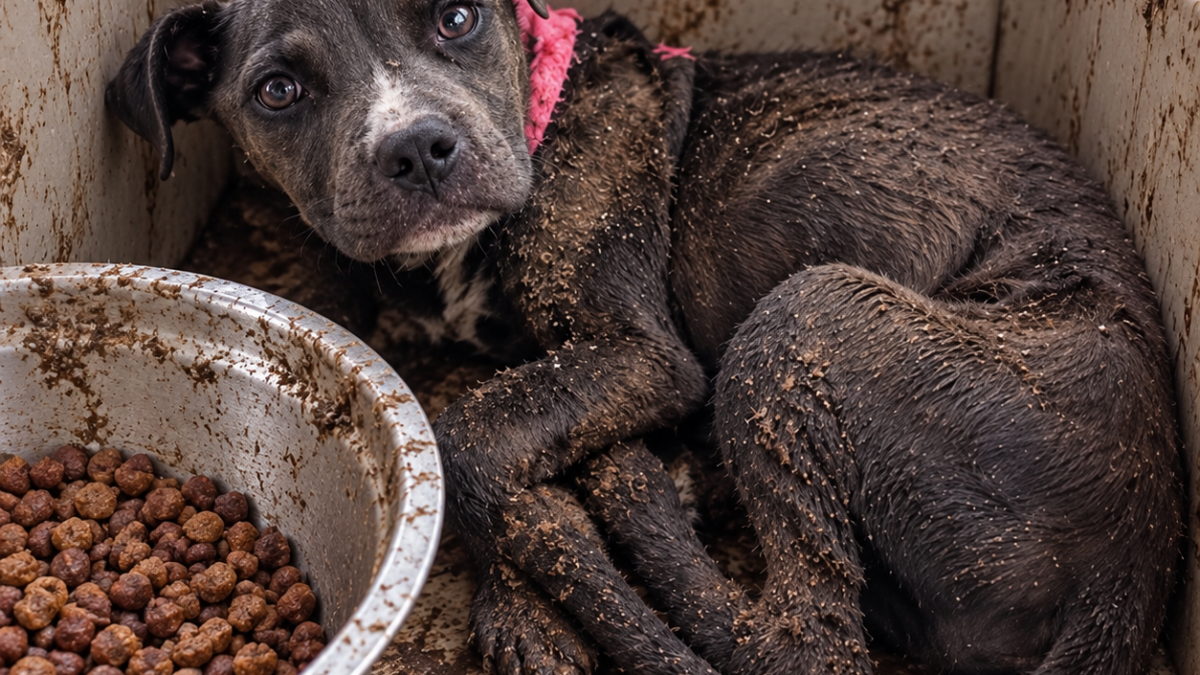
The name on the label was **MARA BENTON**.
Beneath it, faded almost to nothing, were the remains of an address.
Only the street number and the first part of the road name could still be read.
1428 Willow—
The rest had dissolved beneath urine, dirt, and whatever rain had blown through the empty lot during the night.
Tasha looked at me.
“You think this belongs to whoever did this?”
“I think we let animal control answer that.”
I had learned early in rescue that anger could destroy evidence almost as efficiently as rain.
There were times I wanted to drive straight to an address, pound on a door, and demand to know how someone could do something so cruel.
But rescue work teaches you discipline.
A photograph taken before touching the scene matters.
A veterinary report matters.
A timestamp matters.
A witness matters.
A label stuck to the bottom of a filthy crate might matter more than all the furious words in the world.
So we documented everything.
Daniel walked us back to the lot and showed us exactly where he had found the crate.
It had been pushed behind two discarded tires beside a patch of waist-high weeds.
That explained why he had mistaken it for garbage from his window.
There was no food container.
No water bowl.
No blanket.
Nothing that suggested anyone intended to return.
The crate door had been secured with a short piece of twisted electrical wire.
I stared at it.
That detail disturbed me more than the dirt.
Prayer had not wandered inside.
She had not become accidentally trapped.
Someone had deliberately made sure she could not get out.
Our county animal-control investigator arrived forty minutes later.
His name was Jason Bell.
Jason was not dramatic. He did not raise his voice. He did not make promises about arrests.
He simply put on gloves, photographed the crate from every angle, collected the wire, the damaged shipping label, several pieces of trash around the dumping site, and took Daniel’s statement.
“When did you first see it?” he asked.
“Around six-fifteen.”
“Anything there last night?”
Daniel thought.
“I took my trash out around ten. I don’t remember seeing it.”
“Any cameras?”
Daniel shook his head.
Then he stopped.
“My neighbor across the street has one of those doorbell cameras.”
Jason looked up.
“Does it face this direction?”
“Mostly.”
That became the next thread.
While Jason handled the scene, I drove back to the clinic.
Prayer had not moved much.
A catheter had been placed in one of her tiny legs. Fluids were being administered carefully while Dr. Ruiz and his staff monitored her electrolytes.
Her skin had been cleaned enough that we could finally understand how much damage was hidden beneath the filth.
She had widespread hair loss.
Her belly was red and irritated.
Several areas along her neck and shoulders had become infected from constant scratching.
She was underweight.
Dehydrated.
Anemic.
Covered with fleas.
Additional tests later confirmed a severe mite infestation and secondary bacterial infection.
But the number Dr. Ruiz kept watching was her sodium.
He showed me her chart.
“We correct this slowly,” he said. “Very slowly.”
“What happens if it falls too quickly?”
“We could cause neurological complications.”
I looked at Prayer.
She was curled beneath a pale blue blanket with only her face visible.
“How does a puppy get this dehydrated?”
“There are several possibilities. We can’t know exactly how long she was deprived of water. But based on her condition, this did not happen in a few hours.”
That sentence stayed with me.
This did not happen in a few hours.
Someone had watched her become this thin.
Someone had watched her skin deteriorate.
Someone had heard her scratch.
Someone had seen her lose strength.
And at some point, instead of seeking help, that person had put her into a crate.
By afternoon, Prayer’s temperature stabilized.
That was the first good news.
The second came when she lifted her head on her own.
It lasted perhaps four seconds.
A technician named Leah had opened the kennel to replace a towel when Prayer smelled the food bowl in her hand.
Her little nose moved.
Leah froze.
“Are you interested?”
Prayer’s head rose.
Her front legs trembled underneath her.
Then she collapsed gently back onto the blanket.
Leah looked at me and smiled through tears.
“That counts.”
We celebrated tiny victories in that room because tiny victories were all Prayer could afford.
A lifted head.
A swallow of water.
A normal heartbeat.
Urine output.
A fraction of improvement on a blood test.
People imagine animal rescue as dramatic moments—breaking chains, carrying dogs from highways, pulling animals from storms.
Sometimes it is.
But sometimes rescue is sitting beside an eight-pound puppy at two in the morning and watching a number on a laboratory report move in the correct direction by three points.
That first night, I stayed until almost midnight.
Tasha finally touched my shoulder.
“You need sleep.”
“So does she.”
“She’s got an entire veterinary team.”
I looked through the kennel door.
Prayer’s eyes were closed.
“What if she crashes?”
“Then they call.”
I hated leaving.
I knew it was irrational. My sitting there would not control her sodium level. It would not make antibiotics work faster.
Still, walking away felt too much like what someone else had already done to her.
Before I left, I reached through the kennel bars and rested two fingers beside her paw.
“I’m coming back,” I whispered. “You don’t know me yet, but when I say that, I mean it.”
Her paw moved.
Barely.
It touched the tip of my finger.
I cried all the way to my truck.
At 2:43 in the morning, my phone rang.
I sat upright so fast I nearly dropped it.
It was Dr. Ruiz.
“How bad?”
“She ate.”
I thought I had misunderstood.
“What?”
“Not much. About a teaspoon and a half.”
I covered my mouth.
Dr. Ruiz laughed quietly.
“I thought you’d want to know.”
“What did she eat?”
“Recovery food. Leah offered it from her finger. Prayer licked it twice, then took some from the spoon.”
I leaned against the headboard.
“That’s good, right?”
“It’s encouraging.”
Encouraging.
In rescue, you learn to respect that word.
It is not a promise.
It is not a guarantee.
But sometimes it is enough to get you through another night.
The next morning I reached the clinic before seven.
Prayer was awake.
And when she heard my voice, her eyes moved toward the door.
“Good morning, fighter.”
Her tail did not wag.
Not yet.
But her nose lifted.
I sat on the floor outside her kennel while Leah prepared breakfast.
“Want to try again?”
Prayer sniffed.
Leah placed a tiny amount on a spoon.
Prayer licked it.
Then again.
Then, with the exhausted seriousness of someone doing the hardest job in the world, she swallowed.
I laughed.
“There you go.”
Another bite.
And another.
By the fifth, Prayer seemed tired, so we stopped.
I had never been so happy to watch a dog eat less than a tablespoon of food.
Then Jason called.
“We found the street.”
I stood.
“What street?”
“Willow Ridge Lane. Address is 1428.”
My eyes went to Prayer.
“Who lives there?”
“A woman named Mara Benton.”
“The name on the crate.”
“Yes.”
My chest tightened.
“Have you talked to her?”
“Not yet.”
“Why?”
“Because I’m still building the timeline.”
Jason explained that Daniel’s neighbor had provided doorbell footage.
The angle was imperfect.
At 11:38 the previous night, headlights appeared at the end of the street.
A dark SUV slowed beside the empty lot.
For twenty-seven seconds, most of the vehicle disappeared behind a parked work van.
Then it pulled away.
The video did not clearly show anyone placing the crate.
But there was something useful.
The SUV had a damaged right taillight.
And a pale rectangular sticker on the lower left side of the rear window.
“Can you read the plate?” I asked.
“Not yet.”
“Can you identify the vehicle?”
“We’re working on it.”
My instinct was to demand speed.
Jason heard it in my silence.
“I know,” he said.
“Do you?”
“Yes. And if I knock on the wrong door too early and tell someone what evidence I have, I also tell them what evidence they need to destroy.”
That shut me up.
“You’re right.”
“I’ll call you.”
For the next three days, Prayer remained hospitalized.
Her sodium began moving gradually toward a safer range.
The first time she stood, she lasted three seconds.
Her legs shook so badly that Leah kept both hands around her without touching her, ready to catch her.
“Come on, sweetheart.”
Prayer pushed herself up.
One second.
Two.
Three.
Then her back legs folded.
But she had stood.
The next attempt lasted five seconds.
By the end of the day, she managed nine.
On day four, her tail moved.
It was not a full wag.
Just one uncertain sweep against the blanket when I entered.
I stopped in the doorway.
“Did you do that for me?”
The tail moved again.
Leah pointed at me.
“You saw it.”
“Oh, I saw it.”
I knelt beside the kennel.
“Do that again.”
Prayer stared at me.
Nothing.
Leah laughed.
“Apparently she doesn’t perform on command.”
That was the first time I laughed inside that clinic without immediately feeling guilty.
Prayer was still sick.
Her skin remained painful.
She still needed medication, nutritional support, medicated baths, and frequent bloodwork.
But the puppy inside that damaged body was beginning to appear.
She liked soft voices.
She hated metal bowls scraping across the floor.
She slept best when one side of her body touched a blanket rolled into a long cushion.
She loved chicken.
She distrusted closed doors.
And if someone reached toward her too quickly from above, she flattened herself against the ground.
That last behavior told us something medicine could not.
Whatever had happened before the crate, Prayer had learned fear.
On the fifth day, Jason came to the clinic.
He was carrying a folder.
“You want to hear where we are?”
“Yes.”
Tasha joined us in the consultation room.
Jason opened the folder.
The dark SUV belonged to Mara Benton.
Same make.
Same model.
Same broken taillight.
Same rear-window sticker.
The doorbell camera had not captured the license plate clearly, but a traffic camera approximately six blocks away had recorded the SUV eleven minutes before the crate appeared beside the lot.
“And there’s more,” Jason said.
He slid a photograph across the table.
It showed a social-media post.
A healthy puppy sat on a gray couch wearing a pink collar.
Her coat was full.
Her belly was round.
Her eyes were bright.
My stomach dropped.
“Prayer?”
“We believe so.”
The post had been made approximately seven weeks earlier.
The caption called her Daisy.
Mara Benton had written that her teenage daughter had begged for a puppy and that Daisy was “the newest member of the family.”
There were several photographs over the next two weeks.
Daisy sleeping on a blanket.
Daisy chewing a shoe.
Daisy sitting beside a teenager.
Then the posts stopped.
Jason showed us the next document.
A veterinary record.
Mara had taken Daisy to a clinic four weeks before we found her.
The puppy had been diagnosed with a treatable skin condition and intestinal parasites.
Medication had been prescribed.
A follow-up had been recommended.
She never returned.
The clinic had called twice.
No answer.
“So they knew she was sick,” Tasha said.
Jason nodded.
“According to the medical record.”
I felt anger rise from somewhere beneath my ribs.
“How does a puppy go from that photograph to what we found?”
Jason closed the folder.
“That is the question I intend to ask.”
He went to 1428 Willow Ridge Lane that afternoon.
I did not go with him.
I wanted to.
God, I wanted to.
But this was an investigation now, not a rescue call.
Jason later told me what happened.
Mara answered the door.
Behind her was the same gray couch from the photographs.
Jason asked whether she had ever owned a puppy named Daisy.
Mara hesitated.
Then said yes.
“What happened to her?”
According to Jason, Mara folded her arms.
“She ran away.”
“When?”
“A few weeks ago.”
“Did you report her missing?”
“No.”
“Post online?”
“No.”
“Contact the shelter?”
“No.”
Mara said Daisy had slipped through the back gate.
Jason asked why there were no recent photographs of her.
She said she had been busy.
Then he asked about the crate.
That changed everything.
“What crate?”
Jason showed her a photograph.
Mara stared at it.
“I’ve never seen that.”
“Your name is on the shipping label.”
“I order things all the time.”
“The manufacturer confirmed that model was delivered to your address six months ago.”
Silence.
Then Mara changed the story.
Maybe the crate had been stolen.
Maybe somebody had taken it from her garage.
Maybe Daisy had run away and whoever found her put her into the crate.
Jason let her talk.
Investigators often do.
People think silence is pressure.
Sometimes silence is an invitation.
Mara filled it.
She said Daisy had become “impossible.”
She scratched constantly.
She cried at night.
She had accidents in the house.
Her daughter had lost interest.
Medication was expensive.
Jason asked whether those were the reasons she stopped seeking veterinary treatment.
Mara denied stopping treatment intentionally.
She said the puppy “didn’t improve.”
Then Jason asked the question that mattered.
“When did you last see Daisy?”
Mara gave him a date.
It was two days before Prayer was discovered.
Jason wrote it down.
That answer contradicted her original claim that the puppy had run away “a few weeks ago.”
Mara apparently realized it at the same moment.
She stopped talking.
Then she asked him to leave.
He did.
But by then, he had what investigators call inconsistency.
Not proof by itself.
But a crack.
Over the next week, that crack widened.
A neighbor on Willow Ridge remembered Daisy.
An older man named Mr. Avery had seen her through Mara’s fence several times.
He told Jason the puppy had become noticeably thinner.
He had also heard her crying in the garage.
Another neighbor remembered Mara complaining that the puppy smelled terrible and that her daughter no longer wanted it inside.
Then a delivery driver provided a detail nobody expected.
Three days before Prayer was found, he had delivered a package to Mara’s home.
When she opened the garage to retrieve it, he saw a small dog inside a crate.
The puppy was alive.
He remembered because the smell from the garage had been unusually strong.
Jason asked him to identify the crate from photographs.
He did.
Now the timeline was narrowing.
Daisy had not disappeared weeks earlier.
She had been inside Mara’s garage three days before Daniel found Prayer.
And Prayer had been discovered in a crate shipped to Mara’s address.
Still, Jason wanted the final piece.
It came from Mara’s own vehicle.
When investigators obtained the necessary authorization to examine it, they found several short tan-and-white hairs embedded in the cargo carpet.
Prayer’s surviving fur had the same coloring.
That alone was not enough to prove anything.
But then they found a roll of black electrical wire in the rear compartment.
The wire appeared visually consistent with the piece used to secure Prayer’s crate.
It was collected for comparison.
I wish I could tell you I felt triumphant when Jason told me.
I didn’t.
I looked through the clinic window at Prayer asleep beneath her blanket and felt only sick.
Evidence could tell us who transported a crate.
It could establish dates.
It could reveal contradictions.
But evidence could not explain how a person watched a puppy deteriorate day after day and chose abandonment instead of asking for help.
Our rescue would have taken her.
The county shelter would have taken her.
Several veterinary clinics in our area maintained hardship resources.
Mara could have called anyone.
Instead, someone had driven to an empty lot in the dark.
That was what I could not understand.
Prayer left the hospital after eight days.
Dr. Ruiz made us promise we would follow her care plan exactly.
I raised my hand.
“Yes, sir.”
He gave me a look.
“I’m serious.”
“So am I.”
Her skin required continued treatment.
Her diet needed to be increased gradually.
She needed follow-up bloodwork.
She needed rest.
Most importantly, she needed a home where she would not be overwhelmed.
Our foster volunteer, Emily Carter, was perfect.
Emily lived with her husband Ben in a small house with a fenced backyard and one dog, Scout.
Scout was a six-year-old mixed-breed dog rescued from a hoarding case.
He was calm, gentle, and had a strange talent for understanding frightened dogs.
We agreed that Prayer and Scout would not meet directly on the first day.
Prayer needed time.
When we carried her into Emily’s house, she stiffened.
Her eyes moved rapidly from the doorway to the couch to the hallway.
Emily sat on the floor ten feet away.
She did not reach for her.
She did not call her.
She simply opened a book.
For twenty minutes, nothing happened.
Then Prayer sniffed.
Emily continued reading.
Prayer took one step.
Then another.
She retreated.
Tried again.
Eventually she reached the edge of Emily’s sock.
She smelled it.
Emily did not move.
Prayer sat down.
Five minutes later, she fell asleep beside Emily’s foot.
That was the beginning.
The first night, Emily prepared a soft bed beside her own.
Prayer refused it.
Instead, she crawled underneath the nightstand.
Emily put a blanket there.
Prayer slept for twenty-seven minutes.
Then she woke crying.
Emily reached down.
“I’m here.”
Prayer quieted.
Forty minutes later, it happened again.
“I’m here.”
By dawn, Emily had slept perhaps an hour.
Prayer had slept with her nose touching Emily’s fingertips.
The next night was slightly better.
On the third night, she slept for three uninterrupted hours.
On the sixth, she climbed halfway onto the dog bed.
By the second week, Prayer had discovered something I had almost forgotten puppies were supposed to do.
She played.
Emily sent me a video.
A yellow tennis ball rolled across the kitchen floor.
Prayer watched it.
At first, she seemed suspicious.
Then she pounced.
Her feet slipped.
She tumbled sideways.
She stared at the ball as though it had personally offended her.
Then she attacked it again.
I watched that clip fifteen times.
Tasha watched it twenty.
“Look at her tail,” she said.
Prayer’s tail was wagging so hard her entire back end moved.
The dog we had found inside that crate had barely possessed enough strength to lift her head.
Now she was losing arguments with a tennis ball.
But her biggest breakthrough came with Scout.
Their first introduction took place through a baby gate.
Scout walked into the hallway, saw Prayer on the other side, and stopped.
Prayer froze.
Scout turned his body slightly sideways.
No staring.
No rushing.
No barking.
He lay down.
Prayer watched him for nearly two minutes.
Then she stepped closer.
Scout remained still.
Prayer reached the gate.
Their noses touched through the bars.
She jumped backward.
Scout did nothing.
She approached again.
Another sniff.
Then something extraordinary happened.
Prayer’s tail wagged.
Scout’s did too.
Emily called me.
“I think she likes him.”
“Take it slow.”
“I know.”
Over the next several days, they spent increasing amounts of time near each other.
Eventually the gate was removed.
Scout walked into the room and lay on the rug.
Prayer circled him.
Sniffed his ear.
Sniffed his tail.
Then climbed directly onto his back.
Scout looked at Emily with the expression of a tired uncle who had just been handed someone else’s toddler.
Emily laughed so hard she had to sit down.
From then on, Prayer followed him everywhere.
If Scout went into the kitchen, Prayer followed.
If Scout went to the back door, Prayer followed.
If Scout stretched in a patch of sunlight, Prayer squeezed beside him whether there was room or not.
When something frightened her—a dropped pan, the vacuum, a truck rumbling outside—she looked for Scout.
And Scout always let her find him.
Her coat began returning.
At first it appeared as a faint fuzz along her shoulders.
Then soft patches along her back.
The red skin faded.
Her sores healed.
Her weight increased.
Her eyes changed most of all.
People sometimes tell me that animals do not have expressions the way humans do.
Spend enough time around abused dogs and you will never believe that again.
The eyes that had once followed every movement with exhausted caution became curious.
Then mischievous.
Prayer learned that kitchen counters occasionally produced chicken.
She learned that shoes were not toys, though she disputed this rule.
She learned that sprinklers were terrifying for approximately nine seconds and then became the greatest invention in human history.
She learned how to run.
The first time Emily sent me a video of Prayer running across the yard, I had to pull my truck onto the shoulder because I started crying.
Not limping.
Not crawling.
Running.
Her ears flew backward.
Her mouth was open.
Scout chased behind her.
She made one wide circle around the maple tree, cut across the lawn, nearly collided with a patio chair, recovered, and sprinted toward Emily.
The little dog who once could not stand had become fast.
Ridiculously fast.
Emily texted beneath the video:
**WE HAVE CREATED A MONSTER.**
I replied:
**GOOD.**
But while Prayer was rebuilding her life, the investigation continued.
Three weeks after she was found, Jason called.
“Charges are being filed.”
I sat down.
Against Mara Benton?
“Yes.”
I closed my eyes.
The case included allegations of animal cruelty, neglect, and abandonment.
The exact legal process would take time.
There would be hearings.
Attorneys.
Evidence.
Arguments.
Nothing about it would be as fast as people wanted.
I told Jason the truth.
“I want her to see Prayer.”
He paused.
“Why?”
“Because I want her to know she survived.”
“That may happen through photographs presented in the case.”
“No. I want her to look at her.”
Jason’s voice stayed calm.
“Don’t turn Prayer into a weapon.”
The words stung.
“I’m not.”
“You’re angry.”
“Yes.”
“So am I. But Prayer’s job is not to punish anybody. Prayer’s job is to become a dog.”
I said nothing.
Because he was right.
I had spent weeks telling people that Prayer deserved peace, yet part of me still wanted to pull her back toward the person connected to her suffering so I could watch that person react.
That was about me.
Not Prayer.
Justice would have to happen without asking her to relive anything.
So we provided photographs instead.
The first photograph showed Prayer on the morning she was found.
I hated looking at it.
Her body seemed smaller every time.
The second showed her at the emergency clinic.
The third showed her standing five days later.
The fourth showed her with the first fuzz of returning fur.
The fifth showed her running beside Scout.
That sequence became more powerful than anything I could have shouted.
Mara entered a not-guilty plea initially.
Her attorney argued that the evidence did not prove who had placed the crate in the lot.
Technically, that was true.
No camera had captured a clear image of a person carrying Prayer from the SUV.
But cases are built from more than one frame of video.
There was the crate delivered to Mara’s home.
Her name on the label.
The veterinary record documenting Daisy’s illness.
The missed follow-up appointments.
The delivery driver who saw a sick puppy in her garage three days before Prayer’s discovery.
The neighbor who heard the puppy crying.
The inconsistent statements about when Daisy had supposedly run away.
The matching SUV.
The damaged taillight.
The traffic-camera footage.
The wire.
And then investigators found something even stronger.
A message.
Mara had texted an acquaintance two days before Prayer was abandoned.
Jason could not share every detail while the case was active, but eventually the message became part of the court record.
It said:
**I can’t deal with this dog anymore. She stinks, scratches all night and my daughter doesn’t even want her now. I need her gone.**
The acquaintance had replied:
**Take her to the shelter.**
Mara’s answer was short.
**They’ll ask questions.**
When I first read those words, I had to walk outside.
They’ll ask questions.
Four words.
That was all.
Prayer had nearly died because somebody had apparently been more afraid of questions than of what would happen to a sick puppy.
Tasha came outside after me.
I was standing beside the courthouse steps staring at traffic.
“You okay?”
“No.”
“Me neither.”
“I keep thinking about how easy it would have been.”
“What?”
“To call us.”
Tasha nodded.
“I know.”
“One phone call.”
“I know.”
“We would have taken her.”
“Yes.”
“No judgment. No lecture. Nothing. Just hand us the puppy.”
Tasha put a hand on my shoulder.
“You can’t make cruelty logical.”
That may be the hardest lesson in rescue.
We want a reason because reasons create order.
Maybe they had no money.
Maybe they panicked.
Maybe they did not understand.
Maybe they thought she would recover.
Sometimes explanations matter.
But an explanation does not change the moment someone chooses to shut a sick animal inside a crate and leave.
The case did not end quickly.
Months passed.
Prayer continued healing.
Her legal identity remained tied to the investigation, but she stayed safely with Emily.
By then, Emily had stopped pretending she was merely a foster.
I noticed before she admitted it.
One afternoon I visited for Prayer’s follow-up photographs.
Her coat had grown into a beautiful cream-and-tan pattern.
Only a few faint areas showed where the worst damage had been.
She raced through the hallway carrying one of Ben’s socks.
“Prayer.”
She accelerated.
Ben pointed.
“See? This is what your rescue has done to my household.”
Emily laughed.
“You left it on the floor.”
“It was on the laundry basket.”
“It was hanging over the edge.”
Prayer disappeared beneath the dining table.
Scout followed at a dignified pace.
Ben sighed.
“My sock is dead.”
I looked around.
There were two dog beds.
Two water bowls.
Two hooks beside the back door, each holding a leash.
And on the refrigerator was a photograph of Emily, Ben, Scout, and Prayer.
I pointed at it.
“When did that happen?”
Emily followed my eyes.
“Oh.”
“Family photo?”
Ben became very interested in the refrigerator handle.
Emily smiled.
“We were going to talk to you.”
“I knew it.”
She sat down.
“I know fostering is supposed to create room for the next dog.”
“It is.”
“And I know there will always be another one.”
“There will.”
Her eyes filled.
“But I don’t think Prayer is another dog anymore.”
Prayer emerged from beneath the table with half of Ben’s sock hanging from her mouth.
Emily looked at her.
“She’s ours.”
Ben corrected her.
“We’re hers.”
I laughed.
Then I cried.
Then Emily cried.
Ben claimed he had allergies.
The adoption could not be finalized until certain legal issues were resolved, but in every way that mattered, Prayer had already chosen her home.
There was only one thing Emily wanted to change.
Her name.
“I love what Prayer means,” she told me. “It’s who she was when you found her. Everybody was praying she’d survive.”
“But?”
“She doesn’t feel like a prayer waiting to be answered anymore.”
I looked at the puppy racing after Scout through the yard.
“What does she feel like?”
Emily smiled.
“Grace.”
I repeated it.
“Grace.”
“Because she got more than survival.”
The puppy stopped, looked toward us, and sprinted across the grass.
“Grace!” Emily called.
She came immediately.
That settled it.
Prayer had been the name we gave a dying puppy.
Grace became the name of the dog who lived.
Her court case reached its turning point almost seven months after the morning Daniel found the crate.
By then, Grace was almost unrecognizable.
She had gained healthy weight.
Her coat shone.
She could run faster than Scout.
She slept sprawled on her back with all four legs in the air.
Her greatest hardship seemed to be that Emily occasionally refused to share grilled cheese.
I thought I had made peace with the legal process.
Then Mara’s attorney filed a motion challenging part of the evidence.
Suddenly there were questions about the label.
Questions about the video.
Questions about whether someone else could have used the crate.
That is how court works.
Evidence gets tested.
It should.
But knowing that intellectually did not make listening easy.
I sat in the back row during one hearing.
Mara sat at the defense table.
It was the first time I had seen her in person.
She looked ordinary.
That surprised me.
Some irrational part of me had expected cruelty to announce itself physically.
It doesn’t.
There were no horns.
No visible mark.
Just a woman in a navy blouse speaking quietly to her lawyer.
At one point she turned.
Our eyes met.
I expected to feel rage.
Instead, I thought about Grace stealing a sock.
I thought about her sleeping beside Scout.
I thought about the first time her tail wagged.
Mara looked away first.
The prosecutor called Jason to explain the evidence chain.
Then Daniel testified.
He described looking from his kitchen window.
Thinking he saw tires.
Walking closer.
Seeing the crate.
Hearing scratching.
Finding Grace.
His voice cracked when he described her condition.
The defense attorney asked whether Daniel had personally seen Mara leave the crate.
“No.”
“So you cannot tell this court who placed it there.”
“No.”
The attorney nodded.
“Thank you.”
Daniel leaned toward the microphone.
“But whoever did it wired the door shut.”
The attorney turned.
“My question was whether you saw my client.”
“No, ma’am.”
“Then please answer only the question asked.”
Daniel looked toward the judge.
“Understood.”
The veterinary evidence came next.
Dr. Ruiz explained Grace’s condition clinically.
Severe dehydration.
Dangerous hypernatremia.
Malnutrition.
Dermatological disease.
Secondary infection.
Parasites.
He explained that none of it developed overnight.
The defense asked whether every condition was survivable.
Dr. Ruiz answered carefully.
“With treatment, yes.”
“So the dog was not inevitably dying?”
“That is not what I said.”
“But she survived.”
“Because she received intensive treatment after she was found.”
The attorney moved on.
I will never forget Dr. Ruiz’s face.
He did not get angry.
He simply looked toward the photograph displayed on the monitor.
Grace in the crate.
“If she had remained there without water and medical intervention,” he said, “I would not have expected a good outcome.”
The courtroom became quiet.
Then came the veterinary record from Mara’s previous clinic.
The veterinarian who had first seen Daisy testified remotely.
Yes, Mara had brought the puppy in.
Yes, treatment had been prescribed.
Yes, a follow-up visit had been recommended.
Yes, the clinic had attempted to contact her after she failed to return.
Then the delivery driver testified.
He remembered the puppy in the garage.
He remembered the smell.
He remembered feeling uncomfortable but convincing himself the owner was treating the dog.
His guilt was obvious.
“I wish I’d called somebody,” he said.
The prosecutor asked, “Why didn’t you?”
He swallowed.
“Because I told myself it wasn’t my business.”
That sentence affected me almost as much as anything else in the case.
Not my business.
How many suffering animals remain unseen because someone decides that?
How many children?
How many elderly neighbors?
How many people?
Cruelty survives in silence better than almost anywhere else.
The driver had not hurt Grace.
But his testimony became a reminder that noticing matters.
The strongest moment came when the text messages were introduced.
Mara’s acquaintance testified that the conversation was authentic.
She had suggested surrendering Daisy to a shelter.
Mara had responded:
**They’ll ask questions.**
The prosecutor did not dramatize it.
He did not need to.
He simply asked:
“Why did you tell Ms. Benton to take the puppy to a shelter?”
“Because she said she didn’t want her anymore.”
“Did you offer any other suggestion?”
“I sent her the county shelter number.”
“Did she say she called?”
“No.”
“Did she ever tell you Daisy ran away?”
The woman paused.
“No.”
That contradicted Mara’s original explanation.
The defense still had arguments.
Maybe someone else used the SUV.
Maybe someone else discarded the crate.
Maybe the puppy’s decline resulted partly from illness rather than intentional starvation.
The legal questions mattered because punishment requires proof, not emotion.
I understood that.
But then a final piece emerged.
A gas station security camera.
The station sat less than a mile from Daniel’s neighborhood.
At 11:29 p.m. the night Grace was abandoned, Mara’s SUV stopped for fuel.
The camera angle showed the driver’s side clearly.
Mara was driving.
Another camera, mounted higher on the building, captured the vehicle leaving.
In the rear cargo area, visible through the window when the SUV passed beneath the canopy lights, was a large plastic crate.
Nine minutes later, Daniel’s neighbor’s camera recorded that same SUV entering the street beside the empty lot.
Twenty-seven seconds after stopping near the lot, it drove away.
The cargo area could not be seen clearly on the doorbell footage.
But investigators now had a continuous sequence.
Mara.
The SUV.
The crate.
The route.
The time.
The empty lot.
Prayer.
I looked down at my hands.
Tasha whispered beside me.
“That’s it.”
I did not answer.
Because the feeling I had imagined for months never arrived.
There was no rush of victory.
No satisfaction.
Only sadness that so much work had been necessary to prove something a frightened puppy’s body had already told us.
Not long afterward, the defense requested discussions with prosecutors.
The case did not go to a full trial.
Mara eventually entered a guilty plea to animal-cruelty and abandonment charges under an agreement that spared witnesses another round of testimony but still required her to accept criminal responsibility.
At sentencing, the courtroom was full.
Rescue volunteers sat behind the prosecutor.
Daniel came.
Emily came without Grace.
I had asked her not to bring her.
Grace was home with Scout, probably sleeping on someone’s pillow.
Exactly where she belonged.
The judge reviewed the evidence.
Then Mara was allowed to speak.
She stood.
For several seconds, nothing came out.
Finally she said she had been overwhelmed.
She said Daisy’s medical problems had become worse.
She said her daughter stopped helping.
She said the smell had become unbearable.
She said she had been ashamed to surrender a puppy in such terrible condition because she feared people would judge her.
Then she said something I did not expect.
“I thought someone would find her.”
My whole body went rigid.
The judge leaned forward.
“You secured the crate door.”
Mara lowered her eyes.
“Yes.”
“With wire.”
“Yes.”
“You placed the crate behind discarded tires in an empty lot close to midnight.”
Silence.
“Yes.”
“And your explanation is that you thought someone would find her?”
Mara began crying.
“I wasn’t thinking.”
The judge waited.
Then he said quietly:
“That is precisely the problem.”
He spoke about responsibility.
About the fact that shelters, animal-control services, veterinarians, and rescue organizations existed precisely because people sometimes became unable or unwilling to care for animals.
He spoke about how asking for help might have been embarrassing.
But embarrassment was not an excuse for cruelty.
Then he looked toward the photographs.
One showed Grace on the day she was found.
Another showed her months later, healthy and standing in Emily’s yard beside Scout.
“This animal survived despite your decision,” he said. “Not because of it.”
Mara received a custodial sentence followed by supervised probation under the terms available in the case, was ordered to pay restitution toward Grace’s veterinary expenses, and was prohibited from owning or possessing animals during the court-ordered period.
To some people, it was not enough.
I heard that afterward.
“She should have gotten longer.”
“She should pay every penny.”
“She should know what it feels like.”
I understood the anger.
I had felt versions of it myself.
But standing outside the courthouse, I realized something.
Revenge would have required Grace to keep belonging to what happened to her.
Justice allowed her to leave it behind.
Mara would have to live with the legal consequences.
Grace did not have to live with Mara at all.
That was the victory.
Two days later, I went to Emily and Ben’s house with a folder.
Emily opened the door.
“What’s that?”
I held it up.
“Something overdue.”
Grace came charging down the hallway.
She slammed into my knees.
“Grace!”
Her tail became a blur.
Scout arrived behind her, much more politely.
Ben came from the kitchen.
“Is today the day?”
I nodded.
The case had reached the point where Grace could finally be legally released for permanent adoption.
Emily covered her mouth.
“Oh my God.”
We sat around the kitchen table.
Grace tried to climb into my lap.
“You realize,” I told her, “this meeting is technically about you.”
She licked my chin.
“Very professional.”
Emily signed first.
Then Ben.
I signed for the rescue.
The final document transferred Grace permanently into their family.
Emily stared at the paper.
“That’s it?”
“That’s it.”
“She’s ours?”
Ben looked beneath the table.
Grace was lying across his feet.
“She’s been ours.”
Emily started crying.
I did too.
Again, Ben blamed allergies.
We took the adoption photograph in the backyard.
Emily knelt on one side.
Ben knelt on the other.
Scout sat perfectly.
Grace refused.
Every time someone got her into position, she sprinted toward the camera.
We tried treats.
We tried toys.
We tried asking Scout to stay so she might copy him.
Nothing worked.
Finally the photographer said, “Forget the posed picture. Just let her go.”
So we did.
Grace ran.
Emily laughed.
Ben chased her.
Scout joined them.
The photographer kept shooting.
One photograph caught Grace in mid-stride, all four paws off the ground.
Her mouth was open.
Her ears were flying.
Scout ran behind her.
Emily stood in the background laughing with both hands over her face.
That became the picture they framed.
Not because it was perfect.
Because it was true.
Months passed.
Grace grew.
Her coat became thick and soft.
The little bare patches disappeared.
The scars beneath the fur became almost impossible to find unless you knew exactly where to look.
She developed opinions.
Strong ones.
Rain was unacceptable.
Snow was fascinating.
The mail carrier was suspicious but potentially useful because he occasionally carried dog treats.
Scout’s bed belonged to Scout unless Grace wanted it, in which case ownership law became complicated.
She discovered digging.
Emily called me one afternoon.
“Your dog has excavated my flower bed.”
“My dog?”
“Yes.”
“I have adoption paperwork proving otherwise.”
“I’m mailing her back.”
“You know the return policy.”
“What return policy?”
“None.”
Emily laughed.
In the background I heard Ben shout, “She found another sock!”
Life became wonderfully ordinary.
That is something people sometimes forget about rescue.
The happy ending is not always dramatic.
It is veterinary appointments.
Nail trims.
Chewed slippers.
Wet footprints.
Dog hair on clean clothes.
A leash hanging beside the door.
A body curled at your feet while you make dinner.
Ordinary life is the miracle.
For Grace, ordinary life had once been almost impossible.
A year after we found her, Daniel asked whether he could meet her again.
He had not seen her since that morning beside his porch.
Emily agreed.
We arranged to meet at his house.
When we pulled up, Daniel stood in the same driveway where I had first seen him barefoot in pajama pants.
This time he was holding a bag of treats.
Grace jumped from Emily’s car.
Daniel stared.
“That’s her?”
I smiled.
“That’s her.”
He bent down.
Grace approached cautiously.
She had never met him properly. On the morning of her rescue, she had barely been conscious.
Daniel held out his hand.
She sniffed.
Then she moved closer.
He scratched beneath her chin.
His face crumpled.
“Oh, sweetheart.”
Grace licked his wrist.
Daniel looked at me.
“I thought she was going to die.”
“So did I.”
He sat on the curb.
Grace climbed beside him.
For several minutes nobody said much.
Then Daniel pointed toward the empty lot.
The weeds had been cut.
The old tires were gone.
Someone had finally cleaned the property.
“Right over there,” he said.
Emily followed his gaze.
Grace did too.
I wondered whether she remembered.
There is no way to know what animals retain from trauma or how they experience memory.
But Grace did not tremble.
She did not hide.
She sniffed the air.
Then Scout barked from Emily’s car.
Grace turned instantly and pulled toward him.
Daniel laughed through his tears.
“I guess she’s got somewhere better to be.”
She did.
Before leaving, Emily opened the car door.
Grace jumped inside beside Scout.
Daniel stood with one hand resting on the roof.
“You know what bothers me?”
“What?”
“If I hadn’t looked twice, I would have thought it was trash.”
I nodded.
“But you did look twice.”
He stared at the lot.
“Everybody keeps calling me the person who saved her.”
“You started it.”
He shook his head.
“I just walked over.”
“Sometimes that’s what saving somebody begins with.”
He smiled.
Grace pressed her nose against the window.
Daniel waved.
On the drive home, she slept against Scout.
I sat in the passenger seat while Emily drove.
At a stoplight, Emily looked at me.
“Do you remember how small she was?”
“Yes.”
“I don’t understand how this is the same dog.”
I looked back.
Grace’s head rested across Scout’s shoulder.
“You know what Dr. Ruiz told me once?”
“What?”
“That bodies can recover faster than trust.”
Emily nodded.
“That sounds right.”
“But she got both back.”
When we reached their house, the dogs ran straight to the backyard.
Grace chased Scout around the maple tree.
The same circle from that first video.
Only now she was bigger.
Faster.
Stronger.
The evening sun caught her coat and turned the edges gold.
Emily stood beside me on the porch.
“There are days I still think about the crate.”
“So do I.”
“Do you think she does?”
“I don’t know.”
Grace sprinted toward us.
At the last second she changed direction, sending Scout skidding through the grass.
Emily laughed.
“Maybe that’s okay.”
“What?”
“That we remember it so she doesn’t have to.”
I looked at her.
That was exactly it.
For months I had thought justice meant making the person responsible carry the memory.
But maybe rescue required us to carry part of it too.
Not as a wound.
As a promise.
We remembered the crate so Grace could learn the yard.
We remembered the wire so she could learn an open gate meant she could come back inside whenever she wanted.
We remembered the empty water bowl that was never there so she could have three bowls now because Emily worried one might somehow run dry.
We remembered how she had trembled when hands reached toward her so every hand afterward could teach her something different.
Gentleness.
Safety.
Home.
On the anniversary of her rescue, Dr. Ruiz invited us back to the clinic.
The staff wanted to see her.
Grace walked through the front door with Emily.
Every technician who remembered her stopped.
Leah came around the counter.
“No.”
Grace wagged.
Leah crouched.
“No way.”
Grace launched herself into her arms.
Leah started crying.
“That cannot be my little ICU puppy.”
“It is,” I said.
Dr. Ruiz came from the back.
Grace trotted toward him.
He looked at her body condition.
Her coat.
Her eyes.
Her energy.
Then he shook his head.
“You gave us a lot of trouble.”
Grace sat.
He reached into his pocket for a treat.
She immediately placed one paw on his knee.
“Oh, now you remember me.”
I pulled out my phone.
“I have something.”
It was the first photograph.
I almost hated showing it.
Dr. Ruiz stared at the screen.
Then at Grace.
Then back at the screen.
“She had almost nothing left,” he said.
Leah stood beside him.
“She had enough.”
Dr. Ruiz smiled.
“Apparently.”
Emily bent down and kissed Grace’s head.
Grace was more interested in the treat pocket.
The clinic staff gathered for a photograph.
This time Grace actually sat still.
Mostly because Leah held chicken.
Afterward we walked outside.
I stood on the sidewalk watching Emily lead Grace toward the car.
That should have been the end of the story.
For a while, I thought it was.
Then something happened the following spring that brought everything full circle.
Our rescue received a call about another dog.
Not abandoned.
Not abused.
A family had lost their home after the father was laid off and the mother became ill.
They were living temporarily with relatives who could not allow pets.
The dog was a four-year-old shepherd mix named Rosie.
The family loved her desperately.
The mother cried through the entire phone call.
“I don’t want anyone thinking we threw her away,” she said. “We just need help.”
I thought of Grace.
Of Mara saying she had been ashamed because people would ask questions.
Here was another family facing humiliation, fear, and financial trouble.
But they had done the one thing Grace’s former owner had refused to do.
They asked.
“We can help,” I said.
The woman began sobbing.
“Really?”
“Yes.”
“We don’t want to lose her forever.”
“Then let’s see whether we can arrange a temporary foster.”
Emily heard about Rosie.
Of course she volunteered.
“You already have two dogs,” I said.
“I have a yard.”
“You also have a husband.”
“Ben likes dogs.”
From the background, Ben shouted, “I would like my opinion entered into the official record.”
Emily ignored him.
Rosie stayed with them for six weeks.
The family visited.
They contributed what they could.
When they found stable housing, Rosie went home.
There were tears everywhere.
But this time they were good tears.
On the drive back, Emily called me.
“You know what I kept thinking?”
“Grace?”
“Yes.”
“Me too.”
One family faced hardship and asked for help.
Another faced hardship and hid it until an animal nearly died.
That difference was not money.
It was not pride.
It was a choice.
The thought changed how our rescue operated.
We started a surrender-without-shame program.
The idea was simple.
If someone could no longer care for an animal, we wanted them to call before neglect began.
No public humiliation.
No angry lecture.
No social-media pile-on.
Just honesty.
If an animal had already been criminally harmed, that remained an issue for authorities.
But financial hardship, housing loss, illness, and being overwhelmed did not need to become cruelty simply because somebody was afraid to ask for help.
We printed cards.
**ASK BEFORE IT BECOMES AN EMERGENCY.**
Dr. Ruiz kept them at his clinic.
Animal control carried them.
Local food banks placed them near their counters.
Daniel put a stack at the hardware store where he worked.
And on the back of every card was a photograph.
Grace.
Running.
Four paws off the ground.
No crate in sight.
Over the next year, calls came.
A senior man entering assisted living surrendered his Beagle.
A mother escaping an unsafe home needed temporary placement for two cats.
A young couple facing eviction asked us to foster their dog for three weeks.
A college student admitted she could not afford treatment for her puppy’s broken leg.
Not every situation had an easy solution.
But each call represented an animal somebody had chosen not to abandon.
Grace’s story could not undo what had happened to her.
But it began preventing other crates from appearing in other empty lots.
That mattered to me more than punishment ever could.
Two years after her rescue, I attended a community fundraiser at the clinic.
Grace came wearing a blue bandanna.
She had become something of a local celebrity, though she had no awareness of it.
People approached Emily.
“Is that Grace?”
Grace assumed this meant treats.
Usually she was correct.
Daniel arrived late.
Jason came too.
Even Dr. Ruiz took an hour away from work.
At one point the four of us stood together while Grace and Scout sprawled beneath a picnic table.
Daniel looked around.
“Funny, isn’t it?”
“What?”
“All this because I thought somebody dumped tires.”
Jason smiled.
“Good thing you’re nosy.”
Daniel pointed at him.
“Observant.”
“Sure.”
We laughed.
Then Daniel became serious.
“I still think about that morning.”
“So do I,” I said.
Jason looked at Grace.
“You know what I remember?”
“What?”
“How angry everyone was.”
Tasha had just joined us with lemonade.
“We had reasons.”
“You did.”
Jason nodded toward Grace.
“But look where all that energy went.”
He was right.
Into medicine.
Into evidence.
Into fostering.
Into prosecution.
Into education.
Into helping families surrender animals safely.
Into Grace.
Anger had started the engine.
Love decided where we drove.
Later, as the fundraiser ended, Emily unclipped Grace’s leash inside the fenced field.
Scout ran first.
Grace followed.
People stopped talking to watch them.
She was beautiful.
Not beautiful because she had once been sick.
Not beautiful because surviving trauma somehow made suffering necessary.
I hate when people romanticize that.
Grace deserved to have been safe from the beginning.
She deserved the puppyhood she lost.
Her transformation was beautiful because suffering had failed to define everything that came after it.
She ran past Daniel.
Past Jason.
Past Dr. Ruiz.
Past me.
Then she turned and came back.
For one second she stopped directly in front of me.
I crouched.
“Hey, Prayer.”
Her ears lifted.
Nobody called her that anymore.
I touched the side of her face.
“You did it.”
She licked my nose.
Then she was gone again, racing after Scout.
I stood.
Emily had heard me.
“Prayer?”
I smiled.
“Just once.”
She looked toward the field.
“She answered.”
“She always did.”
That evening, after everyone left, I found myself sitting alone in my truck.
I opened the folder on my phone where I kept rescue photographs.
I almost never looked at Grace’s first picture anymore.
But that night I did.
There she was.
Tiny.
Raw-skinned.
Curled in filth.
Eyes open.
Waiting.
I swiped.
Hospital blanket.
Next.
Standing with trembling legs.
Next.
First tail wag.
Next.
Fuzz returning.
Next.
Prayer meeting Scout.
Next.
Prayer stealing Ben’s sock.
Next.
Grace running through the yard.
Next.
Adoption day.
Next.
Grace beside Daniel.
Next.
Grace at the veterinarian.
Next.
Grace asleep between Emily and Scout on the couch.
The final photograph had been taken that afternoon.
She stood in green grass beneath open sky with Scout beside her.
Her coat shone.
Her tongue hung from the side of her mouth.
Nothing around her was closed.
No wire.
No plastic walls.
No darkness.
I thought back to the morning I had reached into that crate.
She had pressed her face against my arm and breathed that tiny exhausted breath.
At the time, I thought I was making her a promise.
I had whispered:
“You’re not alone anymore.”
But sitting in my truck two years later, I finally understood something.
Grace had made a promise too.
Not in words.
Not consciously.
Just by taking that first drink.
Then that first bite.
Then lifting her head.
Then standing.
Then wagging her tail.
Then trusting Emily.
Then following Scout through an open doorway.
Then running.
She kept choosing the next moment.
And enough next moments became a life.
People sometimes ask me what happened to the person who left her.
I tell them the truth.
There was an investigation.
There were charges.
There was a guilty plea.
There was punishment.
There were restrictions designed to prevent another animal from being placed in that situation.
The system did what it could.
But if they ask whether I got the revenge I wanted that first week, the answer is different.
No.
I got something better.
The woman who abandoned Grace had wanted a problem to disappear.
Instead, the puppy survived.
She became evidence.
Then she became a patient.
Then a foster.
Then a sister to Scout.
Then somebody’s daughter in every way that matters.
Then the face of a program that helped other families ask for help before another animal suffered.
Grace did not disappear.
The cruelty did.
First from her skin.
Then from her body.
Then, slowly, from the way she expected the world to treat her.
And perhaps that is the only revenge worth celebrating.
Not returning pain.
Ending its journey.
Years later, Grace still sleeps beside Emily.
Not underneath the nightstand.
Not beside the door.
Beside her.
Most nights she takes up more space than a dog her size should logically require.
Scout is older now and slower.
Grace adjusts her speed for him.
When they run around the maple tree, she shoots ahead, stops, looks back, and waits.
Then Scout catches up.
Emily once sent me a photograph taken early one Sunday morning.
Ben was asleep on one side of the bed.
Emily was on the other.
Scout lay across the foot.
Grace was between them on her back, all four paws in the air.
Under the photograph Emily wrote:
**SHE NEVER SLEEPS ALONE.**
I stared at that sentence for a long time.
Because I remembered another version of her.
A puppy trapped alone in a crate.
Covered in waste.
Too weak to stand.
No food.
No water.
No comforting voice.
No idea whether morning would bring anything different.
Now morning brings Emily.
Ben.
Scout.
Breakfast.
Sunlight through the kitchen window.
The backyard.
A tennis ball.
A ridiculous collection of blankets.
And, occasionally, a stolen sock.
The discarded puppy named Prayer is gone.
Not because she died in that empty lot as someone may have expected.
Because she lived long enough to become Grace.
And somewhere between that filthy crate and the yard where she now runs with her best friend, she taught every one of us the same lesson:
Being thrown away is something that happened to her.
It was never what she was worth.
[END OF FULL STORY]








