PART 2: THEY LEFT A STARVING DOG UNABLE TO WALK BESIDE A PARK ROAD—BUT THE SHADOW THEY THR3W AWAY REFUSED TO DISAPPEAR
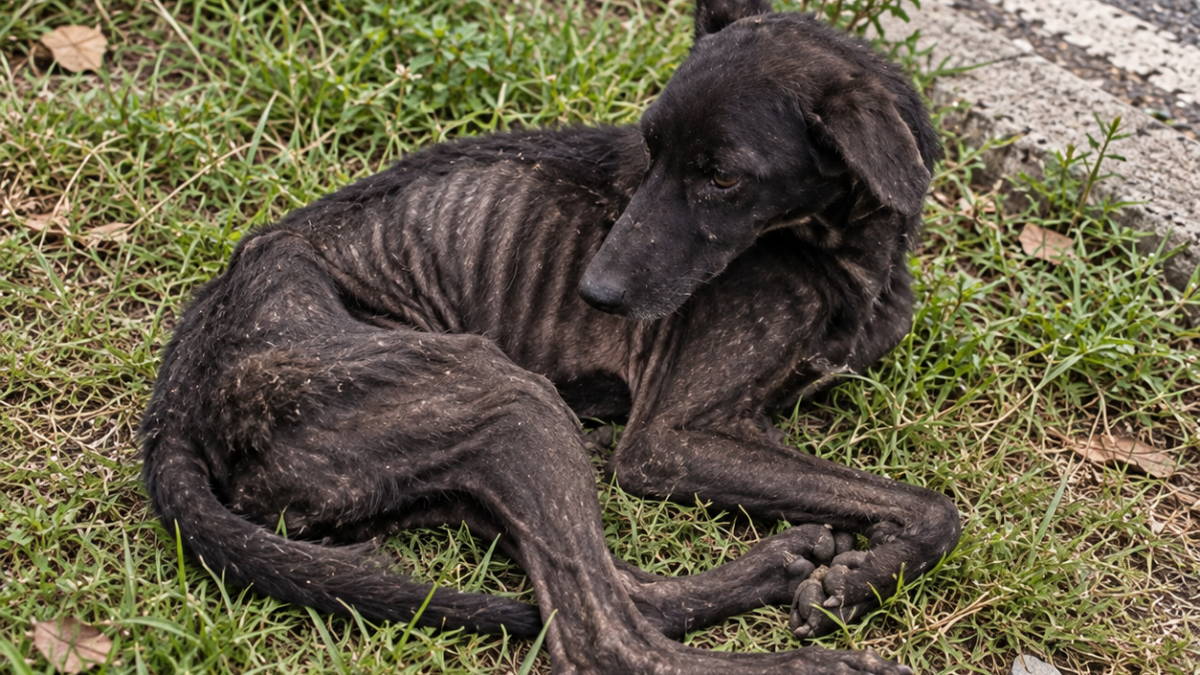
PART 2
I enlarged the photograph until the pixels blurred.
The dog standing in the picture looked nothing like the animal lying in critical care at the clinic.
He was heavier.
His coat was clean.
His back legs supported him normally.
But the face was unmistakable.
The same narrow blaze down his muzzle.
The same darker markings around the eyes.
The same small notch along the edge of his left ear.
I called the woman immediately.
Her name was Marisol Vega.
She lived about fifteen minutes from the park.
“I’m sorry I didn’t contact you sooner,” she said before I could ask anything. “I only saw your post this morning.”
“You’re sure this is the same dog?”
“I think so.”
“Where did you get the photograph?”
There was a pause.
“My neighbor.”
I stood from the plastic chair beside Sombra’s kennel and walked into the hallway.
“What neighbor?”
“A man named Victor Hale.”
The name meant nothing to me.
Marisol continued.
“He lived two houses down from me until recently. That dog was in his yard.”
“How long ago?”
“Months.”
I looked through the glass at Sombra.
“Was he called Sombra?”
“No. Victor called him Bruno.”
I wrote the name down.
“Do you know what happened to him?”
“That’s why I messaged you.”
Her voice changed.
“I saw Bruno limping about a month ago.”
Every muscle in my body tightened.
“Tell me exactly what you saw.”
Marisol explained that Victor lived alone in a small rental house with a fenced backyard. Bruno had been there for at least two years.
He was not chained constantly.
He was not known as an aggressive dog.
Sometimes Marisol saw Victor walking him early in the morning.
Then, about five weeks earlier, Bruno disappeared from the sidewalk.
A few days later, Marisol spotted him in the backyard.
He was dragging one back leg.
“I asked Victor if he’d been hurt,” she said.
“What did he tell you?”
“He said Bruno got out and was hit by a car.”
My hand tightened around the phone.
“Did he take him to a veterinarian?”
“I asked that too.”
“And?”
“He told me the vet wanted too much money.”
I closed my eyes.
Marisol went on.
“At first I thought maybe he was getting better. Then I realized I wasn’t seeing him standing anymore.”
“What do you mean?”
“He started lying under the back porch.”
“Did you see food?”
“Sometimes.”
“Water?”
“There was a bucket.”
“Did you ever call animal control?”
Silence.
When she answered, shame filled her voice.
“No.”
I did not yell at her.
I wanted to.
Not because Marisol had hurt Sombra, but because anger searches desperately for somewhere to land.
Instead, I asked, “Why not?”
“I believed Victor when he said he was handling it.”
She swallowed.
“And then my husband was in the hospital. I stopped paying attention for a couple of weeks.”
“When did you last see the dog?”
“Three days ago.”
I stared at the wall.
Three days.
“When did Victor move?”
“Yesterday morning.”
That explained the timing.
Sombra had appeared at the park sometime the previous day.
Victor had moved the same day.
“Do you know where he went?”
“No.”
“Do you still have that photograph?”
“Yes.”
“I need the original. And I need you to speak with animal control.”
“I will.”
Before we ended the call, Marisol said something quietly.
“I should have done something sooner.”
I did not know how to answer.
Finally I said, “Then do something now.”
She did.
Within an hour, she sent several photographs.
The earliest showed a healthy dog beside Victor’s porch.
Another showed him lying in the yard.
The date stamp was twenty-six days before we found Sombra.
His rear leg was extended awkwardly.
A third photograph had been taken through Marisol’s kitchen window eleven days later.
Sombra looked thinner.
Not as thin as he was now.
But thinner.
Enough to make my stomach turn.
I forwarded everything to county animal-control investigator Lena Ortiz.
Lena had worked cases with our rescue before.
She called almost immediately.
“Don’t contact the owner.”
“I wasn’t planning to.”
“You were thinking about it.”
I looked at Sombra.
“Maybe.”
“Don’t.”
“He let this dog suffer for a month.”
“Which is exactly why I need evidence before anyone warns him.”
That sentence sounded familiar.
I had heard it before in other cruelty cases.
Rescuers live in emotion.
Investigators have to live in procedure.
If you want anger to become accountability, procedure matters.
“Fine,” I said.
“I’ll update you.”
Then Lena added, “And save every message. Original files. Do not crop anything.”
“I know.”
“I know you know. I’m saying it anyway.”
She hung up.
I went back into Sombra’s room.
His eyes opened when I sat down.
“Apparently your name used to be Bruno.”
His ear moved.
“I don’t know which name you prefer.”
Nothing.
“You don’t look like a Bruno right now.”
His gaze stayed on me.
“Sombra fits.”
I slipped my hand beneath his chin.
“But maybe not forever.”
That first forty-eight hours were brutal.
Sombra’s body was not ready to trust food.
The veterinary team needed to increase his nutrition carefully. Feeding a severely malnourished animal too aggressively can cause serious metabolic complications.
Everything had to be measured.
Calories.
Fluids.
Blood values.
Electrolytes.
Temperature.
Urine output.
Pain.
The feeding tube remained in place.
Dr. Alvarez checked him repeatedly.
His anemia worried us.
His injury worried us more.
Further imaging showed trauma around his pelvis and lower spine. The damage was serious, but there was one hopeful detail.
He still had sensation in his feet.
When Dr. Alvarez applied gentle pressure between the toes, Sombra reacted.
“That’s good?” I asked.
“It’s better than no response.”
“Can he walk again?”
The veterinarian looked at the X-rays.
“I don’t want to promise you that.”
“What do you think?”
“I think his body needs time before we know.”
That answer was difficult to accept.
I wanted certainty.
Rescue rarely gives it.
The next morning, Sombra tried to sit up.
He pushed with his front legs.
His chest rose.
His rear half remained flat.
He shook for several seconds before collapsing.
I reached for him.
Dr. Alvarez stopped me gently.
“Let him try.”
“He’s hurting.”
“He’s learning what still works.”
Sombra tried again.
This time he made it halfway up.
His body trembled.
Then he fell.
My eyes filled.
“You don’t have to prove anything,” I whispered.
But Sombra did not know that.
Dogs do not understand prognosis.
They do not understand medical percentages.
They understand the immediate world.
Pain.
Hunger.
Warmth.
Hands.
Voices.
And sometimes, against every expectation, they keep attempting the next thing.
That afternoon the first letter arrived.
It was handwritten on yellow paper.
A schoolteacher named Rebecca had mailed it after seeing Sombra’s photograph through a community rescue page.
It said:
Dear Sombra,
You do not know me, but I want you to know that somewhere in this city there is a person thinking about you tonight. I hope tomorrow hurts less than today. I hope one day you learn that not every person leaves.
I read it beside his kennel.
His eyes were closed.
I felt ridiculous for a second.
Then I kept reading.
The next day another letter came.
Then another.
Someone sent a card from two towns away.
A retired mechanic wrote that he had survived a serious accident himself and wanted Sombra to “keep fighting one ugly morning at a time.”
A child sent a drawing of a brown dog standing beneath a huge yellow sun.
The words beneath it were misspelled:
**GET BETR SOON SUMBRA.**
I taped it to the wall.
Soon the clinic room looked less like an intensive-care space and more like a strange little shrine to a dog most people had never met.
Lena visited on the third day.
She wore plain clothes and carried a notebook.
“How is he?”
“Alive.”
“That’s something.”
“It’s everything right now.”
She stood beside the kennel.
Sombra watched her.
“I talked to Marisol.”
“And?”
“Her photographs are useful.”
“Did you find Victor?”
“We found where he moved.”
My heart accelerated.
“Where?”
“I’m not giving you the address.”
“Lena.”
“No.”
“I’m not going there.”
She raised one eyebrow.
“Eventually.”
“No.”
“Eventually.”
I sighed.
“What did he say?”
“I haven’t interviewed him yet.”
“Why not?”
“Because I’m doing this in order.”
She had already contacted Victor’s previous landlord.
The landlord confirmed that Victor had owned a medium-sized male dog.
He also provided something unexpected.
A move-out inspection photograph.
The backyard showed an empty water bucket beside the porch.
Near it were several stained blankets.
And in one corner lay a bag of cheap dry dog food.
Unopened.
I stared at the photograph.
“He had food?”
“It appears so.”
“Then why was Sombra starving?”
“That’s something I intend to ask.”
The landlord also said he had inspected the house five days before Victor left because the lease was ending.
He remembered hearing a dog crying beneath the back porch.
He asked Victor about it.
Victor said the dog had been injured but was “fine.”
“Did the landlord see him?”
“No.”
“Did he report it?”
“No.”
I looked away.
Another person.
Another opportunity.
Another moment when somebody could have looked closer.
Lena saw my expression.
“Don’t start.”
“Start what?”
“Turning everyone who failed to notice enough into the person who did this.”
“They heard him crying.”
“Yes.”
“They knew he was injured.”
“Yes.”
“And nobody called.”
“That matters morally. Legally, I’m focused on the person responsible for his care.”
I hated that she was right.
Two days later, the clinic called me before sunrise.
My heart sank when I saw the number.
“Is he alive?”
Dr. Alvarez answered.
“Yes.”
I sat down on the edge of my bed.
“What happened?”
“He ate.”
I almost laughed.
“How much?”
“Three bites.”
“Three?”
“Three.”
I covered my face.
“That’s all?”
“That is a very important all.”
By the time I reached the clinic, Sombra was awake.
A shallow dish sat near him.
The feeding tube remained in place, but the staff had offered a small amount of soft, nutrient-dense food.
He sniffed it.
Then turned away.
I sat beside him.
“No pressure.”
He looked at me.
The technician warmed the food slightly.
That changed something.
Sombra sniffed again.
His tongue touched the surface.
One lick.
Then another.
He swallowed.
Everyone in the room pretended not to stare.
Sombra took a second bite.
Then a third.
Then he stopped.
I cried anyway.
The next meal, he ate four.
Later, six.
By evening he had eaten enough voluntarily that Dr. Alvarez allowed himself the smallest smile.
“He’s interested.”
“Can the tube come out?”
“Not yet.”
I groaned.
Sombra blinked slowly.
“He agrees with me.”
Dr. Alvarez ignored that.
For three more days, the tube remained.
Then Sombra began eating consistently.
Chicken.
Soft rice.
Veterinary recovery food.
A small amount of pumpkin.
Later, carefully portioned lean meat.
Nothing enormous.
Nothing dramatic.
Just meals his exhausted body could handle.
His bloodwork began improving.
His eyes became clearer.
And one morning his tail moved.
I was reading another letter aloud when I heard a soft thump.
I stopped.
Sombra’s tail rested against the blanket.
I continued reading.
Thump.
I lowered the page.
“Was that you?”
His tail moved again.
I laughed.
The veterinary technician appeared in the doorway.
“What?”
“He wagged.”
She looked at him.
“Do it again.”
Nothing.
I pointed.
“Come on. Don’t make me look like a liar.”
Sombra closed his eyes.
She laughed.
“He already has you trained.”
Maybe he did.
The investigation moved forward while Sombra healed.
Lena eventually interviewed Victor Hale.
She told me about it afterward.
At first he denied abandoning the dog.
He admitted owning Bruno.
He admitted Bruno had been hit by a vehicle.
But he insisted the dog recovered and later escaped.
“When?” Lena asked.
“Couple weeks ago.”
“Which day?”
Victor could not remember.
“Did you report him missing?”
“No.”
“Call the shelter?”
“No.”
“Post anywhere?”
“No.”
“Search the neighborhood?”
“I drove around.”
“Did anyone see you searching?”
He became irritated.
“I don’t know.”
Lena asked about veterinary care.
Victor said he had taken Bruno to a clinic.
“Which one?”
He named a veterinary hospital.
Lena already knew there was no record of Bruno being treated there.
Investigators had checked.
When confronted, Victor changed the story.
He said he called the clinic but could not afford treatment.
“Did you ask about surrendering the dog?”
“No.”
“Animal-control assistance?”
“No.”
“A rescue?”
“No.”
“Payment options?”
“They wanted money.”
Lena let the silence grow.
Victor filled it.
“He was still eating.”
That statement mattered.
Because Sombra had not simply become thin overnight.
Victor then said Bruno had become “difficult” after the injury.
He soiled himself.
He cried.
He could not get up.
Victor had to clean the yard.
He had recently lost hours at work.
He was moving.
Everything had become “too much.”
“Did you leave him at Pine Ridge Park?”
“No.”
“Did you drive near Pine Ridge Park on the day you moved?”
“I don’t remember.”
“Do you own a white utility van?”
“Yes.”
The resident who first saw Sombra had mentioned a white van parked near the road around dusk the previous evening.
She had not thought anything about it then.
Now she gave a formal statement.
The vehicle itself was not enough.
There were thousands of white vans.
But Lena kept digging.
Victor worked maintenance for a flooring company.
The company van assigned to him had GPS fleet tracking.
When investigators contacted the employer with appropriate legal process, the route history showed something important.
At 7:18 p.m. on the evening Sombra appeared in the park, Victor’s assigned van stopped near the exact section of road where Sombra was later found.
It remained there for eleven minutes.
Then it left.
My hands shook when Lena showed me the record.
“That’s him.”
“It’s evidence.”
“That is him.”
“It establishes that the van assigned to him was there.”
“He was moving that day.”
“Yes.”
“He owned Sombra.”
“Yes.”
“Sombra was injured in his yard three days earlier.”
“Yes.”
“What else do you need?”
“A case strong enough to survive someone saying the van was there for another reason.”
I hated legal caution.
I also knew it was necessary.
Then came the photograph that changed everything.
Victor’s former landlord found it on his phone.
He had taken pictures during a preliminary property inspection two days before Victor moved.
One image showed part of the backyard.
At first, nobody noticed anything.
Then Lena zoomed into the shadow beneath the porch.
Two eyes reflected the camera flash.
Sombra.
He was lying on the dirt.
His body was skeletal.
His hind legs stretched behind him.
The timestamp was forty-eight hours before he was abandoned.
That destroyed Victor’s claim that the dog had escaped weeks earlier.
But the most painful evidence came from a completely different source.
A convenience store.
Victor had stopped there on his moving day.
Security footage showed the white utility van.
At 6:52 p.m., Victor exited the store carrying a drink and a bag of snacks.
At 7:02, he drove away.
A second camera caught the rear cargo area through the windows.
Something dark lay on a blanket behind the front seats.
The image was not clear enough to identify a dog conclusively.
But the timeline was tightening.
Sixteen minutes later, GPS placed the van inside Pine Ridge Park.
Eleven minutes after that, it left.
Sombra remained.
When Lena interviewed Victor again, his story changed.
This time he said he had taken Bruno to the park.
My stomach turned when she told me.
“He admitted it?”
“Partially.”
“What does partially mean?”
“He says he took the dog there because he thought somebody would find him.”
I stood so fast my chair scraped the floor.
“He left a dog who couldn’t walk beside a road?”
“Yes.”
“And he calls that helping?”
“He says he believed someone from the neighborhood would see him.”
“Then why didn’t he drive to a clinic?”
“He says he couldn’t afford it.”
“Shelter?”
“He didn’t want surrender fees.”
“Our rescue?”
“He says he didn’t know about us.”
“Animal control is free.”
“He says he didn’t know that either.”
I paced the room.
Lena waited.
Finally she said, “You can be angry later. I need something from you now.”
“What?”
“All veterinary records since intake.”
“You’ll have them.”
“And photographs showing his body condition.”
“Every one.”
“Good.”
The case moved forward.
But Sombra knew nothing about any of it.
His world was smaller.
Breakfast.
Medication.
Physical therapy.
Rest.
Hands.
Voices.
He had spent approximately a week at the clinic when Dr. Alvarez announced he might be strong enough to transfer to our shelter’s rehabilitation room.
I felt relief and terror at the same time.
“Is he ready?”
“Medically stable enough.”
“That doesn’t sound confident.”
“It’s medicine. We don’t speak in movie dialogue.”
I smiled.
“Can he walk?”
“No.”
My smile disappeared.
“But,” he added, “he’s stronger.”
The rehabilitation plan would focus on maintaining muscle, controlling pain, supporting his rear limbs, and slowly determining how much function could return.
His injury had healed badly because it had been left untreated.
That made recovery harder.
Possibly incomplete.
We prepared a room at the shelter.
Not a kennel in the noisy main wing.
A quiet room near the office.
There was a thick orthopedic bed.
Washable blankets.
Low food and water bowls.
A small fan.
A radio we kept at low volume.
And a wall covered in letters.
Every message people had sent to the clinic came with him.
The child’s drawing went directly above his bed.
When we carried him inside, Sombra looked around.
He seemed anxious.
I lowered him onto the bedding.
“This is yours.”
He sniffed.
“No one’s going to make you leave tonight.”
He watched me walk toward the door.
His body tensed.
I stopped.
“I’m coming back.”
I stepped outside for five seconds.
Then returned.
His head lifted.
“I told you.”
We repeated that ritual dozens of times during his first week.
Sombra hated being left alone.
If someone stayed in the room, he relaxed.
If we walked out, he whimpered.
Not loudly.
Just enough.
So we started teaching him that departures were temporary.
Five seconds.
Ten.
Thirty.
A minute.
Two.
Return.
No drama.
No exaggerated greeting.
Just proof.
People leave.
People come back.
One afternoon I sat outside his room and listened.
Silence.
Thirty seconds.
Still silence.
One minute.
No cry.
I peeked through the narrow window.
Sombra was asleep.
That tiny moment felt almost as important as watching him eat.
Safety is not simply the absence of danger.
Sometimes safety is being able to close your eyes without monitoring the door.
His appetite exploded.
Once Sombra realized meals were predictable, he became deeply offended by any delay.
At 7:01 each morning, he watched the doorway.
At 7:03, he raised his head.
At 7:05, he made a low sound.
At 7:07, he barked.
The first time it happened, everyone in the hallway stopped.
“That was Sombra?”
One volunteer laughed.
“Our dying dog is filing a complaint.”
I brought his bowl.
“You’ve become demanding.”
His tail thumped.
“That is a wonderful problem.”
As his body filled out, we began more intensive rehabilitation.
Our veterinary rehab specialist, Erin, started with passive range-of-motion exercises.
She supported his legs.
Flexed the joints carefully.
Massaged tight muscles.
Sombra tolerated it with the grave expression of someone participating in a deeply unnecessary human ritual.
“He hates me,” Erin said.
“He hates the exercise.”
“He looks directly at me while I do it.”
“He wants you to understand.”
Then we introduced a support sling.
The first attempt was awful.
We positioned the wide fabric beneath his abdomen and rear end while I steadied his chest.
“Ready?”
Erin nodded.
We lifted gently.
Sombra’s front paws touched the floor.
His rear feet dragged.
He panicked.
I lowered him immediately.
“Okay. Done.”
Erin knelt.
“We’ll try later.”
The next day we did.
This time he remained upright for two seconds.
Then four.
Then seven.
His front legs were stronger now.
But his rear half seemed disconnected from the rest of him.
I could see frustration in his face.
Dogs do not understand why their bodies stop obeying.
Sombra looked backward repeatedly as though trying to locate the problem.
I rubbed his neck.
“You’re not failing.”
He panted.
“You hear me? Standing for three seconds counts.”
The third week brought our first real breakthrough.
Erin supported most of his weight in the sling.
I held a piece of chicken a few inches in front of his nose.
“Come on.”
Sombra leaned.
His right front paw moved.
Then the left.
His hind legs dragged.
We stopped.
“Again?”
He stared at the chicken.
That was answer enough.
We tried once more.
Front paw.
Front paw.
Then his right rear foot shifted.
I froze.
“Did you see that?”
Erin’s eyes widened.
“Again.”
Sombra moved forward.
The right rear paw slid.
Not a true step.
But it was active movement.
Something had fired.
A nerve.
A muscle.
A memory.
I started crying.
Erin laughed.
“Don’t scare him.”
“I’m not scaring him.”
“You’re making noises.”
“I am emotionally supporting him.”
“You sound like an injured goose.”
Sombra ate the chicken.
For the rest of the day, I told anyone who entered the shelter.
“He moved his foot.”
By evening, Tasha threatened to tape my mouth shut.
Then she went into Sombra’s room and asked him to do it again.
He did not.
“Traitor,” she said.
The next morning he moved it twice.
Two days later, his left rear foot responded.
Progress came in fractions.
An inch.
A twitch.
A second longer upright.
People want recovery stories to move in a straight line.
They rarely do.
The following week, Sombra woke in pain.
He refused breakfast.
His tail did not wag.
He cried when Erin touched his hip.
We rushed him back to Dr. Alvarez.
Nothing catastrophic had happened.
He had inflammation around the old injury.
The rehabilitation plan needed adjustment.
But that one bad morning shattered me.
I sat in my truck afterward and hit the steering wheel with the heel of my hand.
Once.
Twice.
Then I stopped.
Sombra had already experienced enough violence.
Even my anger felt ugly around him.
Tasha opened the passenger door.
“You hiding?”
“Yes.”
She climbed in.
“I hate this.”
“I know.”
“He works so hard and his body punishes him anyway.”
“I know.”
“And Victor is walking around.”
“Charges are coming.”
“That doesn’t make Sombra hurt less.”
“No.”
I leaned back.
“What if he never walks?”
Tasha looked toward the clinic entrance.
“Then he gets wheels.”
“What?”
“A wheelchair.”
I turned.
“He gets whatever he needs.”
She shrugged.
“You’re thinking like walking is the happy ending.”
“Isn’t it?”
“No.”
That irritated me.
“He deserves to walk.”
“He deserves to be loved whether he walks or not.”
I said nothing.
Tasha continued.
“If he walks, great. If he needs a cart, great. If he scoots through life stealing chicken from us, also great.”
I laughed despite myself.
“You’re annoyingly sensible.”
“I’ve been told.”
That conversation changed something in me.
Until then, I had been measuring Sombra against the dog he used to be.
The dog in Marisol’s photograph.
Standing.
Healthy.
Whole.
But recovery is not returning to an old photograph.
Recovery is building the best life possible from where you are now.
So we changed the goal.
Not: Sombra must walk.
The goal became: Sombra must live without fear and unnecessary pain.
Everything else would be a gift.
The legal case accelerated.
Victor Hale was formally charged under local animal cruelty and abandonment laws.
The news spread.
People were furious.
Some messages demanded extreme punishment.
Others wanted to know his address.
We refused to publish it.
That angered a few supporters.
One man sent me a message saying, “If the courts won’t handle him, people will.”
I replied once.
No.
We were not going to turn Sombra’s rescue into another excuse for violence.
Accountability mattered.
Evidence mattered.
Court mattered.
Threatening someone did nothing for the dog lying on an orthopedic bed trying to move his back feet.
Lena appreciated our restraint.
“Thank you.”
“Don’t sound shocked.”
“I’ve seen rescue pages turn investigations into circuses.”
“We’re not doing that.”
“Good.”
Victor initially pleaded not guilty.
His attorney argued that Victor had been financially overwhelmed.
The dog’s injury had been accidental.
He had not caused the original trauma.
He had left Sombra in a public location where he believed the dog would be discovered.
Those statements were technically relevant.
They were also difficult to hear.
Because the case was never about whether Victor hit Sombra with a vehicle.
We did not know who had.
The case was about what happened afterward.
A month without adequate medical treatment.
Progressive malnutrition.
An animal unable to stand.
Then abandonment.
Financial hardship could explain why treatment seemed impossible.
It could not explain why Victor never surrendered him.
Our rescue would have accepted him.
Animal control would have accepted him.
Several local organizations had emergency assistance funds.
The veterinarian he claimed was too expensive had a surrender protocol for animals whose owners could not afford lifesaving care.
Victor had options.
He chose none of them.
Then something unexpected happened.
Victor contacted us through his attorney.
He wanted to surrender ownership formally.
Sombra was still legally tangled in the case.
The paperwork would simplify his future adoption.
I agreed to the surrender immediately.
But Victor included another request.
He wanted to see him.
I stared at the message for a long time.
Absolutely not was my first thought.
Then anger supplied a second.
Actually, yes.
Part of me wanted Victor to see the dog he had left.
I wanted him to see the feeding tube scar.
The thin hips.
The support sling.
I wanted him to watch Sombra struggle.
I wanted shame to hurt.
I called Lena.
“He wants to visit.”
“I heard.”
“I don’t want him near Sombra.”
“Then say no.”
“What do you think?”
“I think the dog’s welfare comes first.”
“What if seeing Victor helps establish something?”
“The case does not require it.”
I leaned against the desk.
“He abandoned him.”
“Yes.”
“I want him to understand what he did.”
Lena was quiet.
Then she said, “You’re not talking about Sombra anymore.”
I knew exactly what she meant.
I hated that too.
“You want punishment you can watch,” she continued.
“I want accountability.”
“Accountability is happening.”
“It’s too slow.”
“Still happening.”
I looked through the office window.
Sombra lay in his room.
One paw twitched in his sleep.
Lena said, “Ask yourself one question. Does seeing Victor benefit the dog?”
No.
The answer came instantly.
So the visit never happened.
We accepted the signed surrender through counsel.
Sombra was legally ours.
Victor would face the court.
Sombra would face breakfast.
That separation mattered.
The morning after the surrender, I brought the paperwork into Sombra’s room.
“You have been officially dumped.”
He looked at me.
“That sounded terrible.”
His tail moved.
“Let me try again.”
I sat beside him.
“You’re free.”
He rested his chin on my leg.
“You don’t belong to the person who left you anymore.”
That afternoon, Sombra stood.
Not with the sling carrying most of his weight.
Not perfectly.
Not for long.
But he stood.
Erin had positioned his feet beneath him.
I supported his chest.
The sling remained loose but ready.
“Easy,” she said.
Sombra pushed.
His front legs straightened.
Then his hips rose.
I automatically tightened the sling.
“Wait,” Erin whispered.
I relaxed it slightly.
Sombra’s hind legs shook.
His paws remained under him.
One second.
Two.
Three.
Four.
Five.
I stopped breathing.
Six.
His left leg buckled.
We caught him.
I dropped to the floor beside him.
“You stood.”
His tongue touched my wrist.
“You stood!”
The hallway erupted.
Staff had been watching through the door.
Someone clapped.
Someone else cried.
Tasha shouted, “I knew it!”
Erin pointed at everyone.
“Quiet. Don’t overwhelm him.”
We immediately became silent.
Sombra looked around as if wondering why twelve humans had suddenly malfunctioned.
He received chicken.
Victory should always involve chicken.
The next day he stood eight seconds.
Then twelve.
Then twenty.
His posture was awkward.
His rear legs trembled.
But he was bearing weight.
A week later, he took a step.
One actual step.
Erin held the sling loosely.
I knelt four feet away.
“Come on, Sombra.”
He shifted forward.
Right front.
Left front.
His right rear paw lifted.
Moved.
Touched the mat.
I covered my mouth.
“Again.”
His left rear foot dragged.
Then lifted halfway.
The second movement was ugly.
Crooked.
Barely a step.
It was the most beautiful thing I had ever seen.
“Come on.”
Another front step.
A rear paw followed.
Sombra reached me.
I wrapped my arms around his neck.
His tail hit my leg.
Thump.
Thump.
Thump.
Erin was crying openly now.
“No injured goose comments?” I asked.
“Shut up.”
We laughed.
That evening I read Sombra the child’s letter again.
**GET BETR SOON SUMBRA.**
He had.
Not completely.
Maybe never completely.
But enough.
His first unsupported steps came sixteen days later.
Three of them.
Then he sat down abruptly.
But there had been no sling.
No one carrying his weight.
He did it himself.
News of his recovery reached the community.
More letters arrived.
A local carpenter built him a low wooden ramp for the shelter yard.
A physical therapist donated traction mats.
Someone brought a box of soft orthopedic blankets.
A woman who had never owned a dog sent twenty dollars with a note:
**Please buy him whatever makes his life easier.**
We bought chicken.
Technically, it made his life easier.
The case against Victor approached its hearing date.
The prosecutor asked whether I was willing to testify about Sombra’s condition.
“Yes.”
Dr. Alvarez would testify too.
Marisol agreed.
The former landlord agreed.
So did the resident who had seen the white van.
Victor’s employment records and GPS data were prepared.
I expected to feel satisfaction.
Instead, the closer we got to court, the more exhausted I became.
Every legal document forced us to revisit the worst version of Sombra.
The photographs.
The weight.
The blood values.
The untreated injury.
The crying.
Meanwhile, the real dog was improving every day.
One evening, I watched him walk twelve slow steps across the rehabilitation room.
He looked toward me.
His tail wagged.
And suddenly I understood why court felt so strange.
The legal system needed Sombra frozen in suffering.
Evidence had to preserve what happened.
But Sombra himself was moving away from it.
Literally.
Step by step.
At the preliminary hearing, Victor sat across the courtroom.
It was the first time I saw him.
He was younger than I expected.
Late thirties.
Clean shirt.
Work boots.
Ordinary face.
That bothered me.
I think humans want people who do cruel things to look visibly different.
It would make life easier.
But neglect often comes wearing an ordinary face.
Victor glanced toward me once.
Then at the photographs.
His attorney spoke quietly to him.
The prosecutor presented the timeline.
Sombra had been injured.
Victor knew it.
Marisol had asked about veterinary care.
The landlord had heard the dog crying.
Victor admitted financial difficulty.
Photographs documented deterioration.
He moved.
The van assigned to him stopped at Pine Ridge Park.
Sombra was found there unable to stand.
Victor eventually admitted leaving him.
The defense emphasized that Victor had not intended the dog to die.
“He believed,” the attorney said, “that leaving Bruno in a populated public area would result in someone finding him.”
The judge looked over his glasses.
“Why not take the animal directly to a shelter?”
The attorney said Victor had been overwhelmed.
The judge repeated the question.
The attorney could not answer it.
Neither could Victor.
The case moved forward.
Before the next scheduled hearing, Victor changed his plea.
A negotiated agreement was reached.
Some people hated that.
They wanted a dramatic trial.
They wanted every photograph projected.
Every witness heard.
Every detail exposed.
But prosecutors consider many things.
Evidence.
Sentencing ranges.
Court resources.
Certainty of conviction.
The plea required Victor to acknowledge criminal neglect and abandonment.
It included restitution toward veterinary expenses, probation, mandatory animal-care education, community-service requirements, and a court-ordered prohibition against owning or possessing animals for a specified period.
There was also a short custodial component allowed under the agreement.
Was it everything angry people wanted?
No.
Punishment almost never satisfies rage completely.
But it was legal accountability.
And Victor could no longer say Bruno had simply escaped.
The record would say otherwise.
At sentencing, I was permitted to provide a victim-impact statement on behalf of the rescue and Sombra.
I almost refused.
Then I decided there was one thing I wanted Victor to hear.
I stood at the front of the courtroom.
My hands were shaking.
Victor looked down.
I had written three pages.
I used less than one.
“I could tell you how angry I was when we found him,” I said. “I could describe the smell, his weight, or the sound he made when we lifted him. The veterinarian can explain those things better than I can.”
Victor remained still.
“What I want you to understand is simpler.”
I paused.
“Sombra did not need a perfect owner.”
The courtroom was silent.
“He did not need someone wealthy. He did not need someone who could afford every treatment without fear. He needed someone willing to ask for help.”
Victor finally looked at me.
“There were people who would have taken him. There were shelters. There were rescuers. There were clinics. There was animal control. There were options between expensive treatment and leaving a dog who could not walk beside a road.”
I glanced at the judge.
“Financial hardship is real. Panic is real. Shame is real. But none of those things can be allowed to become permission to let an animal slowly disappear.”
Then I stopped.
I had imagined giving a long speech.
I did not need one.
The judge sentenced Victor according to the agreement.
He spoke directly to him.
“You did not create every hardship this animal faced. The evidence does not establish that you caused the original traumatic injury. But you were responsible for what happened after it.”
Victor nodded.
The judge continued.
“Being overwhelmed may explain a decision. It does not erase responsibility for it.”
That sentence stayed with me.
After court, reporters wanted comments.
I declined.
I drove straight back to the shelter.
Sombra was waiting at his door.
He had learned the sound of my truck.
When I entered the room, he stood.
Slowly.
He walked toward me.
Seven steps.
His gait was uneven.
His left rear leg remained weaker.
But he came.
I knelt.
“Court’s over.”
He pressed his head against my chest.
“You won.”
Then I corrected myself.
“No.”
I rubbed his ear.
“You lived.”
That was different.
And better.
The next stage of Sombra’s story frightened me more than the courtroom.
Adoption.
By then he could walk short distances.
He might always have mobility limitations.
He needed continued rehabilitation.
He could not handle long runs.
Stairs were difficult.
Slippery floors were dangerous.
His future family would need to understand pain management, weight control, and the possibility that arthritis would affect him earlier than other dogs.
He also had separation anxiety.
And he hated being left behind closed doors.
Finding the right home mattered more than finding a fast one.
Applications arrived anyway.
Many were emotional.
People had followed his story.
They loved him from photographs.
Some wanted to “save” the famous dog.
That worried me.
Sombra did not need a person attracted to tragedy.
He needed someone prepared for ordinary Tuesday mornings.
Medication.
Physical therapy.
Cleaning muddy paws.
Paying veterinary bills.
Getting up early.
Being patient when fear returned without warning.
We turned down several applications.
One person became angry.
“You said he needs a home.”
“He needs the right home.”
“I have a big yard.”
“He needs more than a yard.”
“What exactly are you looking for?”
I thought about it.
“Someone who won’t disappear when he becomes inconvenient.”
That ended the conversation.
Then a woman named Elena Brooks applied.
She was fifty-six.
A widowed librarian.
She lived in a one-story home twenty minutes from the shelter.
No stairs.
Fenced backyard.
She had owned two senior dogs previously, both with mobility problems.
Her last dog, Murphy, had died eight months earlier at age fourteen.
Her application was almost boring.
That interested me.
She did not write that Sombra’s story “spoke to her soul.”
She did not say fate had brought them together.
She wrote:
**I understand he may never walk normally. I have rubber-backed rugs, a ramp from the back door, and experience administering medication. I work part-time and am home most afternoons. I am willing to continue physical therapy and can provide veterinary references.**
I called her.
“You sound very practical.”
“I’m taking that as a compliment.”
“It is.”
“I cried when I read his story, if that helps.”
“It doesn’t.”
She laughed.
“Good.”
We arranged a meeting.
I watched Sombra carefully when Elena entered.
She did not rush toward him.
Good.
She did not crouch directly over him.
Better.
She sat sideways on the floor.
Perfect.
Sombra watched her.
Elena spoke to me, not him.
“What does he like?”
“Chicken.”
“What does he hate?”
“Being ignored when chicken exists.”
She smiled.
“I meant fears.”
“Sudden grabbing. Slick floors. Being left alone too long.”
“Dogs?”
“Depends. He’s calm around gentle ones.”
“Cats?”
“Unknown.”
“Children?”
“Probably older, respectful children. But we prefer a quieter home.”
Sombra stood.
He walked toward Elena.
Slowly.
She did not reach.
He sniffed her sleeve.
Then her hand.
She waited.
He moved closer.
His head rested briefly against her knee.
Elena’s eyes filled with tears.
She did not hug him.
That was when I started liking her.
After fifteen minutes, she asked, “Can I see how you do his exercises?”
Erin showed her.
Elena watched closely.
She asked about joint angles.
Frequency.
Signs of fatigue.
Pain behaviors.
She wrote things down.
Sombra lay nearby.
Nobody was trying to make the meeting emotional.
Which made it deeply emotional.
At the end, Elena stood.
“I don’t know if you think I’m right for him.”
“I’m thinking.”
“Take your time.”
That was another point in her favor.
Most people asked when they could take him home.
Elena said, “Take your time.”
We did a home visit.
Her house looked as if she had already prepared.
Rugs covered the hardwood hallway.
A low ramp led to the backyard.
There was a large orthopedic bed in the living room.
“Was that Murphy’s?” I asked.
“Yes.”
She touched the edge.
“I washed the cover, but I couldn’t bring myself to put it away.”
The backyard was small.
Flat.
Quiet.
A maple tree stood near the fence.
There were no steps.
I looked at Tasha.
She nodded slightly.
We scheduled a trial.
The first night terrified Elena.
Sombra paced.
He did not understand the new house.
He went to the front door repeatedly.
She called me at 11:40.
“He won’t settle.”
“That’s normal.”
“What should I do?”
“Don’t force him onto the bed.”
“I haven’t.”
“Sit somewhere boring.”
“Boring?”
“Very.”
She laughed nervously.
“I can do boring.”
She sat on the living-room floor with a book.
Sombra paced.
Then stopped.
Paced again.
Eventually he lay three feet away.
At 1:10 a.m., Elena texted a photograph.
Sombra was asleep.
His nose rested on the corner of Murphy’s old bed.
The next morning he ate breakfast.
That was huge.
Some anxious dogs refuse food in a new place.
Sombra finished everything.
At noon, Elena took him outside with his support harness.
He walked to the maple tree.
Sniffed for four straight minutes.
Then urinated directly on one of her flowers.
She sent me a message.
**I believe we are bonding.**
I replied:
**He has accepted the property.**
The trial lasted two weeks.
Sombra returned to the shelter for therapy appointments.
Every time Elena left afterward, he looked toward the door.
By the second week, we noticed something else.
When she returned, his entire rear end wagged.
Not just his tail.
His hips.
His shoulders.
Everything.
“You have a problem,” I told her.
“What?”
“He likes you.”
“Oh no.”
“Serious condition.”
“Is it treatable?”
“No.”
On adoption day, Elena brought a blue collar.
Not flashy.
Not personalized yet.
Just sturdy.
She signed every page carefully.
When she reached the final line, her hand stopped.
“You all saved him.”
“We started it.”
“I’m scared I’ll mess something up.”
That surprised me.
“Good.”
She looked confused.
“People who think they can’t make mistakes worry me more.”
She signed.
Sombra was legally hers.
I expected a dramatic photograph.
Instead, he fell asleep under the table while we finished paperwork.
That seemed perfect.
When Elena stood to leave, he woke.
She picked up his leash.
“Sombra?”
He rose.
Walked to her.
No hesitation.
I swallowed hard.
At the door, Elena turned.
“You okay?”
“No.”
She smiled.
“Do you want him back?”
“Absolutely not.”
She laughed.
I knelt beside Sombra.
His face was fuller now.
His coat healthier.
The bones along his spine no longer looked like they might cut through his skin.
I touched the notch in his ear.
“You know the rules.”
He licked my chin.
“No starving.”
Another lick.
“No lying beside roads.”
His tail wagged.
“And no making your new mother panic.”
Elena said, “That one is already impossible.”
I stood.
“Take him home.”
He left without looking back.
That hurt for about three seconds.
Then I realized what a gift it was.
The first time I carried Sombra away from a place, he cried because he did not know where he was going.
This time he walked away beside someone he trusted.
He did not need to look back.
His life with Elena began quietly.
That was what he needed.
Morning medication hidden inside chicken.
Short walks.
Afternoon naps.
Therapy exercises.
A soft bed beside Elena’s desk.
He gained more muscle.
His endurance improved.
He never developed a completely normal gait.
His rear end swayed slightly.
His left paw sometimes turned outward.
On bad days, Elena used the support harness.
On very long outings, she brought a mobility cart donated by one of Sombra’s supporters.
But most mornings he walked on his own.
Three months after adoption, Elena sent me a video.
The camera faced her backyard.
Sombra stood near the porch.
She called.
“Come on, Shadow.”
His ears lifted.
Then he moved.
Not fast.
But faster than I had ever seen him.
Step.
Step.
Step.
His rear legs followed.
He crossed the grass toward her.
Tail high.
Mouth open.
For several seconds, the dog who had once collapsed beside a road looked almost like he was running.
I watched the clip until it ended.
Then again.
Then again.
Tasha walked into the office.
“What are you crying about?”
I handed her the phone.
She watched.
“Oh.”
We both stood there crying over a dog moving across twelve feet of grass.
Rescue destroys your standards for emotional stability.
A few weeks later, something even stranger happened.
Elena called.
“Sombra has a friend.”
“A person?”
“A dog.”
I sat up.
“What dog?”
“A little terrier mix from next door. Her name is Poppy.”
“Does he like her?”
“He’s obsessed with her.”
I laughed.
Sombra had always been neutral around other dogs.
Apparently Poppy was different.
She was eleven pounds of fearless energy.
Every afternoon, she stood at the fence until Elena opened the side gate.
Then Poppy entered as though she paid property taxes.
She raced circles around Sombra.
At first he watched.
Then he began following.
Slowly.
Poppy adjusted.
If Sombra stopped, she stopped.
If he needed to rest, she lay beside him.
They became inseparable.
One afternoon Elena sent a photograph of them sleeping nose to nose on the same bed.
I zoomed in.
Sombra looked completely relaxed.
That image reminded me of something Dr. Alvarez had said during the worst week.
“The body remembers pain.”
He had been explaining why Sombra might remain guarded even after the injury healed.
But perhaps bodies remember other things too.
Warm beds.
Full stomachs.
Gentle hands.
A familiar dog beside you.
The sound of someone returning through the front door.
Those memories can accumulate too.
Sombra’s story might have ended there.
Honestly, I would have been happy if it had.
But nearly a year after his rescue, I received a letter.
Not for Sombra.
For me.
The return address belonged to the correctional facility where Victor was serving the custodial portion of his sentence.
I stared at it for several minutes before opening it.
The letter was short.
Victor wrote that he had completed several required animal-care classes.
He wrote that he had seen photographs of Sombra’s recovery through his attorney.
He said he understood that an apology did not undo anything.
Then came the sentence that angered me.
**I loved that dog.**
I stopped reading.
I laughed once.
Not because it was funny.
Because sometimes anger comes out in strange sounds.
Loved him?
I looked at the framed photograph on our office wall.
Sombra on adoption day.
Healthy.
Standing beside Elena.
Love?
Tasha found me holding the letter.
“What is that?”
“Victor.”
She read my face.
“Oh.”
I handed it to her.
She read silently.
When she reached the same sentence, her jaw tightened.
“I loved that dog.”
“Apparently.”
She finished.
Victor explained that after Bruno was injured, he panicked.
He had recently lost income.
He was behind on rent.
His mother was sick.
He believed the veterinary estimate was impossible.
He told himself the dog would improve with rest.
When Bruno became incontinent, Victor moved him outside.
When the dog stopped walking, the situation became overwhelming.
He became ashamed.
The worse Bruno looked, the more afraid Victor became that taking him to a shelter would get him arrested.
So he delayed.
Days became weeks.
Then his lease ended.
He could not take the dog to his new housing.
He drove to the park.
He left him.
He wrote:
**I know this does not make it better. I am trying to explain how one bad decision became another until I was doing something I never thought I could do.**
I read that line several times.
That sounded true.
Not exonerating.
True.
Cruelty is not always one giant decision.
Sometimes it is a staircase.
Ignore the limp.
Wait one more day.
Skip the veterinarian.
Feed less because cleaning waste is difficult.
Move the dog outside.
Stop looking closely.
Tell yourself tomorrow will be different.
Become embarrassed.
Hide the problem.
Then one day you have created suffering so enormous that facing it feels harder than abandoning it.
Understanding that process did not make me forgive him.
But it taught me something important.
If shame can help create neglect, then rescue systems cannot operate entirely on shame.
People need to know they can surrender animals before the situation becomes criminal.
That does not excuse abuse.
It may prevent it.
Victor ended his letter with a request.
He did not ask to see Sombra.
He did not ask me to forgive him.
He asked whether the rescue would accept a donation after his probation ended and he returned to work.
I showed Lena.
“What do you think?”
She shrugged.
“That’s up to your organization.”
“Would accepting it be wrong?”
“Why?”
“I don’t know.”
“Money spends the same.”
I laughed.
“That is very philosophical.”
“You asked an investigator.”
I never replied to Victor directly.
Months later, a money order arrived.
Fifty dollars.
No message.
We used it toward emergency treatment for a puppy brought in after being surrendered by an owner who could not afford care.
That irony was not lost on me.
Eventually, those experiences changed our rescue.
We started a crisis-surrender program.
The rule was simple:
Call before you abandon.
Call before the dog stops eating.
Call before shame makes you hide.
We could not guarantee money for every case.
We could not magically erase veterinary bills.
But we could connect people with low-cost clinics, foster homes, temporary food assistance, payment resources, or legal surrender.
At the top of the information sheet was a photograph of Sombra.
Not the first photograph.
I refused to use that.
We used one of him standing in Elena’s yard.
Underneath, we wrote:
**ASK FOR HELP WHILE THERE IS STILL TIME TO CHOOSE KINDNESS.**
Within the first year, seventeen families contacted us through that program.
One man surrendered an elderly Labrador after losing his home.
A young mother asked for food because she had been skipping her own meals to feed her two dogs.
A retired couple needed temporary foster care during a medical emergency.
A teenager arrived crying with a sick puppy his father refused to treat.
Every call reminded me of the park.
Every animal who entered through our front door instead of being left beside a road felt like another piece of Sombra’s story being rewritten.
One summer afternoon, Elena brought Sombra back to the shelter for an anniversary visit.
He had been with her almost a year.
I heard his nails before I saw him.
Click.
Drag.
Click.
Click.
Drag.
His gait still carried the history of his injury.
Then he appeared around the corner.
He was wearing a red bandanna.
His coat shone.
His weight was perfect.
And behind him came Poppy.
“Why is she here?”
Elena smiled.
“Long story.”
Poppy’s owner had undergone surgery.
Elena was watching her for two weeks.
Sombra seemed delighted.
He reached me.
His tail went wild.
I crouched.
“Shadow.”
He pushed his head into my chest.
I wrapped my arms around him.
For one second I was back beside the road.
Holding the weight of a starving dog who did not know whether I was safe.
Then Sombra sneezed directly into my face.
Memory ruined.
“Thank you.”
Elena laughed.
“He’s very refined now.”
We took them into the rehabilitation room.
The letters were gone from the wall.
The room had helped dozens of animals since.
But I still knew where the child’s drawing had hung.
Elena opened her bag.
“I brought something.”
She handed me a plastic sleeve.
Inside was the drawing.
**GET BETR SOON SUMBRA.**
“You kept it?”
“Of course.”
I looked at her.
“You stole shelter property.”
“You gave me his letters.”
“Did I?”
“Yes.”
“I have no memory of that.”
“You cried through the entire adoption.”
“That sounds fabricated.”
Sombra lay on the floor.
Poppy climbed partly onto his back.
He did not care.
Elena sat beside me.
“Do you ever think about that first day?”
“Yes.”
“So do I, and I wasn’t even there.”
She looked toward Sombra.
“Sometimes I watch him sleeping and think about him lying in that park.”
I nodded.
“Then I feel angry all over again.”
“That happens.”
“Does it ever stop?”
I thought.
“The anger changes.”
“How?”
“At first I wanted somebody to hurt because he hurt.”
She waited.
“Now I mostly want fewer dogs to ever get that far.”
Elena smiled faintly.
“That sounds healthier.”
“Probably less satisfying in a movie.”
“Good thing this isn’t one.”
Outside, we let Sombra walk around the fenced yard.
He moved slowly at first.
Poppy bounced beside him.
Then she sprinted toward the maple tree.
Sombra watched.
His ears lifted.
And then he chased her.
His gait became uneven.
His back legs swung.
For a moment I worried.
Then I saw his face.
He was happy.
Not performing.
Not proving anything.
Not becoming the inspirational symbol strangers had made him.
Just a dog chasing his obnoxiously small friend around a tree.
That was the moment I understood his real happy ending.
It was not standing.
It was not court.
It was not the sentencing.
It was not the letters.
It was not even adoption day.
The happy ending was that nobody watching him run around that yard needed him to remember being abandoned.
His pain no longer had to be the most interesting thing about him.
He had preferences now.
He loved chicken and hated carrots.
He preferred the left side of Elena’s couch.
He barked at motorcycles.
He was afraid of thunderstorms but not fireworks, which made no logical sense.
He snored.
He stole Poppy’s toys but rarely played with them.
He liked lying in direct sunlight until Elena worried he was cooking himself.
He had learned that when she put on her green shoes, they were going for a walk.
He had learned that when she opened the refrigerator after dinner, there was a chance of cheese.
He knew where home was.
That last one mattered most.
The park became part of his history.
Not his address.
Two years after we found him, Elena invited several of us to Sombra’s “birthday.”
Nobody knew his actual birthday.
So she chose the date he was rescued.
“I know technically it was a terrible day,” she said.
“It was also the day things changed.”
I liked that.
Daniel from the park neighborhood came.
So did Marisol.
She had carried guilt for a long time.
When she saw Sombra, she cried before she reached the gate.
“I’m sorry,” she whispered.
Sombra approached.
He sniffed her.
Marisol crouched.
“I should have helped you.”
I stood nearby.
Sombra licked her hand.
Dogs do not grant legal absolution.
They do not understand human guilt the way we do.
But Marisol started volunteering with our crisis program afterward.
Maybe that was her way of answering.
She became the person who called back owners who were ashamed.
“I’m not here to judge you,” she would tell them. “I’m trying to keep your animal safe.”
I once heard her spend forty minutes helping a man arrange surrender for an injured dog.
Afterward, she sat at the desk staring at the phone.
“You okay?”
She nodded.
“I keep thinking, if somebody had said that to Victor…”
“Maybe he still wouldn’t have called.”
“I know.”
“But maybe someone else will.”
She smiled.
“That has to be enough.”
At Sombra’s birthday, Dr. Alvarez examined his gait informally.
“You’ve got more muscle.”
Elena looked proud.
“We walk every morning.”
“Not too far?”
“She has a timer,” I said.
Elena frowned.
“You told me to be careful.”
“I’m praising you.”
“It sounded sarcastic.”
Dr. Alvarez knelt.
Sombra allowed him to manipulate his rear leg.
“How’s the pain?”
“Occasional stiffness,” Elena said. “Mostly after cold nights.”
“Medication?”
“Only as directed.”
“Weight?”
“You’re looking at it.”
“Excellent.”
Elena glowed as though she had received a school report card.
Then Sombra saw Poppy.
Medical appointment over.
He limped quickly toward her.
Dr. Alvarez stood.
“You know, I didn’t think he would do this.”
“What?”
“That first night.”
I knew what he meant.
“You thought he’d die.”
“I thought there was a very real chance.”
I looked toward Sombra.
“What changed?”
Dr. Alvarez gave the answer veterinarians often give when people want miracles explained.
“Treatment. Nutrition. Time. Luck.”
“That’s all?”
He smiled.
“And an unreasonable amount of stubbornness.”
That sounded right.
Toward sunset, everyone gathered in Elena’s yard.
No candles near Sombra because he had once tried to eat one.
Instead, Elena made him a small dog-safe cake.
Poppy stole part of it.
Chaos followed.
People laughed.
Sombra barked.
Elena tried to separate two dogs from one plate.
I took a photograph.
It became my favorite.
Not because it was beautiful.
Nobody was posed.
Marisol’s eyes were closed.
Dr. Alvarez was halfway through laughing.
Poppy had cake on her nose.
Sombra looked offended.
But everyone in that photograph was there because one exhausted dog had once been noticed beside a road.
That night, I stayed after the others left.
Elena carried dishes inside.
Sombra lay beside my chair.
The yard was quiet.
I touched his shoulder.
“Do you remember me picking you up?”
His ear moved.
“I remember.”
He sighed.
“You cried.”
His tail tapped once.
“I thought maybe you were scared of me.”
I watched him breathe.
“Maybe you were.”
He rested his head on my shoe.
“But you came anyway.”
The phrase struck me.
He came anyway.
That had been Sombra’s entire recovery.
He hurt.
He ate anyway.
His legs failed.
He tried anyway.
People had failed him.
He trusted again anyway.
He had been left.
He learned to love a home anyway.
That is not forgiveness.
I would never romanticize what happened to him.
I would never say his suffering made him stronger or that everything happened for a reason.
I hate those phrases in rescue.
Sombra did not need to be starved to become worthy.
He did not need a broken pelvis to become brave.
He did not need abandonment to teach us kindness.
He deserved kindness from the beginning.
What mattered was what happened after people failed him.
Other people showed up.
Again.
And again.
And again.
Years passed.
Sombra aged.
His muzzle became gray.
His old injury developed arthritis exactly as Dr. Alvarez predicted.
His walks shortened.
Elena eventually bought a better mobility cart.
At first Sombra hated it.
He stood completely still inside the harness and stared at Elena with betrayal.
“You look ridiculous,” she told him.
He remained frozen.
“Everybody uses wheels eventually.”
Nothing.
Then Poppy ran past.
Sombra moved.
Once he realized the cart allowed him to follow her without pain, the argument ended.
He became terrifyingly confident.
Elena called me.
“He ran over my foot.”
“Good.”
“It hurt.”
“His rehabilitation is progressing.”
“You’re a terrible friend.”
A week later she sent a video of Sombra rolling down the sidewalk in his cart like he had invented mobility.
Tail high.
Eyes bright.
A man across the street waved.
Sombra barked at him.
Still opinionated.
Still here.
When Poppy died several years later, Sombra searched the backyard for her.
That was one of the hardest chapters.
He went to the side gate.
Waited.
Returned later.
Waited again.
Elena sat beside him.
“She’s not coming today,” she whispered.
For days, he seemed quieter.
Then one morning, Elena found him sleeping with Poppy’s old toy between his paws.
Grief belongs to animals too.
Eventually another dog entered his life.
Not as a replacement.
Never that.
A calm older beagle named Lucy needed foster care after her owner died.
Elena agreed to “two weeks.”
I laughed when she told me.
“What?”
“You know exactly what’s about to happen.”
“No.”
“You’re keeping her.”
“I am not.”
Three months later I received Lucy’s adoption photo.
Sombra sat beside her.
I replied:
**SHOCKING DEVELOPMENT.**
Elena responded with one word.
**Quiet.**
Sombra became the older dog now.
The one teaching someone else.
Lucy followed him to the backyard.
She slept near his bed.
When thunder frightened Sombra, Lucy pressed against him.
When unfamiliar noises frightened Lucy, Sombra lifted his head and remained calm.
They balanced each other.
Years earlier, strangers had written letters telling Sombra he was not alone.
Now he became the animal who made another dog feel less alone.
There is something almost unbearable about that circle.
The last time I visited him before his muzzle turned almost entirely white, he moved slowly.
I sat on Elena’s porch.
Sombra approached in his cart.
He stopped directly in front of me.
“Hello, old man.”
His tail wagged.
I reached down.
He leaned into my hand exactly as he had learned to do years earlier.
Not surrendering.
Choosing.
That difference was everything.
Elena brought coffee.
“You know what somebody asked me yesterday?”
“What?”
“Why I adopted a dog with so many problems.”
I frowned.
“What did you say?”
“That everybody has problems if you keep them long enough.”
I laughed.
“That’s excellent.”
“She meant why didn’t I choose an easier dog.”
“What did you tell her?”
Elena looked at Sombra.
“He wasn’t difficult. His care was difficult.”
I stopped smiling.
She continued.
“There’s a difference.”
That may have been the best description of Sombra I ever heard.
He had never been a difficult dog.
His circumstances were difficult.
His pain was difficult.
His rehabilitation was difficult.
The paperwork was difficult.
The legal case was difficult.
But Sombra?
Feed him.
Speak gently.
Keep your promises.
He was easy to love.
When I think about revenge now, I think about Victor’s sentence sometimes.
But that is not the image that stays.
The image that stays is Sombra standing for six seconds while twelve adults tried not to scream.
It is him taking his first crooked step.
It is Elena putting rugs across her hallway before she even knew whether we would approve her adoption.
It is Poppy waiting for him to catch up.
It is Sombra sleeping without watching the door.
That was the real answer to what had been done to him.
Someone abandoned him because his suffering became inconvenient.
Then an entire community rearranged itself around his needs.
Someone left him because he could no longer walk.
Then people built ramps.
Bought harnesses.
Learned exercises.
Sent money.
Cooked meals.
Wrote letters.
Someone treated him like his broken body made him disposable.
Then Elena loved him through every version of that body.
Walking.
Limping.
Rolling in a cart.
Sleeping.
Aging.
There is no punishment more meaningful than proving cruelty wrong about the value of the life it tried to discard.
One evening, many years after the rescue, Elena sent me a photograph.
Sombra was asleep in the backyard.
No cart.
No harness.
Just his old body stretched beneath the maple tree.
Lucy slept nearby.
The sun had painted the grass gold.
Underneath the photograph Elena wrote:
**Your shadow found the sun.**
I stared at that sentence until the screen blurred.
Sombra.
Shadow.
We had named him for the silent creature fading beside a road.
But a shadow only exists because somewhere, light is present.
He had found his.
Or maybe people had finally stopped blocking it.
I opened the old photograph from the park.
The one I rarely looked at anymore.
His ribs.
His useless back legs.
His head on the ground.
Then I opened Elena’s.
Same dog.
Older now.
Scarred.
Imperfect.
Safe.
I placed the images side by side.
People call transformations like that miracles.
Sometimes they are.
But miracles can make hard work sound magical.
Sombra’s recovery was not magic.
It was a resident making a phone call.
A rescuer driving after dark.
A veterinarian staying late.
A feeding tube.
Measured meals.
Blood tests.
Physical therapy.
Evidence collected correctly.
Witnesses willing to speak.
A prosecutor doing paperwork.
A judge imposing consequences.
Volunteers cleaning bedding.
Strangers writing letters.
A woman placing rugs on her floor.
A tiny terrier waiting for a larger dog to catch up.
Hundreds of ordinary acts.
That is what saved him.
Not one miracle.
A chain of people refusing to abandon him again.
And that, in the end, became the exact opposite of the chain of choices that had nearly killed him.
I once believed justice meant watching the person who hurt Sombra suffer.
I was wrong.
Justice mattered.
The charges mattered.
The conviction mattered.
The ownership ban mattered.
The court record mattered.
But revenge?
Revenge was Sombra waking every morning in a house where nobody considered him a burden.
Revenge was his food bowl arriving on time.
Revenge was the ridiculous mobility cart parked beside Elena’s door.
Revenge was veterinary care before pain became unbearable.
Revenge was a second dog sleeping beside him.
Revenge was growing old.
Growing old may be the most beautiful revenge an abandoned animal can have.
Because somebody once looked at Sombra’s broken body and decided his future was not worth the trouble.
They were wrong.
His future contained years.
Grass.
Chicken.
Letters.
Courtroom justice.
A blue collar.
A red bandanna.
A maple tree.
A friend named Poppy.
A second friend named Lucy.
A woman named Elena who never once called him inconvenient.
And thousands of mornings he was never supposed to have.
The dog I found beside the road could not stand.
He could barely lift his head.
When I picked him up, he cried.
The final time I visited him that year, he heard my voice from across Elena’s living room.
He raised his head.
His tail began to move.
Then he pulled himself upright.
Slowly.
Painfully.
Stubbornly.
I immediately said, “Stay there. I’ll come to you.”
Sombra ignored me.
Of course he did.
One step.
Then another.
His old rear legs shook beneath him.
Elena reached for his harness.
I shook my head.
“He wants to do it.”
Sombra crossed the room.
Ten feet.
Maybe twelve.
Nothing compared with the distances healthy dogs travel without thought.
For Sombra, it contained an entire lifetime.
He reached me.
I dropped to my knees.
His head pressed into my chest.
For a moment, I remembered the park.
The starving dog in my arms.
The tears.
The fear.
The feeling that his body contained almost nothing except pain.
I whispered the same words I had told him that first night.
“I’ve got you.”
But this time Sombra was not crying.
His tail struck the floor.
Again.
Again.
Again.
The shadow somebody had left beside the road had not disappeared.
He had simply learned what happens when a broken life is finally given somewhere safe to stand.
[END OF FULL STORY]








