PART 2: They Left a Dying Puppy Beside a Dumpster—Then His Blood Test Revealed the Truth Nobody Expected Him to Survive
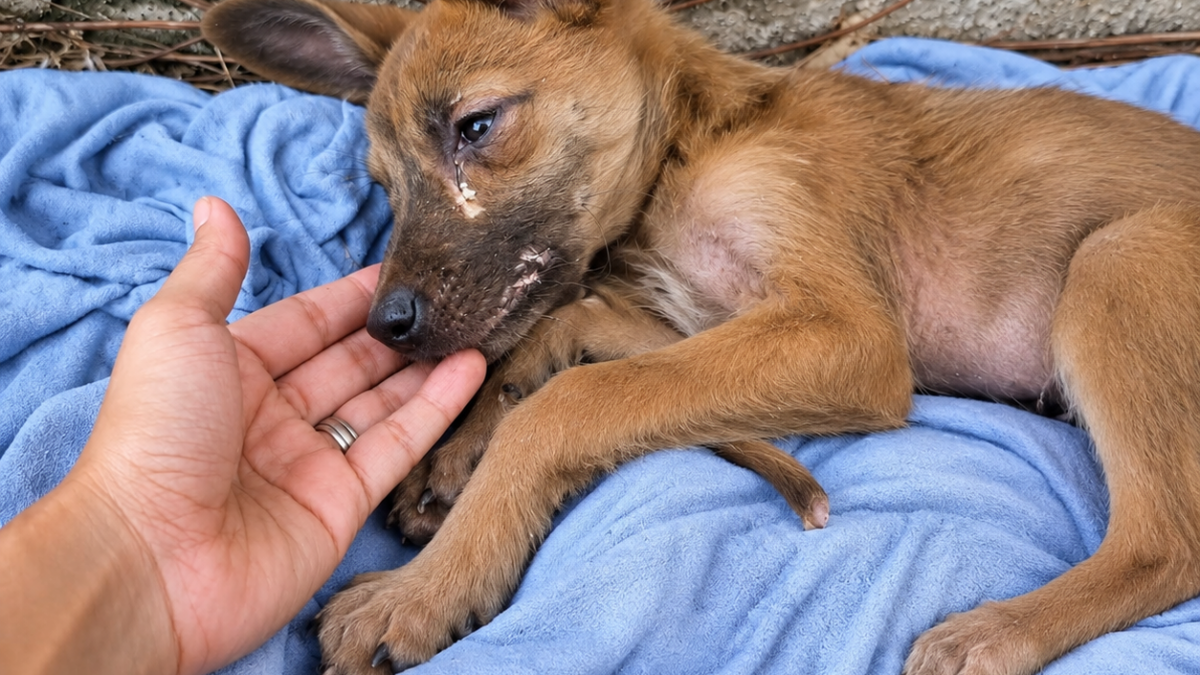
The first time I saw the puppy who would later be named Miracle, he was lying beside a dumpster so completely still that for several terrible seconds I thought the call had come too late, and the only sign that there was still life inside that tiny body was the shallow movement of his ribs beneath skin stretched tightly over bone.
He didn’t cry when I touched him, didn’t lift his head, didn’t try to crawl away, and when I slid my hands beneath him, his body felt frighteningly light and cold, as if hunger, dehydration, parasites, and whatever sickness had been eating away at him had already taken everything except the smallest stubborn spark.
What I didn’t know as I carried him toward my car was that the blood test waiting for us at the clinic would reveal a fight far worse than anything visible beside that dumpster—and before this little puppy’s story was over, we would discover who had left him there and why several people had very good reasons to hope he never survived long enough for anyone to ask questions.
My name is Elena, and by then I had worked with abandoned dogs long enough to recognize the look people sometimes call “giving up.”
I hate that phrase.
Animals don’t make philosophical decisions about death.
Their bodies simply reach a point where there is no energy left for fear.
That was Miracle.
The call came shortly after noon from a delivery driver who had stopped behind a row of small businesses to throw away packaging. He noticed something beside the dumpster that looked like an old blanket until the shape moved.
Barely.
When I arrived, the alley smelled of hot metal, garbage and rainwater trapped in cracked pavement. Flies circled near overflowing bags. A cardboard box had collapsed against the wall.
The puppy lay beside it.
Tiny.
Dirty.
His fur was dull and stuck together in places.
His gums were almost white.
His nose was dry.
His body was so dehydrated that when I gently lifted the skin over his shoulder, it stayed tented instead of snapping back.
“Hey, baby.”
Nothing.
I moved closer.
His eyes opened halfway.
No fear.
No curiosity.
Just exhaustion.
The delivery driver stood behind me.
“Is he alive?”
“Yes.”
“Barely?”
I didn’t answer.
I placed two fingers against the puppy’s chest.
Heartbeat.
Fast.
Weak.
Still there.
“I’m going to pick you up.”
He didn’t react.
That scared me more than a growl ever could.
A frightened puppy should resist strangers.
A healthy puppy should squirm.
This one simply let me lift him.
His head rolled against my forearm.
I could feel every rib.
“Do you know how long he’s been here?” I asked.
The driver shook his head.
“Maybe since morning. Maybe overnight.”
“Anyone see who left him?”
“The shop across the alley has cameras.”
I looked toward the building.
That information stayed somewhere in the back of my mind.
But not yet.
First, survival.
I placed Miracle on a blanket in the passenger seat and called ahead.
“This is Elena. I have a critical puppy coming in.”
“What happened?”
“Severe dehydration. Possible anemia. Barely responsive.”
“ETA?”
“Twelve minutes.”
“We’ll be ready.”
I drove faster than I should have.
Every red light felt personal.
At one intersection, Miracle’s head shifted slightly.
I reached across and touched his chest.
“Stay with me.”
His eyes opened.
For half a second, they met mine.
Then closed.
“You don’t have to do anything else.”
I turned toward the clinic.
“Just arrive.”
When we pulled into the emergency entrance, two technicians were already waiting with a stretcher.
The puppy disappeared through the doors before I had even finished explaining where he’d been found.
IV access.
Warm blankets.
Oxygen.
Fluids.
Blood draw.
Temperature.
Heart rate.
Blood pressure.
Everything happening at once.
Dr. Sarah Bennett came toward me holding the first lab sheet.
Her face tightened.
“Elena.”
I knew that tone.
“What?”
“His red-cell count is dangerously low.”
“How low?”
“Low enough that fluids alone aren’t going to solve this.”
I looked through the glass at the tiny body beneath three blankets.
“What does he need?”
“A transfusion.”
“How soon?”
“Now.”
She turned back toward the treatment room.
Then stopped.
“And that’s not the only thing I’m worried about.”
I stared at her.
“What else?”
“We’re running infectious-disease tests.”
“For what?”
“Several possibilities.”
“Sarah.”
She met my eyes.
“If those come back the way I think they might, anemia may not be the hardest thing this puppy is fighting.”
I looked toward the dog we’d found beside garbage.
At that moment, he still didn’t have a name.
He had an IV.
A weak heart.
A donor bag being prepared.
And a chance so small none of us were willing to say it out loud.
PART 2
The blood donor was a large, calm mixed-breed dog named Bruno who belonged to one of the veterinary technicians. Bruno had donated before, and while the nurses prepared the transfusion, I sat beside the treatment table watching the puppy breathe beneath warm blankets, every inhale so shallow that I found myself counting them without meaning to.
Sarah returned with another sheet.
“His anemia is severe enough that I don’t want to wait.”
“Do it.”
“We are.”
“Risks?”
“Yes.”
“What kind?”
“Reaction. Volume overload. Complications from the underlying disease. But without blood, his chance is worse.”
I nodded.
That was all I needed.
The line was connected.
Dark red blood began moving slowly through clear tubing toward a puppy who looked far too small to contain even a fraction of what he needed.
Nobody spoke for several minutes.
The room was full of people doing things, yet everything somehow felt silent.
A nurse watched his heart rate.
Another monitored temperature.
Sarah checked his gums repeatedly.
I sat near his head.
“Someone gave you this.”
His ear moved.
Maybe reflex.
“Don’t waste it.”
That was when Nina arrived.
She’d been across town collecting supplies.
She stopped in the doorway.
“Oh my God.”
“Yeah.”
“Name?”
“None.”
She moved closer.
The puppy’s eyes opened slightly.
Nina looked at the blood bag.
“Transfusion?”
I nodded.
“How bad?”
“Bad.”
She touched the blanket.
“Then he needs a good name.”
“Not yet.”
“Why?”
“Because I don’t want to name him and lose him.”
Nina looked at me.
“That has never stopped you before.”
She was right.
## The First Bite
A few hours after the transfusion began, something happened none of us expected.
The puppy smelled food.
Sarah had been preparing to test his appetite cautiously.
We expected nothing.
A tiny dish of wet food was placed near him.
His nose moved.
Once.
Then again.
His head lifted.
Not much.
Maybe an inch.
But it lifted.
I froze.
“Did you see?”
Sarah whispered:
“Yes.”
He moved his nose toward the dish.
His jaw opened.
One lick.
Then another.
Then a bite.
A tiny bite.
Nina covered her mouth.
The nurse smiled.
Sarah said:
“Slowly.”
Nobody cared about slowly emotionally.
The puppy ate four small mouthfuls.
Then stopped.
His head dropped.
Exhausted.
The room reacted as if he’d sprinted a mile.
I laughed.
Actually laughed.
For the first time since finding him.
Nina said:
“Now?”
“Now what?”
“Name.”
I looked at the puppy.
The blood bag still hung above him.
His body was still dangerously weak.
We had no idea what the viral tests would show.
No idea whether he would survive the night.
Still, he’d eaten.
Four bites.
“That isn’t a miracle.”
Nina looked at me.
“Not yet.”
## The Test Results
The next morning, the first infectious-disease results returned.
Then the second.
Sarah called me into a consultation room.
I hated consultation rooms.
They exist for bad news.
She sat.
I didn’t.
“What?”
“He’s positive for two serious viral infections.”
I stared.
“Both?”
“Yes.”
“You tested twice?”
“Yes.”
“False positive?”
“Unlikely.”
My stomach dropped.
“What viruses?”
She explained the results carefully.
The exact combination meant his immune system was fighting more than one major battle at once. One virus attacked rapidly and could cause severe gastrointestinal and systemic disease. The other complicated recovery and made his already fragile condition more dangerous.
I looked toward the door.
“He’s eating.”
“I know.”
“He wagged his tail once this morning.”
“I know.”
“So?”
“Elena.”
“So tell me he can beat this.”
Sarah leaned back.
“I can tell you he is doing better than his lab work suggests he should be.”
“That’s not the same.”
“No.”
“Can he survive?”
“Yes.”
“How likely?”
She didn’t answer fast enough.
I closed my eyes.
“Low.”
“Yes.”
I hated the word.
“But not zero.”
“No.”
That was enough.
## Miracle
When I returned to his kennel, Nina was sitting beside him.
The puppy had finished breakfast.
Every bite.
She looked up.
“Results?”
I nodded.
“Bad?”
“Very.”
She sighed.
Then looked at him.
The puppy lifted his head.
Tail moved.
Once.
Twice.
Nina smiled through tears.
“Miracle.”
I looked at her.
“What?”
“That’s his name.”
“Too dramatic.”
“He has two deadly viruses, severe anemia, needed blood, was found dying beside a dumpster, and he’s asking for lunch.”
The puppy wagged again.
Nina pointed.
“Miracle.”
I gave up.
“Fine.”
And just like that, the dog beside garbage became Miracle.
## Isolation
Because of the viral diagnoses, Miracle required strict isolation.
Separate room.
Dedicated gowns.
Gloves.
Shoes.
Bowls.
Cleaning protocols.
Disinfectants.
No contact with healthy unvaccinated dogs.
Everyone who entered followed procedure.
Miracle did not understand why people arrived looking like they were preparing for surgery.
He only understood that people kept arriving.
That mattered.
## Day Two
The second morning, Miracle looked brighter.
Not healthy.
Not even close.
But his eyes were more aware.
He watched movement.
Followed food.
His appetite remained strong.
Sarah said:
“I’m cautiously encouraged.”
Nina laughed.
“Veterinarian translation: she is thrilled.”
Sarah ignored her.
Miracle ate breakfast.
Then tried to lick the bowl after it was removed.
Good.
## The Dumpster Camera
While Miracle fought in isolation, I remembered the shop camera.
Daniel Ruiz, the animal-welfare investigator we’d worked with before, pulled the footage with the owner’s cooperation.
The camera faced most of the alley.
Timestamp.
Early morning.
A small van entered.
Stopped beside the dumpster.
Driver got out.
Opened rear door.
Lifted something wrapped in a towel.
Placed it near the wall.
Returned to van.
Drove away.
Not enough facial detail.
But vehicle visible.
Partial plate.
Logo faintly visible on the side.
Daniel called.
“Elena.”
“Yes?”
“You’re not going to like this.”
“Who?”
“Looks like a small commercial breeding and pet-resale operation outside the city.”
I stopped.
“What?”
“The logo matches a business called Happy Tails Family Pets.”
The name made me sick.
“Do they breed?”
“Some. Resell others.”
“Licensed?”
“Partially. Records are messy.”
“Do they have puppies?”
“Yes.”
“How many?”
“That’s what we’re going to find out.”
I looked through the isolation window.
Miracle slept beneath a blanket.
Two viruses.
Severe anemia.
Dumped beside trash.
Maybe not random.
## Day Three
His blood count improved slightly after transfusion.
Good.
Still anemic.
Still critical.
But alive.
He stood for half a second while trying to reach food.
Then collapsed.
I caught him.
“Easy.”
His tail wagged.
“You’re ridiculous.”
The nurse said:
“He has appetite.”
“That’s the nicest thing anyone has said all week.”
## Vomiting
That afternoon, Miracle vomited.
My hope disappeared instantly.
One episode.
Then another.
Sarah adjusted medication.
Anti-nausea support.
Fluids.
Monitoring.
The viral disease wasn’t going to let him win easily.
For twelve hours, he refused food.
That terrified me more than anything since the transfusion.
## The Night Watch
I stayed.
Again.
Miracle lay curled in isolation.
I sat outside the barrier where he could hear my voice.
“Tito would hate this room.”
Wrong dog.
I was exhausted.
I laughed.
“Sorry. Miracle.”
His ear moved.
“I’ve rescued too many dramatic animals.”
No response.
“Eat tomorrow.”
His breathing remained steady.
“That’s the deal.”
## The Breeding Facility
Daniel obtained access to inspect Happy Tails after inconsistencies in animal-health records and the vehicle evidence.
I went with the rescue veterinarian.
The property looked clean from outside.
That’s important.
Neglect doesn’t always look like rusted cages and filth.
The front office smelled like disinfectant.
Puppy photographs decorated the walls.
A sign read:
**Healthy Puppies Raised With Love**
Behind the public area, things changed.
Too many cages.
Too many animals.
Not all emaciated.
Not all visibly sick.
But several coughing.
Two puppies with diarrhea.
One lethargic.
Vaccination records incomplete.
Isolation procedures inadequate.
A staff member said:
“We separate the sick ones.”
“Where?”
She pointed toward a back room.
Three crates.
No dogs inside.
Daniel asked:
“What happened to the last sick puppy?”
The woman looked toward the manager.
Silence.
That silence mattered.
## The Manager
His name was Eric Vaughn.
Mid-forties.
Polished.
Friendly until questions became specific.
Daniel showed him a still image of the van.
“Is that your vehicle?”
“Yes.”
“Who drove it Tuesday morning?”
“I don’t know.”
“You keep logs?”
“Usually.”
“Where?”
“Office.”
The log was missing that morning.
Convenient.
Eric said:
“We don’t abandon animals.”
“Do you know this puppy?”
Daniel showed Miracle’s rescue photo.
Eric barely looked.
“No.”
One employee in the back visibly reacted.
Daniel noticed.
So did I.
## The Young Employee
Her name was Maya Collins.
Nineteen.
Part-time kennel worker.
She contacted Daniel privately that evening.
Her message was simple.
**I know the puppy. Please don’t tell Eric I called.**
Daniel arranged an interview.
Maya cried through most of it.
Miracle had been called “Number 17.”
Not a name.
Number.
He had become sick several days before.
Stopped playing.
Developed diarrhea.
Became weak.
The manager did not want to pay for emergency hospitalization.
“He said the puppy would probably die anyway.”
My hands clenched.
Maya continued.
“They moved him to isolation.”
“Did a veterinarian see him?”
“Not that I know.”
“Food?”
“He stopped eating.”
“Water?”
“We tried.”
“Then?”
She looked down.
“Eric said he’d take care of it.”
“Meaning?”
“I thought he meant a vet.”
“Did he?”
Maya shook her head.
“The next morning, the crate was empty.”
## Number 17
I went back to the clinic.
Miracle was awake.
I sat outside isolation.
“Number Seventeen?”
His tail moved.
“No.”
Another wag.
“Miracle.”
More wagging.
“Correct.”
## Day Four
His nausea improved.
He ate again.
Small amount.
Then more.
Sarah warned:
“One meal does not equal recovery.”
“I know.”
“You’re smiling.”
“I know.”
Miracle stood long enough to finish half the bowl.
His legs shook.
But he stayed upright.
Another victory.
## The Viral Battle
The next several days were not dramatic in the way social media stories prefer.
No one sudden miracle.
Just work.
Fluids.
Anti-nausea medication.
Antibiotics where secondary infection risk justified them.
Nutrition.
Temperature.
Cleaning.
Blood monitoring.
Rest.
Isolation.
More bloodwork.
Every day asked the same question.
Can his body keep going one more sunrise?
Every day, Miracle answered yes.
## The Business Records
Investigators found purchase and breeding records.
Miracle had come from a litter obtained through a partner breeder.
Some vaccination entries were incomplete.
Several animals had been sold quickly.
Others who became ill were recorded with vague notes:
**Returned.**
**Transferred.**
**Unsuitable.**
**Loss.**
Miracle’s line:
**#17 — GI signs — weak — non-saleable**
Non-saleable.
Not sick.
Not needs care.
Non-saleable.
His value ended when the sale became impossible.
## Eric’s First Defense
Eric denied dumping Miracle.
He said a staff member may have taken the puppy to a charity.
Which charity?
No record.
Who?
Didn’t know.
Why use company van?
Unknown.
Why leave by dumpster?
Denied.
Daniel showed him footage.
Eric said:
“That’s not clear enough.”
Technically true.
Then Maya’s testimony surfaced.
The story changed.
Eric said he’d instructed an employee to take the puppy to a rescue.
Which employee?
Could not remember.
No rescue received him.
Story changed again.
Truth was getting expensive.
## Day Seven
Miracle’s gums looked pinker.
Sarah showed me.
“See?”
“Yes.”
“That’s transfusion plus marrow response.”
“Good?”
“Yes.”
I stared.
She laughed.
“Fine. Very good.”
Miracle stood.
Took two steps.
Collapsed onto his bed.
Tail wagging.
## The First Toy
A nurse placed a soft toy near him.
He smelled it.
Ignored it.
Ten minutes later, he bit one corner.
Weakly.
Then rested his head on it.
I took a photo.
Not for posting.
For me.
A dog interested in a toy has spare energy.
Spare energy is luxury.
## Day Eight
He stood for the entire meal.
Four legs.
Body trembling.
But upright.
Everyone watched through the isolation window.
Nina whispered:
“Look at him.”
Miracle ate.
Then looked up.
Tail wagging.
The dog beside the dumpster was disappearing.
## Day Ten
He walked out of his kennel.
No one told him to.
Door opened for cleaning.
Miracle stepped forward.
One paw.
Then another.
The nurse stopped.
“Where are you going?”
Miracle walked past her.
Slow.
Determined.
Then suddenly sped up.
Not running exactly.
A clumsy puppy trot.
Tail swinging.
He headed toward Nina’s voice.
She crouched.
He climbed into her lap.
People cheered.
Sarah said:
“He’s contagious. Stop hugging him with unprotected clothing.”
Reality.
Everyone laughed.
## The Facility’s Other Puppies
Several animals from Happy Tails tested positive for infectious disease.
Not all severe.
Some had received vaccination.
Some hadn’t completed the series.
The facility’s isolation practices were inadequate enough that outbreaks could spread easily.
Authorities ordered quarantine and veterinary assessment.
Puppies were transferred or monitored under supervision depending on legal authority and ownership status.
One severely ill pup was hospitalized.
Another recovered with supportive care.
Miracle wasn’t the only one.
That changed the investigation from abandonment to a broader welfare case.
## Maya’s Guilt
Maya visited Miracle once he was medically safe enough for controlled contact.
She stood outside his room.
Crying.
“I should’ve stopped him.”
“You were nineteen.”
“I knew.”
“You suspected.”
“I knew Eric didn’t care.”
“That isn’t the same as knowing he’d dump a dying puppy.”
Maya shook her head.
“I could’ve called.”
“Yes.”
She looked at me.
I didn’t soften the truth.
“But you called now.”
Miracle walked toward her voice.
Tail wagging.
Maya crouched.
“I’m sorry.”
He licked her fingers.
Dogs are terrible at holding the grudges humans think they should.
## One Month
After roughly a month of treatment, the words we’d been waiting for arrived.
Sarah smiled.
Not cautious.
Actually smiled.
“He can leave the hospital.”
I stared.
“Say it again.”
“He can leave.”
“Healthy?”
“Recovering. Viral follow-ups still needed. Isolation precautions continue.”
“But alive.”
“Very.”
Miracle barked from the kennel.
The staff gathered.
Nurses.
Doctors.
Technicians.
People who had cleaned diarrhea at three in the morning.
People who had watched the transfusion.
People who had counted breaths.
One nurse cried before we even put the leash on.
Miracle thought the attention was excellent.
## Leaving the Hospital
He walked out.
No stretcher.
No blanket carrying him.
Walked.
Tail wagging.
The same doors he’d entered barely conscious.
Sarah knelt.
“You were not supposed to make this difficult.”
Miracle licked her face.
She cried.
Good.
## Foster Isolation
Miracle moved into my foster room because he still needed separation from other dogs until follow-up tests and veterinary guidance allowed safer integration.
The room had:
Bed.
Toys.
Food.
Water.
No other dogs.
Miracle immediately tried to escape.
Not because he was afraid.
Because he heard everyone else.
He wanted company.
I sat with him.
“You have two viruses.”
Tail wag.
“You are medically inconvenient.”
More wagging.
“You stay here.”
He climbed into my lap.
Negotiations failed.
## The Virus Follow-Ups
Week after week, we tested.
Improving.
Markers declining.
Clinical condition strong.
Appetite ridiculous.
Energy worse.
By worse, I mean better.
Miracle discovered running.
He ran because he could.
Across the room.
In circles.
Into the bed.
Out again.
Puppies have no respect for medical history.
## Food
His appetite never faded.
Breakfast disappeared.
Lunch disappeared.
Dinner disappeared.
We used slow feeders because he inhaled meals.
He would stare afterward as if we had violated a contract.
“You ate.”
Tail wag.
“You are not starving.”
Stare.
“There is another meal.”
Stare.
“I don’t negotiate with terrorists.”
Nina said from the doorway:
“You absolutely do.”
Correct.
## The Court Case Builds
Eric faced investigation for animal abandonment, failure to provide adequate veterinary care, falsified or incomplete welfare documentation, and business violations supported by local law.
His lawyer argued:
The puppy was critically ill already.
That didn’t help.
It meant he knew care was needed.
They argued:
The business believed the puppy would die.
That didn’t help either.
A belief that an animal may die does not authorize dumping him beside garbage.
## The Camera Gets Better
A second camera was discovered.
A warehouse farther down the alley.
Different angle.
Better view of the driver.
Eric.
Clear enough.
He exited.
Carried Miracle wrapped in a towel.
Placed him beside the dumpster.
Looked around.
Returned to van.
Drove away.
No mystery left.
Daniel called.
“We have him.”
I sat down.
“What did he say?”
“His attorney wants to negotiate.”
I looked at Miracle chewing a toy.
“Of course.”
## Eric’s Explanation
At formal interview, Eric said:
“I thought the puppy was dying.”
Daniel answered:
“So you took him to a clinic?”
“No.”
“A rescue?”
“No.”
“Animal control?”
“No.”
“An emergency veterinarian?”
“No.”
“Then where?”
Silence.
Finally:
“I panicked.”
Daniel asked:
“Why the dumpster?”
“I didn’t put him in the dumpster.”
That was Eric’s defense.
Not inside.
Beside.
As if geography made compassion.
## The Business Closes Temporarily
Regulators suspended operations pending compliance review.
Animals could not be sold during the investigation.
Veterinary records audited.
Quarantine enforced.
Financial losses mounted.
People online called it revenge.
I didn’t.
Accountability isn’t revenge.
Miracle didn’t need Eric ruined.
He needed Eric stopped from making the same choice with another puppy.
## Social Media Finds Miracle
The story spread.
Before-and-after photos.
Dumpster.
Transfusion.
First steps.
Running.
People loved the name.
**Miracle Puppy.**
Applications appeared before he was even medically cleared.
Some said:
“I need him.”
No.
Nobody needs a viral dog.
Miracle needed the right home.
## The Wrong Applications
One family wanted him because their daughter followed the rescue page.
No veterinary history.
No fence.
Very young children.
Long working hours.
Rejected.
Another family wanted to “build a social media account around his journey.”
Rejected before I finished reading.
Miracle was not content.
Another asked if he would stay small.
No.
Then lost interest.
Good.
## The Right Kind of Questions
The applicants I liked asked boring questions.
What food?
Vaccination schedule?
Long-term effects of the viruses?
Can he live with other dogs later?
What emergency symptoms should we know?
How much exercise?
Any digestive sensitivity?
Can we afford future care?
Boring questions build good homes.
## The Hearing
Eric eventually appeared before the court.
Maya testified.
The prosecutor asked:
“Did Mr. Vaughn know Number Seventeen was severely ill?”
“Yes.”
“Did he discuss veterinary hospitalization?”
“I asked.”
“What did he say?”
Maya looked toward Eric.
“He said it would cost more than the puppy was worth.”
The room went silent.
There it was.
Worth.
Money.
Again.
“What did you understand that to mean?”
“That he wasn’t going to pay.”
“What happened the next morning?”
“The puppy was gone.”
## Non-Saleable
The prosecutor showed the record.
**#17 — GI signs — weak — non-saleable**
Then the video.
Eric carrying Miracle.
Leaving him.
The defense argued he believed someone would find the puppy quickly.
The prosecutor asked:
“Then why did you not notify anyone?”
No answer.
“Why no call?”
Silence.
“Why no note?”
Silence.
“Why place him behind businesses early in the morning?”
Silence.
## The Outcome
The court imposed penalties supported by the evidence.
Animal-business restrictions.
Fines.
Loss of licensing privileges for a defined period.
Prohibition or limitation on possessing/selling animals under applicable rules.
Financial responsibility related to seized animals and medical care where legally permitted.
The facility did not reopen in its previous form.
Some people wanted prison.
Some wanted permanent ruin.
The system gave what it could prove.
What mattered most to me:
No more sick puppy quietly labeled non-saleable and removed.
## Miracle Doesn’t Care
While adults argued in court, Miracle discovered socks.
Every rescue dog eventually becomes a criminal.
He stole one from Nina.
Ran.
She chased.
He thought this was a game.
She shouted:
“Give it back!”
Miracle ran faster.
A dog once unable to lift his head now outrunning a woman across the living room.
That was justice.
## Integration
Follow-up testing finally gave us the clearance we’d been waiting for.
Miracle could begin carefully meeting vaccinated healthy dogs.
First dog:
Benny.
Senior.
Patient.
Unimpressed.
Miracle exploded with joy.
Play bow.
Bounce.
Bark.
Benny walked away.
Miracle followed.
Benny growled.
Miracle stopped.
Good.
Ten minutes later, they slept in the same room.
## Puppyhood Arrives Late
Miracle had lost weeks to illness.
Once healthy, puppyhood arrived all at once.
Chewing.
Running.
Stealing.
Digging.
Barking at reflections.
Falling asleep in strange positions.
Waking at five.
Demanding food.
Destroying a cardboard box.
I loved every irritating second.
## His First Bath Without Medical Need
Not medicated.
Not emergency cleaning.
Just because he smelled bad after rolling in mud.
He hated it.
Tried to escape.
Covered me in water.
Nina laughed.
I said:
“This is healing.”
## The Family
Then came the Martinez family.
Laura and Ben.
Their son Caleb, twelve.
Their daughter Mia, nine.
One older female dog named Rosie.
They had lost a previous dog to cancer after years of treatment.
Their veterinary references were excellent.
They did not mention Miracle’s story in the first paragraph.
Good.
They wrote:
**We’re looking for a young dog with enough energy to grow up with our children and enough confidence to live with our calm older dog. We understand Miracle has a medical history and want to review all of it before deciding whether we’re the right home.**
Perfect.
## First Meeting
Laura sat.
Miracle climbed into her lap immediately.
Ben laughed.
“Subtle.”
Caleb threw a toy.
Miracle ran.
Mia squealed.
Rosie looked tired already.
Miracle tried to play.
Rosie corrected him gently.
He listened.
Another good sign.
## The Medical File
I gave them everything.
Transfusion.
Viruses.
Bloodwork.
Isolation.
Vaccination considerations.
Possible long-term monitoring.
Laura read carefully.
“What is the worst-case future concern?”
Excellent question.
Sarah explained potential complications depending on which viral effects lingered, though Miracle’s recovery was strong.
Ben asked:
“Anything we should budget annually beyond normal care?”
Better.
Mia asked:
“Does he still get scared of dumpsters?”
We laughed.
“He has never mentioned it.”
## Home Visit
Fenced yard.
Secure gates.
No poisonous plants accessible.
Dog beds.
Children understood food rules.
Rosie had her own space.
Miracle explored.
Found kitchen.
Of course.
Then backyard.
Ran.
Caleb ran with him.
Mia followed.
Laura looked at me.
“I think he likes it.”
Miracle stole a gardening glove.
“Yes.”
## Adoption Day
I packed his things.
Medical records.
Food.
Medication no longer extensive.
Favorite toy.
Blanket.
Slow feeder.
One sock we should not have included.
Nina slipped it in.
“Sentimental.”
“You encourage crime.”
“Yes.”
Miracle wore a red harness.
Laura crouched.
“Ready?”
Tail.
I knelt.
“Do you remember the dumpster?”
He licked my chin.
“Good answer.”
## The Car
Miracle jumped into the back seat between the kids.
No fear.
No hesitation.
The tiny puppy carried into my car like a limp rag now climbed into a family vehicle because he expected something good at the destination.
That mattered.
## First Night
Photo.
Miracle asleep upside down.
Mouth open.
Caleb’s hand beside him.
Second photo.
Food bowl empty.
Caption:
**He believes dinner was an appetizer.**
Third.
Mia under a blanket.
Miracle on top of her.
Caption:
**Personal space officially gone.**
I cried.
## The First Month Home
Miracle grew.
Muscle.
Coat.
Confidence.
Energy.
Too much energy.
Laura texted:
**You said he was sweet.**
I replied:
**He is.**
**He ate part of a shoe.**
**Sweetly.**
## Rosie
Rosie became his teacher.
Door manners.
Play limits.
When to rest.
Where not to sleep.
Miracle learned most of it.
Eventually they slept touching.
Old dog.
Young survivor.
Family.
## The Dumpster Site
I drove past months later.
Same alley.
Same dumpster.
Different bags.
Nothing special.
I stopped.
Looked.
The place seemed small.
I had remembered it as enormous.
Trauma makes locations bigger than they are.
Miracle had outgrown it.
## Maya Visits
Maya had left Happy Tails.
She started training as a veterinary assistant.
She visited Miracle after adoption.
The family agreed.
Miracle greeted her like anyone else.
Tail.
Kisses.
No judgment.
Maya cried.
“I think about him every day.”
Laura said:
“Then do something good with that.”
She did.
## New Career
Maya later worked at a shelter clinic.
Every intake.
Every sick puppy.
She said Miracle changed the question she asked herself.
Not:
Is this my responsibility?
But:
Who needs to know?
That’s how one rescue prevents another abandonment.
## One Year
Miracle’s rescue anniversary.
Dog-safe cake.
Rosie stole some.
Miracle retaliated by stealing her toy.
Children laughed.
Before-and-after photo.
Dumpster.
Couch.
Impossible.
## Eric’s Appeal
Eric attempted to reduce some business restrictions.
His lawyer argued the case had become over-politicized online.
Possible.
Internet anger can distort.
But the evidence remained.
Video.
Records.
Maya.
Medical condition.
The core findings stood.
The business never returned to the same puppy-selling model.
## Eric Sees Miracle
At some point, he saw a public update.
Healthy.
Running.
Big.
Happy.
He sent a letter through attorneys.
Not to reclaim him.
To apologize.
It said:
**I believed he was going to die and made the worst decision of my life because I did not want to face the cost or responsibility. Seeing him alive has forced me to understand exactly what I abandoned.**
I read it.
Then put it away.
Miracle didn’t need it.
## Forgiveness
People asked whether I forgave Eric.
Not important.
Accountability mattered.
Change mattered.
Miracle’s safety mattered.
My emotional absolution did not.
## Two Years
Miracle grew into a large, athletic young dog.
The name still sounded funny.
Miracle.
People expected delicate.
He was chaos.
He loved water.
Mud.
Children.
Food.
Especially food.
## Food Security
For a long time, he cleaned every bowl.
Then one evening, Laura texted:
**He left some dinner. Should I worry?**
I called.
“How is he acting?”
“Normal.”
“Vomiting?”
“No.”
“Energy?”
“Insane.”
“Then maybe he was full.”
Silence.
We both understood the significance.
A puppy who once fought for every bite had learned fullness.
## Medical Follow-Ups
Bloodwork normal.
Anemia gone.
Immune recovery strong.
No major complications.
Sarah shook her head.
“What?”
“I did not think this was the outcome.”
“Say miracle.”
“No.”
“Come on.”
“Absolutely not.”
## Three Years
Miracle became slightly calmer.
Slightly.
He followed Caleb everywhere.
Mia taught him tricks.
Sit.
Down.
Spin.
Touch.
Find it.
Miracle loved scent games.
## The Kids Grow
Caleb entered high school.
Mia became a teenager.
Miracle remained the family clown.
He appeared in birthday photos.
Holiday photos.
School-project videos.
No one mentioned viruses anymore.
That’s healing.
The diagnosis becomes history instead of identity.
## Rosie Ages
The older dog slowed.
Miracle adjusted.
Played more gently.
Waited for her.
Slept beside her.
The ridiculous puppy had become considerate.
Mostly.
## Rosie’s Goodbye
Cancer.
Eventually.
The family chose home euthanasia.
Miracle was there.
He smelled Rosie.
Then lay beside her bed after.
Grief entered his life.
The family supported him.
## Becoming the Older Dog
Years passed.
Another rescue puppy entered the Martinez home temporarily.
Miracle hated the energy.
Laura laughed.
“You were worse.”
Miracle stared.
No memory.
Perfect.
## Five Years
Miracle’s muzzle began showing gray.
That felt impossible.
The dog who almost died as a puppy had reached middle age.
Every gray hair felt stolen from the dumpster.
## The Blood Donor
Bruno, the dog who donated the transfusion years earlier, died of old age.
His technician sent me a message.
I told Miracle’s family.
They sent a photo of Miracle running in the yard with one sentence:
**Please tell Bruno’s family his blood got used well.**
I cried.
## The Gift
A transfusion isn’t metaphorical when you’re watching it.
One animal’s blood literally becomes part of another animal’s survival.
Bruno never knew.
That’s okay.
## Six Years
Miracle developed mild arthritis after years of running.
Normal.
Medication later.
Joint supplements.
Weight management.
The most ordinary problems became victories.
## The Word Miracle Changes
At first, his name meant:
Impossible survival.
Later, it meant:
Dog who steals bread.
Dog who snores.
Dog who hates nail trims.
Dog who sits too close.
Miracle became ordinary.
That’s the best thing that can happen to a dramatic rescue name.
## Eric’s Business Is Gone
Years later, the old storefront that had once sold puppies became a hardware shop.
Someone sent me a photo.
No sign.
No cages.
No animals.
I felt nothing dramatic.
Good.
Systems changing matters more than revenge fantasies.
## Maya’s Clinic
Maya became licensed as a veterinary technician.
She worked emergency shifts.
One night, a puppy came in severely anemic.
Needed transfusion.
She called me the next morning.
“You know what I thought?”
“Miracle.”
“Yes.”
“Did the puppy make it?”
“So far.”
Good.
Stories travel through people.
## Seven Years
Miracle became senior.
Not very senior.
Enough.
Caleb left for college.
Miracle searched his room.
Then learned video calls meant nothing to dogs.
When Caleb came home, Miracle lost his mind.
Mia eventually left too.
The house changed.
Miracle adjusted.
## Laura and Ben
They became empty nesters with one enormous dog who still believed he was a puppy.
Miracle slept between them on the couch.
No shame.
## The Old Lab Results
I found a copy while cleaning files.
Severe anemia.
Two viruses.
Transfusion.
Critical.
I stared.
That paper once felt like a death sentence.
Now it was dusty paperwork.
Beautiful.
## The Dumpster Photo
We rarely used it anymore.
Rescue organizations have to be careful.
Suffering attracts attention.
But an animal shouldn’t be trapped forever in the worst image of their life.
For Miracle’s later updates, I preferred the yard.
The couch.
The family.
## Eight Years
Miracle developed kidney changes.
Early.
Manageable.
Diet adjustment.
More frequent labs.
Laura took it seriously.
No panic.
## The Appetite
Miracle still loved food.
So when he eventually became picky, everyone worried immediately.
Bloodwork.
Medication.
Improved.
Another year.
## The Children Return
Caleb came home with a partner.
Mia with friends.
Miracle greeted everyone.
The family widened.
He belonged at the center.
## Nine Years
Gray muzzle.
Slower legs.
Warm beds.
Full bowl.
No hunger.
No isolation.
No viruses defining him.
## The Final Diagnosis
Cancer.
Not related to the old infections.
Age.
Life.
A mass found during imaging.
Treatment options discussed.
Surgery possible but risky.
Quality of life.
Laura asked:
“What would you do?”
I hate that question.
Sarah answered carefully.
“I would ask what gives him the best good time, not the longest calendar.”
They chose treatment that prioritized comfort with a reasonable chance of extending good life.
It worked.
For months.
## Good Months
Miracle walked.
Ate.
Slept.
Played a little.
Sat in the yard.
Watched nothing.
Smelled everything.
Loved.
## The Final Decline
Eventually, the cancer progressed.
Appetite dropped.
Energy.
Pain harder to control.
Laura called me.
“I think we’re there.”
I drove over.
Miracle lay on the same kind of soft blanket he’d once had at the clinic.
Now thick.
Warm.
Home.
I sat.
“Hey.”
Tail moved.
Slow.
Still.
## The Name
I laughed.
“You really made us commit to that name.”
Miracle breathed softly.
“You know how arrogant it sounded?”
Tail.
“Miracle.”
His eyes closed.
## One Last Meal
Chicken.
Two bites.
Peanut butter.
One lick.
Enough.
A dog once fighting to eat could now refuse safely.
Food wasn’t survival anymore.
Choice.
## The Kids Come Home
Caleb drove overnight.
Mia flew in.
Both arrived.
Miracle recognized them.
Tail.
Even tired.
Family complete.
## The Final Night
Everyone slept in the living room.
Miracle on his bed.
Ben in a chair.
Laura on the floor.
Mia beside him.
Caleb under a blanket.
No one wanted him alone.
The first time he’d been found, he had no one.
The last night, there wasn’t room around him for another person.
## Morning
Sarah came to the house.
Older.
We all were.
She knelt.
Touched Miracle’s head.
“Remember me?”
Tail.
She laughed.
“Of course.”
## Goodbye
Sedation.
Relaxation.
Breathing slows.
Hands everywhere.
Laura whispered:
“You never have to be hungry again.”
Ben touched his shoulder.
Caleb held a paw.
Mia cried into his fur.
I sat near his head.
Sarah asked:
“Ready?”
No one was.
Laura nodded.
Final medication.
One breath.
Another.
Still.
Sarah listened.
Waited.
“He’s gone.”
## The Silence After
For several minutes, nobody moved.
Then Ben laughed suddenly.
We looked.
Miracle had died with one paw resting on a plastic food bowl he’d been nudging earlier.
Of course.
Even at the end.
Food.
We laughed through tears.
Perfect.
## The Ashes
The family kept them.
Simple wooden box.
Name:
**Miracle**
No dates on the front.
They didn’t need the dumpster date.
## The Rescue Room
We eventually put a small framed note in the clinic.
Not his photo.
Just:
**One bite can be enough to start hope.**
Sarah pretended she hated it.
She didn’t.
## What Happened to Eric
People asked for years.
“He abandoned Miracle. Did karma get him?”
The business closed.
Restrictions.
Fines.
Reputation damaged.
He changed careers later.
Maybe regret followed.
I don’t know.
Miracle stopped needing that information the day he left the alley.
## The Real Revenge
The real revenge was a puppy labeled **non-saleable** becoming expensive for years while nobody cared what he could be sold for.
It was hospital bills.
Follow-up tests.
Food.
Toys.
Fence repairs.
Arthritis medication.
Cancer treatment.
All paid because his life mattered.
No return on investment.
No sale.
No profit.
Only love.
## Number Seventeen
I kept a copy of that record.
**#17 — GI signs — weak — non-saleable**
Sometimes I rewrote it mentally.
**Miracle — hungry — alive — priceless**
Corny.
True.
## The Dumpster
Years later, the alley was renovated.
The old dumpster disappeared.
New businesses.
Fresh pavement.
Nobody passing there knew what happened.
Good.
I never wanted the worst place in Miracle’s life to become sacred.
His home mattered more.
## The Donor Blood
Sometimes I think about Bruno.
One calm dog lying still while blood was collected.
One puppy receiving it hours later.
A life moving through tubing.
No drama needed.
## The Two Viruses
People loved saying Miracle “defeated two deadly viruses.”
He did.
But not alone.
Immune system.
Medicine.
Fluids.
Nutrition.
Isolation.
Cleaning.
Time.
Staff.
Care.
Stories call one body miraculous because the teamwork underneath is invisible.
## The First Bite
That remains my favorite moment.
Not running.
Not adoption.
Not old age.
The first bite.
Because nobody knew the ending.
We had no evidence he would survive.
He simply smelled food.
Lifted his head.
Ate.
One bite.
That was enough for hope to enter the room.
## If I Could Go Back
I would kneel beside the dumpster again.
“Hey.”
Miracle would not move.
“You can’t hear what comes next.”
Maybe an ear.
“You are going to hate the clinic.”
Nothing.
“Someone is going to give you blood.”
“You’re going to test positive for two viruses.”
“You’ll scare doctors.”
“You’ll vomit.”
“You’ll refuse food.”
“Then you’ll eat again.”
“You’ll stand.”
“You’ll run.”
“You’ll steal socks.”
“You’ll live with children.”
“You’ll become old enough for arthritis.”
“You’ll get cancer.”
“You’ll have a family around you when that time comes.”
“You’ll die years from now in a room full of people.”
Then I’d look at the dumpster.
“This place gets almost none of your story.”
That’s what I would tell him.
## What Rescue Really Was
Not finding him.
That was the beginning.
Rescue was:
Calling ahead.
Placing the IV.
Warming him.
Transfusion.
Testing.
Isolation.
Cleaning.
Feeding.
Watching.
More testing.
Hospital discharge.
Foster quarantine.
Vaccination.
Behavior work.
Applications.
Home visit.
Adoption.
Years.
Cancer care.
Goodbye.
One rescue call became an entire life.
## The People Who Walked Past
We never knew how many people had passed the alley before the delivery driver stopped.
Maybe none.
Maybe many.
I stopped wondering.
One stopped.
That’s what mattered.
## Invisible Animals
That’s the danger.
Dogs beside dumpsters.
Cats under cars.
Animals in backyards.
Puppies in businesses.
Suffering can become background if people assume somebody else will handle it.
Miracle lived because one person decided the shape beside garbage deserved a closer look.
## The Business Lesson
The case changed how we worked with local puppy sellers.
More inspections.
Better reporting.
Clearer isolation standards.
Staff training.
Whistleblower contacts.
Not every seller abusive.
Not every breeder cruel.
But systems need accountability before an animal becomes “non-saleable.”
## Maya’s Story
She became one of our strongest advocates for young employees.
“If a boss tells you something feels normal and your gut says it isn’t, call someone.”
Her guilt became prevention.
Good.
## The Family’s Final Photo
Not Miracle as a puppy.
The last Christmas before his decline.
Gray muzzle.
Red blanket.
Caleb and Mia on either side.
Laura behind.
Ben holding a mug.
Miracle asleep.
No hero pose.
No transformation collage.
Family.
## THE END
When Miracle was found beside the dumpster, his body had already begun shutting down.
He was dehydrated enough that skin stayed tented when touched.
His gums were pale from anemia.
His strength had disappeared.
He didn’t cry.
Didn’t run.
Didn’t fight.
He simply lay there.
That image makes people say:
“He had given up.”
I don’t believe that anymore.
Miracle hadn’t given up.
He had run out.
Out of fluid.
Out of blood cells.
Out of energy.
Out of strength.
Hope is a human word.
Bodies need resources.
When we gave his body resources, it answered.
Warmth.
Fluids.
Blood.
Medication.
Food.
Rest.
The first response wasn’t dramatic.
One bite.
That’s all.
One bite of wet food.
Then another.
People in the clinic smiled because suddenly the puppy we thought might die before morning had asked his body to do one more thing.
Eat.
The next day, his bloodwork told us the fight was worse than we knew.
Two dangerous viruses.
Severe anemia.
A puppy with every statistical reason to fail.
Still, he ate.
That is why Nina named him Miracle.
Not because medicine stopped mattering.
Not because prayer replaced treatment.
Not because he magically healed.
Because sometimes the improbable becomes visible one tiny action at a time.
A bite.
A tail wag.
A paw under the body.
Standing.
Walking.
Running.
The miracle was not one impossible event.
It was dozens of ordinary biological processes finally being given enough support to continue.
Then we discovered the other story.
Miracle had not simply wandered to a dumpster.
Someone had brought him.
He had been known.
Recorded.
Labeled.
Number Seventeen.
Weak.
Non-saleable.
Those words explain a particular kind of cruelty.
Not rage.
Not violence.
Accounting.
The puppy stopped being profitable.
Medical care cost money.
So his value changed.
That’s what the person responsible thought.
Miracle’s life proved the calculation wrong.
Not because he later became famous.
Not because he inspired people.
Not because his story went viral.
He proved it wrong by needing things for years and still being worth those things.
Food.
Vaccines.
Beds.
Toys.
Veterinary care.
Time.
Attention.
Arthritis medication.
Cancer treatment.
No profit returned.
No puppies sold.
No business benefit.
Just a life.
That was enough.
The court imposed consequences.
The business closed in its old form.
The person who abandoned him lost control over animals for a time and carried a public record of what happened.
Those outcomes mattered.
But Miracle never once looked at the legal file and felt better.
Dogs don’t heal from punishment happening somewhere else.
They heal from safety happening where they are.
Miracle healed in a hospital room.
Then a foster room.
Then a yard.
Then the Martinez house.
He healed when breakfast happened every morning.
When hands touched him without hurting him.
When Rosie corrected his ridiculous puppy behavior.
When Caleb threw toys.
When Mia covered him with blankets.
When Laura paid bills.
When Ben fixed fences.
When the kids went away and came home.
When his muzzle went gray.
That’s the life abandonment tried to erase before it even started.
Years later, Miracle became sick again.
This time, no one put him in a van and left him beside garbage.
The family rearranged schedules.
Called specialists.
Discussed options.
Counted good days.
Bought medication.
Cooked chicken.
Sat beside him.
The difference between abandonment and love is often not whether suffering happens.
Suffering happens in every life.
The difference is whether someone stays.
On Miracle’s final night, everyone stayed.
The puppy once lying beside a dumpster with nobody touching him became an old dog surrounded by hands.
The puppy whose body had been cold became the dog beneath warm blankets.
The puppy whose food had stopped became the old dog allowed to refuse his last meal because nobody feared the bowl would disappear tomorrow.
The puppy called non-saleable became priceless to people who never once expected him to earn anything.
That’s the ending.
Not revenge in a courtroom.
Not humiliation.
Not somebody else’s ruin.
Miracle’s victory was becoming ordinary.
Ordinary enough to chew shoes.
Ordinary enough to annoy an older dog.
Ordinary enough to become picky.
Ordinary enough to grow gray.
Ordinary enough to develop arthritis.
Ordinary enough to die of diseases associated with having lived a long life.
That’s what we wanted when we started the transfusion.
We didn’t have words for it then.
We just wanted morning.
Morning came.
Then another.
Then a month.
Then a home.
Then years.
And the puppy whose story began beside a dumpster eventually became a dog whose family couldn’t remember the house without him in it.
If that isn’t a miracle, I don’t know what is.
**THE END**








