PART 2: They Found an Old Dog Collapsed on a Sidewalk—Then His Microchip Revealed the Family Who Left Him Behind
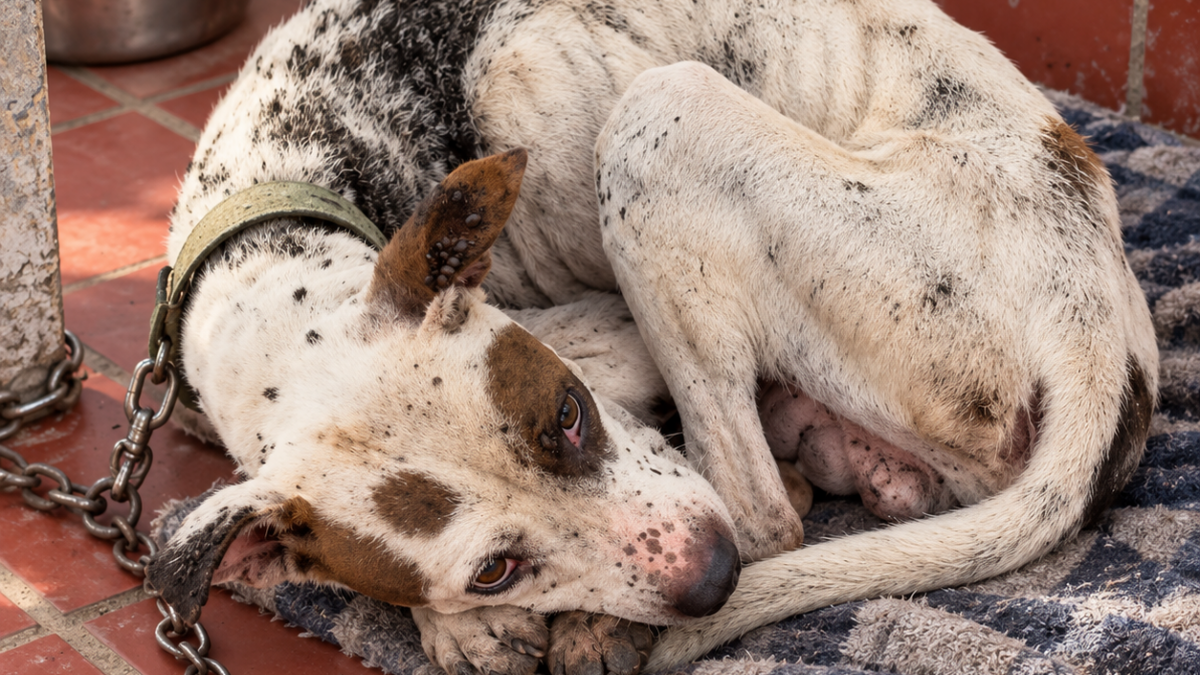
PART 2
I stared at the technician, certain for a second that I had misunderstood her.
“What exactly did he say?”
She lowered the phone.
“He asked where we found the dog.”
“Did you tell him Valentino’s condition?”
“I told him we had an older male dog registered under his name, that the dog was severely underweight and covered in ticks, and that we were treating him.”
“And?”
“He repeated the question.”
I looked through the glass window into the treatment room.
Valentino was lying beneath a light blanket while Sarah checked his fluids.
He looked impossibly small on the padded table.
The technician, Maya, glanced back at the phone.
“He’s still on the line.”
“Put him on speaker.”
She did.
“This is Emma Hayes with County Hope Animal Rescue,” I said. “Who am I speaking with?”
“Raymond Cole.”
“Mr. Cole, the microchip information identifies you as Valentino’s owner.”
There was a pause.
“That dog’s name is Duke.”
I looked toward Valentino.
Duke.
For the first time since finding him, I had something from his life before us.
“How old is Duke?”
“About ten. Maybe eleven.”
Our vet had estimated between nine and twelve.
“Can you tell me when you last saw him?”
Another pause.
“A while ago.”
“How long is a while?”
“I don’t keep dates.”
I felt my jaw tighten.
“Mr. Cole, he was found collapsed on a sidewalk today. He is severely underweight, significantly anemic, and carrying one of the worst tick infestations our clinic has treated this year.”
Silence.
Then he said, “Well, he wandered off.”
“When?”
“I told you. A while back.”
“Did you report him missing?”
“No.”
“Did you contact the shelter?”
“No.”
“Post anywhere?”
“No.”
Luis was standing in the doorway now.
He raised his eyebrows at me.
I continued carefully.
“Where was Duke living when you last had him?”
“At my old property.”
“What kind of property?”
“A warehouse yard.”
“Did he live inside your house?”
“No. He was a guard dog.”
There it was.
Not necessarily cruelty.
Not yet.
Many working dogs live outdoors and are properly sheltered, fed, treated, and loved.
But Valentino’s body was beginning to tell us a different story.
“How long did he guard the property?”
“Years.”
“How many?”
“Eight, maybe nine.”
I looked again at him.
Eight or nine years.
Nearly his entire life.
“What happened to the property?”
“I sold it.”
“When?”
“Couple months ago.”
“And Valentino?”
“I just told you. He disappeared.”
Something in his voice changed when he said it.
Not sadness.
I had spoken with devastated owners whose animals vanished.
They remembered dates.
Weather.
The exact gate left open.
The last place they searched.
They asked whether their dog was hurt before asking anything else.
Raymond Cole sounded inconvenienced.
I kept my voice neutral.
“Mr. Cole, we need you to come to the clinic and speak with animal control regarding ownership and medical responsibility.”
His answer came quickly.
“I’m not paying for that.”
Nobody had mentioned money.
Luis and I looked at each other.
“Sir, I didn’t ask you about payment.”
“Well, I’m telling you now. I’m not paying thousands of dollars because some old dog picked up ticks.”
I felt anger climb through me.
But anger is dangerous when you need information.
So I lowered my voice instead.
“Did you leave Valentino—Duke—at the warehouse when you sold the property?”
“No.”
“Where was he supposed to go?”
“He got loose.”
“You said he disappeared.”
“Same thing.”
“When did you notice?”
“I don’t know.”
“You lived with this dog for nearly a decade and you don’t know when he disappeared?”
“He wasn’t a house pet.”
The sentence seemed to change the temperature in the room.
Luis folded his arms.
Maya looked down.
I forced myself to ask the next question evenly.
“What was he?”
“A dog.”
“No, Mr. Cole. You just made a distinction. You said he wasn’t a house pet. So I’m asking what he was to you.”
“He watched the yard. That was his job.”
“And after you sold the yard?”
Raymond exhaled impatiently.
“Lady, I’m done with this conversation. If you found him, keep him.”
Then he hung up.
For several seconds, nobody spoke.
Maya was the first.
“Did he just surrender him over the phone?”
“Not legally.”
Luis shook his head.
“Nine years.”
I looked through the window again.
Valentino had spent most of his life guarding a man’s property.
Listening at night.
Watching gates.
Barking at strangers.
Staying where he was placed.
And now that the property was gone and age had slowed him, he had somehow ended up sleeping alone on concrete.
I hated the story my mind was beginning to build.
But I had learned not to turn suspicion into fact.
“We document everything,” I said.
Luis nodded.
“Animal control?”
“Now.”
Officer Megan Shaw arrived forty minutes later.
She had worked cruelty and neglect cases for over a decade and had the habit of listening without reacting until she had every fact.
She photographed Valentino.
The ticks.
His body condition.
His paws.
The sores beneath his collar line.
She collected his microchip information and our notes from the phone call.
Then she asked Sarah for the medical assessment.
Sarah spoke plainly.
“Severe tick infestation. Moderate to severe anemia. Dehydration. Significant weight loss. Dermatitis. Several pressure sores and old abrasions. No fresh traumatic injuries that suggest a vehicle strike.”
“Could all this happen after wandering loose?”
Sarah considered it.
“Some of it could. A dog outdoors can pick up ticks very quickly depending on the area. Weight loss could happen while stray. But the severity of the infestation and his general condition suggest prolonged neglect or prolonged lack of care. I cannot tell you exactly where that neglect occurred.”
Megan nodded.
“That distinction matters.”
“I know.”
“Can he recover?”
“I think so.”
“Good.”
Megan looked at me.
“I’m going to visit the old warehouse.”
“I’m coming.”
“No.”
I stared at her.
“Why?”
“Because you’re angry.”
“I’m fine.”
“You just said ‘I’m fine’ with your teeth clenched.”
Luis covered a cough that sounded suspiciously like laughter.
Megan continued.
“You’re a witness and rescuer. Let me investigate.”
I hated that she was right.
So I stayed.
Valentino needed us more than I needed answers.
That afternoon, his tick treatment began working.
Bravecto was used under veterinary supervision as part of his parasite-control plan, while Sarah’s team continued to remove heavily attached clusters and monitor him closely.
The process was ugly.
There was no cinematic moment where hundreds of parasites vanished at once.
Recovery happened gradually.
Some ticks detached.
Others died in place and had to be removed carefully.
His skin underneath was inflamed and tender.
We cleaned him slowly.
His ears were especially bad.
Every time Sarah touched the edge of one, Valentino flinched.
“Easy,” she whispered.
He never snapped.
Not once.
That broke my heart.
Sometimes people describe a dog as “good” because he tolerates everything.
But there was nothing good about an animal being too exhausted or too conditioned to object to pain.
I wanted Valentino to become troublesome.
I wanted him to steal food.
Bark at us.
Pull the leash.
Refuse medicine.
Anything that said he believed his preferences mattered again.
For the first several days, he mostly slept.
We fed him small meals rather than overwhelming his weakened body.
Chicken.
Recovery diet.
Soft kibble soaked in warm water.
At first, he ate carefully.
He would take one mouthful, stop, and look around.
Then another.
The way he watched the bowl bothered me.
“He thinks we’re going to take it,” Maya said.
“Maybe.”
I sat several feet away.
Nobody touched his food.
Nobody reached toward him.
By his third meal, he stopped checking after every bite.
By his fifth, he cleaned the bowl.
Luis leaned against the counter.
“There’s our boy.”
Valentino looked up.
His tail moved once.
We all froze.
“Did you see that?”
Maya smiled.
“Tail.”
I crouched.
“Do it again.”
Nothing.
Luis laughed.
“Don’t pressure him.”
“Excuse me for wanting evidence.”
Valentino took a drink.
Then his tail moved again.
It wasn’t much.
But after seeing him on that sidewalk, every tiny sign felt enormous.
That evening Megan called.
“I visited the old property.”
I stepped outside the clinic.
“And?”
“The warehouse has been sold to a landscaping company. New owner took possession seven weeks ago.”
“Did he know Valentino?”
“No. But he remembers seeing an old dog behind the fence during his first inspection.”
My stomach tightened.
“When?”
“Nine weeks ago. Before closing.”
“Was Raymond there?”
“Yes.”
“What happened?”
“According to the buyer, Raymond said the dog belonged to the property and ‘came with the place.’”
I went silent.
Megan continued.
“The buyer told him absolutely not. He said he wasn’t taking responsibility for a dog and Raymond needed to remove him before closing.”
“And did he?”
“We’re checking.”
“What did the buyer see when he took possession?”
“No dog.”
“So Raymond could still claim Valentino ran away.”
“Yes.”
I hated that answer.
“Anything else?”
“There’s an old wooden kennel behind the warehouse.”
“What kind?”
“Chain-link run with a plywood shelter.”
“Food?”
“Empty bowls.”
“Water?”
“One bucket, green with algae.”
“Megan.”
“I know.”
“Any veterinary records?”
“Not yet.”
She paused.
“I also talked to a mechanic who rented the neighboring unit for six years.”
My hand tightened around the phone.
“What did he say?”
“He knew the dog.”
“What did he call him?”
“Duke.”
Valentino’s old name suddenly felt heavier.
“He says Duke had been there for years. Used to bark at everybody. Strong dog. Always walked the fence line.”
“And recently?”
“He said the dog slowed down over the last year. Started losing weight. Scratching constantly. He mentioned the ticks to Raymond more than once.”
That was different.
That was no longer simply what happened after Valentino disappeared.
“What did Raymond say?”
“According to the witness? ‘He’s old. Dogs get bugs.’”
I shut my eyes.
“Can you use that?”
“If the witness gives a formal statement.”
“Will he?”
“He already agreed.”
For the first time, the story shifted.
This wasn’t about a beloved dog becoming lost and deteriorating on the streets.
At least part of Valentino’s decline had begun while he was still working behind that fence.
“He gave him nine years,” I said quietly.
Megan heard me.
“I know.”
“And when he got sick—”
“Emma.”
I stopped.
“Facts first.”
I took a breath.
“You’re right.”
“I’ll call when I have more.”
Back inside, Valentino was asleep.
I sat beside his kennel.
The old name, Duke, bothered me.
Not because there was anything wrong with it.
Because it belonged to a life where his worth seemed tied to a job.
I wondered if changing his name was unfair.
Dogs don’t think about names the way we do.
A name is mostly sound, association, tone.
But Valentino had already begun lifting his head when we said his new one.
“Valentino.”
One ear rose.
“There you are.”
I slipped my fingers through the kennel bars.
He moved closer.
Not enough to touch me.
Just closer.
On the fourth day, Valentino stood.
It happened so unexpectedly that nobody was ready.
Maya had opened his kennel to change his bedding.
Valentino pushed his front feet beneath himself.
“Wait.”
His back legs trembled.
I moved toward him.
Sarah raised a hand.
“Give him room.”
He tried.
His hips lifted.
For two seconds, all four feet were beneath him.
Then he sat down hard.
I covered my mouth.
Luis grinned.
“Again, old man.”
Valentino looked irritated.
That expression was almost better than the standing.
He tried again.
Three seconds.
Four.
Then down.
Sarah smiled.
“Good.”
I knelt.
“You know something?”
Valentino looked at me.
“You’re going to be a pain when you feel better.”
Tail thump.
“I knew it.”
By the end of the week, he could walk from his kennel to the clinic door.
His legs shook.
His nails clicked unevenly on the floor.
But he walked.
We used a support sling under his abdomen at first.
Then less assistance.
Then none.
His weight began rising.
The anemia improved slowly.
The last stubborn clusters of ticks disappeared.
Underneath them, we discovered an old dog with a deep chest, long legs, and a beautiful reddish-brown coat hidden beneath years of grime and neglect.
His skin needed time.
Patches of hair were missing.
Scabs covered his ears.
But he was beginning to look like himself.
Whoever that self was.
Then Megan called again.
“We found the trailer.”
“What trailer?”
“Raymond’s new place.”
My pulse increased.
“What did he say?”
“He changed his story.”
“Of course he did.”
“First he said Valentino ran away before the warehouse sale. Then he said he gave the dog to somebody.”
“Who?”
“He can’t provide a name.”
“That’s convenient.”
“Yes.”
“Anything else?”
“His ex-wife called me.”
I sat straighter.
“Why?”
“Word got around that we were asking questions.”
“What did she say?”
Megan took a breath.
“Duke was originally their family dog.”
I looked through the window at Valentino.
Not just a guard dog.
“He lived in the house?”
“For his first two years.”
“What happened?”
“According to her, Raymond moved him to the warehouse after they separated. She wanted the dog, but Raymond claimed Duke belonged to him.”
“Why?”
“He’d bought him.”
I felt sick.
“So Valentino knew couches.”
“Yes.”
“Beds.”
“Probably.”
“People.”
“Yes.”
“And then he spent the next eight years behind a warehouse.”
Megan’s voice softened.
“Looks that way.”
The image hurt more than I expected.
Valentino hadn’t simply been born into that yard.
He remembered home.
Maybe not in pictures.
Maybe not the way humans remember.
But he knew what it meant to sleep near people.
He knew indoor warmth.
He knew voices in the evening.
Then one day, all of that disappeared.
“What does the ex-wife say about his care?”
“She says she saw him occasionally during the first few years and he looked healthy. She moved out of state later.”
“So the severe neglect may have been recent.”
“That’s what we’re trying to establish.”
“Can charges be filed?”
“Possibly.”
“Megan—”
“I know what you want me to say.”
“What?”
“That somebody will pay for this.”
I didn’t answer.
She continued.
“I can’t promise an outcome. I can promise I’ll document what can be proved.”
It wasn’t emotionally satisfying.
It was, however, real.
“Okay.”
Two weeks after Valentino’s rescue, we transferred him from the clinic into foster care.
I told everyone I would only keep him temporarily.
Luis laughed before I finished the sentence.
“What?”
“You.”
“What about me?”
“You’ve already bought him a bed.”
“Rescue supplies.”
“A memory-foam orthopedic bed?”
“He’s old.”
“With his name embroidered on it?”
I stared at him.
“That was discounted.”
“Sure.”
The truth was I was terrified of sending Valentino somewhere unfamiliar too soon.
His body was improving.
His trust was not as simple.
At the clinic, he had attached himself to routine.
My arrival.
Maya’s breakfast.
Sarah’s exams.
Luis dropping pieces of chicken when Sarah wasn’t watching.
Home would be another transition.
So I took him to mine.
I lived alone then in a small house with a fenced backyard and one elderly cat named Margaret who had hated every dog I ever brought home with equal commitment.
When Valentino entered, Margaret sat halfway up the staircase and stared at him.
Valentino stared back.
Neither moved.
“Margaret, be kind.”
Her expression indicated that kindness had never been part of our contractual relationship.
Valentino lowered his head.
Margaret hissed.
He immediately walked in the opposite direction.
“Excellent survival instincts,” I told him.
His first night broke me.
I placed his new bed beside my couch.
He sniffed it.
Stepped on it.
Then walked away.
Instead, he chose the hardwood floor near the front door.
I brought a blanket.
He moved off it.
I tried again.
He returned to the bare floor.
Finally, I sat several feet away.
“Fine.”
He looked at me.
“You win.”
He lowered his head.
Around midnight, I woke on the couch.
Valentino was standing.
He was staring down the hallway.
For a second, I thought he needed outside.
Then I realized he was listening to the refrigerator hum.
The air-conditioning clicked on.
He flinched.
My house was full of sounds he had forgotten or never known well.
He paced once around the living room.
Then returned to the door.
That was when I understood.
He was waiting.
Not for someone to come in.
To be put back out.
I sat on the floor.
“Valentino.”
His ears moved.
“You live inside tonight.”
He stared at me.
“And tomorrow.”
Nothing.
“And the night after that.”
He couldn’t understand the words.
But I said them anyway.
At one-thirty, he walked toward me.
At one-forty, he lay down three feet away.
At two, his head rested against my ankle.
We slept there.
By the end of the first week, he discovered the orthopedic bed.
By the second, he discovered the couch.
By the third, apparently, it belonged to him.
Margaret strongly disagreed.
One afternoon I came home and found the two of them on opposite ends, each pretending the other did not exist.
“Progress.”
Margaret glared.
Valentino wagged.
His personality returned in layers.
He was quiet but observant.
He loved being near people.
He hated being shut outside alone.
The first time I closed the back door while he was in the yard for less than two minutes, he stood motionless staring at it.
No barking.
No scratching.
Just staring.
I opened it immediately.
He walked inside and pressed against my leg.
I never did that again.
The old warehouse may have given him space.
What he wanted was company.
He also loved cars.
That surprised me.
The first time I opened my SUV to load supplies, Valentino walked straight over and tried to climb in.
His back legs weren’t strong enough yet.
“Where are you going?”
He looked at me.
“All right.”
I lifted him.
We drove nowhere important.
Just around town.
He sat in the back seat with his nose near the cracked window.
His ears moved with every smell.
When we returned home, he didn’t want to get out.
So driving became part of our routine.
We went to the park.
The rescue office.
The coffee shop drive-through, where employees learned that an old dog named Valentino liked tiny pieces of plain egg.
We went to the river overlook and sat in the car during rain.
Every trip told him the same thing.
You can leave home and still come back.
Meanwhile, Megan continued building the case.
Three weeks after the rescue, she asked me to attend a meeting at animal control.
Raymond Cole was there.
I hadn’t expected that.
He looked older than his voice had sounded.
Late fifties, heavy work jacket, rough hands.
He didn’t look like a movie villain.
That matters.
Cruelty rarely arrives wearing a sign.
He looked like a man you might stand behind in a hardware store.
He glanced at me.
“You’re the woman who has Duke.”
“His name is Valentino now.”
His mouth tightened.
“That’s stupid.”
Anger flashed through me.
Megan intervened immediately.
“We’re here to discuss ownership surrender and the investigation.”
Raymond leaned back.
“I already said she can keep him.”
“Then sign the surrender.”
She pushed papers across the table.
He barely looked at them.
“What about the vet bill?”
“You’ll receive separate information regarding costs.”
“I’m not paying.”
Megan’s expression didn’t change.
“You are also being cited under county animal welfare provisions pending review by the prosecutor.”
Now he looked at her.
“For what?”
“Failure to provide adequate veterinary care and suspected abandonment.”
“He ran off!”
“The evidence does not fully support that version.”
“What evidence?”
“The new warehouse owner says you were told to remove Duke before closing. A neighboring tenant states the dog was visibly ill and infested with ticks while still in your care. Your ex-wife confirms long-term ownership. We also have inconsistent statements from you regarding whether he ran away or was given to another person.”
Raymond’s face reddened.
“This is ridiculous. He was a guard dog. He was old.”
I couldn’t stop myself.
“So old dogs don’t need doctors?”
Megan looked at me sharply.
I should have stayed quiet.
Raymond turned.
“You don’t know anything about him.”
I stared at him.
“I know he flinches when a door closes behind him.”
His face changed slightly.
“I know he sleeps beside the entrance because he expects to be put outside. I know he eats like someone might take the bowl. I know he had so many ticks that his gums were almost white. I know he spent enough years protecting your property that every neighbor remembered him.”
Raymond stood.
“That dog had food.”
“Food isn’t the only thing an animal needs.”
“I never asked for your opinion.”
“No. Valentino never asked for what happened to him either.”
“Emma.”
Megan’s warning was quiet.
I stopped.
Raymond grabbed the surrender form.
He signed it hard enough to tear the paper slightly.
“There.”
He pushed it back.
“You people want him so bad, have him.”
That sentence did something strange to me.
I had imagined confronting the person responsible for Valentino’s condition.
In those fantasies, there was satisfaction.
A perfect sentence.
A moment of shame.
A realization.
Reality offered none of that.
Raymond did not collapse with remorse.
He did not apologize.
He simply relinquished a dog who had given him nearly a decade.
And perhaps that was the clearest answer I would ever get.
Megan collected the paper.
“Ownership is surrendered.”
Raymond walked toward the door.
Then he stopped.
For one second, I thought he might ask how Valentino was doing.
Instead, he said, “He was useless at the end anyway. Could barely walk the fence.”
The room went silent.
I felt every muscle in my body tighten.
Megan stood before I could.
“Mr. Cole, leave.”
He did.
I remained seated.
My hands were shaking.
Megan waited until the door closed.
“Don’t chase him.”
“I wasn’t going to.”
“You were thinking about it.”
“I was thinking several things.”
She sat.
“Emma.”
I looked at her.
“You want revenge.”
“No.”
“Yes, you do.”
I didn’t answer.
She continued.
“You want him to feel what you felt when you saw Valentino on that sidewalk.”
I looked down.
“Maybe.”
“That’s human.”
“It doesn’t help.”
“No.”
“What will?”
“Evidence.”
The prosecutor ultimately filed misdemeanor animal neglect charges based on the documented failure to seek veterinary care while Valentino was visibly deteriorating, along with violations tied to inadequate shelter and parasite control.
The abandonment allegation was harder.
There was no camera showing Raymond leaving Valentino somewhere.
No eyewitness who saw him deliberately turn the dog loose.
That part could not be proven beyond the evidence available.
I was angry.
Megan wasn’t surprised.
“Cases aren’t stories,” she told me. “We don’t get every answer.”
“What happens now?”
“Court.”
Months.
Continuances.
Statements.
Records.
A process far less dramatic than television.
Meanwhile, Valentino kept healing.
That mattered more.
At six weeks, his ribs were no longer painfully visible.
At eight, his coat began filling in.
At ten, he chased a tennis ball for the first time.
He did not bring it back.
He simply trotted after it, picked it up, walked five feet, dropped it, and looked proud.
I applauded.
Luis stared at me.
“That was terrible retrieving.”
“He’s retired.”
“From what?”
“Everything.”
Valentino wagged.
At three months, he could walk nearly a mile at a comfortable pace.
He moved slowly, but he moved with purpose.
One Saturday morning, we went to a park near the river.
The grass was wet.
Sunlight came through the trees.
Valentino stopped near a huge oak.
He smelled the trunk for almost a full minute.
Then, for no reason I could see, he began trotting.
Not running.
Not quite.
But faster than I had ever seen him move.
His ears bounced.
His tail lifted.
I laughed.
“Look at you!”
He glanced back.
Then continued.
A child nearby said, “That dog looks happy.”
I nearly cried.
Because three months earlier, nobody passing that sidewalk would have used that word.
Happy.
Valentino.
Those two things finally belonged together.
The court hearing happened four months after his rescue.
I attended because the clinic records and my initial observations were part of the evidence.
Raymond pleaded no contest to animal neglect.
There was no dramatic trial.
No jury.
No shouting.
The judge reviewed photographs.
Medical reports.
Witness statements.
Raymond’s attorney emphasized that the dog had been old, that some decline could be attributed to age, and that the exact timeline after the warehouse sale was uncertain.
The prosecutor focused on what was certain.
Multiple witnesses had seen severe parasite infestation while Valentino remained on Raymond’s property.
He had been told the dog needed care.
He did not obtain it.
The judge spoke plainly.
“Age is not an exemption from care.”
Raymond looked straight ahead.
The sentence included fines, reimbursement toward veterinary expenses, probation, and a prohibition on owning or keeping dogs during the probationary period under the terms imposed by the court.
Was that enough for nine years of loyalty followed by neglect?
Emotionally?
No.
Nothing would be.
But I remembered Megan’s words.
Evidence.
Not fantasy.
Not rage.
Accountability that could be proved.
Outside the courthouse, Raymond saw me.
He stopped.
“So you happy?”
I could have said yes.
Part of me wanted to.
Instead, I thought about Valentino asleep on my couch.
“No.”
He looked surprised.
“You wanted this.”
“I wanted him cared for.”
“He is.”
“Yes.”
“So what else do you want?”
I studied him.
“Nothing from you anymore.”
His face tightened.
I walked away.
That turned out to be the most satisfying thing I could have said.
Because it was true.
Valentino’s future no longer depended on whether Raymond understood.
His healing no longer required an apology.
His worth no longer required recognition from the person who had failed to see it.
That chapter was finished.
The real revenge happened later.
It happened every morning Valentino woke on his orthopedic bed and stretched in sunlight.
It happened every time he heard my car keys and walked toward the door because he knew he was invited.
It happened when Margaret finally allowed him to sleep close enough that their paws touched.
It happened when he gained twelve pounds.
When his bloodwork normalized.
When his skin healed.
When the last bald patches filled in.
When his tail began wagging before breakfast.
When he learned that a leash meant a walk instead of being chained to one place.
When he realized doors opened both ways.
One morning, almost five months after his rescue, I woke and found his bed empty.
Panic hit me instantly.
“Valentino?”
Nothing.
I ran into the hallway.
Not there.
Kitchen.
Empty.
Then I heard a snore.
I looked into my bedroom.
Valentino was sleeping across the bottom of my bed.
Somehow, during the night, he had climbed up.
I stood there smiling.
“You know you’re not allowed there.”
One eye opened.
I waited.
He closed it again.
“Strong argument.”
I climbed back into bed.
Valentino shifted closer.
For years, perhaps, he had slept outside.
Now he was snoring on clean sheets.
That was revenge.
Not the kind that destroys someone.
The kind that completely contradicts what they tried to reduce you to.
Raymond had called him useless.
Valentino responded by living.
At six months, we held a small adoption event at the rescue.
Valentino technically still wore a foster tag.
Not because nobody wanted him.
Quite the opposite.
His story had spread locally.
We had applications.
Families with fenced yards.
Retired couples.
A woman who had owned senior dogs for twenty years.
People who seemed genuinely wonderful.
I reviewed every application.
Then found a reason to reject each one.
Luis noticed.
Again.
“You’re doing it.”
“I’m evaluating.”
“You rejected the woman with the twelve-acre property.”
“She has stairs.”
“She has a ranch house.”
“Three porch steps.”
“She said she’d build a ramp.”
“Construction can be stressful.”
Luis stared.
“What?”
“You already adopted him emotionally.”
“That is not a legal category.”
“Sign the form.”
I looked across the event room.
Valentino was lying beside my chair.
Several strangers had approached him.
He accepted affection politely.
Then returned to me.
Every time.
I looked down.
“Do you want to stay?”
His tail tapped the floor.
Luis nodded solemnly.
“He has spoken.”
“I hate you.”
“You’ll thank me.”
I adopted Valentino officially that afternoon.
On the paperwork, under NAME, I wrote:
VALENTINO HAYES.
My hand trembled slightly.
The shelter coordinator stamped the form.
“Congratulations.”
I crouched beside him.
“Well.”
Valentino sniffed my face.
“Looks like you’re stuck with me.”
He licked my nose.
“I’ll take that as consent.”
That night, I bought him a ridiculous steak.
Sarah told me not to overdo it.
I cut it into small pieces.
Margaret stole one.
Valentino let her.
That was how our family became permanent.
A year passed.
Valentino turned approximately eleven or twelve.
We never knew his exact birthday, so I chose the date we found him.
Not because that was when his life began.
Because that was when the part of his life I could protect began.
Luis brought a birthday hat.
Valentino immediately shook it off.
Maya brought dog-safe cake.
Sarah brought joint supplements, which she insisted qualified as a present.
Megan came after work.
She knelt beside him.
“Remember me?”
Valentino licked her chin.
“Apparently.”
She looked at me.
“You know Raymond completed probation?”
“I heard.”
“He hasn’t registered another dog.”
“Good.”
“Still angry?”
I thought about it.
“Not the way I was.”
“What changed?”
I looked around.
Valentino was moving from guest to guest collecting tiny pieces of cake like a politician working a room.
“This.”
Megan smiled.
“That’s usually how it goes.”
“What?”
“You stop needing the person who caused the harm to suffer once the one who was harmed starts living well.”
I wasn’t sure it was always true.
But with Valentino, it was becoming true.
The years he had lost could not be returned.
We could only make the years ahead different.
So we did.
Valentino became what I jokingly called professionally retired.
His responsibilities included:
Waking me before six because breakfast apparently could not legally occur at 6:01.
Inspecting every grocery bag.
Supervising yard work.
Moving from one patch of sunlight to another throughout the afternoon.
Protecting the house from delivery drivers by wagging at them aggressively.
And following me into every room, including places where absolutely no canine assistance was required.
The same dog once dismissed as a guard animal became terrible at guarding.
A stranger could probably have entered my house carrying a sandwich and left with the television while Valentino followed him happily.
I considered that progress.
He no longer believed every unfamiliar person was a threat.
He no longer had a perimeter to defend.
He had a home.
His relationship with Margaret became unexpectedly tender.
She developed kidney disease as she aged.
During her last year, Valentino began sleeping beside her bed.
Not inside it.
Margaret would never permit that indignity.
But close.
When she stopped eating well, Valentino sometimes left pieces of his own food near her bowl.
I have no scientific explanation for whether he intended to share.
Maybe he just dropped them.
I preferred my version.
When Margaret died at seventeen, Valentino searched the house for her.
Bedroom.
Stairs.
Kitchen.
Window ledge.
For three days, he checked.
Then he began sleeping where her bed had been.
I sat beside him one night.
“You miss her?”
He sighed.
“Me too.”
He placed his head on my knee.
Valentino had spent years being valued for what he could provide.
Security.
Noise.
Presence.
Now he was teaching me something about companionship that required no usefulness at all.
You did not have to earn your place every day.
You could simply belong.
That became important as he aged.
At thirteen, Valentino’s arthritis worsened.
Long walks became shorter.
The dog who had once patrolled warehouse fences could manage only a few blocks on cold mornings.
I bought rugs so he wouldn’t slip.
A ramp for the porch.
Raised food bowls.
A support harness for difficult days.
Each adjustment reminded me of Raymond calling him useless because he could no longer walk the fence.
I thought of that sentence every time I helped Valentino stand.
And every time, my answer was the same.
Your value does not end where your strength does.
Sometimes I said it aloud.
“Come on, old man.”
Valentino leaned into the harness.
“One step.”
He stepped.
“Good.”
Another.
“That’s it.”
We walked to the mailbox.
Then back.
Five minutes.
Years earlier, he might have covered miles along a fence.
Did shorter distance make the walk less meaningful?
No.
It made it more precious.
On warm days, I drove him to the park and parked near the grass.
Sometimes he only walked fifty feet.
Then we sat.
Children approached.
“Can I pet him?”
“Yes. Slowly.”
Valentino loved them.
He would close his eyes while little hands rubbed his ears.
One boy asked, “Why is he so skinny?”
“He used to be.”
“He looks good now.”
“He does.”
“Was he sick?”
“Very.”
“Did you fix him?”
I smiled.
“People helped him heal.”
The distinction mattered.
We didn’t fix Valentino as though he were a broken machine.
His body healed.
Trust grew.
Safety became familiar.
He did the rest.
At fourteen, his muzzle turned almost completely white.
I had a photograph from the sidewalk framed beside a photograph taken three years later.
In the first, Valentino lay curled on concrete, skeletal and dull-eyed.
In the second, he sat in my backyard wearing a red bandanna, body filled out, coat glowing in sunlight, mouth open in what looked remarkably like a smile.
Visitors always stared.
“Same dog?”
“Same dog.”
The transformation looked dramatic side by side.
Living through it felt different.
It was hundreds of small moments.
One meal.
One medication.
One walk.
One nap.
One person coming back tomorrow.
Transformation rarely happens in a single miracle.
It happens through repetition.
That was perhaps the greatest opposite of Valentino’s earlier life.
Neglect had been repetition too.
One missed treatment.
One ignored tick.
One day left outside.
One warning dismissed.
One more week.
Care worked the same way in reverse.
One meal.
One bath.
One pill.
One soft bed.
One more day of staying.
Then came an afternoon that I still remember clearly.
I was volunteering at an animal welfare education event.
Valentino came with me.
He was old enough that he mostly slept beside my table.
A man stopped nearby.
He stared at him.
My body recognized Raymond before my brain did.
He looked different.
Thinner.
Gray at the temples.
We had not spoken in almost four years.
His eyes moved from Valentino to me.
“Is that Duke?”
Valentino lifted his head at the old sound.
Just slightly.
Raymond noticed.
“So he remembers.”
I stood.
“Maybe.”
He approached one step.
Valentino watched him.
No growl.
No wag.
Just watching.
Raymond crouched.
For the first time since I had known him, he looked uncertain.
“Hey, Duke.”
Valentino sniffed the air.
Then looked at me.
I did nothing.
If he wanted to approach, he could.
If he wanted to leave, I would leave.
Valentino stood slowly.
Walked toward Raymond.
Sniffed his hand.
Raymond’s face changed.
“He got old.”
“So did all of us.”
His fingers touched Valentino’s forehead.
Valentino allowed it.
“I had him since he was a puppy.”
“I know.”
“He used to sleep at the foot of our bed.”
That stunned me.
Megan had told me he lived indoors early in life.
Hearing Raymond say it was different.
“What happened?”
He kept looking at the dog.
“My marriage ended. I moved him to the yard.”
“For eight years.”
“I know.”
“You could have found him another home.”
“I know.”
“You could have taken him to a vet.”
“I know.”
His voice broke slightly on the third answer.
I stopped.
This was the apology I had once wanted.
Years earlier, I might have pushed harder.
Make him say everything.
Make him admit every failure.
But Valentino was standing between us, calm.
There was no courtroom.
No audience.
No advantage in cruelty.
Raymond rubbed Valentino’s ear.
“He still likes that.”
Valentino’s eyes closed.
“Yes.”
“I saw the pictures online after the case.”
I waited.
“I didn’t recognize him when he got healthy.”
That sentence hurt.
Raymond looked at me.
“I was angry at you.”
“I know.”
“Thought you made me look like a monster.”
“I didn’t post your name.”
“I know that now.”
Valentino sat.
Raymond continued.
“I kept telling myself he was just a dog. That I fed him. That he had shelter. That he had space. That dogs don’t care.”
He swallowed.
“I think I needed that to be true.”
I didn’t rescue him from the statement.
He needed to sit with it.
Finally he said, “I failed him.”
Valentino leaned slightly against my leg.
“Yes.”
Raymond nodded.
No argument.
No excuse.
Just yes.
“I’m sorry.”
The words came quietly.
I looked down at Valentino.
For years, I had wondered whether hearing them would feel like victory.
It didn’t.
It felt sad.
Not useless.
Just sad.
Because apology cannot travel backward.
It cannot remove thousands of ticks.
Cannot fill bowls that were empty.
Cannot turn an outdoor kennel into a bedroom retroactively.
Cannot return healthy years.
But it can tell the truth.
And sometimes truth is the only repair still available.
Raymond stood.
“Can I give him something?”
“What?”
He reached into a vendor bag and removed a plain dog biscuit.
I hesitated.
Then nodded.
He held it out.
Valentino took it immediately.
Of course he did.
Raymond laughed once through wet eyes.
“Still food crazy.”
“He has standards.”
He stroked Valentino’s head once.
Then looked at me.
“Thank you for keeping him.”
That surprised me more than the apology.
“You’re welcome.”
He left.
Valentino watched him for several seconds.
Then turned back toward his bed.
He lay down.
And went to sleep.
No dramatic reaction.
No visible conflict.
No cinematic forgiveness.
Just an old dog resting.
That taught me something.
Humans carry stories differently.
We keep ledgers.
We replay.
We imagine what should have happened.
Valentino seemed interested only in what was happening now.
His bed was soft.
I was beside him.
Lunch was probably coming.
The past no longer controlled the room.
That evening, I drove home thinking about revenge.
Years earlier, I had wanted Raymond punished because I wanted the universe balanced.
Valentino had suffered.
Therefore someone else should suffer.
But balance had arrived differently.
The man who once called him useless had eventually seen a dog whose life continued beautifully without him.
Valentino became healthy.
Loved.
Known.
His story changed shelter policy.
Donations created senior-dog treatment funds.
People who read about him brought old dogs to veterinarians sooner.
Our rescue started a program helping low-income owners manage flea and tick prevention so lack of money would not become neglect.
Raymond’s neglect had once reduced Valentino to a body on pavement.
Valentino’s recovery became the reason other old dogs received care.
That was a better revenge than pain.
It turned damage into protection.
At fifteen, Valentino’s health declined.
Slowly at first.
His appetite changed.
He lost muscle.
His heart had a murmur.
His kidneys began showing their age.
Sarah had treated him since the first day.
She knew how much I feared the conversation.
One afternoon, she sat beside me on the clinic floor.
“He’s not there yet.”
I knew exactly what she meant.
“But?”
“But we’re getting closer.”
I looked at Valentino.
He was asleep with his nose between his paws.
“How do I know?”
“You know him.”
“That’s not enough.”
“It has to be.”
“I don’t want him to suffer.”
“I know.”
“I also don’t want to steal good days.”
“I know.”
She put her hand on my shoulder.
“Then count the things he loves. Food. You. Car rides. Sun. Short walks. Attention. When those disappear faster than they return, we talk again.”
So I began counting.
Breakfast?
Yes.
Chicken?
Absolutely.
Car rides?
Always.
Walks?
Short, but yes.
Sun?
He still moved toward it every afternoon.
Me?
I never doubted that one.
We had time.
Not unlimited.
But time.
I changed my work schedule.
Luis covered calls when possible.
Valentino and I spent mornings slowly.
No rushing.
I cooked eggs.
He waited beneath the stove.
We drove to places he liked.
The river.
The park.
A quiet country road with enormous oak trees.
I rolled down the window.
His nose lifted.
Even when his legs failed him, his nose still believed the world was worth investigating.
One evening, we passed the old warehouse.
I hadn’t intended to.
Road construction diverted traffic.
The building had been renovated.
Fresh paint.
New fence.
The old dog run was gone.
Valentino lifted his head.
Did he recognize it?
I don’t know.
He looked for perhaps five seconds.
Then turned toward the opposite window.
I drove on.
I was grateful.
That place did not deserve the final word.
His last weeks were gentle.
Hard for me.
Gentle for him.
People visited.
Maya sat with him.
Luis brought steak.
Megan scratched his chest.
Sarah stopped by without a stethoscope.
Even Raymond sent a card through the rescue.
There were only four words inside.
I SHOULD HAVE DONE BETTER.
I placed it in a drawer.
Not because I rejected it.
Because that sentence belonged to Raymond.
Valentino did not need to carry it.
One morning, he refused breakfast.
Not even chicken.
My heart knew before my mind accepted it.
“Valentino.”
He looked at me.
I offered cheese.
Nothing.
He tried to stand.
His legs folded.
I supported him.
He looked tired.
The same word I had used on the sidewalk years earlier.
But not the same tiredness.
Back then, he had been exhausted by neglect.
Now his body had simply reached the end of a long road.
I called Sarah.
She came to the house.
Valentino was lying on his orthopedic bed near the window.
Sunlight warmed his back.
I sat beside him.
“Remember the sidewalk?”
Of course he didn’t understand.
“I do.”
His eyes opened.
“I thought you were going to die before I learned who you were.”
His tail moved faintly.
“Then you decided to become expensive.”
Luis laughed through tears from across the room.
Valentino breathed slowly.
I rubbed his ear.
“You know what Raymond said about you?”
Luis looked at me.
“Emma.”
“It’s okay.”
I smiled down at Valentino.
“He said you were useless.”
His eyes stayed on mine.
“He was wrong.”
My voice broke.
“You didn’t owe anybody one more day of work.”
I put my forehead against his.
“You didn’t owe us loyalty.”
A tear fell onto his fur.
“You didn’t have to earn this house.”
His breathing slowed.
“You were enough when you were lying on that sidewalk.”
I could barely speak now.
“You were enough before we ever found you.”
Sarah sat nearby, waiting.
No rush.
No pressure.
When I finally nodded, she began.
I kept my hand beneath Valentino’s head.
His eyes stayed half open.
Then his body softened.
No fear.
No struggle.
Just rest.
For years, I had promised him he would never be alone again.
He wasn’t.
Afterward, the house felt unbearable.
His bed remained beside the window.
I left his bowls down for three days.
On the fourth, I picked one up and had to sit on the floor.
Grief is ridiculous in its details.
You can survive the final goodbye.
Then collapse because you find one old piece of kibble beneath a cabinet.
I found his hair in my car for months.
I never vacuumed it immediately.
At the rescue, people asked if I wanted another foster.
“No.”
Nobody pushed.
Three months passed.
Then Megan brought in a senior shepherd mix found behind a grocery store.
Gray face.
Bad hips.
Scared.
Not Valentino.
That mattered.
I sat outside her kennel.
She wouldn’t look at me.
For twenty minutes, I said nothing.
Then she glanced over.
My heart hurt.
But it also opened.
“Hello.”
Her tail did not move.
“That’s okay.”
I sat there another half hour.
The next day, I returned.
And the next.
Not because replacing Valentino was possible.
Because he had taught me that love does not become less true when it is given again.
The senior-dog medical fund created after his case eventually became one of our rescue’s most important programs.
People donated in Valentino’s memory.
Not only friends.
Strangers.
Former adopters.
Local businesses.
Even the warehouse’s new owner contributed annually.
The program paid for parasite treatment, bloodwork, dental care, arthritis medication, and emergency foster support for older dogs.
One year, we helped seventy-three seniors.
Seventy-three.
I sometimes stood in the clinic hallway looking at their names written on the board.
Molly.
Sam.
Roscoe.
June.
Buddy.
Pearl.
Each name represented an animal who might otherwise have been reduced to a problem.
Too old.
Too expensive.
Too slow.
Too sick.
Valentino had heard versions of those judgments without understanding the words.
His life became an answer to them.
Years after he died, I was invited to speak at a high school veterinary science class.
A student asked me which rescue affected me most.
I told them about Valentino.
Not every detail.
Just enough.
At the end, a boy raised his hand.
“Do you hate the owner?”
I thought carefully.
“No.”
He looked surprised.
“You don’t?”
“I hated what happened.”
“That’s different?”
“Yes.”
“Why?”
“Because if my work depends on hating people, eventually I won’t have enough energy left to help animals.”
The teacher watched me quietly.
I continued.
“Accountability matters. Laws matter. Consequences matter. But our goal can’t only be punishing yesterday. We have to prevent tomorrow.”
The boy nodded.
“What happened to the man?”
“He faced legal consequences. Years later, he admitted he had failed the dog.”
“Did the dog forgive him?”
I smiled.
“I don’t know if dogs keep score like that.”
“What do you think?”
I pictured Valentino taking the biscuit from Raymond’s hand and then returning to his bed.
“I think Valentino had better things to do.”
The class laughed.
So did I.
That was how I preferred remembering him.
Not as a victim.
Not forever lying on a sidewalk beneath thousands of parasites.
He was funny.
Stubborn.
Food obsessed.
Terrible at fetch.
Afraid of closed doors.
Fond of car rides.
Patient with children.
Gentle with a rude cat.
He snored loudly enough to interrupt phone calls.
He stole eggs.
He hated rain until the day he discovered heated blankets.
He once carried an entire loaf of bread into my bedroom and looked offended when I took it away.
He was not a lesson disguised as a dog.
He was a dog.
And he deserved to be remembered as more than what was done to him.
That is why the photograph on my desk is not the sidewalk picture.
It was taken during his second year with me.
Valentino is lying in the grass.
His coat is thick.
His chest looks strong.
His eyes are half closed in sunlight.
Nothing dramatic is happening.
That is exactly why I chose it.
After a lifetime spent being useful, the greatest gift we gave him was permission to do absolutely nothing.
No fence to patrol.
No property to protect.
No job.
No purpose beyond being alive.
Eat.
Sleep.
Walk.
Ride.
Love.
Be loved.
That was enough.
Sometimes people still send me Valentino’s original rescue photograph because it circulates online.
They ask, “Is this really the same dog?”
Yes.
The weak animal on the sidewalk and the old dog sleeping safely in my house were the same dog.
But transformation can trick people.
They see a dramatic before-and-after and imagine the middle as one clean upward line.
It wasn’t.
There were bad days.
Medical setbacks.
Fear.
Money problems.
Skin infections.
Night pacing.
Arthritis.
Court dates.
Anger.
Moments when I wondered how many years we would actually get.
Then we got more than I dared ask for.
Not enough.
Never enough.
But more.
If there is one moment I return to most, it happened about a year after his rescue.
We were walking through the park.
Valentino was off leash inside a fenced field.
He rarely ran.
Age had already slowed him.
But that morning, something changed.
Maybe the cool air.
Maybe a smell.
Maybe simple happiness.
He started trotting.
Then faster.
For perhaps twenty yards, Valentino ran.
His ears lifted.
His tail rose.
His body stretched forward.
I stood there laughing.
“Go!”
He ran farther.
Then stopped.
He turned.
For a moment, he simply looked at me from across the grass.
No chain.
No fence line he had to patrol.
No owner waiting for him to perform.
No sidewalk beneath his exhausted body.
Nothing expected from him.
I opened my arms.
Valentino came back.
Not because he had to.
Because he wanted to.
That was the moment I understood what his real transformation had been.
It wasn’t weight gain.
It wasn’t the ticks disappearing.
It wasn’t a shiny coat.
It wasn’t standing again.
It was choice.
For years, Valentino had lived according to what people needed from him.
Guard this property.
Stay outside.
Watch the gate.
Be useful.
Then, when he grew old, even that role disappeared.
With us, Valentino finally had choices.
Where to sleep.
When to walk away.
Whether to approach a stranger.
Which bed to use.
Whether to stay in the yard or come inside.
Whether to run across a field.
And when he chose to come back to me, I knew he understood something his old life had never taught him.
Home wasn’t the place where you were kept.
Home was the place you could leave and still be welcomed back.
Raymond once called Valentino useless because he could no longer protect a warehouse.
But Valentino’s life after that proved something far more important.
No living creature should have to prove its usefulness to deserve kindness.
Old dogs do not become disposable when their legs slow down.
Working dogs do not lose their value when the job ends.
Animals who spent their strongest years giving loyalty do not owe us one final service before they qualify for compassion.
And love that disappears the moment someone becomes inconvenient was never much of a reward for loyalty in the first place.
Valentino’s justice was not the courtroom.
It wasn’t the fine.
It wasn’t the ownership ban.
It wasn’t even Raymond’s apology years later.
Those things mattered.
But his justice was waking every morning somewhere safe.
His justice was being fed before he had to wonder whether food was coming.
His justice was sleeping inside during storms.
His justice was veterinary care when his joints hurt.
His justice was being old without being discarded.
His justice was hearing his name spoken with affection rather than as a command.
His justice was having people miss him when he was gone.
And perhaps the greatest justice of all was that the final chapter of his life became longer and more beautiful than the chapter in which somebody decided he was no longer worth keeping.
I found Valentino on a sidewalk when his body had nearly surrendered.
At first, I thought I was rescuing an abandoned dog.
Years later, I understood that the real work was giving him enough ordinary days to discover that abandonment was not the ending.
He had spent most of his life being loyal to people who measured his worth by what he could do.
In the end, he was surrounded by people who loved him for what he no longer could.
And that is how I remember him now.
Not covered in ticks.
Not weak.
Not discarded.
I remember an old dog running through a field with sunlight on his back.
Then stopping.
Turning.
Seeing me.
And choosing to come home.








