PART 2: They Dumped Stephen Like He Was Already Dead—Then the Dog Who Couldn’t Stand Became the Evidence That Brought Them Down
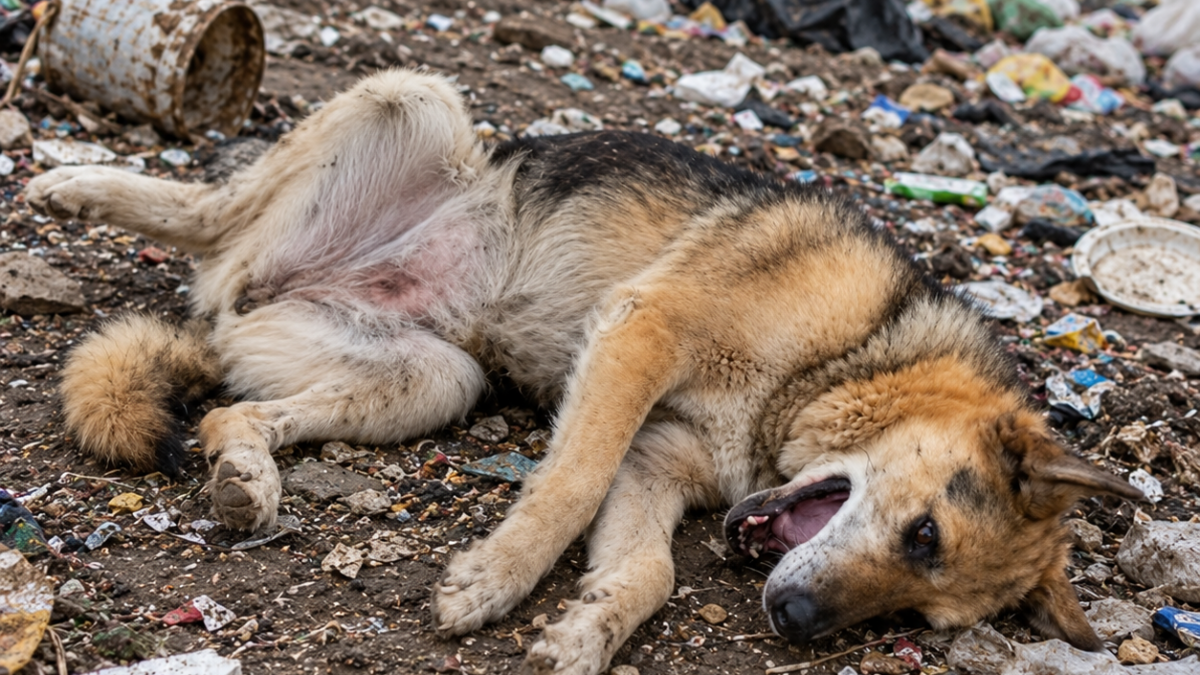
PART 2
I stayed beside Stephen until almost midnight.
The hospital staff had given me a chair, but I barely used it.
Every few minutes, I stood and looked through the glass panel in his kennel door.
He lay on a thick blanket with an IV line running into one front leg.
His breathing remained fast.
A monitor clipped near him showed numbers I kept pretending I understood.
The truth was simpler.
I was watching for movement.
Any movement.
A blink.
An ear twitch.
A shift in his chest.
Anything that told me he was still choosing to stay.
My name is Claire Donovan.
At the time, I had been working with a small independent rescue organization for almost nine years.
I had seen animals survive things that seemed impossible.
I had also seen animals die despite everyone doing everything right.
That reality teaches you not to make promises.
So I did not tell Stephen he was going to be okay.
I told him something I could control.
“You’re not alone.”
Around midnight, one of the overnight technicians came into the room.
Her name was Sarah.
She checked his IV and looked at me.
“You should go home for a few hours.”
“I’m fine.”
“You’re shaking.”
“I’m cold.”
“You’re exhausted.”
I looked at Stephen.
“What if something happens?”
“We’ll call you.”
“What if I don’t get here in time?”
Sarah paused.
That was the question nobody could answer.
She pulled another chair beside mine.
“Then sit,” she said. “But at least sit.”
So I did.
At 2:30 in the morning, Stephen’s blood pressure dropped.
The staff moved quickly.
I was asked to step outside.
For twenty-three minutes, I stood in the corridor staring at a white wall.
Maya called me.
She had gone home only because her mother had practically forced her.
“How is he?”
“They’re working on him.”
Silence.
Then she asked, “Did I do enough?”
“What?”
“At the dump.”
“You stopped them.”
“I should’ve called sooner.”
“You called when you understood what was happening.”
“But they already had him out of the truck.”
“Maya.”
She started crying again.
“You saved his life by refusing to walk away.”
I meant it.
Without her, we never would have known Stephen existed.
The men might have driven away.
The dump was remote enough that nobody would have found him quickly.
With internal injuries like his, there might not have been a next morning.
Eventually, Sarah came back.
“He stabilized.”
My knees almost gave way.
“Can I see him?”
“For a minute.”
I entered.
Stephen’s eyes were closed.
I placed my hand near his nose.
“Still here, huh?”
His breath warmed my fingers.
That was enough.
The next morning brought surgery.
Not for his spine.
Not yet.
The priority was his abdomen.
Imaging confirmed traumatic injury requiring immediate intervention.
The surgeons warned us that Stephen was a terrible surgical candidate.
He was anemic.
Weak.
Dehydrated.
His body had already been under enormous stress.
But doing nothing was worse.
The rescue director, Linda, signed the paperwork while I listened to the surgeon explain risks.
Bleeding.
Infection.
Complications from anesthesia.
Organ damage.
The possibility he might die during the procedure.
When the surgeon finished, Linda asked, “If he were your dog, would you do it?”
The surgeon looked through the window at Stephen.
“Yes.”
That was our answer.
We waited four hours.
Four hours feels different when a life is being decided behind a closed door.
Linda tried to answer emails.
I watched the hallway.
Maya sat beside us after convincing her mother to bring her back.
She was twenty-two, a college student studying nursing.
She held a paper cup of coffee with both hands but never drank it.
At one point, she said, “What if they had left him there?”
Linda looked at her.
“They didn’t.”
“I know.”
“Because of you.”
Maya stared at the cup.
“I’ve never yelled at strangers before.”
I almost smiled.
“How’d it feel?”
“Terrifying.”
“You did fine.”
She shook her head.
“One of them told me to mind my business.”
“And?”
“I told him the dog was my business now.”
Linda laughed softly.
“That’ll do.”
Finally, the surgeon appeared.
He removed his mask.
I stood so fast the chair tipped backward.
“He made it through surgery.”
Maya covered her face.
I closed my eyes.
The surgeon raised a hand.
“He is not out of danger.”
“I know.”
“There was significant abdominal trauma. We repaired what we could. He’ll need close monitoring for infection, leakage, continued bleeding, and intestinal function.”
“What about his leg?”
“Later.”
“And his spine?”
“Later.”
Everything was later.
But later meant alive.
That became our first victory.
The next three days were brutal.
Stephen could not eat normally.
Nourishment was given carefully.
Fluids continued.
Pain medication kept him comfortable.
We monitored every sign of infection.
His abdomen remained swollen.
His front leg was stabilized.
The spinal injury made positioning difficult.
He had limited voluntary movement in his hindquarters.
The neurologist examined him repeatedly.
After the second evaluation, he sat down with us.
“I want you to understand something.”
I nodded.
“There is spinal trauma. We cannot yet predict how much function will return.”
“Could he walk again?”
“It’s possible.”
“Could he never walk again?”
“Yes.”
The word hit harder than I expected.
I looked at Stephen.
He had survived surgery less than forty-eight hours earlier.
Already, I was asking him for more.
The neurologist continued.
“Aggressive spinal surgery right now would be extremely risky. He is not stable enough.”
“So we wait?”
“We stabilize him. We manage inflammation and pain. We reassess as he gets stronger.”
I hated waiting.
Rescue attracts people who like action.
Find the problem.
Fix it.
Move.
Stephen forced all of us to learn patience.
On the fourth day, he developed a fever.
The surgeon worried about postoperative infection.
More blood was drawn.
Medication changed.
Cultures were taken.
I spent that night pacing the hallway.
At one point, Sarah found me standing beside a vending machine.
“You’ve been staring at those crackers for five minutes.”
“I’m thinking.”
“About crackers?”
“About whether we’re doing too much.”
She leaned against the wall.
“That’s a fair question.”
“What if we’re keeping him alive for us?”
Sarah looked through the glass toward Stephen’s room.
“Ask what his behavior says.”
“He’s sedated half the time.”
“And when he isn’t?”
I thought about it.
When he was awake, Stephen watched us.
He responded to touch.
He moved toward water.
He tried to reposition himself.
He followed people with his eyes.
“He’s engaged.”
“Exactly.”
She crossed her arms.
“That doesn’t mean treatment continues forever regardless of suffering. But right now, he is participating.”
Participating.
I liked that word.
Stephen wasn’t simply having treatment done to him.
He was involved.
Even weak.
Even broken.
He was still choosing.
On day five, something changed.
It began with food.
Until then, every attempt to interest him in eating had failed.
He would sniff.
Sometimes lick.
Then turn away.
The nutrition team supported him carefully, but everyone wanted to see voluntary appetite.
That morning, a technician named Luis brought a small plate of soft food.
“Let’s try something.”
I sat near Stephen.
Luis held the plate under his nose.
Nothing.
He moved it slightly closer.
Stephen sniffed.
I froze.
His tongue appeared.
One lick.
Then another.
He took a tiny bite.
Luis looked at me.
“Don’t react.”
“I’m not reacting.”
“You’re crying.”
“I am quietly reacting.”
Stephen took a second bite.
Then a third.
That was all.
Three bites.
But the entire mood of the room changed.
Later that afternoon, I entered and found him pushing his chest off the blanket.
“Stephen?”
His front leg could not support him properly, but he was trying to sit.
Sarah hurried in.
“Easy, big guy.”
We supported him.
He raised his head.
His ears lifted.
For the first time, he looked less like a dying animal and more like a dog who was annoyed about being in a hospital.
I laughed.
“There you are.”
His tail moved.
Barely.
Sarah pointed.
“Did you see that?”
“Yes.”
“He wagged.”
“I saw.”
He did it again.
That night, I called Maya.
“He ate.”
“How much?”
“Three bites.”
She screamed so loudly I pulled the phone away from my ear.
“And he wagged his tail.”
She started crying.
Again.
Maya cried a lot during those weeks.
So did I.
We stopped pretending otherwise.
While Stephen fought inside the hospital, something else was happening outside.
The investigation had started almost by accident.
Maya had recorded part of what she witnessed at the dump.
She had not filmed Stephen’s worst moments.
Her hands were shaking too badly.
But she had captured the rear of the truck that brought him there.
The license plate was partly obscured with mud.
The image was blurry.
Still, two letters and three numbers were visible.
Animal control took the video.
They interviewed the men.
The men insisted they had not hurt Stephen.
According to them, they had found him near a roadside warehouse that morning.
One claimed Stephen had already been injured.
Another said they assumed he was going to die.
“So you loaded him into a truck and took him to a dump?” the officer asked.
That detail sounded as terrible spoken aloud as it had looked.
The men argued they did not know what else to do.
They said they had called no veterinarian.
No shelter.
No animal control agency.
No police.
Nobody.
They had simply decided where a severely injured dog belonged.
In garbage.
The officer cited the people directly involved in the attempted abandonment while continuing to investigate where Stephen had originally been hit.
That second part proved harder.
Stephen had no tag.
No readable microchip.
Nobody reported a missing dog matching his description.
We posted his photograph everywhere.
Local pages.
Veterinary offices.
Shelters.
Neighborhood groups.
“FOUND INJURED DOG.”
No one claimed him.
At first, I assumed somebody was desperately searching.
Maybe Stephen had escaped.
Maybe the accident happened miles from home.
Maybe his family had no idea where he was.
But days became weeks.
No call came.
That question began haunting me.
Who loved him before us?
Did anyone?
Had someone taught him to sit?
Had he slept inside?
Did he know the sound of a refrigerator opening?
Had somebody once scratched the white patch on his chest and called him a good boy?
Or had he always lived on the edges of human attention?
We had no answers.
Stephen didn’t need them yet.
He needed to heal.
Three weeks after surgery, he was discharged from the hospital.
I cried signing the papers.
The nurse probably thought I was insane.
“You know this isn’t the end, right?” she asked.
“I know.”
“He still has a complicated recovery.”
“I know.”
“Neurological function may or may not improve.”
“I know.”
She smiled.
“Then why are you crying?”
“Because three weeks ago they told me he might not survive the night.”
That stopped her.
She knelt beside Stephen.
He was lying on a padded stretcher.
“Well,” she whispered, “you’re apparently terrible at following expectations.”
Stephen licked her wrist.
We took him to Linda’s house.
She had more space than I did and a quiet downstairs room we could convert for recovery.
For the first several days, somebody stayed with him almost constantly.
Medication schedules covered the refrigerator.
Morning.
Noon.
Evening.
Overnight.
Wound checks.
Bathroom assistance.
Meals.
Hydration.
Range-of-motion exercises approved by his rehabilitation team.
Temperature checks.
Weight checks.
Rest.
More rest.
Stephen hated rest.
Once he felt slightly better, he wanted to know everything.
Who was in the kitchen?
Why was the back door opening?
What made that noise outside?
Was that chicken?
Could he have the chicken?
He remained unable to walk normally, but his personality arrived before his legs did.
One morning, I was preparing medication inside a spoonful of food when he watched me.
“You didn’t see anything.”
His ears lifted.
“This is definitely not medicine.”
He stared.
“It’s a snack.”
He continued staring.
“You’re suspicious for somebody who once ate three bites and made six adults cry.”
He accepted the spoon.
Then spit the pill onto the floor.
Linda laughed from the doorway.
“Smart dog.”
“Traitor.”
Stephen swallowed the second attempt.
We celebrated weight gain by ounces.
Then pounds.
His ribs became less sharp.
His coat improved.
His eyes brightened.
His incision healed.
The fractured front leg remained complicated but stable.
Then came the wheelchair.
The rehabilitation specialist, Dr. Andrew Park, introduced it carefully.
It was a lightweight canine mobility cart designed to support Stephen’s hindquarters while allowing his front end to move.
I stared at it.
Stephen stared at it.
Neither of us looked convinced.
Dr. Park smiled.
“This is not surrender.”
“I didn’t say it was.”
“Your face did.”
Apparently veterinarians could all read my face.
“This gives him mobility while we protect his body and build strength.”
“What if he hates it?”
“Then we adjust.”
“What if he never learns?”
“Then we adjust.”
“What if—”
“Claire.”
I stopped.
“We work with the dog we have today.”
There it was again.
Today.
Not six months from now.
Not the ending I wanted.
Today.
We fitted Stephen into the cart.
At first, he froze.
His front paws were on the ground.
His hindquarters were supported.
The wheels rested on either side.
He turned his head and looked at me as though I had personally betrayed him.
“I know.”
Dr. Park held a treat several feet away.
Stephen stretched his neck.
“Come get it.”
Nothing.
Then his right front paw moved.
The wheel shifted.
Stephen startled.
He stopped.
Dr. Park waited.
Another paw.
Another small roll.
Then another.
Within ten minutes, Stephen crossed the rehabilitation room.
Within twenty, he attempted to chase Dr. Park’s treat pouch.
I laughed.
“Apparently motivation has arrived.”
Dr. Park nodded.
“Food is evidence-based medicine.”
The first time we took Stephen outside in the wheelchair, the sky was clear.
The grass had just been cut.
We rolled him onto the lawn.
He stopped immediately.
I worried something was wrong.
“Stephen?”
He lowered his nose.
Sniffed.
Then leaned forward until the cart moved.
He traveled about six feet.
Stopped again.
Sniffed.
Another few feet.
He wasn’t interested in distance.
He wanted information.
Grass.
Dirt.
A leaf.
The trunk of a tree.
A patch where another dog had clearly passed.
For twenty minutes, Stephen explored less than half a backyard.
It was one of the happiest things I had ever watched.
At one point, he pressed his nose into the grass and stayed there.
Linda stood beside me.
“What’s he doing?”
“Being a dog.”
That became our phrase.
Whenever rehabilitation felt too clinical, we asked the same question.
Is Stephen getting to be a dog?
Exercise mattered.
Muscle preservation mattered.
Neurological stimulation mattered.
But so did sniffing.
Sunlight.
Rolling in grass.
Chewing a toy.
Barking at a squirrel.
Falling asleep after an interesting day.
Dr. Park taught us exercises to encourage controlled weight-bearing where safe.
With support, we helped Stephen position his hind feet.
At first, they seemed disconnected from him.
We touched the pads.
Encouraged reflexes.
Supported his hips.
Some days, he bore almost no weight.
Other days, we felt a tiny push.
“Was that him?” I asked the first time.
Dr. Park nodded.
“A little.”
“How little?”
“Enough to keep working.”
Enough.
That word returned again and again.
A small contraction was enough.
Two seconds standing with support was enough.
One attempt to reposition a rear paw was enough.
Stephen never cared about our measurements.
He cared about treats.
If we asked him to stand for three seconds, he expected payment.
Immediately.
One afternoon, he held himself for almost seven seconds with the sling supporting only part of his weight.
I was so excited I forgot the treat.
Stephen barked.
Dr. Park laughed.
“He’s filing a wage complaint.”
I gave him two.
The investigation progressed slowly.
Then, six weeks after Stephen was found, Officer Ramirez from animal control called me.
“Do you have a minute?”
I stepped outside Linda’s house.
Stephen was asleep after therapy.
“What happened?”
“We may have found the vehicle.”
My heart jumped.
“The truck from the dump?”
“No. The vehicle that struck him.”
I stopped walking.
“How?”
“Traffic camera.”
The warehouse district near where the men claimed they found Stephen had several private security cameras.
Most footage had been overwritten by the time investigators began asking questions.
But one business owner had a system that stored video longer.
At 5:42 on the morning Stephen was found, a white commercial van appeared on camera.
Seconds later, a dog matching Stephen’s size entered the edge of the frame.
The van swerved.
There was impact.
Stephen disappeared from view.
The van stopped.
The driver got out.
He walked toward where Stephen lay.
Then he returned to the van.
And drove away.
My hand tightened around the phone.
“He left him?”
“Yes.”
“Did he call anyone?”
“Not according to what we’ve confirmed.”
“Can you see the plate?”
“Partially.”
Another camera farther down the street showed the same van.
Better angle.
Full plate.
Registered company.
Local delivery contractor.
The investigators found the van at a repair shop.
Damage to the front bumper matched the timeline.
The driver initially said he had hit debris.
Then investigators showed him the video.
His story changed.
He admitted hitting a dog.
He claimed Stephen ran suddenly into the road.
That part might even have been true.
Accidents happen.
Dogs run into roads.
Drivers sometimes cannot stop in time.
That was not the part that made me furious.
He had stopped.
He had seen Stephen.
He had walked toward him.
Then he had left.
No emergency call.
No animal control.
No attempt to contact a nearby business.
Nothing.
“Will he be charged?” I asked.
“Law enforcement is reviewing the evidence.”
I looked through the window.
Stephen was sleeping with his head against a stuffed toy.
“What’s his name?”
Officer Ramirez paused.
“I don’t think you need that yet.”
“I just want—”
“I know exactly what you want.”
She was right.
I wanted a name to attach my anger to.
For weeks, anger had been floating.
At the men who took Stephen to the dump.
At whoever had failed to claim him.
At a world where a dog could be bleeding beside a road and several adults could decide that leaving was easier than helping.
Now there was a driver.
A person.
Someone I could imagine.
Officer Ramirez continued.
“Let the investigation work.”
I exhaled.
“Okay.”
“Claire.”
“Yes?”
“Stephen surviving matters.”
I looked at him again.
“I know.”
“No. I mean legally too. His veterinary records document the injuries and timeline. Keep everything.”
“We have every invoice.”
“Good.”
I almost laughed.
If paperwork could take revenge, Linda had built an arsenal.
She kept everything.
Hospital records.
Surgery notes.
X-rays.
Medication lists.
Photographs.
Rehabilitation logs.
Receipts.
Dates.
Times.
Weight charts.
I had once teased her about it.
Now I understood.
Emotion tells you something terrible happened.
Documentation proves it.
A week later, investigators asked whether Maya would provide a formal statement.
She agreed immediately.
I drove her to the municipal office.
She looked nervous.
“You don’t have to do this alone,” I told her.
“I know.”
“You also don’t have to feel responsible for what happens.”
“I want them to know what I saw.”
Inside, Maya described the dump.
The truck.
Stephen trying to drag himself.
The men arguing.
Her begging them to stop.
She described Stephen looking at her.
That was the only time her voice broke.
“He was looking at everyone,” she said. “Like he knew we were deciding what happened to him.”
Afterward, we sat in my car.
Maya stared through the windshield.
“I keep dreaming about it.”
“The dump?”
She nodded.
“In the dream, I don’t call you.”
I understood.
Trauma likes alternate endings.
It invents versions where you failed.
Versions where you could have moved faster.
Done more.
Known sooner.
I reached across and squeezed her hand.
“In the real version, you called.”
She nodded.
“The real version matters.”
Back at Linda’s house, Stephen greeted Maya in his wheelchair.
He rolled toward her so quickly one wheel caught the edge of a rug.
“Stephen!”
Maya laughed and dropped to her knees.
He buried his face against her chest.
She cried into his fur.
I looked away.
Some moments do not need witnesses.
As the months passed, Stephen’s world expanded.
First the backyard.
Then the sidewalk.
Then a quiet park.
We avoided rough terrain.
We kept sessions short.
Every outing was partly rehabilitation and partly joy.
Stephen loved grass more than anything.
Not toys.
Not other dogs.
Grass.
Freshly cut grass was his favorite.
He would stop, lower his chest as far as the cart allowed, and rub his face against it.
Once, he rolled the wheelchair sideways trying to reach a particularly interesting patch.
I panicked.
He looked delighted.
Dr. Park reviewed the video later.
“He’s fine.”
“He tipped over.”
“He attempted a recreational maneuver.”
“He nearly gave me a heart attack.”
“Also therapeutic.”
I pointed at him.
“You’re enjoying this.”
“Very much.”
The biggest breakthrough happened during hydrotherapy.
Stephen had been using an underwater treadmill under veterinary supervision.
The water supported his weight while giving his legs resistance.
During the first sessions, his hind limbs mostly followed passively.
Then one afternoon, Dr. Park slowed the treadmill.
“Watch his left leg.”
I leaned closer to the glass.
Stephen’s rear left paw moved.
Not from the belt.
Not from us.
From him.
He brought it forward.
Placed it.
Then dragged slightly.
My eyes filled.
“Again.”
Another step.
Weak.
Incomplete.
Real.
Dr. Park looked at me.
“That’s voluntary.”
I pressed my hands over my mouth.
Stephen kept moving.
He had no idea he was doing anything extraordinary.
He was watching the technician holding chicken.
After therapy, I sat on the floor beside him.
“You moved your leg.”
Stephen licked my chin.
“You moved your leg.”
He sneezed.
I laughed.
“Fine. Be humble.”
The right leg followed weeks later.
Progress remained uneven.
Some days he seemed stronger.
Other days fatigue made everything worse.
A urinary infection set him back almost two weeks.
A pressure sore required adjusting his harness.
His fractured front leg developed stiffness.
There were days when I left rehabilitation discouraged.
Dr. Park always reminded me.
“Neurological recovery is not linear.”
I began to hate that sentence.
One evening, after Stephen failed an exercise he had done successfully the week before, I sat in Linda’s kitchen.
“I thought he was getting better.”
“He is.”
“He couldn’t hold himself for two seconds today.”
Linda poured coffee.
“And last month?”
“He couldn’t do it at all.”
I said nothing.
She slid the mug toward me.
“You keep comparing him to the Stephen you want.”
That stung.
“What’s wrong with wanting him to walk?”
“Nothing.”
She sat across from me.
“But don’t make walking the price of happiness.”
I looked through the doorway.
Stephen was asleep on his bed.
His wheelchair stood folded near the wall.
Linda continued.
“If he walks normally one day, wonderful. If he doesn’t, he still gets a life.”
That night changed something in me.
Until then, every improvement had secretly been measured against one goal.
Walking.
Normal walking.
Four paws.
No wheels.
No sling.
No help.
I had turned recovery into a finish line Stephen never agreed to.
The next morning, I took him outside.
No exercises.
No timer.
No counting.
I put him in his cart and said, “Pick the route.”
He immediately headed toward the fence.
Then the tree.
Then a patch of weeds.
Then another patch of grass.
We stayed outside almost an hour.
He was happy.
That mattered more than the scoreboard in my head.
The legal case advanced.
The driver was formally cited and charged under applicable local laws related to leaving the scene after injuring an animal and failing to report or render reasonable assistance.
The exact allegations were not dramatic.
There were no handcuffs outside a courthouse.
No screaming confrontation.
No movie-style confession.
But there was a case number.
A court date.
Evidence.
That mattered.
The men who attempted to abandon Stephen at the dump also faced penalties for their conduct.
One accepted responsibility early.
Another argued that they had actually “saved” Stephen by moving him away from the road.
Maya nearly exploded when she heard that.
“Saved him?”
I raised a hand.
“I know.”
“They were leaving him next to garbage!”
“I know.”
“How do people say things like that?”
“Because admitting the truth is harder.”
The truth was ugly.
They had seen a disabled, badly injured dog and decided his life no longer justified effort.
The driver had seen an injured dog and decided his schedule mattered more.
Different decisions.
Same result.
Stephen became somebody else’s problem.
Until he became ours.
The court hearing happened almost five months after the rescue.
By then, Stephen had gained nearly eleven pounds.
His coat shone.
He used the wheelchair confidently.
He had developed enough neurological function to move both hind legs during some exercises.
He could stand briefly with support.
Nobody knew where the recovery would stop.
I did not bring him to court.
I refused to turn him into a prop.
Photographs and medical records were enough.
Maya attended.
Linda attended.
Officer Ramirez testified.
The veterinary surgeon provided documentation.
The traffic camera footage was played.
I had never seen it before.
I wish I never had.
The image quality was grainy.
No sound.
White van.
Stephen entering frame.
Impact.
His body disappearing.
Van stopping.
Driver getting out.
Walking toward him.
Standing there.
Then returning to the vehicle.
Driving away.
That was the part that broke something inside me.
Not the accident.
The pause.
He had seen Stephen.
He had enough time to get out.
Enough time to look.
Enough time to make a choice.
The defense attorney emphasized that the collision itself did not appear intentional.
Nobody disputed that.
The prosecutor focused on what happened afterward.
Failure to report.
Failure to seek help.
The delay before Stephen was eventually found.
Then the medical photographs were displayed.
Stephen pale and barely conscious.
The abdominal injuries.
The fractures.
The stabilization equipment.
The surgeon explained that faster treatment could matter significantly in trauma cases, although no one could state exactly how much difference immediate intervention would have made in Stephen’s specific outcome.
That distinction mattered.
Facts mattered.
We did not need exaggeration.
The truth was enough.
During a break, I stood outside the courtroom.
The driver came through the doors.
He looked younger than I expected.
Maybe thirty.
He stopped when he recognized me from rescue photographs in the case file.
“You’re the woman taking care of the dog?”
“Stephen.”
He looked confused.
“His name is Stephen.”
“Oh.”
He looked at the floor.
“How is he?”
The question made me angry.
I wanted to say, You don’t get to ask.
Instead, I answered.
“He survived.”
His shoulders dropped slightly.
“I didn’t know what to do.”
I stared at him.
“You had a phone.”
He looked away.
“I was late for work.”
For a second, I thought I had misheard.
“What?”
“My company tracks deliveries. I’d already been warned.”
I felt every muscle in my body tighten.
“So you left him.”
“I panicked.”
“You stood over him.”
“I thought he was dead.”
“No.”
His eyes met mine.
“No?”
“You thought checking would cost you time.”
He said nothing.
I stepped closer but kept my voice low.
“Maya saw him trying to move later. The men who found him saw him alive. When I reached the dump, he was still fighting. You had the first chance to help him.”
“I’m sorry.”
Maybe he meant it.
Maybe he was sorry because of court.
Maybe he had replayed that morning every night since investigators found him.
I did not know.
And I realized I didn’t need to know.
“You don’t owe me the apology.”
I walked away.
The case concluded without the theatrical ending part of me once imagined.
There were fines.
Financial penalties.
Restitution toward a portion of emergency veterinary costs.
Driving-related consequences and probationary conditions associated with the violations.
The men involved in dumping Stephen faced their own penalties and mandatory requirements.
The court also referred information about animal abandonment practices to local authorities, leading to new signage and reporting procedures at dumping sites.
Some people online called the punishment too small.
Others said too much had been made of “a dog.”
I stopped reading comments.
Court could assign consequences.
It could not calculate the value of a life.
Stephen was already doing that himself.
The afternoon after the final hearing, I drove straight to Linda’s.
Stephen was outside.
He saw my car.
His front paws began moving before I opened the gate.
The cart rolled toward me.
Fast.
“Slow down!”
He ignored me.
His ears bounced.
His tongue hung sideways.
He reached me and nearly drove one wheel over my foot.
I knelt.
“Well, that’s the justice system finished.”
He licked my cheek.
“You couldn’t care less, could you?”
Another lick.
“Probably healthier.”
I took him to his favorite patch of grass.
He rolled through it.
Stopped.
Sniffed.
Then stared at a bird.
That was it.
His revenge.
Grass.
Sunlight.
People who stayed.
The freedom to care about birds instead of survival.
The next question was his family.
We had never stopped searching.
Every few weeks, somebody suggested a possible owner.
A man who had lost a similar dog two counties away.
Not Stephen.
A woman whose dog had disappeared months earlier.
Wrong markings.
A family who saw a social media post and thought Stephen resembled a dog they had given to a relative.
Records did not match.
Nothing.
We had his photograph shared thousands of times.
Veterinary offices checked files.
Shelters checked lost reports.
No one could connect him to a confirmed previous home.
One evening, Maya asked the question nobody liked.
“What if they saw the posts?”
Linda looked up.
“Who?”
“His family.”
Silence.
“What if they know he’s here and they just don’t want him?”
I hated the thought.
But it was possible.
A disabled dog can frighten people.
Cost.
Care.
Time.
Equipment.
Medication.
Some families surrender animals because they genuinely cannot provide what is needed.
Others disappear because responsibility becomes inconvenient.
We had no evidence either way.
So we stopped inventing a villain we could not prove existed.
Stephen had enough real ones.
His past remained unknown.
His future did not.
Nearly six months after the rescue, Stephen came to live with me.
Officially, it was supposed to be temporary.
Linda needed space for another medical foster.
My house had a fenced yard and one floor.
I told everyone I would keep him for three weeks.
Maya laughed when I said that.
“What?”
“You’re adopting him.”
“No.”
“You call him your son.”
“I do not.”
“You told the pharmacist, ‘My son needs this medication.’”
“That was a stressful day.”
“You bought ramps.”
“For rehabilitation.”
“You replaced your living-room rug because he likes the texture.”
“It was an old rug.”
“You ordered him a birthday bandana.”
I stared at her.
“How do you know about that?”
“You accidentally sent me the order confirmation.”
“Three weeks.”
“Sure.”
Stephen arrived with two bags.
Medication.
Harnesses.
Wheelchair.
Bedding.
Food.
Treats.
Therapy equipment.
He owned more medical accessories than most people.
I set his bed beside the couch.
He ignored it.
He wanted the rug.
Fine.
The first night, I woke at 1:17 a.m. to a scraping sound.
I ran into the living room.
Stephen had maneuvered himself halfway toward the kitchen without his wheelchair.
“What are you doing?”
He looked at me.
On the counter sat a bag of treats.
“You cannot crawl across the house at one in the morning for snacks.”
Tail wag.
“Absolutely not.”
Tail wag harder.
I carried him back to bed.
At 1:29, scraping.
“Stephen.”
By the third night, I moved the treats into a cabinet.
He slept peacefully.
Life with Stephen became easier and harder at the same time.
Easier because he was stable.
Harder because he was becoming fearless.
In the wheelchair, he believed physics did not apply to him.
He took corners too fast.
He attempted to chase squirrels.
He tried to climb a low curb.
He once rolled directly into a shallow mud puddle and looked shocked that mud existed.
I learned to laugh more.
His rehabilitation continued.
The biggest change happened one morning in my hallway.
Stephen was not in the wheelchair.
I had him supported by a rear sling.
We were practicing short controlled standing exercises.
Usually, I carried most of his hindquarter weight.
That morning, I felt resistance through the sling.
I loosened slightly.
He remained up.
“Stephen?”
He looked back.
I loosened more.
His rear legs trembled.
But they held.
One second.
Two.
Three.
Four.
He collapsed gently onto the padded rug.
I screamed.
Stephen barked.
I called Dr. Park.
“He stood!”
“With support?”
“Barely.”
“How long?”
“Four seconds.”
“Good.”
“Good? That’s all?”
“Excellent.”
“Better.”
The next week, six seconds.
Then eight.
Then twelve.
Some days, nothing.
But over time, something was returning.
Neurological signals.
Muscle strength.
Coordination.
Not normal.
Not guaranteed.
Real.
The first unsupported rear-weight moment lasted less than two seconds.
Dr. Park caught him immediately.
I burst into tears.
He handed me tissues.
“You know the rule.”
“What?”
“No crying unless Stephen gets a treat tax.”
I gave Stephen chicken.
He approved.
Nearly eight months after the accident, he took what we called his first true assisted steps without the wheelchair.
Front paws forward.
Rear left moved.
Rear right dragged slightly.
Then corrected.
Two steps.
Rest.
Three.
Rest.
By the end of the session, he had crossed six feet with a harness and partial support.
It was ugly.
Crooked.
Slow.
Beautiful.
Maya came that afternoon.
I showed her the video.
She watched it three times.
Then she sat on my kitchen floor crying.
“I knew he would do it.”
“No, you didn’t.”
“I emotionally knew.”
“That’s not science.”
“Don’t ruin this.”
Stephen rolled over beside her.
She scratched his chest.
“Remember the dump?”
I looked at her.
Stephen did not.
At least, I hoped he didn’t.
Maya continued.
“They looked at him like he was already gone.”
I nodded.
“And now look at him.”
Stephen sneezed.
We laughed.
The year anniversary arrived quietly.
I had planned nothing dramatic.
No fundraiser.
No ceremony.
No social media spectacle.
I took Stephen to the park.
He wore his wheelchair for most of the walk.
Halfway around the path, we stopped at a grassy hill.
I removed him from the cart.
Attached the support harness.
“Want to try?”
He looked toward the grass.
I steadied him.
Stephen stood.
One rear paw moved.
Then the other.
He walked nine supported steps.
At the tenth, he sat.
I sat beside him.
A family passed.
A little boy pointed.
“Mom, that dog has wheels!”
The mother looked embarrassed.
“It’s okay,” I said.
The boy came closer.
“Why?”
“He hurt his back.”
“Does it hurt?”
“Not right now.”
“Can he run?”
“In the wheelchair, faster than me.”
The boy smiled.
Stephen licked his hand.
“Cool dog.”
“Yes,” I said.
“He is.”
That was all Stephen was to him.
A cool dog.
Not a victim.
Not a tragedy.
Not evidence.
Not the animal from the dump.
Just a dog with wheels.
I loved that.
Months passed.
The criminal case faded from public attention.
Stephen’s life did not.
He became a regular at the rehabilitation clinic.
Everyone knew him.
The receptionist kept treats in a specific drawer.
When Stephen entered, he rolled directly to that desk.
“Sir,” she would say. “You have not checked in.”
Tail wag.
“You cannot bribe administration.”
Tail wag harder.
Treat.
Then therapy.
Eventually, Dr. Park told me something I had stopped demanding.
“I think he may regain functional walking for short distances.”
I stared at him.
“You think?”
“I said may.”
“That’s enough.”
“But listen carefully.”
I waited.
“He may always need the wheelchair for longer distances.”
“Fine.”
“He may fatigue quickly.”
“Fine.”
“His gait may never be normal.”
“Fine.”
“He may develop arthritis or other complications.”
“Fine.”
Dr. Park smiled.
“You’ve improved.”
“I’ve been trained.”
Stephen barked.
“Apparently we both have.”
The first time Stephen walked across my living room without the cart, I almost missed it.
I was folding laundry.
He was lying on his bed.
His water bowl sat about eight feet away.
I heard movement.
I looked up.
Stephen had pushed himself into standing.
No sling.
No harness.
Nothing.
“Stephen?”
He took one step.
His hind legs wobbled.
Second.
Third.
I dropped a towel.
Fourth.
Fifth.
He stumbled.
Recovered.
Sixth.
Then sat beside the water.
I stood frozen.
He drank.
As though nothing historic had happened.
I whispered, “You walked.”
Stephen drank again.
“You walked.”
He looked at me.
I started laughing.
Then crying.
Then laughing again.
I called Maya first.
She answered immediately.
“What happened?”
“He walked.”
Silence.
“Claire.”
“He walked to his water.”
“How many steps?”
“Six. Maybe seven.”
Maya screamed.
Then Linda.
Then Dr. Park.
By evening, half the rescue knew.
Stephen spent the celebration sleeping.
Recovery continued.
Some mornings, he walked five steps.
Some mornings, none.
He still used the wheelchair outside.
He still needed support on slippery surfaces.
But the world had changed again.
One afternoon, Officer Ramirez visited.
She had not seen Stephen since the early hospital days.
I opened the door.
Stephen stood from his bed.
Took three uneven steps.
Then sat.
Ramirez froze.
“That is not the dog from my case.”
“Oh, it is.”
She crouched.
Stephen approached using his front end and short assisted rear movements.
She scratched his ears.
“I remember the first photographs.”
“So do I.”
She shook her head.
“This is unbelievable.”
I looked at Stephen.
“No. This is months of work.”
She smiled.
“Fair.”
Ramirez had brought paperwork showing the final disposition of the legal cases.
Everything was complete.
All penalties entered.
Restitution schedule established.
Mandatory educational and community-service components assigned where applicable.
The driver’s employer had also changed internal policy.
Drivers were now required to report any collision involving an animal immediately, without employment penalty for the delay required to contact authorities.
That detail surprised me.
“Really?”
Ramirez nodded.
“The company reviewed what happened.”
“Because of Stephen?”
“Because the employee said fear of discipline influenced his decision.”
I looked down at Stephen.
One dog.
One terrible morning.
Now a company had changed its rules.
Maybe another driver would stop next time.
Maybe another animal would not lie injured while somebody checked the delivery clock.
That mattered more to me than another fine.
The dump changed too.
Large signs were installed with emergency animal-control numbers.
Security cameras were added.
Dump employees were trained on what to do if animals were abandoned.
A local ordinance was updated to clarify reporting requirements.
Stephen would never understand any of that.
Good.
He had done enough.
The most surprising thing about his story was how ordinary his happiest ending became.
One year and four months after the accident, Stephen had favorite things.
A yellow blanket.
Chicken.
Grass after rain.
Maya.
The mail carrier.
A squeaky duck he had destroyed and still refused to surrender.
He hated vacuum cleaners.
He hated baths.
He hated when I cleaned his wheelchair.
He loved car rides.
He loved the park.
He loved lying in patches of sunlight.
He loved stopping every ten feet to smell absolutely nothing visible.
And he loved me.
That last part frightened me more than I admitted.
Because I loved him too.
Which meant every setback hurt differently.
At eighteen months, Stephen developed sudden pain after getting out of his bed.
I panicked.
We went straight to the clinic.
Imaging showed no new spinal catastrophe.
Likely muscular strain.
Rest.
Medication.
Observation.
I nodded through the appointment.
In the parking lot, I sat inside the car with both hands on the steering wheel.
Stephen rested behind me.
My chest felt tight.
I realized I had spent more than a year waiting for disaster to return.
That is what trauma does.
Even after the emergency ends, part of you continues living there.
I looked back.
Stephen was asleep.
I whispered, “You’re better at this than I am.”
He opened one eye.
Then closed it.
Dogs do not spend tomorrow twice.
I was trying to.
So I stopped.
Not perfectly.
But enough.
Two years after Stephen was found, Maya graduated nursing school.
She asked if Stephen could appear in one photograph.
We took him to the campus lawn.
He wore a blue bandana.
No text.
No dramatic costume.
Just Stephen.
Maya knelt in her graduation gown.
He sat beside her in his wheelchair.
Her mother took the photograph.
Afterward, Maya hugged me.
“You know he changed my career?”
“What?”
“I was going to work in general medicine.”
“And now?”
“Trauma.”
I looked at her.
“Because of him?”
“Because of that morning.”
She scratched Stephen’s ear.
“I learned that the worst moment of somebody’s life isn’t always the ending.”
Stephen tried to eat the tassel from her cap.
“That’s profound,” I said.
“Thank you.”
“He’s eating your graduation.”
She turned.
“Stephen!”
He looked proud.
That photograph still hangs in my hallway.
Maya in her cap.
Stephen in his cart.
Two lives changed by one ugly morning.
People sometimes ask me whether I hate the driver.
I don’t have a simple answer.
I hated what he did.
I hated his decision to leave.
I hated that he looked at a bleeding animal and allowed fear of work consequences to outweigh basic responsibility.
But hatred is exhausting.
Stephen never asked me to carry it forever.
The driver served the consequences imposed.
The case changed policy.
His actions became documented.
He could not erase them.
That was accountability.
Revenge was something else.
For a while, I wanted him to hurt the way Stephen had hurt.
I wanted him to see every needle.
Every surgery.
Every night of pain.
Every failed attempt to stand.
Then Stephen began walking.
And I realized I no longer wanted to spend his good days thinking about the man who caused his worst one.
That person had already taken enough.
He did not get our joy too.
The men from the dump disappeared from Stephen’s life as well.
One wrote a letter through the court-associated program.
He apologized.
He claimed he had panicked and followed another man’s decision.
He said seeing Stephen’s recovery online made him ashamed.
I read the letter once.
Then I put it away.
Linda asked what I thought.
“I hope he means it.”
“That’s generous.”
“No.”
I looked at Stephen asleep nearby.
“It’s practical.”
If shame changes somebody’s next decision, another dog might benefit.
That is useful.
Stephen did not need vengeance.
He needed the world to become slightly less dangerous.
Eventually, the time came to decide whether Stephen was still a foster dog.
Everyone except me had apparently decided months earlier.
Linda arrived at my house carrying paperwork.
“What is that?”
“You know.”
“No.”
“Yes.”
“I’m still evaluating his long-term care.”
She looked around.
Stephen’s photographs were on my walls.
His medication organizer was beside mine.
A custom ramp connected the living room to the patio.
His wheelchair hung on a hook labeled STEPHEN.
I had installed non-slip flooring.
Linda raised an eyebrow.
“Very temporary.”
“I like preparation.”
Maya arrived through the back door.
“You’re adopting him.”
“Was everyone invited to ambush me?”
“Yes.”
Stephen rolled into the room.
He stopped against my legs.
I looked down.
“You too?”
Tail wag.
Linda handed me the pen.
“What if somebody from his original family appears?”
“We’ve searched for almost two years.”
“I know.”
“If someone comes with legitimate proof, we handle it legally and ethically.”
I stared at the papers.
Adoption application.
Medical acknowledgment.
Permanent ownership agreement.
I had signed hundreds of rescue forms.
This one made my hand shake.
I wrote my name.
Claire Donovan.
Then I looked at Stephen.
“Congratulations. You’re officially stuck with me.”
Maya cheered.
Linda clapped.
Stephen barked because everybody else was making noise.
That night, I placed the adoption certificate in a drawer.
I didn’t need it on the wall.
Stephen was asleep beside my couch.
His wheelchair rested near the door.
His water bowl sat exactly where he had walked to it the first time.
Home did not require decoration.
Years later, Stephen still uses his wheelchair.
That surprises some people who hear he regained movement.
Recovery is not always an all-or-nothing miracle.
He can walk short distances on good days.
His gait remains uneven.
His hind legs tire.
For longer walks, the cart gives him freedom.
We no longer see the wheelchair as proof of disability.
We see it as equipment.
Like shoes.
Like glasses.
Like a bicycle.
When I clip him into it, he knows we are going somewhere.
His ears lift.
His front paws dance.
Sometimes he rolls toward the door before I finish fastening the straps.
“Wait.”
He doesn’t.
“Stephen.”
Wheel moves.
“You are literally attached to me.”
Another wheel moves.
“Patience.”
He has none.
At the park, people stare sometimes.
Children ask questions.
Adults often whisper.
I answer when they ask respectfully.
Yes, he was injured.
Yes, his spine was damaged.
Yes, he can move his back legs somewhat.
No, he is not suffering just because he uses wheels.
Yes, he is happy.
Then Stephen usually demonstrates by dragging me toward grass.
One Saturday, an older man watched us for several minutes.
Finally, he approached.
“That dog yours?”
“Yes.”
“Was he born like that?”
“No.”
“Accident?”
“Yes.”
The man nodded.
“My dog lost a leg years ago. I thought his life was over.”
“What happened?”
“He proved me stupid.”
I smiled.
“They’re good at that.”
He watched Stephen sniff a tree.
“Looks pretty happy.”
“He is.”
The man shook his head.
“Funny what they adapt to.”
I looked at Stephen.
“Sometimes faster than we do.”
That is probably the biggest lesson he taught me.
Humans look at loss and imagine the old life.
The four good legs.
The normal walk.
The body before the injury.
Dogs seem more interested in the life available now.
Can I move?
Can I eat?
Is someone with me?
Is there grass?
Excellent.
Continue.
On the third anniversary of Stephen’s rescue, I drove him past the old dump.
I had not planned to stop.
But I did.
The place looked different.
New fencing.
Clear signs.
Security cameras.
Emergency contact numbers.
The garbage piles were farther inside.
I parked outside the gate.
Stephen sat in the back seat.
For a moment, I couldn’t move.
I remembered him lying near broken furniture.
I remembered his white gums.
The twisted leg.
Maya crying.
The men arguing.
The way Stephen scraped his front paws against the dirt because his body would not follow.
I opened the back door.
“Want to get out?”
I placed him in his wheelchair.
He rolled onto the grass beside the road.
No fear.
No hesitation.
Maybe he didn’t remember.
I hoped he didn’t.
He sniffed a post.
Then another.
A truck passed.
Stephen watched it.
Then returned to smelling grass.
I crouched beside him.
“This is where I met you.”
He ignored me.
“Very emotional moment.”
He sniffed harder.
“You could participate.”
Nothing.
I laughed.
That was Stephen.
He never performed gratitude.
He never acted like a survivor.
He just lived.
I touched the white patch on his chest.
“You know what they thought?”
He looked at me.
“They thought you were finished.”
Tail wag.
“You were inconvenient.”
Another wag.
“They thought you belonged with garbage.”
Stephen sneezed.
“Exactly.”
We stayed ten minutes.
Then left.
I never went back.
There was nothing for us there anymore.
The next morning, Stephen woke me at 5:48 by bumping his nose against my hand.
“Too early.”
Bump.
“Six.”
Bump.
“You survived catastrophic trauma just to become annoying.”
Tail wag.
I got up.
Breakfast.
Medication.
Backyard.
Sunrise.
Ordinary things.
That became the ending.
Not that Stephen walked perfectly again.
He didn’t.
Not that everyone who failed him received some enormous punishment.
Life is rarely that symmetrical.
Not that we discovered the mystery of his first family.
We never did.
The satisfying ending was simpler.
The people who treated Stephen like something disposable were forced to answer for documented choices.
The driver could no longer pretend the collision never happened.
The men at the dump could no longer pretend abandonment was assistance.
Businesses changed procedures.
Authorities changed reporting practices.
A young witness discovered that speaking up mattered.
A rescue learned to think differently about disabled dogs.
And Stephen got a home.
A real one.
No expiration date.
No condition that he become “normal.”
No requirement that he walk without wheels.
No expectation that he repay anybody for saving him.
Just home.
A few months after the anniversary, Stephen surprised me again.
We were in the backyard.
His wheelchair was inside.
He had been resting on a blanket while I watered plants.
A squirrel crossed the fence.
Stephen’s head snapped up.
“Oh no.”
He pushed onto his front paws.
“Stephen.”
His hind legs came underneath him.
“Don’t you—”
He stood.
The squirrel moved.
Stephen took one step.
Then another.
Then three rapid, awkward steps.
I dropped the hose.
He moved six feet across the grass before sitting down.
Not falling.
Sitting.
He looked furious that the squirrel had escaped.
I stood with water spraying across my shoes.
“Did you just chase a squirrel?”
Stephen panted.
“You can barely walk and you used your limited miracle on a squirrel?”
Tail wag.
I laughed until I cried.
That evening, I sent the video to Dr. Park.
His response:
“Excellent functional motivation.”
I called him.
“You cannot medically classify squirrel hatred.”
“I just did.”
The video became one of my favorites.
Not because the walking was perfect.
It wasn’t.
Because Stephen wasn’t walking for us.
Not for therapy.
Not for chicken.
Not because somebody encouraged him.
He wanted the squirrel.
That meant movement had become part of his own choices.
His body was no longer only something being rehabilitated.
It was his again.
That mattered.
At his next appointment, Dr. Park watched Stephen cross the room.
The rear legs remained unstable.
One paw occasionally knuckled before correcting.
He tired quickly.
But he moved.
Dr. Park smiled.
“How does it feel?”
“What?”
“You spent the first year asking whether he would walk.”
I looked down.
Stephen was investigating a trash can.
“Now I worry he’ll walk somewhere stupid.”
“Progress.”
Stephen stuck his head into the trash can.
“Stephen.”
Dr. Park laughed.
“Definitely progress.”
One winter morning, Maya came over carrying an old folder.
“What’s that?”
“Something I found while moving.”
Inside was the first written statement she had made after the dump.
She had never reread it.
Together, we sat at the kitchen table.
Her handwriting shook across the page.
“I saw a brown-and-white dog being pulled from the back of a truck…”
Maya stopped.
“I don’t want to read this.”
“Then don’t.”
She closed the folder.
Stephen lay nearby.
She watched him.
“I used to think bravery meant not being scared.”
“I think that’s mostly movies.”
“I was terrified.”
“You still made the call.”
She nodded.
“I think that morning made me understand something.”
“What?”
“People wait for somebody else to be the person who steps in.”
I looked at her.
“And?”
“Sometimes nobody else is coming.”
Stephen lifted his head.
Maya smiled.
“So you become the person.”
That line stayed with me.
Stephen’s story had many heroes if you insisted on using that word.
Maya, who spoke up.
The surgeons.
The nurses.
The rehabilitation team.
Donors.
Investigators.
Linda.
Officer Ramirez.
But I no longer liked the word hero much.
It can make ordinary decency sound extraordinary.
Sometimes all that is required is refusing to walk away.
See suffering.
Do the next useful thing.
Call.
Stop.
Help.
Document.
Stay.
The people who failed Stephen had also made choices.
One choice at a time.
Keep driving.
Move the dog.
Take him somewhere hidden.
Leave.
Every terrible outcome can look enormous when you see it finished.
But often it was built from smaller decisions.
So was Stephen’s recovery.
One surgery.
One meal.
One therapy session.
One voluntary movement.
One lap around the yard.
One legal document.
One night survived.
One step.
That was how his life came back.
The driver once said he thought Stephen was dead.
The men at the dump thought Stephen was beyond saving.
Some veterinary professionals warned that normal walking might never return.
His original family, wherever they were, never appeared.
None of those things became Stephen’s identity.
Today, when he wakes up, he does not ask who failed him.
He asks for breakfast.
He does not remember court dates.
He remembers where treats are stored.
He does not measure his worth by the strength of his spine.
He measures his day by sunlight, smells, people, food, and whether that squirrel has returned.
That is why the revenge part of Stephen’s story ended differently than I once wanted.
I thought revenge would feel like watching the driver punished.
It didn’t.
I thought it would feel like seeing the men from the dump embarrassed in court.
It didn’t.
Those consequences mattered.
But they did not make my chest feel lighter.
Stephen did.
The first time he ate.
The first time he used the wheelchair.
The first time a hind paw moved voluntarily.
The first time he stood.
The first time he walked to his water.
The first time he chased a squirrel.
The day I signed adoption papers.
The morning I realized I had stopped checking whether he was breathing during naps.
That was when I knew we were free.
Not when the case closed.
When fear stopped owning the room.
Several years after the accident, Stephen’s face has gone slightly gray around the muzzle.
He moves more carefully in cold weather.
We manage his joints.
We monitor his spine.
We use the wheelchair often because it lets him go farther without exhaustion.
Some days he walks through the house.
Some days he prefers dragging himself a short distance before I help him.
He has nothing to prove.
Neither do we.
People still send me old posts about him.
They write things like:
“Is this really the same dog?”
Yes.
Same eyes.
Same white chest.
Same stubbornness.
Different life.
Sometimes they ask the question I asked at the beginning.
“Will he ever walk normally?”
I answer differently now.
“I don’t know.”
And then I tell them what I do know.
Stephen is not waiting for normal.
He already has a life.
A full one.
A messy one.
A loud one.
A life where he steals socks and hates baths.
A life where Maya visits every birthday.
A life where children at the park know him as “the dog with the race-car wheels.”
A life where he can spend fifteen minutes smelling one bush.
A life where nobody decides he belongs in a garbage dump because his body works differently.
A life where every door he needs is opened by someone who knows his name.
Stephen.
Not injured dog.
Not evidence.
Not abandoned animal.
Stephen.
My dog.
One evening, years after I first carried him from the dump, I sat on the porch while the sun went down.
Stephen was on the grass without his wheelchair.
He had been resting.
A breeze moved through the yard.
He lifted his head.
Then pushed himself up.
Slowly.
Front legs first.
Hind legs underneath.
He stood.
I did not rush toward him.
I no longer gasped every time.
That was another kind of healing.
Stephen took two steps.
Paused.
Three more.
He reached a patch of grass warmed by the last sunlight.
Then lowered himself down.
I watched him.
No cheering.
No camera.
No therapist counting seconds.
No court official taking notes.
Just a dog crossing a yard.
Years earlier, three men had looked at that body and decided it had no future.
A driver had looked back at him in the road and decided stopping was too costly.
Strangers had wondered whether saving him made sense.
But Stephen never understood any of those calculations.
Thank God.
He only understood the next thing.
Breathe.
Eat.
Rest.
Move.
Try.
Try again.
And maybe that is why he outlasted everyone’s predictions.
He never had to believe in a miracle.
He only had to keep participating in his own life.
The next morning, he woke me before six.
Again.
I opened one eye.
He stared at me.
“No.”
Tail wag.
“Absolutely not.”
He bumped my hand.
“Stephen.”
Bump.
I sat up.
His ears lifted.
“You know, people call you inspirational.”
Tail wag.
“They should see you at 5:52 in the morning.”
I got up.
He followed me toward the kitchen.
Slowly.
Crookedly.
On his own feet.
Halfway there, he got tired.
I brought the wheelchair.
He stepped into position as though we had done it a thousand times.
We had.
I fastened the straps.
He rolled toward breakfast.
That is the real ending.
Not perfect recovery.
Not perfect justice.
Something better.
A dog who was once carried toward a garbage dump now decides where he wants to go.
A dog who once could not lift himself from the dirt now wakes me because breakfast is six minutes late.
A dog whose spine was damaged now races through parks on wheels and sometimes walks across my kitchen simply because he can.
And the people who once believed Stephen’s broken body made his life disposable were forced to watch the truth become undeniable.
He was never garbage.
He was never useless.
He was never finished.
He was injured.
He needed help.
There is a difference.
And every morning that Stephen rolls into the sunlight, every time he pushes himself onto his legs, every time he buries his nose in grass and refuses to move because one smell is apparently more important than the rest of the world, that difference becomes visible all over again.
They took him to a dump hoping they would never have to think about him again.
Instead, his case followed them into investigation rooms, court records, policy changes, veterinary files, and consequences they could not drive away from.
But Stephen’s greatest victory was never making them remember him.
It was reaching a point where he no longer needed to remember them.
He had better things to do.
Grass to smell.
Treats to demand.
Squirrels to chase badly.
People to love.
A home to return to.
And a life they almost threw away that turned out to be worth fighting for every single day.








