PART 2: They Dumped a Paralyzed Dog in the Garbage to Di3—But King’s Comeback Became the Revenge No One Expected
PART 2
I waited.
The veterinarian lowered her voice.
“Even if he survives, he may never walk normally.”
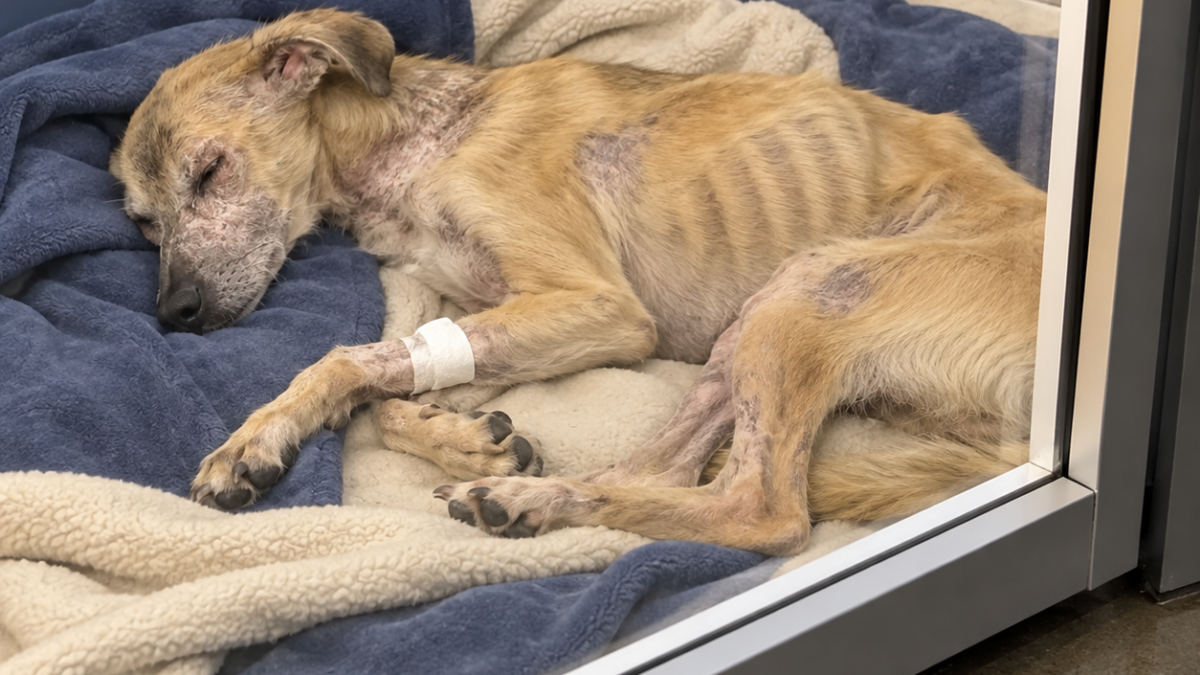
I looked through the glass again.
King’s head rested sideways against the blanket.
“Never?”
“I can’t say never with certainty,” she said. “But his legs are significantly deformed, and the neurological problem complicates everything.”
I nodded slowly.
“What would a good outcome look like?”
She took a breath.
“That depends on what you mean by good.”
That question changed everything.
Until then, I had been imagining recovery in the simplest way.
King standing.
King walking.
King running.
A before-and-after miracle where every broken part somehow became whole.
But medicine doesn’t work like stories.
Neither does rescue.
“What if he can’t walk?” I asked.
“Then we find out what kind of life he can still have.”
“Can he be comfortable?”
“Yes, if treatment works.”
“Can he be happy?”
The veterinarian looked through the glass.
“Yes.”
I stared at King for several seconds.
“Then that’s enough.”
She studied my face.
“You understand this could be expensive.”
“Yes.”
“And long-term.”
“Yes.”
“And there are no guarantees.”
I looked at him again.
“I know.”
The truth was, I didn’t know.
Not really.
I didn’t understand how quickly medical bills could consume savings.
I didn’t understand how emotionally exhausting it would be to celebrate every tiny improvement and then panic at every setback.
I didn’t understand how deeply I would become attached to a dog who had been in my life for less than one day.
I only knew one thing.
Someone had thrown him away.
I would not become the second person to decide he was too difficult.
That first night, I went home alone.
The clinic kept King under observation.
I walked through my front door and immediately noticed how peaceful everything felt.
My dogs were asleep.
Water bowls were full.
Blankets were clean.
The house smelled faintly like laundry detergent.
It looked like safety.
And I suddenly hated the idea that King had never known any of it.
My oldest dog, Milo, raised his head from the couch.
I sat beside him.
“You might have a brother soon,” I said.
Milo yawned.
“You don’t care?”
He put his head back down.
“Good talk.”
I tried to laugh.
Instead I started crying.
I thought about King lying beneath garbage.
I thought about the way Daniel had found him.
I thought about someone carrying him there.
Because the more I remembered his physical condition, the harder it became to believe King had reached that place on his own.
He could barely move.
There was no realistic way he had traveled far.
That thought made my anger rise.
I didn’t know who had left him.
Maybe there was an explanation.
Maybe his condition had become overwhelming.
Maybe somebody had panicked.
But whatever had happened, King had ended up helpless beside trash.
And no explanation could change that.
I barely slept.
At six the next morning, I called the clinic.
“King made it through the night,” the receptionist said.
I closed my eyes.
“Is he better?”
“Stable.”
That word became beautiful to me.
Stable.
Not cured.
Not healed.
Not safe forever.
Just not worse.
I drove there before work.
King’s eyes opened when I approached.
“Good morning, Your Majesty.”
His ears barely moved.
I brought soft food.
At first he ignored it.
Then I touched a little to my finger and held it beneath his nose.
“Come on.”
He sniffed.
Nothing.
I waited.
He licked my finger.
Once.
Then twice.
I laughed.
“You ate.”
A technician nearby smiled.
“That counts.”
“It absolutely counts.”
That became my life.
Tiny things counted.
A spoonful of food counted.
A stronger breath counted.
A normal temperature counted.
King holding his head up for three seconds counted.
The absence of bad news counted.
Every day was measured in inches.
On the second day, he ate slightly more.
On the third, he seemed more alert.
On the fourth, the veterinarian said the neurological symptoms were not progressing as rapidly as she had feared.
I clung to every sentence.
But hope was dangerous.
Whenever King improved, I started imagining him home.
Then I would walk into the clinic the next morning and see him exhausted, and every fear returned.
One afternoon, the veterinarian found me sitting beside his kennel.
“You look tired.”
“So does he.”
“He’s fighting.”
“I know.”
“So are you.”
I laughed softly.
“He’s better at it.”
She sat beside me.
“Don’t measure him against a normal dog.”
I looked at her.
“What do you mean?”
“If you expect every sign of recovery to end with him walking normally, you may miss what he’s actually accomplishing.”
I stared at King.
He had managed to shift his body closer to my hand.
Just inches.
But he had done it himself.
I scratched beneath his chin.
“All right,” I whispered. “Your rules.”
King closed his eyes.
The fifth day brought our first real scare.
I arrived to find two technicians working around him.
“What happened?”
The veterinarian stepped toward me.
“He had a rough morning.”
My stomach dropped.
His temperature had changed.
He was weaker.
His appetite had disappeared again.
For several hours, I believed we were losing him.
I sat beside him and talked because I didn’t know what else to do.
I told him about my backyard.
About Milo.
About the sunny spot near the patio doors.
About the ridiculous squeaky duck Milo refused to share.
“You haven’t seen any of that yet,” I told him.
King’s eyes remained closed.
“So you’re not done.”
I knew how irrational it sounded.
Dogs don’t survive because someone bargains with them.
But sometimes words are all you have.
By evening, his condition steadied again.
The veterinarian warned me not to treat every improvement as permanent.
“I know.”
“You say that.”
“I know.”
She smiled.
“You’re going to worry anyway.”
“Yes.”
That night, Daniel called.
“Is he still alive?”
“Yes.”
There was a pause.
Then I heard him exhale.
“I’ve been afraid to ask.”
“He’s hanging on.”
“I keep thinking about him.”
“So do I.”
“I thought he was going to die in my arms.”
I leaned against the wall.
“If you hadn’t stopped, he probably would have.”
Daniel became quiet.
“I almost didn’t see him.”
“What?”
“I was supposed to take a different street that morning. Construction changed my route.”
I thought about that.
A road closure.
A different sidewalk.
A torn plastic bag moving at the right moment.
Sometimes the distance between life and death is terrifyingly small.
“Come visit him,” I said.
The next afternoon, Daniel arrived.
King was awake.
Daniel crouched beside him.
“Hey, buddy.”
King sniffed his hand.
Then he licked one finger.
Daniel covered his face.
“That’s him.”
He laughed through tears.
“That’s the dog.”
“He remembers you.”
“You think so?”
“I do.”
Maybe King remembered.
Maybe he simply recognized kindness.
I’m not sure there was much difference.
Daniel sat beside him for almost an hour.
Before leaving, he asked me something.
“Do you know how he got there?”
“No.”
“He couldn’t have walked there, right?”
“That’s what I keep thinking.”
Daniel rubbed his jaw.
“There’s a mechanic shop across the road.”
I looked at him.
“They have cameras.”
My entire body went still.
“Are you sure?”
“I’ve seen them.”
“Pointing toward the garbage?”
“I don’t know.”
That possibility followed me home.
I tried not to get ahead of myself.
Maybe the footage was gone.
Maybe the camera faced another direction.
Maybe King had been there longer than anyone knew.
Maybe nothing useful had been recorded.
The next morning, I called the shop.
A man named Mr. Garcia answered.
I explained why I was calling.
“You’re asking about the brown dog?”
My heart jumped.
“You saw him?”
“No. One of my employees did.”
“Do you have cameras that cover the trash area?”
“Partly.”
“Could you check?”
He sighed.
“What day?”
I gave him the date.
“Come by tomorrow.”
I hardly slept.
I kept imagining a dozen possible explanations.
Maybe someone had found King somewhere else and left him there believing help would come.
Maybe someone had dropped him accidentally.
Maybe the footage would show nothing.
I didn’t want anger to build a story before evidence did.
The next afternoon, I walked into the repair shop.
Mr. Garcia led me into a cramped office.
A monitor sat on a desk surrounded by invoices.
“I found something,” he said.
My stomach tightened.
He opened a video file.
The camera angle was high and grainy.
Traffic passed.
A truck stopped.
People came and went.
Then a car entered the frame.
Mr. Garcia slowed the video.
The vehicle stopped near the garbage.
A person got out.
They opened a door.
Then they removed something.
A dog.
My throat closed.
The person carried King toward the garbage.
They lowered him to the ground.
They stood there for a moment.
Then they walked back to the car.
No call.
No waiting.
No attempt to find help.
The vehicle drove away.
I stared at the screen.
Mr. Garcia paused the footage.
“That him?”
I couldn’t answer immediately.
King’s body shape.
His coat.
His legs.
Everything matched.
“Yes.”
My voice barely came out.
“That’s him.”
He replayed it.
The second viewing was worse.
Now I knew exactly what I was seeing.
King had not wandered there.
He had been placed there.
Deliberately.
A helpless dog had been carried out of a vehicle and left beside garbage.
Mr. Garcia zoomed in.
The plate was partially visible.
Not completely.
But enough letters and numbers appeared that I thought authorities might have something to work with.
I called animal control.
Then I drove straight to the clinic.
King was awake.
I sat beside him.
My anger felt different now.
Before, it had been based on suspicion.
Now it had an image.
Someone had physically carried him.
Set him down.
And driven away.
“You didn’t get lost,” I whispered.
King watched me.
“You didn’t wander there.”
I put my hand against his head.
“They left you.”
His eyes closed.
I felt tears running down my face.
“But they don’t get to decide how your story ends.”
I turned the footage over to authorities along with King’s veterinary records.
An officer took my statement.
“Do you recognize the vehicle?”
“No.”
“The person?”
“No.”
“Do you know anything about the dog’s previous owner?”
“Nothing.”
He nodded.
“We’ll look into it.”
“How long?”
“I can’t say.”
I hated that answer.
But investigation moved at its own pace.
King’s body did too.
On day eight, he shocked everyone.
A technician brought in food.
King lifted his head.
Then he tried to pull himself forward.
His front legs shook.
His body dragged.
But he moved.
Maybe six inches.
I shouted.
“You did that!”
The technician laughed.
“He wants lunch.”
“He moved.”
“He really wants lunch.”
She placed the bowl closer.
King ate nearly everything.
Afterward, he looked exhausted.
But his eyes were brighter.
The next day, he tried again.
Then again.
He was learning that effort sometimes produced results.
By day ten, he pushed his chest off the blanket.
His legs folded.
He fell.
I gasped.
King rested.
Then tried again.
“No,” I said. “Don’t hurt yourself.”
The veterinarian stopped me.
“Let him try.”
“He’s going to fall.”
“Yes.”
That was hard to hear.
We want to protect fragile things from every fall.
But sometimes falling is how strength returns.
King lifted himself again.
Two seconds.
Then down.
Again.
Three seconds.
Then down.
On his fifth attempt, he looked almost angry.
I laughed.
“You’re stubborn.”
The veterinarian smiled.
“That may save him.”
The following days brought steady progress.
Not dramatic.
Not cinematic.
Real.
King ate.
He gained a little weight.
His blood work improved.
The neurological symptoms stabilized.
His body remained complicated.
But he was no longer dying in front of us.
Two weeks after Daniel found him, the veterinarian met me near reception.
“You brought your car?”
“Yes.”
“Good.”
I frowned.
“Why?”
She smiled.
“He’s going home.”
I stared at her.
“Today?”
“Today.”
I started crying immediately.
There was no dignity left in me.
I cried while the staff explained medication.
I cried while they showed me how to support his body.
I cried when Maria, one of the technicians, carried out his blanket.
Then I carried King to my car.
I thought about the security footage.
The last person who had transported him had taken him toward garbage.
Now I was taking him home.
I placed him carefully on a padded bed.
“Ready?”
King looked at me.
“Let’s go.”
The drive home felt completely different from our first trip.
On the first day, I had watched his chest every few seconds to make sure it still moved.
Now he lifted his head and looked through the window.
Not for long.
But enough.
When we arrived, Milo waited inside.
I introduced them carefully.
Milo walked forward.
Sniffed King.
Sniffed his blanket.
Then sat down.
King’s tail moved.
Once.
Then again.
Milo lay beside him.
And that was it.
Acceptance.
No questions.
No judgment.
No concern that King’s legs looked different.
Dogs understand some things better than people.
The first night, King slept beside my bed.
I woke at two in the morning and checked his breathing.
Then at four.
Then at five thirty.
At seven, King opened his eyes and stared at me.
“You hungry?”
His ears moved.
I laughed.
“Good.”
Breakfast became King’s first great love.
Chicken became the second.
Milo’s toys became the third.
Home changed him faster than I expected.
His appetite improved.
His eyes looked brighter.
His coat began to recover.
And with safety came personality.
King was stubborn.
He hated medication.
He liked having his chest rubbed but hated anyone touching his back paws.
He would stare at me with theatrical betrayal every time I performed his exercises.
“Don’t look at me like that.”
He stared harder.
“The doctor said we have to.”
Still staring.
“You’re dramatic.”
Milo would watch from across the room as if agreeing.
King also hated being left behind.
That became our next problem.
Whenever Milo went toward the backyard, King tried to follow.
His mind wanted movement his body couldn’t give him.
He pulled with his front legs.
Dragged himself.
Rested.
Tried again.
Sometimes he moved.
Sometimes he fell.
Every fall hurt me more than it hurt him.
I started supporting him with a towel beneath his body.
We tried bandaging and bracing under veterinary guidance.
Some methods helped slightly.
None gave him enough freedom.
One afternoon, Milo ran across the living room with a toy.
King tried to follow.
He pulled himself forward.
Milo stopped.
Waited.
King moved again.
Milo walked another few feet.
King followed.
It took nearly five minutes for them to cross a distance Milo could cover in three seconds.
But Milo waited every time.
I sat on the floor and watched.
That was when I understood something important.
King didn’t need to move like Milo.
He needed the ability to participate.
That night I started researching canine mobility carts.
Wheelchairs for dogs.
At first, I hated the idea.
The word wheelchair made me think of limitation.
Then I watched videos.
Dogs with spinal injuries.
Dogs with congenital deformities.
Dogs missing the use of their back legs.
They were running.
Playing.
Chasing balls.
I watched one clip twice.
Then three times.
King was sleeping beside me.
I touched his head.
“What do you think?”
He opened one eye.
“I’m ordering it.”
The wheelchair cost more than I wanted to admit.
By then, money had become secondary.
My savings account had taken a beating.
I had postponed purchases.
Cut expenses.
Worked extra hours.
Friends occasionally slipped me money for food or treatment.
One friend gave me fifty dollars and said, “Buy the king something ridiculous.”
I bought chicken and a better bed.
The cart arrived several days later.
I assembled it on the kitchen floor.
King watched me.
Milo supervised.
I attached one piece backward.
Milo sighed loudly.
“Not helping.”
Eventually, the frame stood ready.
I took King outside.
The weather was mild.
I fitted the harness carefully.
Adjusted the straps.
Checked every connection twice.
Then I clipped him into the wheelchair.
King froze.
His eyes widened.
He looked behind himself.
“What is this?” I imagined him thinking.
I steadied him.
“Try.”
Nothing.
Milo walked past.
King’s head followed him.
Then his front paws moved.
The wheels rolled.
King stopped.
Looked back.
I started laughing.
“You did that.”
He moved again.
One foot.
Two.
Three.
Then he stopped.
Milo continued toward the grass.
King pushed harder.
The cart rolled over the patio.
His ears lifted.
Something clicked.
Movement.
Real movement.
King accelerated.
“Slow down!”
He ignored me.
Milo ran.
King chased him.
I started crying before I could stop myself.
The dog who had lain unconscious beside garbage was moving across my backyard.
Not the way nature intended.
Not the way I had imagined.
But moving.
Free.
King made a sharp turn and nearly tipped.
I grabbed the frame.
“Easy!”
His tail wagged furiously.
He tried again.
That afternoon, I watched him travel farther under his own power than he probably had in months.
Maybe years.
And he loved every second.
Daniel came two days later.
I didn’t warn him.
He stepped into the yard.
“Where is he?”
“King!”
The wheelchair rattled around the side of the house.
Daniel stopped.
His mouth opened.
King saw him.
The wheels moved faster.
“No way,” Daniel whispered.
He dropped to his knees.
King rolled straight into him.
Daniel wrapped his arms around the dog.
“You’re walking.”
Technically, he wasn’t.
Nobody corrected him.
Daniel buried his face against King’s neck.
“I thought you were dying.”
King licked his cheek.
Daniel laughed and cried at the same time.
“I can’t believe this.”
I could.
Not because I expected it.
Because by then I had learned something about King.
He refused to stay where life put him.
The authorities called later that week.
“We may have identified the vehicle,” the officer said.
My heart started pounding.
“The one from the video?”
“Yes.”
“Who owns it?”
“We’re still confirming details.”
“Was King theirs?”
“I can’t discuss everything yet.”
Frustration burned through me.
“What can you tell me?”
“We’re investigating.”
I looked toward the yard.
King was chasing Milo.
“All right.”
Weeks passed.
King got stronger.
The investigation moved slower.
Then one afternoon, the animal-control officer came to my house.
King rolled toward the door.
The officer stared.
“That’s him?”
“Yes.”
“He looks completely different.”
“That’s what medical care does.”
He nodded.
Then his expression became serious.
“We identified the person who left him.”
I felt my hands go cold.
“Tell me.”
King had belonged to someone living a few miles away.
His health had deteriorated over time.
His legs had always been abnormal, but his neurological symptoms had grown worse.
According to the owner, they could no longer afford treatment.
They claimed they felt overwhelmed.
They claimed they believed leaving King near the garbage would make someone notice him.
I stared at the officer.
“They thought garbage was a surrender facility?”
“I’m telling you what they said.”
“They could have called a shelter.”
“Yes.”
“A vet.”
“Yes.”
“Animal control.”
“Yes.”
“Anyone.”
“Yes.”
I looked down.
King had found a tennis ball and was chewing it.
“So instead they carried him there.”
The officer nodded.
“And drove away.”
“Yes.”
I felt anger rise so quickly I had to walk into the kitchen.
For months I had imagined explanations.
Now I had one.
And it wasn’t enough.
Being poor could explain why someone couldn’t afford advanced veterinary care.
Being overwhelmed could explain fear.
It could explain bad decisions.
But there had been options.
Phone calls.
Surrender.
Asking for help.
The person had chosen abandonment.
I wanted to meet them.
I wanted to ask why.
I wanted them to see King.
Not because I wanted violence.
Not because I wanted revenge in the cruel sense.
I wanted them to understand what they had thrown away.
The officer discouraged direct contact.
“Let the process work.”
“Will there be consequences?”
“Yes.”
“Real consequences?”
“There is evidence.”
That mattered.
The security footage mattered.
The veterinary records mattered.
Daniel’s statement mattered.
The condition in which King had been found mattered.
For the first time, I felt the balance shift.
The person who had abandoned him could no longer simply disappear from the story.
There was documentation.
There was a case.
There was accountability.
But even then, the legal process wasn’t what changed King’s life.
Love did that first.
Over the next months, his world expanded.
We took short walks.
He learned to turn the cart smoothly.
He learned not to race downhill.
Mostly.
He learned how to back up, which became dangerous for everyone’s ankles.
He learned that chair legs, table corners, and my toes were obstacles worth ignoring.
“You have mirrors,” I told him one day after he backed into me.
He wagged his tail.
“Use them.”
He backed into me again.
Milo became his guide.
If Milo ran, King followed.
If Milo stopped, King investigated.
If Milo barked at something outside, King rolled toward the door to contribute.
Their friendship became one of the most beautiful parts of his recovery.
Milo never treated him as fragile.
He didn’t care about the wheels.
He cared whether King had stolen his toy.
King usually had.
One morning, I caught King sleeping with three toys around him.
Milo sat several feet away looking offended.
“You stole all of them?”
King opened one eye.
Milo barked.
King closed the eye again.
“You have become spoiled.”
That felt like a victory.
A dog who had once owned nothing now had more toys than he needed.
A dog who had once been left in garbage now complained when his blanket was folded incorrectly.
A dog whose body had been failing now demanded breakfast at 6:45 every morning.
I loved every annoying part of it.
The legal case eventually reached a formal conclusion.
Authorities documented abandonment and neglect.
The person responsible faced penalties under local animal-welfare law and restrictions involving future animal ownership.
It wasn’t a dramatic courtroom movie.
No one stood before a crowd and confessed.
There was paperwork.
Hearings.
Statements.
Evidence.
Fines.
Conditions.
Official records.
Real consequences often look boring from the outside.
But boring justice is still justice.
The most important thing was that the abandonment could not be erased or denied.
The video existed.
The medical records existed.
King existed.
One day, the officer called and said, “It’s done.”
I stood in the backyard watching King.
“Done?”
“The case is concluded.”
I expected to feel triumphant.
Instead I felt strangely calm.
“What happens now?”
“For King?”
“Yes.”
The officer laughed softly.
“I think King already won.”
I looked at him.
He was rolling through the grass after Milo.
For a moment, I understood.
I had spent months imagining revenge as punishment.
But King’s real revenge had never depended on the person who hurt him.
The person who abandoned him had decided he was disposable.
King’s life became proof that judgment was wrong.
That was enough.
More than enough.
Months later, Daniel and I returned to the place where King had been found.
I brought King with us.
I almost didn’t.
Part of me worried the place might frighten him.
But when we arrived, he showed no recognition.
He rolled toward weeds growing near the sidewalk.
Sniffed them.
Moved on.
Daniel pointed.
“That’s the spot.”
I looked.
The garbage area seemed smaller than I remembered.
That surprised me.
In my memory it had become enormous.
Dark.
Important.
In reality, it was just concrete, dumpsters, and weeds.
King rolled past it without hesitation.
“He doesn’t care,” Daniel said.
“No.”
He laughed.
“Good.”
King stopped ahead of us.
Turned.
Waited impatiently.
Daniel and I followed.
That was the moment I understood the full cruelty and beauty of memory.
We humans revisit places that hurt us.
We replay betrayal.
We carry anger for years.
King did not.
He had already left.
His body had been abandoned there once.
His life had moved on.
I wanted to do the same.
From that day forward, I stopped thinking of King as a victim.
He was King.
The dog who loved chicken.
The dog who hated rain.
The dog who used wheelchair wheels as weapons against furniture.
The dog who stole Milo’s toys.
The dog who barked at delivery drivers.
The dog who had somehow become the loudest member of my home.
One afternoon, Maria from the clinic visited.
King heard her voice before he saw her.
His entire body changed.
He rolled toward the front door.
Maria walked in.
“Oh my God.”
King nearly hit her feet.
She dropped to the floor.
“Look at you!”
King covered her face with kisses.
She cried immediately.
“I remember when you wouldn’t eat.”
King tried to climb into her lap.
“He doesn’t remember,” I said.
Maria rubbed his ears.
“Good.”
I thought about that word for a long time.
Good.
Maybe forgetting certain pain is a gift.
King didn’t measure his life by the worst thing that happened to him.
He measured it by breakfast.
Sunlight.
Walks.
Milo.
My voice.
Chicken.
The mail carrier he believed was suspicious.
He lived entirely in the world that existed now.
That world was enough.
People sometimes looked at his wheelchair and became sad.
I could recognize the expression.
Poor dog.
I wanted to tell them not to pity him.
King didn’t consider himself broken.
The wheelchair was not a symbol of tragedy.
It was transportation.
Freedom.
A pair of wheels that turned impossible into possible.
At the park, children loved him.
One little boy once asked, “Is he a robot dog?”
His mother looked horrified.
I laughed.
“Sort of.”
The boy ran beside King.
King loved it.
Another woman stopped me during a walk.
“What happened to him?”
I told her a shortened version.
Her eyes filled with tears.
“That’s terrible.”
“It was.”
She watched him rolling after Milo.
“But look at him.”
“Yes.”
“He’s happy.”
“Very.”
She smiled.
“That’s what matters.”
Exactly.
A year after the rescue, Daniel arrived carrying a small package.
“What is this?”
“For King.”
King immediately started sniffing it.
Inside was a blue tag.
One side said:
KING.
The other said:
FOUND IN TRASH. LIVING LIKE ROYALTY.
I laughed so hard I had to sit down.
“That is ridiculous.”
Daniel grinned.
“You’re putting it on him.”
“Absolutely.”
We attached it to King’s collar.
He shook himself.
The tag jingled.
Daniel crouched beside him.
“You’ve come a long way.”
King licked his nose.
We took a photograph that afternoon.
Daniel kneeling.
King in his wheelchair.
Milo beside him.
Sunlight across the yard.
Looking at it later, I realized something.
Nobody seeing that photograph would guess how close King had come to dying without a name.
That thought still scares me.
One person noticing can matter that much.
Daniel wasn’t a veterinarian.
He wasn’t wealthy.
He wasn’t a rescuer.
He didn’t have some perfect solution.
He did one thing.
He stopped.
Then he called.
I did one thing after that.
I showed up.
The veterinarians did the next thing.
They treated him.
The technicians fed him.
Medication stabilized him.
Time strengthened him.
The wheelchair freed him.
Saving King was never one miracle.
It was a chain of ordinary decisions.
Notice.
Stop.
Call.
Carry.
Treat.
Feed.
Return.
Try again.
Keep going.
That is what saved him.
People sometimes tell me they could never rescue animals because the painful cases would destroy them.
I understand.
There are images I wish I could forget.
There are stories with endings nothing like King’s.
There are animals medicine cannot save.
There are days when rescue feels like emptying the ocean with a spoon.
Then King slams his wheelchair into my bedroom door at sunrise because breakfast is late.
And I remember why the spoon matters.
Because sometimes you get one.
One dog.
One opportunity.
One life that almost disappeared.
And if you show up at the right moment, that one life gets years it was never supposed to have.
King continued improving physically, although his leg deformities remained permanent.
We kept regular veterinary appointments.
We adjusted his cart as his weight changed.
We monitored his skin, joints, and muscles.
We learned what activity tired him.
We learned when he needed rest.
King learned something too.
He learned that asking for help did not mean losing freedom.
If he got stuck against furniture, he barked once.
If I ignored him, twice.
If I still ignored him, he produced a sound so dramatic Milo would leave the room.
“I’m coming!”
King would stare at me.
“Yes, Your Majesty.”
Eventually I stopped dreaming about some future version of him who would suddenly become able-bodied.
I loved the version in front of me.
That shift was important.
Sometimes people say they love disabled animals while spending all their energy wishing the disability away.
I had done that in the beginning.
I prayed for normal legs.
Normal movement.
A normal life.
King taught me that normal was never the goal.
Joy was.
Safety was.
Participation was.
Dignity was.
A life big enough to belong fully to him.
King had all of that.
One rainy afternoon, I watched him lying near the patio doors.
Milo slept beside him.
The rain ran down the glass.
King hated rain, so he refused to go outside.
I sat on the floor.
He put his head on my leg.
“You know something?”
He sighed.
“I thought I was saving you.”
One ear twitched.
“But you’ve done a pretty good job on me too.”
That sounds sentimental.
Maybe it is.
But King changed the way I understood weakness.
When I first saw him, I thought weakness meant his body.
Later I understood the weakest moment in his story had nothing to do with legs.
The weakest act belonged to the human being who abandoned responsibility.
King’s body was weak.
His will wasn’t.
Daniel had almost no ability to solve the problem.
He still stayed.
That was strength.
The clinic could not promise success.
They treated him anyway.
That was strength.
I could not guarantee a happy ending.
I brought him home anyway.
That was strength.
King could not walk.
He tried anyway.
That was strength.
The more I watched him, the more I realized resilience rarely looks dramatic while it is happening.
Most of the time, it looks like another attempt after a failed one.
A second bite of food.
Another morning.
Another therapy session.
Another push of the front paws.
Another turn of the wheels.
King built his life that way.
In inches.
There were setbacks.
One winter, he developed irritation where part of the harness rubbed.
The veterinarian ordered rest.
King hated it.
For ten days, he had limited wheelchair time.
He became unbearable.
He barked.
Whined.
Stole blankets.
Pushed bowls around.
“He has cabin fever,” I told the veterinarian.
She laughed.
“That’s a good problem compared to where he started.”
When the irritation healed and I clipped him into his cart again, King launched himself across the yard as though he had been imprisoned for years.
Milo chased him.
I laughed.
King nearly tipped over.
Some things never changed.
Daniel visited regularly.
The bond between them remained special.
King always recognized the sound of his car.
The moment Daniel stepped through the gate, King rolled toward him.
One evening, Daniel sat beside me on the porch while King and Milo slept nearby.
“I still think about that morning.”
“Me too.”
“What if I hadn’t stopped?”
I looked at him.
“You did.”
“Yeah.”
“That’s the only version that matters now.”
He nodded.
After a while, he said, “Do you hate the person who left him?”
I thought about it.
Once, the answer would have been yes.
Then it became more complicated.
“I hate what they did.”
“That’s different?”
“For me, yes.”
Daniel looked toward King.
“Because they got punished?”
“No.”
“Then why?”
“Because King doesn’t need my hatred.”
He considered that.
I continued.
“I wanted revenge for a long time. I wanted them to see him happy. I wanted them to understand they were wrong.”
Daniel smiled faintly.
“Wouldn’t blame you.”
“But eventually I realized King already proved it.”
King shifted in his sleep.
His blue tag jingled.
Daniel laughed.
“Living like royalty.”
“Exactly.”
The person who abandoned King had decided he was worth less because he required more.
That belief still angers me.
Animals are not objects that lose value when maintenance becomes difficult.
They are dependent lives.
If care becomes impossible, responsible surrender exists.
Asking for help exists.
Making a phone call exists.
Walking away should never be the plan.
King’s story became personal evidence of that.
The dog considered too broken to keep became one of the most joyful animals I had ever known.
People saw the wheelchair first.
I saw the attitude.
People saw deformed legs.
I saw the dog who would run over my foot for chicken.
People saw a rescue case.
I saw family.
That is the part nobody tells you about rescue.
At some point the tragedy stops being the main story.
Life takes over.
Years of ordinary mornings matter more than one terrible day.
King’s terrible day became a paragraph.
Breakfast became thousands of mornings.
The garbage pile became one location.
Home became everything else.
On the anniversary of his rescue, Daniel and I took King to the park.
The weather was bright.
King rolled across the path.
Milo trotted beside him.
A family stopped to watch.
A little girl asked, “Why does he have wheels?”
“His legs don’t work the same way yours do.”
“Does it hurt?”
“Not when he’s using his chair properly.”
She watched him.
“Does he like it?”
As if answering, King suddenly chased a bird.
I laughed.
“I think so.”
She smiled.
“He’s fast.”
“He thinks he is.”
King turned sharply.
The bird escaped easily.
King barked after it.
The girl clapped.
Daniel whispered, “Can you believe this is the same dog?”
I looked at King.
“Yes.”
Because the more time passed, the more I understood he had always been this dog.
The garbage had not defined him.
Illness had not defined him.
Disability had not defined him.
They had only hidden him.
Care revealed him.
That distinction mattered.
King did not become valuable after recovery.
He was valuable when Daniel first found him.
He was valuable when he was unconscious.
Valuable when he couldn’t stand.
Valuable when the prognosis was terrible.
Valuable before anyone knew whether saving him would result in a happy ending.
We did not earn the right to care because he improved.
He improved because somebody cared.
That became the lesson I carried into every rescue afterward.
Don’t ask whether an animal will become perfect before deciding whether the suffering in front of you deserves attention.
Do the next humane thing.
Sometimes that is treatment.
Sometimes surrender.
Sometimes comfort.
Sometimes simply staying beside an animal so it isn’t alone.
Daniel did not know King would survive.
He stayed anyway.
I did not know King would leave the hospital.
I kept showing up anyway.
The veterinarian did not know how much neurological function would return.
She kept treating anyway.
That is what compassion looks like when nobody knows the ending.
One evening, long after the legal case had finished, I received a message from someone connected to King’s previous owner.
I almost deleted it.
Then I read.
The message said the person who had abandoned King had seen photographs of him.
They knew he was alive.
They knew about the wheelchair.
They knew he had a home.
For several minutes, I stared at the screen.
A year earlier, that information would have thrilled me.
This was the confrontation I had imagined.
They had seen what they threw away.
I wrote a dozen angry replies in my head.
Then deleted every one.
Finally, I sent one sentence.
“King is safe, loved, and will never be abandoned again.”
Nothing else.
No insult.
No threat.
No lecture.
I didn’t need one.
That sentence contained everything.
King was safe.
Loved.
Never abandoned again.
There was no better answer.
No better revenge.
The response never came.
I didn’t need it.
I closed the message and went outside.
King was in the yard.
Milo was beside him.
The sun was setting.
I sat on the grass.
King rolled toward me.
He stopped too close and placed one front paw on my shoe.
“Hi.”
He licked my hand.
I thought about the person reading pictures of him somewhere else.
Maybe they felt regret.
Maybe shame.
Maybe nothing.
It no longer mattered.
Their role in King’s life had ended the moment Daniel picked him up.
Everything after belonged to us.
That night King slept near the patio door.
His wheels rested against the wall.
I watched his chest rise and fall.
Years earlier, I had sat in a clinic doing the same thing.
Counting breaths.
Afraid each one might be the last.
Now I counted them for a different reason.
Gratitude.
King grew older.
The gray around his muzzle appeared slowly.
His energy changed.
He still loved the wheelchair, but his outings became shorter.
We adjusted.
We added softer bedding.
More rest.
Gentler routes.
King objected to none of it as long as chicken remained available.
One morning, I found him staring at the back door.
“You want to go?”
Tail wag.
I fitted the cart.
Milo, older too, followed.
They moved across the yard.
Not fast.
They didn’t need to.
King stopped near the far fence.
The sunlight hit his blue tag.
KING.
I smiled.
The name no longer felt optimistic.
It fit perfectly.
Not because King ruled anything.
He barely controlled his own turning radius.
It fit because he had lived with a kind of dignity that no abandonment could erase.
A body could fail him.
A human could betray him.
Pain could exhaust him.
None of it had made him smaller.
That morning, Daniel came by.
King rolled toward him slowly.
Daniel knelt.
“Hey, old man.”
King licked his hand.
“You remember when you almost died on me?”
King stared.
Daniel laughed.
“Yeah, I know. You don’t care.”
I sat beside them.
Daniel rubbed King’s ears.
“I’ve thought about something.”
“What?”
“People say I saved him.”
“You did.”
He shook his head.
“I made a phone call.”
“You stayed.”
“Still.”
I looked at him.
“Sometimes staying is the rescue.”
He nodded.
We sat quietly.
The dogs rested.
Cars passed beyond the fence.
Ordinary life continued.
That was the ending I had wanted without knowing it.
Not a dramatic final scene.
Ordinary life.
Safety so complete it became boring.
A dog asleep in sunlight.
Food waiting in the kitchen.
A friend at the porch.
A wheelchair near the door.
No fear that someone would decide tomorrow he was too inconvenient to keep.
King had earned ordinary life by surviving extraordinary neglect.
And I came to understand ordinary life was the greatest gift we could give him.
One morning years after his rescue, I woke to the familiar sound of metal bumping against the bedroom doorway.
Clunk.
I opened my eyes.
King was there.
“How did you get out of your bed?”
He stared.
Clunk.
“You’re hungry?”
Tail wag.
I checked the clock.
6:19.
“Breakfast is at seven.”
King barked.
Milo groaned from the hallway.
I laughed.
“All right.”
I followed King to the kitchen.
His wheels clicked over the floor.
Once that sound had made me emotional every time I heard it.
Eventually it became part of home.
Click.
Click.
Click.
The sound of a dog going somewhere.
That simplicity meant everything.
I placed breakfast in his bowl.
King ate.
Afterward, I opened the back door.
Morning light spilled across the patio.
King rolled outside.
Milo followed.
They moved toward the grass.
I stood behind them with coffee in my hand.
Years had passed since the day Daniel found King unconscious beside garbage.
The image still existed in my mind.
A weak body.
Twisted legs.
Trash surrounding him.
A man refusing to leave.
Sometimes I wished I could erase that image.
Then I realized I didn’t want to.
Not completely.
Because it reminded me how far a life could travel after someone decided to care.
King had once been unable to lift his head.
Now he lifted it toward the morning air.
He had once been too weak to leave garbage.
Now he chose where he wanted to go.
He had once been abandoned by someone who believed his needs were too much.
Now his needs were simply part of our routine.
Medicine.
Food.
Wheelchair.
Rest.
Love.
Nothing about that felt heroic anymore.
It felt normal.
That was the victory.
The extraordinary had become ordinary.
One day, a neighbor asked me a question.
“Do you ever wish King had normal legs?”
I looked at him.
The answer surprised me.
“No.”
Not because I wanted him disabled.
Of course I wished he had never suffered.
Of course I wished his body had developed without pain.
But the King I knew was not an incomplete version of some imaginary perfect dog.
He was himself.
Entirely.
I would not look at him and see a list of missing things.
I saw what was there.
Intelligence.
Humor.
Stubbornness.
Affection.
Appetite.
Trust.
Resilience.
A ridiculous obsession with chicken.
Those were the parts that filled my house.
The legs were logistics.
Love adapted.
That evening, I sat beside King while he slept.
Milo curled nearby.
I touched the blue tag.
Found in trash.
Living like royalty.
It was a joke when Daniel gave it to us.
Over time, it became a summary.
Royalty did not mean luxury.
It meant King finally lived in a place where his life had value simply because it was his.
He did not have to earn food by being healthy.
He did not have to earn affection by being convenient.
He did not have to earn a bed by becoming normal.
He belonged.
That is what every abandoned animal deserves.
Belonging.
Not perfection.
Not pity.
Belonging.
Daniel once asked me what I believed would have happened if he had arrived twenty minutes later.
I told him I didn’t know.
The truth was, I suspected I did.
King was unconscious.
Weak.
Seriously ill.
Exposure and dehydration were working against him.
Twenty minutes might not have mattered.
Or it might have mattered completely.
That uncertainty still chills me.
But I no longer spend much time with what-if.
What happened is enough.
Daniel found him.
He stopped.
He called.
King survived.
The chain held.
That is the story.
Not luck alone.
Not fate alone.
Action.
Human beings created King’s worst moment.
Human beings also created the path out.
One person abandoned him.
Another picked him up.
One person walked away.
Others kept returning.
That contrast is the center of everything.
People sometimes say, “King forgave humans.”
I don’t know if dogs think in those terms.
I think King simply responded to what was in front of him.
Cruelty made him afraid.
Gentleness made him relax.
Food made him trust.
Consistency made him feel safe.
Love made room for everything else.
Forgiveness may be a human word.
Safety is what King understood.
And we gave him enough of it that eventually he stopped waiting for it to disappear.
That was one of the greatest changes.
In the beginning, King startled when hands moved quickly.
He watched doors.
He seemed nervous whenever he was left in a room alone.
Months later, he slept deeply.
He let people step over him.
He complained when strangers stopped petting him.
He became confident enough to be demanding.
That kind of entitlement made me happy.
It meant he believed care was normal.
He believed food would come.
He believed I would return.
He believed the bed was his tomorrow too.
That belief took time.
But once it arrived, King carried it everywhere.
At the clinic, staff adored him.
He rolled through the entrance like he owned the building.
Maria would call from the back.
“My boyfriend is here.”
King’s tail would wag.
The veterinarian who had once told me to prepare for his death would kneel beside him.
“You made me look ridiculous.”
King would lick her chin.
She always smiled.
“You’re my favorite bad prediction.”
Those appointments became celebrations.
Not because King never had problems.
He did.
Skin irritation.
Joint soreness.
Occasional infections.
Age-related changes.
But each problem belonged to a life that existed.
That was the difference.
In the beginning we asked whether he would have a future.
Later we argued about the details of it.
That is progress.
The day the legal case officially closed, I printed one photograph.
The frame showed King running in his wheelchair.
I placed it on a shelf.
Not because I wanted to remember the case.
I wanted to remember the answer.
Abandoned was not the final word.
Broken was not the final word.
Hopeless was not the final word.
King was.
Years after his rescue, I still sometimes received messages from people who had heard his story.
Some had disabled dogs.
Some had recently adopted animals with medical needs.
Some were overwhelmed.
I never told anyone every animal would recover like King.
That would be dishonest.
Some conditions are more severe.
Some suffering cannot be reversed.
Some families face impossible decisions.
But I always shared the same lesson.
Ask for help before you walk away.
There is almost always a more humane option than abandonment.
A shelter.
A rescue.
A veterinarian.
Animal control.
A friend.
A stranger willing to make a call.
King’s life existed because one stranger did exactly that.
Sometimes the most heroic act available is the simplest.
Stay.
Call.
Wait.
Hand the life to the next person who can help.
Daniel did that.
Years later, we celebrated King’s rescue anniversary the same way we always did.
Chicken.
Too much chicken.
A new toy.
A walk.
Daniel came.
Maria came.
Milo, older and slower, slept beneath the table.
King wore his blue tag.
Daniel raised a piece of chicken.
“To the king.”
I laughed.
“That’s ridiculous.”
“You named him.”
King barked.
Everyone laughed.
I looked around the room.
There was no garbage.
No clinic glass.
No uncertainty.
Just people.
Dogs.
Food.
Noise.
Life.
That was the moment I finally understood something I had spent years trying to name.
King’s comeback was not dramatic because he learned to use a wheelchair.
It was dramatic because he learned to expect tomorrow.
A dog abandoned in garbage had every reason to believe safety was temporary.
Instead, tomorrow kept coming.
Breakfast tomorrow.
Walks tomorrow.
Medicine tomorrow.
Milo tomorrow.
Me tomorrow.
Enough tomorrows became a life.
A good one.
A complete one.
A life nobody standing beside that garbage pile would have imagined.
Late that evening, after everyone left, King fell asleep.
I removed his wheelchair and placed it near the wall.
I covered him with a blanket.
His breathing was slow.
Steady.
I sat beside him.
“Remember when they said you might not make it?”
King slept.
“I do.”
I rubbed his head.
“You made liars out of all of us.”
His ear twitched.
I laughed softly.
Maybe that is why I still tell his story.
Not because cruelty deserves endless attention.
Because survival does.
The person who left King beside garbage gets one chapter.
Daniel gets another.
The doctors get another.
The wheelchair gets another.
But King gets the whole book.
That is how I choose to remember it.
Not the dog who was thrown away.
The dog who stayed.
The dog who ate.
The dog who tried.
The dog who rolled.
The dog who trusted again.
The dog who turned survival into habit.
The dog who became family.
The dog whose wheels clicked across my kitchen floor every morning and reminded me that someone else’s decision about his worth had never been binding.
King’s story did not end beside garbage.
It began there.
And the ending was never revenge in the way I once imagined it.
Nobody suffered because King survived.
Nobody needed to.
The person who abandoned him had already lost the most important thing.
They lost the chance to know him.
They lost his ridiculous bark.
His stubborn stare.
His excitement at hearing a chicken package open.
His habit of sleeping half on the bed and half off.
His loyalty.
His trust.
His joy.
They walked away from all of it because they looked at a struggling body and saw only burden.
I looked at the same dog and eventually saw my family.
That difference became its own justice.
King did not need revenge.
He needed a life.
And he got one.
A loud life.
A stubborn life.
A life on wheels.
A life full of food, sunlight, siblings, friends, veterinary appointments, scratched floors, stolen toys, ruined blankets, muddy tires and enough love to erase the idea that he had ever been disposable.
That was the ending I wanted.
Not perfection.
Not magic.
Not a miracle that erased every scar.
A real ending.
King safe.
King home.
King loved.
And when I opened the back door the next morning, he rolled past me toward the sunlight as if the world had always belonged to him.
In a way, I suppose it finally did.
But King’s story did not really end on that morning.
If anything, that was when I finally stopped waiting for disaster.
For a long time after bringing him home, some part of me had remained afraid.
Every time King slept too deeply, I checked his breathing.
Every time he refused a meal, I wondered whether the illness had returned.
Every time his wheelchair caught on a doorway and he became frustrated, I remembered the helpless dog I had lifted from the clinic bed.
I had spent so long fighting to keep him alive that I had forgotten how to simply let him live.
King eventually taught me.
One morning, I was standing at the kitchen counter making coffee when I heard the familiar scrape of his wheels behind me.
I turned around.
King was carrying one of Milo’s toys in his mouth.
Milo followed him with the exhausted expression of an older brother who had been robbed too many times.
“King.”
He stopped.
“That belongs to Milo.”
King looked at me.
Milo looked at me too.
“Give it back.”
King immediately rolled away.
I laughed so hard I almost spilled my coffee.
There had been a time when I would have celebrated King simply turning his head.
Now I was arguing with him about stolen toys.
That was healing too.
Not the dramatic kind.
The ordinary kind.
The kind you barely notice until one day you realize fear is no longer running the house.
King became older.
His muzzle turned gray.
His wheelchair needed more adjustments as his body changed.
The veterinarian recommended shorter outings and longer rest periods.
King disagreed with every recommendation involving the word “shorter.”
He still believed every walk should last until somebody physically carried him inside.
One afternoon, he became so tired halfway through the park that I finally lifted him from the cart.
He rested against my chest while Daniel pushed the empty wheelchair beside us.
“You know,” Daniel said, “the first time I carried him, I thought it would be the last time anyone ever did.”
I looked down at King.
His eyes were half closed.
He was peaceful.
“You really thought he was dying?”
Daniel nodded.
“I didn’t think he had an hour.”
King opened one eye.
Daniel laughed.
“Apparently he had opinions about that.”
I smiled.
“He usually does.”
We carried him home.
That night, King slept nearly twelve hours.
The next morning, he barked at me because breakfast was late.
I took that as proof that nothing important had changed.
Over time, people who heard about King began bringing other animals to our attention.
A puppy with a damaged leg.
An elderly dog whose owner had died.
A frightened shepherd found tied behind an abandoned building.
We couldn’t take them all.
That was one of the hardest lessons King’s rescue taught me.
Compassion does not magically create unlimited space, money, or time.
But we could make calls.
We could connect people.
We could transport animals.
We could pay for a meal.
We could help one dog get from danger to somewhere safer.
Daniel joined in too.
The man who once told me he “didn’t know what else to do” became the person other people called when they found an animal in trouble.
I teased him about it.
“You realize King recruited you.”
Daniel shrugged.
“Could’ve picked a cheaper hobby.”
King barked from his bed.
“See?” I said. “He heard you.”
The strangest part was watching King’s story continue through animals he would never understand he had helped.
People saw him and stopped being afraid of difficult rescue cases.
They saw the wheelchair and realized disability did not automatically mean misery.
They saw his appetite, his stubbornness, his ridiculous happiness, and understood that a life could look different without becoming less valuable.
One family contacted me about a dog born with malformed back legs.
They had been told the dog might require a wheelchair.
They were terrified.
“What if we can’t give her a normal life?” the woman asked me.
I looked at King sleeping beside Milo.
“Stop worrying about normal,” I told her. “Ask whether you can give her a good life.”
Months later, she sent me a video.
Their dog was racing across a lawn in a bright little wheelchair.
I watched it three times.
Then I showed King.
“Look what you started.”
King sniffed my phone and walked away.
That was King.
Uninterested in his own legacy.
Interested primarily in snacks.
Years after his rescue, Daniel and I returned once more to the place where he had been found.
This time we didn’t bring King.
He was resting at home.
The old garbage area had changed.
New dumpsters.
Fresh paint on the nearby building.
The mechanic shop had replaced its sign.
For a moment, I almost couldn’t locate the exact spot.
Daniel could.
“Right there.”
We stood silently.
I expected anger.
Instead I felt something closer to gratitude.
Not gratitude for what had happened.
Never that.
Gratitude that the worst moment in King’s life had not been his final one.
A location that once felt like the center of his story had become almost irrelevant.
King was somewhere else.
Safe.
Probably asleep.
Probably dreaming about chicken.
Daniel shoved his hands into his pockets.
“Do you think about the person who left him anymore?”
“Not much.”
“Me neither.”
We stood there another minute.
Then Daniel smiled.
“King won.”
I looked at him.
“He did.”
And this time I understood exactly what he meant.
King won because the person who abandoned him did not get the final word.
Neglect did not get the final word.
Disease did not get the final word.
Even his own body did not get the final word.
Life did.
Home did.
Love did.
The years eventually slowed King.
There is no way around that part.
No amount of love stops time.
His walks became shorter.
He slept more.
His hearing dulled.
Sometimes he needed help positioning himself comfortably at night.
I hated watching those changes.
Then I remembered the promise I had made in the clinic.
If he only had a little time, he had me for that time.
I had meant days.
King turned that promise into years.
So when he needed more from me, I gave it.
I lifted him.
Cleaned him.
Adjusted blankets.
Carried him outside when the wheelchair was too exhausting.
Sat beside him during restless nights.
None of it felt like a burden.
Maybe because I knew what the alternative had almost been.
One winter morning, King did not ask for breakfast.
That frightened me more than anything had in years.
I knelt beside him.
“Hey.”
His eyes opened.
He lifted his head.
But slowly.
We went to the veterinarian.
The same doctor who had once told me he might not survive examined him carefully.
She had more gray in her hair now.
So did King.
After the examination, she sat beside me.
“He’s getting old.”
“I know.”
“He’s tired.”
“I know.”
“But he’s comfortable today.”
I looked at King.
“Are we there yet?”
She knew exactly what I meant.
“No.”
I exhaled.
“But we should start thinking about what goodbye will look like when that day comes.”
I nodded.
Then I cried.
Not because I didn’t understand.
Because I understood perfectly.
I had always known King’s life would end.
I just hadn’t expected him to build such a large one before it did.
We went home.
For the next months, I stopped taking any ordinary day for granted.
I let him have extra chicken.
I let him steal Milo’s blankets.
I carried him into the yard and sat with him in the sunlight.
Daniel visited more often.
Maria came too.
Nobody said goodbye.
Not yet.
We simply showed up.
Just as we had in the beginning.
One afternoon, King rested beneath the patio doors in his favorite patch of sun.
His wheelchair stood nearby.
Milo lay beside him.
Daniel sat on the floor.
I watched King breathe.
Slow.
Steady.
Safe.
The scene felt strangely familiar.
Years before, I had watched his breathing because I feared it would stop.
Now I watched because every breath represented a life nobody had expected him to have.
Daniel touched King’s head.
“Not bad for a dog from the trash.”
I shook my head.
“He was never a dog from the trash.”
Daniel looked at me.
“He was a dog somebody put there.”
That distinction mattered.
King had never belonged to the garbage.
He had never belonged to neglect.
He had never belonged to the person who decided he was disposable.
He belonged here.
With us.
That evening, I removed his blue tag and cleaned it.
The words were scratched after years of wear.
KING.
FOUND IN TRASH. LIVING LIKE ROYALTY.
I held it in my palm.
Then I clipped it back onto his collar.
King opened his eyes.
“You know what?”
His tail moved once.
“You proved everybody wrong.”
Another small wag.
I smiled.
“No. That’s not quite right.”
I leaned closer.
“You proved we were asking the wrong question.”
The question had never been whether King could become the dog he was supposed to be.
The question was whether the dog he already was deserved a life.
He did.
He always had.
And when his final day eventually came, it did not come beside garbage.
It did not come alone.
It came inside the home he knew.
With familiar voices around him.
With hands he trusted.
With Milo nearby.
With Daniel crying openly.
With me holding his head against my chest.
I whispered the same words I had spoken when I first carried him from the clinic.
“You’re not alone.”
His breathing slowed.
I kissed the top of his head.
“You never have to be alone again.”
King left this world knowing exactly where he belonged.
Afterward, the house became painfully quiet.
His wheelchair stayed beside the wall for weeks because I could not bring myself to move it.
Sometimes I woke before sunrise expecting to hear it strike the bedroom door.
Clunk.
Breakfast.
But the sound never came.
Eventually, Daniel helped me carry the wheelchair to storage.
We kept the blue tag.
I still have it.
Sometimes I hold it and remember the dog everyone thought might die before he ever knew safety.
Then I remember what came instead.
Years.
Sunlight.
Chicken.
Muddy wheels.
Stolen toys.
Friends.
Family.
Home.
King’s ending was sad because love always makes goodbye hurt.
But it was not tragic.
The tragedy would have been dying beside garbage while the world never knew he had existed.
That did not happen.
A stranger stopped.
A rescuer answered.
Doctors tried.
King fought.
And an animal someone once treated as disposable became unforgettable.
That is why, when I think of King now, I do not see the garbage pile.
I see wheels moving through bright grass.
I hear Daniel laughing.
I see Milo running just slowly enough for King to follow.
And I see King coming after him, stubborn and happy, carrying his whole impossible life forward.
That is the ending I choose to keep.
King was abandoned once.
He was loved for the rest of his life.








