PART 2: HOA Called Me Paranoid About the Landslide—Then Their Grand Opening Collapsed and I Had to Save Their Lives
The HOA fined me for “spreading panic” after I warned them the hillside behind our neighborhood was beginning to move.
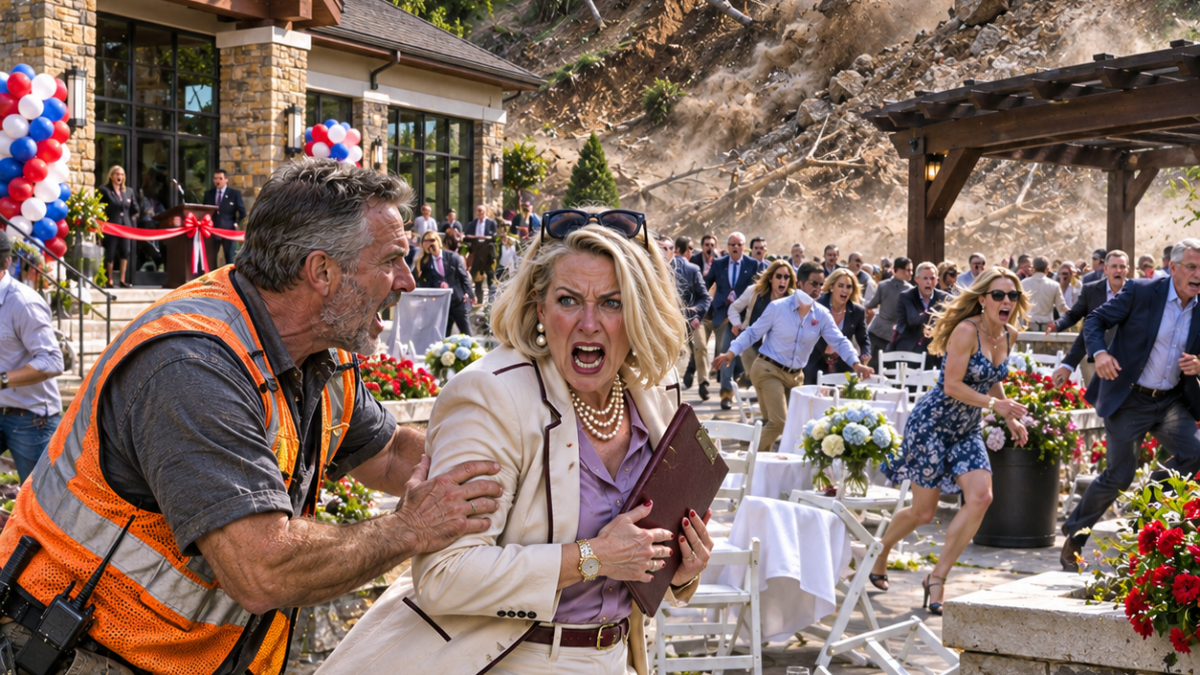
Two days later, they filled their brand-new community plaza with families, coffee tables, balloons, and board members standing directly beneath the slope I had begged them to evacuate.
And when the earth finally decided it had carried enough, the people who had spent weeks laughing at me were suddenly screaming my name.
My name is Aaron Ward.
I was sixty-five years old when this happened, retired from military engineering work and supposedly finished with the kind of life that teaches a man to notice danger before everyone else decides it exists.
I had spent four decades around terrain.
Mountains.
Temporary roads.
Flood zones.
Failed embankments.
Hillsides cut too steep.
Drainage systems designed by people who understood budgets better than water.
You spend enough years around unstable ground and you stop thinking of soil as something passive.
The earth moves.
It breathes.
It stores pressure.
It remembers every gallon of water and every pound you place on top of it.
Long before a hillside collapses, it whispers.
A leaning tree.
A crack in concrete.
A fence post that wasn’t crooked last month.
Water collecting where water never used to collect.
Most people don’t notice those things.
Or if they do, they call them inconvenient.
I had learned not to.
That was why I chose Sycamore Ridge when I retired.
I wanted quiet.
The neighborhood sat between two forested hills outside town, the kind of place real-estate brochures described with words like *nestled*, *peaceful*, and *mountain charm*.
There were pines behind the houses.
Morning fog.
Clean sidewalks.
Matching gray mailboxes.
Lawns so carefully trimmed that some homeowners probably measured the grass with rulers.
My house backed toward the western slope.
I had a porch, a wood stove, and a mixed shepherd named Ranger who believed squirrels were enemy agents.
That was enough for me.
Every morning I made coffee before sunrise.
Ranger and I walked the same trail along the ridge.
Then I spent the day fixing things that didn’t need fixing and pretending I had finally learned how to do nothing.
But retirement doesn’t erase forty years of instincts.
Old habits don’t disappear.
They sleep with one eye open.
Then the rain started.
Not one dramatic storm.
That would have been easier.
This rain came slowly.
Steadily.
Day after day.
The kind that seeps into the soil until the ground stops behaving like ground and starts behaving like weight.
The first thing I noticed was pooling near my back fence.
Nothing serious.
A few inches of water where the yard usually drained clean.
I wrote it down.
The next morning, one of the fence posts near the alder tree leaned slightly downhill.
Not enough to notice with your eyes.
Enough to notice with a level.
I wrote that down too.
The third sign came from Ranger.
We were walking the lower trail when he stopped.
No barking.
No growling.
He simply refused to go forward.
I tugged gently.
“Come on.”
He backed up.
I had known that dog for nine years.
He had chased deer into brush, stepped over rattlesnake tracks, and once tried to fight a vacuum cleaner.
He did not scare easily.
I went back for my field bag.
Range finder.
Inclinometer.
Notebook.
When I returned, Ranger followed me only as far as the upper edge.
I checked the slope.
The grade had changed slightly.
Water had begun cutting new hairline channels through the clay.
Tiny rivulets.
Almost harmless-looking.
But early danger rarely looks impressive.
That is why people ignore it.
I started a log.
Date.
Rainfall.
Temperature.
Pooling.
Fence movement.
Tree angle.
Surface cracks.
Three days later, I found the first real fracture in the ground behind my property.
No wider than a coin.
Ranger approached it, sniffed once, then stepped backward.
I crouched.
Wet clay under a harder crust.
Soft.
Too willing to move.
That was the same afternoon the HOA sent an email announcing its newest project.
**SYCAMORE COMMONS.**
A concrete event plaza.
Decorative benches.
Extra parking.
Solar string lights.
Family movie nights.
Community celebrations.
The email included a glossy digital rendering filled with smiling families and warm lights.
At the bottom was the site map.
I stared at it.
The plaza was going directly beneath the slope I had started monitoring.
Exactly where the new runoff channels converged.
I walked down there the next morning.
Orange stakes marked the perimeter.
A landscaping crew was unloading compactors.
One worker stepped out of a truck and sank almost an inch into the wet ground.
“Morning,” I called.
“Morning.”
“You have a geotechnical report?”
He blinked.
“A what?”
“That answers the question.”
His supervisor walked over.
“We’ve got approved plans.”
“Plans aren’t soil.”
“The HOA hired consultants.”
“Who?”
He shrugged.
“You’d have to ask them.”
I looked uphill.
Then at the machinery.
Then at the wet ground beneath my boots.
“Don’t pour anything here until somebody who understands slope stability looks at it.”
The younger worker laughed nervously.
“Not our call.”
That sentence would come back to haunt all of us.
I went home and wrote my first email to the board.
Professional.
Calm.
No drama.
I summarized the rainfall.
The drainage changes.
The observed slope movement.
The crack.
The leaning vegetation.
My recommendation was simple:
**Suspend construction pending an evaluation by a licensed geotechnical engineer.**
HOA President Kennedy Morgan answered two hours later.
Kennedy had one of those polished real-estate smiles that made every sentence sound like a campaign ad.
“Thank you for your community concern, Mr. Ward. Our consultants have reviewed the project site and determined it is appropriate for development. We encourage all residents to trust the process.”
I read it twice.
No engineer named.
No report.
No measurements.
No explanation.
Just trust.
So I printed my findings and walked to the HOA office.
Kennedy’s wife, Tara, sat behind the desk.
She handled most HOA communications and unofficially managed the board’s image.
I put the folder in front of her.
“Please give this to Kennedy.”
She smiled.
“We already received your email.”
“This has updated measurements.”
“I’m sure our contractors have everything under control.”
“Contractors aren’t the problem.”
Her smile tightened.
“What exactly are you suggesting?”
“That the hill is moving.”
She looked toward the folder but didn’t touch it.
“Aaron, this project has been approved.”
“The ground didn’t vote.”
“We’re trying to improve the neighborhood.”
“I’m trying to keep the neighborhood attached to the hill.”
Her expression cooled.
“We appreciate your passion.”
“This isn’t passion.”
I tapped the folder.
“It’s data.”
I left.
That night the rain got heavier.
The alder tree leaned another fraction of a degree.
I photographed it from the same position as before.
Then I overlaid the images on my computer.
The trunk shifted visibly.
Not much.
Enough.
I sent another email.
No response.
The next morning, I opened my mailbox and found an HOA envelope.
Inside was a violation notice.
The accusation:
**Dissemination of unverified information resulting in unnecessary community alarm.**
I stood in my kitchen reading it.
Then I looked at Ranger.
He stared back at me.
“They fined me for geology.”
His tail thumped once.
That was the moment I stopped believing this was a misunderstanding.
These people weren’t going to listen because listening would force them to admit they might be wrong.
And for men like Kennedy Morgan, being wrong in public was apparently more frightening than a hillside moving beneath thirty homes.
I taped the violation notice to my refrigerator.
Right beside the rainfall chart.
One of those papers was written by an HOA.
The other was written by weather.
Only one mattered.
PART 2
The rain continued for another four days.
Not hard enough to make national news.
Not hard enough to close schools.
Just steady.
Persistent.
Patient.
The worst kind of rain for a saturated slope.
Every morning, Ranger and I made our circuit.
He still refused the lower trail.
So did I.
Instead, I stood above it and took measurements.
The alder leaned more.
A shallow drainage channel that normally dried by noon now held water through the afternoon.
Two fence posts behind Lot 39 shifted downhill.
I wrote everything down.
It was an old habit from field work.
People trust memory too much.
Memory changes according to emotion.
Paper doesn’t.
On Thursday evening, Eileen Parker called me.
Eileen lived three houses downhill from mine.
She was sixty-eight, a retired nurse, widowed, quiet, and one of the few people in Sycamore Ridge who could tell somebody they were wrong without making them hate her.
“Aaron?”
“Yeah?”
“Can you come over?”
“What happened?”
“I found something in the basement.”
Ten minutes later, I was standing beside her sump pump.
A thin crack ran across the north wall.
“How long has that been there?”
“It wasn’t there last month.”
“Anything else?”
She led me to the back door.
The patio had dropped slightly along one edge.
She had placed a straight board across it.
“Quarter inch,” she said.
“You measured twice?”
“Three times.”
I almost smiled.
That was Eileen.
“Your sump?”
“Running every few minutes.”
I looked toward the slope outside.
“What do you think?”
I hesitated.
People hear certainty differently when their house is involved.
“I think groundwater is moving where it wasn’t moving before.”
“That bad?”
“I think you should document everything.”
She stared at me.
“Aaron.”
“Yes.”
“Could the hill come down?”
“I think sections of it are already moving.”
She sat on the basement stairs.
For a moment, she wasn’t the retired nurse who always knew what to do.
She was just a woman whose retirement home sat below a wet hill.
“What am I supposed to do?”
“Don’t panic.”
She gave me a tired smile.
“That is a fascinating thing to hear from the man being fined for panic.”
“I’m not panicking.”
“I know.”
That was exactly why she was frightened.
I told her to photograph every crack.
Time-stamp measurements.
Move valuables away from the north wall.
Keep medications, identification, and important papers ready.
Then I called Sarah Miller.
Sarah and I had worked disaster-response operations years earlier.
She now handled planning for the county emergency office.
She answered the phone with:
“Ward, tell me you’re calling to brag about retirement.”
“I need a geotech.”
There was a pause.
“Of course you do.”
I sent her everything.
Rainfall.
Photos.
Measurements.
Construction plans.
Eileen’s basement.
Sarah called back two hours later.
“I had one of our guys look at this unofficially.”
“And?”
“He doesn’t like it.”
“That makes two of us.”
“Possible shallow translational movement. Saturation is significant.”
“Can you send someone?”
“County’s already stretched.”
“Sarah.”
“We have road washouts, flooding, two culvert failures, and a creek evacuation.”
I rubbed my forehead.
“When?”
“I’ll push.”
“I need eyes on this before they pour.”
“I know.”
That’s the problem with real emergencies.
Nobody has to be evil for bureaucracy to move too slowly.
Sometimes everyone is simply busy with another disaster.
So I kept collecting evidence.
The following Monday, I attended the HOA meeting.
The clubhouse was an old model home with a banner reading:
**PROGRESS IS OUR TRADITION.**
Kennedy sat at the front.
Tara beside him.
Cole Benson, vice president, next to her.
Cole owned Benson and Sons Landscaping.
His company had the contract for the plaza.
That relationship should have bothered more people.
Apparently it didn’t.
Kennedy opened the public-comment period.
“Two minutes per resident.”
I stood.
Ranger waited outside.
I carried my notebook to the podium.
“My name is Aaron Ward, Lot 38.”
Kennedy smiled.
“We know you, Aaron.”
“I’m sure.”
A few people chuckled.
I continued.
“I’ve been monitoring the slope behind Lots 35 through 42. Surface displacement has increased. The rainfall has pushed soil saturation to a level that concerns me. Vegetation is leaning. New drainage channels are forming. We have structural cracking in at least one home.”
People shifted.
Kennedy leaned back.
“Our consultants have already addressed these concerns.”
“What consultants?”
“Experienced grading professionals.”
“Geotechnical engineers?”
He paused.
“Professionals.”
“That isn’t what I asked.”
Cole leaned toward his microphone.
“My crew has twenty-three years of experience.”
“At landscaping and grading.”
His face hardened.
“You saying we don’t know dirt?”
“I’m saying you aren’t licensed to assess slope failure.”
A murmur moved through the room.
Cole crossed his arms.
“We’ve built on worse.”
“That’s not reassurance.”
Kennedy interrupted.
“Let’s keep the tone respectful.”
“My tone isn’t the issue.”
I looked toward the homeowners.
“The slope is moving.”
The room went still.
“If you continue loading the base with equipment, fill, and concrete during this saturation, you increase the chance of failure.”
A woman near the aisle asked:
“How serious?”
Before I could answer, Kennedy did.
“Not serious.”
I turned.
“You don’t know that.”
“Our people tell us—”
“Name the geotechnical engineer.”
No answer.
“Give us the bore-log number.”
Silence.
“Subsurface testing?”
Nothing.
“Drainage analysis?”
Kennedy’s smile disappeared.
“This is community feedback, not an interrogation.”
“No.”
I looked directly at him.
“This is a warning.”
Tara glanced toward the clock.
“Your two minutes are up.”
“I recommend immediate suspension of work.”
Kennedy shut off my microphone.
The click echoed.
“Thank you, Mr. Ward.”
I stood there another second.
Then I gathered my notes and went back to my chair.
The board moved on to approved patio colors.
I am not exaggerating.
Ten minutes after I told them people could be in danger, they debated whether “desert sandstone” was too close to “warm beige.”
After the meeting, several people approached me.
Dennis Wallace said his back gate had begun dragging.
A woman named Rachel told me her basement door stuck for the first time in twelve years.
Another man whispered:
“Should I move my family?”
“I can’t tell you that based on what I have.”
“What would you do?”
I looked toward the dark hill.
“I’d have a bag ready.”
Kennedy heard about that too.
Two days later, another HOA envelope arrived.
**SECOND NOTICE: MISINFORMATION AND INTERFERENCE.**
Fine:
$250.
I called.
Tara answered.
“Aaron.”
“You fined me for advising people to prepare?”
“For spreading unverified geological claims.”
“They’re verified by measurements.”
“Not by HOA-approved professionals.”
I pulled the phone away from my ear.
Then slowly put it back.
“The HOA does not approve geology.”
“Aaron—”
“Have Kennedy call me.”
“He’s busy.”
“So is gravity.”
I hung up.
That afternoon, I installed a time-lapse camera overlooking the slope.
Movement stakes.
Crack gauges.
A reference line.
Nothing elaborate.
Just enough to preserve what was happening.
If the city arrived too late, nobody would be able to say the hill moved without warning.
Three days later, Eileen knocked on my door.
Her face told me everything.
“The crack’s bigger.”
“How much?”
“I can fit a nickel into part of it.”
My stomach tightened.
“Any seepage?”
“Yes.”
“Move anything important away from that wall.”
She nodded.
Then asked:
“Are they still building?”
“Yes.”
Her eyes filled.
“Why?”
I didn’t have a good answer.
Because people had committed money?
Because Kennedy wanted a ribbon cutting?
Because stopping would mean admitting I was right?
None sounded sane.
“They think stopping will make them look weak.”
Eileen stared at me.
“That’s stupid.”
“Yes.”
“Dangerously stupid.”
“Yes.”
Her nephew Jake ran a small local news site.
The next day an article appeared.
**SYCAMORE RIDGE HOA IGNORES SLOPE WARNINGS, CONTINUES PLAZA PROJECT.**
It quoted my email.
Showed photographs of the saturated site.
Mentioned basement cracking.
The HOA responded with a mass message titled:
**CLARITY AND UNITY.**
It accused unnamed residents of spreading alarmism.
It asked everyone to “trust the professionals.”
And it reminded homeowners not to approach contractors.
Translation:
Stop asking questions.
I sent one more package to the city engineering office.
Marked urgent.
Then Sarah called.
“I got our county geotech to do a desk review.”
I stood up.
“What did he say?”
“Significant subsurface saturation.”
“Anything else?”
“Indicators consistent with shallow translational failure.”
“Say that again.”
“You heard me.”
“Can he put it in writing?”
“He already did.”
The email arrived at 2:43 p.m.
It listed:
Leaning vegetation.
Surface cracking.
Pooling.
Recent rainfall above baseline.
Observed movement.
Recommendation:
**Halt surface loading and slab work pending site inspection.**
I forwarded it to every HOA board member.
The city.
The county.
Residents.
I didn’t add commentary.
I didn’t need to.
At 3:12, Kennedy replied.
“While we respect the county’s diligence, this opinion reflects a preliminary desk review rather than an onsite assessment. Our project remains compliant.”
Then he added:
**We look forward to welcoming everyone Saturday at 10:00 a.m. for the Sycamore Commons Grand Opening. Coffee and donuts will be served.**
I stared at the message.
Donuts.
The universal antidote to physics.
I called Sarah.
“Can you stop them?”
“I’m trying.”
“Saturday.”
“I know.”
“That’s forty-eight hours.”
“I know, Aaron.”
She sounded exhausted.
“We need an official site inspection for a mandatory order.”
“You have a written geotechnical recommendation.”
“Recommendation isn’t an order.”
“People could die.”
“I know.”
“Then get somebody here.”
“I’m trying.”
I immediately regretted snapping.
Sarah was one of the people helping me.
“Sorry.”
“No.”
She sighed.
“You’re scared.”
“Yes.”
That was the first time I had said it out loud.
Not angry.
Not frustrated.
Scared.
Because data can tell you something is becoming dangerous.
It cannot tell you exactly which second the world will stop waiting.
Friday afternoon, I walked the property line.
The rain had eased but not stopped.
Ranger stayed behind me.
The upper crack had widened.
The alder’s root base had started bulging.
I hammered in another marker.
Measured.
Photographed.
Then I wrote one final warning by hand.
Big black letters.
**NOTICE OF GEOLOGICAL HAZARD**
**IMMINENT RISK**
**CONTINUED OCCUPANCY AND CONSTRUCTION MAY RESULT IN SLOPE FAILURE AND INJURY**
**AARON WARD**
**RETIRED MILITARY ENGINEERING CORPS**
I placed it beside the project sign.
Saturday morning, the sign was gone.
In its place:
**AUTHORIZED CONSTRUCTION AREA**
**TRESPASSERS WILL BE REPORTED**
That was when anger finally disappeared.
Anger requires hope that someone might still listen.
I was past that.
Friday night, Cole Benson came to my house.
Nine o’clock.
Rain dripping from his HOA jacket.
He didn’t bother saying hello.
“You need to stop.”
“Stop what?”
“Scaring residents.”
“I’m measuring a slope.”
“You’re destroying property values.”
“Property values recover.”
He frowned.
“People don’t if you bury them.”
His expression hardened.
“Don’t use language like that.”
“Then stop giving me reasons.”
“We have everything under control.”
“Show me the geotechnical report.”
“We’ve reviewed the site.”
“Show me the bore logs.”
He blinked.
“What?”
“Show me the moisture profile.”
Silence.
“Show me the shear-strength assessment.”
Nothing.
I folded my arms.
“You don’t know what I’m talking about.”
Cole stepped forward.
“You think you’re smarter than everybody.”
“No.”
I looked toward the dark hill.
“I think gravity doesn’t care which one of us wins an argument.”
He stared.
“We’re opening tomorrow.”
“I know.”
“You stay away.”
“Not happening.”
“If you interfere—”
“What?”
I stepped closer.
“You’ll fine me?”
He looked away.
I closed the door.
I didn’t sleep.
At 3:41 a.m., the barometer dropped.
At 3:52, Ranger stood and growled at the window.
At 4:03, I heard a root snap somewhere in the darkness.
Sharp.
Fast.
Wrong.
At 4:09, headlights appeared below.
A black SUV drove toward the plaza.
I took binoculars.
Kennedy Morgan stepped out.
Hood up.
Flashlight low.
He walked to the utility control box near the decorative lighting.
Opened it.
Worked inside.
The site lights went dark.
I took photographs.
The time-lapse camera captured him.
I didn’t know what he had done.
So I didn’t guess.
I saved the files.
Labeled them:
**PRE-EVENT – KENNEDY – 4:09 A.M.**
Then I waited for daylight.
Saturday morning came gray.
The kind of sky that makes every color look tired.
At eight, I saw volunteers below.
Pop-up canopies.
Coffee urns.
Balloons.
Boxes of donuts.
The plaza banner stretched across two poles:
**SYCAMORE COMMONS — WHERE COMMUNITY GROWS.**
I packed a small med kit.
Rope.
Gloves.
Flashlight.
Whistle.
Not because I wanted to be dramatic.
Because I had spent too many years watching emergencies become worse because somebody assumed help would arrive instantly.
Ranger followed me to the ridge.
When we reached the plaza trail, he stopped again.
His tail tucked.
I bent beside him.
“I know.”
I tied his leash to a sturdy tree well above the event.
“Stay.”
He whined.
“I’ll be back.”
Thirty people had gathered.
Maybe more.
Families.
Board members.
Neighbors.
Two teenagers adjusting speakers.
Kennedy wore a navy jacket.
Tara passed out coffee.
Cole supervised the ribbon.
Kennedy noticed me.
“Aaron!”
He spread his arms.
“Glad you decided to celebrate with us.”
“That’s one way to describe it.”
He ignored me.
I looked at the concrete.
Something was wrong.
The western edge had a thin crack.
Dark moisture showed beneath sections of the slab.
The ground beside it gave too easily under my boot.
I crouched.
Pressed my fingers into the soil.
It pulsed.
Not metaphorically.
A small movement.
Then another.
Eileen stood near the coffee table.
I walked to her.
“You need to move uphill.”
Her face changed instantly.
“Now?”
“Yes.”
She looked at the others.
“Should I warn them?”
“Start casually.”
She put down her coffee.
Then moved toward an older couple.
Kennedy tapped the microphone.
Feedback squealed.
“Good morning, neighbors!”
Applause.
“Today marks a new chapter for Sycamore Ridge.”
I looked up.
Three alders along the slope were leaning in the same direction.
Not good.
Kennedy continued.
“When we first envisioned this space, we wanted something that represented unity, confidence, and trust.”
A vibration passed beneath my boots.
Tiny.
Paper cups rippled.
One woman looked down.
Kennedy paused.
Then smiled.
“Probably a truck.”
No truck.
“Kennedy.”
He ignored me.
“I want to thank Cole Benson and his team—”
A second tremor came.
Stronger.
The table rattled.
A metal chair moved.
“Kennedy!”
He lowered the microphone.
“Aaron, please.”
“Clear the pad.”
He rolled his eyes.
“Not today.”
“Clear it now.”
A few residents looked nervous.
Kennedy turned toward them.
“Everyone remain calm. Mr. Ward has been concerned about the slope for some time, but our team—”
The first crack sounded.
Wet.
Deep.
Like a giant tree breaking underground.
Every instinct in my body fired at once.
Then came the grinding.
Low.
Rolling.
The sound of a hillside beginning to move.
“GET OFF THE PAD!”
I screamed.
“UPHILL! NOW!”
Kennedy’s smile disappeared.
The alders shifted.
Together.
The ground bulged.
A section of upper soil folded downward.
For half a second, everyone stood still.
Then the slope came apart.
Mud surged toward the plaza.
People screamed.
A folding table flipped.
Coffee cups flew.
The banner snapped loose.
Someone dropped a child’s stroller and grabbed the child instead.
“RUN!”
I grabbed Eileen.
“UP!”
She moved.
Tara tried to run.
One heel sank.
She fell.
Cole pulled her up.
The far edge of the slab cracked.
A section dropped nearly a foot.
Kennedy froze.
I saw his face.
Confusion.
Not fear yet.
His brain had not caught up.
“Kennedy!”
He looked at me.
“MOVE!”
The next surge hit.
Mud reached his knees.
Tara screamed.
Cole fell.
I ran toward them.
That was not bravery.
It was training.
Anger disappears during emergencies.
So does revenge.
There are only problems and seconds.
I reached Kennedy first.
“Grab my arm!”
He stared.
“AARON!”
“GRAB ME!”
He did.
Mud pulled at his legs.
“I’m stuck!”
“Your shoe!”
“What?”
“Leave it!”
He jerked.
One polished shoe remained buried.
He came forward.
I pushed him uphill.
“Go!”
Then Tara.
She was crying.
“I can’t move!”
“Yes, you can.”
“My leg—”
“Give me your hand.”
She grabbed my wrist.
I pulled.
Eileen came back from higher ground.
“Aaron!”
“Take her!”
Eileen reached.
Together we got Tara onto firmer soil.
Then Cole screamed.
I turned.
He had fallen lower.
Mud surrounded him to the waist.
One hand clung to a metal pipe.
“HELP!”
Another section of slope moved.
“Cole!”
“I CAN’T GET OUT!”
I started toward him.
Kennedy grabbed my arm.
“Don’t!”
I looked at him.
“He’ll die.”
For one second, I saw everything in Kennedy’s face.
The fine.
The emails.
The dismissal.
The ribbon cutting.
All of it vanished.
He let go.
I moved down.
Cole’s eyes were wild.
“Grab my hand.”
“I CAN’T LET GO!”
“You have to!”
“I’LL FALL!”
“You’re already falling!”
He looked at the mud.
Then me.
“Now!”
He released the pipe.
I caught his jacket.
The ground beneath me shifted.
We both went down.
Cold mud hit my chest.
Something struck my shoulder.
I almost lost him.
Then a hand grabbed the back of my belt.
Kennedy.
He had come back.
“PULL!” I shouted.
Kennedy pulled.
Eileen reached for him.
Tara grabbed Eileen.
A chain of people who had been arguing about liability twenty-four hours earlier now fought together against gravity.
We dragged Cole upward.
A tree crashed behind us.
Exactly where he had been.
The sound was enormous.
We fell onto stable ground.
For several seconds, nobody moved.
Then the slope roared again.
The new retaining wall cracked.
Folded.
A section of concrete disappeared beneath mud.
One flatbed truck slid sideways.
A bench vanished.
The polished event plaza—the one Kennedy had called a symbol of progress—became an unrecognizable scar.
Sirens came from the road.
Ranger barked furiously uphill.
Kennedy lay beside me gasping.
His jacket was torn.
Mud covered his face.
He looked at the destruction.
Then at me.
“You knew.”
I stared at him.
“I warned you.”
“We could’ve died.”
“Yes.”
His voice broke.
“You came back for us.”
I sat up.
“I wasn’t going to let your worst decision decide mine.”
A paramedic reached us.
Kennedy lowered his eyes.
Nobody said anything else.
By evening, Sycamore Commons was gone.
Not metaphorically.
Gone.
The concrete pad was broken.
The decorative wall collapsed.
Construction equipment sat half buried.
The banner reading *WHERE COMMUNITY GROWS* hung from a fallen tree like a bad joke nobody wanted to make.
Yellow tape surrounded everything.
Fire crews searched the debris.
County staff marked unstable zones.
A deputy took my statement.
When I finished, he looked toward the slide.
“You sent warnings?”
“Yes.”
“How many?”
“Enough.”
He shook his head.
“Board’s going to have trouble explaining this.”
“Gravity doesn’t negotiate.”
He gave me a tired smile.
When I got home, I removed my clothes in the garage.
Mud fell onto the floor.
Ranger stood beside me, refusing to leave.
I washed the cut on his paw.
Then sat at the kitchen table.
My logbook lay there.
I opened it.
Rainfall.
Angles.
Dates.
Emails.
Measurements.
Every page told the same story.
A disaster had introduced itself politely.
People had simply refused to answer.
I wrote one final line that night:
**The ground always keeps score.**
Then I closed the book.
Morning arrived pale.
The hill behind Sycamore Ridge looked different.
Its smooth face was gone.
A brown scar cut across it.
The slide had stopped roughly thirty feet from two houses.
Thirty feet.
I stood on my porch staring at that distance.
Thirty feet was nothing.
A school bus is longer.
A mature tree can be taller.
If the slide had traveled another few seconds—
I stopped thinking about it.
Sarah arrived with the county geotechnical team.
She walked toward me wearing a raincoat.
“I tried to get here sooner.”
“You’re here.”
“We confirmed the failure plane.”
“Where?”
“Right beneath the plaza.”
I closed my eyes.
“Cause?”
“Multiple factors.”
“Saturation?”
“Yes.”
“Loading?”
“Yes.”
“Grading?”
“Yes.”
“Drainage?”
“Likely.”
She looked toward me.
“Aaron.”
“What?”
“You were right.”
“Don’t.”
She frowned.
“I’d rather have been wrong.”
Sarah nodded.
“Yeah.”
A county engineer approached.
“We’ve got evidence of improper fill placement and insufficient drainage control.”
“Any deeper movement?”
“Monitoring it.”
“Lower houses?”
“For now, evacuation advisory on two.”
Eileen came outside carrying a thermos.
Her basement had taken water.
The north wall crack had widened.
She looked exhausted.
“You okay?”
“House isn’t.”
“You are.”
“Barely.”
She handed me coffee.
“I keep replaying it.”
“Don’t.”
“I would’ve stayed near the table if you hadn’t told me to move.”
I looked away.
“Eileen.”
“No.”
She touched my arm.
“I’m saying thank you.”
I nodded.
That was all I could manage.
The reporters arrived before lunch.
One approached me.
“Mr. Ward?”
“Yes.”
“Are you the retired engineer who warned the HOA?”
“I’m Aaron.”
“Can you tell us what happened?”
I looked at the scarred hill.
“It moved.”
She waited.
“Did you warn them?”
“Yes.”
“How many times?”
“Emails. Meetings. Written notices.”
“Did they respond?”
“They fined me.”
Her eyes widened.
“For what?”
“Spreading misinformation.”
The cameraman glanced up.
She asked:
“And now?”
I looked directly into the lens.
“Now the information moved downhill.”
That became the clip.
By the six o’clock news, everyone knew.
The next morning, screenshots of my emails were circulating online.
The county recommendation.
Kennedy’s response.
The smiley face.
Eileen’s basement photos.
The HOA fine.
People who had accused me of hurting property values suddenly wanted copies of my measurements.
Several residents apologized.
One man knocked on my door.
He had argued online that I was “a retired old guy looking for relevance.”
He stood holding a pie.
“I was wrong.”
“About?”
He looked embarrassed.
“You know.”
“I want to hear you say it.”
He sighed.
“I said you were making this up.”
“And?”
“You weren’t.”
I took the pie.
“What kind?”
“Apple.”
“Apology accepted.”
He laughed nervously.
Not everybody apologized.
Some people were angry at me.
One woman said:
“If you knew it was dangerous, why didn’t you stop them?”
That question hurt.
Because I had asked myself the same thing.
I told her:
“I tried.”
“You should have done more.”
“What?”
She didn’t know.
Neither did I.
Call more people?
Stand in front of the machinery?
Physically drag residents away?
Break laws to prevent somebody else from ignoring evidence?
Hindsight gives everyone imaginary power.
Reality does not.
Sarah reminded me of that later.
“You sent data.”
“Yes.”
“You contacted the county.”
“Yes.”
“You contacted city engineering.”
“Yes.”
“You spoke publicly.”
“Yes.”
“You showed up to the event because you were afraid.”
“Yes.”
“And you pulled three of the people who ignored you out of the mud.”
I said nothing.
“You don’t get to take responsibility for their refusal.”
“Doesn’t mean I stop thinking about it.”
“No.”
“But thinking isn’t guilt.”
I wanted to believe her.
Three nights after the slide, the HOA held an emergency meeting.
Eileen appeared at my door with two coffees.
“You’re going.”
“I wasn’t.”
“Yes, you are.”
“I’ve heard enough from Kennedy.”
“You’re not going to hear him.”
“Then why?”
“To watch him hear us.”
That was a good enough reason.
The rec room was packed.
Kennedy sat at the front.
Leg brace.
Tara beside him.
Cole was absent.
Rumor said he had resigned.
Kennedy tapped the microphone.
No polished smile now.
“We are here to address the recent landslide event and to assure residents that the HOA is cooperating fully with authorities.”
“Event?”
Someone shouted.
“You built on a landslide!”
Another voice:
“You ignored Aaron!”
Kennedy raised both hands.
“Please.”
The room grew louder.
People weren’t afraid of him anymore.
That was important.
For years, Kennedy’s authority came less from bylaws than from exhaustion.
Residents paid fines because arguing took energy.
They accepted decisions because meetings were unpleasant.
Now fear had been replaced by anger.
Finally Kennedy shouted:
“QUIET!”
The room fell silent.
He looked smaller.
“Yes, mistakes were made.”
I stood.
He saw me.
His jaw tightened.
“Mr. Ward—”
“No.”
My voice carried without a microphone.
“Don’t call it a mistake.”
“What do you want me to call it?”
“Foreseeable.”
Silence.
I walked to the front.
Placed my first email on the table.
“Warning one.”
Second.
“Warning two.”
The county memo.
“Professional recommendation.”
The HOA violation.
“You fined me.”
Kennedy looked away.
I placed the grand-opening email down.
“You invited families anyway.”
“Aaron—”
“No.”
Weeks of restraint were gone.
Not rage.
Clarity.
“You had data.”
I pointed at the papers.
“You had photographs.”
Another.
“You had cracking.”
Another.
“You had a county geotechnical recommendation.”
Another.
“And your response was coffee and donuts.”
Nobody laughed.
Kennedy’s lips moved.
“We relied on professionals.”
I turned toward Tara.
“Which geotechnical engineer?”
No answer.
Then Kennedy:
“Cole’s company had experience.”
“Landscaping.”
“He had grading experience.”
“Grading is not slope engineering.”
Tara spoke softly.
“We thought it was safe.”
I looked at her.
“No.”
She froze.
“You hoped it was safe.”
Silence.
“Those are not the same thing.”
Eileen stood behind me.
“My basement is damaged.”
Her voice shook.
“If that slide went thirty feet farther, two houses would’ve been buried.”
Kennedy lowered his eyes.
A father stood.
“My daughter was standing near that ribbon.”
Another resident:
“My grandson was there.”
Someone else:
“You told us Aaron was paranoid.”
Kennedy looked around.
His face changed.
Maybe that was the first time he understood this was not about me.
He whispered:
“I wanted to give the neighborhood something.”
I answered:
“You wanted to give yourself something.”
He looked at me.
“A legacy.”
That landed.
The room stayed silent.
Kennedy finally said:
“The board will temporarily step aside pending investigation.”
Someone yelled:
“Temporarily?”
The room erupted.
By midnight, Kennedy had resigned.
Tara resigned the following morning.
Cole had already stepped down.
The county designated the area an official hazard zone.
Initial stabilization estimate:
Nearly $400,000.
The HOA’s insurance carrier immediately began reviewing whether negligence affected coverage.
A special assessment became possible.
Residents panicked.
That was when revenge stopped feeling clean.
Kennedy deserved consequences.
Cole deserved consequences.
The board deserved scrutiny.
But homeowners who had trusted them were facing bills, falling property values, damaged basements, and relocation fears.
Justice can become cruel quickly when the wrong people end up paying.
I wanted the people who made the decisions held responsible.
Not Eileen.
Not families with mortgages.
Then Sarah came to my house three days later.
“I need the 4:09 footage.”
“Why?”
She placed photographs on the table.
The utility control panel.
Mud-caked.
Bent.
The lock showed clean tool marks.
“This wasn’t opened by the landslide.”
My stomach tightened.
“What was connected to it?”
“We’re still confirming.”
“You think Kennedy disabled something.”
“We know he was there.”
“That doesn’t prove what he did.”
“No.”
She appreciated that answer.
People assume experts want their theories confirmed.
Good investigators want theories challenged.
A technician later determined that the panel supplied power to monitoring equipment installed for drainage and slope observation.
Sensors capable of recording conditions.
Kennedy had not caused the earth to move by opening the box.
But disabling those systems may have prevented warnings from being generated during the final hours.
Sarah called me.
“This just became more serious.”
“How serious?”
“Possible evidence tampering. Possible interference with safety systems.”
“Why would he do that?”
She paused.
“You tell me.”
I thought about the ribbon cutting.
The press.
Kennedy’s obsession with finishing.
Maybe he had seen warnings from the sensors.
Maybe he wanted them quiet until the ceremony was over.
I hated even thinking that.
“Don’t guess,” I said.
Sarah replied:
“Exactly.”
Investigators subpoenaed records.
Emails.
Contractor communications.
Sensor logs.
Financial documents.
My footage.
Cole hired an attorney.
Kennedy hired one.
Tara stopped speaking publicly.
Then investigators found an email from Kennedy sent the night before the event.
The wording was vague but damaging.
**We cannot have automated warnings interrupt tomorrow’s opening. Resolve the sensor issue before guests arrive.**
Another response from a maintenance worker asked:
**Shouldn’t engineering confirm why they’re alarming?**
Kennedy replied:
**We’ll address it after the event.**
I read that message sitting at Sarah’s office.
For several seconds, I didn’t speak.
“He knew.”
Sarah nodded.
“He knew something was warning.”
“He still brought families down there.”
“Yes.”
I felt sick.
My anger returned then.
Not loud.
Cold.
A man can make one bad decision.
Then another.
Then another.
Eventually there comes a point where carelessness turns into choice.
Kennedy had crossed it.
The formal hearing was scheduled six weeks later.
I wore the gray blazer from my retirement ceremony.
Clarissa Denton led the inquiry.
She had the kind of calm voice that made lying feel embarrassing.
“Mr. Ward, please describe your first documented observation.”
I did.
Rainfall.
Pooling.
Fence movement.
Ranger refusing the trail.
The crack.
Alder movement.
I walked the panel through every email.
Every photograph.
Every meeting.
Every fine.
Nobody interrupted.
Then Clarissa asked:
“Did you ever tell the HOA that lives might be at risk?”
“Yes.”
“Where?”
I showed the email.
She read the line aloud.
**Lives could be at risk if loading continues under current saturation.**
The room went silent.
“Response?”
“None to that sentence.”
Then the time-lapse footage.
The lights dimmed.
Weeks of movement became thirty seconds.
The tree leaned.
Water channels widened.
The fence sagged.
The upper crack opened.
The audience shifted.
You can explain slope movement for hours and people may not understand.
Show them thirty seconds and suddenly nobody needs a vocabulary lesson.
Then the 4:09 clip.
Kennedy at the panel.
Clarissa froze the frame.
“Can you identify him?”
“Yes.”
“Who is it?”
“Kennedy Morgan.”
“Were you aware he would access the control system?”
“No.”
“Did opening that panel cause the landslide?”
“No.”
Kennedy’s attorney looked relieved.
I continued.
“The hill moved because of physical conditions—saturation, loading, grading, drainage, soil. A switch doesn’t create that.”
Clarissa nodded.
“What could disabling monitoring do?”
“It could remove information.”
“Meaning?”
“If instrumentation is detecting movement and alarms are disabled, the slope still moves.”
I looked at Kennedy.
“You just stop hearing it.”
Sarah testified after me.
Her findings were brutal.
Excessive saturation.
Unapproved fill.
Improper slope modification.
Construction loading during unstable conditions.
Failure to obtain qualified geotechnical review.
Monitoring interruption.
Kennedy’s lawyer argued unprecedented rainfall.
Sarah responded:
“Rainfall was above normal but documented.”
Good-faith reliance on contractors.
Sarah:
“The board received contrary warnings.”
Unforeseeable event.
Sarah:
“The movement indicators were identified repeatedly before failure.”
Then Kennedy testified.
He looked older.
His voice was quiet.
“We thought Aaron was exaggerating.”
Clarissa asked:
“Why?”
“He had become confrontational.”
“Was his rainfall data false?”
“No.”
“Were his photographs false?”
“No.”
“Was the crack false?”
“No.”
“Were the leaning trees false?”
“No.”
“Was the county desk review false?”
“No.”
Clarissa leaned slightly forward.
“Then what was exaggerated?”
Kennedy stared at the table.
Nothing.
She asked about the monitoring system.
He swallowed.
“I disabled the alerts.”
People gasped.
His attorney closed his eyes.
Clarissa waited.
“Why?”
“They kept triggering.”
“What did you think that meant?”
“I thought the sensor was malfunctioning.”
“Did you have an engineer confirm that?”
“No.”
“Did you investigate?”
“No.”
“What did you do?”
Kennedy whispered:
“I shut them off.”
“When?”
“Before the event.”
“Why?”
His voice broke.
“I didn’t want the ceremony interrupted.”
Nobody moved.
No dramatic yelling.
No courtroom chaos.
Just silence.
Sometimes truth doesn’t need volume.
Kennedy continued.
“I thought we could inspect everything afterward.”
Clarissa looked at him.
“Thirty people stood below that slope.”
He nodded.
His eyes filled.
“I know.”
The state inquiry referred several matters for prosecution and licensing review.
Kennedy eventually accepted a plea agreement connected to reckless endangerment and evidence tampering.
He did not go to prison.
That disappointed some people.
Including me.
But he lost any future board position in Sycamore Ridge.
He faced restitution exposure.
Professional consequences followed others involved.
Cole’s company lost major contracts and faced investigation over the work.
Tara moved away.
The old HOA board dissolved.
State supervision was imposed for several years.
The common area could not be redeveloped without independent engineering approval.
The financial consequences were enormous.
But the deeper change happened among the residents.
At the first election after the disaster, nobody campaigned on “beautification.”
Nobody promised “property value enhancement.”
They campaigned on transparency.
Records.
Engineering review.
Open meetings.
Clear budgets.
Eileen became chair of the new safety committee.
She arrived at my house holding a folder.
“No.”
She hadn’t spoken yet.
“You don’t know what I’m asking.”
“Yes, I do.”
“We want you.”
“No.”
“As chairman.”
“Absolutely not.”
“Advisor.”
“No.”
“One meeting.”
“Still no.”
She held up a coffee cup.
“What kind?”
“Dark roast.”
I sighed.
“You fight dirty.”
She smiled.
“All we need is field advice.”
“Fine.”
“Excellent.”
“I didn’t say yes to meetings.”
“Of course not.”
She lied beautifully.
Stabilizing the hill took months.
Crews installed new drainage.
Engineers drove anchors deep into stable layers.
Unnecessary loading was removed.
Erosion barriers went in.
The old plaza site was cleared.
No concrete replacement.
The neighborhood voted to leave the area mostly green.
Native grasses.
Wildflowers.
A narrow path in a safe location.
Eileen called the project:
**The Listening Field.**
I told her the name sounded like something printed on a candle.
She ignored me.
When the wooden sign went up, I changed my mind.
**THE LISTENING FIELD**
**Because the earth always speaks, and wisdom begins when we listen.**
I stood in front of it.
Ranger sat beside me.
“Still sentimental.”
His tail moved.
“You like it?”
Another thump.
“Traitor.”
We spent spring planting.
People volunteered.
Families whose homes had almost been buried.
Residents who had defended Kennedy.
Residents who had criticized me.
Nobody cared anymore.
Everyone carried mulch.
One afternoon, Cole Benson appeared at the edge of the field.
No clipboard.
No HOA jacket.
He looked tired.
“Aaron.”
“Cole.”
“Can we talk?”
“I’m listening.”
He looked toward the stabilized slope.
“I owe you an apology.”
I waited.
“I knew the ground was wet.”
“Yes.”
“I knew Kennedy was pushing the schedule.”
“Yes.”
“I told myself we had enough experience.”
“You didn’t.”
“No.”
He looked at his boots.
“I didn’t want to lose the contract.”
That was honest.
Ugly.
But honest.
“I kept thinking somebody above me would stop it if it was really dangerous.”
“Who was above you?”
He frowned.
“What?”
“You owned the company.”
His face tightened.
“No one.”
“Exactly.”
He nodded.
“I lost most of the business.”
“I’m sorry.”
He looked surprised.
“You are?”
“I don’t need your family destroyed.”
“After what happened?”
“I wanted accountability.”
I pointed at the field.
“Not more wreckage.”
Cole’s eyes filled.
“I almost died.”
“Yes.”
“You came back.”
“Yes.”
“Why?”
I thought about it.
“Because you being wrong didn’t make you disposable.”
He covered his face for a moment.
Then looked at the volunteers.
“Can I help?”
I handed him a rake.
“Start there.”
He worked until sunset.
No speech.
No applause.
That was enough.
Kennedy took longer.
Nearly a year after the slide, I found a handwritten envelope in my mailbox.
No HOA logo.
No attorney.
Just my name.
Aaron,
I have started this letter six times.
You warned me.
I decided you were trying to embarrass me.
Every new warning felt like an attack because admitting you were right meant admitting I had pushed the project too far.
The night before the grand opening, the monitoring system kept alarming.
I convinced myself it was malfunctioning.
I shut it down because I wanted one morning without alarms or questions.
I thought we could investigate after the ceremony.
I was wrong.
I remember standing in that mud and realizing the slope did not care whether I was president.
I remember you reaching for me.
I still don’t understand why you came back.
I would not have blamed you if you hadn’t.
I’m not asking for forgiveness.
I just need you to know I finally understand what you were trying to do.
You were not trying to stop my project.
You were trying to keep us alive.
Kennedy.
I read it three times.
Then folded it.
Eileen stopped by that afternoon.
“You look thoughtful.”
“That an insult?”
“Usually.”
I showed her the letter.
She read it.
“What are you going to do?”
“Nothing.”
“No answer?”
“Not yet.”
“Do you forgive him?”
I looked toward the hill.
“People use that word too easily.”
“Do you hate him?”
“No.”
She seemed surprised.
“You nearly died saving him.”
“Exactly.”
“That makes you hate him less?”
I thought.
“I already carried him through enough mud.”
Eileen smiled.
“That’s almost profound.”
“Don’t spread it around.”
Months later, I answered.
Kennedy,
I pulled you out because leaving you there would have allowed your worst decision to decide what kind of man I was.
You were warned.
You knew enough to stop.
People almost died.
You will carry that longer than any sentence a court can impose.
Do something useful with it.
Aaron.
He did not reply.
Not then.
The first anniversary of the landslide arrived quietly.
The neighborhood wanted a ceremony.
I tried to avoid it.
Eileen threatened me.
“No speeches.”
“Fine.”
“No plaque.”
“Fine.”
“No newspaper.”
“Fine.”
She lied about two of those.
The gathering was small.
No balloons.
No ribbon.
No giant banner.
County engineers came.
Firefighters.
Sarah.
Cole stood in the back.
The state emergency-management office presented me with a plaque.
**For vigilance, integrity, and service to community safety.**
I held it awkwardly.
Eileen whispered:
“You have to say something.”
“You promised.”
“I changed my mind.”
“You would’ve been an excellent HOA president.”
“Shut up.”
People laughed.
I looked toward the Listening Field.
Then the crowd.
“I spent forty years around people who thought experience teaches you how to control nature.”
I paused.
“It doesn’t.”
“It teaches you how little control you actually have.”
The field went quiet.
“We didn’t survive that day because I outsmarted the hill.”
I looked at Eileen.
“We survived because some people listened.”
Then toward Sarah.
“Because professionals eventually came.”
Then the firefighters.
“Because responders moved fast.”
Then toward the residents.
“And because when the slope moved, people helped one another.”
I paused.
“I want you to remember something else.”
I pointed toward the grass.
“Warnings rarely arrive looking dramatic.”
“A leaning tree.”
“A crack.”
“A wet basement.”
“A dog refusing a trail.”
Ranger lay beside me.
His ears moved.
“We ignore small warnings because they are inconvenient.”
I looked toward the scar beneath the wildflowers.
“Then we act shocked when the consequence is enormous.”
Nobody spoke.
“So don’t remember me as the man who predicted a landslide.”
I shook my head.
“Remember that the landslide was predicted.”
“That difference matters.”
The applause began slowly.
I stepped away before anyone could ask for another sentence.
Later, I carried the plaque up the ridge.
I placed it beside the Listening Field sign.
No audience.
Just Ranger.
Wind.
Grass.
I opened my old field log.
The first pages were wrinkled.
Mud-stained.
Full of numbers.
I turned to a blank page.
**April 3.**
Weather: clear.
Light breeze.
Rainfall: normal.
Drainage: functioning.
Slope movement: within expected stable range.
Then I wrote:
**Final observation:**
**They finally listened.**
I closed the book.
Ranger leaned against my leg.
“We did all right.”
He sneezed.
“That’s gratitude?”
He wagged his tail.
Spring became summer.
Sycamore Ridge slowly stopped being famous.
Reporters left.
News cameras disappeared.
People went back to complaining about ordinary things.
Dogs barking.
Parking.
Trash pickup.
For the first time, those problems felt like gifts.
Eileen’s basement was repaired.
Two families returned to homes that had been temporarily evacuated.
Property values stabilized slowly.
The HOA budget took years to recover.
But the neighborhood did.
That mattered more.
The new board published meeting minutes within forty-eight hours.
Engineering reports were available online.
Major projects required independent review.
Conflict-of-interest disclosures became mandatory.
Residents could appeal fines before an outside panel.
The first time somebody proposed matching porch lights, the idea died in seven minutes.
I considered that progress.
Ranger grew older.
His muzzle went gray.
His hips slowed.
But every morning, he still walked with me.
When rain came, he remained cautious near the lower trail.
So did I.
Some lessons become permanent.
Two years after the landslide, another letter arrived from Kennedy.
Short.
Aaron,
I work for a property-management company now.
No board.
No authority over construction.
Last week someone proposed landscaping near a retaining wall.
I asked for the engineering report first.
They laughed at me.
I didn’t care.
Thought you might appreciate that.
Kennedy.
I smiled.
Then put the letter beside the first one.
Maybe people change.
Maybe fear changes them first.
Maybe shame.
Maybe consequences.
I don’t know.
But I understood something then.
Accountability does not require a person to remain forever frozen at their worst moment.
Kennedy almost got people killed.
Nothing erased that.
Nothing should.
But if the memory made him stop one future mistake, then at least the disaster had not taught only pain.
One autumn morning, Ranger and I reached the old trail.
The one he had refused before the landslide.
He stopped.
Sniffed.
Looked toward me.
“You decide.”
He stepped forward.
Slowly.
No stiff posture.
No growl.
No backing away.
I followed.
At the overlook, the Listening Field stretched below us.
Purple flowers.
Tall grass.
New drainage channels.
No plaza.
No concrete.
No ribbon.
A father and little girl walked near the wooden sign.
The girl pointed.
“What happened here?”
The father crouched.
“A landslide.”
“Did people die?”
“No.”
“Why?”
He looked up.
Saw me.
Then said:
“Because somebody noticed before everybody else did.”
I almost corrected him.
I didn’t.
The girl asked:
“Was he a scientist?”
The father smiled.
“Something like that.”
I waved.
She waved back.
Ranger sat beside my leg.
For once, I had no equipment.
No inclinometer.
No ruler.
No notebook open.
Just boots on stable ground.
Wind through grass.
A dog beside me.
I realized something.
For months after the disaster, I had imagined revenge.
Not violence.
Never that.
But humiliation.
I wanted Kennedy exposed.
I wanted every smug email projected onto a wall.
I wanted the violation notice read on television.
I wanted residents to know I had been right.
Most of that happened.
The board collapsed.
Kennedy lost his position.
The investigation documented every warning.
The plaza disappeared.
His attempt to silence monitoring entered the official record.
Yet none of that became the part I remembered with the most satisfaction.
The part I remembered was Eileen planting flowers where she had nearly been buried.
Cole carrying mulch.
Children walking safely where a concrete slab once stood.
A new board asking engineers questions.
Residents learning that disagreeing with authority was not betrayal.
That was justice.
The landslide itself wasn’t revenge.
The hill had no feelings.
Gravity did not hate Kennedy.
Water didn’t care about his title.
Clay did not know I had been fined.
Nature wasn’t punishing anyone.
It was responding.
Weight.
Water.
Slope.
Failure.
That’s all.
Humans added arrogance.
That was the dangerous ingredient.
Years later, people still asked me:
“How did you know?”
I always gave the same answer.
“I listened.”
They usually expected something more impressive.
Advanced equipment.
Secret knowledge.
Some dramatic military instinct.
The truth was smaller.
I noticed water where it wasn’t before.
I noticed a tree leaning.
I noticed cracks.
I noticed my dog refusing a path.
Then I refused to stop noticing just because somebody with a title told me to.
That’s all expertise really is sometimes.
Paying attention longer than everyone else.
The neighborhood eventually stopped calling the area Sycamore Commons.
Nobody wanted the name.
It belonged to Kennedy’s project.
The Listening Field stayed.
Wildflowers covered most of the old scar.
Not all of it.
A section of exposed earth remained visible if you knew where to look.
I liked that.
Not every scar should disappear.
Some scars are warnings.
Some are monuments.
One evening, I found Eileen sitting on the overlook.
She handed me a coffee.
“You ever think about moving?”
“Why?”
“You complained about the HOA for three years.”
“That was before I trained them.”
She laughed.
“Seriously.”
I looked around.
Homes.
Trees.
The field.
Ranger asleep at my feet.
“I thought about it after the slide.”
“What stopped you?”
“This place isn’t broken anymore.”
“What is it?”
“Honest.”
She nodded.
“That sounds like you.”
“Old and damaged?”
“Difficult.”
“Better.”
We sat quietly.
After a while she said:
“You know Kennedy came through town last month.”
“No.”
“Didn’t stop.”
“Probably smart.”
“He visited the field.”
That surprised me.
“How do you know?”
“Camera at the trailhead.”
“Of course you looked.”
“I’m chair of safety.”
“You’re becoming dangerous.”
She smiled.
“He stood there ten minutes.”
“Did he do anything?”
“Left flowers.”
I looked toward the sign.
“Didn’t know that.”
“I figured you should.”
I said nothing.
Maybe that was his apology.
Maybe not.
Didn’t matter.
That night, I opened my desk drawer.
The first HOA violation notice was still there.
**Misinformation and interference.**
I laughed.
Then I took it out.
For years I had kept it because it represented their arrogance.
Suddenly I didn’t want it anymore.
I carried it to the wood stove.
Ranger watched.
“Evidence.”
He tilted his head.
“Case closed.”
I fed the paper into the fire.
The edges curled.
The HOA logo blackened.
Then disappeared.
That felt better than I expected.
The next morning, rain fell.
Steady.
Soft.
The kind of weather that once made my stomach tighten.
I made coffee.
Checked the drainage out of habit.
Everything worked.
Water moved where engineers intended.
The slope held.
Ranger went outside, sniffed the wet air, and sat beside me.
I listened.
Rain on the porch roof.
Water in the channels.
Wind in the firs.
No cracking.
No grinding.
No emergency sirens.
Just weather.
That’s what safety sounds like when you’ve heard the alternative.
I thought about Kennedy.
Tara.
Cole.
Sarah.
Eileen.
The people at the ribbon cutting.
Thirty people standing beneath a hill that had warned them for weeks.
We had come within seconds of a different story.
A worse story.
One with funerals.
Families.
Names attached to photographs.
The fact that nobody died wasn’t proof the danger had been exaggerated.
It was proof we got lucky.
People misunderstand that.
Near misses are often treated as evidence that precautions were unnecessary.
They are the opposite.
A near miss is the universe handing you a lesson without charging the full price.
Sycamore Ridge almost paid everything.
Instead, we paid enough to learn.
Nearly $400,000 in stabilization.
Damaged homes.
Legal costs.
Lost contracts.
Destroyed reputations.
Years of oversight.
But nobody died.
That was the number that mattered.
Zero.
Sometimes victory is simply zero names added to a memorial.
On the third anniversary, Eileen asked whether I wanted to add something to the Listening Field sign.
“No.”
“A date?”
“No.”
“A small line?”
“No.”
“Why?”
“It’s already enough.”
She looked at the words.
**Because the earth always speaks, and wisdom begins when we listen.**
Then nodded.
“Yeah.”
We walked back.
Ranger moved slower now.
I matched his pace.
You learn that too with age.
Not everything has to be hurried.
At home, the recognition plaque from the state sat on a shelf.
I rarely looked at it.
Beside it was my old logbook.
That mattered more.
A record of small truths.
One morning, a young engineering student from the local college contacted me.
His professor had assigned the Sycamore Ridge case as a discussion topic.
He asked if he could visit.
I almost said no.
Then I remembered being twenty.
Thinking old men knew nothing.
Thinking textbooks contained certainty.
He arrived with three classmates.
They stood at the overlook.
One asked:
“What was the biggest warning?”
“All of them.”
He frowned.
“I mean the decisive one.”
“There wasn’t one.”
Another asked:
“So when did you know the slide would happen?”
“I didn’t know exactly when.”
They looked disappointed.
I smiled.
“That’s the lesson.”
I pointed toward the hillside.
“People want one dramatic indicator.”
“A sensor goes red.”
“A giant crack.”
“A siren.”
“Real systems usually give you dozens of small clues.”
“Your job isn’t to wait for certainty.”
I looked at them.
“Your job is to recognize when uncertainty has become dangerous enough that continuing is irresponsible.”
The first student wrote that down.
I laughed.
“Don’t quote me.”
“Too late.”
Then he asked:
“What would you have done differently?”
That question stayed with me.
I thought for a long time.
“Called the media sooner?”
They laughed.
“No.”
I looked toward the field.
“I might have talked to more residents directly.”
“Why?”
“Because I focused on convincing the board.”
I shook my head.
“They had already decided.”
I pointed toward the houses.
“I should have spent more energy convincing the people standing in the risk zone.”
The student nodded.
“That’s interesting.”
“It also may be wrong.”
He looked confused.
“That’s engineering too.”
They laughed.
Before leaving, one asked:
“Do you consider Kennedy a bad person?”
I didn’t answer immediately.
“No.”
That surprised them.
“He made bad decisions.”
“Very bad.”
“He let pride become more important than information.”
“He nearly killed people.”
I looked at the young men.
“Don’t simplify dangerous people into monsters.”
They listened.
“Monsters are easy to avoid.”
I pointed toward the old HOA office.
“Most disasters are created by ordinary people who convince themselves their shortcuts are reasonable.”
That was the final lesson I wanted them to take.
Kennedy wasn’t dangerous because he woke up wanting people hurt.
He was dangerous because he wanted to be right.
Then he wanted to avoid embarrassment.
Then he wanted the project completed.
Then he wanted the alarms quiet.
Every step felt small to him.
Until the hill moved.
That’s how disasters often happen.
Not one giant evil decision.
A chain of smaller ones.
Each easier than stopping.
Each justified by the one before it.
Years after the landslide, Sycamore Ridge became beautiful again.
Not brochure beautiful.
Better.
Different mailboxes.
A few untrimmed hedges.
Kids’ bicycles visible in driveways.
One house had a ridiculous bright red front door.
Nobody fined them.
The Listening Field bloomed every spring.
Eileen remained impossible.
Sarah retired.
Cole rebuilt a smaller landscaping company and, according to rumor, refused slope work without engineering review.
Kennedy stayed away.
Ranger slept more.
And I finally got better at retirement.
Not good.
Better.
One summer evening, I sat on my porch watching fog gather beneath the pines.
Ranger lay beside the chair.
I had coffee even though it was too late in the day.
Old men have earned certain mistakes.
The ground beneath us was quiet.
I thought about the first crack.
Thin.
Barely visible.
How easy it would have been to ignore.
I thought about the first email.
Kennedy’s polite reply.
Trust the process.
That phrase made me smile now.
Processes are useful.
But processes are made by people.
People get proud.
People get rushed.
People get scared.
Reality does not.
Reality simply waits.
Eventually every lie meets something it cannot persuade.
For Kennedy, it was a hillside.
For me, the lesson came afterward.
I had spent months wanting to defeat the HOA.
Then the landslide taught me that there was nothing satisfying about watching people almost die.
The real revenge—if you want to call it that—wasn’t mud swallowing Kennedy’s plaza.
It wasn’t his resignation.
It wasn’t the hearing.
It wasn’t the criminal case.
It wasn’t the state report.
The real victory was seeing the community become the thing Kennedy had always claimed it was.
A community.
People helping Eileen repair her basement.
Volunteers planting wildflowers.
Residents demanding transparency.
Cole picking up a rake.
Kennedy learning to ask for an engineering report.
Nobody needed matching mailboxes for that.
Nobody needed a ribbon.
Nobody needed a president telling them what unity looked like.
They simply needed to stop being afraid of saying:
No.
Show me the evidence.
Who says?
What does the data show?
Is this safe?
Those questions saved Sycamore Ridge more permanently than anything I did.
That evening, Ranger stood slowly.
He walked to the porch steps.
Looked back.
“You want to go?”
His tail moved.
We took our usual path.
Past the repaired fence.
Past the alder trees.
Past Eileen’s house.
Then up toward the Listening Field.
The sun was setting.
Wildflowers moved in the breeze.
A few children were running through the safe path.
Their parents sat on the grass.
Nobody knew the exact line where the old concrete slab had been.
Good.
Scars can remain without owning everything that comes after them.
At the wooden sign, I stopped.
Ranger sat.
I touched the carved words.
The earth always speaks.
That part was true.
But after everything that happened, I would add something.
The earth is not the only thing that whispers before disaster.
People do too.
The quiet neighbor who keeps asking the same question.
The employee who says a schedule is too aggressive.
The engineer nobody wants to hear.
The nurse who notices a crack.
The dog who refuses a path.
Warnings rarely arrive with sirens.
Sirens come later.
I looked down at Ranger.
“We figured that out.”
He leaned against my leg.
Then we walked home.
Behind us, the field stayed quiet.
Not silent.
Quiet.
There is a difference.
Silence means nothing is being said.
Quiet means someone is finally listening.
And after everything Sycamore Ridge had been through, that was enough.