PART 2: HOA Karen Called 911 When I Sold My $2.5 Million Yacht—She Didn’t Know Her Own Books Were About to Sink Her
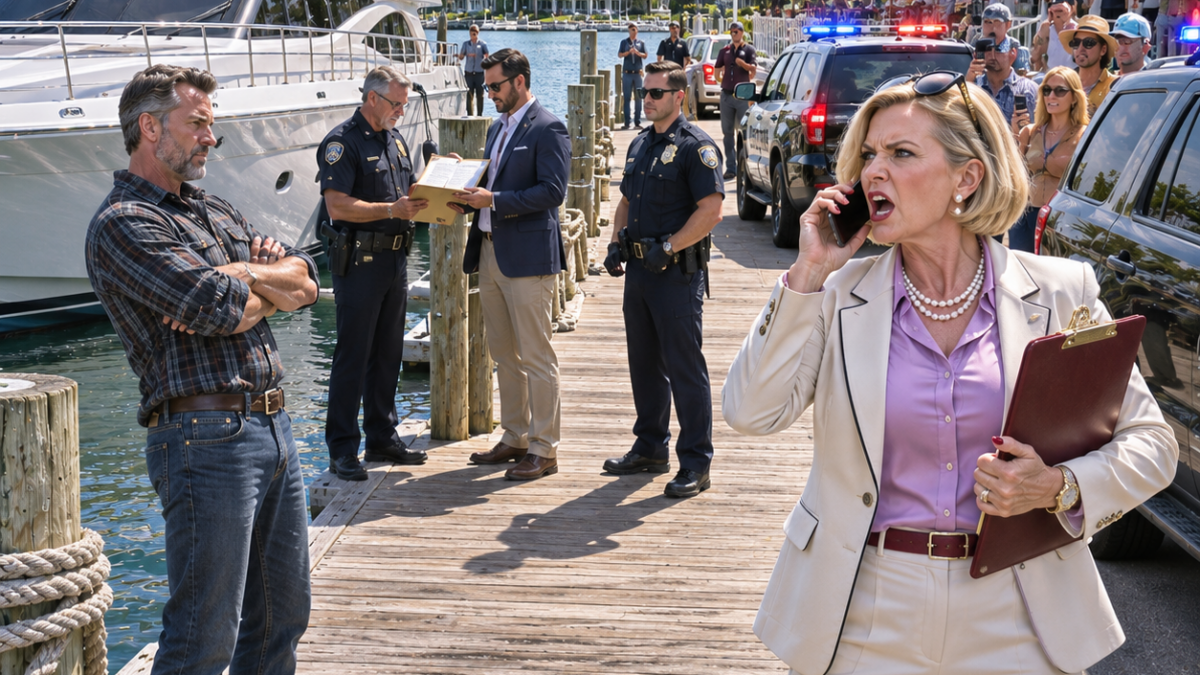
The morning I sold my $2.5 million yacht, I expected a handshake, a signed transfer, and maybe one last quiet walk down the dock—but instead I got two police cruisers, half the neighborhood filming from their porches, and Olivia Whitmore, our HOA president, screaming into her phone that I was laundering money through an illegal transaction on property she insisted belonged to the community.
By the time the officers checked my deed, my dock permit, and the sale documents and told her there was no crime, Olivia had already livestreamed my name to hundreds of residents, contacted my buyer, tried to freeze the deal, and accused me of fraud so publicly that one ridiculous 911 call threatened to cost me hundreds of thousands of dollars.
What Olivia didn’t realize was that while she was desperately trying to make the police investigate me, she had just given me the first reason I’d ever had to take a serious look at the HOA’s own financial records—and once I did, I found something buried beneath years of dock assessments and “community improvements” that would eventually bring federal agents straight to her clubhouse door.
My name is Brian Thompson.
I had lived in Clearwater Estates for ten years.
On paper, it looked perfect.
Private lake.
Large waterfront homes.
Tree-lined streets.
A clubhouse.
Community docks.
Quiet evenings where the water caught the sunset and turned gold.
It was the kind of neighborhood real-estate agents described with words like peaceful, exclusive, and prestigious.
They never mentioned Olivia Whitmore.
Most people called her Karen when she wasn’t around.
Not because that was her name.
Because it fit.
Olivia was in her mid-fifties, always perfectly dressed, usually in some pastel blazer with pearl earrings and shoes that sounded like gunshots on hardwood floors.
She carried a clipboard everywhere.
I mean everywhere.
Community barbecue?
Clipboard.
Christmas decorating contest?
Clipboard.
Someone’s kid selling lemonade?
Clipboard.
She had been HOA president for nearly seven years and had gradually turned what was supposed to be a neighborhood association into something that felt more like a private government.
Mailbox too dark?
Violation.
Grass half an inch high?
Warning.
Boat trailer visible from the street?
Fine.
Christmas lights still up January third?
Final notice.
She once sent a retired veteran a written citation because his flagpole extended one inch above the approved architectural height.
One inch.
That was Olivia.
I avoided her whenever possible.
I paid my dues.
Followed the rules that actually applied.
Kept every receipt.
And stayed on my side of the lake.
The yacht was one of the few things in my life I had bought purely because I wanted it.
Forty-eight feet.
Blue-and-white hull.
Twin engines.
Beautiful teak deck.
I named her **Justice** as a joke after a long business lawsuit I’d finally won years earlier.
For almost six years, she sat at the private dock behind my house.
And yes—private dock.
That distinction mattered.
My dock stood on Parcel 34B, a waterfront strip included in my original deed and developed before Clearwater Estates even created its HOA.
I maintained it.
Insured it.
Paid taxes on it.
The association had no ownership interest in it.
Olivia knew that.
Or at least she should have.
Eventually I decided the yacht was more responsibility than pleasure.
Maintenance.
Insurance.
Fuel.
Dock care.
I wasn’t using it enough.
So I hired a broker in Miami and listed it.
A buyer came forward.
The negotiated price was just under $2.5 million.
Perfectly legal.
Perfectly ordinary.
At least until Olivia noticed the broker’s employees inspecting the yacht.
I was standing on the dock that morning with the buyer’s representative when I heard her voice behind me.
“What exactly is happening here?”
I turned.
Pink blazer.
Pearls.
Phone already in her hand.
“Morning, Olivia.”
She looked past me.
“Who are these people?”
“My broker.”
“For what?”
“The yacht.”
Her eyes narrowed.
“What about it?”
“I sold it.”
For three seconds, she said nothing.
Then:
“You did what?”
“I sold my boat.”
“You can’t do that.”
I laughed because I genuinely thought she was joking.
Apparently that was a mistake.
“You are conducting a commercial transaction on HOA property without authorization.”
“This isn’t HOA property.”
“The dock is part of Clearwater Estates.”
“No. It isn’t.”
Her face tightened.
“You received community services.”
“That doesn’t change my deed.”
“Brian, don’t make this difficult.”
“I’m not.”
I gestured toward the yacht.
“I’m selling something I own from a dock I own.”
She pulled out her phone.
“You’re leaving me no choice.”
“What are you doing?”
“Calling the police.”
I stared at her.
“For what?”
She pressed the phone to her ear.
“Fraud.”
That was the moment I realized the morning was about to become much more expensive than I had planned.
PART 2
The dispatcher answered before I could say another word.
Olivia immediately switched voices.
The sharp, irritated woman standing on my dock disappeared.
In her place came the polished HOA president.
“Hello, yes. My name is Olivia Whitmore. I’m president of the Clearwater Estates Homeowners Association.”
I folded my arms.
She looked directly at me as she continued.
“We have an individual conducting an unauthorized high-value property transaction on community land.”
I almost laughed.
“High-value property transaction?”
She turned away.
“Yes. A yacht. Approximately two and a half million dollars.”
The buyer’s representative looked at me.
I mouthed, “I’m sorry.”
Olivia kept going.
“We believe there may be financial misconduct involved. Possibly fraud. Possibly money laundering.”
That stopped being funny.
I stepped closer.
“Olivia.”
She held up one finger.
“I’m speaking to law enforcement.”
“You just accused me of money laundering.”
“If everything is legitimate, you have nothing to worry about.”
That sentence told me a lot about Olivia.
People who abuse authority love saying that.
If you have nothing to hide.
As though being falsely accused becomes harmless if you’re innocent.
The dispatcher must have taken her seriously enough because ten minutes later two patrol cars turned onto Clearwater Drive.
Neighbors emerged almost immediately.
Mrs. Dawson stood on her porch in slippers.
Greg from across the street pretended to check his mailbox.
Three teenagers appeared near the community path holding their phones vertically.
Olivia straightened her blazer.
She looked thrilled.
Officer Barnes stepped from the first cruiser.
I knew him casually.
He had responded to a burglary down the street two years earlier.
He looked from Olivia to me to the yacht.
“Morning.”
“Morning.”
Olivia walked toward him.
“Officer, thank goodness.”
His eyebrows lifted.
“What’s the situation?”
She pointed directly at me.
“That man is selling HOA property without authorization.”
Barnes looked at the yacht.
Then at me.
“The yacht?”
“My yacht.”
Olivia interrupted.
“And the dock.”
“My dock.”
“And the land.”
“My land.”
Her head snapped toward me.
“Stop misrepresenting the facts.”
Barnes held up a hand.
“Okay. Everybody slow down.”
He turned to me.
“Mr. Thompson, are you selling the vessel?”
“Yes.”
“Do you own it?”
“Yes.”
“Documentation?”
“In my truck.”
“And the dock?”
“Private property.”
Olivia laughed sharply.
“No, it’s not.”
I walked to the truck.
Years of living under Olivia had taught me one important skill.
Carry receipts.
I kept copies of the deed, parcel map, dock permit, property survey, and HOA boundary description in a folder behind the driver’s seat.
I handed everything to Barnes.
His partner started checking the parcel number on his tablet.
Olivia paced.
“The HOA maintains the waterfront area.”
“Not this section,” I said.
“We maintain community standards.”
“Standards aren’t ownership.”
“Brian, please.”
Barnes looked at the survey.
Then at the water.
Then back at the document.
“Parcel 34B.”
“Yes.”
His partner nodded.
“County registry matches.”
Olivia stepped forward.
“What does?”
“The dock is private.”
Her mouth opened.
Barnes continued.
“Mr. Thompson’s deed includes the waterfront strip and dock.”
Olivia stared at him.
“What about the yacht sale?”
“What about it?”
“It’s worth millions.”
“Yes.”
“That kind of transaction requires oversight.”
Barnes frowned.
“By the HOA?”
“By someone.”
I laughed.
She spun toward me.
“You think this is funny?”
“A little.”
Her face reddened.
“This could be money laundering.”
Barnes sighed.
“Ma’am, selling an expensive boat is not probable cause for money laundering.”
“How do you know where the money is going?”
“We don’t need to unless there’s evidence of a crime.”
“There is evidence.”
“What evidence?”
She opened her mouth.
Nothing came out.
Barnes waited.
“So far,” he said, “all we have is a documented vessel owner selling his vessel from his privately owned dock.”
Olivia’s neck turned red.
“But he’s profiting from community resources.”
“No.”
I pointed toward the deed.
“I’m profiting from something I bought with money I earned.”
She glared at me.
“You always think the rules don’t apply to you.”
“No.”
I smiled.
“I just read them.”
That did it.
***
Olivia pulled out her phone.
Then started livestreaming.
“Attention, Clearwater residents.”
Barnes muttered something under his breath.
She aimed the camera toward the dock.
“We are currently dealing with a serious financial situation involving an unauthorized yacht sale.”
“Olivia.”
She ignored me.
“The police are reviewing documentation.”
Barnes stepped into frame.
“Ma’am, we are not investigating a financial crime at this point.”
Her smile twitched.
“We are simply ensuring transparency.”
I looked at the buyer’s representative.
He looked like he wanted to swim back to Miami.
My phone started buzzing.
HOA Facebook group.
Community chat.
Texts.
My wife, Sarah:
**WHAT DID YOU DO?**
I typed:
**Sold boat. Apparently became Pablo Escobar. Will explain later.**
She replied:
**I hate this neighborhood.**
I almost smiled.
Then Barnes asked for copies of my documents for the incident report.
“No problem.”
Olivia immediately looked victorious.
“See?”
Barnes turned.
“Ma’am, that’s standard.”
She ignored him.
“I’ll be contacting the county commissioner.”
Barnes stared at her.
“About a boat sale?”
“I have connections.”
Of course she did.
Olivia always had connections.
Usually they consisted of people who had once attended the same fundraiser.
The officers finished.
Barnes handed back the originals.
“You’re free to proceed, Mr. Thompson.”
“Thank you.”
Then he looked at Olivia.
“There’s no basis for police action here.”
Her face changed.
Not embarrassment.
Anger.
She didn’t care that she had been wrong.
She cared that she had been wrong publicly.
As the cruisers left, she marched toward me.
Her heels struck the dock.
Click.
Click.
Click.
“You think you’re clever.”
“I think I own a boat.”
“Not for long.”
“That’s literally the point of selling it.”
Her eyes narrowed.
“You think money makes you untouchable.”
“No.”
“I know how people like you operate.”
“People like me?”
“Rich men who think rules are optional.”
I studied her.
Something about her anger felt too personal.
“Why do you care?”
She blinked.
“What?”
“Seriously, Olivia. Why do you care that I’m selling my yacht?”
“It affects the community.”
“How?”
“It uses waterfront access.”
“My waterfront.”
“It creates financial exposure.”
“For whom?”
“The HOA.”
“How?”
She didn’t answer.
I stepped closer.
“Why does my private sale bother you this much?”
Her voice lowered.
“You’re going to regret embarrassing me.”
Then she turned.
And walked away.
That sentence stayed with me.
Not because it scared me.
Because it didn’t answer my question.
***
That evening, my broker called.
“Brian.”
“Please don’t tell me Olivia called you.”
“Worse.”
I sat up.
“What?”
“She contacted the buyer.”
My jaw tightened.
“What did she say?”
“That the transaction is under federal review.”
I stood.
“She said what?”
“He’s nervous.”
“There is no federal review.”
“I know.”
“He knows?”
“I told him.”
I walked to the window.
The empty dock beside Justice reflected in the dark water.
“Is he backing out?”
“Not yet. But he wants delay language added.”
“How much delay?”
“Until this gets resolved.”
“There’s nothing to resolve.”
“I agree.”
I closed my eyes.
The sale included broker fees, insurance timing, transfer costs, and a delivery schedule.
A delay could cost real money.
A failed sale could cost more.
“She can’t do that.”
“She already did.”
“Send me everything.”
“I will.”
I hung up.
Then I opened the filing cabinet in my home office.
Sarah appeared in the doorway.
“You’re doing the thing.”
“What thing?”
“The thing where you get quiet and organized.”
“I’m always organized.”
“No. This is different.”
She crossed her arms.
“This is how you looked before suing that contractor in 2018.”
“He stole from us.”
“And now?”
I pulled out a thick folder labeled:
**CLEARWATER HOA**
“Now I want to understand why Olivia cares so much about money moving through my dock.”
Sarah looked at the folder.
“Oh, no.”
“What?”
“That folder has tabs.”
“Yes.”
“You’re angry.”
“I’m curious.”
“That’s worse.”
She was right.
***
I started with old assessments.
Dock maintenance.
Clubhouse renovation.
Landscaping reserve.
Security improvements.
Storm recovery.
Most looked ordinary.
Then I found one I remembered.
Three years earlier, every household had been charged an additional assessment for a dock renovation project.
Forty-eight thousand dollars.
The newsletter promised:
New lighting.
Security cameras.
Safety ladders.
Dock reinforcement.
I looked out toward the community marina.
The lights still flickered.
The cameras had never appeared.
One ladder was so rusty Greg once joked it had probably survived the Titanic.
I pulled the meeting minutes.
**Project completed.**
Contractor:
**Blue Harbor Services LLC.**
Forty-eight thousand dollars.
I searched the corporate registry.
Registered agent:
**Daniel Whitmore.**
Olivia’s husband.
I leaned back.
“No way.”
Sarah looked over my shoulder.
“What?”
I pointed at the screen.
She read.
Then said one word.
“Oh.”
I searched Blue Harbor’s address.
P.O. Box.
No office.
No yard.
No equipment listed.
I opened another year’s expenses.
Blue Harbor.
Then another.
Blue Harbor.
Electrical upgrades.
Blue Harbor.
Emergency storm repair.
Blue Harbor.
Waterfront consulting.
Blue Harbor.
My stomach tightened.
Olivia’s obsession with the docks suddenly looked different.
Maybe she didn’t care about controlling my sale because she loved rules.
Maybe she cared because anything involving the waterfront threatened to bring attention to the finances she controlled.
I sent everything to my attorney.
David Holbrook.
Maritime law.
Business litigation.
Former state tax investigator.
He called me seven minutes later.
“Brian.”
“Good evening to you too.”
“How much of this have you verified?”
“Corporate registry and HOA documents.”
“Anything else?”
“Not yet.”
“Do not accuse her publicly.”
“I wasn’t planning to.”
“Good.”
“Why?”
“Because one suspicious payment is interesting.”
“And six?”
“More interesting.”
“Daniel owns the company.”
“I noticed.”
“Think it’s fraud?”
“I think you need more.”
I looked toward my office window.
The lake was black.
“Then I’ll get more.”
***
While I investigated quietly, Olivia launched a war.
Flyers appeared.
**COMMUNITY FINANCIAL ALERT**
They suggested my yacht sale was under review.
No agency named.
No case number.
Just enough vague language to scare people.
Then she sent an HOA email.
**Residents are reminded that high-value transactions involving community-adjacent facilities may require board disclosure.**
Community-adjacent.
I had to admire the invention.
At the next HOA meeting, Olivia stood behind the polished oak podium.
Pink blazer.
Perfect hair.
Thirty residents in folding chairs.
I sat in the back beside Greg.
She cleared her throat.
“We need to address recent ethical concerns involving waterfront activity.”
Greg whispered.
“She means you.”
“I gathered that.”
Olivia continued.
“One homeowner recently attempted to conduct a multimillion-dollar commercial transaction using community infrastructure.”
I raised my hand.
She ignored me.
I kept it raised.
Finally:
“Yes, Brian?”
“Are you referring to my yacht?”
“I’m referring to an ongoing concern.”
“Is there an investigation?”
“That is not information I’m authorized to discuss.”
“By whom?”
“The appropriate authorities.”
I stood.
“Olivia, are you publicly implying I’m under criminal investigation?”
She smiled.
“If the shoe fits.”
The room murmured.
Something inside me hardened.
Before I could respond, Greg stood.
“Come on.”
Olivia looked at him.
“Excuse me?”
Greg was sixty-two.
Retired electrician.
Normally avoided conflict.
“I’ve known Brian ten years.”
Olivia’s expression tightened.
“He pays his dues. Keeps his place clean. Helps neighbors. Police already said he didn’t do anything illegal.”
“This is bigger than the police.”
Greg looked around.
“Then show us.”
Silence.
“Show us an investigation notice.”
Olivia stared.
Greg continued.
“And while we’re talking transparency, maybe show us where the dock-renovation money went.”
The room changed.
Just slightly.
But I felt it.
Olivia did too.
Her smile disappeared.
“This meeting is not about unrelated financial matters.”
Greg sat.
“Maybe it should be.”
***
After the meeting, he followed me outside.
“Brian.”
I stopped.
He looked around before speaking.
“She’s been moving money for years.”
“Do you know that or suspect it?”
“My cousin worked maintenance.”
“What happened?”
“HOA owed him twelve grand.”
“Did he get paid?”
“No.”
“Why?”
“Olivia said the maintenance budget was frozen.”
I looked toward the parking lot.
Her new Mercedes sat under a streetlight.
Greg followed my eyes.
“Exactly.”
Then he handed me a flash drive.
“What’s this?”
“Old invoice scans.”
“From where?”
“Maintenance vendor portal.”
“Is this legal?”
“They’re copies of documents contractors were sent.”
I took it.
“You didn’t give me this.”
“I definitely didn’t.”
***
The drive contained everything.
Duplicate invoices.
Different project names.
Same amounts.
Same handwriting.
Payments approved twice.
Blue Harbor appeared again and again.
A $17,500 dock lighting invoice.
No lights.
A $22,000 camera installation.
No cameras.
A $31,000 storm reinforcement.
No visible work.
A $9,800 engineering consultation.
Blue Harbor had no engineering license.
By midnight, I had a twenty-page summary.
I didn’t feel triumphant.
I felt sick.
Because HOA money was residents’ money.
Mrs. Dawson lived on a fixed retirement income.
Greg had postponed replacing his roof after a special assessment.
Young families had complained about dues increases.
And if these documents were genuine, Olivia had been taking money from people she lectured about responsibility.
Sarah stood in the doorway.
“You found something.”
“Yes.”
“How bad?”
“I don’t know yet.”
“Bad enough you look like that.”
I turned the screen toward her.
She read.
Then whispered:
“She called police on you.”
I nodded.
“And meanwhile…”
“Maybe.”
She shook her head.
“That woman is unbelievable.”
“No.”
I looked at the invoices.
“She’s predictable.”
***
David met me the next afternoon.
His office overlooked downtown.
I spread everything across his conference table.
He moved slowly.
Invoice.
Budget.
Corporate registration.
Meeting minutes.
My yacht-sale correspondence.
Olivia’s livestream.
Her email to the buyer.
Finally he leaned back.
“Okay.”
“That good?”
“For you?”
“Yes.
“For her?”
“No.”
“What do we do?”
“First, protect the sale.”
He tapped my broker’s email.
“I’m sending a cease-and-desist and formal notice that there is no criminal investigation into your transaction.”
“Good.”
“Second, we request HOA financial records.”
“She’ll refuse.”
“I hope she does.”
“Why?”
“Because refusal helps establish concealment.”
I smiled slightly.
David pointed his pen at me.
“Do not enjoy this.”
“I’m not.”
“You are a little.”
“Maybe a little.”
“Third, we verify reporting requirements.”
He looked at the documents.
“Blue Harbor worries me.”
“Because Daniel owns it?”
“Because the HOA appears to pay a related-party company without transparent disclosure.”
“Illegal?”
“Potentially. Depends on bylaws, state requirements, tax treatment, fraud intent, and where the money originated.”
He paused.
“And that last part matters.”
“Why?”
“If any federal or state grant money touched Blue Harbor, this gets very serious very quickly.”
That sentence turned out to be prophetic.
***
That evening I received an anonymous email.
No name.
No greeting.
Just:
**You don’t know me. I used to work Clearwater maintenance. Watch your back. Whitmore has friends at City Hall. Look at the dock grants.**
I read it twice.
Then searched public grant records.
Twenty minutes later, I found it.
Clearwater Estates HOA.
Infrastructure improvement grant.
Two million dollars.
Purpose:
Dock safety upgrades.
Lighting.
Accessibility.
Boat-access improvements.
Contractor:
**Blue Harbor Services LLC.**
I stared.
Two million.
I opened project photographs.
There were none.
Completion certification?
Filed.
Inspection?
Approved.
I looked out my window toward the community dock.
Broken light.
Rusty ladder.
Cracked concrete near the ramp.
Where had two million dollars gone?
I called David.
He answered sleepily.
“Brian.”
“Federal money.”
He was instantly awake.
“What?”
“Two-million-dollar infrastructure grant.”
“Contractor?”
“Blue Harbor.”
Silence.
“Send me everything.”
***
The next day, David issued formal record requests.
Olivia called me at noon.
No hello.
“You think you can destroy me?”
“I asked for receipts.”
“You’re harassing the board.”
“Then show the records.”
“I don’t owe you anything.”
“You owe every homeowner financial transparency.”
“You’re bitter because I exposed your yacht scheme.”
“There is no yacht scheme.”
“You’ll regret this.”
“You keep saying that.”
She hung up.
Two hours later, an HOA fine appeared in my mailbox.
**$1,500 — DISRUPTIVE CONDUCT AND COMMUNITY DEFAMATION**
I photographed it.
Sent it to David.
He replied:
**Excellent.**
I called him.
“Excellent?”
“Retaliation.”
“You lawyers are strange people.”
“Keep the letter.”
***
That night, Olivia held an emergency board meeting.
I wasn’t invited.
Greg texted updates.
**She’s screaming about traitors.**
Then:
**Wants to remove you from dock registry.**
Then:
**Board member asked where grant receipts are. She ended discussion.**
Then:
**She’s losing it.**
I responded:
**Document what you can legally. Don’t provoke.**
An hour later:
**She took boxes to her car.**
My stomach tightened.
The next morning, Olivia filed a county complaint claiming my private dock was illegally expanded.
Twenty pages.
Old photographs.
Measurements.
Maps.
All designed to make my property look suspicious.
County clerk Linda Mercer called me.
I had known her nearly twenty years.
“Brian.”
“Please tell me you aren’t calling about my dock.”
“I’m calling about your dock.”
I sighed.
“She filed a complaint.”
“Of course she did.”
“Here’s the interesting part.”
“What?”
“While reviewing the HOA file, I noticed something.”
I sat straighter.
“They haven’t filed required annual audits for three years.”
“How serious?”
“Serious enough I forwarded it for compliance review.”
Silence.
Then she added:
“Brian?”
“Yeah?”
“I think she picked the wrong homeowner.”
***
David and I filed a whistleblower report with the State Financial Bureau.
Invoices.
Grant records.
Corporate registrations.
Missing audits.
Witness statements.
Olivia’s retaliation.
Everything.
Three days later, Agent Laura Jensen called.
Her voice was calm.
Professional.
“Mr. Thompson?”
“Yes.”
“I’m reviewing your submission regarding Clearwater Estates.”
My pulse increased.
“Okay.”
“Your report overlaps with several open matters.”
“What kind?”
“Financial irregularities involving community associations and public infrastructure funds.”
I looked toward the lake.
“So this isn’t just us?”
“I can’t discuss details by phone.”
We met at a lakeside café.
Laura wore plain clothes.
No dramatic badge display.
She opened a folder.
“Blue Harbor Services.”
“Yes.”
“We’ve been watching it.”
My stomach dropped.
“How long?”
“Six months.”
“For what?”
“Shell-company activity.”
I sat back.
She continued.
“Funds come in from associations and local grants. Money then moves through related accounts.”
“Where?”
“Some domestic.”
She paused.
“Some offshore.”
I stared at her.
“Olivia’s husband owns Blue Harbor.”
“That’s why your material matters.”
“Is Olivia part of a larger operation?”
“We’re determining that.”
“What do you need from me?”
“Quiet.”
“That’s difficult around her.”
Laura smiled slightly.
“Let her think you’re backing off.”
“Why?”
“Because people destroy evidence when they panic.”
As if summoned by the sentence, Greg texted that night.
**They’re shredding documents at clubhouse.**
I called Jensen immediately.
Within hours, her team sought an emergency preservation order.
The next morning, officers arrived at the clubhouse.
Olivia stood in the doorway.
“You cannot come in without—”
One investigator held up the order.
“Signed by a judge.”
Her face changed.
Laptops.
Hard drives.
Paper files.
Boxes.
Everything came out.
That afternoon, she marched straight to my driveway.
“You did this.”
I was watering a planter.
“I submitted records.”
“You humiliated me.”
“You called 911 on me for selling my own yacht.”
“You think that justifies destroying this community?”
I turned off the hose.
“No.”
I looked at her.
“Stealing from it might.”
She went pale.
For once, Olivia had no comeback.
***
Two days later, FBI Agent Cooper visited.
“Mr. Thompson.”
I shook his hand.
“You people travel fast.”
He smiled faintly.
“Financial crimes tend to.”
“What did you find?”
“I can’t give specifics.”
“Then why are you here?”
“To tell you your cooperation matters.”
He opened his notebook.
“We’re seeing irregular transactions tied to multiple associations.”
“Blue Harbor?”
“And related companies.”
“Money laundering?”
“Potentially.”
I looked toward the lake.
Cooper closed the notebook.
“You’re going to see activity soon.”
“How soon?”
He smiled.
“Soon.”
***
Thursday morning arrived gray.
I was drinking coffee when three black SUVs turned into Clearwater Estates.
They stopped in front of the clubhouse.
Agents stepped out.
Large yellow FBI letters.
Within minutes, community chat exploded.
**IS THAT THE FBI?**
**WHAT IS HAPPENING?**
**WHY ARE THEY AT THE CLUBHOUSE?**
**DID KAREN GET ARRESTED?**
I walked toward the lake.
Half the neighborhood had gathered behind temporary tape.
Olivia stood near her Mercedes.
Her hair was loose.
Mascara streaked slightly.
For the first time in seven years, she looked unprepared.
She shouted at an agent.
“I am the HOA president.”
The agent handed her a warrant.
“You need to remain available for questioning.”
“You cannot seize community property.”
“We can seize evidence described in a federal warrant.”
Her eyes found me.
That look carried everything.
Rage.
Fear.
Betrayal.
As though I had somehow broken an agreement by refusing to let her steal quietly.
I raised my coffee cup.
Not triumphantly.
Just acknowledgment.
She looked away.
For hours, agents carried out evidence.
Six boxes.
Two laptops.
A desktop.
External drives.
Bank records.
Residents whispered.
Mrs. Dawson stood beside Greg.
“Clerical error?”
Greg laughed.
“Apparently a million-dollar one.”
Olivia tried to address the crowd.
“This is routine.”
Nobody believed her.
“The government performs compliance inspections all the time.”
An agent walked behind her carrying a sealed computer tower.
Greg raised an eyebrow.
“Very routine.”
The crowd chuckled.
Olivia stopped talking.
***
That evening, Jensen called.
“We found offshore transfers.”
I sat down.
“How much?”
“I can’t confirm total yet.”
“Tied to Blue Harbor?”
“Yes.”
“And Daniel?”
“Yes.”
“So it’s real.”
“It’s real.”
I closed my eyes.
Sarah sat across from me.
Watching.
Jensen continued.
“Full federal audit is authorized.”
“What happens to Olivia?”
“Depends on evidence.”
“Is she being charged?”
“Not yet.”
Then Laura added:
“Keep your head down.”
“Why?”
“People like her rarely disappear gracefully.”
She was right.
The next morning, a glossy HOA newsletter appeared in every mailbox.
Front page:
**FALSE ALLEGATIONS BY DISGRUNTLED HOMEOWNER DEBUNKED**
My photograph appeared beneath the headline.
Inside, Olivia accused me of harassment.
Defamation.
Fabricating records.
Manipulating residents.
She claimed the federal search was a routine administrative process.
I laughed.
Then stopped.
Because some neighbors believed her.
Not fully.
But enough.
Years of authority had trained them to assume she knew more than they did.
So I made a decision.
Not revenge.
Transparency.
***
Saturday night, I set up a projector in my driveway.
Pizza.
Folding chairs.
Cold drinks.
No speeches about Karen.
No dramatic accusations.
Forty-three residents came.
Greg stood near the back.
Mrs. Dawson brought brownies.
Sarah sat beside me.
When everyone settled, I stood.
“I’m not asking you to believe me.”
That got their attention.
“I’m asking you to look at documents.”
Slide one.
HOA check.
Blue Harbor Services.
Forty-eight thousand dollars.
Slide two.
Corporate registration.
Daniel Whitmore.
Slide three.
Dock-renovation completion certification.
Slide four.
Photographs showing the work never occurred.
Slide five.
Two-million-dollar grant.
Blue Harbor.
Slide six.
Bank-transfer records already disclosed in investigative filings.
Offshore destination.
The crowd became completely quiet.
Then I showed the email.
Olivia to her assistant:
**Move the remaining grant funds before audit request becomes enforceable.**
Someone whispered:
“Oh my God.”
Another:
“She actually wrote that?”
Greg stood.
“I move that the existing board be suspended pending investigation.”
Voices rose.
“Second.”
“Second.”
“Absolutely.”
We weren’t conducting a formal legal election that night.
But the message was undeniable.
The neighborhood no longer trusted Olivia.
For the first time, her power was gone before her title officially was.
***
The next anonymous email changed everything.
Attached:
Correspondence between Olivia and Howard Briggs.
City infrastructure director.
One message read:
**Consulting fee confirmed once remaining documentation clears.**
Another:
**Keep contractor trail consistent. Blue Harbor only.**
Bribery.
I forwarded everything to Jensen.
Her response came minutes later.
**This connects the grant authorization. Do not contact Briggs or Olivia.**
Two days later, the federal agents returned.
This time they went to Olivia’s house.
Reporters arrived.
Neighbors stood silently.
Olivia came out in handcuffs.
She screamed.
“This is his fault!”
She pointed toward my house.
“He set me up!”
No one moved.
“He forged everything!”
The agents guided her toward the vehicle.
Greg stood beside me.
“Well.”
I looked at him.
“She wanted attention.”
He gave a tired smile.
“She got it.”
I didn’t laugh.
Watching someone get arrested feels different when you knew them for years.
Even someone you hated.
There was satisfaction.
Yes.
But also something darker.
A recognition that Olivia had spent seven years building a reputation for control.
And now her life belonged to court schedules, prosecutors, and evidence.
***
The headlines spread quickly.
**CLEARWATER HOA PRESIDENT ARRESTED IN FRAUD AND BRIBERY SCHEME**
**FEDERAL AGENTS PROBE WATERFRONT INFRASTRUCTURE FUNDS**
Then:
**MULTIPLE HOAs LINKED TO SHELL COMPANY NETWORK**
My yacht buyer called.
“Brian.”
“Still nervous?”
He laughed.
“I owe you an apology.”
“You didn’t know.”
“Sale still on?”
I looked toward Justice.
The yacht floated peacefully.
After everything, I had almost forgotten why this started.
“Yes.”
“Then let’s close.”
Friday morning, the wire hit.
Deal complete.
The transaction Olivia had called criminal was finally finished.
I walked to the dock that evening.
Justice was scheduled for pickup the following morning.
I ran my hand along the teak rail.
Six years of trips.
Storms.
Friends.
Quiet mornings.
For a second, I felt sad.
Then Jensen appeared at the top of the path.
“Selling her?”
“Already sold.”
She walked down.
“Good timing.”
“You here officially?”
“Mostly.”
She handed me an envelope.
“What’s this?”
“Formal confirmation that your yacht transaction and property were cleared of any suspected wrongdoing.”
I smiled.
“Frame-worthy.”
“Probably.”
I opened it.
Then looked at her.
“What happens now?”
“With Olivia?”
“With everything.”
“More investigation.”
“How much more?”
Laura leaned against the railing.
“Brian, we’re finding similar payments in other HOAs.”
“So Clearwater isn’t unique.”
“No.”
“Blue Harbor?”
“And other shell companies.”
I sighed.
“How deep?”
She looked at the water.
“Deep enough.”
***
The next morning, black SUVs returned.
Then a white vehicle marked:
**IRS — CRIMINAL INVESTIGATION**
This time Daniel Whitmore was outside.
Gold watch.
Pastel polo.
Trying to look confident.
“This is private property.”
An agent held up the warrant.
“Step aside.”
“For what?”
“Embezzlement, wire fraud, misuse of federal funds.”
Daniel’s face emptied.
Inside the clubhouse, agents opened the back administrative office.
Most residents had never seen it.
Neither had I.
Dual monitors.
Locked cabinets.
Private banking files.
Hard drives.
One folder:
**PROJECT MARINA EXPANSION**
Later Cooper and Agent Riley showed me transaction summaries.
Ten HOAs.
Three years.
Blue Harbor Services.
Lakeside Property Consulting.
Multiple other entities.
Total suspicious flow:
More than four million dollars.
I stared.
“Four million?”
Cooper nodded.
“Your HOA appears to have been one of the largest sources.”
“How did nobody catch this?”
“Individual payments stayed relatively small.”
Riley added:
“Fake bids. Split invoices. Related vendors. Layered transfers.”
I thought of all those boring HOA budgets people ignored because nobody wanted to spend Wednesday night reading financial reports.
That was the genius of it.
Nobody suspects corruption hiding behind landscaping fees.
***
Daniel tried to run.
Literally.
Around noon, he jumped into his Mercedes.
Reversed hard.
Tires screamed.
Neighbors shouted.
Two sheriff vehicles blocked the exit.
Agents pulled him out.
He immediately started yelling:
“It was Olivia!”
I almost laughed.
His loyalty survived exactly until handcuffs appeared.
By late afternoon, the entire board was under review.
News crews filled the entrance.
A reporter asked me:
“How does it feel seeing the HOA that accused you now become the subject of a federal investigation?”
I thought about it.
Then said:
“I didn’t expect justice to arrive in black SUVs.”
A few people laughed.
“But I’m glad somebody finally checked the receipts.”
That became the evening headline.
***
That night, I couldn’t sleep.
I went to the dock.
The yacht was gone.
For the first time in six years, the slip was empty.
The lake looked bigger.
Jensen appeared again.
“You federal people really like midnight docks.”
“We enjoy atmosphere.”
I smiled.
She stood beside me.
“Olivia and Daniel are facing fraud, bribery, conspiracy, and potentially racketeering counts.”
I nodded.
“Howard Briggs?”
“Under investigation.”
“So that’s it?”
“No.”
I looked at her.
“What now?”
“Two other HOAs.”
I sighed.
“Tampa and Tallahassee?”
She looked surprised.
“You’ve been reading leaks.”
“I have neighbors.”
“Worse.”
We laughed.
Then she became serious.
“Your report cracked the first usable link.”
“I only wanted her to stop interfering with my sale.”
“I know.”
“That’s the insane part.”
“No.”
Laura looked across the water.
“The insane part is how long this probably continued because nobody asked why dock lights cost forty-eight thousand dollars and were never installed.”
That stayed with me.
***
The U.S. Attorney sent me a cooperation letter.
I pinned it above a photograph of Justice.
Underneath, I wrote:
**If someone calls 911 on you, make sure justice calls back.**
Sarah read it.
“That’s terrible.”
“I like it.”
“It sounds like a bumper sticker.”
“Exactly.”
For the first time in months, we laughed easily.
Then someone spray-painted my mailbox.
**SNITCH**
Red letters.
Barnes responded.
He stared at it.
“Full circle.”
“What?”
“This is the mailbox Olivia fined you for.”
“Wrong beige.”
He nodded.
“Now it has personality.”
I laughed.
He wrote the report.
“For what it’s worth,” he said, “department’s rooting for you.”
“Thanks.”
“That woman called us constantly.”
“I know.”
“Noise complaints. Parking. Fence height.”
He paused.
“Ducks.”
I stared.
“Ducks?”
“She reported ducks for trespassing.”
We both broke.
That laugh did more for me than the federal letter.
***
The county suspended the Clearwater HOA.
An interim oversight panel was appointed.
Then something happened I absolutely did not want.
Residents nominated me as temporary chair.
I refused.
Greg came over with beer.
“You already fought the dragon.”
“I am not running an HOA.”
“You don’t need to run it.”
“That’s what chair means.”
“You need to stop it becoming Karen again.”
“That sounds worse.”
“Brian.”
“No.”
“Mrs. Dawson wants you.”
“That is not persuasive.”
“She baked a pie.”
I thought about it.
“What kind?”
“Apple.”
“Manipulative.”
“Very.”
I accepted for ninety days.
No longer.
That was my condition.
***
My first meeting was outdoors.
No podium.
No blazer.
No clipboard.
White tent.
Folding chairs.
Lemonade.
Sixty residents.
I stood.
“No one here needs to apologize for trusting the wrong person.”
People looked uncomfortable.
“What matters is what we do now.”
Greg raised his hand.
“Yes?”
“No more flower-pot fines?”
The crowd laughed.
“Only if the flower pot commits wire fraud.”
More laughter.
That broke something open.
For years, meetings had felt like court.
This felt like neighbors.
We opened the books.
Published every expense.
Independent accountant.
Online monthly statements.
Related-party transaction disclosures.
Competitive bids.
No private board approvals above a low threshold.
Then we reviewed the old rules.
We eliminated absurd fines.
Trash can visible for twenty minutes after collection?
Gone.
Holiday lights deadline?
Gone.
Approved mulch color?
Definitely gone.
People started smiling again.
Kids rode bikes.
Someone organized a barbecue.
The community garden reopened.
For the first time, Clearwater Estates felt less controlled and more cared for.
***
A month later, Agent Jensen visited my house.
“Please tell me you’re here for pie.”
“No.”
“Then I’m disappointed.”
She handed me a folder.
“Howard Briggs has been indicted.”
I looked up.
“For the grants?”
“Kickbacks. Fraud. Conspiracy.”
“How many associations?”
“More than we expected.”
“So it’s over?”
“Almost.”
I laughed.
“You people need to stop saying almost.”
She smiled.
“U.S. Attorney wants your testimony.”
“Of course.”
***
The federal trial began six months later.
Olivia.
Daniel.
Briggs.
Other officials.
Gray suits.
Expensive attorneys.
No clipboards.
I testified for nearly four hours.
The prosecutor started simple.
“Mr. Thompson, what event first brought you into conflict with Mrs. Whitmore?”
“I sold a yacht.”
A few jurors smiled.
“And what happened?”
“She called 911.”
“Why?”
“She claimed I was committing fraud on HOA property.”
“Was the property owned by the HOA?”
“No.”
“The yacht?”
“Mine.”
“Were you engaged in illegal activity?”
“No.”
Then came the documents.
Blue Harbor.
Dock assessments.
Grant funds.
Offshore accounts.
Retaliatory fines.
Emails.
The cease-and-desist.
My buyer’s delay.
Olivia’s livestream.
During cross-examination, her attorney tried to paint me as vindictive.
“You disliked my client.”
“Eventually.”
“You were angry.”
“Yes.”
“You wanted revenge.”
I thought before answering.
“Part of me did.”
The courtroom became quiet.
The lawyer smiled.
“So you admit motive.”
“I admit being human.”
His smile faded.
I continued.
“But anger doesn’t create bank transfers.”
He stopped.
“It doesn’t forge invoices.”
Silence.
“It doesn’t send federal grant money into a company owned by the HOA president’s husband.”
The prosecutor objected to argumentative testimony.
The judge sustained.
But the point was made.
I looked toward Olivia.
For the first time since all this began, she looked tired.
Not angry.
Not arrogant.
Just tired.
The jury found them guilty.
Olivia received eight years.
Daniel received five.
Briggs and other officials received longer sentences.
When the judge read Olivia’s sentence, I expected satisfaction.
Instead, I felt sadness.
Not for what happened to her.
For what she could have been.
She had once been trusted.
People gave her authority because they believed she cared about Clearwater.
Maybe she even had at first.
Then somewhere along the way, responsibility became entitlement.
Entitlement became secrecy.
Secrecy became theft.
And theft became a system.
That’s the real danger with power.
It rarely announces the exact moment it becomes corruption.
***
After the trial, we held elections.
I planned to leave.
The residents voted me in permanently.
I tried to refuse.
Mrs. Dawson cornered me.
“Brian.”
“I said ninety days.”
“That was before the federal trial.”
“That changes nothing.”
“It changes trust.”
I looked at her.
She smiled.
“People trust the HOA for the first time.”
“That sounds dangerous.”
“Then keep us honest.”
So I stayed.
Not because I loved the title.
Because I finally understood the job.
Leadership wasn’t enforcing every rule.
It was making sure the rules served people.
Not the other way around.
***
Restitution money came back.
We used some for scholarships.
Some for the docks.
Real dock repairs this time.
New lighting.
Cameras.
Accessibility rails.
We published invoices online.
Greg joked that the first working light should be named after Olivia.
I refused.
He made a tiny plaque anyway.
**THIS LIGHT ACTUALLY EXISTS.**
I made him remove it.
Mostly.
We built a small playground.
Hosted community dinners.
Allowed kids to play after six.
Radical stuff.
Then came the Clearwater Freedom Festival.
Music.
Barbecue.
Kids barefoot near the lake.
Boats.
Fireworks.
Everything Olivia would once have tried to regulate.
At sunset, I unveiled a plaque near the dock.
**TRUTH FLOATS, NO MATTER HOW DEEP YOU TRY TO SINK IT.**
People applauded.
Greg leaned toward me.
“You running for mayor next?”
“Absolutely not.”
“You’d win.”
“That makes it worse.”
***
I bought another boat eventually.
Smaller.
Thirty-two feet.
Nothing extravagant.
I named it:
**Justice II**
Sarah rolled her eyes.
“You really have one joke.”
“It’s a good joke.”
One evening, I sat on the dock watching Justice II move gently against the ropes.
The lake reflected the new lights.
For once, everything worked.
No FBI tape.
No reporters.
No Olivia.
Just water.
Then an envelope arrived.
No return address.
Inside:
**There are still more names on the list.**
I stared.
I should have thrown it away.
I didn’t.
***
The next morning, I pulled out the old case drive.
One folder I had barely examined caught my attention.
**CITY CONTRACTS 2021**
Inside:
**PROJECT MARINA EXPANSION — PHASE II**
Approved funding:
Three million dollars.
Contractor:
Blue Harbor Services.
Secondary signatory:
Councilwoman Lydia Barrett.
I knew that name.
Everyone did.
Barrett had stood at the anti-corruption press conference.
Praised investigators.
Praised residents.
Praised me.
Called Clearwater an example of civic courage.
And there was her signature on a Blue Harbor project.
I called Jensen.
“Laura.”
“Please tell me you’re not calling with another grant.”
“I’m calling with another grant.”
Silence.
“Send it.”
She called back twenty minutes later.
“Brian.”
“Yeah?”
“Don’t talk to anyone.”
“That bad?”
“That interesting.”
***
Barrett denied involvement.
Then a city finance clerk came forward.
Emails surfaced.
Backdated approvals.
New EIN registrations.
Blue Harbor being revived under an alias.
The corruption network had tried to rebuild itself after the first arrests.
Jensen told me something I never forgot.
“Corruption doesn’t disappear because one person goes to prison.”
“What does it do?”
“It changes uniforms.”
Federal investigators raided Barrett’s office.
She was indicted.
The mayor announced statewide reforms.
Grant-review procedures changed.
HOA financial disclosure rules tightened.
Clearwater Estates appeared on the news again.
This time not as the place where the fraud began.
As the place where someone finally stopped ignoring it.
***
Months later, Jensen texted:
**Case closed. For real this time.**
I replied:
**You’ve said that before.**
She answered:
**Fair.**
Then:
**Drinks next time you’re in Tampa.**
I wrote:
**Only if it’s on a yacht.**
Her reply was a laughing emoji.
I put the phone down.
The lake was still.
***
By then, residents had voted to retire the name Clearwater Estates.
Too much baggage.
We debated dozens of alternatives.
Clearwater Shores.
Clearwater Lake.
Clearwater Village.
Eventually someone suggested:
**Clearwater Haven**
The vote passed.
We installed a new carved-oak sign.
**CLEARWATER HAVEN
FOUNDED ON TRUST**
I stood before the neighborhood.
No blazer.
No podium.
Just people.
“Today isn’t about pretending the past didn’t happen.”
I looked around.
“We remember it because forgetting would make us vulnerable to the same thing again.”
Mrs. Dawson nodded.
Greg raised a beer.
“We trusted titles more than facts.”
I continued.
“We let paperwork scare us.”
A few people looked down.
“We let one group control information nobody thought was worth reading.”
I paused.
“And we learned the hard way that transparency is not an inconvenience.”
I looked toward the lake.
“It’s protection.”
People applauded.
Not loudly.
Warmly.
That meant more.
***
Later, I took Justice II onto the lake alone.
No destination.
No schedule.
The morning mist hovered above the surface.
I cut the engine near the center.
Silence.
That was what I had wanted from the beginning.
Peace.
For years, I thought peace meant nobody bothering me.
A quiet house.
A good boat.
A calm lake.
Now I knew better.
Silence can hide ugly things.
Clearwater had been peaceful while Olivia stole.
The lawns were perfect.
Mailboxes matched.
Dues were paid.
People smiled at barbecues.
And underneath all of it, grant money disappeared.
Invoices were forged.
Residents were threatened.
Officials were bribed.
That wasn’t peace.
That was quiet corruption.
Real peace needed truth beneath it.
Otherwise silence was just camouflage.
***
I thought about Olivia.
Sometimes people asked whether I hated her.
I didn’t know how to answer.
There were moments I hated what she did.
I hated the lies.
The way she said my name during that livestream.
The way she scared my buyer.
The $1,500 fine.
The fake dock complaint.
The arrogance.
But hatred takes energy.
Eventually I stopped giving her that.
The most satisfying thing wasn’t prison.
It wasn’t seeing FBI agents at the clubhouse.
It wasn’t watching Daniel get boxed in by sheriff’s vehicles.
It wasn’t federal convictions.
The satisfying part was seeing Mrs. Dawson laugh at a neighborhood barbecue.
Seeing kids ride bikes without getting warning letters.
Seeing Greg grill burgers beside the lake.
Seeing every monthly financial statement posted publicly.
Seeing people ask questions without being punished for it.
That was revenge transformed into something useful.
Olivia built control.
We built trust.
She used fear.
We used transparency.
She protected power.
We protected the community.
That difference mattered more than any sentence a judge could hand down.
***
When I returned to shore, Greg was waiting.
“Chairman.”
“Don’t call me that.”
“President?”
“Worse.”
“Supreme ruler?”
I glared.
He grinned.
“Meeting tonight.”
“I know.”
“Agenda?”
“Dock maintenance.”
“Any shell companies?”
“Only if you want federal agents back.”
“I kind of miss Cooper.”
I laughed.
“So do I.”
Greg looked toward Justice II.
“You know this all started because you sold a boat.”
“I know.”
“Ever think maybe boats are bad luck?”
“No.”
“Ever think maybe Karen calling 911 was good luck?”
I looked at him.
“Good luck?”
“She exposed herself.”
I thought about it.
“No.”
“Why not?”
“Because people got hurt.”
He nodded.
Fair.
“But maybe…”
“What?”
“Maybe she made one mistake.”
“Only one?”
“One important one.”
I looked at the water.
“She assumed nobody would check.”
***
That was the lesson I carried forward.
Not that every HOA president was corrupt.
Most weren’t.
Not that rules were bad.
Communities need rules.
Not that authority should always be distrusted.
Authority can serve people.
The lesson was simpler.
Any system becomes dangerous when questions are treated like disobedience.
Olivia’s biggest weapon wasn’t money.
It wasn’t the board.
It wasn’t her “connections.”
It was the confidence that nobody would demand proof.
Nobody would ask:
Where did the money go?
Who owns that company?
Where is the work?
Why isn’t there an audit?
Why are you accusing someone without evidence?
One question became another.
Then another.
Eventually four million dollars couldn’t hide behind beige mailboxes and perfect lawns anymore.
***
On the first anniversary of the federal raid, I walked down to the dock before sunrise.
The community was asleep.
Justice II bobbed quietly.
The new lights reflected across the water.
I remembered the first police cruisers.
Olivia standing near my yacht.
The livestream.
Her voice.
**Serious financial crime happening right now.**
The irony almost made me laugh.
She had been right about one thing.
There was a serious financial crime happening.
She just pointed the camera in the wrong direction.
I sat at the edge of the dock.
Sunrise began turning the horizon gold.
Sarah brought me coffee.
“You’re out here early.”
“Couldn’t sleep.”
She sat beside me.
“Thinking about her?”
“Everything.”
She handed me the cup.
“You miss the old yacht?”
“Sometimes.”
“You miss the old neighborhood?”
“No.”
She laughed.
We watched the sun rise.
Then she asked:
“Was it worth it?”
“What?”
“All of it.”
I thought for a long time.
The raids.
Threats.
Trials.
Mailbox.
Meetings.
Stress.
Sleepless nights.
“Worth it isn’t the right phrase.”
“What is?”
“Necessary.”
She leaned against me.
“Would you do it again?”
I looked across the lake.
“Yes.”
No hesitation.
Not because I enjoyed fighting.
Because once you know something is wrong, pretending not to see it changes you too.
***
The community meeting that evening lasted forty-two minutes.
No shouting.
No threats.
No surprise fines.
The biggest argument involved whether the new playground needed another shade structure.
Greg wanted two.
Mrs. Dawson wanted three.
We compromised at two plus a tree.
Democracy survived.
After everyone left, I locked the meeting room.
Then stopped.
Olivia’s old office had been converted into public records storage.
Glass wall.
Unlocked shelves during business hours.
Every invoice visible electronically.
No hidden administrative suite.
No secret accounts.
I smiled.
Power changes depending on where you put the door.
She had kept hers closed.
We kept ours open.
***
I walked home along the lake.
Justice II was visible under the dock light.
The water moved gently.
I thought about the original yacht buyer.
The sale she nearly destroyed.
The moment the money finally cleared.
At the time, I thought that was victory.
It wasn’t.
Victory was bigger.
A neighborhood could breathe.
Grant money was recovered.
Officials went to prison.
Other HOAs changed rules.
Residents learned to read budgets.
People who had been afraid spoke.
Sometimes justice begins with something absurd.
A parking dispute.
A fence.
A boat.
A woman with a clipboard calling 911 because somebody made a decision she couldn’t control.
You never know which loose thread will unravel the whole fabric.
Olivia pulled hers herself.
All I did was keep pulling after I saw it.
***
The lake was nearly dark when I reached my porch.
I turned back.
The Clearwater Haven sign stood near the entrance.
**FOUNDED ON TRUST.**
I had argued against that wording.
I thought it sounded sentimental.
Mrs. Dawson won.
She was right.
Trust wasn’t weakness.
Blind trust was.
Trust with transparency was something else.
It was people knowing they could ask questions.
Knowing the books were open.
Knowing authority had limits.
Knowing nobody—not the president, not a board member, not a wealthy homeowner, not me—was above accountability.
That was what Olivia never understood.
She thought leadership meant being the person nobody challenged.
I learned leadership meant building a system that could survive being challenged.
***
I stepped inside.
Sarah looked up from the couch.
“Everything okay?”
“Yeah.”
“Meeting?”
“Boring.”
She smiled.
“Perfect.”
I stopped.
She was right.
Boring was perfect.
No sirens.
No warrants.
No federal agents.
No frantic group chats.
No accusations.
Just budgets.
Trees.
Dock lights.
A playground shade structure.
Normal problems.
Normal people.
Normal life.
That was what I had wanted when I bought the house ten years earlier.
It just took one yacht sale, a false 911 call, a federal corruption investigation, multiple arrests, and the collapse of an entire HOA leadership network to finally get there.
I poured a drink.
Walked onto the back porch.
And looked across the water.
The lake reflected the stars.
Calm.
Clear.
Honest.
For once, the silence wasn’t hiding anything.
It was simply peace.
And that was when I finally understood the strangest part of the entire story.
Olivia called 911 because she wanted the police to investigate me.
She wanted the neighborhood to see me humiliated.
She wanted my buyer frightened.
She wanted everyone to believe I was the problem.
Instead, that call made me ask a question I had never bothered to ask before.
Where was all the HOA money going?
One question became an audit.
The audit became an investigation.
The investigation became a federal case.
The federal case became convictions.
And the woman who had stood on my dock accusing me of money laundering ended up exposing a laundering network that had been operating directly beneath her own name.
There was no better revenge I could have planned.
Which was fitting.
Because in the end, I didn’t have to plan it.
She did.
All I had to do was keep the receipts.








