PART 2: The Shelter Said Willie Might Not Survive the Night—Then the Silent Puppy Chose One Person and Refused to Let Go
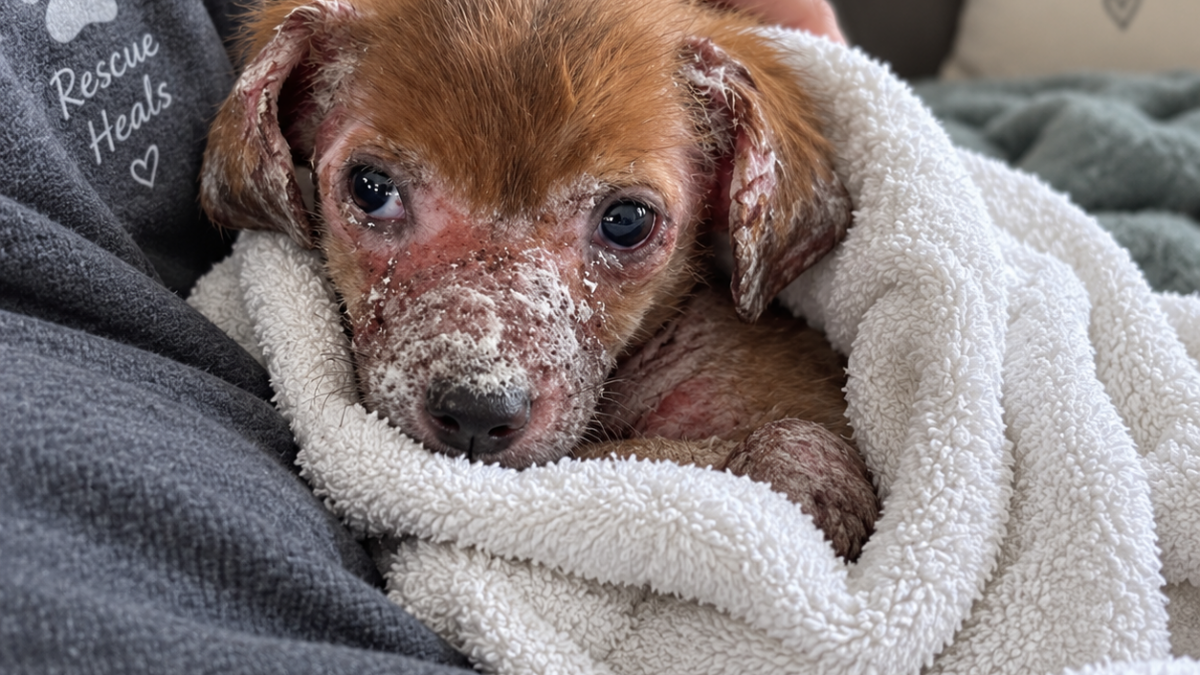
PART 2
I turned on the lamp so fast I knocked my phone onto the floor.
“Willie?”
His body was still.
My heart slammed against my ribs.
I opened the kennel and put my hand against his side.
Warm.
Then I felt it.
A breath.
Shallow, but there.
Another.
I closed my eyes.
“Don’t do that to me.”
Willie’s eyelids fluttered.
He did not lift his head.
I slid my hand beneath the blanket and touched his paw.
“You don’t know me yet,” I whispered. “But I’m staying.”
That was the only promise I allowed myself to make.
Not that he would survive.
Not that everything would be fine.
Just that he would not face whatever came next alone.
I lay down on the floor beside the kennel.
The carpet was uncomfortable.
I did not care.
Every time Willie shifted, I opened my eyes.
At 2:10 a.m., he drank a little water.
At 3:17, he changed position.
At 4:40, he released the tiniest sigh.
By sunrise, neither of us looked much better.
My husband walked into the room carrying coffee.
“You slept there?”
“Technically.”
He looked at Willie.
“How is he?”
“Alive.”
“That’s a start.”
Willie heard his voice.
One ear moved.
We both noticed.
My husband smiled.
“Hey, buddy.”
Willie did not react again.
But that tiny ear movement became the first victory of the morning.
Breakfast came next.
The veterinarian had instructed us to feed carefully.
Willie needed calories desperately, but a severely depleted body could not simply be overloaded.
I prepared the measured portion.
He sniffed.
Turned away.
My stomach tightened.
“Come on.”
Nothing.
I put a tiny amount on my finger.
Held it near his nose.
Willie sniffed again.
His tongue appeared.
One lick.
I froze.
He licked again.
Then took the smallest bite.
I looked toward my husband.
“He ate.”
“Good.”
“He ate.”
“I heard you.”
“You don’t understand.”
He smiled.
“I understand.”
Every bite mattered.
Willie ate perhaps a quarter of the portion before stopping.
Normally I would have considered that a failure.
That morning, it felt enormous.
We gave his medication.
Then waited.
That became our life.
Feed.
Medicine.
Baths.
Rest.
Watch.
Repeat.
The medicated baths were the hardest.
Willie hated water at first.
Not violently.
He did not have enough strength for violence.
But his body became rigid the moment his paws touched the basin.
I supported his chest.
“You’re okay.”
His breathing sped up.
“I know.”
Warm water moved across his damaged skin.
The veterinarian had explained exactly how long the medicated shampoo needed to remain in contact.
Those minutes felt endless.
Willie stood trembling.
I talked constantly.
Not because I thought he understood the words.
Because silence felt wrong.
“You’re in my kitchen.”
No reaction.
“There are three towels waiting.”
Nothing.
“You have your own ridiculous blanket.”
One ear twitched.
“And when you’re stronger, I’m going to complain when you destroy something expensive.”
He looked at me.
I smiled.
“There you are.”
After every bath, I wrapped him in a towel.
At first, he remained stiff in my arms.
Then, little by little, that changed.
On the fourth bath, Willie rested his chin against my shoulder.
I stopped moving.
His eyes closed.
I looked at my husband.
“Don’t say anything.”
“I wasn’t going to.”
Willie sighed.
That sigh felt different from the one in the kennel.
Less exhausted.
More comfortable.
I held him until he wanted down.
Never longer.
Trust is easy to ruin when you become greedy for it.
The veterinarian had warned us that recovery might not move in a straight line.
He was right.
On day three, Willie ate better.
Day four, he barely touched breakfast.
I panicked.
The clinic told me to monitor him closely and bring him in if anything else changed.
At lunch, he ate a little.
At dinner, more.
The next morning, he looked slightly brighter.
Then his skin became more irritated in one area.
Back to the clinic.
New treatment adjustment.
More instructions.
More worry.
Every small improvement seemed to arrive carrying another problem behind it.
One night, I sat beside his kennel feeling exhausted.
“I’m sorry.”
Willie looked at me.
“I keep expecting you to improve faster.”
His eyes stayed on mine.
“That’s not fair.”
I put my hand near the bars.
“You get to be slow.”
He sniffed my fingers.
Then, for the first time, licked them.
I cried immediately.
Of course I did.
The puppy who had not made a sound in the shelter had chosen contact.
It lasted two seconds.
It changed everything.
By the end of the first week, Willie had gained a little weight.
Not much.
Enough that the veterinarian smiled.
“Keep doing exactly what you’re doing.”
“Which part?”
“All of it.”
“That’s a lot.”
He laughed.
“Mostly feeding correctly, medication, baths, and not panicking over every nap.”
“I don’t panic over every nap.”
My husband, standing behind me, said, “You absolutely do.”
I ignored him.
The veterinarian knelt beside Willie.
Willie watched him.
Then sniffed the stethoscope.
The doctor smiled.
“That’s new.”
“What?”
“Curiosity.”
I looked at Willie.
He sniffed again.
Curiosity.
The word stayed with me.
At the shelter, Willie had looked almost absent from his own body.
Now something outside survival had caught his attention.
A stethoscope.
The next day it was a shoelace.
I was sitting on the floor answering messages when Willie walked toward me.
Not far.
Maybe three feet.
He stopped beside my shoe.
Sniffed the lace.
Then bit it.
Weakly.
I stared.
“Did you just attack my shoe?”
Willie chewed once.
Then sat down because the effort had exhausted him.
I laughed.
My husband walked in.
“What happened?”
“He’s dangerous now.”
Willie looked up.
The shoelace was still in his mouth.
My husband smiled.
“Finally.”
That became the beginning of Willie’s personality.
It did not arrive all at once.
It appeared in pieces.
A glance.
A bite at a shoelace.
A slightly faster walk toward food.
One little bark when I left the room.
The bark startled me so badly I turned around immediately.
Willie stood in the hallway.
He looked almost surprised by the sound too.
“Did you call me?”
He took one step.
Then another.
I went back.
Willie sat beside my foot.
The next time I left, he followed.
That became his habit.
Kitchen.
Willie.
Laundry room.
Willie.
Bedroom.
Willie.
Bathroom.
Unfortunately, Willie.
I started calling him my shadow.
At first, I thought it was cute.
Then I understood what might be beneath it.
Willie had been abandoned.
He had known hunger.
Illness.
A kennel.
People disappearing.
Now he had attached safety to one person.
Me.
If I moved, he moved.
If I left the room, he woke.
If I closed a door, he waited outside.
One afternoon, I stepped onto the porch to get a package.
When I came back, Willie was pressed against the inside of the door.
I crouched.
“I was gone twenty seconds.”
His tail made a tiny movement.
I touched his chest.
“I’m coming back.”
He did not understand that yet.
So I taught him through repetition.
I left rooms.
Returned.
Walked outside.
Returned.
Went to the mailbox.
Returned.
Eventually, Willie began learning that disappearing was not always abandonment.
That took longer than antibiotics.
Longer than skin treatment.
Longer than weight gain.
Some wounds do not show on bloodwork.
By the second week, Willie’s skin looked noticeably better.
The angry redness faded.
His coat began changing.
Tiny areas of healthier skin appeared.
He still looked rough.
But now he looked like a sick puppy getting better instead of a dying puppy getting worse.
The distinction was enormous.
His appetite strengthened too.
At first, every meal had been persuasion.
Now he knew the schedule.
I would walk toward the food cabinet and hear him behind me.
Tap.
Tap.
Tap.
Tiny paws.
One morning, I turned around.
Willie stood directly behind me.
“You’re going to kill me.”
Tail movement.
“Move.”
He remained.
“Willie.”
Nothing.
I stepped around him.
He followed.
My husband laughed from the table.
“You wanted energy.”
“Not directly under my feet.”
Willie sat in front of his bowl before I had even filled it.
I looked down at him.
“This is progress.”
He barked.
“Demanding progress.”
The first real tail wag happened over chicken.
Of course.
I added a few approved pieces to his food.
Willie smelled them.
His tail moved.
Once.
Twice.
Then faster.
I called my husband.
“Come here.”
He entered.
“What?”
“Look.”
Willie’s tail stopped.
“No!”
My husband laughed.
“You scared him.”
“I did not.”
I picked up one piece of chicken.
Tail wag.
“There.”
My husband smiled.
“Food motivated.”
“Still counts.”
Willie ate every bite.
Then inspected the bowl for invisible leftovers.
The veterinarian rechecked his weight.
Up again.
His skin infection continued responding.
His energy improved.
And suddenly we had a new problem.
Willie discovered toys.
The soft toy we had placed beside him the first night had sat untouched for almost two weeks.
Then one afternoon, I heard a squeak.
I turned.
Willie stood over it.
He pressed his nose down.
Squeak.
He jumped backward.
I laughed.
He stared at the toy.
Then approached.
Pressed again.
Squeak.
This time his tail moved.
He grabbed the toy.
Shook his head once.
Lost his balance.
Sat down.
Looked offended.
I went to him.
“You okay?”
He immediately grabbed the toy again.
That was the first time Willie chose play over rest.
I sat on the floor watching him.
For maybe thirty seconds, he tugged at the stuffed animal.
Then exhaustion won.
He lay down with the toy beneath his chin.
I took a photograph.
The difference between that image and the shelter picture was not dramatic to anyone else yet.
He was still thin.
Still patchy.
Still healing.
But I saw it.
At the shelter, Willie had nothing beside him because he had no energy to care.
Now a toy mattered.
That was life returning.
His third week brought his first zoomies.
Calling them zoomies may be generous.
He ran approximately six feet down the hallway.
Turned.
Ran back.
Stopped.
Panted.
I clapped like an idiot.
My husband said, “That was less a zoomie and more a brisk disagreement with gravity.”
“I don’t care.”
Willie barked.
Then tried again.
Ten feet.
He slid slightly on the floor.
I immediately bought more rugs.
Our house slowly transformed around him.
Non-slip runners.
Soft bedding.
Baby gates.
Medication organized by time.
Towels stacked for baths.
Food measured.
A chart on the refrigerator tracking weight.
My husband looked at it one evening.
“We have a spreadsheet for a dog.”
“He has goals.”
“He’s three pounds of chaos.”
“Growing chaos.”
Willie walked into the kitchen carrying a sock.
My husband pointed.
“Exhibit A.”
I took the sock.
Willie followed me.
“You cannot eat this.”
He grabbed the other end.
I froze.
He pulled.
Tiny tug.
I pulled back gently.
Willie growled.
A puppy growl.
Playful.
Determined.
My heart almost burst.
For several seconds, we played tug.
Then I let him win.
He trotted away with the sock.
My husband looked at me.
“You rewarded theft.”
“He survived.”
“That is not a legal defense.”
“It is in this house.”
Willie became a criminal almost immediately after gaining enough strength.
Socks.
Paper towels.
A dishcloth.
One corner of a cardboard box.
A receipt.
The strap of one sandal.
Everything had potential.
I complained constantly.
I was also delighted.
There is something profoundly beautiful about being annoyed by an animal you once feared would not survive the night.
His first full month ended with another veterinary visit.
The staff barely recognized him.
One technician walked into the room and stopped.
“That’s Willie?”
I smiled.
“That’s Willie.”
She crouched.
He approached her.
Tail wagging.
She put both hands over her mouth.
“Oh my God.”
Willie climbed partly into her lap.
This was the same puppy who had once barely reacted to touch.
The technician hugged him.
“Look at you.”
He licked her chin.
She cried.
Willie tried to eat the drawstring on her scrub pants.
Perfect.
The veterinarian examined his skin.
Much improved.
Weight significantly better.
Energy normalizing.
We still had treatment to continue.
But for the first time, he used a phrase that made me breathe differently.
“Out of immediate danger.”
I stared at him.
“You mean that?”
“Yes.”
“Say it again.”
He laughed.
“Willie is out of immediate danger.”
I looked at Willie.
He was attacking a paper towel someone had dropped.
I covered my face.
For weeks, I had lived as though death were standing directly behind us.
Suddenly there was distance.
Not certainty.
Never certainty.
But distance.
I took Willie home.
That night, instead of putting him in the small recovery kennel beside the bed, I left the door open.
He walked out.
Sniffed.
Looked toward me.
Then climbed into the soft dog bed nearby.
He circled twice.
Lay down.
Five minutes later, I heard him moving.
He had left the dog bed.
I felt something touch my foot.
Willie curled against my slipper.
I looked down.
“You have a forty-dollar orthopedic bed.”
He closed his eyes.
“You’re choosing my foot?”
No response.
I let him stay.
Several weeks later, animal control contacted me.
I had assumed Willie’s abandonment would remain one of those stories with no answer.
The shelter intake information was limited.
He had been brought in without anyone claiming ownership.
But a microchip scan that initially produced outdated information had finally led somewhere after records were cross-checked.
A prior veterinary clinic had Willie listed under another name.
A former owner.
I sat at the kitchen table with the phone against my ear.
“Are you saying you know where he came from?”
“We have a possible chain of ownership.”
“Possible?”
“We still have to establish who had him immediately before shelter intake.”
My hand tightened around the phone.
“Was he sick when the clinic saw him?”
“Not like this.”
“When?”
“Months earlier.”
I looked at Willie.
He was chewing a toy beside the couch.
“What happens now?”
“We investigate.”
That word woke every angry part of me.
For weeks, I had focused on keeping Willie alive.
I had barely allowed myself to think about the person who had failed him.
Now there might be a name.
A face.
A place to put the anger.
“Call me when you know.”
The investigation moved slowly.
Too slowly for my emotions.
Records showed Willie had received basic puppy care earlier.
At that time, he had not been dangerously underweight.
His skin issues were either absent or mild enough not to resemble the condition in which he reached the shelter.
Somewhere between those records and his intake, something had happened.
Or failed to happen.
Food disappeared.
Treatment disappeared.
Care disappeared.
Animal control interviewed the person linked to the microchip.
The explanation changed more than once.
First, Willie had supposedly been given to someone else.
Then perhaps he had run away.
Then the timing became unclear.
I wanted to scream.
The officer remained calm.
“We document inconsistencies.”
“Why don’t you arrest someone?”
“Because inconsistency is not the same as proof.”
“He almost died.”
“I know.”
“His body is proof.”
“His body proves neglect occurred. We still have to establish responsibility.”
I hated the law that day.
Then I understood what he was telling me.
Anger does not get to choose facts.
If we wanted real accountability, we needed something that could survive questions.
So we waited.
Meanwhile, Willie kept becoming a dog.
That contrast saved me.
Every time I started obsessing over the investigation, Willie demanded something.
A walk.
Food.
Play.
A sock retrieval operation.
Life pulled me forward.
His coat began returning.
Fine fuzz first.
Then thicker patches.
His skin became smooth.
The medicated baths continued but grew easier.
Willie no longer trembled when I carried him toward the tub.
He did complain.
Loudly.
“This is an improvement,” I told him.
He tried to climb up my shirt.
“You used to be silent.”
He whined.
“Yes, yes. Terrible service.”
After the bath, I wrapped him in a towel.
That remained his favorite part.
Willie would immediately soften.
His head rested under my chin.
One yawn.
Then another.
Sometimes he fell asleep while still wrapped.
I learned not to move.
Those moments reminded me how far we had come.
The first bath had taught him my hands would not hurt him.
Now those same hands meant warmth.
I never stopped appreciating that.
About two months after his rescue, Willie began sleeping farther from me.
That sounds like a strange thing to celebrate.
It was not.
At first, he needed constant proximity.
If I moved, he followed.
If I left, he waited at the door.
If I went upstairs, he cried from below.
Then one afternoon, I went to the kitchen.
Willie stayed on the couch.
I stopped in the doorway.
He looked at me.
I waited.
Nothing.
“You’re not coming?”
He put his head down.
I smiled.
Progress.
He believed I could leave a room without vanishing forever.
That took trust.
More than any cuddle.
More than any wag.
Trust is sometimes measured by how calmly someone lets you walk away.
The animal-control case eventually produced something concrete.
A neighbor had seen Willie at the previous property during the period when he was becoming visibly thinner.
Another remembered skin problems worsening.
There were messages between people discussing his condition.
One person had apparently urged that he be taken to a veterinarian.
He was not.
The timeline narrowed.
The story about him suddenly being given away became harder to support.
The officer called.
“We’re moving forward.”
I sat down.
“With charges?”
“With neglect-related action under the applicable local law. I can’t promise the outcome.”
I covered my mouth.
Willie walked over.
Placed his front paws against my leg.
“What happened?” my husband asked.
I lowered the phone.
“They’re doing something.”
He looked at Willie.
“Good.”
I expected to feel triumph.
I did not.
Mostly, I felt tired.
Months of imagining revenge had made me think accountability would feel explosive.
Instead, it felt quiet.
Willie barked because I had stopped petting him.
I picked him up.
He rested against my chest.
That was the moment I understood something.
The case mattered.
But Willie mattered more.
I would cooperate fully.
Testify if needed.
Provide veterinary records.
Photographs.
Dates.
Everything.
But I would not let the person who hurt him remain the central character in his life.
They had already taken enough space.
Willie’s story belonged to Willie.
The legal process continued.
The person responsible disputed parts of the account.
That was expected.
Records were reviewed.
Witnesses gave statements.
The shelter documented intake condition.
Our veterinarian documented treatment.
Photographs showed progressive recovery.
No single image proved every fact.
Together, they created a timeline.
The hearing happened months later.
By then, Willie no longer resembled the dog in the shelter photograph.
That became one of the strangest moments.
I carried a folder containing early pictures.
Across the room sat Willie at home in my mind.
Healthy.
Annoying.
Loved.
The person linked to the neglect sat several yards away.
Ordinary.
That bothered me.
Cruelty rarely looks cinematic.
Sometimes it looks like a person who simply stopped doing what responsibility required.
At the hearing, I was asked about Willie’s condition after removal.
I described what I knew firsthand.
His weight.
His skin.
His weakness.
The treatment.
How little energy he had.
The first night.
The slow return of appetite.
I avoided guessing.
I did not say what I thought he felt.
I described behavior.
“He could barely move.”
“He did not vocalize much.”
“He required antibiotics and medicated baths.”
“He needed careful nutrition.”
“His energy improved gradually.”
“Did you believe he might die?”
“Yes.”
“How strongly?”
I looked down.
“The first night I slept on the floor beside his kennel because I was afraid he would stop breathing.”
The room became quiet.
I did not look toward the former owner.
I looked at the table.
Facts.
That was enough.
The shelter staff described intake.
The veterinarian discussed medical findings.
The investigating officer described the timeline and witness statements.
The defense offered explanations.
Financial difficulty.
Confusion over ownership.
Responsibility shifted between people.
I listened.
Part of me understood that people struggle.
Money runs out.
Housing changes.
Relationships end.
Life collapses.
But struggle does not explain failing to seek help while a puppy deteriorates.
There had been shelters.
Rescues.
Clinics.
People willing to take him.
The problem was not that no alternatives existed.
The problem was that Willie reached the edge of death before any alternative was used.
The final decision did not arrive that day.
We had to wait again.
Willie did not care.
When I returned home, he greeted me at the door with a stolen sock.
My husband laughed.
“How was court?”
“Exhausting.”
Willie shook the sock.
I crouched.
“Give me that.”
He ran.
I chased him through the hallway.
At some point, I started laughing.
That became my answer to the whole day.
The person who nearly erased him had been discussed in a room full of records.
Willie was running through my house committing textile crimes.
Weeks later, the outcome came.
The responsible party faced legal consequences for neglect under the applicable process.
There were penalties.
Animal-related restrictions were imposed for the period ordered.
Responsibility became part of an official record.
It was not the dramatic revenge part of me had once imagined.
No screaming.
No public humiliation.
No cinematic confession.
Better.
Documented accountability.
A consequence that could not be rewritten into “nothing happened.”
I sat with the paperwork afterward.
Willie climbed onto my lap.
He was heavier now.
Healthy weight.
Warm body.
Full coat beginning to shine.
He chewed the corner of the envelope.
“Stop.”
He ignored me.
“You are eating your own case.”
My husband laughed.
“Symbolic.”
I took the paper away.
Willie looked offended.
I held his face gently between my hands.
“You know what?”
Tail wag.
“You won.”
Of course, he had no idea what I meant.
And maybe that was the best part.
He did not need revenge.
He had already moved on.
His world was breakfast.
Walks.
Toys.
Warm towels.
Following me.
Then not following me.
Learning stairs.
Learning the yard.
Learning that a car ride could end somewhere fun.
Learning that strangers could be kind.
Learning that a hand reaching toward him often carried a treat.
His body had changed.
His mind had too.
But not completely.
Food remained important.
Very important.
At first, he ate desperately.
Even after his weight normalized, he sometimes inhaled meals as though tomorrow had not been guaranteed.
We used slow feeders.
Small portions.
Routine.
Nobody disturbed him.
Months passed.
Then one evening Willie ate half his dinner and walked away.
I stared at the bowl.
My husband looked at me.
“What?”
“He left food.”
“Maybe he’s full.”
“That’s the point.”
He understood.
We both looked at Willie.
He had gone to find his toy.
The bowl remained on the floor.
Food still there.
Willie did not rush back.
He trusted the meal would remain.
That tomorrow another bowl would appear.
Hunger had stopped controlling him.
I cried over dog food.
Again.
Willie grew.
The tiny, nearly motionless puppy became a lanky young dog with ridiculous ears and more personality than our furniture could handle.
He ran.
Really ran.
Not six feet.
Not ten.
Across the yard.
Around the tree.
Past the porch.
Back again.
His tail curled high.
The first time he got full-speed zoomies, I stood in the yard laughing so hard I could not record properly.
Willie sprinted past me.
Turned.
Sprinted again.
My husband yelled, “Look out!”
Willie nearly collided with my knees.
I stepped aside.
He kept going.
The dog whose entire body once seemed too tired to hold itself upright was running because he had too much energy to contain.
That was revenge.
The good kind.
Every sprint said the shelter floor did not win.
Every bark said the silence did not win.
Every ridiculous stolen sock said abandonment did not get to define him.
He grew attached to a red ball.
Not an expensive toy.
Of course not.
A cheap rubber ball.
He carried it everywhere.
Kitchen.
Bed.
Yard.
One afternoon I found it inside my shoe.
Another time in the laundry basket.
Once beside the bathtub.
He apparently wanted it nearby during medically necessary suffering.
I started buying backups.
Willie rejected them.
Only the original mattered.
“This dog has principles,” my husband said.
“This dog has psychological problems.”
Willie barked.
“See?”
His personality became enormous.
He loved people he trusted.
He distrusted hats for reasons we never understood.
He hated the vacuum.
He loved the mail carrier.
He believed squirrels were criminal trespassers.
He tolerated baths only because towels came afterward.
He learned to sit.
Stay.
Come.
Mostly.
“Leave it” remained theoretical.
The first anniversary of his rescue arrived quietly.
I almost forgot the date until a shelter memory appeared on my phone.
There it was.
The photograph.
Willie on the floor.
Thin.
Red skin.
Empty eyes.
I stopped breathing for a second.
The healthy Willie was asleep beside me.
His head rested on the couch.
One paw twitched in a dream.
I looked from the photograph to him.
It hurt.
Then he woke.
Saw me.
Tail wag.
He brought me the red ball.
I put the phone down.
“Okay.”
He dropped the ball.
I threw it.
Willie exploded across the room.
Anniversary celebrated.
Later that day, we visited the shelter.
I had asked first.
I did not know how Willie would react.
Some dogs remember places strongly.
Others do not.
We entered through a side area.
Willie stopped.
His nose worked.
His body changed slightly.
Not panic.
Attention.
I crouched.
“You okay?”
He looked at me.
Then toward the hallway.
A staff member who remembered him approached slowly.
“Is that Willie?”
I smiled.
She covered her mouth.
“No.”
“Yes.”
She knelt.
Willie watched.
Then walked forward.
Sniffed her.
Tail wag.
The woman cried immediately.
“He couldn’t even stand.”
“I know.”
“He was so quiet.”
“I know.”
Willie licked her chin.
She laughed.
“Look at you.”
More staff came.
Some had worked during his intake.
Others knew only the photographs.
Willie became the center of attention.
He loved it.
Treats appeared.
Naturally.
One worker crouched beside him.
“We thought we were going to lose you.”
Willie tried to climb into her lap.
I watched.
This place had once represented his deadline.
Now he entered as a visitor.
Then left with us.
That difference meant everything.
The shelter later used Willie’s story in staff training and foster recruitment.
Not his worst photograph alone.
His full progression.
Critical intake.
Rescue commitment.
Medical care.
Home recovery.
Healthy outcome.
They wanted people to understand what “too far gone” can look like before you actually know.
But we were careful with the message.
Willie surviving did not mean every critically ill animal should be forced through treatment.
Sometimes humane euthanasia is the kindest choice.
Willie had been fortunate.
He responded.
He improved.
He kept offering reasons to continue.
His story was not proof that death must always be fought at any cost.
It was proof that when treatment is medically reasonable and an animal responds, time can reveal a future you cannot see on day one.
That nuance mattered.
A year became two.
Willie became less shadow-like.
He still loved being near me.
But he no longer followed every movement.
I could shower alone.
A major milestone.
I could take trash outside.
He stayed inside.
Sometimes.
I could leave for errands.
He slept.
When I returned, he greeted me like I had crossed an ocean.
But while I was gone, he was okay.
That was recovery too.
One evening, I came home later than usual.
Traffic.
Willie was waiting by the window.
When I opened the door, he ran to me.
Full-body wag.
Red ball in mouth.
I knelt.
“I came back.”
He pushed against my chest.
“I always come back.”
That sentence had once been a promise.
Now it was history.
Hundreds of departures.
Hundreds of returns.
Trust built from evidence.
Willie eventually met other foster puppies.
The first one terrified me.
A tiny female pup came from another neglect case.
Not as severe.
Still frightened.
She hid beneath a chair.
Willie approached.
I watched carefully.
He stopped several feet away.
Sat.
The puppy stared.
Willie lay down.
I smiled.
Maybe he remembered being overwhelmed.
Maybe he simply had good social instincts.
I could not know.
But he did not crowd her.
For almost ten minutes, he waited.
The puppy crept forward.
Sniffed.
Willie remained still.
Then he pushed his red ball toward her.
I laughed.
“No.”
My husband entered.
“What?”
“He gave her the ball.”
“The ball?”
“The ball.”
Willie had never willingly shared it.
The puppy sniffed.
Batted it once.
Willie picked it up immediately.
“Never mind.”
My husband laughed.
“Growth has limits.”
Still, something changed after that.
Willie became surprisingly gentle with foster dogs.
He played when they wanted.
Backed off when they did not.
Sometimes lay beside kennels.
Sometimes ignored them.
He was not a magical healer.
He was a dog.
That made his companionship more meaningful.
One foster puppy arrived with skin problems similar to Willie’s.
The first medicated bath brought everything back for me.
Warm water.
Red skin.
Careful hands.
The puppy cried.
I froze.
Willie stood outside the bathroom door.
He whined.
I looked at him.
“You remember this?”
Impossible to know.
After the bath, I wrapped the puppy in a towel.
Willie sniffed.
Then lay beside us.
I sat on the floor with both dogs.
Full circle is a phrase people use too easily.
That moment earned it.
The dog who once needed every ounce of our attention had enough security now to share the room with someone else who needed it.
The rescue work expanded.
Willie’s case changed how I thought about emergency foster care.
Shelters sometimes had dogs who were medically fragile but could recover better outside the stress of kennels once cleared by veterinarians.
We started helping coordinate temporary placements.
Nothing enormous.
A few dogs.
Then more.
Some recovered.
Some were adopted.
Some became permanent hospice cases.
A few died despite everything.
Those were the hardest.
Willie’s survival had spoiled me.
The first foster we lost was an older dog named Marcy.
Her heart disease was advanced.
We knew from the beginning.
Still, I hoped.
Willie stayed near her bed.
When she died, I felt like we had failed.
The veterinarian corrected me.
“You gave her ten safe days.”
“That doesn’t feel like enough.”
“It may have been all she had.”
I looked at Willie.
He had once been given one night.
Then another.
Then years.
Marcy got ten days.
Value is not measured only in length.
That lesson hurt.
But I kept fostering.
Willie kept supervising.
Years passed.
His coat became completely healthy.
You had to know his history to find the faint areas where severe irritation had once damaged the skin.
His body filled out.
Then, inevitably, I had to start watching his weight in the opposite direction.
The starving puppy became a food thief.
Irony has a sense of humor.
I caught him one Christmas with half a dinner roll in his mouth.
“Willie.”
He froze.
“Drop it.”
No movement.
“Drop.”
He swallowed.
My husband laughed from across the room.
“Evidence destroyed.”
Willie licked his nose.
“You were once underweight,” I told him. “That is no longer relevant.”
Tail wag.
He remained shameless.
The former owner’s legal restrictions eventually expired under the terms ordered.
That bothered me.
I called the officer who had worked the case.
“Can they own another animal?”
He explained what the law allowed.
I was angry.
“So that’s it?”
“The case is closed.”
“What if it happens again?”
“Then new evidence creates a new case.”
I hated that answer.
Not because he was wrong.
Because systems cannot promise nobody will ever harm another animal.
I wanted certainty.
He could not give it.
Then he said something that stayed with me.
“You did the part you could control.”
“What part?”
“You got Willie out.”
I looked at Willie.
He was asleep on his back, legs in the air.
The officer continued.
“You documented. You cooperated. The court acted. After that, you don’t get to control every future possibility.”
I sighed.
“I hate responsible adults.”
He laughed.
“So do I.”
I ended the call.
Willie opened one eye.
I sat beside him.
“You are causing me legal frustration years later.”
He rolled onto his side.
I scratched his chest.
Then I let it go.
Not completely.
But enough.
Revenge had evolved again.
At first, I wanted punishment.
Then accountability.
Eventually, I wanted something more practical.
Prevention.
We used Willie’s story to raise awareness about early intervention.
Skin infection.
Weight loss.
Failure to thrive.
Shelter deadlines.
The importance of asking for help before an animal reaches crisis.
We collected food for families in temporary hardship.
Helped with low-cost veterinary referrals.
Supported foster networks.
Nothing perfect.
Nothing that stopped all neglect.
But real.
One family reached out because their puppy developed severe mange-like symptoms and they could not afford full private treatment.
They were ashamed.
Almost waited.
Someone showed them Willie’s story.
They asked for help.
The puppy received care before becoming critically ill.
Months later, they sent a photograph.
Healthy.
I showed Willie.
“You helped.”
He sniffed my phone.
Then licked the screen.
“Very thoughtful.”
Maybe that was the best revenge of all.
The suffering someone allowed Willie to endure became the reason another person asked for help sooner.
Pain transformed into prevention.
Willie aged.
Of course he did.
The puppy face lengthened.
His movements settled.
The wild zoomies became less frequent.
But he never lost his joy.
He still brought the red ball.
Eventually the original cracked.
A tragedy.
I searched everywhere for the same kind.
Found one close enough.
Willie sniffed it.
Looked at me.
Walked away.
“You have got to be kidding.”
My husband said, “He knows.”
“It is literally the same color.”
“Not the same smell.”
We kept the cracked ball until it became unsafe.
I showed Willie before throwing it away.
“This is the end of an era.”
He stared at my hand.
I gave him the replacement.
This time he accepted it.
Progress.
The warm-towel ritual never changed.
Even as an adult dog, Willie tolerated baths primarily because afterward I wrapped him up.
He would stand still.
Then collapse against me.
One evening, my husband took a photograph.
Willie’s eyes closed.
His head under my chin.
I looked tired.
Happy.
The image was almost identical in composition to one from his first week.
Except everything about Willie had changed.
Healthy coat.
Strong body.
Relaxed expression.
Trust.
I put the two photographs side by side.
First week.
Years later.
The contrast hurt.
But differently.
The shelter photo used to make me angry.
Now the later photo made the anger feel smaller.
Love had accumulated more evidence.
That mattered.
One spring afternoon, Willie and I returned to the veterinary clinic where his recovery began.
The veterinarian had announced retirement.
I wanted him to see Willie one more time.
When we entered, he laughed.
“Trouble.”
Willie wagged.
“You remember him?”
“Of course.”
He crouched.
Willie went straight toward him.
The veterinarian scratched his chest.
“You were supposed to be difficult.”
“He was.”
“I mean medically.”
“He was that too.”
The doctor looked at me.
“Do you remember the first weight?”
“Yes.”
“The skin?”
“Yes.”
“How quiet he was?”
I nodded.
He touched Willie’s ears.
“And now he never shuts up.”
Willie barked.
We laughed.
The veterinarian became serious.
“Cases like him stay with you.”
“Why?”
“Because sometimes you see an animal at the worst possible moment and your brain prepares for one ending.”
He looked at Willie.
“Then years later, this walks in.”
Willie was trying to steal a treat from his coat pocket.
The doctor smiled.
“That’s why.”
Before we left, he handed Willie a biscuit.
Willie swallowed it instantly.
“You could chew,” I said.
The veterinarian laughed.
“Some trauma never leaves.”
I knew he was joking.
But the sentence stayed with me.
Some things did remain.
Willie still cared deeply about food.
Still disliked being closed away from people for too long.
Still became anxious at unfamiliar shelters.
Still watched doors.
But recovery did not require erasing every scar.
He had built a life around them.
Not beneath them.
That distinction became one of the most important things he taught me.
Healing does not always mean becoming who you would have been if nothing bad happened.
Sometimes it means becoming someone who can live fully even though it did.
Years later, Willie developed arthritis.
Not severe at first.
A slight stiffness after long naps.
The veterinarian suggested supplements, weight management, controlled exercise.
I laughed.
“What?”
“He was supposed to be dead before his first birthday.”
The veterinarian looked at me.
“And now you’re complaining that he has middle-aged joints.”
“I’m not complaining.”
Willie stood beside us.
Gray had begun appearing around his muzzle.
I touched it.
“Actually, I am.”
Time had once been the thing we desperately wanted.
Now it was visible on his face.
That was painful.
And beautiful.
A dog does not get gray hair without receiving years.
Willie had years.
Many.
The puppy who might not survive one night lived long enough for age to become a problem.
I treasured that contradiction.
He slowed.
We adjusted.
Shorter walks.
Softer bedding.
Ramps.
More frequent veterinary checks.
The same things I had once done because he was critically weak returned for a completely different reason.
Age.
This time, weakness was not evidence of neglect.
It was evidence of time lived.
Willie still followed me occasionally.
Not every room.
But if I was gone too long, he came looking.
One evening, I sat in the backyard after a difficult rescue case.
A dog we had tried to save had died.
I was exhausted.
Angry.
Questioning whether I could keep doing this.
Willie walked slowly toward me.
His joints were stiff.
He sat beside my chair.
I touched his head.
“I’m tired.”
He leaned against my leg.
“You were supposed to be one dog.”
He looked at me.
“Then you ruined everything.”
Tail wag.
I laughed.
“Because after you, I knew what one yes could do.”
That was true.
Willie had changed my threshold.
Before him, I sometimes asked whether I was qualified enough.
Prepared enough.
Strong enough.
After him, I learned a better question.
Can I do the next responsible thing?
Not guarantee the ending.
Not become a hero.
Just the next thing.
Call.
Drive.
Sign.
Feed.
Medicate.
Sit.
Wait.
That saved more animals than confidence ever did.
Willie’s last years were gentle.
Not perfect.
No life is.
He had an ear infection.
Then a dental procedure.
Arthritis flare-ups.
One frightening stomach issue that resolved.
Every medical problem sent me straight back to the first night emotionally.
The rational part of me knew he was no longer that fragile puppy.
The rest of me still listened for breathing.
One night after he vomited, I slept beside him on the floor.
My husband found us in the morning.
“You know he’s not dying.”
“I know.”
Willie snored.
My husband pointed.
“He definitely knows.”
I laughed.
Old habits.
Willie eventually became mostly deaf.
That was another adjustment.
He stopped hearing me call from across the room.
I learned to approach where he could see me.
He learned hand signals better.
Door vibrations.
Floor taps.
We adapted.
His eyesight remained good longer.
He still recognized me instantly.
One morning, I entered the room while he slept.
I tapped the floor.
Willie opened his eyes.
Saw me.
Tail wag.
Slow now.
But there.
That tail had once barely moved for chicken.
Now it wagged simply because I was there.
I knelt.
“Good morning.”
He could not hear the words.
I said them anyway.
Maybe promises do not need to be heard every time.
Sometimes living them is enough.
The legal case became ancient history.
The name of the person responsible faded from my thoughts.
That surprised me.
For years, I believed justice meant remembering.
Eventually, justice also meant forgetting them.
Willie remained.
Their importance disappeared.
That felt like the most complete revenge possible.
They had once controlled whether Willie ate.
Whether he received care.
Whether he survived.
Then one day, they lost all control over the story.
Willie had a home.
A family.
Medical records full of ordinary aging.
Photographs.
Friends.
A ridiculous red ball.
A veterinarian who remembered him.
Shelter workers who cried when he visited.
Foster puppies who learned from his presence.
Families who asked for help because his story existed.
The person who failed him became a file.
Willie became a life.
One winter, his arthritis worsened.
Then bloodwork showed kidney changes.
My stomach dropped.
The veterinarian spoke calmly.
“We’re early.”
“Can we manage it?”
“Yes.”
“For how long?”
“I can’t answer that.”
I hated that familiar uncertainty.
It sounded like the first week.
The veterinarian must have seen my face.
“This is not that.”
“What?”
“This is an old dog developing old-dog problems.”
I looked at Willie.
Gray face.
Cloudier eyes.
“This is what we wanted.”
The veterinarian nodded.
“Yes.”
That sentence changed everything.
This was what we wanted.
Not kidney disease specifically.
Age.
Enough time for the body to wear.
Enough years for medical problems to become ordinary senior problems instead of consequences of early neglect.
We adjusted his diet.
Medication.
Monitoring.
Willie hated the new food.
Naturally.
I added approved extras.
He ate selectively.
“You were once starving.”
He looked away.
“That argument means nothing to you anymore?”
Tail wag.
Good.
It should not.
Starvation did not obligate him to be grateful for bad food forever.
We negotiated.
Eventually he accepted the diet.
With chicken.
Always chicken.
His world became smaller.
Short walks.
The yard.
Favorite bed.
Kitchen.
Me.
My husband.
Occasional visitors.
He no longer cared about the shelter.
No longer chased squirrels far.
No longer ran full-speed.
But he still wanted things.
That was my measure.
Food.
Sunlight.
Affection.
The red ball, even though he no longer chased it.
He sometimes carried it from room to room.
One afternoon, he placed it beside his bed and slept with one paw touching it.
I took a photograph.
Years earlier, toys had been proof he was beginning to live.
Now the same kind of toy marked how much life he had accumulated.
The final decline came gradually.
Less appetite.
More sleep.
Difficulty standing.
Then good days again.
Then hard days.
Senior care is full of false alarms and temporary recoveries.
One morning, Willie refused breakfast.
I panicked.
At lunch, he ate chicken.
I relaxed.
The next day, he ate normally.
Then three days later, refused again.
Bloodwork changed.
Kidney function worse.
Medication adjusted.
Fluids.
Support.
We bought time.
Real time.
Comfortable time.
That mattered.
I kept a quality-of-life calendar.
Good day.
Good day.
Mixed.
Good.
Hard.
Mixed.
At first, green dominated.
Then less.
I hated the calendar.
I needed it.
Love can lie when fear is involved.
Data helped me see patterns my heart wanted to ignore.
Willie still had joy.
Then less.
One evening, he walked outside slowly.
Stopped in the grass.
I sat beside him.
The sun was setting.
He looked toward the fence.
No squirrel reaction.
Just watching.
I put my hand against his chest.
The heartbeat remained steady.
“You know what you did?”
He looked at me.
“You stayed.”
His tail moved once.
“You stayed a very long time.”
I started crying.
Willie leaned against my knee.
The next morning, he ate half breakfast.
Good.
I marked the calendar.
Mixed.
A week later, he could no longer stand without significant help.
The veterinarian came to the house.
Examined him.
We talked quietly.
“He’s not in an emergency crisis.”
I nodded.
“But the trend?”
He looked at me.
“The trend is not good.”
I knew.
I had already known.
The terrifying thing about the first night was that Willie might die before getting a chance to live.
The terrifying thing now was different.
He had lived.
I did not want to be the person who made him stay after living stopped feeling good.
That responsibility felt unbearable.
The veterinarian said, “You don’t have to decide this second.”
I looked at Willie.
He was resting on his blanket.
The same kind of warm blanket we had used during his first week.
“Can I have another good day?”
“If he gives you one.”
That was the answer.
The next day, Willie ate chicken.
Walked into the yard with help.
Lay in the sun.
Carried his red ball a few feet.
I called it a good day.
I treasured every minute.
The day after that was harder.
Then another.
Then one morning, Willie refused chicken.
I stared at the piece in my hand.
“Seriously?”
He sniffed.
Turned away.
That frightened me more than anything.
Willie had built an empire around chicken.
I offered another favorite.
Nothing.
Water.
A little.
He rested.
By afternoon, his breathing changed slightly.
Not emergency distress.
Fatigue.
I called the veterinarian.
“I think it’s time.”
Saying it broke something.
The veterinarian came that evening.
My husband sat beside me.
Willie lay on his favorite blanket.
The red ball rested near his paw.
I had not planned that.
It was just where it belonged.
I offered him one final piece of chicken.
Willie sniffed.
Then, incredibly, ate it.
I laughed while crying.
“Of course.”
My husband rubbed his face.
“He had to win.”
Willie swallowed.
Then rested his head.
The veterinarian gave us time.
No rush.
No sterile room.
No shelter floor.
No deadline.
No strangers making a choice because nobody had come.
His family was here.
That difference mattered.
I lay beside him.
Placed my hand against his side.
The same place I had checked for breathing during his first night.
“You scared me so badly.”
Willie’s eyes opened.
“I thought you were going to leave before I even knew you.”
His tail moved faintly.
“But you didn’t.”
I kissed his head.
“You stayed.”
The first medication made him sleepy.
His muscles relaxed.
He did not fight.
I held his paw.
My husband touched his back.
I whispered, “You don’t have to follow me this time.”
My voice broke.
For years, Willie had followed me from room to room because he was afraid I might disappear.
Now I needed him to understand something he could not possibly understand.
I would follow him as far as love could.
But not past suffering.
“You can rest.”
His breathing slowed.
“I’m right here.”
Another breath.
“I came back every time.”
His eyes softened.
“And I’m here now.”
Willie died with his head against my hand.
Warm.
Safe.
Home.
The puppy who once almost died alone on a cold shelter floor left this world years later on a soft blanket, surrounded by the people who had built their lives around him.
No deadline.
No fear.
No one giving up.
Afterward, I kept my hand against his side.
For several seconds, my brain refused to accept the stillness.
That was how I had found him in the beginning.
Still.
Quiet.
Too weak to move.
But this stillness was different.
The first had been neglect.
The last was peace.
My husband cried openly.
I did too.
The veterinarian sat with us.
Nobody rushed.
Eventually, I picked up the red ball.
There were teeth marks everywhere.
I held it against my chest.
“This stupid thing.”
My husband laughed through tears.
“Keep it.”
“I am.”
Of course I was.
The house became unbearable afterward.
No tiny shadow.
No footsteps.
No body waiting outside the bathroom.
No bark for dinner.
For weeks, I kept looking down because some part of me expected Willie to be underfoot.
I opened the food cabinet and paused.
I walked into the bedroom and expected him.
I stepped onto the porch and waited for the sound behind me.
Nothing.
The absence of an animal has physical weight.
People who have never lost one sometimes misunderstand that.
You do not simply miss the dog.
You miss the pattern built around them.
The bowl.
The walk.
The medication.
The door opening.
The place they slept.
The interruption.
The inconvenience.
The routine that once seemed ordinary becomes sacred after it stops.
I left Willie’s bed in place for a month.
Then two.
One afternoon, I finally washed the blanket.
I cried while folding it.
The red ball stayed on a shelf.
Still does.
The shelter sent a card signed by staff members.
One message read:
We remember when he couldn’t stand.
Another:
Thank you for giving him all the years we hoped he might have.
I read that sentence repeatedly.
All the years.
That was the point.
Not saving him forever.
Giving him years.
He used them well.
The animal-control officer heard Willie had died.
He called.
“I’m sorry.”
“Thank you.”
“How old was he?”
I told him.
He whistled softly.
“Not bad for a puppy nobody thought would make it.”
I smiled through tears.
“No.”
There was a pause.
“Do you remember how angry you were with me?”
“Yes.”
“You were difficult.”
“I remain difficult.”
He laughed.
Then became serious.
“You know, that case changed some things here.”
“What things?”
“More emphasis on documenting neglect before surrender. More cross-checking microchips and veterinary records. More outreach when someone says they can’t afford treatment.”
I sat down.
“I didn’t know that.”
“Willie mattered.”
My eyes filled.
“Yes.”
After the call, I looked at his photograph.
Not the shelter one.
The later one.
Healthy Willie.
Red ball.
Bright eyes.
That was the image I wanted.
His story had created ripples after all.
Not because we turned him into a symbol of suffering.
Because we used what happened to make intervention easier.
The next foster arrived three weeks later.
I almost said no.
Then I remembered Willie.
The new dog was not critical.
Just frightened.
A young brown dog named Hazel.
She hid beneath the kitchen table.
I placed food nearby.
Sat on the floor.
Waited.
The room felt familiar.
After ten minutes, Hazel crawled forward.
A little.
I smiled.
“Take your time.”
She stopped.
I looked toward the shelf where Willie’s red ball sat.
Then back at Hazel.
“Slow is allowed here.”
That sentence had once been for Willie.
Now it belonged to another dog.
Hazel recovered.
Adopted.
Then came another.
And another.
Not dozens at once.
One at a time.
The next responsible thing.
That was Willie’s legacy.
Years after his death, people sometimes still sent me the original shelter post.
They would say, “Is this your Willie?”
I always answered:
Yes.
But that picture was only the beginning.
Then I sent another photograph.
Willie running.
Willie wrapped in a towel.
Willie asleep beside my foot.
Willie with the red ball.
Willie gray around the muzzle.
Willie old.
That last photograph mattered most.
People expect transformation stories to end with a healthy young dog.
Mine ended better.
Willie got old.
Really old.
Old enough for arthritis.
Kidney numbers.
Gray fur.
Selective hearing.
Stubborn food preferences.
Ramps.
Medication.
Slow mornings.
That was victory.
The puppy who almost did not survive his first night with me received enough mornings to become elderly.
Someone had once allowed him to become so sick that a shelter had to consider whether euthanasia might be kinder than continued suffering.
Years later, when the final decision eventually came, it was made for an entirely different reason.
Not because nobody wanted him.
Because we loved him enough not to make him suffer for our sake.
That difference contains his whole story.
Willie was never saved by one dramatic act.
He was saved in repetitions.
The shelter worker who posted his photograph.
The person who answered my call.
The veterinarian who prescribed treatment.
Every medicated bath.
Every carefully measured meal.
Every antibiotic dose.
Every night I listened for breathing.
Every time I left the room and returned.
Every warm towel.
Every follow-up.
Every person who documented what had happened.
Every lawfully imposed consequence.
Every later family who asked for help sooner because they saw his story.
Every foster dog who entered a house shaped partly by what Willie taught me.
People often ask what revenge looked like in the end.
It was not someone else suffering.
That would have been too small.
Revenge was Willie growing fur where there had been inflammation.
Gaining weight where there had been bones.
Making noise where there had been silence.
Stealing socks.
Destroying toys.
Leaving food in a bowl because he trusted another meal would come.
Sleeping through my trips to the mailbox because he knew I returned.
Walking back into the shelter years later on his own four feet.
Living long enough to become gray.
The person who neglected him had once reduced his life to a condition so terrible that strangers had to decide whether there was anything left to save.
Willie answered that question for years.
Yes.
There was everything left.
There were thousands of meals.
Thousands of mornings.
Walks.
Car rides.
Toys.
Visitors.
Vet appointments.
Foster puppies.
Warm baths.
Warm towels.
Annoying habits.
Ordinary days.
A whole life hiding behind the photograph where he looked almost gone.
That is why I stopped describing Willie as the puppy waiting to die.
He was that puppy for a moment.
He became so much more.
He became my shadow.
Then he became secure enough not to be.
He became the dog who taught me that a quiet animal can still be asking for help.
He became proof that sometimes rescue begins before hope is visible.
And he became the reason I learned one lesson I never forgot:
Never confuse silence with surrender.
Willie had been too weak to cry.
Too weak to run.
Too weak to stand.
But somewhere inside that tiny body, something had remained.
Not a dramatic heroic force.
Just enough.
Enough to swallow.
Enough to sleep.
Enough to eat again.
Enough to trust one hand.
Enough to take one step.
Then another.
Enough to follow me home.
Years later, on hard rescue days, I still think about his first night.
The lamp.
The kennel.
My hand against his side.
That shallow breath.
At the time, I thought I was waiting to find out whether Willie would live.
Now I understand something else.
He was waiting too.
Waiting to find out whether this time a person would stay.
I did.
Then eventually, he believed me.
That was the miracle.
Not simply that Willie survived.
That he stopped expecting love to disappear.
And when his final day came, after all those years, I was allowed to return the gift.
He no longer had to be afraid of being left.
Because I had spent his whole life teaching him the answer.
I come back.
I stay.
You are safe.
And when the time comes, you will not face it alone.
Willie entered my life as a photograph of a silent puppy lying on a shelter floor.
He left it as an old dog surrounded by family.
Everything in between was the life someone almost erased.
They failed.
Completely.
Willie lived it all.








