PART 2: The Rope Had Been Buried in Armando’s Neck for Months—Then the Dog Everyone Thought Was Dying Wagged His Tail
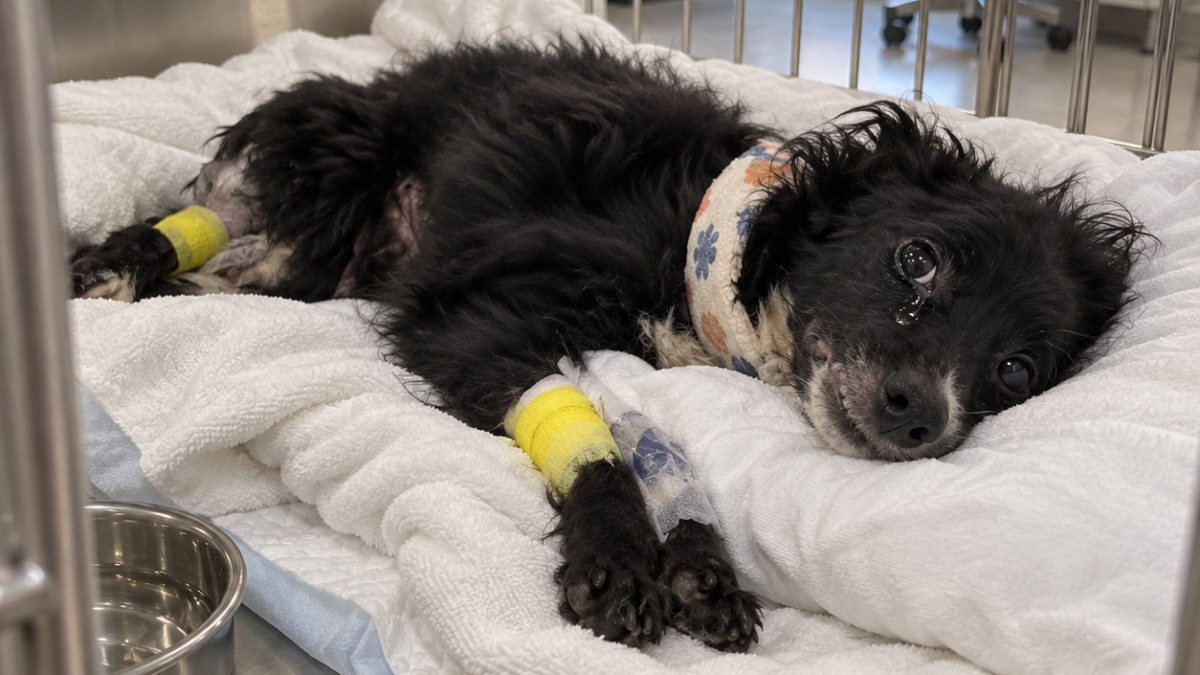
The rope around his neck had been there so long that his skin had grown around it, and when I first saw him hiding in the dark corner of that abandoned business, I could smell the infection before I was close enough to understand what I was looking at.
He was so thin that his legs shook beneath him, so dehydrated that his eyes seemed sunken into his face, and when the veterinarian finally cut away what had been holding him prisoner, hundreds of worms were moving inside a wound that should never have existed.
But three days later, after blood transfusions, fluids, antibiotics, and nights when none of us knew whether he would still be breathing by morning, that broken dog looked at me and did one tiny thing that changed the way I understood the word survival.
My name is Daniel Reyes, and the first time I heard about Armando, I was closing my repair shop for the evening when a man named Luis came running across the parking lot.
“There’s a dog inside the old warehouse,” he said.
I thought he meant a stray.
Our neighborhood had plenty.
“Call animal control.”
“I did. They’re coming. But something’s wrong with him.”
His face made me stop locking the door.
“What do you mean?”
“He has something around his neck.”
Ten minutes later, I was following Luis through the side entrance of an unused building two blocks away.
The place smelled like dust, rust, and old rainwater.
We found the dog behind a stack of broken wooden pallets.
He tried to disappear when our flashlight reached him.
At first, all I saw was a brown dog curled against concrete.
Then he lifted his head.
I will never forget that moment.
A dirty rope was embedded deep around his neck.
Not lying against the skin.
Inside it.
The tissue around it was swollen, dark, and wet.
Flies moved around the wound.
The dog tried to stand.
His front legs pushed.
His back legs trembled violently.
Then he collapsed.
“Oh, God,” Luis whispered.
I crouched several feet away.
“Hey, buddy.”
His eyes moved toward me.
No growl.
No bark.
Only exhaustion.
Animal rescue arrived fifteen minutes later, but those fifteen minutes felt like an hour.
Nobody wanted to pull the rope.
Nobody wanted to risk making the bleeding worse.
We slid a blanket beneath him instead.
When we lifted him, his body felt frighteningly light.
At the emergency clinic, the veterinary team moved quickly.
They sedated him.
Cut through the rope.
And then everyone in the room became quiet.
The wound circled most of his neck.
Parts of it were badly infected.
Maggots had invaded the damaged tissue.
His gums were nearly white.
Blood tests confirmed severe anemia.
He was dehydrated, malnourished, and so weak from prolonged confinement that the muscles in his legs had wasted away.
“How is he still alive?” I asked.
The veterinarian looked at him.
“I don’t know.”
They cleaned the wound for what seemed like forever.
One by one, they removed the larvae.
They flushed dead tissue and infection away.
Then came IV fluids.
Antibiotics.
Pain medication.
A blood transfusion.
Then another.
I stayed until after midnight.
Before leaving, the veterinarian asked if the dog had a name.
“No.”
Luis was standing beside me.
He looked through the glass at the motionless dog beneath a blanket.
“Armando,” he said.
I glanced at him.
“Why Armando?”
“It means warrior.”
The veterinarian wrote it on the chart.
ARMANDO.
For the next two days, I called before breakfast, at lunch, and before going home.
The answers were cautious.
Still critical.
Still weak.
Still fighting.
Then, on the third afternoon, I walked into his recovery room.
His face was less swollen.
His eyes were clearer.
I crouched beside him.
“Hey, warrior.”
Armando raised his head.
For a second, nothing happened.
Then his tail moved.
Once.
Twice.
A weak little tap against the blanket.
I laughed.
The technician beside me started crying.
I reached toward him, stopping before touching the bandages.
“You remember me?”
His tail moved again.
At that moment, I thought the worst was behind us.
I was wrong.
The next morning, my phone rang before sunrise.
It was the clinic.
Armando had developed bloody diarrhea.
His temperature was unstable.
His blood values were falling again.
And the dog who had wagged his tail for me less than twenty-four hours earlier no longer had enough strength to lift his head.
The veterinarian paused before saying the words I had been terrified to hear.
“Daniel, if you want to see him, you should come now.”
PART 2
I do not remember the drive to the clinic.
I remember traffic lights. I remember gripping the steering wheel hard enough that my fingers hurt. I remember thinking that twenty-four hours earlier I had been laughing because Armando had managed to wag his tail, and now I was driving toward a place where someone might tell me that tiny movement had been the last happy thing he ever did.
When I reached the emergency entrance, the receptionist recognized me and stood immediately.
“They’re with him.”
“Is he alive?”
“Yes.”
That one word allowed me to breathe again.
She led me through the treatment area.
Armando was lying inside an oxygen-supported recovery enclosure with blankets beneath him. His head was turned sideways, his eyes half open. There was an IV line in his leg. The bandage around his neck was clean, but everything else about him looked weaker than the day before.
Dr. Maya Patel stepped toward me.
She was the veterinarian who had treated him from the first night.
“What happened?”
“We’re still working through it.”
“Tell me.”
She motioned toward a small consultation room.
I shook my head.
“Here.”
I wanted to see him while she spoke.
She nodded.
“The bloody diarrhea has caused additional fluid and protein loss. His body was already severely depleted. His temperature dropped overnight, and his red blood cell level has declined again.”
“Another transfusion?”
“Possibly. We’re preparing for it.”
“Is the infection worse?”
“Not necessarily. His wound actually looks cleaner. This is the rest of his body reminding us how sick he was before he got here.”
I looked at Armando.
His ribs moved beneath the blanket.
Slow.
Shallow.
“What are his chances?”
Maya hesitated.
I hated that hesitation.
“Please don’t give me the careful answer.”
“The careful answer is the honest one.”
I looked at her.
“He could recover.”
“And?”
“He could also crash.”
The room seemed to get smaller.
“Today?”
“Yes.”
I pulled a chair beside the enclosure.
“Then I’m staying.”
“You can.”
I sat there while technicians moved quietly around him. They checked his temperature. Adjusted fluids. Repeated blood tests. Prepared medication. Nobody made promises.
Around eight in the morning, Maya decided he needed another blood transfusion.
I watched the bag hang beside him.
There is something humbling about knowing that survival can come down to fluid moving slowly through a clear tube.
I touched the enclosure.
“You don’t know me,” I whispered. “But I’m here.”
Armando’s eye opened slightly.
“You already did the hard part. Somebody left you there, and you stayed alive until Luis found you. So don’t quit because you’re tired now.”
His eye closed again.
I stayed.
At noon, he had not worsened.
At three, his temperature improved slightly.
At six, the diarrhea had slowed.
Small victories.
That was how we measured him.
Not hours.
Not days.
Tiny movements in the right direction.
Maya came beside me that evening.
“Go eat.”
“I’m fine.”
“You’ve had vending-machine coffee since dawn.”
“I’ve survived worse.”
“So has he. Go eat.”
“I’m not leaving.”
She folded her arms.
“Daniel.”
I looked at Armando.
“What if something happens?”
“We’ll call you.”
“What if he wakes up?”
“We’ll tell him you abandoned him for a sandwich.”
I stared at her.
She smiled.
“Twenty minutes.”
I left for nineteen.
When I returned, a technician named Grace met me at the door.
“I have something to show you.”
My stomach dropped.
“What?”
She smiled.
That helped.
Armando was still lying down, but there was a small bowl near his face.
A little boiled chicken was missing.
“He ate?”
“Three bites.”
I looked at him.
“You ate?”
His ear moved.
Grace laughed.
“That’s exactly what I said.”
I pulled the chair closer.
“You keep doing that.”
Three bites became five later that night.
By morning, he could hold his head up for almost a minute.
His blood count remained dangerously low, but it had stopped falling.
For the first time since the relapse, Maya used the word stable.
Not safe.
Not recovered.
Stable.
I treated it like a miracle.
The next several days changed me.
Before Armando, I thought recovery meant getting better.
After Armando, I understood recovery could look like refusing to die for one more night.
He had good hours and bad ones.
Sometimes he ate.
Sometimes he turned away.
Sometimes he looked alert when I entered.
Sometimes he seemed so exhausted that I wondered whether forcing him through another day was fair.
I asked Maya that question directly.
“Are we doing this for him or for us?”
She looked at me carefully.
“That’s a good question.”
“I don’t want him suffering because I’m afraid to lose him.”
“Neither do I.”
She crouched beside him and watched his response when she spoke.
Armando’s eyes followed her.
She offered a piece of chicken.
He ate it.
“He is uncomfortable sometimes,” she said. “But pain control is working. He is still engaging. Still eating some. Still responding to people. If that changes, we reassess.”
I nodded.
“I need you to tell me if that changes.”
“I will.”
That became the agreement.
No heroic fantasy.
No keeping him alive at any cost.
We would fight as long as Armando was fighting with us.
On the seventh day, he tried to stand.
Grace called me from across the room.
“Daniel.”
I turned.
Armando had planted both front paws beneath his chest.
His back legs were trembling.
“Easy.”
He pushed.
His body lifted perhaps six inches.
Then he sank down.
I rushed over.
“It’s okay.”
His tail moved.
He tried again.
This time one hind leg straightened.
Then the other.
For two seconds, Armando stood.
Two seconds.
That was all.
Then his body collapsed onto the blanket.
I felt tears reach my face before I could stop them.
Grace put a hand on my shoulder.
“He stood.”
“I saw.”
“He wanted to.”
That mattered.
Armando had not been able to trust his own legs when we found him.
Now those wasted muscles were trying to remember their job.
Two days later, Maya told me we might begin discussing discharge.
I stared at her.
“You’re serious?”
“If his blood values remain stable.”
“Home?”
“He still needs intensive care. Wound cleaning. Medication. Nutrition. Assisted movement. Monitoring.”
“I can do that.”
She raised an eyebrow.
“You own a repair shop.”
“I know.”
“You work.”
“I also own the repair shop.”
She smiled.
“Fair point.”
“I’ll take him.”
“You haven’t heard everything.”
“I’ll learn.”
“He may need help standing for weeks. Maybe longer.”
“I’ll help.”
“He may have permanent weakness.”
“I’ll adapt.”
“His wound is going to take time.”
“I’ve got time.”
Maya watched me.
“Are you fostering him or adopting him?”
I paused.
Armando was asleep between us.
“Let’s get him home first.”
She smiled as if she already knew something I didn’t.
Armando left the clinic twelve days after arriving.
He did not walk out.
I carried him.
A technician helped settle him onto a thick bed in the back of my SUV.
The hospital sent us home with medication, wound-care supplies, nutritional supplements, written instructions, and enough warning signs to make me afraid of every breath he took.
Maya stood beside the car.
“Call if his gums get pale.”
“I know.”
“If he refuses food for more than—”
“I know.”
“If the diarrhea returns—”
“I know.”
“If his temperature—”
“Maya.”
She stopped.
“I wrote everything down.”
She nodded.
Then she leaned through the open rear door.
Armando lifted his head.
“You’ve got a good one.”
His tail moved.
Maya looked at me.
“I meant him.”
“Very funny.”
The drive to my house was slow.
I avoided potholes.
Turned corners like I was carrying glass.
Armando lay quietly beneath a blanket.
When we arrived, I opened the back hatch.
He looked around.
My home was small.
One story.
A narrow yard.
A large front window facing west.
I had moved the furniture before picking him up.
There was now a wide path between his bed, his food, and the back door.
I carried him inside.
He weighed more than he felt.
The first time I lifted him at the warehouse, he had seemed almost weightless from malnutrition.
Now there was a little more substance beneath my arms.
I placed him on a soft orthopedic bed beside the living-room window.
Late-afternoon sunlight reached the blanket.
Armando lifted his face into it.
He closed his eyes.
I sat beside him.
“This is temporary.”
His ear moved.
“I’m fostering.”
Nothing.
“You understand?”
Tail tap.
“Don’t manipulate me.”
The first week at home was exhausting.
My alarm went off before sunrise for medication.
I cleaned his neck wound according to the veterinarian’s schedule.
Prepared high-calorie meals.
Changed bedding.
Washed towels.
Monitored stool.
Checked his gums so often that Armando began looking offended whenever I touched his lips.
“You nearly died from anemia.”
He turned his head.
“I’m checking.”
He sighed.
“You don’t get privacy.”
The biggest challenge was his legs.
Months of confinement and inadequate nutrition had taken their toll.
We used a support sling beneath his abdomen.
Every morning, I helped him stand.
At first, his feet slid.
His back legs crossed awkwardly.
He could support himself for only seconds.
I massaged the muscles.
Bent and extended his joints gently as the veterinary rehabilitation plan instructed.
Then we rested.
In the afternoon, we tried again.
At night, once more.
Five seconds.
Then seven.
Then ten.
Those numbers became everything.
Luis visited almost every day.
He was the man who had originally found Armando.
The first time he came to my house, Armando was lying by the window.
Luis stopped in the doorway.
“He looks different.”
“He smells better.”
Luis laughed.
Armando’s tail began moving.
“You remember him?”
Luis crouched.
“Hey, warrior.”
Armando tried to lift himself.
“Don’t.”
We both reached for him.
He managed to push onto his front legs.
Then licked Luis’s hand.
Luis turned his face away.
I pretended not to notice the tears.
Afterward, we sat outside.
“How long do you think he was chained?” I asked.
Luis stared toward the street.
“I don’t know.”
“You said he was inside the business when you found him.”
“Yeah.”
“How did he get there?”
“I think someone dumped him nearby or he broke loose.”
“Rope and all?”
Luis nodded.
I had been thinking about that too.
The section of rope still embedded around his neck when we found him had been cut or broken several feet from the wound.
Which meant Armando had probably once been attached to something.
A post.
Fence.
Tree.
Chain line.
He had escaped his physical anchor.
But not the rope that had already cut into him.
“Did anybody around there recognize him?”
Luis hesitated.
“What?”
“One guy said he’d seen a dog like him behind a property near the industrial lots.”
“Which property?”
“I don’t know exactly.”
“You didn’t tell animal control?”
“I did.”
“What did they say?”
“They took a statement.”
I sat back.
A feeling started in my chest.
Not certainty.
Anger searching for somewhere to go.
“Daniel.”
I looked at him.
“Don’t do anything stupid.”
“I own a repair shop. Stupid is included in the business license.”
“I’m serious.”
“So am I.”
Armando had no voice to explain what happened.
But scars are records.
So are ropes.
So are neighbors.
I decided that if someone had left him tied long enough for a rope to become buried in his neck, I wanted to know who.
Not so I could hurt them.
So they could never do it again.
The investigation started slowly.
Animal control had documented the rescue.
The veterinarian had photographed the wound.
The rope had been retained as evidence because officers suspected prolonged neglect.
But without an identified owner, the case had nowhere obvious to go.
Then, two weeks after Armando came home, Luis called.
“Remember the property I mentioned?”
“Yes.”
“I found the guy who told me.”
“Where?”
“At the hardware store.”
“What did he say?”
“Dog was behind a machine shop near Grant Avenue. Chained to a metal pole.”
My hands tightened around the phone.
“Did he see the owner?”
“He saw people there.”
“Name?”
“He knows the business.”
I wrote everything down.
Then I called Officer Renee Cole from county animal control.
She had been part of Armando’s initial rescue.
“I have information.”
“What kind?”
“A possible location.”
She listened.
I expected skepticism.
Instead, she said, “Send me everything. Do not go there yourself.”
“I wasn’t going to.”
“You were absolutely going to.”
I said nothing.
“That’s why I’m telling you.”
“Fine.”
She took the lead.
I returned to Armando.
Because his recovery mattered more than my anger.
Three weeks after coming home, Armando stood for almost a minute with support.
I was crouched beside him, holding the sling.
“Good.”
His back legs shook.
“Just a little more.”
He turned his head toward his food bowl.
“You’re motivated by dinner?”
Tail wag.
“Respectable.”
I slowly reduced support.
For two seconds, the sling carried almost no weight.
Armando stood by himself.
Then four seconds.
Then his legs folded.
I caught him.
“Got you.”
He licked my arm.
Those words became our routine.
Got you.
When he slipped.
Got you.
When weakness returned.
Got you.
When thunderstorms frightened him.
Got you.
Sometimes I wondered whether anyone had ever said that to him before.
One evening, I carried him into the backyard.
He had become strong enough to stand briefly on grass.
The sun was low.
Warm light reached his face.
I placed him on a blanket.
He stretched his neck toward the breeze.
His wound had begun closing.
Healthy tissue was replacing infection.
The swelling was almost gone.
For the first time, I could see what Armando might have looked like before neglect.
He had soft brown eyes.
A black muzzle.
One ear that folded differently from the other.
A small white patch on his chest.
“You’re handsome.”
Armando looked at me.
“Don’t let it go to your head.”
He laid his chin on my shoe.
I stayed outside with him until the light disappeared.
That was when I realized Armando had started waiting for things.
The food bowl.
My footsteps.
Luis’s visits.
Sunlight.
Dogs who have been mistreated sometimes spend their lives reacting to what might hurt them.
Armando was beginning to anticipate good things.
That mattered more than any photograph.
Then Officer Cole called.
“We found the property.”
I sat down.
“And?”
“We confirmed witnesses saw a dog matching Armando’s description there.”
My pulse quickened.
“Owner?”
“Property is leased to a business called Mercer Equipment Repair.”
I knew the name.
Small company.
Agricultural machinery.
The owner, Brent Mercer, had been around the area for years.
“Does he own a dog?”
“We’re investigating.”
“Renee.”
“That’s all I can tell you right now.”
“What if he moves animals?”
“We’re handling it.”
“Are there other animals there?”
Pause.
“Daniel.”
That was enough.
“There are.”
“I didn’t say that.”
“You didn’t have to.”
She sighed.
“Stay out of it.”
I looked toward Armando.
He was asleep beneath the window.
“I will.”
For once, I meant it.
Mostly.
Three days later, animal control and county deputies executed an inspection warrant on the property.
I learned about it because the news spread faster than official information.
Someone posted photographs online.
Kennels.
Chains.
Dogs.
I called Renee.
“Tell me.”
“I can’t discuss everything yet.”
“How many?”
Silence.
“How many dogs?”
“Seven.”
My stomach turned.
“Condition?”
“Varies.”
“Were any chained?”
“Yes.”
I closed my eyes.
Armando’s wound flashed through my mind.
“Any with embedded collars?”
“No.”
Relief came in a strange form.
“Did Mercer admit Armando was his?”
“I can’t discuss statements.”
That meant there were statements.
The seven dogs were removed temporarily for veterinary evaluation because officers documented welfare concerns.
Photographs showed dirty water.
Inadequate shelter.
Heavy chains.
One dog was underweight.
Another had an untreated skin condition.
Nothing looked exactly like Armando’s neck.
Thank God.
The next day, a local television station called me.
I declined.
They called again.
I declined again.
I did not want Armando turned into entertainment.
Then Mercer posted publicly.
That changed everything.
He claimed animal control had been manipulated by “dog rescue activists.”
He said all his animals were working dogs.
He said photographs made conditions look worse than they were.
And he denied ever owning Armando.
I read the statement twice.
Then closed my laptop.
Luis was beside me.
“You okay?”
“No.”
“Don’t respond.”
“I’m not going to.”
“You’re holding your phone like you’re going to throw it.”
“I’m considering options.”
“Put it down.”
I did.
The investigation needed facts, not my anger.
Two days later, Renee came to my house.
She wanted to see Armando.
He was lying near the window.
When she walked in, he lifted his head.
“Look at you.”
His tail moved.
She crouched carefully.
“He remembers you.”
“He was barely conscious when I picked him up.”
“He remembers kindness.”
Renee looked at the healing wound.
“It’s remarkable.”
Then her expression became serious.
“We found something.”
I sat opposite her.
“What?”
“An old photograph on a former employee’s phone.”
My heart started pounding.
She showed me.
A dog chained beside the rear of the Mercer property.
Thin.
Brown.
White chest patch.
Same folded ear.
Around his neck was a rope.
I stared.
“When?”
“Four months before he was rescued.”
“He was already thin.”
“Yes.”
“Can you prove it’s Armando?”
“We’re comparing physical markings.”
“It’s him.”
“I agree. But agreement isn’t evidence. Documentation is.”
I handed the phone back.
“Who took it?”
“Former employee. He says he complained about the dog.”
“To Mercer?”
“Yes.”
“What happened?”
“He says he was told the dog was fine.”
My anger became something colder.
“So they knew.”
“We need the case to establish that.”
“Renee.”
“I know what you’re thinking.”
“No, you don’t.”
“I probably do.”
I stood and walked toward the window.
Armando was asleep in sunlight.
“You see him now,” I said. “Tail wagging. Eating. Getting stronger. People are going to look at him and think this has a happy ending.”
Renee said nothing.
“But somebody let a rope cut into his neck until maggots were living in it.”
“I know.”
“Somebody heard complaints.”
“I know.”
“If you can prove who—”
“We’ll do our job.”
I turned.
“Promise me.”
Her face hardened.
“I don’t make promises about court outcomes. I promise we’ll document everything we can.”
That was enough.
The next month became a strange split between two stories.
One was the investigation.
The other was Armando learning to walk.
I preferred the second.
He could stand on his own now.
Not for long.
But enough.
Then one morning, he took his first unsupported step.
I had placed his breakfast six feet away.
Not as a test.
I simply forgot to move it closer.
Armando stood from his bed.
I was at the kitchen counter.
I heard nails.
Turned.
He took one step.
His back legs wobbled.
“Wait.”
Second step.
“Armando.”
Third.
I moved toward him.
Then stopped.
He looked at the bowl.
Fourth.
Fifth.
He reached it.
Then sat down heavily and began eating like nothing extraordinary had happened.
I covered my mouth.
“You walked.”
He ate.
“You walked.”
No reaction.
“You could at least acknowledge the historic nature of this breakfast.”
Tail wag.
I called Maya.
“He walked.”
“How far?”
“Six feet.”
“Good.”
“Good? That’s all?”
“What do you want, fireworks?”
“Yes.”
She laughed.
“Six feet becomes ten.”
She was right.
By the end of the week, it became ten.
Then fifteen.
Then across the living room.
We used mats to give him traction.
The muscles along his hind legs slowly thickened.
His appetite became enormous.
One morning he barked at me because breakfast was late.
I stood stunned.
“What was that?”
He barked again.
“You found your voice.”
Another bark.
“You’re also extremely rude.”
He wagged.
I laughed.
Three months after his rescue, Armando walked into the backyard by himself.
Slowly.
Awkwardly.
But without being carried.
Luis recorded it.
I almost told him to stop.
Then I changed my mind.
Some moments deserve evidence.
Armando crossed the patio.
Reached the grass.
Sniffed.
Then lowered himself into sunlight.
He rolled partly onto one side.
His tail moved.
Luis whispered, “Look at him.”
“I know.”
“You remember the warehouse?”
“I try not to.”
“I thought we were carrying out a dead dog.”
“So did I.”
Armando rolled farther.
His paws lifted.
For a second he was almost on his back.
Luis laughed.
“He’s sunbathing.”
“He earned it.”
The wound around his neck continued shrinking.
Eventually the bandages came off.
A thick scar remained.
Fur might never grow normally across all of it.
I did not care.
The scar belonged to his history.
It did not define his future.
Around that time, the prosecutor’s office contacted me.
Charges were being considered in connection with Armando and the seized dogs.
I was asked to provide testimony about the rescue and his recovery.
I agreed.
Then came the part that made the case personal in a way I had not expected.
A former employee named Calvin Harris asked to meet me.
We met outside the animal-control office.
He looked nervous.
“You’re Daniel?”
“Yes.”
He looked at Armando, who was with me on a short leash.
Armando stared at him.
Calvin stopped.
“Oh, man.”
“You know him.”
He nodded.
“His name wasn’t Armando.”
My chest tightened.
“What was it?”
“Tank.”
I hated the name instantly, though that was unfair to the word.
“Was he Mercer’s dog?”
Calvin looked toward the building.
“Yes.”
“How long?”
“Couple years maybe.”
“Why was he chained?”
“They kept several dogs behind the shop. Said they were security.”
“With rope?”
“Sometimes chain. Sometimes rope.”
“You saw his neck?”
“Not like what happened later.”
“But you saw it getting bad.”
Calvin looked down.
“Yes.”
I struggled to keep my voice even.
“What did you do?”
“I told Brent.”
“And?”
“He said the dog scratched a lot and made it worse himself.”
I stared at him.
“You believed that?”
“No.”
“Did you call anyone?”
Calvin swallowed.
“Not then.”
My anger found him immediately.
“You took pictures.”
“Yes.”
“But you didn’t call.”
“No.”
Armando shifted beside me.
I wanted to say things I would regret.
Then Calvin’s face broke.
“I know.”
I looked away.
“I should’ve called.”
“Yes.”
“I thought I’d lose my job.”
“And Armando almost lost his life.”
“I know.”
That was the terrible thing about neglect.
It rarely requires one monster.
Sometimes it survives because a dozen ordinary people each decide it isn’t their responsibility.
Calvin wiped his face.
“I quit two months later.”
“That didn’t help him.”
“No.”
“Why are you here now?”
“Because I saw the rescue post.”
He looked at Armando.
“I thought he died.”
“He almost did.”
“I have more pictures.”
I became still.
“More?”
“And messages.”
“What messages?”
“Texts to Brent. Me telling him Tank’s neck looked infected.”
My anger disappeared.
Replaced by focus.
“Give them to investigators.”
“I did.”
“Everything?”
“Yes.”
“Good.”
Calvin crouched carefully.
Armando stepped backward.
He did not growl.
Calvin stopped moving.
“I’m sorry, buddy.”
Armando looked at him.
Then at me.
I did not force an interaction.
He did not owe Calvin forgiveness.
Neither did I.
But Calvin’s evidence mattered.
Texts showed warnings.
Dates.
Responses.
A photograph taken weeks before the rescue showed visible swelling around Armando’s neck.
Another showed him chained at the same pole.
The case no longer depended on someone remembering vaguely.
There was a timeline.
I learned something important during those weeks.
Revenge feels powerful in imagination because it is immediate.
Justice is slower.
Paperwork.
Interviews.
Veterinary records.
Metadata.
Photographs.
Court dates.
Waiting.
Lots of waiting.
I hated waiting.
Armando was good at teaching it.
His body had never healed according to my schedule.
Why should anything else?
The seven seized dogs were eventually placed into foster care while the case proceeded.
Two came through our rescue network.
One was a young shepherd mix named Rosie.
The first time Armando met her through a fence, he wagged so hard his back end swayed.
“Easy.”
Rosie bounced.
Armando attempted to bounce.
His legs disagreed.
He nearly sat down.
I caught the harness.
“Your enthusiasm exceeds your engineering.”
He licked my hand.
Controlled introductions followed.
Armando liked her.
He liked almost every dog he met.
That surprised me.
Months spent restrained had not made him hostile.
Pain had not made him cruel.
Somebody once asked me whether abused dogs become dangerous.
I told them the better question was what individuals become after trauma.
Some become fearful.
Some defensive.
Some shut down.
Some remain astonishingly gentle.
Armando was gentle.
But he was not saintly.
He stole food.
He chewed one of my work boots.
He learned how to open the laundry-room door.
And one memorable Tuesday, he dragged an entire bag of treats across the kitchen and ate enough to make both of us regret his improved mobility.
“You nearly died and this is how you repay me?”
Armando looked pleased.
“You have no morals.”
Tail wag.
His personality had been buried beneath pain.
Now it arrived daily.
He disliked rain.
Loved scrambled eggs.
Preferred sleeping with his head elevated.
Followed me everywhere.
If I closed the bathroom door, he waited outside.
If I worked in the garage, he lay near the entrance.
If I sat on the couch, he pressed against my shin.
One evening, I realized he had not spent an entire day alone since his rescue.
I intended to keep it that way as much as possible.
The court case began seven months after Armando was found.
Brent Mercer faced multiple animal-welfare charges, including allegations related to failure to provide necessary veterinary care.
The exact charges changed during pretrial proceedings.
Some involved other dogs.
One centered on Armando.
I attended the first hearing.
Mercer sat at the defense table.
He looked ordinary.
That always surprises people.
We expect cruelty to announce itself.
Sometimes it wears work boots and a clean shirt.
His attorney argued that Armando had escaped before his condition became severe.
Prosecutors presented photographs suggesting the neck injury was already visible while he remained at the property.
The defense argued employees had responsibility for day-to-day care.
Employees said they had warned Mercer.
Nobody wanted ownership of what happened.
I sat in the back row.
Renee sat nearby.
Luis on my other side.
Armando was not there.
I did not want him anywhere near that room.
After the hearing, reporters waited outside.
One asked me, “What punishment do you want?”
I stopped.
For months, I thought I knew.
I wanted Mercer to see Armando’s wound.
I wanted him to hear the veterinarian describe the maggots.
The anemia.
The transfusions.
I wanted him to understand exactly what it had taken to undo what neglect had done.
But standing there, I answered differently.
“I want him never to be able to do this to another dog.”
The reporter tried again.
“Do you want jail?”
“That’s for the court.”
“Do you hate him?”
I looked toward the parking lot.
“No.”
That surprised even me.
“I don’t have enough room in my life to hate him.”
Then I walked away.
Armando had a rehabilitation appointment that afternoon.
That mattered more.
His therapist, Jenna, used balance exercises and controlled movement.
Armando hated balance pads.
He looked personally insulted whenever she guided his paws onto one.
“Come on.”
He stepped off.
“Armando.”
Off again.
Jenna looked at me.
“He’s stubborn.”
“You’re just discovering this?”
She used chicken.
Suddenly he became an athlete.
“Traitor.”
Jenna laughed.
Over the next two months, he gained significant strength.
Not perfect.
His gait remained a little unusual.
His left hind leg tired faster.
But he could walk around the block.
Then halfway through the park.
The first time we reached the park, Armando stopped at the entrance.
Children were playing in the distance.
Dogs walked with families.
Bicycles passed.
The world was enormous.
He stood beside me and sniffed.
“Take your time.”
He did.
Then he walked.
Every twenty yards, he stopped.
Not from weakness alone.
He wanted to smell everything.
A tree.
A bench.
Grass where another dog had been.
The base of a trash can.
“Truly majestic discoveries.”
Armando ignored me.
A woman approached with an older golden retriever.
“Can they say hello?”
“If yours is calm.”
They sniffed.
Armando wagged.
The golden wagged.
The woman noticed his neck.
“What happened?”
I gave her the short version.
Her face changed.
“Oh, poor baby.”
I hated that phrase.
Not because she meant badly.
Because Armando no longer wanted pity.
“He’s doing well,” I said.
She smiled.
“He certainly looks happy.”
That I liked.
Happy.
Not broken.
Not abused.
Not victim.
Happy.
The trial did not happen immediately.
Negotiations continued.
Evidence was reviewed.
Some charges were consolidated.
Months passed.
Armando did not care.
He discovered car rides.
At first, vehicles made him anxious.
I wondered if one had been associated with abandonment.
We worked slowly.
Open car door.
Treat.
No movement.
Sit beside vehicle.
Treat.
Front paws inside.
Treat.
Eventually he climbed in voluntarily.
Then he learned the window opened.
His face changed.
Nose out.
Ears moving.
I laughed.
“Do not fall out.”
He looked at me like I was interrupting something important.
Soon “ride” became one of his favorite words.
The clinic.
The park.
Luis’s house.
My shop after closing.
Sometimes nowhere.
We drove because he liked the air.
One Sunday, I took him past the warehouse where we found him.
I did not plan to stop.
Armando was asleep.
When we reached the block, he woke.
His body stiffened.
I saw it immediately.
Ears back.
Mouth closed.
Head low.
I kept driving.
“No.”
He looked through the window.
“You don’t owe that place anything.”
We did not go back.
Recovery does not require confronting every location where something terrible happened.
Sometimes healing is simply being allowed to leave.
At the one-year mark, Maya examined him again.
She ran blood work.
Checked the scar.
Assessed his weight.
Watched him walk.
Then she smiled.
“Do you remember carrying him out?”
“Yes.”
“He’s gained nineteen pounds.”
“I know. I lift the food bags.”
“Blood count is normal.”
I stared.
“Normal?”
“Normal.”
The word hit harder than I expected.
Normal.
For a dog whose gums had once been nearly white.
Whose blood had required strangers’ donations just to keep oxygen moving through his body.
Normal.
I sat on the floor.
Armando came over.
“What?”
Maya asked.
“Nothing.”
“You’re crying.”
“Apparently my eyes are medically unstable.”
She smiled.
Armando licked my cheek.
Maya folded her arms.
“So.”
I looked up.
“So?”
“Are we going to keep pretending he’s a foster?”
I sighed.
“You too?”
“Daniel, he sleeps in your bedroom.”
“Fosters can sleep in bedrooms.”
“You bought a custom ramp for your truck.”
“Mobility support.”
“He has his name embroidered on a blanket.”
“That was a gift.”
“You listed him as your emergency contact at the boarding facility.”
I stared at her.
“That was a misunderstanding.”
She laughed.
“You’re ridiculous.”
Armando sat against me.
I looked down.
The truth was simple.
I had been afraid to make the adoption official.
Not because I didn’t love him.
Because loving something formally made losing it feel more possible.
I had not told anyone that.
Then I realized how stupid it was.
Armando did not care what paperwork said.
He already belonged to me.
More accurately, I belonged to him.
I signed the adoption papers that week.
Luis served as witness.
When the shelter coordinator handed me the final document, she said, “Congratulations.”
I looked at Armando.
“Apparently you’re staying.”
Tail wag.
“Try not to look so shocked.”
The legal case resolved two months later.
Mercer accepted a plea agreement covering several animal-welfare violations.
The court imposed penalties, probationary conditions, restitution toward veterinary costs, and restrictions on owning or keeping animals during the period defined by the order.
Some people thought the result was too lenient.
Others thought the prosecution was excessive.
I had learned not to measure justice by how angry strangers were online.
I attended sentencing.
The judge allowed a statement about Armando.
I had written three pages.
I used none of them.
When I stood, Mercer looked toward me.
I held a photograph.
Not the worst one.
Not the wound.
Not the rope.
A recent picture.
Armando standing in my yard in sunlight.
Healthy weight.
Scar visible.
Tail high.
“This is Armando.”
The judge looked at the photograph.
“So the court understands, this is the dog formerly called Tank?”
“Yes.”
I hated even saying it.
I continued.
“When we found him, a rope had cut so deeply into his neck that infected tissue had begun to rot around it. He was severely anemic. He needed multiple transfusions. He could barely stand.”
My voice remained steady.
“He survived.”
Mercer looked down.
“I spent months imagining what I would say if I ever stood in front of the person responsible for letting that happen.”
I paused.
“I thought I would want you to hurt the way he hurt.”
The courtroom was silent.
“I don’t.”
Mercer looked at me.
“I want you to remember that he survived despite what happened, not because anybody connected to that property helped him survive.”
I held up the photograph.
“You do not get the last word in his life.”
I sat down.
That was my revenge.
Not watching someone suffer.
Taking the thing neglect had almost destroyed and building a life around it.
Armando did not know about sentencing.
That afternoon, he was at home stealing half a grilled-cheese sandwich from Luis.
When I walked in, both looked guilty.
“Which one of you?”
Luis pointed at Armando.
Armando stared at Luis.
“Cowards.”
I laughed.
Life became wonderfully ordinary.
That is the part rescue stories often skip.
Ordinary is the prize.
Morning.
Food bowl.
Walk.
Nap.
Sunlight.
A person coming home.
A tail hitting furniture.
Armando developed a habit of waiting near the front window around five thirty.
My shop closed at five.
I usually walked through the door at five twenty.
If I was late, my neighbor said Armando stared toward the road.
The dog who once hid alone in a warehouse now expected somebody to return.
That may be the greatest sign of healing I have ever witnessed.
Trust is expectation.
You believe good things will happen because they have happened consistently enough to become normal.
Armando had not had that before.
Now he did.
Two years after his rescue, his scar was pale.
Fur had grown around most of it, though a visible line remained.
His legs were much stronger.
He still tired after long walks.
That was fine.
We were not training for anything.
One autumn afternoon, Luis and I took him to a quiet lake outside town.
Armando had never seen that much water.
He walked toward the edge.
Stopped.
A small wave touched his paw.
He jumped backward.
Luis laughed so hard he almost dropped the leash.
Armando stared at the lake.
“You fought infection, anemia, starvation, muscle loss, court cases, physical therapy,” I said. “And water scares you?”
He refused to approach again.
“Excellent warrior.”
Eventually he lay in the grass instead.
Sun on his face.
Luis sat beside me.
“You remember when we named him?”
“Yeah.”
“I didn’t think he’d make it.”
“Neither did I.”
Luis looked at Armando.
“He did.”
We sat quietly.
Then he asked, “Do you ever think about what would’ve happened if I didn’t go inside that warehouse?”
I hated that question.
“Yes.”
“What?”
“Nothing good.”
“I almost didn’t.”
I looked at him.
“What?”
“I heard something inside. Thought it was rats.”
“You never told me.”
“I was leaving.”
Armando lifted his head at the sound of our voices.
Luis continued.
“Then I heard it again.”
“What?”
“A scrape. Like nails on concrete.”
I looked at Armando.
His legs.
Those weak legs that could barely lift him.
He had made enough noise.
One scrape.
That was all.
Enough for someone to turn around.
I swallowed.
“Good thing you’re nosy.”
Luis smiled.
“Good thing he made noise.”
Armando put his head down again.
That night, I thought about how many lives turn on tiny things.
A sound.
A person looking behind a pallet.
A veterinarian deciding to attempt another transfusion.
A donor dog somewhere providing blood.
A witness saving a photograph.
A former employee eventually telling the truth.
A dog wagging his tail on the third day.
None of those things alone saved Armando.
Together, they did.
The following spring, I began volunteering with the rescue organization that had helped him.
I told myself it would be occasional.
Then I found myself transporting dogs.
Then cleaning crates.
Then helping with adoption events.
Armando sometimes came along as an ambassador when the environment was appropriate.
He was excellent with people.
Especially nervous people.
At one event, a man in his sixties stood outside the booth for nearly ten minutes.
He kept looking at Armando.
Eventually I asked, “Want to meet him?”
The man shook his head.
“I lost my dog last month.”
“I’m sorry.”
“Cancer.”
Armando walked toward him.
The man stepped backward.
“Hey.”
Armando stopped.
I did not call him.
He waited.
The man slowly crouched.
Armando approached and placed his chin on the man’s knee.
The man began crying.
“I’m sorry.”
“Don’t apologize.”
He rubbed Armando’s ears.
“What happened to his neck?”
I told him briefly.
He stared at the scar.
“He trusts people after that?”
“Some.”
The man smiled through tears.
“That’s more than I do right now.”
Armando leaned closer.
I understood.
That was the thing about him.
His survival did not make him heroic in some abstract sense.
It made him present.
He gave people the permission to believe damage and gentleness could live in the same body.
That scars did not have to become personality.
That pain could be history instead of identity.
Three years after rescue, Armando developed arthritis in one hip.
Nothing dramatic.
Maya caught it during an annual exam.
“We manage it.”
“Medication?”
“Possibly. Weight control. Appropriate exercise.”
Armando was listening from the floor.
I pointed at him.
“You hear that? Weight control.”
Tail wag.
“He thinks you said food,” Maya said.
“He always thinks I said food.”
We adjusted.
Shorter walks.
Soft bedding.
Supplements.
No unnecessary jumping.
I installed a proper ramp at home.
Luis stared at it.
“You built that?”
“Yes.”
“For the dog?”
“For Armando.”
“That is a dog.”
“Leave.”
Armando walked up the ramp.
Luis nodded.
“Okay. Nice ramp.”
“Thank you.”
Life kept moving.
The scar faded.
People stopped asking about it as often.
That surprised me.
For the first year, strangers noticed the wound first.
By the third, they noticed Armando.
His face.
His tail.
His personality.
That felt right.
One summer evening, I found him lying by the same front window where he had spent his first recovery weeks.
Sunlight crossed his body.
For a moment, the image was almost identical to those early days.
Same room.
Same window.
Same dog.
But everything else had changed.
Then, he could not stand.
Now, he rose when I entered.
Then, food had to be placed beneath his nose.
Now, he followed me toward the kitchen demanding dinner.
Then, a touch near his neck required caution.
Now, he pushed his head beneath my hand until I scratched the scar.
I sat beside him.
“You know what people call you?”
Tail.
“A miracle.”
He looked at me.
“I don’t.”
Ear movement.
“You did the work.”
I thought about that.
We call survivors miracles because it sounds beautiful.
But Armando’s survival was not magic.
It was medicine.
Food.
Blood.
Wound care.
Physical therapy.
Witnesses.
Law enforcement.
And one stubborn dog.
He did not wake healed.
He healed over hundreds of ordinary days.
That matters.
Because when we tell stories only through dramatic before-and-after pictures, we erase the middle.
The middle is where love actually happens.
Cleaning a wound when you’re exhausted.
Getting up at 3 a.m. for medication.
Celebrating normal stool.
Massaging a weak leg.
Washing bedding again.
Sitting in a parking lot outside a veterinary clinic because you are afraid to drive home.
Waiting beside a dog who cannot promise you anything.
That was our story.
Not rescue.
Relationship.
Armando lived with me for six years.
Long enough that people who met him later had no idea how close he had come to dying.
Long enough for new volunteers to ask why his neck looked unusual.
Long enough that some of the people involved in his original case moved away, changed jobs, and became part of another chapter.
He became older.
So did I.
His muzzle turned gray.
His walks slowed.
The arthritis progressed.
His appetite remained outrageous.
One thing never changed.
Sunlight.
Armando always wanted the warmest place in the room.
I sometimes found him stretched so close to the window that half his body was on the bed and half was on the floor.
“Comfortable?”
Tail wag.
“You’re lying crooked.”
No concern.
During his seventh year with me, Maya found a mass near his spleen.
The ultrasound changed the room.
I watched her face.
“What?”
“We need more diagnostics.”
“What are you thinking?”
“I’m not guessing yet.”
“You’re thinking something.”
She sighed.
“Yes.”
Cancer.
The word came later.
Not that day.
Tests first.
Specialist.
More imaging.
The eventual diagnosis was serious.
Armando was now an older dog.
Surgery carried risks.
Without treatment, time would be limited.
I felt anger I had not experienced in years.
Not at Mercer.
Not at the past.
At biology.
“Hasn’t he done enough?”
Maya sat beside me.
“It doesn’t work like that.”
“It should.”
“I know.”
We consulted specialists.
Considered quality of life.
Treatment options.
Armando remained comfortable.
He ate.
Walked.
Slept.
Demanded attention.
So we chose a treatment plan designed around his comfort and realistic benefit.
I promised myself what I had promised years earlier.
I would fight with him.
Not instead of him.
For several months, he did well.
Then he slowed.
One morning, he stopped halfway to his food bowl.
That frightened me more than almost anything.
Armando had never stopped for food.
I crouched.
“You okay?”
He looked at me.
His tail moved weakly.
I brought the bowl to him.
He ate half.
We went to Maya.
The cancer had progressed.
“Can we keep him comfortable?”
“Yes.”
“How long?”
“I don’t know.”
I hated that answer.
I also respected it.
We went home.
For the first time since his rescue, I carried Armando inside again.
The weight of him in my arms sent me backward through time.
Warehouse.
Blanket.
Rope.
Blood.
That first terrible night.
Except now he was heavier.
Gray.
Loved.
His collar had my phone number.
His bed waited by the window.
There were framed photographs of him around the house.
His life had proof everywhere.
I set him down.
“Got you.”
His tail moved.
The words broke me.
Got you.
I had been saying them for years.
During his final weeks, people visited.
Luis.
Renee.
Grace.
Even Calvin asked if it would be appropriate.
I said yes.
Not for Calvin.
For Armando.
Calvin entered quietly.
Armando was lying in sunlight.
He was too weak to stand.
Calvin crouched several feet away.
“Hey, buddy.”
Armando looked at him.
Calvin’s eyes filled.
“I should’ve helped you sooner.”
No response.
“I’m sorry.”
He stayed for five minutes.
Then left.
I do not know whether forgiveness happened.
Maybe it did not need to.
Truth had already happened.
Armando’s last good afternoon was warm.
Too warm for the season.
I carried him outside.
Placed his bed in sunlight.
Luis sat beside us.
We gave Armando pieces of chicken.
He ate three.
Then refused more.
Luis laughed softly.
“Never thought I’d see that.”
“Me neither.”
Armando rested his head on my leg.
The scar around his neck was almost invisible beneath gray fur.
I traced it.
“Warrior.”
His eyes opened.
“You earned the name.”
That evening, his breathing changed.
Not dramatic.
Just enough.
I knew.
Maya came to the house.
She examined him gently.
Then looked at me.
I understood before she spoke.
“Tonight?”
“If you’re asking whether I think he’s comfortable enough to wait several days…”
She shook her head.
I looked at Armando.
He was tired.
Not frightened.
Just tired.
The dog who once fought through infection, anemia, starvation, muscle wasting, and a wound no animal should survive did not owe me another fight.
I called Luis.
He returned.
Renee came too.
Grace was working but joined by video for a moment.
People who had helped build his second life gathered around the room.
Then I turned off my phone.
The last part belonged to him.
We carried his bed outside.
Sunset.
Armando had always loved sunlight.
The sky was orange over the houses.
He rested with his head in my lap.
Maya prepared the medication.
“No hurry.”
I stroked his face.
“Remember the first time I saw you?”
His eye moved.
“You were hiding.”
Tail barely moved.
“I thought you hated everybody.”
Luis whispered, “He never hated anybody.”
“No.”
That had always amazed me.
I touched his scar.
“You had every excuse.”
Armando looked at me.
“I’m glad you stayed.”
My voice broke.
“I’m glad you made that noise when Luis walked past.”
Luis covered his face.
“I’m glad you wagged your tail on the third day.”
Armando breathed slowly.
“I’m glad you ate my sandwich.”
Luis looked up.
“That was mine.”
“Not important.”
For a moment, we laughed.
Armando’s tail moved.
One last little tap.
Just like the clinic.
I bent over him.
“You were never the rope.”
His eyes stayed on mine.
“You were never the wound.”
I kissed his forehead.
“You were never what they did to you.”
Maya waited.
I nodded.
The medication entered slowly.
Armando relaxed.
His breathing eased.
I kept one hand against his chest.
The other beneath his head.
“Got you.”
His eyes closed.
“Got you.”
His final breath came almost silently.
Then nothing.
I held him.
No one moved.
The sunset continued.
Cars passed.
A bird landed on the fence.
The world did what it always does after someone dies.
It kept going.
For several minutes, I hated it for that.
Then I looked at Armando.
He had spent months chained to one place.
His final years had been movement.
Park.
Lake.
Car rides.
Rescue events.
My shop.
Luis’s house.
Sunlight.
Home.
His story had not ended beside that metal pole.
That mattered.
We cremated him.
I kept a small amount of his ashes.
The rest went beneath a tree in my yard where the afternoon sun falls longest.
Luis brought a stone.
We engraved one word.
ARMANDO.
Underneath:
WARRIOR.
Nothing else.
No description of the abuse.
No rope.
No mention of the case.
I refused to let the worst thing someone did to him become his memorial.
Months later, a new dog arrived at the rescue.
A young female.
Thin.
Afraid.
A collar wound around her neck.
Not embedded.
Caught early.
Treatable.
One of the volunteers called me.
“I thought you might not want to see this.”
I looked at the photograph.
For a moment, I couldn’t breathe.
Then I said, “What do you need?”
Transport.
I drove.
When I arrived, the dog was hiding behind the back of a kennel.
I sat several feet away.
Did not reach.
Did not call.
Just waited.
Eventually her eyes moved toward me.
I smiled.
“Take your time.”
She stayed still.
“That’s okay.”
I thought about the warehouse.
The scrape on concrete.
The blanket.
The first tail wag.
Armando.
Then I understood what he had left me.
Not grief.
Responsibility.
He had survived because several people did one thing when they could have looked away.
Luis listened.
I drove.
Veterinarians treated.
Blood donors gave.
Witnesses documented.
Investigators followed evidence.
Somebody always has one thing they can do.
Not everything.
One thing.
Years have passed now.
I still own the repair shop.
I still volunteer.
There is another dog in my house.
Her name is June.
She is nothing like Armando.
She hates car rides.
Loves rain.
Steals socks.
And sleeps on the opposite side of the room from the window.
The first week she came home, I felt guilty.
That surprised me.
As if loving her somehow reduced what Armando had been.
Then one evening she climbed onto his old bed.
I almost moved her.
I stopped.
June curled up.
Sunlight reached one paw.
I sat beside her.
The room did not feel like betrayal.
It felt full.
That is the thing I learned from Armando.
Saving a dog does not undo the past.
Justice does not erase a scar.
A conviction does not return lost months.
Love does not make suffering acceptable because something beautiful came afterward.
What happened to him was wrong.
Completely.
Nothing about his happy years changes that.
But the past did not get to own every year that followed.
That was our victory.
Somebody once tied Armando to a pole and left his neck to deteriorate until his body was starving, infected, anemic, and too weak to stand.
That happened.
But so did this.
He learned the sound of his own food bowl.
He slept beside a warm window.
He walked again.
He rode with his face near an open car window.
He met strangers and offered them trust.
He stole sandwiches.
He avoided lakes.
He barked when breakfast was late.
He became somebody’s dog.
My dog.
And when the end came, there was no rope around his neck.
There were my hands.
There was no concrete floor.
There was a soft bed.
There were no flies.
There was sunset.
There was no one walking past pretending not to see.
There were people gathered around him because his life mattered to them.
Sometimes people ask me what happened to the man connected to Armando’s neglect.
They expect that part to be satisfying.
Charges.
Restrictions.
Court.
Consequences.
Those things mattered.
Accountability matters.
But when people ask me whether that was Armando’s revenge, I tell them no.
Armando’s revenge happened every morning he woke up in my house and expected breakfast.
It happened every time he stood on legs that once failed him.
Every time his tail moved when I came through the door.
Every afternoon he slept in sunlight without anything tying him down.
Every year he lived after somebody had treated his life as if it wasn’t worth saving.
The rope had controlled where Armando could go for months.
Then one day, it didn’t.
And once he was free, he spent the rest of his life teaching me something I have never forgotten.
Survival is not only staying alive.
Sometimes survival is learning there will be food tomorrow.
Learning hands can touch without hurting.
Learning a door can open and you are allowed to walk through it.
Learning someone will come back.
Learning that when your legs fail, there may be a person beside you whispering the same words until you believe them.
Got you.
I still say those words sometimes.
Not to Armando.
Not anymore.
To frightened dogs.
To people who call me because they have found an animal and don’t know what to do.
To June when thunder scares her.
And sometimes to myself when grief returns unexpectedly.
Got you.
Because once, in the darkest corner of an abandoned building, a dying dog waited long enough for someone to notice him.
His name became Armando because we needed a word that sounded stronger than what had happened to him.
Warrior.
Years later, I realized we had named him correctly for the wrong reason.
I thought being a warrior meant surviving the rope.
It didn’t.
Armando’s greatest fight was what came afterward.
Standing.
Trusting.
Eating.
Walking.
Wanting.
Loving.
Living.
The rope was only the beginning.
His life was the victory.








