PART 2: Spoiled Neighbor Demanded the Diamond Ring I Bought My Wife—Then Tried to Prove It Was Hers
PART 2
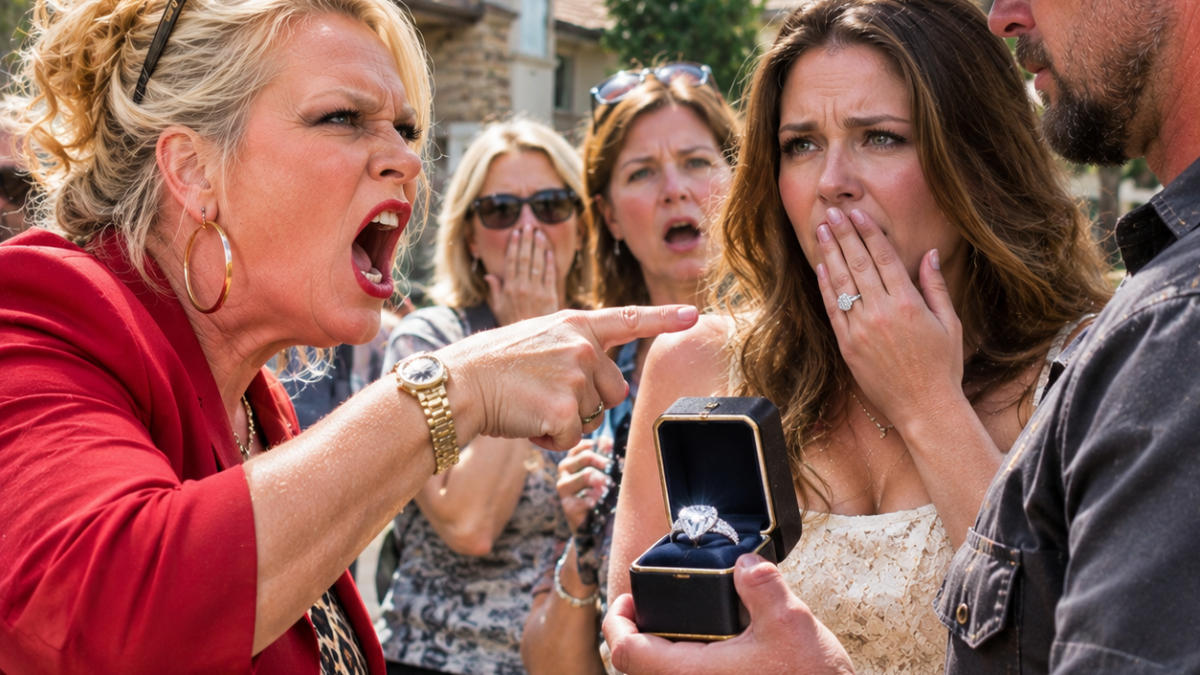
For a few seconds, I honestly didn’t know what to say.
Not because the request was complicated.
Because it was so ridiculous that my brain kept trying to translate it into something reasonable.
Claire did it first.
“No.”
Vanessa looked at her.
“What?”
“I said no.”
The room around us had gone quieter.
Our friends Melissa and Aaron were sitting directly across the table. Aaron had stopped halfway through lifting his glass. Melissa was looking from Vanessa to Claire with the expression people wear when they realize an awkward moment has just crossed into something else.
Vanessa gave a short laugh.
“You don’t understand.”
Claire looked down at the ring.
“I understand what ‘give it to me’ means.”
“I had already chosen that piece.”
“Then you should have bought it.”
Vanessa’s cheeks colored.
“I had an arrangement with Martin.”
“Apparently not one that stopped him from selling it.”
I touched Claire’s arm.
Not because I wanted her to stop.
Because I knew her.
Claire rarely fought.
But when she did, she became very calm.
That was usually when somebody should worry.
Vanessa looked at me again.
“How much did you pay?”
“That’s none of your business.”
“I asked how much.”
“And I answered.”
Her eyes narrowed.
“You paid retail, didn’t you?”
That tone bothered me more than the question.
Not curiosity.
Contempt.
“I paid the price Martin and I agreed on.”
Vanessa shook her head slowly.
“You have no idea how this works.”
“Apparently jewelry is more complicated than I realized.”
Melissa covered her mouth, hiding a smile.
Vanessa noticed.
That made things worse.
She stepped closer to Claire.
“I’ve done business with Harrison & Vale for years. Martin gives me first look at estate pieces before they go to general clients.”
“Congratulations,” Claire said.
“I told him I wanted that ring.”
“And then Daniel bought it.”
“He shouldn’t have been allowed to.”
“Still sounds like a Martin problem.”
Vanessa’s voice dropped.
“I’m trying to handle this nicely.”
Claire stared at her.
“You walked into our anniversary dinner and demanded the gift my husband bought me.”
“I asked you to correct a mistake.”
“You told me to take it off.”
“Because it isn’t really yours.”
There it was.
The first version of the lie.
I heard it clearly.
Claire did too.
Her hand dropped from the table into her lap.
I stood.
“Vanessa.”
She looked at me.
“This conversation is over.”
“No, it isn’t.”
“Yes.”
“You don’t get to decide that.”
“I bought the ring.”
“And Martin had already promised it to me.”
“Then call Martin.”
“I will.”
“Good.”
I pointed toward the restaurant entrance.
“Do it somewhere else.”
She stared at me for several seconds.
Then she smiled.
That smile unsettled me.
It wasn’t embarrassment.
It wasn’t defeat.
It looked almost satisfied.
“Fine.”
She picked up her purse.
Before leaving, she looked at Claire.
“You really should take it off until this is sorted out.”
Claire’s voice stayed level.
“Good night, Vanessa.”
Vanessa left.
The restaurant noise slowly returned.
Aaron leaned toward me.
“What the hell was that?”
“I have no idea.”
Melissa looked at Claire.
“Are you okay?”
Claire nodded.
Then looked at the ring.
For the first time since I had given it to her, she wasn’t smiling at it.
That made me angry.
Not because Vanessa wanted something expensive.
I could understand envy.
People feel things they aren’t proud of.
But Vanessa had managed, in less than five minutes, to attach embarrassment to something that had meant nothing except our marriage.
Claire twisted the ring once around her finger.
“Maybe I should put it away tonight.”
“No.”
She looked at me.
“Daniel.”
“You didn’t do anything wrong.”
“I know.”
“Then don’t let her make you behave like you did.”
Claire studied me.
“That’s almost wise.”
“I’ve been practicing.”
She smiled.
Small.
But enough.
We finished dinner.
The mood recovered, mostly.
But when we got home, Claire took the ring off and placed it back in the box.
I watched from the bedroom doorway.
“You don’t have to hide it.”
“I’m not hiding it.”
“What are you doing?”
She closed the box.
“Sleeping.”
“With the ring in the box?”
She looked at me.
“It’s insured, right?”
“Yes.”
“Then I’ll wear it tomorrow.”
I knew she was trying to shut down my concern.
So I let her.
At 8:12 the next morning, my phone rang.
Martin Harrison.
I had saved his number after the purchase.
“Daniel?”
“Morning.”
“I need to apologize.”
That got my attention.
“For what?”
“Vanessa called me.”
“I’m shocked.”
Martin sighed.
“I heard about last night.”
“From her?”
“Three calls. Two voicemails. One email.”
“Did you promise her the ring?”
“No.”
Immediate.
Firm.
I leaned against the kitchen counter.
“Did you tell her you’d hold it?”
“No.”
“Did she ask?”
“Yes.”
There it was.
“What happened?”
Martin was quiet for a moment.
“About a month ago, Vanessa came in for a private showing. I showed her several estate and vintage pieces, including that ring.”
“And she wanted it.”
“She liked it.”
“What’s the difference?”
“She wanted me to let her take it on approval without paying.”
I frowned.
“What does that mean?”
“For established clients, jewelers sometimes allow a piece out temporarily for a gala or to show a spouse before completing a purchase.”
“And you said no.”
“Yes.”
“Why?”
Another pause.
“Client privacy limits what I should discuss.”
“Fair.”
“But there was no reservation. No deposit. No purchase agreement. No hold.”
“Did she tell you last night that she owns it?”
“She told me I sold property that belonged to her.”
I looked toward the dining table, where Claire was grading papers.
“That’s interesting.”
“She does not own that ring.”
“Could there be any confusion about the diamond?”
“No.”
“Certain?”
“Absolutely. The center stone has a microscopic laser inscription matching the grading report in your purchase file.”
That helped.
Then Martin added:
“She also demanded that I refund your purchase and transfer the ring to her account.”
I laughed once.
“She what?”
“She said because I made the mistake, I should absorb the loss.”
“So she wants my wife to give up the ring and you to give Vanessa the ring for free.”
“That appears to be her position.”
There was something almost impressive about it.
Like watching a person attempt to shoplift using only confidence.
“What did you say?”
“No.”
“How did she take that?”
“You met her last night.”
Fair.
Martin promised to email me a short confirmation of the purchase, including serial information and the fact that there had been no prior sale or deposit.
I thanked him.
Then I walked into the dining room.
Claire looked up from a stack of fourth-grade writing assignments.
“Well?”
“Martin never promised her the ring.”
“I assumed.”
“She asked to take it without paying.”
Claire stopped marking a paper.
“What?”
“She wanted it on approval.”
“And he said no.”
“Yes.”
“And now she wants it free because he sold it to you?”
“Essentially.”
Claire stared at me.
Then she laughed.
Not politely.
Not nervously.
The full laugh I had been waiting for since the restaurant.
“Oh my God.”
I sat across from her.
“Feel better?”
“A little.”
“She also wants him to refund us.”
“That part sounds nice.”
“And give her the ring.”
“Less nice.”
She picked up her red pen again.
“Then it’s done.”
I wanted to believe that.
I really did.
Vanessa did not.
By noon, the first text arrived.
Melissa sent me a screenshot from a private Briarwood neighborhood group.
Vanessa had posted a photograph of Claire wearing the ring at dinner.
The caption read:
**Some situations are too painful to ignore. A piece of jewelry that had been privately reserved for me through a longtime business relationship was knowingly sold to another local resident after confidential details were apparently shared. I am trying to resolve this privately and graciously. Unfortunately, the people involved have refused to return property they know was never intended for them.**
She did not name us.
She didn’t need to.
Claire’s hand was visible.
So was part of her face.
Below the post were comments.
**That’s awful.**
**People have no respect anymore.**
**Call the police.**
**If it’s yours, get it back.**
Then one comment:
**Isn’t that Claire Mercer?**
Claire read the screenshot over my shoulder.
Her face changed.
“She used my picture.”
“Yes.”
“Without asking.”
“Yes.”
“She’s telling people I stole it.”
“Not directly.”
“That’s worse.”
I agreed.
The wording was deliberate.
“Property they know was never intended for them.”
Not technically “stolen.”
But close enough that readers would supply the accusation themselves.
Claire pushed her chair back.
“I’m calling her.”
“No.”
She looked at me.
“No?”
“She’s trying to get a reaction.”
“She already has one.”
“I know.”
“Daniel, I teach two children from this neighborhood.”
That stopped me.
“I know.”
“No, you don’t.”
She pointed at the phone.
“Parents read that group. Staff members live here. I’m not some anonymous person online.”
“You’re right.”
“I walk into a classroom tomorrow and somebody’s mother thinks I’m wearing stolen jewelry.”
I sat down.
That was the first moment I realized this wasn’t going to stay stupid.
Stupid can still be dangerous when it reaches enough people.
“What do you want to do?”
Claire thought.
Then:
“Nothing publicly.”
“Okay.”
“I want Martin’s email.”
“Already coming.”
“And screenshots.”
“I saved them.”
“All of them.”
“Yes.”
“And then I’m wearing my ring.”
She stood.
Walked upstairs.
Returned five minutes later.
Diamond back on her hand.
“Good,” I said.
“Don’t start.”
I smiled.
By evening, Vanessa’s post had more than eighty comments.
A moderator eventually disabled comments but left the post up.
Then came a direct message to Claire.
From Vanessa.
**Last chance to handle this without lawyers. Give me the ring by tomorrow afternoon and I will consider the matter closed. I won’t ask Daniel to reimburse me for the embarrassment or interfere with your job.**
Claire read the final line twice.
“Interfere with my job?”
My anger went cold.
“Send it to me.”
She did.
I called an attorney the next morning.
Not because I wanted a lawsuit.
Because I had learned something during fifteen years of running a contracting company.
When somebody puts a threat in writing, respect the gift.
Rachel Kim was a commercial attorney who had handled a contract dispute for my business two years earlier.
I forwarded everything.
She called fifteen minutes later.
“This woman sent that?”
“Yes.”
“Does she have any connection to your wife’s school?”
“Not that I know of.”
“Children there?”
“No.”
“Board?”
“Not school board. She’s involved with the Briarwood Education Foundation.”
Rachel paused.
“How involved?”
“I don’t know.”
“Find out.”
“Why?”
“Because ‘interfere with your job’ means nothing if she’s bluffing. It means something else if she has institutional access.”
That afternoon we learned Vanessa chaired fundraising events for the foundation and had donated enough over the years that people returned her calls quickly.
Claire sat very still when I told her.
“Could she get me fired?”
“Not directly.”
“That’s not what I asked.”
I hated that distinction.
“She can complain.”
“Parents complain every week.”
“This would be different.”
Claire looked at the ring.
“I hate this.”
“I know.”
“I hate that something you gave me is making me think about my job.”
“We can put it in the safe.”
She looked up sharply.
“No.”
“Claire—”
“No.”
I understood immediately.
Taking it off now would not feel practical.
It would feel like obedience.
Rachel sent Vanessa a formal cease-and-desist.
Stop making false ownership claims.
Stop threatening Claire’s employment.
Stop using Claire’s image.
Direct further legal communication through counsel.
For approximately six hours, everything became quiet.
Then Vanessa called the school.
Claire learned about it from Principal Hammond.
He asked her to come into his office after classes.
Claire called me from the parking lot afterward.
Her voice sounded controlled.
Too controlled.
“What happened?”
“Vanessa filed a complaint.”
“About the ring?”
“She said I’m wearing stolen property around children.”
I closed my eyes.
“What did Hammond say?”
“He said he doesn’t believe it.”
“Good.”
“But district policy requires documenting community complaints.”
“Did you show him the receipt?”
“Yes.”
“Martin’s statement?”
“Yes.”
“He’s satisfied?”
“Yes.”
“Then okay.”
“No, Daniel.”
Her voice cracked.
“It’s not okay.”
I stopped.
She rarely raised her voice at me.
“This woman walked into my workplace because I wouldn’t give her my anniversary ring.”
“I know.”
“I had to sit across from my principal and prove I’m not a thief.”
“I know.”
“No.”
She breathed.
“You keep saying that.”
I let the silence sit.
Then:
“You’re right.”
A few seconds passed.
“What do you need from me?”
“I don’t know.”
“Okay.”
“I’m sorry.”
“Don’t apologize.”
“I snapped.”
“You’re allowed.”
She was quiet.
Then she said:
“Make her stop.”
That was the first time Claire asked me to fight.
Rachel escalated.
A stronger letter.
Preservation notice.
Demand for retraction.
Vanessa responded through an attorney.
His name was Peter Lang.
The response was sixteen pages.
Most of it was theater.
Vanessa maintained that she had a “superior equitable claim” to the ring based on a longstanding commercial relationship with Harrison & Vale.
She claimed Martin Harrison had promised her the piece as consideration for years of referrals and charity exposure.
She claimed my purchase had been completed with knowledge of her prior rights.
That last part was absurd.
I had never met Vanessa in a jewelry store.
Martin had never mentioned her.
Then I reached page twelve.
Attached was an email.
From Martin Harrison.
To Vanessa.
Dated five weeks before my purchase.
**Vanessa, I understand how much you love the platinum estate ring. As discussed, I’ll make sure nobody else walks away with it before we settle things.**
I stared.
Claire read over my shoulder.
“That sounds bad.”
“Yes.”
I called Martin.
He answered on the third ring.
“Daniel.”
“I have an email.”
Silence.
“What email?”
I read it.
Martin said nothing for several seconds.
“That’s not the full email.”
My stomach tightened.
“What?”
“She cut it.”
“Explain.”
“The actual message continues.”
“Continues how?”
He began typing while we spoke.
A minute later, an email arrived.
Forwarded from his business archive.
Full message.
**Vanessa, I understand how much you love the platinum estate ring. As discussed, I’ll make sure nobody else walks away with it before we settle things today. If we cannot resolve your outstanding balance by close of business, I cannot place another item on hold and the ring will remain available for sale.**
I read it twice.
Claire whispered:
“She cropped it.”
“Yes.”
Martin sounded furious now.
“She removed the second half.”
“Outstanding balance?”
He exhaled.
“I suppose that’s no longer private if she put this in litigation.”
“How much?”
“More than sixty thousand dollars.”
I sat down.
“For jewelry?”
“Multiple pieces taken on approval over the prior year. Some returned late. Two damaged. One purchased but unpaid beyond terms.”
“Why keep doing business with her?”
“Because Grant always covered it eventually.”
“Her husband?”
“Yes.”
“Did he know about this ring?”
“I don’t know.”
“Did Vanessa ever own it?”
“No.”
“Was there any deposit?”
“No.”
“Was there any valid hold when I purchased?”
“No.”
“Can you prove the full email is authentic?”
“Yes.”
“Server records?”
“Yes.”
“Original metadata?”
“Yes.”
That changed the case.
Not because Vanessa was rude.
Not because she was entitled.
Because she had submitted an altered communication through counsel to support a claim of ownership.
Rachel’s voice became very different when I sent her the full email.
“Don’t contact Vanessa.”
“I haven’t.”
“Don’t post anything.”
“Okay.”
“Don’t discuss the alteration with neighbors.”
“Why?”
“Because right now she may not know we have the original.”
I understood.
“You want her committed to the lie.”
“I want the evidence preserved before she changes stories.”
That afternoon, Rachel sent a document-preservation request to Harrison & Vale and demanded electronic copies of the relevant communications.
Two days later, Vanessa’s attorney requested a settlement conference.
I expected some version of:
Everyone walks away.
Instead, his proposal was insane.
We would surrender the ring.
Harrison & Vale would refund my purchase price.
Vanessa would waive her “damages.”
Claire and I would sign a confidentiality agreement.
Vanessa would remove her neighborhood post.
No admission of wrongdoing.
Rachel finished reading.
Then looked at me.
“What do you think?”
“I think she still expects the ring for free.”
“That’s also my interpretation.”
Claire had come with me.
She leaned back.
“Can I ask something?”
Rachel nodded.
“What happens if we just say no forever?”
“She can sue.”
“Would she win?”
“Based on what I’ve seen? I would not expect her to.”
“Then say no.”
Rachel smiled slightly.
“Daniel?”
“Say no.”
The lawsuit arrived eight days later.
Vanessa Cole v. Daniel Mercer and Harrison & Vale Jewelers.
Claire was initially named too.
Claims included conversion, interference with prospective economic advantage, breach-related theories against Martin, and requests for return of the ring.
The filing made the local gossip problem worse.
People now had a court case to point at.
“See? There must be something to it.”
That sentence followed us everywhere.
At the grocery store.
At school pickup.
At a neighborhood cookout we stopped attending after twenty minutes.
Claire pretended it didn’t bother her.
Then one night I found her sitting on the edge of our bed with the ring box open.
“What are you doing?”
She didn’t look up.
“Thinking.”
“Dangerous.”
Normally she would have smiled.
She didn’t.
“I want to give it back.”
My chest tightened.
“To Vanessa?”
“To the jeweler.”
“Why?”
“Because I’m tired.”
I sat beside her.
“This was supposed to be happy.”
“I know.”
“It was supposed to mean fifteen years.”
“It does.”
“No.”
She touched the diamond.
“Now I look at it and think about lawyers.”
That hurt more than anything Vanessa had said.
Claire continued.
“I think about Hammond’s office. Parents whispering. That post.”
“We can win.”
“I don’t care about winning.”
I was quiet.
That was my mistake.
I had started caring too much about winning.
There is a dangerous point in any conflict where justice and ego begin wearing similar clothes.
I had crossed closer to it than I realized.
Claire looked at me.
“You’re angry.”
“Yes.”
“You want to destroy her.”
I didn’t answer.
“That’s not why you bought me this.”
“No.”
“What did you say in the kitchen?”
I remembered.
Because you stayed when staying was hard.
Claire closed the box.
“I don’t want our anniversary gift turned into a weapon.”
That night I called Rachel.
“Can we end this without giving Vanessa the ring?”
“Probably.”
“How?”
“Offer to return it to Harrison & Vale for refund if Vanessa dismisses everything and retracts the accusations.”
I hated the idea.
Which told me it might be the right one.
“Would Martin do it?”
“He already said he would if that’s what Claire wants.”
“And Vanessa?”
“She’s not really suing for money.”
“She wants the ring.”
“Yes.”
“So she’ll refuse.”
“Probably.”
That mattered too.
We made the offer.
Return the ring to the jeweler.
Full refund to me.
Neither side gets it.
Vanessa dismisses claims.
Issues written correction stating Claire did not steal or improperly obtain anything.
Each side walks away.
Her attorney rejected it in ninety minutes.
Vanessa wanted the ring.
Nothing else would resolve the matter.
Rachel called.
“That rejection helps.”
“Because?”
“It weakens the idea that this is about correcting some commercial wrong.”
“What is it about?”
“Possession.”
Exactly.
Then Grant Cole showed up at my office.
No appointment.
I was reviewing lumber bids when my receptionist called.
“There’s a Grant Cole here.”
I looked through the glass wall.
Vanessa’s husband stood in the lobby.
Tall.
Gray suit.
Tired face.
“Send him in.”
Grant entered and closed the door.
“Daniel.”
“Grant.”
“I’m not here as Vanessa’s husband.”
“That seems biologically difficult.”
He almost smiled.
“Fair.”
He sat without being invited.
“I want this stopped.”
“So do I.”
“She’s not stopping.”
“Then talk to her.”
“I have.”
“How’d that go?”
He rubbed his forehead.
“Have you ever argued with someone who believes giving ground means dying?”
“Yes.”
“Then you understand.”
“No.”
He looked at me.
“No?”
“Because I’m not married to her.”
His eyes hardened.
Then softened again.
“I deserved that.”
I waited.
Grant placed an envelope on my desk.
“What’s this?”
“Cashier’s check.”
“For?”
“Fifty thousand.”
I didn’t touch it.
“Why?”
“You and Claire keep the ring.”
I stared.
“Vanessa drops the lawsuit.”
“And?”
“You sign confidentiality.”
Of course.
“How much does she owe Harrison & Vale?”
Grant’s face changed.
“What?”
“Sixty thousand?”
He said nothing.
“So you know.”
“Yes.”
“Did you know before this?”
“Some.”
“What does that mean?”
“I knew she had accounts.”
“Did you know Martin had stopped extending her credit?”
“No.”
That sounded true.
Grant looked at the envelope.
“Daniel, I’m trying to save everyone from more damage.”
“By paying me to stop talking.”
“By ending a ridiculous fight.”
“Then why not tell Vanessa to accept our last offer?”
“Because she won’t.”
“That isn’t my problem.”
“It becomes everyone’s problem.”
He sounded exhausted.
For the first time, I felt a little sorry for him.
Not enough to take the check.
“Grant.”
He looked up.
“Why does she need this ring?”
He laughed without humor.
“You think it’s the ring?”
“No.”
“What do you think?”
“I think she was embarrassed.”
His expression told me I was right.
“She told people Martin would give it to her.”
“Before he agreed?”
“Yes.”
“How many people?”
Grant looked away.
“A lot.”
“She promised she was getting it.”
“At the Briarwood Foundation gala committee. Her friends. Some donors.”
“Why?”
“She wanted to wear it to the winter benefit.”
“That’s months away.”
“She was planning the photos.”
I stared at him.
“She built an identity around owning something she hadn’t bought.”
Grant nodded slowly.
“When you gave it to Claire and Vanessa saw it in public…”
“She looked ridiculous.”
“In her mind.”
“And instead of admitting Martin said no—”
“She decided Martin was wrong.”
“And Claire was wrong.”
“Yes.”
“And I was wrong.”
“Yes.”
“But Vanessa?”
Grant did not answer.
I pushed the envelope back.
“Take it.”
“Daniel.”
“No.”
“Fifty thousand dollars.”
“I know how numbers work.”
“Your legal bills will eat half that.”
“Probably.”
“Then why?”
“Because my wife had to prove to her principal that she wasn’t a thief.”
Grant looked down.
I continued.
“Because Vanessa threatened her job.”
“I didn’t know that.”
“She did.”
His face changed.
“Do you have that?”
“In writing.”
Grant closed his eyes.
I realized then he did not know everything his wife had done.
He picked up the envelope.
At the door, he stopped.
“If this gets uglier…”
“It will.”
“I know.”
Then he said something strange.
“Watch the foundation.”
“What?”
He opened the door.
Then left without answering.
I called Rachel immediately.
“Grant told me to watch the foundation.”
“The Briarwood Education Foundation?”
“Yes.”
“Why?”
“No idea.”
“That’s not our case.”
“I know.”
“Daniel.”
“I know.”
“Say it.”
“Not our case.”
“Good.”
But three days later, the foundation entered our case anyway.
Vanessa filed an amended declaration.
In it, she claimed Martin Harrison had agreed to provide the ring as an in-kind sponsorship connected to the annual Briarwood Education Foundation winter gala.
That was supposedly why she had expected the ring for free.
Not personal favoritism.
Charitable business.
She wrote:
**Harrison & Vale had committed the piece to me in recognition of my promotional work and anticipated exposure generated through Foundation events.**
Rachel read the paragraph twice.
Then called Martin.
“Did you donate this ring to the foundation?”
“Absolutely not.”
“Any sponsorship?”
“No.”
“Did you ever discuss a donation?”
“A discount, possibly.”
“How much?”
“Ten percent if the store received sponsor recognition at the gala.”
“Was that agreed?”
“No.”
“Did you ever agree to give her the ring?”
“No.”
“Did she ask?”
Martin was silent.
“Martin?”
“Yes.”
“What did you say?”
“I thought she was joking.”
The story became clearer.
Vanessa had not merely wanted a free ring.
She had tried to convert charity influence into personal luxury.
Rachel subpoenaed communications relevant to Vanessa’s claimed sponsorship arrangement because Vanessa herself had made them central to her lawsuit.
That was the mistake.
Before Vanessa amended her declaration, the foundation’s finances had nothing to do with us.
Now correspondence about gala sponsorship, donor benefits, and vendor arrangements became potentially relevant.
The foundation hired its own attorney almost immediately.
Then its board treasurer called Grant.
Then, according to records later produced, an emergency internal review began.
I learned none of that immediately.
What I noticed was Vanessa changing.
The neighborhood posts stopped.
Her lawyer requested extensions.
She skipped a scheduled deposition once, claiming illness.
Grant’s car disappeared from their driveway for four nights.
Then Rachel called me at 7:20 on a Thursday morning.
“Are you sitting down?”
“No.”
“Sit.”
I sat.
“The foundation has suspended Vanessa.”
“What?”
“Pending financial review.”
“What does that have to do with us?”
“Possibly nothing. Possibly a lot.”
“How do you know?”
“Their attorney contacted me about narrowing our subpoena.”
“Why?”
“They found transactions.”
“What kind?”
“Luxury purchases.”
I felt my stomach tighten.
“How much?”
“Still being reviewed.”
“Jewelry?”
“At least some.”
I thought about Grant’s warning.
Watch the foundation.
“Did Vanessa use charity money?”
“Do not say that.”
“Rachel.”
“We have indications of reimbursements being questioned. That’s all I will say until records establish more.”
“What kinds of reimbursements?”
“Event expenses.”
“Personal?”
“Daniel.”
“Fine.”
“Also, this is where you stay quiet.”
“I’ve stayed quiet.”
“Stay quieter.”
Claire was in the kitchen when I told her only what Rachel said we could safely discuss.
She stared.
“Because of the ring?”
“Indirectly.”
“She brought the foundation into the lawsuit.”
“Yes.”
“And then they looked?”
“Apparently.”
Claire sat down.
“I don’t feel good about that.”
“Why?”
“What if people lose something?”
“It’s a charity, not a company collapsing.”
“You know what I mean.”
I did.
Claire had never wanted revenge.
I had.
That difference was becoming important again.
“This isn’t us doing something to her,” I said.
Claire looked at me.
“Isn’t it?”
“She filed the declaration.”
“We subpoenaed records.”
“Because she claimed the ring was charity compensation.”
“I know.”
“We didn’t invent that.”
“I know.”
But she still looked troubled.
Two weeks later, Vanessa finally sat for deposition.
Rachel let me attend by video from a conference room.
I had never watched someone’s confidence die incrementally before.
Vanessa arrived wearing a cream suit and the expression of someone convinced the event was beneath her.
Her lawyer, Peter Lang, looked less confident.
Rachel began with simple questions.
Name.
Address.
Foundation role.
Relationship with Harrison & Vale.
Then the ring.
“Did you purchase the ring?”
“No.”
“Did you pay a deposit?”
“No.”
“Did you have a written purchase agreement?”
“Not necessary.”
“That wasn’t my question.”
“No.”
“Did Harrison & Vale transfer title to you?”
“They committed it to me.”
“Where?”
“Verbally and by email.”
Rachel displayed the cropped email Vanessa’s attorney had previously produced.
“This document?”
“Yes.”
“Is this the email you relied upon?”
“Yes.”
“Did you alter it?”
Vanessa froze.
“No.”
“Did you crop it?”
“It was printed that way.”
“Who printed it?”
“I don’t remember.”
“Did you receive the original email electronically?”
“Yes.”
“Do you still have it?”
“Probably.”
“Would the original show additional text?”
Peter interrupted.
“Asked and answered.”
Rachel continued.
“I’m showing you Exhibit 14.”
Full email.
Vanessa’s face changed.
Rachel read the missing section aloud.
**If we cannot resolve your outstanding balance by close of business, I cannot place another item on hold and the ring will remain available for sale.**
Then:
“Did you receive this complete email?”
Vanessa looked at her lawyer.
He did not look back.
“I don’t recall.”
“Is that your email address?”
“Yes.”
“Did Martin Harrison send it?”
“I believe so.”
“Did you remove the second half before providing it to counsel?”
“No.”
“Who did?”
“I don’t know.”
Rachel waited.
Silence can be pressure.
Then she asked:
“At the time Daniel Mercer purchased the ring, did you owe Harrison & Vale money?”
Peter objected.
Vanessa answered anyway.
“That is private.”
“Did you?”
“I had an account.”
“Was the account current?”
“I don’t remember.”
“You owed more than sixty thousand dollars, correct?”
“That number is misleading.”
“How?”
“Some pieces were promotional.”
“Promotional for whom?”
“My foundation work.”
“Were those items donated to the Briarwood Education Foundation?”
“No.”
“Were they auctioned for charity?”
“No.”
“Were they retained by the foundation?”
“No.”
“Who used them?”
“I did.”
“For foundation events?”
“Sometimes.”
“And other times?”
Peter leaned toward her.
“Vanessa, listen carefully.”
Too late.
Rachel moved to the amended declaration.
“You testified that Harrison & Vale had committed the disputed ring as an in-kind sponsorship connected to the winter gala.”
“Yes.”
“Where is that agreement?”
“It was understood.”
“By whom?”
“Martin and me.”
“Martin denies it.”
“He’s protecting himself.”
“Did the foundation board approve receiving a $30,000-plus jewelry sponsorship for your personal use?”
Vanessa’s jaw tightened.
“It wasn’t for personal use.”
“Who would wear the ring?”
“I would.”
“Who would own it after the gala?”
She hesitated.
“That had not been determined.”
“Did you intend to return it?”
“I said that had not been determined.”
“Did you intend for the foundation to retain it?”
“I don’t know.”
Rachel nodded.
Then changed direction.
“Did you submit jewelry-related expenses to the foundation for reimbursement?”
Peter stood.
“We are done with this line.”
Rachel stayed calm.
“Your client put foundation sponsorship at issue.”
“This is beyond scope.”
“Then we can ask the court.”
Vanessa looked at Peter.
Something passed between them.
Fear.
Real fear.
The deposition stopped for twenty minutes.
When they returned, Vanessa looked different.
Less angry.
More careful.
The foundation audit was completed a month later.
I didn’t receive the full report.
I didn’t need to.
The public summary was enough.
Over four years, Vanessa had submitted tens of thousands of dollars in questionable reimbursements.
Designer clothing described as event wardrobe.
Luxury hotel upgrades.
Private dining expenses labeled donor cultivation.
Beauty services.
Transportation.
And several jewelry-related charges that the auditors could not connect to legitimate foundation assets or fundraising proceeds.
Not everything was criminal.
Some expenditures had technically been approved by weak oversight.
Others required further investigation.
But Vanessa resigned before the board could vote to remove her.
Grant moved out the same week.
The next morning, Claire found Vanessa sitting in a black SUV across from our house.
Not lurking.
Waiting.
Claire called me at work.
“She’s here.”
“Vanessa?”
“Yes.”
“Do not go outside.”
“She’s getting out.”
“Claire.”
The doorbell rang while we were still speaking.
“I’m calling the police.”
“Wait.”
“Why?”
“She doesn’t look angry.”
“That is not reassuring.”
Claire checked the camera.
Vanessa stood on the porch.
No makeup.
Hair pulled back.
No designer armor.
Just a woman who looked like she had not slept.
Claire said:
“I’m going to talk through the door.”
“Claire.”
“You are forty minutes away.”
“I can leave.”
“I know.”
She muted me for several seconds.
Then returned.
“She wants the ring.”
Of course.
I almost laughed from pure disbelief.
“What did she say?”
“She said she’ll drop everything if I give it to her.”
“Don’t open the door.”
“I wasn’t planning to.”
I called Rachel.
Rachel called Vanessa’s attorney.
Vanessa remained on our porch for eleven minutes.
The doorbell camera recorded everything.
At one point, Claire spoke through the closed door.
“Why does this matter so much?”
Vanessa looked directly toward the camera.
“You don’t understand what they’ve taken from me.”
Claire said:
“We didn’t take anything from you.”
“My marriage is falling apart.”
“We didn’t do that.”
“My reputation is gone.”
“We didn’t do that either.”
Vanessa’s face tightened.
“You started this.”
“No.”
“You could have given me one thing.”
“It wasn’t yours.”
“You don’t even care about jewelry.”
That sentence landed differently.
Claire answered:
“You’re right.”
Vanessa blinked.
“I don’t.”
“Then give it to me.”
“No.”
“Why?”
“Because Daniel gave it to me.”
“That’s sentimental nonsense.”
“Maybe.”
Claire’s voice stayed soft.
“But you keep talking about what the ring costs.”
Vanessa said nothing.
“I keep thinking about why he bought it.”
Silence.
Then Vanessa whispered:
“You think you’re better than me.”
“No.”
“Everyone does now.”
“I don’t know what everyone thinks.”
“Your husband ruined my life.”
Claire’s voice changed.
“No.”
Vanessa looked at the door.
“You ruined your own life trying to take something that wasn’t yours.”
Vanessa stepped closer.
For one second I worried she might hit the door.
Instead she whispered:
“You’re going to regret this.”
Then she walked away.
That was the last direct threat.
The doorbell video became another exhibit.
Peter Lang withdrew from representing Vanessa two days later, citing reasons he did not publicly detail.
Her new attorney contacted Rachel and asked to discuss global resolution.
This time the offer was very different.
Vanessa would dismiss all claims with prejudice.
She would issue a written statement confirming Claire and I lawfully purchased and owned the ring.
She would remove remaining posts.
She would agree not to contact Claire’s employer regarding the matter.
She would reimburse a substantial portion of our legal fees.
No confidentiality agreement.
No ring transfer.
Rachel looked at me.
“What do you want?”
I looked at Claire.
Her answer mattered more.
“Take it.”
I was surprised.
“You don’t want to push?”
“For what?”
“Everything she did.”
Claire shook her head.
“I want her gone.”
Rachel said:
“There are separate issues involving the foundation. Those will proceed independently.”
“Good.”
Claire looked at me.
“Daniel.”
I knew what she meant.
Don’t turn this into punishment.
I nodded.
“Settle.”
The case ended four days later.
The written correction went to the same neighborhood group where Vanessa had started the rumor.
It was not poetic.
That made it better.
**The diamond ring worn by Claire Mercer was lawfully purchased by Daniel Mercer from Harrison & Vale Jewelers. I do not own the ring and had no completed purchase agreement or ownership interest in it. Prior statements suggesting otherwise were incorrect.**
Claire read it once.
Then put her phone down.
“That’s it?”
“That’s it.”
“I thought it would feel bigger.”
“Disappointed?”
“No.”
She looked relieved.
“That’s the problem with revenge.”
“What?”
“You imagine fireworks.”
“And?”
“Mostly it’s paperwork.”
I laughed.
“Rachel would put that on a business card.”
The foundation matter continued for months.
Vanessa was not marched away in handcuffs.
There was no dramatic police raid.
Reality was less cinematic and, in some ways, more devastating.
The foundation demanded repayment of expenses its audit determined were improper.
Several donors threatened lawsuits.
A separate investigation reviewed whether any submissions crossed from sloppy governance into fraud.
Some issues were resolved civilly.
Others remained under review longer than our case.
Grant filed for divorce.
I learned that from public court records because by then Briarwood gossip had become impossible to avoid.
I felt no joy about that.
A marriage ending isn’t satisfying just because one spouse treated you badly.
Grant had his own failures.
He had spent years paying Vanessa’s debts rather than forcing her to face consequences.
Money had become the padding around every bad decision.
Eventually the padding ran out.
Martin Harrison called me after our settlement.
“I owe you an apology.”
“You sold me a ring. That’s usually where the obligation ends.”
“I should have been firmer with Vanessa years ago.”
“Why weren’t you?”
He sighed.
“Grant paid.”
There it was.
“As long as the balances eventually cleared, I told myself her behavior was irritating, not dangerous.”
“That’s human.”
“It’s also how people like Vanessa learn that no never really means no.”
I understood.
“Are you okay?”
“Business is fine.”
“Good.”
“I want to offer something.”
“No free jewelry.”
He laughed.
“Not jewelry.”
“What?”
“Bring the ring in. I’d like to inspect and clean it. No charge.”
“That sounds suspiciously like free jewelry service.”
“Call it guilt.”
I told Claire.
She agreed.
Two weeks later, we walked into Harrison & Vale together.
Martin met us personally.
He inspected the diamond under magnification.
Showed us the microscopic inscription.
Numbers matching the grading report.
The tiny line of digits that had quietly existed inside the stone through every accusation.
Proof.
Claire watched through the loupe.
“That’s it?”
“That’s it,” Martin said.
“So small.”
“Most important identifying marks are.”
He cleaned the ring.
When he returned it, the diamond looked almost painfully bright beneath the showroom lights.
Claire slipped it on.
Martin smiled.
“Looks like it belongs there.”
Claire answered:
“It does.”
We went to lunch afterward.
Nothing fancy.
A diner near my office.
Claire ordered grilled cheese.
I stared at her ring across the table.
“What?”
She asked.
“Nothing.”
“You’re staring.”
“I’m allowed.”
“You already paid for it.”
“Technically still paying the credit card.”
She laughed.
Then became serious.
“Can I tell you something?”
“Always.”
“I almost hated it.”
The words hurt even though I knew what she meant.
“The ring?”
“Yes.”
“Because of Vanessa.”
“For a while.”
She turned her hand.
“Every time I saw it, I heard her.”
I waited.
“Now?”
Claire looked at the diamond.
“Now I hear you in the kitchen.”
My throat tightened.
“What did I say?”
“Something very corny.”
“I don’t do corny.”
“You absolutely do.”
“What did I say?”
She smiled.
“Because you stayed when staying was hard.”
I looked away because my eyes had suddenly become unreliable.
Claire reached across the table.
“That’s what it means again.”
That was worth more than winning the lawsuit.
Briarwood changed after Vanessa’s fall.
Not dramatically.
People still gossiped.
Lawns still got judged.
Some neighbors remained convinced every disagreement had villains and heroes.
But a few people apologized.
Melissa never needed to.
Aaron told me he wished he had said something at the restaurant.
“You froze.”
“So did everybody.”
“I should’ve told her to leave.”
“You weren’t responsible.”
“Still.”
The neighborhood-group administrator created rules against posting identifiable accusations about residents without documentation.
That seemed like progress.
Principal Hammond quietly told Claire that several parents had contacted him after Vanessa’s retraction.
Some apologized for believing the original story.
One mother wrote:
**I repeated something I had no reason to know was true. I’m sorry.**
Claire saved that message.
Not because she wanted proof.
Because apologies were rarer than accusations.
The strangest one came from Patricia Barnes, one of Vanessa’s closest friends.
She approached us at a grocery store.
“Claire.”
Claire stopped.
Patricia looked deeply uncomfortable.
“I owe you an apology.”
Claire waited.
Patricia continued.
“Vanessa told us you knew the ring had been promised to her.”
“I didn’t.”
“I know that now.”
“She told you I stole it?”
Patricia looked down.
“Yes.”
“And you believed her?”
“Yes.”
“Why?”
That question made Patricia uncomfortable.
“I’ve known her longer.”
Claire nodded slowly.
Not forgiving.
Not attacking.
Just understanding.
Patricia said:
“She did this a lot.”
“What?”
“Not rings.”
She gave a weak smile.
“Deciding something should be hers. Restaurant tables. Vacation houses. Clothes. Opportunities.”
“People?”
Patricia looked away.
“Sometimes.”
That answer explained more than I wanted to know.
Vanessa had not suddenly become entitled when she saw Claire’s diamond.
She had spent years in a world where wanting something was usually enough.
If a restaurant said no, somebody called a manager.
If a boutique said no, Grant settled the account.
If a committee questioned an expense, Vanessa reframed it as donor cultivation.
If a friend had something she wanted, pressure arrived disguised as social expectation.
The ring was simply the first object she wanted from people who refused to surrender it.
Months passed.
My legal bills eventually stopped arriving.
That was its own form of healing.
Claire finished the school year.
Our daughter, Sophie, turned sixteen.
She had been kept away from most of the ugliness at first.
Teenagers are harder to protect from neighborhood gossip than adults imagine.
One evening she came downstairs and asked:
“Mom, did Mrs. Cole really try to steal your ring?”
Claire and I looked at each other.
“No,” Claire said.
“She tried to make us give it to her.”
“That’s worse.”
I laughed.
“Depends on your definition.”
Sophie sat at the kitchen island.
“Why?”
Claire thought.
“Because she wanted it.”
“That’s stupid.”
“Yes.”
“Why didn’t she just buy another one?”
I answered.
“Sometimes people don’t want a thing because it’s unique.”
Sophie frowned.
“Then why?”
“Because somebody else has it.”
She absorbed that.
Then pointed at Claire’s hand.
“Can I have it when you die?”
Claire nearly choked on water.
I stared at Sophie.
“Subtle.”
“What? Eventually.”
Claire laughed until tears came.
The ring became funny again.
That mattered.
On our sixteenth anniversary, I deliberately bought Claire no jewelry.
I brought home grocery-store flowers.
Yellow tulips.
The kind she had always said were better because I picked them myself.
She looked at them.
“Cheap.”
“Extremely.”
“Good.”
We went to the same restaurant.
Bellamy House.
Same table if you can believe it.
Melissa and Aaron joined us.
When dessert came, Aaron raised his glass.
“To one year without anyone demanding Claire’s possessions.”
Melissa elbowed him.
Claire laughed.
I did too.
Then the restaurant entrance opened.
For half a second, my body reacted before my brain did.
Vanessa.
She walked in alone.
She looked different.
Not ruined.
Not dramatically transformed.
Just quieter.
Simpler clothes.
Hair shorter.
No crowd around her.
She saw us.
Stopped.
Claire’s hand was on the table.
The diamond caught the light.
Vanessa looked at it.
I felt every muscle in my body tighten.
Then she looked at Claire.
For one long second, neither woman moved.
Vanessa gave a small nod.
Claire returned it.
That was all.
Vanessa walked to a table on the opposite side of the restaurant.
Aaron leaned toward me.
“Do we leave?”
Claire answered before I could.
“No.”
“You sure?”
“Yes.”
So we stayed.
That felt important.
Not because Vanessa had lost.
Because Claire no longer needed her absence to feel safe.
Later, while we waited for the car, Claire slipped her arm through mine.
“You okay?”
“I was going to ask you.”
“I’m fine.”
“Really?”
“She looked at the ring.”
“I noticed.”
“Did that bother you?”
Claire thought.
“No.”
“What did you think?”
“That she finally understood it wasn’t hers.”
I nodded.
Then she added:
“And that it never was.”
The foundation eventually announced its final resolution.
Vanessa repaid a significant amount of disputed expenses.
She was permanently removed from any financial authority within the organization.
The board adopted stricter reimbursement rules, dual approvals, independent annual reviews, and clear limits on personal-benefit expenses connected to charity events.
No criminal conviction came from the matter.
Some people were disappointed by that.
I wasn’t.
Justice is not a menu where every bad person automatically gets prison.
Consequences should match what can actually be proven.
Vanessa lost the role that had given her status.
She lost credibility.
She paid money back.
She lost the lawsuit she started.
She paid part of our legal fees.
She lost Grant.
Most importantly, at least from my perspective, she lost the ability to make Claire feel ashamed of something that had never been wrong.
Grant came to my office once more near the end of his divorce.
No cashier’s check this time.
He looked older.
“Can I ask you something?”
“Sure.”
“Do you hate her?”
I thought about it.
“No.”
He looked surprised.
“You should.”
“Maybe.”
“Then why not?”
“Too much work.”
He laughed.
Then his face fell.
“I enabled her.”
I didn’t answer.
“I kept fixing things.”
“Probably.”
“I thought I was protecting my marriage.”
“Maybe you were.”
“No.”
He shook his head.
“I was protecting her from consequences.”
That sounded accurate.
He looked toward the window.
“You know what the stupidest part is?”
“What?”
“She has plenty of jewelry.”
“I assumed.”
“More than she wears.”
“Then why that ring?”
Grant laughed bitterly.
“I asked her.”
“And?”
“She said because Claire had it.”
There it was.
The whole story in five words.
Grant stood.
“I’m sorry about what happened.”
“You didn’t do it.”
“I paid for enough of the behavior that came before it.”
That was his burden.
Not mine.
We shook hands.
He left.
I never saw him again.
Two years after the restaurant incident, Sophie graduated high school.
Claire wore the ring beneath a loose sleeve because she said the ceremony wasn’t about her.
Afterward, we took photographs in front of the school.
Sophie in her cap and gown.
Claire crying.
Me pretending not to.
At one point Sophie grabbed Claire’s hand.
“The infamous diamond.”
Claire rolled her eyes.
“Please never call it that.”
“What should I call it?”
“My anniversary ring.”
Sophie looked at me.
“You caused a lot of trouble with this thing.”
“I bought a gift.”
“You should’ve bought flowers.”
“That’s what your mother says.”
Claire smiled.
Then Sophie asked:
“Seriously, though. Why did you spend that much?”
The question was not judgmental.
Just young.
Trying to understand adult choices.
I looked at Claire.
Fifteen years of marriage had become seventeen.
There had been layoffs.
Illness.
Parents dying.
Bills.
Arguments.
A daughter growing faster than either of us wanted.
We had never been the glamorous couple.
No destination anniversaries.
No magazine kitchen.
No luxury cars.
I said:
“Because your mom spent a lot of years choosing our family before herself.”
Claire looked away.
Sophie nodded.
Then:
“So the diamond was thank-you money.”
Claire laughed.
“Apparently.”
I shook my head.
“Forget I explained anything.”
The photographer called us back into position.
Sophie stood between us.
Claire’s hand rested on my chest.
The ring flashed once.
For the photograph.
For nobody else.
That night, after everyone left our house, Claire and I cleaned the kitchen together.
Paper plates.
Cake crumbs.
Half-empty soda cans.
Normal family wreckage.
She took off the ring before washing dishes.
Placed it beside the sink.
I looked at it.
“You trust that there?”
She smiled.
“What, you think Vanessa’s coming through the window?”
“No.”
“Then relax.”
I picked it up.
Not because I was afraid.
Because I remembered the first night.
The little jewelry box.
Claire saying it was too much.
The lawsuit.
The lies.
The absurd demand.
All of it had started because someone looked at something meaningful and saw only price.
I handed it back.
Claire dried her hands.
Slipped it on.
Then held up her fingers.
“Still fits.”
“Good.”
“Would be awkward if it didn’t.”
“I kept the receipt.”
She stared at me.
“You did not just say that.”
I smiled.
She hit me with the dish towel.
Years later, if someone asked me what I remembered most about Vanessa Cole, it would not be the lawsuit.
Not the altered email.
Not the neighborhood humiliation.
Not even the moment she demanded the ring.
I remember Claire sitting on our bed saying she wanted to return it because the diamond had stopped feeling like love and started feeling like a weapon.
That was the moment I almost let Vanessa win.
Not when she threatened us.
Not when she lied.
When I began caring more about defeating her than protecting what the gift originally meant.
Claire pulled me back from that.
In the end, Vanessa’s own choices created the consequences.
She altered an email.
She brought the foundation into the lawsuit.
She made claims that opened records she would have preferred remain closed.
She threatened a teacher’s job in writing.
She rejected every reasonable resolution because none of them gave her the one thing she wanted.
My wife’s ring.
The payback wasn’t something I engineered.
I didn’t ruin her marriage.
I didn’t audit her charity.
I didn’t force her to lie under oath.
I didn’t make her submit questionable expenses.
I didn’t make her tell friends she owned a diamond she had never purchased.
All I really did was refuse to hand over something that was never hers.
And Claire did the harder part.
She refused to let another person decide what she was allowed to treasure.
On our twentieth anniversary, I asked Claire whether she wanted to upgrade the ring.
I was joking.
Mostly.
Our daughter was in college.
The business had done well.
Life was comfortable in a way it hadn’t been fifteen years earlier.
Claire stared at me from across the kitchen.
“Upgrade?”
“Bigger diamond.”
She narrowed her eyes.
“Daniel.”
“Three carats.”
“Stop.”
“Maybe four.”
She walked toward me.
“For our twentieth anniversary, you want to buy me another diamond?”
“Potentially.”
She held up her hand.
The 2.1-carat stone caught the kitchen light.
Then she placed that hand against my chest.
“This one survived a lawsuit.”
“True.”
“A charity audit.”
“Indirectly.”
“A neighborhood scandal.”
“Technically.”
“Your ego.”
“That was unnecessary.”
She smiled.
“And Vanessa Cole.”
“Barely.”
Claire shook her head.
“No upgrade.”
“What do you want?”
She thought about it.
“Weekend at the lake.”
I laughed.
“Seriously?”
“Yes.”
“That’s what we did when we were broke.”
“I liked it.”
“Anything else?”
“Grocery-store flowers.”
“Very demanding.”
“I’ve been spoiled.”
That word made both of us laugh.
A week later, we were sitting beside a lake in two cheap folding chairs.
No gala.
No restaurant.
No neighbors.
No lawyers.
Claire had taken off her shoes and tucked her feet beneath her.
The evening sun moved across the water.
Her ring caught the light.
Not dramatically.
Just enough that I noticed.
“Still staring?” she asked.
“Maybe.”
“You know it’s only a ring.”
“I know.”
She looked down at it.
Then at me.
“No.”
“What?”
“It isn’t.”
I waited.
Claire smiled.
“It’s the kitchen.”
I knew exactly what she meant.
The pasta boiling.
The small box.
Her telling me it was too much.
Me telling her why.
Everything after that had been noise.
Loud, expensive, ridiculous noise.
The meaning had been there before Vanessa ever saw the diamond.
And after everything she did trying to take it, the meaning was still there when she was gone.
Claire reached for my hand.
I held it.
The diamond rested between our fingers, warm from the sun.
Fifteen years earlier, I had bought it because my wife stayed when staying was hard.
Five years later, sitting beside that lake, I finally understood the other half of it.
Some things become valuable because of what they cost.
The things that matter become valuable because of what they survive.
[END OF STORY]








