PART 2: She Was Too Weak to Stand—But the Orphaned Puppy Everyone Feared Wouldn’t Survive Refused to Give Up
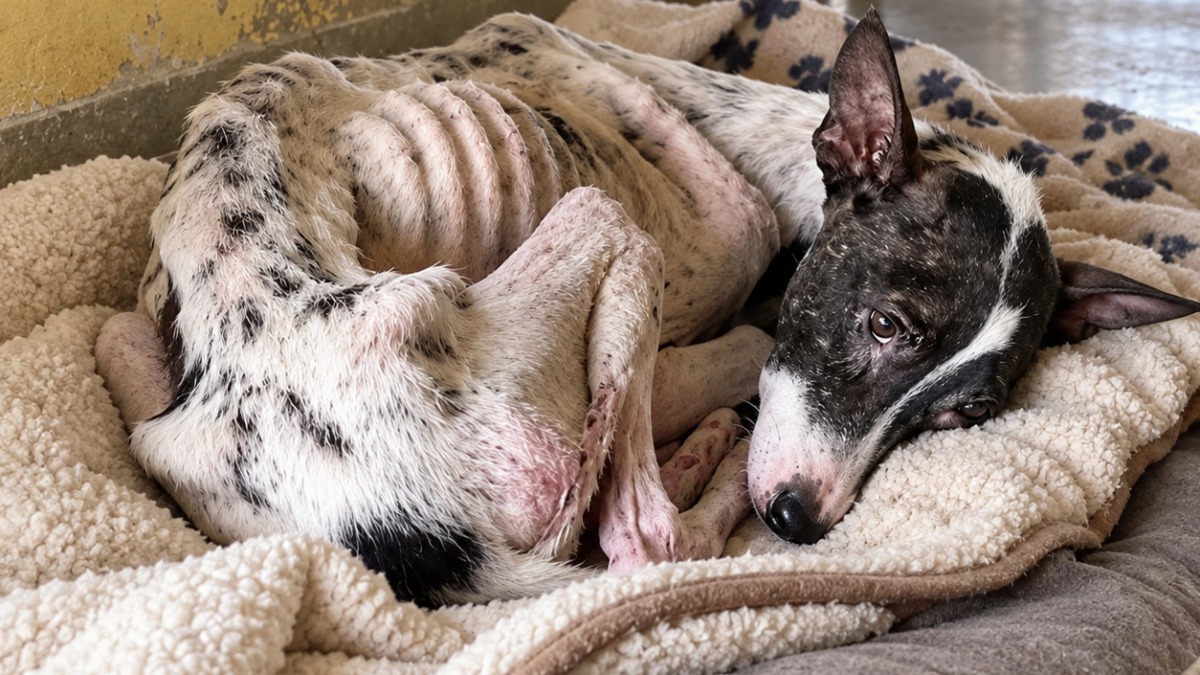
PART 2
She tried to run.
It was not graceful.
It was not fast.
It was barely even a run by normal standards.
But there was nothing normal about what we were watching.
Nia pushed forward with her back legs, took two uneven steps, lurched sideways and nearly collided with a cabinet.
I grabbed her before she fell.
For half a second, the treatment room went silent.
Then Rachel laughed.
Not because it was funny.
Because sometimes laughter is what comes out when you have been carrying fear for too long and your body finally realizes it can release a little of it.
“Oh my God,” she said. “She tried to run.”
I was on my knees with Nia pressed against my chest.
Her heart pounded against my palm.
Her tail moved wildly.
“She did.”
Nia twisted in my arms.
That alone was new.
For nearly two weeks, whenever I picked her up, she had simply accepted being carried.
Now she wanted down.
“Okay,” I whispered. “Okay, troublemaker.”
I lowered her carefully.
Her paws touched the floor.
Her back legs trembled.
She corrected herself.
Rachel crouched about six feet away.
“Nia.”
The puppy looked at her.
“Come here, baby.”
Rachel patted the floor.
Nia moved.
One step.
Another.
Her hips swayed.
Her feet slipped.
But she kept coming.
Five steps.
Six.
Seven.
Then she reached Rachel and collapsed into her lap.
Rachel wrapped both arms around her.
“You’re doing it,” she whispered.
I turned away for a second because my eyes had filled.
I wanted to believe that was the moment everything became easy.
That would have made a cleaner story.
Starving puppy arrives.
People help.
Puppy walks.
Puppy survives.
But recovery does not happen like that.
Not in a straight line.
Not with a perfect upward curve.
That afternoon, Nia ate well.
She spent twenty minutes chewing the edge of her blanket.
She barked once at a cart rolling past her kennel.
By evening, she was exhausted.
The next morning, she barely moved.
I opened her kennel expecting her to stand.
She lifted her head.
That was all.
“Nia?”
Her tail tapped the blanket once.
I crouched.
“Come on.”
Nothing.
My stomach tightened.
I reached inside and touched her shoulder.
She felt warmer than usual.
“Rachel.”
She heard my voice and came immediately.
“What’s wrong?”
“She won’t stand.”
Within minutes, Nia was on the examination table.
The veterinarian checked her temperature, gums, heart and lungs.
More bloodwork.
More waiting.
I stood with my arms folded so tightly across my chest they hurt.
“Did we push her too hard yesterday?”
“No.”
“You’re sure?”
“Yes.”
“She was walking.”
“I know.”
“And now she isn’t.”
He looked at me.
“Recovery isn’t a straight line.”
I almost hated him for saying it.
Not because he was wrong.
Because I knew he was right.
I had used those exact words with adopters before.
I had said them about frightened dogs.
Injured dogs.
Animals recovering from surgery.
Animals learning to trust people again.
But knowing something intellectually does not make it easier when the animal you love is lying in front of you.
“What if this is more than exhaustion?”
“Then we deal with what we find.”
I looked at Nia.
Her eyes followed me.
“What if she was improving and now we’re losing her?”
The veterinarian’s voice softened.
“We don’t know that.”
I hated those words too.
We don’t know.
Rescue work is full of them.
We waited.
Nia slept.
I tried to work.
There were kennels to clean.
Calls to return.
Another dog needed medication.
A foster family needed supplies.
Someone had found a stray hound near the highway.
Life inside a rescue does not stop because your heart is sitting beside one kennel.
Still, every few minutes I walked past Nia.
At noon, she sat up.
At one, she ate half her meal.
By three, she finished it.
Her bloodwork showed no sudden crisis.
No hidden infection.
No catastrophic setback.
She had simply used more energy than her body could comfortably replace.
That evening, the veterinarian found me folding blankets in the laundry room.
“You need to stop measuring her by yesterday.”
I frowned.
“What does that mean?”
“If she walks seven steps on Monday and four steps on Tuesday, Tuesday is not failure.”
I looked toward the hallway.
“She doesn’t know that.”
“No.”
He smiled slightly.
“But you need to.”
That conversation changed the way I watched Nia.
Instead of asking how far she walked, we began recording smaller things.
How long could she stand while eating?
Could she move her weight from one back leg to the other?
Could she turn without falling?
Could she lower herself gently instead of collapsing?
Could she rise without assistance?
At first, the progress looked almost meaningless.
Eleven seconds standing.
Then fourteen.
One controlled turn.
Two.
Three.
But those numbers mattered.
Nia did not suddenly become strong.
She became less weak.
Then slightly less weak again.
Then one day she stood at her bowl through an entire meal.
I watched from across the room.
Rachel came beside me.
“Are you timing her?”
“No.”
“You’re holding a stopwatch.”
“I’m casually observing.”
“You’re timing her.”
I looked down at the screen.
“One minute, twenty-two seconds.”
Rachel smiled.
“Yesterday?”
“Fifty-eight.”
We watched Nia lick the bowl.
She sat down slowly instead of falling.
I looked at Rachel.
“Did you see that?”
“Yes.”
“She controlled it.”
“I saw.”
I wrote it in the notebook anyway.
The notebook became ridiculous.
Nia stood forty-three seconds after waking.
Nia turned left without slipping.
Nia walked from kennel to mat.
Nia lifted rear paw while scratching.
Nia remained upright while drinking.
Most people would have thought we were documenting nothing.
To us, it was proof.
Her body was returning to her.
Then came the food obsession.
At first, every meal had been medical.
Carefully measured.
Slowly introduced.
We needed to restore her nutrition without overwhelming a body that had been deprived for too long.
By the third week, Nia had developed a different opinion about food.
She believed all food belonged to her.
One morning I carried her breakfast down the hall.
I heard a scraping sound behind me.
I turned.
Nia had somehow left her bedding and was stumbling after me.
“Nia!”
She froze.
Her ears went back.
Her expression suggested she understood she had been caught doing something forbidden.
Then she looked at the bowl.
Rachel leaned out of another room.
“What happened?”
“Our patient escaped.”
Rachel looked at Nia.
Then at the bowl.
“I don’t think she considers that escape.”
“What would you call it?”
“Meal delivery supervision.”
Nia took another step toward me.
“Back.”
She took another.
“Nia.”
Another.
Rachel laughed.
“She has goals.”
Food became her first great motivation.
The second was other dogs.
Because she had been raised with five siblings, Nia understood dogs immediately.
People comforted her.
Dogs awakened her.
One of our volunteers owned a calm older female mixed breed named June.
June had a gray muzzle, broad chest and the patient expression of a schoolteacher who had seen every kind of nonsense children could produce.
We introduced them carefully.
The moment June walked into the rehabilitation room, Nia tried to stand.
Her legs slipped.
I reached toward her.
She corrected herself.
June approached slowly.
Nia stretched her neck.
Their noses touched.
Then Nia’s tail started moving so hard that her whole body shook.
June sniffed her ears.
Nia licked June across the muzzle.
June looked at us.
I swear the expression said, “Why have you given me this child?”
Rachel covered her mouth.
“I think we found a therapist.”
She was not entirely joking.
June visited several times over the next week.
We kept every session short.
Five minutes.
Then seven.
Then ten.
Nia followed her.
At first, only a few feet.
Later, across the room.
June never moved too quickly.
If Nia stopped, June stopped.
If Nia sat down, June waited.
Once Nia stumbled in the doorway.
Before I could reach her, June turned around and stood beside her.
Nia pushed herself back up.
June continued.
So did Nia.
Watching them made me think about the rest of the litter.
I had deliberately avoided asking too many questions.
Not because I did not care.
Because I cared enough that I was afraid of the answers.
Nia had come to us so weak that I had begun imagining her siblings in the same condition.
One evening after closing, I opened my laptop and started calling the other organizations.
The first puppy, a male they had named Theo, was thin but gaining weight.
“Walking?” I asked.
“Oh, yes,” the coordinator said. “He stole a glove this morning and made three people chase him.”
I smiled.
“That sounds healthy.”
The second puppy, Poppy, was in foster care.
She had parasites but was responding well.
Another brother was already wrestling with the resident dog in his foster home.
The fourth puppy had gained nearly two pounds.
The fifth was shy but physically stable.
Every puppy had suffered.
None had reached the same level of weakness as Nia.
I should have felt only relief.
Instead, another question appeared.
Why her?
Had she been the smallest?
Had stronger siblings pushed her away from food?
Had she gotten sick earlier?
Had she always reached the scraps last?
We would never know.
That frustrated me.
There is something deeply human about wanting a reason for suffering.
A cause.
A person.
A moment we can point to.
Something we can blame.
But Nia’s story had no villain standing in a doorway.
Her parents had died in an accident.
The litter had been left without what they needed.
Neighbors had tried to help.
The puppies had simply been too young and too many.
Bad things had happened without anyone waking up one morning and deciding to be cruel.
That reality can be harder to accept than anger.
Because anger gives you somewhere to put the pain.
Nia did not care.
She cared about breakfast.
She cared about June.
And then she discovered tennis balls.
Rachel rolled one across the rehabilitation room.
It was old, yellow and softened by years of use.
The ball traveled three feet.
Nia watched.
Rachel rolled it again.
Nia leaned forward.
“Go ahead,” I whispered.
One step.
Then another.
She reached the ball.
She placed one paw on it.
It rolled away.
Nia stared.
For the first time since she arrived, I saw pure puppy outrage.
She went after it.
Five steps.
Six.
She put her mouth around the ball.
Rachel clapped.
Nia dropped it.
It rolled again.
She chased it.
From that day forward, rehabilitation stopped feeling entirely like rehabilitation.
Some of it became play.
We still had to control the sessions.
Nia had no understanding of moderation.
A puppy who had spent weeks too weak to move had no interest in conserving energy once she discovered movement could be fun.
She started protesting when I picked her up.
Her legs would bicycle through the air.
“Put me down,” Rachel translated.
“I know.”
“I have important business.”
“I know.”
“I need to destroy that towel.”
“Nia.”
The puppy barked.
We both froze.
It was the first proper bark we had heard.
Nia barked again.
Sharp.
Demanding.
Rachel’s eyes widened.
“Was that—”
“Yes.”
Nia barked a third time.
I lowered her.
She waddled directly to the tennis ball.
Rachel laughed.
“We created a monster.”
“That was apparently the treatment plan.”
Weight began returning.
Not dramatically.
A few ounces.
Then more.
Her hip bones became less severe.
Her ribs were still visible but no longer seemed to push through the skin.
Her coat softened.
Her eyes changed too.
That was harder to measure.
When Nia arrived, her eyes followed whatever happened around her, but her body remained still.
Later, curiosity returned.
A drawer opened?
Nia wanted to see inside.
A mop moved?
Nia wanted to chase it.
Someone tied a shoelace?
Nia wanted the shoelace.
One morning I entered the treatment room and stopped.
Paper towels covered the floor.
Rachel sat in the middle of the mess.
Nia had a strip of paper hanging from her mouth.
I stared.
“What happened?”
Rachel pointed at the puppy.
“Ask her.”
“Nia.”
Her tail wagged.
“Did you do this?”
She grabbed another strip.
Rachel laughed so hard she leaned against the cabinet.
I should have been annoyed.
Instead, I took a picture.
Three weeks earlier, Nia had lacked enough strength to stand.
Now she had enough strength to commit property damage.
It was the best mess I had ever seen.
Her medical plan remained strict.
Short walks.
Soft surfaces.
Controlled balance exercises.
No jumping.
No stairs.
No rough wrestling.
Nia rejected most of those policies.
Especially the last one.
She desperately wanted June to wrestle.
June did not.
Nia would drop into a play bow.
Her front legs stretched out.
Her back end rose.
She barked.
June looked away.
Nia hopped sideways.
June sighed.
Nia gently mouthed June’s ear.
June moved three feet away.
Nia followed.
One afternoon, June finally gave in.
The older dog lowered her front half.
Her tail wagged.
Nia froze.
Then launched forward.
She traveled maybe eighteen inches before rolling onto her side.
I gasped.
Before I could move, she sprang up.
June tapped her with one paw.
Nia spun.
Rachel grabbed my arm.
“She got up.”
“I saw.”
“No, she got up without thinking.”
That mattered.
Until then, almost every movement had been deliberate.
Stand.
Balance.
Step.
Pause.
Correct.
Rest.
Normal puppies do not calculate movement.
They simply move.
For the first time, Nia had fallen and risen instinctively.
She was starting to trust her own legs.
A few days later, we moved her into a larger kennel.
I expected her to love it.
She did not.
She stood in the middle, looking uncertain.
The old kennel had been small.
Predictable.
Her bed touched one wall.
Water was close.
Everything was within a few steps.
The larger space gave her room.
And somehow room frightened her.
I sat inside.
“It’s okay.”
She leaned against my knee.
That moment reminded me that physical recovery was only part of the story.
Nia had lost more than weight.
She had lost her parents.
Her siblings had been separated.
The place where she had been born was gone.
Then even the kennel where she had begun feeling safe changed.
I stayed until she lay down.
That evening, another thought I had been avoiding finally became impossible to ignore.
What happened when Nia recovered?
We were a rescue.
Dogs did not stay forever.
We treated them.
Fostered them.
Found homes.
That was the job.
Save them.
Heal them.
Let them leave.
I knew that.
I had done it many times.
Yet the thought of someone taking Nia made something tighten inside my chest.
The next morning, Rachel found me beside the kennel.
“You’re going to have a problem.”
“What problem?”
“You’re attached.”
“I get attached to every dog.”
“No.”
She pointed.
“You’re attached attached.”
“She isn’t ready for adoption.”
“I didn’t say she was.”
“She needs more rehabilitation.”
“I agree.”
“We don’t know if she’ll have long-term weakness.”
“Correct.”
“So there is nothing to discuss.”
Rachel smiled.
“That sounded very convincing.”
Nia sneezed.
We both looked at her.
Rachel leaned toward me.
“Extremely convincing.”
I ignored her.
For now, adoption could wait.
Nia still had work to do.
At the beginning of her fourth week, the veterinarian decided she was ready for controlled outdoor play.
Our yard was simple.
Grass.
A young maple tree.
Two benches.
A plastic water tub.
Chain-link fencing.
To Nia, it looked enormous.
I carried her through the gate.
She could have walked, but we wanted to save her energy.
I lowered her.
She stood still.
Wind moved across her face.
Leaves rustled.
A truck downshifted somewhere beyond the property.
Nia lifted her nose.
She stepped forward.
Uneven ground was harder than the rehabilitation mat.
Her muscles had to make dozens of tiny corrections.
Four steps.
Pause.
Three more.
Sniff.
June stood about twenty feet away beside Rachel.
Nia saw her.
Her entire face changed.
Ears up.
Mouth open.
Tail moving.
“Nia,” I warned.
She started forward.
Not walking.
Not running.
Something between.
A clumsy bouncing trot.
Five feet.
Ten.
Her back legs almost crossed.
She corrected.
June began moving toward her.
Nia accelerated.
“Nia!”
She ignored me.
For the first time, I heard her paws striking the ground in quick succession.
Then she reached June.
Nia bumped into her shoulder.
June stepped sideways.
Nia spun.
June trotted away.
Nia chased.
They made half a circle.
I stood frozen.
Rachel covered her mouth.
When Nia finally returned, she was panting.
She walked directly into my arms.
Her whole body felt warm.
Alive.
Strong enough to be tired for the right reason.
I pressed my face against her neck.
“You did it.”
She licked my cheek.
Rachel turned away.
I knew she was crying because I was too.
Nia slept most of the afternoon.
The next morning, I opened her kennel with a knot in my stomach.
I expected weakness.
Instead, she stood.
No dramatic setback.
No collapse.
She walked to her bowl.
Ate.
Then picked the empty dish up by the edge and dropped it against the kennel door.
Clang.
I stared at her.
She picked it up.
Clang.
“You cannot possibly be hungry.”
Clang.
“You ate thirty seconds ago.”
Clang.
Rachel shouted from the hallway.
“Your daughter wants room service.”
“She is not my daughter.”
Clang.
Rachel appeared.
“Sure.”
Nia wagged.
I pointed at her.
“This behavior is unacceptable.”
Clang.
That became our new problem.
Nia had learned that noise created attention.
Attention occasionally created food.
Therefore noise was useful.
The puppy who once barely moved now had opinions.
Strong ones.
And I loved every annoying second.
A month after she arrived, we brought two young dogs into the yard.
Milo and Daisy.
Both were gentle and social.
Nia had met them indoors.
That morning, we wanted to see whether she could manage a short group play session.
I gave Rachel instructions as though she had not been present for every stage of recovery.
“If she gets tired, we stop.”
“Yes.”
“If someone gets too rough, we stop.”
“Yes.”
“If she limps—”
“We stop.”
“If she—”
Rachel looked at me.
“I know.”
We opened the gate.
Milo ran toward the tree.
Daisy chased him.
Nia stood beside me.
For a moment, I thought she might stay.
Then Daisy passed.
Nia turned.
Something lit inside her.
She chased.
Not stumbled.
Not shuffled.
Ran.
Her front legs stretched.
Her back legs pushed.
Her ears flew backward.
I forgot everything I was supposed to say.
Nia crossed the yard.
Daisy changed direction.
Nia followed.
Milo joined them.
Three dogs raced across the grass.
Nia was slower.
Her turns were awkward.
Once she tumbled.
Rolled.
Then popped back up.
She did not look at me.
She did not wait for help.
She ran again.
Rachel grabbed my arm.
“Look.”
“I am.”
“No. Really look.”
I understood.
We were not watching therapy anymore.
We were watching a puppy play.
That difference hit me so hard I had to sit down.
I remembered the first day.
The weight of her body in my arms.
Her legs hanging.
The cold examination room.
The veterinarian saying there was no shortcut.
He had been right.
There had been no miracle.
There had been meals.
Dozens.
Then hundreds.
There had been tiny exercises.
Rest.
Blood tests.
Weight checks.
Good mornings.
Bad mornings.
Five seconds.
Eight seconds.
Twelve.
There had been June waiting.
Rachel rolling a tennis ball.
Neighbors refusing to ignore six hungry puppies.
Six rescues saying yes.
Recovery was not one heroic moment.
It was a chain of ordinary people who refused to walk away.
Nia ran toward us.
She failed to stop.
Her body crashed into my legs.
I fell backward into the grass.
Rachel burst out laughing.
Nia climbed onto my chest.
“Oh, now you’re strong.”
She licked my chin.
Milo jumped over my legs.
Daisy stole Rachel’s hat.
Chaos filled the yard.
I had never been happier.
Later, the veterinarian examined Nia.
He watched her walk down the hall.
Then back.
He checked her knees.
Hips.
Muscle tone.
Reflexes.
“Well?”
I asked too quickly.
He smiled.
“She’s doing extremely well.”
“Extremely?”
“Yes.”
“What does that mean?”
“It means I don’t expect what happened early in her life to define what happens next.”
I looked down.
Nia was chewing my shoelace.
“Can she be adopted?”
The question surprised me.
The veterinarian noticed.
“Soon.”
“How soon?”
“A couple of weeks if progress continues.”
I nodded.
My stomach sank.
He studied me.
“That’s good news.”
“I know.”
“You don’t look like someone hearing good news.”
“I’m fine.”
He smiled.
“Of course.”
The entire purpose of rescue is to reach the day an animal no longer needs rescuing.
I understood that.
It did not make the day easier.
That night, I sat inside Nia’s kennel.
She climbed into my lap.
She was heavier now.
Enough that my leg went numb.
“You remember when you weighed nothing?”
She chewed my sleeve.
“I carried you everywhere.”
She tugged harder.
“And now you’re destroying clothing.”
She rolled onto her back.
I rubbed her stomach.
Her ribs were barely visible now.
“You’re going to leave someday.”
Her tail slowed.
She did not understand.
Maybe that made it easier.
“You’re going to get a family.”
She licked my wrist.
“And I’m going to be happy.”
I paused.
“Eventually.”
The next week, something happened that none of us expected.
We arranged a group call between the rescues caring for the six siblings.
It started as a practical meeting.
Vaccinations.
Medical histories.
Weight.
Behavior.
Any signs of inherited problems.
But then one coordinator turned her camera toward Theo.
He looked enormous.
“Well,” I said, “somebody has been eating.”
His foster mother laughed.
“He thinks starvation is always five minutes away.”
The words landed harder than she intended.
We all became quiet for a moment.
Then Theo grabbed a sock and ran out of frame.
Everyone laughed.
Poppy appeared next.
She sprawled across a couch.
Another brother tried to climb onto a volunteer’s lap.
One by one, the six puppies appeared.
Alive.
Healthy.
Changing.
Then I turned my phone toward Nia.
“She was the roughest medically.”
Nia stood beside my chair.
A bark came through the speaker.
Her ears lifted.
Another puppy barked.
Nia stepped closer.
Theo barked again.
Nia answered.
Once.
Sharp.
Another puppy joined.
Then another.
Within seconds, six puppies separated by miles were barking into phones.
Every human on the call laughed.
Nia wagged so hard she almost fell.
I wondered whether she remembered them.
Maybe.
Maybe not.
Maybe the sounds only interested her.
It did not matter.
All six were alive.
Every one.
That neighbor’s call had mattered.
Every rescue saying yes mattered.
Every bowl of food left outside mattered.
Every person who had done one small thing mattered.
Sometimes survival is separated from tragedy by one person deciding, “This is not somebody else’s problem.”
When the call ended, I sat quietly.
Rachel noticed.
“You okay?”
“All six.”
“I know.”
“They made it.”
She nodded.
“We don’t always get that.”
“No.”
“So enjoy it.”
Nia had fallen asleep with one paw inside her water bowl.
“I think she’s enjoying enough for everybody.”
Two days later, Nia received her first adoption application.
I hated the family immediately.
That was unfair.
Completely unfair.
But I did.
They sounded perfect.
Fenced yard.
One adult dog.
Someone worked from home.
Excellent veterinary history.
Experience with rescues.
They had read every line of Nia’s medical history.
I stared at the application.
Rachel leaned over my shoulder.
“They look good.”
“I see a concern.”
“Where?”
“They live forty minutes away.”
Rachel stared.
“That is not a concern.”
“In traffic, it could be an hour.”
“You’re inventing problems.”
“I’m reviewing.”
“You’re trying to fail them.”
“I am not.”
Rachel took the paper.
“Their previous dog lived to sixteen.”
“Genetics.”
“They treated him for cancer.”
“Financial irresponsibility.”
Rachel lowered the page.
“You need professional help.”
“I know.”
Their names were Erin and Luke.
Their dog was a seven-year-old retriever mix named Cooper.
We scheduled a meeting.
They arrived ten minutes early.
Another point against them, according to the irrational part of my brain.
People who arrived early were suspiciously organized.
Erin carried a folder.
“I brought Cooper’s records.”
Of course she did.
Luke held a bag.
“We brought treats, but we won’t give Nia anything without asking.”
I disliked them even more.
They were behaving exactly like responsible adopters.
Nia was sleeping.
I did not wake her.
“She needs rest.”
“Of course,” Erin said.
“We can wait.”
They sat on the floor.
That bothered me too.
They did not hover.
Did not call her repeatedly.
Did not force interaction.
They waited.
After a few minutes, Nia opened her eyes.
She saw them.
Sat up.
Erin smiled.
“Hi, Nia.”
The puppy stared.
Luke looked at me.
“Should we stay still?”
“Yes.”
Nia stood.
Walked toward them.
Sniffed Erin’s shoe.
Then Luke’s.
Returned to Erin.
Erin held out the back of her fingers.
Nia sniffed.
Licked.
Then climbed directly into her lap.
Traitor.
Erin’s eyes filled.
“Oh.”
I looked away.
Luke smiled.
“I think you were selected.”
“No.”
Both looked at me.
I cleared my throat.
“I mean, she does that sometimes.”
She absolutely did not.
Rachel stood behind the desk trying not to laugh.
Then we brought Cooper inside.
Calm.
Polite.
Annoyingly perfect.
Nia approached.
He sniffed her.
She tried to crawl over his front leg.
Cooper looked at Luke with the expression of a dog who had just realized a life-changing decision was being made without his consent.
Luke laughed.
“You wanted a sister.”
Cooper clearly had not.
The meeting went beautifully.
Erin asked the right questions.
“How much exercise?”
“What signs of fatigue?”
“Should we keep rugs on smooth floors?”
“How often should she be checked?”
“Would swimming eventually help?”
“What food is she used to?”
They never asked, “When will she be normal?”
They asked, “How do we help her continue?”
That difference mattered.
Then Erin surprised me.
“Would you want updates?”
I looked at her.
“What?”
“If we’re approved.”
She stroked Nia’s back.
“She obviously loves you.”
I swallowed.
“You don’t have to send anything.”
“I know.”
She looked down.
“But somebody carried her through the worst part.”
“A lot of people.”
“Then a lot of people deserve to know she’s okay.”
That was when I stopped looking for reasons to dislike her.
We completed every step.
No shortcuts.
Home check.
Veterinary references.
Adoption counseling.
Everything.
A week later, they were approved.
Nia was going home.
The morning of the adoption, I arrived before sunrise.
There was plenty of work.
That was what I told myself.
The truth was simpler.
I wanted time alone with her.
The kennels were quiet.
Nia heard my keys.
She stood.
I opened the door.
She walked out immediately.
No shaking.
No hesitation.
I sat.
She climbed into my lap.
“You know what today is?”
She chewed my zipper.
“I’ll take that as a no.”
I ran my hand over her back.
“You’re leaving.”
She released the zipper.
“You get a yard.”
Tail wag.
“A brother.”
Faster.
“People who arrive early to everything.”
She licked my nose.
I laughed.
Then I cried.
No warning.
One moment laughter.
The next, tears.
Nia stared at me.
“Don’t.”
She tilted her head.
“Do not be sweet.”
She licked my face.
“Seriously.”
Another lick.
I pulled her close.
For several minutes, I allowed myself to remember the first version of Nia.
The puppy who could not stand.
Not because I wanted to make the morning sad.
Because I needed to understand what leaving meant.
Leaving meant we had succeeded.
At ten, Erin and Luke arrived.
Early.
Of course.
Cooper waited in the car.
Erin had purchased the exact food Nia was eating.
Same style of bed.
Recommended harness.
Rugs for slick floors.
Foam steps for the couch.
Rachel whispered, “You can’t reject them.”
“I know.”
“They bought orthopedic foam.”
“I see it.”
“You lost.”
“This was not a competition.”
“It absolutely was.”
Nia trotted down the hall.
When she saw Erin, she ran the last few feet.
Ran.
I watched automatically.
Stable hips.
Good stride.
No trembling.
My brain still measured her.
Probably always would.
Paperwork finished.
Instructions repeated.
Then repeated again.
Rachel finally took the folder from me.
“They understand.”
“I’m making sure.”
“They understand.”
Erin smiled.
“We’ll call.”
I nodded.
Then there was nothing left.
Luke attached the leash.
Nia walked toward the door.
Halfway there, she stopped.
Turned.
My chest tightened.
“Nia?”
She looked at me.
I crouched.
She pulled back.
Luke loosened the leash.
Nia ran to me.
She jumped against my knees.
Technically, still not encouraged.
I did not care.
I lifted her.
She licked my chin.
I kissed her head.
“You go be a puppy.”
My voice broke.
“That’s your job.”
I lowered her.
She returned to Erin.
The door opened.
Sunlight filled the entrance.
Nia walked outside.
No one carried her.
That mattered more than anything.
I watched her cross the parking lot.
Cooper barked from the car.
Nia accelerated.
Luke laughed.
“Easy!”
Her tail disappeared through the door.
Then they left.
I stood there longer than necessary.
Rachel came beside me.
“You okay?”
“No.”
She nodded.
“Good.”
I looked at her.
“What does that mean?”
“If this part ever stops hurting, we should probably stop doing it.”
For the rest of the day, I expected to hear Nia.
Her bowl banging.
Her bark.
Her claws.
Nothing.
Another dog needed help.
A shepherd mix had arrived with an injured paw.
The work continued.
At 6:14 that evening, my phone buzzed.
A photo.
Nia slept beside Cooper on a huge bed.
Her head rested across his back.
The message read:
SHE ATE DINNER, EXPLORED THE WHOLE YARD, AND PASSED OUT. COOPER IS PRETENDING HE DOESN’T LOVE HER.
I laughed.
Rachel looked up.
“Nia?”
I showed her.
She smiled.
“Look at that.”
More updates came.
Nia discovered sprinklers.
Nia barked at the vacuum.
Nia stole Luke’s shoe.
Nia dug beside the fence.
Nia slept in Cooper’s bed even though she had her own.
Every offense delighted me.
Then came the video.
Exactly one month after adoption.
Erin wrote:
YOU NEED TO SEE THIS.
The video showed their backyard.
Cooper stood near the fence.
Nia beside him.
Luke’s voice said, “Ready?”
A ball flew.
Cooper ran.
Nia exploded after him.
No wobble.
No hesitation.
She sprinted.
Her legs stretched.
Her body drove forward.
She passed Cooper halfway across the yard.
I watched once.
Again.
A third time.
Rachel came over.
“What?”
I handed her the phone.
At the end, Nia grabbed the ball and continued running.
Rachel laughed.
“She’s faster than him.”
“I know.”
“Remember when she couldn’t stand?”
I nodded.
Couldn’t speak.
That evening, I contacted the rescues again.
All six puppies were thriving.
Theo had been adopted by a retired teacher.
Poppy had gone to a family with two dogs.
One brother lived with a teenager who took him hiking.
Another had been adopted by his foster family.
The fifth puppy had found a home with an older couple.
Six puppies.
Six lives.
Six chances.
Months passed.
Nia grew.
Her legs filled out.
Her chest widened.
Her coat became glossy.
At first, whenever Erin sent a photo, I searched for the fragile puppy.
Eventually, I could not find her.
Six months after we first met Nia, Erin called.
“Are you working?”
“Yes.”
“We’re nearby.”
My heart jumped.
“Something wrong?”
“No.”
She laughed.
“That’s why I’m calling.”
Twenty minutes later, a familiar car entered the parking lot.
Cooper stepped out.
Then Nia.
Except she did not look like the puppy I knew.
Taller.
Heavier.
Muscular.
Healthy.
Then she saw me.
Everything changed.
Her body froze.
“Nia?”
She launched.
Erin dropped the leash.
Nia ran across the parking lot.
I barely bent before she hit me.
Her paws landed against my chest.
I fell backward onto the grass.
“Nia!”
She covered my face with kisses.
I laughed until I could barely breathe.
Erin stood crying.
“I think she remembers.”
“Yes.”
I wrapped my arms around her.
“Yes, she does.”
Rachel heard the noise.
She came outside.
Nia saw her.
Immediately abandoned me.
Rachel screamed.
“You remember me!”
We went to the play yard.
June happened to be visiting.
The moment Nia saw her, she stopped.
June stared.
For several seconds, neither moved.
Then Nia dropped into a play bow.
The same posture she had attempted months earlier when her legs could hardly hold her.
June’s tail moved.
Nia barked.
June ran.
Nia chased.
This time she did not fall after eighteen inches.
She flew.
Around the tree.
Past the bench.
Across the grass.
Cooper joined.
Three dogs raced while Erin, Rachel and I stood beside the fence.
I remembered carrying Nia through that gate because walking would have used too much energy.
Now I wondered whether she ever stopped moving.
“She does this every morning,” Erin said.
“Every morning?”
“Sometimes twice.”
I laughed.
“So much for conserving energy.”
“You created this.”
“No.”
Erin smiled.
“She also shreds paper towels.”
I looked at Rachel.
Rachel pointed at me.
“That began on her watch.”
That was Nia’s revenge.
Not revenge against a person.
There was no person to punish.
Her revenge was on hunger.
On weakness.
On every day she had been too tired to move.
Every step starvation had stolen, she took back.
Every game weakness denied her, she played harder.
Every hungry morning was answered by a full bowl.
Every lonely night was answered by sleeping beside Cooper.
Every collapse was answered by another sprint.
Life had taken from her before she understood what she was losing.
Nia answered by living.
Completely.
Loudly.
Messily.
Joyfully.
That afternoon, before Erin left, she handed me an envelope.
“What’s this?”
“Open it later.”
“Why?”
“You’ll cry.”
“I’ve already cried.”
“You’ll cry again.”
She was right.
Inside was a photograph.
Nia stood beside Cooper in the backyard.
Both were muddy.
Nia held a destroyed tennis ball.
On the back Erin had written:
She doesn’t know she was ever supposed to be weak.
I stared at those words for a long time.
That was exactly right.
Malnutrition would always be part of Nia’s history.
But it was no longer her identity.
She did not enter rooms thinking she was the puppy who could not stand.
She entered looking for things to steal.
She did not approach bigger dogs remembering weakness.
She invited them to chase her.
She did not look at the yard and think about rehabilitation.
She ran.
A year after Nia’s rescue, all six siblings were alive and adopted.
We organized a reunion.
Not because we knew whether they would remember each other.
Maybe they would.
Maybe not.
The reunion was for the people too.
Six families drove to a fenced property outside town.
I arrived early with Rachel and June.
Theo came first.
Then Poppy.
Then two brothers.
Then another sister.
Finally Cooper stepped from Erin’s car.
Nia followed.
Six siblings stood scattered across the field.
Nobody knew what would happen.
Theo sniffed.
Poppy barked.
One brother approached another.
Tails moved.
Then Theo ran.
That was enough.
All six chased.
They crossed the field like a wave.
People laughed.
Someone cried.
Probably several people.
I stopped wondering whether the puppies remembered.
It did not matter.
They were together.
Alive.
Running.
Nia came around the far side near the front.
Of course.
She had become absurdly fast.
Erin stood beside me.
“She still does the bowl thing.”
“What bowl thing?”
“Drops it when dinner is late.”
I laughed.
“You encouraged that.”
“She acts like she’s starving.”
We both fell silent.
The word meant something different with Nia.
Erin looked across the field.
“She never will be again.”
I believed her.
The six dogs eventually slowed.
Nia walked toward me.
Panting.
Tongue hanging sideways.
She dropped into the grass beside my leg.
Not because she was too weak to stand.
Because she had spent an hour running.
I placed my hand on her shoulder.
Muscle moved beneath the coat.
Strong.
Solid.
Real.
“You wore yourself out.”
Her tail thumped once.
That tiny sound took me all the way back to the rehabilitation room.
The puppy resting her chin on my shoe.
Five seconds standing.
Eight.
Twelve.
The question Rachel asked that first day.
Is she going to make it?
Back then, I had no answer.
Now I did.
Nia did more than make it.
She became exactly what hunger had almost prevented.
A puppy who grew up.
A dog who ran too fast.
A little sister who stole Cooper’s bed.
A thief of shoes.
A destroyer of paper towels.
A tennis-ball criminal.
A beloved member of a family.
Erin called her.
Nia rose.
Effortlessly.
She ran toward the people waiting for her.
She did not look back.
For a second, that hurt.
Then it didn’t.
Because that was the point.
She no longer needed to look back.
Her life was in front of her.
Months later, another puppy arrived at the rescue.
Different circumstances.
Different story.
He was frightened, thin and unwilling to leave the back corner of his kennel.
I found myself sitting on the floor outside his door.
Rachel came beside me.
“You thinking about Nia?”
“Yes.”
The puppy watched us.
I placed a small treat near the doorway.
He did not move.
“That first week with Nia felt impossible,” I said.
“I remember.”
“I kept waiting for one big sign.”
Rachel nodded.
“There wasn’t one.”
“No.”
There had been tiny signs.
That was what I finally understood.
People love transformation because transformation looks dramatic after the fact.
Before.
After.
Weak.
Strong.
Starving.
Healthy.
Unable to stand.
Running.
But while it is happening, change often looks disappointingly small.
One extra step.
One extra bite.
One less tremble.
A tail moving once.
A puppy choosing to stand for fourteen seconds instead of eleven.
Those are easy things to miss.
Especially if you are waiting for a miracle.
Nia taught me not to wait for miracles.
She taught me to watch the seconds.
The puppy in front of us finally moved.
One paw.
Then another.
He stretched his neck toward the treat.
Rachel smiled.
“There.”
I smiled too.
“Yeah.”
One small thing.
Then another.
That was how lives changed.
Years later, I would still receive updates about Nia.
Some were ordinary.
A photograph of her asleep upside down on a couch.
A muddy paw print on a kitchen floor.
A birthday hat she clearly hated.
A video of her stealing Cooper’s toy.
One winter, Erin sent a clip of Nia seeing snow for the first time.
She stepped onto the porch.
Stopped.
Sniffed.
Touched one paw to the snow.
Jumped backward.
Then barked at it.
Luke laughed behind the camera.
Nia charged into the yard.
Within seconds, she was running in circles.
I watched the video three times.
Not because anything dramatic happened.
Because ordinary had become precious.
The greatest thing about Nia’s recovery was not that she survived.
It was that eventually, survival stopped being the center of her life.
She had birthdays.
Favorite toys.
Bad habits.
A preferred spot on the couch.
A brother she annoyed.
People she loved.
She developed opinions about rain.
Hated nail trims.
Loved peanut-butter treats.
Refused to walk past the kitchen without checking whether something edible had fallen.
She became normal.
Beautifully normal.
That was the victory.
One spring, Erin invited several of us to Nia’s house.
Not for a medical reason.
Not for an adoption anniversary.
Just a backyard gathering.
I almost declined.
Rescue work was busy.
There was always another intake.
Another call.
Another dog.
Then I realized something.
If we never stopped to see what happened after rescue, we would remember only suffering.
So I went.
Nia met me at the gate.
She did not tackle me this time.
She had matured.
A little.
She ran three circles around me instead.
Then jumped.
So perhaps not that much.
Cooper walked over.
Older now.
Gray beginning around his muzzle.
Nia bumped him with her shoulder.
He tolerated it.
Erin handed me a drink.
“She still thinks he belongs to her.”
“He probably does.”
We sat outside while the dogs moved through the yard.
Nothing extraordinary happened.
And that became one of my favorite memories.
Nia lay in the sun.
Got up.
Drank water.
Barked at a bird.
Stole a toy.
Chased Cooper.
Came back.
Slept.
There was no medical equipment.
No towels supporting her abdomen.
No weight chart.
No stopwatch.
Nobody counted steps.
Nobody watched her gums.
Nobody worried about whether she had enough energy to stand through dinner.
She was simply there.
Alive.
Comfortable.
Loved.
At one point she stretched across the grass.
I noticed the position.
Both back legs extended straight behind her.
A normal puppy stretch.
I laughed.
Erin looked over.
“What?”
“Nothing.”
But it was not nothing.
The first time I met Nia, those legs could barely support her.
Now she stretched them without thought.
Sometimes healing becomes so complete that the thing you once prayed for becomes invisible.
That may be the best kind.
Before I left, Nia followed me to the gate.
I crouched.
“Be good.”
Erin laughed from the porch.
“That’s ambitious.”
Nia licked my hand.
“You know,” I whispered, “you caused a lot of trouble.”
Her tail moved.
“I spent weeks trying to make you strong.”
She sat.
“And then you used that strength against all of us.”
She sneezed.
I kissed her forehead.
“Worth it.”
Driving home, I thought about her parents.
I had never seen them.
Never known their names.
We knew only that they had died.
For a long time, that part of the story had made me sad.
Six puppies suddenly alone.
But that evening I thought about it differently.
Whatever those adult dogs had given the litter before the accident had helped keep them alive long enough for the neighbors to notice.
Maybe they had taught them where to stay.
Maybe they had kept them together.
Maybe none of that was conscious.
Dogs do not plan legacies.
Still, six puppies survived long enough for help to arrive.
That mattered.
The next morning, I found the original intake form.
I had not looked at it in years.
Under condition, someone had written:
SEVERE MALNUTRITION. EXTREME MUSCLE LOSS. UNABLE TO STAND WITHOUT SUPPORT.
I read the sentence twice.
Then I looked at a recent photograph Erin had sent.
Nia standing on a hiking trail.
Chest forward.
Muscular legs.
Muddy paws.
Tongue out.
The contrast was almost impossible.
I thought about the word unable.
Unable to stand.
At the time it had described the truth.
But truths can be temporary.
That became another thing Nia taught me.
A condition is not always an identity.
Unable today does not always mean unable tomorrow.
Weak today does not always mean weak forever.
Afraid today does not always mean broken.
The difficult part is surviving long enough for tomorrow to become different.
And sometimes surviving requires help.
Nia did not save herself.
That matters too.
We love stories about strength.
We love saying someone fought.
Refused to quit.
Had the will to live.
There is truth in that.
Nia participated in her recovery every day.
But determination alone would not have fed her.
Courage would not have replaced nutrients.
Willpower would not have rebuilt lost muscle.
She needed people.
She needed medicine.
Food.
Safety.
Time.
A veterinarian.
Volunteers.
Other rescues.
An older dog named June.
A family willing to continue the work.
There was no shame in needing help.
Her strength was not diminished because someone carried her first.
In fact, that may be the part I remember most.
I carried Nia because she could not walk.
Later, she walked beside me.
Then she ran away from me toward her family.
That is what help is supposed to do.
Not make someone dependent forever.
Give them enough support that one day they no longer need your arms beneath them.
Another year passed.
Cooper grew older.
Nia grew calmer.
Slightly.
Erin called one evening.
My first thought was that something had happened to Nia.
That fear never completely left.
“Everything okay?”
“Yes.”
Then she hesitated.
“It’s Cooper.”
He had developed arthritis.
Nothing catastrophic.
But age had begun changing him.
Slower mornings.
Stiffness.
Less interest in long runs.
I listened as Erin described the new routine.
Medication.
Shorter walks.
Rugs.
A ramp.
All the things they had once prepared for Nia.
Then Erin laughed softly.
“You know what’s strange?”
“What?”
“Nia waits for him.”
I smiled before she explained.
“She used to fly out the door. Now she goes down the ramp, turns around and waits until Cooper gets outside.”
I closed my eyes.
June.
I thought immediately of June.
The older dog who had once walked slowly so Nia could follow.
Now Nia was slowing down for Cooper.
Erin continued.
“If he stops on walks, she stops.”
I swallowed.
“Dogs remember kindness in strange ways.”
“You think she remembers June?”
“I don’t know.”
I truly did not.
But I liked the thought.
Maybe Nia was simply reading Cooper’s body.
Maybe she understood weakness because she had once lived inside it.
Maybe no memory was necessary.
Compassion can be instinctive.
One afternoon, Erin sent a video.
Cooper moved slowly across the yard.
Nia walked beside him.
Not running.
Not bouncing.
Matching him.
When he stopped, she stopped.
He lowered himself onto the grass.
Nia lay beside him.
I watched the clip and remembered June standing in the doorway years earlier, refusing to leave Nia behind.
What had once been given to Nia was now being given by her.
That felt like a kind of circle.
Cooper lived comfortably for several more years.
When his health finally declined, Erin called again.
This time her voice told me before the words did.
The family had made the difficult decision to say goodbye.
Nia stayed beside Cooper until the end.
Afterward, she searched the house.
His bed.
The hallway.
The backyard.
Erin said she seemed quieter.
I drove over the next weekend.
Nia greeted me but did not run circles.
She leaned against my leg.
I sat on the floor.
She climbed partly into my lap despite being far too large.
“You miss him.”
Her head rested against me.
There was no way to explain death to her.
No way to tell her Cooper had been old and loved and safe.
No way to tell her grief was the price of having someone worth missing.
So I stayed.
That was all.
Just like years earlier.
Sometimes presence is the only thing you can offer.
A few weeks passed.
Nia slowly returned to herself.
She began carrying toys again.
Barked at delivery trucks.
Started sleeping on Cooper’s old bed.
Erin worried at first.
Then decided maybe the bed smelled like him.
Maybe it felt familiar.
Maybe Nia simply liked the location.
There are many things dogs know that we cannot ask them to explain.
One morning, Erin sent a photograph.
Nia asleep on Cooper’s bed with his old tennis ball beneath her chin.
I cried.
Not because it was tragic.
Because the puppy who once had nothing had lived long enough to love someone and lose them.
That sounds strange.
But it meant she had gotten a life.
Not a rescue story.
A life.
A real one.
With beginnings and endings.
Love and grief.
Breakfast and mud.
Good days.
Hard days.
Nothing is more ordinary.
Nothing is more precious.
Years after her rescue, Nia began getting gray around the muzzle herself.
That felt impossible.
In my mind, she remained the puppy with shaking legs.
But photographs told the truth.
White hairs appeared.
Her face softened.
She still ran.
Just less far.
Still destroyed toys.
Just more slowly.
Erin once sent me a picture of Nia lying beside a new puppy.
I stared at it.
The younger dog was sprawled partly across Nia.
Nia’s expression looked exactly like June’s had all those years before.
Patient.
Tired.
Slightly offended.
I called immediately.
“You got another dog?”
“We fostered one.”
“You didn’t tell me.”
“I wanted to surprise you.”
“What’s his story?”
“Nothing as dramatic as Nia. Owner surrender. Young, healthy, too much energy.”
I laughed.
“How does she feel?”
“She pretends to hate him.”
“So she loves him.”
“Completely.”
The puppy’s name was Jasper.
Nia taught him the yard.
Where water was.
Which bed she considered hers.
Which toys he could have.
Almost none.
When Jasper played too rough, Nia corrected him.
When he became frightened by thunder, Nia stayed beside him.
One night, Erin sent another message.
YOU’RE GOING TO LOVE THIS.
The video showed Jasper hesitating at the top of three porch steps.
He had slipped earlier in the week and become afraid.
Nia stood at the bottom.
She walked up.
Then down.
Looked at him.
Up again.
Down.
Jasper took one step.
Stopped.
Nia waited.
Second step.
Third.
He reached the ground.
Nia immediately walked toward the yard.
Jasper followed.
I watched it again.
June.
Nia.
Jasper.
Maybe kindness really does travel.
Not in some magical way.
In behavior.
In patience.
In what one animal learns from another.
In what one person sees and later repeats.
That is how rescue expands.
One bowl.
One phone call.
One foster home.
One patient dog.
One family.
Then another life is changed.
Many people think rescue stories end at adoption.
They do not.
Adoption is where the rescue begins becoming an ordinary life.
And ordinary life is the goal.
Nia’s story did not end when she left our building.
It kept going.
Through every meal she no longer had to fight for.
Every winter she slept inside.
Every veterinary checkup.
Every stolen shoe.
Every dog she loved.
Every person she trusted.
Every birthday.
Every gray hair.
That was the real transformation.
Not from weak to strong.
From surviving to belonging.
One evening, years after the original rescue, I attended a fundraiser.
A volunteer had created a display with before-and-after photographs.
I had seen hundreds of them.
Dogs with injuries.
Cats recovered from illness.
Animals who had arrived frightened and later found homes.
Then I saw Nia.
The first photograph showed the puppy I remembered.
Thin.
Head low.
Legs weak.
The second showed her as an adult.
Standing in a field.
Healthy.
Alert.
Strong.
People stopped beside the display.
“Oh my God.”
“Is that the same dog?”
“How did she survive?”
I stood a few feet away listening.
One woman touched the edge of the board.
“That must have taken so much work.”
She was right.
But not in the dramatic way people imagined.
Most of Nia’s rescue had looked boring.
Measuring food.
Washing blankets.
Holding a towel under her abdomen.
Writing down seconds.
Driving to appointments.
Cleaning accidents.
Stopping her from overexerting herself.
Rolling a tennis ball.
Answering emails.
Reviewing applications.
Checking references.
Tiny repetitive tasks.
That is where most good things are built.
Not in dramatic moments.
In ordinary effort repeated long enough to become transformation.
A teenager at the fundraiser asked me, “Was she scared?”
“At first?”
“Yeah.”
“Mostly tired.”
“Did she know you were helping?”
I thought about it.
“I don’t know.”
He nodded.
Then asked, “When did you know she would live?”
That question stayed with me.
There was no exact moment.
The first meal?
The first tail thump?
The first independent step?
The first time she ran?
The first adoption photo?
I could not choose.
“I don’t think I knew all at once.”
He looked confused.
“Then how?”
“One day, I realized I had stopped wondering whether she would survive and started worrying about whether she would behave.”
He laughed.
“That sounds good.”
“It was.”
That was the transition.
Fear became annoyance.
Annoyance became affection.
Affection became goodbye.
Goodbye became pride.
Years later, pride became gratitude.
I was grateful I had been there.
Not because I saved Nia alone.
I did not.
I was one link.
But sometimes being one link is enough.
The world often teaches us to value large actions.
Big donations.
Dramatic rescues.
Heroic moments.
Nia taught me to respect small ones.
A neighbor who puts down water.
Someone who makes a phone call.
A shelter that says, “We can take one.”
A veterinarian who offers a plan.
A volunteer who gives seven minutes.
A family that buys rugs.
None of those acts alone look like a miracle.
Together, they become one.
Eventually, Nia became a senior dog.
Erin sent me the first photograph of her gray face with the message:
CAN YOU BELIEVE THIS?
I could not.
The puppy who once nearly ran out of time had grown old.
There are few things more beautiful than an animal who almost died young getting the privilege of aging.
Her walks became shorter.
She slept more.
Jasper grew into a large dog.
Now he waited for her.
The pattern continued.
Nia had once followed June.
Then Cooper slowed for Nia.
Later Nia slowed for Cooper.
Now Jasper slowed for her.
One morning, Erin called.
Her voice was quiet.
“Nia’s having trouble with the back steps.”
My heart tightened.
Old fear returned instantly.
Legs.
Always the legs.
But this was different.
Age.
Arthritis.
Time.
The veterinarian prescribed medication.
They added another ramp.
More rugs.
Erin laughed sadly.
“We’re right back where we started.”
“No.”
She went quiet.
“What?”
“You’re not back where you started.”
I meant it.
The first time Nia needed help walking, she was a starving puppy who had almost no life behind her.
Now she was an old dog with an entire life behind her.
Those were not the same.
One was tragedy interrupted.
The other was time doing what time eventually does.
Nia still had good days.
On one of them, Erin drove her to see me.
She walked slowly across the parking lot.
I crouched.
She reached me.
Pressed her head against my chest.
Her muzzle was nearly white.
“You’re old.”
She wagged.
“That wasn’t permission.”
She licked my chin.
Same place.
Same gesture.
Years disappeared.
For a moment, she was the puppy again.
Then she stepped back.
Stable enough.
Slow.
Her eyes still bright.
We sat outside.
I gave her a tennis ball.
She sniffed it.
Looked at me.
Then lay down beside it.
“Really?”
Erin laughed.
“She’s retired.”
“From tennis?”
“From unnecessary effort.”
Nia rested her chin on my shoe.
I froze.
The exact posture.
The rehabilitation room.
The exhaustion.
My tears.
You don’t know how to quit, do you?
Her tail thumped once.
I reached down.
“You still remember that trick.”
Of course she probably did not remember the moment the way I did.
But I did.
And maybe memory only needs one keeper.
Before they left, Erin hugged me.
“I don’t think we ever thanked you enough.”
“You did.”
“No.”
She looked at Nia.
“You gave us her.”
I shook my head.
“No. A lot of people did.”
Then I corrected myself.
“And she gave herself.”
Erin smiled.
“That sounds like you.”
Nia slowly stood.
Walked toward the car.
No one carried her.
Not yet.
I watched.
Again.
The first departure replayed inside me.
Sunlight.
Parking lot.
Little legs.
Run toward Cooper.
Now the steps were slower.
But they were hers.
That was enough.
A few months later, Nia’s health declined more quickly.
Age finally began winning arguments her body had spent years refusing to lose.
She still ate.
Still enjoyed affection.
Still had good mornings.
But the difficult days became more common.
Erin kept me updated.
We talked about quality of life.
Pain.
Mobility.
Joy.
The hardest questions.
There is a cruelty in loving animals.
Their lives are short enough that if we are lucky, we outlive them.
People sometimes say they could never adopt again because saying goodbye hurts too much.
I understand.
But Nia had taught me the opposite.
The pain at the end did not cancel the years before it.
If anything, the grief measured what those years had been worth.
On Nia’s final morning, Erin called me.
“You should come.”
I did.
The house was quiet.
Jasper lay near the couch.
Nia rested on a thick bed.
Sunlight touched her face.
I sat beside her.
Her eyes opened.
Her tail moved once.
That thump.
Always that thump.
“Hey, sweetheart.”
My voice broke.
I had used those words the first day.
Easy, sweetheart.
I touched her shoulder.
The muscles were softer now.
Age had taken them gradually.
But this time I was not angry.
Sad.
Devastated.
But not angry.
Nia had used those muscles well.
She had run.
Chased.
Jumped.
Dug.
Played.
Walked beside Cooper.
Taught Jasper.
Those legs had served her for years.
Erin sat on the other side.
“She had breakfast.”
“Of course.”
“Ate all of it.”
“Of course.”
We both laughed through tears.
Nia looked between us.
The veterinarian came to the house.
Everything was gentle.
No fear.
No rush.
Jasper came close.
Sniffed her.
Lay down.
I placed my hand beneath Nia’s chin.
Not holding her up.
Just touching.
Erin whispered, “She changed my life.”
I nodded.
“Mine too.”
The veterinarian gave the medication.
Nia relaxed.
Her breathing slowed.
Her head became heavier against my hand.
I remembered lifting that same head years earlier.
So light.
So tired.
I remembered the question.
Is she going to make it?
Yes.
She had.
She had made it all the way here.
Through puppyhood.
Adoption.
Muddy yards.
Cooper.
Jasper.
Birthdays.
Snow.
Gray hair.
Old age.
That was making it.
Not avoiding death forever.
Living fully before it came.
Nia’s last breath was quiet.
Erin cried into her fur.
I sat with my hand still beneath her chin.
For a long time, none of us moved.
Then Jasper rested his head beside hers.
There are moments language makes smaller.
So we did not talk.
Later, Erin walked me to the door.
On a table near the hallway sat the photograph she had once given me.
Nia and Cooper.
Muddy.
Tennis ball.
I knew what was written on the back.
She doesn’t know she was ever supposed to be weak.
I touched the frame.
Erin followed my eyes.
“She never did.”
“No.”
Outside, the yard was quiet.
I could picture Nia running across it.
Young.
Fast.
Outrunning Cooper.
The image hurt.
But it also made me smile.
A week later, Erin brought something to the rescue.
Nia’s old tennis ball.
Not the original one.
That one had been destroyed years before.
This was one of the last.
Worn.
Soft.
She handed it to me.
“I thought maybe you could keep this.”
I turned it in my hand.
“Are you sure?”
“We kept plenty.”
I laughed.
“Of course you did.”
We placed the ball on a shelf in the rehabilitation room.
Not as a shrine.
Not with a dramatic plaque.
Just there.
New volunteers occasionally asked about it.
I told them.
A puppy came in once too weak to stand.
She learned.
She ran.
She lived.
That was enough.
Months later, another malnourished puppy arrived.
Not as severe.
But weak.
Frightened.
The volunteer working with him was new.
She looked overwhelmed.
“What if he doesn’t improve fast enough?”
I glanced at the tennis ball.
“Don’t look for fast.”
She looked at me.
“Look for one thing better than yesterday.”
“What if there isn’t one?”
“Then look again tomorrow.”
The puppy lifted his head.
His tail moved once.
The volunteer smiled.
I felt something inside me break and heal at the same time.
Nia’s story had not ended after all.
Not really.
It had become part of how we helped the next animal.
Part of how I spoke.
Part of what Rachel taught.
Part of how Erin fostered.
Part of why Jasper grew up patient.
Part of every person who heard that small progress mattered.
That is how animals remain with us.
Not because grief disappears.
Because love changes shape.
Nia stopped needing my hands beneath her body years before she died.
But I carried something from her ever since.
Patience.
Respect for tiny progress.
The knowledge that weakness is not destiny.
The certainty that asking for help can save a life.
And one image above all.
A puppy standing in a doorway.
Legs trembling.
Everyone silent.
One step.
Then another.
Then trying to run before she was ready.
That was Nia.
Always slightly ahead of what her body could manage.
Always reaching for the next thing.
When I think of her now, I do not picture the final morning.
I do not picture the starving puppy either.
I picture the yard.
Daisy running.
Milo turning.
Nia chasing.
Her ears back.
Her legs stretched.
The exact moment rehabilitation became play.
That was when I first saw the dog she would become.
Free.
Joyful.
Ridiculous.
Fast.
And completely unaware that once, a room full of people had held their breath because she managed seven steps.
Sometimes I still hear the question Rachel whispered the first day.
“Is she going to make it?”
For years, I thought the answer was yes because Nia survived.
Now I know that was only part of it.
She made it into a family.
Into old age.
Into somebody’s favorite memories.
Into the habits of people she taught.
Into the patience another dog offered.
Into every story we told a frightened volunteer.
She made it far beyond the room where we first met her.
Far beyond hunger.
Far beyond weakness.
Far beyond anything that first medical chart predicted.
The puppy who could not hold herself up became the dog who spent her life running toward everything she loved.
And in the end, that was the only revenge she ever needed.
She answered every day hunger stole from her with another day of being loved.
Every step weakness denied her with another mile.
Every lonely night with a warm home.
Every moment her body failed her with years of proving what that body could become.
Nia did not defeat one cruel person.
Her story was bigger than that.
She defeated the future that seemed to be waiting for her.
She was supposed to be the weakest puppy.
The one we worried about most.
The one who needed to be carried.
Instead, she became the one who taught all of us what strength actually looked like.
Not never falling.
Not never needing help.
Not recovering overnight.
Strength looked like a trembling puppy taking one more step.
Then resting.
Then trying again tomorrow.
And many years later, when I stood alone in the rehabilitation room and looked at that old tennis ball on the shelf, I finally understood why Nia’s story had stayed with me longer than so many others.
It was never really a story about a puppy learning to walk.
It was about what can happen when someone is weak and the world does not abandon them for it.
Nia was carried until she could stand.
Supported until she could walk.
Protected until she could run.
Loved until being loved became the most ordinary thing in her life.
That was the miracle.
Not that she became strong.
That she had enough time, enough food, enough patience and enough people around her to discover she had strength waiting inside her all along.
And whenever a new puppy arrives frightened, hungry or too tired to understand that life can be different, I think about Nia pressing her chin against my shoe.
I think about that single tail thump.
I think about the doorway.
I think about the first ridiculous attempt to run.
Then I kneel down.
I speak softly.
And I say the same words I once said to her.
“Easy, sweetheart.”
Because I know something now that I did not know the morning Nia arrived.
Sometimes the animal lying in front of you is not showing you what they will become.
They are only showing you what they have survived so far.
And those are not the same thing.








