PART 2: SHE WAS THROWN AWAY IN A LANDFILL TO DIE—BUT THE TINY PUPPY THEY CALLED HOPE SURVIVED LONG ENOUGH FOR THE TRUTH TO FIND HER
PART 2
I did not sleep much that night.
Hope remained at the veterinary hospital under constant observation, and I stayed until nearly two in the morning before Elena finally convinced me to go home.
“You sitting beside her isn’t going to change tonight’s bloodwork,” she told me.
“I know.”
“You need sleep.”
“I know.”
“And you’re still not moving.”
“No.”
She gave me the look veterinarians reserve for stubborn rescue volunteers.
Then she pulled up a chair beside mine.
For almost ten minutes, neither of us spoke.
Hope lay inside the temperature-controlled kennel beneath a lightweight blanket.
She was so small that most of the blanket remained empty.
Every few minutes, her eyes opened.
She checked the room.
Then they closed again.
“Do you really think somebody did that to her tail?” I asked.
Elena stared through the kennel door.
“I can’t tell you exactly what happened.”
“But?”
“But the tissue is completely healed.”
I looked at her.
“So it happened a while ago.”
“Yes.”
“Accident?”
“Possible.”
Her hesitation said more than the answer.
“What else?”
“Maya.”
“What else?”
She sighed.
“The end is too clean for the kind of traumatic injury I’d expect from machinery or being caught under debris.”
My stomach turned.
“You think someone removed it.”
“I think it’s possible someone intentionally docked it when she was very young.”
“That isn’t necessarily abuse.”
“No. Plenty of dogs have traditionally had tails docked.”
“But Hope isn’t one of those breeds.”
“Exactly.”
I looked back at the kennel.
Something about the thought made me unexpectedly angry.
It wasn’t simply the tail.
It was everything.
The infections.
The starvation.
The landfill.
The way Hope ducked whenever a hand moved too quickly.
The way she guarded every bite of food as though the world might steal it.
I had spent years in rescue.
I knew better than to build a complete history from behavior alone.
Fear does not come with paperwork explaining its cause.
But Hope’s body was telling us something.
Whatever happened before the landfill had not been gentle.
“Can we find whoever owned her?”
“If she’s chipped.”
We checked.
She wasn’t.
The next morning, I returned at six-thirty.
Hope hadn’t eaten overnight.
My heart sank.
Elena had warned me that malnourished animals sometimes need time before their appetite returns safely. Feeding too aggressively could cause its own complications.
Still, knowing that didn’t make watching easier.
I sat beside her with a teaspoon of soft veterinary food.
“Okay, little girl.”
Her eyes opened.
“We’ve got a deal.”
No reaction.
“You don’t have to trust me.”
One ear shifted.
“But you do have to annoy Dr. Morales by surviving.”
From behind me, Elena said, “I heard that.”
Hope’s eyes flicked toward her.
I smiled.
“See? Already working.”
I put a tiny amount of food on my fingertip and held it several inches away.
Hope smelled it.
Then turned her face.
I waited.
Ten minutes.
Fifteen.
Twenty.
Finally, she leaned forward and licked my finger.
It was almost nothing.
But that first lick felt like winning a battle.
“Good girl.”
Another lick.
Then a third.
That was all she would take.
The next feeding was slightly better.
By the third day, Hope ate several spoonfuls from a shallow dish.
She still guarded it.
If someone walked behind her, she stopped eating and hunched over the bowl.
At first, I thought she was afraid someone would steal it.
Then one of the technicians reached toward an empty water dish nearby.
Hope flattened against the floor.
Her little body shook.
The technician immediately pulled back.
“I’m sorry, sweetheart.”
Hope didn’t growl.
That bothered me more than aggression would have.
A dog willing to growl still believes warning someone can change what happens next.
Hope seemed to have learned that warning didn’t matter.
I began sitting near her during every meal.
Not too close.
Just close enough that she could see me.
I never touched the bowl.
Never took anything away.
If she stopped eating, I looked away.
Eventually she began to understand.
My presence no longer meant loss.
On the fourth day, she finished the entire portion.
I texted Chris a photograph of the empty bowl.
He called immediately.
“She ate all of it?”
“Every bite.”
“That’s my girl.”
“You’ve seen her once.”
“Still my girl.”
That became a running argument among the volunteers.
Everyone claimed Hope.
The clinic receptionist claimed her because she bought Hope’s first soft blanket.
Chris claimed her because he had spotted her in the landfill.
Elena claimed her because she had kept her alive through the first forty-eight hours.
One veterinary technician claimed her because Hope peed on her first.
I claimed seniority because I had carried her out.
Hope, meanwhile, recognized none of our claims.
She treated us all with cautious suspicion.
But she was alive.
That was enough.
Her treatment schedule was complicated.
Antibiotics.
Antifungal medication.
Medication for the mange.
Bladder treatment.
Special shampoo once her skin became stable enough to tolerate bathing.
Iron supplementation.
Small high-calorie meals throughout the day.
Fluids.
Repeat bloodwork.
Every intervention had to be balanced against the fact that her body had almost no reserves.
Some mornings looked hopeful.
Others didn’t.
On day six, her temperature rose suddenly.
Elena suspected the gastrointestinal infection was worsening.
Hope became lethargic and stopped eating again.
I arrived that evening to find Elena sitting beside her.
The look on her face terrified me.
“What happened?”
“We changed the antibiotic.”
“Is she getting worse?”
“She had a rough afternoon.”
I knelt beside the kennel.
Hope barely raised her head.
“Hey, baby.”
Nothing.
I reached toward the door, then stopped.
“Can I touch her?”
Elena nodded.
I slid my hand inside.
Hope’s skin was warm.
She didn’t flinch.
At first that seemed encouraging.
Then I realized she was simply too tired.
I spent three hours with my fingers resting beside her paw.
At some point, Hope shifted.
Her paw landed on top of one of my fingers.
She left it there.
It was probably accidental.
I didn’t care.
“Stay,” I whispered.
I wasn’t sure whether I was talking to Hope or begging life itself.
“Just stay.”
She did.
By morning, her fever had begun falling.
By evening, she ate again.
The emotional whiplash of rescue is difficult to explain to anyone who hasn’t experienced it.
You celebrate three bites of food.
Then a blood test frightens you.
You cheer because an animal stands.
Then you cry because standing exhausts them.
You measure progress in grams.
In normal bowel movements.
In ten seconds of sleep without trembling.
Hope’s recovery was made of those tiny victories.
On the ninth day, she rolled onto her side while I scratched beneath her chin.
For the first time, she deliberately exposed her belly.
I froze.
Not because it was dramatic.
Because trust is easy to miss when you’re looking for miracles.
Hope was giving me something far more valuable than a tail wag.
She was making herself vulnerable.
I scratched her chest gently.
Her eyes closed.
“That’s right.”
She sighed.
“You can sleep.”
And she did.
For almost an hour.
The investigation into how she reached the landfill initially went nowhere.
The landfill handled thousands of tons of waste every week.
Dump trucks.
Private contractors.
Municipal collections.
Individuals bringing discarded furniture and construction material.
There were cameras near the main entrance, but the area where Hope had been found was enormous.
We didn’t even know the date she arrived.
A landfill worker named Marcus remembered first seeing her about three weeks before our rescue.
“Could’ve been there longer,” he told me.
“Why didn’t anyone catch her?”
“We tried.”
He looked ashamed.
“She’d disappear beneath things. Pipes, broken pallets, whatever she could find.”
“Did anyone feed her?”
“A few of us left scraps.”
That explained how she had survived.
Not well.
But barely.
Marcus showed me an area near a concrete drainage pipe where workers had sometimes seen Hope sleeping.
Inside we found flattened cardboard.
Plastic wrappers.
An old towel.
Whether someone had put the towel there for her or she dragged it herself, nobody knew.
Then Chris noticed something.
A faded pink object half buried beneath dirt.
He pulled it free.
A collar.
Tiny.
Cheap nylon.
No identification tag.
One section had been chewed through.
I held it in my hand.
“You think it’s hers?”
Marcus nodded.
“I’ve seen that color on her.”
That was the first evidence Hope had belonged to somebody before the landfill.
The collar went to animal control.
A week later, Officer Ben Carter came to the clinic.
He had worked animal welfare cases for fourteen years and possessed the exhausted patience of someone who had heard every possible excuse.
“Collar isn’t much,” he told me.
“No tag.”
“No.”
“Anything else?”
“Maybe.”
He opened his phone.
A landfill camera had captured a small white pickup entering through the commercial drop-off lane approximately one month before Hope was first reported.
Nothing unusual about that.
Except one worker remembered something.
A dog barking from behind the cab.
Ben found the employee and interviewed him.
The worker couldn’t remember the driver’s face.
But he remembered the truck because the tailgate had been painted black while the rest was white.
“That’s it?”
“For now.”
I felt disappointed.
Ben shrugged.
“Cases are built from boring pieces.”
Hope didn’t care about cases.
She was busy learning how to be a puppy.
At two weeks, her skin began changing.
The angry red inflammation faded.
The crusted sores started healing.
Tiny patches of soft fuzz appeared along her shoulders.
The first time I noticed them, I leaned so close Elena laughed.
“Are you inspecting her with your nose?”
“There’s hair.”
“Yes.”
“Actual hair.”
“That is usually how dogs work.”
“She hasn’t had hair.”
Hope turned her head and licked my chin.
Elena smiled.
“That seems new too.”
Hope froze immediately afterward.
As if she surprised herself.
Then she licked me again.
I almost cried.
“Don’t make this weird,” Elena said.
“Too late.”
By week three, Hope discovered toys.
The first was a small stuffed rabbit.
She didn’t know what to do with it.
I placed it on the floor.
She sniffed.
Backed away.
Sniffed again.
Then bit one ear.
The rabbit squeaked.
Hope jumped backward so violently that all four paws left the floor.
Everyone in the treatment room burst out laughing.
Hope stared at us.
Then attacked the rabbit.
That was the first time we saw her play.
She shook it.
Pounced.
Dragged it beneath a chair.
For five beautiful minutes, Hope wasn’t a landfill dog.
She wasn’t a patient.
She wasn’t evidence.
She was simply a puppy.
Afterward, she fell asleep with the rabbit beneath her chin.
I took a picture.
That picture is still one of my favorites.
Not because Hope looked perfect.
She didn’t.
Her skin remained patchy.
Her body was still too thin.
But her face had changed.
She looked young.
The way she should have looked all along.
At the end of the first month, she weighed a little over four pounds.
Double her rescue weight.
Her anemia had improved.
The bladder infection was gone.
The gastrointestinal infection was under control.
Her skin cultures looked better.
Soft fur covered most of her body.
Her personality exploded.
Hope loved chicken.
Hated bananas.
Barked at mops.
Was suspicious of men wearing hats.
Preferred sleeping upside down.
Disliked rain.
And apparently believed every blanket within fifty feet legally belonged to her.
We moved her from the clinic into foster care.
I offered to take her.
Elena objected immediately.
“You already have two dogs.”
“They’re calm.”
“You said that before Tucker ate your sofa.”
“That was one cushion.”
“It was a sectional.”
“He had artistic differences with it.”
Hope came home with me that Friday.
My dogs, Tucker and Daisy, were both older retriever mixes accustomed to foster animals.
We introduced them slowly.
Hope stood behind my ankles.
Tucker sniffed once.
Hope screamed.
Not barked.
Screamed.
Tucker jumped backward and looked personally offended.
“Okay,” I said. “We are going very slowly.”
For three days, Hope watched the other dogs through a baby gate.
She watched them eat.
Drink.
Sleep.
Follow me.
Return when called.
Most importantly, she watched what happened when they made mistakes.
Tucker stole a dish towel.
I took it away and traded him for a treat.
Hope stared.
Daisy knocked over her water.
I wiped it up.
Hope stared.
Nothing terrible happened.
She learned from that.
The first time Hope entered the living room with Tucker, she stayed against the wall.
Tucker ignored her.
Then he lay down.
Hope took one step toward him.
Stopped.
Another.
Eventually she approached his tail.
Sniffed.
Tucker lifted his head.
Hope retreated instantly.
Tucker put his head back down.
Ten minutes later, Hope curled against his back.
Tucker looked at me with an expression that clearly said this was not part of our agreement.
“Congratulations,” I whispered. “You’re a pillow.”
Within a week, they were inseparable.
Tucker taught Hope stairs.
Daisy taught her to wait beside the kitchen whenever I chopped vegetables because something usually fell.
Hope taught both of them that a six-pound dog could occupy ninety percent of a queen-sized bed.
Life became wonderfully ordinary.
Then Ben called.
“Remember the white pickup?”
My stomach tightened.
“Yes.”
“We found it.”
The camera footage wasn’t clear enough to read the license plate.
But one unusual detail was visible.
A large dent above the driver’s-side rear wheel and a black replacement tailgate.
Ben contacted several waste contractors who regularly used the landfill.
One supervisor recognized the truck.
It belonged to a small property-cleanout business called QuickClear Hauling.
The owner, a man named Darren Pike, initially said multiple employees drove it.
Then Ben checked their work records.
Only one crew had used that truck on the date in question.
Darren himself.
“Did he admit seeing Hope?” I asked.
“No.”
“What did he say?”
“That he doesn’t remember any dog.”
“Convenient.”
“Yes.”
“But that’s not proof.”
“No.”
I hated how calm Ben always sounded.
“Then why are you telling me?”
“Because we found something else.”
He had interviewed Darren’s former girlfriend, Melissa Grant.
When Ben showed her Hope’s photograph, she recognized the puppy.
Immediately.
Her name had not been Hope.
It had been Pixie.
Melissa had lived with Darren briefly.
He had purchased the puppy from a private seller.
Why?
Because his ten-year-old niece had wanted a dog when visiting his house.
But the novelty faded quickly.
Hope developed skin problems.
She scratched.
She needed veterinary treatment.
Darren complained about the smell.
Melissa said she begged him to take the puppy to a veterinarian.
He refused.
Then the puppy began having accidents in the house.
One morning Melissa came home and Pixie was gone.
Darren told her he had given the dog to someone.
“Did she believe him?” I asked.
“Not really.”
“Why didn’t she report it?”
“She had no proof. They broke up soon afterward.”
I sat in silence.
Hope was asleep beside Tucker’s front paws.
“So he dumped her.”
“That’s what we’re investigating.”
“He drove into a landfill with her.”
“We have evidence his truck entered.”
“His girlfriend identifies Hope.”
“Former girlfriend.”
“Ben.”
“I know.”
My voice became harder.
“What else do you need?”
“Enough evidence that survives court.”
I understood.
I didn’t like it.
But I understood.
The next break came from something nobody expected.
QuickClear Hauling vehicles used GPS tracking for insurance purposes.
Darren had apparently forgotten.
The company had changed providers, but archived location records still existed.
On the morning in question, his truck remained inside the landfill for twenty-three minutes.
It then stopped near the exact sector where Hope was eventually found.
For approximately six minutes.
Darren’s attorney argued he had been unloading trash.
Of course.
Then Melissa provided text messages.
She had saved them because their breakup had been ugly.
One exchange occurred the evening before Hope disappeared.
Melissa:
**Pixie needs a vet. Her skin is getting worse.**
Darren:
**I’m not paying hundreds for that dog.**
Melissa:
**Then let me take her.**
Darren:
**She isn’t your dog.**
Melissa:
**You can’t just leave her like this.**
Darren:
**I’ll handle it tomorrow.**
The next day, Pixie vanished.
That message chilled me.
**I’ll handle it tomorrow.**
The same morning his truck went to the landfill.
The evidence was referred to prosecutors.
The case moved slowly.
Months.
Hope continued growing.
Her fur became cream-colored with pale brown patches around her ears.
She remained tiny.
Even fully recovered, she would probably never exceed ten or eleven pounds.
Her missing tail gave her a strange little wiggle whenever she became excited.
Instead of wagging, her entire backside moved.
We called it the Hope Dance.
She performed it every morning.
Every meal.
Every time I returned from taking the trash outside for thirty seconds.
At four months after rescue, Hope encountered Darren for the first time since the landfill.
Not intentionally.
There was a preliminary court hearing, and Ben asked me to bring updated photographs and veterinary documentation to the prosecutor’s office.
Hope came because she had a veterinary appointment afterward.
I carried her into the county building.
We were waiting near the security area when the elevator opened.
A man stepped out with an attorney.
Hope changed instantly.
Her body went rigid.
Her ears flattened.
She shoved herself against my chest.
I felt her heart racing.
The man looked at her.
Stopped.
I knew.
I didn’t need an introduction.
Darren.
His attorney touched his elbow.
“Keep walking.”
Darren stared at Hope.
Then at me.
“That’s my dog.”
I tightened my arms around her.
Hope began trembling.
Ben appeared from the hallway.
“Mr. Pike, don’t engage.”
Darren ignored him.
“I paid for her.”
Ben moved between us.
“That’s enough.”
Darren’s voice rose.
“You people took my dog and turned this into some circus.”
I couldn’t stay silent.
“Your dog?”
“Yes.”
“The one you said you didn’t remember?”
His face changed.
That was enough for his attorney.
“Darren. Stop talking.”
But Darren was angry.
And angry people sometimes tell truths their lawyers desperately wish they wouldn’t.
“I didn’t leave her to die.”
The hallway went silent.
His attorney closed his eyes.
Ben said calmly, “Nobody asked you whether you left her to die.”
Darren realized what he had said.
Too late.
“I mean—”
His attorney grabbed his arm.
“We’re leaving.”
They walked away.
Hope remained pressed against me.
I could feel every tremor.
I wasn’t thinking about courtroom strategy.
I wasn’t thinking about admissions.
I was furious because months after her rescue, that man’s voice could still make her body remember fear.
I carried her outside.
We sat in my car for almost twenty minutes.
“You’re okay.”
Hope buried her face beneath my arm.
“He doesn’t get you back.”
That was the only promise she needed.
“He never gets you back.”
The case eventually resulted in Darren pleading guilty to animal abandonment and neglect rather than risking trial on the full evidence prosecutors had assembled.
As part of the disposition, he paid restitution for a significant portion of Hope’s veterinary care, received fines and probation, and was prohibited from owning or possessing animals during the court-ordered restriction period.
People expected me to feel triumphant.
I didn’t.
The day the agreement became final, Ben called.
“It’s done.”
I looked at Hope sleeping upside down on the couch.
“What happens now?”
“For him?”
“No.”
Ben understood.
“For Hope? Legally, she’s clear.”
“Meaning?”
“No ownership claim. No dispute. The rescue can place her permanently.”
I smiled.
“That part I care about.”
There was still one problem.
Hope wasn’t mine.
Not technically.
I was her foster.
And another person had already applied to adopt her.
Her name was Sarah Bennett.
She was a sixty-three-year-old retired elementary school librarian who lived alone in a small yellow house fifteen minutes away.
When the rescue coordinator showed me the application, I became irrationally defensive.
“She has no fenced backyard.”
“She has a secure enclosed patio.”
“Not the same.”
“She walks three miles every morning.”
“Hope hates rain.”
“So does Sarah.”
“She has stairs.”
“Three steps.”
“Those are still stairs.”
The coordinator stared at me.
“Maya.”
“What?”
“You cannot reject every qualified adopter.”
“I don’t.”
“You rejected the Bakers because their kitchen floor was slippery.”
“Hope’s little legs—”
“And the Rogers because they travel twice a year.”
“They travel.”
“And Laura because she has a cat.”
“We don’t know how Hope feels about cats.”
“We tested her with cats.”
I folded my arms.
“I wasn’t there.”
The coordinator smiled.
“You’re foster failing.”
“I am not.”
“You absolutely are.”
I looked at Hope.
She was asleep inside my jacket.
Maybe I was.
But I already had Tucker and Daisy.
Both were seniors.
I fostered constantly.
Keeping every animal was impossible.
And Sarah’s application was exceptional.
So I agreed to the meeting.
Sarah arrived carrying no toys.
No treats.
No excited voice.
She sat on the floor and ignored Hope.
That impressed me immediately.
Hope remained behind my leg.
Sarah talked to me instead.
“Tell me what scares her.”
“Fast hands.”
“Men with hats sometimes.”
“Anything else?”
“Food insecurity. She’s better, but don’t take bowls abruptly.”
Sarah nodded.
“Sleeping?”
“She likes enclosed beds but eventually ends up under blankets.”
“Medical?”
I explained everything.
She asked detailed questions.
Not about how cute Hope was.
Not about whether she was housebroken.
About follow-up skin care.
Potential recurrence of mange.
Diet.
Dental health.
Fear behavior.
Her missing tail.
Then Sarah said something that silenced me.
“I had an old dog named Lucy for sixteen years. The last three weren’t easy. People kept telling me I was kind for caring for her.”
She looked toward Hope.
“I never understood that. She was family. You don’t call it kindness when family becomes inconvenient.”
I thought about Darren.
About the landfill.
About a one-kilogram puppy eating rotten garbage.
Then I looked at Sarah.
Something inside me relaxed.
Hope approached her twenty minutes later.
One step.
Two.
She sniffed Sarah’s shoe.
Sarah didn’t move.
Hope sniffed her hand.
Then climbed carefully into her lap.
I felt my eyes burn.
“Traitor,” I whispered.
Sarah laughed softly.
Hope curled against her.
That was the moment I knew.
Sarah visited six times before the adoption.
We went on walks together.
Hope visited her home.
Met the neighbors.
Explored the enclosed patio.
Discovered Sarah owned an entire basket of fleece blankets.
That probably finalized the decision.
On adoption day, I packed Hope’s favorite rabbit.
The original one had been destroyed months earlier, but we had replaced it with an identical toy.
I included medication.
Medical records.
Her favorite food.
Three blankets.
A ridiculous pink sweater Chris insisted she needed.
And a letter for Sarah containing every strange detail I could think of.
Hope prefers sleeping on the left side of a person.
She hates thunder.
She likes scrambled eggs but only if cooled.
She hides treats beneath cushions.
If she suddenly stops during a walk, pick her up because something scared her.
Do not grab her collar from behind.
She dances when happy.
She may always check that food remains available.
Please leave water in the same place.
Please tell her when you are leaving.
Please come back.
That last sentence nearly broke me.
Sarah read the letter.
Then she hugged me.
“I will.”
Hope stood beside her feet wearing a little harness.
She looked up at me.
I crouched.
“You know what’s happening?”
Hope licked my nose.
“No?”
Another lick.
“Good. Because I’m barely handling it.”
Her little body began wiggling.
The Hope Dance.
I kissed her forehead.
“Go be spoiled.”
Sarah opened the door.
Hope followed her outside.
Halfway to the car, she turned.
For one painful second, she stared at me.
Then she ran back.
I knelt.
She jumped into my arms.
I held her tightly.
“It’s okay.”
Sarah waited.
I whispered into Hope’s ear.
“This is the part where somebody leaves because your life is getting better.”
She licked my cheek.
“And this time, nobody is throwing you away.”
I carried her to Sarah’s car myself.
That evening, Sarah sent me a photograph.
Hope was asleep beneath a white blanket on a couch.
Only her nose was visible.
The message underneath said:
**She ate dinner. Checked every room twice. Now she’s snoring.**
I cried.
Then laughed.
Then cried again.
Over the next year, Hope transformed into the dog nobody at the landfill would have recognized.
Her coat grew thick and soft.
Her skin remained healthy.
She reached nine pounds.
She developed an obsession with sunbeams.
Sarah bought her a tiny set of stairs for the couch.
Hope refused to use them and instead demanded to be lifted like royalty.
Chris said we had created a monster.
Sarah corrected him.
“A princess.”
Every few weeks, Sarah brought Hope to the rescue.
New volunteers couldn’t believe the photographs from her first day.
“That was her?”
“Yes.”
“No way.”
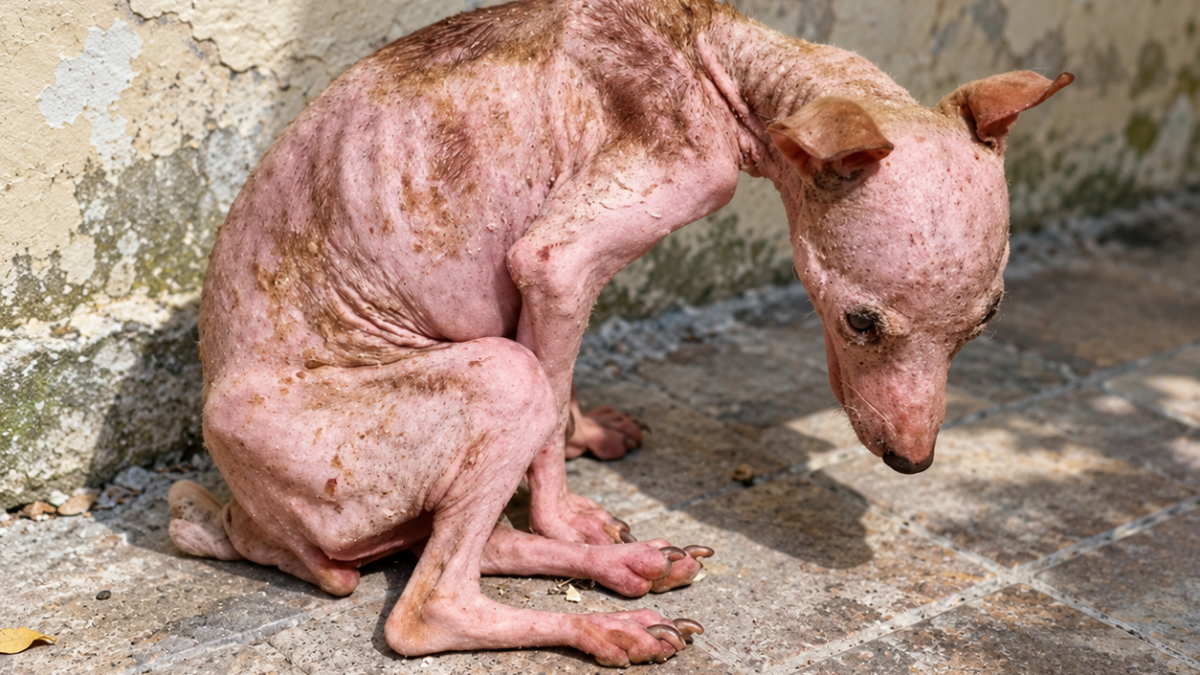
I would show them the picture of Hope standing among garbage.
Nearly hairless.
Tiny.
Eyes hollow with fear.
Then Hope would trot through the room in a clean harness, fur shining, entire body wiggling.
The contrast never became ordinary.
Neither did the truth behind it.
Darren completed the requirements imposed by the court.
I never contacted him.
Never wanted to.
The restitution he paid went toward Hope’s care and then, once her bills were covered, helped other neglected animals through the rescue’s emergency fund.
There was something deeply satisfying about that.
The money a man refused to spend when Hope was sick eventually became money used to save animals anyway.
Not revenge in the dramatic sense.
Something better.
Consequence.
His decision had once said her life wasn’t worth the price of treatment.
The court made him contribute to the care he had avoided.
And Hope survived long enough to prove how wrong that decision had been.
Two years after her rescue, the landfill invited our organization to speak to employees about reporting abandoned animals more quickly.
Marcus was still working there.
He asked Sarah to bring Hope.
We debated whether returning was fair to her.
Elena warned that dogs can associate places with smells and sounds more strongly than humans realize.
So we didn’t take her into the active landfill.
Instead, employees gathered near an administrative building far from the dumping area.
Hope arrived in Sarah’s arms.
Marcus stared.
“That’s not the same dog.”
I laughed.
“Yes, it is.”
He knelt carefully.
Hope approached.
Sniffed his hand.
Then performed the Hope Dance.
Marcus covered his mouth.
“I thought she was going to die out there.”
“So did we.”
He looked at Sarah.
“How is she?”
Sarah smiled.
“Spoiled rotten.”
Marcus nodded.
“Good.”
Before we left, he handed Sarah something.
The faded pink collar we had found near the drainage pipe.
Animal control had released it after the case ended.
Sarah looked at it for a long time.
“You want this?” she asked me.
I did.
And I didn’t.
It represented a life Hope no longer lived.
Eventually, we put it inside a small shadow box at the rescue center.
Beside it was a photograph of Hope today.
Underneath, we placed only her name.
No dramatic slogan.
No description of Darren.
No photographs of wounds.
Just:
**HOPE**
Because that was the part worth carrying forward.
Years passed.
Tucker died peacefully at fifteen.
Daisy followed the next year.
Hope attended both of their final quiet afternoons because she had loved them.
The terrified puppy who once screamed when Tucker sniffed her had eventually slept against his chest whenever she visited.
After he was gone, she searched his favorite room.
Sarah told me Hope returned three times to his old bed.
Animals grieve.
Not always like we do.
But they notice absence.
By then, Hope was no longer the youngest dog in every room.
White hairs began appearing around her muzzle.
The idea seemed impossible.
The one-kilogram landfill puppy was becoming a senior.
One afternoon Sarah and I sat on her porch while Hope slept between us.
“She has arthritis starting in one knee,” Sarah said.
My stomach tightened instinctively.
“She okay?”
“Elena says it’s mild.”
“Medication?”
“Not yet.”
“Supplements?”
“Already started.”
I smiled.
“Of course.”
Sarah scratched Hope’s back.
“She’ll get whatever she needs.”
I believed her.
That sentence meant more to me than she probably understood.
Because years earlier another person had looked at Hope’s illness and seen an expense.
Sarah looked at aging and saw responsibility.
That was the difference between possession and love.
When Hope turned approximately ten, we celebrated with a ridiculous birthday party at the rescue.
Nobody knew her actual birth date.
We chose the anniversary of the day she was found.
Sarah brought a dog-safe cake.
Chris arrived wearing a shirt with Hope’s face printed across it.
Elena threatened to leave immediately.
“You’re jealous,” Chris said.
“Deeply.”
Hope wore a small floral collar.
No hat.
We had standards.
She wandered among volunteers collecting tiny pieces of chicken.
Someone brought out the original intake photograph.
I hadn’t looked closely at it in years.
For a moment, the room disappeared.
I remembered the landfill.
The wind.
The garbage bags.
The smell.
That tiny creature lowering herself over rotten scraps.
I remembered carrying her.
One kilogram.
Almost nothing.
I remembered asking Elena if she would survive.
I looked across the room.
Hope was standing beneath Sarah’s chair waiting for more chicken.
Thick coat.
Bright eyes.
Old now.
But safe.
“Hey,” Elena said quietly.
I looked at her.
“You okay?”
“Yeah.”
She followed my gaze.
“We got lucky.”
I shook my head.
“Hope got stubborn.”
“That too.”
Sarah eventually noticed us staring.
“What?”
“Nothing.”
Hope waddled toward me.
I crouched.
She pushed her forehead against my chest.
Even after all those years, she remembered me.
Maybe not as the woman from the landfill.
Maybe not as the person who carried her into the clinic.
Perhaps simply as someone from the first group of humans who stopped hurting and started helping.
That was enough.
On Hope’s twelfth rescue anniversary, her movement became slower.
Her hearing faded.
She slept longer.
She needed help climbing onto Sarah’s couch despite the little stairs she had refused to use for a decade.
But every morning, when Sarah entered the kitchen, Hope still performed a smaller version of that full-body wag.
The Hope Dance had become slower.
It had not disappeared.
One evening, Sarah called me.
Her voice was unsteady.
“Maya?”
I knew.
Anyone who has loved old animals learns to recognize that voice.
“What happened?”
“Hope collapsed.”
I was already reaching for my keys.
At the emergency clinic, Elena—older too now—met us.
Tests showed internal bleeding from a mass near Hope’s spleen.
The same brutal decision so many families face.
Surgery was possible.
At her age, with her heart and kidneys, the risks were substantial.
Sarah sat beside Hope.
“What would you do?” she asked.
Elena looked at both of us.
“I would ask what kind of time surgery is likely to buy.”
Sarah began crying.
Hope raised her head and licked her wrist.
That tiny gesture made all three of us break.
There would be no landfill ending.
No loneliness.
No fear.
We chose comfort.
Hope went home.
For three days, people who loved her visited.
Chris came.
Ben, retired from animal control by then, came.
Marcus drove across the city.
Several former clinic technicians came.
Hope spent most of her time in Sarah’s lap.
On the final morning, sunlight came through the living-room window and fell across the couch.
Hope had always loved sunbeams.
Sarah placed her favorite blanket there.
I sat on the floor.
Elena arrived quietly.
No fluorescent treatment room.
No metal table.
No strangers.
Hope had spent her first known months surrounded by garbage.
She would spend her last moments surrounded by people.
Sarah whispered, “She changed my life.”
I reached toward Hope.
She sniffed my fingers.
Then, impossibly, her little body wiggled.
Once.
The smallest Hope Dance she had ever done.
I laughed through tears.
“You still got it.”
Sarah held her.
Elena gave the medication.
Hope’s breathing became slow.
Peaceful.
The frightened puppy who once slept beneath garbage finally closed her eyes without needing to stay alert.
Sarah whispered the words I had once promised Hope years before.
“You’re safe.”
Hope exhaled.
“And I’m right here.”
Another breath.
“You were never garbage.”
Her final breath came quietly.
We sat there long after.
No one wanted to move.
Eventually Sarah placed the old stuffed rabbit beside Hope.
The toy had been replaced many times over the years.
This one was almost new.
Hope had never cared.
To her, every rabbit had apparently been the same immortal enemy.
I smiled at the thought.
Weeks later, the rescue received a package from Sarah.
Inside was a framed photograph.
Hope standing in sunlight on Sarah’s porch.
Healthy.
Bright-eyed.
Her whole body curved in the middle of a wag.
On the back, Sarah had written:
**This is how I want people to remember her.**
I hung it beside the shadow box containing the faded pink collar.
Every new volunteer now sees both.
The collar represents where Hope came from.
The photograph represents where she went.
That distinction matters.
Cruelty was part of her story.
It was never her identity.
Darren once decided Hope was too sick, too inconvenient, too expensive to keep.
He left her among garbage and drove away.
Years later, when Hope died, twenty-seven people had sent Sarah messages saying goodbye.
The rescue had photographs of her covering more than a decade.
Veterinarians had kept birthday cards.
Landfill workers remembered her.
Children who met her during humane-education programs remembered her.
An entire community knew her name.
That is the closest thing to revenge Hope ever needed.
Someone treated her life as disposable.
She responded by living long enough to become unforgettable.
I still occasionally drive past the road leading toward that landfill.
I never see mountains of garbage without thinking about the tiny shape I almost mistook for something else.
If Chris hadn’t noticed movement that morning, perhaps Hope’s story would have ended there.
But it didn’t.
She survived that day.
Then another.
Then another.
She survived long enough to eat her first safe meal.
Long enough for medicine to work.
Long enough for fur to grow.
Long enough to discover toys.
Long enough to sleep beside Tucker.
Long enough to trust hands again.
Long enough to meet Sarah.
Long enough to become spoiled.
Long enough to grow old.
People sometimes say we saved Hope.
That’s only partly true.
Medicine saved her body.
Food rebuilt it.
Safety gave her time.
But Hope did the hardest part herself.
She chose, day after day, to keep living when survival was all she knew.
Then, once survival was no longer necessary, she somehow learned something even harder.
She learned how to live.
Not cautiously.
Not halfway.
Completely.
She stole blankets.
Demanded chicken.
Barked at vacuum cleaners.
Ignored expensive dog stairs.
Slept upside down.
Loved Tucker.
Followed Sarah everywhere.
Wiggled so hard when happy that people laughed.
The landfill had almost taken everything.
It took her health.
Her strength.
Her coat.
Part of her tail.
For a while, it nearly took her future.
But it never got the final word.
Hope did.
And in the end, the tiny puppy who had once searched through garbage for one more bite of food left this world exactly the opposite way she entered our lives.
She entered starving.
She left cherished.
She entered terrified of hands.
She left inside the arms of the person she trusted most.
She entered without a home.
She left from her own couch, beneath her favorite blanket, with sunlight warming her face.
She entered our lives as something somebody had thrown away.
She left as family.
And whenever I look at her photograph now, I don’t see the landfill first.
I see the princess Sarah always called her.
Soft fur.
Bright eyes.
Little body twisting with happiness.
Completely certain that someone would feed her.
Completely certain that someone would protect her.
Completely certain that when the people she loved walked out the door, they would come back.
That certainty took years to build.
But Hope finally had it.
And that was the life she had deserved from the beginning.
A few months after Hope settled into Sarah’s home, I began to understand that surviving the landfill had been only the first part of her recovery.
Her body had healed faster than her memories.
From the outside, she looked like a different dog.
Soft cream-colored fur covered the skin that had once been raw and inflamed. Her weight had stabilized. Her bloodwork finally looked normal. The fungal infection was gone. The mange had cleared. Her bladder infection had not returned.
But fear lived in strange places.
Plastic bags were one of them.
The first time I visited Sarah after the adoption, we were sitting in the kitchen when a grocery bag slipped from the counter and fluttered onto the floor.
Hope disappeared.
One second she was beside Sarah’s chair.
The next, she had wedged herself behind the couch.
Sarah immediately lowered her voice.
“It’s okay, baby.”
I crouched several feet away.
Hope was trembling.
Her eyes were fixed on the bag.
It took me a moment to understand.
The landfill had been filled with that sound.
Plastic snapping in the wind.
Garbage bags sliding across concrete.
Everything humans considered worthless moving around her while she desperately searched through it for something edible.
Sarah quietly picked up the bag and carried it outside.
Hope stayed behind the couch another twenty minutes.
When she finally emerged, Sarah didn’t rush toward her.
She simply sat on the floor.
Hope walked over.
Sarah opened her arms.
The little dog climbed into them.
“She still remembers,” Sarah whispered.
“Probably more than we’ll ever know.”
Sarah kissed the top of Hope’s head.
“Then we’ll give her better things to remember.”
She did.
That became Sarah’s approach to almost everything.
Fear of garbage trucks?
They watched them from behind a closed window while Hope ate pieces of chicken.
Fear of unfamiliar men?
Sarah asked visitors to ignore Hope until she approached first.
Fear of food disappearing?
Sarah never allowed her bowl to remain empty for long. Even between meals, a few pieces of kibble stayed available.
At first, Hope checked that bowl dozens of times every day.
She would wake from a nap, walk into the kitchen, look inside, and return to bed.
Not eat.
Just check.
After several months, she did it less.
Eventually, she stopped.
The first time Sarah noticed, she called me.
“This is going to sound ridiculous.”
“What happened?”
“She didn’t check her bowl this morning.”
I understood immediately.
“That’s not ridiculous.”
“She woke up and went straight outside.”
Sarah was crying.
“She just assumed breakfast would be there when she came back.”
For anyone else, that would have meant nothing.
For Hope, it meant everything.
She had finally begun believing food was permanent.
Safety was permanent.
Home was permanent.
There was another behavior that took longer to disappear.
Whenever Sarah cleaned the house and carried a trash bag toward the door, Hope followed.
Not happily.
Not curiously.
She followed with her body low and her ears flattened.
The first few times, Sarah thought she simply wanted to go outside.
Then she realized Hope always stopped when the trash disappeared into the outdoor bin.
“She watches me throw it away,” Sarah told me.
“And?”
“Then she looks at me.”
I knew what she meant.
Hope was checking.
Making sure the garbage was leaving.
Not her.
So Sarah created a ritual.
Every time she took out the trash, she came back inside, crouched beside Hope, and said the same thing.
“Garbage goes out.”
Then she touched Hope gently beneath the chin.
“You stay.”
It happened every week.
For months.
“Garbage goes out.”
“You stay.”
I used to laugh when Sarah told me.
Years later, I understood how profound those four words were.
You stay.
That was the opposite of everything Hope’s early life had taught her.
The world had once told her that sick things were discarded.
Inconvenient things disappeared.
Hungry things scavenged.
Weak things were left behind.
Sarah taught her a different rule.
You stay.
The bond between them deepened quickly.
Sarah had lived alone since her husband died five years earlier.
Her children were adults living in other states.
She had friends and neighbors, but evenings had become especially quiet.
Hope changed that.
Every afternoon at approximately four-thirty, she positioned herself near the front window and waited for the mail carrier.
Not because she cared about mail.
Because the carrier, Denise, carried dog treats.
Hope learned the sound of Denise’s truck within two weeks.
By the third week, Denise began carrying a special bag labeled HOPE in black marker.
“That dog has trained a federal employee,” I told Sarah.
Sarah looked proud.
“She’s gifted.”
Hope also learned which neighbor grilled chicken on Sundays.
Which cabinet held her treats.
Which floorboard squeaked when Sarah got up at night.
And exactly how long she could stare at a person before they surrendered part of their dinner.
The dog that once ate rotten scraps now rejected generic peanut butter treats.
Chris took this personally.
“I risked my life walking through a landfill for you.”
Hope sniffed the treat in his hand and turned away.
He stared at her.
“You used to eat trash.”
Sarah crossed her arms.
“She has standards now.”
“I see that.”
Hope walked to Sarah, sat, and stared toward the refrigerator.
Sarah opened it.
Chris pointed.
“That is why she’s spoiled.”
Sarah handed Hope a piece of chicken.
“No. This is why she survived.”
Hope swallowed it and performed her little full-body wiggle.
Chris sighed.
“I’ve been defeated by a nine-pound dog.”
“You were never in the fight.”
Those ordinary moments became my favorite part of her story.
The dramatic rescue drew attention.
Her medical recovery amazed people.
The investigation made them angry.
But Hope’s greatest transformation happened quietly.
She became demanding.
Opinionated.
Comfortable.
A dog does not complain about the quality of treats when she believes food may disappear.
A dog does not steal your pillow when she believes she can be thrown outside.
A dog does not fall asleep belly-up in the middle of the living room when she believes danger might enter at any moment.
Hope did all three.
I loved every inconvenient thing about her.
About eight months after the adoption, Sarah called me late one evening.
“Maya, something’s wrong.”
My stomach dropped.
“What?”
“She won’t stop pacing.”
“Is she breathing normally?”
“Yes.”
“Vomiting?”
“No.”
“Did she eat?”
“Yes.”
“Bathroom?”
“Normal.”
I drove over anyway.
Hope was walking from the kitchen to the living room.
Then back.
Every few minutes, she went to the front door.
“What happened today?” I asked.
“Nothing.”
“Visitors?”
“No.”
“Noise?”
Sarah thought.
“There were fireworks earlier.”
That was probably it.
But then Hope scratched at the door.
Sarah opened it.
Hope ran outside.
She stopped near the garden shed and barked.
Once.
Twice.
Then again.
Hope rarely barked outdoors.
I grabbed a flashlight.
“What is it, baby?”
We approached the shed.
Hope scratched at the bottom.
I heard something.
A faint sound.
Whimpering.
Sarah looked at me.
“There’s something under there.”
We found a tiny opening beside the foundation.
Inside, barely visible, were two eyes.
A kitten.
A very young one.
Hope had apparently heard it from inside the house.
We spent nearly forty minutes coaxing the kitten out with food.
It was dirty, thin, and frightened.
Hope sat several feet away watching.
When the kitten finally emerged, it hissed at her.
Hope immediately backed up.
“No confrontation,” I said. “Good choice.”
The kitten went to the rescue and later found a home.
But the moment stayed with me.
Years earlier, Hope had been the animal nobody noticed.
Now she had become the one noticing someone else.
That was how she began visiting the rescue for socialization sessions.
Not officially at first.
Sarah would bring her along when she volunteered.
We soon discovered that Hope had an unusual effect on frightened small dogs.
She was calm.
Never pushy.
She approached slowly.
If the other dog retreated, Hope sat down.
One Chihuahua mix named Benny had been surrendered after his elderly owner entered assisted living.
For four days, Benny refused to come out of his crate.
People frightened him.
Food barely interested him.
Sarah placed Hope near the crate door.
Hope sniffed once.
Then laid down.
Nothing happened for twenty minutes.
Then Benny moved forward.
Hope remained still.
He extended his nose.
They touched noses through the crate bars.
The next day, Hope returned.
Benny came out.
The staff began calling Hope our “tiny ambassador.”
I joked that she needed a salary.
Sarah said her salary was chicken.
Hope agreed.
There was poetic justice in it.
A puppy once considered disposable was now helping other abandoned dogs understand that the world could still contain something good.
Eventually, local schools began inviting rescue volunteers to speak about responsible pet ownership.
We never brought Hope into classrooms full of young children without careful planning because she still disliked sudden movements.
But with small groups, she did beautifully.
Children would sit quietly on the floor.
Sarah would tell them:
“Let her come to you.”
Hope would inspect each person.
Sometimes she selected one child and sat directly on their shoe.
The chosen child always looked as though they had won an award.
One afternoon, a little girl asked, “Why doesn’t she have a tail?”
The room became quiet.
Sarah glanced at me.
We never invented a story.
We didn’t know exactly what had happened.
So I said, “We don’t know.”
The girl frowned.
“Did it hurt?”
“Maybe.”
She looked at Hope.
Hope was sitting beside her.
The girl gently touched Hope’s shoulder.
“Does she care now?”
I looked at Hope.
“No,” I said. “I think she’s too busy being happy.”
The girl smiled.
That answer stayed with me.
Adults spend enormous amounts of time trying to reconstruct pain.
Why?
Who?
How?
Could we have prevented it?
What punishment is enough?
Those questions matter.
Especially when cruelty is involved.
But Hope never seemed interested in them.
She cared about breakfast.
Sunshine.
Sarah.
Warm blankets.
Chicken.
She never needed an explanation for why she had been abandoned before allowing herself to enjoy being loved.
Maybe that was a lesson humans could use.
The criminal case still created ripples.
Several months after Darren completed his initial court requirements, animal control received another call connected to his property.
Not another neglected animal.
Something different.
A woman reported that Darren had attempted to buy a puppy from her despite the ownership restriction still being active.
Ben investigated.
Darren claimed he was purchasing it for his sister.
His sister said otherwise.
The attempted transfer never happened.
His attorney advised him very quickly that violating the agreement could create serious consequences.
That incident extended the scrutiny surrounding his compliance.
When Ben told me, my first reaction was anger.
“He still doesn’t understand.”
“Maybe not.”
“What happens?”
“We document it. Court decides.”
“That’s all?”
“Maya.”
I knew that tone.
Ben was reminding me justice wasn’t designed to satisfy emotion.
It was designed to establish boundaries.
“You wanted him held accountable,” he said.
“Yes.”
“That means process.”
“I hate process.”
“So does everyone until they need it.”
He was right.
Darren eventually complied with the remaining restrictions.
No dramatic confrontation followed.
No secret kennel was discovered.
No final villain speech.
Real consequences were quieter.
He had to answer questions.
Provide records.
Follow conditions.
Pay what the court required.
Live with the public record of what he had done.
Most importantly, Hope was no longer his.
Forever.
That was the consequence I cared about.
Years passed.
Hope’s story occasionally resurfaced online because someone would share her before-and-after photographs.
Every time it happened, strangers argued.
Some demanded harsher punishment.
Some questioned whether the transformation was real.
Some claimed no dog could recover from that condition.
Others wanted to know exactly where Darren lived.
I refused to give them that information.
Hope’s rescue wasn’t permission for another mob to be created.
Accountability was already handled by the legal system.
Her story did not need more hatred.
It needed memory.
There is a difference.
When people asked me what they could do, I told them the same things.
Report neglect early.
Don’t assume someone else will make the call.
Support local rescues.
Help senior animals.
Help sick animals.
Help the ugly ones.
Help the frightened ones.
Most importantly, don’t wait until an animal looks like Hope did.
By the time suffering becomes visually dramatic, it has usually been happening for a long time.
Marcus, the landfill worker, carried his own guilt about that.
Three years after Hope’s rescue, he called me.
“Can we talk?”
We met at a diner near the landfill.
He looked uncomfortable.
“I’ve thought about her a lot.”
“Hope?”
“Yeah.”
He stared at his coffee.
“I saw her maybe two weeks before you got there.”
“You told us.”
“I should’ve done more.”
“You tried to approach her.”
“Not enough.”
“Marcus—”
“I figured she’d disappear. Thought maybe somebody’s dog got loose.”
He shook his head.
“I saw that skin. I knew she wasn’t okay.”
I didn’t immediately reassure him.
Guilt can sometimes be useful if it changes what happens next.
“What do you do now?” I asked.
He looked confused.
“What?”
“When workers see an animal?”
His expression changed.
“We call immediately.”
“Every time?”
“Every time.”
He told me the landfill had created a written reporting procedure after Hope.
Supervisors had contact numbers for animal control and local rescues.
Workers were instructed not to chase frightened animals into dangerous areas.
Temporary feeding stations could be set up safely while professionals responded.
In the three years since Hope, they had recovered nine dogs and fourteen cats.
Two were reunited with owners.
Several were adopted.
One feral cat colony entered a trap-neuter-return program.
Marcus pulled out his phone.
“Want to see something?”
He showed me a photograph.
A large brown dog sleeping on a couch beside two children.
“We found him near the north section last winter.”
“What happened?”
“Chip led to an owner who’d moved away six months earlier.”
“Abandoned?”
“Looks like it.”
“And now?”
“My house.”
I stared at him.
“You adopted him?”
Marcus smiled.
“Yeah.”
“What’s his name?”
“Lucky.”
I laughed.
“You people have no creativity.”
“Says the woman who named a landfill puppy Hope.”
“Fair.”
That conversation mattered to me almost as much as Hope’s court outcome.
One rescued animal had changed how an entire workplace responded.
Hope had survived because a few people noticed eventually.
Now other animals were being noticed sooner.
That is how real change often happens.
Not through dramatic revenge.
Through procedures.
Phone numbers.
Workers who make the call.
People who no longer look away.
Sarah and Hope became inseparable.
When Sarah developed pneumonia one winter, Hope refused to leave her bedroom.
I visited twice a day to walk her.
The first morning, Hope went outside reluctantly, relieved herself, then dragged me back toward the house.
“You don’t want a walk?”
She pulled harder.
“Okay.”
She ran straight to Sarah’s room and jumped against the bed until I lifted her.
Sarah was sleeping.
Hope curled beside her ribs.
I suddenly thought about Boone from another rescue years earlier, and about dogs who stay beside sick humans simply because staying is what love means to them.
For the next week, Hope barely left Sarah except for meals and bathroom breaks.
When Sarah recovered enough to sit in the living room, Hope watched her constantly.
“You know,” Sarah told me, “people say I rescued her.”
Hope was asleep across her lap.
“I think we know that’s not the whole story.”
Sarah nodded.
“My house was so quiet before her.”
She looked toward the window.
“After my husband died, I stopped making plans. I ate whatever was easiest. Didn’t walk much. Didn’t talk to neighbors.”
Hope opened one eye.
“Then this little dictator showed up.”
I smiled.
“She needs walks.”
“Yes.”
“Meals on schedule.”
“Yes.”
“Veterinary appointments.”
“Yes.”
“Chicken.”
“An unreasonable amount.”
Sarah laughed.
“She gave me a schedule again.”
Then she became serious.
“She gave me somebody who expected tomorrow.”
I never forgot that sentence.
Someone who expected tomorrow.
Hope had once lived minute to minute.
Searching for food.
Water.
Shelter.
Years later, she had become the reason another person planned ahead.
Tomorrow morning, walk.
Tomorrow afternoon, medication.
Next month, checkup.
Next summer, trip to the lake.
Love creates future tense.
That may be one of its greatest gifts.
For Hope’s fifth rescue anniversary, Sarah decided she wanted to visit a quiet state park.
Not the landfill.
Never the landfill itself.
Some places do not deserve a return.
We chose a wooded area with an easy walking trail and a lake.
Hope wore a red harness.
Tucker and Daisy came too.
Chris carried an absurd backpack filled almost entirely with dog snacks.
Elena met us near the lake.
Hope walked perhaps half a mile before demanding transportation.
Sarah lifted her.
“You have four functioning legs.”
Hope rested her chin against Sarah’s shoulder.
“Pathetic,” Chris said.
Hope ignored him.
We spread blankets beneath the trees.
For several hours, nothing important happened.
That was why I loved it.
Tucker slept.
Daisy barked at ducks.
Hope stole a piece of turkey from Chris.
Sarah read a book.
Elena complained about mosquitoes.
I looked around and thought about the first landscape where I had known Hope.
Garbage stretching toward the horizon.
Noise.
Heat.
Rotting food.
Sharp metal.
Plastic.
Fear.
Now she slept on a blanket beside a lake.
Sunlight moved through leaves above her.
The air smelled like pine and water.
She twitched in her sleep.
Dreaming.
Nobody touched her food.
Nobody dragged her away.
Nobody required anything from her.
Sometimes healing is not dramatic.
Sometimes it is simply being able to sleep deeply in a beautiful place.
On the drive home, Sarah said, “Do you think she remembers the landfill?”
I thought before answering.
“Yes.”
Sarah’s face tightened.
“But I don’t think she lives there anymore.”
She looked down at Hope asleep in her lap.
“No,” she said. “She doesn’t.”
When Hope was around seven, she developed another skin flare.
Nothing like before.
A mild fungal irritation along her belly.
Still, Sarah panicked.
She called me before calling Elena.
“It’s coming back.”
“We don’t know that.”
“I can see red spots.”
“Call Elena.”
“What if—”
“Sarah.”
She stopped.
“We’re not back at the beginning.”
Silence.
“This is a dog with a skin irritation living in a clean house with veterinary care.”
Sarah exhaled.
“You’re right.”
The tests confirmed a minor infection.
Medication cleared it within weeks.
But the incident revealed something I hadn’t considered.
Trauma doesn’t belong only to the animal.
People who love a survivor can become frightened by echoes of the past.
Every symptom looks like catastrophe.
Every missed meal becomes danger.
Every scratch becomes the beginning of something terrible.
Sarah had spent years protecting Hope.
Part of her still believed one mistake could send them both back into that first nightmare.
It couldn’t.
Because Hope no longer had one person between her and disaster.
She had a network.
Sarah.
Me.
Elena.
The rescue.
Neighbors.
Friends.
A veterinarian.
Resources.
A home.
That is another difference between abandonment and safety.
Safety is not one perfect person.
It is layers.
When one thing fails, something else remains.
Hope had none of those layers in the landfill.
Now she had so many that Sarah joked she needed an administrative assistant to manage her social calendar.
At eight, Hope developed a heart murmur.
Mild.
At nine, she needed dental surgery.
At ten, arthritis appeared.
Every time, Sarah paid the bill without hesitation.
One afternoon after a particularly expensive dental procedure, Chris looked at the invoice.
“That’s a lot.”
Sarah folded it and put it in her purse.
“She needed it.”
That was all.
She didn’t complain.
Didn’t mention what else she could have purchased.
Didn’t ask whether an aging dog was “worth” the cost.
Those words had followed Hope’s story from the beginning.
Worth.
Cost.
Expense.
Burden.
But Sarah had replaced them with another vocabulary.
Need.
Comfort.
Care.
Family.
The contrast was so simple it hurt.
I occasionally wondered what Darren would think if he saw Hope then.
Not because I wanted reconciliation.
I didn’t.
But because I wondered whether he would understand what he had almost destroyed.
He had seen skin disease and expense.
We had seen suffering.
Sarah saw family.
Different people can look at the same animal and see completely different obligations.
That difference determines everything.
One evening, years after the court case, I unexpectedly saw Darren at a hardware store.
I recognized him immediately.
He recognized me too.
Neither of us moved for several seconds.
He looked older.
So did I.
Finally he said, “How is she?”
I could have walked away.
Instead, I answered.
“Good.”
He nodded.
“Still alive?”
“Yes.”
Something crossed his face.
Surprise.
Maybe shame.
“She must be old.”
“She is.”
He looked at the floor.
“I saw pictures online.”
I said nothing.
“She looks different.”
“She is different.”
He rubbed a hand across his jaw.
“Listen, I know you hate me.”
“This isn’t about me.”
“I didn’t think she’d survive.”
The sentence hit me strangely.
Not anger.
Something colder.
“You didn’t think she’d survive when?”
He realized what he’d admitted.
Not legally.
That was long over.
Emotionally.
He had known how bad she was.
He looked away.
“I was overwhelmed.”
“Hope weighed two pounds.”
“I know.”
“She had infections everywhere.”
“I know.”
“Then you know why explanations don’t help.”
He nodded.
For several seconds, neither of us spoke.
Then he asked, “Is she happy?”
That question surprised me.
“Yes.”
“Really?”
“Very.”
His eyes became wet.
He looked embarrassed by it.
“Good.”
I almost left.
Then I stopped.
“If you actually care about that, do something useful with it.”
He looked confused.
“What?”
“Next time you see an animal suffering, don’t look away. Don’t decide it’s somebody else’s problem. Don’t convince yourself abandonment is mercy.”
He swallowed.
“I know.”
“No. You know now.”
Then I walked away.
I never told Sarah about that conversation until years later.
It changed nothing for Hope.
Maybe it changed something for Darren.
Maybe not.
Redemption cannot be demanded from someone else.
It must be chosen.
And Hope’s life did not depend on whether he chose it.
That was freedom too.
By eleven, Hope slept much more than she played.
Her eyes became cloudy.
Her hearing faded.
But her personality remained completely intact.
She still rejected cheap treats.
Still barked at vacuum cleaners.
Still expected Sarah to lift her onto the couch.
Still insisted on sleeping under blankets even during warm weather.
The Hope Dance slowed.
It became three or four tiny wiggles instead of the entire body folding in half.
But when Sarah returned from the grocery store, it always appeared.
One afternoon I sat beside Hope while Sarah made tea.
I stroked the fur along her back.
“You know you’re famous, right?”
Hope snored.
“People know your story.”
Nothing.
“You inspired donations.”
Snore.
“You changed landfill procedures.”
One ear moved.
“You helped rescue dogs.”
Hope opened one eye.
“You don’t care.”
She closed it.
I laughed.
That was another beautiful thing.
Hope never had to understand her own symbolic importance.
She didn’t have to become an inspirational story.
She didn’t have to represent resilience every day.
She could simply be a dog.
We humans needed the lesson.
Hope didn’t.
The final year of her life was gentle.
Not painless.
Age has its own demands.
But gentle.
Sarah placed rugs across slick floors.
Moved Hope’s food closer to her favorite sleeping place.
Added night-lights because her vision was failing.
Carried her down the porch steps when her knees hurt.
Elena adjusted medications.
I visited more often.
The rescue staff celebrated every milestone.
Hope seemed unaware that anyone expected an ending.
She woke.
Ate.
Slept.
Loved.
That was enough.
The morning after Hope eventually died in Sarah’s arms, I drove to her house before sunrise.
Sarah had not slept.
Hope’s blanket remained on the couch.
Her little stairs still stood beside it.
The water bowl was half full.
Sarah sat holding Hope’s collar.
“I keep listening for her.”
“I know.”
“I thought after all these years I’d be prepared.”
“You can’t prepare for a room becoming empty.”
She looked at me.
“Was I selfish?”
“For what?”
“Keeping her those last three days.”
“No.”
“She was tired.”
“She was comfortable.”
“What if I should’ve called Elena sooner?”
Grief searches backward for mistakes.
Sometimes because blaming ourselves feels easier than accepting that nothing could have stopped time.
“You gave her comfort,” I said. “And when comfort wasn’t enough anymore, you let her go.”
Sarah cried.
“I promised her she would never be abandoned again.”
“You kept it.”
“All the way?”
“All the way.”
She covered her face.
I moved closer.
“Sarah, Hope died in your arms.”
She looked at me.
“She knew exactly where she was.”
I pointed around the room.
“Her couch. Her blanket. Her house. Your voice.”
Sarah’s breathing shook.
“She wasn’t waiting in garbage.”
“No.”
“She wasn’t alone.”
“No.”
“She knew I stayed?”
That question nearly broke me.
“Yes.”
I held her hand.
“She knew.”
Later that morning, sunlight reached the couch.
The exact spot where Hope always slept became warm.
For a moment, both of us stared at it.
Sarah smiled through tears.
“She’d be furious somebody isn’t using that.”
“She probably would.”
Months afterward, Sarah adopted another dog.
Not immediately.
She needed time.
So did I.
The dog was a twelve-year-old terrier mix named Millie whose owner had died.
Millie had cataracts.
Bad teeth.
Arthritis.
Nobody had applied for her in nearly three months.
When Sarah told me she wanted to meet her, I laughed.
“What?”
“You know what.”
“No.”
“You came to rescue Hope and now you specifically choose difficult old dogs.”
Sarah smiled.
“Hope ruined me.”
Millie went home with her that week.
The first night, Sarah sent a photograph.
Millie was asleep on Hope’s old blanket.
Underneath, Sarah wrote:
Garbage goes out. Dogs stay.
I stared at those words for a long time.
That was Hope’s legacy more than any viral photograph or courtroom record.
Dogs stay.
Not because they’re young.
Not because they’re healthy.
Not because they’re inexpensive.
Not because they never make messes.
They stay because responsibility does not disappear when life becomes inconvenient.
Hope’s story began when someone forgot that.
Her real ending came from all the people who remembered.
Years later, the rescue center renovated its medical room.
During the work, someone asked what we should do with the shadow box containing Hope’s faded pink collar.
“Keep it,” I said.
We moved it into the new lobby.
Beside it went her favorite photograph.
Hope standing on Sarah’s porch.
Fur shining.
Mouth open.
Eyes bright.
Her tail absent, but her entire body caught mid-wiggle.
Visitors sometimes ask about her.
New volunteers read the short story beneath the frame.
Some stare at the collar.
Others stare at the healthy dog.
I always watch which image holds them longer.
At first, it’s usually the collar.
Pain attracts attention.
But eventually their eyes move to Hope.
That is where I want them to stay.
Because Hope was never most important when she was suffering.
She was most important because she lived.
She lived long enough to become difficult about treats.
Long enough to dislike rain.
Long enough to comfort frightened dogs.
Long enough to sit with children.
Long enough to care for Sarah when Sarah was sick.
Long enough to become old.
That last part matters deeply to me.
Hope was once a puppy who almost didn’t reach adulthood.
She got gray hair.
Bad knees.
Cloudy eyes.
An old heart.
A slow walk.
Those were not tragedies.
They were victories.
Every white hair meant time she almost never received.
Every expensive senior-dog appointment meant she had survived long enough to need one.
Every slow morning was proof that someone had failed to erase her future.
The person who abandoned Hope may have believed he was throwing away a problem.
Instead, he unknowingly created the beginning of a story that would outlast his worst decision.
Because people remembered her.
Workers changed policies because of her.
Dogs received care because of her.
Children learned compassion because of her.
Sarah found companionship because of her.
And I changed because of her too.
Before Hope, I thought rescue was mostly about intervention.
Find suffering.
Stop suffering.
Provide medical care.
Find a home.
After Hope, I understood something more.
Rescue is also about restoring expectation.
A rescued animal has to learn to expect good things.
Food tomorrow.
Water tomorrow.
Kind hands tomorrow.
The same person returning tomorrow.
Hope’s body recovered in weeks.
It took much longer for her to expect tomorrow.
But eventually she did.
And once she did, she lived with complete confidence that tomorrow belonged to her too.
That is the image I carry.
Not the one-kilogram puppy standing among garbage.
Not the trembling patient beneath clinic lights.
Not even the frightened dog pressed against my chest when Darren appeared in the courthouse.
I remember Hope standing at Sarah’s front window every afternoon waiting for the mail carrier.
Completely certain Denise would come.
Completely certain a treat would appear.
Completely certain she would still be home afterward.
The world had finally become predictable in the right ways.
And maybe that is what safety really is.
Not the absence of every bad thing.
The certainty that when something bad happens, you won’t face it alone.
Hope spent her first months with nothing.
No protection.
No clean water.
No reliable food.
No one coming.
By the end, she had almost too many people coming.
Friends.
Rescuers.
Veterinarians.
Neighbors.
Volunteers.
A woman who called her princess and meant it.
She had a home so full of evidence that she mattered that even after she died, her absence could be felt everywhere.
That is not the ending anyone would have predicted when we first saw that tiny body moving through the landfill.
But it is the ending she earned simply by surviving long enough for kindness to reach her.
Somewhere in Sarah’s house, one of Hope’s old blankets is still folded inside a cabinet.
Her pink collar remains at the rescue.
Her photographs still make new volunteers stop.
The landfill continues operating.
Trucks still arrive.
Garbage still piles up.
But now, when an employee sees movement where there should be none, somebody makes a call.
Because once, years ago, a tiny puppy taught them what can happen when somebody finally notices.
Hope had been thrown away like she was nothing.
She spent months fighting to prove her body wasn’t ready to surrender.
Then, for the rest of her life, people spent every day proving something back to her.
You matter.
You belong.
You stay.
And in the end, that frightened little puppy didn’t merely survive being discarded.
She survived long enough to learn she never had to fear being discarded again.








