PART 2: She Was Starved to 24 Pounds and Used for Litter After Litter—But When We Reached for Her, Sabrina Did the One Thing Nobody Expected
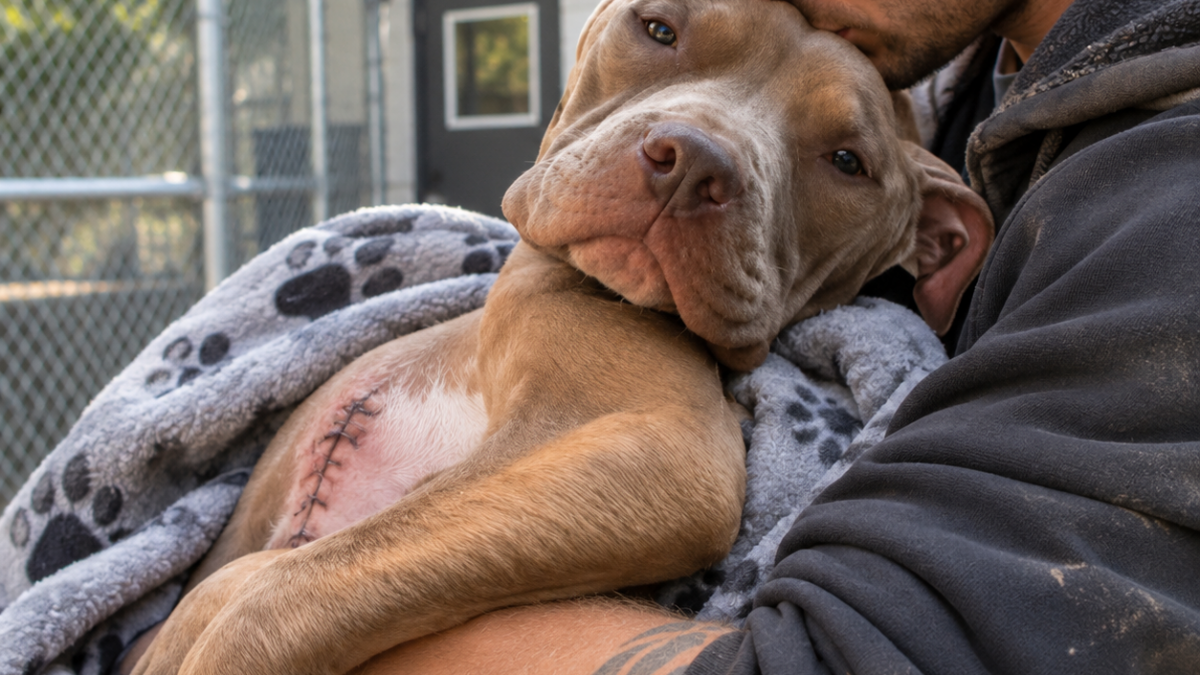
PART 2
For several seconds, I honestly thought I had misunderstood him.
“You’re kidding.”
Officer Grant didn’t smile.
“No.”
I looked down at Sabrina.
She had lowered herself carefully onto the blanket because standing had already exhausted her.
“That man wants this dog back?”
“He claims she’s his property.”
I felt heat rise into my face.
“Did you show him the footage?”
“He knows about the footage.”
“And he still admitted she’s his?”
Grant nodded.
I almost laughed.
Not because anything was funny.
Because sometimes cruelty comes wrapped in such astonishing arrogance that your mind reaches for laughter before it reaches for rage.
Dr. Harris stepped between us emotionally before I could turn the treatment room into a courtroom.
“Whatever happens legally, she’s not leaving here tonight.”
Grant nodded.
“I agree.”
“Good.”
“She is under medical hold pending evaluation.”
“Good.”
“Now let me do my job.”
I crossed my arms.
“Your job better include making sure he doesn’t get near her.”
Grant met my eyes.
“It does.”
Sabrina lifted her head.
The technician entered with her first carefully measured meal.
Everything else disappeared.
For Sabrina, there was no investigation.
No police report.
No ownership dispute.
No surveillance footage.
There was only a small stainless-steel bowl containing far less food than she desperately wanted.
She tried to stand too quickly.
Her legs folded.
I caught her again.
“Slow down.”
She scrambled toward the bowl.
Dr. Harris stopped me with one hand.
“Do not give her more than the plan.”
“I know.”
“I mean it.”
“I know.”
“She will act hungry.”
“She is hungry.”
“She is starving. That’s different.”
I looked at him.
His voice softened.
“Megan, the hardest thing we’re going to do for the next several days is look at a starving dog and refuse to fill her stomach.”
I hated every word.
But he was right.
We placed the bowl down.
Sabrina ate as if somebody might take it away.
Three bites.
Gone.
She licked the bowl.
Then licked it again.
She pushed it across the blanket with her nose.
Nothing.
She looked at me.
I have been around sick animals for years.
I’ve seen wounds that made grown men turn away.
I’ve watched animals arrive after accidents, fights, abandonment and things I don’t like remembering.
But there is something uniquely painful about being looked at by a starving dog when you are holding more food and deliberately not giving it to her.
I sat beside her.
“There will be another meal.”
She stared at my hands.
“I promise.”
She didn’t understand promises.
Not yet.
But I hoped eventually she would understand routine.
Routine was just a promise repeated until an animal believed it.
## What Her Body Told Us
The examination took hours.
Sabrina’s body had a history written all over it.
She had been bred multiple times.
Probably far more often than anyone should have asked of her.
Her mammary tissue, abdominal changes and general reproductive condition suggested repeated litters.
There were old scars.
Pressure areas.
Skin irritation.
Her nails needed care.
Her teeth suggested years of poor maintenance.
Most alarming was the muscle loss.
“She’s not simply thin,” Dr. Harris explained.
He gently lifted one of her rear legs.
“There is significant muscle wasting here.”
“Can she get it back?”
“Some of it, yes.”
“All of it?”
“We’ll see.”
I hated those two words.
We’ll see.
They are honest words.
They are also the words you hear when nobody wants to promise you an ending.
Sabrina had a fever that first night.
Then it dropped.
Then returned.
She had episodes where her body trembled and her energy suddenly vanished.
Bloodwork showed abnormalities we expected in a dog this neglected and a few we didn’t.
Dr. Harris ordered more tests.
I asked too many questions.
He answered most of them.
Finally he said, “Megan, go home.”
“No.”
“You’ve been here ten hours.”
“So?”
“So she will still be here tomorrow.”
That sentence hit me.
I looked at Sabrina.
Would she?
He knew what I was thinking.
“She is stable enough for you to sleep.”
“That’s not what you said.”
“It is what I’m saying now.”
I crouched beside her.
Sabrina immediately leaned toward me.
I rubbed her forehead.
“I’ll come back.”
Her tail moved.
I left.
I hated every step to the parking lot.
## The Surveillance Video
The next morning, Grant asked if I wanted to watch the full footage.
Part of me didn’t.
The smarter part said yes.
Evidence matters.
Especially when someone has already started claiming ownership.
We watched in a small office.
The recording came from a camera mounted above a business entrance across the street from a residential property.
No sound.
Only images.
At first, Sabrina appeared near a gate.
Thin even then.
She paced.
Disappeared.
Returned.
Then a man emerged.
He moved toward her.
Sabrina backed away.
He grabbed her.
The camera angle wasn’t perfect.
But it didn’t need to be.
He pulled.
She stumbled.
He pulled harder.
At one point, her front legs slid across the ground.
My hands curled into fists.
Grant paused the video.
“You okay?”
“No.”
“You don’t have to keep watching.”
“Yes, I do.”
He resumed it.
The man dragged Sabrina toward the property.
Then they disappeared from view.
The recording ended several minutes later.
I stared at the frozen frame.
“That isn’t one bad moment.”
Grant looked at me.
“What?”
“You don’t get a dog to twenty-four pounds because you had one bad day.”
“I know.”
“You don’t breed her until her body looks like that because you lost your temper once.”
“I know.”
“You don’t drag her like that and then suddenly become a responsible owner when somebody catches you.”
“Megan.”
I turned.
He spoke calmly.
“I know.”
That stopped me.
He wasn’t defending the man.
He was reminding me that rage didn’t build cases.
Evidence did.
“What did he tell you?”
Grant leaned back.
“That Sabrina was naturally thin.”
I laughed.
“He said she refuses food.”
I stopped laughing.
“What else?”
“He claims she’s been sick.”
“Veterinary records?”
“He hasn’t produced any.”
“Clinic?”
“No answer yet.”
“Medication?”
“None provided.”
“Anything?”
“He says she’s had puppies.”
“How many?”
“He wouldn’t specify.”
I stared at him.
“Because he doesn’t know?”
“Or because he doesn’t want the number documented.”
## Day Two
Sabrina remembered the feeding schedule before we did.
At least that’s how it felt.
At 7:00 a.m., she watched the door.
At 10:00, she watched again.
At noon, every sound from the preparation room made her ears rise.
When food arrived, she tried to follow the technician.
Her legs still betrayed her.
One rear foot slipped.
She went down.
Before I could reach her, Sabrina pushed herself back up.
“Stubborn girl.”
Tail wag.
That tail was already becoming her answer to everything.
Food?
Wag.
Human?
Wag.
Blanket?
Wag.
Someone said her name?
Wag.
Painful blood draw?
Still somehow a wag afterward.
Maya, one of the technicians, sat beside her.
“You have terrible judgment in people, sweetheart.”
Sabrina leaned into her.
Maya looked at me.
“See?”
I smiled despite myself.
## The Fever
That afternoon, Sabrina’s temperature climbed again.
Dr. Harris became concerned enough to add treatment while waiting on test results.
I watched her breathing.
“What are you thinking?”
“Infection is one possibility.”
“From what?”
“Could be several sources.”
“Is she septic?”
“Not based on what we know right now.”
“Could she become septic?”
“Megan.”
“What?”
“You’re asking me for every terrible thing that could possibly happen.”
“Yes.”
“Stop.”
“I can’t.”
He looked at Sabrina.
“Then ask the better question.”
“Which is?”
“What are we doing right now?”
I waited.
“Right now, we’re treating the fever, monitoring her hydration, checking bloodwork, controlling nutrition and watching her very closely.”
“Is that enough?”
“Right now, yes.”
I sat beside her kennel.
Sabrina crawled toward me.
Not walked.
Crawled.
Then rested her head against my knee.
She had spent years being used by people.
And somehow she still seemed most comfortable touching one.
## The Investigation
Grant and his team found previous complaints connected to the property.
Nothing that had led to removal.
Barking.
Dogs outside.
Possible breeding.
One anonymous caller had reported multiple puppies being sold from the home.
“How many dogs?” I asked.
“Unclear.”
“Where are they now?”
“That’s what we’re looking into.”
The property owner wasn’t technically the same person as the man in the video.
That complicated things.
The man had apparently been staying there on and off.
Neighbors said dogs came and went.
Some remembered litters.
Different colors.
Different ages.
Sabrina was one of the few constant animals.
One woman told Grant, “She’s been pregnant every time I see her.”
Every time.
That sentence followed me back to the clinic.
I sat beside Sabrina.
“How many babies did they make you have?”
She was asleep.
I looked at her abdomen.
Her tired body.
Her mammary glands.
The loose skin where muscle should have supported her frame.
People talk about overbreeding as if it’s only about numbers.
It isn’t.
Pregnancy takes from the body.
Calories.
Protein.
Minerals.
Strength.
Recovery.
Then nursing takes more.
A healthy dog with proper veterinary care, nutrition and responsible spacing still requires support.
Sabrina had apparently been asked to produce life while barely being given enough to preserve her own.
That wasn’t breeding.
That was extraction.
## Day Three
She ate every meal.
Not enough to satisfy her.
Enough to keep the treatment plan moving safely.
Her appetite sharpened.
That was good.
Her fever became less persistent.
Also good.
She began standing longer.
Still shaky.
But longer.
Maya walked into the room with a small container.
Sabrina’s head shot up.
“It isn’t food.”
Wag.
“It is medication.”
Wag.
“You have no standards.”
Sabrina walked toward her.
Three steps.
Fourth.
Her back leg gave out.
She landed gently on her side.
My heart stopped.
Sabrina lifted her head as though embarrassed.
Then tried again.
Maya knelt.
“Don’t rush.”
Sabrina came to her anyway.
She pressed her face into Maya’s chest.
Maya looked at me over Sabrina’s head.
“She fell and still came over for a hug.”
“I know.”
“I’m going to fight somebody.”
“Get in line.”
## A Pound
The scale became our obsession.
We didn’t weigh her constantly because we weren’t trying to torture ourselves.
But when the time came for the next official check, every person in the room stared at the numbers.
Sabrina stepped on.
Twenty-five-something.
Then she shifted.
The number stabilized.
Dr. Harris looked at the chart.
“She gained.”
“How much?”
He told us.
Approximately another pound.
One pound.
People who have never watched a severely starved animal recover might not understand why four adults nearly celebrated a single pound like a lottery win.
That pound was food her body had accepted.
Energy she hadn’t burned just trying to stay alive.
A small reserve between her organs and disaster.
One pound meant the plan was working.
Not perfectly.
Not quickly.
But working.
I crouched.
“Sabrina, you gained a pound.”
Wag.
“Do you understand?”
Wag.
“She thinks you’re announcing lunch,” Maya said.
“Let me have this.”
## The Sweater
Sabrina had almost no insulating body fat.
Even with the clinic warm, she sometimes trembled.
One of our volunteers went out and bought her a small sweater.
Bright red.
Ridiculous.
Perfect.
When we slipped it over her head, Sabrina froze.
She looked offended for approximately three seconds.
Then someone offered a tiny approved treat.
The sweater became acceptable immediately.
I took a photograph.
In it, Sabrina is standing with her legs slightly apart for balance, wearing that little red sweater, looking directly at the person holding the treat.
Her ears are lifted.
Her body is still painfully thin.
But there is something different in her expression.
Presence.
She no longer looks like a dog disappearing.
She looks like a dog beginning to return.
## The Man Comes to the Clinic
Grant warned us that the owner might try.
He still surprised me.
I was near reception when the front door opened.
A man stepped inside.
I recognized him before he spoke.
The surveillance footage.
Same build.
Same walk.
Same face.
Everything in my body went cold.
“I want my dog.”
The receptionist looked at me.
I walked forward.
“You need to leave.”
“Who are you?”
“Someone caring for Sabrina.”
“Her name isn’t Sabrina.”
That made me pause.
Of course.
We had named her Sabrina after rescue.
“What do you call her?”
He hesitated.
Just long enough.
“What does that matter?”
Every instinct I had sharpened.
“You want the dog back but you don’t want to tell me her name?”
He pointed toward the treatment area.
“She’s mine.”
I stepped between him and the hallway.
“No.”
“You stole her.”
“Police removed her.”
“You rescue people took her.”
“After police intervened.”
His voice rose.
“I’m taking her home.”
The receptionist reached for the phone.
I didn’t move.
“You are not going near her.”
He laughed.
“You think she’s yours because you put a sweater on her?”
That sentence almost made me lose every bit of professionalism I possessed.
Then Grant entered.
Perfect timing.
The man’s face changed.
“Officer.”
Grant didn’t smile.
“You were instructed to direct all questions through the investigation.”
“I just came to see my dog.”
“No.”
“You can’t stop me.”
“Yes.”
Grant stepped closer.
“I can.”
## Sabrina Hears Him
Then the worst thing happened.
A kennel door opened in the treatment area.
Sabrina heard the man’s voice.
Her head appeared around the corner.
She saw him.
Everything changed.
Her tail stopped.
Not slowed.
Stopped.
Her body lowered.
She took one step backward.
Then another.
The man smiled.
“See? She knows me.”
I stared at him.
He had interpreted fear as ownership.
“Sabrina,” I said softly.
Her eyes moved toward me.
“Come here.”
She hesitated.
Then walked.
Not toward him.
Toward me.
Slowly.
Shaking.
She crossed the hallway.
Pressed her entire body against my legs.
The man frowned.
“She’s confused.”
Grant looked at him.
“No.”
The word was quiet.
“She seems pretty clear.”
The man took one step forward.
Sabrina flinched.
Grant immediately blocked him.
“Outside.”
“This is bullshit.”
“Outside.”
“You people are turning her against me.”
I put one hand on Sabrina’s head.
“No.”
He looked at me.
“You did that all by yourself.”
Grant escorted him out.
Sabrina remained pressed against me for several minutes.
When Maya brought her next meal, she didn’t immediately move toward it.
That frightened me.
Food had been everything.
I sat on the floor.
“It’s okay.”
Sabrina looked toward the door.
Then at me.
Then the food.
Finally, she ate.
## The Search Warrant
The clinic incident added another documented interaction.
Grant’s investigation continued.
Between the surveillance video, Sabrina’s medical condition, witness statements, breeding allegations and inconsistencies in the man’s story, authorities obtained the legal grounds they needed for a deeper search.
I wasn’t there.
Grant told me afterward.
They found breeding equipment.
Old crates.
Records of puppy sales—some complete, many not.
Messages discussing litters.
Payments.
Photographs of Sabrina with puppies.
Again.
Again.
Again.
Different dates.
Different litters.
In one photograph, she looked healthy.
In another, thinner.
Then thinner again.
The progression was horrifying.
I spread copies of the authorized evidence photographs across a desk.
“This was happening in front of people.”
Grant nodded.
“How long?”
“Years, apparently.”
“How many litters?”
“We may never know exactly.”
I looked at one photograph.
Sabrina lay beside several newborn puppies.
Her face looked exhausted.
“What happened to the puppies?”
“Most were sold.”
“To whom?”
“We’re identifying what we can.”
“Are they okay?”
“Some probably are.”
“Probably?”
“Megan.”
I closed my eyes.
I hated probably almost as much as we’ll see.
## The Story He Told
When confronted with evidence, the man changed his explanation.
Sabrina had always been thin.
Then Sabrina had a medical disorder.
Then she wouldn’t eat.
Then someone else was responsible for feeding her.
Then he had only bred her “a few times.”
Then the puppy sales weren’t his.
Then the surveillance footage looked worse than it was.
Every new piece of evidence produced a new story.
Grant said something I remembered.
“When facts stay still and the explanation keeps moving, we pay attention.”
## Sabrina Learns Arms
She loved being held.
That became obvious as she regained enough strength to actively request it.
She would walk toward a seated person.
Stop.
Lean.
Then somehow fold herself into their lap despite not being a lap-sized dog.
The first time she did it to Dr. Harris, he pretended to object.
“Sabrina, I am working.”
She placed her chin on his arm.
“I have patients.”
Tail wag.
“You are technically one of them.”
Sabrina climbed farther into his lap.
Maya walked past.
“Looks serious, doctor.”
“Leave.”
I took a photograph.
He threatened to fire me.
He couldn’t.
## Day Eleven
Her appetite improved every day.
The feeding plan increased carefully.
Bloodwork was steadier.
No catastrophic refeeding complications.
The fever finally stopped returning.
Her strength came back in pieces.
She could cross the room.
Stand while eating.
Walk outside briefly.
Sit without collapsing.
Then get up again.
The first time she shook her whole body like a normal dog after coming in from outside, everyone cheered.
She looked offended by the attention.
Normal behavior had become celebration.
That’s what happens when you’ve watched a dog almost disappear.
## The Old Collar
Among evidence collected from the property was an old collar.
The man claimed it belonged to Sabrina.
Grant asked whether we wanted it for identification.
I looked at it.
Worn leather.
Too small for her current neck despite her terrible weight.
I imagined it on her during pregnancy.
During nursing.
During all those litters.
“No.”
Grant raised an eyebrow.
“No?”
“She doesn’t need anything from that house.”
He nodded.
The collar stayed evidence.
Good.
Sabrina had a new collar waiting.
Soft.
Clean.
The correct size.
Nobody would tighten it around her to prove ownership.
## Day Seventeen
By the seventeenth day, her transformation was visible even to people who hadn’t watched every hour.
Still thin.
But no longer skeletal in quite the same terrifying way.
Her eyes were brighter.
Her coat had improved.
She carried herself differently.
Someone entered the room.
Tail wag.
Someone said Sabrina.
Tail wag.
Food appeared.
Entire body wag.
I began seeing glimpses of the dog she might have been before neglect consumed everything.
Smart.
People-oriented.
Curious.
Silly.
She had learned the cabinet where treats were stored.
That became a problem.
A wonderful problem.
## Five Days Later
Twenty-two days after the rescue, Dr. Harris gave us the words we’d been waiting for.
“She can leave the clinic.”
I stared at him.
“What?”
“She doesn’t need hospitalization anymore.”
“She’s cured?”
“No.”
“Then—”
“Megan.”
I stopped.
“She still needs nutrition management. Follow-up bloodwork. Gradual conditioning. Monitoring.”
“But?”
“She can continue from foster or rescue care.”
I hugged him.
He hated that.
Then Maya hugged him.
He hated that more.
Sabrina thought hugging was happening and inserted herself between all three of us.
That made it impossible for him to remain annoyed.
## The First Time Outside Without Fear
We brought Sabrina into the shelter yard.
The day was cool.
She wore the red sweater.
For several seconds, she stood still.
Grass beneath her feet.
Open space.
No man holding a leash.
No dragging.
No demand that she produce puppies.
I unclipped the lead inside the secure enclosure.
She looked at me.
“Go.”
Sabrina took three steps.
Stopped.
Smelled the grass.
Then walked farther.
A volunteer crouched near the other side.
Sabrina saw her.
And ran.
Not fast.
Not gracefully.
But ran.
Her back legs still lacked muscle.
Her gait was awkward.
Yet she crossed that yard because somebody was waiting with open arms.
When she reached the volunteer, she leaned against her chest.
I turned away because I was crying again.
Maya said, “You know we all know you’re crying.”
“I’m checking the fence.”
“Of course.”
## The Charges
The legal process took longer than Sabrina’s medical recovery.
That’s often how it works.
Animals heal faster than paperwork moves.
The investigation produced evidence supporting neglect and cruelty charges as well as violations connected with the conditions under which Sabrina had been kept and bred.
The court process would determine exactly what penalties applied.
I wanted immediate punishment.
Grant kept reminding me that quick wasn’t always strong.
“Build it correctly.”
“She almost died while everyone builds correctly.”
“I know.”
“You say that a lot.”
“Because I do.”
He looked at Sabrina playing gently with a rope toy.
“She’s safe now.”
That mattered.
It didn’t satisfy my anger.
But it mattered.
## The Claim for Sabrina
The man didn’t surrender his ownership claim voluntarily.
He fought.
That became the most infuriating part.
Not because I feared he would win.
Because watching someone who had allowed an animal to reach twenty-four pounds repeatedly use the word “mine” made me understand that possession and love are not even distant relatives.
At a preliminary hearing, his attorney argued that Sabrina was property and that authorities had overreached.
The rescue’s documentation was presented.
Veterinary photographs.
Weight.
Body-condition score.
Bloodwork.
Evidence of muscle wasting.
The surveillance recording.
Witness statements.
The breeding records.
The man’s shifting explanations.
Then Dr. Harris testified.
The attorney asked, “Could a disease cause a dog to become this thin?”
“Yes.”
I nearly stopped breathing.
The lawyer continued.
“So the condition does not necessarily prove starvation.”
Dr. Harris stayed calm.
“No single photograph proves a cause.”
The lawyer looked satisfied.
Then Harris added, “Which is why we performed diagnostic testing.”
The lawyer’s expression changed.
“And what did that testing show?”
“We found no medical condition that reasonably explained the degree of prolonged caloric deprivation and muscle wasting we observed.”
Silence.
“In your professional opinion?”
“Sabrina’s condition was consistent with severe chronic neglect and inadequate nutrition.”
The lawyer sat down.
I loved Dr. Harris a little at that moment.
## The Video Plays Again
I had watched it many times.
I still hated seeing it on a larger screen.
The man dragging Sabrina.
Her legs sliding.
Her thin body resisting.
The hearing officer watched carefully.
Then asked the man:
“Why were you dragging her?”
“She wouldn’t move.”
“Why couldn’t she move?”
“She was stubborn.”
My jaw tightened.
The hearing officer looked at the veterinary report.
“She had severe muscle wasting.”
“She always walked funny.”
“Did you seek veterinary care?”
Silence.
“Sir?”
“No.”
“Why not?”
“She didn’t need it.”
I heard someone behind me inhale sharply.
The hearing officer looked at Sabrina’s admission photograph.
Then back at him.
“You believed this dog did not need veterinary care?”
He looked at the photograph.
For the first time, he seemed to realize exactly how bad the image looked.
“I didn’t know she was that bad.”
Grant’s attorney-equivalent representative asked:
“You lived with her?”
“Yes.”
“You bred her?”
“A couple times.”
“Records indicate more than a couple.”
He stopped answering.
## The Decision
Sabrina would not be returned.
Those were the words I needed.
Everything after that became noise.
The man’s ownership claim was denied subject to the applicable legal process, and Sabrina remained under rescue protection.
He argued.
His attorney tried to quiet him.
He pointed at us.
He said we had exaggerated.
He said the photographs were taken from bad angles.
He said the shelter wanted publicity.
Then he said something that turned my anger strangely cold.
“She’s worth money.”
The hearing officer looked at him.
“What?”
He realized too late what he’d said.
“I mean, she’s a valuable dog.”
“Because?”
He hesitated.
Nobody helped him.
Finally:
“She produces good puppies.”
I will remember the silence in that room for the rest of my life.
Not dramatic silence.
Disgusted silence.
The hearing officer looked down at the record.
Then back at him.
“We are discussing a severely neglected animal, and your argument for continued ownership is her reproductive value?”
The man stopped talking.
There are moments when people destroy their own defense better than anyone else ever could.
That was one of them.
## Sabrina Never Knew
She was back at the shelter.
Wearing her sweater.
Demanding affection.
She had no idea a man had just argued that her value came from the puppies her exhausted body could produce.
I’m glad.
Dogs deserve the luxury of not knowing some things people say about them.
## The First Toy
For weeks, food and affection had been Sabrina’s entire world.
Then she discovered toys.
The first was a soft yellow duck.
She smelled it.
Poked it.
The duck squeaked.
Sabrina jumped backward.
Everyone laughed.
She stared at us as though we had betrayed her.
Then she approached again.
Poked.
Squeak.
This time she grabbed it.
Within ten minutes, the duck had become hers.
She carried it to her bed.
Then climbed into the bed with it.
I smiled.
“You’re collecting property now?”
Tail wag.
Good.
Let Sabrina own things for once.
## Her Body Changes
Thirty pounds.
That was the next number that made us celebrate.
Then thirty-two.
Thirty-four.
Slowly.
Safely.
Her hips softened.
Her ribs became less visible.
Muscle returned to her legs.
Her gait improved.
The falls stopped.
I remember the first week when I realized I hadn’t seen her stumble at all.
I called Maya.
“Has Sabrina fallen recently?”
“What?”
“Her legs.”
Maya thought.
“No.”
We stared at each other.
Then ran to find her.
Sabrina was walking through the hall carrying the yellow duck.
Perfectly steady.
We celebrated so loudly she dropped it.
## The Sweater Stops Fitting
One morning, Maya tried to put on the red sweater.
It was tight.
She looked at me.
I looked at her.
“No.”
“Yes.”
“We shrank it.”
“We did not.”
“We washed it.”
“Cold water.”
Sabrina stood between us.
Maya tried again.
Definitely tight.
We started laughing.
Sabrina had grown out of the sweater.
Not because she got taller.
Because there was finally body underneath it.
The sweater went into a box.
I couldn’t throw it away.
Still can’t.
## The Women Who Bought Puppies
The investigation led to several people who had bought puppies produced from Sabrina.
Most had no idea how she had been treated.
One woman came to the shelter carrying photographs.
Her dog, Rosie, was almost three.
“I think she’s Sabrina’s daughter.”
We compared the breeding records.
Possible.
Very possible.
The woman showed me pictures.
Rosie on a couch.
Rosie in snow.
Rosie wearing a birthday hat.
Rosie asleep beside a child.
My throat tightened.
“She has a good life?”
The woman looked shocked.
“She’s family.”
I nodded.
“Good.”
I don’t know why I needed to hear it.
Maybe because Sabrina’s body had been used to produce puppies for money.
Knowing at least some of those puppies ended up loved felt like reclaiming a tiny piece of what had been taken from her.
## One Puppy Didn’t
Not every story was happy.
Grant located another dog likely connected to one of Sabrina’s litters.
He’d been surrendered to a shelter in another county.
Multiple homes.
Behavior problems.
Eventually adopted.
Alive.
Safe now.
But bounced around for years.
The breeding hadn’t just affected Sabrina.
Irresponsible breeding sends consequences outward.
Puppies are sold.
Owners unprepared.
Dogs surrendered.
Shelters absorb the damage.
The breeder collects money and disappears from the rest of the story.
Sabrina had been at the center of that machine.
Now she was out.
## The Man’s Final Defense
As the criminal case progressed, he claimed financial hardship.
He couldn’t afford veterinary care.
Couldn’t afford better food.
Couldn’t afford spaying.
Grant asked a simple question in the recorded interview:
“If you could not afford to feed her, why did you continue breeding her?”
No answer.
“Why sell puppies?”
Silence.
“Where did that money go?”
Another silence.
Bank and payment records didn’t help his story.
There had been money.
Maybe not wealth.
But enough to make the argument of total helplessness difficult.
Money had come in around litters.
It had not reliably gone back into Sabrina.
## What I Wanted
I wanted him punished.
I’m not going to pretend otherwise.
There is a version of rescue storytelling where the rescuer becomes perfectly noble.
I wasn’t.
I was angry.
When I remembered Sabrina searching for food after finishing one tiny controlled meal, I wanted him hungry.
When I remembered her legs collapsing, I wanted him powerless.
When I watched her lean into strangers despite everything, I wanted him to understand that she had more goodness in her starved body than he had shown her in years.
I wanted revenge.
Grant knew.
One evening he said, “Don’t let him make you ugly.”
I frowned.
“What?”
“You’re spending too much time thinking about what happens to him.”
“He deserves—”
“I know what he deserves isn’t your job.”
“Convenient.”
“No.”
He pointed toward the shelter yard.
Sabrina was chasing the yellow duck someone had thrown.
“That’s your job.”
I looked at her.
“She needs a home.”
“Yes.”
“That’s your revenge.”
At the time, I thought it sounded sentimental.
Later, I understood.
## The Adoption Profile
Sabrina’s profile went live after she was medically cleared.
I hated writing it.
How do you summarize a dog whose entire life has changed in a paragraph?
**Sabrina is affectionate, intelligent and deeply people-oriented. She loves cuddling, soft toys, snacks and being close to her humans. After recovering from severe neglect, she is ready for a stable home where she will never be used for breeding again.**
I deleted the last sentence.
Then put it back.
People should know.
Not to pity her.
To understand the promise.
Never again.
## Applications
There were many.
Some wanted “the famous rescue dog.”
Rejected.
One person asked whether she was spayed.
Yes.
Then asked whether frozen reproductive material existed.
I stared at the email.
Rejected so hard I wished there were a stronger button.
Another applicant had a wonderful home but wanted a running partner immediately.
Not yet.
Sabrina was stronger, but her body had survived years of damage.
Then came Daniel and Leah.
Married.
Mid-fifties.
No children at home.
One calm older dog.
Large fenced yard.
Both worked partly from home.
Excellent veterinary references.
Their previous dog had required years of medical management.
The line in their application that caught me was simple:
**We don’t care whether Sabrina ever becomes athletic. We want her to become comfortable.**
I read it three times.
## The Meeting
Daniel sat on the floor.
Leah sat beside him.
They didn’t call Sabrina.
Didn’t clap.
Didn’t overwhelm her.
Sabrina walked into the room carrying the yellow duck.
She saw them.
Stopped.
Smelled the air.
Then approached.
Leah held out one hand low.
Sabrina smelled it.
Then leaned.
Straight into Leah.
I looked away.
“No,” I muttered.
Maya whispered, “Here we go.”
“Be quiet.”
Sabrina climbed halfway into Leah’s lap.
Leah laughed.
“She thinks she’s small.”
“She spent long enough weighing twenty-four pounds. Maybe she still identifies that way.”
Daniel scratched Sabrina’s chest.
Tail wag.
Then Sabrina did something important.
She walked away.
Got water.
Returned.
Lay beside them.
She felt safe enough not to cling.
That told me more than the leaning.
## The Home
Their house smelled like coffee and old books.
The backyard was secure.
Their older dog, Henry, was ten and deeply uninterested in drama.
Sabrina met him slowly.
He smelled her.
She smelled him.
Henry walked away.
Perfect.
Inside were dog beds.
One near the living room.
One bedroom.
A rug across the hardwood because Leah had read that Sabrina’s weaker legs might prefer traction.
I saw it.
“You bought this for her?”
Leah looked embarrassed.
“The floor looked slippery in your videos.”
I almost cried.
Not because of the rug.
Because someone had thought about her legs before she even belonged to them.
## Adoption Day
I packed too much.
Food.
Medication schedule.
Medical history.
Yellow duck.
Extra blankets.
The red sweater even though it no longer fit.
Maya saw it.
“Why are you packing that?”
“Memories.”
“Sabrina doesn’t need memories.”
“I do.”
We left it at the shelter.
Good decision.
Sabrina deserved luggage without evidence of suffering.
Leah signed.
Daniel signed.
I checked everything twice.
Then there was nothing left to delay.
I knelt.
Sabrina approached.
I put both hands on her face.
“You know what you’re doing?”
Wag.
“You’re leaving me.”
Wag.
“Very insensitive.”
She licked my nose.
I started crying.
Leah cried.
Maya cried because she is weak.
Maya would dispute that.
Sabrina looked delighted.
Crying apparently meant attention.
Daniel clipped on her new leash.
Sabrina walked toward the door.
Then stopped.
She looked back.
My heart cracked.
“Go.”
She came back.
Pressed against me one more time.
Then turned.
Walked outside.
Strong legs.
No stumbling.
## The Car
This mattered.
The surveillance footage had shown Sabrina being dragged.
We never knew all the places she’d been forced to go.
So Daniel and Leah refused to pull her into the car.
They opened the back door.
Placed a blanket.
Waited.
Sabrina looked inside.
Then at them.
Then at me.
Daniel sat sideways on the back seat.
“No hurry.”
Sabrina placed her front paws inside.
Paused.
Then climbed in.
No dragging.
No force.
Choice.
Sometimes healing looks like the absence of a hand on a collar.
## The First Night
Leah sent a photograph.
Sabrina asleep sideways across their couch.
Henry occupied the rug.
Yellow duck under Sabrina’s chin.
Message:
**She ate dinner slowly, checked the kitchen twice, then decided our couch belongs to her.**
I replied:
**It does.**
## Food Anxiety
Sabrina still searched.
Under tables.
Near cabinets.
Along counters.
Outside after meals.
Hunger had trained her brain.
Leah followed the routine.
Breakfast at the same time.
Dinner at the same time.
Appropriate snacks.
No punishment for searching.
No teasing.
No taking bowls away to “teach dominance,” because that nonsense helps nobody.
Weeks passed.
Then Leah called.
“She left food.”
My heart stopped.
“Is she sick?”
“No.”
“Vet?”
“She seems fine.”
“What happened?”
“I gave her breakfast. She ate most of it, then Henry barked at a squirrel. She went to the window.”
“And?”
“She came back ten minutes later and finished.”
I sat down.
“Oh.”
“You understand why I’m calling?”
“Yes.”
A dog who believed food might never return had walked away from a bowl.
Because she believed it would still be there.
That is the kind of milestone nobody puts on a medical chart.
They should.
## Her First Winter
Leah bought Sabrina a new sweater.
Larger.
Green.
Sabrina hated the hood.
Loved the warmth.
Photos arrived of her standing in snow.
Then refusing to walk because snow was apparently unacceptable.
Daniel shoveled a path.
Sabrina used it.
Henry ignored the path and ran through everything.
Leah wrote:
**Our formerly homeless dog has developed luxury standards.**
Perfect.
## Court
The criminal case ended with accountability for the neglect and treatment authorities could prove, along with restrictions intended to prevent the same pattern from continuing.
I attended sentencing.
Sabrina did not.
She was home on a couch.
Where she belonged.
The judge reviewed photographs.
Veterinary findings.
Surveillance.
Breeding evidence.
The man stood quietly.
For once, no argument about value.
No demand for Sabrina.
No claim that she was naturally thin.
The judge spoke about responsibility.
About animals being dependent on the people who keep them.
About repeated failure.
I watched the man.
I expected satisfaction.
It came, but smaller than expected.
He received penalties.
Restrictions.
Financial consequences.
A prohibition on owning or breeding animals for the legally ordered period.
The record would remain.
But Sabrina didn’t suddenly get her lost years back.
Justice couldn’t do that.
## Outside the Courthouse
Grant found me sitting on a bench.
“Well?”
I shrugged.
“You wanted more.”
“Yes.”
“Everyone does.”
“He starved her.”
“I know.”
“He used her.”
“I know.”
“She almost died.”
“I know.”
I looked at him.
“That sentence again.”
He sat beside me.
Then handed me his phone.
A message from Leah.
Sabrina was lying upside down on the couch wearing the green sweater.
Yellow duck beside her.
Caption:
**Court day stress level: zero. She stole half a piece of toast.**
I laughed.
Grant said, “There.”
“What?”
“That’s the part he can’t appeal.”
I looked at the photograph.
He was right.
## Sabrina Meets a Child
Daniel and Leah’s granddaughter, Emma, was six.
They introduced them slowly.
Sabrina loved adults so much that we worried her enthusiasm might overwhelm a child.
Instead, Sabrina became different.
Gentler.
Emma sat on the floor.
Sabrina walked toward her.
Stopped.
Then lowered herself.
Emma touched her head.
Sabrina closed her eyes.
Leah sent me the video.
Emma whispered, “She’s soft.”
I remembered the first day.
When I touched Sabrina’s head, I felt bone.
Now a child touched her and felt softness.
That sentence alone could have ended the story.
But life kept going.
## Weight
Sabrina eventually reached a healthy target weight.
Not overweight.
Not fat.
Healthy.
The number was almost double the weight she’d carried when rescued.
I stared at the scale during one follow-up.
Dr. Harris smiled.
“Happy now?”
“No.”
He raised an eyebrow.
“She could gain one more.”
“Megan.”
“Fine.”
Sabrina wagged.
Maya said, “She remembers when you wanted one pound.”
“I still appreciate every pound.”
Sabrina looked toward the treat jar.
Of course.
## The Old Photographs
Leah asked if she could see them.
The rescue photos.
I warned her.
She still wanted to.
We sat together.
First image.
Sabrina on rescue day.
Leah covered her mouth.
Second.
Red sweater.
Still skeletal.
Third.
Clinic cuddles.
Fourth.
Standing more strongly.
Fifth.
Shelter yard.
Then current Sabrina walked into the room.
Healthy.
Green sweater.
Yellow duck.
Leah looked from photograph to dog.
“I hate that somebody did this.”
“So do I.”
Sabrina put her head in Leah’s lap.
Leah stroked her.
Then said something I never forgot.
“He doesn’t get to be the most important person in her story.”
Exactly.
## Another Dog
Two years later, Daniel and Leah fostered a dog.
That was Sabrina’s fault.
A frightened female from another neglect case.
She hid behind furniture.
Wouldn’t approach people.
Sabrina handled it better than any of us.
She simply lay nearby.
Didn’t force.
Didn’t crowd.
Within a week, the foster dog began sleeping beside her.
Leah sent me a photograph.
**Sabrina has apparently joined rescue staff.**
I replied:
**Salary is snacks.**
## The Yellow Duck Dies
The toy lasted much longer than expected.
Then one morning, Sabrina performed surgery.
Stuffing everywhere.
Duck unrecognizable.
Leah sent a crime-scene photograph.
Sabrina sat in the middle.
No remorse.
Daniel bought three replacements.
Sabrina chose one.
Problem solved.
Unlike humans, she did not demand that healing preserve every object from the past.
## The Man Appeals to Public Sympathy
Months after court, a social-media post appeared from an account connected to him.
He claimed he had been misunderstood.
Claimed rescuers had taken a beloved pet during personal hardship.
Claimed Sabrina had been sick.
The post began spreading locally.
People sent it to me.
My first instinct was to respond.
Paragraph by paragraph.
Lie by lie.
Grant called.
“Don’t.”
“Why?”
“Public record exists.”
“He’s lying.”
“Then let the evidence be boring.”
I hated that advice.
It was excellent.
The rescue issued one short statement.
No insults.
No emotional fight.
Only that Sabrina had been removed following police involvement, received documented emergency veterinary treatment for severe neglect and remained legally protected under the outcome of the case.
The post lost momentum.
Facts are less exciting than arguments.
They’re also harder to exhaust.
## The Real Revenge
By then, I understood what Grant had meant.
The real revenge wasn’t watching a judge speak.
It wasn’t the legal restriction.
It wasn’t people online realizing what had happened.
It was Sabrina becoming difficult to photograph because her tail wouldn’t stop moving.
It was her legs building enough muscle to chase Henry across the yard.
It was Leah complaining that Sabrina begged too convincingly at dinner.
It was Daniel buying expensive dog beds only to watch her sleep on the couch.
It was the yellow duck dying from overuse.
It was Emma hugging Sabrina without feeling bones.
It was food becoming ordinary.
Affection becoming expected.
Safety becoming boring.
That was revenge.
## Three Years Later
Sabrina’s muzzle began showing gray.
Not much.
Just enough to remind us that time was passing.
She still attended annual checkups.
Her reproductive history meant veterinarians watched certain things carefully.
Her previous malnutrition meant we stayed alert to long-term consequences.
But she was doing well.
Very well.
At one appointment, Dr. Harris finished the exam.
“She’s boring.”
I gasped.
“How dare you.”
“Medically boring.”
“Best compliment you’ve ever given her.”
Sabrina wagged.
## The Reunion Nobody Expected
Grant contacted us about one of Sabrina’s likely adult puppies.
A family had confirmed records that made the connection highly probable.
They asked if the dogs could meet.
We were careful.
Dogs don’t understand family reunions the way humans imagine them.
No dramatic violin moment was guaranteed.
Still, Daniel and Leah agreed.
The other dog was Rosie.
Healthy.
Brown-and-white.
Four years old.
They met in neutral space.
Sabrina smelled Rosie.
Rosie smelled Sabrina.
They walked.
Sniffed grass.
Eventually played briefly.
That was it.
No magical recognition we could prove.
And it was enough.
Because both were safe.
One dog whose body had been used to produce another.
Both now existing as individuals.
Not inventory.
## The Woman Who Bought Rosie
Rosie’s owner cried.
“I had no idea.”
“You couldn’t have.”
“I bought her from an online ad.”
“You didn’t know.”
“I remember seeing Sabrina.”
My attention sharpened.
“What?”
“She was in the background.”
“Thin?”
“Not like the rescue pictures.”
“Did you meet her?”
“No. He brought the puppies outside.”
That was how exploitation hides.
Show the product.
Hide the mother.
## A New Rule
Our rescue began including education about breeding-mother welfare in community outreach.
Not because all breeding is inherently abuse.
Responsible breeders exist.
But responsible breeding includes health testing, adequate nutrition, veterinary care, limited and appropriately spaced litters, retirement, and treating the mother as a living animal rather than production equipment.
Sabrina became the reason we explained the difference.
We rarely used her worst photographs publicly.
We didn’t need to.
Her story did the work.
## Five Years After Rescue
We held a small celebration.
Sabrina arrived in a ridiculous purple sweater because Leah had developed a problem.
There was a cake for people.
Special approved treats for dogs.
Grant attended.
Retired by then.
Dr. Harris.
Maya.
Volunteers.
Daniel.
Leah.
Emma, older now.
Sabrina walked into the room.
Tail moving.
Everyone called her name.
She went from person to person.
Attention.
Kisses.
Hands.
Exactly what she had wanted from the first day.
I crouched.
“You still love everybody.”
Sabrina leaned into me.
“Terrible judgment.”
Grant laughed.
“You’ve been saying that for five years.”
“Still true.”
## The Red Sweater
I brought it.
The original.
Tiny now compared with her healthy body.
Leah held it up.
“Oh my God.”
Emma asked, “She wore that?”
“Yes.”
“Why is it so small?”
Because Sabrina had been so small.
I didn’t say it that way.
“Because she needed to get much bigger.”
Emma compared it to the purple sweater Sabrina wore now.
Then smiled.
“She did.”
Children sometimes summarize miracles better than adults.
## The Surveillance Footage
I watched it once more that year.
For training.
New rescue volunteers needed to understand why video evidence matters.
The man dragging Sabrina.
Her weak body.
The footage still made my stomach turn.
Then we showed a recent video.
Sabrina running through Leah’s backyard.
Purple sweater.
Toy in mouth.
The difference was almost absurd.
One volunteer asked:
“Is that really the same dog?”
“Yes.”
“Wow.”
That’s the word people use when language fails.
Wow.
## The Owner’s Last Attempt to Contact
Years later, a letter came to the rescue.
From him.
Not threatening.
Not demanding.
He asked whether Sabrina was alive.
I didn’t answer personally.
The organization handled it.
He had no right to her private location or adopter information.
But I read the letter because the legal restrictions allowed us to review communication.
He wrote that he thought about her.
That he had made mistakes.
That he wished things had been different.
I felt nothing at first.
Then anger.
Then something quieter.
Regret does not undo harm.
But harm doesn’t require us to reject regret’s existence.
He could regret it.
Sabrina still didn’t owe him access.
Both things could be true.
## Sabrina Never Looked Back
People love stories where an animal confronts the person who hurt them.
I don’t.
Sabrina had already confronted him once at the clinic without choosing it.
Her fear had told us enough.
She never needed another encounter.
Healing didn’t require her to prove anything to him.
She just lived.
## Ordinary Life
That became the most beautiful part.
No police.
No court.
No emergency clinic.
Just mornings.
Leah making coffee.
Sabrina waiting for breakfast.
Daniel opening the back door.
Henry growing older.
Emma visiting.
Sweaters.
Toys.
Veterinary appointments that ended with “she’s boring.”
Sometimes Sabrina stole food.
Once she ate half a sandwich left on a low table.
Leah called me.
“She is a criminal.”
“I support her.”
“Of course you do.”
## Henry
Henry died when Sabrina had been with the family for several years.
He was old.
Loved.
Sabrina searched for him after he was gone.
She checked his bed.
The backyard.
The hallway.
For days, she seemed quieter.
Leah worried.
Then one evening, Sabrina carried a toy to Henry’s empty bed and slept beside it.
Animals grieve in ways we don’t fully understand.
She adjusted.
But the house changed.
So eventually, after time, another dog joined the family.
Not a replacement.
Never a replacement.
A new relationship.
Sabrina became the older dog.
The calm one.
The teacher.
Imagine that.
The trembling twenty-four-pound dog whose legs couldn’t hold her became someone else’s example of stability.
## Seven Years
Age found her.
It finds everyone lucky enough to survive long enough.
Arthritis.
Gray muzzle.
Longer naps.
Medication.
Shorter walks.
She gained healthy weight so successfully that later we sometimes had to watch the opposite problem.
When Dr. Harris said she needed to lose two pounds, I stared at him.
“I waited years for those pounds.”
“They are now excessive pounds.”
“Take it back.”
Sabrina wagged.
The irony was glorious.
## Emma
Emma became a teenager.
She had grown up with Sabrina as part of the family.
One day she asked:
“Did Sabrina have babies?”
“Yes.”
“A lot?”
“Probably.”
“Does she miss them?”
I didn’t know.
“I can’t know what she remembers.”
Emma looked at Sabrina sleeping.
“That’s sad.”
“Yes.”
Then she said:
“But she has us.”
“Yes.”
She did.
## The Last Checkup With Dr. Harris
He had more gray hair.
So did Sabrina.
So did I, probably.
He listened to her heart.
Checked joints.
Bloodwork.
Then sat down.
“She is old.”
“I reject your diagnosis.”
“Megan.”
“She is mature.”
Leah laughed.
Sabrina leaned against Harris.
He rubbed her ears.
“I remember twenty-four pounds.”
“So do I.”
He became quiet.
“She wasn’t supposed to have this many years.”
“I know.”
“Nice when we’re wrong.”
“Yes.”
## Sabrina’s Final Year
Her health declined slowly.
Nothing dramatic at first.
More sleeping.
Less interest in long walks.
Then kidney changes.
Medication.
Diet adjustments.
Fluid support later.
She still ate.
Still wanted affection.
Still wagged.
Her world became smaller.
Not sadder.
Just smaller.
Bedroom.
Living room.
Backyard.
People she loved.
That’s enough for many old dogs.
## The Call
Leah called me one morning.
Her voice told me before the words did.
“Sabrina had a bad night.”
I drove over.
She was on her bed.
A blanket around her.
No sweater this time.
She looked old.
Not starved.
Not skeletal.
Old.
There is a difference so profound I almost smiled through my tears.
Old is a privilege.
Her body was thin again because age was taking what age takes.
But this thinness wasn’t neglect.
There was food in the kitchen.
Medication labeled on the counter.
Water beside her bed.
Veterinary records covering years.
People sitting with her.
Love everywhere.
## Her Appetite
Sabrina, the dog who had once searched frantically for food, refused breakfast that morning.
Leah cried.
“I never thought I’d wish she were begging.”
I understood.
We tried chicken.
Sabrina smelled it.
Took one piece.
Good enough.
Then she rested her head.
## The Decision
Dr. Harris came to the house.
He examined her.
Nobody rushed him.
Finally he looked at Leah.
Then Daniel.
Then me.
“I think she’s tired.”
Leah began crying.
Daniel put one arm around her.
I sat beside Sabrina.
She lifted her eyes.
Tail moved.
A little.
That tail.
Always that tail.
Leah whispered:
“How do you know?”
Harris answered gently.
“We don’t get certainty. We get love and judgment.”
That was the truth.
## Her Last Meal
No measured portions.
No refeeding plan.
No careful calories.
Sabrina had earned the right to eat whatever she wanted.
She accepted small pieces of chicken.
A little cheese.
Then refused more.
Seven years earlier, refusing food would have terrified us.
Now it told us something different.
She had spent years learning food would always be there.
She didn’t need to finish.
There was nothing left to fear.
## The Yellow Duck
The original was long gone.
But Leah brought one of the replacements.
Placed it beside Sabrina.
She smelled it.
Then rested one paw across it.
Emma sat on the floor.
Older now.
Crying quietly.
Sabrina looked toward her.
Emma leaned forward.
“You’re the best girl.”
Sabrina’s tail moved.
## Goodbye
I put my hand on Sabrina’s head.
The same place I’d touched the first day.
I remembered the shock.
Bone immediately beneath my fingers.
Now there was soft fur.
A lifetime of hands had touched that head gently since then.
Leah kissed Sabrina’s face.
Daniel whispered something I couldn’t hear.
Emma held one paw.
Dr. Harris administered the medication.
Sabrina relaxed.
Her breathing slowed.
No fever.
No hunger.
No dragging.
No frightened legs giving out.
Just sleep.
Her tail moved once against the blanket.
Then stopped.
Dr. Harris listened.
After a moment, he lowered the stethoscope.
Nobody spoke.
## Twenty-Four Pounds
That number had defined her beginning with us.
I hated it for years.
Twenty-four pounds.
The number that told us how close she was to disappearing.
After she died, I finally stopped hating it.
Because it wasn’t the measure of Sabrina’s life.
It was only the lowest point we happened to meet her at.
After twenty-four pounds came twenty-five.
Then another pound.
Then another.
Then muscle.
Sweaters.
Toys.
A home.
Years.
Twenty-four was not the ending.
It was simply where we started counting upward.
## What Happened to the Man
People continued asking.
Did he go to jail?
Did he suffer?
Did he ever apologize?
Some legal details belonged to records, not to Sabrina’s legacy.
He faced consequences.
He lost control of her.
He lost the ability, under the ordered restrictions, to continue treating her as breeding property.
He faced the financial and legal result of the neglect authorities could establish.
Maybe people wanted something more dramatic.
I once did too.
But after Sabrina died an old dog in a home full of people, punishment stopped feeling like the most interesting part.
## The Best Revenge
The best revenge was not that he lost Sabrina.
It was that Sabrina stopped belonging to the story he had written for her.
He had treated her body as something that could keep producing puppies.
Her new family treated her body as something worth protecting when it became old and expensive.
He had allowed her to starve.
Her family eventually had to put her on a diet because she loved snacks too much.
He had dragged her.
Her family waited patiently for her to choose when she wanted to get into a car.
He had made touch something she could fear.
She spent the rest of her life climbing into people’s laps.
He thought her value was reproductive.
She spent years proving her greatest value was simply being Sabrina.
That was revenge.
## The Sweater on My Shelf
I kept the red sweater.
Still have it.
Tiny.
When new volunteers ask, I show them.
“This belonged to Sabrina.”
Most know the story.
Some don’t.
They hold it.
I show them a picture from her later years.
Healthy.
Older.
Bigger.
Happy.
The sweater looks impossible.
That’s why I keep it.
Not as evidence of how thin she was.
As evidence of how much room life still had to grow around her.
## The Last Photograph
My favorite photograph isn’t from the rescue.
It isn’t Sabrina in the red sweater.
It isn’t court day.
It isn’t adoption day.
It’s a photograph Leah took on an ordinary Sunday.
Sabrina is lying on the couch.
Gray muzzle.
Rounder body.
One paw hanging over the edge.
A yellow toy beside her.
Emma’s feet visible in the corner.
Nothing dramatic happening.
That is exactly why I love it.
Abused animals deserve ordinary photographs.
Photographs where the story isn’t visible.
Where nobody needs to know what happened before.
Where the dog is simply sleeping.
## The Camera
The entire rescue had begun because a surveillance camera saw something.
A machine recorded Sabrina being dragged.
It couldn’t intervene.
Couldn’t call her name.
Couldn’t feed her.
Couldn’t arrest anyone.
It simply preserved the truth long enough for people to act.
Years later, I thought about that camera often.
Without it, maybe somebody still would have helped.
Maybe.
But evidence turned suspicion into action.
Action got Sabrina out.
## What Sabrina Taught Me
Trust isn’t always something an abused dog loses.
Sometimes they hold onto it in ways that almost hurt to witness.
Sabrina ran toward us.
That’s the detail I return to.
She had every reason to turn away.
Instead, she came.
Maybe because she needed food.
Maybe because she understood help.
Maybe because she was simply the kind of dog who loved humans even when humans hadn’t deserved it.
Whatever the reason, she gave us trust before we earned it.
We spent the rest of her life trying to justify that decision.
## THE END
When I close my eyes and think about Sabrina now, I don’t see the dog from the surveillance footage being dragged across the ground, and I don’t see the skeletal body that weighed only twenty-four or twenty-five pounds when we first placed her on a clinic scale.
I see the moment before all of that became history.
Our vehicle had stopped.
I stepped out.
Sabrina looked at us.
Her legs were weak enough to collapse.
Her body had been drained by hunger, neglect and litter after litter.
She could have stayed where she was.
She could have hidden.
She could have decided that another human approaching meant only one more bad thing.
Instead, Sabrina ran toward us.
Not well.
Not fast.
But toward us.
Years later, on her final day, I put my hand on the same head I had touched during that first rescue, and the bones were no longer the first thing I felt.
I felt soft fur.
Warmth.
The hand of a girl who had grown up loving her resting beside mine.
A family around her.
A toy beneath her paw.
A life between that first touch and the last.
Someone had once treated Sabrina as if the only thing her body was good for was producing puppies.
They were wrong.
Her body learned to walk strongly again.
To run.
To curl into a lap.
To fill out a sweater.
To grow gray.
To become old.
And growing old may have been Sabrina’s greatest victory of all, because the dog who had once been starved so badly that nobody could promise she would survive the week was given enough safe days to become an old woman.
The man who hurt her lost the right to decide what happened next.
Sabrina got the final word without ever speaking.
She lived.
She healed.
She was loved.
And after spending years being treated like something that could be used up, Sabrina finally learned the simplest truth every dog deserves to know:
She never had to earn another meal.
She never had to produce another puppy.
She never had to beg for another gentle hand.
She was enough simply because she was alive.
And this time, everyone around her knew it.
**THE END**








