PART 2: She Was Stabbed Twice and Left to Die—Three Weeks Later, Chance Walked Into the First Home She Had Ever Known
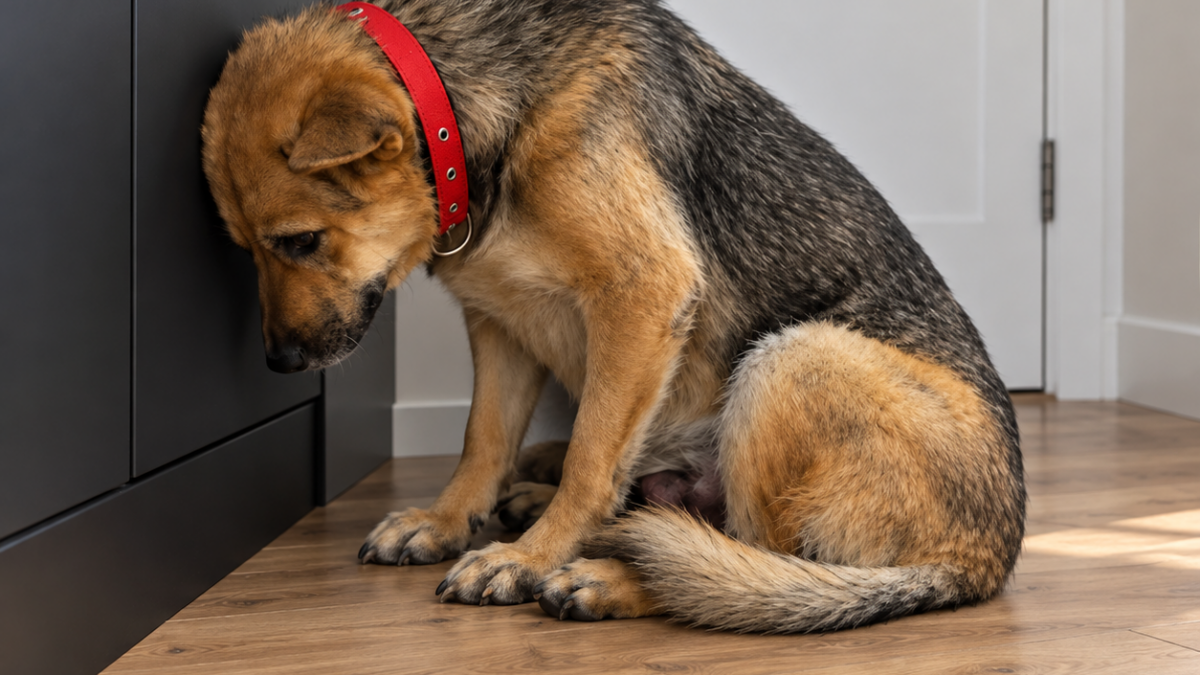
PART 2
The first scan showed fluid.
Not enough to panic yet.
Enough to worry.
Dr. Warren stood in the treatment room studying the images while another technician started Chance on IV fluids.
I watched from behind the glass.
Chance barely reacted when the catheter went in.
That should have been helpful.
Instead, it made me sick.
A dog who had spent ten years learning not to react to pain was not an “easy patient.”
She was a dog who had stopped believing protest mattered.
Melissa came into the hallway.
“One wound penetrated the abdominal wall.”
My stomach tightened.
“Internal organs?”
“We’re checking.”
“Is she bleeding internally?”
“Not heavily right now.”
“Can you operate?”
“If we need to.”
“If?”
“We need more imaging first. Her blood pressure is low. She’s dehydrated. She’s underweight. Anesthesia is a risk.”
I looked through the window.
Chance was lying exactly where the technician had placed her.
She had not even changed position.
“How old?”
“Probably around ten.”
“Can she survive surgery?”
Melissa looked at me carefully.
“I think she can survive if we stabilize her first.”
That was the language of emergency medicine.
Not promises.
Possibilities.
I called our rescue director, Sarah.
She answered on the second ring.
“How bad?”
“Bad.”
“Numbers?”
I gave her the estimate.
Silence.
We had other animals in care.
Two puppies with parvovirus.
A shepherd recovering from pelvic surgery.
Four cats from a hoarding case.
Money was always the part of rescue nobody wanted to talk about.
Love did not pay hospital invoices.
“I’ll authorize it,” Sarah said.
“You sure?”
“No.”
I almost laughed.
“Do it anyway.”
That was Sarah.
I returned to the treatment room.
Chance’s eyes followed me.
I sat beside the kennel.
“You hear that?”
Her ears barely moved.
“You’re expensive already.”
Nothing.
“You’re going to have to develop a personality eventually so I can complain properly.”
For the first time, her nose twitched.
That tiny movement became important to me.
The additional imaging showed that the knife had missed her intestine by less than half an inch.
One wound had caused significant soft-tissue damage, but there was no catastrophic organ injury.
Chance still needed surgical cleaning and repair.
Melissa waited until her blood pressure improved.
Then they took her in.
I sat in the waiting room.
I had waited through surgeries before.
That doesn’t make waiting easier.
People assume rescuers become used to these things.
We don’t.
We simply become better at functioning while afraid.
An hour passed.
Then two.
Sarah arrived carrying coffee.
“You look terrible.”
“Thank you.”
“How is she?”
“Still in surgery.”
Sarah sat beside me.
“Lisa called.”
“The officer?”
“She’s opened a cruelty investigation.”
“Good.”
“No microchip?”
“No.”
“Any witnesses?”
“A man in the apartment building across the street said he heard a dog cry sometime around midnight.”
“See anything?”
“No.”
I stared at the floor.
“Somebody stabbed a ten-year-old dog twice and left her behind a building.”
“I know.”
“I want to know who.”
“So does Lisa.”
I looked at Sarah.
“And then what?”
She understood the question.
Justice in animal cruelty cases is rarely what people imagine.
It isn’t always dramatic.
Sometimes prosecutors decline.
Sometimes evidence is weak.
Sometimes punishment feels painfully small compared with what the animal endured.
Sarah put a hand on my arm.
“First we keep Chance alive.”
She was right.
At 2:40 that afternoon, Melissa came through the double doors.
I stood immediately.
“She’s awake.”
My knees nearly failed.
“Surgery?”
“Successful.”
I exhaled.
“The wounds were deep, but we cleaned everything thoroughly. No bowel perforation. No major vessel injury.”
“She’s safe?”
Melissa gave me the look veterinarians use when people ask impossible questions.
“She’s safer than she was this morning.”
I nodded.
I would take that.
“Can I see her?”
“In a few minutes.”
When they finally brought me in, Chance was wrapped in blankets.
An IV line ran into her leg.
Her abdomen was shaved and bandaged.
She looked smaller.
More vulnerable.
I pulled a chair beside her.
“Hey.”
Her eyes opened.
“I told you that you were expensive.”
No tail.
No movement.
But she looked directly at me.
“That counts.”
I stayed until the clinic closed.
Then Melissa told me to go home.
“I can stay.”
“She’s heavily medicated. She needs sleep.”
“So do I.”
“Exactly.”
“I can sleep here.”
“No.”
“Melissa.”
“Daniel.”
She pointed toward the door.
“Go.”
I left reluctantly.
That night, I dreamed about Chance lying behind the building.
Except every time I tried reaching her, the pavement stretched farther away.
I woke at 4:18.
By 6:30, I was back at the clinic.
Chance was awake.
A technician named Molly was sitting beside her.
“She ate two bites.”
“That’s good.”
“Very good.”
I crouched.
“Breakfast?”
Chance watched me.
Molly offered another small piece of chicken.
Chance sniffed.
Then took it slowly.
I smiled.
“There you go.”
Molly whispered, “She won’t eat if I’m standing.”
I looked at Chance.
“So we sit.”
That became the first rule of her recovery.
Everything happened at her speed.
On day two, she ate from a bowl if nobody looked directly at her.
On day three, she stood.
Only for fifteen seconds.
But she stood.
Her hind legs shook violently.
Melissa supported her abdomen while I held the leash loose.
Chance took one step.
Then another.
Then froze when a man entered the hallway.
Her body dropped immediately.
I watched her eyes.
Not simple nervousness.
Terror.
The man was an older technician she had never met.
He stopped moving.
“What do I do?”
“Back away,” I said.
He did.
Chance remained flattened against the floor.
That reaction gave us another clue.
Men frightened her more than women.
Especially men standing over her.
I hated what that suggested.
Over the next week, we discovered dozens of triggers.
Raised voices.
Quick hands.
Belts being removed.
Metal clanging.
Doors slamming.
A broom lifted from the floor.
Once, Marcus came to visit and dropped his keys.
Chance urinated beneath herself.
Marcus froze.
“Oh God.”
“It’s okay.”
He looked horrified.
“I scared her.”
“You didn’t know.”
He sat on the floor ten feet away.
Chance stared at him.
Marcus turned his body sideways.
For twenty minutes, he said nothing.
Eventually Chance lowered her head.
Marcus whispered, “Who did this to you?”
I had asked the same question a hundred times.
Lisa was trying to answer it.
She returned to the abandoned storefront.
Knocked on doors.
Collected security footage from nearby businesses.
A gas station camera had captured a dark pickup around 11:47 p.m.
Too far away for a plate.
Another camera showed headlights entering the alley.
Then leaving four minutes later.
No clear driver.
No clear face.
The owner of the building gave Lisa permission to search trash containers.
Nothing useful.
Then she found blood on a broken section of wooden pallet.
Chance’s blood, eventually confirmed.
She had either collapsed there or been placed there.
Still not enough.
The investigation stalled.
Chance, meanwhile, began changing.
Slowly.
At first, she refused to walk outside.
The clinic doors were terrifying.
The parking lot worse.
I would open the door, and her entire body would stiffen.
So we stopped trying to “make” her walk.
I sat outside.
She stayed inside.
The door remained open.
Day one, she only looked.
Day two, she came within six feet.
Day three, four feet.
Day four, her front paws crossed the threshold.
She immediately backed away.
I smiled anyway.
“You did it.”
The next afternoon, she put all four paws outside.
Sunlight touched her face.
Chance blinked.
For maybe thirty seconds, she stood there.
Then she went back inside.
That was enough.
People often imagine rehabilitation as something dramatic.
A frightened dog suddenly realizing she is safe.
Music swelling.
Tail wagging.
A perfect before-and-after moment.
Real rehabilitation is boring.
Repetitive.
Tiny.
You celebrate a dog drinking while somebody is in the room.
You celebrate four paws crossing a doorway.
You celebrate a sigh.
You celebrate sleep.
Especially sleep.
The first week, Chance never truly slept if anyone was near her.
Her eyes would close, then reopen every few seconds.
Hypervigilance.
Always monitoring.
Always waiting.
On the ninth day, I was sitting beside her kennel reading emails when I realized she had been asleep for twenty minutes.
Completely asleep.
Her chin on the blanket.
Breathing slowly.
I did not move.
My leg went numb.
My coffee went cold.
I stayed for another forty minutes because I was afraid waking her would steal something important.
When Melissa walked in, I held one finger to my lips.
She looked at Chance.
Then smiled.
Progress.
By the second week, the stitches were healing.
The bandages came off.
She began walking farther.
The clinic had a small fenced grass area behind the building.
Chance stepped onto grass for what may have been the first time in years.
She froze.
Then sniffed.
One step.
Another.
A breeze moved across her face.
Her ears lifted.
She smelled everything.
The grass.
The fence.
The dirt.
The air.
I stood ten feet away.
She took perhaps twelve steps.
Then looked back at me.
Not toward the building.
At me.
My chest tightened.
“Yeah.”
She looked away.
“You’re okay.”
That afternoon, she ate an entire meal.
Two days later, she accepted food from my hand.
That was the first time she willingly touched me.
Her lips barely brushed my fingers.
But she made the choice.
I sat in my truck afterward and cried.
I didn’t tell anyone.
Marcus found out anyway because apparently my face had no respect for privacy.
“Were you crying?”
“No.”
“Your eyes are red.”
“Allergies.”
“You say that every time.”
“Persistent allergies.”
He grinned.
Then became serious.
“How’s she doing?”
“Better.”
“Ready for foster?”
“Soon.”
That word scared me.
Because the clinic had become predictable.
Chance knew the nurses.
The smells.
The rooms.
A home would be another world.
Kitchen sounds.
Television.
Stairs.
Furniture.
Vacuum cleaners.
Neighbors.
Nighttime.
What if it was too much?
Sarah had already begun searching for a foster.
She rejected three applications immediately.
One family had young children.
Too unpredictable.
One had six dogs.
Too crowded.
One wanted “a rescue project.”
Sarah hated that phrase.
Chance was not a project.
She was a living animal whose fear was not entertainment.
Then came Laura Bennett.
Forty-six.
School librarian.
Lived alone outside town.
One dog.
Hank.
Twelve-year-old black Labrador mix.
Gentle.
Slow.
Laura had fostered senior dogs before.
When Sarah called me about her, I asked the most important question.
“What does she expect from Chance?”
Sarah read from Laura’s application.
“Nothing.”
“What?”
“She wrote, ‘If she spends six months hiding under my dining table, she can spend six months hiding under my dining table.’”
I sat up.
“When can we meet her?”
Laura came to the clinic the next day.
She did everything right.
No baby voice.
No reaching.
No staring.
She sat on the floor.
Hank stayed home for the first introduction.
Chance remained across the room.
Laura read a paperback.
For forty minutes.
Finally, Chance stood.
She walked six feet closer.
Sat.
Laura did not look up.
Ten minutes later, Chance moved closer again.
When the visit ended, Laura stood slowly.
“Nice meeting you, Chance.”
Then she left.
I stared at the door.
Melissa walked over.
“Well?”
“I love her.”
“The dog?”
“Laura.”
Melissa laughed.
On the twenty-first day after rescue, Chance was medically cleared to leave the clinic.
Not fully healed.
Not emotionally stable.
Ready for the next step.
I rode with her to Laura’s house.
Chance spent the drive curled on the back seat.
When we arrived, Laura had opened the front door.
No crowd.
No balloons.
No adoption celebration.
Just quiet.
Hank waited behind a baby gate.
He was enormous.
Black.
Gray face.
The kind of dog whose entire personality seemed built around not being in a hurry.
Chance saw him.
Stopped.
Hank saw her.
He wagged once.
Then lay down.
Perfect.
Laura knelt.
“We can stay outside as long as she wants.”
Chance sniffed the front walkway.
Ten minutes.
Fifteen.
Then she stepped onto the porch.
She looked through the open doorway.
This may have been the first house she had ever entered.
We couldn’t know for certain.
But everything about her reaction suggested indoor life was unfamiliar.
Floorboards.
Ceiling fan.
Couch.
Pictures.
The refrigerator motor cycling in the kitchen.
Chance’s eyes moved everywhere.
She stepped inside.
Then backed out.
Laura said nothing.
Chance tried again.
This time, Hank stood behind the gate.
He yawned.
Chance watched him.
Hank walked away.
No pressure.
Chance crossed the threshold.
One step.
Two.
Three.
She was inside.
I had watched her survive surgery.
Walk onto grass.
Eat from my hand.
But seeing her stand in that living room nearly broke me.
Laura quietly closed the exterior screen door but left the wooden door open.
Chance smelled the rug.
The table legs.
The couch.
Then she noticed Hank again.
Laura removed the baby gate once both dogs seemed calm.
Hank walked forward slowly.
Chance stiffened.
Hank stopped.
Then he did something simple.
He turned sideways.
Sniffed the floor.
And walked away.
Chance followed him.
Three feet behind.
Hank went into the kitchen.
Chance followed.
Hank drank water.
Chance watched.
Hank walked into the living room.
Chance followed.
Laura looked at me.
“He’s showing her.”
I nodded.
Dogs teach each other things humans cannot.
Hank taught Chance that water bowls were safe.
Doorways led somewhere.
Grass was for walking.
Couches did not attack.
People sitting in chairs could be ignored.
At first, Chance followed him everywhere.
If Hank went outside, she went to the door.
If Hank lay down, she settled nearby.
If Hank approached Laura, Chance watched from a distance.
The first night, she refused the bed Laura prepared.
She slept beneath the kitchen table.
Laura slept on the couch.
Not beside her.
Not close enough to frighten her.
Simply in the same room.
At three in the morning, Laura woke and found Chance standing six feet away.
Watching.
Laura closed her eyes again.
By morning, Chance was lying beside the couch.
The first week at Laura’s house was a collection of tiny victories.
Chance walked into the backyard voluntarily.
She ate while Laura remained in the kitchen.
She allowed Laura to clip a leash onto her collar.
She approached the refrigerator after hearing Hank’s food container open.
And on day six, her tail lifted above the line of her back for the first time.
Laura sent me a video.
Chance was walking behind Hank through the yard.
Tail halfway up.
Not wagging.
Just up.
I replayed it seven times.
Sarah called.
“You saw?”
“Yes.”
“Tail.”
“I know.”
“You’re crying again.”
“I’m hanging up.”
The investigation, however, had not moved.
Weeks passed.
Lisa remained persistent.
She checked old animal complaints.
Missing-dog reports.
Veterinary databases.
Shelter records.
Nothing matched Chance.
It was as if she had appeared from nowhere.
Then one afternoon, Lisa called.
“Daniel, I found something.”
My stomach tightened.
“What?”
“A woman came into the station.”
“About Chance?”
“She recognized her photograph.”
I stood.
“Who?”
“Name’s Maria Alvarez. She lives about six miles from where Chance was found.”
“Does she know the owner?”
“I think you should hear this yourself.”
I drove to the animal-control office.
Maria was waiting in an interview room.
Early fifties.
Nervous.
She twisted a tissue between her fingers.
Lisa introduced us.
Maria looked at Chance’s photograph on the table.
“That’s Daisy.”
The name hit strangely.
“Daisy?”
“That’s what the little girl called her.”
“What girl?”
Maria took a breath.
“My former neighbor’s daughter.”
The neighbor was named Frank Dillard.
He had lived next door to Maria for nearly nine years.
Chance—Daisy then—had been kept mostly in a fenced side yard.
Sometimes chained.
Sometimes loose inside a small enclosure.
Maria rarely saw anyone play with her.
The daughter, Kaylee, had been different.
She was nine when the family moved in.
She would sit beside the fence.
Slip treats through.
Talk to Daisy.
But Frank was volatile.
Maria heard him yelling often.
At his wife.
At Kaylee.
At the dog.
“Did you report him?” I asked.
Maria looked down.
“Once.”
“What happened?”
“Animal control came. He brought the dog inside before they arrived. Told them she was fine.”
Lisa checked records.
There had been a welfare complaint six years earlier.
No violation observed.
Maria continued.
Frank’s wife eventually left.
Kaylee went with her.
Frank kept Daisy.
After that, Maria saw the dog less.
Sometimes weeks passed without seeing her.
Then Frank moved out three months before Chance was found.
“Where?”
“I don’t know. I thought he took Daisy.”
Lisa leaned forward.
“What makes you believe this dog is Daisy?”
Maria pulled out her phone.
Photographs.
Old backyard photos taken through a fence.
The markings matched.
White stripe down the face.
Brown patch over the left eye.
Small white mark shaped almost like a crescent on one shoulder.
Chance.
Younger.
Heavier.
But unmistakable.
My hands shook.
“Can you contact Kaylee or her mother?”
Maria nodded.
“I have the mother’s number.”
Lisa called.
The woman’s name was Rebecca Dillard.
When Lisa explained, Rebecca started crying.
She sent more photographs immediately.
One showed fourteen-year-old Kaylee hugging Daisy five years earlier.
Chance looked younger but tense.
Her eyes already carried something familiar.
Fear.
Rebecca agreed to come the next morning.
She brought Kaylee, now eighteen.
Chance was still at Laura’s house.
We didn’t bring her immediately.
First we needed facts.
Kaylee sat across from us holding one of the old photographs.
“She was my dog.”
Her voice cracked.
“Dad said she ran away.”
“When?” Lisa asked.
“About two months ago.”
That timeline mattered.
“Did you believe him?”
Kaylee shook her head.
“I didn’t know.”
She explained that after her parents separated, Frank refused to let her take Daisy.
For years, Kaylee asked about her.
Sometimes Frank sent photographs.
Eventually even those stopped.
Two months earlier, Kaylee called and asked again.
Frank said Daisy had escaped.
Kaylee begged him to search.
He told her the dog was old and probably dead somewhere.
Kaylee cried telling us.
I felt something hot behind my ribs.
Lisa stayed calm.
“Did your father ever hurt Daisy?”
Kaylee looked at her mother.
Rebecca closed her eyes.
Then Kaylee nodded.
“Yes.”
“How?”
“He hit her.”
“With his hands?”
“Sometimes.”
“Anything else?”
Silence.
Then Kaylee whispered, “A belt.”
My jaw tightened.
“Did you ever see him use a knife?”
“No.”
Lisa asked whether Frank owned one.
Kaylee gave a broken laugh.
“He carried one every day.”
A folding hunting knife.
Black handle.
Four-inch blade.
Lisa’s posture changed.
“Do you know where your father lives now?”
Kaylee knew the town.
Not the address.
That was enough.
The police located him within two days.
But suspicion is not proof.
Lisa needed more.
Frank denied everything.
Claimed Daisy had escaped.
Claimed he hadn’t seen her since.
Said Maria was lying because they had argued as neighbors.
Said Rebecca was bitter because of the divorce.
Said Kaylee had been manipulated by her mother.
Classic.
Then investigators obtained his phone records.
Location data placed his phone near the abandoned storefront shortly before midnight the night Chance was found.
Still not enough alone.
Frank said he drove through the area regularly.
Then police searched his truck under warrant.
Behind the driver’s seat, inside a tool bag, they found a folding knife.
Black handle.
Recently cleaned.
Forensic testing found microscopic traces of canine blood inside a seam near the hinge.
The DNA profile was consistent with Chance.
When Lisa called me with that result, I sat completely still.
“Are you sure?”
“Yes.”
“He did it?”
“The evidence is strong.”
“Why?”
“We don’t know.”
Police interviewed him again.
At first, Frank denied.
Then his story changed.
Chance had supposedly “snapped.”
Then supposedly “attacked him.”
There were no bite injuries on him.
Then he claimed he was defending himself.
Investigators confronted him with the evidence.
Eventually he admitted stabbing her.
His justification?
She had urinated inside his truck.
That was it.
A ten-year-old frightened dog.
An accident.
He stabbed her twice.
Then drove her behind an abandoned building and left her.
I had spent weeks imagining some complicated explanation.
There wasn’t one.
Cruelty is sometimes terrifyingly ordinary.
A man became angry.
A dog had no power.
So he hurt her.
I went to Laura’s house that evening.
Chance met me at the front door.
Not running.
But standing there.
Tail raised.
Hank behind her.
I crouched.
“Hey, Chance.”
She walked toward me.
Sniffed my hand.
Then, for the first time, pushed her head beneath my palm.
I froze.
Laura saw.
Her eyes widened.
Chance stood there.
Waiting.
I stroked her head.
Slowly.
She closed her eyes.
I nearly lost it.
“You know what?” I whispered.
She leaned harder.
“They found him.”
Chance didn’t know what that meant.
Maybe that was merciful.
“You never have to see him again.”
Her tail moved once.
Laura looked at me.
“Arrest?”
“Tomorrow, probably.”
Laura sat on the floor.
“Good.”
No celebration.
No fantasies about revenge.
Just one word.
Good.
Frank Dillard was arrested the next morning on felony animal-cruelty charges and related offenses.
Kaylee called me after learning.
“I feel guilty.”
“Why?”
“He’s my father.”
“That doesn’t make what he did your responsibility.”
“I should have gotten Daisy away sooner.”
“You were a child.”
“I knew he hurt her.”
“You were a child.”
She cried.
I repeated it until she heard me.
“You were a child.”
The prosecutor’s case took months.
Chance’s recovery continued during that time.
The first time Kaylee visited Laura’s home, we did not know how Chance would react.
Would she remember?
Would seeing someone connected to her old life trigger fear?
Kaylee sat in the backyard.
Chance came outside behind Hank.
She stopped.
Looked at Kaylee.
Her body stiffened.
Kaylee covered her mouth.
“Daisy?”
Chance’s ears lifted.
That name.
Her old name.
Kaylee whispered again.
“Daisy girl?”
Chance took one step.
Then another.
Kaylee began crying.
She didn’t move.
Chance approached.
Sniffed her knees.
Then her hands.
Her tail lifted.
Not fast.
Slowly.
Then it wagged.
Kaylee sobbed.
“Oh my God.”
Chance stepped closer.
Kaylee touched the side of her neck.
“I’m sorry.”
Chance leaned into her.
“I’m so sorry.”
Everyone cried.
Even Hank seemed emotional, although that may have been because nobody was paying attention to him.
Kaylee spent two hours there.
She told us stories.
The good ones.
How Chance—Daisy—used to sleep beside her when she was little.
How she hated thunderstorms.
How she once stole an entire hamburger off a picnic table.
How Kaylee would sneak outside after her father went to bed and sit beside the fence.
“She was the only one I could talk to.”
Laura asked, “Why didn’t your mother take her?”
Rebecca looked ashamed.
“Frank threatened to report me for theft if I did.”
Kaylee shook her head.
“He knew keeping Daisy hurt me.”
That was another form of control.
Chance had been trapped inside adult cruelty long before the knife.
The reunion gave us something else.
Her history.
Her real age.
Ten years and seven months.
Her birthday.
April 12.
Her favorite food.
Chicken.
Her fear of thunder.
And the truth that once, years before fear consumed her, Chance had known love.
Kaylee had given her that.
It mattered.
The trial began five months after rescue.
Frank rejected a plea deal.
His attorney argued self-defense.
That meant Chance’s behavior became part of the case.
I hated it.
The defense wanted to portray her as unpredictable.
Aggressive.
Dangerous.
The prosecutor asked Dr. Warren to testify.
Melissa explained the wounds.
Their angle.
Depth.
Location.
She explained that the injury pattern was inconsistent with the chaotic movements expected during a dog attack.
Frank had no wounds requiring treatment.
No torn clothing documented.
No contemporaneous report of being attacked.
Then I testified.
The defense attorney asked:
“Mr. Mercer, Chance was fearful when you found her?”
“Yes.”
“Fearful dogs can bite, correct?”
“Yes.”
“Did Chance ever attempt to bite you?”
“No.”
“Growl?”
“No.”
“Could her lack of response have been due to shock?”
“Partly.”
“So you cannot know what her behavior was before she was injured.”
“No.”
The attorney nodded.
“Then you cannot say she did not attack my client.”
The prosecutor objected.
Sustained.
But the implication sat there.
I wanted to shout.
Instead, I waited.
On redirect, the prosecutor asked one question.
“Mr. Mercer, during the months you have known Chance, how many people has she attacked?”
“None.”
“Children?”
“None.”
“Men?”
“None.”
“Veterinarians?”
“None.”
“Other dogs?”
“None.”
“What does she do when afraid?”
I looked toward Frank.
“She freezes.”
The courtroom went silent.
The prosecutor sat down.
Kaylee testified too.
That was the hardest part.
She described years of witnessing Frank strike Chance.
Her father stared at her from the defense table.
She shook but did not stop.
The defense attorney suggested she was angry over her parents’ divorce.
Kaylee answered:
“I am angry.”
The attorney seemed pleased.
Then she continued.
“I’m angry because he hurt a dog who trusted me.”
Silence.
“He told me she ran away.”
Her voice cracked.
“He knew I would look for her. He knew I would wonder if she was hungry or cold. And the whole time, he knew exactly where he had left her.”
Frank looked down.
That was the first time I saw him show anything resembling shame.
Not enough.
Never enough.
The forensic analyst testified about the blood on the knife.
The phone-location records followed.
Then Maria described years of hearing Frank yell and seeing Chance in the yard.
The evidence closed around him piece by piece.
The jury deliberated less than three hours.
Guilty.
On the primary cruelty count.
Guilty on abandonment.
Additional violations followed from the broader investigation.
At sentencing, the prosecutor asked whether anyone wanted to submit a victim-impact statement.
Legally, Chance was property under parts of the statute.
That phrase made me furious.
But the judge allowed statements about the rescue costs and community impact.
Kaylee spoke.
So did I.
I kept mine short.
“Chance arrived believing the safest response to a human being was to become completely still.”
I looked toward the judge.
“She was stabbed, abandoned, and left without even her name.”
Frank sat beside his attorney.
“Months later, she walks into a yard with her tail up. She sleeps in a home. She trusts people again.”
I paused.
“Nothing this court does can return the years fear took from her. But the person who caused that fear should not be allowed to pretend it was an accident.”
The judge sentenced Frank to incarceration, probation after release, restitution, mandatory psychological evaluation, and a lengthy prohibition on possessing animals.
Was it enough?
No sentence could be.
But it was accountability.
And sometimes accountability is the only form of revenge worth having.
Because while Frank entered custody, Chance was doing something far more important.
She was learning to play.
Hank taught her.
Of course he did.
One afternoon, Laura threw a soft yellow ball for him.
Hank lumbered after it.
Chance watched.
Laura threw it again.
Chance followed halfway.
Stopped.
The third time, she ran.
Actually ran.
The dog who had once been too frightened to cross a doorway ran across the yard.
She didn’t understand the ball.
She simply chased Hank.
But halfway across the grass, something changed.
Her body loosened.
Her ears flew backward.
Her tail rose.
Laura started laughing.
Chance ran faster.
Hank looked offended that a ten-year-old beginner had invaded his sport.
They circled the yard.
Chance came back panting.
Eyes bright.
Laura sent me the video.
I watched it until my phone battery warning appeared.
That was our revenge.
Not Frank suffering.
Chance living.
The first anniversary of her rescue came with a problem.
Hank was slowing down.
He was thirteen now.
His hips hurt.
He slept more.
Chance had become deeply attached to him.
If Hank went to the veterinarian without her, she paced.
If he slept in another room, she searched.
Laura worried.
“She already lost so much.”
I knew what she meant.
We could not protect Chance from every future loss.
That is another truth rescue teaches you.
Safety does not mean nothing painful will ever happen again.
Safety means pain happens in a place where someone stays with you through it.
Hank developed cancer that winter.
The diagnosis came quickly.
Aggressive.
Not curable.
Laura cried when she called.
“How do I explain this to Chance?”
“You can’t.”
“She’s going to think he disappeared.”
“Then don’t let him disappear.”
We planned carefully.
Hank spent his final days at home.
Chance stayed beside him.
She smelled the medications.
Watched Laura carry him outside.
Lay next to his bed.
On his last morning, the veterinarian came to the house.
Chance was allowed to remain.
Hank died with Laura holding him.
Chance sniffed his face afterward.
Then lay beside him for nearly an hour.
She did not panic when his body was taken.
She searched the house that night.
The next day too.
But something was different.
Hank had not vanished through violence.
He had not been ripped away.
Chance had seen.
She knew he had been sick.
Maybe dogs understand death differently than we do.
Maybe they understand more.
For weeks, Chance slept in Hank’s bed.
Laura let her.
Then one morning, she carried one of his toys into the yard.
She lay in the sun.
Tail resting behind her.
Laura took a photograph.
Chance looked sad.
But safe.
That distinction mattered.
Three months later, Laura finalized the adoption paperwork.
Until then, technically, Chance had remained a foster because of the court case and ongoing medical treatment.
Sarah brought the documents.
I attended.
So did Kaylee and Rebecca.
There was no huge ceremony.
Laura signed.
Then looked at Chance.
“Guess you’re stuck with me.”
Chance walked over.
Placed her head on Laura’s lap.
Kaylee smiled through tears.
“What name are you keeping?”
Laura looked at her.
“I wanted to ask you.”
Kaylee thought for a long moment.
“She was Daisy when she was mine.”
Then she looked at Chance.
“But she became Chance when you saved her.”
I started to object.
Kaylee shook her head.
“No. I like it.”
She stroked the dog’s ear.
“Daisy was the dog I loved when I was a kid.”
Her eyes filled.
“Chance is who she became when she survived.”
Laura nodded.
“Chance it is.”
Kaylee visited often.
Their relationship became something beautiful and complicated.
Chance loved her.
But she did not belong to her anymore.
Kaylee accepted that.
She went to college the following fall.
Before leaving, she sat with Chance in Laura’s backyard.
“I used to think getting you back would fix everything.”
Chance rested her chin on Kaylee’s knee.
“But you’re already where you need to be.”
She hugged her carefully.
“I’m glad.”
That kind of love is harder than possession.
It means choosing what is best for the one you love instead of what makes your own pain easier.
Kaylee understood that at eighteen better than many adults ever do.
Chance continued changing.
The first thunderstorm in Laura’s house revealed another piece of her past.
Thunder cracked.
Chance disappeared.
Laura found her wedged behind the toilet.
Shaking violently.
Laura did not drag her out.
She sat on the bathroom floor.
Read a book aloud.
The storm lasted forty minutes.
Chance stayed hidden.
The next storm, she hid beneath the dining table.
Laura sat nearby.
The third storm, Chance climbed onto the couch.
Pressed herself against Laura’s leg.
Six months later, during a summer storm, Chance slept.
That photograph is still one of my favorites.
Rain against the windows.
Chance stretched across a blanket.
Completely asleep.
Fear had finally become something she could sleep through.
Her physical scars faded too.
The abdominal wounds became thin pale lines.
Her coat covered most of them.
But one scar remained visible if she rolled onto her back.
Laura once told me she hated looking at it.
“I don’t,” I said.
She looked surprised.
“Why?”
“Because it closed.”
That scar was not evidence that Chance was broken.
It was evidence that the wound ended.
Two years after rescue, Kaylee invited all of us to her college veterinary-assistant program graduation.
She had chosen animal care because of Chance.
After the ceremony, she knelt in her gown beside her old dog.
“You did this.”
Chance licked her face.
I laughed.
“Very dignified.”
Kaylee didn’t care.
She later started working at a shelter.
The first dog she helped rehabilitate was a terrified pit bull that refused to leave the back of a kennel.
Kaylee sent me a message.
I’m not pulling him out. I’m sitting on the floor. Chance taught me better.
That was the moment I realized Chance’s story had moved beyond Chance.
Fear had once spread through her life because one person used cruelty.
Now patience was spreading because other people had watched her heal.
That felt like a form of justice no courtroom could provide.
Frank eventually completed his incarceration and remained under animal-possession restrictions.
I saw him once after his release.
At a gas station.
He recognized me.
I recognized him.
For a second, every angry thought I had ever had returned.
Chance on the pavement.
Blood.
Her body freezing when a hand moved.
Kaylee crying in court.
He looked away first.
I could have said something.
I didn’t.
I drove to Laura’s instead.
Chance was in the backyard.
Gray now.
Slower.
When she saw my truck, she stood.
Her tail wagged.
I opened the gate.
She walked toward me.
No hesitation.
No fear.
She pushed her head beneath my hand.
That was all the answer I needed.
Frank had taken enough of our time.
He was not getting another minute.
Chance was nearly fourteen when her health began declining.
Kidney disease first.
Then arthritis.
Laura managed everything carefully.
Special diet.
Medication.
Short walks.
Soft beds.
Chance became opinionated in old age.
She demanded breakfast at 6:30.
Exactly.
At 6:31, she stared at Laura.
At 6:35, she began pacing dramatically.
“She spent ten years afraid to ask for anything,” Laura told me.
“Let her complain.”
“I do.”
Chance also developed a habit of sleeping in Hank’s old bed.
Laura had never removed it.
Sometimes she carried one of his toys there.
Years after he died.
Memory without panic.
I found that beautiful.
On Chance’s fifteenth birthday, we gathered in Laura’s backyard.
Kaylee came with Rebecca.
Sarah.
Marcus.
Lisa, retired from animal control.
Dr. Warren.
Even Maria, the neighbor who had recognized her photograph.
Laura made a dog-safe cake.
Chance ate slowly but enthusiastically.
There was a photograph from that afternoon.
Chance in the middle.
Gray face.
Tail visible behind her.
Surrounded by the people whose lives had intersected because one wounded dog survived a night she was never supposed to survive.
Someone asked Lisa whether she remembered the investigation.
“Every detail.”
Then she looked at Chance.
“But I like this part better.”
We all did.
A few months later, Chance stopped eating consistently.
Her kidneys worsened.
She tired quickly.
One morning, Laura called me.
“I think we’re close.”
I drove over.
Chance was lying in a patch of sunlight near the sliding door.
She raised her head when I entered.
Her tail moved twice.
“Hey, girl.”
I sat beside her.
She smelled my hand.
Then rested her chin on my leg.
Fifteen years old.
Five years after rescue.
Five years we had once believed she might never get.
Laura sat across from me.
“I keep thinking about her first day here.”
“The doorway?”
“She wouldn’t come inside.”
I smiled.
“Hank had to teach her.”
“She followed him everywhere.”
We sat quietly.
Chance slept.
That afternoon, Kaylee arrived.
She had become a veterinary technician by then.
The moment Chance smelled her, her eyes opened.
Kaylee knelt.
“Hey, Daisy girl.”
Chance’s tail moved.
The old name still lived somewhere inside her.
Kaylee kissed her head.
“You did okay, didn’t you?”
I had to look away.
Laura whispered, “She did more than okay.”
The veterinarian came to the house the next morning.
Same philosophy we had used with Hank.
No clinical room.
No fear.
Chance stayed in her favorite bed near the window.
Laura held her.
Kaylee held one paw.
I sat beside her head.
Rebecca stayed behind her daughter.
Marcus and Sarah waited in the kitchen.
Chance was surrounded.
I thought about the dog behind the abandoned building.
Ten years old.
Stabbed twice.
Alone.
Unable to ask for comfort.
Now she was fifteen.
Her body was tired.
But her eyes were soft.
Laura whispered, “Thank you for choosing me.”
Chance breathed slowly.
Kaylee cried.
“I’m sorry I couldn’t protect you then.”
I put a hand on her shoulder.
Chance looked toward her.
Kaylee swallowed.
“But I’m glad you found them.”
Chance’s eyes moved toward me.
I touched the white fur between her ears.
“You remember the first thing I told you?”
Of course she couldn’t answer.
I smiled through tears.
“I said you didn’t know me.”
Her breathing remained steady.
“I said I wouldn’t hurt you.”
I thought about the name.
Chance.
A word we had given her because we wanted to believe a future existed beyond that alley.
“You did the rest.”
The veterinarian administered the sedative.
Chance relaxed.
No freezing.
No terror.
Just relaxation.
For the first time, letting go of control did not mean danger.
It meant safety.
Her head became heavy in Laura’s lap.
Laura kissed her.
“You’re home.”
Chance took one slow breath.
Then another.
Then she was gone.
Nobody spoke for a while.
I looked around that room.
Laura.
Kaylee.
Rebecca.
People crying openly.
Hands still touching Chance.
And I remembered the night someone had left her behind a building expecting her to die alone.
They failed.
They failed completely.
That was the final justice.
Chance did not die alone.
She did not live alone.
She did not spend the rest of her life afraid.
The person who stabbed her had decided her life was worth throwing away.
Chance spent five more years proving him wrong every single day.
Laura buried her beside Hank beneath a dogwood tree.
The marker was simple.
CHANCE
SHE LEARNED SHE WAS SAFE.
Beneath that:
AND THEN SHE TAUGHT US WHAT SAFETY MEANS.
A few weeks later, Laura called.
“I can’t move her bed.”
“You don’t have to.”
“I know.”
Silence.
Then she asked, “Does this part ever stop hurting?”
“No.”
“That’s encouraging.”
I laughed.
“It changes.”
“How?”
“One day you remember more of the life than the ending.”
I believed that because Chance had taught me.
For months after she died, the first image in my mind was her final morning.
Then gradually, others returned.
Chance following Hank into the kitchen.
Chance’s tail rising for the first time.
Chance running across the grass.
Chance sleeping through thunder.
Chance demanding breakfast.
Chance with frosting on her nose at fifteen.
The alley stopped being the center of her story.
That may have been her greatest victory.
Cruelty wanted to make that alley the definition of her life.
It failed.
Her life became a home.
A yard.
A black Labrador named Hank.
A librarian named Laura.
A young woman named Kaylee who turned grief into a career helping other frightened animals.
That is what survived.
A year after Chance died, Kaylee called me from the shelter where she worked.
“We have a dog.”
I laughed.
“You always have a dog.”
“No. I mean a Chance dog.”
I understood immediately.
Older female.
Terrified.
Found abandoned.
Wouldn’t walk when anyone approached.
“What are you doing?”
Kaylee answered:
“Sitting.”
I smiled.
“Good.”
“I’ve been here forty-five minutes.”
“Keep sitting.”
Another pause.
“She just looked at me.”
“That counts.”
“I know.”
I closed my eyes.
Chance was gone.
But there it was again.
That patience moving forward.
Kaylee sat on a shelter floor because years earlier I had sat on pavement beside a dog who didn’t know whether she could survive another human hand.
Eventually, the new dog took one step toward Kaylee.
Then another.
Kaylee adopted her six weeks later.
She named her Hope.
When she introduced us, I laughed.
“Chance and Hope?”
Kaylee smiled.
“Seemed appropriate.”
Hope sniffed my shoes.
Chance had once been afraid even of that.
I crouched.
Hope backed away.
I stopped.
“You decide.”
Kaylee’s eyes filled.
“You still say that?”
“Every time.”
Because that was what Chance’s life had ultimately taught me.
Choice matters.
Cruelty steals choice.
It steals the choice to leave.
The choice to trust.
The choice to say no.
The choice to relax.
The choice to approach.
Healing gives those choices back one at a time.
Chance chose to eat.
To step through a doorway.
To follow Hank.
To trust Laura.
To approach Kaylee again.
To sleep during thunderstorms.
To put her head beneath my hand.
To belong.
Those choices were her victory.
People sometimes ask me if I wish I had named her something different after learning her original name.
No.
Daisy was beautiful.
It belonged to the girl who loved her first.
But Chance became something else.
Not because we erased Daisy.
Because she received what the name promised.
A chance.
A chance to survive surgery.
A chance to learn grass.
A chance to live inside.
A chance to have Hank.
A chance to grow old.
A chance to die in the arms of people who would have done anything for one more day.
The man who stabbed her probably imagined her story ended when he drove away.
He believed he had discarded an old dog behind a building.
But stories do not always end where cruel people leave them.
Sometimes a sanitation worker stops.
Sometimes a rescuer sits down.
Sometimes a veterinarian says, “We can try.”
Sometimes an old Labrador shows a frightened dog through a doorway.
Sometimes a woman leaves a bed beneath the kitchen table for as long as necessary.
Sometimes a daughter gets another chance to say goodbye properly.
And sometimes the animal somebody tried to erase becomes unforgettable.
If I close my eyes now, I do not see the blood first.
I see a backyard.
Warm afternoon.
Hank moving slowly through the grass.
Chance following.
Then, suddenly, Chance begins to run.
Her ears lift.
Her body stretches.
Her tail rises.
For a few seconds, nothing is chasing her.
Not fear.
Not memory.
Not pain.
She is simply running toward something good.
That is how I remember her.
Not as the dog somebody left to die.
As the dog who finally learned she was allowed to live.
Years after Chance died, there was one question I still heard more often than any other.
“Did she ever completely forget what happened to her?”
People usually asked it gently.
They had seen the photographs.
Chance behind the abandoned building.
Chance recovering after surgery.
Chance standing in Laura’s yard beside Hank.
Chance as an old dog with a silver muzzle, sleeping beneath sunlight in the home where she had finally learned that doors could open without something terrible waiting on the other side.
They wanted to believe the fear disappeared.
That rescue erased everything.
That love somehow reached backward and changed the past.
I understood why people needed that version.
But it wasn’t true.
Chance remembered.
Not every moment, perhaps.
Not in the human way we replay scenes and attach dates to them.
But her body remembered.
Thunderstorms reminded her.
Men raising their voices reminded her.
Metal striking concrete could make her head lift suddenly even years after Frank was convicted.
Once, when Laura accidentally dropped a kitchen knife onto the floor, Chance disappeared beneath the dining table before Laura even understood what had happened.
She stayed there for almost an hour.
Laura sat twenty feet away.
No touching.
No coaxing.
No telling her everything was fine when clearly, in Chance’s body, everything was not fine.
Eventually, Chance came out.
She walked toward Laura.
Pressed her head against Laura’s knee.
And stayed there.
That was what healing looked like.
Not forgetting.
Returning.
That distinction became more important to me as the years passed.
I had spent so much of my early rescue work believing success meant eliminating fear.
A dog should stop flinching.
Stop hiding.
Stop hesitating.
Then Chance taught me that sometimes courage is not the absence of fear.
Sometimes courage is a frightened animal choosing to come back afterward.
Again.
And again.
And again.
A year after Kaylee adopted Hope, I drove to visit her.
Hope had changed dramatically.
The first time I met her, she barely allowed me through the door.
Now she barked once at my truck, then ran to Kaylee as though announcing important company.
“She’s become security,” Kaylee said.
“Terrifying.”
“She takes the job seriously.”
Hope was smaller than Chance had been.
White chest.
Dark brindle coat.
One ear standing, the other permanently undecided.
She followed Kaylee through the house with the confidence of a dog who believed the home belonged equally to both of them.
That was new.
“What happened to the dog who wouldn’t leave the back of the kennel?”
Kaylee smiled.
“She discovered the couch.”
“Powerful medicine.”
“Very.”
We sat outside.
Hope lay beneath Kaylee’s chair.
For a while we talked about ordinary things.
Work.
Rent.
Rebecca’s garden.
Laura.
Then Kaylee became quiet.
“I had a dream about Chance last night.”
I looked at her.
“What kind?”
“She was young.”
Kaylee picked at the edge of her sleeve.
“Not young like when I knew her as a kid. Younger than that. Like a puppy.”
I waited.
“She was running through a field. Hank was there.”
“That sounds like Chance.”
“There was no scar.”
My throat tightened.
Kaylee looked embarrassed.
“I know it was only a dream.”
“You don’t have to apologize for dreams.”
“I woke up happy.”
“That seems useful.”
She smiled.
“Then guilty.”
There it was.
Grief’s favorite trick.
“How long are you planning to punish yourself for being happy?”
Kaylee gave me a look.
“You sound like Laura.”
“Laura is usually right.”
“That’s annoying.”
“Extremely.”
Hope rolled onto her back beneath the chair.
Kaylee rubbed her stomach.
“I think part of me still feels like I abandoned Chance.”
“You were a child.”
“I know.”
“Do you?”
She stopped petting Hope.
I continued.
“Because every time we talk about your father, you speak like you were another adult standing in that house with equal power.”
Her eyes dropped.
“You weren’t.”
“I could’ve told somebody more.”
“You did tell people things.”
“I could’ve tried harder.”
“You were surviving him too.”
That silenced her.
I knew enough about Frank Dillard’s history by then to understand Chance had not been the only creature frightened of him.
Kaylee had grown up measuring the temperature of rooms by the sound of her father’s footsteps.
Rebecca had told me once that Frank could control a household without touching anyone.
A cabinet closed too loudly.
A chair scraped across the floor.
One sentence spoken in the wrong tone.
Everyone adjusted.
That was how fear became architecture.
People moved around it.
Chance had too.
“I used to think Chance was the one I failed,” Kaylee said.
“Maybe you were both trapped.”
She looked toward Hope.
“I wish I could tell her that.”
“Chance?”
She nodded.
“You did.”
“When?”
“Every time you came back to Laura’s house.”
Kaylee’s eyes filled.
“Every time you sat with her without asking her to choose you over Laura. Every time you let her decide how close to get. Every time you accepted that loving her didn’t mean owning her.”
I smiled faintly.
“She knew.”
“How?”
“Because she kept coming to you.”
Kaylee cried quietly.
Hope lifted her head.
Then climbed awkwardly halfway into Kaylee’s lap.
“You’re too big,” Kaylee said through tears.
Hope ignored the criticism.
I looked at them.
Chance had never had puppies that we knew of.
But in a strange way, this dog was carrying something forward from her anyway.
Not blood.
Lessons.
That happened more than I expected.
The rescue began receiving messages from people who had read about Chance.
One came from a man named Harold Jenkins.
He was sixty-eight.
Widowed.
Retired mechanic.
He wrote only four sentences.
I don’t know anything about rescue dogs. My wife used to handle all that. There’s an old dog at our county shelter that nobody wants because she hides whenever people come by. Your story about Chance made me wonder if maybe hiding doesn’t mean she doesn’t want a home.
I called him.
“Harold?”
“Yes.”
“This is Daniel Mercer.”
“Oh.”
He sounded suddenly nervous.
“You wrote to our rescue.”
“I did.”
“Tell me about the dog.”
“I don’t know much.”
Her shelter name was Millie.
Eleven years old.
Black-and-tan shepherd mix.
Owner died.
Extended family surrendered her.
At the shelter, Millie refused to approach visitors.
She backed into the rear corner whenever someone stood near the kennel.
Potential adopters passed.
Weeks became months.
Harold had visited three times.
“Why?”
Silence.
Then:
“My wife’s name was June.”
I waited.
“She died fourteen months ago.”
“I’m sorry.”
“She liked shepherds.”
There it was.
“I went to the shelter because the house is…”
He stopped.
I knew the sentence.
Quiet.
Too quiet.
“So what happened with Millie?”
“I stood outside her kennel.”
“And?”
“She left.”
“Where?”
“Back corner.”
“You stayed?”
“About twenty minutes.”
“What happened?”
“Nothing.”
“Good.”
He laughed.
“That’s good?”
“You didn’t force anything.”
Second visit, Harold brought a chair.
He sat sideways.
Didn’t reach through the kennel.
Didn’t call Millie.
Third visit, she came halfway forward.
He wrote me after that.
She looked at me for almost a minute.
For somebody else, that might have sounded meaningless.
To me, it was enormous.
I drove two hours to meet them.
Harold sat in the shelter hallway wearing an old denim jacket.
Millie stood inside her kennel.
Watching him.
Not hiding.
“You’re Daniel?”
“That’s me.”
He stood.
Millie immediately backed up.
Harold froze.
“Sorry.”
“Sit.”
We both sat.
Millie watched.
Harold whispered, “I’m messing this up.”
“No.”
“She moved away.”
“You moved quickly.”
He nodded.
“June always said I moved like I was late for something.”
“Was she right?”
“Always.”
Thirty minutes later, Millie walked toward the kennel gate.
Harold’s eyes filled.
“Don’t look at her too much.”
“I’m trying.”
“She knows.”
Millie sniffed the air.
Then sat.
Harold smiled.
“Is that good?”
“Very.”
He took her home three weeks later.
Six months after that, he sent me a photograph.
Millie was asleep in June’s old armchair.
Harold had written:
I was going to tell her to get down. Then I remembered June used to sit there. I figured she wouldn’t mind sharing.
I printed it.
Placed it near Chance’s photograph.
That was the strange thing about one rescue.
You never really knew where it ended.
Chance’s story reached Hope.
Then Millie.
Then people I would never meet.
A woman in Tennessee wrote that she stopped her car after noticing a dog chained beside an empty house.
A teenager in Wisconsin persuaded his parents to foster a senior dog after reading about Hank.
A veterinary student told Kaylee she had chosen shelter medicine because of Chance’s recovery.
The dog Frank had tried to dispose of behind a building was becoming the reason other animals were noticed.
I sometimes wondered what he would think if he knew.
Not because I wanted to torment him.
I had stopped caring about that.
That was another change Chance created in me.
When Frank was arrested, I wanted consequences.
When the trial started, I wanted him exposed.
When he was sentenced, part of me wanted him to understand exactly what he had done.
Years later, that need disappeared.
Whether Frank understood no longer controlled anything that mattered.
Chance had a home.
Kaylee had healed.
Laura had loved her.
Other dogs had benefited.
Justice stopped being about whether Frank felt enough regret.
Justice became everything that happened despite him.
That was a much better place to live.
Laura understood that before I did.
For several years after Chance died, she said she would never adopt again.
I believed her for exactly eighteen months.
Then Sarah called me.
“Don’t say anything.”
“About what?”
“Laura’s at the shelter.”
I laughed.
“For what?”
“She claims she’s donating blankets.”
“She’s adopting a dog.”
“She says she isn’t.”
“She’s definitely adopting a dog.”
Two days later, Laura sent me a photograph.
An elderly beagle was sleeping on her couch.
No explanation.
I called immediately.
“What happened to blankets?”
“I donated them.”
“And the beagle?”
“Unrelated.”
“What’s his name?”
“Otis.”
“So unrelated that he has a name.”
Laura sighed.
“He was thirteen.”
“Terrible.”
“He has a heart condition.”
“Awful.”
“And nobody wanted him.”
I smiled.
“Completely unrelated to you taking him home.”
“Exactly.”
Otis lived eighteen months.
Not long.
But long enough to learn Laura’s kitchen.
Long enough to sleep in Hank’s old sunspot.
Long enough to claim one of Chance’s blankets.
After he died, Laura told me something I never forgot.
“I used to think adopting an old dog was signing up to be heartbroken quickly.”
“And now?”
“Now I think leaving them alone because I’m afraid of heartbreak just makes sure both of us lose.”
That was Laura.
Simple sentences.
No drama.
Truth anyway.
She fostered six more senior dogs over the next decade.
Some stayed weeks.
Some years.
Every single one slept in the house where Chance had once been afraid to cross the doorway.
Laura never removed Chance’s marker.
Or Hank’s.
Or Otis’s.
Eventually her backyard looked like a quiet little memorial garden.
No sadness in the way outsiders expected.
There were flowers.
Wind chimes.
A bench beneath the dogwood tree.
She once called it “the neighborhood with terrible turnover.”
I laughed for five minutes.
Age softened all of us.
Marcus developed gray hair and continued denying it.
Sarah retired from running the rescue but somehow remained involved every day.
Lisa moved to North Carolina to be near her grandchildren.
Melissa sold part of her veterinary practice to a younger partner.
Rebecca became a grandmother.
Kaylee married a patient man named Owen who understood from the beginning that dogs came with the family.
At their wedding reception, there was a small table of photographs honoring people and animals who had died.
Chance’s photograph stood beside Kaylee’s grandmother.
Not in a joke way.
Not as an accessory.
Family.
I stood staring at it until Kaylee found me.
“She belonged there.”
“I know.”
The photograph was one I hadn’t seen before.
Chance old and gray, lying with her head in Kaylee’s lap.
“When was this?”
“Her fifteenth birthday.”
“You look about twelve.”
“I was twenty-three.”
“You have a young face.”
“You’re avoiding getting emotional.”
“I’m excellent at that.”
She hugged me.
“You started all this.”
“No.”
“You named her.”
“That doesn’t mean I started it.”
“Then who did?”
I thought about the sanitation worker who stopped.
The unknown person who first called.
Lisa.
Melissa.
Laura.
Hank.
Maria.
Rebecca.
Kaylee.
There wasn’t one person.
“That’s the wrong question.”
Kaylee pulled back.
“What’s the right one?”
“Who kept it going?”
She looked around the room.
At Rebecca.
At Owen.
At Hope, who was not technically allowed inside the reception hall but had somehow acquired a decorative bandana and become part of the wedding party anyway.
Kaylee smiled.
“All of us.”
“Exactly.”
Years later, that idea became part of how we trained new rescue volunteers.
I stopped telling them they needed to be heroes.
Hero language can be dangerous.
It makes people believe meaningful help requires extraordinary courage.
Usually it doesn’t.
Usually it requires staying five minutes longer.
Making one phone call.
Driving one animal to a clinic.
Sitting on a floor.
Documenting what you saw.
Returning tomorrow.
“What saved Chance?” I would ask.
Somebody would answer, “Surgery.”
Another: “Laura.”
Another: “Hank.”
“Wrong.”
They would look confused.
“No single thing saved her.”
The sanitation worker stopped.
Lisa investigated.
Melissa operated.
The rescue paid.
Laura fostered.
Hank modeled safety.
Maria recognized a photograph.
Kaylee testified.
The prosecutor built the case.
Chance made her own choices.
Each person carried one section of the bridge.
That was how she crossed.
No hero.
A chain of people refusing to drop their part.
That became Chance’s real legacy to me.
Years later, I learned it again when I needed help myself.
I was seventy-one when I had a heart attack.
Not dramatic.
No collapsing in a parking lot.
I was carrying dog food into the rescue office and felt pressure in my chest.
Naturally, I ignored it.
Marcus did not.
“You look terrible.”
“I always look terrible.”
“Sit down.”
“I’m fine.”
“You’re sweating.”
“It’s hot.”
“It’s February.”
“Climate change.”
He called an ambulance despite my objections.
The cardiologist later told me if Marcus had listened to me, the outcome might have been very different.
I spent four days in the hospital.
Kaylee visited.
Laura visited.
Sarah came with soup I wasn’t allowed to eat because it contained enough salt to preserve a ship.
Marcus stood by my bed looking unbearably pleased with himself.
“You’re welcome.”
“For what?”
“Saving your life.”
“You called 911.”
“Heroic.”
“You panicked.”
“Heroically.”
The nurse laughed.
That evening, after everyone left, Kaylee stayed.
“You know what Chance would say.”
“She was a dog.”
“You know what she would say.”
I looked at her.
“Fine.”
“What?”
“I don’t have to do everything alone.”
“Correct.”
“I hate when younger people become wise.”
She smiled.
“Chance taught me.”
I stared toward the hospital window.
There was something almost funny about it.
I had spent decades telling frightened dogs that accepting help was not weakness.
Then I had become an old man trying to carry fifty-pound food bags while having chest pain because apparently self-awareness has limits.
After that, I stepped back from field rescue.
Not completely.
Nobody believed I would.
But I did less.
I trained.
Visited.
Raised money.
Told stories.
Young volunteers took emergency calls.
That was difficult at first.
I worried they would miss things.
Move too quickly.
Make mistakes.
Then I remembered something Laura once told me.
“You gave Chance choice. Maybe give people some too.”
Annoying.
Correct.
So I watched younger rescuers become better than I had been.
One of them was a twenty-two-year-old named Mia.
Her first cruelty case involved a terrified cattle dog found inside a locked shed.
When they opened the door, the dog lunged.
Mia panicked and stepped backward.
Later she called me crying.
“I ruined everything.”
“Did the dog bite you?”
“No.”
“Did you chase him?”
“No.”
“Did you force him?”
“No.”
“Then what did you ruin?”
“He was scared of me.”
“He was scared before you arrived.”
“I should’ve known what to do.”
“You will.”
“How?”
“By messing things up carefully.”
She laughed despite herself.
“Is that official rescue advice?”
“Absolutely.”
I told her about Chance.
Not the cleaned-up version.
The first time I touched her and felt her freeze.
The mistakes.
The waiting.
The uncertainty.
“You think I always knew what she needed?”
“You make it sound like you did.”
“That’s because stories remove boring parts.”
“What boring parts?”
“Standing around not knowing what to do.”
She laughed again.
“Most rescue is that.”
The next day, Mia returned to the cattle dog.
She sat outside the shed.
Read messages on her phone.
Ignored him.
Eventually he approached.
Weeks later, he entered foster care.
Mia sent me a photograph.
The dog sleeping with his head on her foot.
Beneath it she wrote:
I let him decide.
That sentence took me back decades.
Chance lying on pavement.
My hand between us.
“You decide.”
Choice.
Again.
Always choice.
As I became older, I started visiting Chance’s grave more often.
Not because I was sadder.
Because Laura’s property was peaceful.
The dogwood tree above her marker had grown wide.
Hank rested beside her.
Otis nearby.
A few other foster dogs Laura had lost over the years.
I brought coffee.
Laura brought terrible cookies.
We sat on the bench.
One autumn morning, she asked:
“Do you think Chance knew she changed people?”
“No.”
“Really?”
“I think Chance knew when breakfast happened.”
Laura laughed.
“I think she knew who was safe.”
“That too.”
“Maybe that’s enough.”
I looked at the marker.
SHE LEARNED SHE WAS SAFE.
The words had weathered slightly.
“I hope she never knew she was inspirational.”
“Why?”
“That sounds exhausting.”
Laura smiled.
“Fair.”
We sat quietly.
Leaves moved overhead.
After a while, Laura said:
“I used to hate Frank.”
“So did I.”
“I wanted him to suffer.”
“So did I.”
“Now I barely think about him.”
“Same.”
She looked toward Chance’s stone.
“That feels like winning.”
It did.
Hatred keeps the person who hurt you standing in the center.
Healing moves them toward the edge.
Eventually, Frank became a footnote in Chance’s story.
Not the main character.
Not even the ending.
Just the man responsible for one terrible chapter.
Chance became larger than what he did to her.
That was the outcome he had no power to stop.
A few months later, Kaylee called with news.
She was pregnant.
I congratulated her.
Then she said:
“If it’s a girl, her middle name will be Laura.”
I smiled.
“Don’t tell Laura. She’ll become unbearable.”
“She already knows.”
“Terrible mistake.”
“And if it’s a boy, Owen wants Daniel.”
I went quiet.
“Don’t do that.”
“Too late.”
“No child deserves that burden.”
Kaylee laughed.
“I’m serious.”
“So am I.”
Her son was born the following spring.
Noah Daniel.
I cried when I held him.
Of course everyone mentioned that.
“Allergies,” I said.
“In a hospital?” Kaylee asked.
“Very dusty.”
Years passed again.
Noah grew into the kind of child who believed every animal was his friend.
At four, he met Laura’s latest foster—a blind terrier named Beans—and spent an entire afternoon narrating the yard for him.
“Step.”
Beans stepped.
“Grass.”
Beans was already on grass.
“Tree.”
Beans hit the tree.
Noah was deeply offended by his own guidance failure.
At six, he asked Kaylee why a photograph of Chance was kept on their bookshelf.
So she told him.
Not every detail.
Just enough.
“Someone hurt her?”
“Yes.”
“Why?”
“Some people make terrible choices.”
“Did Grandma Laura save her?”
“Lots of people helped.”
“Did you?”
“A little.”
Noah studied the photograph.
Then asked the question only a child would think to ask.
“Who told Chance she was a good dog?”
Kaylee called me afterward just to repeat it.
I couldn’t answer immediately.
Maybe everyone.
Maybe no one enough.
Maybe that was part of what hurt.
But Laura had told her.
Hank, in his dog way, had shown her.
Kaylee had.
I had.
Eventually Chance had probably stopped needing to hear it as proof.
“Tell Noah lots of people did.”
“I did.”
That Christmas, Noah drew Chance.
Children are terrible at anatomical proportions.
Chance had six legs.
One ear.
And a tail roughly the size of a canoe.
Above her, he wrote in crooked letters:
SHE WAS A GOOD DOG.
Kaylee framed it.
Of all the beautiful photographs we had, that drawing became one of my favorites.
Because after years of people describing Chance as wounded, abused, traumatized, rescued, brave, inspirational—there was something pure about Noah reducing it to what should have mattered from the beginning.
She was a good dog.
She deserved food.
Safety.
Medical care.
Gentleness.
She did not need to earn those things by being extraordinary.
No animal does.
No person does either.
One winter morning, Laura died in her sleep.
She was seventy-eight.
Her niece found her.
One of Laura’s foster dogs, a seventeen-year-old spaniel named Marcy, was lying beside the bed.
For a few terrible minutes, when Kaylee called me, I was back with Chance all over again.
A person gone.
A dog remaining.
The cycle I had seen so many times.
Marcy came into our rescue temporarily.
People assumed we would place her quickly.
Seventeen-year-old dogs with heart disease are not easy adoptions.
Kaylee said, “I’ll take her.”
Owen didn’t even argue.
Marcy moved into their house that evening.
She slept beneath Laura’s photograph.
For the final seven months of her life, she followed Noah everywhere.
When Marcy died, Noah cried harder than I had ever seen him cry.
“I don’t want dogs anymore.”
Kaylee sat beside him.
“I understand.”
“They die.”
“Yes.”
“It hurts.”
“Yes.”
“Then why do we keep getting them?”
Kaylee did not rush the answer.
Finally she said:
“Because before they die, they live.”
I heard about that conversation later.
It sounded like something Laura would have said.
Or Chance, if dogs had words.
Before they die, they live.
That was the entire point.
Chance got five good years.
Hank got years with Laura.
Otis got eighteen months.
Marcy got seven months after Laura died.
Some dogs received twelve years.
Some twelve days.
Length mattered.
But it wasn’t the only thing.
Safety mattered.
Belonging mattered.
Having one day when nobody hurt you mattered.
Sometimes people refused senior dogs because the ending was visible from the beginning.
I understood.
Loss is frightening when you can see it coming.
But Chance taught me not to measure love only by duration.
She had lived ten years before we found her.
If lifespan alone determined value, those years would have mattered most.
They didn’t.
Five safe years changed the meaning of everything.
Not because they erased what came before.
Because they finally gave her the life she should have had all along.
I was eighty when I made what everyone called my final visit to the rescue office.
I hated that phrase.
“Final makes it sound like I’m dying this afternoon.”
Marcus, almost as old and equally stubborn, said:
“You’ve threatened to retire seven times.”
“This one is serious.”
“Sure.”
The staff surprised me with photographs covering one wall.
Dogs.
Cats.
Horses.
Animals from decades of cases.
In the center was Chance.
Not the picture from the alley.
Not the surgery photograph.
Chance running across Laura’s yard.
Her ears back.
Her mouth open.
Tail high.
Hank behind her.
I stood in front of it.
Mia, now director of the rescue, came beside me.
“We wanted this one in the middle.”
“Good choice.”
“You know why?”
“She was prettier than me?”
“That too.”
She smiled.
“Because almost every policy we use for fearful dogs came from what you learned with her.”
“No.”
Mia looked confused.
“I learned it from her.”
That felt important.
People credited rescuers too easily.
Animals teach.
Constantly.
Chance taught pacing.
Consent.
Observation.
She taught us that freezing is communication.
She taught us that silence is not permission.
She taught us that safe homes are built through repetition.
She taught us not to define an animal by the worst thing done to them.
Those lessons had become procedures.
Training.
Checklists.
Standards.
Long after she was gone.
At the gathering, Noah—now a teenager—approached me holding something.
A framed drawing.
The six-legged Chance.
“You remember this?”
“Unfortunately.”
“I was six.”
“Anatomically ambitious.”
He laughed.
“I made another.”
He handed me a second drawing.
Older hands now.
Better proportions.
Chance beneath a dogwood tree.
Hank beside her.
A doorway behind them stood open.
At the bottom, Noah had written:
SHE DIDN’T HAVE TO BE BRAVE FOREVER. SHE ONLY NEEDED SOMEWHERE SAFE ENOUGH TO REST.
I could not speak.
Noah suddenly looked worried.
“Is it bad?”
“No.”
I swallowed.
“It’s exactly right.”
That was the part of Chance’s story I had taken longest to understand.
We celebrated her bravery constantly.
Surviving the stabbing.
Surviving surgery.
Learning to walk outside.
Entering Laura’s house.
Facing storms.
Facing court indirectly through those who testified for her.
But Chance should never have needed to be brave every day.
Safety gave her permission to stop.
To sleep.
To demand breakfast.
To be annoyed.
To grow old.
To be ordinary.
We often praise survivors so intensely that we forget the goal was never endless resilience.
The goal was peace.
Chance found it.
That night, after the rescue gathering, I took the long way home.
I drove past the abandoned storefront where we had found her decades earlier.
The building was gone.
A pharmacy stood there now.
Bright lights.
Clean parking lot.
People entering and leaving.
Nobody knew what had happened on that patch of pavement.
I parked across the street.
For a while, I simply looked.
I expected sadness.
Instead, I felt almost nothing about the place itself.
That surprised me.
Once, the alley had seemed sacred and terrible.
The center of everything.
Now it was just geography.
Chance had outgrown it.
Her story had moved into Laura’s house.
Kaylee’s career.
Hope.
Harold and Millie.
Mia.
Noah.
Every fearful dog somebody allowed to choose.
The place where violence happened no longer owned the meaning of her life.
I smiled.
Then drove to Laura’s old property.
Kaylee had inherited it from Laura and kept the memorial garden.
The dogwood tree was enormous now.
I walked slowly.
My knees were not what they had been.
Neither was anything else.
Chance’s stone sat beneath the branches.
I lowered myself onto the bench.
“Hey, girl.”
Old habit.
Wind moved through the leaves.
I looked at the inscription.
SHE LEARNED SHE WAS SAFE.
AND THEN SHE TAUGHT US WHAT SAFETY MEANS.
I had probably read those words a thousand times.
That night they felt different.
“I think we finally understood.”
No answer.
Of course.
I smiled.
“You would’ve hated all this attention.”
A bird moved in the branches.
“I bet you’d still be demanding chicken.”
I stayed until sunset.
Before leaving, I placed Noah’s first terrible drawing beside the marker for a photograph.
Six legs.
One ear.
Giant tail.
SHE WAS A GOOD DOG.
That was enough.
Actually, it was everything.
Chance’s story did not matter because she had been stabbed.
It mattered because being stabbed should never have been the most important thing anyone knew about her.
She liked chicken.
She feared thunder until she didn’t.
She followed Hank.
She loved Laura.
She recognized Kaylee.
She became bossy about breakfast.
She grew old.
She slept in sunlight.
She survived long enough for her scars to become boring.
That was a life.
A real one.
Full of details no act of violence could permanently erase.
I stood carefully.
Touched the top of her marker.
Then said the same thing I had told her the first morning.
“You decide.”
All those years ago, I meant whether she would let me come closer.
Now the words meant something different.
Chance had decided who she became after what happened.
Not consciously in the human sense.
But through thousands of small movements toward life.
One bite of food.
One doorway.
One yard.
One hand.
One friend.
One home.
One nap without fear.
She moved toward good things until the good things became ordinary.
That was her victory.
I walked toward my car.
Halfway there, I heard laughter near the house.
Kaylee had arrived unexpectedly.
Owen was with her.
Noah, taller now, carried a leash.
At the other end was a frightened-looking old dog I had never seen.
Gray muzzle.
Bent tail.
Careful eyes.
“Who’s that?” I asked.
Kaylee smiled.
“Temporary foster.”
Owen laughed.
“Sure.”
I knew how that story usually ended.
The dog stopped when she saw me.
Her body lowered.
I didn’t approach.
I turned slightly sideways.
Waited.
Kaylee noticed.
“So it begins.”
“No.”
I watched the dog sniff the air.
“It continues.”
We stood there quietly.
Eventually the old dog took one step.
Then another.
Nobody cheered.
Nobody reached.
Nobody turned the moment into something bigger than she could handle.
We simply let her come.
When she was close enough, she sniffed my hand.
I kept it still.
Her nose touched my fingers.
For a fraction of a second, I saw Chance again.
Not wounded.
Not dying.
Not even old.
Just the first uncertain movement toward something she could not yet know was safe.
The dog stepped closer.
I smiled.
“Good girl.”
Her ears lifted.
Behind us, beneath the dogwood tree, Chance rested beside Hank.
Ahead of us stood another frightened animal beginning her own story.
And I understood, finally, that there would never be one perfect ending.
Chance’s happy ending had not ended when she died.
It had become a pattern.
A choice people kept making.
Sit down.
Move slowly.
Stay gentle.
Report what is wrong.
Protect what is vulnerable.
Give fear time.
Come back tomorrow.
And when the frightened one finally moves toward you, do not grab.
Let them finish the distance themselves.
That is what Chance taught us.
Not how to save a broken dog.
She was never broken.
She was wounded.
There is a difference.
Wounds can close.
Fear can soften.
Trust can return.
A life someone tried to throw away can become so full that years later people forget the alley and remember the sunlight.
That is how Chance won.
Not by becoming fearless.
Not by forgetting.
Not by making everyone who hurt her suffer.
She won by reaching an age where fear was no longer the most interesting thing about her.
She won by having preferences.
Friends.
Bad habits.
Favorite foods.
A home.
A person.
She won by getting old.
She won by dying exactly where she belonged instead of where somebody had abandoned her.
And long after she was gone, every time another frightened dog took one cautious step toward a patient human being, Chance won again.
I looked at the new foster.
She had moved close enough to stand beside Kaylee.
Noah crouched several feet away.
He remembered the rules.
“Can I pet her?”
“Not yet,” Kaylee said.
“How will I know?”
“She’ll tell you.”
Noah nodded.
He waited.
The old dog sniffed him.
One step.
Then another.
Eventually, she placed her nose against his knee.
Noah looked up.
His face lit.
He still didn’t touch her.
I smiled.
Chance would have understood that.
A frightened dog.
A child who knew patience.
A family with an open door.
A grave beneath a tree.
Nothing erased.
Nothing wasted.
No one pretending the past had not happened.
Just life continuing beyond it.
And as I stood there watching that dog decide whether the world might be safe after all, I thought of Chance’s first morning one last time.
The blood.
The stillness.
The eyes that expected nothing good.
I remembered putting my hand on the pavement between us.
Waiting.
“You decide.”
She had.
And because she did, so many others learned they could too.








