PART 2: She Was Only 29 Days Old When Her Skull Was Crushed—Seven Days Later, We Found Her Walking in Circles
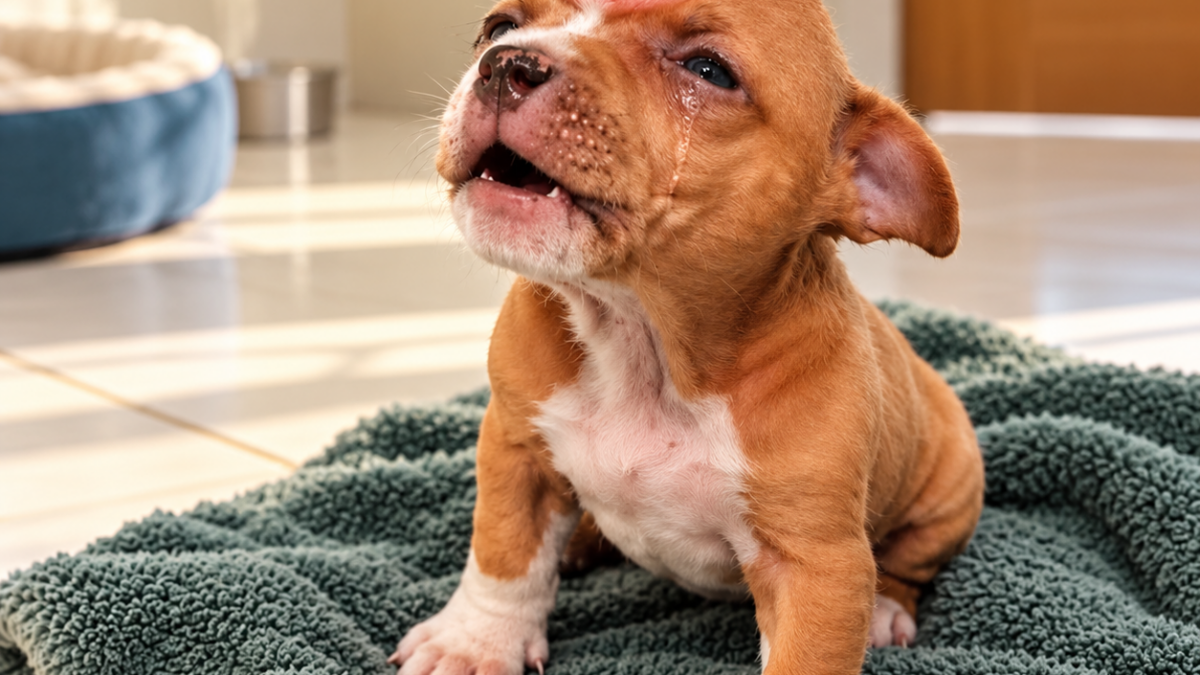
PART 2
“She needs surgery.”
The words seemed to hang in the room longer than they should have.
I looked down at Valentina.
She had fallen asleep against my chest while the veterinarian was explaining the CT scan, completely unaware that several adults were standing around her discussing whether her tiny skull could survive being opened.
“How soon?” I asked.
“As soon as the neurosurgeon can take her.”
“What exactly did the scan show?”
The veterinarian turned the monitor toward me.
I had looked at hundreds of veterinary images over the years, but I was not a neurologist. Even so, I could see enough to understand that Valentina’s skull did not look the way it should.
There were irregular lines across the bone.
Fragments.
Areas where the injury had disrupted the smooth shape of her developing skull.
The veterinarian pointed carefully.
“The original bite caused multiple fractures. Some fragments may be irritating the surrounding tissue. That would explain the ongoing inflammation and abscess formation.”
“And the circling?”
“Possibly neurological irritation from the trauma and swelling. The neurologist will know more once he sees her directly.”
I stared at the screen.
“She’s eating.”
“I know.”
“She’s playing.”
“I know.”
“She doesn’t look like a puppy whose skull is this damaged.”
The veterinarian gave me a tired smile.
“That’s what makes animals like her so extraordinary.”
I looked at Valentina again.
Her entire body fit against my forearm.
Her nose twitched while she slept.
I could feel her breathing.
For one irrational second, I wanted to pick her up, walk out of the clinic and refuse to let anyone touch her again.
She had already suffered enough.
But loving an injured animal sometimes means allowing people to do frightening things because the alternative is worse.
“When?” I asked again.
“We can transfer her tomorrow.”
That night, I barely slept.
Valentina stayed at the clinic so the team could monitor her.
I went home because they insisted.
At 3:17 in the morning, I woke up and checked my phone.
No missed calls.
That was good.
At 4:02, I checked again.
Nothing.
At 5:11, I stopped pretending I would sleep.
I made coffee and sat at my kitchen table staring at photographs of Valentina.
In one, her head was horribly swollen.
In another, she was trying to stand on a blanket.
In a third, taken only a day later, she had grabbed the corner of a towel with her tiny teeth.
I kept thinking about how absurdly unfair it was.
Thirty-six days old.
A puppy that young should not have a medical file thicker than some adult dogs.
She should not know needles.
She should not know drainage tubes.
She should not know examination tables or antiseptic or the cold surface of an X-ray machine.
She should know milk.
Warm bodies.
Play.
Sleep.
That should have been the entire world.
At seven in the morning, the clinic called.
My hand shook when I answered.
“Is she okay?”
The technician laughed softly.
“She’s demanding breakfast.”
I closed my eyes.
“Thank God.”
“She also tried to bite my shoelace.”
“That sounds promising.”
“Very.”
I arrived less than an hour later.
Valentina heard my voice before she saw me.
Her tiny head lifted.
Then her tail began moving.
That tail.
I will never forget it.
Her skull was fractured in multiple places.
She had survived a week without treatment.
She was still draining infected fluid from her head.
And somehow she had enough joy left to wag her tail when I walked into the room.
I crouched beside her enclosure.
“Good morning, trouble.”
She stepped toward me.
One step.
Two.
Then she drifted slightly sideways.
I reached through and steadied her.
“You don’t have to be brave every second.”
Valentina licked my finger.
The neurologic clinic was several hours away.
We arranged transportation carefully.
A technician came with me because nobody wanted Valentina traveling without medical support.
Her sponsor, a man named Rafael, met us there.
I had only spoken to him briefly before.
He was not wealthy in the way people sometimes imagine when they hear the word sponsor.
He ran a small construction business and had seen one of our updates about Valentina.
He had contacted us almost immediately.
“How much is the scan?” he had asked.
I gave him the estimate.
“I’ll cover it.”
I remember asking, “Are you sure?”
His answer stayed with me.
“If money is the only thing standing between that puppy and an answer, then yes.”
Now Rafael stood in the clinic waiting room looking far more nervous than he had sounded on the phone.
When I carried Valentina inside, he stepped toward us.
“That’s her?”
“That’s her.”
He stared.
“She’s so small.”
Everybody said that.
Pictures could not capture it.
Valentina looked almost impossible to injure because there seemed to be so little of her.
Rafael held out one finger.
Valentina sniffed it.
Then she licked him.
His face changed instantly.
“Oh, no.”
I smiled.
“What?”
“I’m in trouble.”
“Why?”
“I already love her.”
The neurologist, Dr. Almeida, examined Valentina personally.
He tested her responses.
Watched her walk.
Checked her pupils.
Reviewed the CT images again.
Then he invited us into a consultation room.
I carried Valentina.
Rafael sat beside me.
Dr. Almeida put the scan on a large monitor.
“I’m going to be very direct,” he said.
My stomach tightened.
“Please.”
“These injuries are severe.”
He showed us the fractures.
“There are several fragmented areas. Some pieces of bone have shifted. We also have evidence consistent with inflammation and infection around the damaged region.”
Rafael leaned forward.
“How is she walking around?”
Dr. Almeida shook his head.
“That is the remarkable part.”
He looked at Valentina.
“If you showed me these images without showing me the puppy, I would expect a much worse neurological presentation.”
“Could she still get worse?” I asked.
“Yes.”
The answer was immediate.
“An abscess can expand. Inflammation can increase. A fragment can continue irritating tissue. Infection near the skull is not something we can ignore.”
“So surgery is necessary.”
“In my opinion, yes.”
“What are her chances?”
He was quiet.
No veterinarian likes that question because there is rarely one number that tells the truth.
“She is very young, which increases anesthesia concerns. But she is also eating, responsive and stronger than her imaging suggests. Those are favorable signs.”
“And if we don’t operate?”
“We risk allowing the infection and unstable fragments to cause more damage.”
I hugged Valentina closer.
She chewed on the drawstring of my sweatshirt.
Dr. Almeida watched her.
“That behavior is another good sign.”
“She’s trying to eat my clothes.”
“Yes.”
He smiled.
“Annoying is often excellent medicine.”
The surgery was scheduled for the following evening.
We had one day to stabilize her further.
One day to continue antibiotics.
One day to keep her eating.
One day to pretend we were not terrified.
That afternoon, Valentina slept most of the time.
I sat beside her.
Rafael stayed for nearly two hours.
At one point he said, “Do you think the family feels guilty?”
I knew who he meant.
Valentina’s original family.
“I think they were scared and poor.”
“That’s not what I asked.”
“No.”
He looked at me.
“I don’t know.”
That was the truth.
I had been angry when I learned Valentina had gone seven days without treatment.
How could anyone look at a puppy with a swollen head, bleeding from the mouth, walking in circles, and wait?
But the situation became more complicated when I met the family.
They had not hidden her.
They had not refused our help.
There was no expensive car in the driveway, no money being spent elsewhere while the puppy suffered.
There was poverty.
Real poverty.
The kind where veterinary care competes with groceries.
Understanding that did not make Valentina’s pain acceptable.
But it changed where I placed my anger.
“We need better ways for people to ask for help before seven days pass,” I told Rafael.
He nodded.
“That doesn’t mean what happened was okay.”
“No.”
“It means if we only punish people after an animal suffers, another animal will suffer somewhere else.”
He looked through the glass at Valentina.
“So what do we do?”
“Save this one first.”
That night, I stayed at a small hotel near the hospital.
I could not take Valentina with me.
I hated leaving her.
The technician promised to call if anything changed.
At 10:40 p.m., she sent me a picture.
Valentina was asleep with her face resting inside her food bowl.
Under the photograph she wrote:
**Your patient has eaten herself unconscious.**
I laughed for the first time all day.
Then I cried.
Surgery began the following evening.
Dr. Almeida expected it to take several hours.
I sat in the waiting area with Rafael and one of our volunteers, Lucia.
Nobody talked much.
Hospitals change the way time moves.
Five minutes can feel like forty.
An hour can vanish.
Every time the automatic doors opened, my heart jumped.
At 9:16 p.m., a nurse walked through.
Not for us.
At 10:03, a doctor crossed the lobby.
Not for us.
At 10:47, Rafael stood up and bought coffee nobody drank.
At 11:22, Lucia asked, “Shouldn’t they be done?”
“I don’t know.”
At 11:51, my phone rang.
The caller ID showed the hospital.
I answered so quickly I nearly dropped it.
“Hello?”
“This is Dr. Almeida.”
I stood.
Rafael and Lucia stood too.
“How is she?”
“She’s alive.”
My knees weakened.
I grabbed the back of the chair.
“She made it?”
“She made it.”
Rafael covered his face.
Lucia began crying.
I could barely hear the rest.
Then Dr. Almeida said something that pulled my attention back.
“We found more than we expected.”
“What?”
“There was significant healing tissue already developing around parts of the damaged skull.”
“Healing?”
“Yes. Her body has been trying to repair itself.”
I sat down.
He continued.
“There were also several loose, sharp bone fragments contributing to inflammation and abscess formation. We removed those.”
“Did you put in the implant?”
“No.”
We had discussed the possibility of using material to reconstruct the damaged portion of her skull.
My heart jumped again.
“Why not?”
“Because once we examined the area directly, the healing tissue looked surprisingly robust. An implant would introduce additional foreign material into a region that has been infected. In her case, preserving the natural healing barrier may be safer.”
“So she has part of her skull missing?”
“She has a defect, yes. But protective fibrous tissue is developing. As she grows, we’ll monitor the area closely.”
“Is her brain okay?”
“There was no catastrophic damage visible during surgery.”
I put my hand over my mouth.
“Can I see her?”
“Not tonight. She needs recovery and monitoring.”
“Is she awake?”
“Not yet.”
“Will she wake up?”
There was a pause.
“We expect her to.”
Expect.
Not promise.
I hated that word.
We returned to the hotel after midnight.
I left my phone volume at maximum.
At 2:08 a.m., I received a message.
Valentina was awake.
At 2:17, another.
She had swallowed a little water.
At 4:36, the technician wrote:
**She is resting comfortably. Neurologic responses stable.**
I finally slept.
The next morning, I saw Valentina.
Her head was bandaged.
She looked exhausted.
For the first time since the rescue, she did not try to play.
I sat beside her.
“Hey, baby.”
Her eyes opened.
Her tail moved once.
That one movement broke me.
“You did it.”
She closed her eyes again.
I stayed there quietly.
No speeches.
No promises.
Just my hand beside her paw.
Recovery was slow at first.
She needed pain control.
Antibiotics.
Careful monitoring.
Her appetite disappeared for almost a day, which terrified us because Valentina had always been an eager eater.
Then a technician warmed her recovery food.
Valentina sniffed.
Licked once.
Paused.
Then ate half the bowl.
The clinic staff actually applauded.
Three days after surgery, she stood without assistance.
Four days after surgery, she tried to chase a rolling gauze pad.
Five days after surgery, she barked because somebody walked past without greeting her.
Dr. Almeida smiled.
“That might be the best neurological exam I’ve seen all week.”
By the time we were allowed to take her back to our foster home, Valentina had become a tiny celebrity among the hospital staff.
Everyone said goodbye.
The receptionist came around the desk.
Two technicians kissed her head.
A nurse brought a little blanket.
Dr. Almeida crouched beside her.
“You are not allowed to make me look foolish after I told everyone you’re doing well.”
Valentina bit his shoelace.
He laughed.
“Fair enough.”
The drive home felt different from the first one.
The first time I transported Valentina, I had been afraid she might die before we reached help.
Now she slept inside a padded carrier, wrapped in a blanket, with medication carefully packed beside us.
She still had a long recovery ahead.
But there was a future to recover into.
That distinction meant everything.
For the first week, we kept her activity restricted.
Valentina disagreed strongly with this medical plan.
By day three, she wanted to play.
By day five, she wanted to run.
By day seven, she had discovered that if she screamed dramatically enough from her recovery pen, somebody would come check on her.
“She’s manipulating us,” Lucia said.
“She had brain surgery.”
“That doesn’t mean she can’t manipulate us.”
Valentina stared at us from inside the pen.
Then she let out the saddest little whine I had ever heard.
Lucia folded immediately.
“Fine. Five minutes.”
I laughed.
“Who’s being manipulated now?”
We carried her outside and sat in the grass.
Valentina sniffed everything.
Leaves.
Dirt.
My shoe.
Lucia’s pants.
Then she rolled onto her back.
Sunlight warmed her belly.
I looked at the healing incision across her head.
There are images you never forget.
That was one.
A puppy who had been hours away from catastrophe lying safely in the grass after neurosurgery.
I wanted to believe the worst was over.
For a while, it seemed that way.
The incision improved.
The drainage decreased.
Her balance became better.
The circling nearly disappeared.
She gained weight.
Her personality grew faster than her body.
She was fearless around toys.
She loved people.
She stole food from larger dogs and then acted shocked when they noticed.
At night, she slept deeply.
We began discussing adoption.
Not immediately.
She still needed follow-up scans and neurological checks.
But for the first time, we allowed ourselves to imagine the question.
Who would get this dog?
Rafael joked about taking her.
His wife reminded him they already had three.
Lucia threatened to hide her adoption paperwork.
I pretended I had no opinion.
The truth was that I wanted Valentina’s future home to be perfect.
Not rich.
Not fancy.
Perfect for her.
Someone patient.
Someone who understood that her skull would always require protection.
Someone willing to return for neurological checkups.
Someone who would not treat her history as a burden.
Someone who would see the ridiculous, playful puppy she was becoming rather than only the broken puppy she had been.
Then, one morning, Lucia called me.
Her voice was wrong.
“What happened?”
“The incision opened.”
My entire body went cold.
“How much?”
“A section of the flap.”
“Is she bleeding?”
“Not heavily.”
“Fluid?”
“Yes.”
“I’m coming.”
When I reached the foster house, Valentina was sitting on a towel.
She wagged her tail when she saw me.
That somehow made it worse.
The surgical area had partially separated.
Not dramatically.
But enough.
Enough to expose tissue that needed to remain protected.
I called Dr. Almeida.
He asked for photographs.
Then he said, “Bring her back.”
The trip that had seemed like a road toward recovery suddenly felt like defeat.
I sat beside Valentina in the car.
“I’m sorry.”
She looked at me.
“I thought we were done with this.”
She licked my hand.
At the neurology clinic, Dr. Almeida examined the wound.
“Why did it happen?” I asked.
“There are several possibilities. Her tissue has been through tremendous trauma and infection. Surgical sites in compromised tissue can break down even when we do everything correctly.”
“Did we let her move too much?”
“No.”
“Did she scratch it?”
“I don’t think that caused this.”
“Then what did I do wrong?”
He looked at me.
“Nothing.”
I hated how relieved and guilty that made me feel.
“What now?”
“We go back in.”
“Another surgery?”
“Yes.”
I looked at Valentina.
She was sniffing the edge of his coat.
“How much can one puppy take?”
Dr. Almeida sighed.
“That is the question I’ve been asking since I met her.”
The second operation was technically smaller.
Emotionally, it felt worse.
The first time, we had been fighting a visible enemy.
Broken bone.
Infection.
Fragments.
The second time felt like being pulled backward after believing we had escaped.
Rafael came again.
“You didn’t have to drive all this way,” I told him.
“Yes, I did.”
“You already paid for the scan.”
“That was money.”
He pointed toward the operating room.
“This is different.”
We sat together.
Once again, we waited.
This time surgery finished earlier.
Dr. Almeida came out himself.
“She did well.”
I released a breath.
“Did you close everything?”
“Yes. We revised the damaged edges and reinforced the closure.”
“Infection?”
“Minimal. We cleaned the area thoroughly.”
“Do you think it will hold?”
“I believe so.”
He sat beside us.
“But I’m going to be stricter about activity this time.”
I laughed weakly.
“You try telling her.”
“I’m the neurosurgeon.”
“She does not care.”
He smiled.
“I noticed.”
Valentina recovered again.
That puppy simply refused to surrender.
The second incision healed.
Then the stitches came out.
Then the follow-up bloodwork returned normal.
Then Dr. Almeida watched her walk down the hallway and said the words I had been waiting months to hear.
“She’s neurologically doing very well.”
“Very well?”
“Yes.”
“Not very well considering what happened?”
He smiled.
“Very well.”
I cried.
I did not even try to hide it.
Valentina sat on my shoe.
Dr. Almeida handed me a tissue.
“She may have some long-term sensitivities around the skull defect. She should avoid rough trauma to the head. But her prognosis now is dramatically better than it was when I first reviewed those scans.”
I looked down.
Valentina was chewing my shoelace.
“She doesn’t seem concerned.”
“No.”
He smiled.
“She has never seemed particularly interested in my prognosis.”
Back at the foster home, we celebrated with a tiny portion of puppy-safe food and far too many photographs.
That evening, Valentina chased a soft ball across the living room.
She missed it.
Ran into a pillow.
Bounced backward.
Then attacked the pillow as if it had insulted her.
Lucia looked at me.
“This dog had two brain surgeries.”
“I know.”
“She’s fighting furniture.”
“I know.”
“She’s ridiculous.”
“I know.”
We both started laughing.
That was the moment I realized Valentina had crossed an invisible line.
For months, every conversation about her had been medical.
Swelling.
Drainage.
Blood.
Fracture.
CT scan.
Abscess.
Neurologist.
Surgery.
Flap.
Medication.
Now we were talking about toys.
Manners.
Potty training.
Chewed shoes.
That was healing.
Not merely surviving the procedures.
Becoming boring enough to be a normal puppy.
The adoption applications began.
There were many.
Some people wanted Valentina because they had followed her story.
That worried me.
I did not want someone adopting a symbol.
I wanted someone adopting a dog.
A dog who might live fifteen years.
A dog who would require bills and patience long after strangers stopped asking about her.
A dog who would pee on a rug.
Steal sandwiches.
Wake people up.
Need vaccines.
Grow old.
Eventually, one application stood out.
A man named Gabriel.
He lived in a small house with a fenced yard.
He had owned dogs before.
His last dog had died two years earlier at thirteen.
He lived alone, worked partly from home and had no other animals.
Most importantly, when we interviewed him, he barely mentioned Valentina’s online story.
Instead, he asked medical questions.
“What happens if she bumps her head?”
“What symptoms would mean I should go to the emergency clinic?”
“Will she need another CT?”
“What kind of harness should she use?”
“How often should she see the neurologist?”
Then he asked something nobody else had asked.
“What scares her?”
I paused.
“Why?”
“Because everybody keeps telling me what happened to her body. I’m wondering what happened to her trust.”
That answer stayed with me.
We scheduled a meeting.
Gabriel sat on the floor when Valentina entered.
He did not call her.
He did not reach.
He waited.
Valentina stared at him.
He looked away slightly to avoid pressure.
She took three steps.
Sniffed his knee.
Walked around him.
Then climbed directly into his lap.
Gabriel looked at me.
“Well.”
I smiled.
“She has made a decision.”
He laughed.
Valentina licked his chin.
Over the next hour, I watched him with her.
He asked about food.
Medication.
Exercise.
The protective area of her skull.
Then Valentina fell asleep against his leg.
Gabriel did not move.
His foot eventually went numb.
I could tell because he kept flexing his toes.
“You can move her,” I said.
“No.”
“You’re uncomfortable.”
“I’ll survive.”
I knew then.
We completed the home check.
Everything was appropriate.
Gabriel bought gates.
A soft-sided crate.
Beds.
Bowls.
A harness.
More toys than one puppy could use in a lifetime.
He padded one sharp furniture corner because he was worried about her head.
When I saw that, I almost cried again.
The day Valentina left the foster home, I thought I was ready.
I was not.
Lucia cried first.
Then I cried because she was crying.
Rafael came to say goodbye.
He brought Valentina a small stuffed rabbit.
“You paid for her CT and now you’re buying toys?” I asked.
He shrugged.
“I’m an easy target.”
Valentina immediately grabbed the rabbit.
Rafael smiled.
“Worth it.”
Gabriel knelt beside her.
“I’ve got her.”
Those three words did something to me.
Not because I doubted him.
Because for the first time, responsibility for Valentina’s future was leaving my hands.
I gave him her records.
Medication history.
Neurology notes.
Emergency contacts.
Feeding schedule.
I explained everything twice.
Gabriel finally held up his hands.
“I promise I’ll call if I’m unsure.”
“You better.”
“I will.”
“And no rough play with big dogs.”
“I know.”
“And if she becomes disoriented—”
“I go to the clinic.”
“Or circles.”
“Clinic.”
“Or vomiting after hitting her head.”
“Clinic.”
He smiled.
“I studied.”
I looked down at Valentina.
She was chewing the rabbit.
“Apparently one of us did.”
Gabriel drove away with her secured safely in the back seat.
I stood in the driveway until his car disappeared.
The house felt empty.
Lucia walked beside me.
“I hate adoption day.”
“No, you don’t.”
“I absolutely do.”
“You love adoption day.”
“I love tomorrow.”
“What’s tomorrow?”
“The day after adoption day, when I know I didn’t change my mind and steal her back.”
I laughed.
The first update came that evening.
A photograph.
Valentina asleep in a new bed.
The stuffed rabbit beside her.
The message said:
**She ate dinner, explored every room and barked at the washing machine. I think she’s settling in.**
The next morning:
**She woke me up at 5:12. Apparently we have a schedule.**
Two days later:
**She has learned where the treats are. This may have been a tactical mistake.**
A week later, Gabriel sent a video.
Valentina running across the yard.
Running.
No circles.
No collapsing.
No swollen head.
No clinic floor.
A normal puppy chasing a ball.
I watched it six times.
Months passed.
Her follow-up examination went beautifully.
Dr. Almeida reviewed her progress and reduced the frequency of neurological visits.
Her skull remained imperfect.
Her life did not.
Gabriel sent photographs constantly.
Valentina on the couch.
Valentina sleeping on his shoes.
Valentina sitting in the passenger footwell during a parked car ride.
Valentina wearing a ridiculous raincoat.
Valentina destroying the stuffed rabbit Rafael had given her.
I forwarded that one to him.
He replied:
**I expected better gratitude.**
The greatest update came nearly a year after the night we rescued her.
Gabriel invited us to visit.
When I arrived, a medium-sized young dog ran toward the gate.
For half a second, I did not recognize her.
Valentina had grown.
Her puppy softness was gone.
Her coat shone.
Her head looked normal unless you knew exactly where to look.
Her legs were strong.
Her eyes were bright.
She barked once.
Then she recognized my voice.
Her entire body changed.
She ran toward me so quickly Gabriel shouted, “Careful!”
Valentina jumped against my legs.
I dropped to my knees.
“Oh, my God.”
She licked my face.
I laughed and cried.
Gabriel stood behind us.
“She remembers you.”
I held her.
“Of course she remembers me.”
He smiled.
“I tried to tell her you were the one who made her take all those medicines.”
“Don’t ruin this.”
We sat in the yard.
Valentina ran between us carrying a ball.
Gabriel told me about her life.
She slept beside his bed.
She loved car rides.
She hated the vacuum.
She had never had another neurological episode.
She was gentle with children.
She had become obsessed with a neighbor’s elderly beagle.
She stole socks.
Of course she stole socks.
“Any problems?” I asked.
Gabriel thought.
“She snores.”
“That’s your complaint?”
“And she occupies seventy percent of a queen-sized bed while weighing less than I do.”
“Serious condition.”
“I’m considering a second opinion.”
Valentina dropped the ball at his feet.
Gabriel threw it.
She raced away.
I watched her.
A year earlier, I had carried a thirty-six-day-old puppy into a clinic after midnight wondering whether she would survive until morning.
Now she was sprinting across grass.
That should have been enough.
But there was one part of Valentina’s story I had never finished.
Her original family.
I had thought about them many times.
Anger had softened but not disappeared.
Seven days was still seven days.
Poverty explained why veterinary care had seemed impossible.
It did not erase the suffering.
But punishment alone would not protect the next animal.
So after Valentina recovered, our rescue began developing a small emergency assistance program.
Rafael helped fund the first month.
Gabriel donated later.
We worked with clinics willing to accept urgent cases through the rescue while payment assistance was arranged.
The rule was simple.
If your animal had a serious injury and you could not afford immediate veterinary care, call us before waiting.
Not after seven days.
Before.
We printed cards.
Shared the number.
Asked local shops, churches and community centers to post it.
Then I did something I had avoided.
I returned to the neighborhood where Valentina had been born.
Her original family still lived there.
When I arrived, the woman who opened the door recognized me immediately.
Her face changed.
“Is she alive?”
I had not expected that to be her first question.
“Yes.”
She covered her mouth.
“Really?”
“Yes.”
“She’s okay?”
“She had two surgeries.”
The woman’s eyes filled.
“But she survived?”
“She did.”
I showed her a photograph Gabriel had allowed me to share.
Valentina standing in the yard with a ball in her mouth.
The woman stared at it for a long time.
Then she began crying.
“I thought she was going to die.”
“So did we.”
“I’m sorry.”
I believed her.
That did not erase what happened.
But I believed the regret.
She sat on the front step.
“We didn’t know where to take her without money.”
“You could have called sooner.”
“I know.”
“She was walking in circles.”
“I know.”
Her voice broke.
“My husband had lost work. We had debt. The clinic asked for money we didn’t have.”
“You should still have asked somebody.”
“I know.”
For several seconds neither of us spoke.
Then I gave her one of the emergency assistance cards.
“What is this?”
“A number.”
“For what?”
“If this ever happens again, you call immediately.”
She looked at me.
“Are you saying I can have dogs again?”
“No.”
I answered carefully.
“I’m saying nobody in this neighborhood should ever wait seven days because they think being poor means they have no options.”
She held the card.
That was the only revenge I wanted by then.
Not humiliation.
Not watching someone suffer.
I wanted the next injured puppy taken to a veterinarian on day one.
I wanted what happened to Valentina to become harder to repeat.
Real accountability should change the future.
Otherwise, it is only anger looking backward.
Years passed.
Valentina became one of the dogs our rescue staff talked about whenever a case seemed hopeless.
Not because every animal survives.
They do not.
That is one of the hardest truths in rescue.
Sometimes you arrive too late.
Sometimes medicine is not enough.
Sometimes love is not enough.
But Valentina reminded us not to decide the ending before the animal had a chance to fight.
Her CT scan had looked terrible.
Her neurosurgeon had been amazed she was alive.
She endured two operations before she was old enough to understand why strangers kept taking her away from the people she trusted.
And still she played.
Still she ate.
Still she wagged.
Still she grew.
Gabriel continued sending updates.
On her second birthday, she wore a paper crown for approximately thirteen seconds before eating part of it.
On her third, she received a new bed and ignored it in favor of Gabriel’s couch.
On her fourth, he sent a picture of her sleeping upside down with all four legs against the wall.
The caption read:
**Neurologically normal. Personally questionable.**
I laughed so hard I saved the message.
Eventually, Valentina’s story stopped being about her skull.
That was what I wanted most.
When strangers met her, they did not see a medical miracle.
They saw Gabriel’s dog.
A happy, energetic, slightly spoiled dog.
She no longer entered a room and made people whisper about fractures.
She entered a room and searched for snacks.
That was success.
One spring afternoon, Gabriel brought Valentina to one of our rescue events.
A woman arrived carrying a tiny puppy wrapped in a towel.
The puppy had been hit accidentally by a bicycle.
Its leg was swollen.
The woman was crying.
“I don’t have money for the emergency clinic.”
For one horrible second, I saw Valentina again.
The swelling.
The waiting.
The circles.
Then I looked at the assistance table we had built because of her.
“Don’t worry about the money right now,” I said. “We’re going.”
We transported the puppy immediately.
It had a fracture.
Painful, but treatable.
No seven-day wait.
No infection.
No neurological crisis.
The puppy recovered.
Later, I sat beside Gabriel while Valentina slept under our table.
“You know,” I said, “that program exists because of her.”
He looked down.
“I know.”
“That puppy today might have waited.”
“But she didn’t.”
“No.”
He reached under the table and touched Valentina.
“She did all that without knowing.”
“She did.”
Valentina woke, stretched and immediately searched Gabriel’s hands for food.
He laughed.
“Heroism is exhausting.”
I looked at her head.
The fur had completely covered the scars.
If you ran your fingers carefully over the area, you could still feel where the shape was slightly different.
Evidence.
Not of weakness.
Of survival.
There had been a time when I wanted every person connected to her suffering to feel what I felt.
Fear.
Rage.
Helplessness.
But years in rescue changed my understanding of revenge.
If someone leaves an animal hungry, feed the animal until hunger becomes an old memory.
If someone leaves an animal untreated, provide care so thoroughly that pain loses its place in the story.
If poverty allows an injury to become a disaster, build a path so the next frightened family can ask for help before waiting.
If the world tells you a tiny broken puppy has almost no chance, give her every chance available and let her answer for herself.
Valentina answered.
Again and again.
The first answer was surviving seven days.
The second was eating in the clinic.
The third was waking after neurosurgery.
The fourth was surviving another operation.
The fifth was running.
The sixth was trusting Gabriel.
The seventh was growing into a healthy dog who had no idea that people once stood around a CT scan wondering whether she would live.
And maybe that was the ending I had wanted from the beginning without knowing how to name it.
Not revenge against a person.
Revenge against the future that injury had tried to steal from her.
The fracture said she might never grow up.
She grew.
The swelling said she might lose neurological function.
She ran.
The infection said her body might fail.
It healed.
The second surgery said recovery might unravel.
She recovered again.
The worst night of her life tried to become her entire story.
It failed.
Years after I first held Valentina’s paw at almost one in the morning, I visited Gabriel again.
The house had changed slightly.
New furniture.
Different paint.
Same dog toys everywhere.
Valentina was older.
Not old.
Just mature.
She met me at the door carrying a faded stuffed animal.
“Is that Rafael’s rabbit?”
Gabriel laughed.
“What remains of it.”
Valentina dropped it at my feet.
I picked it up.
One ear was gone.
Half the stuffing had been replaced.
The fabric was patched.
“You kept repairing this?”
“She likes it.”
I looked at him.
“Of course you did.”
We sat outside while Valentina wandered around the yard.
At one point she lay in the sun.
Her eyes closed.
Her head rested on the grass.
I stared at her longer than I realized.
Gabriel noticed.
“You’re thinking about the first picture.”
“Yes.”
“So am I.”
He took out his phone.
His lock screen was a photograph of Valentina running.
“People ask me sometimes if I’m afraid something will happen because of her skull.”
“What do you tell them?”
“That something can happen to any dog.”
He looked toward her.
“So I’m careful. I take her to appointments. I follow the neurologist’s advice.”
Then he smiled.
“But I don’t make her live like she’s still injured.”
That might have been the best thing anyone ever said about Valentina.
We had spent months protecting her life.
Gabriel had spent years allowing her to live it.
There is a difference.
Protection without freedom can become another kind of cage.
Valentina needed safety.
But she also needed grass beneath her feet.
Balls to chase.
Rooms to explore.
People to love.
A dog cannot spend an entire life being treated as fragile.
So Gabriel gave her boundaries without fear.
Care without pity.
Attention without turning her into a permanent patient.
When I stood to leave, Valentina followed me to the gate.
I knelt.
She sat.
Her eyes were calm.
No circling.
No confusion.
No pain.
I placed my hand lightly over the fur where the fractures had once been.
“You really did it.”
She licked my wrist.
Behind me, Gabriel said, “She did.”
I looked at him.
“Yes.”
Then I corrected myself.
“We all helped.”
But the hardest part belonged to her.
We could drain the infection.
Surgeons could remove the bone fragments.
Sponsors could pay bills.
Fosters could give medicine.
Gabriel could provide a home.
But Valentina had to wake up.
Valentina had to eat.
Valentina had to stand.
Valentina had to trust.
Valentina had to keep moving forward inside a body that had every reason to stop.
She did.
I left that afternoon feeling something I had not felt during the first months of her rescue.
Peace.
Not the relief that comes when surgery ends.
Not the excitement of a good test result.
Not even the joy of adoption.
Something quieter.
The knowledge that her story no longer needed saving.
It had become a life.
A full one.
The emergency assistance program continued growing.
Eventually, other rescuers began helping.
One clinic offered discounted imaging for approved cases.
A local pharmacy helped us negotiate medication costs.
Rafael became a regular donor despite repeatedly claiming he was “not becoming one of those rescue people.”
He absolutely became one of those rescue people.
Gabriel volunteered occasionally, usually with Valentina.
Families who once believed veterinary help was impossible began calling earlier.
Not always early enough.
But earlier.
Every time an injured puppy arrived before a wound became infected, I thought of Valentina.
Her suffering could not be undone.
But it could still teach us something.
That became another form of justice.
Years later, the original emergency card I had handed Valentina’s first family was replaced with a larger community program.
The phone number changed.
The funding improved.
The system became more organized.
But I kept one of those original cards in my desk.
On the back, I had written the date Valentina was rescued.
Whenever the work became exhausting, I took it out.
Not because Valentina was our only success.
She wasn’t.
But she was the reason I stopped thinking of rescue as something that begins only after an animal has already suffered.
Sometimes rescue means prevention.
Sometimes it means making sure poverty does not become a death sentence for an animal.
Sometimes it means helping someone before desperation turns into delay.
And sometimes it means carrying a thirty-six-day-old puppy into a clinic at one in the morning and refusing to accept that the story has already been written.
Valentina’s mother had injured her when she was twenty-nine days old.
For seven days, a fractured skull went untreated.
By thirty-six days old, she was walking in circles.
Blood had come from her mouth.
Her head was swollen.
Infection had formed.
Her CT scan showed damage serious enough to shock a neurosurgeon.
She underwent surgery.
Then another.
There were nights when I expected the phone call that would tell me we had lost her.
That call never came.
Instead, years later, my phone filled with pictures of a healthy dog sleeping on a couch she believed belonged entirely to her.
That is the photograph I choose to remember.
Not the swollen head.
Not the drainage.
Not the bandages.
Not the operating room.
Valentina asleep on Gabriel’s couch, one paw in the air, completely relaxed.
Because safety has a posture.
Fear curls inward.
Pain tightens the body.
Safety stretches out.
Safety sleeps deeply.
Safety exposes the belly.
Safety does not listen for footsteps.
Safety assumes tomorrow is coming.
Valentina learned that.
She learned there would be breakfast.
She learned hands could hold her without hurting her.
She learned clinics could mean healing instead of fear.
She learned a man named Gabriel would come home every day.
She learned the yard belonged to her.
She learned toys could be destroyed and replaced.
She learned that if she barked at the kitchen at exactly the right time, dinner often appeared.
She learned to be ordinary.
And after everything that happened to her, ordinary was extraordinary.
If I could go back to that first night and speak to myself while I knelt beside the little puppy walking in circles, I know exactly what I would say.
I would not tell myself she definitely survives.
I could not have known that.
I would not promise surgery would work.
I would not promise the wound would stay closed.
I would not promise adoption.
I would say:
Pick her up.
Take her to the clinic.
Do the next right thing.
Then do the next one.
That is how Valentina’s life was saved.
Not by one miracle.
By a chain of people refusing to stop at the next difficult step.
The family finally letting her go.
The rescuer driving after midnight.
The veterinarian draining infection.
The sponsor paying for imaging.
The neurologist operating.
The technicians feeding her.
The foster giving medication.
The surgeon operating again.
Gabriel opening his home.
One decision after another.
Until the puppy who had almost lost everything had more than enough.
Enough health.
Enough care.
Enough safety.
Enough time.
Enough love.
Valentina was once so badly injured that a neurosurgeon looked at her CT scan and could not understand how she was still alive.
Today, if you saw her running through Gabriel’s yard, you would probably never guess there had been a time when she could barely walk straight.
And perhaps that is the most satisfying ending I could have asked for.
The injury did not win.
The infection did not win.
The fractures did not win.
The week without treatment did not win.
Fear did not win.
Poverty did not get the final word either, because her case became one reason another family later found help sooner.
Valentina got the final word.
She said it every time she ran toward Gabriel at the door.
Every time she destroyed another toy.
Every time she slept peacefully through the night.
Every time she chased a ball across the grass with the same head we once feared might never heal.
Her answer was simple.
She lived.
Years later, when people asked me which image of Valentina I remembered most clearly, they expected me to describe the night we rescued her.
They expected the swollen head.
The blood around her mouth.
The frightened little puppy trying to walk forward but turning helplessly in circles because her injured body could no longer tell her which direction was straight.
For a long time, those were the images that came first.
But eventually, they were replaced by something else.
A summer afternoon.
A green yard.
A faded yellow ball.
And Valentina running.
Gabriel had invited me over because he said she had developed “a serious medical condition.”
I nearly dropped my phone when I read the message.
“What happened?” I called immediately.
He started laughing.
“That was fast.”
“Gabriel.”
“Relax. The condition is that she has discovered she can bark at me until I throw the ball.”
I closed my eyes.
“You are not funny.”
“I thought it was pretty good.”
“You almost gave me a heart attack.”
“Come see her this weekend. You’ll forgive me.”
I pretended I was still angry, but the truth was that I had been looking for an excuse to visit.
When I arrived that Saturday, Gabriel opened the gate and stepped aside.
“You might want to brace yourself.”
“For what?”
He pointed.
Valentina came racing around the side of the house.
For one second I simply stood there.
She was no longer the fragile puppy I remembered carrying between clinics.
She was fully grown now.
Strong legs.
Bright eyes.
A healthy coat shining in the sunlight.
Her head looked almost completely normal beneath the fur.
If you did not know where the fractures had been, you would never guess that surgeons had once removed sharp pieces of bone from that skull.
Then she recognized me.
Her ears lifted.
Her tail exploded into motion.
“Valentina?”
She ran directly toward me.
I dropped to my knees before she reached me.
She collided gently with my chest and started licking my face.
I laughed so hard that tears came.
“Oh, you remember me.”
Gabriel leaned against the fence.
“Of course she remembers you.”
Valentina climbed halfway into my lap as though she had suddenly become a puppy again.
I buried my face against her neck.
“You’re heavy now.”
Her tail thumped against my side.
“Remember when you fit in one arm?”
She licked my chin.
I pulled back and looked at her.
For a moment, the yard disappeared.
I could see the tiny puppy again.
Thirty-six days old.
Barely able to balance.
Her head swollen grotesquely from an injury that had gone untreated for an entire week.
I remembered sitting in the clinic after midnight, watching the veterinarian drain blood and infection while Valentina whimpered softly.
I remembered the neurologist pointing to the CT scan and explaining that multiple skull fractures had left loose bone fragments inside the injured area.
I remembered asking whether she would live.
Nobody had promised me anything.
Now that same dog was standing with her paws against my chest, impatient because I had stopped petting her.
I scratched behind her ears.
“You weren’t supposed to make this easy, were you?”
Gabriel laughed.
“She still doesn’t.”
Valentina suddenly jumped down, grabbed the yellow ball and dropped it at my feet.
“What does she want?”
“You know exactly what she wants.”
I threw it.
She ran.
Not carefully.
Not cautiously.
She ran with the reckless happiness of a dog who had no idea anyone once considered her medically fragile.
Across the yard.
Around a tree.
Back toward us.
She overshot the ball, turned, grabbed it and came racing back.
Watching her run did something to me that I still cannot fully explain.
We spend so much time measuring survival through medical language.
Heart rate.
Blood work.
Neurological responses.
CT scans.
Incision healing.
Antibiotic levels.
But none of those things captured what I saw in that yard.
This was not simply survival.
This was life reclaiming territory.
Every stride seemed to erase a small part of the night we found her.
I knew logically that the past could never be erased.
Her skull would always carry evidence of the trauma.
But the past no longer controlled what her body could do.
That mattered.
After a while, Gabriel sat beside me on the porch while Valentina stretched out in the shade.
“She still gets checked every year,” he told me.
“Neurology too?”
“Whenever they recommend it.”
“Any strange behavior?”
“She thinks the refrigerator opens specifically for her.”
“That sounds severe.”
“And she sleeps horizontally across the bed.”
“Very concerning.”
“She also refuses to go outside when it rains.”
I looked at him.
“That might be intelligence.”
He smiled.
Then his expression softened.
“There haven’t been any neurological episodes.”
“None?”
“None.”
I released a breath even though I had not realized I was holding it.
Gabriel noticed.
“You still worry.”
“Of course I do.”
“She’s okay.”
“I know.”
He watched Valentina sleeping.
“She’s really okay.”
That sentence settled somewhere deep inside me.
Not “stable.”
Not “doing well considering everything.”
Not “surprisingly functional.”
Okay.
Valentina was okay.
There was a time when I could not imagine wanting anything more.
Before I left, Gabriel showed me something he kept in a drawer.
A thick folder.
Inside were Valentina’s medical records.
Every X-ray.
Every specialist report.
Every surgical note.
Every medication schedule.
On top was the original CT report.
Gabriel handed it to me.
I recognized the language.
Extensive cranial fractures.
Bone displacement.
Inflammation.
Abscess formation.
I looked toward the yard.
Valentina was digging furiously beneath a bush.
“You ever read this?”
“All of it.”
“Why?”
“Because I wanted to understand what she survived.”
I nodded.
Then he added quietly, “But I stopped reading it after the first year.”
“Why?”
“Because I realized I was looking backward more than she was.”
That stopped me.
He closed the folder.
“She doesn’t wake up thinking about surgery.”
“No.”
“She wakes up thinking about breakfast.”
I laughed.
“That’s probably true.”
“So I keep the records because I need them.”
He put the folder away.
“But I don’t want the worst thing that ever happened to her to become the most important thing about her.”
I carried that thought home.
It changed the way I spoke about Valentina afterward.
When people asked about her, I still told the truth.
Yes, her mother had bitten her when she was twenty-nine days old.
Yes, her skull had fractured.
Yes, treatment was delayed because her original family could not afford veterinary care.
Yes, she nearly died.
Yes, she needed neurosurgery.
Yes, part of the incision reopened and required another operation.
All of that was true.
But there was more.
Valentina loved squeaky toys.
Valentina hated wet grass.
Valentina slept on her back with her legs spread in completely undignified directions.
Valentina believed every person carrying a bag might secretly have food for her.
Valentina had figured out that if she sat beside Gabriel’s chair and stared at him long enough, he would eventually give her a small piece of whatever he was eating.
Those things were also true.
Healing, I learned, is partly the privilege of becoming more than the thing that hurt you.
The emergency assistance program we had created after Valentina’s case continued to grow too.
At first, it had been little more than a phone number and a small pool of donated money.
We could help with urgent exams.
Basic imaging.
Medication.
Sometimes transportation.
Then local veterinarians began calling us directly.
A church held a fundraiser.
A pet supply store donated food.
Rafael, the man who had originally paid for Valentina’s CT scan, quietly funded several emergency cases without telling anyone.
One afternoon, I caught him delivering a stack of prepaid clinic vouchers.
“I thought you said you weren’t becoming a rescue person.”
“I’m not.”
“You are literally carrying veterinary assistance vouchers.”
“I’m a construction person who occasionally carries veterinary assistance vouchers.”
“Sure.”
He pointed at me.
“Don’t put me on a volunteer list.”
Two weeks later, he helped transport an injured dog to surgery.
We never let him forget it.
But the program’s real value became clear when a young mother named Elena called us one night.
Her six-week-old puppy had fallen from a porch.
The puppy could not put weight on one leg.
Elena was crying.
“I don’t have money until Friday,” she said. “Can I wait?”
The word wait hit me like a physical blow.
I looked at the clock.
It was almost eleven.
Valentina had once waited seven days.
“No,” I said. “Don’t wait. We’ll meet you at the clinic.”
The puppy had a fractured leg.
Painful, but uncomplicated.
The veterinarian stabilized it that night.
No infection.
No neurological damage.
No week of unnecessary suffering.
When I left the clinic after midnight, I sat in my car and cried.
Not because the puppy was dying.
Because she wasn’t.
Because we had gotten there soon enough.
That was when I finally understood what Valentina’s story had become.
We could not go backward and give her treatment on the first day she was injured.
But her suffering had changed what happened to the next puppy.
And the one after that.
And another after that.
That did not make the seven days acceptable.
Nothing ever would.
But it gave those days consequence beyond pain.
A few months later, Gabriel brought Valentina to one of our assistance events.
She wore a blue harness.
No special vest.
No label.
She was simply there because Gabriel said she liked people.
An older woman stopped beside our table.
“Is this the puppy?”
I knew immediately what she meant.
“Yes.”
The woman crouched carefully.
Valentina walked over and leaned against her leg.
The woman began crying.
“I followed her story.”
Valentina licked her hand.
“I thought she was going to die.”
“So did we.”
The woman touched the side of Valentina’s head gently.
“Can she feel this?”
“Yes.”
“Does it hurt?”
“Not anymore.”
She smiled through tears.
“That might be the nicest thing I’ve heard all week.”
Not anymore.
Two simple words.
For months, everything about Valentina had hurt.
The fracture.
The swelling.
The drainage.
The surgery.
The second surgery.
The stitches.
The medications.
The uncertainty.
Now the answer was different.
Not anymore.
Later that afternoon, I watched Valentina fall asleep beneath our table while people stepped around her.
She did not flinch when shoes passed nearby.
She did not wake every time someone moved.
She trusted the world enough to sleep in the middle of it.
That felt enormous.
Years passed.
Gabriel kept sending updates.
On Valentina’s third birthday, he sent a video of her sitting in front of a small dog-safe cake.
She stared at it so intensely that Gabriel could barely finish singing before she lunged forward.
“She waited almost eight seconds,” he told me afterward.
“A miracle.”
“She’s developing discipline.”
“She ate the paper decoration.”
“Small setback.”
On her fifth birthday, he sent a photograph of her standing beside a lake.
Her muzzle had begun showing the first tiny threads of gray.
I stared at the picture for a long time.
“Five,” I whispered.
Once, we had celebrated five hours of stability.
Then five days after surgery.
Then five weeks without complications.
Now she had five years.
Time itself had become proof.
When Valentina was seven, I visited again.
She did not sprint quite as wildly toward the gate.
She still ran.
Just with more dignity.
At least until she reached me.
Then the dignity disappeared.
I sat on the grass while she pressed against my legs.
Gabriel brought coffee outside.
“She’s slowing down.”
“Normal?”
“Veterinarian says normal.”
I touched the gray around her muzzle.
“You’re becoming an old lady.”
Valentina looked offended.
“She still beats me to the kitchen.”
“Priorities.”
We walked around the yard together.
I noticed that Gabriel had added a low ramp beside the porch steps.
“For her?”
“She doesn’t need it yet.”
“Then why?”
“I want her used to it before she does.”
That was Gabriel.
He never waited for crisis if he could prepare earlier.
Maybe Valentina had taught all of us that.
Before I left, we sat on the porch while she slept between us.
Gabriel said, “Do you ever think about the people who had her first?”
“Sometimes.”
“Still angry?”
I considered it.
“Not the way I was.”
“Why not?”
I watched Valentina breathe.
“Because anger keeps them in the center.”
“And they’re not?”
“No.”
I shook my head.
“They’re part of what happened to her. They’re not what her life became.”
Gabriel nodded.
That distinction gave me peace.
For a long time, I had imagined justice as something dramatic.
A courtroom.
A punishment.
Someone being forced to answer for suffering.
Those things mattered.
Accountability mattered.
But years later, the most satisfying justice looked completely different.
It looked like Gabriel setting his alarm for medication.
It looked like a veterinary clinic giving a frightened family time to arrange payment instead of sending them away.
It looked like Rafael funding another emergency scan.
It looked like an injured puppy being treated on the first night instead of the seventh.
It looked like Valentina growing old enough to get gray hair.
There is a kind of revenge in longevity.
Someone once failed to protect Valentina’s future.
Then she had one anyway.
Not a short future.
Not a fragile future.
A life.
A real, messy, ordinary life.
She scratched Gabriel’s door.
She ruined a couch cushion.
She gained a little too much weight one winter and was put on a diet she deeply resented.
She developed a habit of carrying one shoe into another room but never damaging it.
She learned the sound of Gabriel opening a cheese wrapper from three rooms away.
She made friends with an elderly dog next door and sat beside the fence whenever he came outside.
When that old dog eventually died, Valentina waited at the fence for days.
Gabriel sent me a message.
She keeps looking for him.
I replied:
That means she loved him.
A dog who had once been too injured to understand which direction she was walking had lived long enough to experience friendship and grief.
Even sadness became evidence of survival.
The final time I visited while Valentina was still energetic enough for long walks, Gabriel took us to a nearby park.
We moved slowly along a shaded trail.
Valentina stopped constantly to smell things.
A tree.
A bench.
A patch of grass apparently containing information of national importance.
Gabriel smiled.
“This is why a twenty-minute walk takes an hour.”
“She’s reading the newspaper.”
“She reads every edition.”
At the end of the trail was a fenced field.
Gabriel unclipped her leash.
Valentina looked at him.
“Go.”
She started running.
Not as fast as the young dog I remembered.
But she ran.
I watched her cross the grass and felt the years collapse.
I could see every version of her at once.
The puppy in circles.
The puppy beneath surgical lights.
The puppy waking from anesthesia.
The young dog chasing the yellow ball.
The older dog with gray around her mouth.
She turned and ran back toward us.
Gabriel bent down.
Valentina reached him and pressed her head against his chest.
I looked away because tears had already started.
Gabriel noticed.
“You okay?”
“Yes.”
“You’re crying.”
“I know.”
He rubbed Valentina’s ears.
“What are you thinking?”
I answered honestly.
“I’m thinking that there was a night when I didn’t know if she would see morning.”
He looked down at her.
Valentina was panting happily.
“And now?”
“Now I’m watching her get old.”
He smiled.
“That’s the deal we wanted.”
Yes.
That was exactly the deal.
Rescue people often say they want an animal to survive.
But survival is only the first request.
What we really want is enough time for survival to become aging.
Enough birthdays that the emergency becomes ancient history.
Enough ordinary days that the scar becomes something you have to search for beneath the fur.
Enough life that one day you complain the dog is getting old.
I had gotten to complain about Valentina getting old.
I could not have asked for more.
Before we left the field, Valentina wandered back to me.
I crouched.
She placed her chin on my knee.
I ran my hand gently over the side of her head.
Beneath the fur, I could still feel the subtle irregularity where the skull had healed.
The injury had not vanished.
It had become part of her structure.
But it was no longer an open wound.
That felt like the perfect metaphor for everything.
Some things do not disappear.
They heal around themselves.
Life builds protection where it can.
We adapt.
We continue.
Valentina looked up at me.
“You know what you did?” I whispered.
Gabriel stood a few feet away, giving me the moment.
“You took the worst thing that happened to you and made it smaller than the rest of your life.”
Her tail moved once.
I kissed the top of her head.
“You won.”
Years earlier, I might have said we defeated the people who failed her.
I no longer saw it that way.
There was nobody standing on the other side of that field waiting to lose.
The real opponent had always been what the injury threatened to take.
Her ability to walk.
Her ability to play.
Her ability to trust.
Her chance to grow.
Her future.
That was what we fought for.
And standing there beside an aging dog who had once been thirty-six days old and barely able to stand straight, I finally knew the outcome.
The fractures lost.
The infection lost.
The delay lost.
The surgeries did not become the end of her story.
They became chapters.
Important chapters.
Terrible chapters.
But chapters nonetheless.
Valentina got the rest of the book.
When I think of her now, I no longer hear the sound of the clinic in the middle of the night.
I hear her paws running across Gabriel’s yard.
I no longer see blood around her mouth.
I see frosting on her nose at a birthday celebration.
I no longer see her walking helplessly in circles.
I see her stopping on a trail because she wants to smell one more tree before going home.
I no longer remember only the puppy whose future was uncertain.
I remember the dog who had enough future to grow gray.
And if I had to choose one image to explain what rescue can mean when everything goes right, it would not be the photograph that made people cry.
It would be the quietest photograph Gabriel ever sent me.
Valentina was asleep on the couch.
No bandages.
No doctors.
No dramatic expression.
Her body was stretched completely across the cushions.
Her head rested on a pillow.
Her mouth was slightly open.
One paw hung over the edge.
The caption beneath it contained only four words.
She had a good day.
I saved that picture.
Because in the end, that was what everybody had fought for.
Not headlines.
Not sympathy.
Not even miracles.
Good days.
Thousands of them.
Days when Valentina woke up without pain.
Days when she ate breakfast.
Days when she chased a ball.
Days when she annoyed Gabriel.
Days when nothing happened at all.
The puppy who had once been denied seven days of care was eventually given years of ordinary love.
And ordinary love, repeated long enough, became something extraordinary.
It became a life.
A full one.
A life that belonged completely to her.
Valentina had once been thirty-six days old, her skull fractured, her head swollen, her tiny body walking in circles while we wondered whether she would survive.
Then one person drove her to a clinic.
Another drained the infection.
Another paid for the scan.
A surgeon removed dangerous fragments.
A team carried her through recovery.
A second surgeon repaired what reopened.
A foster gave her medicine.
Gabriel gave her a home.
And Valentina did the rest.
She ate.
She stood.
She healed.
She ran.
She trusted.
She loved.
She aged.
That is how I choose to tell her story now.
Not as the puppy who almost died.
As the dog who lived.
And lived.
And kept living until survival was no longer the remarkable part.
The remarkable part was everything she did afterward.








