PART 2: SHE WAITED OUTSIDE HER OWNER’S LOCKED GATE FOR SEVEN DAYS—THEN GAVE BIRTH TO 10 PUPPIES HOURS AFTER RESCUERS FOUND HER
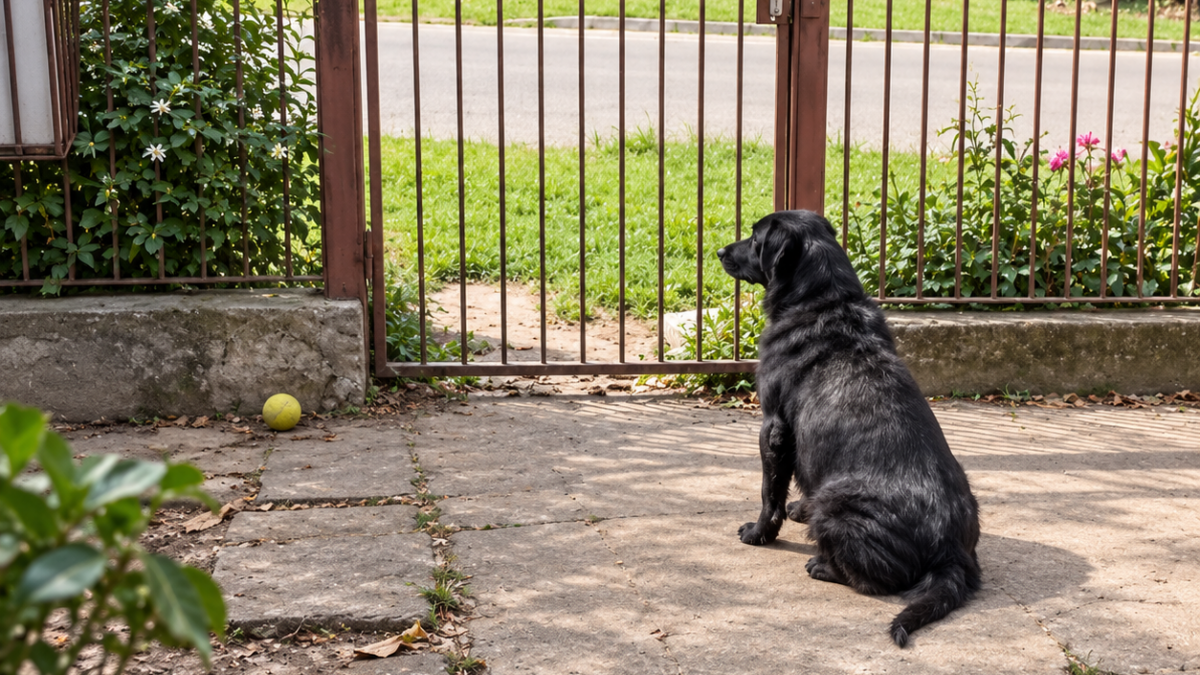
PART 2
For half a second, nobody moved.
The sound was so small I almost wondered if I had imagined it.
Then the little body beside her moved again.
A puppy.
The mother twisted around immediately.
She was exhausted, still wet around the edges despite all the towels we had used, but instinct took over faster than any of us could react.
She began licking the newborn.
“Good girl,” I whispered.
Dr. Harris crouched nearby.
“One.”
The puppy was brown like its mother, except for a narrow strip of white running from its chin toward its chest.
I had watched births before.
I knew what to expect.
But there was something different about watching this dog deliver her first baby.
Only hours earlier, she had been lying on a wet floor inside an abandoned house because the gate to the place she considered home had been closed to her.
Now she was surrounded by clean blankets, warm air, food, water, medicine, and people who wanted her alive.
She did not know any of that in the way we did.
She only knew her puppy was here.
And it needed her.
I rubbed the side of her neck.
“We should give you a name.”
Ben was standing behind me holding another stack of towels.
“What about Rain?”
I looked at the water still streaking the clinic window.
Too obvious.
“Hope?” one of the veterinary technicians suggested.
I shook my head.
She deserved something that belonged to her, not just to what had happened to her.
Then Marlene, the woman who had called us, texted me.
**Is she safe?**
I looked down at the dog.
She had finished cleaning her puppy and was nudging it toward her belly.
“She waited a week outside that gate,” I said.
Ben nodded.
“She did.”
“And still trusted us after everything.”
Dr. Harris glanced over.
“What are you thinking?”
“Grace.”
The mother lifted her head when I said it.
Ben smiled.
“Grace it is.”
The second puppy arrived nineteen minutes later.
This one was mostly black.
Then came a tan female with a white paw.
Then another brown male.
Grace became restless between contractions, turning around, panting, looking toward us.
Each time, I moved closer.
Each time I placed my hand beside her face, she pressed against it.
I kept thinking about that gate.
I imagined her sitting there night after night.
Pregnant belly touching the ground.
Mosquitoes around her ears.
Cars passing.
People coming home to dinner.
Porch lights turning on.
And somewhere on the other side of the gate was the person she had trusted.
I wondered whether she had understood rejection.
Dogs do not understand ownership papers.
They do not understand inconvenience.
They do not understand someone deciding that caring for them has become too difficult.
They understand routines.
Smells.
Voices.
Doors.
The sound of a familiar engine.
A particular hand reaching down.
A particular place where they are supposed to sleep.
And Grace had apparently believed that gate still led to her home.
That thought made what happened next even harder to hear.
Around the time the fifth puppy was born, my phone rang.
It was Marlene.
I stepped into the hallway.
“How is she?”
“Five puppies so far. Everybody’s stable.”
“Oh, thank God.”
I could hear rain on her end too.
Then her voice changed.
“There’s something else.”
“What?”
“The owner is asking where she went.”
I stared through the small clinic window at Grace.
She was cleaning puppy number five.
“What do you mean?”
“He came outside about twenty minutes ago. He noticed she wasn’t at the empty house anymore.”
That surprised me.
“How did he know she was there?”
Marlene was silent.
“Marlene?”
“The neighbors think he knew the whole time.”
Something inside me went cold.
“You’re sure?”
“I can’t prove it. But one of the men across the street said he saw him looking toward the abandoned place yesterday.”
I squeezed the phone tighter.
“What exactly is he asking?”
“He wants to know who took her.”
I looked back at Grace.
Another contraction rolled through her body.
“I’m not discussing anything with him tonight.”
“I figured.”
Then Marlene said, “He told somebody those puppies are his.”
I stopped breathing for a second.
“What?”
“He said if she gives birth, he wants them back.”
I looked through the glass again.
Grace was panting.
Her five tiny puppies were clustered against her body.
The smallest one had found a nipple and was nursing.
After seven days outside a locked gate, suddenly someone was interested.
Not because Grace was frightened.
Not because she had been soaked in rain.
Not because she was about to give birth alone.
Because there were puppies now.
I returned to the room without saying anything.
Ben noticed my face.
“What happened?”
“Later.”
Grace needed calm.
Whatever anger I felt could wait.
The sixth puppy came twelve minutes later.
The seventh took nearly half an hour.
By then Grace was visibly tired.
Dr. Harris checked her repeatedly.
“Come on, sweetheart,” he murmured.
At 7:38 p.m., the eighth puppy arrived.
At 8:03, the ninth.
Grace lay back afterward and closed her eyes.
For several minutes, the room grew quiet.
Nine tiny bodies moved beside her.
I counted them again.
Dr. Harris checked Grace.
Then frowned.
“What?”
He placed his hand carefully against her abdomen.
“I think there’s another one.”
My heart sank.
Grace looked spent.
Her gums were pale pink.
She was breathing quickly.
The technician prepared medication and supplies in case assistance became necessary.
I knelt beside Grace again.
Her eyes opened.
I do not know whether animals understand encouragement, but I know they understand presence.
So I stayed.
“You didn’t come this far to stop now.”
Her breathing changed.
Another contraction.
Then another.
Twenty-three minutes later, the tenth puppy slid into the world.
For one terrifying moment, it did not move.
Dr. Harris immediately cleared its airway.
I watched his hands.
Nothing.
“Come on,” he whispered.
Grace lifted her head.
She tried to reach toward him.
The puppy remained limp.
My chest tightened.
Then—
A twitch.
Dr. Harris rubbed harder.
The puppy opened its mouth.
A tiny squeak came out.
I covered my face with one hand.
Ben laughed behind me.
Not because anything was funny.
Because sometimes relief comes out sounding like laughter.
“Ten,” he said.
All ten alive.
Grace stretched her neck toward the final puppy and began licking it.
Dr. Harris sat back on his heels.
“There you go, mama.”
For nearly two hours she had worked.
Now ten puppies pressed against her.
Three black.
Four brown.
Two tan.
One almost entirely white except for dark markings around the ears.
They looked impossibly small beside the belly that had carried them.
I watched Grace close her eyes.
Her head slowly lowered onto the blanket.
For the first time since we found her, her body seemed completely still.
Safe still.
Not defeated.
Not exhausted on a wet floor.
Just resting.
I should have felt nothing but relief.
Instead, I kept hearing Marlene’s words.
**He said the puppies are his.**
I knew enough rescue work to understand that emotional outrage and legal ownership were not the same thing.
We could not simply decide Grace belonged to us because we disliked what we had heard.
We needed facts.
We needed statements.
We needed documentation.
And most important, Grace needed medical care.
So that night, while she slept beside her ten newborn puppies, I began writing everything down.
The time we received the call.
The condition of the abandoned house.
The rainwater.
Her physical state.
The veterinary examination.
Photographs.
Witness names.
Every detail.
Not because I wanted revenge.
Because I had learned something during years of rescue work.
Anger disappears.
Documentation does not.
By ten that night, the storm had weakened.
I was preparing to leave when Grace woke.
She looked around the room.
For a moment I thought she might panic.
Instead, she counted her puppies in the only way a mother dog knows how.
Sniff.
Nudge.
Lick.
Move to the next.
When she was satisfied, she looked at me.
I sat beside the bed.
“You’re not going back into that rain.”
Her tail moved once against the blanket.
A tiny thump.
I smiled.
“That’s the first wag I’ve seen.”
The next morning, Grace’s real battle began.
Not with the weather.
Not with labor.
With her own body.
She had ten puppies and not enough milk.
Dr. Harris had warned us it might happen.
Stress, poor nutrition, dehydration, and the strain of carrying such a large litter could affect milk production.
By sunrise, three puppies were crying almost constantly.
The smallest had lost several grams.
“We need to supplement immediately,” the technician told me.
So Ben and I learned a new schedule.
Every two hours.
Around the clock.
Warm formula.
Tiny bottles.
Careful positioning.
Burping puppies no larger than my hand.
Then returning them to Grace so they could continue nursing and bonding.
Grace watched everything.
The first time I picked up the smallest puppy, she raised her head quickly.
I froze.
“It’s okay.”
She stared at me.
I held the puppy where she could see it.
Then I fed him.
Grace watched.
When I returned him to her side, she licked my wrist.
That was the moment our relationship changed.
Until then, she had allowed us to help.
After that, I think she began to trust that we were helping her babies too.
We named the smallest puppy Pip.
The white one became Pearl.
Ben named one Storm.
I told him I had rejected Rain as Grace’s name for being too obvious.
He shrugged.
“Storm earned it.”
By the second day, all ten puppies had names written on a chart above Grace’s enclosure.
Pip.
Pearl.
Storm.
Milo.
Rosie.
Fern.
Tucker.
Sunny.
June.
And Bear.
The names were temporary.
Some would certainly change when they were adopted.
But during those sleepless days, names made the work personal.
At 2 a.m., you were not feeding “puppy number four.”
You were feeding Rosie.
You knew she liked to push her brothers away from the warmest spot.
You knew Pip needed extra time.
You knew Bear complained loudly if the bottle was one degree cooler than he preferred.
And you knew Pearl somehow always ended up sleeping across Grace’s neck.
Grace’s appetite slowly returned.
The first day, she ate only half a bowl.
The second day, two bowls.
By the third day, she was standing when we entered the room.
Her tail wagged.
She began taking short walks outside.
The first time I clipped a leash to her collar and opened the clinic door, she stopped.
Rain had started again.
Not heavy.
Just a light September shower.
But the instant Grace smelled it, her body stiffened.
Her ears flattened.
She backed away from the doorway.
I understood immediately.
“All right.”
I closed the door.
“We’ll use the covered side entrance.”
We walked through the storage corridor instead.
Grace stepped outside beneath an awning.
She stayed close to my leg.
That was when I realized rescue did not end when an animal became physically safe.
Sometimes safety had to become believable.
That could take longer.
On the fourth morning, a man arrived at the clinic.
I knew who he was before he introduced himself.
He wore work boots, jeans, and a dark cap.
He did not ask about Grace first.
He walked to the reception desk and said, “Somebody brought my dog here.”
The receptionist looked toward me.
I came out of the hallway.
“What’s the dog’s name?”
He hesitated.
“Brownie.”
My stomach tightened.
Grace had never responded to anything when we found her.
Maybe because she was exhausted.
Maybe Brownie truly had been her name.
Maybe not.
“And your name?”
“Dale Mercer.”
He leaned on the counter.
“I was told you people took her.”
“We responded to a report of a pregnant dog sheltering in an unsafe abandoned structure.”
“That’s my dog.”
“Do you have veterinary records?”
He frowned.
“What?”
“Vaccination records, licensing records, microchip information, adoption paperwork, photographs showing ownership?”
“I’ve got pictures.”
“That helps.”
He pulled out his phone.
There were pictures.
Grace in a backyard.
Grace beside a plastic water bowl.
Grace younger and thinner.
Grace lying beneath a porch.
There was no question she had been on his property before.
Dale held the phone toward me.
“There. That’s her.”
I nodded.
“What happened last week?”
His face changed slightly.
“What do you mean?”
“She spent multiple days outside your locked gate.”
“She got out.”
“And why couldn’t she come back inside?”
“I couldn’t catch her.”
“She was lying beside your gate.”
“She’d run whenever I got near her.”
That was not what witnesses had described.
I kept my voice neutral.
“Several neighbors say you chased her away.”
His jaw tightened.
“Neighbors need to mind their own business.”
The receptionist looked down at her desk.
I could feel my pulse rising.
“Did you know she was pregnant?”
“Obviously.”
“Did you know she was close to giving birth?”
“Yes.”
“Then why was she outside?”
He exhaled sharply.
“Look, I came here for my dog.”
“And the ten puppies?”
His eyes flicked toward the hallway.
“So she had them?”
There it was.
Not *Is she okay?*
Not *Did she survive?*
Not *Ten? Are they healthy?*
Just interest.
“Yes.”
“All ten alive?”
“Yes.”
He nodded slowly.
“I’ll take them too.”
I stared at him.
“They are less than four days old.”
“I know how puppies work.”
“Grace is still under veterinary care.”
“Brownie.”
“Whatever name you prefer, she is still receiving treatment.”
He lowered his voice.
“You people don’t get to rename somebody’s property.”
The word hit me harder than I expected.
Property.
I had heard it before.
Legally, animals can indeed be treated as property in many jurisdictions.
But standing there after watching Grace lick life into ten newborn puppies, the word felt especially cold.
I folded my arms.
“No animal leaves this clinic until the appropriate process is followed.”
“What process?”
“Proof of ownership, medical clearance, and review of the circumstances in which she was found.”
“Review by who?”
“The relevant animal-welfare authority.”
His face hardened.
“You called animal control?”
“I documented a dog in distress.”
Dale stared at me for several seconds.
Then he smiled.
It was not a friendly smile.
“You rescue people always think you own everybody’s animals.”
“No.”
I held his gaze.
“We think animals deserve food, shelter, and medical care.”
“I fed her.”
“Were you feeding her last week?”
He did not answer.
“Was she allowed inside your gate?”
Nothing.
“Did you know she was sleeping in the abandoned house during the storm?”
His eyes shifted.
That tiny movement answered more than words.
“You did know.”
He straightened.
“I’m done talking.”
“That’s your choice.”
“I’ll be back with paperwork.”
When he left, my hands were shaking.
Ben stepped from the hallway.
“You okay?”
“No.”
He looked toward the door.
“Want me to tell you what I think?”
“I already know.”
We went back to Grace.
She was lying with her puppies.
The moment I entered, her tail started moving.
She did not know the man from the gate had been fifteen yards away.
She did not know somebody had just called her property.
She only knew I had returned.
I sat down beside her.
“I promise we’re going to do this correctly.”
Grace rested her muzzle on my knee.
That afternoon, Animal Services Officer Maria Alvarez arrived.
Maria had been doing cruelty and neglect investigations for almost twelve years.
She was calm, meticulous, and nearly impossible to provoke.
Exactly the person I wanted involved.
I showed her everything.
Photographs.
Videos.
Veterinary notes.
The abandoned house.
Witness information.
Maria listened without dramatic reactions.
“What did the owner say?”
I told her.
“Any surrender paperwork?”
“No.”
“Then until ownership is formally resolved, follow the hold procedures.”
“I know.”
She flipped through Dr. Harris’s notes.
“Body condition?”
“Under ideal weight considering pregnancy. Dehydrated when admitted.”
“Parasites?”
“Yes.”
“Vaccination history?”
“Unknown.”
“Microchip?”
“None found.”
Maria nodded.
“I’ll interview the neighbors.”
Over the next two days, she did.
And the picture became clearer.
Mrs. Whitaker from across the street had seen Grace outside the gate on six consecutive mornings.
“She’d sit there looking through the bars,” the woman told Maria.
“She never wandered far.”
Another neighbor, Mr. Lewis, had left water beside the sidewalk.
“He told me not to feed her,” Lewis said.
“Who did?”
“Dale.”
“Why?”
“Said she’d keep coming back if people fed her.”
Maria wrote that down.
A teenage boy named Jordan had taken a short phone video after seeing Dale outside the gate.
The image was shaky.
Rain was beginning to fall.
Grace stood several yards from him.
Dale pointed away from the property.
Even through the poor audio, the words were clear.
“Go on. Get out of here.”
Grace moved away.
Then stopped.
She turned around and looked at him.
That video changed everything.
Not because it showed violence.
It didn’t.
Dale never struck her.
But it contradicted the story that he had been unable to catch her.
Grace was standing near him.
She was not running.
She was being ordered away.
Maria interviewed Dale the next afternoon.
I was not present.
Later, she told me only what she was permitted to share.
He admitted Grace had become pregnant accidentally after a neighbor’s dog entered his yard.
He said he did not want a litter.
Then, according to Maria, his explanation became inconsistent.
At one point, he claimed he thought someone else would take her.
At another, he said Grace preferred being outside.
He denied abandoning her.
But he also admitted he had not taken her to a veterinarian during the pregnancy.
He had no current vaccination record.
No licensing documentation.
No microchip.
And no record of prenatal care.
None of those details alone necessarily proved deliberate abandonment.
Together with witness statements, the video, and her condition when rescued, they created a very different picture.
Then Maria discovered something else.
Dale had placed an advertisement online two weeks before Grace disappeared from his property.
It read:
**Puppies expected soon. Taking deposits.**
I stared at the screenshot when Maria showed me.
“How could he take deposits before they were born?”
She gave me a tired look.
“You’d be amazed what people do.”
There were comments beneath the advertisement.
**How much?**
**What breed is dad?**
**Can I reserve a female?**
Dale had responded with prices.
Suddenly his visit to the clinic made perfect sense.
He had not shown up asking whether Grace had survived.
He had asked whether all ten puppies were alive.
The puppies were not an unexpected burden anymore.
They had value.
I looked at Maria.
“So what happens?”
“That depends on the investigation and local process.”
“Can he take them today?”
“No.”
Relief went through me so fast my knees felt weak.
“But don’t celebrate yet,” she said.
“I’m not.”
“Good. Because these cases can get messy.”
She was right.
Three days later, Dale returned with a lawyer.
I was bottle-feeding Pip when the receptionist called me.
I walked into the lobby and saw Dale beside a gray-haired man carrying a leather folder.
The attorney introduced himself politely.
“My client is requesting the immediate return of his dog and her offspring.”
I felt anger climbing my spine, but Maria’s advice came back to me.
Stay factual.
“I cannot release animals subject to an active welfare hold.”
The attorney nodded.
“Do you have written authorization?”
“Yes.”
“May I have a copy?”
“Of course.”
I handed it to him.
He read it carefully.
Dale looked impatient.
“This is ridiculous.”
The attorney lifted one hand without looking up.
“Dale.”
That single word silenced him.
The attorney finished reading.
“My client disputes the allegations.”
“He’s entitled to.”
“He claims the dog escaped.”
“Animal Services is reviewing that.”
“He also claims your rescue is withholding valuable puppies.”
I looked at Dale.
“Valuable?”
His attorney glanced at him too.
That word had apparently not been part of the prepared statement.
Dale folded his arms.
“You know what I mean.”
I did.
And now so did his lawyer.
“We’ll follow the process,” the attorney said.
“That is all I’m asking.”
As they turned to leave, Grace barked from behind the clinic doors.
It was the first real bark I had heard from her.
Dale stopped.
For a strange moment, I wondered whether she recognized his voice.
He turned toward the sound.
“Brownie!”
Grace went silent.
Dale took one step toward the door.
I moved between him and the hallway.
“You cannot enter the treatment area.”
“That’s my dog.”
The attorney touched his shoulder.
“Dale.”
He left.
I stood there for several seconds after the door closed.
Then I went back to Grace.
She was standing now.
Her posture was different.
Tail low.
Body tense.
I crouched.
“It’s okay.”
She stared toward the lobby door.
Then looked at me.
I held out my hand.
After a few seconds, she walked forward and pressed her forehead against my chest.
That moment destroyed whatever small amount of emotional distance I had managed to keep.
I wrapped one arm around her.
“You don’t have to go to the gate again.”
Of course, I couldn’t promise that yet.
Not legally.
But I meant it with everything I had.
The puppies grew.
By the end of the second week, Grace was producing more milk.
We still supplemented Pip and two others, but the constant bottle schedule eased.
Their bodies became round.
Their legs became stronger.
One morning I arrived to discover Pearl’s eyes had opened.
Not fully.
Just two dark little slits.
By afternoon, Milo’s had too.
I texted Ben.
**They’re starting.**
He arrived twenty minutes later despite technically having the day off.
“You came here just to see puppies open their eyes?”
He looked offended.
“Obviously.”
Grace watched us fuss over them with the expression of a tired mother who could not understand why two adult humans found every tiny development miraculous.
When the puppies began crawling away from her bed, her job became harder.
She would collect one puppy with her mouth, return it to the pile, turn around, and discover two others had escaped.
I laughed for the first time in days.
“Welcome to ten children.”
Grace gave me a look that almost seemed personal.
By week three, the room changed completely.
Silence disappeared.
Tiny squeaks became miniature growls.
Wobbly legs carried puppies three feet before collapsing.
Storm learned to climb over the low edge of the bedding.
Bear discovered my shoelaces.
Pearl bit Ben’s thumb with gums that had no teeth yet.
“Ow,” he said dramatically.
I stared at him.
“She weighs two pounds.”
“Violence comes in many sizes.”
Grace wagged her tail.
Even she seemed amused.
But outside that room, the ownership dispute continued.
Animal Services issued citations related to Grace’s care and abandonment based on the investigation.
Dale challenged them.
His attorney argued there had been misunderstandings.
The rescue’s attorney advised us to say nothing publicly.
That was difficult.
People in the neighborhood already knew pieces of the story.
Marlene wanted to post the video.
I begged her not to.
“Not yet.”
“But people should know.”
“They should know when sharing it cannot hurt the case.”
She reluctantly agreed.
The most frustrating part was waiting.
I could care for ten newborn puppies every two hours.
I could clean blankets.
Measure formula.
Record weights.
Take Grace outside at three in the morning.
What I could not do was force a legal process to move faster.
And Dale knew it.
He began sending messages through his lawyer demanding access.
Then he produced several photographs showing Grace inside his yard before the abandonment.
Nobody disputed that.
He had owned her.
That was what made the situation painful.
Cruelty does not always come from strangers.
Sometimes the animal knows the person’s voice.
Sometimes the abandoned dog waits outside the very door where she once slept.
One afternoon, Maria called.
“Can you come to the office tomorrow?”
My stomach dropped.
“Why?”
“We may have a resolution.”
“Good resolution?”
“I don’t discuss those things by phone.”
I barely slept.
At ten the next morning, I sat in a plain conference room across from Maria.
Dale was there.
So was his lawyer.
Our attorney sat beside me.
There was a folder on the table.
Dale looked angry.
His attorney looked tired.
Maria began.
“Based on the evidence gathered, Animal Services is prepared to proceed with the current enforcement action. There is also the matter of accrued veterinary and care costs.”
Dale’s jaw tightened.
His attorney leaned toward him and whispered something.
Maria continued.
“The rescue is not seeking to purchase the animals.”
Our attorney nodded.
“We are requesting voluntary surrender of Grace and the litter.”
Dale looked at me.
“No.”
Nobody spoke for several seconds.
His lawyer opened the folder.
“Dale, we discussed this.”
“They’re my puppies.”
There it was again.
Not Grace.
The puppies.
His lawyer lowered his voice.
“The costs are substantial.”
“I don’t care.”
“Then you will also be responsible for ongoing boarding and medical costs if the hold continues, subject to the applicable process.”
Dale looked at Maria.
“This is robbery.”
Maria’s expression did not change.
“No, sir. This is an animal-welfare proceeding.”
“They took my dog.”
“Your dog was found in an unsafe structure during severe weather while heavily pregnant after multiple witnesses reported you had refused her access to your property.”
“She left.”
“The video does not support that characterization.”
Dale looked at me again.
“You’ve been poisoning everybody against me.”
I said nothing.
He leaned forward.
“You think you’re some kind of hero?”
My attorney placed a hand on the table.
I did not need him to stop me.
I was strangely calm now.
“No.”
My voice was quiet.
“I think Grace needed a dry place to give birth.”
Dale laughed once.
“You even changed her name.”
“She responds to it.”
“Her name is Brownie.”
That hurt more than it should have.
Because maybe once Brownie had been a loved dog.
Maybe there had been a time when Dale scratched behind her ears.
Maybe she slept beside his porch and felt safe.
Abandonment is sometimes easier to understand when the person involved was always cruel.
This wasn’t.
Grace had trusted that gate for a reason.
That was the tragedy.
His lawyer slid a document toward him.
“You have two choices. Continue contesting the matter, accept the costs and risks we discussed, or execute the surrender agreement.”
Dale stared at the paper.
“What about the deposits?”
The room went silent.
Even his attorney closed his eyes for a moment.
Maria spoke first.
“You accepted money?”
Dale realized his mistake immediately.
“I said deposits. I didn’t say I took any.”
Maria reached for her notebook.
“Let’s clarify that.”
His lawyer whispered, “Do not answer another question.”
Dale shoved back from the table.
“This is unbelievable.”
Nobody stopped him.
He paced near the wall.
Then he turned toward me.
“You want them?”
I looked at him.
“I want them safe.”
“You want the dog too?”
“Yes.”
He laughed bitterly.
“You can have her.”
The words came so casually that I felt sick.
The dog who had waited seven days outside his gate.
The dog who had returned after being chased away.
The dog who had carried ten puppies while sleeping wherever she could find shelter.
**You can have her.**
His lawyer pushed the surrender document across the table.
Dale grabbed the pen.
He signed.
Once.
Twice.
Initialed three pages.
Then he dropped the pen.
“There.”
Maria reviewed the document.
Our attorney reviewed it.
Then he looked at me.
“It’s complete.”
I cannot describe what happened inside my chest.
I did not cheer.
I did not smile at Dale.
There was nothing victorious about watching somebody surrender a dog who had spent a week begging to be allowed home.
The satisfaction came from something quieter.
The gate was closed behind Grace now.
Permanently.
And for once, being locked out had led her somewhere better.
Dale left the room without another word.
I stayed seated.
Maria gathered the paperwork.
“You okay?”
I nodded.
Then shook my head.
Then laughed weakly.
“I don’t know.”
She smiled.
“Go tell your dog she’s free.”
My dog.
Technically, Grace now belonged to the rescue organization.
But I understood what Maria meant.
I drove straight to the clinic.
Ben was cleaning the puppy enclosure.
Grace was standing in the middle of ten wobbling puppies with the exhausted expression of somebody regretting every decision that had led to motherhood.
I opened the gate.
She came toward me immediately.
I sat on the floor.
Grace climbed halfway into my lap.
All fifty-five pounds of her.
“You’re not going back.”
Her tail hit the floor.
Thump.
“You hear me?”
Thump.
“That gate is done.”
Thump.
Ben stopped cleaning.
“What happened?”
I looked up.
“They signed.”
His face changed.
“All of them?”
“All eleven.”
He dropped the towel he was holding.
“Yes!”
Grace jumped at the sound.
“Sorry,” he whispered.
Then we laughed.
Puppies started climbing over my legs.
Pearl found the zipper on my jacket.
Bear attacked one shoe.
Pip curled against Grace.
For the first time since we rescued her, nobody else could claim them.
That should have been the end.
But real rescue stories rarely end when paperwork is signed.
That is usually when the work starts.
Ten puppies needed vaccinations.
Deworming.
Microchips.
Food.
Socialization.
Veterinary checks.
Future spay and neuter arrangements.
And ten carefully screened homes.
Grace needed even more.
She needed to recover physically.
She needed to learn that rain did not mean abandonment.
That gates could open.
That a raised voice did not always belong to someone sending her away.
We moved Grace and the puppies into one of our foster homes once they were medically stable.
The foster’s name was Linda.
She was sixty-eight and had raised more neonatal litters than anyone I knew.
Her house smelled permanently of coffee, laundry detergent, and dogs.
The puppy room had washable floors and a sliding door leading to a covered yard.
When we brought Grace inside, she inspected everything.
The bed.
Water.
Door.
Windows.
Then the gate separating the puppy room from the hall.
She froze.
It was only a white baby gate.
Waist high.
Nothing like the black metal gate outside Dale’s property.
But Grace stared at it.
Linda noticed.
“She doesn’t like gates?”
“Apparently not.”
Linda opened it immediately.
Grace watched.
Linda closed it.
Opened it again.
Then dropped a treat just beyond it.
Grace took one cautious step.
Then another.
She crossed.
Linda repeated the exercise.
Open.
Treat.
Close.
Open.
Treat.
No forcing.
No trapping.
By the third day, Grace stopped hesitating.
By the end of the week, she sometimes stood at the gate and wagged because she had learned something new.
Here, closed did not mean forever.
Someone always came back.
Meanwhile, her puppies became chaos.
At five weeks old, ten innocent newborns had transformed into ten tiny criminals.
Storm discovered the water bowl could be flipped.
Bear chewed a section of Linda’s baseboard.
Pearl stole a sock and led three siblings under a chair.
Rosie learned how to climb.
Milo learned how to scream whenever Rosie climbed without him.
Tucker fell asleep inside the food dish.
Sunny developed an obsession with carrying leaves into the house.
June followed Grace everywhere.
Fern was gentle and observant.
Pip remained the smallest but became the boldest.
He was the first puppy to approach the vacuum cleaner.
He barked at it.
The vacuum cleaner did not retreat.
Pip reconsidered his strategy.
I visited almost every day.
One afternoon I found Linda sitting on the floor surrounded by puppies.
“You look tired.”
She stared at me.
“I am filing a complaint.”
“Against who?”
She pointed toward Bear.
“He committed an offense against my slippers.”
Bear was asleep upside down beside her leg.
I laughed.
Grace lay nearby.
She was gaining weight.
Her coat had begun to shine.
Her eyes looked different.
That was what people noticed most in rescue transformations.
They talked about body condition.
Fur.
Weight.
But eyes changed too.
Fear stops taking up so much space.
A dog begins looking around instead of watching every exit.
Grace no longer startled when we approached her food.
She began bringing toys.
The first time she did it, Linda called me immediately.
“You need to see this.”
I drove over.
Grace met me at the door carrying a faded blue stuffed elephant.
She held it carefully.
I crouched.
“Is that for me?”
She wagged.
I took the toy.
Grace bounced backward.
A play bow.
I almost cried.
The dog who had once been too exhausted to stand for food wanted to play.
So I threw the elephant.
She ran after it.
Not far.
Only across the room.
But she ran.
She brought it back.
I threw it again.
Ten puppies chased her.
Linda leaned against the doorway laughing.
“That’s your revenge right there.”
I looked at her.
“What?”
She nodded toward Grace.
“Happy.”
I knew what she meant.
People often wanted dramatic justice in rescue stories.
They wanted the neglectful owner humiliated.
They wanted punishment.
They wanted the animal to somehow understand that the person who failed them had lost.
But Grace did not need revenge the way people imagine it.
Her revenge was waking each morning and discovering she was still safe.
Eating until she was full.
Watching every one of her puppies grow.
Learning to play.
Being wanted.
Still, there would be one final confrontation.
It happened when the puppies were almost seven weeks old.
Linda called around noon.
Her voice was tense.
“Dale is here.”
I stood so quickly my chair rolled backward.
“At your house?”
“Yes.”
“How did he get the address?”
“I don’t know.”
“Do not open the door.”
“I haven’t.”
“Call Maria. I’m coming.”
I was in my truck thirty seconds later.
By the time I reached Linda’s street, an Animal Services vehicle was already parked outside.
Maria stood near the driveway.
Dale was beside a pickup.
He was angry.
Linda stood safely inside behind the glass door.
I parked and walked toward Maria.
“What happened?”
Dale pointed at me.
“You.”
Maria stepped between us slightly.
“Keep this civil.”
Dale ignored her.
“You posted pictures.”
I hadn’t.
The rescue had eventually shared Grace’s story after the ownership issue was resolved, but we had not named Dale, shown his house, or published identifying details.
“We posted the dogs.”
“Everybody knows.”
“I didn’t give anybody your name.”
“Doesn’t matter.”
Maria spoke.
“Mr. Mercer, why are you at this address?”
He pulled out his phone.
“I want that one.”
I stared at the screen.
It was a picture of Pearl.
“What?”
“My niece wants her.”
For several seconds, nobody said anything.
I genuinely could not understand what I was hearing.
“You surrendered the entire litter.”
“I know what I signed.”
“Then why are you here?”
“Because I figured you could let one go.”
Maria’s face was unreadable.
“You cannot arrive at a foster residence and demand an animal you legally surrendered.”
“I’m not demanding.”
“You came to the private residence.”
“I asked.”
Linda opened the inner door but remained behind the storm door.
“You were pounding on my door.”
“I knocked.”
“For five straight minutes.”
Maria raised a hand.
“All right.”
Dale looked toward the house.
A puppy barked inside.
He stared at me.
“You’ve got ten. What’s one puppy?”
That sentence hit me.
Ten.
As if abundance reduced value.
As if because Grace had ten babies, one could simply be removed and handed back to the man who had rejected their mother.
I stepped closer, stopping well outside his personal space.
“Every one matters.”
He rolled his eyes.
“Oh, come on.”
“Every one.”
“You’re acting like I tortured her.”
“I never said that.”
“You’ve made me look like a monster.”
“I never published your name.”
“You told the story.”
“Yes.”
“Your version.”
“The veterinary records, witnesses, video, and surrender documents exist.”
He looked away.
Rain clouds were gathering above the houses.
That detail felt almost cruel.
“Pearl isn’t available to you,” I said.
“She’ll be adopted through the same screening process as every other puppy.”
“So I can apply?”
Maria answered before I could.
“You may submit any application the organization legally accepts. They also may evaluate applicants according to their standard welfare criteria.”
Dale laughed.
“So that’s a no.”
I did not respond.
He looked at the house again.
Then at me.
“You really think you won.”
The words surprised me.
“This wasn’t a contest.”
“Sure feels like one.”
“No. You had a dog waiting outside your gate.”
His face tightened.
“She got out.”
“And when she came back?”
Nothing.
“She came back, Dale.”
He looked at the pavement.
“For a week.”
Still nothing.
“She didn’t choose that abandoned house because she liked it better than home. She went there because she stopped being allowed through your gate.”
“You don’t know what was going on.”
“You’re right.”
That made him look at me.
“I don’t know everything that was happening in your life. Maybe you were overwhelmed. Maybe the pregnancy was unexpected. Maybe money was tight. Maybe you were angry. Maybe you didn’t know what to do.”
His expression softened by half a degree.
“But you could have asked for help.”
Silence.
“Our phone number is public. The shelter is twelve minutes away. There were neighbors offering food. You had options.”
The first drops of rain hit the driveway.
Dale looked up.
Then toward Linda’s house.
Grace had appeared behind the storm door.
She stood beside Linda.
The moment Dale saw her, his entire posture changed.
“Brownie.”
Grace heard the word.
Her ears moved.
She stared at him.
Nobody moved.
For perhaps three seconds, I thought she might wag.
Maybe some part of her remembered.
Then thunder rolled in the distance.
Grace stepped backward.
Dale took one step toward the porch.
Maria raised her hand.
“Stay where you are.”
Grace moved behind Linda.
Not dramatically.
No growl.
No bark.
She simply chose distance.
Dale watched her disappear.
Something passed across his face.
I could not tell whether it was guilt.
Embarrassment.
Anger.
Maybe all three.
He put his phone into his pocket.
“Fine.”
He opened his truck door.
Before getting inside, he looked at me.
“You think dogs remember everything?”
I considered the question.
“I think they remember how places make them feel.”
He stood there another second.
Then drove away.
That was the last time I ever saw him.
The rain strengthened after he left.
I went inside.
Grace was in the puppy room.
I sat beside her.
She immediately placed her head on my thigh.
Outside, water ran down the windows.
She listened to it.
But this time she didn’t hide.
There was a roof above her.
There was food in the next room.
Her puppies were wrestling across a blanket.
And the door behind us was unlocked.
At eight weeks, the puppies received their next veterinary examinations.
All ten were healthy.
Pip remained slightly smaller, but his heart and lungs sounded good.
Pearl had become fearless.
Storm was affectionate.
Bear was enormous compared with the others.
One by one, approved families began meeting them.
This part of rescue work always hurts.
You spend weeks keeping an animal alive.
You learn everything.
Who sleeps on his back.
Who hates nail trimming.
Who steals toys.
Who needs a slow introduction.
Then strangers walk through the door and you are expected to decide whether they can love that animal for the next fifteen years.
We rejected several applications.
One family wanted a puppy as a surprise birthday gift without involving the person who would be responsible for the dog.
No.
Another wanted an outdoor-only dog.
No.
One couple seemed wonderful but worked twelve-hour shifts and had no plan for puppy care.
Not yet.
We were not looking for perfect people.
Perfect does not exist.
We were looking for commitment.
The first puppy adopted was Fern.
A retired couple named Robert and Ellen came to meet her.
Robert sat on the floor.
Fern walked directly into his lap and fell asleep.
He looked at his wife.
“I guess we’re done looking.”
Ellen laughed.
“We drove two hours.”
“Long drive home, then.”
Fern left three days later.
Grace watched us carry her toward the door.
For a moment, I worried.
Then Linda gave Grace a treat.
Fern’s new family sent a picture that evening.
She was asleep between Robert and Ellen on a couch.
The next was Tucker.
Then Sunny.
June went to a family with two older rescue dogs.
Milo joined a young nurse who had grown up with dogs.
Storm was adopted by a firefighter and his wife.
Rosie went to a teacher.
Bear went to a couple with a fenced acre and a Labrador who immediately became his best friend.
Pip stayed longer.
People loved him.
But I was protective.
Maybe too protective.
He had been the smallest.
I had bottle-fed him at two in the morning.
He knew the sound of my truck.
Whenever I arrived at Linda’s house, Pip ran toward the door.
Ben teased me.
“You’re keeping him.”
“No.”
“You already love him.”
“I love all of them.”
“You fed that one like an infant.”
“He needed extra calories.”
“You sang to him.”
“That happened one time.”
Linda raised an eyebrow.
“Five times minimum.”
Eventually the right person came.
Her name was Naomi.
She was thirty-five, worked from home, had recently lost a seventeen-year-old terrier, and arrived carrying a notebook of questions.
Not about how cute Pip was.
About food.
Training.
Vaccinations.
Pet insurance.
Emergency care.
Socialization.
She sat on the floor for nearly an hour without trying to force Pip to interact.
Eventually he approached her.
Climbed onto her leg.
And fell asleep.
I knew.
Sometimes you simply know.
When Naomi left with Pip a week later, I cried in my truck.
Ben found me.
“You okay?”
“No.”
“He got a great home.”
“I know.”
“You can know something and still hate it.”
That was exactly right.
Pearl was the final puppy.
Perhaps because her photograph had been the one Dale had demanded.
Perhaps because she had been the first to open her eyes.
Perhaps because she slept across Grace’s neck.
Whatever the reason, I struggled to approve anyone.
Then a woman named Carmen arrived with her fourteen-year-old daughter, Sofia.
They had lost their dog the previous year.
Carmen did not ask to see Pearl first.
She asked to meet Grace.
That surprised me.
“Why?”
She smiled.
“Because I want my daughter to understand where this puppy came from.”
We brought Grace into the meeting room.
Sofia sat on the floor.
Grace approached cautiously.
Sofia did not reach for her.
She waited.
After a minute, Grace sniffed her hand.
After two, she sat beside her.
Carmen asked me about the story.
I told her enough.
Not every ugly detail.
Just the truth.
Sofia listened.
Then she said something I will never forget.
“So Pearl’s first safe home was wherever her mom was.”
I swallowed.
“Yes.”
She nodded toward Grace.
“Then her mom saved her first.”
Exactly.
Rescuers love to think we save animals.
Sometimes we do.
But Grace had been saving those puppies long before we arrived.
She had searched for shelter.
Stayed with them through hunger.
Carried them through rain.
Allowed strangers to lift her because somewhere in that exhausted body she decided trusting us might give her babies a chance.
Pearl went home with Carmen and Sofia.
That night, for the first time since giving birth, Grace slept without a single puppy beside her.
Linda worried she might search for them.
Instead, Grace walked around the room once.
Sniffed every empty bed.
Then climbed onto Linda’s couch.
She circled twice.
Lay down.
And fell asleep with her head against Linda’s leg.
“She looks relieved,” Linda told me on the phone.
I laughed.
“Ten puppies will do that.”
There was one question left.
Where would Grace go?
Applications had arrived.
Many.
Her story had touched people.
Some applicants were excellent.
But every time I imagined her leaving with someone else, something tightened in my chest.
I told myself that was normal.
Rescuers get attached.
We cannot keep every dog.
If we did, we could not continue helping others.
I had given this advice to volunteers dozens of times.
Then one evening I visited Linda and found Grace waiting at the baby gate.
She was holding the blue stuffed elephant.
The moment she saw me, she dropped it.
Her entire body started wagging.
Not just her tail.
Her shoulders.
Her hips.
Everything.
Linda watched from the kitchen.
“You know this is ridiculous, right?”
“What?”
“She has chosen you.”
I sighed.
“Don’t start.”
“She hears your truck before it turns onto the street.”
“Dogs have good hearing.”
“She sleeps beside your jacket when you leave it here.”
“That could be coincidence.”
Linda folded her arms.
“Yesterday I said your name and she ran to the window.”
“Manipulation.”
“Absolutely.”
Grace pushed the elephant into my hand.
Linda smiled.
“By her.”
I threw the toy.
Grace raced after it.
When she returned, she did not give it to Linda.
She brought it to me.
I stared at her.
“You’re making this difficult.”
She dropped the toy.
Then sat on my foot.
Three days later, I submitted an adoption application.
Ben found out before I told him.
He walked into the clinic holding a printed copy.
“You checked ‘no other dogs currently in home.’”
“Correct.”
“You checked ‘fenced yard.’”
“Correct.”
“And under preferred animal you wrote Grace.”
I took the paper from him.
“Confidential.”
“You adopted the mother.”
“I applied.”
“Linda approved you twelve minutes ago.”
I looked at him.
“What?”
He started laughing.
“Congratulations, Dad.”
“I hate you.”
“No, you don’t.”
He was right.
Grace came home with me on a Saturday.
I expected some difficulty.
New environments can be stressful.
I prepared a crate.
Bed.
Bowls.
Toys.
Covered porch area.
I baby-proofed rooms as though I were bringing home a toddler.
Grace entered the house.
Sniffed the hallway.
Kitchen.
Living room.
Then walked directly to the back door.
I opened it.
She stepped into the yard.
Walked the fence line.
Returned.
Then came inside again.
That first evening, rain began.
Of course it did.
I was cooking when I noticed Grace standing at the back door.
Her body was stiff.
Rain hit the glass.
For several seconds, she simply stared.
I dried my hands and approached.
“You don’t have to go out.”
She looked at me.
I opened the door anyway.
Not because I wanted her outside.
Because I wanted her to understand she could choose.
Grace stepped onto the covered porch.
The rain fell beyond the roofline.
She sniffed.
Then turned around.
I held the door open.
She walked back inside.
I closed it.
Grace sat down.
I gave her a treat.
Five minutes later, she returned to the door.
I opened it again.
Out.
In.
Door closed.
Treat.
We repeated this six times.
By the seventh, her tail was wagging.
Open doors became our ritual.
For weeks, I never called her away from one.
If she wanted to stand in the doorway, I let her.
If she wanted to walk outside and immediately return, I let her.
I wanted every exit to teach the same lesson.
You are allowed back in.
Two months passed.
The puppies’ families sent photographs.
Fern sleeping beneath a Christmas tree.
Bear swimming in a pond.
Milo wearing a ridiculous raincoat.
Sunny at puppy class.
Storm asleep beside the firefighter’s boots.
Rosie learning “shake.”
June curled against her older canine sister.
Tucker stealing dish towels.
Pip sleeping on Naomi’s office chair.
Pearl resting beside Sofia while she did homework.
I printed the pictures.
I know dogs cannot understand photographs the way we do.
Still, I put them in a small album.
On the front, I wrote one word.
**Family.**
Grace was eventually spayed once her body had recovered fully.
Her veterinary work was completed.
She gained healthy weight.
She learned sit.
Stay.
Come.
Leave it.
Her favorite command became “bed,” because I had made the mistake of giving her a piece of chicken every time she went there during training.
She became suspiciously enthusiastic about bedtime.
Months after the rescue, Maria called me.
“I have one last update.”
My chest tightened automatically.
“About Dale?”
“Yes.”
I had tried not to think about him.
“What happened?”
She explained that the enforcement matter had concluded.
There had been fines and conditions related to future animal ownership under the applicable local process.
I did not ask for every detail.
I did not need to.
Then Maria said, “There’s something else.”
“What?”
“Remember the puppy deposits?”
“Yes.”
“Several people came forward after the investigation became known. He had accepted money from prospective buyers before the puppies were born.”
I leaned back in my chair.
“Did they get it back?”
“That’s being handled separately. But they have documentation.”
I thought about Dale asking whether all ten puppies were alive.
Not whether Grace was alive.
The picture finally felt complete.
The ending some people wanted was probably dramatic.
They might have wanted handcuffs.
A courtroom.
A judge delivering a speech.
A crowd applauding.
Real accountability is often quieter.
Documents.
Statements.
Fines.
Restrictions.
Money returned.
A signed surrender form.
And one locked gate that an abandoned dog never has to sit outside again.
I thanked Maria.
Before hanging up, she said, “How’s Grace?”
I looked toward the living room.
Grace was upside down on my couch.
All four legs in the air.
The blue elephant was under her head.
“Devastated,” I said.
Maria laughed.
“I can tell.”
About six months after the storm, we organized a reunion.
Not because the puppies needed one.
Because the humans did.
All ten families agreed to meet at a fenced park.
I arrived early with Grace.
She sniffed the grass.
The morning was bright.
Dry.
Wind moved through the trees.
The first car belonged to Naomi.
Pip jumped out wearing a red harness.
He had grown.
A lot.
Still smaller than some siblings, but strong.
He spotted Grace.
Stopped.
Grace froze too.
Then Pip ran.
He reached her at full speed.
Grace braced.
They collided gently.
He licked her face.
Grace sniffed him from nose to tail.
Her body began wagging.
Then came Pearl.
Then Bear.
Then Rosie.
Within fifteen minutes, all ten puppies were inside the park.
They were no longer tiny.
Some weighed nearly as much as Grace.
But something remarkable happened.
Grace moved among them as though she knew.
Maybe she recognized their scent.
Maybe their energy.
Maybe I was projecting human emotion onto an ordinary canine interaction.
I don’t care.
She knew enough.
Pearl pressed against her.
Pip followed her.
Bear tried to climb over her like he was still four weeks old.
Grace corrected him with one sharp maternal bark.
Everyone laughed.
“She definitely remembers being his mother,” Ben said.
For nearly two hours, they ran.
The families exchanged stories.
Storm had eaten part of a couch.
Milo hated the mail carrier but loved the mail truck.
Sunny had learned how to open a cabinet.
Tucker could detect cheese from three rooms away.
Sofia showed me a picture of Pearl sleeping in her bed.
Naomi told me Pip went everywhere with her.
Robert and Ellen said Fern had transformed their quiet house.
Then Marlene arrived.
She had been the first person to call.
The woman who saw Grace in the abandoned house and decided not to assume somebody else would help.
Grace recognized her almost immediately.
Marlene crouched.
“Hello, beautiful.”
Grace walked toward her.
Marlene stroked her neck.
Her eyes filled with tears.
“Look at you.”
I stood beside them.
“If you hadn’t called…”
“I know.”
She looked around the park at ten healthy young dogs.
“No.”
Her voice broke.
“I don’t think I knew until this second.”
I understood.
One phone call.
That was all it had taken to change eleven lives.
Marlene had not rescued Grace herself.
She had not delivered puppies.
She had not investigated.
She had simply noticed.
And acted.
People underestimate the value of that.
After everyone left, Grace and I remained in the park.
The grass was covered with paw prints.
Discarded tennis balls.
A forgotten water bowl.
Grace was tired.
She lay beside me beneath a tree.
I opened the album of puppy photographs, now much thicker than before.
I added a reunion picture when we got home.
All ten puppies.
Grace in the middle.
Sometimes I think about the first image I ever saw of her.
Not a photograph.
A memory.
A brown dog behind a collapsed cabinet.
Rainwater on the floor.
Her enormous belly rising and falling.
Eyes watching me.
No growl.
No fight.
Just exhaustion.
I think about carrying her into the van.
The way she closed her eyes when I covered her.
The first puppy’s cry.
The tenth puppy lying still for one terrifying moment.
The bottles at two in the morning.
The ownership dispute.
The papers.
The gate.
But there is one memory stronger than all the others.
It happened almost a year after her rescue.
Another storm moved through our area late one summer afternoon.
Not dangerous.
Just heavy rain.
I was on the porch when it began.
Grace stood inside behind the screen door.
I expected her to remain there.
Instead, she nudged the door with her nose.
I opened it.
She stepped onto the porch.
Rain blew sideways across the yard.
Grace watched it.
I sat in a chair.
After a minute, she walked toward me.
Then, to my surprise, she continued past the edge of the roof.
One paw entered the rain.
Then another.
She stepped into the yard.
Water immediately darkened the fur along her back.
I almost called her.
I stopped myself.
Grace stood there for several seconds.
Then she ran.
Not away.
Around.
One wide circle through the wet grass.
Then another.
She splashed through a shallow puddle.
I started laughing.
“Grace!”
She ran faster.
Her tail was high.
Her ears bounced.
Rain soaked her.
And she did not care.
Finally she raced back toward the porch.
I opened the screen.
Grace stopped at the threshold.
For one tiny second, she looked at the doorway.
Then she crossed it without hesitation.
I wrapped her in a towel.
She shook water all over me.
“Seriously?”
She wagged.
I dried her ears.
Then she walked into the living room, jumped onto the couch, turned three circles, and settled against the blue elephant.
Outside, the rain continued.
Inside, Grace slept.
The difference between those two nights was almost impossible to comprehend.
The first time, she had been pregnant, unwanted, and hiding in a building that was not hers because the gate to her home had been locked.
Now she had deliberately walked into the same kind of rain knowing exactly where she could return.
That was when I finally understood what healing looked like.
It did not mean forgetting.
It meant remembering without being trapped by the memory.
Grace had once waited seven days for someone to open a gate.
She had waited because she trusted a person who had decided she no longer belonged inside.
She could have given birth alone on that flooded floor.
One puppy might not have survived.
Maybe several.
Maybe Grace herself would have developed complications without medical care.
Instead, someone noticed.
Someone called.
We carried her out.
Four hours later, the first puppy came.
Then another.
And another.
Until ten tiny lives were pressed against the mother who had fought harder for them than anyone would ever fully understand.
Those ten puppies grew up knowing warm beds.
Full bowls.
Veterinary care.
Toys.
Families.
Open doors.
Grace received those things too.
But the greatest victory was not what happened to the person who rejected her.
It was what happened to her afterward.
Dale lost the right to decide her future.
Grace gained one.
The dog who had been chased away became the dog everybody wanted to welcome.
The mother who once sheltered her unborn puppies from the rain eventually watched every one of them leave for a home chosen carefully for them.
And the gate she had waited beside for seven days became nothing more than a place she would never have to see again.
Tonight, Grace is asleep about ten feet from me.
She has her own bed.
She rarely uses it.
She prefers the couch.
The blue elephant has lost one ear.
Her food bowl is empty because she finished dinner and then convinced me she had not been fed.
Her puppies are scattered across ten homes, loved by ten families who continue sending photographs.
And when rain begins tapping against the windows, Grace sometimes lifts her head and listens.
Then she looks toward me.
I look back.
Neither of us moves toward the door.
She does not have to wait outside anymore.
She is already home.








