PART 2: SHE SPENT SIX YEARS IN DARKNESS—WHEN SHE FINALLY SAW SUNLIGHT, THE MAN WHO OWNED HER CAME TO TAKE HER BACK
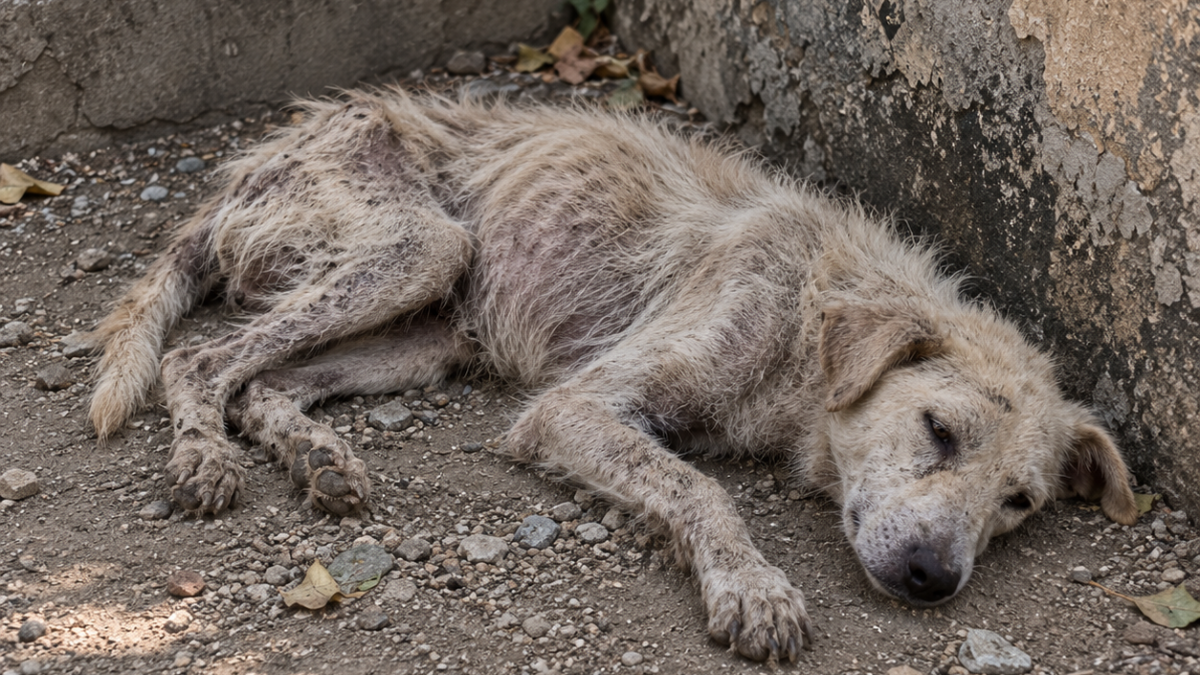
For six years, she lived in a cage so dark that the first time sunlight touched her face, she dropped to the ground and tried to hide from it.
She had never learned what grass felt like, how a couch worked, or that a human hand could reach toward her without asking for something in return.
And nine days after we carried her out of that darkness, the man who owned the building walked into my shelter and said five words that turned her rescue into a war.
I named her Grace.
She hadn’t had a real name when we found her.
At least, none that anyone could remember.
I was standing behind Deputy Mark Collins when he forced open the warped plywood door of an outbuilding behind an abandoned-looking farmhouse in southern Missouri.
The smell hit us first.
Ammonia.
Old waste.
Damp wood.
Then came the scratching.
Not barking.
Not whining.
Just dozens of nervous paws scraping wire.
Mark raised his flashlight.
Rows of cages disappeared into the darkness.
Some were stacked two high.
A few had empty bowls.
Others had bowls filled with water so dirty I couldn’t see the bottom.
In the farthest corner sat a golden-colored female dog.
She didn’t bark.
She didn’t growl.
She didn’t even move.
She simply watched us.
Her coat was matted into heavy ropes along her belly. Her nails curled sideways. Her hind legs looked thin beneath her body, and the skin around her ears was red from infection.
I crouched several feet away.
“Hey, sweetheart.”
Nothing.
Dr. Emily Walsh, the veterinarian beside me, touched my shoulder.
“Don’t reach into the cage.”
“I won’t.”
I sat down on the concrete instead.
For nearly ten minutes, we stayed that way.
Me outside.
Her inside.
Then she leaned forward.
Barely an inch.
Just far enough to smell the air between us.
That tiny movement broke my heart more than any barking could have.
By noon, we had removed thirty-one dogs.
Investigators believed the property had been used as an unlicensed breeding operation.
Puppies were photographed in clean yards and sold online.
The adult breeding dogs lived somewhere customers never saw.
Grace was estimated to be six years old.
Dr. Walsh believed she had given birth repeatedly.
When we carried her cage outside, morning sunlight touched her face.
Grace panicked.
She flattened herself against the wire.
“Cover half the crate,” I said.
We draped a blanket over it and carried her to the transport van.
At the shelter, I opened her crate in a quiet examination room.
She refused to come out.
So I sat beside her.
One hour became two.
By late afternoon, I was answering emails from the floor.
Then something cold touched my wrist.
Her nose.
I turned my hand over slowly.
Grace smelled my fingers.
One paw came outside the crate.
Then another.
When all four finally touched the blanket, everyone in that room pretended not to cry.
For nine days, she changed by inches.
She discovered chicken.
She discovered blankets.
She learned that doors could open without someone dragging her through them.
On the ninth morning, she followed me into the fenced yard.
Her paws touched grass.
She froze.
Then lifted one foot and stared down as though the earth itself had surprised her.
“That’s grass, Gracie.”
Three steps.
Five.
Then her tail moved.
Just once.
A tiny sweep from left to right.
At 10:17 that same morning, our receptionist called me inside.
“Claire?”
Something in Maria’s voice stopped me.
“What happened?”
“There’s a man in the lobby.”
I looked through the glass.
Heavy boots.
Work jacket.
Baseball cap.
A ring of keys turning around one finger.
Behind him sat a black pickup.
My stomach tightened.
“He says the county stole thirty-one dogs from his property.”
I stepped into the lobby and shut the yard door behind me.
The man smiled.
“Robert Hale.”
I recognized the name instantly.
The farm was registered to Hale Agricultural Holdings.
“You run this place?” he asked.
“I’m the shelter director.”
“Good.”
He leaned against the counter.
“I’m here to collect my dogs.”
“They’re being held under a court-authorized seizure.”
His smile disappeared.
“My attorney says that warrant won’t survive a hearing.”
“Then your attorney can speak with the prosecutor.”
Hale stepped closer.
“I didn’t come here for a prosecutor.”
His eyes moved toward the dog wing.
“I came for my property.”
Behind that door, Grace had just touched grass for the first time in her life.
And the man who had reduced her existence to litters and cages had come to take her back.
PART 2
I didn’t answer him immediately.
I was afraid that if I did, the anger in my voice would give him exactly what he wanted.
A reaction.
A mistake.
Something his lawyer could use later.
So I stayed behind the counter and forced myself to speak calmly.
“Those dogs are evidence in an active investigation.”
Hale nodded as if I’d confirmed something he already knew.
“That’s temporary.”
“Maybe.”
“They belong to me.”
“That’s for the court to decide.”
He stared at me for several seconds.
He had pale blue eyes and the kind of face that looked friendly until the smile disappeared.
Then he put a business card on the counter.
“Take good care of them.”
His voice was almost pleasant.
“I have a lot of money tied up in those females.”
Females.
Not dogs.
Not companions.
Females.
The word stayed with me long after he left.
Maria waited until the front doors closed.
“Please tell me he can’t get them back.”
I wanted to say no.
I couldn’t.
Animal cruelty cases don’t always end when the rescue trucks drive away.
Sometimes that’s when the worst part starts.
Seized animals can remain legally tied to the person accused of neglecting them until a judge rules otherwise. Warrants get challenged. Ownership gets disputed. Defense attorneys argue that photographs are misleading, veterinarians are biased, and conditions were temporary.
Meanwhile, shelters feed the dogs.
Treat them.
House them.
Try to teach them that the world is bigger than a cage.
And sometimes we do all of that knowing a judge could order them returned.
I went back outside.
Grace was crouched in the grass.
When she saw me, she didn’t run away.
That alone felt like progress.
I sat several feet from her.
After a minute, she moved closer.
Then, for the first time since we’d met, she leaned against my leg.
The pressure was almost nothing.
But I felt it everywhere.
“I don’t know how ugly this is going to get,” I whispered.
Grace rested her chin against my knee.
“But you’re not going back there.”
I shouldn’t have promised that.
Shelter directors don’t control courts.
We don’t write laws.
We don’t decide verdicts.
But the words had already left my mouth.
And once they had, I knew I would spend everything I had trying to keep them true.
The next morning, Robert Hale’s attorney filed an emergency petition demanding the immediate return of all thirty-one dogs.
His lawyer was Martin Keene.
Everyone in the county knew the name.
Keene represented developers, trucking companies, large farms, and businessmen who liked to solve problems before those problems became headlines.
He didn’t shout.
Didn’t threaten.
Didn’t posture.
He didn’t need to.
He was careful.
Expensive.
And very good.
The petition argued that the search warrant had been overly broad.
It claimed several dogs had been housed in the outbuilding only because Hale’s “primary kennel structures” were undergoing renovations after storm damage.
It described Hale’s operation as a “long-established family breeding business.”
I read that phrase three times.
Family breeding business.
I’d stood inside that building.
There had been no beds.
No toys.
No outside runs.
No natural light at dog level.
The walls were plywood.
The cages were rusted.
Several dogs had sores.
One little terrier had spun in circles after we took him outside because he seemed unable to understand open space.
Dr. Emily Walsh came into my office carrying a stack of veterinary records.
“You’re going to want to see Grace’s chart.”
I opened it.
Severe periodontal disease.
Chronic ear infections.
Muscle wasting.
Overgrown nails.
Urinary tract infection.
Old scarring around her abdomen.
Mammary changes consistent with repeated pregnancies.
I looked up.
“Can you estimate how many litters?”
Emily shook her head.
“Not precisely.”
“Can you prove how long she was confined?”
“Not to an exact number of days.”
I leaned back in my chair.
“That’s what Keene will attack.”
“I know.”
Emily pulled out a chair.
“But Claire, no responsible housing situation produces all of this together.”
“Explain.”
“Her hindquarter muscle loss suggests prolonged inactivity. Her nails show she wasn’t regularly walking on abrasive surfaces. Her response to sunlight is abnormal. Her fear of thresholds, grass, stairs, open ceilings—those behaviors are consistent with environmental deprivation.”
“Consistent.”
“That’s the word I have to use.”
I hated that word.
Consistent.
Courtrooms love certainty.
Medicine often gives probability.
Keene would live inside the gap.
We started documenting everything.
Every dog received a full examination.
Every injury was photographed.
Every scar.
Every infection.
Every nail.
Every missing patch of hair.
We recorded body condition scores.
Gait.
Fear responses.
Reactions to toys.
Reactions to doors.
Responses to men.
Responses to unfamiliar sounds.
We also photographed every cage recovered from the property.
Deputy Collins returned two days later carrying a clear evidence bag.
Inside was a spiral notebook.
“Found it in a locked cabinet.”
I put on gloves before opening it.
The pages were filled with codes.
F12.
F14.
M07.
F19.
Beside each were breeding dates.
Heat cycles.
Pairings.
Litter counts.
Puppy survival numbers.
Sale amounts.
My finger stopped.
F19.
Golden female.
Estimated birth year matched Grace.
Six breeding entries.
Beside the last one, someone had written:
NEXT CYCLE — FINAL.
I looked at Mark.
“What does final mean?”
“We’re trying to find out.”
I already knew what I feared it meant.
A female who had stopped producing profitable puppies.
A dog no longer worth feeding.
That night, I stayed until almost eleven.
The shelter was quiet except for washing machines and the occasional bark.
Grace was awake when I entered her kennel.
I sat beside her.
Two weeks earlier, my presence would have terrified her.
Now she watched me.
Then she slowly moved closer.
I spread a blanket across my lap.
Grace lowered her head onto my knee.
The notebook flashed through my mind.
Six breeding cycles.
Final.
A number instead of a name.
I stroked the side of her face.
She flinched.
Then relaxed.
“I don’t care what they called you,” I whispered.
“You’re Grace.”
Our first hearing was four days later.
The courthouse was small, old, and packed.
Robert Hale arrived wearing a dark suit.
Keene walked beside him carrying two leather folders.
They looked nothing like the place we’d found.
That’s the thing people misunderstand about neglect.
They expect cruelty to announce itself.
Dirty clothes.
Angry faces.
Violent language.
But sometimes it arrives in polished shoes.
The prosecutor presented photographs.
Keene objected to several.
He challenged the warrant.
He questioned whether deputies had authority to enter one secondary structure.
He challenged whether conditions met the statutory definition of neglect.
Then he produced photographs of puppies playing on a green lawn.
Healthy puppies.
Bright collars.
Children holding them.
One puppy sat beside a red toy barn.
Another was sleeping on a porch.
Keene faced the judge.
“Mr. Hale has bred companion animals for nearly sixteen years. Hundreds of families have received healthy puppies from his program.”
I stared at those photographs.
Then I understood.
He had created two worlds.
One for customers.
One for the dogs who produced the product.
The puppies went outside.
The puppies got photographed.
The puppies got names.
The adult females stayed behind walls.
“The animals seized by county officers,” Keene continued, “had been temporarily relocated because of storm-related repairs.”
Deputy Collins leaned toward me.
“There was no storm damage.”
Judge Margaret Ellis looked over her glasses.
“Where were these primary kennels?”
Keene paused.
“On adjacent property.”
“Owned by whom?”
Another pause.
“My client had access.”
The prosecutor stood.
“Your Honor, the state requests documentation regarding these structures.”
Keene objected.
Judge Ellis overruled him.
Then she ordered all thirty-one dogs to remain in protective custody until the full evidentiary hearing.
Outside the courthouse, I finally breathed.
Not relief.
Just enough air to keep moving.
Hale caught up with me near my car.
“You enjoying this?”
I turned.
“Excuse me?”
“Playing hero.”
“I’m caring for seized animals.”
“You’ve turned this into a circus.”
“No. The conditions on your property did that.”
His face hardened.
“You don’t know anything about breeding.”
“I know dogs shouldn’t be afraid of sunlight.”
He laughed without humor.
“You think farms work like suburban living rooms?”
“No.”
“You think every dog sleeps on a couch?”
“No.”
“Then stop pretending you understand my business.”
I stepped closer.
“I understand a dog who can’t walk on grass.”
That landed.
His mouth tightened.
Then he changed tactics.
“Your shelter barely makes payroll.”
I said nothing.
He smiled.
“You didn’t think I’d look into you?”
Our nonprofit relied heavily on donations.
The county paid us for contracted intake, but the amount barely covered basic care.
Thirty-one medically compromised dogs could sink us.
Hale knew that.
“How long can you afford this?” he asked.
“Thirty days?”
I stared at him.
“Sixty?”
He stepped back.
“I can wait.”
Then he walked away.
By the end of the first month, I understood exactly what he meant.
Our veterinary expenses nearly tripled.
Dental surgeries.
Bloodwork.
Spays and neuters.
Antibiotics.
Pain medication.
Special diets.
Behavior consultations.
Staff overtime.
Laundry.
Heating.
Kennel repairs.
We launched an emergency fundraising appeal.
The community responded strongly at first.
Then the news cycle moved on.
Donations slowed.
The bills didn’t.
Grace improved anyway.
Slowly.
She learned doorways.
She learned bowls.
She learned that blankets were safe.
She hated ceiling fans.
Television terrified her.
A vacuum cleaner sent her scrambling under a desk.
The first time someone bounced a tennis ball, she slammed into the wall trying to get away from it.
But she loved chicken.
And she loved Maria.
Every afternoon, Maria sat inside Grace’s kennel during lunch and read aloud.
Mystery novels.
Romance novels.
Once, a cookbook.
Grace didn’t care.
She listened to the voice.
One afternoon, I passed the kennel and saw Grace asleep with her chin resting across Maria’s shoe.
I stood there for a long time.
People like Hale think rescue is dramatic.
A door broken down.
A dog carried out.
A camera flash.
But recovery is mostly quiet.
It’s a dog choosing to sleep instead of watch every movement.
It’s eating without rushing.
It’s taking one step through an open doorway.
It’s learning that a hand can stroke instead of grab.
Grace was becoming free one ordinary moment at a time.
Then the second hearing nearly destroyed everything.
Keene produced testimony from a private veterinarian who had treated several Hale puppies over the years.
She described the puppies as healthy.
Well-fed.
Properly vaccinated.
She said Hale had always seemed attentive.
Keene asked, “Have you ever witnessed Mr. Hale neglect an animal?”
“No.”
“Have you ever reported him to authorities?”
“No.”
“Did you ever believe animals in his care were in immediate danger?”
“No.”
Keene sat down.
The prosecutor stood.
“Doctor, have you ever entered the building where the seized dogs were found?”
“No.”
“Have you ever examined Grace?”
“No.”
“How many adult breeding females did you personally examine at Mr. Hale’s property?”
“I mainly treated puppies brought to my clinic.”
“So Mr. Hale selected which animals you saw?”
“Yes.”
“You cannot testify about the living conditions of the thirty-one seized dogs?”
“No.”
That weakened the defense.
But not enough.
Judge Ellis scheduled another evidentiary hearing.
The case remained alive.
Three days later, a woman walked into the shelter carrying a cardboard box.
Her name was Bethany Reed.
She was thirty-four.
Thin.
Nervous.
She kept looking toward the parking lot.
“I saw the article.”
“About Hale?”
She nodded.
“I used to work for him.”
I took her into my office.
“What kind of work?”
“Cleaning.”
“How long?”
“Four months.”
“When?”
“Eight years ago.”
My attention sharpened.
“Why did you leave?”
Bethany stared at her hands.
“I couldn’t sleep.”
She opened the box.
Inside were photographs.
Old printed phone pictures.
Dogs in cages.
The same building.
The same walls.
The same darkness.
One photograph showed three stacked rows of crates.
Another showed a dog with a swollen paw.
Another showed a golden female pressed against the back of a cage.
My heart stopped.
“Is that Grace?”
Bethany looked.
“I don’t know.”
The photograph was too old and too dark.
But it might have been her.
Bethany swallowed.
“He called the building temporary even back then.”
I looked at her.
“Eight years ago?”
She nodded.
Then she pulled out an old email.
Printed.
Subject line:
CONDITIONS AT HALE PROPERTY.
The email described overcrowded cages.
Poor ventilation.
Dogs rarely being taken outside.
Females bred repeatedly.
It had been sent to county animal services.
Eight years earlier.
“What happened?”
“Nothing.”
“You never got a response?”
“One.”
She showed me.
THANK YOU. WE WILL REVIEW.
That was it.
Deputy Collins began digging.
The complaint had been assigned to Dennis Crowley, a county animal control administrator who had retired three years earlier.
Crowley had conducted two inspections.
Both concluded there were no significant violations.
One report claimed the dogs had “daily access to outdoor exercise yards.”
Historical satellite photographs showed no such yards.
Permit records showed no kennel fencing.
Tax records showed no adjacent facility.
Then Collins found the connection.
Crowley’s brother-in-law owned a pet brokerage business.
That brokerage had purchased puppies from Hale.
Hundreds of them.
The prosecutor subpoenaed records.
Keene fought it.
Lost.
Invoices appeared.
Payments.
Transport logs.
Sales records.
The deeper investigators went, the worse it looked.
Hale bred puppies.
Crowley’s relative brokered them.
Crowley handled complaints against Hale.
And for years, every complaint died.
It wasn’t yet proof of bribery.
But it was enough to reopen old inspections.
Reporters returned.
So did protesters.
Hale called the shelter.
Twice.
The first message was angry.
The second was quiet.
“You don’t know whose lives you’re ruining.”
I saved both.
Collins told me not to respond.
Three nights later, someone cut the lock on our storage building.
Nothing valuable was taken.
But several boxes holding copies of Hale-related documents had been opened.
The originals were elsewhere.
After that, sheriff’s deputies increased patrols.
Maria started walking to her car with another employee after dark.
I bought new cameras.
And for the first time, I wondered whether my promise to Grace might cost more than money.
One Saturday morning, I brought her home for the weekend.
My house sat outside town on two acres.
I had an old cattle dog named Jasper.
He was twelve.
Patient.
Slow.
The kind of dog who looked disappointed in bad manners.
Grace froze in my doorway.
She stared at the living room as if it were another planet.
Jasper approached.
Grace stiffened.
He stopped.
Sneezed.
Grace jumped backward.
Jasper looked insulted.
I laughed.
“He’s harmless.”
An hour later, Grace followed him into the kitchen.
Three hours later, she drank from the water bowl.
That night, I put dog beds everywhere.
Living room.
Bedroom.
Hallway.
Grace ignored all of them.
She slept under the dining table.
At 2:13 in the morning, something touched my hand.
I woke.
Grace stood beside the couch.
I lifted the blanket.
She stared.
Then tried to climb up.
She had no idea how.
Her front paws made it.
Her back legs slipped.
She tried again.
Finally she scrambled onto the couch and curled against my legs.
At sunrise, light moved through the curtains.
Grace opened her eyes.
Months earlier, sunlight had terrified her.
Now she raised her face toward it.
Then closed her eyes.
Not from fear.
From warmth.
I cried silently.
By morning, I already knew she wasn’t going back to the shelter unless the court forced her.
I filed the foster paperwork Monday.
The criminal investigation expanded.
The state licensing board joined.
So did a consumer-fraud investigator.
That was when we discovered the advertisements.
Hundreds of listings.
“Family raised.”
“Raised in our home.”
“Parents on site.”
“Socialized from birth.”
Photographs showed puppies on porches.
Kitchen floors.
Lawns.
Blankets.
One photo showed a woman holding a puppy beside a fireplace.
Investigators compared backgrounds.
The same fireplace appeared in listings under three different breeder names.
The same porch appeared under four.
The puppy changed.
The story stayed the same.
Grace had lived in darkness while her puppies were marketed as if they came from family homes.
I looked at one listing for a golden puppy sold four years earlier.
The age matched one of Grace’s documented litters.
The advertisement said:
RAISED WITH LOVE IN OUR HOME.
I stared at that sentence for a long time.
Somewhere, a family might have bought Grace’s puppy believing the mother slept beside a fireplace.
Grace had slept on wire.
That night, I sat on the porch with her.
Jasper lay nearby.
Grace was learning to enjoy evening sounds.
Crickets.
Wind.
A distant truck.
I looked at her.
“You made them a lot of money.”
Her tail moved once.
“And they couldn’t even give you a name.”
The main evidentiary hearing began eleven weeks after the raid.
The courthouse was full.
Families who had purchased Hale puppies showed up.
Some defended him.
Others felt betrayed.
One woman approached me carrying a photograph of a seven-year-old Labrador.
“We bought Molly from him.”
I looked at the picture.
Beautiful dog.
Bright eyes.
“Could one of those females be her mother?”
“Possibly.”
The woman started crying.
“I never asked.”
I didn’t know what to say.
Most people don’t.
That’s how hidden systems survive.
Consumers see the puppy.
Not the mother.
The first witness was Bethany Reed.
Keene tried to discredit her.
“Ms. Reed, you left Mr. Hale’s employment after only four months?”
“Yes.”
“Were you unhappy?”
“Yes.”
“Angry?”
“Eventually.”
“Did you dislike Mr. Hale personally?”
Bethany looked at him.
“I disliked what he did.”
Keene paced.
“You took photographs without permission?”
“Yes.”
“So you were secretly documenting your employer?”
“Yes.”
“Why?”
Bethany looked at Judge Ellis.
“Because I thought someday somebody might believe me.”
The courtroom became completely still.
Keene paused.
Then he made a mistake.
“Yet you waited eight years.”
Bethany’s face changed.
“I didn’t wait.”
She lifted the old email.
“I reported it.”
The prosecutor introduced the complaint.
Then Crowley’s reports.
Then the financial connection.
For the first time, Hale stopped looking confident.
Dr. Walsh testified next.
No emotion.
No exaggeration.
Just medicine.
Grace’s dental disease.
Muscle wasting.
Chronic infection.
Scarring.
Nail overgrowth.
Abnormal environmental responses.
Keene stood.
“Doctor, can you scientifically prove Grace never saw sunlight?”
“No.”
“Can you prove she never ran in a yard?”
“No.”
“Can you prove she spent six consecutive years in one cage?”
“No.”
“So these conclusions are interpretation?”
Emily didn’t blink.
“Medicine requires interpretation.”
Keene smiled.
“Exactly.”
“But patterns matter.”
His smile faded.
Emily continued.
“One finding can be ambiguous. Multiple findings combined with documented housing conditions, historical photographs, breeding records, and behavioral observations become evidence.”
“Evidence isn’t certainty.”
“No.”
Emily looked directly at him.
“That’s why courts consider all of it.”
The next major witness was Jenna Miller.
Twenty-two.
Former kennel assistant.
She had worked for Hale for eighteen months.
She looked terrified.
The prosecutor showed her the breeding notebook.
“Do you recognize this?”
“Yes.”
“What are these codes?”
“Dog identification numbers.”
“F19?”
Jenna hesitated.
“A golden female.”
“Do you recognize this photograph?”
Grace appeared on the courtroom screen.
Jenna looked down.
“Yes.”
“Was that F19?”
“Yes.”
My throat closed.
For the first time, someone had confirmed it.
Grace was F19.
“How often was F19 allowed outside?”
Keene objected.
Overruled.
Jenna twisted her hands.
“Not much.”
“Once a week?”
“I don’t know.”
“Once a month?”
“Sometimes.”
“Daily?”
“No.”
“Why not?”
“Mr. Hale said exercise made some females harder to manage.”
A murmur moved through the room.
The prosecutor pointed to the notebook.
“What does NEXT CYCLE — FINAL mean?”
Jenna looked at Hale.
He stared back.
“Ms. Miller?”
“I don’t know exactly.”
“You worked there eighteen months.”
Silence.
“What happened to females marked final?”
“Some were sold.”
“To whom?”
“People.”
“Names?”
“I don’t know.”
“Records?”
“I don’t know.”
“What happened to the others?”
Jenna’s eyes filled.
“They disappeared.”
The judge ordered silence as people reacted.
My hands started shaking.
Grace had been marked final.
If deputies had come later, perhaps there would have been no Grace to rescue.
The prosecutor waited.
“Did you ever ask Mr. Hale?”
“Once.”
“What did he say?”
Jenna swallowed.
“He said old equipment costs money.”
I heard Maria inhale sharply behind me.
Keene rose.
“Objection.”
Too late.
The words were already in the room.
Old equipment.
Grace had given him six years.
Six litters.
Maybe dozens of puppies.
And when she was no longer useful, she became equipment.
The hearing continued for two more days.
Then Robert Hale took the stand.
His attorney clearly didn’t want him to.
Hale insisted.
He described growing up on a farm.
Helping with cattle.
Raising hunting dogs.
Starting his business from nothing.
He talked about families sending Christmas cards with puppy photos.
He said he loved animals.
Some of it may have been true.
That’s what made it complicated.
People want cruelty to be simple.
Good person.
Bad person.
Love.
Hate.
But a person can stroke one dog kindly and still imprison another because one represents companionship and the other represents production.
Keene asked, “Did you intentionally deny those dogs food?”
“No.”
“Water?”
“No.”
“Veterinary care?”
“No.”
“Did you intentionally keep them in darkness?”
“There was artificial lighting.”
I closed my eyes.
Artificial lighting.
As if a bulb could replace a life.
Then the prosecutor stood.
She approached slowly.
“Mr. Hale, do you recognize this dog?”
Grace’s photograph appeared.
Hale looked.
“Yes.”
“What was her name?”
Silence.
“I don’t remember.”
“You owned her for approximately six years?”
“I had many dogs.”
“She produced at least six litters?”
“According to the records.”
“You received money from those puppies?”
“Yes.”
“Thousands of dollars?”
“Probably.”
“And you cannot remember her name?”
He shifted.
“I used numbers.”
“F19?”
“Yes.”
The prosecutor stepped closer.
“Did F19 ever have a name?”
Hale looked at his lawyer.
Then back.
“I don’t recall.”
That hesitation said everything.
The prosecutor held up the notebook.
“What does final mean?”
“Retired.”
“How?”
“Placed with families.”
“Which families?”
“I don’t remember.”
“Give us one.”
“I don’t personally manage every placement.”
“You personally documented breeding dates.”
“Yes.”
“Puppy counts.”
“Yes.”
“Sale amounts.”
“Yes.”
“Stud fees.”
“Yes.”
“Veterinary expenses.”
“Yes.”
“But you didn’t document where retired females went?”
“No.”
The prosecutor closed the notebook.
“You documented everything that made money.”
Keene shot to his feet.
“Objection.”
“Sustained.”
The sentence was stricken.
But everyone had heard it.
Judge Ellis eventually ruled that the thirty-one dogs would not be returned.
Custody would remain with approved rescue organizations pending final criminal disposition.
Maria hugged me in the courthouse hallway.
“We won.”
“One battle.”
Hale passed us.
Then stopped.
“You think this is over?”
I remembered his first visit.
His black truck.
His confidence.
His certainty that we would run out of money before he ran out of lawyers.
“No,” I said.
“I think now it’s finally started.”
He walked away.
And he was right about one thing.
It wasn’t over.
The consumer-fraud investigators had discovered interstate sales.
More than a thousand puppy transactions were eventually identified through payment records, broker invoices, transport documents, veterinary certificates, and archived listings.
Some buyers had paid premium prices because advertisements claimed puppies came from small home breeders.
Several listings used false breeder identities.
The investigation became bigger than animal neglect.
It became fraud.
Licensing violations.
False advertising.
Improper recordkeeping.
And possibly official misconduct involving old inspections.
Keene fought every subpoena.
Some he won.
Most he didn’t.
Months passed.
Grace healed.
That mattered more to me than the court filings.
Jasper became her teacher.
When he ran outside, she followed.
When he barked at squirrels, she watched.
When he rolled in the grass, she stared at him as though he’d lost his mind.
Then one afternoon she tried it.
She lowered one shoulder.
Rolled halfway.
Panicked.
Jumped up.
Looked around.
Then did it again.
The second time, she rolled completely onto her back.
Her legs kicked in the air.
I laughed until I cried.
By spring, Grace could run.
Not fast.
Her hind legs would probably always be weak.
But she ran.
The first time happened without warning.
I opened the back door.
Jasper headed toward the oak tree.
Grace followed.
Then suddenly she accelerated.
Her ears lifted.
Her mouth opened.
She circled the tree.
Once.
Twice.
Then came back toward me.
There was something on her face I had never seen before.
Joy.
Not fear easing.
Not caution.
Joy.
She ran past me and made another circle.
I sat down on the porch steps because my knees stopped working.
When she finally returned, she leaned against me, panting.
“That’s it,” I whispered.
“That’s what they stole from you.”
Then I corrected myself.
“No.”
I kissed the top of her head.
“That’s what they didn’t get to keep.”
The criminal trial began the following summer.
By then, the story had spread far beyond our county.
I hated some of the coverage.
Headlines called Grace “The Dog Who Never Saw the Sun.”
That wasn’t something anyone could prove literally.
What we could prove was worse in some ways.
She had spent years in an environment where natural light, exercise, socialization, and ordinary life were profoundly limited.
I cared about accuracy.
Because Hale’s defense depended on making us look emotional.
So the prosecution stayed disciplined.
No theatrics.
No exaggerated claims.
Photographs.
Records.
Testimony.
Invoices.
Medical findings.
History.
Bethany’s old complaint.
Crowley’s inspections.
Jenna’s testimony.
The breeding notebook.
The advertisements.
The prosecution also found several former buyers.
One woman had bought a puppy advertised as “home raised with both parents on site.”
She testified that Hale had brought the puppy to a meeting point.
She never saw the parents.
Another buyer testified that he had been told the mother was “our family dog.”
Investigators matched the puppy’s birthdate and color to one of F19’s litters.
Grace.
The jury looked at her breeding record.
Then the advertisement.
OUR FAMILY DOG.
I felt physically sick.
Grace had been sitting inside a cage while strangers were told she was sleeping in somebody’s living room.
The defense argued terminology.
“Family raised” could refer to a family-owned business.
“Home raised” was marketing language.
Photos were representative.
Housing standards varied.
Agricultural operations differed from pet homes.
Keene was good.
He kept pulling everything toward ambiguity.
The prosecutor kept pulling it back toward facts.
Grace could not climb stairs when rescued.
She had marked muscle wasting.
Her nails were severely overgrown.
Her chronic infections had gone untreated.
Historical photographs showed nearly identical confinement years earlier.
A former employee testified the dogs rarely left cages.
Business records showed repeated breeding.
And Hale’s own notebook reduced each female to production data.
The jury deliberated for nearly nine hours.
I spent most of that time outside walking.
Grace wasn’t allowed in the courthouse, of course.
Maria stayed with her at my house.
At 6:42 that evening, my phone rang.
“Claire.”
It was the prosecutor.
“They’re coming back.”
I ran inside.
The jury found Hale guilty on multiple counts related to neglect, licensing violations, and deceptive business practices.
Not every count.
Some were dismissed.
Others resulted in acquittal.
Real justice rarely arrives perfectly packaged.
But enough remained.
Enough to end the operation.
Enough to prohibit large-scale breeding under the sentencing conditions.
Enough to trigger state licensing penalties.
Enough to authorize permanent forfeiture of the dogs.
Enough for restitution.
Enough for the truth to become public record.
At sentencing, victims were allowed to speak.
Former customers spoke.
Bethany spoke.
Dr. Walsh spoke.
Then I stood.
I hadn’t written a speech.
I carried one photograph.
Not the rescue photograph.
A photograph of Grace lying in sunlight beside my living room window.
“I want to talk about something small,” I said.
The judge looked at me.
“The first time Grace touched grass, she didn’t know what to do.”
Hale stared at the table.
“I don’t mean she was cautious. I mean grass appeared unfamiliar to her.”
My voice shook.
“She lifted her foot and stared at the ground.”
Nobody moved.
“She had produced puppies that became somebody’s Christmas surprise. Somebody’s best friend. Somebody’s dog sleeping at the foot of a child’s bed.”
I looked at Hale.
“Those puppies got names.”
Then I looked back at Judge Ellis.
“Grace got a number.”
I sat down.
The final sentence did not satisfy everyone.
People online wanted decades in prison.
That wasn’t what happened.
Hale received incarceration on some counts, suspended portions, probation terms, fines, restitution obligations, and strict restrictions on breeding and animal ownership after release.
His licenses were gone.
His commercial partnerships were gone.
The brokerage operation connected to Crowley’s relative collapsed under investigation.
Dennis Crowley’s old reports became part of a separate inquiry.
Not every suspicion became a charge.
Some evidence wasn’t strong enough.
Some deadlines had passed.
Some misconduct could no longer be proved beyond the legal standard.
That frustrated me.
But the system doesn’t exist to punish what we suspect.
It exists to adjudicate what can be proved.
Grace didn’t care.
She was too busy learning snow.
The first winter after the trial, she followed Jasper outside.
One paw touched the snow.
She immediately backed inside.
I laughed.
“Not a fan?”
Jasper loved it.
He ran circles.
Grace watched through the glass.
Eventually loyalty beat caution.
She stepped outside again.
Five minutes later, she was chasing him through the yard.
She still refused deep snow.
She preferred paths.
She loved spring.
She loved warm dirt.
She hated thunderstorms.
She loved peanut butter so much I had to hide the jar.
She learned car rides.
At first, the car terrified her.
Then she discovered that some rides ended at a park.
After that, she started waiting beside the passenger door whenever I picked up my keys.
She never became the fearless dog people expect from rescue stories.
That’s important.
Trauma doesn’t disappear because the ending improves.
Grace remained afraid of metal gates slamming.
Narrow rooms made her anxious.
Unfamiliar men in baseball caps sometimes caused her to freeze.
She disliked being behind closed doors.
If thunder started at night, she climbed into my bed.
But she recovered enough.
Enough to choose.
Enough to trust.
Enough to enjoy.
Enough to live.
About a year after Hale’s conviction, the property where we’d found the dogs went up for sale.
A regional animal welfare group bought part of it using donated funds.
Their plan was to build an emergency foster and rehabilitation center.
The old breeding building would be demolished.
They invited me.
I almost didn’t bring Grace.
Dogs don’t understand symbolic closure the way humans do.
They understand scent.
Place.
Sound.
Fear.
I worried she might remember too much.
But I brought her anyway.
When we arrived, Grace refused to get out of the car.
I didn’t force her.
I sat beside her with the door open.
The old building stood across the field.
Same low roof.
Same plywood walls.
But daylight surrounded it now.
Jasper jumped down.
Grace watched.
One minute passed.
Then two.
“You don’t have to,” I told her.
Grace put one paw on the edge of the seat.
Then another.
She climbed down.
We walked slowly.
Not toward the building.
Beside it.
Across the grass.
She sniffed.
Stopped.
Looked around.
I waited for something dramatic.
Recognition.
Fear.
A bark.
Nothing.
Grace found a sunny patch of grass.
Then rolled onto her back.
Right there.
Twenty yards from the building.
I laughed.
Behind us, the excavator started.
The first strike hit the roof.
Wood cracked.
Grace lifted her head.
The second strike collapsed part of the wall.
Sunlight poured through the opening.
For the first time, I could see straight into the room without a flashlight.
The cages were gone.
The darkness had nowhere left to hide.
Grace went back to rolling in the grass.
That was better than any revenge I could have imagined.
When the building was down, workers salvaged several pieces of usable lumber.
Months later, volunteers turned them into benches.
One was placed outside our shelter.
I insisted the plaque not mention Hale.
I didn’t want his name taking more space.
The plaque read:
FOR THE ONES WHO WAITED IN THE DARK.
Three weeks later, Grace officially became mine.
The paperwork was absurdly ordinary.
Name.
Address.
Veterinarian.
Emergency contact.
Signature.
I had processed thousands of adoptions.
My hand still shook signing hers.
Maria sat across the desk.
“Congratulations.”
I looked down.
Grace lay beside my chair.
“You’re officially retired.”
Maria smiled.
“From breeding.”
I scratched Grace behind the ear.
“No more cages.”
Her tail thumped.
Once.
Twice.
Faster.
The years after that became beautifully boring.
Breakfast.
Walks.
Appointments.
Laundry.
Naps.
Grace learned couches so well that she eventually claimed mine.
She learned pillows.
Specifically mine.
Every night she placed her head on half of it.
Sometimes I woke with three inches of mattress while Grace occupied the rest.
She learned Christmas trees.
The first December, she stared at the ornaments.
The second night, one disappeared.
I found it in her bed.
After that, she stole exactly one every year.
Always from the lowest branch.
I started hanging an unbreakable ornament there just for her.
She learned the mail carrier carried treats.
By summer, she waited at the window at the same time every afternoon.
She learned lakes.
Refused to swim.
She learned sprinklers.
Hated them.
She learned sunbeams.
Loved them more than anything.
Even in July, she would search the living room for the brightest rectangle of sunlight and lie directly inside it.
Sometimes I stood in the doorway and watched.
A dog who once flattened herself when sunlight touched her face now slept peacefully inside it.
Five years after the raid, Bethany Reed sent me a letter.
She had moved to Colorado.
Inside was a photograph of her sitting beside an elderly terrier.
She had started volunteering at a rescue.
On the back she wrote:
I spent years feeling guilty because my report didn’t save them then.
You told me it still mattered.
I finally believe you.
I put the photograph on my office wall.
Bethany didn’t need forgiveness.
She had tried.
The system failed her.
But her email survived.
Her photographs survived.
Eight years later, they helped expose the truth.
That mattered.
The other dogs found homes too.
Not all quickly.
Some needed months of rehabilitation.
Three went to specialized foster homes because normal household life overwhelmed them.
Two elderly dogs died within the first year from illnesses that had progressed too far.
Those losses hurt.
Their endings weren’t fair.
But they died in homes.
On blankets.
Beside people who knew their names.
Twenty-six others eventually became permanent family dogs.
Every year around the anniversary of the seizure, adopters sent photographs.
Dogs on boats.
Dogs hiking.
Dogs sleeping beside toddlers.
Dogs wearing Halloween costumes.
Dogs stealing food.
Dogs doing ordinary things.
I created a folder on my computer.
I named it THE LIGHT.
Grace was the first photograph.
Years later, I spoke to a group of new animal-control officers.
One officer asked what the Hale case had taught me.
I could have talked about search warrants.
Documentation.
Chain of custody.
Veterinary records.
All of those mattered.
Instead I said:
“Don’t confuse quiet with okay.”
They looked at me.
“The barking dog gets attention. The injured dog gets attention. The dog pulling against the leash gets attention.”
I paused.
“Grace didn’t bark when we found her.”
I remembered those eyes in the dark.
“She had stopped asking.”
The room became silent.
“Sometimes the quietest animal is the one who’s been waiting the longest.”
When I came home that night, Grace was waiting on the porch.
She was eleven.
Her muzzle had gone white.
Her run had become a stiff trot.
She needed arthritis medication.
But when she saw my car, her tail moved.
I sat beside her.
The sun was setting.
Years earlier, darkness had been her whole world.
Now darkness simply meant evening.
It meant the porch light would come on.
It meant dinner was finished.
It meant her bed was waiting.
It meant morning would return.
Jasper died the following winter.
Grace searched for him for days.
That broke me.
She checked his bed.
The back door.
The yard.
She listened whenever a collar jingled on television.
After he was gone, Grace seemed older.
She slept more.
Walked slower.
But she also became more attached to me.
She followed me from room to room.
At night, she pressed herself against my side.
Two years later, her body began failing.
Not suddenly.
Quietly.
She ate less.
Stopped finishing walks.
Then one morning, she refused breakfast.
Grace had never refused chicken.
I called Emily.
She came to the house that afternoon.
Grace lay in her favorite sunbeam beside the window.
Emily examined her.
Listened to her heart.
Checked her gums.
Then looked at me.
That look.
Veterinarians don’t need words sometimes.
I sat on the floor.
“Can she stay here?”
“Yes.”
I placed Grace’s head on my lap.
Her breathing was slow.
Outside, the oak tree moved in the wind.
I thought about the first day.
That cage.
The flashlight.
That tiny inch she had moved toward me.
Her first paw outside the crate.
Her first grass.
Her first couch.
Her first run.
Her first snow.
Her stolen ornaments.
Her fear of thunderstorms.
Her obsession with peanut butter.
Her love of sunlight.
Thirteen years.
Six years as F19.
Seven years as Grace.
That difference mattered.
The first six years belonged to a system that used her.
The next seven belonged to her.
I bent down.
“You did good, Gracie.”
Her eyes opened slightly.
“You were so brave.”
I didn’t tell her not to leave.
That would have been selfish.
I had spent seven years promising her freedom.
I wasn’t going to take it away at the end.
So I whispered the same words I’d spoken beside that crate.
“You can take your time.”
Grace exhaled.
Emily’s hand rested on my shoulder.
Sunlight covered Grace’s golden-gray coat.
A few minutes later, she was gone.
She left the world lying inside the very thing she had once been afraid to touch.
Light.
I buried her beneath the oak tree.
The tree she had first learned to run around.
Maria came.
Emily came.
Deputy Collins, retired by then, stood beside the fence.
Bethany mailed flowers from Colorado.
After everyone left, I sat beside the grave.
For years, anger had kept me moving.
Anger at Hale.
Anger at Crowley.
Anger at people who looked away.
Anger at a system slow enough to let suffering become routine.
I expected that anger to return.
It didn’t.
What remained was Grace.
Her terrible first attempt at climbing onto the couch.
Her expression the first time she touched snow.
The ornament she stole every Christmas.
The way her tail thumped when the mail carrier arrived.
Her face turned toward sunlight.
That was her real revenge.
Not Hale’s punishment.
Not his lost business.
Not the courtroom.
Not the fines.
Her revenge was that the life built to use her never became the whole story of who she was.
Hale became a name inside court records.
Grace became something else.
The shelter created a rehabilitation fund in her honor.
THE GRACE FUND.
It paid for veterinary and behavioral care for animals rescued from long-term confinement.
The first year, it helped eleven dogs.
The next year, nineteen.
Then twenty-seven.
Within five years, more than seventy animals had received treatment.
Dogs who needed dental surgery.
Dogs afraid of doorways.
Dogs who had lived chained outside.
Dogs whose muscles had weakened from cages.
Every intake form carried her name.
Grace.
The dog who once had only a number became the name attached to other animals’ second chances.
I saw Robert Hale one final time.
It happened years after the trial.
A grocery store.
Nothing dramatic.
I was pushing a cart down an aisle.
He was standing near the opposite end.
Older.
Thinner.
Gray around the temples.
We saw each other.
For several seconds neither of us moved.
Then his eyes dropped toward my shoulder.
I was carrying a canvas tote bag.
The shelter logo was printed on it.
Below that:
THE GRACE FUND.
His face changed.
Maybe anger.
Maybe shame.
Maybe recognition.
I don’t know.
And for the first time, I realized I didn’t care.
For years, I’d imagined what I would say if I ever saw him again.
Perfect lines.
Perfect condemnation.
The kind of speech people imagine after someone hurts something they love.
But standing there, I understood something.
He didn’t deserve another piece of her story.
He didn’t deserve another minute of mine.
So I pushed the cart past him.
No confrontation.
No final insult.
No revenge speech.
I went home.
Grace had been gone almost a year by then.
Her photograph still stood beside the window.
That afternoon, the sun crossed the floor and reached the frame.
I stopped.
The picture had been taken during her first spring with me.
Grace was running around the oak tree.
Her ears were flying.
Her mouth was open.
She looked almost young.
Almost weightless.
For years, people had told me how sad her story was.
They weren’t wrong.
But sadness wasn’t what I saw anymore.
I saw seven years.
Seven years of beds.
Walks.
Snow.
Chicken.
Peanut butter.
Christmas ornaments.
Stormy nights beside me.
Warm mornings on the porch.
Thousands of sunbeams.
Thousands of ordinary days.
No court could return the six years that had been taken.
No sentence could make that right.
But cruelty didn’t get the last word.
Grace did.
She had spent the beginning of her life behind plywood walls where daylight barely entered.
When we opened the door, she was terrified of the sun.
Then she learned what warmth felt like.
She learned grass.
She learned running.
She learned home.
And in the end, the darkness that had once defined her became only the place she had escaped from.
Not the place she belonged.
That is what I remember whenever a frightened dog arrives at our shelter and refuses to leave the back of a kennel.
I sit on the floor.
I don’t reach.
I don’t rush.
I wait.
And sooner or later, sometimes after minutes and sometimes after hours, a nose moves forward.
A paw shifts.
A frightened animal takes one tiny step.
Whenever that happens, I think of Grace.
That first inch.
That impossible little movement toward a stranger sitting on dirty concrete.
People talk about rescue as if humans save animals.
Maybe sometimes we do.
But Grace taught me something different.
She taught me that opening a cage isn’t the same as giving someone a life.
A life is built afterward.
Morning by morning.
Choice by choice.
Trust by trust.
The door can be opened for you.
But eventually, you have to decide whether you’re willing to walk through it.
Grace did.
One paw.
Then another.
Then all four.
And once she finally reached the sunlight, she spent the rest of her life learning that she had every right to stay there.
[EXTENDED ENDING — APPROX. 3,000 WORDS]
But Grace’s story did not end beneath that oak tree.
For a while, I thought it had.
The week after we buried her, I moved through the house as if I had forgotten how rooms worked.
Everywhere I looked, something was missing.
Her water bowl was still beside the kitchen cabinet.
Her blanket remained folded at the end of the couch.
The little rubber chicken she had carried from room to room for years was wedged under the coffee table.
I found one of her stolen Christmas ornaments behind a chair even though Christmas was four months away.
That one finally broke me.
I sat on the living room floor holding a cheap wooden snowflake and cried harder than I had at her grave.
Grief is strange that way.
You survive the final moment.
You make arrangements.
You answer messages.
You stand beside a grave while people hug you.
Then three days later, a scratched three-dollar ornament destroys you.
For nearly two weeks, I couldn’t bring myself to move Grace’s bed.
Every morning, sunlight crossed the living room floor and landed on the empty cushion.
I would make coffee, see that patch of light, and automatically turn toward the hallway expecting to hear her nails clicking across the wood.
Nothing.
Silence.
I had spent years teaching Grace that silence was safe.
Now I hated it.
Maria noticed before anyone else.
She came into my office one afternoon carrying two coffees.
“You look terrible.”
“Thank you.”
“I mean worse than normal.”
“Much better.”
She sat down.
For a while, neither of us spoke.
Then she placed a folder on my desk.
“What is this?”
“Something I think you’re going to want.”
I opened it.
Inside were intake photographs of three dogs from a cruelty seizure in a neighboring county.
A black mixed-breed female with a chain scar around her neck.
A beagle whose nails had curled nearly into his pads.
And a small brown terrier pressed so tightly into the back of a crate that he looked like he was trying to disappear through the wall.
“County shelter’s full,” Maria said.
“They called six rescues.”
I kept looking at the terrier.
“He won’t let anyone touch him.”
“How long has he been there?”
“Five days.”
I closed the folder.
“We have room?”
Maria knew me too well.
“Not really.”
“Can we make room?”
“Probably.”
I stared at the three photographs.
Then my eyes moved toward the framed picture of Grace on the corner of my desk.
Running around the oak tree.
Ears flying.
For the first time since she died, I felt something other than absence.
Purpose.
“Bring them.”
Maria smiled.
“Already told them yes.”
I looked at her.
“You are becoming dangerously confident.”
“I learned from you.”
The dogs arrived the following morning.
The beagle walked in first.
The black female had to be carried.
The terrier wouldn’t leave his transport crate.
I sat on the floor.
Not because I had a strategy.
Because that was what Grace had taught me.
I turned sideways so I wouldn’t face him directly.
I didn’t reach.
Didn’t talk.
Didn’t ask anything from him.
Twenty minutes passed.
Then forty.
Staff members moved quietly around us.
At fifty-three minutes, the terrier leaned forward.
Barely an inch.
My breath caught.
For a second, I wasn’t looking at a brown terrier.
I was back inside a filthy outbuilding.
Flashlight beam.
Wire cage.
Golden eyes.
That first tiny movement.
I whispered, “Take your time.”
The terrier sniffed the air.
Then one paw appeared.
Maria was standing in the doorway.
She didn’t say anything.
She didn’t need to.
Later that afternoon, I filled out the first application for the Grace Fund to cover all three dogs’ treatment.
I stared at her name printed across the top.
THE GRACE FUND FOR LONG-TERM CONFINEMENT AND NEGLECT RECOVERY.
When we’d created it, I thought the fund would be a memorial.
Something respectful.
Something that might help a few animals each year.
I hadn’t understood yet what Grace’s name would become.
Within eighteen months, requests started arriving from shelters outside our county.
Then outside our state.
A hound rescued from a basement in Arkansas.
Seven small dogs recovered from a garage in Kansas.
A shepherd who had spent four years at the end of a six-foot chain in Illinois.
Twelve breeding females removed from a shuttered kennel in Oklahoma.
Each case arrived with photographs.
Medical estimates.
Behavior notes.
And the same impossible question:
Can you help?
Sometimes we could.
Sometimes we couldn’t.
Those were the worst calls.
Money has limits.
Space has limits.
People have limits.
But the fund kept growing.
A woman in North Carolina sent twenty dollars with a handwritten note.
My dog came from a bad breeder. I never knew about his mother. Please use this for someone like her.
A retired teacher donated every month.
Five dollars.
Never missed one.
A family who believed they’d purchased one of Grace’s puppies sent a thousand-dollar check on what would have been their dog’s tenth birthday.
The note said:
We loved the life Grace gave us without ever knowing her name.
I kept that one.
Not because of the money.
Because of that sentence.
The life Grace gave us.
She had been treated like a machine.
But somewhere out there were families who had loved her puppies.
Children who had grown up beside them.
People who had buried those dogs and cried just as I cried for Grace.
Hale had turned her motherhood into inventory.
That didn’t mean love hadn’t escaped the system anyway.
I began receiving photographs from suspected descendants.
Golden dogs.
Cream dogs.
One enormous red-gold male named Cooper who slept upside down on a sofa.
A gentle female named Daisy who volunteered as a therapy dog in a children’s hospital.
A dog named Murphy who apparently stole socks with criminal dedication.
I couldn’t prove which ones were hers.
Sometimes dates matched.
Sometimes sale records matched.
Sometimes DNA relationships were possible but incomplete.
Eventually I stopped needing certainty.
I created another folder.
GRACE’S POSSIBLE FAMILY.
That would have horrified anyone obsessed with scientific documentation.
But it made me smile.
Two years after Grace died, our shelter board approved construction of a dedicated rehabilitation wing.
Four quiet kennels.
Natural light.
Sound insulation.
Access to individual outdoor yards.
No stacked cages.
No narrow hallway.
No fluorescent lights buzzing overhead.
We argued for months over the name.
Maria wanted to call it Grace House.
I thought that sounded too sentimental.
The board president preferred the Grace Recovery Center.
Dr. Walsh suggested we stop pretending we were naming a hospital and just put Grace’s picture by the door.
In the end, that’s what we did.
The sign outside simply read:
THE GRACE WING.
Inside the entrance hung her photograph.
Below it was a short sentence:
SHE LEARNED THE WORLD ONE SAFE THING AT A TIME.
The first dog placed there was the little brown terrier.
We named him Henry.
He had spent the first several weeks refusing to leave his kennel unless everyone disappeared.
So we stopped trying to make him.
We placed food near the entrance.
Then just outside.
Then farther.
One morning, I arrived at 6:30 and found him standing in the yard.
Alone.
Sunlight hitting his face.
He saw me.
I froze.
So did he.
Then Henry did something Grace had done years before.
He lifted his nose.
Smelled the morning.
And stayed.
“Good boy,” I whispered.
He didn’t run.
Six months later, Henry went home with a seventy-year-old widower named Charles who wanted, in his words, “a dog who doesn’t expect too much excitement.”
They were perfect for each other.
Charles sent me photographs every Sunday.
Henry sleeping under a kitchen table.
Henry on a porch.
Henry in a pickup truck.
Henry staring suspiciously at a squirrel.
In every picture, I saw Grace.
Not because they looked alike.
Because ordinary life had become the victory.
That was also around the time Robert Hale’s name came back into my life.
I received a call from the county prosecutor’s office.
Not the same prosecutor who had handled the original case.
A younger assistant I’d met only once.
“Claire, I wanted you to hear this from us before you see it publicly.”
My stomach tightened.
“What happened?”
“Hale is seeking modification of his animal-ownership restrictions.”
I stood up from my desk.
“What?”
“He has completed the custodial portion of his sentence and part of his supervision. His attorney filed a petition seeking permission to own a limited number of dogs for personal use.”
For several seconds, I couldn’t speak.
Grace had been gone two years.
Still, every nerve in my body reacted as if he had just walked back into the shelter.
“Personal use?”
“That’s the argument.”
“Breeding?”
“The petition says no commercial breeding.”
I laughed once.
There was nothing funny in it.
“That’s how it starts.”
“I know you’re upset.”
“Does Judge Ellis still have the case?”
“Yes.”
“When is the hearing?”
“Three weeks.”
I hung up and stared at Grace’s photograph.
I had told myself the case was over.
I had walked past Hale in that grocery store because I believed he didn’t deserve more of my attention.
Now I was furious that he had found another way to occupy my mind.
Maria entered.
“You look like you’re about to fire somebody.”
I told her.
She swore.
Then apologized.
Then swore again.
For the next three weeks, I wrestled with whether to attend.
Part of me believed I should stay away.
The legal system would handle it.
Grace was gone.
Hale couldn’t hurt her anymore.
But this wasn’t about Grace alone.
His petition asked a court to trust him with animals again.
I knew exactly what that trust had cost before.
So I went.
The courthouse looked smaller than I remembered.
Judge Ellis looked older.
So did Hale.
He sat beside a new attorney.
Martin Keene had retired.
Hale’s new lawyer emphasized rehabilitation.
Time served.
Compliance.
No new criminal charges.
He argued that Hale had grown up around animals and wished only to keep two companion dogs after release from supervision.
“No breeding,” the lawyer repeated.
“No sales.”
“No commercial kennel.”
The prosecutor opposed the request.
Then Judge Ellis asked whether any affected parties wanted to speak.
I hadn’t planned to.
My body stood before my mind agreed.
The judge recognized me.
“Ms. Bennett.”
I walked forward.
Hale looked at me for the first time.
I didn’t bring photographs.
No files.
No speech.
“Your Honor, I don’t know whether Mr. Hale has changed.”
His attorney watched carefully.
“I don’t know what he feels when he looks back at what happened. I don’t know what he tells himself about those years.”
I paused.
“But I do know this. The restrictions placed on him were not revenge. They were protection.”
The courtroom was quiet.
“We don’t prohibit someone from owning animals because we’re angry. We do it because animals cannot call police, hire lawyers, or walk into court and describe what is happening behind a closed door.”
Hale lowered his eyes.
“Grace couldn’t report him.”
My voice tightened.
“Bethany tried.”
I looked at Judge Ellis.
“The system failed once before. Please don’t treat the passage of time as evidence that the risk disappeared.”
I sat down.
Hale didn’t testify.
Judge Ellis denied the petition.
Not permanently.
The law allowed future requests.
But she wrote that the original conduct had involved systematic, profit-driven treatment of multiple animals over an extended period, and that the court had not received sufficient evidence to justify changing the restrictions.
Outside, Hale caught up with me.
For one second, I wondered whether we’d repeat the confrontation from all those years earlier.
He looked tired.
Not dangerous.
Not powerful.
Just tired.
“You really can’t let it go, can you?”
I stopped.
There were a hundred answers I could have given.
Instead I said, “Grace did.”
His face changed.
I continued.
“She let it go better than I ever could.”
He stared at me.
“She lived a good life.”
I don’t know why I told him.
Maybe because some part of me wanted him to understand what he had almost prevented.
“She ran. She slept on my couch. She stole Christmas ornaments. She hated snow.”
His mouth moved slightly.
For a moment, I thought he might say her old number.
Instead he asked, “How old?”
“Thirteen.”
He nodded.
Then looked toward the parking lot.
“I didn’t think she’d make it that long.”
The words stopped me.
“What?”
His face closed.
“Nothing.”
“No. What did you mean?”
He started walking.
I followed two steps.
“Hale.”
He stopped.
I hadn’t called him Robert.
Never had.
He turned halfway.
“Some dogs don’t transition well.”
My anger rose instantly.
“Because you kept them confined.”
He shrugged.
“Because that’s what they knew.”
That sentence told me everything.
Even after all those years, he still misunderstood Grace.
He thought the cage had become her identity.
That because she’d adapted to darkness, darkness was where she belonged.
I looked at him.
“No.”
He frowned.
“That’s not what she knew.”
I stepped closer.
“That’s what she survived.”
He said nothing.
“And the difference is why she got seven good years after you.”
For once, there was no clever response.
No threat.
No smile.
He turned and walked away.
That was the last conversation we ever had.
Years passed.
Hale eventually disappeared from local news.
I heard he moved out of state.
I never checked.
I no longer wanted his life to be part of mine.
Grace’s life had already outgrown him.
The rehabilitation wing expanded.
The fund became a registered program supported by partner shelters.
We started offering training workshops for animal-control officers and small rescue groups.
Documentation.
Behavior after confinement.
Trauma-informed handling.
Building cruelty cases that could survive aggressive defense challenges.
Bethany began speaking sometimes too.
The first time, she nearly backed out.
We were standing behind a conference-room curtain while forty animal-welfare workers waited.
“I can’t do this.”
“Yes, you can.”
“My hands are shaking.”
“So were mine the first time.”
“What if they judge me for not doing more?”
I looked at her.
“Then they’re the wrong people to be in that room.”
She laughed nervously.
Then walked onto the stage.
Bethany told them what it was like to report cruelty and be ignored.
She explained why employees may stay silent.
Fear of losing jobs.
Fear of not being believed.
Fear of retaliation.
Fear of being treated as the problem.
When she finished, nobody judged her.
They stood.
Every single person in the room.
Bethany came backstage crying.
“I wish Grace had been there.”
“She was.”
Bethany looked at me.
I pointed toward the first slide on the screen.
Grace’s photograph.
The running one.
She smiled.
“Yeah.”
I never adopted another dog for myself.
At least not permanently.
People found that strange.
Working at a shelter usually means animals collect around you whether you intend it or not.
I fostered dozens.
Some for nights.
Some for months.
Every time one slept in Grace’s old sunny spot, I felt a small ache.
But it wasn’t painful anymore.
The house had become quiet again.
Different quiet.
Not empty.
Just mine.
On what would have been Grace’s fifteenth birthday, Maria came over carrying a small box.
“Don’t panic.”
“That’s never a promising introduction.”
“Open it.”
Inside was a collar.
Faded green fabric.
Old brass buckle.
I recognized it.
Grace’s first collar from the shelter.
I had completely forgotten we’d stored it.
“I found it in the old intake archive,” Maria said.
I ran my fingers over the worn material.
The identification tag still read:
GRACE
TEMPORARY HOLD
I laughed through tears.
“Temporary.”
Maria sat beside me.
“Nothing about her was temporary.”
We took the collar to the Grace Wing.
Instead of locking it in a display case, we hung it beside her photograph.
Not as something sacred.
As evidence.
A dog entered our shelter wearing that collar while legally trapped between two worlds.
Property and patient.
Evidence and living creature.
F19 and Grace.
The word temporary made me think about all the moments when her future could have gone differently.
If Bethany hadn’t kept those photographs.
If Deputy Collins hadn’t found the notebook.
If Jenna hadn’t testified.
If Judge Ellis had accepted Hale’s explanation.
If donations had dried up completely.
If the warrant had failed.
If.
If.
If.
Rescue stories often get told like destiny.
She was meant to find us.
We were meant to save her.
I don’t believe that anymore.
Grace wasn’t saved by destiny.
She was saved by people making decisions.
A deputy who kept looking.
A veterinarian who documented carefully.
A former employee who kept photographs for eight years.
A receptionist who read books beside a frightened dog.
Donors who sent five dollars.
A witness who finally spoke.
A judge who studied evidence.
A community that kept paying attention.
Grace’s life changed because people acted.
That’s more powerful than destiny.
Because destiny doesn’t ask anything of us.
Choice does.
Years later, on the tenth anniversary of the raid, we held a small gathering at the shelter.
No press conference.
No speeches planned.
Just staff, adopters, former investigators, and families whose dogs had been helped through the fund.
More than two hundred animals had received assistance by then.
Two hundred.
I stared at the number on the annual report.
Grace had been one frightened dog in one dark cage.
Now her name had followed two hundred others out.
Henry came too.
Old now.
White around his muzzle.
Charles walked slowly beside him using a cane.
Henry saw me and wagged.
“Still hates excitement?” I asked.
Charles smiled.
“He tolerates mine.”
We stood beside the bench made from the old breeding building.
FOR THE ONES WHO WAITED IN THE DARK.
A young shelter employee sat next to me.
She had started only three months earlier.
“I wish I could’ve met Grace.”
I looked across the yard.
Dogs were moving in and out of the rehabilitation wing.
One nervous shepherd stood in a doorway, uncertain whether to step outside.
A technician waited several feet away.
No leash pressure.
No pulling.
Just patience.
The shepherd stretched one paw forward.
Then another.
I smiled.
“You have.”
The employee looked confused.
I pointed.
“Every time we wait instead of force.”
Another step.
“Every time we document what happened instead of assuming nobody will care.”
The shepherd sniffed the grass.
“Every time one of them discovers something ordinary for the first time.”
The dog finally stepped completely outside.
Sunlight touched his back.
“That’s Grace.”
That evening, after everyone left, I drove to the oak tree.
The house had changed since Grace died.
I’d replaced the porch boards.
Painted the kitchen.
The old couch was gone.
But the tree was larger.
Her grave marker was simple.
GRACE
BELOVED.
FREE.
I sat beneath it.
The sun was low.
For a while, I talked to her.
I know that sounds foolish.
Maybe it is.
I told her about the anniversary.
About Henry.
About Bethany.
About the new wing.
About the dogs her fund had helped.
Then I laughed.
“You’d hate all the attention.”
Grace had never enjoyed crowds.
She would have hidden behind my legs.
I leaned back against the tree.
For years, I had thought the most important image of Grace’s life was the one where she ran.
Later, I thought it was the photograph of her asleep in sunlight.
But sitting there, I realized it wasn’t either of those.
The image that mattered most was one nobody had photographed.
Grace inside that transport crate.
The door open.
Me sitting on the floor.
Her paw crossing the threshold.
That’s all.
One paw.
Because freedom often doesn’t begin with running.
Sometimes it begins with uncertainty.
With fear still present.
With no guarantee that the world outside will be better.
Grace had no reason to trust us.
Everything she’d learned about humans told her to stay where she was.
Yet she moved anyway.
One paw.
Then another.
That tiny decision changed everything that came afterward.
Grass.
Couch.
Jasper.
Snow.
Christmas ornaments.
Sunlight.
Seven years.
The Grace Fund.
Two hundred animals.
All of it existed on the other side of one frightened step.
I stayed beneath the oak tree until dusk.
Then I stood.
My knees complained.
I was older too.
As I walked back toward the house, the porch light came on automatically.
For a second, I remembered Grace waiting there.
White muzzle.
Slow tail.
Those patient eyes.
The memory didn’t hurt.
Not anymore.
It warmed me.
I understood then that this was the ending I had wanted for her all along.
Not that nobody would ever hurt another dog.
I wasn’t naive enough for that.
Not that every cruel person would receive the punishment people thought they deserved.
The world isn’t that neat.
The ending I wanted was simpler.
Grace’s suffering had once benefited one man.
Her recovery now benefited hundreds of animals.
He had tried to turn her life into litters and numbers.
She became a name people associated with freedom.
He had profited from keeping her hidden.
Her story became useful precisely because it was finally seen.
And although he once stood in my shelter and demanded his property back, there came a point when nothing about Grace belonged to him anymore.
Not her name.
Not her story.
Not her memory.
Certainly not her legacy.
Those belonged to the life she built after him.
Sometimes visitors still ask me about the dog in the photograph.
The golden one running around the oak tree.
I tell them her name was Grace.
I tell them she was afraid of sunlight when we met.
I tell them she eventually loved it so much she would sleep in sunbeams even on hot summer days.
I tell them she hated snow.
Loved chicken.
Stole ornaments.
Learned to run.
And if they ask me whether the people who hurt her were punished, I tell them the truth.
There were convictions.
Fines.
Restrictions.
Businesses closed.
Court orders.
Consequences.
But then I tell them something else.
Punishment was never the most important part of Grace’s story.
Freedom was.
Because punishment tells us what happened to the person who caused suffering.
Freedom tells us what happened to the one who survived it.
And when I think of Grace now, I don’t picture the cage.
I picture the yard.
I don’t smell the dark building.
I remember warm grass.
I don’t hear scratching paws against wire.
I hear an old dog’s nails crossing my kitchen floor.
I don’t see F19.
I see Grace.
Running crooked circles around an oak tree while sunlight flashed across her coat.
For six years, someone else decided everything for her.
When she ate.
When she bred.
Where she stood.
How much space she had.
Whether daylight reached her.
Then one morning, a cage door opened.
Grace didn’t know what freedom was.
She only knew there was suddenly space in front of her.
She was frightened.
She hesitated.
And then she stepped forward.
Sometimes, after everything I’ve seen in this work, I still wonder how an animal that had so little reason to trust the world could find the courage to do that.
I don’t have an answer.
Maybe courage isn’t believing nothing bad will happen.
Maybe it’s moving toward something better before you know whether better is real.
Grace moved.
And sunlight was waiting.
For the rest of her life, she kept choosing it.
In the end, that became the part of her story no cage, no breeder, no court file, and no cruel memory could ever take away.
She had lived in darkness.
But she did not die there.
She died knowing grass.
She died knowing home.
She died knowing her own name.
And somewhere, every day, another frightened animal steps through an open door because the life Grace finally received taught us how to wait on the other side.








