PART 2: She Sealed Her Elderly Dog Inside Two Bags and Drove Away—But She Didn’t See the Couple Watching
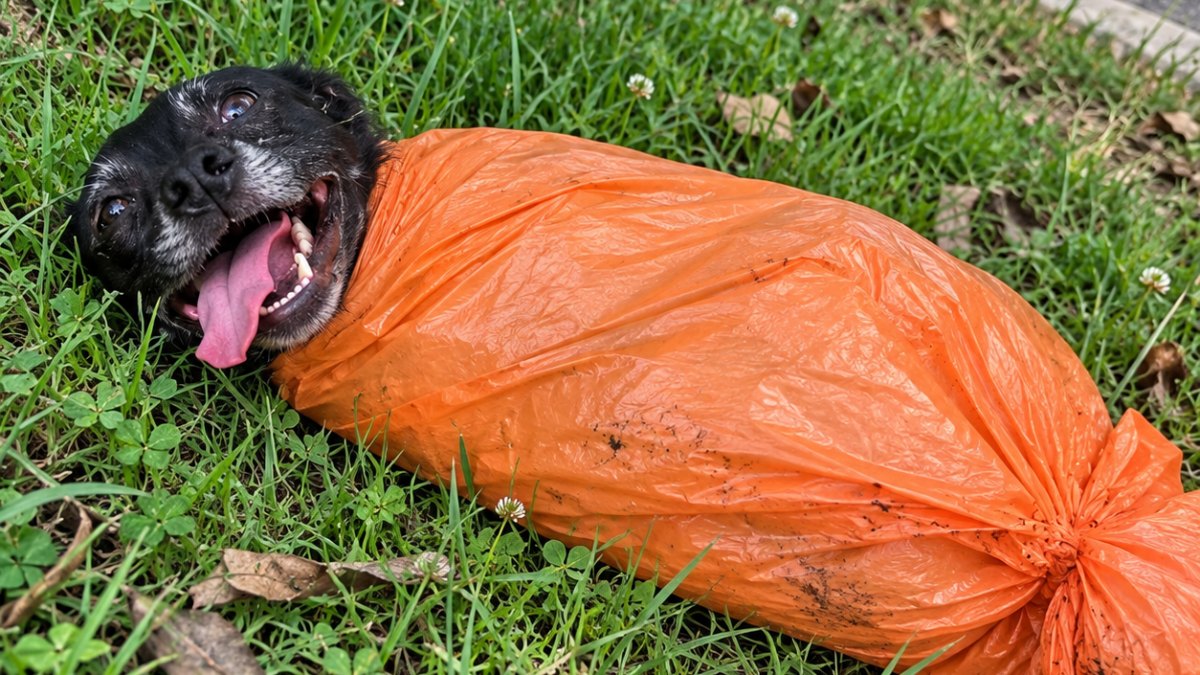
PART 2
The investigation would move on paperwork, statements, photographs and whatever evidence the authorities could legally collect.
Milagros had no interest in any of that.
Her battle was happening in silence.
When we returned from the veterinarian, I carried her into the house and placed her gently on the bed I had prepared.
She stepped off immediately.
Not quickly.
Not fearfully.
Just with quiet determination.
She walked toward the farthest corner of the room and lowered herself onto the floor.
I sat down several feet away.
“Okay.”
Milagros stared at the wall.
“You can stay there.”
She did not look at me.
“I’m not going to make you love me.”
Nothing.
“I’m not even asking you to like me.”
One ear moved.
“That’s enough for today.”
I stayed on the floor for twenty minutes.
No touching.
No treats pushed beneath her nose.
No baby talk.
Nothing except presence.
Eventually, I stood.
Milagros flinched.
The movement was tiny.
But I saw it.
My stomach tightened.
Dogs tell you their history with their bodies even when you do not know the details.
A raised hand.
A closing door.
A certain tone of voice.
A food bowl moved too quickly.
A person walking behind them.
Their bodies remember patterns.
I did not know what Milagros had experienced before the bags.
I knew only what the couple had witnessed.
That was enough.
That evening I offered her chicken.
Most dogs will negotiate their entire moral system for warm chicken.
Milagros sniffed it.
Then turned her head.
I left the plate nearby.
Two hours later, most of it was gone.
That became our first agreement.
I would leave food.
She would eat when I was not watching.
The next morning, the plate was clean.
“You know,” I told her, “you’re terrible at pretending you didn’t eat.”
Milagros looked toward the doorway.
Not at me.
But closer.
Progress.
The other dogs in my home knew something new had arrived.
They smelled her.
Heard her.
Saw me carrying blankets and bowls into the separate room.
Normally that created excitement.
This time I kept everyone away.
Senior dogs, especially frightened senior dogs, do not need a welcoming committee crashing into their space.
I started with scent.
A blanket from Milagros’s room went into the hallway.
A blanket carrying the other dogs’ scent went near her doorway.
Nobody met.
Nobody pushed.
Day three brought our first real problem.
Milagros refused breakfast.
Then lunch.
By afternoon, she had barely drunk.
I called the veterinarian.
“She ate yesterday.”
“How much today?”
“Almost nothing.”
“Any vomiting?”
“No.”
“Diarrhea?”
“No.”
“Lethargy worse than before?”
“She’s quiet. But she was already quiet.”
He paused.
“She’s medically stable based on yesterday’s tests. Stress alone can shut down appetite in an older dog. Offer something tempting. If she still refuses or becomes weaker, bring her back.”
I tried chicken.
No.
Wet food warmed slightly.
No.
A little scrambled egg.
Nothing.
I sat on the floor.
Milagros lay facing the wall.
“You can’t do this forever.”
Her ear moved.
“I know you didn’t ask to be here.”
Nothing.
“I know you didn’t ask for any of it.”
I put a small piece of chicken on the floor halfway between us.
Then I turned my back.
Ten minutes passed.
I heard movement.
I did not turn.
A soft step.
Then another.
The faint sound of chewing.
My eyes filled.
I stared straight ahead.
If Milagros needed to believe I was not watching, then I would become the least observant person alive.
She ate three pieces.
Then returned to the corner.
I waited another minute before standing.
“Good choice.”
She ignored me.
That night, authorities called.
They wanted additional information from the couple.
They wanted the exact location.
The sequence of events.
The description of the vehicle.
Whether the abandoned dog had been visibly confined when discovered.
Whether the former owner had made any statements upon returning.
The couple agreed to everything.
I sent veterinary documentation showing Milagros’s condition.
Physically, it was almost frustrating how well she was.
Her bloodwork did not tell the story people expected.
No terminal disease.
No catastrophic condition.
No diagnosis that explained desperation.
Just age.
Maybe mild stiffness.
Some dental wear.
The normal marks of years passing through a body.
She had been discarded not because death was imminent.
She had apparently been discarded because someone no longer wanted to deal with old age.
That thought made me furious.
Old dogs do become inconvenient.
They sleep more.
Move slower.
Sometimes need medication.
Sometimes cannot control their bladder as perfectly.
Sometimes wake at night.
They may stop hearing.
Their eyes become cloudy.
They may need ramps.
Soft food.
More veterinary visits.
More patience.
But inconvenience does not erase loyalty.
A dog does not become disposable because the easy years are finished.
That night, I found myself standing at the sink with my fists pressed against the counter.
I wanted to call the former owner.
I wanted to ask how.
How do you live with a dog long enough for her face to turn gray and then decide that two bags beside the road are an acceptable ending?
How do you tie the bags?
How do you hear movement inside and still drive away?
How do you come back only because witnesses saw you?
I had her contact information only through the investigation.
I did not use it.
Anger wanted confrontation.
Milagros needed dinner.
So I returned to her room.
That choice became important over the following months.
Every time rage pulled me toward what had happened, Milagros pulled me toward what still needed doing.
The past could not eat breakfast.
The case could not learn to trust.
She could.
On the fourth day, Milagros allowed me to sit closer.
Not beside her.
Closer.
I moved my chair from six feet away to four.
She watched.
No retreat.
The next day, three feet.
Then I stopped.
Sometimes progress is knowing when not to take another step.
I started reading in the room.
Not to her.
Near her.
Newspapers.
Messages.
Anything.
Human voice without expectation.
After about a week, Milagros began sleeping while I was there.
That was enormous.
An animal cannot fully relax into sleep if she believes she must remain ready to escape.
The first time her head lowered completely onto the blanket while I sat nearby, I stopped reading.
Then realized the silence might wake her.
So I continued.
My voice shook.
She slept through it.
A few days later, I introduced her to my oldest calm dog, Bruno.
Bruno was twelve.
Gray around the muzzle.
Arthritic.
Emotionally uninterested in drama.
He was perfect.
I put a baby gate between them.
Bruno walked over.
Milagros stood.
Bruno sniffed once.
Then looked at me as if asking why I had interrupted his afternoon.
He lay down beside the gate.
Milagros remained standing.
Her body was stiff.
Bruno sighed.
Five minutes passed.
Milagros sat.
Another five.
She lay down.
Not beside him.
Several feet away.
I smiled.
Senior diplomacy.
The next day, same arrangement.
Bruno lay down.
Milagros sat faster.
By the end of the week, they were resting on opposite sides of the gate.
That was when I opened it.
Bruno entered her room.
Milagros watched.
He walked past her.
Sniffed her water bowl.
Found nothing interesting.
Turned around.
Then lay down.
Milagros looked at me.
For the first time, it felt like she was asking a question.
“Your call,” I whispered.
She stood.
Took one step.
Then another.
She approached Bruno from the side.
He stayed still.
She sniffed his shoulder.
Bruno turned his head and sniffed her nose.
Then nothing happened.
No fireworks.
No instant friendship.
No miraculous tail wag.
Just two old dogs sharing a room.
I almost cried anyway.
Two weeks after her rescue, the couple who found Milagros asked if they could visit.
I hesitated.
Too many people might overwhelm her.
But their scent was part of the first safe moment she had after being removed from the bags.
I agreed to a quiet visit.
The wife entered first.
Milagros was lying near Bruno.
She lifted her head.
The woman stopped.
“Hi, baby.”
Milagros stared.
The woman knelt.
No reaching.
No rushing.
“I’m the one who opened the bag.”
Her voice cracked.
Milagros stood.
She walked forward.
One step.
Then stopped.
The woman started crying.
Her husband placed a hand on her shoulder.
Milagros sniffed.
Then walked away.
The wife wiped her face.
“That’s okay.”
I nodded.
“It’s more than okay.”
“She doesn’t remember.”
“Maybe she does. Maybe she doesn’t. What matters is she didn’t panic.”
The husband looked toward Milagros.
“I still hear the bag moving.”
His voice had changed.
He swallowed.
“I keep thinking about what would have happened if we’d gone inside five minutes earlier.”
His wife squeezed his hand.
I had thought the same thing.
Maybe heat.
Maybe suffocation.
Maybe panic.
Maybe traffic later.
Maybe nobody noticing until it was too late.
But rescue workers learn that “what if” has no bottom.
You can fall forever.
So I said, “You saw her.”
He nodded.
“You opened it.”
Another nod.
“That’s the part that happened.”
He looked at me.
I continued.
“She’s here because you stopped.”
His wife looked toward Milagros again.
This time Milagros was drinking water.
Something about such an ordinary act seemed to break her.
“She’s really okay?”
“Physically, yes.”
“And the rest?”
“We’ll see.”
The woman touched her chest.
“I hate that she looked at the road after that woman left.”
I had not known that detail.
“What do you mean?”
“When we opened the bag, after she stood up, she kept looking toward where the car went.”
The room became very quiet.
Bruno shifted on his blanket.
I stared at Milagros.
Dogs do not understand abandonment like humans explain it.
They understand absence.
They understand familiar scent leaving.
They understand that the person who controlled their world is suddenly gone.
I imagined Milagros standing in the grass, looking after the vehicle.
Waiting for it to return.
When it eventually did, maybe some part of her expected rescue.
Instead, the woman tried to take her only after being confronted.
That image stayed with me.
Not because I wanted Milagros to remember.
Because I wanted her to stop waiting.
That night I moved her bed closer to the center of the room.
Just a few inches.
She used it.
The next night, another few inches.
Eventually the bed no longer touched the wall.
Milagros slept in open space.
Small victory.
Three weeks after rescue, she wagged her tail at me.
One wag.
I nearly missed it.
I entered carrying breakfast.
Milagros stood.
I said, “Good morning.”
Her tail moved once.
I froze.
Milagros froze too.
We stared at each other.
“Was that for me?”
Nothing.
“Do it again.”
She walked toward the bowl.
I laughed.
“Fine. Pretend it didn’t happen.”
It happened again the next morning.
Two wags.
Then she ate while I remained in the room.
No waiting for my back to turn.
No hiding.
I texted the couple.
TAIL WAG.
The wife called immediately.
“Seriously?”
“Twice.”
“Oh my God.”
“We are maintaining professional composure.”
She laughed through tears.
“Of course.”
The investigation continued.
The former owner had given a statement.
I was not told every detail.
I did not need to know every detail.
What mattered was that the witnesses were consistent.
The veterinarian’s report existed.
The location was documented.
The bags had been photographed before disposal.
The couple had saved one of the bags and turned it over.
They had written down the vehicle information.
There were records establishing ownership history.
For the first time, I let myself believe there might be actual accountability.
Not revenge.
Accountability.
Those are not the same thing.
Revenge asks, How can you hurt someone back?
Accountability asks, What consequences follow from what happened?
I preferred the second.
Milagros did too, though she had no idea.
She was busy discovering couches.
It started with Bruno.
Bruno had permission to sleep on an old loveseat because age had earned him diplomatic immunity.
Milagros watched him climb up one evening.
He turned twice and settled.
She stood beside the loveseat.
Looked at him.
Looked at me.
“No.”
She looked at Bruno.
Then me.
“There’s a bed.”
She stepped closer.
“Don’t.”
One front paw went onto the cushion.
“Milagros.”
Second paw.
“You are old enough to know better.”
She pulled herself up.
Bruno raised his head.
Milagros squeezed into the space beside him.
He sighed.
Then put his head back down.
I stared.
Milagros curled into a tight ball.
Her face rested against the cushion.
Ten minutes later she was asleep.
I took a photograph.
Not because it looked dramatic.
Because three weeks earlier she had chosen cold floor corners even when soft bedding waited nearby.
Now she had stolen half a couch.
Healing.
The next stage was food preference.
At first, Milagros ate anything.
Then she discovered chicken.
Then beef.
Then she developed opinions.
I put regular senior food in her bowl one morning.
She smelled it.
Looked at me.
Walked away.
I followed.
“Excuse me?”
She continued.
“You ate garbage-adjacent food when I met you.”
She stopped.
“Do not become a snob.”
Nothing.
I added a little warm chicken.
Milagros returned immediately.
“You’re manipulating me.”
Tail wag.
Three times.
I called the couple again.
The husband answered.
“What happened?”
“She’s blackmailing me with food.”
“Sounds healthy.”
It was.
A dog who had been too emotionally shut down to care now cared deeply about menu quality.
I welcomed the inconvenience.
About six weeks after rescue, we received notice that the case was formally moving forward.
The details were being reviewed under local animal-cruelty and abandonment provisions.
I felt satisfaction.
Then guilt for feeling satisfaction.
Then anger at myself for the guilt.
It was complicated.
I called a friend who had worked rescue longer than I had.
“Is it wrong that I want consequences?”
“No.”
“I don’t want anything terrible to happen to her.”
“To Milagros?”
“To the former owner.”
My friend laughed.
“That’s good.”
“But I want her to answer for it.”
“That’s also good.”
“I spent weeks imagining yelling at her.”
“Did you?”
“No.”
“Then you handled it better than your imagination.”
I smiled.
She continued.
“You don’t have to forgive someone to choose lawful consequences instead of revenge.”
That helped.
Because I wanted the ending to hurt the person who had hurt Milagros.
That was the primitive truth.
Then I looked at Milagros sleeping beside Bruno and realized something.
The most painful consequence for a person who treated an old dog as disposable might simply be losing the right to decide that dog’s future.
Milagros was gone from her life.
Not dead.
Not forgotten.
Gone into something better.
She would never again be trapped where that woman could choose whether she was fed, sheltered, abandoned or loved.
That felt powerful.
The former owner no longer controlled the ending.
We did not either.
Milagros did.
Two months after her rescue, Milagros followed me voluntarily for the first time.
I was carrying laundry toward the hallway.
I heard nails on the floor behind me.
I turned.
Milagros stopped.
“Are you following me?”
She looked toward the kitchen.
I continued walking.
She followed.
At the bedroom doorway, I turned again.
Still there.
I sat on the floor.
Milagros approached.
She came within arm’s reach.
I held my hand low.
She sniffed.
Then she did something I had been waiting weeks for.
She leaned her forehead into my palm.
I stopped breathing.
No grabbing.
No hugging.
I simply let my hand remain there.
Her weight pressed slightly harder.
I stroked once between her ears.
She stayed.
Again.
Still stayed.
My eyes filled.
“Hi.”
Milagros closed her eyes.
For thirty seconds, maybe less, she let me pet her.
Then she stepped away.
I did not follow.
That evening, I cried in the bathroom so she would not see me turn the moment into something bigger than she was ready for.
People imagine rescue as pulling an animal from danger.
Sometimes the hardest rescue happens weeks later when nothing dramatic is visible.
You are trying to rebuild a bridge one board at a time.
Touch.
Food.
Sleep.
Routine.
Voice.
Presence.
Trust.
One wrong movement does not always destroy everything.
But patience matters.
Control matters.
Milagros had lost control over her life when someone tied those bags.
I wanted every possible choice after that to belong to her.
Come closer or stay away.
Eat now or later.
Sleep on the bed or floor.
Meet another dog or retreat.
Accept touch or refuse.
These were tiny freedoms.
But after abandonment, tiny freedoms become dignity.
Spring turned warmer.
Milagros began spending time outside.
At first she chose the edge of the yard.
Always near a wall.
Then Bruno started lying beneath a tree.
She joined him.
One day I looked through the kitchen window and saw them asleep side by side in sunlight.
No corner.
No hiding.
Open lawn.
I took another photograph.
That evening, the couple visited again.
The wife sat in a chair outside.
Milagros approached on her own.
The woman held out her hand.
Milagros sniffed.
Then rested her head against the woman’s knee.
The woman’s face collapsed.
“Oh, baby.”
Her husband turned away.
I pretended to check my phone.
Milagros stayed there for almost a minute.
The woman stroked her slowly.
When Milagros walked away, the woman wiped her eyes.
“She remembers.”
“Maybe.”
“I don’t care. Let me believe she does.”
I smiled.
“Okay.”
The case reached a hearing several weeks later.
I attended because I had custody history, veterinary records and firsthand knowledge of Milagros’s behavior after rescue.
The couple attended because they had witnessed the abandonment.
The former owner was there.
That was the first time I saw her.
I expected something dramatic inside me.
Hatred.
Heat.
Some uncontrollable desire to speak.
Instead I felt strangely cold.
She looked ordinary.
That disturbed me more.
Cruelty often does.
We want people who commit cruel acts to look visibly different.
It would make life easier.
But ordinary people can make terrible decisions.
The couple sat near me.
The husband leaned forward.
“That’s her.”
His wife whispered, “I know.”
I kept my eyes ahead.
The former owner did not approach us.
Good.
I did not trust myself to have a useful conversation.
The proceeding was not cinematic.
Documents.
Questions.
Statements.
Dates.
Descriptions.
The couple explained what they saw.
The bags.
The movement.
Opening them.
Finding Milagros.
The vehicle returning.
The confrontation.
The former owner’s attempt to regain possession.
Their refusal.
I listened.
Every detail brought the scene alive again despite never having witnessed it.
Then the veterinarian’s findings were discussed.
Milagros had not been terminally ill.
There was no documented emergency that made abandonment unavoidable.
Her age did not constitute a medical crisis.
The defense or explanation, as I understood it, centered partly on confusion, stress and circumstances surrounding care.
I will not pretend I knew every private difficulty in that woman’s life.
Maybe she had problems.
Maybe she felt overwhelmed.
Maybe she believed she could no longer care for an aging animal.
None of those things required putting a dog inside bags and leaving her in grass.
There are shelters.
Rescues.
Veterinary clinics.
Animal control.
Friends.
Neighbors.
Even asking strangers for help would have been better.
Desperation can explain behavior.
It does not automatically excuse it.
When I was asked about Milagros, I described the first days.
Her silence.
Her refusal to engage.
Her hiding.
The way she flinched.
Her physical health compared with her emotional state.
I avoided saying things I could not prove.
I did not claim I knew what Milagros was thinking.
I described what I observed.
“She would choose the farthest corner.”
“She initially would not eat while I was present.”
“She showed little affiliative behavior.”
“She gradually improved over weeks.”
“What is she like now?” I was asked.
I almost smiled.
“She steals couches.”
There was a small ripple of laughter.
Even the official at the front seemed to soften.
I continued.
“She eats well. She interacts with other dogs. She seeks affection. She follows me around the house.”
“Would you describe her as recovered?”
I thought carefully.
“She’s safe. She’s happy more often than afraid. I don’t think emotional recovery is something I can declare finished for her.”
That was the truth.
Milagros did not become a new dog.
She became herself again.
Maybe for the first time.
The hearing ended without dramatic shouting.
No table pounding.
No gasp from the room.
Real accountability often arrives quietly.
Later, formal consequences were imposed under the applicable process.
The former owner was held responsible for the abandonment.
There were penalties.
Restrictions related to future animal possession were part of the outcome for the period ordered by the authorities.
The case became part of the official record.
For the couple, that mattered.
For me too.
Not because punishment healed Milagros.
It did not.
But because what happened to her had been recognized as something more serious than disposing of unwanted property.
She was a living animal.
A dependent one.
A senior who had relied on a person for survival.
That duty had been violated.
There were consequences.
When I returned home after the decision, Milagros was asleep on the loveseat.
Bruno occupied the other half.
I stood in the doorway.
“You won.”
Milagros did not move.
I laughed.
“Very emotional response.”
Bruno opened one eye.
I sat beside them.
The legal case had ended.
The real story had not.
Milagros still had life left.
We did not know how much.
At her age, every year felt precious.
I decided not to spend any of it treating her like she was dying.
Senior dogs suffer when people begin grieving them before they are gone.
They can still enjoy things.
Smells.
Food.
Sunlight.
Slow walks.
Soft beds.
Company.
Routine.
Milagros deserved present tense.
Not constant anticipation of loss.
So we built a life.
Nothing extraordinary.
Morning walks.
She moved slowly, but with purpose.
At first, she followed Bruno.
Eventually she took the lead.
She liked stopping near one particular hedge.
Every morning.
Same hedge.
Long inspection.
“Is there classified information in there?”
Milagros ignored me.
She liked warm rice mixed with chicken.
She disliked rain.
She hated having her nails trimmed.
She loved blankets fresh from the dryer.
The first time I accidentally dropped a warm blanket onto the couch beside her, she climbed into it before I could fold it.
From that day forward, laundry became a negotiation.
I would remove clothes.
Milagros would occupy the warm pile.
“That is clean.”
No reaction.
“You smell like yard.”
Tail wag.
“This is not your blanket.”
She lowered her head.
“You have three blankets.”
Eyes closed.
I surrendered.
Eventually I started drying one small blanket specifically for her.
Yes.
I became that person.
Milagros trained me well.
Food became another form of royalty.
One afternoon, a volunteer brought cooked chicken.
Milagros smelled it from the hallway.
She appeared instantly.
The volunteer laughed.
“She moves fast when motivated.”
“You should see her when I open cheese.”
Milagros sat.
The volunteer gave her a tiny piece.
Then another.
I pointed.
“Careful. That face has bankrupted households.”
Milagros tilted her head.
Another piece appeared.
“See?”
My friend shrugged.
“I’m weak.”
Milagros knew.
Her personality grew strongest around food.
I loved it.
There had been a time when she ate only because survival demanded it.
Now she ate because chicken was delicious and she was entitled to complain when the portion seemed inadequate.
That distinction mattered.
Three months became six.
Her bond with Bruno deepened.
They were not playful.
Neither had much interest in wrestling.
They practiced old-dog companionship.
Sleep near each other.
Walk together.
Share sunlight.
Wait near the kitchen.
If Bruno got up, Milagros often followed.
If Milagros went outside, Bruno eventually joined.
Then Bruno’s health began declining.
He had kidney problems already.
At first, manageable.
Then less so.
Bloodwork changed.
Appetite changed.
He lost weight.
I knew what was coming long before I wanted to admit it.
Milagros seemed to notice too.
She started sleeping closer.
Some nights her back touched his.
During meals, she finished faster and stood near him without stealing.
That was remarkable restraint.
One afternoon Bruno refused food.
Milagros ate half her bowl, then walked to him.
She sniffed his face.
Bruno lifted his head.
They touched noses.
I turned away.
The veterinarian adjusted medication.
We got several more good weeks.
Then came the morning when Bruno could no longer stand comfortably.
He looked at me with tired eyes.
I knew.
Knowing does not make the decision easier.
It only makes delay less fair.
We went to the clinic.
I held him.
Talked to him.
Thanked him.
Told him he had been good.
The best.
When I came home alone, Milagros walked to the door.
She looked behind me.
Then around me.
Then back outside.
My heart shattered.
“Bruno isn’t coming home.”
She stared toward the driveway.
I sat on the floor.
Milagros remained standing.
For a long time, she watched the door.
That night she slept on his bed.
The next day too.
She ate.
Walked.
Functioned.
But quieter.
Loss changes animals.
Again, I refused to pretend I knew her thoughts.
I knew only that her routines with Bruno disappeared and her behavior changed.
For several weeks, she moved through the house as though waiting for something.
Then one morning, she climbed onto the loveseat alone.
She occupied the entire thing.
I smiled through tears.
“You know he would hate that.”
Milagros stretched.
Life continued.
It had to.
A younger foster dog arrived months later.
I was nervous.
Milagros was old.
She deserved peace.
The newcomer, named Toby, was six months old and approximately ninety percent legs.
He had no concept of boundaries.
I introduced them through a gate.
Toby bounced.
Milagros stared.
He bounced again.
She stared harder.
He play-bowed.
Milagros turned around and walked away.
“Excellent communication.”
Over the next week, Toby learned.
Do not jump on the queen.
Do not steal the queen’s bed.
Do not put your face in the queen’s bowl.
Most important, when the queen gives you one look, reconsider your entire life.
One afternoon, Toby ran too close and nearly collided with her.
Milagros barked once.
Not loud.
Not aggressive.
Just sharp.
Toby stopped instantly.
Sat.
Milagros walked past.
I laughed until I cried.
The silent dog from the grass had found her voice.
Toby eventually became one of her closest companions.
Not like Bruno.
Different.
He brought energy.
She brought rules.
He tried to convince her to play.
Occasionally she surprised us.
A tiny chase across the yard.
Two seconds.
Three.
Then she stopped and looked offended by her own behavior.
Toby celebrated enough for both of them.
I filmed one short clip of Milagros trotting after him.
When I replayed it, I barely recognized the dog I had first carried home.
Her tail was up.
Ears relaxed.
Mouth slightly open.
No corner.
No wall.
No bag.
Open yard.
Freedom.
A year passed.
The couple returned on the anniversary of her rescue.
They brought a soft bed.
Far too expensive.
“You didn’t need to do this.”
“Yes, we did,” the wife said.
Milagros approached.
No hesitation now.
She leaned against the woman’s legs.
The woman cried immediately.
Her husband laughed.
“You do that every time.”
“I know.”
He knelt beside Milagros.
“Remember me?”
Milagros sniffed his beard.
Then licked his chin.
“That’s evidence.”
We sat outside together.
The couple told me something they had not said before.
After the abandonment, the wife had nightmares.
The bag moving.
Opening it too late.
Finding nothing alive.
For months.
“I thought helping would make me feel better immediately,” she said.
“Did it?”
“Eventually.”
She looked at Milagros.
“I think seeing her like this is the part that fixes it.”
I understood.
Rescue traumatizes witnesses too.
The people who find animals.
The people who carry them.
Veterinary staff.
Investigators.
We become attached to images we did not ask to hold.
Sometimes the only antidote is new images.
Milagros in a bed.
Milagros eating chicken.
Milagros bossing Toby.
Milagros asleep in sunlight.
We need to see that suffering was not the final frame.
That afternoon, the couple helped me prepare a small meal for Milagros.
Chicken.
Rice.
A little pumpkin.
Her favorite combination.
We set it down.
Milagros approached with royal confidence.
The husband said, “Look at her.”
His wife smiled.
“Living like a queen.”
She was.
And she knew it.
More time passed.
Milagros slowed.
That was unavoidable.
Her walks became shorter.
She slept longer.
She occasionally needed help standing on slippery floors.
I added runners.
Then a small ramp.
Her hearing weakened.
I learned to touch the floor near her before approaching so vibrations would warn her.
Her eyesight changed too.
At night, shadows confused her.
I added small lights.
She had accidents sometimes.
I cleaned them.
No anger.
No shame.
One morning, after finding a puddle near the door, I remembered the person who had abandoned her.
I wondered whether this was what she had feared.
The messy part.
The old age.
The inconvenience.
I looked at Milagros.
She stood several feet away with her head lowered.
Maybe she remembered being punished for accidents.
Maybe not.
Her posture made me careful.
I cleaned the floor.
Then called her.
“Come here.”
She hesitated.
I crouched.
“Nothing happened.”
Milagros approached slowly.
I scratched her chest.
“You’re old. Floors are washable.”
Her tail moved.
That sentence became a rule in our house.
Floors are washable.
Blankets are washable.
Beds can be replaced.
Medicine costs money.
Sleep gets interrupted.
Schedules change.
Bodies age.
None of those things make love disposable.
When people ask whether caring for senior dogs is hard, the answer is yes.
Sometimes very hard.
But difficult is not the same as regrettable.
The burden is real.
So is the privilege.
You get to become the place an old animal rests after spending years giving pieces of herself away.
Milagros taught me that more deeply than any dog before her.
She had been abandoned precisely when her needs became more complicated.
I wanted the rest of her life to prove the opposite.
Need does not make you less worthy.
One winter night, Milagros struggled to settle.
She paced.
Lay down.
Stood again.
I worried she was in pain.
We went to the veterinarian the next morning.
Arthritis had progressed.
Nothing catastrophic.
We adjusted treatment.
Added joint support.
Changed the bed.
The veterinarian looked at me.
“She’s old.”
“I know.”
“How is her quality of life otherwise?”
I began listing things.
“Eats aggressively.”
He smiled.
“Good.”
“Wants to go outside.”
“Good.”
“Still follows me when chicken exists.”
“Very good.”
“Barks at Toby.”
“Essential.”
I laughed.
He became serious.
“We keep assessing the whole picture. Not just age.”
That mattered.
Age alone had once been treated as a reason to throw Milagros away.
Now age was simply information.
We managed it.
We did not condemn her for it.
Her medication helped.
She returned to sleeping comfortably.
Spring came again.
She celebrated sunlight.
That first warm day, Milagros walked into the yard and chose the same tree where Bruno used to sleep.
She lowered herself beneath it.
Toby ran circles nearby.
Milagros ignored him.
I sat beside her.
Not too close.
Old habits of respect remained even though she trusted me completely now.
After several minutes, she shifted.
Then placed her head on my foot.
I smiled.
It took months for her to touch me voluntarily the first time.
Now she used me as furniture.
Progress.
The former owner occasionally returned to my mind.
Less each year.
The legal consequences had been completed.
The restrictions and penalties belonged to the record.
I no longer searched for updates.
That chapter was finished.
At some point, I realized I did not hate her anymore.
That surprised me.
I did not forgive what she had done.
Those are different things.
I simply no longer wanted to carry her.
Milagros had taken up enough of my heart.
The person who abandoned her did not deserve equal space.
That was the final revenge, if anyone needed that word.
Irrelevance.
She had tried to control Milagros’s ending.
Instead, she became a footnote.
Milagros became the story.
Years after rescue, people who met her knew nothing about the bags unless I told them.
They saw an old dog with a strong food obsession and an unreasonable belief that couches belonged to her.
They saw Toby following her.
They saw her bed near mine.
They saw her little ramp.
They saw the bowl that had to contain chicken or negotiations would begin.
They did not see abandonment.
I loved that.
One afternoon, a visitor asked, “Was she always this spoiled?”
I laughed.
“No.”
Milagros was lying on a blanket fresh from the dryer.
Her dinner had chicken mixed in.
A fan was positioned nearby because the afternoon was warm.
Toby had been removed from the couch because Milagros wanted it.
My visitor looked around.
“What happened?”
I sat down.
“Someone threw her away.”
His smile disappeared.
I told him a shortened version.
Two bags.
Grass.
Witnesses.
Rescue.
He stared at Milagros.
“She’s that dog?”
“Yes.”
He shook his head.
“I would never know.”
“Good.”
He looked at me.
“Good?”
“That means the worst day doesn’t show anymore.”
He understood.
That was always my goal.
Not to erase her history.
To make it smaller than her life.
Milagros eventually stopped sleeping in the rescue room entirely.
She slept beside my bed.
I kept a thick orthopedic mat there.
During colder nights, I covered her with a light blanket.
Sometimes I woke and found her looking at me.
Not distressed.
Just checking.
I would lower my hand.
She pressed her nose against my fingers.
Then returned to sleep.
One night, I whispered, “You know I’m not going anywhere, right?”
Her eyes closed.
Maybe she knew.
Maybe trust is not knowledge.
Maybe it is simply enough good mornings in a row that fear eventually gets tired.
Milagros had thousands of good mornings.
That was the miracle.
Not one dramatic rescue.
Repetition.
Wake up.
Still here.
Breakfast.
Still here.
Walk.
Still here.
Nap.
Still here.
Night.
Still here.
Again.
Again.
Again.
Eventually abandonment became the exception instead of the rule.
A terrible exception.
But no longer the pattern.
On one anniversary of her rescue, I took Milagros back near the area where she had been found.
Not to the exact spot at first.
I questioned whether it was fair.
I did not want to force symbolism onto a dog.
But the couple lived nearby and invited us.
We met at their home.
Afterward, Milagros walked slowly with us along the edge of the property.
The grassy area was visible.
She stopped.
I watched carefully.
No trembling.
No retreat.
She sniffed.
Then became interested in something else.
A patch of weeds.
The husband looked at me.
“Do you think she knows?”
“I don’t know.”
His wife whispered, “I hope she doesn’t.”
Milagros urinated on the grass.
The husband burst out laughing.
His wife covered her mouth.
I laughed too.
“Well,” I said, “if she knows, that’s one opinion.”
We walked away.
No dramatic confrontation.
No ghost from the past.
Milagros simply left the place again.
This time by choice.
That felt better than anything I could have planned.
That evening, she ate an enormous dinner.
Then climbed into her bed.
The couple sent me a message.
THANK YOU FOR LETTING US SEE HER HAPPY.
I replied.
YOU SAVED HER FIRST.
The wife answered.
WE OPENED THE BAG. YOU OPENED HER HEART.
I stared at the message for a long time.
Then I wrote back.
SHE DID MOST OF THAT HERSELF.
And she had.
We gave conditions.
She made the journey.
Toward the end of her life, Milagros became softer.
Not emotionally.
Physically.
Her muscles thinned.
Her face grew whiter.
Her steps shortened.
I could lift her more easily than before, though I tried not to unless necessary.
She still ate.
Still enjoyed sunshine.
Still wanted company.
Still scolded Toby.
But time was visible now.
I did not resent it.
I had once wanted as many years as possible.
Then I learned that wanting years can become greedy if you stop paying attention to the days.
I focused on days.
Was today comfortable?
Did she eat?
Did she rest?
Did she seek affection?
Did she enjoy going outside?
Did she still have things she wanted?
As long as the answers remained mostly yes, we continued.
One morning, Milagros did not want breakfast.
That frightened me more than almost anything.
This was a dog who had built an entire second career around food.
I offered chicken.
She sniffed.
Turned away.
We went to the veterinarian.
Tests showed several age-related changes.
Nothing dramatic enough to make the decision for us.
That was harder.
People hope for certainty at the end.
Sometimes there is none.
The veterinarian said, “Watch her.”
I did.
That evening she ate half a meal.
The next morning, more.
I relaxed slightly.
For several weeks, things stabilized.
Then another decline.
Longer sleep.
Less interest in walking.
More assistance standing.
I began carrying her outside early in the morning.
I would place her on the grass.
She would stand.
Sniff.
Take several steps.
Do what she needed.
Then look at me.
That look meant home.
I picked her up.
She rested her head against my shoulder.
The first time I carried her, after rescue, her body had been rigid.
Now she melted against me.
Trust weighs differently.
One morning, while carrying her inside, I remembered the bags.
The contrast hit me so hard I stopped.
Someone had once confined this body as though it were trash.
Now I carried the same body as carefully as anything I had ever held.
Milagros lifted her head.
“What?”
She licked my chin.
I laughed through tears.
“Nothing.”
I brought her inside.
That afternoon, she slept for hours.
When she woke, she ate chicken.
Good day.
I learned to collect those.
Good day.
Good hour.
Good meal.
Warm sun.
Tail wag.
Rest.
When the final decision eventually approached, it did not arrive like a dramatic event.
It arrived as a pattern.
More bad days.
Fewer good ones.
Difficulty standing.
Less interest in food.
Moments when discomfort overpowered curiosity.
The veterinarian and I talked carefully.
No one wanted to end her life too early.
No one wanted love to become an excuse for keeping her too long.
The hardest responsibility in animal care is accepting that sometimes protection means letting go.
I hated that truth.
But Milagros had already had one person make a decision about her life based on convenience.
I would not make the opposite mistake and force her to stay because saying goodbye was inconvenient for me emotionally.
Her comfort had to remain central.
One evening, she refused chicken.
Then cheese.
Then her favorite soft food.
She drank a little.
Walked outside.
Stood beneath Bruno’s tree.
I joined her.
Milagros lowered herself onto the grass.
I sat beside her.
Toby came near.
He sniffed her.
Then lay down.
The sun was setting.
Milagros rested her head on my leg.
I knew.
Not with perfect certainty.
With enough.
I called the veterinarian the next morning.
The couple came to say goodbye.
The wife walked into the room already crying.
Milagros was lying on her bed.
Her eyes opened.
The woman knelt.
“Hi, baby.”
Milagros’s tail moved.
One small wag.
The woman laughed through tears.
“You remember me.”
She stroked Milagros’s head.
Her husband crouched beside them.
He had saved her from one ending.
Now we were approaching another.
But this one would be different.
No bags.
No roadside.
No abandonment.
No fear.
No alone.
The veterinarian came to us so Milagros did not have to travel.
We arranged her favorite bed near the window.
Toby rested several feet away.
I kept chicken nearby, though she took only one small piece.
The couple sat with us.
I held Milagros’s head.
Her eyes stayed on me.
I whispered the same words I had told her the first day.
“You’re safe.”
This time I believed she understood.
Maybe not the words.
The history.
The repetition.
The hands.
The home.
The people who stayed.
When the medication made her sleepy, Milagros relaxed completely.
Her body softened.
Her breathing slowed.
I kissed the white fur between her eyes.
“You were never garbage.”
My voice broke.
“You were never too old.”
The couple cried.
“You were never too much.”
Milagros exhaled.
“You were loved.”
Her breathing slowed again.
“And you can rest.”
She did.
Quietly.
Warm.
Held.
Her last moment was everything her abandonment had not been.
That was the ending I had promised without saying it.
The woman who put Milagros inside bags had once decided that an old dog’s life could end in grass beside a road.
She was wrong.
Milagros’s life ended years later in a home.
On a soft bed.
Surrounded by people.
With a full history between those two moments.
The bags did not win.
Old age did not make her worthless.
Abandonment did not become her identity.
After Milagros died, the house felt wrong.
Too much space.
Her bed remained beside mine for weeks.
I could not move it.
Toby slept near it sometimes.
The first morning, I prepared three bowls out of habit.
Then stopped.
I stared at the third bowl.
Chicken already mixed in.
I sat on the kitchen floor and cried.
Grief is love with no immediate place to go.
Eventually I gave her remaining medication to a rescue that could use it.
Her blankets were washed.
Some donated.
One kept.
The warm one.
Of course.
Her bed remained.
Months later, another elderly dog needed placement.
Thirteen years old.
Owner deceased.
Family unable to keep him.
Scared at the shelter.
I said yes.
When he arrived, he refused the bed.
Preferred the floor.
I smiled sadly.
“I’ve seen this before.”
I placed the warm blanket nearby.
Sat several feet away.
Did not push.
Hours later, he moved onto it.
I looked toward Milagros’s photograph on the shelf.
“Here we go again.”
That became part of her legacy.
Not a monument.
Not a dramatic campaign with her face everywhere.
Space.
One more old dog welcomed.
Then another.
Whenever possible.
The couple who found her stayed involved too.
They donated senior food.
Helped transport animals.
Reported neglect when they saw it.
The husband once joked, “Milagros ruined retirement for us.”
His wife said, “Improved.”
He smiled.
“Fine. Improved.”
Years later, when people asked why I cared so much about senior dogs, I told them about Milagros.
I told them not only how she was abandoned.
I told them what came after.
That was important.
If you tell only the cruelty, you teach people that suffering is the story.
If you tell the recovery, you teach them intervention matters.
I described the dog who hid.
Then the dog who wagged.
The dog who would not eat while watched.
Then the dog who rejected plain food because chicken was missing.
The dog who feared people.
Then the dog who slept beside my bed.
The dog sealed in bags.
Then the dog wrapped in warm laundry like royalty.
The dog discarded for being old.
Then the dog given enough extra years to become ancient in peace.
That is the Milagros I remember.
Not the bag.
Her bed.
Not the grass.
The couch.
Not the car driving away.
The people who stayed.
And yes, there was justice.
A report was filed.
Witnesses spoke.
Evidence mattered.
The abandonment had consequences.
The former owner lost the power to quietly erase what she had done.
But that was never the most satisfying part.
The most satisfying part was something no court could order.
Milagros lived long enough to stop waiting for the person who abandoned her.
She lived long enough to attach herself to new people.
Long enough to become demanding.
Long enough to grieve a friend.
Long enough to teach a puppy manners.
Long enough to require ramps, medicine and late-night bathroom trips from someone who considered every inconvenience part of loving her.
Long enough to grow old twice.
Once in a place where age made her disposable.
Then again in a place where age made her precious.
That was the revenge.
Not pain returned.
Love returned.
Returned every morning.
Every meal.
Every blanket.
Every veterinary visit.
Every time she had an accident and nobody yelled.
Every time she moved slowly and nobody rushed her.
Every time she woke and found the same people still there.
The person who abandoned her had tried to reduce Milagros to a problem that could be thrown away.
Instead, Milagros became proof.
Proof that old dogs do not stop needing families.
Proof that emotional wounds can soften.
Proof that witnessing cruelty creates responsibility.
Proof that one couple refusing to look away can change years of a life.
And proof that the end of usefulness is not the end of worth.
I still have the photograph of Milagros on the loveseat with Bruno.
Both gray-faced.
Both asleep.
Their bodies touching.
Nothing dramatic.
Nobody seeing danger.
No rescue happening.
That is my favorite photograph.
Because rescue had already happened so completely that it was invisible.
She was simply home.
Sometimes I look at it and think about that first phone call.
“There’s a dog. An old dog. Someone put her inside bags and left her.”
Then I think about her last day.
An old dog again.
Still old.
Older, actually.
Still vulnerable.
Still dependent.
But everything around her had changed.
That is what rescue can do.
We cannot always make bodies young.
We cannot erase what happened.
We cannot guarantee justice will feel large enough.
We cannot stop time.
But we can change the surroundings.
Fear into safety.
Concrete into bedding.
Hunger into meals.
Silence into familiar voices.
Abandonment into presence.
And when the end eventually comes, we can make sure nobody has to face it sealed inside darkness.
Milagros entered my life because someone believed she was finished.
She proved otherwise.
She had walks left.
Meals left.
Friends left.
Sunlight left.
Arguments over chicken left.
Couch naps left.
Thousands of tail wags left.
Years of being loved left.
The woman who abandoned her saw only an old dog.
I saw the same old dog.
That was the point.
Nothing about Milagros had to change for her to deserve saving.
She did not need to become younger.
Healthier.
More useful.
More beautiful.
More obedient.
She only needed to be alive.
And she was.
So we treated her life like it mattered.
Because it did.
Long after she was gone, one of the couple’s granddaughters visited my house.
She was young when Milagros was rescued.
Now she was old enough to understand the story.
She looked at Milagros’s photograph.
“That’s the bag dog?”
I smiled.
“That’s Milagros.”
She stared at the picture.
“She looks happy.”
“She was.”
The girl considered that.
“Did she know they saved her?”
I looked at the couple.
The wife was listening from across the room.
Her eyes filled.
I answered carefully.
“I don’t know what she understood about that day.”
Then I looked back at the photograph.
“But she knew she was safe afterward.”
The girl nodded as though that was enough.
It was.
Maybe safety does not need an explanation.
Maybe love does not either.
Maybe dogs understand both through repetition better than words could ever teach them.
I walked past the shelf that evening and touched the frame.
“Still causing trouble.”
Milagros smiled back from the photograph.
Not literally.
Dogs do not smile for symbolic reasons.
But her mouth was open slightly.
Eyes soft.
Bruno sleeping beside her.
She looked peaceful.
The rescue world talks constantly about miracles.
Impossible surgeries.
Animals surviving terrible injuries.
Dogs found after months.
Puppies recovering from disease.
Those deserve celebration.
But Milagros taught me about another kind.
An old heart deciding to trust again.
That took months.
No surgeon could do it.
No medicine could force it.
No court could order it.
We could only build conditions where trust might return.
Food.
Safety.
Choice.
Patience.
Consistency.
Then wait.
Milagros did the rest.
That is why her name became perfect.
Miracles are not always the moment a life is saved.
Sometimes the miracle is what the life chooses to do afterward.
Milagros chose to come out of the corner.
She chose Bruno.
She chose the couch.
She chose chicken.
She chose sunlight.
Eventually she chose me.
And on her last day, when she rested her head beneath my hand, I understood something I had wanted since the moment I carried her home.
She was no longer waiting for the car that drove away.
She knew where home was.
That was enough.
More than enough.
The woman who sealed Milagros inside two bags tried to leave an old dog with no future.
Instead, Milagros received years.
She received justice.
She received friends.
She received dignity.
She received ridiculous amounts of chicken.
She received a warm bed.
And when her body finally became too tired to continue, she did not disappear beside a road.
She left this world with her name being spoken by people who loved her.
Milagros.
Miracles.
It turned out she had been one all along.








