PART 2: She Ran Toward My Food on Legs That Were Giving Out—Then I Learned What Had Been Done to Blair
PART 2
“What did you find?”
Officer Daniel Mercer was quiet for a moment.
I could hear papers moving on his end of the call.
“First,” he said, “I need you not to contact anyone yourself.”
That sentence tightened every muscle in my shoulders.
“I wasn’t planning to.”
“I mean it. Let us handle this.”
“Daniel.”
Another pause.
Then he exhaled.
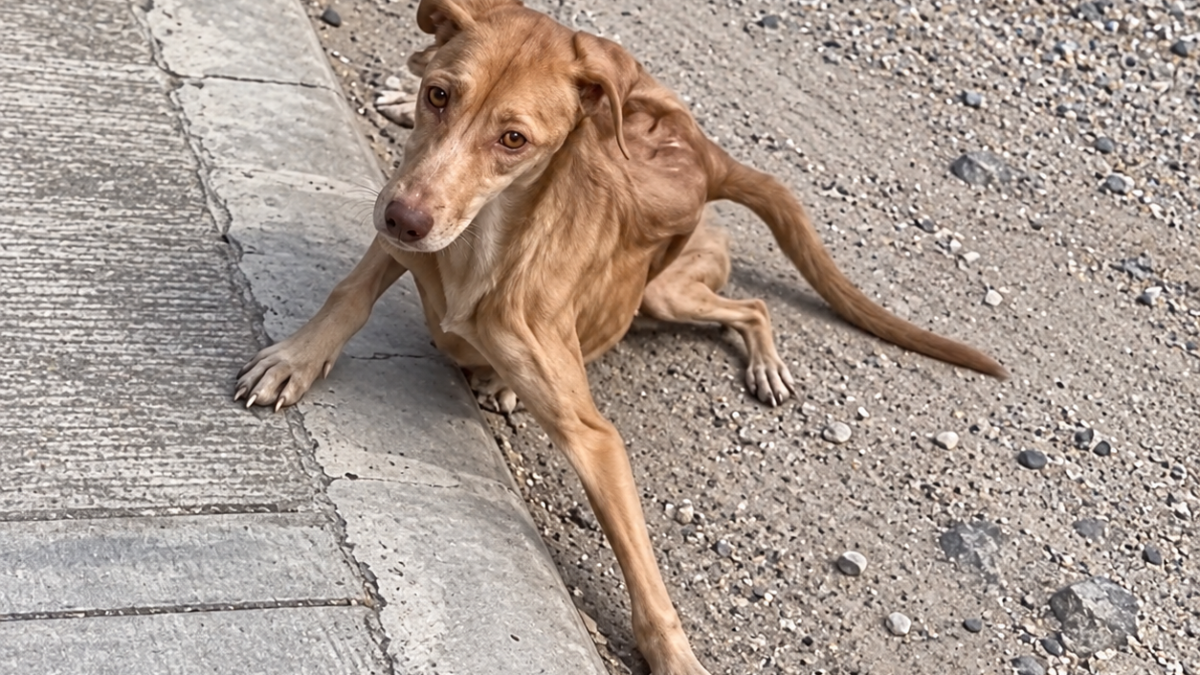
“We found a house three blocks from where you picked her up. Neighbor recognized the description. Tan female dog, white chest, narrow face, old faded red collar.”
I looked through the glass.
Blair was asleep with her nose tucked beneath the edge of the blanket.
“She had a home?”
“She was living behind one.”
The words hit harder than I expected.
Not because I had assumed she had been loved.
Nothing about Blair’s condition suggested that.
But until that moment, I had been able to tell myself a softer story.
Maybe she had been lost for months.
Maybe nobody knew she was out there.
Maybe she had belonged to someone who was searching for her.
Maybe hunger had happened slowly after she became separated from home.
That possibility disappeared with six words.
She was living behind one.
“How long?”
“We’re working on that.”
“What does the neighbor say?”
“She says the dog was there at least since early summer.”
I closed my eyes.
It was October.
Daniel continued.
“Backyard. Tethered part of the time. Loose inside a fenced section other times. Neighbor says she used to hear her barking.”
“Used to?”
“Then the barking stopped.”
I stared at Blair again.
“How long ago?”
“A few weeks.”
My hand tightened around the phone.
“Why didn’t anyone call?”
“She says she did.”
I opened my eyes.
“What?”
“She claims she contacted the property manager once and animal control once. We’re checking records.”
My anger found a new direction.
“Did we get a call?”
“I said we’re checking.”
Blair shifted in her sleep.
Even that movement looked difficult.
“Who lives there?”
“Rental property. Man named Travis Cole signed the lease eleven months ago.”
“Is he still there?”
“No.”
The answer surprised me.
“When did he leave?”
“Neighbor thinks four or five days ago.”
I looked at Blair’s empty collar.
“He moved.”
“Looks that way.”
“And left her.”
“We don’t know enough yet to say exactly what happened.”
Daniel had been doing this job long enough to be careful with words.
I had been doing rescue long enough to hate careful words when an animal was lying in front of me with every rib showing.
“Daniel, she was less than a mile from that house.”
“I know.”
“She could barely walk.”
“I know.”
“She didn’t get like this in four days.”
“I know.”
His voice softened.
“That’s why I called you.”
I stood and walked to the kennel.
Blair’s eyes opened.
She didn’t lift her head.
I crouched beside the glass.
“Are you going to the house tonight?”
“Already here.”
That stopped me.
“What does it look like?”
“Bad.”
One word.
Nothing more.
But I heard it.
“Food bowls?”
“One.”
“Water?”
“Empty bucket.”
“Shelter?”
A pause.
“Broken plastic doghouse.”
I looked away from Blair because suddenly I couldn’t bear to look at her.
“Take pictures of everything.”
“We are.”
“Daniel—”
“We know how to do our jobs.”
“I know.”
I pressed my fingers against my forehead.
“I’m sorry.”
“No, you’re angry.”
“Yes.”
“So am I.”
That mattered.
Not because anger would heal Blair.
It wouldn’t.
But it meant I wasn’t imagining what I was seeing.
Someone else had looked at the same facts and felt the same cold weight in his stomach.
Daniel lowered his voice.
“There’s something else.”
I waited.
“We found mail in the shed with Cole’s name on it. And a bag of dog food.”
I almost laughed.
Not because anything was funny.
Because sometimes rage escapes through the wrong door.
“A bag of food?”
“About half full.”
I stared through the kennel door at a dog whose body had started consuming itself.
“Half full.”
“Yeah.”
“Near the doghouse?”
“No. Sealed inside a metal storage cabinet.”
For several seconds, neither of us spoke.
There are images you see in rescue that stay with you for the rest of your life.
Blair running toward my food was one.
A half-full bag of dog food locked inside a cabinet while she starved twenty feet away became another, even though I had not seen it with my own eyes.
“When you find him,” I said, “call me.”
“No.”
“Daniel.”
“I’ll call you when I’m legally allowed to tell you something. You are not confronting this man.”
“I don’t want to confront him.”
“That is exactly what someone who wants to confront him says.”
Despite everything, a tiny laugh came out of me.
“Fine.”
“Stay with Blair.”
I looked down at her.
“That I can do.”
When the call ended, I pulled a chair closer to the kennel and sat.
Blair watched me.
“You had food twenty feet away,” I whispered.
Her ear moved slightly.
“You could smell it, couldn’t you?”
Of course she could.
A dog can smell food sealed far better than any human can.
How many nights had she lain behind that house smelling food she could not reach?
How many times had she watched a door open and expected someone to bring it?
How many times had footsteps crossed that yard without stopping beside her?
I had spent years trying not to imagine more than evidence told me.
Imagining can make rescuers reckless.
It can turn facts into stories and stories into accusations.
But sitting beside Blair that night, one thought would not leave me alone.
She had run toward me because I was holding food openly in my hands.
Maybe that was why she had found the courage.
Maybe she had spent too long watching food exist just beyond her reach.
Around midnight, Blair woke.
She tried to stand.
Her legs shook so badly that I reached instinctively toward the kennel door.
She froze.
I stopped.
“It’s okay.”
She stared at my hand.
I moved it backward.
“You decide.”
Blair remained standing for another few seconds.
Then she took one careful step toward the front of the kennel.
Another.
Her nails scraped softly against the blanket.
I lowered my hand to the floor outside the bars.
She came close enough to smell my fingers.
Then she backed away.
That was all.
I treated it like a victory.
The next morning, her bloodwork showed what we already feared.
She was severely dehydrated.
Anemic.
Her protein levels were low.
She had intestinal parasites.
Her body condition was so poor that Dr. Meyers refused to give me a target weight yet.
“First we get her stable,” she said. “Then we worry about what normal looks like.”
She showed me how carefully Blair’s meals had to be handled.
Small.
Measured.
Frequent.
The instinct is to feed a starving animal until the bowl is full.
That instinct can hurt them.
Blair’s body needed nutrition, but it needed time to remember how to process it.
So every few hours, she received a small meal.
She ate each one as though somebody might snatch it away.
The first day, she swallowed without chewing.
The second day, she began looking over her shoulder between bites.
The third day, she stopped once and stared at me.
I was sitting three feet away.
“What?”
Her eyes moved from my face to the bowl.
Then back.
“You can keep eating.”
She waited.
I turned slightly away.
Only then did she continue.
That became our routine.
I would place the bowl down.
Blair would eat.
Then she would stop and check whether I was still there.
As strange as it sounds, those interruptions became more important to me than the eating.
Hunger was instinct.
Looking for me was a choice.
On the fourth morning, Dr. Meyers called me into the treatment room.
She had new images of Blair’s spine on a monitor.
“Look here.”
I stepped beside her.
“The vertebrae themselves are intact. No obvious fracture. No severe congenital deformity. What you’re seeing externally is posture plus profound muscle loss.”
“So if she gets stronger—”
“She may straighten considerably.”
“May?”
Dr. Meyers looked at me.
“I’m not giving you promises because you want them.”
That was one of the reasons I trusted her.
“What can you give me?”
“A reasonable hope.”
I nodded.
“I’ll take that.”
“She’s not out of danger.”
“I know.”
“Her immune system is compromised. We have to watch electrolytes. Watch her heart. Watch for infection. She’s weak enough that a minor problem can become a major one.”
“I know.”
“And she is terrified.”
I looked through the treatment-room window.
A technician named Sara was changing Blair’s bedding.
Blair had pressed herself into the far corner.
“Food gets her close,” I said.
“Yes. But trust will take longer.”
I smiled faintly.
“I know that too.”
Dr. Meyers folded her arms.
“You’re taking her home when I discharge her, aren’t you?”
“I foster medical cases.”
“That wasn’t my question.”
I pretended to study the X-ray.
She waited.
“Probably.”
“Maya.”
“Fine. Yes.”
She smiled.
“I knew it.”
“I’m not adopting her.”
“I didn’t say you were.”
“I have two dogs.”
“I still didn’t say anything.”
“My house is small.”
“Maya.”
“I’m only fostering.”
“Of course.”
I pointed at her.
“That tone is unnecessary.”
For the first time since Blair arrived, I laughed without immediately feeling guilty for it.
Blair stayed in the clinic six days.
During those six days, Daniel called twice.
The first call was procedural.
They had confirmed the rental property.
They had documented the yard.
They had located the former tenant’s new address in another county.
The second call came while I was sitting beside Blair during her afternoon feeding.
“We found him.”
My hand stopped halfway to the food container.
“And?”
“We interviewed him.”
I waited.
Daniel did not continue.
“What did he say?”
“He says Blair wasn’t his dog.”
I stared at the phone.
“What?”
“He says she belonged to his former girlfriend.”
“And where is she?”
“Moved out months ago.”
“He kept Blair.”
“He claims the dog stayed behind.”
“That means he kept Blair.”
“He claims he fed her when he could.”
I looked at the dog in front of me.
Blair had stopped eating.
She was watching my face.
I lowered my voice immediately.
“Sorry, baby.”
I put the phone against my shoulder.
“Eat.”
She sniffed the bowl.
I stepped back.
She continued.
Then I spoke into the phone again.
“Daniel, she is skeletal.”
“I’m aware.”
“He says he fed her?”
“He says he gave her scraps.”
“The half bag of food?”
“He says it was old.”
My jaw tightened.
“Of course it was.”
“There’s more.”
I waited.
“His former girlfriend answered her phone.”
That changed everything.
“What did she say?”
“Her name is Rachel Dean. She says Blair was hers originally.”
I looked at the dog.
“Originally?”
“She adopted Blair as a puppy about three years ago.”
Three years.
For some reason, that detail broke something in me.
I had imagined Blair’s whole life being bad because it made the present easier to explain.
But suddenly I saw another version.
Blair as a puppy.
Blair with soft round paws.
Blair learning her name.
Blair chewing a shoe.
Blair sleeping with her belly exposed.
“What happened?”
“Rachel and Cole broke up. She left the house.”
“And left Blair?”
“She says temporarily.”
I shut my eyes.
“Why?”
“She was moving into a place that didn’t allow dogs. She says Cole agreed to keep Blair for six weeks until she found housing.”
“How long ago was that?”
“Five months.”
I could feel where this was going.
“She never went back.”
“She says she tried.”
“What does that mean?”
“Cole stopped answering. Then told her Blair had run away.”
I looked down.
Blair was licking the empty bowl.
“When?”
“Two months ago.”
My entire body went still.
“Two months?”
“That’s what she says.”
“But the neighbor saw Blair behind the house after that.”
“Yes.”
“So he told Rachel Blair had run away while Blair was still in his yard.”
“That is what the timeline suggests.”
I stood.
Blair flinched at the movement.
I immediately sat again.
“Sorry.”
Daniel heard me.
“She okay?”
“She reacts when I move too fast.”
“Yeah.”
Neither of us needed to say more.
“Does Rachel have proof Blair was hers?” I asked.
“Pictures. Vet records. Purchase receipts. Microchip paperwork.”
“Microchip?”
“Apparently Blair was chipped at a low-cost clinic as a puppy.”
My head snapped up.
“We scanned her.”
“I know.”
“Nothing showed.”
“Chip may have migrated or failed. They’re looking at the records.”
“So Rachel can prove who Blair is.”
“Yes.”
“And she can prove Travis agreed to keep her.”
“She has texts.”
That was the first moment I believed there might actually be consequences.
Not just suspicion.
Not just an emaciated dog and a terrible yard.
Documents.
Dates.
Messages.
A timeline.
“What did the texts say?”
“I can’t give you everything.”
“Give me something.”
Daniel sighed.
“One message from Rachel asks whether Blair is eating because she looks thin in a photo Cole sent.”
My throat tightened.
“What did he say?”
“He told her the dog was being picky because she missed Rachel.”
I stared at Blair.
“He knew.”
“I’m not making conclusions for the investigation.”
“He knew she was losing weight.”
“We have the message.”
“When was it sent?”
“Seven weeks ago.”
Seven weeks.
Blair had been getting visibly thinner seven weeks earlier.
Someone had noticed.
Someone had asked.
And the person responsible had typed an answer.
I thought of the sealed bag of food.
“What happens now?”
“We finish the investigation.”
“And Blair?”
“That depends on legal ownership and surrender.”
“No.”
“Maya.”
“No one is taking her from this clinic.”
“I didn’t say anyone was.”
“If Rachel asks—”
“She hasn’t.”
That surprised me.
“What?”
“She cried when I told her Blair was alive.”
I said nothing.
“She asked if she was safe.”
“And?”
“I told her she was receiving veterinary care.”
“Did she ask to see her?”
“Not yet.”
I did not know how to feel about that.
Anger is easy when the world gives you one villain.
Real life rarely does.
Rachel had trusted someone with her dog and then failed to get Blair back.
Was that abandonment?
Desperation?
Carelessness?
A bad decision?
I did not know.
What I knew was lying three feet from me licking crumbs from a stainless-steel bowl.
“I want Blair protected,” I said.
“So do I.”
“Whatever paperwork I need to sign—”
“We’ll handle it.”
When Blair was finally discharged, the clinic staff gathered near the back entrance.
Not because anyone had organized a goodbye.
People simply appeared.
Sara brought her blanket.
One technician carried her medication.
Dr. Meyers handed me a bag with measured food portions and instructions I had already read three times.
Blair wore a soft harness because her neck was too thin and sensitive for a collar.
She weighed only a little more than when she arrived, but the difference in her eyes was unmistakable.
She looked awake.
Still frightened.
Still fragile.
But awake.
I opened the back door of my SUV.
Blair froze.
“You don’t know cars, huh?”
Sara stood behind us.
“She probably knows something about them.”
That was true.
Blair’s fear had history.
We just didn’t know all of it.
I spread her clinic blanket across the seat.
Then I sat sideways in the vehicle without touching her.
“We can take our time.”
Blair looked at me.
Looked at the open door.
Looked back.
I placed one tiny piece of food on the edge of the blanket.
She stepped forward.
Her back legs trembled.
Another piece went two inches farther inside.
Then another.
Five minutes later, Blair climbed into my car on her own.
I did not realize I was crying until Sara handed me a tissue.
“I’m fine.”
“You’re terrible at lying.”
“She got in by herself.”
“I saw.”
“She chose it.”
Sara smiled.
“Yeah.”
That drive home took thirty minutes.
I drove like I had a glass sculpture in the back seat.
Every pothole made me look in the mirror.
Blair remained curled on the blanket.
My two dogs, Murphy and June, were waiting behind a baby gate when I carried Blair inside.
Murphy was an elderly black Lab mix whose greatest ambition in life was to find crumbs.
June was a compact brown mutt with enough confidence for three dogs.
Both went silent when they saw Blair.
Animals notice weakness in ways people often don’t.
June’s tail stopped wagging.
Murphy lowered his head.
I set Blair inside the spare bedroom I had converted into a recovery space.
Soft bed.
Washable blankets.
Water bowl.
A crate with the door tied open.
Dim lamp.
No clutter.
No sudden noises.
Blair stood in the middle of the room.
She looked at the walls.
Then at me.
“This is yours for now.”
She moved directly to the farthest corner and lay down on the floor.
Not the bed.
Not the blanket.
The floor.
I sat near the doorway.
For forty minutes, neither of us moved.
Then Blair fell asleep.
The first week at home was about survival.
I woke every few hours to check her.
Meals were small and scheduled.
Medication went into carefully measured portions.
I recorded everything.
How much she ate.
How much she drank.
When she urinated.
When she defecated.
Whether she vomited.
How steady she looked standing.
Every morning, I sent updates to Dr. Meyers.
On the third night, Blair screamed in her sleep.
Not barked.
Screamed.
I was in the hallway before I fully woke.
She had wedged herself behind the bed.
Her legs kicked at the floor.
“Blair.”
She woke and snapped her head toward me.
I stopped at the doorway.
“It’s me.”
She panted.
Her eyes were huge.
“You’re home.”
That word came naturally.
Home.
I had been saying foster.
Temporary.
Recovery.
But at 2:17 in the morning, kneeling outside a room while a terrified dog tried to remember where she was, I said home.
She crawled from behind the bed.
Not toward me.
Just out.
I lay down on the hallway floor.
For nearly an hour, Blair watched me.
Eventually her eyes closed.
I slept there until morning.
By day nine, she had gained enough strength to walk into the backyard.
I kept Murphy and June inside.
Blair stood on the grass and stared.
The sun was warm.
Leaves moved in the maple tree.
Somewhere two houses away, a lawn mower started.
Blair dropped instantly.
I crouched ten feet away.
“It’s okay.”
The mower grew louder.
Blair tried to crawl toward the back door.
I opened it.
She ran inside.
That was the first time I saw her move quickly without falling.
I should have been sad that fear powered it.
Instead, part of me celebrated.
Her legs had carried her.
That evening, she stood for almost a full minute without shaking.
Two days later, she walked from the bedroom to the kitchen.
The next week, she discovered Murphy.
Their first meeting happened through the baby gate.
Murphy approached slowly.
Blair retreated.
Murphy sat.
She stared at him.
He yawned.
Blair took one step forward.
Murphy looked away.
If you have ever watched an old dog show kindness, you understand why I loved him.
He did absolutely nothing.
No excitement.
No pressure.
No insistence that Blair interact.
He simply sat close enough to tell her she was not alone and far enough to let her breathe.
After ten minutes, Blair lay down.
Murphy lay down on the other side.
That was their first conversation.
June required more management.
She wanted to play.
Blair did not know how.
June bounced.
Blair flattened herself.
June brought a toy.
Blair hid.
So I slowed everything down.
Weeks passed.
Blair gained weight.
Not dramatically.
Correctly.
Her coat began to lose its dry, brittle texture.
The sharp points of her hips softened.
Her eyes became brighter.
And then one morning, while she was eating breakfast, I noticed something.
I called Dr. Meyers.
“Her back.”
“What about it?”
“It looks different.”
“Different how?”
“Straighter.”
There was silence.
Then Dr. Meyers laughed.
“I told you it might.”
“You said considerably.”
“That means straighter.”
“You also said no promises.”
“I was trying to keep you reasonable.”
“You failed.”
At Blair’s next examination, Dr. Meyers had her walk slowly across the room.
Blair’s gait was still weak, but the terrible arch in her back had already decreased.
Muscle was returning along her shoulders and thighs.
Dr. Meyers crouched and gently ran both hands down her spine.
“Look at that.”
I had to turn my face away.
“Maya?”
“I’m fine.”
“You’re crying.”
“I can cry and be fine.”
Blair looked up at me.
I knelt.
This time, when I reached toward her, she did not flinch.
My fingers touched the side of her face.
Her eyes closed.
It was the first time Blair had relaxed into my hand.
I stayed completely still.
Dr. Meyers whispered, “Don’t move.”
“I wasn’t planning to breathe.”
Blair leaned closer.
Her head rested against my palm.
Maybe it lasted five seconds.
Maybe ten.
It felt like being trusted with something sacred.
Then my phone buzzed.
Blair jumped.
The moment ended.
I checked the screen.
Daniel Mercer.
“I need to take this.”
I stepped into the hallway.
Daniel’s voice sounded different.
More formal.
“We’re filing charges.”
For several seconds, I didn’t speak.
“Against Travis?”
“Yes.”
“For Blair?”
“For the condition in which she was kept and abandoned, based on the evidence we collected. Prosecutor reviewed the file.”
I leaned against the wall.
“What about Rachel?”
“She’s cooperating.”
“Is she being charged?”
“Not at this time.”
I felt a complicated mixture of relief and frustration.
“Does she want Blair back?”
“No.”
That answer came quickly.
“She signed a voluntary relinquishment of any ownership claim.”
I looked through the window.
Blair was sniffing Dr. Meyers’s pocket because she knew treats lived there.
“So Blair is legally—”
“Once the paperwork clears, she’ll be under rescue custody.”
“And after that?”
“Adoptable when medically cleared.”
My throat tightened.
Adoptable.
The word should have made me happy.
That was the goal.
Rescue.
Recover.
Rehome.
Make space for the next one.
That was the system.
“Good,” I said.
Daniel was silent.
“What?”
“Nothing.”
“You made a sound.”
“I didn’t make a sound.”
“You absolutely did.”
“Just wondering whether anyone else is going to get a chance.”
“I’m fostering.”
“Sure.”
“You and Dr. Meyers need a support group.”
He laughed.
Then his tone changed again.
“There’s something you should know.”
“What?”
“Cole knows where Blair is.”
Every good feeling disappeared.
“How?”
“His attorney received the veterinary documentation.”
“Why does the documentation identify the clinic?”
“It’s evidence, Maya.”
My pulse quickened.
“Has he contacted them?”
“Not that I know of.”
“He better not.”
“I’m telling you because I want you cautious.”
“He doesn’t know my address.”
“No.”
“Keep it that way.”
“That’s the plan.”
I stepped farther from the treatment-room door.
“What exactly is he claiming?”
“That Blair’s condition deteriorated after she left his property.”
I stared at the wall.
“He’s saying she got that thin in a few days?”
“He’s not being that specific.”
“Convenient.”
“He also says Rachel failed to provide money for Blair’s care.”
“Did she?”
“Apparently not after the first month.”
I clenched my jaw.
“That doesn’t excuse starving a dog.”
“I’m not saying it does.”
“He could have surrendered her.”
“Yes.”
“He could have called a shelter.”
“Yes.”
“He could have opened the bag of food.”
Daniel went quiet.
I regretted the sentence immediately, not because it was wrong but because I knew he had seen that cabinet too.
“I’m sorry.”
“Don’t be.”
“What happens next?”
“Arraignment, discovery, court. Could take time.”
Months, I knew.
Maybe longer.
Justice moves at the speed of paperwork.
Blair’s body did not.
She changed every week.
By the end of the first month, she could walk around my entire backyard.
By the middle of the second, she could climb the two steps to the porch without help.
The first time she did it, June was waiting at the top with a tennis ball.
Blair stopped.
June dropped the ball.
It rolled down one step and bumped Blair’s front paw.
Blair stared at it.
June wagged.
Blair sniffed the ball.
Then, unexpectedly, she picked it up.
June exploded with joy.
She bounced sideways.
Blair panicked and dropped the ball.
I thought the game was over.
Instead, Blair picked it up again.
June froze as if she understood the rules had changed.
Blair took three awkward steps.
The ball fell from her mouth.
She picked it up.
June followed slowly.
For the next four minutes, two dogs who had completely different ideas about playing invented something between them.
I sat on the porch and cried again.
Murphy slept through the entire thing.
The greatest change came with food.
At first, Blair could not leave anything in a bowl.
Even after her measured meals increased, she licked every surface.
She checked the floor.
She searched corners.
If I dropped a crumb, she lunged.
If June walked near the kitchen while Blair ate, Blair stiffened.
I began feeding her behind a closed gate.
No competition.
No surprises.
One evening, about ten weeks after I found her, Blair ate dinner.
Then she did something I had never seen.
She left three pieces in the bowl.
I thought she was sick.
I immediately called Dr. Meyers.
“She left food.”
“How is her energy?”
“Normal.”
“Vomiting?”
“No.”
“Diarrhea?”
“No.”
“Temperature?”
“Normal.”
“Maya.”
“What?”
“Maybe she’s full.”
I looked at Blair.
She had walked away from the bowl and curled on the rug.
“That’s possible?”
Dr. Meyers laughed.
“Yes.”
“But she always finishes everything.”
“She is learning there will be another meal.”
I stared at those three pieces of food.
I could not throw them away.
That sounds ridiculous.
I know.
They were three small pieces of kibble.
But to me they were evidence.
Not courtroom evidence.
Something better.
Blair finally believed tomorrow existed.
I left them in the bowl until morning.
She never went back for them.
That winter, we got our first real cold snap.
The temperature dropped below freezing.
I let the dogs into the yard before bed.
Murphy finished quickly and came back inside.
June raced in a circle because cold weather made her ridiculous.
Blair stepped onto the porch.
Then stopped.
She looked toward the fence.
Her body stiffened.
For one terrible moment, I saw the starving dog again.
Head low.
Back curved.
Legs braced.
I followed her gaze.
A metal chain hung from a hook on the side of my shed.
It was used for the gate during storms.
Blair stared at it.
I had never seen her notice it before.
The wind moved the chain.
It struck the wall.
Clink.
Blair bolted.
She hit the back door so hard I heard her claws scrape wood.
I opened it immediately.
She ran down the hallway and disappeared into the spare room.
When I found her, she was wedged behind the bed.
Exactly where she had hidden during her nightmares.
I sat on the floor.
“Oh, Blair.”
She panted.
I wanted to tear that chain off the wall.
Instead, I stayed still.
Ten minutes.
Twenty.
Thirty.
Eventually Blair crawled forward.
She stopped beyond my reach.
I lowered my eyes.
A full hour passed before she came beside me.
Then, very slowly, she lowered herself against my leg.
That was the first time Blair chose physical contact without food involved.
I rested one finger against the floor.
I did not touch her.
She pressed closer.
Only then did I place my hand on her shoulder.
Her breathing slowed.
The next morning, I removed the chain from the shed.
I placed it in my garage.
Then I called Daniel.
“Did the neighbor ever mention a chain?”
He was quiet.
“Yes.”
My stomach turned.
“What kind?”
“Metal tether.”
“Was it still there?”
“Yes.”
“Did you photograph it?”
“Yes.”
I looked toward the spare bedroom.
Blair was asleep.
“Good.”
“What happened?”
I told him.
Daniel listened.
When I finished, he said, “That might matter.”
“For court?”
“Possibly.”
“I don’t want her put through anything.”
“She won’t be.”
“Promise me.”
“Maya, Blair is evidence through documentation. Nobody is dragging that dog into a courtroom.”
I exhaled.
“Good.”
The first hearing was scheduled for February.
I did not attend.
I wanted to.
Every part of me wanted to see Travis Cole stand in front of a judge while someone described what Blair had looked like.
But Daniel advised me to stay away until I was called as a witness.
So I stayed home.
At 10:32 that morning, I was sitting at my kitchen table with Blair’s head resting on my foot when Daniel texted.
Plea entered: not guilty.
I stared at those three words.
Blair sighed in her sleep.
“Apparently he says he didn’t do it,” I told her.
One eye opened.
“You are shocked.”
Her eye closed.
The case moved slowly after that.
The defense requested records.
The clinic provided them.
Rachel turned over messages.
The landlord supplied move-out documents.
The neighbor gave a statement.
Then something happened that none of us expected.
The property manager found photographs.
They had been taken during a routine exterior inspection six weeks before Blair was found.
Three photos showed the rear yard.
One showed the fence.
One showed damaged siding.
And one showed Blair.
She was standing beside the broken plastic doghouse.
Thin.
Not as thin as when I found her.
But unmistakably underweight.
A metal tether ran from her collar to a stake.
In the far background, partially visible through the open shed door, was the metal cabinet where the dog food would later be found.
The date was embedded in the inspection system.
Daniel called me after the prosecutor received them.
“This changes things.”
“How?”
“It fixes Blair at that property on a specific date.”
“After Travis told Rachel she ran away?”
“Yes.”
“How long after?”
“Eleven days.”
I sat down hard.
“So he lied.”
“It supports the argument that his statement to Rachel was false.”
“And it proves she was already thin.”
“Yes.”
“Can I see the picture?”
“Not yet.”
“Daniel.”
“Evidence.”
“That dog sleeps in my bed.”
“I know.”
“She steals my socks.”
“I know.”
“She has opinions about green beans.”
“Maya.”
“I deserve to see what happened to her.”
“Eventually.”
I hated his answer.
I also knew he was right.
Two weeks later, I received a certified letter.
The return address belonged to an attorney.
For one panicked second, I thought something had happened in the criminal case.
Then I read it.
Travis Cole, through counsel, was asserting that Blair had monetary value and that he retained an ownership interest because Rachel had transferred the dog to him when she moved out.
I read the paragraph twice.
Then a third time.
He wanted Blair.
Not necessarily physically.
The language was carefully vague.
But he was contesting ownership.
My hands began shaking.
Blair was lying beneath the kitchen window in a patch of sunlight.
Healthy enough now that her ribs were no longer visible.
Her back had nearly straightened.
Her coat shone.
She had gained more than twelve pounds.
He had not wanted the starving version of her enough to open a bag of food.
Now somebody had sent a letter claiming she had value.
I called Daniel.
Then the rescue attorney.
Then Rachel.
I had never spoken with Rachel before.
She answered on the fourth ring.
“Hello?”
“My name is Maya Jensen.”
Silence.
Then a whisper.
“Blair.”
“Yes.”
Rachel started crying.
I waited.
“I’m sorry,” she said. “I’m so sorry.”
I had rehearsed anger for this conversation.
It disappeared almost instantly.
Not forgiveness.
Not yet.
But the easy version of anger.
“I got a letter from Travis’s attorney.”
Rachel’s breathing changed.
“What does he want?”
“He’s claiming ownership.”
“No.”
“He says you transferred Blair to him.”
“No. Absolutely not.”
“Do you still have the texts?”
“Yes. All of them.”
“I need you to preserve everything.”
“I already gave them to animal control.”
“Keep your copies too.”
“I will.”
I looked at Blair.
“Rachel, I need to ask you something.”
“Anything.”
“Why didn’t you go to the house after he said she ran away?”
The silence lasted so long I thought the call had dropped.
Then Rachel spoke.
“I did.”
I sat straighter.
“When?”
“The next morning.”
“What happened?”
“He wouldn’t let me in.”
“Did you see Blair?”
“No.”
“He told me she was gone.”
“Did you look?”
“I drove around for hours.”
Her voice cracked.
“I called shelters. I posted her picture. I went back twice.”
“You never saw her in the yard?”
“No. The fence was solid wood. You can’t see the back from the street.”
I closed my eyes.
“Did you call police?”
Rachel hesitated.
“No.”
“Why?”
“He said I was harassing him.”
I said nothing.
“He threatened to call the police on me. I had just moved. I was behind on rent. I was working nights. I was scared.”
“Why didn’t you tell animal control she might still be there?”
“Because I believed him.”
There it was.
The mistake that would haunt her.
Not cruelty.
Belief.
“I thought she had escaped.”
Her crying grew heavier.
“He sent me a picture first. Blair looked thin. I asked about it. He said she wouldn’t eat because she missed me. I offered to send money. He told me he had it handled.”
“Did you send anything?”
“Two hundred dollars the first month. Then another hundred.”
Daniel had said the money stopped after the first month.
Apparently the records were more complicated.
“Why didn’t you find another place sooner?”
“I tried.”
She sounded ashamed now.
“I thought six weeks. Then the room I was supposed to rent fell through. Then my car broke down. Every week I kept thinking I could fix it.”
I rubbed my forehead.
“Rachel.”
“I know.”
“I’m not trying to punish you.”
“You should.”
“No.”
The word surprised both of us.
I looked at Blair.
“This is not about making you hurt because she hurt.”
Rachel started crying harder.
“I loved that dog.”
“I believe you.”
It was true.
I did.
Loving an animal does not guarantee you will make every right decision.
Rachel had made several wrong ones.
But love and failure can live in the same person.
“What matters now is keeping her safe.”
“I signed everything.”
“I know.”
“I don’t want her back.”
The sentence came out broken.
“I mean—I do. God, I want her back. But I don’t deserve to walk into her life after what happened.”
I looked at Blair again.
She had rolled onto her back in the sunlight.
Her legs were loose.
Her belly exposed.
A dog who once watched every movement around her was sleeping in the most vulnerable position possible.
“She’s doing well,” I said.
“Really?”
“Very well.”
“Can she walk?”
“Yes.”
“Her back?”
“Almost straight.”
Rachel made a sound somewhere between a sob and a laugh.
“She used to run everywhere.”
I swallowed.
“Tell me about her.”
For the next forty minutes, Rachel gave me pieces of Blair that starvation had hidden.
Blair hated bananas.
Loved ice cubes.
As a puppy, she carried socks into the bathtub.
She was terrified of the vacuum cleaner but would bark at thunderstorms.
She had once chewed through a paperback copy of The Great Gatsby and then slept on the shredded pages.
She loved to run in wide circles after baths.
Her favorite toy had been a stuffed yellow duck.
I wrote everything down.
At the end of the call, Rachel said, “Can I ask you something?”
“Yes.”
“Does she still know her name?”
I looked at Blair.
“Blair.”
Her head lifted immediately.
Rachel heard the sound of her tags.
She began crying again.
“Yes,” I said softly. “She knows.”
The ownership claim did not last long.
Rachel’s surrender paperwork was clear.
So were the rescue transfer documents.
More importantly, Travis’s claim created a problem for his own defense.
He had been arguing Blair was not his responsibility.
Now his attorney was asserting that Blair had effectively become his dog.
The prosecutor noticed.
So did Daniel.
When I told Dr. Meyers, she raised one eyebrow.
“That seems unwise.”
“That is the most professional way anyone has described it.”
“Did his lawyer withdraw the claim?”
“Two days later.”
“Shocking.”
I smiled.
Blair was standing on the examination table with her tail tucked but not trembling.
Dr. Meyers placed her on the scale.
Then stared at the number.
“What?”
She looked at me.
“Twenty-seven point eight.”
I covered my mouth.
The day Blair arrived, she had been frighteningly underweight for her frame.
Now she was approaching the lower edge of what Dr. Meyers considered healthy.
“Say it again.”
“Twenty-seven point eight.”
I crouched beside Blair.
“Did you hear that?”
Blair licked my chin.
Dr. Meyers laughed.
“Oh, she knows.”
The physical recovery accelerated after that.
Muscle returned to Blair’s hind legs.
Her posture normalized.
Her stamina increased.
I began taking her on short walks before sunrise when the neighborhood was quiet.
At first we went only to the mailbox.
Then two houses down.
Then the corner.
Blair feared trash cans, men in hooded sweatshirts, rattling trailers and anything involving metal chains.
She loved children’s bicycles.
I never understood why.
The first time a little girl rode past us wearing a purple helmet, Blair’s tail wagged so hard her entire body moved.
The girl stopped.
“Can I pet her?”
I hesitated.
Blair stepped toward the child.
“Slowly.”
The girl crouched sideways.
Blair sniffed her fingers.
Then pressed her head beneath the child’s hand.
I nearly cried in the middle of the sidewalk.
Again.
By spring, the dog who had once stumbled twelve feet for food could jog beside me for almost half a mile.
Not fast.
Not perfectly.
But willingly.
Sometimes Blair would pull ahead.
Every time she did, I remembered that first day.
The difference was almost unbearable.
Her body had been folded inward by starvation.
Now she moved as if the world had opened.
The criminal case finally reached its turning point in April.
I received a subpoena.
The night before I testified, I barely slept.
Not because I feared speaking.
Because I feared seeing Travis.
I knew almost nothing about him beyond photographs and case documents.
In my mind, he had become less of a person than a shape around what happened to Blair.
That was dangerous.
I knew it.
People are rarely monsters in every room of their lives.
They have parents.
Jobs.
Friends.
Favorite meals.
They laugh.
They pay bills.
They stop for gasoline.
Then sometimes they go home and make choices that cause suffering.
I needed to testify about evidence, not about the villain I had constructed in my head.
Daniel met me outside the courthouse.
“You okay?”
“No.”
“Good.”
I looked at him.
“Good?”
“Means you understand this matters.”
We walked inside.
The courtroom was smaller than I expected.
No dramatic television lighting.
No crowd.
No row of reporters.
Just wood benches, fluorescent lights, attorneys, paperwork and people waiting for their cases to be called.
Then I saw Travis.
He looked ordinary.
That bothered me more than if he had looked cruel.
Mid-thirties.
Dark blue shirt.
Short hair.
Clean shoes.
He was speaking quietly with his attorney.
For a few seconds, anger rose so quickly that my ears rang.
I saw Blair’s spine.
The empty bucket.
The sealed food bag.
Her panic at the sound of a chain.
I heard Daniel’s warning in my memory.
Facts.
Stay with facts.
When I was called, I walked to the witness stand.
The prosecutor began with simple questions.
My name.
My work with rescue.
The date I found Blair.
Where.
Her condition.
“How would you describe the dog when you first observed her?”
I looked toward the judge.
“Extremely emaciated and physically weak.”
“What did she do when she saw you?”
“She tried to run toward me because I had food.”
“Was she able to run normally?”
“No.”
“Why not?”
“She could barely support herself. She fell more than once.”
The prosecutor showed photographs.
I had seen many of them before.
Not all.
The first image of Blair in the ditch made my chest tighten.
She looked worse than I remembered.
Memory had already softened her.
The photograph did not.
The next image showed her at the clinic.
Then her back.
Then her legs.
Then the collar line.
“Did you alter the dog’s condition before these photographs were taken?”
“No.”
“Did you provide large quantities of food immediately?”
“No. We were instructed to feed carefully because of her condition.”
Dr. Meyers would testify separately about medical findings.
My job was small.
Tell the truth.
Nothing more.
Then the defense attorney stood.
He was polite.
That made his questions more effective.
“You testified that you found Blair away from Mr. Cole’s residence.”
“Yes.”
“You did not personally see Mr. Cole fail to feed Blair.”
“No.”
“You never observed Mr. Cole strike Blair.”
“No.”
“You never saw him restrain Blair.”
“No.”
“You cannot personally testify to what occurred at his residence before the date you found the dog.”
“Only to Blair’s condition when I found her.”
“Exactly.”
He turned slightly.
“And you are emotionally attached to Blair now, correct?”
“Yes.”
“You have considered adopting her.”
I hesitated.
“Yes.”
“So you have a personal interest in the outcome.”
The prosecutor objected.
The judge ruled.
The question was rephrased.
I answered as carefully as I could.
Then the attorney asked something that changed the room for me.
“Isn’t it true that after leaving Mr. Cole’s property, Blair could have failed to locate food for several days?”
“Yes.”
“And that could have contributed to her condition?”
“I’m not a veterinarian.”
“But starvation can occur when a dog does not eat.”
“Yes.”
“So you cannot say how much of Blair’s condition developed after she was allegedly no longer on the property.”
I looked at him.
Then at Travis.
Then back at the attorney.
“No.”
He seemed satisfied.
“But I can say something else.”
The prosecutor looked up.
The defense attorney paused.
“What is that?”
“When I found Blair, she was so weak she fell trying to cross a few yards of dirt.”
He started to interrupt.
I continued before I lost the chance.
“Whatever happened after she left that yard did not begin from a healthy dog.”
“Objection—”
The judge looked at me.
“Answer only the question asked.”
“Yes, Your Honor.”
My hands were shaking when I stepped down.
Outside the courtroom, Daniel handed me a bottle of water.
“You did fine.”
“I talked too much.”
“You stopped when the judge told you.”
“Great standard.”
“It’s court, not a podcast.”
I laughed despite myself.
Dr. Meyers testified after me.
Her evidence was harder to dismiss.
She explained Blair’s muscle wasting.
Dehydration.
Anemia.
Parasitic burden.
The length of time such profound physical deterioration would reasonably require.
The defense asked whether exact timing could be determined.
She said no.
Then the prosecutor introduced the property inspection photo.
Blair.
On the tether.
Already underweight.
Dated weeks before she was found.
The room became very still.
Rachel testified about the messages.
The prosecutor displayed one exchange.
Rachel had written:
She looks too thin. Is she eating?
Travis had replied:
She’s fine. Just being dramatic because you left.
Another message showed Rachel asking whether he needed money for food.
His response:
No. I got it.
Then came the message telling her Blair had escaped.
Eleven days after that message, according to the property inspection system, Blair was photographed tethered in the backyard.
That was the moment the case stopped feeling abstract.
Not because one photograph told the entire story.
But because dates do not care about excuses.
After the hearing, negotiations changed.
I was not part of them.
Weeks passed.
Then Daniel called one Tuesday afternoon.
“Don’t scream.”
“I hate when you start calls like that.”
“There’s a plea agreement.”
I sat down.
“To what?”
He told me.
The final charge and sentence were less dramatic than people imagine justice should be.
No thunder.
No packed courtroom applauding.
No years-long prison sentence.
Real cases rarely provide the kind of punishment anger invents.
But Travis accepted responsibility under an animal-cruelty-related charge recognized in the case.
He was ordered to comply with probation conditions.
He had to pay restitution toward Blair’s veterinary expenses.
He could not possess animals during the court-imposed period.
The court also required compliance with additional conditions tied to the offense.
Most importantly to me, he surrendered any possible claim involving Blair permanently.
“Is that it?” I asked.
Daniel heard the disappointment.
“It’s not nothing.”
“I know.”
“He has a conviction.”
“I know.”
“There is now a record.”
“I know.”
“He doesn’t get Blair.”
I looked across the room.
Blair was chewing one of June’s toys.
“That part I like.”
Daniel was quiet.
“You wanted more.”
“I wanted him to feel hungry.”
The words came out before I could stop them.
Daniel did not answer immediately.
I was ashamed.
“I don’t actually mean that.”
“I know.”
“I don’t want anyone starved.”
“I know.”
“I just…”
My voice broke.
“I wanted something equal.”
“There isn’t anything equal.”
He was right.
There is no legal sentence that gives a dog back the weeks her body consumed itself.
There is no fine that erases fear.
No order that makes a chain sound harmless again.
No punishment that gives Blair the nights she spent hungry back.
Justice could document what happened.
It could impose consequences.
It could reduce the chance of repetition.
It could not reverse time.
I looked at Blair.
“What happens to the restitution?”
“Goes toward documented medical expenses.”
The rescue had already paid most of Blair’s bills through donations and its emergency fund.
An idea formed.
“Can we put whatever comes back into the medical fund?”
“That’s a rescue question, not mine.”
It became exactly that.
Our board approved it.
Every dollar recovered through Blair’s restitution went into the emergency medical account that had paid for part of her care.
We named nothing publicly after her at first.
I did not want Blair turned into a slogan.
But internally, when an emergency case came in and money was tight, we started saying, “Use Blair’s fund.”
A neglected hound with an infected paw.
Blair’s fund.
A senior dog needing dental surgery before adoption.
Blair’s fund.
Two puppies with parvovirus.
Blair’s fund.
That became the revenge I could live with.
The money attached to what happened to her began helping dogs nobody had harmed yet.
But Blair still had one unfinished piece of her past.
Rachel.
Months had passed since our phone call.
She had never asked to visit.
She occasionally texted me.
How is she?
I would send an update.
Not every day.
Not enough to make Blair feel like she was still someone else’s dog.
Just enough to let Rachel know she had survived.
One afternoon, Rachel wrote something different.
I found her yellow duck.
I stared at the message.
Then another came.
The toy she had as a puppy. It was in a box at my sister’s house. I don’t want to upset her. I can mail it if you think it’s okay.
I called.
“Don’t mail it.”
Rachel went silent.
“I’m sorry.”
“No. I mean bring it.”
Another silence.
“You want me to see her?”
“I want Blair to decide.”
Rachel’s voice shook.
“I don’t know if I can.”
“You don’t have to.”
“I do.”
We arranged the meeting in a fenced courtyard behind the clinic.
Neutral location.
Quiet.
Dr. Meyers offered to be nearby.
Rachel arrived twenty minutes early.
I recognized her immediately from photographs Daniel had shown me after the case resolved.
She carried a yellow stuffed duck in both hands.
The toy was faded and missing one fabric wing.
Rachel looked like she had not slept.
“She’s in the car,” I said.
Rachel nodded.
“I might throw up.”
“That would make this memorable.”
She laughed nervously.
Then started crying.
“I’m sorry.”
“You don’t have to keep apologizing to me.”
“I don’t know what else to say.”
“Don’t say anything yet.”
I brought Blair through the side gate.
She wore a blue harness.
Her back was straight.
Her legs were strong.
She had reached a healthy weight.
Rachel covered her mouth.
Blair stopped.
For several seconds, neither moved.
I watched Blair closely.
No tucked tail.
No retreat.
No fear.
Just attention.
Rachel whispered, “Baby?”
Blair’s ears moved.
That one word changed her posture.
Her head lifted.
Rachel dropped to her knees.
Blair took one step.
Stopped.
Sniffed.
Then another.
Rachel held the yellow duck against her chest.
Blair’s nose worked rapidly.
She came within three feet.
Then two.
Rachel did not reach for her.
That mattered.
Blair stared at the toy.
Rachel lowered it to the ground.
“Remember this?”
Blair moved forward.
She sniffed the duck.
Once.
Twice.
Then she grabbed it.
Rachel made a sound I will never forget.
Blair shook the toy violently from side to side.
The surviving wing slapped her face.
For one second, she looked ridiculous.
Then she ran.
A full circle around the courtyard.
Fast.
Not stumbling.
Not falling.
Running.
Rachel collapsed forward with both hands over her face.
I was crying too.
Blair ran another circle with the duck.
Then another.
On the third lap, she stopped beside Rachel.
Rachel froze.
Blair stood close enough that her shoulder touched Rachel’s knee.
“Hi,” Rachel whispered.
Blair smelled her hair.
Rachel kept her hands on the ground.
Blair sniffed her face.
Then stepped away.
That was it.
No dramatic leap into her arms.
No movie-scene reunion.
No proof that every wound had been erased.
But there was recognition.
And there was no fear.
Rachel looked at me.
“She remembers.”
“I think so.”
Blair carried the duck to me.
Then came back to Rachel.
This time Rachel slowly lifted one hand.
Blair sniffed it.
Rachel touched her chest.
One stroke.
Then stopped.
Blair stayed.
Rachel closed her eyes.
“I am so sorry.”
The words were for Blair now.
Not me.
“I should have come sooner. I should have fought harder. I should never have trusted him with you.”
Blair licked her wrist.
Rachel started sobbing.
Dogs do not absolve us in human language.
They do not understand legal responsibility or complicated housing arrangements.
Blair was simply responding to a familiar person she had once loved.
But perhaps that was enough.
They spent twenty minutes together.
Before we left, Rachel gave me the duck.
“It belongs with her.”
I nodded.
Then Rachel said, “She belongs with you.”
I looked down at Blair.
“She belongs to herself first.”
Rachel smiled through tears.
“That sounds like something you’d say.”
“You’ve known me for forty minutes.”
“I’ve read your messages for six months.”
Fair point.
As Rachel walked toward her car, Blair watched.
Her tail moved slowly.
Rachel stopped once but did not turn around.
I respected her for that.
Then Blair looked up at me.
“Ready?”
She picked up the duck.
We went home.
Two days later, I filled out her adoption paperwork.
Dr. Meyers signed the medical clearance.
Daniel sent me a message consisting only of:
Finally.
I replied:
I was fostering.
He sent back a laughing emoji.
The rescue director was worse.
She had already printed an adoption certificate with my name on it before I officially applied.
“You people had no faith in me.”
“We had tremendous faith,” she said. “In Blair.”
I took the certificate home.
Murphy sniffed it.
June tried to eat a corner.
Blair did not care.
To her, nothing changed.
That was my favorite part.
She had already been home for months.
The paperwork was simply humans catching up.
By summer, Blair could run.
Really run.
The first time I took all three dogs to a fenced field outside town, I unclipped Blair’s long line and waited.
She looked at me.
I expected hesitation.
Instead she exploded forward.
Her legs stretched beneath her.
Her ears flattened in the wind.
June chased her.
Blair got faster.
They crossed the field in a blur of brown fur and flying grass.
I stood there laughing.
Murphy remained beside me because Murphy considered running an administrative error.
Blair reached the far fence.
Turned.
Ran back.
Halfway to me, she accelerated.
For a split second I saw the starving dog running toward a container of food.
Same eyes.
Same determination.
Different body.
Different reason.
She was not running because she might die if she stopped.
She was running because running felt good.
Blair reached me and swerved at the last second.
I shouted.
She raced another circle.
June followed.
I laughed until my stomach hurt.
That night Blair slept beside me with her head on my ankle.
The yellow duck lay beneath her front paw.
A year after I found her, Dr. Meyers repeated her spinal examination.
Blair stood impatiently on the floor, more interested in the treat jar than medical history.
Dr. Meyers watched her walk.
Then trot.
Then turn.
“Well?”
I asked.
“Well what?”
“You know what.”
“She looks excellent.”
“Her back?”
“Functionally normal.”
I swallowed.
“Say it in a more dramatic way.”
“No.”
“Caroline.”
“She has excellent strength, good posture and no sign that the starvation-related curvature caused permanent structural disability.”
I smiled.
“Better.”
“That was less dramatic.”
“Sounded official.”
Blair pawed my shoe.
Dr. Meyers handed her a treat.
“She has one chronic problem.”
My heart stopped.
“What?”
“She manipulates you.”
I stared at her.
“That isn’t funny.”
“It’s medically severe.”
Blair received another treat.
“I’m getting a second opinion.”
The years after that were ordinary.
That is another thing nobody tells you about rescue.
The happy ending is not one dramatic moment.
It is ordinary time.
It is buying dog food without measuring every gram.
It is muddy footprints on the kitchen floor.
It is discovering half a sandwich missing because you forgot how tall your recovered dog had become.
It is paying for routine vaccinations instead of emergency fluids.
It is complaining that someone stole your pillow.
It is hearing a dog bark at a delivery driver and realizing she once did not have the strength to bark.
Blair became obsessed with warm laundry.
She slept on anything freshly removed from the dryer.
She learned how to open the bathroom door with her nose.
She stole June’s toys and then acted offended when June wanted them back.
She never learned to like bananas.
Rachel had been right about that.
She did, however, become shameless about peanut butter.
Food security changed slowly.
For almost a year, Blair checked her bowl after meals.
Even when empty, she returned to it.
Then one day I realized she had stopped.
She could walk past a full bag of food without staring at it.
She could leave half a biscuit for later.
She could watch me prepare dinner and then wander into another room because she trusted that dinner would still exist when she came back.
That may have been her greatest recovery.
Not her weight.
Not her spine.
Not her legs.
Tomorrow had become normal.
Daniel visited once.
He came to my house to drop off copies of final case documents the rescue needed for records.
Blair barked when he entered.
Then sniffed his shoes.
Daniel crouched.
“You don’t remember me.”
“She met you once at the clinic parking lot.”
“Good.”
He scratched beneath her chin.
Blair leaned into him.
Daniel looked at me.
“Hard to believe.”
I knew exactly what he meant.
“I still see it sometimes.”
“The way she looked?”
“Yes.”
He nodded.
“Me too.”
I made coffee.
We sat at the kitchen table.
Blair positioned herself directly between us because people at tables occasionally dropped things.
Daniel looked at her.
“You know what happened to Cole?”
I hesitated.
“Do I want to?”
“He finished his court requirements.”
“That’s all?”
“He moved.”
“Where?”
“Don’t know. Doesn’t matter.”
I looked down at Blair.
“You’re right.”
And he was.
For months, Travis had occupied too much space in my thoughts.
I wanted consequences.
Then I wanted stronger consequences.
Then I wanted him to understand what he had done.
Eventually I realized none of those desires had anything to do with Blair anymore.
Blair was not lying awake thinking about Travis.
She was thinking about breakfast.
Sunlight.
June’s tennis ball.
The neighbor’s child.
My bed.
Her yellow duck.
The past belonged to us more than it belonged to her.
Animals can carry fear.
They can carry learned responses.
They can carry scars.
But Blair was not spending her healthy days rehearsing anger.
I was.
So I stopped.
Not because what happened no longer mattered.
Because it mattered enough not to become the center of her life.
The center was Blair.
A few months after Daniel’s visit, the emergency medical fund received a call about another starving dog.
Male.
Young.
Found behind a closed warehouse.
He was not as thin as Blair had been, but close.
The rescue director called.
“Can you foster?”
I looked at Blair.
She was asleep on the couch.
Murphy had died that spring.
The house had been painfully quiet without him.
June was older.
I had sworn I needed a break.
“How bad?”
“Bad.”
Of course.
I drove to the clinic.
The dog’s name became Eli.
For the first two days, he hid from everyone.
On the third, I brought him home.
Blair noticed him immediately.
I expected curiosity.
Instead she became strangely calm.
She sat outside his recovery-room gate.
No whining.
No pawing.
No excitement.
Just sitting.
Exactly the way Murphy had once sat for her.
I stood in the hallway staring.
June wandered past, checked whether food was involved, decided it was not, and left.
Blair remained.
Eli watched her from inside the room.
Ten minutes passed.
Then twenty.
He moved closer.
Blair lay down.
His nose appeared through the bottom of the gate.
Blair shifted until their noses almost touched.
I covered my mouth.
“Murphy taught you that.”
Her tail tapped once.
From that day forward, Blair became the dog we used with frightened fosters.
Not officially.
She had no certification.
No training title.
No special vest.
She just knew how to be near pain without demanding anything from it.
A neglected hound.
A terrified shepherd mix.
A little white dog rescued from a hoarding case.
Blair met them all the same way.
Sit.
Wait.
Look away.
Let them choose.
Every time, I remembered the old black Lab on the opposite side of a baby gate.
Kindness had passed through him into her.
Now she passed it forward.
Eli’s treatment was partly paid through the same emergency account that had received Blair’s restitution.
When I realized that, I laughed.
Then I cried.
The dog who had been starved beside a locked bag of food was now, in the strangest legal and emotional way possible, helping feed another starving dog.
That felt like justice.
Not revenge in the way I had once imagined.
Better.
A few years later, Rachel visited again.
This time she did not carry guilt like a physical weight.
She had married.
Moved.
Adopted an older cat.
She asked before coming.
Blair recognized her.
The greeting was warmer than the first one.
Rachel sat on my porch.
Blair placed her head in Rachel’s lap.
Rachel scratched behind her ears.
“She looks younger than she did when she was two.”
“She has a very easy life.”
“Good.”
We watched June sleep in the yard.
Rachel looked at me.
“I used to think the worst thing I ever did was leave her with him.”
I did not answer.
She continued.
“Now I think the worst thing would be pretending I didn’t make that mistake.”
I looked at her.
“That’s a hard difference.”
“I go to housing outreach meetings now.”
“What?”
She smiled.
“There’s a group that helps people find temporary foster care when they lose pet-friendly housing. I volunteer.”
I stared at her.
“Because of Blair?”
“Because I know what it’s like to think you only need six weeks.”
That hit me harder than I expected.
Rachel looked down at Blair.
“I can’t change what happened. But maybe somebody else won’t make the choice I made.”
Blair rolled onto her side.
Rachel rubbed her chest.
“Seems she approves.”
“She approves of anyone willing to provide belly rubs.”
“I remember.”
When Rachel left, Blair watched the car disappear.
Then walked into the kitchen because it was dinner time.
No drama.
No grief.
Life moved forward.
That evening I found the yellow duck beneath my bed.
It had almost completely disintegrated.
Only the body and part of the head remained.
I considered throwing it away.
Blair caught me holding it.
Her expression changed immediately.
I sighed.
“You know this thing is disgusting.”
Her tail wagged.
“It has been washed seventeen times.”
Faster wagging.
“It barely qualifies as a duck.”
She took it gently from my hand.
Then carried it to bed.
Some things survive because they are strong.
Some survive because somebody keeps repairing them.
The duck was both.
So was Blair.
On the fifth anniversary of the day I found her, I drove back to the road beside the drainage ditch.
I had avoided it for years.
Blair sat in the back seat.
She was older now.
A little gray around the muzzle.
Still strong.
I parked where I remembered parking that first afternoon.
The area had changed.
The weeds were shorter.
A new fence stood farther down.
Traffic was heavier.
Nothing looked dramatic enough to have held one of the most important moments of my life.
I clipped Blair’s leash to her harness.
We walked toward the ditch.
She sniffed the ground.
No visible recognition.
Why would there be?
For me, this place was memory.
For Blair, it was one patch of earth among thousands she had smelled since.
I stood where I thought she had been.
“Right around here.”
Blair looked up.
I could see her ribs in my memory.
The bent back.
The trembling legs.
The desperate way she had thrown herself toward food.
I crouched.
Blair came close.
“You know what you did that day?”
Her tail moved.
“You ran toward me.”
She sneezed.
“I know. Very sentimental.”
I reached into my pocket.
Blair’s eyes followed instantly.
Some things never change.
I pulled out a treat.
She sat.
Perfect posture.
Strong legs.
Straight back.
Bright eyes.
“Here.”
She took it gently.
No desperation.
No swallowing without chewing.
No frightened glance over her shoulder.
She ate.
Then waited because she knew there might be another.
I gave her one.
We walked back toward the car.
Halfway there, Blair stopped.
A sound came from behind us.
Metal striking metal.
A worker farther down the road was closing a chain-link gate.
Clink.
Years earlier, a sound like that had sent Blair crashing into my back door.
Now she turned her head.
Listened.
Then looked at me.
Her tail remained relaxed.
“You okay?”
She sniffed the grass.
That was all.
No panic.
No running.
Just a sound.
For a moment I could not move.
Recovery rarely announces when it becomes complete.
There is no ceremony.
No final medical test for fear.
Sometimes the proof arrives beside a roadside ditch when a chain moves and your dog decides it means nothing.
I knelt and wrapped my arms loosely around her.
Blair tolerated this for approximately four seconds before becoming interested in a smell near a fence post.
“Fine.”
She pulled gently toward the smell.
I followed.
On the drive home, she fell asleep with her head against the seat.
I thought about the first drive we had taken together.
I had checked the mirror every few seconds because I was afraid she might stop breathing.
Now she snored.
Loudly.
I laughed.
Blair opened one eye.
“Nothing.”
She went back to sleep.
That evening, I poured dinner into three bowls.
June was gone by then too, and the loss had broken something open in both of us.
But two former foster dogs had eventually stayed.
Eli was one of them.
The other was a one-eyed beagle named Penny.
Blair waited while I placed the bowls down.
Years before, waiting near food would have been impossible.
Now she looked at me until I said, “Okay.”
Three dogs began eating.
I stood at the counter.
Halfway through, Blair stopped.
She walked away from her bowl.
Three pieces remained.
I smiled.
She climbed onto the couch.
Eli finished his meal and glanced toward Blair’s leftovers.
“Don’t even think about it.”
He thought about it.
I picked up Blair’s bowl and placed it on the counter.
She would finish later.
Or she wouldn’t.
There would always be more.
That night, Blair climbed onto my bed and turned three circles before lying down.
The ruined yellow duck rested near the pillow.
Her legs stretched across my side.
I moved them.
She put them back.
“This is my bed.”
Blair sighed.
I moved six inches toward the edge.
She won.
Outside, rain began tapping against the windows.
I remembered hearing that she had spent nights outside.
Remembered the broken doghouse.
Remembered the empty bucket.
Remembered the locked cabinet.
For years those images had made me angry.
That night they felt far away.
Not erased.
Defeated.
Blair was warm.
Her stomach was full.
Her spine was straight.
Her legs were strong.
She had people who knew when her vaccines were due, which treats upset her stomach, how she liked blankets folded, and why metal chains should never be left hanging beside the shed.
She had a veterinarian who still called her “my miracle girl.”
She had Rachel, who had turned one terrible decision into a reason to help other people keep their animals safe.
She had Daniel, who occasionally requested pictures and pretended he was only interested “for documentation.”
She had frightened foster dogs who learned courage by watching her sleep peacefully outside their gates.
And she had me.
Though if Blair had been asked, she probably would have said I had her.
That was closer to the truth.
People sometimes told me I had saved Blair.
I never liked the sentence.
I had carried her.
Fed her.
Driven her to the clinic.
Given medication.
Paid bills.
Sat on floors.
Testified.
Signed adoption papers.
Those things mattered.
But the first brave act belonged to Blair.
She was the one who saw food in a stranger’s hands.
She was the one whose legs were failing.
She was the one who fell.
She was the one who stood again.
She was the one who kept coming.
Blair did not know there was a clinic waiting.
She did not know her spine could recover.
She did not know there would be a warm bedroom, an old black dog behind a baby gate, a yellow duck from her past, a fenced field where she could run, or a court case that would finally put her suffering into an official record.
She knew only one thing.
She was hungry.
And somewhere ahead of her, someone was holding food.
So she ran.
Years later, when Blair’s muzzle had gone almost completely gray, she still ran when she was happy.
Slower.
Stiffer.
But with the same determination.
One autumn morning, I opened the back door and watched her trot into the yard.
She stopped in the sunlight.
Eli passed her.
Penny chased a leaf.
Blair lifted her nose toward the air.
Then she turned toward me.
For just a second, I saw the dog from the ditch.
Not the starvation.
Not the fear.
The decision.
Come closer.
Try again.
Trust this one thing.
I opened my arms.
Blair ran toward me.
This time she did not fall.
And this time, she was not running because she needed food badly enough to risk trusting a stranger.
She was running home.








