PART 2: She Hid Her Face in the Rain for Two Days—Then We Found Out Who Had Left Her There
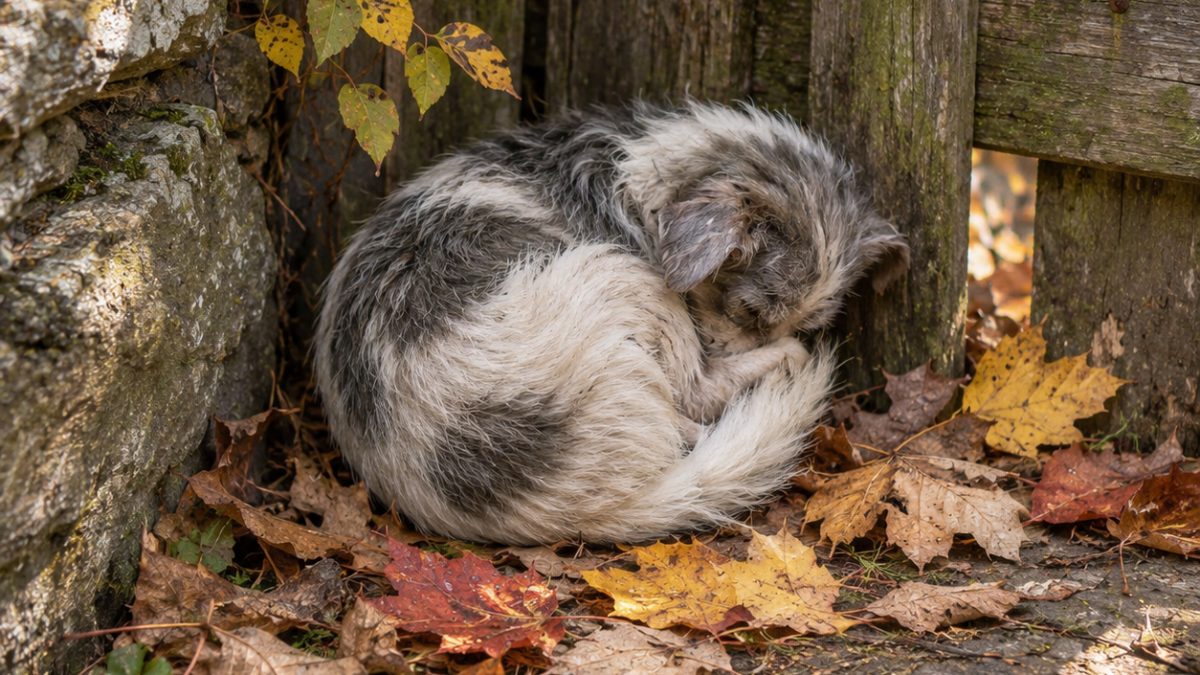
The first time I saw Mushka, she was curled so tightly beneath a hedge that both front paws covered her face, rainwater ran off her back in sheets, and people who had watched her stay there for two days had done little more than toss bread toward the grass before continuing on with their lives.
By the time I knelt beside her, she was burning with fever, covered in swollen ticks, too weak to stand even though X-rays later showed no broken bones, and so emotionally shut down that the veterinarian whispered to me, “Her body is sick, but I’m more worried about the part of her that has stopped trying.”
What I did not know as I wrapped that trembling dog in a towel was that someone had not simply lost her, and the first clue to what really happened would appear on a computer screen before we had even finished removing the ticks from her skin.
My name is Anna Mercer, and I volunteered with a small rescue group outside Pittsburgh, Pennsylvania. The call came from a woman named Grace who worked in a pharmacy across from a narrow strip of grass behind an apartment complex.
“There’s a dog in the bushes,” she told me. “She’s been there since yesterday morning.”
“Is she injured?”
“I don’t know. She won’t come out.”
“Has anyone tried?”
A pause.
“People have left food.”
“That isn’t what I asked.”
Grace’s voice dropped. “No.”
Rain hammered my windshield almost the entire drive.
When I arrived, Grace was waiting under the pharmacy awning. She led me behind the building and pointed toward a hedge along a chain-link fence.
At first I saw nothing.
Then the leaves moved.
Mushka was underneath them.
She was medium-sized, maybe forty pounds when healthy, with soaked tan-and-white fur plastered against her ribs. Her nose was tucked beneath one foreleg, and the other paw rested over her eyes.
It looked less like hiding than surrender.
“Oh, sweetheart.”
Her eyes opened.
Then closed again.
I crouched several feet away.
“Hey. I’m not going to grab you.”
Nothing.
Grace stood behind me.
“She’s been in almost the exact same spot.”
“For two days?”
“Yes.”
“In this weather?”
Grace nodded.
“Yesterday a man gave her bread.”
“Water?”
“The rain, I guess.”
I looked back at her.
She immediately lowered her eyes.
I was angry, but there was no point wasting that anger on the person who had finally called.
I moved closer.
Mushka didn’t growl.
Didn’t bark.
Didn’t retreat.
That frightened me.
When my fingers touched her shoulder, heat came through the wet coat.
“She’s burning up.”
I slid a towel beneath her and started lifting.
Mushka’s body went completely limp.
Not relaxed.
Defeated.
Grace whispered, “Is she dying?”
“I don’t know.”
I hated saying it.
During the drive, Mushka lay across the back seat wrapped in two towels. She never tried to sit up. At red lights, I reached back to touch her side just to make sure I could still feel it rise.
At the clinic, Dr. Leah Warren took one look and called for bloodwork.
Then a technician parted the fur along Mushka’s neck.
“Doctor.”
I stepped closer.
A tick the size of a grape clung behind her ear.
Then we found another.
And another.
Under her collar line.
Between her toes.
Along her belly.
Some were so engorged they looked like gray beads stuck to her skin.
Leah’s expression hardened.
“We’re going to be here a while.”
Mushka barely reacted as they removed them.
Nearly an hour later, a blood smear and rapid testing gave us an answer.
“Babesiosis,” Leah said.
I stared at her.
“How bad?”
“Her red blood cells are being destroyed. She’s severely anemic, febrile, dehydrated, and profoundly weak.”
“Can you treat it?”
“Yes.”
That single word let me breathe.
Then Leah added, “But I can’t promise how she’ll respond.”
We started antiprotozoal treatment, supportive medications, fluids, and careful monitoring. Food was placed near Mushka’s nose.
She turned away.
Leah checked her limbs again.
“No fractures. No obvious spinal trauma.”
“Then why won’t she stand?”
Leah looked at Mushka for a long moment.
“Part of it is physical.”
“And the rest?”
“I don’t know yet.”
A technician entered carrying the microchip scanner.
The first pass gave nothing.
The second produced a beep.
My head snapped up.
“She’s chipped?”
The technician nodded and typed the number into the registry.
A name appeared.
An address.
A phone number.
Then Leah frowned at the screen.
“What?”
She turned the monitor toward me.
The chip had been updated less than three weeks earlier.
And the registered owner’s address was less than four miles from the hedge where Mushka had spent two days hiding in the rain.
PART 2
Four miles.
I kept staring at the screen.
The registered owner was a woman named Kara Donnelly.
The address belonged to an apartment complex on the other side of the commercial district.
The registry showed Mushka as an eight-year-old mixed-breed female.
Tan and white.
Spayed.
No medical alerts.
The contact information had been manually updated nineteen days earlier.
“That means somebody logged into the account,” I said.
The technician nodded.
“Looks that way.”
Leah looked at me.
“Call.”
I hesitated.
“You want me to?”
“You’re the rescue contact.”
I picked up the clinic phone and entered the number.
It rang four times.
A woman answered.
“Hello?”
“Is this Kara Donnelly?”
“Yes.”
“My name is Anna Mercer. I volunteer with Allegheny Hope Animal Rescue. I’m calling about a dog named Mushka.”
Silence.
Not confusion.
Silence.
I glanced at Leah.
“Mushka?” Kara finally said.
“Yes.”
Another pause.
“Why?”
“We found her.”
The silence changed.
I could hear breathing.
Then:
“Where?”
“She’s receiving emergency veterinary care.”
“What happened?”
I almost laughed.
Not because anything was funny.
Because the question landed wrong.
“She was found under bushes behind a pharmacy in the rain. She has a very high fever, severe anemia, babesiosis, and an enormous tick burden.”
Kara said nothing.
“She hasn’t been eating properly. She won’t stand. We’re treating her now.”
Finally Kara whispered, “Oh.”
I waited.
No question about whether Mushka would survive.
No request to come see her.
Instead she said:
“I don’t own her anymore.”
I tightened my grip on the receiver.
“The microchip is registered to you.”
“I know.”
“You updated it nineteen days ago.”
“I updated all my information when I moved.”
“So when did you stop owning Mushka?”
“A while ago.”
“How long?”
“Six weeks.”
That made no sense.
“You updated the chip three weeks ago.”
“I told you. I changed my address.”
“For a dog you didn’t own?”
Kara’s voice sharpened.
“Look, I gave her to someone.”
“Who?”
“A friend.”
“Name?”
Silence.
“Kara?”
“I don’t have to give you somebody’s personal information.”
I looked at Leah.
She raised one eyebrow.
“Your former dog is critically ill. We are trying to determine who was responsible for her.”
“I wasn’t.”
“Who was?”
“I told you. Someone else.”
“Then give me the name.”
Kara hung up.
I stared at the phone.
Leah said, “Document that.”
“I already hate this.”
“Don’t.”
“What?”
“Decide what happened before we know.”
I rubbed my forehead.
“She lied about something.”
“Yes.”
“That doesn’t tell us which part.”
I hated that she was right.
—
Grace arrived twenty minutes later.
She had been unable to stop thinking about Mushka.
“Is she alive?”
“Yes.”
“Can I see her?”
“Not yet.”
She looked relieved anyway.
Then she noticed my expression.
“What happened?”
I told her about the chip.
Grace frowned.
“Kara Donnelly?”
I looked up.
“You know her?”
“No.”
“You recognize the name?”
“Maybe.”
She pulled out her phone.
“What are you doing?”
“Our pharmacy has cameras.”
My chair scraped backward.
“Outside?”
“Parking lot, back loading area, side alley.”
“How long do they keep footage?”
“Thirty days, I think.”
Leah said, “Don’t touch anything you aren’t authorized to access.”
Grace nodded.
“My manager can.”
She was already dialing.
—
The clinic admitted Mushka for overnight care.
By six that evening, almost seventy ticks had been removed.
Some were tiny.
Others were grotesquely swollen.
Every time the technicians thought they were done, another appeared hidden beneath dense fur.
Leah clipped sections of Mushka’s coat so we could see her skin.
There were small scabs from bites.
Scratches.
Inflammation.
Nothing suggesting a major physical trauma.
The X-rays were clean.
No broken pelvis.
No spinal injury.
No fractures.
Nothing obvious to explain why she refused to stand.
Her red-cell count did.
At least partly.
“Her anemia is severe enough to make movement exhausting,” Leah explained.
“Will she need blood?”
“Maybe.”
“How soon will we know?”
“We’ll repeat her packed cell volume in a few hours.”
I sat beside Mushka’s kennel.
She faced the wall.
Her nose was tucked into the corner.
“Mushka.”
One ear moved.
That was all.
I placed a piece of cooked chicken near her paw.
She smelled it.
Didn’t eat.
I left it there.
—
At 7:30, Grace called.
“Anna.”
Her voice sounded strange.
“What?”
“My manager found the footage.”
My stomach tightened.
“Of Mushka?”
“Yes.”
“You’re sure?”
“I think you need to see it.”
“Send it to the humane officer.”
“I haven’t called one.”
“I will.”
“Anna.”
“What?”
“There’s a car.”
I closed my eyes.
“What kind?”
“White Honda.”
“That doesn’t tell us anything.”
“The camera got the plate.”
I stood.
“Don’t send it around. Save the original. Your manager needs to preserve it.”
“I know.”
“And don’t confront anyone.”
“I wasn’t planning to.”
“Good.”
Grace became quiet.
Then said:
“She didn’t run there.”
My hand tightened around the phone.
“What did you see?”
“A woman walked her there.”
—
I called our county humane investigator before watching the video.
His name was Mark Ellison.
He had worked animal-cruelty cases for twelve years and had perfected the tired voice of a man who spent too much time explaining obvious responsibilities to adults.
“Preserve the footage,” he said.
“Already told them.”
“Good.”
“Can I see it?”
“Yes, but don’t distribute it.”
“I won’t.”
“Anna.”
“I won’t.”
“You say that the way people say it right before sending evidence to six friends.”
“I said I won’t.”
He sighed.
“I’ll meet you at the pharmacy.”
—
The rain had eased by the time I arrived.
Grace’s manager took us into a cramped office behind the prescription counter.
His name was Victor.
He pulled up the footage.
Timestamp:
Tuesday, 6:42 a.m.
Two days before Grace called.
A white Honda entered the side lot.
Parked.
For fifteen seconds, nothing happened.
Then the driver’s door opened.
A woman stepped out wearing a dark raincoat.
She walked around the vehicle and opened the passenger door.
Mushka emerged.
Even on grainy footage, I recognized her.
She didn’t jump down eagerly.
The woman had to coax her.
Mushka stood beside the car.
Tail low.
The woman took her by the collar and walked toward the grass.
They disappeared partially behind the hedge.
Forty seconds later, the woman came back alone.
She carried Mushka’s collar.
I stopped breathing.
Victor paused the video.
No one spoke.
Mark said quietly, “Continue.”
The woman got into the Honda.
Mushka emerged from the hedge.
She walked toward the car.
The car began backing out.
Mushka followed three steps.
Stopped.
The Honda drove away.
Mushka remained in the rain.
Grace covered her mouth.
“Oh, God.”
I watched the dog move to the edge of the hedge.
Sit.
Look in the direction the car had gone.
Then curl into the grass.
The video continued.
People came.
People left.
Mushka stayed.
At 9:17, someone tossed bread.
At 11:03, rain became heavier.
Mushka crawled deeper beneath the leaves.
The time rolled forward.
Hours.
She never left.
Mark paused again.
“Plate?”
Victor enlarged a frame.
Readable.
Mark wrote it down.
“Registered owner of the vehicle?”
“We’ll check.”
I already knew.
Or thought I did.
Mark didn’t let me say it.
“Don’t.”
“I didn’t say anything.”
“You were about to.”
He stood.
“I’ll confirm.”
—
He called forty minutes later.
The Honda was registered to Kara Donnelly.
—
I returned to the clinic after ten.
Mushka’s red-cell count had dropped again.
Leah met me before I reached the kennel.
“I want to transfuse.”
My anger vanished instantly.
“How bad?”
“Bad enough that waiting adds risk.”
“Do it.”
“We’ve crossmatched.”
“Do whatever she needs.”
Leah studied my face.
“You found something.”
“Yes.”
“Later.”
I nodded.
Right then, the only thing that mattered was the dog behind the glass.
—
The donor was a retired racing Greyhound named Finn.
He belonged to one of the technicians.
Finn entered the blood-donation room wearing a blue bandana and looking delighted to meet everyone.
Mushka received his blood slowly.
I sat beside her.
Her eyes opened once.
“Some stranger is helping you.”
She blinked.
“He’s ridiculously handsome.”
Nothing.
“Very tall.”
Her eyes closed.
“Tough audience.”
I stayed anyway.
—
Around midnight, Leah placed a small bowl near Mushka.
She sniffed.
Turned away.
“Still nothing?” I asked.
“No.”
“Is that the babesiosis?”
“Could be nausea. Weakness. Stress.”
“Or?”
Leah pulled up a stool.
“Or she’s shut down.”
I looked at Mushka.
“You really think dogs can do that?”
“I think animals respond to trauma.”
“She knows she was abandoned?”
Leah shook her head.
“That’s too specific for me to claim.”
“Then what are you saying?”
“She stayed in one place for two days. She didn’t forage. Didn’t seek shelter beyond those bushes. Didn’t react normally to people. Now that her body is being treated, she’s still withdrawn.”
Leah lowered her voice.
“I can fix red blood cells. I can’t prescribe trust.”
I hated how helpless that made me feel.
—
The transfusion helped.
By morning, Mushka’s gums looked less pale.
Her temperature dropped slightly.
104.7 became 103.9.
Still too high.
Better.
When I entered the kennel room, she opened her eyes.
I held out a little food.
She turned away.
“Okay.”
I sat.
No coaxing.
No forcing.
I ate my own breakfast beside her.
Half a sandwich and terrible vending-machine coffee.
After ten minutes, I put a tiny piece of turkey on my palm.
Mushka looked.
Then looked away.
Twenty minutes later, she looked again.
“Your decision.”
I didn’t move.
She stretched her neck.
Sniffed.
Retreated.
I kept my hand still.
Finally, her tongue touched the turkey.
Once.
Then again.
She took it.
I swallowed hard.
“Okay.”
Her eyes stayed on me.
I offered another piece.
She ate that too.
A technician walked past the door.
I whispered, “Don’t you dare make a big deal out of this.”
She grinned and kept walking.
Mushka ate five pieces.
Then put her head down.
It wasn’t much.
It was everything.
—
Mark interviewed Kara that afternoon.
I wasn’t there.
He told me later what happened.
At first, Kara repeated the story she’d given me.
Mushka had been rehomed six weeks earlier.
She couldn’t remember the friend’s exact address.
She refused to provide a last name.
Mark asked about the Honda.
Kara said no one else drove it.
He asked whether she had visited the pharmacy Tuesday morning.
She said she couldn’t remember.
Then Mark placed a still photograph on the table.
Kara stopped talking.
“She asked for a lawyer,” he told me.
“Did she admit it?”
“No.”
“But we have the video.”
“Yes.”
“So that’s it.”
“No.”
I frowned.
“What do you mean?”
“Video proves she transported the dog there and left without her.”
“That is abandonment.”
“It is strong evidence.”
“Mark.”
“We still document everything properly.”
I crossed my arms.
“You enjoy making people wait.”
“No. I enjoy cases surviving court.”
Fair.
—
By Mushka’s third day at the clinic, her fever was down to 102.8.
She ate from my hand.
Not a bowl.
Only my hand.
Leah found this annoying.
“She cannot train you to hand-feed her forever.”
“She has babesiosis.”
“She also has you.”
“Exactly.”
“That is what worries me.”
Mushka ate another piece of chicken.
I smiled.
Leah rolled her eyes.
—
Standing was different.
She wouldn’t.
We supported her with a sling.
Her legs worked.
Weakly, but they worked.
She immediately folded herself back down.
No obvious neurologic deficit.
No structural damage.
Leah ordered another exam.
Nothing new.
“She can stand,” I said.
“Physically, probably.”
“Then why doesn’t she?”
“Anna.”
“I know.”
No one could answer cleanly.
—
Grace began visiting every evening.
The first time, she stood outside the kennel looking guilty.
“I walked past her the first day.”
“You also called.”
“On the second.”
“You called.”
“I kept thinking somebody else would.”
I looked at her.
“That is how two days happen.”
She flinched.
I regretted the sharpness.
“Sorry.”
“No.”
She stared at Mushka.
“You’re right.”
Grace sat on the floor.
“I don’t want to be that person again.”
Mushka watched her.
Grace didn’t reach in.
She just talked quietly about work.
Customers.
Her mother.
A pharmacist who sang badly when he thought nobody could hear.
Twenty minutes later, Mushka shifted closer to the kennel door.
Not much.
Grace noticed.
She cried all the way to the parking lot.
—
On the fourth day, Mark came to the clinic.
He carried a folder.
“What now?”
“Another witness.”
I followed him into the consultation room.
A woman named Beth was waiting.
Mid-thirties.
Nervous.
She knew Kara.
They had worked together at a dental office.
Beth held her phone in both hands.
“Kara texted me Monday night.”
The night before Mushka was left.
“What did she say?”
Beth unlocked the phone.
“I didn’t think anything of it until I saw the rescue post.”
She handed it to Mark.
The conversation was short.
Kara:
**Landlord saw Mushka. Evan is losing it. I can’t keep fighting about this dog.**
Beth:
**Then call a rescue.**
Kara:
**They all want forms and waitlists. I need her gone tomorrow.**
Beth:
**Don’t dump her somewhere.**
Kara:
**I won’t. I’ll figure it out.**
The next morning, another message.
7:03 a.m.
Twenty-one minutes after Kara drove away from the hedge.
**It’s done. Don’t ask.**
Beth had replied:
**What did you do?**
Kara never answered.
My skin prickled.
Mark photographed the messages and documented Beth’s statement.
I looked at her.
“Why didn’t you call anyone?”
Her face crumpled.
“I didn’t know what ‘done’ meant.”
Fair.
Then she added:
“I should have asked.”
Everyone in Mushka’s story seemed to carry an “I should have.”
—
The boyfriend’s name was Evan Pike.
Mark interviewed him next.
Evan did not make Kara look better.
He also didn’t make himself innocent.
The apartment allowed one pet.
Evan already had a cat.
Kara moved in after losing her previous lease.
She brought Mushka anyway.
For two weeks, they hid the dog.
Then the landlord issued a warning.
Either remove the unauthorized dog or face lease enforcement.
Evan told Kara Mushka had to go.
“Did you tell her to abandon the dog?” Mark asked.
“No.”
“Did you know she intended to?”
“No.”
“What did she say Tuesday morning?”
“That she found somebody.”
“Who?”
“She didn’t say.”
“Did that concern you?”
“I was late for work.”
Mark later told me that line bothered him more than he wanted it to.
Not because Evan caused what happened.
Because indifference has a way of sounding ordinary.
—
The landlord produced another piece of evidence.
An email from Kara Monday afternoon:
**The dog will be permanently gone by tomorrow morning.**
That didn’t prove where she planned to take Mushka.
It did prove she was still responsible for her the day before abandonment.
The “rehomed six weeks ago” story was finished.
—
Meanwhile, Mushka decided to stand.
Not for the veterinarian.
Not for food.
For me.
I had been sitting beside her for nearly an hour when my phone rang.
I stood to answer it in the hallway.
As I reached the door, I heard claws scraping behind me.
I turned.
Mushka was upright.
Barely.
Her legs shook.
Her back arched.
She looked terrified.
But she was standing.
“Mushka.”
I stopped moving.
She took one step.
Her legs almost buckled.
Then another.
Toward me.
I crouched.
“Come on.”
She crossed the three feet between us and collapsed against my knees.
I wrapped my arms around her chest without squeezing.
Her heart hammered.
“You did it.”
Leah appeared at the far end of the hall.
She froze.
I looked at her.
She looked at Mushka.
Then said:
“Don’t cry on my floor.”
I was already crying.
—
Mushka left the clinic after eight days.
Her babesiosis wasn’t gone.
She still needed medication and follow-up bloodwork.
Her red-cell count remained below normal.
She tired easily.
But she was eating.
Walking.
And most importantly, responding to the world again.
We needed a foster home.
I did not volunteer.
For almost eleven minutes.
Then I said:
“I have a guest room.”
Leah laughed.
“What?”
“You lasted longer than I expected.”
“This is temporary.”
“Of course.”
“I mean it.”
“Absolutely.”
I pointed at her.
“Stop doing that.”
“Doing what?”
“Agreeing sarcastically.”
“I would never.”
—
Mushka came home with me that Friday.
She refused to leave the car.
I opened the back door.
She flattened herself against the seat.
“No rush.”
I sat beside her.
My house was quiet.
I lived alone except for an elderly black cat named Oliver, who hated dogs on principle despite never having met enough dogs to justify that opinion.
Oliver watched us through the front window.
Mushka stared at the driveway.
Then at the road.
A car passed.
Her body tightened.
Another car.
Same reaction.
I realized what she was doing.
Watching vehicles leave.
I sat beside her for almost thirty minutes.
Eventually, she stepped down.
Then immediately turned back toward my car.
“No.”
Her nose touched the door.
“We’re staying.”
She looked at me.
“I know you don’t believe me.”
I walked toward the house.
Mushka followed three steps behind.
—
For the first week, she slept beneath my kitchen table instead of the bed I’d bought.
Fine.
I moved a blanket under the table.
She ate only if I stayed in the room.
Fine.
I stayed.
She panicked if I picked up my keys.
That was harder.
Every time metal jingled, Mushka stood.
Her breathing changed.
She followed me to the door.
If I stepped outside, she pressed herself against the glass.
So I started practicing.
Keys.
Sit down.
Keys.
Walk to kitchen.
Keys.
Open door.
Close it.
No leaving.
Eventually, the sound stopped meaning disappearance.
Mostly.
—
Rain was worse.
The first storm came nine days after she arrived.
Thunder wasn’t the problem.
Water hitting the windows was.
Mushka disappeared.
I found her wedged between the toilet and the bathtub with both paws over her face.
Exactly as Grace had described her beneath the bushes.
I sat on the bathroom floor.
“Okay.”
Mushka trembled.
I didn’t touch her.
“You can stay there.”
Forty minutes later, she crawled out.
Not because the rain stopped.
Because she came to sit against my leg.
That felt like permission.
—
Kara learned where Mushka was not long afterward.
Not my address.
Only that she was in foster care.
Her attorney contacted the rescue claiming Kara wanted the dog returned.
I stared at the letter.
“She abandoned her.”
Our attorney, Jennifer Cole, remained infuriatingly calm.
“Yes.”
“On video.”
“Yes.”
“Then why are we discussing this?”
“Because people are allowed to make claims.”
“She relinquished possession by leaving her.”
“Likely.”
“Likely?”
“Anna.”
I hated when people said my name that way.
Jennifer continued.
“The humane case and ownership determination will resolve it. Until then, Mushka stays with the rescue.”
“With me.”
“As the rescue foster.”
“Same thing.”
“Legally, not remotely.”
I looked down.
Mushka was asleep under my chair.
“What does Kara want?”
Jennifer glanced at the letter.
“She says she intended a temporary placement.”
“At a hedge?”
“She claims she expected a friend to retrieve Mushka.”
“Which friend?”
“No name.”
“Of course.”
“She also alleges you refused to return her after being notified of ownership.”
“I never spoke to her again.”
“Correct.”
“So?”
“So we answer with facts.”
I hated facts.
They were slower than anger.
—
Then Kara went public.
She posted a photograph of Mushka as a puppy.
Floppy ears.
Bright eyes.
Pink collar.
The caption read:
**This is my dog. I loved her for eight years. A rescue is refusing to give her back after a terrible misunderstanding.**
The post spread quickly.
People asked questions.
Kara answered selectively.
She said she had been facing homelessness.
True.
She said she had been desperately trying to find temporary care.
Partly true.
She said she left Mushka at a place where someone had agreed to meet her.
No evidence supported that.
She said she came back but Mushka was already gone.
That was the statement that eventually destroyed her story.
Because Mushka wasn’t gone.
Not for two days.
And the cameras had kept recording.
—
Mark called me that evening.
“Don’t respond.”
“I wasn’t going to.”
“Your rescue wasn’t going to?”
“Maria is furious.”
“Tell Maria not to.”
“Why?”
“Because we’re reviewing the second day of footage.”
I sat straighter.
“What second day?”
“The pharmacy camera.”
My stomach tightened.
“What did you find?”
“I’m not discussing it until we confirm something.”
“Mark.”
“Good night, Anna.”
He hung up.
I hated him.
—
The next morning, he called at 6:20.
“Come to the pharmacy.”
I was there twenty-five minutes later.
Victor had another clip loaded.
Wednesday.
The day after Kara abandoned Mushka.
11:36 a.m.
Mushka lay under the hedge.
Soaked.
Barely moving.
A white Honda entered the parking lot.
My stomach turned.
The car slowed.
Passed the hedge.
Stopped.
For twelve seconds.
The driver’s window lowered.
The image wasn’t perfect.
But the plate was.
Same Honda.
The car continued.
Exited the lot.
Mushka lifted her head.
She stood.
Took three steps toward the pavement.
Then stopped.
The Honda disappeared.
Mushka returned to the hedge.
Grace began crying.
“She came back.”
Mark corrected her.
“The car came back.”
We couldn’t identify the driver from that angle.
Not yet.
But Kara had publicly said she returned only after Mushka was gone.
The video proved the vehicle registered to her came through while Mushka was still there.
—
Evan gave us the answer.
Mark showed him the timestamp.
“Where were you Wednesday at 11:36?”
“At work.”
“Could Kara have had the car?”
“It was her car.”
“Did she tell you she went back?”
Evan stared at the still frame.
Then closed his eyes.
“Yes.”
My jaw tightened.
“What did she say?” Mark asked.
Evan hesitated.
“That Mushka was still there.”
Grace made a sound behind me.
Mark remained still.
“And?”
“She said she couldn’t get out.”
“Why?”
“She felt sick.”
“Because the dog was there?”
“Yes.”
“Did she tell you why she didn’t take her back?”
Evan rubbed both hands over his face.
“She said if she opened the door, Mushka would come running.”
No one spoke.
I looked toward the frozen image on the screen.
Mushka lying beneath the hedge.
The car only yards away.
Waiting.
Evan whispered:
“She said she couldn’t do it twice.”
The room went completely silent.
—
That sentence followed me home.
I couldn’t do it twice.
Kara had gone back.
She had seen Mushka.
Maybe she had regretted leaving her.
Maybe she had driven there intending to undo it.
Then she saw the dog still waiting exactly where she’d left her.
And instead of opening the door, she drove away because taking Mushka back would mean facing the same decision again.
I wanted to hate her cleanly.
That made it difficult.
Cruelty is easier when it comes from someone who feels nothing.
Kara had felt something.
She still chose herself.
Mushka paid for it.
—
That evening, rain began.
I found Mushka in the bathroom again.
Paws over her face.
I sat beside her.
For a long time, neither of us moved.
Then I whispered:
“She came back.”
Mushka’s ear moved.
“I don’t know if that makes it better or worse.”
I stared at the tile floor.
“She saw you.”
My voice cracked.
“And she still left.”
Mushka lifted her head.
She crawled toward me.
Then placed her chin on my knee.
I buried my face in her wet-smelling fur and cried for both of us.
—
Her medical recovery continued.
The babesiosis treatment worked.
Her fever disappeared.
Her red-cell count rose slowly.
At the third recheck, Leah smiled at the lab results.
“We’re finally in the safe zone.”
“Normal?”
“Not yet.”
“But safe?”
“Safer.”
Mushka stood beside me.
Her tail moved.
Leah crouched.
“You know you’re a ridiculous amount of trouble.”
Mushka licked her nose.
Leah recoiled.
“Absolutely not.”
I laughed.
It was the first time I realized Mushka had started initiating affection.
Not simply accepting it.
Choosing it.
That distinction mattered.
—
Food became her next obsession.
The dog who once turned away from everything became deeply offended by delayed breakfast.
At 6:05 one morning, I woke to Mushka staring at me from beside the bed.
“What?”
She stared.
“It’s six.”
Nothing.
“You eat at six-thirty.”
One paw landed on the mattress.
“No.”
Another paw.
“Mushka.”
She whined.
I sat up.
“You have recovered too much.”
Her tail wagged.
I fed her.
She had trained me in under three weeks.
—
Kara’s online campaign grew worse before it collapsed.
She accused the rescue of raising thousands of dollars from Mushka’s story.
That was true.
Veterinary care cost thousands.
She implied we had kept the excess.
That was false.
Jennifer advised the board to release a simple financial summary.
Every designated donation.
Every veterinary invoice.
Medication.
Blood transfusion.
Lab work.
Hospitalization.
The rescue had actually spent more than the donations collected for Mushka.
Kara responded:
**Funny how they have receipts for everything except stealing my dog.**
Maria threw her phone onto the table.
“I want to publish the video.”
“No,” Jennifer said.
“She is lying.”
“The humane case is active.”
“She is calling us thieves.”
Jennifer folded her hands.
“If she keeps making false factual claims, we can respond appropriately. But we are not jeopardizing a cruelty case because you’re angry.”
Maria looked at me.
I said nothing.
Because I had learned.
Slowly.
Evidence was more satisfying when you didn’t waste it early.
—
The preliminary hearing came three months after Mushka’s rescue.
By then, she had gained nearly eleven pounds.
Her coat had filled out.
The ticks were gone.
The anemia had resolved.
Her eyes had changed so much that comparing photographs felt almost dishonest.
The intake dog looked hollow.
The dog sleeping beneath my desk snored.
Loudly.
I did not bring her to court.
Kara’s lawyer wanted her there.
Jennifer refused.
“She isn’t a prop.”
I loved her for that.
—
Kara entered the courtroom wearing a dark blue dress.
She looked tired.
Not evil.
Just tired.
I knew parts of her story by then.
Her previous apartment building had been sold.
The new rent was beyond what she could manage.
She lost hours at work after recovering from an injury.
She moved in with Evan because she had nowhere affordable to go.
The landlord discovered Mushka.
Kara faced losing the new apartment too.
She called two shelters.
One said they were full.
Another required an appointment the following week.
She didn’t wait.
Every part of that was sad.
None of it required leaving a sick, tick-covered dog under a hedge in a storm.
Both things could be true.
—
Grace testified first.
She described seeing Mushka Tuesday morning.
Then again Tuesday afternoon.
Wednesday.
Thursday.
She admitted she had not called immediately.
Kara’s attorney seized on that.
“So numerous people saw the dog and failed to act?”
“Yes.”
“Meaning my client could reasonably have believed someone would intervene.”
Grace stared at him.
“I didn’t know anyone had deliberately put her there.”
“That wasn’t my question.”
Grace’s fingers tightened around the witness rail.
“No.”
The attorney waited.
Grace continued.
“If I’d known someone had driven her there and left her, I would’ve called before the car reached the street.”
The prosecutor hid a smile.
—
Leah testified next.
Babesiosis.
Tick infestation.
Fever.
Anemia.
Transfusion.
Dehydration.
Weakness.
The attorney asked:
“Doctor, can you say precisely when the dog contracted babesiosis?”
“No.”
“Can you say every tick was present while she was in Ms. Donnelly’s custody?”
“No.”
“Can you prove my client knew the dog had babesiosis?”
“No.”
He looked satisfied.
Then Leah added:
“You don’t need to know the name of a disease to know a dog covered in engorged ticks, losing weight, and becoming weak needs veterinary care.”
The attorney paused.
“Was Mushka capable of walking when admitted?”
“Physically, she later demonstrated she was.”
“Yet she initially refused.”
“Yes.”
“Isn’t it possible she simply has a timid temperament?”
Leah considered.
“Anything is possible.”
“So you can’t medically prove emotional trauma.”
“No.”
I thought that would help Kara.
Then Leah said:
“I can prove the fever, anemia, infection, parasite burden, dehydration and weakness. That is enough for me.”
—
Then Victor authenticated the pharmacy footage.
The courtroom monitor turned on.
Tuesday morning.
White Honda.
Kara stepping out.
Mushka stepping down.
Walking toward the hedge.
Kara returning with the collar.
Car backing away.
Mushka following.
Stopping.
Waiting.
There was no sound.
That somehow made it harder.
I heard someone behind me sniff.
Kara stared at the table.
Her lawyer did not look at her.
The footage continued.
Rain.
People.
Bread tossed into the grass.
Mushka curling deeper beneath the leaves.
The prosecutor stopped the video.
“Ms. Donnelly has publicly said she intended for another person to collect Mushka. Does this video identify such a person?”
Victor answered:
“No.”
“Did anyone approach the dog at the time of drop-off?”
“No.”
“Did Ms. Donnelly wait?”
“No.”
—
The defense argued that Kara believed Mushka would be found quickly.
That she had chosen a busy location.
That the pharmacy opened early.
That she left food near the hedge.
The video did show a small bag placed in the grass.
That detail bothered me.
Because it meant Kara had planned enough to bring food.
She hadn’t acted in a moment of pure panic.
She had thought about Mushka being there.
Alone.
And done it anyway.
—
Then came the Wednesday footage.
Kara’s lawyer objected to speculation about the driver.
The prosecutor agreed not to speculate.
Instead, Evan testified.
He confirmed Kara had the Honda.
He confirmed she told him she drove back.
He confirmed the conversation.
The prosecutor asked:
“What did Ms. Donnelly tell you after she returned?”
Evan shifted.
“She said Mushka was still there.”
“Did she retrieve her?”
“No.”
“Why?”
“She said she couldn’t.”
“What did she mean?”
Evan looked toward Kara.
Kara’s face had gone white.
He swallowed.
“She said if she opened the door, Mushka would follow her.”
The room became still.
“And then?”
“She came home.”
“So Ms. Donnelly knew Mushka remained at the location?”
“Yes.”
“Alive?”
“Yes.”
“In heavy rain?”
“Yes.”
“And she left her there a second day?”
Evan closed his eyes.
“Yes.”
That was the moment the balance shifted.
Not because the first abandonment suddenly mattered more.
Because Kara had been given a second chance by her own regret.
She had driven back.
Seen exactly what she’d done.
And chosen it again.
—
Beth testified about the texts.
**I need her gone tomorrow.**
**Don’t dump her somewhere.**
**I won’t. I’ll figure it out.**
Then:
**It’s done. Don’t ask.**
Kara’s attorney argued that “gone” did not necessarily mean abandoned.
He was correct.
The messages alone didn’t prove that.
But the video sat beside them.
The lie about rehoming Mushka six weeks earlier sat beside them.
The manually updated microchip sat beside them.
The Wednesday return sat beside them.
Pieces that seemed explainable alone formed something much harder to deny together.
—
Then Kara testified.
I wasn’t expecting it.
Neither was Mark.
She admitted leaving Mushka.
Her lawyer had apparently decided fighting that point was no longer credible.
Instead, the defense became desperation.
Kara described losing housing.
Debt.
Her injury.
Moving in with Evan.
The landlord’s warning.
Shelters telling her to wait.
“Did you intend for Mushka to die?” her attorney asked.
“No.”
“Did you hate her?”
“No.”
“Had you cared for her for years?”
“Yes.”
“Did you believe someone would find her?”
“Yes.”
“Why that location?”
“People were always there.”
Kara’s voice broke.
“I thought somebody would take her.”
Her attorney sat.
The prosecutor stood.
“Why didn’t you hand Mushka to one of those people?”
Kara looked down.
“I was ashamed.”
“Why didn’t you walk inside the pharmacy?”
“I was ashamed.”
“Why didn’t you tell the rescue the truth when Ms. Mercer called?”
“I was scared.”
“Why did you say you’d rehomed Mushka six weeks earlier?”
“I panicked.”
“Why did you return the next day?”
Kara’s eyes filled.
“I wanted to get her.”
The prosecutor waited.
“Then why didn’t you?”
Kara covered her face.
For several seconds, the courtroom heard only her breathing.
Finally:
“Because she saw my car.”
I felt my chest tighten.
“What happened when she saw it?”
“She stood up.”
Her voice collapsed.
“She started coming toward me.”
The prosecutor remained quiet.
Kara wiped her face.
“I knew if I opened the door, she’d get in.”
“And you didn’t want that?”
“I didn’t know where to take her.”
“So you drove away.”
Kara nodded.
“Yes.”
“While she followed you?”
“Yes.”
I looked at my hands.
For the first time since the case began, I didn’t feel angry.
I felt tired.
—
The case did not end that afternoon.
Real legal consequences rarely arrive with one dramatic gavel strike.
Eventually, Kara accepted a plea involving animal abandonment and neglect.
The court ordered probation, fines, partial restitution for investigative and veterinary costs, mandatory humane-care education, and a prohibition on owning or having primary responsibility for animals for a period of time.
She was also required to complete counseling recommendations that came out of her evaluation.
Some people thought that was too little.
Others believed public humiliation had already been punishment enough.
Neither group had to live with what Kara had seen through her windshield.
Mushka rising in the rain.
Coming toward her.
Believing the door might open.
Then watching the car leave again.
I suspected that memory would outlast every fine.
—
Her civil demand for Mushka disappeared.
The rescue received formal relinquishment through her attorney.
Jennifer called me.
“She’s free for adoption.”
I looked beneath my kitchen table.
Mushka was asleep with her paws in the air.
“Good.”
“You want the application?”
“What application?”
Jennifer went quiet.
“Anna.”
“She lives here.”
“She is your foster dog.”
“Technically.”
“Very technically.”
I sighed.
“Send it.”
—
I filled out Mushka’s adoption paperwork that night.
Name:
Mushka.
Age:
Approximately eight.
Medical history:
The space wasn’t large enough.
I wrote:
**Recovered babesiosis; previous severe anemia; routine monitoring recommended.**
Then came:
Reason for adoption.
I stared at the line.
I could have written:
Bonded with foster.
Permanent placement desired.
Suitable home.
Instead, I wrote:
**She already knows where the kitchen is.**
Maria called me the next morning.
“You know that isn’t a real reason.”
“It is the most honest one.”
“You’re impossible.”
“So is she.”
Mushka barked because breakfast was five minutes late.
Maria heard.
“I see she’s dying of sadness.”
“She has made a remarkable recovery.”
—
Grace came to the adoption signing.
She brought a yellow raincoat for Mushka.
I laughed when I opened it.
“She is not wearing this.”
Grace looked offended.
“It has ducks.”
“Exactly.”
Mushka sniffed it.
Then walked away.
“See?”
“She’s traumatized by your taste.”
Grace rolled her eyes.
Later that afternoon, Mushka wore it for a photograph.
She looked furious.
Grace framed the picture.
—
Recovery did not end because the paperwork changed.
Mushka remained afraid of rain.
For months, the first sound of heavy water on the windows sent her toward the bathroom.
I stopped trying to persuade her out.
Instead, I made the space comfortable.
Blanket.
Water.
Small lamp.
I sat nearby when storms were bad.
Eventually, she stopped covering her face.
Then she stopped squeezing behind the toilet.
Then she moved to the hallway.
One stormy evening, I found her lying in the living room.
Alert.
But not hiding.
I sat beside her.
“You hear that?”
Rain pounded the roof.
Mushka looked at me.
Then went back to sleep.
I cried so quietly I hoped she didn’t notice.
—
Her fear of car doors lasted longer.
If I loaded groceries, Mushka followed me.
If I opened the passenger door, she tried to climb in.
Every time.
At first, I let her.
Then we’d drive around the block.
Home again.
I wanted her to learn that cars returned.
We did that dozens of times.
Eventually, she stopped insisting.
Sometimes she watched from the porch.
I drove away.
I came back.
She waited inside the door instead of running after me.
Trust is boring when it works.
Repetition.
Predictability.
No dramatic gestures.
You leave.
You return.
Again.
Again.
Until the animal stops preparing for the one time you won’t.
—
Oliver, my cat, pretended Mushka did not exist for six weeks.
Then I came downstairs one morning and found him asleep against her back.
I took a photograph.
The camera sound woke him.
Oliver immediately moved three feet away and began grooming himself as if I had fabricated the entire scene.
Mushka didn’t care.
She rolled over and went back to sleep.
—
The strangest part of healing was watching her discover preferences.
Abandoned dogs often arrive described entirely by what happened to them.
Mushka had been:
The dog in the rain.
The tick dog.
The babesiosis case.
The abandoned dog.
Then slowly she became other things.
Mushka hated bananas.
Loved cheese.
Snored on her back.
Barked at cardboard boxes.
Refused to walk across metal grates.
Loved elderly men.
Disliked skateboards.
Was terrified of balloons.
Thought squirrels were a personal insult.
She preferred sleeping with one paw touching me.
None of those things had anything to do with Kara.
That mattered.
Her life expanded until abandonment was no longer the largest fact in it.
—
The story became public after the plea.
Court records were available.
A local reporter requested the footage.
The rescue did not release it ourselves.
Kara had already spent months accusing us publicly.
When the article appeared, it was devastating precisely because it wasn’t dramatic.
No insults.
No editorial rage.
Just a timeline.
Monday:
Landlord correspondence said the dog would be gone by Tuesday.
Monday night:
Kara texted that she needed Mushka gone.
Tuesday morning:
Video showed Kara leaving Mushka behind the pharmacy.
Tuesday through Thursday:
Mushka remained in the same area during heavy rain.
Wednesday:
Video showed Kara’s car returning.
Witness testimony established Kara saw Mushka and left again.
Thursday:
Grace called rescue.
Friday:
Mushka was confirmed severely anemic and positive for babesiosis after an extreme tick infestation.
Kara’s own online posts appeared beside the timeline.
Especially one:
**I went back for her, but she was already gone.**
The Wednesday footage sat directly underneath it.
She deleted her social media account two days later.
We never asked anyone to harass her.
Maria posted one sentence on the rescue page:
**Mushka is safe, legally adopted, and continuing to recover. Please do not contact or threaten anyone involved in her former case.**
That was enough.
The truth did not need help being ugly.
—
Months later, I received a letter.
No return address.
Inside was a handwritten note from Kara.
I almost tore it up.
Instead, I sat at the kitchen table.
Mushka lay beneath my chair.
The letter began:
**I don’t expect forgiveness.**
I nearly stopped there.
Then I kept reading.
Kara wrote about Mushka as a puppy.
How she used to sleep across Kara’s feet.
How she hated fireworks.
How she once chewed the corner of a bedroom door because Kara had gone to work.
She wrote about losing her apartment.
Money.
Evan.
The warning from the landlord.
Calling shelters.
Being told to wait.
Then:
**I convinced myself leaving her somewhere busy was different from dumping her. I told myself somebody kind would find her in an hour.**
I looked down at Mushka.
Her head rested against my ankle.
The letter continued.
**When I went back the next day, she was still there. She saw my car and stood up. I knew exactly what she thought was happening. I was going to open the door. I swear I was. Then I thought about the apartment, the landlord, Evan, the money, and having to solve everything again. I drove away.**
I stopped reading.
For several minutes, I couldn’t continue.
Finally:
**That is the part I cannot explain away. The first day I panicked. The second day I knew.**
My throat tightened.
At the bottom she wrote:
**Please don’t tell me she forgot me. I don’t deserve that comfort. Just tell me if she isn’t scared anymore.**
I sat with the letter for a long time.
Then I took a photograph.
Mushka sleeping on her back.
Feet in the air.
Oliver curled near her tail.
No rain.
No hedge.
No drama.
I sent it through Jennifer.
One sentence:
**She is safe, and she is not afraid every day anymore.**
That was all.
—
I never heard from Kara again.
Not directly.
Almost a year later, Maria showed me a donation made to the rescue’s emergency boarding program.
One hundred dollars.
Anonymous.
Then another several months later.
No proof it was Kara.
Maybe it wasn’t.
I didn’t need to know.
—
Grace became a volunteer.
That part surprised everyone except me.
She started with laundry.
Then transport.
Eventually fostering.
Her first foster was an old Beagle named Hank whose owner had been hospitalized.
Grace called me the first night.
“He won’t eat.”
“Sit near him.”
“I am.”
“Don’t stare.”
“I wasn’t.”
“You’re absolutely staring.”
“How do you know?”
“Because I know you.”
Twenty minutes later, Hank ate.
Grace cried.
“You’re going to have to stop crying every time a dog eats.”
“No.”
Fair enough.
—
One afternoon, Grace and I returned to the pharmacy.
Mushka came with us.
I hadn’t planned anything symbolic.
Grace needed medication.
I needed toothpaste.
Ordinary errands.
When we parked, I realized where we were.
The hedge remained.
Trimmed shorter.
The patch of grass looked smaller than I remembered.
Mushka stepped from the car.
She froze.
My heart stopped.
Did she recognize it?
Maybe.
Maybe not.
Dogs understand scent in ways we don’t.
I wasn’t going to invent certainty because I wanted the moment to mean something.
Mushka sniffed the pavement.
Then the grass.
She walked toward the hedge.
Grace whispered:
“Should we stop her?”
“No.”
Mushka sniffed the exact area where I’d first found her.
Then lifted one leg and peed on the bush.
Grace burst out laughing.
I laughed so hard I had to lean against the car.
Mushka looked pleased with herself.
“That,” Grace said, wiping her eyes, “is the ending I needed.”
Maybe it was.
—
The next spring, Mushka’s bloodwork was completely normal.
Leah placed the results on the counter.
“No anemia.”
“Babesia?”
“No active signs.”
“Weight?”
“Don’t ask.”
I looked at Mushka.
She had become pleasantly round.
“She’s healthy.”
“She is well fed.”
“Same thing.”
“It is absolutely not.”
Mushka sat beside the treat cabinet.
Leah pointed.
“This is your fault.”
“Trauma recovery.”
“That’s cheese dependency.”
Mushka barked.
Leah gave her a treat.
I raised an eyebrow.
“Interesting.”
“Medical necessity.”
“Of course.”
—
Two years after the rescue, I moved to a small house with a fenced backyard.
Not because of Mushka.
Mostly.
The first week, she spent hours lying beside the back door.
She had a yard.
A real one.
No leash needed.
No apartment rules.
No landlord.
No hedge she had to hide beneath.
Yet she stayed near the door.
I worried she was afraid I’d close it.
So for weeks, when she went outside, I left it open whenever the weather allowed.
Slowly she moved farther.
Five feet.
Ten.
Middle of the yard.
Eventually she’d sleep under the maple tree.
But every few minutes, she’d look toward the house.
Door still open.
Me still there.
Good.
Back to sleep.
—
Then came the storm.
It was almost exactly two years and four months after Grace’s call.
Weather warnings started before dinner.
By nine, rain hammered the roof.
Wind bent the trees.
Lightning flashed beyond the kitchen windows.
I expected Mushka to disappear into the bathroom.
She didn’t.
She stood beside the back door.
I stared at her.
“You need to go out?”
Her tail moved.
I opened the door enough for her to see the rain.
“Absolutely not.”
Mushka stepped onto the porch.
I grabbed her collar.
“Are you insane?”
She looked at me.
Rain blew sideways across the steps.
For years, the sound alone had been enough to make her hide.
Now she stood there.
Not shaking.
Not covering her face.
Just watching.
I loosened my hand.
Mushka walked down one step.
Then another.
Into the rain.
My chest tightened.
“Mushka.”
She reached the grass.
Turned around.
Looked at me.
Then wagged her tail.
I stepped outside without shoes.
Within seconds, I was soaked.
“This is stupid.”
Mushka sneezed.
I laughed.
She walked several feet into the yard.
Not far.
Not hiding.
Not trapped.
Because she knew where the door was.
Because she knew it would remain open.
Because this time, the person behind her wasn’t driving away.
—
Kara’s probation eventually ended.
Her ownership restriction expired later.
I heard through Mark that she did not immediately get another animal.
I was glad.
Not because I thought she should be punished forever.
Because wanting an animal and being ready to care for one are different things.
Several years after the case, Mark told me something else.
Kara had begun volunteering with a housing-assistance nonprofit.
Not an animal organization.
A group helping women find pet-friendly temporary housing.
I stared at him.
“Seriously?”
“Yes.”
“Why?”
“You’d have to ask her.”
I never did.
Maybe guilt.
Maybe growth.
Maybe both.
I learned not to demand clean categories from messy people.
Kara had done something terrible.
Consequences followed.
That did not require her to remain the worst thing she’d ever done for the rest of her life.
Mushka had taught me that too.
A life is larger than its worst day.
If we were willing to believe that about a frightened dog, maybe we had to leave room for humans to prove it as well.
Not without accountability.
After it.
—
Mushka turned eleven.
Then twelve.
Her muzzle whitened.
She developed arthritis in one hip.
We added a joint supplement.
Then medication.
She still barked at breakfast.
Still hated bananas.
Still chased squirrels with complete confidence and no realistic chance of success.
Oliver died at nineteen.
For two weeks after, Mushka slept beside his empty bed.
I sat beside her some nights.
We had learned that routine together.
No fixing.
Just staying.
—
When Mushka was thirteen, Grace brought a foster puppy to visit.
His name was Teddy.
He was loud.
Clumsy.
Unreasonably happy.
Mushka hated him for approximately six minutes.
Then he climbed into her bed.
She gave me a look.
“Not my fault.”
Teddy fell asleep against her.
Mushka sighed dramatically.
Grace smiled.
“She likes him.”
“No.”
“She does.”
Mushka rested her chin on the puppy’s back.
I took a photograph.
Years earlier, I had seen Mushka curled beneath a hedge with her paws over her face, trying to make herself smaller than the world.
Now a puppy used her as a pillow.
The difference felt almost impossible.
—
Teddy was adopted a week later.
Grace cried.
Mushka did not.
She ate his leftover treats.
Everyone grieves differently.
—
People still recognized Mushka occasionally.
Not often.
Internet stories have short lives.
A dramatic rescue circulates for a few days.
Maybe weeks.
Then another animal appears.
Another emergency.
Another photograph.
That was fine with me.
Mushka never needed to be famous.
She needed breakfast.
A warm bed.
Medication.
Walks.
Someone who came back.
Fame had nothing useful to offer her.
Routine did.
—
The part of her story people remembered was the rain.
They’d ask:
“Is she still afraid of storms?”
For years I answered yes.
Then sometimes.
Then not much.
Eventually, the answer became:
“She prefers the porch.”
That sentence made me happier than it should have.
—
I kept the yellow raincoat Grace bought on adoption day.
Mushka continued to hate it.
Every winter, I’d bring it out.
She’d stare at me.
I’d hold it up.
She’d walk away.
One rainy afternoon when she was fourteen, I tried again.
She stood completely still while I fastened it.
I gasped.
“You’ve matured.”
Mushka looked deeply offended.
The coat had little yellow ducks across the back.
Grace arrived ten minutes later.
She screamed.
“You kept it!”
“I keep everything.”
Mushka walked toward the door.
Grace crouched.
“Look at you.”
Mushka sneezed in her face.
We both laughed.
—
That was the last winter she could take long walks.
Age caught up slowly.
Nothing dramatic.
Her kidneys remained good.
Her heart stayed strong.
But arthritis worsened.
We shortened walks.
Added rugs.
Built a small ramp at the porch.
She refused it for a month.
Then used it when she thought I wasn’t watching.
I pretended I hadn’t seen.
—
On warm afternoons, she’d lie beneath the maple tree.
Sometimes rain would begin lightly.
Instead of running inside, Mushka would stay until the drops became heavier.
Then she would stand.
Look toward me.
Walk home.
No panic.
No desperate running.
No collapsing beneath bushes.
Just a dog deciding she’d had enough rain.
There is a difference between enduring weather because nobody is coming and standing in it because you know shelter is waiting.
I saw that difference every time.
—
Grace once asked whether I considered what happened to Kara “revenge.”
We were sitting on the porch while Mushka slept between us.
“What do you mean?”
“Kara lied. Then the cameras proved it. She accused the rescue of stealing Mushka, and the court records showed she abandoned her. Her own boyfriend testified. Her friend produced the texts. She lost Mushka permanently.”
“That’s consequences.”
“Sounds like revenge.”
“No.”
Grace looked at me.
“Why not?”
“Because we didn’t have to do anything to her.”
I looked down at Mushka.
“Kara made every piece of evidence herself.”
The car.
The message.
The return trip.
The lie about rehoming.
The public claim that Mushka was already gone when she returned.
We didn’t set a trap.
We didn’t destroy her reputation.
We just stopped allowing her story to replace the truth.
That was enough.
—
Years after the case, I understood something else.
The most important consequence wasn’t what Kara lost.
It was what Mushka gained.
If I had spent the rest of her life measuring justice by Kara’s suffering, then Kara would still have been at the center.
She didn’t deserve that position.
Mushka did.
So the story stopped being:
Kara abandoned Mushka.
It became:
Mushka loved scrambled eggs on Sundays.
Mushka learned to sleep through rain.
Mushka tolerated one cat and three foster puppies.
Mushka made Grace become a rescuer.
Mushka lived beneath a maple tree in summer.
Mushka finally stopped watching every departing car.
That was the life that mattered.
—
One September morning, almost seven years after I found her, Mushka didn’t come to the kitchen for breakfast.
That had never happened.
I found her on her bed.
Awake.
Tail moving.
But she didn’t stand.
My stomach sank.
“Hey.”
Her eyes followed me.
I sat beside her.
“What’s wrong?”
She put her head against my hand.
Leah had retired the year before, but Dr. Kim Alvarez had taken over her practice.
Kim came to the house.
She examined Mushka carefully.
The answer wasn’t one catastrophic illness.
It was age.
Arthritis.
Weakness.
A heart that had begun slowing.
A body that had lived longer than any of us expected after the day we found her.
We adjusted medication.
She improved for several weeks.
Then declined again.
I knew where we were going.
I hated knowing.
—
Grace visited nearly every day.
Mark came once.
Even Leah drove over from her new home two hours away.
She sat beside Mushka.
“Well.”
Mushka lifted her remaining energy enough to wag.
“You look better than when we met.”
I laughed through tears.
“That was a low bar.”
Leah stroked her head.
“Still counts.”
—
On Mushka’s final morning, rain began before dawn.
Of course it did.
Not a violent storm.
A soft, steady autumn rain.
I woke to the sound against the window.
Mushka was already awake.
She looked toward the porch.
I knew.
“You want outside?”
Her tail moved.
I helped her stand.
She could walk only with support.
I wrapped a towel around her body like a sling and guided her to the door.
The yellow raincoat hung nearby.
I almost reached for it.
Then didn’t.
She had spent enough of her life being protected from rain.
That morning, I let her choose.
We went onto the porch.
Mushka lowered herself onto a thick blanket.
Rain fell beyond the steps.
She watched it.
No trembling.
No hiding.
Grace arrived twenty minutes later.
Then Dr. Kim.
We already knew the decision.
Mushka had stopped eating.
Walking was painful.
Her breathing had become harder overnight.
There were no more good days waiting behind another medication adjustment.
Only more effort.
I sat behind her.
She leaned against my chest.
Grace sat beside us.
“Do you remember the hedge?” she whispered.
I looked at her.
Mushka’s eyes stayed on the yard.
“I wish I didn’t.”
Grace touched Mushka’s paw.
“I walked past you.”
Her voice cracked.
“I’m sorry.”
Mushka turned her head.
Licked Grace’s wrist once.
Grace broke down.
I held her hand.
—
Kim gave the first medication.
Mushka relaxed.
Her head rested in my lap.
I stroked the white fur around her muzzle.
“You know what I hated most?”
Grace looked at me.
I was speaking to Mushka.
“The way you covered your face.”
My voice shook.
“Like if you couldn’t see the world, maybe the world couldn’t hurt you again.”
Rain tapped softly on the porch roof.
I bent down.
“You don’t have to hide now.”
Her eyes met mine.
Maybe she understood nothing.
Maybe she understood my voice.
Either was enough.
“I found you.”
Her tail moved once.
“And you found me too.”
Kim waited.
I nodded.
The final medication went in.
Mushka’s breathing slowed.
One breath.
Then another.
Then stillness.
The rain continued.
For several minutes, none of us moved.
—
We had Mushka cremated.
Grace and I scattered some of her ashes beneath the maple tree.
I kept the rest inside the yellow raincoat’s pocket.
It seemed ridiculous.
Perfect.
—
The pharmacy removed the old hedge years later during renovations.
Grace sent me a photograph.
For a moment, I felt unexpectedly angry.
Then I realized I didn’t need it.
That patch of grass had never been Mushka’s home.
It was only the place where someone left her.
Those are not the same thing.
—
A year after Mushka died, I was transporting a frightened dog from a rural shelter.
Young.
Black coat.
Too thin.
Not sick enough to require hospitalization.
Just scared.
Halfway home, rain began.
The dog curled tightly in the back seat.
Then covered his face with one paw.
My hands tightened on the steering wheel.
For a second, I couldn’t breathe.
I pulled into a gas station.
Climbed into the back.
Sat beside him.
“Hey.”
He didn’t move.
I didn’t force him.
Rain struck the roof.
Cars came and went.
I stayed.
After several minutes, the dog lowered his paw.
Looked at me.
I held out my hand.
He sniffed it.
Then moved closer.
There was no dramatic rescue.
No court case.
No camera footage.
No betrayal waiting to be uncovered.
Just a frightened dog and someone who had learned not to assume somebody else would stop.
When the rain eased, I returned to the driver’s seat.
The dog remained upright.
Watching me.
I started the engine.
“We’re going home.”
He didn’t know what that meant yet.
Neither had Mushka when I first lifted her from the wet grass.
Trust always begins with something small.
A towel.
A piece of food.
A person sitting nearby.
A car door that opens again.
I drove through the rain with the heater running.
Behind me, the dog slowly stretched out instead of curling into himself.
And for the first time in years, I remembered Mushka under those bushes without seeing the moment she had been abandoned.
I saw her on my porch instead.
Older.
Gray around the muzzle.
Standing in the rain by choice.
Her face uncovered.
Her head lifted.
Looking back only long enough to make sure I was coming too.
[END OF STORY]








