PART 2: She Came to the Shelter for a Young Dog—Then She Saw the 8-Year-Old Dog Hiding in the Corner and Changed Both Their Lives
PART 2
The shelter worker clipped a red leash to Lika’s collar.
“Don’t expect too much,” she warned me.
I stood slowly.
“What does that mean?”
“She may not walk with you right away. New spaces make her nervous.”
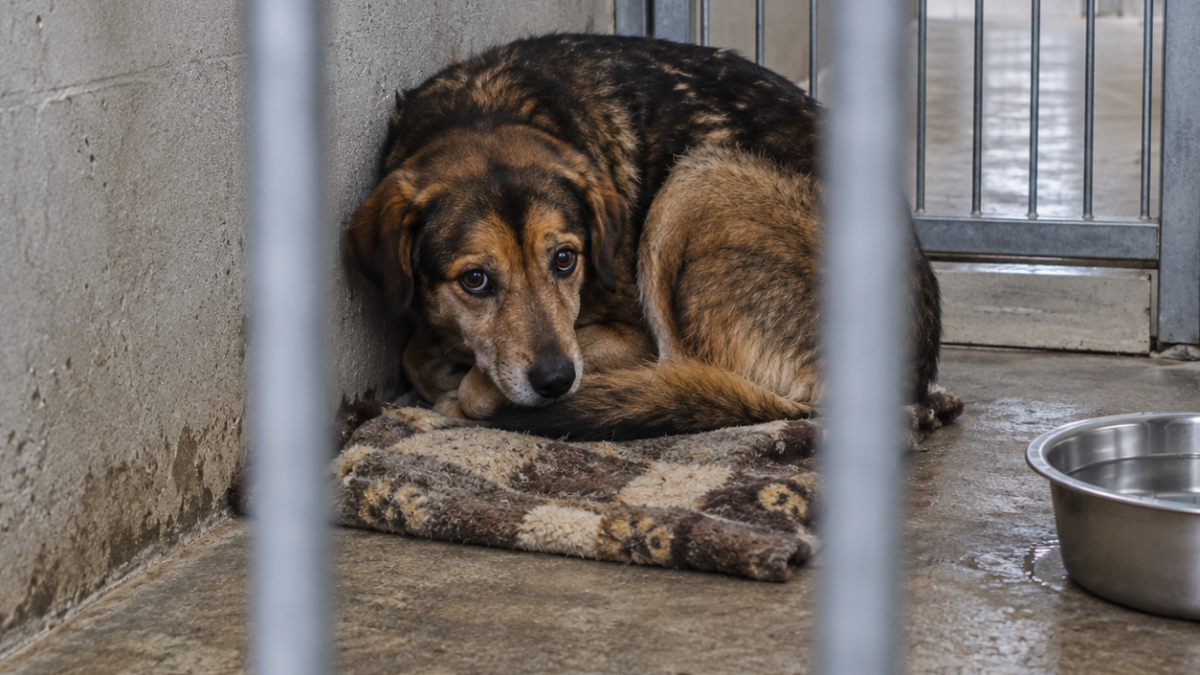
Lika remained close to the kennel door.
Her body was low.
Tail tucked.
Head turned toward the hallway.
I could see exactly what the worker meant.
Every sound drew her attention.
A man laughing near reception.
A cart rolling across the floor.
Keys jangling.
Each time, Lika froze.
Not with curiosity.
With recognition.
She was still listening for something.
Someone.
“Where should we go?” I asked.
“There’s a small meeting room at the end of the hall.”
I nodded.
“Okay, Lika.”
She didn’t move.
I took one step.
Nothing.
The worker gently encouraged her.
“Come on, girl.”
Lika finally followed.
Not because she trusted me.
Not yet.
She simply surrendered to the leash.
That difference mattered.
Inside the meeting room, I sat on the floor again.
Lika immediately moved to the far wall.
I laughed softly.
“You really like corners.”
Her eyes shifted toward me.
The shelter worker placed a few treats between us.
“She likes chicken better.”
“You have chicken?”
“Of course we have chicken.”
She returned with small pieces.
I placed one halfway between Lika and me.
Lika stared at it.
Then at me.
Then at the door.
Five minutes passed.
“Maybe she’s not hungry.”
“She is.”
“How do you know?”
“Because she ate breakfast.”
Another few minutes.
Finally Lika stretched her neck forward.
Sniffed.
Took the chicken.
Then retreated immediately.
I smiled.
“That counts.”
“It does.”
I put another piece slightly closer.
This time she waited less.
The third one disappeared quickly.
By the fourth, she had moved nearly three feet from the wall.
I did not reach for her.
That was the hardest part.
Every instinct told me to pet her.
To show her affection.
But affection given too quickly can still feel like pressure to a frightened animal.
So I let the chicken speak for me.
Eventually Lika stood close enough that I could see the gray beginning around her muzzle.
Eight years old.
Not ancient.
But old enough to have routines.
Memories.
Expectations.
Old enough to understand when those expectations had been broken.
I looked at the shelter worker.
“Do you know anything about her previous home?”
“A little.”
“What?”
“She lived indoors.”
That surprised me.
“Really?”
“Yes. According to intake notes, she slept near a radiator. She knew basic commands. She was house-trained.”
“So she wasn’t neglected?”
“Not in the way some dogs here were.”
I looked at Lika.
That almost made it worse.
A dog can adapt to hardship because hardship is all she knows.
Lika had known comfort.
Then lost it.
“She greeted someone at the door?” I asked.
The worker nodded.
“That was in the notes.”
I imagined it.
A younger Lika hearing a key in the lock.
Tail wagging.
Feet dancing over a familiar floor.
A person entering.
Her person.
Then one day, that ritual ended.
No explanation.
No goodbye she could understand.
Just a shelter kennel.
“Did they leave anything with her?”
“A small bag of food. Old leash.”
“That’s it?”
“Yes.”
I looked at the red shelter leash.
“Can I see the old one?”
The worker hesitated.
“Why?”
“I don’t know.”
She left the room.
When she returned, she carried a faded blue leash.
The handle was frayed.
Lika saw it.
Her entire body changed.
Head up.
Ears forward.
She stood.
The worker froze.
“Oh.”
Lika walked straight toward the leash.
She sniffed it.
Then the worker’s hand.
Then the doorway.
My chest hurt.
“She remembers it.”
“Of course she does.”
Lika stared toward the hallway.
Waiting again.
I had thought she had stopped.
Maybe dogs never stop completely.
Maybe they simply learn to hide hope better.
The worker put the leash down.
Lika remained beside it.
I felt something inside me settle.
Not emotion.
Decision.
“What would adoption involve?”
The worker looked at me sharply.
“You came for a younger dog.”
“I know.”
“You said active.”
“I know.”
“You live alone?”
“Yes.”
“Apartment or house?”
“Small house. Fenced yard.”
“Other pets?”
“No.”
“Work schedule?”
“Mostly from home.”
She studied me.
“You’re serious.”
I looked at Lika.
“Yes.”
The paperwork took nearly an hour.
The shelter required a home check.
Veterinary references.
An adoption counseling session.
They explained decompression.
Fear behavior.
The possibility that Lika might remain withdrawn for weeks.
Maybe months.
“She may not bond immediately,” the counselor said.
“I understand.”
“She may look for her previous family.”
“I understand.”
“She might refuse food.”
“I understand.”
“She may have setbacks.”
“I understand.”
The counselor paused.
“Why her?”
I looked through the office window.
Lika had returned to her kennel.
Back in the corner.
“I think she’s already had enough people deciding she was too much trouble.”
The woman nodded slowly.
Two days later, they approved me.
I bought everything before picking Lika up.
Bed.
Bowls.
Harness.
Food.
Blankets.
Toys.
Too many toys.
A new collar.
A tag with my phone number.
Then I stood in a pet store aisle wondering which treats an emotionally traumatized eight-year-old dog might prefer.
An employee asked if I needed help.
“I have no idea what I’m doing.”
“That’s most dog owners.”
I bought three kinds.
When I arrived at the shelter, Lika was lying in her corner.
The worker opened the door.
“Someone came for you.”
Lika didn’t move.
That sentence probably meant nothing good to her anymore.
I crouched.
“Hey.”
Her eyes lifted.
“It’s me.”
One ear moved.
I showed her the chicken.
She stood.
The worker smiled.
“There you go.”
We walked slowly toward the entrance.
Halfway down the hallway, a man’s voice came from reception.
Lika stopped.
Completely.
She stared.
I waited.
The man walked away.
Lika’s body sank.
My heart broke a little.
“Not him,” I whispered.
She looked at me.
“I know.”
Outside, she stopped beside my car.
Shelter workers had warned me she might resist getting in.
She did.
She backed away.
I didn’t pull.
I opened the rear door.
Placed a blanket inside.
Then sat on the pavement.
“You take your time.”
Ten minutes.
Cars came and went.
Lika watched.
Then climbed into the car.
I closed the door gently.
During the drive home, she stayed upright.
Never relaxed.
She watched through the windows.
At every red light, I checked the mirror.
“You okay?”
She never answered.
Obviously.
But I kept talking.
“I bought you a ridiculous bed.”
Her eyes stayed outside.
“It cost more than my last chair.”
No reaction.
“I also bought toys. You’ll probably hate them.”
Still nothing.
“I hope you like chicken because apparently that is now our relationship.”
At home, I opened the car door.
Lika refused to get out.
Another ten minutes.
Then I clipped on the leash and waited.
She stepped down.
She sniffed the driveway.
The grass.
The gate.
Every new smell seemed to make her more nervous.
Inside, she found the nearest corner.
Of course.
I had placed her bed near the living room wall.
Lika ignored it and curled up behind an armchair.
“Fine.”
I moved the bed behind the chair.
She moved to the kitchen doorway.
I moved the bed.
She moved again.
Eventually I stopped.
“You win.”
That first night, Lika did not sleep much.
Neither did I.
Every time a car passed, she raised her head.
At 11:30, headlights swept across the living room wall.
Lika stood.
Walked toward the front door.
Waited.
The car continued down the street.
She stayed there.
At midnight, I joined her.
I sat against the wall.
Lika looked at me.
“They’re not coming.”
I immediately regretted saying it.
Dogs do not understand explanations the way we want them to.
Maybe that was merciful.
I rested my hands on my knees.
“I came, though.”
Lika looked toward the door again.
“I know that isn’t the same.”
For nearly twenty minutes, we sat together.
Eventually she lay down.
Not beside me.
Three feet away.
I slept on the couch.
At 4:00 a.m., I woke and found Lika standing near the front window.
Waiting.
The next morning she refused breakfast.
Chicken too.
I called the shelter.
“Normal,” they said.
Nothing felt normal.
Day two was worse.
Lika barely drank.
I scheduled a veterinary appointment.
Physically, she was healthier than I feared.
Some arthritis.
Dental wear.
Slightly overweight from her previous diet.
Nothing severe.
The veterinarian, Dr. Hannah Cole, watched Lika while we talked.
“She’s shut down.”
“That’s what the shelter said.”
“Different from depression in humans, but stress can absolutely suppress appetite and normal behavior.”
“What do I do?”
“Routine.”
“How long?”
“However long she needs.”
“That’s not very specific.”
“No.”
Dr. Cole smiled gently.
“Safety first. Predictable meals. Predictable walks. Don’t force affection.”
“What if she never likes me?”
“Then you give her a safe life anyway.”
That answer hit me.
I nodded.
“Okay.”
The next three weeks became an exercise in patience.
Breakfast at seven.
Short walk at seven-thirty.
Quiet time.
Another walk at noon.
Dinner at six.
Lights lower by ten.
Same routes.
Same voice.
Same door.
Same person.
Me.
At first, Lika tolerated me.
That was all.
She allowed the leash.
Accepted chicken.
Stayed in the same room.
But affection?
No.
If I reached toward her too quickly, she lowered her head.
If I sat beside her, she sometimes moved.
She never growled.
Never snapped.
That almost made the distance harder.
She wasn’t rejecting me angrily.
She simply seemed convinced attachment was temporary.
Then one evening, I came home late.
Only twenty minutes.
But the second I opened the front door, something happened.
Lika was standing in the hallway.
Not the corner.
Not behind furniture.
The hallway.
Her ears were forward.
I froze.
“Hi.”
Her tail moved.
One inch.
I almost cried.
“You waited for me?”
The tail moved again.
I put my groceries down.
Lika took two steps forward.
Then stopped.
I crouched.
“You can come.”
She walked to me.
Slowly.
She sniffed my coat.
Then my hands.
And for the first time, she leaned her shoulder against my knee.
I closed my eyes.
“Okay.”
My voice broke.
“Okay, girl.”
That night she slept beside the couch.
Not behind it.
One week later, she started using the bed.
Two weeks after that, she carried one of the toys into the kitchen.
It was a stuffed rabbit I had nearly returned because she had ignored it for a month.
I stared.
“What do you have?”
Lika froze.
The rabbit hung from her mouth.
I smiled.
“You stole something.”
Her tail wagged.
“Finally.”
I reached for the toy.
She backed away.
“Okay.”
I let go.
Lika stared.
Then came closer.
I touched the rabbit.
She pulled.
A tiny tug.
I pulled back gently.
Another tug.
Suddenly we were playing.
Not dramatically.
Not wildly.
But playing.
I laughed so hard that Lika stopped and stared at me.
“Sorry.”
She pulled again.
That rabbit became her favorite toy.
She carried it to bed.
To the backyard.
Once into the bathroom while I showered.
I bought two backups.
She rejected both.
Apparently only the original mattered.
By the third month, Lika had begun to change physically.
Her posture lifted.
Her ears sat differently.
She walked faster.
She gained confidence outside.
But certain things remained.
Men’s voices.
Keys in doors.
Blue cars.
For reasons I didn’t understand, blue sedans made her stop.
Every time.
She stared until they disappeared.
Maybe her previous family drove one.
I never knew.
I stopped trying to know everything.
Recovery did not require solving every mystery.
Sometimes it only required not adding new wounds.
Then, five months after Lika came home, I received an email from the shelter.
The subject line read:
QUESTION ABOUT LIKA.
My stomach tightened.
I opened it.
Her previous owners had contacted them.
They wanted information.
At first I thought they were checking whether she had been adopted.
That alone made me angry.
Five months.
Where had they been?
Then I read the rest.
They were asking whether it might be possible to get her back.
I stared at the screen.
My hands went cold.
Lika was asleep beneath my desk.
The stuffed rabbit rested between her paws.
I read the email again.
Circumstances had changed.
Their housing situation was now stable.
They regretted surrendering her.
They wanted to discuss reunification.
Reunification.
Such a clean word.
It sounded nothing like Lika lying beside the shelter door waiting for footsteps.
Nothing like refusing food.
Nothing like standing at my window at midnight.
I called the shelter.
The director answered.
“I was expecting you.”
“Tell me this is a joke.”
“It isn’t.”
“They surrendered her.”
“Yes.”
“Legally.”
“Yes.”
“She was adopted.”
“Yes.”
“To me.”
“Yes.”
“So why are we discussing anything?”
“We’re not discussing returning her.”
I exhaled.
“Then what is this?”
“They asked.”
“And?”
“We told them she has been adopted and we cannot disclose your personal information.”
My body loosened slightly.
“They don’t have any claim?”
“No.”
“None?”
“None.”
I closed my eyes.
“Thank you.”
“But—”
I hated that word.
“What?”
“They left contact information in case you ever wanted to speak with them.”
“No.”
“That’s completely your choice.”
“No.”
“I understand.”
I looked at Lika.
She was still asleep.
“No.”
That should have been the end.
It wasn’t.
Two weeks later, someone left a letter in my mailbox.
Hand-delivered.
No stamp.
My address was not supposed to have been disclosed.
I called the shelter immediately.
They swore they had given nothing.
I believed them.
Public records and social media made finding people easier than anyone liked to admit.
The letter began:
We are Lika’s family.
I laughed bitterly.
Family.
I read on.
They claimed surrendering her had been temporary in their minds.
They said they had faced a housing crisis.
Financial pressure.
A relative’s illness.
They had been told they might lose their apartment.
They said the shelter staff had misunderstood how permanent the decision felt.
Then came the sentence that made my hands shake.
We never stopped considering her ours.
I looked across the room.
Lika was drinking from her bowl.
Five months of safety.
Vet bills.
Walks.
Sleepless nights.
Fear.
Slow trust.
And somewhere, people who had signed surrender papers still considered her theirs.
The letter continued.
They had seen a photograph of Lika online.
Healthy.
Happy.
They were grateful.
They wanted to meet.
I tore the letter in half.
Then stopped.
Anger wanted drama.
Reality needed documentation.
I taped the letter back together.
Photographed it.
Called the shelter.
Then called an attorney friend.
“Do not engage,” she said.
“That seems to be everyone’s favorite advice.”
“Because it’s good advice.”
“What if they come here?”
“Call police.”
“What if they try to take her?”
“They have no ownership rights based on what you’ve shown me.”
“Say that again.”
“She is legally yours.”
That helped.
For three days.
Then a blue sedan parked across from my house.
Lika saw it first.
She was standing near the front window.
Her body went rigid.
I followed her gaze.
A blue sedan.
A man sat inside.
My blood went cold.
“Lika.”
She backed away from the window.
Not toward the door.
Away.
That answered every question I had.
I closed the blinds.
Called police.
By the time an officer arrived, the car was gone.
The next morning, it returned.
This time, a woman got out.
She walked toward my gate.
I stepped outside before she could reach the porch.
“Stop there.”
She froze.
She looked to be in her early forties.
Tired face.
Brown coat.
She looked completely ordinary.
That bothered me.
“Are you Lika’s adopter?”
“I’m Lika’s owner.”
Her face tightened.
“We need to talk.”
“No.”
“Please.”
“No.”
“I only want to see her.”
“She doesn’t want to see you.”
“You don’t know that.”
“I know what happened when she saw your car.”
The woman’s eyes moved toward the house.
“You recognized it?”
“I didn’t.”
Lika had.
The woman swallowed.
“She remembers us.”
“Yes.”
For a moment, hope appeared in her face.
I hated it.
Then I said, “She backed away from the window.”
The hope disappeared.
“That doesn’t mean—”
“Go home.”
“Please listen.”
“You surrendered her.”
“We had no choice.”
“There are always choices.”
“You weren’t there.”
That stopped me.
She was right.
I had not been.
I didn’t know their full situation.
That did not change what happened to Lika.
The woman continued.
“We lost our lease. My husband had been out of work for months. My father was sick. We were staying with people who wouldn’t allow a dog.”
“You could have tried to find a foster.”
“We didn’t know how.”
“You could have kept checking on her.”
“I couldn’t.”
“For five months?”
Her eyes filled.
“I was ashamed.”
I said nothing.
That answer was at least believable.
Shame makes people disappear.
She wiped her face.
“We thought she would be adopted quickly.”
“Why?”
“She was a good dog.”
“Then why didn’t you come back?”
“I told you.”
“No.”
My voice sharpened.
“You told me why you surrendered her. You still haven’t told me why you let her sit in that shelter for weeks waiting for you.”
She looked down.
There was no answer that could fix that.
I continued.
“She stopped eating properly.”
The woman covered her mouth.
“She stopped waiting at the door.”
Tears spilled down her face.
“She started hiding in the back corner.”
“Please.”
“No.”
For months, I had pictured the people who surrendered Lika as heartless.
Now one of them was crying in front of me.
Reality was messier.
That did not mean I owed her Lika.
“She thought every man’s voice might be somebody coming back.”
The woman was openly sobbing now.
I did not enjoy it.
That surprised me.
I had imagined revenge feeling satisfying.
Instead it felt heavy.
“I’m sorry,” she whispered.
I looked through the front window.
Lika was not there.
She had gone to the bedroom.
Safe.
“You need to leave.”
“Can I see her once?”
“No.”
“Just once.”
“No.”
“I want her to know—”
“She does not need to understand your guilt.”
The woman flinched.
I regretted how sharp it sounded.
But I did not take it back.
“Lika has spent months learning that doors can open without someone disappearing afterward. I am not undoing that so you can feel better.”
She looked at me for a long time.
Then nodded.
Before leaving, she said, “Tell her I’m sorry.”
I almost said dogs don’t understand apologies.
Then I thought about Lika.
Maybe they understand more than we think.
“I won’t make promises I can’t explain to her.”
The woman returned to the blue sedan.
It drove away.
Inside, Lika was curled behind my bed.
I sat on the floor.
“It’s okay.”
She looked at me.
“They’re gone.”
Her body remained tense.
I did not reach.
After several minutes, she crawled forward.
Then placed her head in my lap.
I cried.
Not because I had won.
Because Lika was choosing where safety lived.
The old family did not return again.
For several months.
Then something unexpected happened.
I received another letter.
This one came through the shelter.
The family had hired an attorney.
My stomach dropped.
The letter did not claim they still owned Lika.
That would have been difficult after a signed surrender and completed adoption.
Instead, they alleged the original surrender had occurred under distress and claimed shelter staff had not adequately explained the permanence of surrender.
They requested mediation.
My first response was simple.
“No.”
My attorney friend told me not to panic.
“They have a weak claim.”
“Weak is not zero.”
“No.”
“What if some judge decides emotional hardship matters?”
“It may matter to understanding what happened. That does not automatically restore ownership after a valid surrender and subsequent adoption.”
I hated legal language.
Dogs do not live in legal language.
They live in routines.
Doors.
Smells.
Beds.
Hands.
Dinner.
Lika didn’t know documents were being exchanged.
She only knew I had started checking the front window too often.
One evening, she came over and nudged my hand away from the laptop.
“What?”
She nudged again.
I looked at the screen.
Email chains.
Legal notes.
Shelter records.
Surrender documents.
I closed it.
“You’re right.”
Lika carried her rabbit to the sofa.
I followed.
That became my strategy.
Handle the case when necessary.
Live with Lika the rest of the time.
Mediation was scheduled.
I hated the idea of sitting in the same room with the people who had surrendered her.
But my attorney said it could end the matter cleanly.
“Do I have to give them access?”
“No.”
“Pictures?”
“No.”
“Visits?”
“No.”
“Anything?”
“No.”
“Then why am I going?”
“To establish boundaries formally and avoid prolonged litigation.”
Fine.
I went.
The couple sat across the table.
The woman I had already met.
Beside her, a man in his forties.
The man Lika had once listened for?
I wondered.
That thought made me angry before anyone spoke.
Their attorney summarized the situation.
Housing crisis.
Financial instability.
Family illness.
Regret.
They argued that the surrender had occurred during acute distress and that they believed they might reclaim Lika later.
The shelter representative produced the surrender form.
One line was highlighted.
PERMANENT RELINQUISHMENT OF OWNERSHIP.
The man stared at it.
“We were emotional.”
The mediator nodded.
“That may be true. Did you sign it?”
“Yes.”
“Were you threatened?”
“No.”
“Coerced?”
“No.”
“Were you prevented from reading it?”
“No.”
“Did staff tell you Lika could be adopted?”
The woman looked down.
“Yes.”
Silence.
That should have been enough.
But then the man looked at me.
“You don’t know what she was like with us.”
I felt my jaw tighten.
“No.”
“She slept beside our radiator.”
I knew that.
“She waited at the door every night when I came home.”
I knew that too.
“She loved riding in the car.”
That was new.
“She liked apples.”
I blinked.
Apples?
“She’d sit beside the counter when we cut them.”
I hated that detail.
Because it made their history real.
Lika had not spent eight years waiting to be rescued from monsters.
She had loved them.
Probably been loved by them too.
Then something broke.
Maybe their circumstances.
Maybe their courage.
Maybe both.
The man continued.
“You act like everything before the shelter was terrible.”
“I never said that.”
“You think we never loved her.”
“I think you left her.”
He looked down.
That was the fact none of us could escape.
I leaned forward.
“You want to know what Lika was like after?”
Neither answered.
I told them anyway.
“She stood at the shelter door every time she heard footsteps.”
The woman began crying.
“She reacted to men’s voices.”
The man closed his eyes.
“She waited.”
I swallowed.
“Then she stopped.”
That landed harder than anything else.
The man’s shoulders sank.
“She stopped?”
“Yes.”
I explained the corner.
The lowered head.
The avoidance.
The refusal to engage.
The night she stood at my window.
The blue sedan.
Her panic.
The room became quiet.
Then the woman whispered, “Does she hate us?”
I took a breath.
“I don’t think dogs think like that.”
“What does she think?”
“I don’t know.”
That was the honest answer.
“She remembers you. That’s obvious.”
The man’s eyes filled.
I continued.
“But remembering someone doesn’t mean returning to them is kind.”
The mediator eventually asked what resolution I wanted.
“Lika stays with me. No visits. No unannounced contact. No coming to my house.”
Their attorney asked, “Would you consider periodic updates?”
I almost refused.
Then I thought about the couple across from me.
Not their guilt.
Lika.
Would sending a photograph hurt Lika?
No.
Would it give them some peace?
Maybe.
I hated that I cared.
But cruelty was not the goal.
“I’ll allow the shelter to forward one update per year.”
The woman covered her face.
“Thank you.”
“On one condition.”
She looked up.
“You do not contact me directly. You do not come near my house. You do not approach Lika if you ever happen to see us.”
They agreed.
The settlement was documented.
Their claim ended.
Lika remained mine.
No ambiguity.
No future ownership dispute.
No surprise visits.
When I came home from mediation, Lika was asleep on my sofa.
She had somehow taken over the entire center cushion.
Her rabbit rested against her chest.
I stood in the doorway.
“Do you know how expensive you are?”
One eye opened.
“I’m serious.”
Tail wag.
“Legal fees.”
Another wag.
“Stress.”
She stretched.
“You don’t care at all.”
Lika stood and came toward me.
Then did something she had never done before.
She jumped.
Not high.
Not gracefully.
Eight-year-old joints were involved.
But she put her front paws against my hips and pressed her face against my stomach.
I laughed and cried at the same time.
“Okay.”
I wrapped my arms around her.
“You’re home.”
That was the end of the fight over Lika.
But it was not the end of her story.
The legal conflict had consumed so much energy that once it was finished, I suddenly noticed how much Lika had changed.
She no longer hid when visitors came.
She watched first.
Evaluated.
Then approached.
She had favorites.
My neighbor Susan ranked very high because Susan carried treats.
The mail carrier came second.
Delivery drivers depended on whether they wore hats.
Men no longer frightened her automatically.
That took longer.
My brother Daniel became the person who finally changed that.
The first time he visited, Lika disappeared into the bedroom.
Daniel looked at me.
“Does she hate me?”
“No.”
“She left.”
“You’re a man.”
He stared.
“I have noticed.”
“Give her time.”
Daniel sat on the floor.
He did not call Lika.
Twenty minutes passed.
Then Lika appeared in the hallway.
Daniel pretended not to notice.
She approached.
Sniffed his shoes.
Retreated.
Next visit, she stayed in the room.
Third visit, she accepted chicken.
Sixth visit, she rested beside his chair.
Three months later, Daniel walked into my house and Lika ran to greet him.
Not because every wound had disappeared.
Because new experiences had taught her old predictions were not always correct.
That is what trust really is.
Not forgetting danger.
Learning it is no longer everywhere.
Her ninth birthday—or the date we chose as her birthday—came that summer.
I invited three friends.
No crowd.
Lika still preferred small gatherings.
I made a dog-safe cake.
Susan brought a squeaky fox.
Daniel brought apples.
When he sliced one in the kitchen, Lika appeared immediately.
We all froze.
She sat beside the counter.
Exactly as her former family had described.
My chest tightened.
Daniel looked at me.
“Should I stop?”
“No.”
I cut a safe small piece.
Lika ate it.
Then waited for another.
I smiled.
Some memories did not belong exclusively to the people who came before me.
Lika could keep the good parts.
Apples did not have to hurt forever.
Neither did car rides.
That took more work.
For months, Lika trembled in the car.
I realized she might associate getting into a vehicle with being abandoned at the shelter.
So we started over.
Sit in the parked car.
Treat.
Get out.
Next day, engine on.
Treat.
Get out.
Then around the block.
Then the park.
Then home.
Always home.
Again.
Park.
Home.
Vet.
Home.
Pet store.
Home.
The message became repetition.
Cars did not only take you away.
Sometimes they brought you back.
One Saturday, nearly a year after adoption, Lika jumped into the car without hesitation.
I stood holding the door.
“Seriously?”
She sat in the back seat.
Tail wagging.
I cried again.
I cried too much because of this dog.
We drove to a lake.
The weather was warm.
I packed lunch.
Lika walked along a path beside the water.
Her ears moved in the breeze.
Children played in the distance.
A Labrador splashed near the shore.
Lika watched.
Then stepped into the shallow water.
I laughed.
“You hate baths.”
She went deeper.
“Apparently this is different.”
She splashed once.
Then looked shocked at herself.
I took a photograph.
That became the annual update sent through the shelter.
Lika standing in sunlight beside the lake.
No kennel bars.
No corner.
No lowered head.
The shelter director later told me the previous family responded with only one sentence:
She looks happy.
I stared at those words for a long time.
They did not ask for more.
Did not reopen the case.
Did not justify themselves.
Just:
She looks happy.
I replied through the shelter:
She is.
That was all.
Another year passed.
Lika turned ten.
Arthritis increased.
Dr. Cole recommended supplements, weight management, and shorter but more frequent walks.
I laughed when she said “weight management.”
Lika looked offended.
“She likes snacks.”
Dr. Cole ran a hand along her ribs.
“Apparently.”
“She had trauma.”
“Trauma is not a medical indication for unlimited cheese.”
Lika stared at her.
“See?” I said. “You upset her.”
We reduced cheese.
Slightly.
Age changed Lika slowly.
Gray spread across her muzzle.
She slept longer.
Stairs became harder.
I installed a small ramp.
The first time she saw it, she refused to use it.
I stood at the bottom with chicken.
“You’ve trusted me through legal disputes, strangers, cars, veterinarians, and baths.”
Lika stared at the ramp.
“But this is where you draw the line?”
She walked around me and waited at the step.
I lifted her.
The next day we tried again.
Within a week, she used the ramp.
Senior dogs teach you that independence is not the same thing as doing everything alone.
Sometimes independence means having the right help.
At eleven, Lika developed a small lump near her shoulder.
My stomach dropped.
Testing showed it was benign.
I celebrated so loudly in the veterinary parking lot that someone stared.
Lika did not care.
She wanted the treat Dr. Cole had given me.
At twelve, her hearing began fading.
I started using hand signals.
She learned surprisingly quickly.
At thirteen, her eyesight became cloudy.
She still knew the house perfectly.
She navigated by memory.
Bed.
Water.
Door.
Kitchen.
Sofa.
Me.
Always me.
By then, Lika no longer waited at the front door for someone from her old life.
She waited for me.
If I left for groceries, she slept near the entrance.
When my car pulled into the driveway, she stood.
Even in her final years, when standing took effort, she stood.
That realization never stopped affecting me.
Once, I was delayed by traffic.
Almost an hour.
When I opened the door, Lika was there.
I dropped my bags.
“You waited.”
Tail wag.
I sat on the floor.
She pressed her forehead against me.
Exactly as she had done through the kennel bars years earlier.
Only everything was different now.
Back then, the gesture had felt tentative.
A question.
Now it was certainty.
You came back.
Of course I did.
The annual updates to her former family continued.
One photograph.
One paragraph.
Nothing more.
At first I resented them.
Then I stopped.
They became almost ceremonial.
Proof not to them.
To me.
Year one: lake.
Year two: Lika sleeping upside down on my couch.
Year three: Lika with Daniel and a plate of apple slices.
Year four: gray-faced Lika wearing a red winter coat.
The former family rarely responded.
When they did, messages were brief.
Thank you.
She looks wonderful.
We’re glad she’s safe.
No demands.
No arguments.
Somewhere along the way, anger faded.
I never decided they had done the right thing.
They hadn’t.
But I stopped needing them to be villains.
Life had already given Lika something better than revenge.
Continuity.
At thirteen and a half, Lika slowed noticeably.
One morning she slipped while getting up.
I rushed toward her.
She looked annoyed.
“Don’t look at me like that.”
I helped her stand.
“You scared me.”
Tail wag.
“Not funny.”
Dr. Cole examined her.
“Arthritis is progressing.”
“Pain?”
“Manageable.”
“For how long?”
“We adjust as needed.”
I hated getting older with her.
Not because aging itself was ugly.
Because every change reminded me that the life we built had an ending.
I wanted more.
Humans always do.
Lika did not worry about endings.
She worried about whether I was opening chicken.
Maybe she had the better philosophy.
We bought a thicker orthopedic bed.
A harness with handles.
Non-slip rugs.
I rearranged furniture to create wider paths.
My home became an aging-dog care center.
I loved it.
One evening, Daniel looked around.
“You realize the dog owns this place.”
“She earned it.”
“You moved your coffee table.”
“She bumped into it.”
“You removed a chair.”
“Bad angle.”
“You sleep downstairs now.”
“The stairs are difficult for her.”
He smiled.
“I’m not criticizing.”
I looked at Lika sleeping near the radiator.
Yes.
A radiator.
When I realized she loved warmth, I had placed her bed beside one.
Maybe because it reminded her of her first home.
I had worried that would make me jealous.
It didn’t.
Love did not require erasing what came before.
Lika had belonged somewhere else once.
That history was hers.
Then she belonged here.
Both could be true.
At fourteen, something happened I had never expected.
The shelter called.
The man from Lika’s old family had died.
I sat quietly after hearing the news.
I had never liked him.
I barely knew him.
But I remembered mediation.
Him describing Lika waiting at the door every evening.
Apples.
Car rides.
I looked at her.
She was asleep.
The shelter director said the woman had asked whether she might send something.
“What?”
“They found an old photograph album.”
I hesitated.
Then agreed.
A package arrived.
Inside were twelve photographs.
Lika as a puppy.
Lika at one year old.
Lika lying near the radiator.
Lika wearing a blue collar.
Lika on the back seat of a car.
Lika beside a Christmas tree.
Lika sleeping with her head on the man’s foot.
I sat at the table and cried.
Not because I suddenly forgave everything.
Because the photographs proved something I had needed to know without realizing it.
Lika had been loved before she was abandoned.
Her first eight years were not a lie.
They had contained warmth.
Family.
Routine.
Joy.
Then humans failed.
Both truths existed.
Inside the album was a note from the woman.
He kept asking about Lika during his final illness. I showed him every photograph you sent. He knew we had no right to ask for her back, but I wanted you to know he never forgot her. Thank you for giving her what we could not.
I read it twice.
Then I placed one photograph beside Lika’s bed.
She was three years old in it.
Standing beside the radiator.
I looked at the old dog sleeping in front of me.
“You’ve lived a lot of lives, girl.”
Her eyes opened.
Tail moved.
I put the album away safely.
The next annual update was different.
For the first time, I included more than one photograph.
Lika young beside the radiator.
Lika old beside mine.
Underneath I wrote:
She still loves the warmest place in the house.
The woman replied:
She always did.
That was the last message we exchanged.
Lika’s fifteenth year was gentle.
Mostly.
Her walks became shorter.
Some days only the yard.
Her hearing was nearly gone.
Her eyesight poor.
But her appetite remained excellent.
That mattered.
She still carried the stuffed rabbit occasionally.
The rabbit looked terrible by then.
One ear missing.
Stitches across the stomach.
I had repaired it at least nine times.
“You know I can buy another.”
Lika ignored me.
Some things cannot be replaced by an identical object.
Dogs know that too.
Then came the first day she refused breakfast.
I told myself it was nothing.
She ate dinner.
The next week, she skipped breakfast again.
Dr. Cole ran tests.
Kidney values had changed.
We adjusted diet.
Medication.
Fluids when needed.
Lika improved.
For six months.
Then declined again.
The pattern became familiar.
Good week.
Bad day.
Good day.
Two bad days.
Recovery.
Setback.
I began keeping a calendar.
Green for good.
Yellow for mixed.
Red for hard.
Dr. Cole suggested it.
“You need to see the pattern objectively.”
“I don’t want to.”
“I know.”
The calendar slowly changed.
At first mostly green.
Then more yellow.
A red square appeared.
Then another.
One evening, Lika fell and could not get up.
I helped her.
She stood.
Took two steps.
Then looked at me.
That look frightened me.
Not panic.
Exhaustion.
I sat on the floor.
“You tired?”
She lowered herself beside me.
I touched her face.
Her eyes were cloudy now.
But still Lika.
Always Lika.
Dr. Cole came to the house the next day.
She examined her gently.
Afterward, we sat in the kitchen.
“She’s not in crisis today.”
I exhaled.
“But?”
“Her world is getting smaller.”
I looked toward Lika’s bed.
“Does smaller mean bad?”
“Not automatically.”
“What means bad?”
“When comfort disappears. When eating becomes work. When getting up becomes fear. When she no longer seeks connection.”
“She still wants me.”
“I know.”
“How will I know?”
Dr. Cole looked at me.
“You’ll know before you want to admit it.”
I hated that answer.
Because it was true.
For another two months, Lika gave me more green days than I expected.
Warm afternoons in the yard.
Small meals.
Sleeping beside the radiator.
A few short walks.
One last apple slice from Daniel.
Then, one rainy Thursday, she stopped eating.
Everything.
Chicken.
Cheese.
Apples.
I tried them all.
Nothing.
She drank a little.
Then slept.
That night, she struggled to stand.
I used the support harness.
Outside, rain tapped against the porch roof.
Lika stared into the yard.
She did not move.
“Want to go?”
Nothing.
I carried her back inside.
She lay on her bed.
At 2:00 a.m., I sat beside her.
“I know.”
Her breathing was slow.
I took the old stuffed rabbit and placed it near her front paws.
She rested her nose against it.
My heart broke.
“I know, baby.”
I called Dr. Cole at sunrise.
She arrived midmorning.
One look at my face and she understood.
“Are you sure?” I asked.
She examined Lika anyway.
Because I needed certainty.
Then sat beside me.
“Yes.”
I cried.
I had imagined this moment for years.
Imagining did nothing.
“I don’t want her to think I’m giving up on her.”
Dr. Cole’s eyes filled.
“This isn’t what giving up looks like.”
I looked at Lika.
Giving up looked like a shelter kennel.
A bag of food.
An old leash.
Walking away because circumstances became too difficult.
This was different.
This was staying through difficulty.
Staying until love had only one final job left.
Prevent suffering.
I called Daniel.
He came immediately.
Susan came too.
No crowd.
Just people Lika trusted.
Daniel brought an apple.
He cut one tiny piece.
Lika sniffed it.
Did not eat.
He sat beside her.
“Hey, old girl.”
Her tail moved once.
Susan cried.
I told her to stop.
She told me I was crying too.
Fair.
When everyone had said goodbye, the room became quiet.
Dr. Cole prepared the medication.
I lay beside Lika.
Her head rested on my arm.
“Remember the shelter?”
Her cloudy eyes looked toward me.
“I do.”
My voice shook.
“You wouldn’t look at me.”
Her breathing remained slow.
“You thought everybody eventually left.”
I kissed her forehead.
“You were wrong about me.”
Tears fell into her fur.
“Not because I’m special.”
I could barely speak.
“Because you deserved someone to prove it.”
Dr. Cole touched my shoulder.
Ready.
I nodded.
The sedative relaxed Lika.
Her head became heavier against my arm.
I whispered every promise I had ever made.
“You’re safe.”
Her breathing slowed.
“You’re home.”
Another breath.
“I came back.”
Another.
“I always came back.”
Her body softened.
“I’m still here.”
Dr. Cole administered the final medication.
I kept my hand over Lika’s chest.
“You don’t have to wait anymore.”
One final breath.
Then stillness.
Lika died at fifteen years old beside the radiator she loved.
Her old stuffed rabbit beneath her chin.
My hand touching her.
No kennel.
No corner.
No doorway she needed to watch.
No footsteps to mistake for somebody returning.
Her waiting was over.
I sat there long after Dr. Cole confirmed she was gone.
Daniel rested a hand on my back.
I could not move.
Eventually, I whispered the sentence I had spent seven years proving.
“I came.”
That was the ending I wanted people to remember.
Not the legal fight.
Not the former family crying across a mediation table.
Not even the shelter.
Lika’s story was not satisfying because somebody else lost.
It was satisfying because Lika stopped losing.
She lost one home.
Then gained another.
She lost trust.
Then rebuilt it.
She lost the certainty that people returned.
Then spent seven years watching me prove they could.
And in the strangest way, even her old family’s story found an ending that was not entirely cruel.
They did not get Lika back.
They should not have.
But they eventually stopped fighting for possession and started accepting responsibility.
They watched from a distance as she grew older.
They saw the lake.
The sofa.
The apples.
The red winter coat.
The gray muzzle.
They knew she was safe.
Maybe that was their consequence.
They had loved a dog and still failed her.
Then they had to live knowing someone else was present for the years they surrendered.
Someone else got the hallway greeting.
The sleepy mornings.
The arthritis.
The vet appointments.
The last apple.
The final breath.
People sometimes call that revenge.
I don’t.
Revenge would have required Lika to keep belonging emotionally to the people who hurt her.
She didn’t.
Eventually, she stopped listening for them.
That was better.
A month after she died, the shelter asked whether they could display one of her photographs.
I chose the lake.
Lika standing in shallow water.
Ears lifted.
Sunlight on her face.
Below it, they placed a small card:
LIKA — ADOPTED AT 8. LOVED TO 15.
No sad photograph.
No corner.
No bars.
I liked that.
A few weeks later, I visited.
A woman was standing in the older-dog section.
I watched from a distance.
She passed puppies.
Young dogs.
Then stopped at a kennel near the end.
Inside was a ten-year-old shepherd mix.
Gray face.
Quiet.
The woman crouched.
“Why isn’t he coming over?”
A shelter worker answered.
“He’s had a difficult adjustment.”
I froze.
The conversation felt painfully familiar.
The woman sat down on the floor.
The dog watched.
She did not call him.
Did not pressure him.
She simply stayed.
Ten minutes later, he stood.
One step.
Then another.
I pressed my hand over my mouth.
The shelter director noticed me.
“You okay?”
“Yes.”
I looked at Lika’s photograph on the wall.
“I think so.”
Three days later, I heard the shepherd had been adopted by that woman.
That was when I understood Lika’s real revenge.
The people who surrendered her had once made her feel invisible.
But her story made another old dog visible.
Then another.
The shelter started highlighting senior dogs more often.
They created a quiet visiting area for shy animals.
Volunteers were taught to sit instead of calling.
To wait.
To let frightened dogs choose distance.
They called it the Lika Room.
I objected.
Then cried.
Then stopped objecting.
Years later, people who never met her still ask about the photograph.
The old dog in the lake.
They do not know the first thing she did when I met her was look away.
They do not know how long it took before she waited for me instead of someone else.
They do not know the legal letters.
The blue sedan.
The mediation.
The apples.
The radiator.
The rabbit with one ear.
But maybe they do not need every detail.
Maybe they only need the lesson.
An older dog who seems withdrawn is not empty.
A frightened dog who hides is not rejecting love.
Sometimes she has simply learned that hope is expensive.
You cannot demand trust back from an animal who lost it.
You earn it.
Meal by meal.
Walk by walk.
Door by door.
You leave.
Then you come back.
You leave again.
You come back again.
Until one day she stops watching the entrance because she knows the sound of your return.
That was Lika’s transformation.
Not from sad dog to happy dog.
Too simple.
She became certain.
Certain there would be breakfast.
Certain the bed remained hers.
Certain a car ride ended at home.
Certain a man’s voice did not always mean loss.
Certain an old blue sedan could drive away and she did not need to follow it.
Certain I belonged to her.
And most importantly, certain she belonged somewhere too.
Sometimes I still wake early and expect to hear her nails on the floor.
The house is different now.
Another senior dog eventually came home with me.
I said I wasn’t ready.
The shelter director ignored me.
Apparently that is how these things work.
His name is Cooper.
Eleven years old.
Terrible teeth.
One cloudy eye.
He stole Lika’s old sleeping spot near the radiator on his second day.
For a moment, I almost moved him.
Then I stopped.
Warmth does not belong to only one memory.
Cooper sleeps there now.
Above him hangs one photograph.
Lika at eight years old.
The lake.
Sunlight.
Head lifted.
When people visit, they sometimes ask who she was.
I never begin with the shelter.
I say:
“She was my dog.”
Because that became the truest thing about her.
Not abandoned.
Not unwanted.
Not surrendered.
Mine.
And I was hers.
For seven years.
Right until the end.
The woman from her first family once told me that Lika used to wait at the door every evening for someone she loved to come home.
She was right.
Lika never stopped being that dog.
She simply changed who she waited for.
And after the day I brought her home, I made one promise without ever saying it aloud:
If Lika waited for me, I would return.
Every time I could.
Until the one day she no longer needed to wait.
And when that day finally came, I was already beside her.
After Lika took her final breath, I did not move.
Dr. Cole remained beside us for a while, but she understood there were no words that could improve that moment.
Daniel stood near the doorway.
Susan was crying quietly in the kitchen.
And Lika lay against my arm beside the radiator, exactly where she had spent so many winter afternoons sleeping.
Her stuffed rabbit was tucked under her chin.
One ear had been missing from that ridiculous toy for almost three years.
I had repaired the stomach so many times that the original fabric was barely visible beneath the stitches.
I touched it.
Then I touched Lika’s face.
She was still warm.
That was the cruelest part.
Everything looked almost normal.
If I ignored the silence, I could pretend she had simply fallen asleep.
“Lika,” I whispered.
Nothing.
For seven years, saying her name had always created some small response.
An ear moving.
A tail tapping.
Her cloudy old eyes opening.
Sometimes just one annoyed look if I disturbed a particularly good nap.
Now the room gave me nothing back.
I lowered my forehead against hers.
“I came back,” I whispered.
Those words had become the foundation of our entire life together.
Whenever I left for work.
Whenever I went to the grocery store.
Whenever she watched me put on my coat.
“I’m coming back.”
At first, she had never believed me.
She would sit near the door.
Listen.
Wait.
Sometimes pace.
And when I returned, she looked shocked.
Then relieved.
Eventually the shock disappeared.
Then the fear.
By the end, she barely lifted her head when I left.
Not because she cared less.
Because she knew.
I would come back.
That certainty had taken years to build.
And now, sitting beside her body, I realized I had kept the promise until there was no longer anywhere I could return from.
Dr. Cole placed a hand gently on my shoulder.
“You gave her a good life.”
I shook my head.
“It still feels too short.”
“It always does.”
“She was fifteen.”
“I know.”
“Seven years with me.”
“Yes.”
“It doesn’t feel like seven years.”
Dr. Cole looked at Lika.
“It never feels like enough.”
When they finally carried her out, I followed to the front door.
I almost stopped them.
That instinct surprised me.
For one terrible second, I wanted to say, Wait.
Give her back.
She lives here.
Her bed is beside the radiator.
Her bowl is in the kitchen.
Her leash is hanging by the door.
You cannot take her because she belongs here.
Then I remembered the first time someone had taken Lika through a doorway she did not understand.
The shelter.
The old blue leash.
The people who walked away.
I stepped close and placed one final kiss between her ears.
“You’re not being abandoned,” I whispered.
“I’m letting you go.”
That difference mattered.
The house felt wrong afterward.
Her water bowl remained where it had always been.
I walked around it for three days.
The first morning, I automatically reached toward the cabinet for her arthritis medication.
My hand stopped halfway.
I stood there staring.
Then sat on the kitchen floor and cried.
Grief did not arrive like one enormous wave.
It arrived as habits.
At six-thirty, I expected to hear her moving.
When I opened the refrigerator, I expected her behind me.
When I cut an apple, I automatically turned to give her the first small piece.
There was no one there.
I stopped cutting.
For years, apples had carried two different memories.
Her first home.
And ours.
Now they carried a third.
Loss.
Daniel came over that evening.
He found the apple sitting untouched on the counter.
“You okay?”
“No.”
He nodded.
“That was a stupid question.”
“A little.”
He sat across from me.
After a while he said, “You know what I keep remembering?”
“What?”
“The first time she stopped hiding from me.”
I smiled.
“You bribed her.”
“Absolutely.”
“With chicken.”
“I had a strategy.”
“She thought you were terrifying.”
“I’m very intimidating.”
I laughed despite myself.
That sound felt wrong in the quiet house.
Then I realized something.
Lika had spent seven years giving me reasons to laugh.
I did not have to stop because she was gone.
A month after she died, the shelter called.
The director asked if I would come in.
“I’m not ready to adopt.”
“I didn’t say anything about adopting.”
“I know your tricks.”
“This isn’t a trick.”
I went anyway.
When I arrived, one of Lika’s photographs was hanging near the senior-dog kennels.
Not the first shelter photograph.
I had refused that one.
I did not want her memorial to show the moment she had been most defeated.
Instead, they used the lake photograph.
Lika standing in shallow water.
Head lifted.
Sunlight across her brown-and-white coat.
Below it was a small card.
LIKA
ADOPTED AT EIGHT
LOVED TO FIFTEEN
I stood there staring.
The shelter director came beside me.
“We wanted people to see what adopting an older dog can become.”
I swallowed.
“She would have hated being used for advertising.”
“She would have accepted payment in apples.”
“That’s fair.”
Then she led me toward the last row.
A new dog sat in the kennel where Lika had once hidden.
He was ten years old.
Gray muzzle.
Large shepherd mix.
He stayed against the wall while visitors passed.
My chest tightened.
“No.”
“I didn’t say anything.”
“You didn’t need to.”
“He was surrendered three weeks ago.”
I looked away.
“No.”
“He stopped coming to the kennel door four days ago.”
That sentence destroyed every defense I had.
I stared through the bars.
He looked nothing like Lika.
And somehow he looked exactly like her.
Not physically.
In the surrender.
The silence.
The decision to stop asking.
I sat on the floor.
The shelter director smiled.
“You remember what to do.”
“I’m not adopting him.”
“Of course not.”
“I mean it.”
“Absolutely.”
I stayed for forty minutes.
Three days later, I learned that another woman had adopted him.
Not me.
And strangely, that made me happy.
She had sat beside his kennel the same way I once sat beside Lika’s.
No calling.
No pressure.
Just patience.
He finally came forward.
One step.
Then another.
When the shelter director sent me the adoption photograph, I cried.
That became the beginning of something none of us had planned.
The shelter created a quieter visiting space for older and withdrawn dogs.
No crowds.
No people banging on kennel doors.
No pressure to perform for adopters.
Just chairs.
Soft lighting.
Blankets.
Time.
The staff jokingly called it “Lika’s Room.”
I protested immediately.
“That sounds like a funeral parlor.”
They ignored me.
A small plaque eventually appeared beside the entrance.
FOR THE DOGS WHO NEED SOMEONE WILLING TO WAIT.
I cried when I saw it.
Over the next two years, dozens of senior dogs passed through that room.
Some found homes quickly.
Some took months.
A few never became playful or outgoing.
That stopped mattering.
People learned to see value in dogs who did not perform happiness on command.
One older Beagle simply slept through his first meeting with an adopter.
The adopter took him home anyway.
A twelve-year-old Lab refused to leave the corner until a retired teacher visited her four days in a row.
On the fifth visit, she rested her head on the woman’s shoe.
Adopted.
A nearly blind terrier growled at everyone except one elderly man who sat down and read the newspaper aloud.
He went home with him.
Lika was gone.
But the lesson she had taught us remained.
Fear was not rejection.
Silence was not emptiness.
Age was not worthlessness.
And sometimes the animal hiding at the back of the kennel was the one who had once loved someone the hardest.
A year after Lika died, I received one final message through the shelter from the woman who had once surrendered her.
It was short.
She thanked me for the annual photographs.
She wrote that seeing Lika grow old in safety had helped her accept that bringing her back into their life would have been about their guilt, not Lika’s needs.
Then came the line that stayed with me.
We lost the right to be the people she waited for.
I read it several times.
Years earlier, I would have wanted that sentence.
It would have felt like justice.
Now it only made me sad.
Because by then I understood that almost everyone in Lika’s story had lost something.
Her first family lost her.
I lost her.
But Lika herself had eventually stopped living in loss.
That mattered most.
I never replied.
There was nothing left to settle.
Several months later, I did adopt again.
I lasted longer than the shelter director expected.
Exactly fourteen months.
Then Cooper arrived.
Eleven years old.
Cloudy eye.
Terrible teeth.
Arthritis.
And absolutely no respect for personal space.
“I’m only fostering him,” I announced.
The shelter director laughed so hard she had to sit down.
Cooper moved into my house on a Friday.
By Sunday, he had discovered the warm spot beside the radiator.
Lika’s spot.
I stood in the doorway watching him circle three times before lying down.
For a moment, grief rushed back.
My first instinct was to move him.
That space belonged to her.
Then Cooper sighed.
The same deep, comfortable sound Lika used to make.
I looked at the empty wall above him.
The next morning, I hung the lake photograph there.
Lika in sunlight.
Cooper beneath it.
Warm.
Safe.
Home.
That was when I understood something I had been resisting.
Making room for another dog did not push Lika out.
Love was not a chair with only one seat.
The space she left behind could become shelter.
The lessons she taught me could become care.
The routines I learned from an aging dog could help another aging dog.
One evening, Cooper was asleep beside the radiator while I cut an apple.
My hand automatically lowered toward the floor.
For a second, I saw Lika.
Waiting.
I smiled.
Then Cooper woke.
His nose lifted.
“You like apples?”
He stood immediately.
I laughed.
“Of course you do.”
I cut a small piece.
He ate it.
Then sat waiting for another.
I looked at Lika’s photograph.
“You see what you started?”
Years have passed now.
Sometimes people ask me why I adopted an eight-year-old dog when I originally wanted a young one.
I could give them the practical answer.
Older dogs can be calmer.
Many are already house-trained.
Their personalities are easier to understand.
But none of those reasons explain Lika.
The real answer is that I saw a dog who had stopped asking.
And I wanted her to discover that silence did not make her invisible.
She spent her first weeks with me watching the door.
Then she spent years waiting for me beside it.
Those sound like the same thing.
They weren’t.
At the shelter, waiting hurt because every footstep might become another disappointment.
At home, waiting became trust because she knew exactly whose footsteps she would eventually hear.
Mine.
That was her transformation.
Not that she forgot her first family.
I do not think she did.
Not that she became fearless.
She didn’t.
Not that every wound disappeared.
Some never did.
She simply learned that one terrible goodbye did not mean every goodbye was permanent.
I could leave the house.
And return.
Daniel could visit.
And return.
The veterinarian could touch her.
And not hurt her.
A car could take her somewhere.
And still bring her home.
The world stopped being a collection of exits.
It became a place where people came back.
That is the life I hope she remembered at the end.
Not the shelter kennel.
Not the corner.
Not the old leash.
Not the blue sedan.
The radiator.
The lake.
Apples.
Her ridiculous stuffed rabbit.
The sound of my key in the door.
And my voice saying the same thing I had proven thousands of times.
“I’m back.”
On her final morning, Lika no longer had to listen for those words.
I was already there.
My arm beneath her head.
My hand on her chest.
Her home around her.
No waiting.
No uncertainty.
No one walking away.
Just the old dog who once believed nobody would choose her, leaving this world in the arms of the person who chose her every single day for seven years.
And that will always be the ending I remember.
Not that Lika was abandoned.
That happened once.
Lika was loved.
That happened thousands of times.
[END OF FULL STORY]








