PART 2: Rex Was Returned to the Shelter 4 Times for Being “Too Much”—Then He Ran for Help When My Son Couldn’t Stand
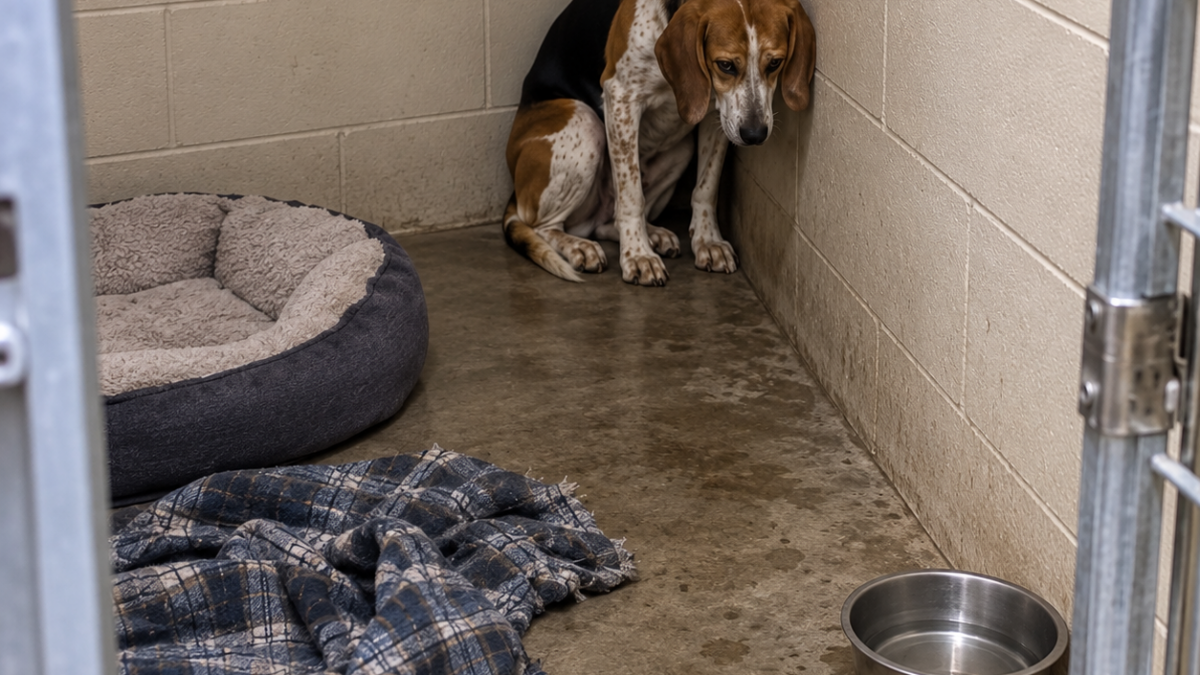
PART 2
My supervisor’s name was Frank Mercer, and he had been running the shelter almost twice as long as I had worked there. Frank wasn’t cruel, and he wasn’t trying to talk me out of Rex because he didn’t like him. If anything, he had probably watched too many good intentions fall apart. He knew what happened when somebody adopted a dog because they felt sorry for him instead of because their life could actually accommodate him.
He took off his glasses and rubbed the bridge of his nose.
“You have Tommy,” he said.
“I know.”
“You work full-time.”
“I know.”
“You live in a house with a yard, but it’s not a farm.”
“I know that too.”
“And Rex is seven years old, Emma. These habits aren’t puppy habits anymore.”
I looked back through the window.
Rex was lying with his nose between his paws.
“Maybe they were never bad habits.”
Frank followed my eyes.
I continued quietly.
“Maybe everybody kept asking him to become a different dog.”
Frank didn’t answer for a while.
Then he put his glasses back on.
“If you do this, do it properly. Foster-to-adopt for thirty days. Behavior plan. Exercise schedule. No pretending love fixes everything.”
“I won’t pretend.”
“And if he struggles?”
“Then we adjust.”
“And if he destroys your couch?”
“I own an ugly couch.”
Frank almost smiled.
“And if he keeps you awake?”
“I raised Tommy through colic.”
That got a real smile.
Finally, Frank reached for the paperwork.
“All right,” he said. “Take your boy home.”
My boy.
Those two words landed harder than I expected.
I signed the foster agreement that afternoon.
Tommy was ten then. His father and I had divorced four years earlier, and although the marriage had ended without the kind of explosions people write movies about, the quiet aftermath had still changed both of us. Tommy lived with me most of the week and spent every other weekend with his dad. He was gentle, observant, and the sort of child who noticed when somebody at school ate lunch alone.
He had met Rex many times at the shelter.
When I called him from work and told him Rex was coming home with us, he was silent for a few seconds.
“For real?”
“For real.”
“Like forever?”
I looked through the glass again.
“If Rex wants us.”
Tommy didn’t understand why I said it that way.
I did.
Everybody had spent years choosing Rex and then deciding against him.
For once, I wanted Rex to have some choice too.
That evening I loaded his bed, food, medication records, bowls, leash, and a cardboard box of toys into the back of my SUV. When I opened his kennel, he stood but didn’t rush toward me.
“Want to go for a ride?”
His ears lifted.
He recognized those words.
For one terrible second, I wondered whether he associated cars with leaving homes rather than finding them.
He walked beside me through the shelter corridor. Every kennel we passed erupted with barking, paws hitting metal doors, noses pushing through gaps.
Rex didn’t react.
He climbed into the back seat and curled tightly against the door.
Halfway home, I glanced in the mirror.
He wasn’t looking out the window.
He was watching me.
Not happily.
Not fearfully.
Just watching.
As though he were trying to learn how long this version of his life would last.
When we pulled into my driveway, Tommy was already standing on the porch.
I lowered the window.
“Don’t run at him,” I called. “Give him space.”
Tommy nodded.
He sat down on the porch steps instead.
Rex climbed out of the SUV and immediately began smelling everything—the driveway, mailbox post, flower bed, porch railing, grass along the fence. His nose came alive before the rest of him did.
Tommy stayed still.
After several minutes, Rex approached him.
“Hey, buddy,” Tommy whispered.
Rex sniffed his shoe.
Then his knee.
Then his hand.
Tommy looked at me but didn’t move.
Finally, Rex stepped away and walked toward the front door.
“He wants to go in,” Tommy said.
“Looks like it.”
I unlocked the door.
Rex entered my house like a guest who expected to be told he had wandered into the wrong place.
He moved from room to room slowly. He sniffed the couch, the kitchen cabinets, the dining table, the hallway, Tommy’s backpack. He paused at every doorway before crossing it.
When he reached my bedroom, he stopped.
There was an old folded blanket beside the bed.
I had placed it there for him.
He smelled it once and backed away.
That night, I learned something about dogs who have been given up repeatedly.
They don’t always celebrate when they arrive somewhere new.
Sometimes they wait for the loss.
Rex wouldn’t settle.
He paced between the living room and front door.
Every time a car passed outside, his head snapped up.
Every time headlights moved across the curtains, he stood.
At ten-thirty, I found him sitting directly in front of the door.
At eleven, he was still there.
At midnight, he was still there.
Tommy had fallen asleep, but I couldn’t.
I sat on the floor about three feet from Rex.
He glanced at me.
“You think somebody’s coming back for you?”
His eyes moved toward the door.
That nearly broke me.
Maybe he was waiting for the family that had returned him.
Maybe some part of him believed they would realize their mistake.
Or maybe he thought I would take him somewhere else in the morning.
I didn’t know.
So I didn’t make promises.
I just sat.
Around one in the morning, Rex shifted closer.
At one-thirty, his shoulder touched my leg.
At some point after that, I fell asleep sitting against the wall.
When I woke before sunrise, there was a warm weight across my knees.
Rex had laid his head in my lap.
I didn’t move for almost twenty minutes because I was afraid to disturb him.
Then his eyes opened.
For the first time since his return, his tail tapped the floor.
Once.
Just once.
But I saw it.
Our first weeks together weren’t some magical transformation.
Rex did not come home and instantly become the perfect dog because he had finally found “love.”
Love mattered.
But structure mattered too.
Understanding mattered.
Work mattered.
At five every morning, I put on my walking shoes and took him out before getting ready for the shelter. We started with two miles. That wasn’t enough. We increased it to three. On my days off, we drove to a nearby trail where he could spend an hour following scents through the woods.
I bought puzzle feeders.
I hid kibble around the yard.
Tommy taught him to find tennis balls by name.
We practiced “place,” “wait,” “leave it,” and recall every day.
And slowly, the dog everybody had described as impossible began to make sense.
He wasn’t trying to dominate anybody.
He wasn’t crazy.
He wasn’t deliberately difficult.
He was a working hound living inside a body designed to move, investigate, follow scent, solve problems, and participate in something.
If we met those needs, he could sleep half the afternoon.
If we didn’t, he invented his own occupation.
Once, that occupation involved removing every cushion from my couch and arranging them in the hallway.
Another time, I came home and discovered three shoes in the backyard.
Not chewed.
Just relocated.
Tommy laughed so hard he had to sit down.
“Maybe he’s organizing.”
“Then he has terrible taste in storage.”
We started laughing more in those months.
That surprised me.
I had adopted Rex because I thought he needed something from me.
I hadn’t considered what we might need from him.
Before Rex, mornings in our house were rushed. Alarm. Coffee. Lunchbox. Backpack. Keys. Drive.
After Rex, morning became something else.
Dark sky.
Cold grass.
The sound of his tags.
Tommy joining us sometimes with his sweatshirt pulled over messy hair.
Rex stopping beside every interesting tree like a detective examining evidence.
We began seeing our neighborhood instead of simply passing through it.
We learned which houses turned their porch lights on earliest.
We learned where rabbits crossed the drainage ditch.
We learned that Mrs. Holly, our seventy-one-year-old neighbor, put seed in her bird feeders at exactly 6:20 every morning.
Mrs. Holly was a widow who lived two houses down. Her husband had died six years earlier, and her children lived out of state. She pretended she preferred being left alone, but she also somehow managed to be outside whenever Tommy came home from school.
The first time she saw Rex sprinting circles around my backyard, she leaned over the fence.
“Good heavens, Emma. Does that animal ever stop?”
“Eventually.”
“When?”
“I’m gathering data.”
She laughed.
Rex trotted to the fence.
Mrs. Holly held out a hand.
He sniffed it.
“Handsome boy.”
His tail wagged.
Then he raced away.
“Where does he get that energy?”
“He came with an unlimited supply.”
She shook her head.
“You’re braver than I am.”
Maybe.
Or maybe I had simply realized something Rex’s other families hadn’t.
You couldn’t ask a river to apologize for moving.
About six weeks after he came home, something happened that showed me how deeply his previous returns had affected him.
I needed groceries, and I decided to leave Rex home alone for forty minutes.
We had been practicing departures.
Five minutes.
Ten minutes.
Fifteen.
He had improved.
I gave him a stuffed food toy, turned on the radio, told him I would be back, and left.
When I returned thirty-eight minutes later, I heard barking before I reached the porch.
Not ordinary barking.
Panic.
I opened the door.
Rex was pacing frantically between the window and entrance. A pillow lay on the floor. There were scratch marks near the doorframe.
When he saw me, he froze.
For one second, neither of us moved.
Then he rushed forward.
He pressed his entire body against my legs.
I crouched.
“I came back.”
He licked my chin.
“I came back, Rex.”
His breathing was rapid.
I sat with him until it slowed.
That evening I called Lena Ortiz, a trainer who volunteered at our shelter.
“I think he expects every departure to be permanent,” I told her.
“Probably,” she said. “Four returns can create patterns. Don’t make leaving dramatic. Don’t make coming home dramatic either. Teach him that departures are boring because reunions are predictable.”
That sentence stayed with me.
Reunions are predictable.
Maybe trust was nothing more complicated than repeated evidence.
I leave.
I return.
You sleep.
I’m still here when you wake.
You make a mistake.
You’re still here tomorrow.
We practiced for months.
Eventually, Rex stopped standing at the door when I left.
Eventually, he learned the sound of my car.
Eventually, I would pull into the driveway and see his face appear in the living room window, ears high, tail moving behind him.
Then he would meet me at the door.
Every single time.
As winter turned into spring, his body changed.
His coat became shinier.
The tension around his eyes softened.
His tail no longer hung low.
Sometimes I caught him asleep on his back in the middle of the living room, legs completely relaxed, belly exposed to the ceiling.
The first time I saw it, I stood there longer than I care to admit.
Dogs don’t need to understand the word “safe.”
Their bodies understand it.
One Saturday morning, I took Rex to a large fenced field outside town where local dog owners sometimes exercised their pets.
The sky was pale blue and the grass still wet with dew.
I unclipped his leash.
Rex looked at me.
“Go.”
He ran.
There was no hesitation.
He stretched into that beautiful, effortless hound stride and crossed the field in seconds. He looped around a row of trees, disappeared briefly behind a low rise, then came racing back.
His ears flew behind him.
His mouth was open.
His eyes were bright.
For a moment, I saw the one-year-old dog I had met six years earlier.
The dog who had believed the world was wonderful.
Rex shot past me.
Then he stopped.
Turned.
Looked directly at me.
And came back.
That mattered more than the running.
Because Rex finally understood that freedom didn’t mean abandonment.
He could leave me and return.
I could leave him and return.
Neither of us had to disappear.
He hit me at full speed.
I toppled backward into the damp grass.
“Rex!”
He climbed halfway on top of me and licked my face.
I started laughing.
“Personal space!”
He sneezed directly on my cheek.
“Oh, perfect.”
Tommy, who had been throwing sticks near the fence, ran over laughing.
“He loves you.”
I wiped my face on my sleeve.
“He has a disgusting way of showing it.”
Rex rolled onto his back between us.
Tommy scratched his chest.
I looked at the two of them in the morning sun and felt something inside me settle.
This was our family now.
Not the family I had pictured when I got married years earlier.
Not the one I thought I was supposed to have.
But ours.
Imperfect.
Noisy.
Sometimes exhausted.
And whole.
Several months later, I ran into one of Rex’s previous adopters.
Her name was Laura. She and her husband had been his third family—the ones who kept him almost a year.
I saw her outside a hardware store.
Rex was with me.
He recognized her before I did.
His entire body stopped.
Laura froze too.
“Oh my God,” she whispered. “Rex.”
He stared.
His tail moved once, uncertainly.
Laura crouched.
“Hi, baby.”
Rex took two careful steps toward her.
She covered her mouth.
He sniffed her hand.
Then he looked back at me.
I stayed where I was.
He looked at Laura again.
She touched his cheek.
“I’m sorry,” she whispered.
Rex leaned into her hand for perhaps two seconds.
Then he walked back to me and stood against my leg.
Laura’s eyes filled.
“He looks good.”
“He is.”
“Is he still… you know?”
“Active?”
She nodded.
“Absolutely.”
A sad smile crossed her face.
“So you fixed him?”
“No.”
She looked confused.
“I stopped trying to.”
I hadn’t meant it cruelly.
But the words landed.
Laura looked at Rex.
“We loved him.”
“I know.”
“We really did.”
“I know that too.”
“My husband’s job changed. I was taking care of my mother. We stopped having time. Rex was climbing the walls. We thought somebody else could give him more.”
I believed her.
Not every surrender is cruelty.
Sometimes people fail animals because they made a poor decision.
Sometimes they fail because their lives change.
Sometimes they love something and still cannot meet its needs.
But from Rex’s side of the kennel door, the reasons probably all felt the same.
Laura stroked his head once more.
“You were right to take him.”
“I didn’t know if I was right.”
“You were.”
She stood.
As she walked away, Rex watched her for a moment.
Then he looked at me.
“Come on, buddy.”
He followed.
He didn’t look back again.
By the time Rex had been with us for a year, his life had become wonderfully ordinary.
That was the victory nobody saw.
Not dramatic rescues.
Not newspaper stories.
Ordinary mornings.
Ordinary dinners.
Ordinary evenings when he slept under the kitchen table while Tommy did homework.
Ordinary Saturdays when we threw a tennis ball until Rex finally collapsed beneath the oak tree, panting happily.
He knew where his water bowl would be.
He knew which cabinet held his treats.
He knew Tommy dropped food more often than I did.
He knew Mrs. Holly carried dog biscuits in the pocket of her gardening apron.
He knew my work shoes meant I was leaving for the shelter.
He knew my sneakers meant he was probably coming with me.
And most importantly, he knew home was not temporary.
Then came the Sunday that changed everything.
It was early October, warm enough for short sleeves but cool enough that the air finally felt clean after summer.
I had the day off.
Tommy finished breakfast and asked if he could ride his bike while Rex and I walked through the meadow trail behind our neighborhood.
The trail wasn’t official. It was an old maintenance path that crossed several open fields before reaching a narrow county road.
We had used it dozens of times.
“Helmet,” I said.
Tommy groaned.
“Mom.”
“Helmet.”
“I know.”
“Then why are we discussing it?”
He rolled his eyes but put it on.
Rex danced by the door as soon as he saw my sneakers.
“Somebody’s ready,” Tommy said.
“Somebody was ready three hours ago.”
We left around nine.
The morning was beautiful.
Rex ran ahead, then doubled back, then ran ahead again.
Tommy pedaled circles around me.
“Race you, Rex!”
“Don’t encourage him.”
Rex accepted the challenge anyway.
Tommy laughed.
For the next twenty minutes, nothing felt important.
No bills.
No shelter paperwork.
No custody schedules.
No returned dogs.
Just my son’s laughter, a hound racing through tall grass, and sunlight falling across a field.
There was a small slope near the far end of the meadow.
Tommy had ridden down it before.
That day he climbed to the top and turned his bike around.
“Mom, watch!”
“Slow down.”
“I’ve done it before.”
“Tommy.”
But he had already pushed off.
At first, everything looked normal.
Then his front wheel struck a stone hidden in the grass.
The handlebars jerked sideways.
The bicycle flipped.
Tommy hit the ground.
His cry traveled across the field.
Every parent knows the difference between a child yelling because something scared them and a child screaming because something is truly wrong.
I knew immediately.
I ran.
By the time I reached him, Tommy was curled partly on his side.
“Mom!”
“I’m here.”
“My leg.”
“Don’t move.”
“It hurts.”
“I know. I know.”
His lower leg had twisted beneath him in a way that told me I should not try to make him stand.
My hands started shaking.
“Look at me, Tommy.”
“I can’t move it.”
“Don’t try.”
“Is it broken?”
“I don’t know.”
That was a lie.
I was almost certain it was.
I reached into my pocket for my phone.
Empty.
Then I remembered.
It was charging on the kitchen counter.
“No.”
Tommy saw my face.
“What?”
“Nothing.”
“Mom?”
“I left my phone.”
He began crying harder.
I looked toward the nearest houses.
They were far enough away that calling might not help.
I yelled anyway.
“HELP!”
Nothing.
Again.
“HELP!”
Only birds lifted from the trees.
I could not carry Tommy that distance safely.
He was ten years old, nearly ninety pounds, and moving him with a possible leg fracture could make things worse.
My mind went blank in the way minds sometimes do when fear becomes too large.
Think.
I needed to think.
I could leave him and run for help.
But that meant leaving my injured child alone in a field.
I could try carrying him.
But what if I caused more damage?
“Mom, don’t leave.”
“I’m not leaving.”
Rex stood several feet away.
He was staring at Tommy.
His body was completely still.
I had almost forgotten he was there.
Then Rex walked closer.
He sniffed Tommy’s shoe.
Tommy cried out when his leg shifted.
Rex backed away immediately.
“It’s okay, buddy,” I said.
Rex looked at me.
I pointed toward home without really thinking.
“Go.”
His ears rose.
“Go home, Rex.”
He stared.
We had practiced recall.
We had practiced stay.
We had practiced finding Tommy in the yard.
But I had never taught him to go get help.
“Go find Holly!”
Mrs. Holly’s name meant something to him because she gave him treats.
“Find Holly, Rex!”
He turned his head toward our neighborhood.
“Go!”
Rex ran.
For a second I watched him, almost relieved.
Then another thought hit me.
What if he just went home?
What if nobody saw him?
What if he reached my porch and waited?
What if he crossed the road?
What if—
Stop.
I forced myself to focus on Tommy.
“You’re okay.”
He gripped my hand.
“Rex left.”
“He went home.”
“Why?”
“To bring somebody.”
“Can he do that?”
I looked toward the distant tree line where Rex had disappeared.
“I hope so.”
What happened next was reconstructed later from Mrs. Holly’s account.
Rex covered the distance from that field to our street faster than I would have thought possible.
Mrs. Holly was watering the chrysanthemums beside her porch when she heard barking.
She knew Rex’s bark.
This wasn’t his usual excited noise.
It came in sharp, frantic bursts.
When she looked toward the sidewalk, Rex was standing at the end of her driveway.
No Emma.
No Tommy.
No leash.
“Rex?”
He barked.
Then ran several yards toward the meadow.
Stopped.
Looked back.
Ran to her again.
“What’s wrong?”
Rex barked and jumped sideways.
Mrs. Holly later told me the strangest part was his eyes.
“He wasn’t asking for a biscuit,” she said. “That dog was telling me to move.”
She went inside for her phone.
Rex followed her to the door, then spun and ran toward the field again.
Mrs. Holly stepped off the porch.
“Show me.”
Rex ran.
She followed as quickly as she could.
When she slowed, he came back.
When she started moving, he ran ahead.
Twice.
Three times.
Like he was making sure she hadn’t changed her mind.
Back in the field, Tommy’s face had gone pale.
I kept talking because silence frightened both of us.
“You remember when you were six and put the Lego in your nose?”
He grimaced.
“That’s not funny.”
“It is now.”
“You took me to urgent care.”
“Exactly. And you survived.”
“My leg hurts more than the Lego.”
“Yes, I would imagine so.”
He squeezed my fingers.
“Mom?”
“Yeah?”
“What if Rex doesn’t come back?”
The question cut through me.
“He’ll come back.”
“How do you know?”
Because reunions are predictable.
I swallowed.
“Because he knows where home is.”
Almost fifteen minutes passed.
They felt like an hour.
Then I heard barking.
I turned.
Rex appeared over the rise.
Mrs. Holly was behind him, moving as quickly as her knees allowed, phone pressed to her ear.
I started crying before she reached us.
“Oh, thank God.”
Rex came straight to Tommy.
He stopped near his shoulder and whined.
Mrs. Holly knelt beside me.
“Ambulance is coming.”
I grabbed her hand.
“Thank you.”
“Thank him.”
Rex stood over Tommy like he had appointed himself responsible for the entire emergency.
Seven minutes later, we heard sirens.
The paramedics stabilized Tommy’s leg and transferred him onto a stretcher.
One of them looked at Rex.
“That the dog that got help?”
Mrs. Holly nodded.
“Ran all the way to my house.”
The paramedic smiled.
“Good boy.”
Rex didn’t care about the compliment.
He kept watching Tommy.
When they lifted the stretcher, Rex tried to follow.
“It’s okay,” I said.
He pulled toward the ambulance.
“Rex, stay.”
He whined.
Tommy reached one hand over the side.
“Mom, bring him.”
“I will.”
“Promise?”
“I promise.”
The ambulance doors closed.
For one instant, Rex stood staring at them.
Then he looked at me.
His tail was low.
I knelt and put both arms around his neck.
“You did it.”
He pressed his head against my shoulder.
“You did it, buddy.”
Mrs. Holly touched my back.
I was crying too hard to care who saw.
At the hospital, X-rays showed that Tommy had fractured his tibia. It was painful, but the doctors expected a full recovery.
When the orthopedic specialist finally said the words “He’s going to be fine,” my knees almost stopped working.
Tommy looked at me from the hospital bed.
“Where’s Rex?”
“With Mrs. Holly.”
“I want him.”
“I know.”
“He saved me.”
“He did.”
Tommy shook his head.
“No. I mean really.”
I sat beside him.
“I know.”
The story might have ended there.
In many ways, I wish it had.
A boy gets hurt.
A dog runs for help.
The boy recovers.
Everyone goes home.
But stories don’t always end where you expect them to, especially once other people become involved.
Mrs. Holly told one of the paramedics what Rex had done.
The paramedic told somebody at the station.
A firefighter who knew one of our shelter volunteers mentioned it online.
By the next morning, half the county seemed to know about Rex.
The headline in the local paper appeared two days later:
RETURNED FOUR TIMES, RESCUE DOG RUNS FOR HELP AFTER BOY’S ACCIDENT.
I stood in the hospital room reading the article on my phone.
Tommy grinned.
“Rex is famous.”
“Apparently.”
“Can famous dogs get steak?”
“No.”
“That seems unfair.”
The article described Rex’s adoption history, though we had not given the names of any previous adopters. Frank had confirmed only that Rex had been returned four times and that I had adopted him after his final surrender.
Most comments were kind.
Some people shared stories about difficult dogs they had learned to understand.
Some offered donations to the shelter.
Some asked if Rex could visit schools.
Then I saw one comment that made my stomach tighten.
The account belonged to a man named Mark Dalton.
Rex’s fourth adopter.
He wrote:
“People should know there are two sides. That dog was extremely difficult and destructive. We were told he would calm down and he never did. Good for him for helping, but don’t attack families who had legitimate reasons for returning him.”
I stared at the screen.
Nobody had named Mark.
Nobody had attacked him.
But he had identified himself.
Within an hour, people began replying.
Some were angry.
I closed the comments.
I didn’t want a mob.
I didn’t want revenge through strangers.
And most of all, I didn’t want Rex turned into a weapon.
Then Mark posted again.
This time he claimed the shelter had minimized Rex’s behavioral problems during adoption.
That bothered me because it wasn’t true.
I had personally conducted the adoption counseling.
We had explained his exercise needs.
We had documented his history.
We had recommended a trainer.
The Daltons had signed every page.
Still, I said nothing publicly.
Frank called me into his office when I returned to work.
“You saw it?”
“Yes.”
“Want me to respond?”
“No.”
He raised an eyebrow.
“We have records.”
“I know.”
“He’s accusing the shelter of misleading him.”
“I know.”
“So why let it stand?”
“Because if we turn this into a fight, Rex stops being a dog who saved Tommy and becomes ammunition.”
Frank leaned back.
“You’re calmer than I would be.”
“I’m not calm.”
That was the truth.
I was furious.
Not because Mark had returned Rex.
People are allowed to realize they are not the right home for an animal.
I was furious because once Rex’s story made Mark uncomfortable, he tried to make the dog responsible again.
Too destructive.
Too active.
Too difficult.
Too much.
Always Rex.
Never the people who had chosen a high-energy hound and expected him to spend ten hours a day waiting quietly inside a house.
Frank tapped a folder.
“There’s something you should see.”
He opened Rex’s surrender record.
I had read it before.
But attached to it were intake notes from the week before his return that I had never seen.
One of our staff members had spoken with Mark’s wife by phone.
She had admitted Rex was being left crated for long workdays because both adults’ schedules had changed.
Ten hours.
Sometimes eleven.
When released, he became frantic with energy.
He ran circles.
Jumped.
Whined.
Grabbed household objects.
They called that proof he was impossible.
Lena had offered them a behavior consultation.
They declined.
We had offered dog-walker resources.
They declined.
We had recommended daycare twice a week.
They declined.
Then they brought him back.
I looked at Frank.
“This was in the file?”
“Everything.”
“And now he’s saying we didn’t warn him.”
“Exactly.”
My anger sharpened.
“So correct the record.”
Frank studied me.
“You sure?”
“Yes. Facts only. No names beyond what he already made public. No shaming. Just facts.”
Frank nodded.
That afternoon the shelter posted a short statement explaining that all adopters of high-energy dogs received behavior disclosure forms, exercise recommendations, and post-adoption support, and that Rex’s previous household had been offered additional training and enrichment resources before surrender.
We attached blank copies of the forms.
No insults.
No accusations.
No argument.
Just documentation.
Mark deleted his comments by evening.
I thought that was the end of it.
It wasn’t.
Two weeks later, while Tommy was home with his leg in a cast and Rex had taken up permanent guard duty beside the couch, Mark walked into the shelter.
I was helping a woman meet a senior beagle when I saw him through the glass.
He recognized me immediately.
“Emma.”
I handed the beagle’s leash to another staff member.
“Mark.”
He shoved his hands into his jacket pockets.
“I want to talk to you.”
“All right.”
“Privately.”
We went into the consultation room.
He sat.
I remained standing.
“I didn’t appreciate that statement.”
“The statement didn’t name you.”
“Everybody knew.”
“Because you identified yourself.”
His jaw tightened.
“You made us look irresponsible.”
“No, Mark. The records described the support we offered. People can decide what they think.”
He looked away.
For a moment, I expected another argument.
Instead, he asked, “Is Rex really doing that well?”
The anger drained from his voice.
“Yes.”
“He doesn’t tear up your house?”
“He once moved my shoes into the yard.”
Mark almost smiled.
“You know what I mean.”
“I do.”
I sat across from him.
“He gets three to five miles of activity most days. He does scent games. He gets structured training. I don’t leave him crated for ten hours.”
Mark’s face changed.
“My job changed.”
“I know.”
“We were drowning.”
“I know.”
“My wife was working too. We didn’t know what else to do.”
“You called us.”
“Yeah.”
“We offered options.”
He stared at the table.
“I thought they were too much.”
There it was again.
Too much.
But this time he wasn’t talking about Rex.
He was talking about the work required.
I said nothing.
Mark rubbed his hands together.
“I saw the video.”
“What video?”
“Mrs. Holly’s daughter put up a clip of Rex at your house. Tommy was on the porch with the cast. Rex wouldn’t leave him.”
I nodded.
“He sleeps outside Tommy’s room now.”
Mark swallowed.
“I didn’t think he could do something like that.”
I felt my anger return, but quieter this time.
“He was always capable of it.”
Mark looked up.
“We just never saw it.”
“No.”
A long silence followed.
Finally, he said, “I came because my daughter keeps asking if we can get another dog.”
My entire body went still.
Mark noticed.
“Not Rex.”
“That’s good, because Rex isn’t available.”
“I know.”
“He’s my family.”
“I know.”
Mark shifted.
“She wants something calmer.”
I chose my words carefully.
“Then you need to be honest about your household before you adopt again. Not about the dog you imagine. About the life you actually have.”
He frowned.
“I came here expecting you to say no.”
“I might.”
His head lifted.
“This isn’t punishment.”
“It feels like it.”
“Mark, I’m responsible for putting animals into homes where they can succeed. Your history matters. So does the fact that your schedule changed. If your house is empty eleven hours a day, we need to consider that.”
“So I’m blacklisted because Rex didn’t work?”
“No. But you don’t get to erase what happened because it makes you uncomfortable.”
That sentence sat between us.
His face reddened.
For a second, I thought he would stand and leave.
Instead, he exhaled.
“What would you recommend?”
That surprised me.
“A senior dog, maybe. Lower energy. Independent. Or wait until your schedule changes.”
“My daughter won’t like waiting.”
“Sometimes loving an animal means knowing you aren’t ready for one.”
Mark looked toward the door.
Then he gave a small, humorless laugh.
“Wish somebody had made me understand that seven years ago.”
“I tried.”
He met my eyes.
“I know.”
That was the first apology I got from anyone connected to Rex’s returns.
It wasn’t dramatic.
No shouting.
No public humiliation.
But when Mark walked out without adopting another dog that day, I felt something settle inside me.
For years, Rex had paid the price for human expectations.
This time, a human had been asked to change.
That felt like justice.
Tommy’s recovery took several months.
For the first two weeks, he needed help with almost everything.
Rex seemed to understand.
He stopped jumping near him.
Nobody taught him that.
He simply changed.
When Tommy moved from crutches to one crutch, Rex shortened his stride beside him.
When Tommy sat on the porch, Rex lay at his feet.
When friends visited, Rex positioned himself between Tommy’s injured leg and whatever chaos entered the room.
“He’s my bodyguard,” Tommy said.
“He’s unemployed.”
“He has a job.”
“What’s his salary?”
“Treats.”
“Then he’s overpaid.”
Tommy threw a pillow at me.
Rex immediately grabbed the pillow and carried it away.
“See?” I said. “Criminal.”
Tommy laughed so hard he almost dropped his crutch.
Those months changed their relationship.
Before the accident, Tommy loved Rex.
Afterward, he trusted him.
There is a difference.
Love can be loud.
Trust is quieter.
Trust is a boy resting one hand on a dog’s back while learning to walk normally again.
Trust is a dog slowing down because the person beside him cannot run yet.
Trust is knowing somebody will notice when you hurt.
The county fire and rescue department invited Rex to a small recognition ceremony in December.
I almost declined.
Rex didn’t understand awards.
He understood cheese.
But Tommy begged me.
“Please, Mom.”
So we went.
The station was decorated for Christmas. A wreath hung on the engine bay door. Folding chairs were set up near the trucks. There were firefighters, paramedics, shelter employees, neighbors, and a reporter from the local paper.
Mrs. Holly sat in the front row.
Tommy, finally out of the cast but still favoring one leg slightly, stood beside Rex.
A captain named David Greene told the story.
He described how Rex had run from the field, found Mrs. Holly, led her back, and stayed with Tommy until help arrived.
Then he crouched and placed a small ceremonial tag on Rex’s collar.
Rex immediately tried to smell it.
Everyone laughed.
The captain scratched his ears.
“Rex, your persistence and loyalty made a difference when every minute mattered.”
My throat tightened at the word persistence.
That was the trait people had complained about.
He doesn’t stop.
He keeps going.
He always wants something.
He won’t settle.
Persistence.
Suddenly it sounded different.
The reporter asked if I wanted to say anything.
I didn’t.
Then I looked at Tommy.
At Mrs. Holly.
At Rex.
And I stepped forward.
“I work at the shelter,” I began, “so I’ve heard the word ‘difficult’ used about animals a lot.”
The room became quiet.
“Sometimes it’s accurate. Some animals have serious behavioral needs. Some require experienced homes. Some matches simply don’t work, and returning an animal can be more responsible than keeping one in a situation where everyone is failing.”
I looked down at Rex.
“But sometimes ‘difficult’ means inconvenient. Sometimes it means energetic. Sometimes it means frightened. Sometimes it means an animal’s needs don’t match the life we expected to live.”
Rex sat beside Tommy.
“When Rex came back for the fourth time, he stopped looking at people. He sat in the corner of his kennel, and for nearly two weeks I watched him decide whether trusting anyone was worth the risk.”
I had to stop for a second.
Nobody moved.
“People kept saying Rex was too much. Too active. Too persistent. Too demanding. But when my son was lying injured in a field, those exact qualities became the reason Rex didn’t stop. He ran. He insisted. He barked. He came back for Mrs. Holly when she couldn’t keep up. He refused to quit until she followed him.”
Tommy put his hand on Rex’s head.
“So I don’t think Rex became a hero that day. I think he was always Rex. We just finally found ourselves in a situation where the world needed exactly the dog he had always been.”
The room stayed silent for one heartbeat.
Then Mrs. Holly began clapping.
Everyone followed.
I looked down because I didn’t want the reporter photographing me crying.
Rex ruined that plan by standing and pressing his nose against my hand.
The article ran the next morning.
They used one sentence from my speech as the headline:
THE WORLD FINALLY NEEDED EXACTLY THE DOG HE HAD ALWAYS BEEN.
That article traveled farther than the first.
Donations arrived at the shelter.
One came with a note that read:
“For the next Rex.”
Another:
“For every dog somebody called too much.”
A local running club volunteered to exercise high-energy shelter dogs twice a week.
A trainer offered free monthly workshops for adopters.
A college student started a weekend enrichment group.
Within three months, our shelter had created a program specifically for dogs like Rex—animals whose energy or behavior made them harder to place but who did not belong behind kennel doors indefinitely.
We called it the Second Look Program.
Frank suggested naming it after Rex.
I refused.
“Why?”
“Because then everyone will think this happened because Rex was exceptional.”
“He is exceptional.”
“He is. But that’s not the point.”
“What is?”
“The point is that we don’t know which dog is exceptional until somebody gives them enough time to show us.”
Frank stared at me.
“Fine. Second Look.”
Still, somebody hung a framed photograph of Rex near the training room.
I pretended not to notice.
One afternoon, about four months after the accident, a woman walked into the shelter.
I recognized her immediately.
Laura.
Rex’s third adopter.
She carried a paper bag.
“Is Emma here?”
I stepped forward.
“Hi.”
She looked nervous.
“I saw the article.”
“I figured.”
“I saw the ceremony online too.”
I nodded.
She held out the bag.
Inside was a new red leash and a stuffed fox.
“For Rex.”
“You didn’t have to do this.”
“I know.”
Her eyes filled.
“I need to tell you something.”
We went outside.
She sat on the bench near the adoption garden.
“I haven’t stopped thinking about him.”
I sat beside her.
“When we returned him, I told myself it was best for him. Maybe part of that was true. But part of it was also because I wanted to stop feeling guilty.”
I listened.
“He loved us. That’s the part that hurts.”
“I know.”
“He loved us right up until we handed you the leash.”
My chest tightened.
Laura wiped her cheek.
“When I read that he ran for help, I kept thinking, of course he did. That was always Rex. If somebody cried, he came into the room. If my mother dropped something, he was there. If my husband worked in the garage, Rex followed him back and forth for hours.”
She laughed through tears.
“We called him annoying.”
“He liked being involved.”
“He wanted a family.”
“Yes.”
Laura stared at her hands.
“Did we ruin him?”
I thought about the corner of that kennel.
The lowered head.
The dog who wouldn’t look at me.
“You hurt him.”
She closed her eyes.
I continued before the words became unnecessarily cruel.
“But he healed.”
She nodded slowly.
“I’m glad you didn’t tell me I was a good person for giving him up.”
I looked at her.
“I don’t think this needs to be about good people and bad people.”
“What should it be about?”
“Learning.”
She let out a breath.
“I’m sorry, Emma.”
“You don’t owe me the apology.”
“I know.”
A week later, I brought Rex by the shelter on my day off because Frank wanted to test a new fenced exercise area.
Laura happened to be volunteering.
She had started coming every Saturday.
When she saw Rex, she froze.
Rex saw her.
His tail moved.
Laura crouched.
He walked toward her.
She didn’t call him.
Didn’t reach.
She waited.
Rex smelled her shoes.
Then her hands.
Finally, he leaned his chest against her knees.
Laura began crying.
“I’m sorry, baby.”
Rex licked her chin.
Then he grabbed the stuffed fox she had brought him and ran across the yard with it.
Laura laughed.
I did too.
Forgiveness is a human word.
I don’t know whether dogs forgive in the way we do.
But Rex didn’t seem interested in carrying resentment.
He had wasted enough time being sad.
By spring, Tommy could run again.
His first full day without restrictions happened on a Saturday.
We returned to the meadow.
That had been Tommy’s idea.
I wasn’t sure I wanted to go.
The last time I had stood in that field, I had been screaming for help.
But Tommy was determined.
“I don’t want that place to be the place where I broke my leg forever.”
That sounded wiser than anything I would have said at ten.
So we went.
No bicycle this time.
Just us.
Tommy walked up the little hill.
I felt my stomach tighten.
He noticed.
“I’m not doing anything.”
“I know.”
“You look like you’re going to arrest the hill.”
“I’m considering it.”
Rex ran circles around us.
Tommy reached the top.
He stood there with the wind moving his hair.
Then he shouted, “Rex!”
Rex looked up.
Tommy ran down.
Slowly at first.
Then faster.
Rex raced toward him.
They met halfway.
Tommy dropped to his knees.
Rex nearly knocked him over.
I laughed.
Then cried.
I was getting very good at doing both at once.
Later we sat beneath an oak tree.
Tommy leaned against me.
Rex stretched across our feet.
“Mom?”
“Yeah?”
“Do you think Rex knew I needed help?”
“Yes.”
“How?”
“I don’t know.”
“Do you think he remembered Mrs. Holly?”
“Probably.”
Tommy scratched Rex’s ear.
“What if you hadn’t adopted him?”
I looked across the meadow.
That question had visited me many times in the dark.
What if?
What if Rex had still been in the shelter?
What if somebody else had adopted him?
What if the fourth family had kept him?
What if I had listened to Frank’s warning and decided my life was already too complicated?
I didn’t like any of those versions.
But I also knew something dangerous can happen when we look backward after a crisis.
We start believing every painful thing had to happen so the good thing could happen.
I didn’t believe Rex needed to be abandoned four times in order to save Tommy.
He didn’t deserve those losses.
Tommy didn’t need a broken leg to prove Rex mattered.
Pain isn’t valuable simply because we later make meaning from it.
So I answered carefully.
“I don’t know what would have happened.”
Tommy frowned.
“That’s not a good answer.”
“It’s the true one.”
He thought.
Then he nodded.
“I’m glad you did.”
“Me too.”
Rex rolled onto his back.
Tommy rubbed his stomach.
“So is he.”
That summer brought another test.
Our county shelter was facing budget cuts.
Nothing dramatic at first.
A few positions frozen.
Reduced training funds.
Less money for enrichment.
Then county administrators proposed eliminating our behavior support contract entirely.
Frank was furious.
“That program is the reason dogs stay adopted.”
But numbers on spreadsheets don’t wag their tails.
At the public budget meeting, an administrator argued that behavior services were “nonessential.”
I sat in the back row listening.
I thought about Rex.
I thought about the calls with Mark’s family before they surrendered him.
We had offered help.
They had declined, but many people accepted.
Without that support, more dogs would come back.
More kennel doors would close.
More animals would learn that homes were temporary.
When public comment opened, I stood.
I hadn’t planned to speak.
Apparently that was becoming a habit.
“My name is Emma Carter. I’ve worked at the county shelter for eight years.”
The board members looked down from their raised desk.
“You’re considering behavior support nonessential because it doesn’t look like food, vaccines, or emergency medicine. But keeping animals in homes is part of animal welfare too.”
I described our return numbers.
I described the Second Look Program.
Then I described Rex.
Not the heroic version first.
The broken version.
The dog facing the kennel wall.
“Every time an adoption fails, it costs this county money. Kennel space. Staff hours. Medical checks. Food. Reprocessing. But it costs the animal something too, and that part never appears in your budget.”
One board member interrupted.
“Ms. Carter, are you suggesting every return is preventable?”
“No. I’m saying some are.”
I held up Rex’s old support record.
“This dog was returned four times. He was called too active. Too persistent. Too demanding. Last year, those same traits helped him find assistance for my injured son.”
The room shifted.
People knew the story.
The board member leaned toward his microphone.
“That’s your dog?”
“Yes.”
Someone behind me whispered.
I continued.
“I’m not asking you to fund a sentimental story. I’m asking you to fund practices that reduce failed placements. Counseling. Follow-up. Training partnerships. Exercise programs. Those things are cheaper than cycling the same dogs through our facility over and over.”
That was the argument that mattered.
Not emotion.
Evidence.
Cost.
Outcomes.
The behavior support funding survived.
Barely.
Afterward, Frank caught me in the hallway.
“You realize you just turned Rex into a budget argument.”
“He’d be offended.”
“He’d demand royalties.”
“In cheese.”
“Obviously.”
A man standing nearby laughed.
I turned.
It was Mark Dalton.
I hadn’t seen him enter.
He approached us.
“I came to speak too.”
I looked at him.
“For what?”
He looked uncomfortable.
“To support the program.”
Frank and I exchanged a glance.
Mark noticed.
“I know how that sounds.”
“A little surprising,” I admitted.
He nodded.
“I was going to say something about how the shelter offered us help before we returned Rex.”
That stopped me.
“You didn’t have to.”
“Yeah,” he said. “I did.”
The meeting had ended, but several board members remained.
Mark went back inside.
I stood near the doorway as he approached the microphone.
“My name is Mark Dalton. My family adopted Rex several years ago.”
People recognized the name of the dog immediately.
Mark continued.
“When we returned him, I blamed the shelter. Publicly, later on. That wasn’t fair.”
He paused.
“The staff warned us he needed activity. They offered training. They suggested ways to manage his energy. Our schedule had changed, and honestly, I didn’t want to rearrange my life around a dog.”
He swallowed.
“So we returned him and called him difficult.”
I had not expected this.
“Behavior support doesn’t guarantee people will listen. I didn’t. But the fact that it was offered matters. Maybe the next family will listen sooner than I did.”
He stepped away.
That was all.
No dramatic apology.
No redemption speech.
But I saw one of the board members write something down.
Outside, I caught up with him.
“Mark.”
He turned.
“Thank you.”
He shrugged.
“It was true.”
Sometimes justice looks disappointingly quiet.
No villain is destroyed.
No one is dragged away.
There is no triumphant music.
Sometimes the person who blamed your dog simply stands at a microphone and admits the dog was never the whole problem.
And somehow, that can be enough.
Rex turned eight that year.
Tommy insisted on a birthday party.
I informed him that dogs do not need birthday parties.
Tommy informed me that I had become “emotionally boring.”
Mrs. Holly brought homemade dog biscuits.
Frank came with a tennis ball launcher.
Lena brought a puzzle toy that Rex solved in eleven minutes.
Laura came too.
So did Mark.
That part had been Tommy’s idea.
I had questioned it.
“Why Mark?”
“Because Rex doesn’t hate him.”
“I know.”
“So why should we?”
I looked at my son.
“Who raised you?”
“You.”
“Apparently I overdid it.”
Mark came alone.
He brought a plain bag of treats.
When he entered the backyard, Rex noticed him.
For a second Mark stood awkwardly near the gate.
Then Rex trotted over.
Mark crouched.
“Hey, trouble.”
Rex sniffed him.
Mark scratched his neck.
“You look good.”
Rex’s tail wagged.
Then he stole the treat bag from Mark’s hand.
Tommy screamed with laughter.
I crossed my arms.
“Still difficult.”
Mark laughed.
“Yeah.”
He watched Rex run across the yard with the bag.
“Still too much.”
I looked at him.
Mark shook his head.
“No. Just enough.”
That evening, after everyone left, I found Rex sleeping beneath the kitchen table.
His paws twitched in a dream.
Tommy sat across from me doing homework.
“Mom?”
“Hmm?”
“Are you going to keep working at the shelter forever?”
“Probably not forever.”
“When I’m older, I want to work there.”
“You want my salary?”
“What’s wrong with your salary?”
“Continue being ten.”
He smiled.
“I could train dogs.”
“You’d be good at it.”
“Especially dogs people return.”
I looked down at Rex.
“Those dogs need somebody.”
Tommy nodded.
“Rex had you.”
“No.”
He looked confused.
I reached beneath the table and touched Rex’s paw.
“Eventually, Rex had us.”
Years passed.
That sentence became more important with time.
At nine, Rex still ran like he had forgotten he was getting older.
At ten, he slowed slightly.
Not much.
Just enough that I noticed.
His face became whiter around the muzzle.
He slept deeper.
He no longer required five miles every day, although he remained insulted if I tried to shorten his walks too much.
Tommy grew taller.
By thirteen, he was the one holding Rex’s leash most mornings.
By fourteen, he could outrun me easily.
Rex could still outrun both of us when sufficiently motivated by a squirrel.
The dog once labeled too energetic slowly became an old dog.
There was something beautiful and painful about that.
People spend years wishing energetic dogs would calm down.
Then one day they do.
And you would give anything to watch them race through the house one more time.
When Rex was eleven, he developed arthritis in his hips.
Nothing catastrophic.
Just age.
The veterinarian recommended supplements, weight management, shorter but more frequent exercise.
I nodded as though these were ordinary instructions.
Then I cried in my car.
Rex sat in the back seat looking confused.
“I know,” I told him. “Pathetic.”
He put his head between the front seats.
“I’m allowed to be sad.”
He licked my ear.
“Boundaries.”
His tail thumped.
We adjusted.
Of course we did.
That was the promise I had made years earlier.
Not that nothing would become difficult.
That difficulty would not become abandonment.
When Rex couldn’t manage long trails anymore, we took shorter walks.
When stairs became uncomfortable, Tommy and I built a ramp beside the porch.
When he began slipping on the hardwood floors, I covered our hallway in cheap rugs.
My house looked ridiculous.
I didn’t care.
One afternoon, Laura visited.
She had continued volunteering at the shelter for years.
She sat on the porch beside Rex.
“He’s old.”
“Don’t say that where he can hear you.”
She smiled.
“He was two when we adopted him.”
“I remember.”
“I used to wish he would slow down.”
Her smile faded.
“I feel terrible about that now.”
“Don’t.”
“I do.”
“Laura.”
She looked at me.
“You can spend the rest of his life punishing yourself for the part you got wrong, or you can spend it being grateful that you came back into his life.”
She looked at Rex.
He was asleep against her shoe.
“Does he remember everything?”
“I don’t know.”
“I hope not.”
I thought about that.
“Maybe remembering isn’t always the same as hurting.”
She looked at me.
Rex sighed in his sleep.
That night, I realized the same might be true for people.
We remember.
But if we are lucky, eventually the memory stops being the place where we live.
The shelter changed because of Rex too.
Not because we turned his story into some sentimental legend.
Because we changed practical things.
We improved adoption counseling.
We began matching dogs based less on appearance and more on lifestyle.
People who wanted young working breeds had to talk honestly about time, exercise, training, and confinement.
We created trial periods.
We called adopters after forty-eight hours, two weeks, and six weeks.
We built a list of volunteer dog walkers for families facing temporary crises.
We stopped treating every return as proof that somebody was evil, but we also stopped automatically treating every explanation as unavoidable.
Sometimes surrender was necessary.
Sometimes support could prevent it.
Sometimes the kindest answer was not adoption.
That became one of the hardest things I had to tell people.
A young couple once came in asking for a husky.
They both worked twelve-hour shifts.
They lived in a one-bedroom apartment.
They wanted a puppy because “it would grow with them.”
Years earlier, I might have processed the adoption and hoped.
Instead, I asked questions.
They became defensive.
“We’ve had dogs before.”
“What kind?”
“A pug.”
I almost heard Rex laughing somewhere in the building.
We talked for nearly an hour.
They left without the husky.
Two weeks later, they returned and adopted a six-year-old mixed-breed dog who preferred naps to marathons.
Six months later they sent us a Christmas photo.
The dog was wearing pajamas.
Frank taped the photo beside Rex’s.
“That,” he said, “is your revenge.”
“What?”
“Every time somebody chooses the dog they can actually care for instead of the dog they imagined, Rex wins.”
I looked at the photograph.
“Don’t make it weird.”
“I’m serious.”
“So am I.”
But I understood what he meant.
The best revenge against everything Rex had endured was not hurting the people who had failed him.
It was making fewer dogs endure the same thing.
Tommy was fifteen when his school assigned a speech about “an event that changed your life.”
He wrote about the accident.
I didn’t know until he asked whether he could use a picture of Rex.
On presentation day, parents were allowed to attend.
I sat in the back of the classroom.
Tommy stood at the front.
He had become tall, almost as tall as me, with the same serious expression he had worn as a little boy whenever he was thinking hard.
A picture of Rex appeared behind him.
Young Rex.
Bright eyes.
Long legs.
“The event I chose happened when I was ten,” Tommy began. “I crashed my bike in a field and broke my leg.”
A few students looked at the photo.
“My mom didn’t have her phone. Our dog Rex ran home and brought our neighbor back.”
He described the rescue.
Then he surprised me.
“People call Rex a hero because of what he did that day. But that isn’t really why the story changed me.”
He looked toward me.
“Before my mom adopted Rex, four families had returned him. They said he had too much energy. He needed too much attention. He was too much work.”
The room was silent.
“The thing I learned is that sometimes we decide something is wrong because it asks more from us than we planned to give.”
I felt tears gathering already.
Tommy continued.
“Rex didn’t become valuable because he saved me. He was valuable before that. If he had never saved anyone, he still deserved a home where people understood him.”
I lowered my head.
The teenager beside me handed me a tissue.
“Thanks,” I whispered.
Tommy finished.
“I don’t think everybody should keep every dog no matter what. Sometimes the match is wrong. But if you choose responsibility for something living, you should at least try to understand what it needs before deciding the problem is what it is.”
He changed the slide.
The final picture showed Rex asleep on our couch.
“My dog taught me that being difficult to understand doesn’t make you impossible to love.”
I lost whatever battle I had been fighting with my tears.
After class, Tommy found me in the hallway.
“You cried.”
“You manipulated me with a dog.”
“You cry at commercials.”
“False.”
“Mom.”
“Occasionally.”
We walked to the parking lot.
Rex was waiting at home.
He was twelve now.
His hearing wasn’t as good.
His hips were stiff in cold weather.
But when Tommy entered the house, Rex still stood.
Slowly.
Carefully.
His tail began moving.
Tommy knelt.
“Hey, hero.”
Rex pressed his forehead against Tommy’s chest.
I stood in the doorway.
I remembered the shelter kennel.
The corner.
The lowered head.
I remembered thinking Rex had stopped believing anyone would stay.
Twelve years old, and he no longer watched doors.
He no longer panicked when we left.
He slept through departures because he knew the ending.
We came home.
Always.
The following winter was hard on him.
His arthritis progressed.
There were good days and difficult days.
We worked with his veterinarian.
Medication helped.
Rugs helped.
Warm beds helped.
Tommy carried him up the porch steps when necessary, although Rex hated the indignity.
“Stop glaring at me,” Tommy would say.
Rex glared.
“You weigh seventy pounds.”
Rex continued glaring.
“You think I enjoy this?”
Tail thump.
“Ungrateful.”
I would watch them and smile.
Then one morning in March, something extraordinary happened.
Not dramatic.
Not heroic.
Just extraordinary to me.
Snow had fallen overnight.
Only two inches.
Enough to cover the yard.
Rex had always loved snow.
When he was younger, he would race through it with his nose down, throwing powder behind him.
That morning, I opened the door.
He stepped onto the porch.
Stopped.
Smelled the air.
Then walked carefully down the ramp.
Tommy stood beside me.
Rex reached the yard.
For several seconds he simply stood there.
Then he bounced.
One clumsy, old-dog bounce.
Tommy laughed.
Rex bounced again.
Then he ran.
Not fast.
Not far.
Maybe twenty yards.
But he ran.
His ears lifted.
His tail rose.
For those few seconds, age disappeared.
There was the one-year-old foxhound again.
The dog who loved everything.
The dog who had once been returned because his joy exhausted people.
Tommy pulled out his phone but lowered it before recording.
“No,” he said.
“What?”
“I just want to watch.”
So we did.
Rex ran through the snow.
And for once, nobody asked him to calm down.
Nobody asked him to stop.
Nobody told him he was too much.
We just watched him be Rex.
That spring, the county shelter celebrated the fifth anniversary of the Second Look Program.
Frank had retired, but he returned for the event.
Laura was now one of our most dependable volunteers.
Mark and his family had eventually adopted a ten-year-old basset hound named Walter.
Walter reportedly slept approximately twenty hours a day.
“Perfect match,” Mark told me.
His daughter adored him.
Mrs. Holly was eighty by then and still kept treats in her pocket.
Tommy volunteered at the shelter after school.
And Rex, white-faced and slow, attended as honorary guest.
A reporter who remembered the original rescue asked for a photograph.
We gathered near the exercise yard.
Rex sat beside me.
Tommy knelt on one side.
Mrs. Holly stood on the other.
Laura and Frank were behind us.
Mark stayed farther back until Tommy waved him in.
“Come on.”
Mark hesitated.
Then joined us.
The photographer raised his camera.
Just before the picture was taken, Rex stood and tried to wander away.
Everyone laughed.
“Still doesn’t cooperate,” Frank said.
I reached for the leash.
Rex looked at me.
His old brown eyes were cloudy now, but the expression was unmistakable.
Mischief.
There you are.
I crouched.
“Do whatever you want.”
He walked toward Tommy.
Sat on Tommy’s foot.
The camera clicked.
That photograph still hangs in the shelter.
Beneath it is a small plaque.
I didn’t write the words.
Tommy did.
It says:
A GOOD MATCH DOESN’T ASK AN ANIMAL TO BECOME SOMETHING ELSE. IT MAKES ROOM FOR WHO THEY ALREADY ARE.
Rex lived long enough to see Tommy turn sixteen.
He lived long enough to watch him get his learner’s permit.
Long enough to bark suspiciously at Tommy’s first girlfriend.
Long enough to steal one hamburger at a Fourth of July cookout and deny everything despite overwhelming evidence.
Long enough to become completely certain that our house belonged to him.
And then, eventually, the day came that I had spent years pretending would never come.
It was late summer.
Rex stopped eating breakfast.
For any other dog, that might not have terrified me.
For Rex, food refusal was practically a medical emergency.
I called our veterinarian.
Tests showed changes we could not fix.
His body was tired.
More tired than his heart wanted to admit.
We had options for comfort, but not for time.
I drove home with one hand on the steering wheel and the other resting on Rex’s back whenever we stopped at a light.
I cried the entire way.
Rex looked out the window.
He had never been interested in worrying about tomorrow.
Maybe that was another thing he had been trying to teach me.
We gave him good weeks.
Short walks.
Cheeseburgers without onions.
Sunlight on the porch.
Visits from everyone who loved him.
Mrs. Holly sat beside him one afternoon and fed him pieces of chicken.
“You frightened ten years off my life that day,” she told him.
Rex ate another piece.
“Yes, you did.”
Tail thump.
Laura came and lay on the floor beside him.
Mark visited too.
He stood in my kitchen awkwardly before crouching near Rex.
“Hey, buddy.”
Rex lifted his head.
Mark scratched beneath his chin.
“I’m sorry I didn’t understand you.”
Rex licked his fingers.
Mark cried.
I looked away to give him privacy.
Sometimes people arrive late to the lesson.
Late is still better than never.
Tommy struggled most.
He had never really known our house without Rex.
One night I found him lying beside Rex’s bed.
He was sixteen years old, nearly six feet tall, curled on the floor next to an old hound.
I started to leave.
“Mom?”
“Yeah?”
“Stay.”
So I lay down too.
Rex was between us.
For a long time, nobody spoke.
Finally, Tommy whispered, “I don’t remember exactly what it felt like when I broke my leg.”
“That’s probably good.”
“But I remember him coming back.”
I closed my eyes.
“So do I.”
“I remember seeing him over the hill.”
His voice cracked.
“He came back.”
I reached across Rex and took Tommy’s hand.
“Yes.”
Tommy pressed his face against Rex’s neck.
“He always came back.”
Rex sighed.
I thought of the first night in my house.
The dog sitting beside the door.
Waiting.
Afraid.
Learning through repetition that departures were not permanent.
Reunions are predictable.
But eventually life teaches us the cruel exception.
Some departures are permanent.
Love does not prevent them.
It only makes them matter.
When Rex’s final day came, it was peaceful.
He was at home.
Sunlight came through the living room window.
Tommy sat on one side of him.
I sat on the other.
Our veterinarian, who had known Rex for years, came to us.
Mrs. Holly had visited that morning.
Laura had said goodbye the night before.
Rex ate half a hamburger.
Then he rested his head in my lap.
Exactly the way he had in that shelter kennel years ago.
Except this time his body was relaxed.
No fear.
No waiting.
No uncertainty.
I stroked the white fur around his face.
“You were never too much.”
His eyes opened.
I don’t know whether he understood words.
I know he understood my voice.
“You hear me?”
His tail moved once against the blanket.
Tommy broke down.
I kissed Rex’s forehead.
“You were exactly enough.”
And when he was gone, I kept my hand on him for a long time.
Nobody rushed us.
Nobody needed to.
For days afterward, I kept hearing him.
His tags in the hallway.
His paws on the kitchen floor.
His sigh beside my bed.
Grief turns ordinary sounds into ghosts.
I came home from work and automatically looked toward the window.
Empty.
I opened the back door and waited for paws that did not come.
Tommy stopped dropping food from his plate because there was nobody beneath the table to find it.
The house felt enormous.
Too quiet.
For years people had complained that Rex occupied too much space.
When he was gone, I learned how much space absence occupies.
A week after we lost him, Frank came to see me.
He handed me an envelope.
Inside was a photograph.
Rex at eight years old, running across the shelter exercise yard.
All four feet off the ground.
Ears flying.
Eyes bright.
On the back, Frank had written one sentence.
HE NEVER NEEDED LESS LIFE IN HIM. HE JUST NEEDED A LIFE BIG ENOUGH FOR HIM.
I sat at my kitchen table and cried.
Then I framed it.
The shelter received donations in Rex’s memory.
Enough to expand the Second Look Program.
We created a small assistance fund for adopters dealing with temporary crises—training sessions, dog walking, enrichment supplies, short-term boarding.
Tommy suggested the name.
The Rex Promise.
I resisted.
He won.
The promise was simple:
Before we decide an animal is “too much,” we ask whether we have understood what the animal actually needs.
The fund didn’t keep every adoption together.
Nothing could.
But it helped.
A young shepherd stayed with his family after they received training.
A hound avoided surrender when volunteers helped exercise him during his owner’s surgery recovery.
A frightened cattle dog found a farm after three failed urban placements.
A senior lab stayed with an elderly owner because a volunteer delivered food and helped with veterinary transportation.
Every time somebody sent us a success photo, I looked at Rex’s picture.
Frank had been right.
That was the revenge.
Not destroying the people who misunderstood Rex.
Not humiliating them.
Not making them suffer because he suffered.
The revenge was building something better out of what had happened to him.
The revenge was every kennel that remained empty because a family got help before giving up.
The revenge was every high-energy dog running through a field with somebody laughing instead of complaining.
The revenge was Mark adopting the right dog the next time.
Laura spending Saturdays walking shelter hounds.
Tommy teaching new volunteers that “bad behavior” often carries information.
Mrs. Holly keeping treats in her pocket until she eventually moved closer to her daughter.
The revenge was that Rex’s four returns did not become the final definition of his life.
Love did.
Two years after Rex died, a foxhound arrived at our shelter.
His name was Murphy.
He was eighteen months old.
Long legs.
Brown eyes.
Enormous ears.
The intake form said:
TOO HYPER.
DESTRUCTIVE.
NEEDS CONSTANT ATTENTION.
I stood outside his kennel reading the words.
Murphy jumped against the door.
Spun in a circle.
Grabbed a rope toy.
Dropped it.
Barked.
Grabbed it again.
A new employee beside me sighed.
“That dog is a lot.”
I looked at her.
She immediately became embarrassed.
“Sorry. I didn’t mean—”
I smiled.
“It’s okay.”
Murphy bounced again.
“What do we know about him?”
“Family bought him as a puppy. He was alone most weekdays. No training. They said he tore things up.”
“How much exercise?”
She checked the notes.
“Not much.”
I opened the kennel.
Murphy nearly launched himself into my chest.
I steadied him.
“Hey.”
He licked my chin.
For one second, I could barely breathe.
Not because he was Rex.
He wasn’t.
No dog would ever be Rex.
But the joy felt familiar.
The employee watched me.
“What?”
“Nothing.”
I clipped on the leash.
“Let’s take him outside.”
Murphy dragged me halfway down the corridor.
The employee laughed.
“Good luck.”
I looked back.
“I don’t need luck.”
Outside, Murphy ran.
And ran.
And ran.
Twenty minutes later, he was lying in the grass with his tongue hanging out.
I sat beside him.
A young couple entered the exercise yard with one of our adoption counselors.
They were looking for an active dog.
Both were runners.
They had a fenced acre.
One worked from home.
They wanted a dog to hike with.
Murphy saw them and stood.
I watched.
Not hopefully.
Carefully.
The woman crouched.
Murphy approached.
The man threw the rope toy.
Murphy chased it.
They laughed when he ran past instead of bringing it back.
An hour later, they were still there.
The woman asked questions.
Real questions.
“How much exercise does he need?”
“What happens if we miss a day?”
“Does he like scent games?”
“How do we work on his jumping?”
“What does he do when left alone?”
My chest tightened.
Those were the questions I wished people had asked about Rex.
They didn’t ask, “Will he calm down?”
They asked, “How do we meet him where he is?”
Murphy went home with them two weeks later after several meetings.
Six months after that, they sent us a video.
Murphy was running beside them on a wooded trail.
He disappeared around a bend.
Then came racing back.
The woman behind the camera laughed.
I watched the clip three times.
On the fourth, Tommy walked into the kitchen.
He was nineteen then, home from college for the weekend.
“What are you watching?”
I handed him the phone.
He watched.
Then smiled.
“Rex would’ve liked him.”
“Rex would’ve stolen his toy.”
“Definitely.”
We stood quietly.
Then Tommy looked toward the framed photograph on the wall.
“You still miss him every day?”
“Yes.”
“Me too.”
There was no sadness in saying it anymore.
Not only sadness.
That is another thing nobody tells you about grief.
Eventually, love and loss learn how to sit in the same room.
Today, I have worked in animal welfare for more than twenty years.
I have seen thousands of dogs.
Some stayed with me for minutes.
Some for months.
Some I still remember by name.
But whenever someone brings a dog to our shelter and says, “He’s too much,” I think of a seven-year-old foxhound walking toward the back of a kennel.
I think about how quietly he sat.
How completely he had stopped expecting anybody to choose him.
Then I remember what came after.
The first glance.
The first step.
His head on my knee.
His first night beside my door.
His first tail thump.
His first run through that field.
The morning he turned around and came back to me.
The day my son fell.
Rex disappearing toward home.
Rex returning over the hill with Mrs. Holly behind him.
Tommy’s hand reaching from the stretcher.
Rex refusing to leave his side.
I remember the people who called him impossible.
I remember the people who later admitted they were wrong.
I remember the firefighter putting a tag on his collar.
I remember the snow beneath his old paws.
I remember his final breath with his head in my lap.
And I remember what I told him.
You were never too much.
I wish I had understood sooner that those words weren’t only about Rex.
We use “too much” carelessly.
Too energetic.
Too emotional.
Too needy.
Too loud.
Too stubborn.
Too complicated.
Sometimes those words describe a genuine mismatch.
But sometimes they are what we say when another living thing refuses to fit neatly inside the space we prepared for it.
Rex never fit neatly.
He filled every room.
Every morning.
Every walk.
Every argument.
Every photograph.
Every year.
And when the moment came that my son needed someone who would not tire, would not stop, would not accept silence as an answer, Rex gave us everything people had spent years wishing he had less of.
He ran because running was who he was.
He persisted because persistence was who he was.
He demanded attention because relationships mattered to him.
He followed people because he wanted to belong beside them.
The world did not need Rex to become easier.
It needed somebody to finally understand him.
For a long time, I believed I rescued Rex when I signed those adoption papers.
I don’t say that anymore.
I gave him a house.
He turned it into a home.
I gave him exercise.
He gave me mornings I would otherwise have slept through.
I gave him patience.
He taught me what patience actually meant.
I gave him another chance.
He gave my son one when it mattered most.
And perhaps the most important thing I gave him was not love.
Plenty of people had loved Rex before me.
What I gave him was permanence.
I stayed.
When he paced, I stayed.
When he scratched the door, I stayed.
When he embarrassed me, exhausted me, woke me before sunrise, stole my shoes, ignored commands, demanded walks, aged, slowed down, became expensive, became inconvenient, became fragile—I stayed.
And eventually, Rex stopped checking whether I would.
That was the moment he truly came home.
Sometimes I still walk through the meadow where Tommy fell.
The hill is smaller than I remember.
Childhood places often are.
I stand beneath the oak tree and look toward our old neighborhood.
The distance Rex ran does not look enormous.
But on that Sunday morning, with my son crying beside me and no phone in my pocket, it felt like another world.
Rex crossed it.
Then he came back.
Of course he came back.
By then, that was what we had taught each other.
You can leave.
You can run.
You can be frightened.
You can be imperfect.
You can be difficult.
But when you love someone, you find your way back.
Rex was returned four times before anyone finally kept him.
For years, people looked at his energy and saw a problem.
One day, my injured son needed help, and that same dog ran until someone listened.
He never became calmer for us.
He never became smaller.
He never became less Rex.
We simply stopped asking him to.
And in the end, the dog everyone said was too much gave my family more than we could ever repay.
More loyalty.
More laughter.
More patience.
More courage.
More love.
Exactly enough.
Always exactly enough.








