PART 2: Our HOA Collected Road Money for Years While the Road Fell Apart—Then I Audited Every Dollar
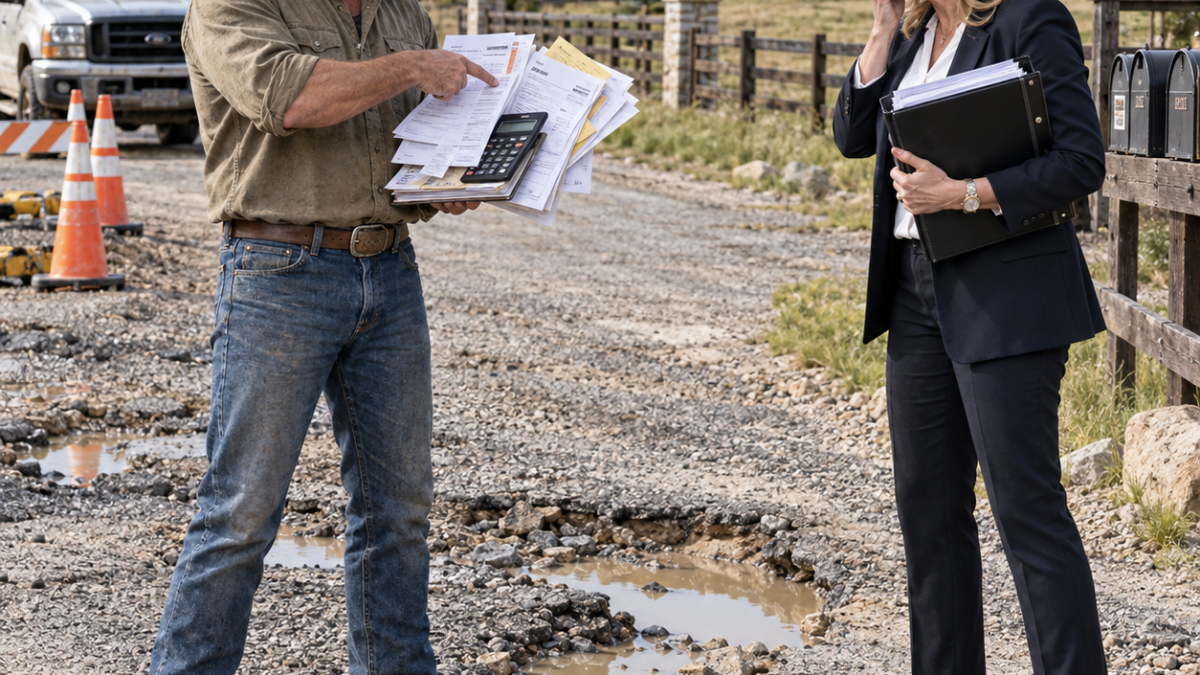
PART 2
Karen’s garage door began lowering behind me before I had reached my truck.
That sound told me more than anything she had said during the hour.
She wanted me gone.
I sat behind the wheel without starting the engine.
For twenty-seven years of professional work, I had learned that financial fraud rarely announces itself with a line labeled STOLEN MONEY.
It hides inside ordinary words.
Consulting.
Management.
Reserves.
Reimbursement.
Contingency.
The language is intentionally boring because boring things do not attract attention.
The quarterly transfers I had seen were boring.
Five thousand dollars.
Every three months.
Same amount.
Same destination.
CONTINGENCY FUND.
There was nothing inherently suspicious about a homeowners association having a reserve or contingency account.
In fact, a responsible association should have one.
What bothered me was the silence around it.
Karen had repeatedly told residents that road money not spent in one year was being saved for future work.
Fine.
Then those savings should exist somewhere.
If roughly twenty thousand dollars had been diverted from the road budget each year for five years, the contingency account should have held close to one hundred thousand dollars before legitimate expenditures.
That was testable.
Numbers are patient.
People are not.
I drove home slowly because my F-250 was still at the repair shop and I was using Ellen’s Subaru.
She was at the kitchen table paying a feed bill when I came in.
“Well?”
I dropped my keys beside her.
“There’s another account.”
She looked up.
“Another account is bad?”
“No.”
I sat down.
“An account they refuse to show me is interesting.”
“How interesting?”
I opened my laptop.
“Road budget averages thirty thousand.”
“Okay.”
“I found roughly ten thousand a year in road invoices.”
“What happened to the rest?”
“Twenty thousand annually gets moved somewhere.”
Her eyes narrowed.
“For five years?”
“That’s what it looks like.”
“One hundred thousand dollars?”
“Potentially.”
Ellen sat back.
“Grant.”
“I said potentially.”
“You’re using your work voice.”
“What voice?”
“The one where you start correcting vocabulary because you’re trying not to get angry.”
I closed the laptop halfway.
“Karen gave me one hour with five years of records dumped into a box.”
“And?”
“She didn’t include statements from the account where the missing money went.”
Ellen was quiet.
Then she asked the most important question.
“Could there be a perfectly innocent explanation?”
That was why I loved her.
Not because she agreed with me.
Because she refused to let my certainty outrun my evidence.
“Yes.”
“What kind?”
“Reserve purchases. Emergency drainage work. Insurance. Equipment. Legal expenses. Anything properly authorized.”
“And if it’s innocent?”
“I apologize to Karen and go back to fixing fences.”
Ellen smiled.
“You’d hate that.”
“I would hate it professionally.”
“Of course.”
I reopened the laptop.
My first job was organization.
The documents Karen had allowed me to inspect were incomplete, but I had taken detailed notes.
I recreated every transaction I could verify.
Date.
Amount.
Payee.
Purpose.
Supporting invoice.
Bank reference.
For the road work, one name appeared repeatedly.
Bob’s Tractor Service.
Two invoices each year.
Usually $5,000 each.
The invoice design was remarkably consistent.
Same font.
Same vague language.
ROAD GRADING AND REPAIR.
No number of machine hours.
No quantities of gravel.
No labor rate.
No equipment description.
No tax identification.
No physical business address.
Only a post-office box in the next county.
I searched state business records.
Nothing.
I searched local directories.
Nothing.
I searched social media.
Nothing.
That did not prove Bob’s Tractor Service was fake.
Plenty of rural contractors operate as sole proprietors under informal names.
But businesses accepting tens of thousands of dollars from an HOA should still leave some trace.
I called the number on one invoice.
Disconnected.
Interesting.
I saved the result.
Then I emailed the board.
I requested the contingency account statements specifically.
I also asked for contracts and proof of payment to Bob’s Tractor Service.
The answer arrived the following afternoon.
Karen wrote:
The documents provided satisfied the association’s obligations. Repeated demands for duplicative materials constitute harassment of volunteer leadership.
I stared at the screen.
Ellen passed behind me.
“Good news?”
“She used the word harassment.”
“That sounds bad.”
“It means she still isn’t sending the statements.”
“That is not what normal people call good news.”
I saved the email.
Printed it.
Filed it.
Then I wrote a second request.
This one went to every director individually.
Karen Peterson, president.
Brenda Lawson, secretary.
Ed Walker, vice president.
Carl Benton, treasurer.
Linda Reeves, member at large.
I kept the language neutral.
No accusations.
No missing-money language.
I merely noted that bank statements for an account containing member funds had not been produced and asked each director to confirm whether they had reviewed those statements during their service.
Brenda replied first.
I don’t maintain the financial accounts. Please direct questions to Karen and Carl.
Linda replied:
I assumed the treasurer reviewed them.
Ed did not answer.
Carl answered with two words.
Will check.
Karen replied to everyone.
Please stop responding individually. All communications regarding association matters should come through the president.
That one went straight into my file.
Leadership is not ownership.
Karen appeared to have forgotten the distinction.
Two mornings later, I found the first retaliation notice attached to my gate.
VIOLATION OF EXTERIOR COLOR STANDARD.
My barn had been forest green since before I bought the property.
It sat four hundred yards from the main road.
The letter claimed the color had never been approved.
I stood at the gate reading it while my cattle watched me with complete indifference.
Ellen drove up behind me.
She lowered the window.
“Problem?”
I handed her the paper.
She read it.
Then looked toward our barn.
“You have got to be kidding.”
“It’s apparently offensive.”
“It’s dark green.”
“Extremely provocative.”
“Are we repainting it?”
“No.”
She gave me the look.
“Legal no or Grant no?”
“Documented no.”
“Better.”
That afternoon, I drove every road in Harmony Ridge.
Thirty-eight homes.
Twelve barns.
Nine detached workshops.
Five large sheds.
Colors included red, navy, brown, gray, white, galvanized steel, and one extraordinary yellow workshop that could probably be seen from orbit.
I photographed each structure only from public or common road areas.
Then I compiled the photographs into a PDF.
My barn was one of the least conspicuous buildings in the subdivision.
I responded to the violation with three questions.
What exact approved color rule did my barn violate?
When had that rule been adopted?
How many other outbuildings had received color violations during the previous five years?
I copied the whole board.
Karen did not answer.
Instead, the fine began.
Fifty dollars a day.
That was the moment I stopped believing the dispute was just about financial records.
Karen was applying pressure.
The question was whether she had done it to other people too.
My nearest neighbor was George Halpern.
George was seventy-seven and had been ranching long before Harmony Ridge had an HOA.
I found him repairing a stretch of barbed wire between our properties.
I brought two bottles of water.
He took one without thanking me.
That was George’s version of friendship.
“How’s the road treating you?” I asked.
He drove a staple into a cedar post.
“Badly.”
“My steering broke last week.”
“I heard.”
“From who?”
“Tow truck driver is my cousin.”
Rural communities have no privacy.
I leaned on the fence.
“HOA ever pay for road damage?”
George laughed.
“No.”
“You ever ask?”
“Once.”
“What happened?”
“Karen told me my shocks were old.”
He hammered another staple.
“Truck was six months old.”
I smiled.
Then I told him about the road records.
Not my suspicion.
Only the numbers.
Thirty thousand budgeted.
Ten thousand documented.
Twenty thousand moved to a contingency account.
George stopped hammering.
“Contingency for what?”
“That’s what I’m trying to find out.”
He stared toward the road.
“That woman put a lien notice on me over my gate.”
I turned.
“What?”
“Paint peeling.”
“When?”
“Last year.”
“You paid?”
“Two hundred fine and lawyer fee.”
“Why?”
George looked at me as if the answer were obvious.
“Because I had cattle to move and hay to cut. You think I wanted to spend six months arguing over a gate?”
That was Karen’s real advantage.
Not power.
Time.
Most homeowners had jobs, families, animals, medical appointments, businesses, mortgages.
An HOA president willing to turn every disagreement into paperwork could win simply because everybody else had something better to do.
George returned to the fence.
“Why you asking?”
“Because I think the books are wrong.”
He looked at me again.
“How wrong?”
“I don’t know yet.”
“What’s your guess?”
“I don’t guess about money.”
He grunted.
“Still an accountant.”
“Unfortunately.”
He pointed his hammer at me.
“Talk to Maria Alvarez.”
“Why?”
“Used to be treasurer.”
“When?”
“Before Karen.”
That afternoon, I drove to Maria’s place.
Her property was smaller than mine, about eight acres, but her rose garden could have won awards.
She was sixty-three, retired from county government, and remembered me from annual meetings.
I told her why I was there.
She invited me onto the porch.
“When I was treasurer,” she said, “we had one operating account and one savings account.”
“Was the savings account called contingency?”
“No.”
“When did that start?”
“After Karen became president.”
“What was the purpose?”
“She said we needed flexibility.”
“For road reserves?”
“Supposedly.”
“Did the board approve it?”
“I wasn’t on the board anymore.”
“Did you ever see statements?”
Maria laughed without humor.
“I asked once.”
“What happened?”
“She told me former officers had no authority over current finances.”
That was true.
Former officers did not control current finances.
But homeowners still had inspection rights.
“Did you know Bob’s Tractor Service?”
Maria frowned.
“Bob who?”
I showed her one of my transcribed invoice details.
She shook her head.
“We used Western County Grading when I was treasurer.”
“What did they charge?”
“Depending on gravel, fifteen to twenty-five thousand a year.”
“Why switch?”
“Karen said she found someone cheaper.”
“Did residents vote?”
“Vendor contracts didn’t require a membership vote. Board could do it.”
“Did they take bids?”
“We always did.”
“Required?”
“For larger jobs, yes.”
That mattered.
I asked Maria if she still had old records.
She went inside and returned carrying two banker’s boxes.
“I kept copies from my term.”
The old system was boring.
Perfectly boring.
Invoices attached to checks.
Three written bids.
Deposit records.
Reconciliations.
Treasurer reports.
No mystery.
No chaos.
Maria touched one of the folders.
“I used to close the books every month.”
“What changed?”
“Karen said I was making everything too complicated.”
I almost laughed.
Proper bookkeeping is only complicated to people who do not want records.
Maria watched my face.
“What do you think she did?”
“I think the road money needs an independent review.”
“That is not what I asked.”
“I know.”
She folded her arms.
“Grant.”
I looked at her.
“If you think Karen stole money, say it.”
“I think there are unexplained transfers involving roughly one hundred thousand dollars.”
Maria’s expression changed.
“That much?”
“Yes.”
“And she won’t show you the statements?”
“No.”
Maria looked across her roses toward the road.
“I knew it.”
“No.”
She turned.
“You don’t know that yet.”
“Grant—”
“You knew the system changed. That’s all.”
She exhaled.
“You were this irritating professionally too, weren’t you?”
“So I’ve been told.”
“Fine.”
She pointed at me.
“Find out.”
That became the mission.
But I made myself define it carefully.
Not take down Karen.
Not prove theft.
Find out where the money went.
The distinction mattered.
Over the following week, I spoke with twelve homeowners.
Most had a Karen story.
Mark and Sarah Reynolds had been cited because new sod failed during a summer drought.
Mike Wilson, an Air Force veteran who owned a mobile HVAC business, had received commercial-vehicle violations for parking his work van in his driveway.
Linda Cho, a widow living alone, had been threatened with fines when a windstorm tore shingles from her roof and her insurance claim took six weeks to process.
No single story proved misconduct.
Together, they showed something else.
Fear.
People had learned that questioning the HOA often produced more attention.
That was enough to make good neighbors quiet.
At our house one Friday evening, Ellen found me spreading violation letters across the dining table.
“You invited half the county?”
“Four people.”
George arrived first.
Then Maria.
Then Mark and Sarah.
Mike came ten minutes later.
Ellen made coffee and sat beside me.
I began with numbers.
No speeches.
No labels.
I showed the annual road budget.
The known road invoices.
The transfers.
Then I showed the missing statements.
Maria provided the historical context.
George talked about his gate.
Mike showed his van citations.
Sarah talked about the sod fines.
Nobody interrupted for several minutes.
Then Mark asked, “Are you saying Karen stole a hundred grand?”
“No.”
He looked confused.
“I’m saying one hundred thousand dollars appears to have moved into an account the board has not allowed us to inspect.”
“What’s the difference?”
“The difference between suspicion and proof.”
George muttered, “Accountants.”
I ignored him.
Mike leaned forward.
“So how do we get the statements?”
“By enforcing our records rights.”
“With what?”
“A lawyer if necessary.”
The room went quiet.
Lawyers meant money.
Money was exactly how Karen had beaten people before.
Ellen spoke for the first time.
“What if everyone contributes a little instead of Grant paying for this alone?”
I looked at her.
She ignored me.
George pulled out his wallet.
“No.”
He stared at me.
“What?”
“No one is putting cash on my table tonight.”
“I got money.”
“I know.”
“Then what?”
“We need a plan first.”
Maria smiled.
“See why I like him?”
George grunted.
We created something deliberately boring.
The Harmony Ridge Road and Finance Committee.
Not an official HOA committee.
Just homeowners organizing.
Our goals fit on one page.
Obtain financial records.
Obtain an independent accounting.
Request transparent road budgeting.
Challenge selective enforcement through existing procedures.
No accusations without evidence.
That last rule was mine.
George hated it.
“What if I want to call her a thief?”
“Then do it somewhere I can’t hear you.”
“You think she’s a thief.”
“I think you need another coffee.”
Ellen laughed.
We hired an attorney named David Chen.
David specialized in nonprofit governance and homeowner-association disputes.
His first consultation lasted seventy minutes.
He read the bylaws.
Read my correspondence.
Read Karen’s refusals.
Then he said, “Your best case is the boring one.”
“Why does everyone keep insulting boring things?”
“Because courts love boring.”
He tapped the records provision.
“The association has a duty to make qualifying financial records available under its governing documents and applicable law. We start there.”
“What about retaliation?”
“Document it.”
“The barn fine?”
“Appeal it.”
“What about suspected diversion?”
“Do not accuse anyone publicly until we have records.”
I liked him immediately.
David sent a formal demand to the board.
It requested specific records.
The contingency account statements.
Canceled checks.
Electronic transfers.
Vendor contracts.
Bids.
Board approvals.
Invoices.
Reconciliations.
Annual financial reports.
The letter gave them a reasonable deadline.
It also reminded all directors that their duties were to the association, not to any single officer.
Two days later, Carl Benton called me.
The treasurer.
We had barely spoken before.
His voice was low.
“Can we meet?”
“Sure.”
“Not at my house.”
That interested me.
We met at a diner twenty miles away.
Carl looked exhausted.
He was sixty, owned a hardware store, and had served as treasurer for three years.
He stirred coffee he never drank.
“What do you want, Grant?”
“Records.”
“You know what I mean.”
“I want to know where the road money went.”
He looked toward the window.
“I don’t have the contingency statements.”
“You’re treasurer.”
“I know.”
“Who has them?”
“Karen.”
That single answer was worse than any rumor.
“Why?”
“She set up online access.”
“Are you a signer?”
“Operating account.”
“Contingency?”
He hesitated.
“I think Karen and Brenda.”
“You think?”
His face reddened.
“I let her handle it.”
“Why?”
“Because she handled everything.”
I said nothing.
Carl rubbed his forehead.
“She was president before I joined. Everybody said she kept things organized.”
“Did you reconcile the operating account?”
“Yes.”
“Did you reconcile contingency?”
“No.”
“Did you sign annual reports?”
“Yes.”
“Based on what?”
“What Karen gave me.”
The anger came quickly.
I pushed it down.
“You understand why that’s a problem.”
“Yes.”
“Does the rest of the board know?”
“I don’t know.”
“Are you willing to tell David Chen?”
Carl looked alarmed.
“I don’t want to get sued.”
“That’s exactly why you need your own lawyer.”
“I didn’t steal anything.”
“I didn’t say you did.”
“I never took a dollar.”
“Then protect yourself with the truth.”
He looked at me for a long time.
Then nodded.
That meeting changed the case.
The board was not a single block.
Karen had centralized control.
Some directors had allowed it because convenience is seductive.
Sign here.
Trust me.
I handled it.
Don’t worry.
Good governance dies one shortcut at a time.
The following Monday, Karen escalated.
Mike Wilson called me at 7:10 a.m.
“They’re towing my van.”
I was already pulling on boots.
“Who?”
“Tow company. Karen’s here.”
“Police?”
“Deputy.”
“Do not obstruct anybody.”
“This is my work van!”
“I know. Record from your property. Stay calm.”
I drove over.
By the time I arrived, Mike’s HVAC van was hooked to a tow truck.
A county deputy stood nearby.
Karen held a folder.
Mike’s wife was crying.
“You called them?” Mike shouted when he saw me.
“Yes.”
Karen turned.
Her expression hardened.
“This does not concern you.”
“It concerns the neighborhood.”
“The vehicle is in violation.”
Mike pointed at the van.
“It runs! I drove it yesterday!”
Karen spoke to the deputy.
“The covenant prohibits commercial vehicles and inoperable vehicles.”
The deputy looked uncomfortable.
“I’m only here to prevent a breach of the peace. I’m not interpreting HOA rules.”
Smart man.
I asked Karen, “Which violation authorizes towing?”
She glared at me.
“I’m not debating with you.”
“Did the board vote?”
“Grant,” Mike said.
His voice was cracking.
“My tools are in there.”
I turned to him.
“Let it go.”
“What?”
“Let them tow it.”
He looked ready to hit me.
“I need that van.”
“You’ll get it back.”
“You don’t know that.”
“I’ll help.”
His shoulders fell.
The tow truck left.
Karen stood there.
For perhaps the first time, I understood that she did not see herself as doing anything outrageous.
Mike had challenged the rules.
Our committee had challenged her leadership.
In her mind, enforcement was restoring order.
That made her more dangerous than a cartoon villain.
People who know they are lying sometimes stop.
People who believe authority itself makes them right rarely do.
David filed for emergency relief that afternoon.
Not because Karen had committed some cinematic act of criminal retaliation.
Because the association was escalating enforcement during an active records dispute, and there was a genuine risk of more adverse actions before members could obtain judicial review.
The court did not hand us everything we wanted.
Courts rarely do.
But within days, the HOA agreed through counsel to pause new punitive enforcement actions against committee members while the records issue was resolved.
Mike recovered his van.
We paid the tow and storage initially.
Receipts went into the file.
That incident changed Harmony Ridge.
People who ignored accounting questions understood a work van.
Mike’s van paid his mortgage.
It bought groceries.
It carried the equipment that supported his family.
When residents saw it towed over a disputed HOA rule while Karen refused to show bank records, they stopped calling our committee a personality conflict.
Signatures came quickly.
Under the bylaws, homeowners holding ten percent of the voting interests could demand a special membership meeting.
We collected fifty-seven percent.
Maria drafted the notice.
I edited it until she threatened to stab me with a red pen.
The meeting had three proposed agenda items.
Financial transparency.
Independent review.
Board confidence.
No mention of theft.
No mention of embezzlement.
No mention of Karen personally except where her role was relevant.
The special meeting was scheduled at the Grange Hall because our HOA’s little gatehouse meeting room could not fit everyone.
Karen responded with a neighborhood-wide letter from the association’s attorney.
It defended the board.
Called our accusations misleading.
Warned that unnecessary litigation could increase dues.
That last point was true.
Our lawyer cost money.
Their lawyer cost HOA money.
Every dispute had a price.
So our committee sent a response.
One page.
We agreed litigation was expensive.
We repeated one question.
Why not show the bank statements?
That question became impossible to escape.
A week before the meeting, the court ordered production of the qualifying financial records.
Karen’s attorney complied.
David called me at 3:18 on a Thursday afternoon.
“They’re ready.”
“All of them?”
“What appears to be all.”
“When can I get them?”
“Tomorrow morning.”
I barely slept.
At nine, I drove to David’s office.
On his conference table sat two banker’s boxes and a secure digital download.
Five years.
Every operating statement.
Contingency statements.
Canceled checks.
Transfers.
Vendor documents.
Credit-card statements paid from HOA accounts.
I remember touching the first box.
David said, “Before you go full forensic accountant, understand this.”
“What?”
“You are not law enforcement.”
“I know.”
“You are not deciding whether a crime occurred.”
“I know.”
“You are preparing a financial analysis for homeowners and counsel.”
“I know.”
He leaned back.
“I had to say it.”
“Because of my face?”
“Because of your binder.”
Fair.
For the next thirty-six hours, I barely moved from my office.
Ellen delivered sandwiches.
At midnight she brought coffee.
At two she took the coffee away.
“You’re vibrating.”
“I’m fine.”
“You alphabetized the crackers.”
“They were chaotic.”
“Bed.”
“I found something.”
That stopped her.
“What?”
I turned the monitor.
The contingency account contained the transfers exactly as expected.
Roughly one hundred thousand dollars over five years.
But it had not stayed there.
Some withdrawals were legitimate.
Emergency gate repair.
Insurance deductible after a storm.
Legal fees.
Drainage materials.
Those reduced the suspicious amount significantly.
That was important.
Then came expenses I could not reconcile.
Payments to personal credit-card companies with no association card number shown.
Travel-agency charges.
A fifteen-thousand-dollar check to an auto dealership.
Recurring monthly checks to KL Management Services.
Ellen frowned.
“Who is KL?”
“I don’t know.”
I searched state registration records.
There it was.
KL Management Services.
Sole proprietor:
Karen Louise Peterson.
I sat motionless.
Ellen whispered, “Oh.”
The HOA had paid Karen’s separate business $1,500 a month.
There was no management-services contract in the records produced.
No board resolution approving recurring fees.
No disclosed scope.
No invoices beyond generic “administrative support.”
Ellen asked, “Could she legally pay herself?”
“Possibly, if properly authorized, disclosed, and permitted.”
“Was it?”
“I haven’t found evidence.”
The car payment was worse.
The check memo read:
COMMUNITY TRANSPORT / CAPITAL EXPENSE REIMBURSEMENT.
Payee: Bellwood Cadillac.
Amount: $15,000.
Karen drove a Cadillac Escalade.
That did not prove the HOA bought her car.
Maybe the association acquired a vehicle.
Maybe she had reimbursed the HOA later.
Maybe there was documentation missing.
I kept digging.
At 3:07 a.m., I found a purchase agreement.
Buyer:
Karen L. Peterson.
The association check had been applied to her down payment.
I leaned back.
There are moments in an audit when suspicion stops being abstract.
That was one.
I did not feel victorious.
I felt sick.
Because that check represented gravel that was never delivered.
Culverts never cleared.
A tie rod broken in a pothole.
George’s lien.
Mike’s tow.
Residents blamed for a deteriorating road while their money purchased somebody else’s SUV.
Ellen stood in the doorway in her robe.
“What?”
I pointed at the document.
She read it.
Then sat beside me.
“Grant.”
“Yeah.”
“You were right.”
I stared at the screen.
“I wish I wasn’t.”
By sunrise, the numbers were clearer.
Not every dollar was missing.
Not one hundred thousand.
That first estimate would have been wrong if I had shouted it publicly.
Legitimate contingency expenses accounted for part of the fund.
But tens of thousands remained associated with transactions that appeared personal, related-party, unsupported, or inadequately authorized.
KL Management.
Credit-card payments.
Travel.
Vehicle payment.
Cash withdrawals.
Several checks payable directly to Karen as “expense reimbursement” without receipts.
Then Bob’s Tractor Service became even more interesting.
Canceled checks did not go to a business account.
They were endorsed by Robert “Bob” Peterson.
Karen’s adult son.
I stared at the name.
He did own a tractor.
He had performed some work.
That distinction mattered too.
Bob’s Tractor Service was not entirely fictitious.
But there was no competitive bidding documentation.
No formal contract I could find.
No detailed work logs.
And several payments appeared disproportionate to the limited grading neighbors had observed.
Related-party transactions everywhere.
Karen.
Her son.
Her private management company.
Association money.
Minimal oversight.
I built schedules, not accusations.
Road budget versus verified road expenditures.
Contingency deposits and withdrawals.
Related-party payments.
Unsupported reimbursements.
Transaction dates.
Board minutes.
Authorization references.
I cross-checked every number twice.
Then I gave everything to David.
He reviewed it for six hours.
His first sentence was, “Do not publish the raw credit-card information.”
“Obviously.”
“Second, this needs a CPA opinion besides yours.”
“I agree.”
“Third, some of these transactions warrant referral.”
“To police?”
“To appropriate authorities after professional review.”
I nodded.
“Fourth, this meeting tomorrow cannot become a criminal trial.”
“I know.”
David smiled.
“You hate that sentence.”
“I prefer complete datasets.”
“You’re getting homeowners and folding chairs.”
The Grange Hall filled before six.
One hundred fourteen residents attended in person.
More proxies had been submitted.
George wore his cleanest work shirt.
Maria had organized packets at every chair.
Mike parked his HVAC van directly outside.
Legally.
Ellen sat in the first row.
Karen arrived with the other directors and counsel.
She did not look frightened.
That surprised me.
She looked offended.
As if the entire meeting were a personal insult.
I began at 6:30.
“My name is Grant Mercer. Most of you know me as the guy whose truck lost a steering component in the road.”
A few people laughed.
I continued.
“This meeting is not about my truck.”
I clicked the first slide.
Five years of road budgets.
“This is what we allocated.”
Next slide.
Verified road invoices.
“This is what the produced records show was directly spent on road grading and related work.”
I was careful.
Not “what was spent.”
“What the produced records show.”
Language matters.
The difference between accusation and analysis can be one verb.
Next slide.
Transfers to contingency.
Then legitimate contingency expenses.
Storm work.
Insurance.
Gate repair.
I included them.
Karen’s attorney watched carefully.
Good.
I wanted him to see I was not hiding anything that helped his client.
Then I displayed unsupported and related-party transactions.
KL Management Services.
People began murmuring.
I showed the corporate registration.
Karen’s name.
The room became quieter.
Then the vehicle payment.
I displayed the canceled HOA check beside the purchase agreement.
Nobody murmured now.
The silence had weight.
I looked toward Karen.
She stared at the screen.
I continued.
“Association records show a fifteen-thousand-dollar payment from the contingency account directly to a dealership. The vehicle purchase agreement identifies Karen Peterson as the buyer.”
Karen stood.
“That was reimbursement.”
I stopped.
“For what?”
“Our community transportation allowance.”
Carl Benton turned toward her.
“What transportation allowance?”
The room shifted.
Karen looked at him.
“You knew.”
Carl stood.
“No, I did not.”
“Carl—”
“I never approved fifteen thousand dollars for your vehicle.”
Karen’s attorney touched her arm.
She shook him off.
“I used that vehicle for HOA business constantly.”
Maria spoke from the front table.
“Was personal vehicle reimbursement authorized?”
Karen snapped, “I spent thousands of hours serving this community without salary.”
That was not an answer.
And everyone knew it.
I raised a hand.
“This isn’t a cross-examination.”
The room settled.
“There may be explanations for individual transactions. That is why our committee is recommending an independent forensic audit by a licensed CPA firm and referral of any unsupported expenditures for appropriate review.”
Karen laughed sharply.
“You already decided I’m guilty.”
“No.”
“You put my personal information on a ten-foot screen.”
“I put association transactions on the screen.”
“You’ve been trying to destroy me since your truck broke.”
I looked at her.
“No.”
“Yes.”
“Karen, if the road had been maintained, my truck probably never would have broken. If you had provided the records when I requested them, we probably wouldn’t be sitting here.”
Her face reddened.
“You think because you were some government accountant you understand everything.”
“No.”
I looked around the room.
“That’s why I want an independent audit.”
George shouted, “Second.”
Laughter broke the tension.
Maria smiled.
“We aren’t technically voting yet, George.”
“Still second.”
Even I laughed.
Then Brenda Lawson began crying.
The secretary.
She sat beside Karen.
“I asked about KL Management.”
Karen’s face changed.
Brenda covered her mouth.
“I asked you two years ago.”
“Brenda.”
“You said it was approved.”
“It was.”
“Where?”
Karen stared at her.
Brenda’s voice shook.
“Show me where.”
Carl said, “I never approved it.”
Linda Reeves shook her head.
“Neither did I.”
Ed Walker looked down.
The board was coming apart in public.
Karen turned to counsel.
Her lawyer whispered something.
She sat.
That saved the meeting from becoming a circus.
We voted on three motions.
First:
Hire an independent CPA firm to conduct a full forensic review of association finances for the previous five years.
Passed overwhelmingly.
Second:
Suspend Karen’s authority to initiate expenditures or enforcement actions while the review was pending, subject to the bylaws and counsel’s guidance.
Passed.
Third:
Begin recall procedures for the current board, with separate votes for each director.
Passed.
There were no handcuffs that night.
No deputies bursting through doors.
Real investigations do not operate on dramatic timing.
Instead, David delivered our findings and source documents to counsel, the association’s insurer, and the appropriate local authorities.
Then we waited.
That waiting was harder than the audit.
Karen stopped driving through the neighborhood.
Her Escalade remained in the garage.
Some residents wanted confrontation.
George suggested we park gravel trucks outside her house.
I told him that was idiotic.
He said I had lost my sense of humor.
Maybe.
The independent CPA firm began work within ten days.
They requested everything again.
Bank records directly from financial institutions.
Vendor confirmations.
Credit-card support.
Board authorizations.
Tax records.
Electronic files.
The road fund was not the only issue.
Fines had been deposited inconsistently.
Some reimbursements lacked receipts.
Related-party transactions were more extensive than we knew.
But there was also good news for several board members.
The evidence showed that most directors had not personally received funds.
Their failures were governance failures.
They had been passive.
Negligent in oversight.
Too willing to let one person run everything.
That was serious.
But it was not the same as taking money.
Carl resigned as treasurer before the audit finished.
He came to my house first.
“I’m sorry.”
“For what?”
“I should have looked.”
“Yes.”
He seemed surprised by the answer.
I wasn’t going to absolve him simply because Karen controlled the accounts.
He had accepted the title treasurer.
Titles come with duties.
“I didn’t steal.”
“I know.”
“I trusted her.”
“I know.”
“That makes me feel worse.”
“It should.”
He stared at me.
Then laughed sadly.
“You don’t do comfort very well.”
“Ellen says the same.”
Carl looked toward the road.
“My name’s on reports that weren’t accurate.”
“Then help fix them.”
“How?”
“Cooperate.”
He did.
Brenda did too.
Linda and Ed turned over emails.
Within a month, the auditors had reconstructed most of the financial picture.
Their conclusion was more precise than neighborhood rumors.
Approximately $167,000 in transactions over five years required adjustment, repayment, further substantiation, or legal review.
Not all $167,000 was theft.
That distinction was repeated at every meeting.
Some expenses had legitimate association purposes but lacked proper authorization.
Some related-party payments were inadequately documented.
Some reimbursements were unsupported.
A smaller—but still substantial—portion appeared to be personal expenditures paid from association funds.
The auditors referred specific transactions to counsel.
Counsel referred them to investigators.
Karen’s attorney issued a statement saying she denied intentionally misusing association money and believed many disputed expenditures had been authorized informally.
That was her right.
The criminal process would decide criminal responsibility.
Our job as homeowners was governance.
The recall vote occurred six weeks after the Grange Hall meeting.
Separate ballots.
Karen was removed by eighty-four percent.
Carl had already resigned.
Brenda offered to resign but residents asked her to remain temporarily so records could be transitioned.
Linda stayed after winning her own confidence vote.
Ed stepped down.
George was nominated for interim president.
His first response was unprintable.
Maria convinced him.
“I don’t want to be president.”
“You complain about everything.”
“That’s different.”
“You’re perfect.”
He served six months.
He hated every meeting.
He was excellent.
Maria became treasurer.
No one ran against her.
At her first board meeting, she placed three binders on the table.
“This is the operating account.”
Another.
“This is reserves.”
Another.
“This is road.”
George stared.
“You planning to kill us with paper?”
“Yes.”
My favorite policy came next.
No single officer could control association funds.
Two authorized approvals for larger payments.
Monthly reconciliations reviewed by someone other than the person issuing checks.
Related-party transactions disclosed in writing.
Competitive bids for major work unless an emergency made that impractical.
Quarterly financial statements posted to the homeowner portal.
Annual outside review.
Boring.
Gloriously boring.
The barn fine disappeared during the enforcement review.
So did George’s unresolved gate penalty.
Mike’s commercial-vehicle rule was rewritten.
His work van could remain at home as long as it was operable, properly licensed, and reasonably parked.
Nobody wanted to turn Harmony Ridge into a lawless junkyard.
That had never been the point.
The point was rules that served real needs instead of personal leverage.
Then came the road.
That was the physical wound everybody could see.
We hired a civil engineer specializing in private rural roads.
He drove the full three miles.
Test pits.
Drainage review.
Base evaluation.
Crown measurements.
Culvert inspection.
His conclusion was worse than we expected.
Years of superficial grading had moved loose material around without correcting the failing base and drainage.
Some sections needed excavation.
Several culverts were partially blocked.
Certain low spots required stabilization.
The old road did not simply need more gravel.
It needed rebuilding.
The estimate was painful.
Far more than the money immediately available.
Some homeowners were furious.
“We already paid for this!”
They were right emotionally.
But a road contractor would not accept moral outrage as payment.
Recovered funds would help.
Insurance might recover some losses depending on coverage and exclusions.
Restitution could eventually help if ordered.
But the road needed work now.
We faced the ugliest decision of the whole story.
Another assessment.
At the membership meeting where Maria presented the proposal, people groaned before she finished the number.
I understood.
So did George.
He stood.
“I paid five hundred dollars a year for a road I didn’t get.”
A man in the back said, “Exactly.”
George nodded.
“And now I’m being asked to pay again.”
“Yes!” someone shouted.
He waited.
“That makes me mad enough to chew nails.”
A few people laughed.
“But being mad won’t fill a pothole.”
Silence.
“We can sue. We can recover what we can. We can hope restitution comes later. Meanwhile, ambulances, school buses, feed trucks, work vans, and our families still use that road.”
He looked at Maria.
“I hate this assessment.”
She nodded.
“So do I.”
George looked back at us.
“I’m voting yes.”
The assessment passed.
Not overwhelmingly.
Sixty-three percent.
But it passed.
That vote taught me more about community than taking down Karen ever did.
People chose to pay for something twice because doing the necessary thing mattered more than winning the argument.
Construction began in late spring.
The first machines arrived at dawn.
Graders.
Excavators.
Dump trucks.
Rollers.
For six weeks, Harmony Ridge sounded like a highway project.
Leo—George’s grandson, not my child—sat on his fence watching equipment every afternoon.
Mike complained that the traffic delays were hurting his business.
Then volunteered his trailer to move barricades.
Maria walked the site with invoices in a binder.
George threatened to fire her if she asked the contractor for receipts before they finished breakfast.
She asked anyway.
I chaired the finance oversight committee.
My condition for accepting had been simple.
Every homeowner could see every road invoice.
Not a yearly pie chart.
Not a summarized line.
Invoices.
Contracts.
Change orders.
Progress payments.
Photographs.
Bank balances.
The contractor initially found it excessive.
Then he realized we paid on time.
Transparency and professionalism get along surprisingly well.
The road work was substantial.
Failed sections were dug out.
Geotextile stabilization installed where needed.
Base material rebuilt.
Culverts cleared or replaced.
Drainage reshaped.
A proper crown restored.
Fresh crushed aggregate laid in compacted lifts.
The difference was immediate.
Rain came three days after one major section was completed.
I drove out the next morning.
Water had moved off the road into ditches exactly as designed.
No ponding.
No rutting.
No fresh crater.
I stood beside my truck smiling like an idiot.
Ellen called.
“Where are you?”
“Road.”
“You’ve been staring at gravel for forty minutes.”
“How do you know?”
“Maria drove past you.”
Rural privacy again.
“I’m inspecting drainage.”
“You’re emotionally bonding with crushed rock.”
“That too.”
The criminal investigation into Karen took almost a year.
I was interviewed twice.
So were the former board members.
Auditors provided records.
Banks responded to subpoenas.
Karen’s attorney contested several interpretations.
Eventually prosecutors filed charges tied to specific transactions they believed they could prove were knowingly converted to personal use or falsely documented.
The amount in the criminal case was lower than neighborhood rumor.
Again, precision mattered.
Karen later entered a negotiated plea.
She admitted misappropriating association funds and falsifying or mischaracterizing certain expenditures.
She was ordered to pay restitution.
She received a custodial sentence followed by supervised release under state law.
Her Escalade was sold.
Other assets were used toward restitution according to the court process.
Not every dollar came back.
Money rarely returns as neatly as it disappears.
The association’s insurance recovered additional amounts through a separate claim.
SunCoast—her son’s operation, the one we had known as Bob’s Tractor Service—resolved disputed invoices through a civil settlement without admitting every allegation homeowners had made.
The important result was measurable.
Funds returned.
Contracts terminated.
Controls changed.
Road repaired.
Karen sold her property after the criminal case.
The day the moving truck arrived, I happened to be fixing a fence near the main road.
I saw the Escalade was already gone.
She drove an older sedan.
For one second, I considered walking over.
I had imagined that moment many times.
During the fight, I had thought I might tell her about the broken tie rod.
George’s gate.
Mike’s van.
The road.
The money.
I imagined some perfect final sentence.
But real life rarely needs one.
Karen saw me.
I nodded.
She looked away.
That was enough.
Revenge would have been making her feel small.
Accountability was making sure she could never control our money that way again.
I preferred accountability.
Two months later, the road project finished.
The contractor asked George whether we wanted a ceremonial ribbon cutting.
George stared at him.
“For gravel?”
The contractor shrugged.
“Some communities do.”
“We’re ranchers.”
So there was no ribbon.
Instead, half the neighborhood showed up at the gate on a Saturday morning with coffee.
Maria had copies of the final financial report.
Of course she did.
The project came in 2.8 percent under budget.
I nearly proposed naming the road after her.
She threatened me.
At nine, George climbed into his old Dodge.
Mike got into his work van.
Mark and Sarah loaded their kids into an SUV.
Ellen climbed into my F-250 beside me.
Everyone drove the full three miles together.
Slowly.
Ridiculously.
A parade celebrating drainage.
The road felt firm beneath the tires.
No violent shaking.
No steering correction every few feet.
No craters.
Just the soft crunch of compacted aggregate.
When we reached the section where my tie rod had snapped, I pulled onto the shoulder.
Ellen looked at me.
“You’re going to get out, aren’t you?”
“Yes.”
“You’re sentimental about a pothole.”
“The pothole is gone.”
“Exactly.”
I stepped out.
The old crater had been excavated months earlier.
Underneath it now were proper base layers and compacted stone.
Nothing marked the spot.
That felt right.
George pulled over behind me.
Then Mike.
Soon six vehicles lined the road.
George walked over.
“This where you broke it?”
“Right here.”
He kicked the gravel.
“Looks better.”
“High praise.”
Maria came up holding her phone.
“Final road account balance is posted.”
George groaned.
“Woman, we’re standing outside.”
“Transparency has no office hours.”
Ellen laughed.
I looked down the road.
For years, Harmony Ridge had been a collection of private properties connected by something everybody used and almost nobody wanted to think about.
That road had reflected us perfectly.
We wanted independence.
Privacy.
Space.
We assumed somebody else was maintaining the part that connected us.
That assumption cost us.
Not only money.
Trust.
Karen could centralize control because we had disengaged.
Board members could sign without reading because homeowners rarely attended meetings.
Invoices could remain vague because nobody requested them.
Fines could become arbitrary because most people paid and moved on.
Karen was responsible for what she did.
But if all we learned was that one bad president had caused everything, we would eventually repeat the same mistake with a different name.
So we changed more than officers.
We changed habits.
Board meetings became hybrid meetings so ranchers could join from their phones.
Financial statements went online monthly.
Large expenditures required posted bids.
Homeowners received plain-English summaries.
Minutes identified votes by director.
Violations could be appealed to a panel that did not include the person who issued them.
Reserve accounts had written purposes.
Road funds could not be transferred to another category without documented board action and notice to members.
At first, participation was high because people were angry.
Six months later, attendance dropped.
That worried me.
Maria disagreed.
“Good governance is boring.”
I looked at her.
“David says courts like boring.”
“Smart man.”
“What if people stop paying attention?”
“Then we keep publishing everything.”
She shrugged.
“You don’t need a hundred people watching every check. You need a system where any one of them can.”
That became our philosophy.
Availability, not suspicion.
Verification, not paranoia.
Trust, with receipts.
A year after the road repair, my F-250 needed new front tires.
Normal wear.
When the mechanic called, he said, “Steering looks good.”
I laughed.
“What?”
“Nothing.”
Ellen and I hosted a barbecue that summer.
George brought brisket.
Maria brought potato salad and three financial reports because she has no sense of occasion.
Mike parked his HVAC van beside the barn.
Nobody cited him.
Mark and Sarah’s baby, who had been a newborn during Karen’s sod fines, was now running across our yard.
George’s old cattle gate still had peeling paint.
The new board had formally deleted the cosmetic gate rule.
His reaction was to refuse to repaint it out of principle.
At sunset, I sat on the porch with Ellen.
She rested her feet on the railing.
“You got your quiet life.”
I looked toward the pasture.
Children laughed near the barn.
George and Mike were arguing about diesel engines.
Maria was explaining the reserve ratio to somebody who had clearly made a terrible conversational choice.
“Very quiet.”
“You know what I mean.”
I did.
Peace is not silence.
I had misunderstood that when I left the city.
I thought peace meant being left alone.
No committees.
No corporate politics.
No investigations.
No people asking me to reconcile things that refused to reconcile.
But isolation had been part of our problem.
Karen thrived because everyone wanted to be left alone badly enough to surrender shared responsibility.
The road fund belonged to all of us.
So did the road.
So did the obligation to pay attention.
Ellen handed me a glass of iced tea.
“Do you miss forensic work?”
“No.”
“That was fast.”
“I don’t miss criminals.”
“You enjoyed the spreadsheet.”
“That was different.”
“You had color coding.”
“Necessary.”
“Pivot tables?”
“Obviously.”
She smiled.
“You miss it a little.”
“Maybe five percent.”
“Enough to become HOA treasurer?”
I nearly dropped the tea.
“Absolutely not.”
She laughed so hard George looked over.
Maria eventually served two terms as treasurer.
When she stepped down, her successor received three neatly labeled binders and a digital archive.
The transition took forty minutes.
Maria called me afterward.
“That’s what it should have been like.”
“Yes.”
“No mystery.”
“No missing statements.”
“No woman telling everybody it’s none of their business.”
I thought about Karen’s garage.
The card table.
The disorganized box.
The smile when she gave me an hour.
She had believed chaos would protect her.
In the end, chaos was what exposed her.
Real financial systems create continuity.
Numbers connect.
One month reconciles into the next.
Bank balances tie to ledgers.
Invoices tie to services.
Authorizations tie to minutes.
When those connections break repeatedly, there is usually a reason.
Sometimes incompetence.
Sometimes neglect.
Sometimes fraud.
Our job had been to discover which.
Years passed.
Harmony Ridge changed.
Some original residents sold.
Young families arrived.
Property values rose.
The road required routine grading and replenishment, because gravel roads remain gravel roads.
Every time maintenance occurred, photographs and invoices appeared online.
Nobody applauded.
Nobody should.
Doing the job correctly is not heroism.
It is administration.
George died three years after the road was rebuilt.
He was eighty.
Heart attack in his sleep.
At his funeral, his daughter asked me to say a few words.
I hated public speaking.
George would have enjoyed that.
I told the story of the first committee meeting.
How he tried to put two hundred dollars on my table before we even had a legal plan.
People laughed.
Then I told them something else.
George had spent most of his life insisting he wanted government, neighbors, and civilization in general to leave him alone.
Yet when Harmony Ridge finally needed people to stand together, he was the first man to put money down.
After the service, Maria found me outside.
“He would have hated that speech.”
“Too sentimental?”
“He would’ve said you made him sound respectable.”
I smiled.
His old gate remained at the entrance to his daughter’s pasture.
Peeling.
Perfect.
Our road fund eventually built a reserve large enough to cover major maintenance without emergency assessments.
That was Maria’s proudest achievement.
Mine was simpler.
The pothole never came back.
Not that particular one.
Others did.
Water, trucks, weather, cattle trailers—roads wear.
But when problems appeared, they were reported.
Scheduled.
Repaired.
No one blamed drivers for noticing them.
One autumn morning, almost six years after my tie rod snapped, I was driving home from the feed store when I saw a young man standing beside a pickup on the road shoulder.
New resident.
His name was Tyler.
Flat tire.
I stopped.
“Need help?”
“Hit something back there.”
He pointed toward a shallow depression.
“Road’s getting rough.”
I looked at it.
Nothing dramatic.
But maintenance was due.
I helped him change the tire.
Then I photographed the road section.
Tyler watched.
“You work for the HOA?”
“No.”
“You taking pictures to complain?”
“No.”
“What then?”
I smiled.
“Documentation.”
He looked confused.
I emailed the photo to the road committee.
The next morning, the maintenance coordinator acknowledged it.
A grading date was added to the schedule.
Three weeks later, the depression was gone.
No war.
No certified letters.
No secret accounts.
No barn violation.
No lawyer.
Just a problem reported and corrected.
That was the most satisfying ending imaginable.
Not defeating Karen.
Making sure we never needed another person like me to defeat another Karen.
One evening, Ellen and I took a slow drive through the subdivision.
The sun was dropping behind the western pasture.
Cattle stood dark against the orange horizon.
Dust rose gently behind the truck.
We passed George’s gate.
Maria’s roses.
Mike’s work van.
The section where my truck had broken years earlier.
Ellen tapped the dashboard.
“Remember sitting in the shop after this thing got fixed?”
“Unfortunately.”
“You told me you were going to find every dollar.”
“I did.”
“Did you?”
I thought about it.
“Almost.”
She smiled.
“That bothers you, doesn’t it?”
“Deeply.”
“Of course.”
Some money had never been fully recovered.
Some expenses remained impossible to reconstruct.
Some legitimate services had been poorly documented.
A few questions died with missing receipts and imperfect memories.
For an accountant, that lack of closure still irritated me.
But life isn’t an audit report.
Perfect reconciliation is rare.
What mattered was enough truth had surfaced to create consequences and change the system.
I slowed near the old pothole location.
Ellen looked at me.
“Don’t stop.”
“I wasn’t.”
“You were thinking about it.”
“Maybe.”
“We have dinner getting cold.”
I continued driving.
The F-250 rolled smoothly over the gravel.
No thud.
No metallic snap.
Just tires on stone.
A simple sound.
Almost nothing.
But sometimes you only understand how valuable ordinary things are after someone has stolen them from you.
A trustworthy road.
A transparent ledger.
A fair rule.
A neighbor who will stand beside you.
A board that understands it serves rather than rules.
We had spent years paying into a road fund while the road beneath us literally fell apart.
Karen believed nobody would ever examine the difference between what we were told and what we could see.
She was nearly right.
Most of us were too busy.
Too tired.
Too independent.
Too willing to trust.
Then one pothole broke one truck on one afternoon.
I opened one file.
A neighbor remembered an old account.
Another remembered a lien.
A former treasurer kept records.
A businessman saved towing receipts.
A widow kept her violation letters.
Homeowners showed up.
Lawyers demanded documents.
Accountants followed the transfers.
And one by one, every vague explanation became a number that could be checked.
That was how Harmony Ridge changed.
Not because I was smarter than Karen.
Not because ranchers suddenly became activists.
And not because justice arrived in some dramatic burst.
It happened because enough ordinary people finally stopped saying, “Somebody else will handle it.”
The road ahead of us turned toward home.
Ellen lowered her window.
Cool evening air filled the cab.
I could smell grass, cedar, and distant rain.
For years I thought I moved to the country to get away from people.
Turns out what I really wanted was to live among people I could trust.
That trust hadn’t come cheaply.
We built it the same way we rebuilt the road.
We dug out what had failed.
We stopped covering problems with another thin layer.
We rebuilt the foundation.
We added drainage.
We checked the work.
And then we maintained it.
One honest layer at a time.
As we passed the place where my tie rod had snapped all those years ago, I didn’t slow down.
I didn’t need to.
The hole was gone.
The missing money had been traced.
The board had changed.
The neighbors had changed.
And somewhere in an online folder Maria had probably uploaded another perfectly reconciled monthly statement that almost nobody would read.
I smiled.
That was fine.
The records were there.
The road was solid.
And for the first time since I bought those twenty acres, so was the community beneath it.








