PART 2: On My 78th Birthday, I Took Home the Senior Pit Bull Nobody Wanted—Months Later, I Learned Which One of Us Had Really Been Rescued
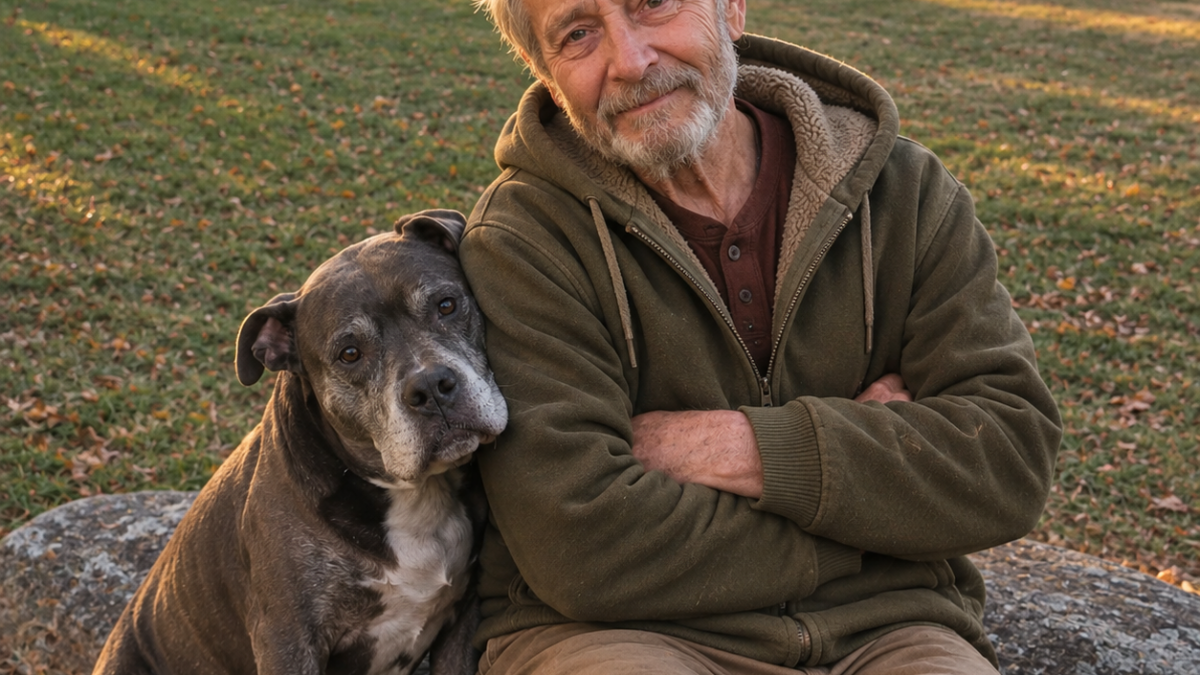
PART 2
The adoption paperwork took almost an hour.
Not because I changed my mind.
Because Claire seemed determined to make sure I understood what I was signing up for.
“Max has arthritis,” she said.
“So do I.”
“He’ll need medication every day.”
“So do I.”
“He may have accidents while adjusting.”
“So do—”
Claire raised an eyebrow.
I stopped.
“Fine. Hopefully I don’t.”
She laughed.
It was the first real laugh I had shared with another person on my birthday in years.
Then her expression became serious again.
“There’s something else.”
I looked up.
“His last family had him almost his entire life.”
That surprised me.
“I assumed they’d only had him recently.”
“No. According to his records, they got him as a puppy.”
Twelve years.
Twelve birthdays.
Twelve winters.
Twelve summers.
And then one day they had driven him to a shelter and walked away.
“Did they say goodbye?”
Claire hesitated.
That hesitation told me more than an answer would have.
“Not really.”
I looked through the office window.
Max was lying beside the front desk.
Waiting.
For me.
“Give me the papers.”
I signed everything.
When we finally walked toward my car, Max moved carefully down the shelter steps.
I opened the rear door.
He looked at the seat.
Then at me.
Then back at the seat.
“You and me both.”
I tried lifting him.
Bad idea.
My back immediately reminded me I was seventy-eight.
Claire hurried outside.
Together we helped him onto the back seat.
He turned around twice, groaned softly, then settled onto the blanket Claire had given us.
Before closing the door, she crouched beside him.
“Be good, Max.”
He licked her wrist.
She kissed his forehead.
Then she looked at me.
“You sure?”
I nodded.
“I’ve spent thirteen years learning how lonely a house can be.”
I looked at Max.
“I think he has too.”
The drive home was quiet.
Every few minutes, I checked him in the mirror.
At first he sat upright, alert.
Then his head lowered.
Finally, he slept.
When we reached my driveway, I opened the door and gave him time.
He climbed out slowly.
Then stood in the middle of the driveway staring at my house.
It was a simple white house with green shutters, an old porch Margaret had insisted on painting herself, and a yard larger than I needed.
“Not much,” I told him.
“But it’s yours now too.”
Max sniffed the grass.
Then the mailbox.
Then a flowerpot.
Then, for reasons known only to him, one tire on my Buick for nearly two full minutes.
“Very important research?”
He ignored me.
We reached the porch.
Three steps.
Max stared at them.
I could see the uncertainty.
His front legs were willing.
His hips were not.
I stood beside him.
“Take your time.”
He lifted one paw.
Stopped.
Tried again.
On the third attempt, his rear leg slipped.
I caught his harness.
“All right. Enough.”
That afternoon, my first act as a new dog owner was not buying treats.
It was building a ramp.
Or attempting to.
Margaret used to say there were two kinds of home improvement projects: the ones I did badly and the ones I eventually paid someone else to fix.
The ramp leaned noticeably to the left.
Max tested it once.
Then looked at me.
I swear his expression said, *You expect me to trust this?*
“Listen, architect, I’m working on it.”
By evening, I had reinforced it.
He used it.
That felt like our first victory.
Inside, Max moved from room to room slowly.
Living room.
Kitchen.
Hallway.
Bedroom.
Guest room.
Then he stopped in front of Margaret’s old chair.
It had been thirteen years, and I still hadn’t moved it.
A blue cardigan hung over the back.
I don’t know why.
Maybe because moving it felt too much like admitting she would never need it again.
Max sniffed the chair.
Then curled up beside it.
I stood there longer than I want to admit.
“You would have liked him,” I whispered.
Max looked up.
“Actually, you probably would have liked him more than me.”
His tail tapped the floor.
That night, I put a dog bed beside my bed.
Max ignored it.
Instead, he slept in the hallway.
I woke three times to check whether he was still breathing.
That is the strange thing about adopting an old dog.
You fall in love while already knowing the clock is running.
The next morning, I found him standing by the back door.
“You need out?”
He looked at me.
I opened it.
He walked down the ramp and into the yard.
Morning dew covered the grass.
Max stopped.
His nose lifted.
The breeze moved through the apple trees.
Then he started exploring.
Slowly.
The garden interested him most.
He sniffed every tomato cage.
Every herb.
Every patch of dirt.
When he reached the stone bench where Margaret used to sit, he stopped.
Then lay beside it.
I sat down.
For twenty minutes, neither of us moved.
That became our routine.
Coffee for me.
Morning air for Max.
Garden for both of us.
At first, I told myself I had adopted him because he needed me.
That illusion lasted about three weeks.
Before Max, some mornings I stayed in pajamas until noon.
Why bother changing?
No one was coming.
Some days I ate toast for dinner.
Some days I didn’t speak aloud until a telemarketer called.
But Max required things.
Breakfast.
Medicine.
Walks.
Fresh water.
A clean bed.
Veterinary appointments.
And because he needed those things, I had to get up.
At seven every morning, I heard his nails on the hallway floor.
Click.
Click.
Click.
Then his gray face appeared around my bedroom door.
If I didn’t move, he stared.
“Five minutes.”
Stare.
“Max.”
Stare.
“You’re retired too.”
Stare.
“All right.”
I got up.
We walked every morning.
Not far.
A quarter mile at first.
Then half.
We moved like two old men who had agreed not to embarrass each other.
Kids passed us on bicycles.
Joggers passed us.
Once, a woman pushing a stroller passed us twice.
Max didn’t care.
Neither did I.
We had nowhere urgent to be.
Neighbors began learning his name.
“Morning, George.”
“Morning, Max.”
Sometimes they greeted Max first.
I resented that slightly.
Then something unexpected happened.
People started stopping.
A widower named Frank from two streets over asked about him.
A young mother named Denise let her little boy pet him.
My neighbor Linda began bringing him homemade dog biscuits.
For years, I had lived in that neighborhood without really belonging to it.
Max changed that in a month.
He opened doors simply by existing.
Children asked about his gray face.
Older people understood him immediately.
People who had been afraid of pit bulls hesitated at first.
Max won them over by leaning against their knees and demanding scratches.
He never rushed anyone.
He never barked aggressively.
He was simply tired, gentle, and grateful.
One afternoon, a teenage boy across the street said, “Mr. Harris, I thought pit bulls were mean.”
I looked at Max sleeping in a patch of sunlight.
“He’s currently losing a fight with a nap.”
The boy laughed.
Max opened one eye.
Then went back to sleep.
By November, he had changed the house.
Dog bowls sat in the kitchen.
Toys appeared under furniture.
I found myself talking again.
Not just to Max.
To everyone.
At the grocery store.
At the veterinarian.
At the shelter when we visited Claire.
I started volunteering one morning a week, reading quietly near the senior kennels.
That sounds ridiculous until you understand that frightened shelter dogs become used to human presence when someone simply sits near them without demanding anything.
I had spent forty years teaching literature.
Apparently retirement had reduced my audience from teenagers to pit bulls.
Frankly, the pit bulls interrupted less.
On Thanksgiving, my niece Rachel invited me to her house.
I usually went for two hours, ate too much turkey, then came home early.
That year I asked, “Can Max come?”
There was silence.
Rachel had two young children.
“I don’t know, Uncle George.”
I understood.
“He can stay home.”
But an hour later she called back.
“Bring him.”
Max spent Thanksgiving lying under the dining table while three generations secretly fed him turkey.
By dessert, Rachel’s eight-year-old daughter had put a paper party hat on his head.
Max looked humiliated.
I photographed him.
The picture became my phone background.
That night, driving home, I realized I hadn’t thought about being lonely once all day.
That realization frightened me.
Because happiness after grief can feel like betrayal.
I sat in the driveway with the engine off.
Max waited in the back seat.
“Margaret should be here.”
His ears moved.
“She would have loved today.”
I stared through the windshield.
“I still miss her.”
Max leaned forward between the seats.
His chin rested on my shoulder.
I closed my eyes.
“I know.”
He stayed there until I was ready to go inside.
Winter was harder on his arthritis.
Some mornings he struggled to stand.
The first time it happened, panic hit me.
“Max?”
He tried.
His back legs slipped.
I dropped beside him.
“Easy.”
I called the veterinarian.
Dr. Patel adjusted his medication and recommended a joint supplement, warmer bedding, shorter walks, and better traction inside.
So I covered half my hardwood floor with rugs.
Margaret would have been horrified.
She had spent years choosing that flooring.
“Sorry, sweetheart,” I said aloud while laying down a ridiculous brown runner through the hallway.
“Dog outranks decorating.”
Max watched from his bed.
Completely unapologetic.
Christmas came.
I bought him a red collar.
Then I bought him three toys.
Then six.
Then a ridiculous orthopedic bed that cost more than my first television.
Rachel came over and looked at it.
“You know he’s a dog, right?”
“He’s old.”
“So are you. Should I buy you a $300 mattress?”
“Yes.”
She rolled her eyes.
On Christmas morning, I made coffee and opened the back door.
Snow covered the yard.
Max stepped onto the ramp.
Stopped.
Sniffed the air.
Then looked at me.
“No.”
He looked outside.
“No, you’ll slip.”
He stepped forward anyway.
“Max.”
He ignored me.
He reached the snow and stood ankle-deep in it.
For several seconds he did nothing.
Then his tail began moving.
He pushed his nose into the snow.
Snorted.
Sneezed.
Then did it again.
I started laughing.
Not smiling.
Laughing.
The kind that hurts your ribs.
The kind I hadn’t heard coming out of my own body in years.
Max turned toward me, snow covering his gray muzzle.
For one impossible second, he looked young.
That afternoon, I found one of Margaret’s old Christmas ornaments.
A photograph of us from 1998.
I hung it beside a new one.
Max in his ridiculous paper Thanksgiving hat.
“Family changes,” I whispered.
That was the first time I let myself believe he was not merely visiting my life.
He was part of it.
By spring, we were walking nearly a mile on good days.
My doctor noticed.
“Blood pressure is better.”
“Dog.”
“Weight is down.”
“Dog.”
“You seem less depressed.”
I looked at him.
He looked at me.
“Dog?”
“Dog.”
He smiled.
“Keep the dog.”
“I was planning to.”
Then came the morning that changed everything.
It was late April.
Warm.
Clear.
I had been outside planting tomatoes.
Max lay beneath the apple tree.
I remember looking at him and thinking how peaceful he seemed.
I stood up from the garden bed.
The world tilted.
At first, I thought I had gotten up too fast.
Then my right arm felt strange.
Heavy.
I tried to call Max.
What came out wasn’t his name.
It was a broken sound.
I remember seeing the garden sideways.
Then dirt.
I had fallen.
I tried to push myself up.
My arm wouldn’t cooperate.
Max was beside me almost immediately.
He sniffed my face.
Whined.
I tried speaking.
Nothing made sense.
“Go,” I tried to say.
It sounded wrong.
Max pawed at my shoulder.
Then he did something I had almost never heard him do.
He barked.
Loud.
Again.
Again.
Again.
“Max…”
He ran toward the back door.
Then came back.
He barked at me.
Then toward the fence.
Our side gate was closed.
Linda, my neighbor, later told me she initially ignored the barking.
Dogs bark.
But Max didn’t.
Everyone on the street knew that.
She was watering flowers when she heard him.
One bark.
Two.
Then a continuous desperate series.
She walked to the fence.
“Max?”
He slammed his front paws against the gate.
Linda opened it.
Max ran five feet toward the garden.
Stopped.
Looked back.
Ran farther.
Stopped again.
She followed.
When she saw me on the ground, she called 911.
The ambulance arrived within minutes.
I remember pieces.
Linda kneeling beside me.
A paramedic asking my name.
Max trying to climb into the ambulance.
Someone holding his collar.
Then hospital lights.
I had suffered a stroke.
The doctors told Rachel that getting medical attention quickly had made an enormous difference.
I spent six days in the hospital.
For the first two, my speech was badly affected.
My right hand felt like it belonged to somebody else.
Rachel sat beside my bed.
“You scared us.”
I tried to answer.
She leaned closer.
“What?”
“Max.”
“He’s fine.”
I closed my eyes.
“Linda has him. He keeps sitting at your front door.”
I cried.
I couldn’t help it.
Rachel squeezed my hand.
“He saved you, Uncle George.”
I stared at her.
She nodded.
“If he hadn’t made Linda come into the yard…”
She didn’t finish.
She didn’t need to.
For months, I had told everyone that I rescued Max.
That sentence suddenly seemed arrogant.
I had signed adoption papers.
I had bought medicine.
I had given him a bed.
But when I lay helpless in the dirt, an old dog with painful hips had done everything he could to make someone find me.
He had saved me.
Literally.
Rehabilitation was humiliating.
There is no graceful way to relearn things your body used to do automatically.
Buttons.
Forks.
Writing.
Walking confidently.
Speaking clearly.
I became angry.
Not dramatic anger.
Quiet anger.
The worst kind.
One afternoon, a therapist asked me to pick up wooden blocks with my right hand.
I couldn’t.
I knocked them onto the floor.
“I’m done.”
“Mr. Harris—”
“I said I’m done.”
I turned away.
That evening, Rachel brought Max to the rehabilitation center.
Dogs were normally restricted, but the staff had made an exception after hearing what happened.
I was sitting in a wheelchair near the courtyard.
Then I heard it.
Click.
Click.
Click.
His nails.
Max appeared through the doorway.
He saw me.
He stopped.
His entire body changed.
His tail started moving.
He came toward me as quickly as his old legs allowed.
“Max.”
My voice cracked.
He reached the wheelchair and pushed his gray head against my knee.
I bent over him.
“I’m sorry.”
He licked my wrist.
“I’m not very good at this.”
His tail kept moving.
“You don’t care, do you?”
He leaned harder.
The next morning, I picked up every wooden block.
It took forty minutes.
I didn’t quit.
Because Max had spent months teaching me something I had somehow missed.
Old did not mean finished.
Damaged did not mean useless.
Slow did not mean defeated.
Three weeks later, I returned home.
Linda had stocked the refrigerator.
Frank had mowed the lawn.
Rachel had installed grab bars that made my bathroom look approximately ninety years old.
And Max?
Max stood in the hallway.
Waiting.
I lowered myself carefully.
“Come here.”
He walked toward me.
I wrapped both arms around him.
I could feel his heart against my chest.
“You and me,” I whispered.
“Couple of broken-down old men.”
His tail thumped.
“But we’re still here.”
For the next several months, recovery became our shared project.
I did physical therapy.
Max did slow walks.
I practiced grip exercises.
He did stretching for arthritis.
I took blood pressure medication.
He took anti-inflammatory medication.
Every morning, I placed our pills on opposite sides of the kitchen counter.
“Yours.”
Tablet in cheese.
“Mine.”
Tablet with water.
“We are very exciting.”
Max stared at the refrigerator.
“Yes, you may have another piece.”
My speech improved.
My hand strength returned.
I stopped using the cane indoors.
And gradually the story of Max saving me spread.
Linda told Claire at the shelter.
Claire told her director.
The shelter posted a short story about Max on its website.
A local newspaper called.
I almost refused.
Then Claire said something that changed my mind.
“George, people overlook senior dogs every day.”
I looked at Max.
“So?”
“So maybe his story makes one person stop walking past an old dog.”
That convinced me.
A reporter named Kelly came to my house.
She photographed Max beneath the apple tree.
The article ran the following Sunday.
The headline called him:
**THE SENIOR SHELTER DOG WHO SAVED THE MAN WHO SAVED HIM**
I hated the headline.
Rachel loved it.
“Uncle George, it’s perfect.”
“It’s sentimental.”
“You cried reading it.”
“That is irrelevant.”
The story spread farther than I expected.
People sent letters to the shelter.
Senior-dog adoption applications increased.
Three older dogs were adopted that month.
Then seven.
One woman drove two hours to adopt a thirteen-year-old beagle because, she told Claire, “I read about Max.”
That mattered to me more than the newspaper.
Then the television station called.
I almost said no again.
Rachel threatened to answer for me.
So I agreed.
They filmed Max walking in the garden.
They filmed his ramp.
They filmed me giving him medicine.
The reporter asked, “Do you think you saved Max?”
I looked down.
Max rested his chin on my shoe.
“No.”
The reporter waited.
“I gave him a house.”
I scratched his ear.
“He gave me a reason to live in it.”
That clip spread online.
And that was when the past came back.
It began with a phone call.
Unknown number.
I almost ignored it.
“Hello?”
A man answered.
“Is this George Harris?”
“Yes.”
“My name is Eric Dawson.”
Something in his voice made me sit straighter.
“I used to own Max.”
Silence.
Max was asleep beside my chair.
I looked at him.
“Used to.”
Eric cleared his throat.
“We saw the television story.”
I didn’t answer.
“My wife and I have been thinking.”
“That sounds dangerous.”
He ignored that.
“We made a mistake.”
I stared through the window.
“What kind of mistake?”
“With Max.”
I waited.
“We shouldn’t have surrendered him.”
My jaw tightened.
Three months in a shelter.
Twelve years with one family.
Then discarded because he became inconvenient.
“What do you want?”
“We want to see him.”
“No.”
His tone changed.
“Excuse me?”
“No.”
“Mr. Harris, we raised that dog.”
“And then you abandoned him.”
“We did not abandon him.”
“What do you call taking a twelve-year-old dog to a shelter because he got old?”
“You don’t know what our situation was.”
“Then explain it.”
Silence.
Finally he said, “Things were complicated.”
“Did he need expensive medical treatment?”
“No.”
“Were you losing your house?”
“No.”
“Were you physically unable to care for him?”
“That’s not the point.”
“Then what was complicated?”
His voice hardened.
“We had young grandchildren coming over. Max was old. He smelled. He was having accidents sometimes. My wife couldn’t deal with it.”
I felt something cold settle in my chest.
“So you got rid of him.”
“We found him a shelter.”
“You handed him to strangers and drove home.”
“That isn’t fair.”
“No.”
I looked at Max.
“It wasn’t.”
Eric exhaled sharply.
“We want him back.”
I actually laughed.
Not because it was funny.
Because it was unbelievable.
“No.”
“You can’t just decide that.”
“I can.”
“He was our dog for twelve years.”
“And then you signed papers saying he wasn’t.”
“We didn’t understand they were permanent.”
“You surrendered ownership.”
“We were emotional.”
“You left him there for three months.”
No answer.
“Did you call once?”
Silence.
“Did you ask whether he had been adopted?”
Nothing.
“Did you send his medicine?”
Nothing.
“Did you visit?”
“Mr. Harris—”
“Did you?”
“No.”
“Then why now?”
That was the question.
Why now?
The newspaper?
Television?
Public attention?
The hero dog they had discarded had become valuable in a way they understood.
Eric’s next words told me everything.
“We’ve been getting messages.”
“What messages?”
“People recognized us.”
Of course.
The shelter had never publicly named them.
I hadn’t named them.
But somebody had connected the dots.
People in their neighborhood remembered Max.
“They’re saying terrible things about my wife.”
“That isn’t my problem.”
“If people saw us reunited with Max, maybe they’d understand.”
There it was.
Not Max.
Image.
Reputation.
Damage control.
“You don’t want your dog.”
“That’s not true.”
“You want a photograph.”
He became angry.
“You don’t know me.”
“I know you waited until Max was on television.”
“He belongs with his family.”
I looked around my house.
The orthopedic bed.
The toys.
The rugs.
His medicine arranged beside mine.
A framed photograph from Thanksgiving.
I lowered my voice.
“He is with his family.”
Then I hung up.
I thought that would end it.
It didn’t.
Two days later, a woman appeared at my gate.
Late fifties.
Expensive coat.
Perfect hair.
Max was outside with me.
The moment he saw her, he froze.
I noticed immediately.
His ears moved back.
His body lowered.
Not terror.
Something more complicated.
Recognition mixed with uncertainty.
The woman whispered, “Max.”
He didn’t move toward her.
I stood.
“You’re Mrs. Dawson.”
“Karen.”
Of course.
She reached toward the gate.
“Max, baby.”
His tail did not move.
Not once.
I stepped between them.
“You need to leave.”
Her eyes filled.
“I loved that dog for twelve years.”
“Then why did you surrender him?”
She looked at me sharply.
“You don’t know what it was like.”
“Tell me.”
“He was getting difficult.”
“Old.”
“He was having accidents.”
“Old.”
“He needed help getting into the car.”
“Old.”
“He slept all day.”
“Old.”
“He wasn’t himself.”
That sentence made me angry.
Maybe because I knew exactly what it meant to become slower.
To need help.
To lose parts of yourself.
I opened the gate and stepped outside, closing it behind me.
“Mrs. Dawson, I had a stroke.”
She blinked.
“I know.”
“For weeks I needed help putting on my own shirt.”
She said nothing.
“I walked with a cane. I dropped glasses. I forgot words. My niece drove me everywhere.”
I pointed toward Max.
“He didn’t decide I wasn’t myself anymore.”
Her face changed.
“That’s different.”
“No.”
I shook my head.
“That’s loyalty.”
She looked past me.
“Can I at least touch him?”
I turned.
Max was standing fifteen feet away.
Watching.
I opened the gate slightly.
I didn’t call him.
Neither did she.
“Max can decide.”
Karen crouched.
“Come here, sweetheart.”
He stared.
“Max.”
Nothing.
She patted her leg.
“You remember me.”
He did.
That was obvious.
For a second I wondered if he would go.
And I told myself if he did, I would let him.
Not leave with her.
Never.
But greet her.
Because his feelings belonged to him.
Max took one step.
Karen’s face brightened.
Then he turned.
Walked back toward the porch.
Climbed his ramp.
And lay beside my chair.
Karen stood slowly.
Her face went pale.
I wish I could say I felt triumphant.
I didn’t.
I felt sad.
Twelve years of history stood on opposite sides of that gate.
And Max had chosen where he felt safe.
“He’s confused,” she whispered.
“No.”
I looked at him.
“I think he’s finally very clear.”
She left.
A week later, I received a letter from an attorney.
The Dawsons claimed they had surrendered Max under “emotional distress” and wanted the adoption reviewed.
Rachel read the letter twice.
“You need a lawyer.”
“I need coffee.”
“You need both.”
Claire nearly exploded when I called the shelter.
“They signed an unconditional owner surrender.”
“I know.”
“They initialed every page.”
“I know.”
“They specifically declined the thirty-day courtesy contact option.”
I stopped.
“What?”
Claire pulled up the file.
“We offered to notify them if he faced serious medical decline during his first month here.”
“And?”
“They checked no.”
That one hurt.
Even after abandoning him, they had chosen not to know if he died.
Claire’s voice softened.
“George?”
“I’m here.”
“The shelter’s attorney will handle this.”
“No.”
“What do you mean, no?”
“I want copies.”
“George—”
“Everything.”
The surrender form.
Intake notes.
Medical records.
Medication history.
Adoption contract.
Every document went into a thick folder.
The Dawsons’ attorney eventually filed a civil claim seeking return of the dog.
It was absurd.
It was also terrifying.
People told me not to worry.
That did not stop me worrying.
At seventy-nine years old, I had survived losing my wife, a stroke, and rehabilitation.
Yet the idea of someone taking Max from my house made my hands shake.
One night, I couldn’t sleep.
I sat in the kitchen.
Max came in.
He rested his head on my knee.
“What if they win?”
His brown eyes looked up at me.
“I know. Stupid question.”
I stroked the gray fur around his muzzle.
“You saved my life.”
His tail moved.
“I’m not letting them treat you like luggage.”
The hearing took place on a rainy Thursday.
I wore the suit I had worn to Margaret’s funeral.
It was the only good suit I still owned.
Rachel came with me.
Claire came.
The shelter director came.
The Dawsons sat across the room.
Karen looked at Max’s photograph on my folder.
Then quickly looked away.
Their attorney argued that they had not understood the permanence of the surrender.
The shelter attorney placed the signed document on the table.
Section three was highlighted.
**I understand that by signing this document I permanently surrender all ownership rights to this animal.**
Eric had signed beneath it.
Karen had initialed the page.
Their attorney changed direction.
He argued that the shelter had failed to evaluate whether reunification was possible.
The shelter produced intake records.
The Dawsons had declined follow-up.
They had not called during Max’s three-month stay.
Not once.
Then came the line I will never forget.
The judge looked at Eric.
“You had three months before this dog was adopted. Did you make any attempt during that period to reclaim him?”
Eric shifted.
“No.”
“Did you inquire about him?”
“No.”
“Did you contribute to his care?”
“No.”
“Did you request notification regarding his condition?”
“No.”
The judge looked down at the papers.
“Then what changed?”
Eric glanced at his attorney.
The room became very still.
Finally he said, “We saw him on television.”
Rachel squeezed my hand under the table.
The judge looked at him for several seconds.
Then at me.
Then back at the paperwork.
The claim was dismissed.
The surrender had been valid.
The adoption was valid.
Max was legally mine.
That should have been enough.
But before ending the matter, the judge looked directly at the Dawsons.
“I cannot adjudicate regret.”
Nobody moved.
“You made a legal decision to surrender this animal. Another person subsequently accepted the responsibilities you declined.”
Karen began crying.
The judge continued.
“Public attention does not revive surrendered ownership.”
That sentence felt like a door locking.
Outside the courthouse, Eric approached me.
Rachel stepped forward immediately.
I touched her arm.
“It’s fine.”
Eric looked exhausted.
“We did love him.”
I believed him.
That was the strange part.
People can love someone and still fail them terribly.
“I’m sure you did.”
“We made one bad decision.”
“No.”
He looked at me.
“You made thousands of decisions.”
“What does that mean?”
“You had him for twelve years.”
I kept my voice calm.
“Twelve years of mornings. Twelve years of meals. Twelve years of walks. Twelve years of him waiting for you to come home.”
Eric looked away.
“Then he became old.”
I paused.
“And you made another decision.”
He said nothing.
“You decided the years when he needed you most were the years you didn’t want.”
His jaw tightened.
“You think you’re better than us.”
“No.”
I looked through the courthouse doors.
“I think Max deserved better than what you did.”
Karen approached.
Her eyes were red.
“Can you tell me something?”
I waited.
“Is he happy?”
That question took the anger out of me.
“Yes.”
She nodded.
“Does he still sleep on his back?”
I smiled despite myself.
“Sometimes.”
“Does he still hate thunderstorms?”
“Yes.”
Her face crumpled.
For a second, I saw not the woman who had abandoned Max.
I saw someone grieving a mistake she could not reverse.
I could have hurt her then.
I could have said Max never thought of her.
That he had forgotten.
That he was happier because she was gone.
But revenge built from lies would not honor him.
So I told her the truth.
“He remembers you.”
Tears filled her eyes.
“But he knows where home is now.”
She covered her mouth.
I walked away.
That should have been the end.
But their attempt to reclaim Max had drawn more attention to his story.
A reporter learned about the lawsuit.
Then another.
I refused interviews about the Dawsons.
I would not turn Max into a weapon.
Instead, when the local station asked for a statement, I gave them one sentence.
“Please use this attention to adopt an old dog who is still waiting.”
That sentence changed more than I expected.
Donations poured into the shelter.
Not huge amounts.
Ten dollars.
Twenty.
Fifty.
Five.
A retired nurse donated $1,000 in memory of her Labrador.
A school held a fundraiser.
A hardware store donated materials for ramps.
Within six months, the shelter created a dedicated senior-dog foster program.
They named it **Max’s Second Chance Program**.
When Claire told me, I stared at her.
“Absolutely not.”
She laughed.
“Too late.”
“I do not want his name on a program.”
“Why?”
“Because he’ll become unbearable.”
Max was lying beneath her desk.
He farted.
Claire waved a hand in front of her face.
“Yes. Fame has clearly changed him.”
The program paid for arthritis medication, dental work, special diets, and temporary foster care for elderly dogs.
Adoptions increased.
People who once walked past gray muzzles began asking for them.
“Who’s your oldest dog?”
“Who’s been here longest?”
“Which one needs a quiet home?”
Those became questions.
Good questions.
A year after my stroke, Max and I returned to the shelter for the program’s anniversary.
Twelve senior dogs had been adopted through it.
Twelve.
One for every year Max had lived before coming to me.
I stood in front of the small crowd.
Public speaking had once been easy for me.
After the stroke, every speech still made me nervous.
Max stood beside me.
I put one hand on his back.
“I taught school for forty years.”
People smiled.
“So naturally, I prepared a long speech.”
Rachel groaned loudly from the crowd.
Everyone laughed.
“But Max has taught me that sometimes the simple lesson is the one worth remembering.”
I looked down at him.
“We throw away too many things because they are old.”
The room became quiet.
“Furniture. Machines. Clothes.”
I paused.
“And sometimes, shamefully, living beings.”
Max leaned against my leg.
“Old dogs may walk more slowly. They may need medicine. They may sleep more. They may cost money.”
I swallowed.
“But they know things young dogs haven’t learned yet.”
I looked around the room.
“They know how to wait.”
“They know how to forgive.”
“They know how to sit quietly beside someone who is hurting.”
My voice began shaking.
“And sometimes, if you are very lucky, they know exactly when you need saving.”
I stopped.
Max looked up at me.
I scratched his head.
“That’s all.”
It wasn’t all.
Not really.
Our story continued.
Max turned fourteen.
Then fourteen and a half.
Every birthday felt stolen from time.
His face grew almost completely gray.
His hearing weakened.
His arthritis worsened.
I began helping him stand on cold mornings.
The roles shifted.
He had once dragged me back into life.
Now I adjusted my life around him.
We stopped taking mile-long walks.
Then half-mile walks.
Eventually, our morning journey was from the house to Margaret’s garden bench.
That was enough.
I brought coffee.
Max sniffed the air.
We sat together.
Some mornings I talked about Margaret.
Other mornings I talked about nothing.
One October afternoon, Rachel found me installing another piece of outdoor carpet on the ramp.
“You’re going to hurt yourself.”
“I’m fine.”
“You said that before the stroke.”
“Low blow.”
She crouched beside me.
“How’s Max?”
I looked toward the porch.
He was sleeping.
“Slower.”
She nodded.
“Dr. Patel?”
“Friday.”
The veterinarian examined him carefully.
His heart was still strong.
His blood work was reasonable for his age.
But his arthritis had advanced.
“He’s going to have more bad days,” Dr. Patel said.
“How many?”
“There’s no number.”
I hated that answer.
“How do I know when it’s time?”
Dr. Patel had probably heard the question thousands of times.
He still answered gently.
“When the bad days begin outnumbering the good ones.”
I looked at Max.
He was eating a treat.
“Today is good.”
“Yes.”
“So we keep going.”
“Yes.”
I drove home.
That evening I sat beside Margaret’s chair.
Max lay at my feet.
“You know what I promised your previous owners in court?”
His ears barely moved.
“Nothing.”
I smiled.
“But I’m promising you something.”
I put my hand on his head.
“I won’t keep you here just because I’m afraid of being alone again.”
The words nearly broke me.
“You saved me.”
I swallowed.
“The least I can do is not make you suffer to save me twice.”
Winter arrived.
Max hated it.
His body hurt more.
So we created indoor adventures.
I hid treats around the living room.
He found approximately half.
I found the remaining half when I stepped on them.
We watched old westerns.
I read aloud.
Sometimes Max slept through entire chapters.
“Students did that too,” I told him.
On Christmas morning, Rachel arrived with her family.
Her daughter, now older, placed another paper hat on Max’s head.
The exact same humiliation as years before.
We recreated the photograph.
Old Max.
Older George.
Same ridiculous hat.
I framed both pictures side by side.
January was difficult.
February was better.
March surprised us with warm weather.
On the first seventy-degree morning, Max stood at the back door.
“You want out?”
Tail movement.
We walked into the garden.
Slowly.
Very slowly.
The first tomato plants had just gone into the ground.
I sat on Margaret’s bench.
Max stood beneath the apple tree.
Sunlight touched his back.
Then he did something he hadn’t done in months.
He rolled onto the grass.
His legs lifted awkwardly.
He rubbed his back.
Sneezed.
Rolled again.
I laughed.
“You idiot.”
He looked at me.
For those few seconds, I saw the shelter courtyard again.
The old dog approaching me.
Leaning against my leg.
Choosing me before I understood I was choosing him.
That afternoon was one of the good days.
I remember it because the next morning was not.
Max didn’t come to my bedroom door.
I woke at seven-thirty.
Silence.
I knew immediately.
I found him in the living room.
Awake.
Breathing.
But he hadn’t stood.
I knelt beside him.
“Hey.”
His tail moved weakly.
I called Dr. Patel.
Rachel drove us.
The examination took a long time.
Blood tests.
X-rays.
More listening.
More touching.
Max rested his head on my shoe.
Dr. Patel finally sat across from me.
“George.”
That tone.
I had heard doctors use it before.
With Margaret.
With me after my stroke.
“What?”
“His body is tired.”
I looked at Max.
“What can we do?”
“We can increase medication.”
“And?”
“It may give him some comfort.”
“How long?”
“I don’t know.”
“Days?”
“Possibly.”
“Weeks?”
“Possibly.”
“Months?”
She did not answer.
I stared at the floor.
“Is he suffering?”
“Today?”
“Yes.”
“Yes.”
That was the only answer that mattered.
I drove home with Max beside me.
Rachel offered to stay.
“No.”
“Uncle George—”
“I need tonight with him.”
She understood.
We sat in the garden.
I cooked a hamburger.
Max ate almost all of it.
“Your veterinarian would be furious.”
He ate another piece.
“I’m seventy-nine. What are they going to do? Suspend me?”
The sun went down.
I told him everything.
I told him about the day Margaret and I met.
I told him about my first classroom.
I told him about mistakes.
Regrets.
The dog Margaret had wanted.
The years I had wasted saying later.
I told him about my seventy-eighth birthday.
“You know something?”
His head rested on my thigh.
“I went to that shelter because I thought I was finally doing something brave.”
I stroked his ear.
“I thought I was saving some poor unwanted dog.”
My voice broke.
“What an arrogant old fool.”
Max looked up.
“You saved me before that stroke.”
I wiped my face.
“You did.”
“You made me get out of bed.”
“You made me walk.”
“You made me meet people.”
“You made me laugh.”
“You made this house a home again.”
His tail moved once against the grass.
“And then, because apparently that wasn’t enough, you literally saved my life.”
I bent down.
Forehead against his.
“I don’t know how to repay that.”
He breathed slowly.
Then I understood.
I didn’t have to repay him.
Love was not a debt.
The next morning, Dr. Patel came to the house.
I had asked her to.
Max hated the clinic.
I wanted his last memory to be home.
Rachel came.
Linda came.
Claire came from the shelter.
Frank stood quietly near the garden gate.
Max lay beneath the apple tree.
His favorite place.
I sat beside him.
Dr. Patel explained everything.
I barely heard her.
I had one hand on Max.
His breathing was calm.
“You ready?” she asked.
“No.”
I looked at him.
“But he is.”
She nodded.
I leaned close.
“Max.”
His eye opened.
“Thank you.”
My throat closed.
“For all of it.”
His tail moved.
Just once.
That tiny movement destroyed me.
“You were a good boy.”
Another breath.
“The best.”
Dr. Patel gave him the medication.
I held him.
His breathing slowed.
Then stopped.
No panic.
No struggle.
Just quiet.
The garden was completely still.
I stayed beside him for a long time.
Nobody rushed me.
Eventually, Claire sat beside me.
“I’m sorry.”
I looked at Max.
“Do you know what I’m afraid of?”
“What?”
“The house.”
She understood immediately.
That night, I entered it alone.
No nails clicking.
No gray head around the corner.
No dog bed rustling.
No medicine beside mine.
I stood in the kitchen.
And for a terrible moment, the silence felt exactly like the years after Margaret died.
I almost believed I had gone backward.
Then I saw something beneath the table.
Max’s red collar.
I picked it up.
I sat on the floor.
And I cried.
But grief was different this time.
When Margaret died, I had closed the doors.
When Max died, he had already taught me how to keep them open.
The next morning, Rachel called.
I answered.
Linda knocked.
I let her in.
Claire asked whether I would come to the shelter.
I said yes.
Not immediately.
But yes.
Three weeks later, I returned.
The senior kennel was full.
I walked slowly past each door.
Then I stopped.
Inside one kennel sat a thirteen-year-old mixed-breed dog named Rosie.
Gray face.
Thin body.
One cloudy eye.
She did not come toward me.
She simply watched.
Claire appeared beside me.
“No.”
She smiled.
“I didn’t say anything.”
“I know that face.”
“What face?”
“The face you made before Max.”
She laughed.
“I was going to ask if you wanted coffee.”
“Liar.”
Rosie stood.
Slowly.
Walked toward the gate.
Then leaned against it.
I closed my eyes.
“Absolutely not.”
Claire waited.
“I am seventy-nine years old.”
“Yes.”
“I had a stroke.”
“Yes.”
“My knees hurt.”
“Yes.”
“I am not adopting another old dog.”
“Okay.”
Rosie stared at me.
I stared back.
Ten minutes later, I was filling out foster paperwork.
Foster.
Not adoption.
I was very clear about that.
Rachel laughed for nearly five minutes when I told her.
Rosie stayed two weeks.
Then four.
Then eight.
Eventually Claire called.
“So when are you bringing her back?”
I looked at Rosie asleep beside Margaret’s chair.
“I’m thinking Tuesday.”
“Good.”
Long silence.
“You’re lying.”
“Yes.”
“Should I prepare adoption papers?”
“Yes.”
That was how Max saved me one final time.
He made sure that when he left, there was still room in my life for another living thing.
The following year, the shelter expanded Max’s Second Chance Program.
They added a small room specifically for senior dogs who needed quieter housing.
On the wall, Claire hung a framed photograph.
Max beneath the apple tree.
Gray muzzle.
Brown eyes.
Red collar.
Underneath was a plaque.
I had helped write the words.
It said:
**MAX**
**12 YEARS OLD WHEN SURRENDERED.**
**ADOPTED WHEN SOMEONE DECIDED OLD DID NOT MEAN WORTHLESS.**
**HE SAVED ONE MAN.**
**THEN HIS STORY HELPED SAVE MANY MORE.**
The Dawsons heard about the memorial.
Karen wrote me a letter.
I considered throwing it away.
Instead, I opened it.
She wrote that she was sorry.
Not for the lawsuit.
Not for the embarrassment.
For Max.
She said she had spent a long time being angry because Max chose me at the gate.
Eventually, she understood why.
She wrote:
*He went where he felt safe.*
I read that sentence several times.
She also wrote that she and Eric had begun donating anonymously to senior-animal medical funds.
I had no way to know whether it was true.
I decided it didn’t matter.
I didn’t forgive them because they deserved something from me.
I forgave them because carrying anger had become heavier than carrying Max ever was.
But I kept the surrender papers.
Not because I needed revenge.
Because they reminded me of something important.
People sometimes make irreversible decisions because something becomes inconvenient.
Old.
Sick.
Slow.
Expensive.
Then they discover too late that what they threw away had value they never understood.
That was their punishment.
They got to see Max become everything they had stopped seeing.
A companion.
A hero.
A reason for someone else to keep living.
A symbol that helped dozens of old dogs find homes.
They had decided his best years were over.
They were wrong.
His final years became the most meaningful ones of his life.
And mine.
I am eighty-one now.
Rosie is sleeping beside my chair as I write this.
The garden is still here.
Margaret’s tomatoes still grow every summer.
Max’s collar hangs from a small hook beside the back door.
Sometimes my hand brushes it when I reach for Rosie’s leash.
I still miss him.
I always will.
But missing someone is not proof that loving them was a mistake.
It is proof that their presence mattered.
Every birthday now, I go to the shelter.
I bring a check for the senior-dog fund.
Then I sit near the oldest dogs.
Not the puppies.
They don’t need help getting attention.
I sit beside the gray faces.
The cloudy eyes.
The slow tails.
The dogs who watch families walk past.
And sometimes someone stops.
Maybe they ask:
“How old is that one?”
Maybe Claire says:
“Twelve.”
And sometimes I see hesitation.
That fear people have.
*What if I fall in love and lose them too soon?*
I understand it.
So I tell them what Max taught me.
You are going to lose everyone eventually.
Parents.
Friends.
Spouses.
Dogs.
Someday, they will lose you.
The question is not whether love ends in grief.
It often does.
The question is whether fear of grief should prevent love from beginning.
On my seventy-eighth birthday, I thought I was making a generous decision.
I thought I was taking home an unwanted old dog.
I thought I was giving Max a few peaceful years before he died.
I had the story completely backward.
Max gave me mornings again.
He gave me walks.
Neighbors.
Laughter.
Thanksgiving photographs.
Snow-covered memories.
A reason to take my medicine.
A reason to get stronger after my stroke.
A reason to walk into a shelter again after losing him.
And on one terrible morning in the garden, when my own body betrayed me, he refused to let me disappear quietly.
He barked until somebody came.
That was Max.
A dog abandoned for being old.
A dog someone had decided was no longer useful.
He saved my life.
But the ambulance was only the most obvious part.
He had been saving me long before I fell.
He saved me every morning he stood in my bedroom doorway.
Every afternoon he pulled me outside.
Every evening he made the house feel occupied.
Every time a stranger stopped to speak because they saw him.
Every time I laughed.
Every time I stopped waiting for life to end and started participating in it again.
People sometimes ask whether adopting a senior dog is heartbreaking.
Yes.
It is.
You know you probably won’t have enough years.
But I have learned there is no such thing as enough years with someone you love.
Forty-six years with Margaret were not enough.
Those years with Max were not enough.
A hundred would not have been enough.
That does not make them less valuable.
It makes them precious.
I once believed saving someone meant pulling them away from danger.
Giving them food.
Medicine.
Shelter.
A home.
Max taught me that rescue can be quieter.
Sometimes rescue is simply giving someone a reason to wake up tomorrow.
And sometimes the one everyone calls “rescued” is actually the one doing the saving.
On my seventy-eighth birthday, I walked into a shelter as a lonely widower who had convinced himself that most of his life was already behind him.
I walked out with an old pit bull nobody wanted.
I thought I had given him a home.
But Max gave me back something far greater.
My life.
Not merely the years my doctors managed to preserve after my stroke.
The life inside those years.
The desire to use them.
The courage to love even when love comes with an ending.
And if I could return to that shelter courtyard and see that old gray-faced pit bull walking slowly toward me again, I wouldn’t change a single thing.
I would sit on the same bench.
I would wait.
He would come closer.
He would stop in front of me.
Then he would lean his whole tired body against my leg.
And this time, instead of believing he was asking me to save him, I would understand what he was really offering.
One more chance.
For both of us.








