PART 2: My Neighbor Claimed She Owned My House and Rented Out My Driveway—Then I Came Home While She Was Collecting Cash
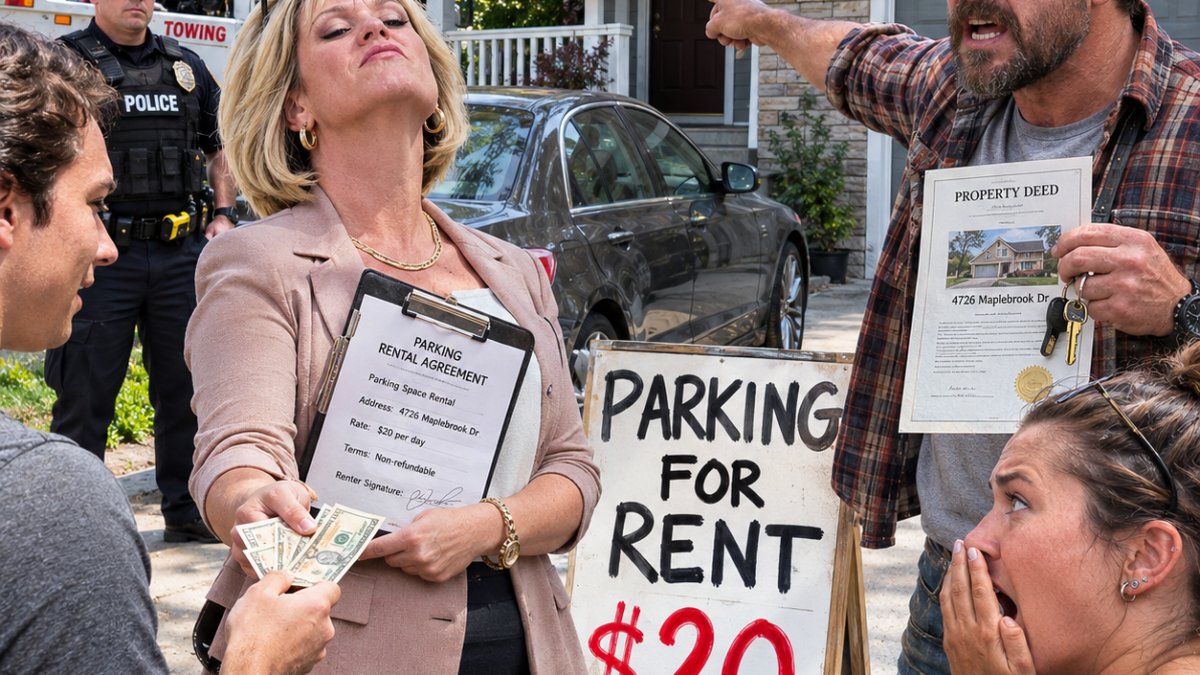
I came home from helping my sister recover from surgery and found seven strangers’ cars packed into my private driveway while my neighbor sat on my porch charging people cash to park at a house she didn’t own.
Then she looked me straight in the eye, told a customer that **she owned my home**, and threatened to call the police on me for trespassing.
For several seconds, I honestly wondered whether exhaustion had finally broken something in my brain.
I had been gone only three days.
Three exhausting days.
My sister lived about four hours away, and she had needed surgery. Nothing immediately life-threatening, but serious enough that she couldn’t lift much afterward and definitely couldn’t manage her two young kids by herself.
So I packed a bag, locked up my house, and drove out to help.
The timing couldn’t have been worse.
That weekend was the beginning of the Bell Ridge Bloom Festival.
If you’ve never lived in a small historic town with one giant annual festival, imagine your peaceful neighborhood being dropped into the middle of a county fair for ten days.
Bell Ridge was normally quiet.
Old houses.
Big porches.
People walking dogs.
Neighbors who waved whether they liked you or not.
Then the Bloom Festival arrived.
Food trucks.
Art tents.
Flower displays.
Live bands.
Craft booths.
Families.
Tour buses.
Influencers posing in front of every blooming tree they could find.
Our town wasn’t built for that kind of crowd.
On an ordinary week, Bell Ridge felt half asleep.
During the festival, hundreds of thousands of visitors seemed to pour through streets designed for horse-drawn carriages.
Parking became warfare.
Official lots filled before breakfast.
The city closed certain streets.
Temporary lots charged ridiculous rates.
People started hunting for any square of pavement that looked remotely available.
And my house had one feature that made it especially tempting.
The driveway.
It was a wide gravel drive running along the side of my old Craftsman house.
If cars parked carefully, I could fit six or seven vehicles there.
Normally, that was great.
Friends could visit.
Family could park.
Contractors had space.
During festival week, it became a magnet for strangers.
Every year, I had to chase people away.
Some would pull halfway into the drive and pretend they hadn’t noticed the sign.
Some would ask nicely.
Some would park and disappear before I could stop them.
So before leaving for my sister’s place, I prepared.
Two signs.
**PRIVATE PROPERTY — NO FESTIVAL PARKING.**
One near the sidewalk.
One beside the house.
Then I stretched a light plastic chain across the driveway.
Not something that could stop a determined person.
Just something that made the message painfully obvious.
This wasn’t public parking.
Then I left town.
By Sunday afternoon, I was exhausted.
I’d spent three days helping my sister get out of bed, cooking, cleaning, changing schedules, entertaining two toddlers who seemed to have been designed specifically to prevent adults from sleeping.
I had spent one night on a couch that somehow had both a sinkhole and a metal bar in exactly the same place.
All I wanted was home.
Pizza.
A shower.
Silence.
That was it.
I turned onto my street and immediately knew getting home was going to be painful.
Pedestrians everywhere.
People carrying funnel cakes.
Kids with painted faces.
Couples wearing flower crowns.
Cars crawling bumper to bumper.
Somebody in front of me stopped in the middle of the street because they had apparently just discovered parallel parking for the first time.
It took me almost ten minutes to travel the last few hundred feet.
Then my house came into view.
And my brain stopped.
There were cars in my driveway.
Not one.
Not two.
Seven.
Seven vehicles were packed bumper to bumper from the street almost all the way to my front porch.
A minivan.
Two SUVs.
A sedan.
A little hatchback.
Another sedan.
And a pickup.
For a moment, I genuinely thought I had turned onto the wrong street.
Then I saw my porch.
My front door.
My rose bushes.
My house.
The chain was gone.
Not pushed aside.
Not broken and left hanging.
Gone.
My signs were gone too.
I sat behind the steering wheel while cars honked behind me.
Then I saw the folding table.
And the cash box.
And the woman sitting on my porch.
Lorna.
She lived two houses down.
I had known her for around three years.
Not well.
I didn’t want to know her well.
Lorna was the kind of neighbor who could transform an ordinary conversation into an inspection.
She had opinions about everything.
Shutters.
Mailboxes.
Grass height.
Trash cans.
Porch furniture.
Once, she stood in my front yard for ten minutes explaining that my rose bushes didn’t fit the “historic aesthetic” of the neighborhood and that hydrangeas would be “more cohesive.”
I had nodded.
Smiled.
Then kept the roses.
That was generally how I dealt with Lorna.
Listen.
Smile.
Ignore.
But this was different.
She was sitting on my porch wearing a neon yellow safety vest.
A clipboard rested in her lap.
A small folding table beside her held a metal cash box.
A printed sign had been taped to the front.
**OFFICIAL RESIDENT OVERFLOW PARKING**
I stared.
Someone honked again behind me.
I couldn’t stop in the road.
So I drove another block, found a questionable curb space, parked, and walked back.
The closer I got, the stranger everything became.
Lorna wasn’t alone.
A man in a minivan had pulled partially onto the edge of my yard near the porch.
She was talking to him.
“That’ll be sixty dollars for the day,” she said brightly.
“Cash or Venmo?”
The man pulled out his wallet.
I stopped walking.
PART 2
He handed her three twenties.
She opened the cash box.
Dropped the money inside.
Then handed him a printed slip.
“Put this on the dashboard so they know you’re authorized.”
He looked at the paper.
“Tow trucks won’t bother me?”
“Not with the permit displayed.”
My mouth actually fell open.
I stepped onto my own driveway.
“Lorna.”
She didn’t react immediately.
“Lorna.”
She looked up.
For less than a second, I saw pure panic.
Her eyes widened.
Her shoulders stiffened.
Then it vanished.
She smiled.
Not warmly.
Professionally.
As though I had arrived at the front desk of a hotel.
“Oh.”
She tilted her head.
“Hello.”
I stared at her.
The man with the minivan looked between us.
Lorna continued:
“Can I help you?”
I almost laughed.
“What are you doing?”
She adjusted the clipboard.
“We’re full for the next hour.”
“What?”
“If you’re looking for parking, you’ll have to wait.”
I stood there.
Speechless.
She knew me.
She absolutely knew me.
Three weeks earlier she had stood five feet from where she was currently sitting and told me my roses were historically inappropriate.
“Lorna.”
“Yes?”
“This is my house.”
The minivan driver froze with one hand still on his door.
Lorna didn’t even blink.
Instead, she stood slowly.
“This property is under my management during the festival.”
“No.”
I looked around.
Seven cars.
Cash box.
Table.
Permit slips.
“No, it isn’t.”
Her expression hardened.
“You need to step away from the parking area.”
“My parking area.”
“Please don’t cause a scene.”
I stared at her.
“Where are my signs?”
“What signs?”
“My private-property signs.”
“I didn’t see any.”
“The chain?”
She shrugged.
“You’re being disruptive.”
The minivan driver cleared his throat.
“Uh, is everything okay?”
Lorna’s whole voice changed.
Friendly again.
Customer-service sweet.
“Everything is fine, sir.”
She gestured toward me.
“This gentleman is a neighbor. He gets a little emotional during festival week.”
I felt my face get hot.
Not embarrassment.
Rage.
“Neighbor?”
I pointed at my front door.
“I live there.”
The driver looked at the house.
Then me.
Then Lorna.
Lorna laughed lightly.
“He doesn’t own this property.”
Something in me went completely still.
I heard the festival music from several streets away.
People talking.
Cars moving.
Someone laughing.
But for a moment, all of it seemed distant.
“What did you just say?”
She looked directly at me.
“I own and manage the property.”
There it was.
Clear.
Confident.
Not confused.
Not joking.
A lie.
The man with the minivan said:
“Wait. You own this house?”
“Yes.”
Lorna answered immediately.
“For several years.”
I almost couldn’t believe the nerve.
“You were in my yard three weeks ago.”
She ignored me.
I reached into my pocket.
Pulled out my keys.
Held them up.
“My keys.”
Then my wallet.
“My driver’s license has this address.”
Lorna smiled.
“Anyone can have an old address on an ID.”
“Old?”
“You no longer have permission to be here.”
I stepped closer to the porch.
“Get off my property.”
She raised the clipboard as though it were some kind of shield.
“You need to calm down.”
“Get your table off my porch.”
“I have a city permit.”
“No, you don’t.”
“Yes, I do.”
“Show me.”
She reached underneath the clipboard.
Pulled out a sheet of paper.
Held it toward me.
I didn’t even need to touch it.
Pixelated city seal.
Crooked margins.
Three different fonts.
Some kind of temporary parking authorization language printed badly across the page.
It looked like something created in ten minutes using a home printer and an internet logo.
“That’s fake.”
“It is not.”
“That city seal looks like you downloaded it from Google Images.”
The minivan guy’s face changed.
Lorna snapped:
“You don’t know what you’re talking about.”
“What department issued it?”
“The city.”
“Which department?”
“Events.”
“Who signed it?”
“You’re harassing me.”
“No.”
I pulled out my phone.
“I’m calling the police.”
That changed her.
Not completely.
But enough.
She stepped off the porch.
“You don’t need to do that.”
“I absolutely do.”
“You’re embarrassing yourself.”
“I’m standing outside my own house while my neighbor sells parking spaces in my driveway.”
“You are creating unnecessary drama.”
“You told that man you own my house.”
“I manage the property.”
“No. You said you own it.”
Her mouth tightened.
The minivan driver slowly held out the permit slip.
“I think I want my sixty dollars back.”
Lorna turned.
“There are no refunds once a parking space has been assigned.”
“What?”
“You paid for the reservation.”
“If he owns the house, I didn’t pay for anything.”
“He does not own this house.”
I laughed.
“Give him his money.”
“This doesn’t concern you.”
“It literally happened on my porch.”
The man looked increasingly nervous.
“I just want the sixty back.”
Lorna snapped:
“No refunds.”
Then she turned to me.
“And if you don’t leave, I’ll have you removed for harassment and trespassing.”
That was almost impressive.
“You’re going to call police on me?”
“If necessary.”
“For trespassing?”
“Yes.”
“At my house?”
“You keep repeating that.”
“Because it keeps being true.”
I hit the call button.
She moved toward me.
“Don’t.”
I stepped back.
“Don’t what?”
“Turn this into something bigger.”
“You did that.”
The dispatcher answered.
I gave my location.
Then tried to explain what was happening without sounding insane.
“I just got home from being out of town for three days. My neighbor is sitting on my porch charging strangers to park in my private driveway.”
There was a pause.
An actual pause.
Then:
“She’s charging them?”
“Yes.”
“Does she have permission?”
“No.”
“Is this a landlord situation?”
“No. I own the house.”
Lorna shouted from several feet away:
“He does not!”
The dispatcher asked:
“Who is that?”
“My neighbor.”
Lorna rushed closer.
“He is harassing me!”
The dispatcher said:
“Sir, stay where you are. An officer will respond.”
“How long?”
“With festival traffic, it could be twenty minutes.”
“Okay.”
I hung up.
Lorna was breathing hard.
“You’ve completely overreacted.”
“No.”
“This could have been handled privately.”
“You rented out my driveway.”
“I was helping.”
“Who?”
“The neighborhood.”
“How?”
“Visitors need parking.”
“So?”
“You weren’t using the driveway.”
I stared at her.
For the first time, something close to honesty had slipped through.
The house had been empty.
I had been gone.
She had seen unused space.
And in her mind, unused meant available.
“You knew I was gone.”
She looked away.
“How did you know?”
“I saw you leave.”
“When?”
“Friday.”
A cold feeling moved through me.
“You watched me leave.”
“That’s not what I said.”
“You knew I was gone.”
“The neighborhood is observant.”
I looked at my missing chain.
The missing signs.
The cash box.
“How many days have you been doing this?”
She didn’t answer.
“Lorna.”
“This is none of your business.”
I laughed in disbelief.
“How much money have you made off my property?”
Her eyes narrowed.
“You don’t get to audit me.”
I pointed at the table.
“That is sitting on my porch.”
The minivan driver said:
“Seriously, lady, give me my money back.”
She spun around.
“I said no refunds!”
He stared at her.
Then at me.
Then sighed.
“I’m not getting involved.”
He got into his minivan.
Backed out.
And drove away.
Without the sixty dollars.
Lorna watched him go.
Then looked at me with fury.
“Do you have any idea what you’re doing?”
“Yes.”
“You’re costing me money.”
I almost laughed again.
“Your money?”
“Yes!”
“You’re stealing money from strangers by pretending you own my home.”
“I am providing a service.”
“On property you don’t own.”
“The property was sitting empty!”
“For three days!”
She threw both hands up.
“And?”
That single word told me more about Lorna than any argument ever could.
And?
As if ownership expired when you took a weekend trip.
As if an empty driveway became public inventory.
As if my absence created opportunity.
I sat down on the lowest porch step.
My porch.
“I’m waiting for police.”
She paced.
“Fine.”
“Good.”
“I’ll explain everything.”
“I hope you do.”
For the next fifteen minutes, we existed in some bizarre split reality.
Every time festival visitors appeared, Lorna transformed.
Professional smile.
Clipboard.
Helpful tone.
Then she looked at me and became furious again.
A couple returned to an SUV already parked in the driveway.
Lorna stood.
“Hope you enjoyed the festival!”
I stood too.
“Before you leave, you should know she doesn’t own this property.”
The couple stopped.
Lorna snapped:
“Sit down.”
I ignored her.
“How much did you pay?”
The woman looked confused.
“Fifty.”
“To her?”
“Yes.”
Lorna stepped between us.
“Please ignore him.”
I pointed at the front door.
“That’s my house.”
The man looked at Lorna.
“You said you lived here.”
“I manage it.”
“You said you owned it.”
“That is effectively the same thing.”
“No, it isn’t,” I said.
The couple got into their SUV.
Left.
Lorna turned on me.
“You need to stop.”
“No.”
“You’re interfering with my business.”
“That’s the idea.”
“You cannot deliberately sabotage someone’s business.”
“You do not have a business.”
“People paid voluntarily.”
“Because you lied.”
She was shaking now.
Not afraid.
Angry.
Her performance depended on customers accepting the story without questioning it.
I was turning questions into a weapon simply by standing there.
A group of college kids came walking up.
Laughing.
Carrying festival bags.
One held a giant stuffed flower.
Lorna brightened.
“Everything okay today?”
“Yeah,” one of them said. “Great spot.”
“How much did you pay?” I asked.
They looked at me.
Lorna’s face tightened.
“Don’t.”
One kid said:
“Forty, I think?”
I nodded toward Lorna.
“She doesn’t own this house.”
Silence.
“She sold you parking on my private property.”
One of the kids laughed.
Then saw my face.
“Oh.”
Lorna stepped toward them.
“He’s lying.”
I pulled my keys out.
Walked to the front door.
Unlocked it.
Opened it.
Went inside.
Then came back.
The kids stared.
One said:
“Dude.”
Another looked at Lorna.
“You serious?”
Lorna’s face turned red.
“He’s a squatter.”
I almost dropped my keys.
“What?”
“He has been attempting to claim the property.”
One of the kids looked at me.
Then at the open door.
Then back at her.
“You’re saying he’s squatting?”
“Yes.”
“In a house he has keys to?”
“He obtained them improperly.”
I stared at her.
The kid said:
“I’m leaving.”
“Your permit is valid all day,” Lorna said.
“Nope.”
They piled into the car.
Backed out fast.
Nearly clipped my mailbox.
Then disappeared.
Lorna turned.
“Do you know how much money you’re costing me?”
That was when I lost the last bit of patience I had.
I stepped toward her.
Not threatening.
Just enough that she had to look directly at me.
“You are not losing money.”
My voice was quiet.
“You are being stopped from stealing more of it.”
Her eyes widened.
“How dare you.”
“You tore down my private-property signs.”
“I did not.”
“You removed my chain.”
“It was a safety hazard.”
“You sold my driveway.”
“It was unused.”
“You’re sitting on my porch.”
“This is a community-facing property.”
“What does that even mean?”
“You’re selfish.”
There it was.
The moral justification.
People like Lorna rarely want to see themselves as greedy.
They prefer righteous.
I was selfish.
She was helping.
The tourists needed parking.
The community needed support.
The empty driveway was being wasted.
The cash just happened to go into her box.
“You’re charging people sixty dollars.”
“Official lots charge more.”
“And where does the money go?”
“Neighborhood improvements.”
I looked at the table.
A piece of paper had been taped beside the cash box.
A QR code.
Underneath:
**VENMO: @Lorna-BR**
I pointed.
“Your personal Venmo?”
She glanced down.
“That’s temporary.”
“So you’re collecting community improvement money into your private account.”
“It’s easier.”
“Sure.”
“You’re twisting everything.”
“No.”
I shook my head.
“I’m just repeating what you’re doing.”
Then the first police cruiser appeared.
Slowly.
Moving through festival traffic.
Lorna saw it before I did.
Everything changed.
She grabbed the cash box.
Fast.
Held it against her chest.
For half a second, I thought she might run.
Instead, she rushed toward the street.
The cruiser stopped.
An officer stepped out.
He looked exhausted.
Dust on his uniform.
Face flushed from the heat.
The expression of a man who had been handling parking complaints for eight straight hours and had just been handed another one.
Lorna got to him first.
“Officer!”
Her voice cracked.
“Thank God.”
She pointed at me.
“This man is harassing me.”
The officer raised one hand.
“Okay.”
“He has been screaming at me, threatening me, interfering with my customers—”
“I haven’t threatened anyone.”
“Sir.”
The officer looked at me.
“I’ll get to you.”
I nodded.
Lorna continued.
“He’s claiming he owns my property.”
The officer looked toward the house.
“Your property?”
“Yes.”
I almost admired her commitment.
The officer asked:
“You own that house?”
“Yes.”
“How long?”
“For years.”
My eyebrows went up.
The lie had grown.
The officer pulled out a small notebook.
“Address?”
She gave it.
My address.
“Identification?”
Her face changed.
“My ID has my office address.”
“Okay. Do you have anything showing ownership?”
“All my paperwork is inside.”
“Keys?”
“I left them inside.”
The officer looked at her.
Then toward the front door.
“You’re locked out?”
“Yes.”
I stepped forward.
“Officer?”
He turned.
I handed him my driver’s license.
“My address.”
He looked.
Then looked at the house number.
Same.
“I just returned from visiting my sister.”
Lorna interrupted:
“He changed his ID.”
I almost laughed.
The officer didn’t.
“How recently did you move here, sir?”
“Several years ago.”
“Do you have documentation inside?”
“Yes.”
“Can you access the house?”
“Yes.”
Lorna said:
“You cannot let him enter!”
The officer looked at her.
“Why?”
“Because it’s my property.”
He turned back to me.
“Go ahead.”
I walked to the front door.
My hands were actually shaking now.
Not because I feared I would be proven wrong.
Because the insanity had reached the point where I was having to demonstrate to a police officer that my own house was mine.
I unlocked the door.
Went inside.
Everything looked normal.
My bag from Friday still sat near the wall.
Mail on the table.
Shoes.
Jacket.
A framed photograph.
Evidence of ordinary life.
I grabbed a utility bill.
Then a property tax statement from a drawer.
Walked back outside.
Handed both to the officer.
He compared the name.
Address.
Driver’s license.
Then looked at Lorna.
“Ma’am.”
She clutched the cash box tighter.
“This is over.”
“No.”
“Yes.”
“You don’t understand.”
“I understand enough.”
“He’s manipulated records.”
The officer stared at her.
“Are you saying he forged his driver’s license, utility bill, and property tax statement?”
“He’s been planning this.”
The officer looked at me.
I raised both hands slightly.
“I found her selling spaces when I got home.”
He turned back to Lorna.
“Do you have any proof at all that this house belongs to you?”
“The permit.”
She held out her fake city document.
The officer took it.
Read.
His expression changed.
“Where did you get this?”
“City events office.”
“Which office?”
“The festival department.”
“There is no festival department.”
Her mouth opened.
Closed.
He examined the page more closely.
“This seal is distorted.”
“It printed badly.”
“There’s no permit number.”
“It’s temporary.”
“No issuing official.”
“It was emailed.”
“Show me the email.”
“My phone is at home.”
I looked at the phone in her hand.
The officer did too.
She noticed.
“This is my other phone.”
There are lies that survive because nobody wants to challenge them.
And then there are lies that die from their own weight.
Lorna’s had reached the second stage.
The officer handed the paper back.
“Pack up.”
She blinked.
“What?”
“The table. Chair. Sign. All of it.”
“You’re taking his side?”
“I’m taking the side of the documentation currently in front of me.”
“This is unbelievable.”
“And you need to tell me what’s in the cash box.”
Her grip tightened.
“Donations.”
“For what?”
“The neighborhood.”
I pointed at the Venmo code.
“Personal account.”
The officer looked.
Then looked at her.
“Why is your personal payment account being used for neighborhood donations?”
“It was convenient.”
“Who authorized you to collect them?”
“The committee.”
“What committee?”
“Neighborhood watch.”
“Do they know you’re running paid parking here?”
She didn’t answer.
The officer’s eyes narrowed.
“Ma’am?”
“I was going to tell them.”
I laughed.
Couldn’t help it.
She whipped around.
“This is not funny!”
“No.”
I shook my head.
“It’s really not.”
The officer said:
“Are these people paying because you told them you owned or controlled this property?”
Lorna said nothing.
I answered:
“Yes.”
“You heard her say that?”
“Multiple times.”
A woman appeared near the driveway holding a turkey leg nearly the size of her forearm.
She looked at the cruiser.
Then at us.
“Is my car getting towed?”
The officer asked:
“Which one is yours?”
“Blue SUV.”
I said:
“You’re not getting towed.”
She relaxed.
Then I added:
“But you were scammed.”
“What?”
I pointed toward Lorna.
“She doesn’t own the house.”
The woman stared.
“What?”
“How much did you pay?”
“Eighty dollars.”
I looked at Lorna.
“Eighty?”
The woman held up her little printed permit.
“VIP parking.”
For a moment even the officer looked like he might laugh.
He didn’t.
“Ma’am, who did you pay?”
She pointed at Lorna.
“Her.”
“Cash?”
“Yes.”
“Where did the money go?”
The woman pointed.
“That box.”
Lorna hugged it tighter.
The officer said:
“Open it.”
“What?”
“Open the cash box.”
“That’s private.”
“You just said it contained community donations.”
Lorna’s face flushed.
“Do I need to?”
“I’m asking as part of my investigation.”
Slowly, she placed the box on the table.
Opened it.
Cash.
A lot.
Twenties.
Fifties.
Tens.
Some folded.
Some clipped.
The officer stared.
“How much is here?”
“I don’t know.”
“You’ve been collecting all day?”
“People voluntarily contributed.”
The turkey-leg woman said:
“I paid eighty.”
Lorna snapped:
“No one asked you.”
The officer looked at her sharply.
“Stop.”
Lorna went silent.
He turned to the woman.
“You may want to file a report if you believe you paid based on fraudulent representations.”
“I absolutely do.”
That was the moment I watched Lorna realize this was no longer just an argument with me.
She had customers.
Victims.
Witnesses.
People who had receipts.
Venmo records.
Fake permits.
And suddenly the festival crowd she had viewed as easy money had become evidence.
The officer asked:
“How many vehicles are currently parked here?”
I counted.
“Five now.”
“Were there more earlier?”
“Yes.”
“How many?”
“At least seven when I arrived.”
Lorna said:
“Not all of them paid.”
The officer looked at her.
“So some did?”
She froze.
I almost smiled.
He wrote something down.
“How much were you charging?”
“Suggested donations.”
Turkey-leg woman raised her permit.
“This says eighty-dollar VIP parking.”
The officer looked at the paper.
Then at Lorna.
She seemed to shrink.
Over the next thirty minutes, owners returned.
One by one.
The officer explained.
I explained.
Lorna stopped explaining anything.
A family had paid sixty.
Another couple fifty.
Someone else had used Venmo.
One man had a screenshot where Lorna had apparently advertised “private residential parking” through a local festival social media group.
That was new.
I looked at her.
“You advertised my driveway?”
She stared at the ground.
The officer asked:
“Online?”
The man showed him the post.
A photo.
My house.
My driveway.
Caption:
**PRIVATE RESIDENTIAL FESTIVAL PARKING — SAFE, CLOSE, OWNER-MANAGED — LIMITED SPACES**
My stomach turned.
My home had been photographed and advertised while I was away.
That felt more invasive than seeing the cars.
The officer took a photo of the post.
I asked:
“Is that legal?”
He said:
“We’re going to document everything.”
Lorna muttered:
“It was public information.”
I turned toward her.
“My house is not your product.”
She rolled her eyes.
That tiny gesture almost brought the anger back full force.
But then I looked at the people standing around.
They looked embarrassed.
Some worried their cars would be towed.
Some angry about the money.
None of them knew.
They weren’t the enemy.
I told the officer:
“I don’t want the cars towed.”
Lorna looked surprised.
The officer asked:
“You sure?”
“Yes.”
“These people were lied to.”
The turkey-leg woman said:
“Thank you.”
I nodded.
“I just want my driveway cleared.”
One by one, the cars left.
Gravel appeared again.
The side of my house.
The garden edge.
The walkway.
My driveway slowly became mine.
When the last vehicle backed out, I felt a strange amount of relief.
Space should not feel emotional.
That afternoon it did.
The officer took Lorna’s information.
He documented the cash.
The permits.
The fake city document.
Venmo.
Social media advertisement.
He told several victims how to file reports.
Then he looked at me.
“You want to pursue trespassing?”
I looked at Lorna.
She stared back.
No apology.
No embarrassment.
Just rage.
“Yes.”
She laughed bitterly.
“Of course.”
The officer said:
“Ma’am, stop.”
She began packing the table.
Folding chair.
Cash box.
Clipboard.
Permits.
Slowly.
Furiously.
When she finished, she dragged everything toward the sidewalk.
Then turned.
“You’re selfish!”
Half the block heard her.
“You’d rather leave this driveway empty than help families enjoy the festival.”
I stared at her.
“Those families paid you.”
“They needed parking.”
“You needed cash.”
“You hate this community.”
“No.”
“You always have.”
I shook my head.
“You don’t get to steal from people and call it community service.”
She pointed at the house.
“You don’t deserve a driveway that big if you won’t share it.”
That sentence was so perfectly Lorna that I almost smiled.
“You know what?”
“What?”
“Next time you want to be a landlord, buy the house first.”
The turkey-leg woman laughed.
Lorna’s face went red.
She dragged her table home.
I thought that was the end.
It should have been.
Police.
Witnesses.
Documentation.
Public humiliation.
What else could possibly happen?
A lot, apparently.
For the rest of festival week, Lorna stayed mostly inside.
Her blinds remained closed.
Her porch empty.
But I could feel the tension.
Two houses down.
Close enough to see.
Close enough to know she was there.
The festival continued.
Music.
Crowds.
Food.
Cars.
This time I replaced my signs.
And upgraded the chain.
Then I installed a camera.
Actually, three cameras.
One facing the driveway.
One porch camera.
One covering the side yard.
People still asked to park.
I said no.
One guy offered me a hundred dollars.
I still said no.
Not because I hated money.
Because after what happened, I wanted the driveway empty.
Mine.
For at least one festival.
Three days later, Marcus knocked.
He had lived on the street longer than either Lorna or me.
Good guy.
Retired contractor.
The sort of neighbor who knew everybody’s history but rarely repeated it unless there was a reason.
I opened the door.
“Coffee?”
“Sure.”
He came inside.
Sat at my kitchen table.
Then gave me the expression people use before delivering bad news.
“What?”
He rubbed his jaw.
“Lorna’s talking.”
“I assumed.”
“She’s telling people you assaulted her.”
I stopped pouring coffee.
“What?”
“Says you got in her face.”
“I didn’t.”
“I know.”
“Says you threatened her.”
“I didn’t.”
“I know.”
“What else?”
Marcus sighed.
“She says you tried to steal the parking cash.”
I stared at him.
“Her parking cash.”
“Yep.”
“The money she collected using my house.”
“Yep.”
“What about the police?”
“According to her, they were lazy and sided with you because they didn’t want paperwork during the festival.”
I laughed.
It sounded absurd.
Then I stopped.
Because absurd stories can still damage people.
“Who believes her?”
“Not many.”
“Not many isn’t none.”
“No.”
He looked serious.
“That’s why I came over.”
“Anything else?”
“She says she had permission from the city.”
“Police already saw the fake permit.”
“I know.”
“She says I’m a squatter?”
Marcus almost smiled.
“She adjusted that part.”
“To what?”
“Disputed ownership.”
I stared.
“Disputed by who?”
“Apparently her.”
I stood.
Walked to the window.
Her house sat two doors away.
Blinds closed.
I felt something sick settle in my stomach.
The parking scam had been outrageous.
This was different.
This was narrative warfare.
The kind where somebody knows the facts are against them and decides the facts themselves are the enemy.
“I’m going to the police.”
Marcus nodded.
“Good.”
The incident report already existed.
The body-camera footage existed.
Victim statements.
My documents.
The fake permit.
Venmo.
Social media ad.
I made sure the officer knew she was now accusing me of assault.
He documented that too.
Then I contacted the neighborhood watch committee.
Lorna loved that committee.
It was her kingdom.
She wasn’t technically in charge of the neighborhood.
But the watch group gave her exactly what she craved.
A title.
An email list.
A reason to knock on doors.
A reason to tell people what they should be doing.
They held a meeting the following week.
I was invited.
So was Lorna.
The community room wasn’t large.
Maybe twenty chairs.
A coffee machine.
Bulletin board.
Several people attended.
Lorna arrived first.
Of course.
She had printed materials.
Folders.
I had nothing except copies of the police report and property documents.
The committee chair opened the meeting.
“We’re here because serious concerns have been raised about conduct during the festival.”
Lorna immediately spoke.
“I want it on record that I was acting in the community’s best interest.”
The chair held up a hand.
“You’ll have a chance.”
“I’m being publicly targeted.”
“You’ll have a chance.”
She crossed her arms.
I almost recognized the posture from my porch.
The chair turned to me.
“Can you explain what happened?”
I did.
Short version.
Out of town.
Returned.
Cars.
Cash.
False ownership claim.
Fake permit.
Police.
Then I handed over the report.
Lorna laughed.
“That officer didn’t investigate anything.”
The committee chair asked:
“Did you collect money?”
“Donations.”
“From people parking at his home?”
“Using excess driveway capacity.”
I stared.
Excess driveway capacity.
“That is my driveway.”
She ignored me.
The chair asked:
“Did you have his permission?”
“I believed neighborhood festival policy allowed temporary shared use.”
“Do you have that policy?”
“It’s understood.”
“Written?”
“It doesn’t have to be written.”
Someone in the room laughed.
Lorna turned sharply.
The chair continued.
“Did you tell people you owned the property?”
“No.”
I almost jumped out of my chair.
“Yes, you did.”
She glared.
“I said I managed it.”
“The police officer asked if the house was yours and you said yes.”
“That was confusion.”
“You said you had owned it for years.”
“I was under stress.”
“So you lied?”
She snapped:
“You were screaming at me.”
“I wasn’t.”
“I felt threatened.”
Feeling.
That word.
A convenient bridge between false accusation and untouchable personal experience.
I lowered my voice.
“There were multiple witnesses.”
“And I have my experience.”
The chair asked:
“Were you assaulted?”
Lorna hesitated.
That was important.
Because outside the room, she had said yes.
Now records existed.
Witnesses existed.
Possibly body camera.
“I felt physically intimidated.”
“That wasn’t the question.”
She looked furious.
“No.”
The chair wrote something.
“Were you threatened with violence?”
Another hesitation.
“No.”
“Did he attempt to take the cash box?”
“No.”
The room became silent.
The chair looked at her.
“Then why have several neighbors been told he assaulted you, threatened you, and tried to steal the cash?”
Lorna’s face changed.
Not shame.
Exposure.
“People misunderstood what I said.”
Marcus spoke from the back.
“I didn’t.”
She turned.
“You weren’t even there.”
“No. But you told me yourself.”
She froze.
Marcus continued.
“You said he shoved you.”
I looked at him.
That was worse than I knew.
“She said what?”
Lorna’s face flushed.
“I said he crowded me.”
“No,” Marcus said. “You said he shoved you away from the cash box.”
The committee chair looked at Lorna.
“Did that happen?”
“No.”
The word came quietly.
There it was.
A lie exposed in front of the very group she cared about.
The chair removed her glasses.
“Lorna, this committee cannot continue allowing you to represent neighborhood safety if you are making false accusations against residents.”
Lorna stood.
“So that’s it?”
No one answered.
“All the things I’ve done for this neighborhood?”
The chair said:
“This is about what happened now.”
“I organize patrols.”
“I know.”
“I run festival coordination.”
“You were never authorized to sell private parking.”
“I made hundreds of dollars for neighborhood improvements!”
“Where is the money?”
Lorna stopped.
That question had arrived too late for her.
The chair repeated:
“Where is it?”
“In my account temporarily.”
“How much?”
“I haven’t totaled it.”
“Have you returned any money?”
“No.”
“Why not?”
“Because those people received parking.”
Several heads turned.
Even after everything, she still didn’t see the problem.
The chair’s voice softened.
“You need to step down.”
Lorna stared.
“No.”
“This is not optional.”
“You can’t remove me.”
“The committee can.”
“I built this program.”
“And you violated trust.”
“This neighborhood is ungrateful.”
She grabbed her folder.
“You’ll regret this.”
Then walked out.
The door slammed.
The room remained quiet.
I expected satisfaction.
I did feel some.
But mostly I felt tired.
A woman had taken something absurdly simple—an empty driveway—and turned it into police reports, fraud complaints, false assault accusations, and removal from the one community role she cared about.
All because she saw unused space and thought:
*Why shouldn’t it be mine?*
That was what bothered me most.
Entitlement often sounds like generosity when the entitled person tells the story.
She wasn’t stealing parking.
She was “helping tourists.”
She wasn’t pocketing money.
She was “fundraising.”
She wasn’t trespassing.
She was “managing unused capacity.”
I wasn’t protecting property.
I was “selfish.”
Language can do strange things when people use it to anesthetize their conscience.
The legal consequences developed slowly.
The city confirmed no temporary parking permit had been issued for my address.
No department had authorized Lorna.
The fake document became part of the report.
Several people filed complaints about money.
Some had Venmo records.
Others had printed permits.
A few had screenshots of the advertisement.
I didn’t follow every detail.
I had already lost enough time to Lorna.
I made my statement.
Provided evidence.
Responded when contacted.
Then stepped back.
What I cared about was protecting my home.
I added a proper removable bollard system at the driveway entrance.
Not pretty.
Effective.
I upgraded the cameras.
And I kept the signs.
The rest of festival week passed without anyone parking there.
On the final Saturday, I sat on my porch.
Same porch Lorna had turned into her parking office.
Festival music drifted through town.
People walked past.
I had a pizza box beside me.
Cold beer in my hand.
Exactly what I had wanted the day I came home.
Then a family stopped near the driveway.
A father looked at the sign.
Then at me.
“Hey, man.”
“Yeah?”
“Any chance we could park here?”
I smiled.
“No.”
“Even for cash?”
“No.”
He laughed.
“Had to ask.”
“No problem.”
They walked away.
That tiny interaction felt almost therapeutic.
Someone asked.
I answered.
They respected the answer.
That’s how boundaries are supposed to work.
No police.
No cash box.
No fake permits.
No declarations of ownership.
Just no.
And acceptance.
Weeks went by.
Then months.
Lorna remained my neighbor.
That part was awkward.
You don’t get a clean cinematic ending where the villain disappears immediately.
Sometimes they still live two houses down.
You still see them collecting mail.
Taking trash cans out.
Driving past.
The first few times we crossed paths, she stared straight ahead.
Then one morning, we ended up at our mailboxes at the same time.
I considered going back inside.
Instead, I stayed.
She opened her mailbox.
I opened mine.
Neither of us spoke.
Then she said:
“Happy now?”
I looked at her.
“With what?”
“You got me removed.”
“I didn’t remove you.”
“You complained.”
“You lied.”
She slammed her mailbox closed.
“You destroyed my reputation.”
“No.”
My voice stayed calm.
“You did that.”
She laughed bitterly.
“Always so righteous.”
“I’m not righteous.”
“Could’ve just let people park.”
“That stopped being the issue when you said you owned my house.”
She looked away.
“I panicked.”
“You repeated it to the police.”
“I was under pressure.”
“You made fake paperwork.”
Silence.
“You advertised my property online.”
Silence.
“You told people I assaulted you.”
Her face tightened.
“I said you were aggressive.”
“You told Marcus I shoved you.”
She looked at me.
“Maybe I remembered it differently.”
I stared.
There are some conversations where you realize the other person would rather rewrite memory than accept guilt.
That was one.
“Take care, Lorna.”
I walked back toward the house.
She called after me:
“You think you’re better than everyone!”
I stopped.
Turned.
“No.”
I thought about it.
“I just think my house belongs to me.”
Then I went inside.
That became the last real argument we had.
Months later, I heard from one of the festival visitors.
The turkey-leg woman.
Her name was Diane.
She recognized me at a coffee shop.
“You’re the driveway guy.”
Not exactly how I wanted to be known.
“Apparently.”
She laughed.
“Did you ever get everything resolved?”
“Mostly.”
“I got my eighty back.”
“Good.”
“Police contacted me.”
“I’m sorry you got dragged into it.”
She shrugged.
“Weirdest festival parking experience of my life.”
“I hope so.”
Then she became serious.
“You know what bothered me?”
“What?”
“I believed her immediately.”
I understood.
“She had a vest.”
“Exactly.”
“She had permits.”
“Fake permits.”
“I didn’t know.”
She shook her head.
“She acted like she belonged there.”
That was it.
Confidence.
We often mistake confidence for legitimacy.
Lorna didn’t need a deed.
She needed a chair.
Clipboard.
Vest.
Cash box.
Printed papers.
A convincing tone.
People filled in the rest.
Of course she owns it.
Why else would she be sitting on the porch?
Why else would she be taking payments?
Why else would she have permits?
That psychological shortcut made the scam work.
And maybe that was why my arrival made her so angry.
I didn’t just threaten the money.
I threatened the illusion.
The actual homeowner standing in the driveway made every prop suddenly look cheap.
Years later, I still live in the same house.
Same rose bushes too.
Mostly because I like them.
Partly because I still smile remembering Lorna telling me hydrangeas would be more historically cohesive.
The driveway is still wide.
Festival parking is still terrible.
Visitors still ask.
But nobody parks without permission anymore.
The story spread farther than I expected.
Not because I told everyone.
Because small towns do that for you.
People started referring to the year Lorna “rented out someone else’s house.”
That description wasn’t technically perfect.
She rented out parking.
But she had claimed ownership.
Close enough.
Her neighborhood-watch removal lasted.
Someone else took over.
A retired paramedic.
Nice guy.
His first festival email was one paragraph.
**Please respect private property. Do not park in residential driveways without express owner permission.**
I laughed when I read it.
That rule had apparently needed clarification.
Lorna eventually stopped attending neighborhood events.
I didn’t celebrate that.
By then, anger had cooled into something else.
Disappointment, maybe.
Because beneath all the ridiculousness, what she did said something ugly about how she viewed other people.
Their boundaries mattered only until she saw an opportunity.
Their property mattered only if they were physically present.
Their money was hers if she could invent a justification.
That is a lonely way to move through the world.
Always looking at other people’s space and asking what you could extract from it.
I didn’t want to become the opposite version of that.
Obsessive.
Suspicious.
Protective to the point that everything became a threat.
So I kept the driveway secured during festival week.
Then opened it back up afterward.
Friends parked there.
Family.
Contractors.
Neighbors sometimes asked to use it.
Often I said yes.
Marcus once had relatives visiting.
“Can they leave two cars in your drive overnight?”
“Sure.”
He smiled.
“Free?”
“Get out.”
He laughed.
That joke became a neighborhood thing for a while.
“Can I park here?”
“Only if you have the official resident overflow permit.”
“VIP rate?”
“Eighty.”
Then we would laugh.
Humor slowly reclaimed something Lorna had poisoned.
The following spring festival was the real test.
I expected tension.
Instead, the weekend was boring.
I put up the sign.
Installed the bollard.
Left town for one afternoon.
Came home.
Empty driveway.
I stood there longer than necessary.
Nothing had happened.
There is a weird kind of happiness in problems not occurring.
I pulled in.
Parked.
Then noticed an envelope in the mailbox.
For one horrible second, I thought it might be from Lorna.
It wasn’t.
The return address belonged to the city festival office.
Inside was a short letter reminding residents that unauthorized paid parking operations on private property were prohibited.
Apparently my experience had inspired new enforcement guidance.
I laughed.
Then taped the notice inside the garage.
Not as a trophy.
A reminder.
One person’s refusal to accept “that isn’t yours” had created an absurd amount of paperwork for everybody else.
Later that year, I replaced the gravel.
Years of use had created ruts.
The contractor asked whether I wanted the drive widened.
I almost said no.
Then looked at the space.
“You know what? Yes.”
“Another three feet?”
“Sure.”
He smiled.
“More festival parking.”
I stared at him.
He laughed.
“Sorry. Wrong homeowner.”
The driveway became even larger.
Irony apparently has a sense of humor.
During the next Bloom Festival, someone offered me two hundred dollars for one parking spot.
I considered it.
Just for a second.
Then imagined Lorna’s little folding table.
“No thanks.”
He shrugged.
“Worth asking.”
Again:
Asked.
Answered.
Accepted.
Simple.
That’s what I came to appreciate most.
Consent turns the same action into something completely different.
If I choose to let Marcus park, that’s neighborly.
If someone cuts my chain and sells Marcus the space, that’s theft.
If I choose to charge a visitor twenty dollars, that’s my decision.
If Lorna charges sixty while claiming ownership, that’s fraud.
The physical driveway doesn’t change.
Permission changes everything.
People sometimes ask why I called the police instead of just moving the cars or confronting Lorna until she left.
Because once I realized she had fabricated ownership and was collecting money, it stopped being a neighbor argument.
If I had dragged her table into the yard?
She could claim I destroyed property.
If I grabbed the cash box?
She could say I stole money.
If I ordered drivers to leave aggressively?
Somebody could get hurt.
Calling police felt dramatic in the moment.
In retrospect, it was the calmest option.
It created a record.
It created an independent witness.
It stopped the argument from becoming my word against hers.
That mattered even more when she later accused me of assault.
Without the officer.
Without witnesses.
Without people who had been scammed.
Who knows?
A confident liar can cause enormous damage if the truth has no paper trail.
That became my real takeaway.
Document the strange things.
Not obsessively.
Just enough.
Save messages.
Take photos.
Keep records.
Especially when somebody starts rewriting reality in front of you.
Lorna’s greatest weapon wasn’t the fake permit.
It was certainty.
She said:
“I own this property.”
Like fact.
“This man is a squatter.”
Like fact.
“He assaulted me.”
Like fact.
She expected confidence to outrun verification.
For a while, it did.
Tourists paid.
People parked.
No one asked to see a deed.
Then I came home.
That was all.
The truth didn’t require a speech.
It required keys.
An ID.
A utility bill.
A property record.
Reality is surprisingly quiet compared to a lie.
One afternoon, about a year after everything happened, I was trimming the roses when Lorna walked past.
She slowed.
I expected another comment about hydrangeas.
Instead, she said:
“They look good.”
I looked at her.
“What?”
“The roses.”
I waited for the insult.
None came.
“Thanks.”
She nodded.
Then kept walking.
That was the closest thing to peace we ever reached.
No apology.
No reconciliation.
No dramatic hug.
I didn’t need one.
Sometimes a satisfactory ending is simply that the person who kept crossing your boundary finally stops.
I watched her continue down the sidewalk.
Then went back to trimming.
The roses looked good.
The driveway was empty.
The house was quiet.
Mine.
That word had once felt obvious.
After Lorna, it felt earned.
Not because ownership should have required a fight.
It shouldn’t.
But because someone had challenged the boundary so aggressively that I had been forced to think about what ownership actually meant.
It wasn’t selfishness.
It wasn’t hostility.
It wasn’t refusing community.
It was responsibility.
I paid the mortgage.
Taxes.
Insurance.
Repairs.
Maintenance.
If someone fell on the driveway, I dealt with it.
If the gravel washed out, I repaired it.
If the porch rotted, I replaced boards.
You can’t claim the benefits of somebody else’s property while leaving them all the responsibility.
Lorna wanted the driveway for ten days because it could make money.
She didn’t want the property tax bill.
The insurance premium.
The roof repair.
The old plumbing.
The foundation inspection.
Just the profitable part.
That wasn’t sharing.
That was taking.
The funny thing is, had she asked me before I left?
Maybe the entire story would have been different.
If she had said:
“Festival parking is crazy. Would you be interested in letting the neighborhood use your driveway while you’re gone? We could donate the proceeds to the park.”
Would I have agreed?
Probably not.
But maybe.
At minimum, I wouldn’t have called the police because someone asked.
Instead, she removed the signs.
Took down the chain.
Set up a table.
Printed fake permits.
Advertised the house.
Collected money.
Then lied.
Again.
And again.
And again.
That escalation was what turned entitlement into something much more serious.
Sometimes people destroy themselves trying to protect the first lie.
If Lorna had admitted the truth the second I arrived—
“You’re right. I shouldn’t have done this. I’ll return the money and clear the driveway.”
She would have been embarrassed.
That’s it.
Instead, she decided embarrassment was unacceptable.
So she claimed ownership.
Then claimed city authorization.
Then claimed I was a squatter.
Then claimed harassment.
Then assault.
Each lie existed only to protect the one before it.
By the time the truth caught up, she had risked far more than she ever made from the parking.
That might be the most satisfying part of the story.
I didn’t need to destroy her scheme.
She kept expanding it until it collapsed under its own weight.
The money wasn’t worth it.
Not compared with the neighborhood-watch position she lost.
The reputation.
The reports.
The humiliation of having a police officer stand on the sidewalk while actual property documents contradicted everything she said.
That’s how consequences often work.
People imagine accountability as something another person does to them.
But a lot of the time, accountability is simply reality arriving after denial has run out of room.
A few years have passed now.
The Bloom Festival still happens.
It still overwhelms Bell Ridge.
People still complain about parking.
Food is still overpriced.
Tourists still stand in the street taking photographs.
The flower displays are beautiful.
The music is loud.
Children get sticky.
Everyone complains.
Everyone secretly enjoys it.
I still take precautions.
Sign.
Bollard.
Camera.
But I don’t spend the whole festival angry anymore.
Sometimes I sit on the porch and watch the crowd.
The same porch.
The one where Lorna once sat with her clipboard.
The memory has become almost funny from a distance.
Almost.
Every now and then, someone stops at the edge of the drive.
“Parking?”
“No.”
“How much?”
“Not for rent.”
Usually they nod and move on.
One man once said:
“Are you sure? Someone told me this house used to sell spots.”
I smiled.
“Yeah.”
“What happened?”
“Management changed.”
He laughed.
He had no idea.
I let him walk away.
That joke was enough.
The driveway doesn’t need to be a battlefield anymore.
That was the real victory.
Not seeing Lorna lose.
Not the police cruiser.
Not the fake permit getting exposed.
Not watching the cash box opened.
The victory was getting to stop thinking about her.
Your home should not feel like a conflict.
It should be where conflict ends.
That day, I had returned exhausted from taking care of someone I loved and found a woman turning my home into a business without permission.
For a few hours, the place didn’t feel like mine.
It felt invaded.
Used.
Public.
That feeling stayed longer than I expected.
Then slowly faded.
The first quiet evening after the festival helped.
Pizza.
Cold beer.
Porch.
Empty driveway.
The second helped more.
Then a normal Monday.
Then rain.
Then autumn leaves.
Then winter.
Life layered ordinary moments over the bizarre one until it became history.
I’m grateful for that.
Because anger can become another form of trespass if you let it.
Someone hurts you.
Then they leave.
But you keep giving them space in your head.
I didn’t want Lorna occupying my house mentally after I had worked so hard to remove her physically.
So I stopped replaying the confrontation.
Stopped imagining better insults.
Stopped wondering what I could have done to humiliate her more.
She had already faced consequences.
Enough.
I kept the roses.
Kept the driveway.
Kept the house.
Kept my peace.
That felt better than revenge.
Although I’ll admit something.
Every spring, when the festival begins and I put up my **PRIVATE PROPERTY — NO FESTIVAL PARKING** sign, I still smile.
Because somewhere two houses down lives a woman who once sat on my porch, charged strangers sixty dollars to use my driveway, told me I didn’t own my own house, and threatened to call the police on me.
Then the police actually came.
And all it took to destroy her entire story was a set of house keys, a driver’s license, and one utility bill with my name on it.
She had the vest.
The clipboard.
The fake permit.
The cash box.
The confidence.
I had the truth.
In the end, that was enough.
And the last time I checked, the roses were still exactly where I wanted them.








