PART 2: My Golden Retriever Watched His Best Friend Leave on a Stretcher—Then He Refused to Leave Their Fence for 23 Days
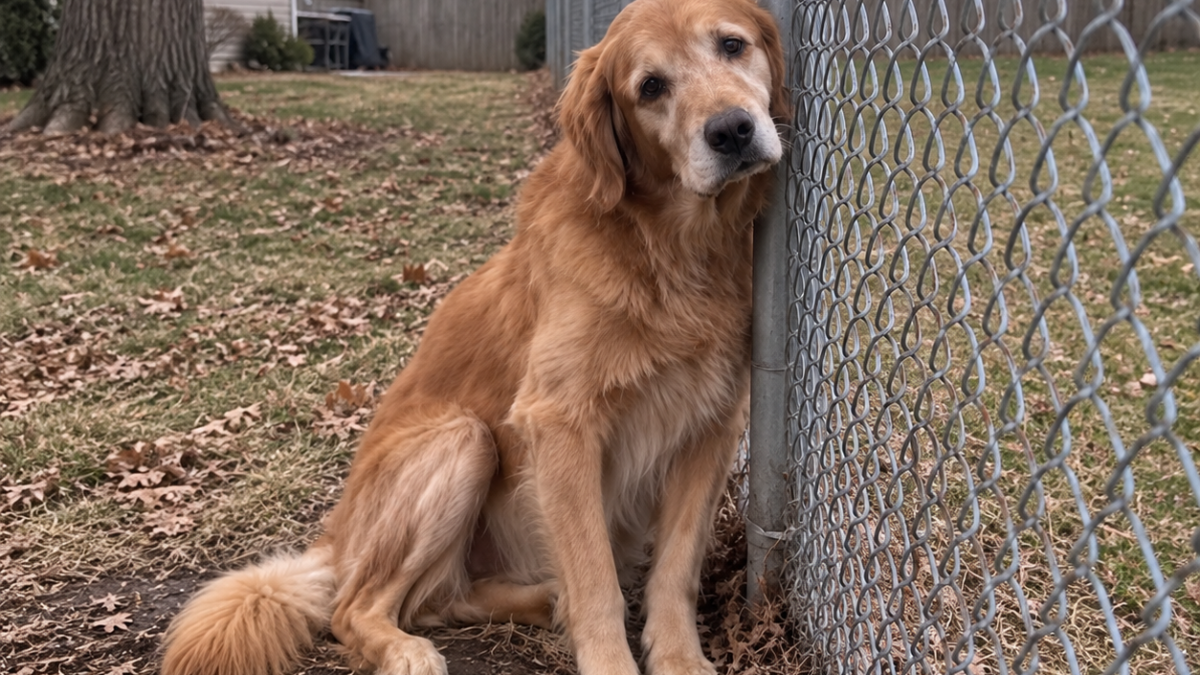
PART 2
Buddy looked at me for several seconds.
I don’t know what dogs understand when we speak to them.
I’ve heard people say they recognize tones more than sentences.
I’ve read that they learn certain words.
Names.
Food.
Walk.
Outside.
Home.
Maybe Buddy understood only one word.
Rocky.
But that was enough.
His ears lifted slightly.
“Rocky’s still alive.”
I repeated it.
Buddy stood.
For the first time that morning, his tail moved.
Only once.
Then he walked to the fence and looked toward Tom’s house.
I sat beside him.
“I don’t know when he’s coming back.”
Buddy remained focused on the empty yard.
“I don’t even know if he’s coming back.”
I hated saying it.
But something about Buddy’s waiting made lying feel cruel.
I put my hand against his back.
“But they’re helping him.”
Buddy sat.
So did I.
That became our routine.
Every day, I checked with Tom.
Every day, I came outside.
Every day, Buddy waited.
Rocky had developed a serious medical crisis involving his heart and lungs.
I didn’t understand every detail.
Tom barely did either.
What mattered was that Rocky was alive.
Critical.
But alive.
The emergency clinic stabilized him during the first several days.
Then came complications.
Then a little improvement.
Then another setback.
It was the kind of recovery that punished hope.
Every time Tom called and said, “They think he’s doing better,” something would change.
A fever.
Breathing trouble.
Another test.
Another night.
Buddy seemed to mirror every uncertainty without knowing any of it.
On good days, he ate more.
On bad days, he barely moved.
By the end of the first week, I had enough.
Not with Buddy.
With myself.
I kept watching him as though I could force him to recover emotionally.
“Come on.”
I clipped his leash on.
Buddy stood.
“Walk.”
Normally that word transformed him.
Not now.
I opened the gate.
Buddy followed me to the driveway.
Then stopped.
He turned his head toward Rocky’s yard.
“Just ten minutes.”
Buddy did not move.
I tugged gently.
Nothing.
“Buddy.”
He sat.
I sighed.
“You are the most stubborn dog on earth.”
He stared at me.
I walked back.
Buddy returned to the fence.
The walk had lasted ninety seconds.
My wife watched from the kitchen.
“You can’t force him.”
“I know.”
“You’re trying anyway.”
“I don’t know what else to do.”
She looked outside.
Buddy had lowered himself onto the blanket.
“Maybe nothing.”
That answer frustrated me.
Nothing?
We were supposed to help animals.
Feed them.
Treat them.
Comfort them.
Solve something.
Sitting beside a fence felt useless.
Then our veterinarian, Dr. Katherine Walters, came to the house.
Katherine had cared for Buddy since he was a puppy.
She knew his normal behavior.
She walked into the yard carrying her bag.
Buddy noticed her.
Usually, he loved her.
That day, he gave one weak tail wag and returned his attention to the fence.
Katherine crouched.
“Hey, handsome.”
Buddy allowed her to examine him.
Heart.
Gums.
Hydration.
Temperature.
Weight.
Everything physical looked mostly normal, except he had already begun losing weight because of his reduced appetite.
“He’s healthy,” she said.
“Then why won’t he move?”
Katherine looked toward Rocky’s empty yard.
“You know why.”
“I need something more useful than that.”
She gave me a look.
“You want medication for missing his friend?”
“If there is one.”
“There isn’t.”
I sighed.
“Can dogs really grieve like this?”
“Absolutely.”
“He knows Rocky isn’t dead.”
“No. He knows Rocky disappeared.”
That stopped me.
Katherine continued.
“Buddy saw something frightening happen. His friend was taken away. He doesn’t know where Rocky went or whether he’s coming back.”
“So what do I do?”
“Keep him eating.”
“I’m trying.”
“Make the food more appealing. Hand-feed if you have to. Keep water near him. Encourage breaks. Don’t punish the waiting.”
“I would never punish him.”
“I know.”
She sat beside Buddy.
“Also, don’t turn his loyalty into something that hurts him.”
“What does that mean?”
“If he stops eating enough, we intervene.”
That line mattered.
People romanticize animals waiting.
It sounds beautiful.
Faithful dog.
Loyal friend.
But starving yourself from grief is not beautiful.
Dehydration is not love.
If Buddy’s body began failing, we had to protect him even from his own waiting.
Katherine rubbed behind his ear.
“Can Rocky visit?”
“He’s hospitalized.”
“When he stabilizes, maybe something with scent. Blanket. Collar. Anything familiar.”
I called Tom.
He loved the idea.
The next day, Tom brought me an old blanket Rocky had slept on before being taken away.
Buddy smelled it before I even crossed the yard.
He stood.
His nose worked rapidly.
I placed the blanket near the fence.
Buddy buried his face in it.
Then he began whining.
I felt terrible.
For one moment I wondered if I had made everything worse.
Then Buddy circled twice and lay directly on top of it.
That night, he slept deeply for the first time since Rocky left.
Not inside.
Still near the fence.
But asleep.
Real sleep.
His body relaxed.
His breathing slowed.
I checked on him at midnight.
Then 2:00 a.m.
Then 4:00.
He barely moved.
In the morning, he ate half a bowl of food beside Rocky’s blanket.
Progress.
My daughter smiled.
“Maybe he knows Rocky’s okay.”
I looked at Buddy.
“I hope so.”
The second week began.
Rocky was still at the clinic.
Buddy was still at the fence.
But his routine changed enough that I stopped fearing he would make himself critically ill.
He ate.
Not normally.
Enough.
He drank.
He came inside occasionally when I insisted.
He slept near the back door if it rained hard.
But the moment morning came, he returned to the fence.
Rocky’s blanket went with him.
The children adjusted too.
At first, they had treated Buddy’s grief like a problem.
They brought toys.
Treats.
Called him.
Tried to make him run.
Eventually my daughter Emma simply carried a book outside and sat beside him.
Buddy did not move.
She read.
An hour passed.
Then another.
When she came inside, I asked, “Did he do anything?”
“No.”
“Then why were you out there?”
She looked at me as though I were stupid.
“So he wouldn’t be alone.”
Children sometimes solve things adults complicate.
The next day, my son Lucas brought his tablet outside and did homework beside Buddy.
I complained about the screen glare.
Lucas ignored me.
Buddy continued waiting.
But he no longer waited alone.
Sometimes I joined.
Sometimes my wife.
Sometimes Tom.
The fence became a strange gathering place.
Rocky’s side empty.
Buddy’s side increasingly full of people.
One evening Tom sat beside me.
He looked exhausted.
“When Rocky gets home, I’m never complaining about him again.”
“You will.”
“No.”
“He destroyed your garden hose last summer.”
Tom smiled weakly.
“Best hose I ever owned.”
We sat quietly.
Then he said, “You know Rocky waits for Buddy too.”
I turned.
“What?”
“The clinic said when he’s awake, he keeps watching the door.”
My chest tightened.
“Seriously?”
“They sent me a video.”
Tom showed me.
Rocky lay inside a veterinary enclosure.
IV line.
Blankets.
He looked thin.
Tired.
But alive.
Someone outside frame said, “Buddy.”
Rocky’s ears moved.
He lifted his head.
Tail.
One slow wag.
Then another.
I stared at the video.
“They know his name?”
“I talk about him.”
I laughed.
“Of course you do.”
Tom looked at me.
“I wish I could show Buddy.”
I looked toward the fence.
“Maybe we can.”
I played the video on my phone.
Buddy’s head lifted when Rocky’s name came through the speaker.
Then Rocky appeared.
Dogs probably do not understand video the way humans do.
Some react.
Some don’t.
Buddy stared.
The sound of Rocky’s breathing came through the phone.
Buddy moved closer.
Then Rocky’s faint whine.
Buddy’s ears snapped forward.
He pressed his nose against the screen.
Emma covered her mouth.
“Buddy.”
He whined.
Then looked behind the phone.
Then at the fence.
Then back.
We all cried.
Even Tom.
Especially Tom.
Buddy licked the screen once.
Then sat beside me.
He ate his entire dinner that night.
I began to believe we might survive the waiting.
Then Rocky got worse.
Day twelve.
Tom called early.
“They moved him back into intensive care.”
I sat down.
“What happened?”
“Breathing.”
“Is he—”
“I don’t know.”
Behind me, Buddy scratched at the back door.
He wanted outside.
I looked at him.
Tom heard.
“That him?”
“Yeah.”
There was a long silence.
Then Tom said, “Don’t tell him anything yet.”
I almost laughed.
“What exactly would I tell him?”
“You know what I mean.”
I did.
Hope had become fragile.
By afternoon, Rocky was stable again.
But the episode shook everyone.
Including me.
I had been telling Buddy, “Rocky’s coming home.”
Not might.
Not hopefully.
Coming.
Because I wanted it to be true.
That evening I sat beside him.
“I need to stop promising things I don’t control.”
Buddy looked at me.
“I hope he comes home.”
Tail movement.
“I really do.”
He rested his head on my knee.
I scratched behind his ear.
“But if he doesn’t…”
I couldn’t finish.
Buddy looked toward the fence.
Neither of us wanted that sentence.
The third week was the longest.
By then Buddy’s waiting had become part of our neighborhood.
People knew.
The mail carrier asked for Rocky updates.
A woman down the street left a small bag of treats.
Another neighbor brought Buddy a waterproof outdoor mat.
Someone joked that we should install a bench beside the fence.
I nearly did.
Every morning was the same.
Buddy outside.
Fence.
Look.
Wait.
Then day twenty-one arrived.
Tom called.
His voice sounded different.
I stood immediately.
“What?”
“They’re talking discharge.”
I stared at the wall.
“You’re serious?”
“Not today.”
“When?”
“Maybe two days.”
I laughed.
Actually laughed.
Buddy looked up from beside the fence.
I ran outside.
“Buddy!”
He stood.
“Rocky might be coming home.”
Tail wag.
“Do you hear me?”
More wagging.
Emma came running.
“What happened?”
“Rocky might come home.”
She screamed.
Lucas came out.
My wife followed.
For the first time in three weeks, the yard felt alive.
Buddy barked.
Once.
Loudly.
Then ran in a small circle.
It lasted perhaps ten seconds.
He returned to the fence.
Still waiting.
But differently.
I could see it.
Hope had weight too.
Day twenty-two.
No discharge.
One final blood test.
One final breathing assessment.
I became furious at medicine for being careful.
Then felt guilty.
Careful had kept Rocky alive.
Buddy waited.
Day twenty-three.
I woke before sunrise.
I don’t know why.
The house was quiet.
I walked into the kitchen.
Buddy was asleep beside the back door.
Not outside.
That was unusual.
I opened the door.
His eyes snapped open.
He rushed into the yard.
Straight to the fence.
Same as always.
I made coffee.
Then heard barking.
Not the low grief sound.
Not alarm.
Joy.
Explosive.
Wild.
I dropped the spoon.
“Buddy?”
He barked again.
I ran outside barefoot.
A car had stopped in Tom’s driveway.
Tom stepped out.
He looked exhausted.
But he was smiling.
Then the back door opened.
A technician helped him lift a dog carefully from the vehicle.
Rocky.
“Kids!”
I screamed toward the house.
“Get out here!”
Buddy was losing his mind.
He ran along the fence.
Back.
Forward.
Whining.
Barking.
Tail whipping so hard his entire body moved.
“Easy!”
He ignored me.
Tom lowered Rocky to the ground.
Rocky stood.
Barely.
He had lost weight.
His legs looked weak.
His coat had been shaved in several places.
But he was standing.
Buddy barked.
Rocky’s head turned.
Their eyes met.
Everything stopped.
I mean that literally.
Buddy stopped barking.
Rocky stopped moving.
For perhaps two seconds, neither dog reacted.
Then Rocky’s tail moved.
Once.
Buddy made that same broken sound I had heard the morning Rocky left.
Only now it carried something else.
Relief.
Buddy pressed himself against the fence.
Rocky walked toward him.
Slowly.
One step.
Another.
Buddy tried pushing his nose through the chain links.
Rocky reached him.
They touched noses.
No barking.
No jumping.
Nothing dramatic.
Just noses against metal.
Buddy began whining softly.
Rocky closed his eyes.
My children were crying behind me.
My wife had one hand over her mouth.
Tom stood in his yard wiping his face.
I looked at the gate connecting our properties.
“Open it.”
Tom nodded.
He unlocked the gate.
I held Buddy’s collar because I was afraid he would overwhelm Rocky.
“Slow.”
Buddy trembled.
The gate opened.
I loosened my grip.
Buddy approached.
Not running now.
He seemed to understand Rocky was fragile.
He walked directly to his friend.
Sniffed his face.
His neck.
His sides.
Everywhere.
Rocky wagged.
Then Buddy did something that silenced all of us.
He stood beside Rocky.
Pressed his shoulder carefully against Rocky’s shoulder.
And stayed.
Rocky lowered his head onto Buddy’s back.
Two dogs.
Standing.
Leaning.
Holding each other up.
Tom cried openly.
“So stupid.”
I looked at him.
“What?”
“I spent three weeks thinking Rocky might die.”
He wiped his face.
“And now I’m crying because two dogs are standing.”
“Seems reasonable.”
Emma walked closer.
“Can we pet Rocky?”
Tom nodded.
“Gently.”
My children sat in the grass.
Rocky lowered himself carefully.
Buddy immediately lay beside him.
Not across the fence.
No barrier.
Together.
For twenty-three days, Buddy had kept watch.
Now he closed his eyes.
Within minutes, he fell asleep beside Rocky.
I sat on the grass and watched them.
That was the first true ending.
Not the dramatic reunion.
Sleep.
Buddy finally believed he no longer had to watch.
Rocky was home.
The next morning, something happened that made me laugh.
Buddy ate breakfast.
Everything.
Then looked at me for more.
“You nearly starve yourself for three weeks and now you’re demanding seconds?”
Tail wag.
I added a little.
Afterward, he ran to the fence.
Rocky was already there.
Still moving slowly.
Buddy sat.
Rocky sat.
Same ritual.
Opposite sides.
It was almost as though the previous twenty-three days had never happened.
Except everything had changed.
Rocky had a new medication schedule.
Tom had instructions about activity.
No rough play.
Short walks.
Regular monitoring.
Buddy had instructions too, unofficially.
Do not tackle your recovering friend.
Buddy took that surprisingly seriously.
When the gate opened, he approached Rocky gently.
No chest-bumping.
No wild chase.
He matched Rocky’s speed.
If Rocky stopped, Buddy stopped.
If Rocky lay down, Buddy settled nearby.
I had never seen him moderate himself that way.
“Do you think he knows?” Emma asked.
“Knows what?”
“That Rocky is sick.”
I watched them.
“I think he knows Rocky needs him to be careful.”
That was enough.
Over the following weeks, Rocky grew stronger.
The first time he walked halfway down the block, Buddy came too.
Tom held Rocky’s leash.
I held Buddy’s.
They walked side by side.
Not their old speed.
Slow.
Measured.
But together.
When Rocky tired, Tom turned back.
Buddy immediately turned too.
No protest.
One morning, Rocky picked up the faded green tennis ball again.
Tom called me.
“You need to see this.”
I went outside.
Rocky stood near the fence holding the ball.
Buddy stared.
Rocky dropped it.
Picked it up.
Tail wag.
Buddy barked.
Tom laughed.
“He hasn’t touched that since before the hospital.”
That tennis ball became another measure of recovery.
First he carried it.
Then walked with it.
Then dropped it near Buddy.
Eventually, months later, they played again.
Gently at first.
Then faster.
The first real chase happened in late spring.
Rocky started it.
He grabbed the green ball and ran.
Buddy stared.
Then took off after him.
Tom yelled, “Rocky!”
I yelled, “Buddy!”
Neither listened.
Two dogs sprinted around Tom’s yard.
Rocky was not as fast as before.
Buddy slowed to match him.
They circled once.
Twice.
Rocky stopped.
Panting.
Buddy stopped too.
Tom put both hands on his head.
“I’m going to have a heart attack.”
I laughed.
“Then we’ll put you on a stretcher and see if Buddy waits.”
Tom stared at me.
“Too soon.”
“Fair.”
Rocky was fine.
That afternoon, both dogs slept beside the fence.
One on each side.
Exactly where their friendship had started.
The crisis changed our families too.
Before Rocky became sick, Tom and I were friendly neighbors.
We waved.
Talked about yard work.
Dogs.
Weather.
Borrowed tools occasionally.
Afterward, something deeper formed.
Twenty-three days of daily hospital updates will do that.
Tom started joining us for backyard dinners.
My children wandered next door constantly.
His adult daughter visited and became close with my wife.
The gate between the yards stopped being locked.
Eventually we made a strange decision.
We replaced part of the chain-link fence.
Not all of it.
Just a section.
We installed a proper shared gate wide enough that Buddy and Rocky could move safely between yards when we allowed it.
Tom stood beside me after installation.
“Think they’ll understand?”
Buddy was already waiting.
Rocky on the other side.
I opened the gate.
Buddy walked through.
No hesitation.
Rocky came toward him.
They sniffed.
Then both dogs wandered into Tom’s yard together as though humans had finally corrected a ridiculous architectural mistake.
Tom laughed.
“Twenty-three days waiting beside a fence and all we needed was a gate.”
I looked at him.
“Maybe we’re the stupid species.”
“Definitely.”
The old red ball Buddy loved began appearing in Tom’s yard.
Rocky’s green ball appeared in ours.
Nobody knew which toy belonged to which dog anymore.
The children called it “Buddy and Rocky’s neighborhood.”
We didn’t correct them.
Months turned into a year.
Rocky’s health remained stable.
Not perfect.
Stable.
That word became precious.
He had checkups.
Medication adjustments.
Occasional difficult days.
But most days were good.
He and Buddy resumed their morning ritual.
Sometimes together in one yard.
Sometimes separated by the fence simply because they seemed to like their old spot.
They would sit.
Shoulder near shoulder through the links.
Watch birds.
Cars.
Nothing.
I began drinking coffee outside near them.
At first, I thought I was supervising.
Eventually I admitted I just liked being there.
One morning Tom came out with his own mug.
We sat on opposite sides of the fence too.
Buddy and Rocky below us.
Tom looked around.
“We’ve become the dogs.”
I laughed.
“Could be worse.”
The dramatic part of their story should have ended there.
Rocky survived.
Buddy recovered.
Happy ending.
But happy endings are not single moments.
They are years you have to keep living.
Rocky aged.
Buddy aged.
My children grew.
Emma went from sitting beside Buddy with a book to learning to drive.
Lucas became taller than me and still crawled onto the floor whenever Buddy wanted attention.
Rocky’s muzzle turned white.
Buddy’s golden face softened with gray.
Their friendship changed with their bodies.
Less running.
More sitting.
Shorter walks.
Longer naps.
They did not seem bothered.
One winter, snow covered both yards.
Young Buddy would have exploded through it.
Older Buddy stepped onto the porch, looked at the snow, and reconsidered every life decision.
Rocky stood on the other side doing exactly the same.
Tom called across.
“Want to go play?”
Rocky looked at him.
Buddy looked at me.
Neither moved.
I laughed.
“Friendship agrees.”
They eventually went outside only after we cleared paths.
Old dogs are excellent at training humans.
Rocky’s previous medical crisis never fully disappeared from Tom’s mind.
Every cough worried him.
Every day Rocky ate less triggered anxiety.
I understood.
The twenty-three days had left marks on all of us.
One evening Tom called.
“Rocky didn’t finish dinner.”
My stomach tightened.
“Anything else?”
“No.”
“Water?”
“Yes.”
“Energy?”
“Normal for him.”
“Call the vet if you’re worried.”
“I already did.”
Of course.
Rocky was fine.
Just not hungry.
The next morning he ate breakfast normally.
Tom looked exhausted.
I said, “You slept?”
“No.”
“Welcome to anxiety.”
He rubbed Rocky’s head.
“I hate this part.”
“The part where you love something that eventually gets old?”
“Yeah.”
I looked toward Buddy.
“Me too.”
That became the new challenge.
Not emergency.
Time.
Buddy and Rocky had taught us how dramatically friendship could resist separation.
Now they were teaching us that no friendship resists age forever.
Several years after Rocky’s hospitalization, Buddy developed arthritis.
Nothing unusual.
Golden retriever.
Older dog.
Joint stiffness.
Our veterinarian prescribed medication and suggested weight management.
Buddy disagreed with the second part.
Food remained one of his core beliefs.
We adjusted.
Rocky walked slower too.
Their pace matched again.
I sometimes wondered whether they would have become as close if one remained young while the other aged.
Maybe.
But growing old together gave their friendship another rhythm.
They no longer needed adventure.
Presence was enough.
One morning, I found Buddy at the fence before sunrise.
Rocky was there.
Both lying down.
Their noses nearly touching through the links.
I took a photograph.
No stretcher.
No drama.
No tears.
Just two old dogs.
That became my favorite picture.
People often love the reunion photograph.
I understand why.
Buddy racing.
Rocky returning.
Twenty-three days resolved in one moment.
But that quiet image years later meant more to me.
Because reunion was only a minute.
Friendship was everything that followed.
Then came the first real scare with Buddy.
He was ten.
Maybe a little older.
One afternoon he tried standing and his back legs slipped.
I was beside him immediately.
“Buddy.”
He tried again.
Stood.
Walked.
But not normally.
We went to Katherine.
Tests.
X-rays.
Bloodwork.
Nothing catastrophic.
Arthritis worse.
Some weakness.
Medication change.
Rest.
I brought him home.
The first place Buddy wanted to go was the fence.
Rocky stood there.
Waiting.
Buddy walked slowly toward him.
Rocky sniffed through the links.
Then lay down.
Buddy lay beside him.
I stared.
Years earlier, Buddy had waited while Rocky fought to recover.
Now Rocky sat with Buddy.
Not twenty-three dramatic days.
Just that afternoon.
And the next.
And many after.
Reciprocity does not always look equal.
Sometimes one friend waits through a crisis.
Years later, the other simply stays close while age does its work.
Rocky became more attentive when Buddy struggled.
If Buddy lagged during walks, Rocky slowed.
If Buddy stopped, Rocky stopped.
Tom noticed too.
“They switch roles.”
I nodded.
“They always have.”
Buddy improved with treatment.
Not young again.
Comfortable.
That became enough.
My daughter left for college.
The night before she moved, she sat beside Buddy near the fence.
Rocky was across from them.
I watched from the porch.
Emma buried her face in Buddy’s fur.
“I’m going to miss you.”
Buddy licked her.
She cried.
Then looked at Rocky.
“You too.”
Rocky’s tail moved.
Later she told me, “Buddy taught me waiting doesn’t mean somebody left forever.”
I stopped packing boxes.
“What?”
“When Rocky was gone.”
She shrugged.
“I was little, but I remember.”
That surprised me.
The twenty-three days had become part of her emotional vocabulary too.
She understood absence through two dogs and a fence.
When Emma returned home during her first break, Buddy met her at the door.
Wild tail.
Barking.
Rocky heard from next door and began barking too.
Emma laughed.
“Both of them?”
“Apparently.”
She ran outside.
For ten minutes, she sat between them near the gate.
Another reunion.
Smaller.
Still real.
Rocky reached twelve.
Then thirteen.
Every birthday felt stolen from that emergency clinic years earlier.
Tom bought him ridiculous birthday treats.
One year he made a dog-safe cake.
I said, “You mocked us when we did that for Buddy.”
“I’ve matured.”
Rocky ate it.
Buddy received half.
They slept afterward.
The dogs were getting old.
We all knew.
But knowledge does not prepare you.
Then Rocky stopped eating.
Not one meal.
Two.
Tom called Katherine.
Tests showed his heart condition had worsened.
There were other age-related problems now too.
Kidneys.
Mobility.
The veterinarian adjusted medication.
For a while, Rocky rallied.
Three good months.
Then another decline.
Buddy seemed to notice before I wanted to.
He spent more time by the fence again.
Not frantic.
Present.
When Rocky did not come outside, Buddy waited.
I felt the old fear immediately.
“Not again.”
My wife looked at me.
“What?”
“He’s waiting.”
She came to the window.
Buddy lay beside the fence.
Rocky’s yard empty.
“James.”
“I know.”
“You can’t stop this.”
“I know.”
Knowing was useless.
Tom called that evening.
“Can Buddy come over?”
“Of course.”
Rocky was lying on his bed in the living room.
Buddy entered slowly.
The house smelled like medication and old dog.
Rocky lifted his head.
Tail moved.
Buddy approached.
Sniffed him.
Then lay down beside the bed.
Tom sat in his chair.
I sat across from him.
Nobody spoke for several minutes.
Eventually Tom said, “I don’t think we have long.”
I looked at Rocky.
“Has Katherine said?”
“She said we’re watching quality of life.”
The words every longtime dog owner eventually hears.
Eating.
Comfort.
Mobility.
Interest.
Good days versus bad.
Tom’s eyes filled.
“I almost lost him years ago.”
“But you didn’t.”
“I thought that meant I had more time.”
“You did.”
He looked at me.
“Not enough.”
There is never enough.
Buddy stayed beside Rocky for two hours.
When I called him home, he hesitated.
Rocky’s eyes followed.
Buddy touched his nose to Rocky’s.
Then came with me.
The next morning, Rocky came outside.
Buddy stood immediately.
They met at the fence.
Same spot.
Same ritual.
Only slower.
Rocky sat.
Buddy sat.
I took no photograph.
Some moments do not need one.
For nearly two months, Rocky alternated between better and worse.
Buddy adjusted.
On good days, they walked.
On bad days, Buddy visited.
Then the final day arrived.
Tom called before sunrise.
His voice told me.
“Katherine’s coming this afternoon.”
I closed my eyes.
“You sure?”
“No.”
Honest.
“But I think it’s time.”
“Do you want us there?”
Silence.
“Can Buddy come?”
“Yes.”
I told my family.
Emma drove home from college.
Lucas left work early.
My wife cried while making coffee.
Buddy seemed to know something was different because everyone moved quietly.
At noon, we opened the shared gate.
Buddy walked into Tom’s yard.
Rocky was outside beneath his favorite tree.
Blanket.
Water.
Tom sitting beside him.
Rocky lifted his head when Buddy approached.
His tail moved once.
Buddy stopped.
Then lay beside him.
Their bodies touched.
They stayed like that.
No dramatic sound.
No whine.
Nothing.
Katherine arrived at two.
She examined Rocky.
Spoke quietly with Tom.
Everyone already understood.
Tom asked for more time.
Katherine gave it.
The children sat on the grass.
Emma had her hand in Buddy’s fur.
Lucas stroked Rocky.
Tom whispered things to his dog I could not hear.
Eventually, he looked at us.
“Okay.”
My wife started crying harder.
Buddy raised his head.
Rocky remained calm.
Katherine gave the first medication.
Rocky became sleepy.
His muscles relaxed.
Tom held his head.
Buddy stayed pressed against Rocky’s side.
I watched Buddy.
His eyes were open.
He did not seem frightened.
Maybe he understood.
Maybe not.
I do know he did not move.
Tom whispered, “You came back to him.”
His voice broke.
“You gave us years.”
Rocky breathed slowly.
Buddy’s nose touched his ear.
Then Rocky died.
Quietly.
Under his tree.
With Tom holding him.
With Buddy beside him.
For several minutes, Buddy remained still.
Then he stood.
He sniffed Rocky’s face.
His neck.
His paws.
Returned to his face.
I held my breath.
Buddy nudged him once.
Rocky did not respond.
Buddy waited.
Then did something I will never forget.
He lay down again.
Placed his head across Rocky’s front legs.
And stayed.
Tom sobbed.
I sat beside Buddy.
No one tried to move him.
Not for a long time.
Eventually, Katherine gently explained that letting Buddy see Rocky after death could help him understand the absence rather than simply experiencing another mysterious disappearance.
Whether dogs conceptualize death as humans do is complicated.
But Buddy had information this time.
Rocky had not vanished on a stretcher.
Buddy was there.
No fence.
No waiting for a return that would never come.
That mattered to me deeply.
Before Katherine took Rocky, Buddy stood.
He sniffed once more.
Then walked toward our gate.
Halfway there, he looked back.
I cried so hard I had to sit down.
He looked only for a moment.
Then came home.
The next morning, Buddy went to the fence.
Of course he did.
He sat.
Rocky did not come.
My stomach twisted.
“Buddy.”
He stayed five minutes.
Then ten.
I brought coffee.
Sat beside him.
Twenty minutes.
Buddy stood.
Sniffed the fence.
Then turned.
He walked back toward the house.
No twenty-three days this time.
He knew.
That distinction saved him.
Buddy grieved.
Absolutely.
He slept more.
Played less.
Sometimes returned to the fence.
But he ate.
Came inside.
Stayed connected to us.
He did not begin the terrible vigil again.
Rocky had left differently.
There had been a goodbye.
That became one of the most important lessons in the whole story.
Years before, uncertainty had trapped Buddy beside the fence.
Not simply absence.
He had not known what happened.
This time, he had seen.
Stayed.
Understood in whatever way a dog can understand.
Loss still hurt.
But uncertainty did not consume him.
Tom suffered more.
The empty yard crushed him.
For years, his routine had revolved around Rocky.
Medicine.
Walks.
Food.
Opening the gate.
Morning at the fence.
Now nothing.
I started inviting him for coffee.
At first, he refused.
Then Buddy changed that.
Three days after Rocky died, Tom came to our gate.
Buddy saw him.
Ran over.
Tom crouched.
Buddy pressed his entire body against him.
Tom buried his face in Buddy’s neck.
I looked away.
After that, Tom visited daily.
Sometimes Buddy went to his yard.
He would walk around.
Sniff Rocky’s favorite spots.
Then sit with Tom.
It was as though their shared love of Rocky gave them a relationship independent of him.
A dog had made two families friends.
Then, after death, kept them that way.
Months passed.
Buddy aged quickly afterward.
Or perhaps I simply noticed age more because Rocky was gone.
His muzzle became whiter.
His steps slower.
The fence held less interest.
He still visited sometimes.
But mostly he preferred our porch.
One morning, Tom came over carrying Rocky’s green tennis ball.
“I found this behind the shed.”
Buddy’s head lifted.
Tom held it out.
Buddy sniffed.
Then took it gently.
He carried it to his bed.
I swallowed.
“You sure?”
Tom nodded.
“It belongs with him.”
For weeks, Buddy slept beside that ball.
He never played with it.
Just kept it near.
People might call that sentimental projection.
Maybe it was.
I only know what I saw.
Buddy recognized the object.
Chose to keep it.
That was enough.
Another year passed.
Buddy’s arthritis worsened.
His hearing faded.
Cataracts clouded his eyes.
But he remained happy.
He ate.
Wanted family near.
Enjoyed the yard.
Still barked when someone rang the doorbell, usually several seconds after everyone else had already reacted.
Emma graduated.
Lucas moved into an apartment.
Our house grew quieter.
Buddy became the center again.
One evening, I realized the children had grown up entirely inside his lifetime.
He had watched first steps toward independence.
School.
Heartbreaks.
College applications.
Arguments.
Celebrations.
He had known Rocky for almost as long.
Buddy’s life was not one story about twenty-three days.
Those days were simply the loudest part.
The real story was years.
That changed how I told it.
When people heard about Buddy and Rocky, they always focused on waiting.
“Twenty-three days?”
“Yes.”
“He barely left the fence?”
“Yes.”
“That’s incredible loyalty.”
It was.
But I eventually started saying, “The better part came afterward.”
“What?”
“They got years.”
Years of sitting together.
Years of toys.
Walks.
Growing gray.
Illness.
Recovery.
Ordinary mornings.
That was the real miracle.
A reunion means little if you ignore the life that follows.
Buddy’s health declined slowly.
Then suddenly.
That is how old age often works.
For months, manageable arthritis.
Then kidney problems.
Medication.
Diet.
Monitoring.
A good stretch.
Then one morning, he refused breakfast.
That terrified me.
Golden retrievers treat food like a religious obligation.
Buddy sniffed.
Turned away.
I called Katherine.
Bloodwork.
Exam.
His kidneys had worsened.
We began supportive care.
Buddy improved.
A little.
For several weeks, good days returned.
He ate.
Walked to the fence occasionally.
Slept in sunlight.
Tom came by.
One afternoon, Buddy carried Rocky’s green ball outside.
He placed it beside the fence.
Then lay down.
Tom saw.
His eyes filled.
“He misses him.”
“Probably.”
We sat on either side of Buddy.
Three old friends.
One missing.
The final decline came that fall.
Buddy struggled to stand.
Appetite decreased.
He stopped caring about the red ball he had loved since youth.
Then one morning, he stopped going to the fence.
That was when I knew.
The fence had been one of the defining places of his life.
Even after Rocky died, Buddy visited.
Smelled.
Sat briefly.
Now he looked toward it from the porch and did not move.
I called Katherine.
She came that afternoon.
Buddy lay inside on a thick blanket.
Our children returned home.
Tom came too.
Katherine examined Buddy.
Then she looked at me.
I already understood.
“Are we there?”
She answered gently.
“I think we’re very close.”
“Today?”
“That’s your decision. But I don’t think waiting for a crisis is necessary.”
I looked at Buddy.
He was tired.
Not screaming.
Not panicking.
Just tired.
I remembered Rocky.
Tom choosing before discomfort became agony.
Buddy lying beside him.
I had told myself for years that love meant not giving up.
Now I understood the other half.
Sometimes love means not demanding one more day simply because you cannot bear the first day without them.
I asked everyone for an hour.
We carried Buddy outside.
Not far.
To the fence.
Tom opened the shared gate.
We placed Buddy’s blanket in the grass between the two yards.
No barrier.
That felt important.
Buddy lay down.
The afternoon sun was warm.
Emma sat beside his head.
Lucas rested one hand on his back.
My wife stroked his ears.
Tom placed Rocky’s green tennis ball near Buddy’s paws.
Buddy sniffed it.
His tail moved.
Once.
We all broke.
I crouched beside him.
“Remember this place?”
Buddy looked toward me.
His eyes were cloudy now.
Maybe he saw only shapes.
“I used to hate this fence.”
My voice shook.
“You scared us to death.”
Tail movement.
“Twenty-three days.”
I laughed through tears.
“You stubborn old dog.”
Tom knelt beside me.
“He knew Rocky was coming back.”
“Yeah.”
Tom touched Buddy’s shoulder.
“Tell him Rocky’s waiting.”
I looked at him.
Tom was crying.
I knew what he meant.
I did not pretend to know what happens after death.
Did not need to.
But in that moment, the words mattered to Tom.
Maybe to me.
I stroked Buddy.
“You don’t have to wait at the fence anymore.”
His breathing was slow.
“You’ve waited enough.”
Katherine prepared the medication.
Nobody rushed.
Buddy took one final piece of chicken.
Of course he did.
I laughed.
“Now you’re hungry?”
He swallowed.
Then rested his head.
The first medication made him sleepy.
His body relaxed.
For years, I had watched Buddy waiting.
Watching.
Guarding.
Expecting.
Now there was nothing left to watch for.
Everyone he loved who could be there was there.
I put my forehead against his.
“You were a good boy.”
The phrase sounded too small.
Buddy had grown with my children.
Connected us to Tom.
Loved Rocky.
Waited through twenty-three days.
Stayed beside him at the end.
Helped Tom survive afterward.
Filled our home for more than a decade.
Good boy?
He had been a life.
A whole life.
I tried again.
“Thank you.”
That felt closer.
Buddy breathed.
Once.
Again.
Then slowly.
Katherine administered the final medication when we were ready.
Buddy died lying between the two yards.
No chain-link fence separating him from Rocky’s side.
Rocky’s green ball beside his paws.
My children’s hands on him.
Tom there.
Me there.
Home on both sides.
Afterward, nobody moved.
The fence looked different.
Smaller.
Meaningless.
Just wire.
It had once seemed like the center of the world.
The place of friendship.
Then grief.
Waiting.
Reunion.
Eventually goodbye.
Now Buddy no longer needed it.
Tom said quietly, “Open gate.”
I looked at him.
“It is open.”
“No.”
He pointed.
“The whole thing.”
Weeks later, we removed the section of fence between our backyards.
Not all of it.
Just the area where Buddy and Rocky had spent thousands of hours.
We replaced it with open landscaping and a low stone border.
No barrier.
My wife planted two small trees.
One on our former side.
One on Tom’s.
We did not put plaques on them.
No names.
No dramatic memorial.
Everyone who mattered knew.
Years later, the trees grew enough for their branches to overlap.
That felt right.
My children eventually brought grandchildren into those yards.
They asked about old photographs.
“Who’s the golden dog?”
“Buddy.”
“And the gray one?”
“Rocky.”
“Were they brothers?”
“No.”
“Did they live together?”
“Kind of.”
I told them the story.
Not all at once.
Children do not need fifteen minutes about veterinary crises.
I told them two dogs became best friends through a fence.
One got very sick.
The other waited.
Then his friend came home.
“Did they live happily ever after?”
My granddaughter asked that.
I looked toward the two trees.
“For a long time.”
“That’s not what I asked.”
I smiled.
“They got old.”
“Then they died?”
“Yes.”
She frowned.
“So that’s sad.”
“It is.”
“Then why do you smile when you tell it?”
There it was.
The same problem every love story eventually contains.
Why treasure something that ended?
I said, “Because the ending doesn’t erase the years before it.”
She thought.
“Were they happy?”
“Very.”
“Then okay.”
Children sometimes understand faster than adults.
Buddy’s twenty-three days at that fence used to feel like the most important part of his life.
Now, looking back, I think they mattered because of what came afterward.
If Rocky had died at the clinic, Buddy’s waiting would still have been loyal.
Still powerful.
But Rocky came home.
And because he did, those twenty-three days became a bridge rather than a grave.
They got time.
That is what I value now.
Time.
Buddy and Rocky got more mornings.
More tennis balls.
More boring afternoons.
More arguments between Tom and me about whose dog dug which hole.
More gray hair.
More medication.
More slow walks.
More chances to simply sit together without waiting for disaster.
Nobody notices ordinary time while living it.
Then eventually ordinary time becomes everything you wish you could have back.
That is what those two dogs taught me.
Not that true love always wins.
It does not.
Not that hope guarantees recovery.
It does not.
Rocky came home once.
Years later he didn’t.
Buddy waited once.
Years later he learned to let go.
The lesson was never that love defeats death.
Love cannot.
The lesson was that love gives meaning to the time before death arrives.
There was no villain in their story.
No cruel person to punish.
No dramatic revenge.
The enemy was separation.
Illness.
Uncertainty.
Then time.
And for many years, Buddy and Rocky beat all of them often enough.
Rocky came home when illness tried to take him.
Buddy ate again when grief tried to shut him down.
A fence divided their yards.
They made it irrelevant.
Age slowed them.
They simply sat instead of ran.
Then when Rocky died, Buddy was allowed to stay beside him.
When Buddy died, our whole family stayed.
No one was carried away without goodbye again.
That felt like justice.
If you insist on calling anything revenge, then this was theirs:
Illness took Rocky away for twenty-three days.
He came home and lived for years.
The empty yard told Buddy his friend was gone.
Rocky returned.
The chain-link fence said they belonged in separate spaces.
We opened a gate.
Age stole their speed.
They found happiness sitting still.
Death eventually separated them.
But it came only after friendship had already filled most of their lives.
There are worse endings.
Much worse.
I know because I saw the alternative in Buddy’s face that first morning.
The terror of not knowing.
Rocky disappearing.
No explanation.
No goodbye.
Buddy thought the story had stopped.
So he stayed where the last chapter had been written.
At the fence.
Waiting for another page.
Twenty-three days later, Rocky came home and gave him one.
Then another.
Then thousands.
That was the gift.
Today, I still wake early.
I still love mornings.
The yard is quieter now.
My children are grown.
Tom sold his house several years ago after moving closer to his daughter.
Before he left, he stood with me beneath the two trees.
Their branches had begun touching overhead.
“Don’t cut these.”
“I won’t.”
“I mean it.”
“I know.”
He looked toward the old stone border.
“Funny.”
“What?”
“All those years, I thought that fence separated our dogs.”
I waited.
“Turns out they were the ones connecting us.”
He was right.
Before Buddy and Rocky, Tom was the neighbor.
Afterward, he was family.
We still talk.
Birthdays.
Holidays.
Health updates.
He sends my grandchildren ridiculous gifts.
I remind him he is not related to us.
He says the dogs made it official.
I can’t argue with that.
Sometimes when he visits, we sit beneath the trees.
Coffee.
Same as years ago.
No dogs between us now.
Still connected.
Buddy and Rocky managed that too.
My wife once asked whether I regretted not taking more photographs during those twenty-three days.
“No.”
“Why?”
“Because I remember enough.”
And I do.
Buddy’s head through the chain links.
The empty yard.
Rocky’s blanket.
Emma reading beside him.
Lucas doing homework in the grass.
Tom bringing updates.
Buddy eating only after seeing the veterinary video.
Rain on his golden coat.
His eyes turning every time a car slowed.
Then that final morning.
The vehicle stopping.
Rocky coming out.
Buddy’s body transforming from grief into joy.
The gate opening.
Two dogs meeting without wire between them.
Rocky resting his head on Buddy.
Buddy sleeping beside him.
Those memories do not need improvement.
They are already complete.
I keep one photograph in my office.
Not the dramatic reunion.
The quiet one.
Buddy and Rocky old.
Both lying near the fence.
Gray around their faces.
No one sick.
No one missing.
No one waiting.
They are simply together.
Whenever people hear their story, they usually say Buddy’s loyalty was extraordinary.
It was.
But Rocky’s mattered too.
He fought.
Recovered.
Came home.
Later, when Buddy became weak, Rocky stayed near him.
Friendship had two directions.
That is another thing we often forget when telling emotional stories.
One creature becomes the hero.
One the rescued.
But real love is rarely that clean.
At different times, everyone carries someone.
Buddy waited for Rocky.
Rocky later waited beside Buddy.
Tom leaned on me.
I leaned on my wife.
My children sat beside Buddy when I did not know how to help him.
Katherine guided us when emotion made us irrational.
We all took turns.
Maybe that is what family actually is.
Not one permanent strong person rescuing everyone else.
A circle.
Someone has strength today.
Another tomorrow.
Someone waits.
Someone returns.
Someone opens the gate.
Years after both dogs were gone, Emma called me one morning.
She sounded exhausted.
Her marriage had hit a difficult period.
Nothing dramatic.
Two people tired.
Work.
Children.
Bills.
Distance growing quietly.
She said, “I don’t know what to do.”
I listened.
Then she said something that startled me.
“I keep thinking about Buddy at the fence.”
“Why?”
“He stayed.”
I became careful.
“Buddy was a dog.”
“I know.”
“And staying isn’t always the right answer for every human relationship.”
“I know.”
“What part are you thinking about?”
She was quiet.
“That he didn’t pretend Rocky wasn’t missing.”
That hit me.
“He changed when something was wrong.”
“Yes.”
“He didn’t distract himself.”
“No.”
“He sat there until we paid attention.”
I smiled sadly.
“So?”
“So maybe I need to stop pretending everything’s fine.”
That week she and her husband had the conversation they had avoided.
Then another.
Counseling followed.
Work.
Not miracle.
Their marriage improved slowly.
Years later, Emma said, “Buddy helped.”
I laughed.
“Your therapist will be offended.”
“She can share credit.”
Again, I realized Buddy’s story was still moving.
Long after his paws stopped touching the yard.
Behavior becomes memory.
Memory becomes metaphor.
Metaphor becomes choice.
That is one way love continues.
Lucas took a different lesson.
He became a paramedic.
I asked once whether Rocky’s stretcher had influenced him.
He denied it.
Then admitted maybe.
“I hated standing there doing nothing.”
“You were a kid.”
“Still.”
“So now?”
“I like being useful on bad mornings.”
That was his version.
The day Rocky was carried away frightened him.
Years later, he became one of the people who carries somebody toward help.
I never planned any of that.
Neither did Buddy.
Meaning grows afterward.
Sometimes without permission.
I am older now.
Old enough to understand why Tom was terrified when Rocky’s health first failed.
Bodies become less reliable.
People disappear.
Dogs too.
You begin measuring life in fewer assumptions.
Tomorrow becomes a privilege rather than a guarantee.
Maybe that is why I appreciate Buddy’s waiting differently now.
When I was younger, I saw devotion.
Now I see uncertainty.
Buddy could not control whether Rocky returned.
He controlled only where he placed himself.
Near the place Rocky had always been.
Present.
Ready.
Love often has very little control.
We cannot force treatments to work.
Cannot stop age.
Cannot guarantee anyone comes home.
Sometimes the only thing available is presence.
That seems small until presence is all that remains.
Buddy understood that instinctively.
Twenty-three days at a fence.
Not fixing.
Not curing.
Not negotiating with fate.
Present.
Then Rocky returned.
Years later, when Rocky could not return, Buddy was present for that too.
That completed their friendship in a way the first reunion never could.
One dog waited through uncertainty.
Then stayed through certainty.
Both matter.
I still touch the low stone border occasionally when I walk through the yard.
I know exactly where the fence once stood.
I know where Buddy lay.
Where Rocky sat.
Where we opened the gate on the morning he came home.
The grass has erased most physical evidence.
That is okay.
Land should heal too.
The trees provide shade now.
My grandchildren play beneath them.
Sometimes a ball rolls from one side of the old property line to the other.
Nobody stops it.
There is no fence.
I like that.
If Buddy and Rocky left anything behind, maybe it is that.
An unnecessary barrier removed.
A relationship created.
A family widened.
Two yards becoming something closer to one shared place.
All because two dogs decided chain links were not enough reason to remain strangers.
When I think about that first morning now, I no longer hear Buddy’s terrified bark first.
I hear the quieter years afterward.
His paws in the grass.
Rocky’s green ball bouncing.
My children laughing.
Tom calling across the yard.
Two old dogs breathing beneath the sun.
The crisis was loud.
The life was quiet.
The quiet part lasted longer.
That is what I want to remember.
Buddy waited twenty-three days.
But then he got years.
Rocky fought twenty-three days.
Then he got years too.
Their friendship did not triumph over everything.
Nothing does.
But it triumphed over enough.
Enough to matter.
Enough to change us.
Enough that decades later, I can still stand beneath two trees and know exactly why they were planted.
Sometimes the greatest love does wait.
Sometimes it fights.
Sometimes it returns.
And sometimes, when fighting and waiting are finally finished, it simply lies down beside an old friend and stays until there is nothing left to be afraid of.
That was Buddy.
That was Rocky.
And that was the most beautiful thing that ever happened on either side of our fence.
For a long time after that, I thought I had finally understood Buddy’s lesson.
I was wrong.
There was one more part waiting for me.
It arrived on an ordinary Tuesday afternoon.
My granddaughter, Lily, was thirteen by then.
Old enough to roll her eyes at almost everything I said, but still young enough to ask questions when she believed the answer mattered.
She came into my study carrying the framed photograph of Walter and Buddy.
“Grandpa?”
“What did you break?”
“Nothing.”
“That response usually means something is broken.”
She ignored me.
She held up the photograph.
“I need this.”
“For what?”
“School.”
I stared at her.
“You’re taking Buddy to school?”
“We have to give a presentation about somebody who changed the way we think.”
I smiled.
“So you picked your grandfather.”
“No.”
That humbled me quickly.
“Buddy.”
I laughed.
“Fair.”
She placed the frame carefully on my desk.
“I want to tell the real story.”
Something about the phrase made me pay attention.
“The real story?”
“Mom says people online made it sound like Buddy magically knew exactly where the hospital was.”
I leaned back.
“Your mother is right.”
“And some versions say he ran seventy-five kilometers in one night.”
“We never knew exactly how long the trip took or what route he used.”
“And somebody said he waited outside without eating anything.”
“He ate.”
“See?”
She opened a notebook.
“I want what actually happened.”
I looked at her.
At thirteen, Lily had already understood something many adults never do.
A story does not become more meaningful because you exaggerate it.
Sometimes the truth deserves enough respect to be left alone.
So I told her everything.
Buddy arrived exhausted.
His paws were worn.
Walter lived about seventy-five kilometers away.
We never reconstructed Buddy’s precise route.
He accepted food and water.
He remained near the doors.
He waited for several days.
We discovered Walter was inside.
The hospital worked out a safe outdoor reunion.
Buddy recognized him.
Walter cried.
Buddy finally slept.
Then they went home.
“And later he became a therapy dog?”
“Yes.”
“And Walter volunteered after Buddy died?”
“Yes.”
“And the hospital changed the pet-visitation rules?”
“Not because of Buddy alone. But his case helped us see we needed a clearer process.”
Lily wrote furiously.
Then she stopped.
“What was the best part?”
I thought she meant the reunion.
I almost answered automatically.
Then I remembered Walter leaving the hospital.
Buddy in the car.
Walter’s hand resting on him.
“Going home.”
She frowned.
“Not when they found each other?”
“No.”
“Why?”
“Because finding somebody isn’t the same as getting your life back.”
I pointed at the photograph.
“That reunion was beautiful. But if you stop the story there, you miss most of it.”
“What happened after was more important?”
“In some ways.”
Buddy did not walk all that distance so people would cry at a hospital entrance.
He wanted Walter.
Walter wanted Buddy.
They wanted breakfast together.
Walks.
Fishing.
Naps.
Boring Tuesdays.
Years.
That was the reward.
Lily wrote something.
Then asked, “What did Buddy teach you?”
I smiled.
“I’ve answered that question a hundred times.”
“Then answer it again.”
Teenagers are ruthless interviewers.
I thought.
“At first I thought he taught me loyalty.”
She waited.
“Then I thought he taught me to notice when someone is waiting.”
More writing.
“Later I thought he taught me that people shouldn’t have to be completely alone before we decide they need help.”
She looked up.
“And now?”
I glanced toward the old keychain on my desk.
HE WAITED. YOU LISTENED.
“Now I think he taught me that love is mostly follow-through.”
Lily frowned.
“What does that mean?”
“It’s easy to feel something.”
I searched for the right words.
“Harder to build your life around what that feeling asks you to do.”
Buddy loved Walter.
So he searched.
Walter loved Buddy.
So he adopted him, cared for him, stayed beside him when he got old.
Hospital staff cared.
So eventually we changed procedures.
Claire cared.
So she argued.
I cared.
So I stopped trying to send Buddy away.
“Love without action is mostly intention,” I said.
Lily wrote that down.
“That’s good.”
“Don’t quote me like I’m a philosopher.”
“Too late.”
Her presentation was two weeks later.
I did not attend.
That would have been embarrassing for both of us.
But she brought home the grade.
A.
More important, she brought home something else.
A question from another student.
“My friend asked what happened to Buddy after Walter died.”
I looked at her.
“He died first.”
“I know. I told her.”
“And?”
“She said that was sad.”
“It was.”
“I told her Walter didn’t become alone again because Buddy had helped him make friends.”
I felt something catch in my throat.
“That’s right.”
Lily shrugged.
“So I think maybe Buddy saved Walter after he was already gone.”
I stared at her.
There are moments when a child says something so simple that adults spend years trying to reach it.
“Yeah.”
She smiled.
“I thought so.”
Then she went upstairs.
I remained in my study.
Buddy had saved Walter after he was gone.
Not literally.
Not mystically.
Through consequences.
Walter had once lived inside a world with one essential connection.
Buddy.
Then Buddy’s hospital journey widened that world.
Claire.
Me.
Neighbors.
Cardiac rehabilitation friends.
Hospital volunteers.
Therapy-dog handlers.
People Walter might never have spoken to otherwise.
By the time Buddy died, Walter’s world had become painful but populated.
The dog who had once refused to let Walter disappear had unknowingly built a net beneath him.
That may have been the most important part of Buddy’s journey.
Not finding Walter.
Making sure Walter stayed found.
I began thinking about all the people I had seen at the hospital over twenty-three years.
Some arrived surrounded by relatives.
Others alone.
Sometimes “alone” was temporary.
Family traveling.
Spouse parking.
Friend coming after work.
Sometimes it was deeper.
Nobody to call.
Nobody listed.
Nobody waiting.
Hospitals expose social isolation in ways ordinary life can hide.
A person can live alone for years and manage perfectly.
Then illness arrives.
Suddenly someone needs a ride.
Medication picked up.
A dog fed.
A house checked.
A discharge plan.
A voice on the phone.
That was when independence could become dangerous.
Buddy had been Walter’s answer for years.
Then one emergency revealed how thin Walter’s human safety net had become.
After Buddy’s story, it grew.
I wondered how many Walters never got that second chance.
That question bothered me enough that I went back to the senior-support organization where I volunteered.
I spoke with the coordinator.
“What happens when someone gets hospitalized and they have pets?”
She sighed.
“Sometimes family helps. Sometimes neighbors. Sometimes animal control gets involved. Sometimes shelters.”
“Is there a formal network?”
“Not really.”
“What about temporary emergency foster care specifically for hospitalized seniors?”
She looked at me.
“You volunteering to build one?”
I should have known better than to ask questions around nonprofit people.
Six months later, we had a pilot program.
Small.
Very small.
A few rescue groups.
Two veterinary clinics.
The senior-support organization.
Volunteers willing to provide temporary foster homes when someone living alone entered the hospital unexpectedly.
We called it Home Until Home.
I rejected every name involving Buddy.
People argued.
“Buddy’s Bridge.”
“No.”
“Buddy’s Promise.”
“No.”
“Buddy’s Waiting Room.”
“Absolutely not.”
The coordinator finally asked, “Why are you so against using his name?”
“Because he already had a life.”
She stared.
“That makes no sense.”
“It does to me.”
Buddy did not need to become branding.
His lesson was enough.
The program’s first case involved a seventy-four-year-old woman named Ruth and an overweight Chihuahua named Peanut.
Ruth fell in her kitchen and fractured her hip.
The ambulance came.
Peanut was left with a neighbor who could keep him only overnight.
Her daughter lived nine hours away.
Normally, animal control might have had to arrange temporary shelter intake.
Instead, one of our volunteers took Peanut.
He spent twelve days in a quiet house with an elderly beagle and a woman who gave him far too many treats.
When Ruth moved to rehabilitation, we arranged a courtyard visit.
I attended.
Peanut wore a ridiculous blue sweater.
The moment he saw Ruth, he screamed.
I mean screamed.
Chihuahuas occasionally communicate as if every emotion is an emergency.
Ruth laughed so hard she had to hold her side.
“Shut up, Peanut!”
Peanut screamed harder.
She picked him up.
He buried himself against her chest.
I stood nearby thinking about Buddy.
No desperate journey.
No raw paws.
No days outside automatic doors.
Because this time people knew what to do earlier.
That was progress.
Ruth eventually went home.
Peanut went with her.
Another case followed.
Then another.
A cat named Morris.
A terrier named June.
Two elderly spaniels whose owner required emergency heart surgery.
Not every case was simple.
One dog needed expensive medication.
One foster placement failed because the animals did not get along.
Another owner remained hospitalized far longer than expected.
We made mistakes.
Adjusted.
Built paperwork.
Emergency contact sheets.
Veterinary release forms.
Food instructions.
Medication lists.
Nobody would make a movie about the paperwork.
That was exactly why it mattered.
Compassion needs infrastructure if you want it to work after the emotional moment ends.
Buddy had once survived because individuals improvised.
I wanted the next dog to benefit from a system.
Years later, Home Until Home had helped dozens of animals remain connected to owners during medical crises.
Not hundreds.
Dozens.
Real animals.
Real people.
That was enough for me.
One afternoon, Daniel called.
He was still at the hospital.
“We’ve got one of yours.”
“One of what?”
“Home Until Home cases.”
“Who?”
“Eighty-two-year-old man admitted this morning. Lives alone. Two dogs.”
“Do you have the coordinator’s number?”
“Yes.”
“Then why are you calling me?”
He paused.
“One of the dogs is sitting by the front door at his house and refusing to leave.”
My heart tightened.
“What kind?”
“Golden retriever mix.”
Of course.
I closed my eyes.
“Daniel.”
“I know.”
“Do not tell me this is Buddy coming back.”
“I wasn’t going to.”
“You were thinking it.”
“Maybe.”
We laughed.
The dogs were safely fostered that afternoon.
The golden mix refused food that first night.
The foster volunteer sat nearby.
No forcing.
The next morning he ate.
Three days later, the owner was cleared for a brief video call.
The dog heard his voice.
Tail wag.
No forty-seven-mile journey.
No waiting outside a hospital.
Just a phone screen and a human saying, “I’m coming home.”
When Daniel updated me, I felt something I had never felt during Buddy’s original story.
Relief without terror.
Maybe that was the real measure of what Buddy left behind.
Future stories becoming less dramatic.
We love dramatic rescues because they make us feel deeply.
But prevention is better.
The best crisis is the one that never becomes a crisis.
The best reunion may be the one that happens before anyone has to suffer.
Buddy’s impossible journey had eventually helped create boring logistics.
I considered that a triumph.
Years after Lily’s school presentation, she went to college.
She studied social work.
I asked whether Buddy deserved credit.
She said no.
Then admitted, “Maybe five percent.”
I accepted.
During one holiday break, she came home and found me sorting old hospital papers.
Among them was the original note Walter had left.
Mark—
You were wrong about one thing.
Buddy didn’t just find me.
He found all of you.
Thanks for not sending him away.
—W
Lily read it.
“He knew.”
“Knew what?”
“What I told you.”
“That Buddy made sure he wasn’t alone later?”
She nodded.
“Maybe.”
She put the note down carefully.
“Do you ever wish you’d kept Buddy?”
I laughed.
“He had Walter.”
“I know. But you loved him.”
“Loving something doesn’t mean it belongs with you.”
She became quiet.
That sentence mattered to me too.
Rescue culture sometimes confuses saving with owning.
But Buddy never needed me as his final home.
He needed me as a bridge.
Water.
Food.
Protection.
Advocacy.
Then Walter.
Knowing when to step out of the center of a story is part of helping too.
“I got exactly enough Buddy,” I told her.
“How much?”
“Enough to change me.”
She smiled.
Eventually, I became older than Walter had been during the first hospitalization.
That realization was unpleasant.
One morning, I calculated it.
Then recalculated because surely arithmetic had betrayed me.
It had not.
I looked at myself in the bathroom mirror.
Gray hair.
Slower knees.
Medication organizer on the counter.
“Terrific.”
My wife asked what was wrong.
“I’m old.”
“You’ve been old.”
“Supportive.”
We had a dog by then.
Yes.
I eventually adopted another one.
It took years.
Not because I thought adopting another dog betrayed Buddy.
Buddy was never mine.
But because retirement, volunteering, grandchildren, life—there had always been reasons to wait.
Then a rescue group showed me a senior mixed-breed dog named Walter.
I said absolutely not.
The name was too much.
My wife met him.
We adopted him three days later.
Names are apparently not defenses.
Walter the dog was ten.
Missing several teeth.
Terrified of thunderstorms.
Loved cheese.
Hated bicycles.
He never walked forty-seven miles anywhere.
He preferred the couch.
Perfect.
The first time I had to spend one night in the hospital for a minor procedure, my wife sent me a picture.
Walter the dog was sitting near the front door.
I stared at it.
Then called.
“Move him.”
My wife laughed.
“What?”
“Get him away from that door.”
“He’s been there ten minutes.”
“I’m serious.”
“He’s fine.”
“I refuse to become a sequel.”
She laughed so hard she had to put the phone down.
Walter the dog slept in our bedroom that night.
I came home the next morning.
His reunion was dramatic enough.
Jumping.
Sneezing.
Tail wagging.
Attempted theft of my discharge papers.
No epic journey required.
I sat on the floor and held him.
My wife watched.
“You okay?”
“Yeah.”
I looked at the dog.
Then around my home.
My wife.
My phone full of messages from Lily, Daniel, Frank’s daughter, old coworkers.
People.
A network.
I thought about Walter the man decades earlier.
His whole world reduced to one dog outside hospital doors.
Buddy had changed that.
Then somehow changed mine too.
I scratched Walter the dog behind the ears.
“You are never walking seventy-five kilometers for me.”
He sneezed in my face.
“Good talk.”
That night I took the old keychain from my desk.
HE WAITED. YOU LISTENED.
I added it to the hook near our front door where the dog leash hung.
It looked ordinary there.
That felt right.
Love should eventually become ordinary.
Built into routines.
Emergency contacts.
Phone calls.
Spare keys.
Dog-sitting plans.
People knowing which hospital you use.
People knowing your pet’s medication.
People you can ask.
People who ask you.
That is what I wish I had understood the first morning Buddy appeared.
His story looked like extraordinary loyalty.
Underneath it was something simpler.
Nobody should have to search that far for the person they love if the rest of us can help close the distance.
I cannot change the road Buddy traveled.
Wouldn’t erase it now even if I could, because it became part of who so many of us were afterward.
But I can make sure the lesson is not “What an amazing distance.”
The lesson is:
Notice earlier.
Ask sooner.
Build connection before crisis.
Make the call.
Open the door safely.
Bring the dog.
Bring the person.
Do not let pride turn solitude into abandonment.
And when somebody is waiting, do not assume waiting means they need nothing from you.
Sometimes waiting is the loudest request there is.
Buddy never barked his story at us.
He sat.
Looked at doors.
Stayed.
We almost misunderstood him.
Then we listened.
Everything good came afterward.
The reunion.
The years Walter and Buddy shared.
Therapy visits.
Friendships.
A policy.
A volunteer network.
A teenager choosing social work.
A retired guard learning he was never as independent as he once imagined.
All of it began with a dog sitting outside a hospital.
That is why, even now, when automatic doors open somewhere and I hear that familiar mechanical sound, part of me remembers him.
Brown-and-white coat.
Road dust.
Tired eyes.
Waiting.
But I no longer imagine Buddy looking toward the doors.
I imagine what happened after they opened.
Walter.
Wheelchair.
Hands reaching.
Buddy running.
Then sleep.
Then home.
Always home.
Because that was never a story about how far a dog could walk.
It was about how far love can carry a life once somebody finally notices where it is trying to go.








