PART 2: Karen Ran the Board Like a Queen—Until a Retired General Bought the Lot Beside Her
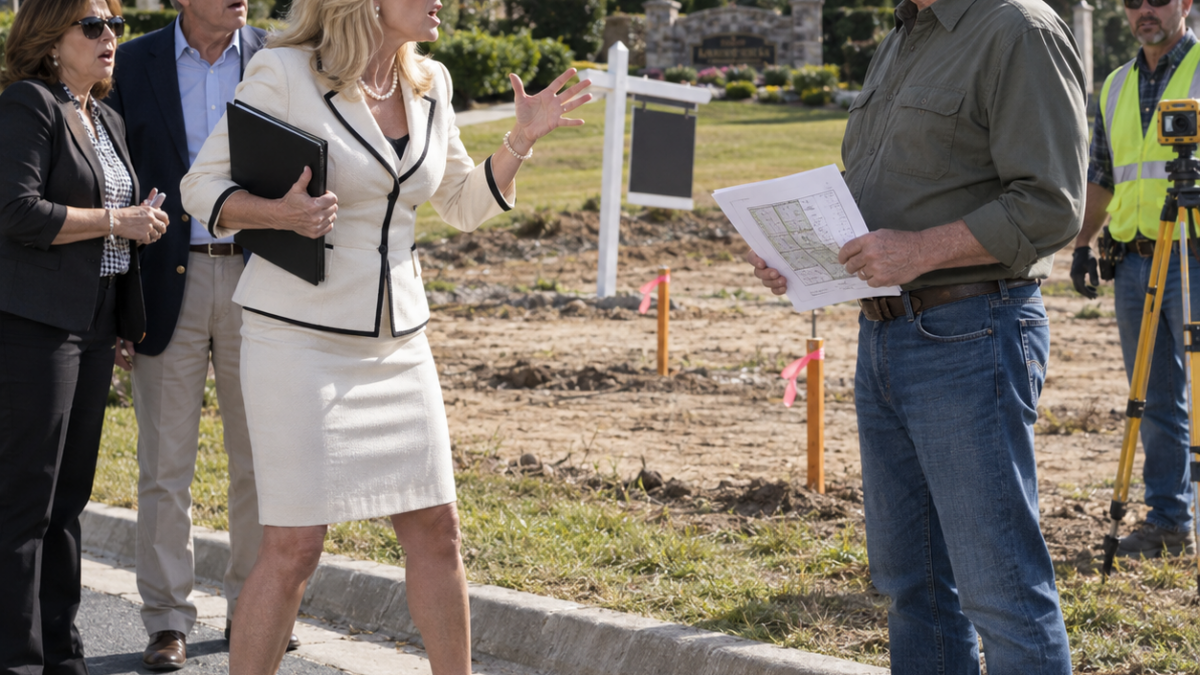
Karen Miller had spent ten years making grown adults afraid to plant the wrong flowers, paint a door the wrong shade, or leave a child’s basketball hoop outside after sunset. Six days after I moved into Serenity Meadows, she stood at the end of my driveway and threatened to take my house because she didn’t like the sound coming from my garage. What she didn’t know was that after thirty-five years in uniform, I had learned that the most dangerous person in any fight was usually the one calm enough to start taking notes.
“The sound of that machine is a direct violation of Article Seven, Section Four.”
I looked up from beneath the hood of my 1968 Mustang.
The engine was idling smoothly behind me, barely louder than the lawn mower running three houses down.
The woman standing on the sidewalk looked to be in her late fifties, wearing a beige pantsuit and holding a clipboard against her chest as if it were a badge.
I shut off the engine.
The sudden silence made her voice sound even sharper.
“Furthermore,” she said, “this type of ongoing mechanical activity damages the aesthetic harmony of Serenity Meadows.”
I wiped my hands on a shop rag.
“Ma’am, the engine was running for less than five minutes.”
Her mouth tightened.
“My name is Karen Miller. President of the Serenity Meadows Homeowners Association.”
There was a pause.
“And you’re General Arthur Vance.”
“Retired,” I said. “Arthur is fine.”
She ignored that.
“You will stop performing mechanical work immediately. A formal violation notice will be issued. Initial fine, five hundred dollars. Second violation, one thousand. Continued noncompliance may result in a lien and eventual foreclosure.”
For the first time since she arrived, I stopped looking at the clipboard and looked directly at her.
Foreclosure.
Six days.
I had been in that house for six days.
The garage behind me wasn’t some commercial repair shop. It was spotless. Organized. Quiet.
And the Mustang wasn’t a business.
It was a promise.
My wife, Helen, had heard me talk about restoring that car for almost thirty-five years.
Whenever military life dragged us somewhere new, whenever deployments interrupted birthdays and anniversaries, whenever another year disappeared into duty, she would smile and tell me the same thing.
“One day, Arthur, you’re going to retire, buy the quietest house you can find, and spend entirely too much money on that ridiculous car.”
She was supposed to be there when I finally did it.
She never got the chance.
Cancer took Helen fourteen months before I retired.
Serenity Meadows was supposed to be the place where I learned how to live without a uniform and, somehow, without her.
There was a small garden beside the patio because Helen loved roses.
There was enough garage space for the Mustang.
There were wide sidewalks.
Old trees.
Quiet evenings.
Peace.
And now a woman I had never met was standing on my driveway threatening to take it away.
I had commanded soldiers in places where mistakes cost lives.
I had negotiated with men who believed intimidation was a substitute for authority.
The first lesson those years taught me was simple.
Never let another person decide the emotional temperature of the room.
So I loosened my grip on the rag.
“I understand your position, Ms. Miller.”
Her eyebrows lifted.
Perhaps she had expected an argument.
“You’ll comply?”
“I said I understand your position.”
“That isn’t the same thing.”
“No.”
Her expression changed.
Just slightly.
“Some people misunderstand how things work here,” she said. “We have standards.”
“I’m sure you do.”
“This isn’t some back-alley chop shop.”
I glanced over my shoulder at a garage floor cleaner than most hospital corridors.
Then I looked at her again.
“You can expect my written response.”
Her lips pressed together.
“General, I strongly recommend that you don’t make this difficult.”
I nodded once.
“I strongly recommend that everything from this point forward be put in writing.”
For several seconds neither of us moved.
Then I walked inside and pressed the garage-door button.
The insulated door descended slowly between us.
Karen kept talking until the metal panel blocked her from view.
When the door finally touched the concrete, I stood alone beside the Mustang.
For a moment, the garage smelled like gasoline, warm metal, and an old dream.
I imagined Helen standing near the workbench.
She would have laughed.
Then she would have called Karen something outrageous under her breath and baked her cookies anyway.
That thought almost made me smile.
Almost.
Two days later, a certified envelope arrived.
Five-hundred-dollar fine.
Photograph of my garage.
Official warning.
And language informing me that continued violations could eventually lead to foreclosure proceedings.
I carried the letter into my study.
I placed it on the desk.
Then I pulled out a new legal pad.
At the top of the first page, I wrote two words.
OPERATION SERENITY.
Because something about Karen’s letter told me this fight had never really been about my Mustang.
And before long, I was going to discover just how many people in that neighborhood had been waiting for someone to prove it.
PART 2
I didn’t pay the fine.
I didn’t call Karen.
I didn’t storm into the clubhouse demanding an explanation.
That would have been satisfying for approximately thirty seconds and useful for absolutely nothing.
Instead, I spent that first evening doing what thirty-five years in the military had trained me to do before confronting any entrenched position.
I gathered intelligence.
The certified violation letter went into a binder.
I labeled the first divider CORRESPONDENCE.
Behind it, I placed the notice, the envelope it arrived in, and a printed photograph of the postmark.
The second divider was RULES.
The third was FINANCIALS.
The fourth was INCIDENTS.
The fifth remained blank.
I labeled that one PEOPLE.
Then I drafted a formal request for the HOA’s covenants, bylaws, amendments, meeting minutes, vendor agreements, and financial records.
I cited the state statute governing homeowner access to association records.
I asked for five years.
Then I sent it certified mail.
Afterward, I walked into the garage and looked at the Mustang.
Helen and I had found it in an online auction years earlier.
The body was sound, but the engine needed work.
She had laughed when she saw the price.
“For that much money,” she said, “it had better come with Steve McQueen.”
“It’s an investment.”
“You say that about everything with an engine.”
“I have never said that about a lawn mower.”
“You tried to buy a military surplus Jeep in Germany.”
“That was historically significant.”
“It had no doors.”
“Doors were optional.”
She laughed so hard she had to sit down.
Those were the memories retirement had left me with.
Not medals.
Not ceremonies.
Not photographs of generals shaking hands.
Her laugh.
Her coffee mug beside mine.
The way she put both hands on her hips when I pretended not to understand why a vehicle with no doors was a bad family purchase.
Losing Helen had rearranged the world.
I had spent most of my adult life solving problems.
Cancer had been the one enemy that refused to negotiate.
After she died, people kept telling me retirement would be good for me.
I hated that phrase.
Good for me.
As though grief could be treated with a mortgage and a hobby.
But I had promised Helen I would try.
So I chose Serenity Meadows.
The irony of the name wasn’t lost on me anymore.
The following Saturday, I bought a calibrated decibel meter.
At exactly ten in the morning, I opened my garage.
I mounted my phone on a tripod.
Then I started the Mustang.
At the edge of my property, the meter bounced between fifty-five and sixty decibels.
Normal conversation.
The city’s residential ordinance didn’t become relevant until substantially higher levels.
I recorded everything.
Date.
Time.
Meter reading.
Vehicle location.
Garage-door position.
Then I shut off the engine.
Across the street, a man watering his driveway gave me an amused look.
“You expecting an inspection?”
“Something like that.”
He laughed.
“I’m David Garcia.”
“Arthur Vance.”
“I know.”
I glanced at him.
He winced.
“Sorry. Everybody knows. Karen sent an email.”
That interested me.
“What kind of email?”
David turned off the hose.
He was younger than me by perhaps twenty-five years. Early forties, athletic build, Army T-shirt.
“Just said residents should be aware that unauthorized mechanical activity had been reported in the neighborhood.”
“She named me?”
“Not directly.”
“But everyone knew.”
He shrugged.
“Three-car garage. Classic Mustang. New guy.”
I nodded.
“What do you do, David?”
“Army.”
“Active?”
“JAG.”
That made me look at him again.
“Contract law?”
His smile widened.
“Among other things.”
Interesting.
Very interesting.
Before I could ask more, the front door of his house opened.
A boy of about eight stepped onto the porch holding a basketball.
He bounced it twice, then stopped.
There was no hoop.
He looked toward the end of the driveway as if one should have been there.
David saw me noticing.
“HOA made us remove it.”
“What was wrong with it?”
“Portable structure visible from the street.”
His tone had changed.
Flat.
Resigned.
“My son, Leo, used it every day. Karen fined us twenty-five dollars a day until we moved it into the garage.”
“Did the bylaws prohibit it?”
“Depends which version Karen reads to you.”
I almost smiled.
Almost.
“Keep your paperwork.”
David studied me.
“What?”
“Every notice. Every email. Every fine.”
His expression sharpened.
“You planning something, General?”
“Arthur.”
“Arthur.”
“I’m planning to understand the neighborhood I just moved into.”
He stared at me for another second.
Then he nodded.
“All right.”
That afternoon I took my first walk through Serenity Meadows.
I had noticed during the purchase process that it was unusually tidy.
At the time I interpreted that as pride.
Now I noticed something else.
Uniformity.
Every mailbox almost identical.
Every front garden restrained.
No toys left in driveways.
No basketball hoops.
No brightly painted benches.
No decorative flags except an American flag or the officially approved seasonal banners hanging from identical brackets.
The homes were expensive, but the place felt strangely cautious.
Like everybody had learned that personality came with paperwork.
I met Mr. Henderson three houses down.
His lawn could have been used for putting practice.
I complimented it.
He gave me a suspicious look, then softened when he realized I was sincere.
“Thirty years,” he said. “That lawn and I have an understanding.”
“I’ve had subordinates like that.”
He laughed.
Then immediately looked toward the street.
That tiny reaction told me more than the laugh.
Fear makes people check who is listening.
Two doors farther down lived Eleanor Gable.
Her front yard stopped me.
Roses.
Dozens of them.
Pink, red, ivory, yellow.
They climbed wooden trellises and curved along the walkway.
In a neighborhood where everything else seemed designed by committee, Eleanor’s garden looked alive.
She was kneeling beside one of the beds.
“Those are spectacular,” I said.
She looked up.
“Thank you.”
“Arthur Vance.”
“Oh, I know.”
“Karen email?”
Eleanor smiled.
“Karen everything.”
There was sadness underneath the humor.
I filed that away.
Over the next week, Karen ignored my records request.
Then a letter arrived.
According to her, my request was “under legal review” because some HOA records could contain confidential information.
Attached was something else.
A compliance agreement.
If I signed it and paid five hundred dollars, the board would consider the issue resolved.
The agreement prohibited “nonessential motor-vehicle maintenance” at my property.
Forever.
I read it twice.
Then I laughed.
It was the first time since Helen died that bureaucracy had genuinely amused me.
Karen wasn’t asking me to obey a rule.
She was asking me to sign away a right.
The document went into my binder.
Then I wrote another letter.
Professional.
Respectful.
Almost painfully polite.
I reminded the board that state law required records to be produced within a defined period.
I declined the proposed compliance agreement.
I disputed the fine.
I included the municipal noise ordinance.
I included my decibel measurements.
I included still photographs from the recorded test.
And I requested that all future communication concerning alleged violations include the precise covenant language being enforced.
Certified mail.
Return receipt requested.
Then I waited.
Karen’s answer arrived four days later.
The fine had become fifteen hundred dollars.
Five hundred original.
One thousand additional penalty.
A lien would follow if I did not pay.
Inside the envelope was a yellow sticky note.
Some people have to learn the hard way, General.
I sat at my desk holding that note for several seconds.
Helen used to say I had two types of silence.
Normal silence.
And the silence that made colonels start rereading their reports.
This was the second kind.
I photographed the note.
Placed the original in a plastic sleeve.
Then I wrote a third letter.
This one went to the HOA.
It also went to the state agency responsible for community associations.
I formally disputed the escalating fines.
I documented the denial of records.
I attached copies of my earlier correspondence.
And I identified the handwritten message as possible evidence of retaliatory enforcement.
For the first time, Karen had made the mistake I had been hoping she would make.
She had stopped pretending it was merely about rules.
She had made it personal.
Three days later, something happened that made the fight personal for me too.
I found Eleanor standing in her front yard.
She wasn’t gardening.
She was staring at the Queen Elizabeth roses along the side of her porch.
There was a paper trembling in her hand.
“Eleanor?”
She turned.
Her eyes were wet.
That stopped me cold.
“What happened?”
“Oh, nothing.”
“That doesn’t look like nothing.”
She tried to smile.
“I suppose every garden eventually changes.”
I held out my hand.
“May I?”
She gave me the paper.
Official HOA letter.
Architectural violation.
Her roses were not included on the current approved landscaping list.
She had thirty days to remove them.
Failure to comply would produce a fifty-dollar-per-day fine.
I read the letter again.
“How long have these roses been here?”
“Some of them almost thirty years.”
“And the first one?”
She touched a pink bloom.
“My husband planted it.”
I looked at her.
“George?”
She seemed surprised.
“I believe you mentioned him the other day.”
“Yes.”
She smiled faintly.
“Our twenty-fifth anniversary. He knew nothing about roses. Dug the hole twice too deep and nearly killed it the first week.”
Her fingers brushed the petals.
“Every anniversary after that, he bought me another.”
“How long has he been gone?”
“Seven years.”
The answer came softly.
Suddenly this wasn’t landscaping.
It was memory.
It was exactly what my Mustang was to me.
Karen was doing to Eleanor what she had tried to do to me.
Turning grief into a violation code.
I read the final paragraph.
Replacement plants had to be selected from an approved list and installed by an “HOA-certified contractor.”
“Who is certified?”
“Serenity Landscaping.”
“Anybody else?”
“No.”
“Do you know who owns it?”
Eleanor shook her head.
“Karen says they’re the only company familiar with community standards.”
That sentence bothered me.
“Would you mind if I copy this?”
Her fear returned.
“Could that make things worse?”
“For you?”
“Yes.”
I folded the letter carefully.
“Eleanor, I won’t do anything with your name unless you agree.”
She looked back at the roses.
“They’re all I have left of him outside this house.”
“No,” I said.
She turned.
“You have thirty years of memories. Nobody can fine those out of existence.”
Her eyes filled again.
“But I would prefer to keep the roses too.”
That earned a tiny laugh.
I copied the letter and returned the original.
Then I went home and opened my laptop.
Serenity Landscaping took five minutes to find in the state business registry.
Owner: Robert Fletcher.
Fletcher.
I searched Karen’s public records.
Maiden name: Karen Fletcher.
Robert Fletcher was her brother.
I leaned back in my chair.
“Well, Helen,” I whispered to the empty study. “There it is.”
The approved landscaping company belonged to the HOA president’s family.
That alone did not automatically prove fraud.
But it made the lack of competing vendors worth investigating.
Two days later, a large envelope arrived from the HOA’s law firm.
Karen had finally been forced to produce part of what I requested.
The covenants.
Bylaws.
Amendments.
Committee rules.
I spent two nights reading every page.
I did not skim.
I had spent my career learning that important disasters often hide in paragraphs nobody wants to finish reading.
Karen had made herself chair of the architectural committee.
Chair of compliance.
Chair of vendor selection.
In practice, the committees frequently consisted of Karen alone.
The bylaws also contained something more useful.
Contracts above five thousand dollars required competitive bids.
I circled the paragraph.
Then I called David Garcia.
“Do you have a few minutes?”
“For you, General?”
“Arthur.”
He laughed.
“For you, Arthur, yes.”
He came over after dinner.
I showed him the vendor section.
Then Eleanor’s landscaping notice.
Then Robert Fletcher’s business registration.
David stopped smiling.
“How much money is going to this company?”
“I don’t know yet.”
“You requested financials?”
“Yes.”
He leaned back.
“You realize what this could be.”
“Yes.”
“Conflict of interest at minimum.”
“Yes.”
“Potential self-dealing.”
“Yes.”
“Possibly fraud depending on disclosure, approval, billing, and whether services were actually provided.”
“Yes.”
David studied me.
“You always answer lawyers with one word?”
“Only when they’re catching up.”
He laughed.
Then his expression became serious again.
“I’ll help.”
“You don’t have to.”
“My son cried when I took his basketball hoop down.”
I said nothing.
David looked through the papers again.
“I told myself it wasn’t worth the fight. Twenty-five dollars a day. We have a mortgage. My wife has student loans. Two kids. Work. Life.”
“That’s how systems like this survive.”
“I know.”
“No. You know now.”
He nodded slowly.
“I know now.”
Our first real alliance formed at my dining-room table.
A retired general.
An Army attorney.
And an elderly widow with roses.
It would grow quickly.
Karen helped us.
She simply couldn’t stop bullying people.
The Garcias received a warning about their welcome mat.
Wrong shade of blue.
The Cheng family was cited because their garden hose could be seen from the street.
Mr. Henderson received a notice claiming his fertilizer had not been purchased through an approved vendor.
Another homeowner was fined because her trash bin remained visible seventeen minutes after the official collection-day deadline.
Seventeen minutes.
The more people heard I was disputing my fine, the more documents appeared in my mailbox.
At first anonymously.
Then with names.
Then with handwritten notes.
Please don’t mention me yet.
She has threatened liens before.
I can’t afford an attorney.
My husband says not to get involved, but here is what she did to us.
Every letter had the same tone beneath it.
Embarrassment.
People were embarrassed that they had allowed themselves to be intimidated.
I understood that feeling.
Fear rarely announces itself dramatically.
Sometimes fear is paying a fine you know is wrong because your daughter needs braces and you cannot risk hiring an attorney.
Sometimes it is removing a basketball hoop.
Sometimes it is cutting down roses.
Karen had built power not because everyone respected her.
She had built it because every homeowner believed he or she was facing her alone.
That was the center of gravity.
Break the isolation, and her authority would begin collapsing.
Karen must have sensed that shift because she escalated.
It happened on a Saturday afternoon.
I was polishing the Mustang when a tow truck rolled down the street.
FLETCHER’S TOWING & RECOVERY.
Another Fletcher.
The truck stopped directly in front of my driveway.
The driver climbed out.
Big man.
Work boots.
Baseball cap.
He walked toward a bright red fire hydrant recently installed on the municipal easement.
Then he pulled a chain from the truck.
I stepped outside.
“What are you doing?”
“Work order.”
“For?”
“Removing the hydrant.”
I stared at him.
“You’re removing a city fire hydrant?”
“HOA says it’s an unauthorized structure.”
I looked at the truck.
Then him.
“Who signed the work order?”
He hesitated.
“HOA president.”
Of course.
I took out my phone and started recording.
His shoulders stiffened.
“What are you doing?”
“Documenting.”
“You can’t record me.”
“You’re standing in public.”
He looked annoyed.
I kept the camera steady.
“That hydrant belongs to the city. If you attempt to remove it without municipal authorization, I’m calling the police and the fire department. I’ll give them this video, your license plate, your company information, and the work order you just said came from the HOA president.”
His confidence evaporated.
“I’m just doing my job.”
“I believe you.”
That surprised him.
“So before you turn someone else’s stupidity into your criminal charge, I suggest you verify the order.”
He stared at me.
Then at the hydrant.
Then at the phone.
He unhooked the chain.
“Crazy neighborhood.”
“On that point, we agree.”
He drove away.
I lowered my phone.
Across the street, curtains moved.
Two doors down, Mr. Henderson stood openly on his porch.
He gave me a thumbs-up.
That evening David emailed me.
Subject: More recruits.
Three families wanted to talk.
By the following weekend there were eleven.
Then fifteen.
Then twenty-three.
Still, Karen controlled the board.
And she controlled the money.
The financial records finally arrived in a cardboard box.
No ledger.
No digital spreadsheet.
No organized annual summary.
Five years of invoices, receipts, photocopied checks, bank statements, and expense forms had been dumped together like somebody emptied filing cabinets into the box.
David stared at it when he came over.
“She did this intentionally.”
“Obviously.”
“She thinks we’ll give up.”
I moved the coffee maker into the dining room.
“Then we should be polite enough to disappoint her.”
For six nights, my house became an unofficial audit center.
Colored folders.
Sticky notes.
Highlighters.
Spreadsheets.
David’s wife, Maria, brought sandwiches.
Eleanor brought coffee cake.
Mr. Henderson volunteered to compare landscaping invoices against actual work performed.
The Chengs built a searchable database.
Something unexpected started happening.
The investigation stopped feeling like mine.
The neighborhood was waking up.
People who barely knew each other began sitting around my dining table until midnight.
They shared stories.
They laughed.
Sometimes they swore.
Sometimes somebody would discover an invoice so absurd that the room went silent.
Serenity Landscaping had been receiving a monthly management fee nearly three times comparable market rates.
On top of that came “special projects.”
Two hundred dollars for replacing one sprinkler head.
Five thousand for tree trimming with no location listed.
Ten thousand for mulch.
Twelve thousand for “seasonal beautification enhancement.”
No itemization.
No competing bids.
No supporting photographs.
Then we found Miller Communications.
Ten thousand dollars a year.
Address?
Karen’s house.
Services?
Community newsletter and website maintenance.
I held up one of the newsletters.
Four pages.
Half of one page reminded residents not to leave garage doors open longer than fifteen minutes.
David stared at it.
“She’s paying herself ten grand a year for this?”
“Apparently.”
“I’ve written divorce motions with better graphic design.”
Eleanor laughed so hard she covered her mouth.
We kept digging.
Legal consultation fees to a firm no longer operating.
Holiday-decoration expenses with suspiciously vague receipts.
Payments to Fletcher’s Towing.
Payments to Serenity Landscaping.
Maintenance contracts repeatedly awarded without competitive bids.
And expense reimbursements with descriptions like “board leadership retreat.”
I found one.
“Six thousand eight hundred dollars.”
David leaned over.
“What retreat?”
“Date coincides with Christmas.”
“Location?”
“No location.”
Eleanor, who had begun sorting old board newsletters, looked up.
“Karen was in Hawaii that Christmas.”
Nobody spoke.
David finally said, “We need a forensic accountant.”
“We need control of the board first.”
That was the strategic problem.
Evidence didn’t automatically remove her.
We needed votes.
The annual HOA meeting was three weeks away.
Historically, almost nobody attended.
Karen relied on apathy.
That had become our advantage.
We held our first organized gathering at Eleanor’s house.
She called it a garden party.
I called it perfect terrain.
Fifteen homeowners gathered among the roses Karen wanted destroyed.
I stood beside a patio table covered with documents.
“I’m not asking anybody here to trust me,” I began.
That got their attention.
“I’m asking you to look at the records yourselves.”
I showed them the vendor ownership documents.
The invoice totals.
The committee structure.
The bidding requirement.
The escalating retaliation against homeowners.
Then I stopped talking.
For several seconds there was silence.
Mr. Henderson broke it.
“She forced me to buy fertilizer from Serenity Landscaping.”
Mrs. Chang raised her hand.
“Karen made us repaint our door three times.”
“Why?”
“She said the sheen was wrong.”
“Who painted it?”
“Her cousin.”
Another voice came from behind me.
“She fined my daughter for parking in front of my house.”
Someone else said, “She threatened a lien over Christmas lights.”
Then another.
And another.
Years of humiliation poured out.
People weren’t simply angry about money.
They were angry about being made small.
That emotion is powerful.
But uncontrolled anger is useful to the person you are fighting.
So I raised my hand.
“Listen to me.”
The garden quieted.
“Karen’s biggest advantage is that she wants us emotional.”
A man near the back frowned.
“How are we supposed not to be angry?”
“I didn’t say not to be angry. I said don’t let anger make decisions.”
I pointed toward the papers.
“We have evidence. We have bylaws. We have votes. We have legal rights. We use those.”
David stepped forward.
“The annual meeting allows board elections and member motions under our governing documents. We need turnout, proxies, and documentation.”
“How many votes?”
A homeowner asked.
David gave the number.
Someone whistled.
I shook my head.
“It’s manageable.”
“How?”
“We knock on doors.”
That became the plan.
No screaming.
No threats.
No social-media campaign.
No anonymous harassment.
Facts.
One-page summary.
Copies available.
Proxy forms.
Every street divided among volunteers.
Each homeowner approached respectfully.
The choice would remain theirs.
The morning after Eleanor’s gathering, Karen posted a warning on the clubhouse bulletin board.
Certain residents, it claimed, were holding unauthorized gatherings and distributing malicious misinformation.
Unauthorized gatherings.
In private homes.
Eleanor read the notice and looked at me.
“She’s scared.”
“Yes.”
“How can you tell?”
“She’s trying to prohibit things she has no power to prohibit.”
Eleanor smiled.
“I think George would have liked you.”
“I would have liked George.”
“He was stubborn.”
“Then definitely.”
For the first time since I met her, Eleanor laughed without looking over her shoulder.
Our door-to-door campaign accelerated.
Some homeowners refused to get involved.
I respected that.
Some listened through barely opened doors.
Some invited us inside immediately.
One man disappeared into his bedroom and returned carrying a file box containing nine years of fines.
Nine years.
Another woman cried while showing us a lien warning that had terrified her after her husband lost his job.
A retired teacher had paid twelve hundred dollars after Karen claimed the handmade bench on her porch violated architectural standards.
A young couple had been fined for leaving baby toys visible in their fenced backyard.
Nobody needed a speech.
They needed to discover that their private humiliation was part of a pattern.
That realization changed everything.
Then David found the document that could destroy the legal foundation beneath Karen’s entire enforcement system.
He arrived at my house after nine one night.
No greeting.
He placed a folder on the table.
“Read that.”
It contained city records from ten years earlier.
The year Karen became president.
A board amendment had supposedly given the president expanded unilateral fine authority.
“That’s how she does it,” David said. “She doesn’t need a board vote on each penalty because of this amendment.”
“I’ve read it.”
“Look at the signatures.”
I did.
Karen.
One board member.
Third line blank.
“So?”
“Quorum required three.”
I stared at him.
He placed the HOA minutes beside the city filing.
The minutes claimed three board members had attended.
The legally filed document showed only two signatures.
“We need to confirm absence isn’t explained somewhere else.”
“Already did.”
David produced another record.
The third board member had been hospitalized out of state that week.
My pulse slowed the way it always had when a chaotic problem suddenly became clear.
“No quorum.”
“No valid meeting.”
“No valid amendment.”
David nodded.
“Which means?”
“Which means Karen may have spent ten years issuing fines under authority she never legally received.”
We sat silently.
Then I asked the obvious question.
“How much?”
“I don’t know yet.”
“How many homeowners?”
“Potentially most of the neighborhood.”
“How many liens?”
“Several.”
The satisfaction I expected never came.
Instead, I felt sick.
Because this wasn’t about beating Karen anymore.
If David was right, people had surrendered money they might have needed for medication, tuition, repairs, groceries.
Eleanor might have destroyed thirty years of roses over a rule enforced by authority that did not legally exist.
Leo lost his hoop because his parents believed refusal could cost them their home.
Karen had turned fear into revenue.
I walked to the window.
Across the street, the Garcia house was dark except for Leo’s bedroom.
“You all right?” David asked.
“My wife used to tell me I took things personally after pretending not to.”
David waited.
“She would have hated this.”
“The corruption?”
“The cruelty.”
I looked at him.
“Money can be returned.”
“Sometimes.”
“People don’t get years back.”
David nodded.
“No.”
I turned from the window.
“Then we make sure she doesn’t get another one.”
Over the next week, we collected proxies representing more than seventy percent of Serenity Meadows households.
Karen still behaved as though she was untouchable.
Another notice appeared.
Annual meeting procedures would be “strictly enforced.”
Comments limited to two minutes.
Agenda changes prohibited.
Disruptive residents subject to removal.
David read it aloud in my kitchen.
Maria grinned.
“She sounds nervous.”
“She should be,” he said.
I shook my head.
“Do not underestimate her.”
David looked at me.
“You think she has something planned?”
“I think people who confuse control with identity become unpredictable when control disappears.”
That turned out to be correct.
Two days before the annual meeting, I returned from the grocery store to find Karen standing beside my mailbox.
She wasn’t holding a clipboard this time.
“General.”
“Arthur.”
“I need to speak with you.”
I carried the grocery bag toward the house.
“You know where to send correspondence.”
“This is ridiculous.”
I stopped.
She walked closer.
“You moved here less than two months ago.”
“Correct.”
“You know nothing about this community.”
“I know quite a bit now.”
Her jaw tightened.
“You’ve poisoned people against me.”
“I’ve shown people records.”
“You think you’re some hero?”
“No.”
“You think because you wore stars on your uniform you can march in here and take over?”
That made me smile.
Not because it was funny.
Because I finally understood the story Karen had told herself.
She truly believed this was one authority figure challenging another.
She could not imagine that the movement no longer depended on me.
“Karen, I don’t want your job.”
“Then stop.”
“No.”
“Why?”
The word came out louder than she intended.
I set the groceries down.
“Because you threatened Eleanor Gable’s roses.”
Her face changed.
Of all the answers she expected, that wasn’t one.
“You’re doing this over flowers?”
“No.”
I took one step toward her.
“I’m doing this because you knew those flowers mattered to her and threatened them anyway.”
“That is absurd.”
“You fined a family over a welcome mat.”
“Standards exist for a reason.”
“You threatened liens.”
“People agreed to the covenants.”
“You awarded contracts to relatives.”
Her eyes flashed.
“Be very careful.”
“You paid yourself through Miller Communications.”
“That was disclosed.”
“To whom?”
She said nothing.
“You issued fines under an amendment adopted without quorum.”
This time she went completely still.
There it was.
The first genuine fear I had seen in her.
She recovered quickly.
“I don’t know what you think you found.”
“I think you should attend the meeting.”
“You’re threatening me.”
“No.”
I picked up my groceries.
“I’m recommending transparency.”
Her face reddened.
“You will regret humiliating me.”
I looked at her.
“Helen used to say humiliation is what happens when your private behavior finally meets a public room.”
“Who is Helen?”
“My wife.”
Karen glanced toward the house.
For just a second, her anger weakened.
Then it returned.
“I won’t let you destroy everything I built.”
That sentence followed me long after she walked away.
Everything I built.
Not everything we built.
Not the community.
Not the board.
Everything I built.
Karen didn’t think Serenity Meadows belonged to the homeowners.
She thought it belonged to her.
The annual meeting began at seven on Thursday evening.
Normally fifteen or twenty people attended.
That night there were more than two hundred.
Every folding chair was filled.
Residents lined the walls.
People stood in the hallway.
Others watched from outside the open clubhouse doors.
I arrived early with Eleanor and David.
Eleanor wore a pale blue dress.
She looked nervous.
“You don’t have to speak tonight,” I told her.
“I know.”
“You don’t have to do anything you’re uncomfortable doing.”
“I know.”
She reached into her purse.
Then she pinned a fresh pink rose near her shoulder.
“George planted this variety.”
I smiled.
“Then I suspect he’ll have a good seat.”
She squeezed my arm.
Karen entered seven minutes before the meeting.
Bob Thompson followed.
So did Patricia Finch.
Bob looked as if he wanted to be anywhere else.
Patricia looked physically ill.
Karen stopped in the doorway.
Two hundred residents looked back at her.
Her face changed.
Confusion first.
Then anger.
Then calculation.
Her eyes found me.
I was sitting in the front row beside Eleanor.
She stared as though I had personally filled every chair.
I gave her nothing.
Karen walked to the front.
Tapped the microphone.
Feedback screamed.
People winced.
“Welcome,” she said.
Her voice trembled once.
Only once.
“We have a full agenda tonight, so discussion will be limited. The open forum will occur at the end, with a strict two-minute limit per speaker.”
Murmurs filled the room.
Karen raised the gavel.
“The first item is approval of previous minutes.”
David stood.
“Point of order.”
Karen’s eyes narrowed.
“You are not recognized.”
“Our governing documents adopt parliamentary procedure.”
“You are out of order.”
“A point of order does not require placement on the agenda.”
The room quieted.
David held up the city filing.
“I move to table approval of the prior minutes pending review of evidence that a foundational board meeting lacked the required quorum and that subsequent records inaccurately stated otherwise.”
Karen struck the gavel.
“Sit down.”
David remained standing.
“Madam President, homeowners are entitled to inspect this evidence.”
“This is not a courtroom.”
“No. In a courtroom, discovery rules would be stricter.”
A few people laughed.
Karen’s face darkened.
“I said sit down.”
I stood.
“I second his motion.”
The room went completely silent.
Karen stared at me.
“You.”
“Good evening.”
“You don’t have the floor.”
“I’m seconding a properly made motion.”
“You have been a resident for weeks.”
“I’m still a member.”
“You have orchestrated a campaign of harassment against this board.”
I heard Eleanor inhale sharply beside me.
I kept my voice calm.
“I move that the membership consider a vote of no confidence in the existing board based on alleged financial mismanagement, conflicts of interest, selective enforcement, and the use of authority potentially created through an invalid amendment.”
The room exploded.
Not cheering.
Not yet.
Voices.
Questions.
Anger.
Karen hammered the gavel.
“ORDER!”
Nobody listened.
“ORDER! THIS MEETING IS ADJOURNED!”
She began gathering papers.
David stepped toward the microphone.
“Madam President, you cannot unilaterally terminate a properly convened annual membership meeting merely because members have introduced motions permitted under the bylaws.”
“You are not counsel for this association!”
“No. I’m a homeowner.”
That sentence changed something.
Others stood.
“So am I!”
A man shouted from the back.
“Me too!”
Another voice.
“You took twelve hundred dollars from us!”
“My lien was illegal!”
“What about Serenity Landscaping?”
“What about Miller Communications?”
Karen’s control disintegrated in real time.
She pointed at me.
“This man is manipulating you!”
I didn’t answer.
I sat down.
That was the moment Karen finally realized the truth.
I wasn’t leading the room anymore.
I didn’t need to.
Eleanor stood.
Slowly.
The room quieted because everybody knew her.
Karen looked almost relieved.
“Eleanor, please. You understand how much work this board does.”
Eleanor touched the rose pinned to her dress.
Her voice was soft.
“I understand that you ordered me to destroy the last roses my husband planted for me.”
Karen blinked.
“That was an architectural compliance issue.”
“No.”
Eleanor’s voice strengthened.
“That was cruelty dressed as procedure.”
You could have heard a pin drop.
“For years,” Eleanor continued, “I thought keeping quiet made me a good neighbor. I thought paying whatever you demanded kept peace.”
Her hands trembled.
She clasped them together.
“I was wrong.”
Karen shook her head.
“This is emotional nonsense.”
Eleanor looked directly at her.
“Yes, Karen. Human beings are emotional.”
Several people laughed quietly.
Eleanor continued.
“We remember anniversaries. We care about children playing basketball. We grow roses because people we love once planted them. A community isn’t beautiful because every door matches. It is beautiful because the people behind those doors feel safe.”
Karen’s face tightened.
Eleanor turned toward the room.
“I support the motion.”
People stood.
Not all at once.
One row.
Then another.
Then almost the entire clubhouse.
David moved to the front.
“We will conduct the vote according to the bylaws and verified proxy forms.”
Karen shouted, “This is illegal!”
David looked at her.
“You are welcome to challenge it through the procedures available to every other homeowner.”
The irony was not lost on anyone.
The vote was overwhelming.
Karen Miller removed.
Bob Thompson removed.
Patricia Finch removed.
Bob didn’t protest.
Patricia began crying quietly.
Karen stood behind the table gripping the edge.
She looked smaller than she had on my driveway.
But I felt no triumph.
Only finality.
“The vote is invalid,” she said.
Nobody answered.
“I will sue every person involved.”
Still nobody answered.
“I built this community!”
Eleanor looked at her.
“No, Karen. We did.”
Applause rolled through the room.
Karen grabbed her purse.
She walked toward the exit.
Then she stopped beside my chair.
“This is what you wanted.”
I looked up.
“No.”
“Don’t lie to me.”
“I wanted to finish my Mustang.”
For one second she seemed unsure whether I was mocking her.
I wasn’t.
“You ruined my life.”
“No, Karen.”
I glanced toward the boxes of financial records beside David.
“I read your paperwork.”
She walked out.
Nobody followed her.
The membership elected an interim board.
To her complete shock, Eleanor Gable was nominated for president.
She immediately shook her head.
“Oh, no.”
The room laughed.
She looked at me desperately.
“Arthur.”
“Don’t look at me.”
“You did this.”
“I did not nominate you.”
Mr. Henderson raised his hand.
“I did.”
“You traitor,” Eleanor said.
More laughter.
Someone called, “We trust you!”
Another said, “You listen!”
Eleanor stared at the crowd.
Then touched the rose on her dress.
“All right,” she whispered.
The vote was unanimous.
Her first action was authorizing an independent forensic audit.
Her second was suspending disputed fines.
Her third was preserving all electronic and paper records.
David leaned toward me.
“She learns fast.”
“Good commanders do.”
“You said you didn’t want to run anything.”
“I don’t.”
“You look proud.”
“That’s different.”
The audit began the following week.
What it uncovered was worse than anything we had found.
We had seen conflicts.
The accountants found systematic misconduct.
Phantom vendors.
Duplicated invoices.
Personal reimbursements disguised as HOA expenses.
Transfers into an LLC tied to Karen.
Landscaping contracts inflated for years.
Payments for work nobody could verify.
Checks approved without proper board authorization.
Records altered after the fact.
The preliminary estimate exceeded a quarter million dollars.
When Eleanor called me after receiving the report, her voice was shaking.
“Arthur.”
“What happened?”
“It’s worse.”
I drove to her house.
She was sitting at the kitchen table.
The accountant’s report lay open beside her.
“I thought I would feel good,” she said.
“About what?”
“Being right.”
I sat across from her.
“It rarely feels as good as people expect.”
“She stole from us.”
“Yes.”
“From people who trusted her.”
“Yes.”
“Why?”
I looked toward the window.
George’s roses were visible outside.
“Money. Control. Entitlement. Pick one.”
Eleanor wiped her eyes.
“I keep thinking about Patricia.”
“The former board member?”
“She called me.”
“What did she want?”
“To apologize.”
That surprised me.
Eleanor folded her hands.
“She said Karen controlled everything. Patricia barely saw the financial records. She signed things because Karen told her they were routine.”
“That doesn’t excuse her.”
“No.”
“But?”
“She sounded frightened.”
I understood.
Fear did not erase responsibility.
But responsibility did not require us to pretend everybody carried equal guilt.
The forensic auditors referred their findings to law enforcement.
The district attorney opened an investigation.
Karen’s family vendors received subpoenas.
Bank records were obtained.
The civil case sought restitution for improperly diverted funds.
The invalid fines became a separate issue.
The new board brought in outside counsel to determine how much could legally and practically be returned.
Some residents had records going back years.
Others didn’t.
Eleanor insisted the process be as generous as legally possible.
“If we can prove someone paid an invalid fine,” she told the lawyer, “we repay it.”
“That could be expensive.”
“It was their money first.”
That became her style.
Simple.
Fair.
Almost revolutionary after Karen.
One Saturday morning, I was trimming the hedge when Leo Garcia ran across the street.
“Mr. Vance!”
“Arthur is fine.”
“My dad says I’m supposed to call you sir.”
“Your father is a lawyer. He enjoys unnecessary complications.”
Leo grinned.
“Can I show you something?”
He pointed toward his driveway.
David was dragging the basketball hoop out of the garage.
Maria stood beside him.
I walked across the street.
David positioned the hoop at the edge of the driveway.
Leo bounced the basketball.
Then looked at his father.
“Can I?”
David nodded.
Leo took a shot.
Missed completely.
The ball bounced into the flower bed.
Nobody cared.
Maria covered her mouth.
Her eyes were wet.
David put an arm around her.
“This is ridiculous,” she said.
“What?”
“I’m crying over a basketball hoop.”
“No,” I said.
They looked at me.
“You’re crying because nobody can threaten you over it anymore.”
Maria nodded.
Leo retrieved the ball.
His second shot hit the rim.
His third went in.
He shouted like he had won the NBA Finals.
Across the neighborhood, other things returned.
Porch benches.
Garden flags.
Children’s toys.
A brightly painted birdhouse.
One house installed a perfectly tasteful orange front door simply because the homeowner had always wanted one.
Eleanor’s roses remained exactly where George had planted them.
The new architectural committee consisted of five volunteers.
Their first unanimous resolution designated Eleanor’s rose garden as a community heritage feature.
When she read the resolution, she laughed and cried at the same time.
“George would never believe this.”
“I suspect George knew exactly what those roses were worth.”
She looked at me.
“You talk about Helen less than you did when you first moved here.”
I didn’t know how to answer.
Eleanor waited.
“I think about her just as much.”
“That’s not what I said.”
“No.”
“Does it hurt less?”
I stared at the roses.
“Different.”
She nodded.
“Different is something.”
The criminal case against Karen moved slowly.
Real life usually does.
No dramatic police convoy arrived at the clubhouse.
No television detective handcuffed her while neighbors applauded.
There were interviews.
Subpoenas.
Attorneys.
Negotiations.
Court filings.
Asset restrictions.
The ordinary machinery of accountability.
Months later, Karen accepted a plea agreement.
She avoided prison.
Some residents were furious about that.
Mr. Henderson came to my garage the evening the news became public.
“She should be locked up.”
“Maybe.”
“Maybe?”
“I’m not the judge.”
“She stole from elderly people.”
“Yes.”
“She terrorized families.”
“Yes.”
“And you’re okay with probation?”
“I didn’t say that.”
“Then what are you saying?”
I set down my wrench.
“I’m saying revenge and accountability aren’t the same thing.”
Mr. Henderson frowned.
“She loses her house. Pays restitution. Has a felony record. Can’t run another association. Her businesses are finished. Her reputation is gone.”
“That’s accountability.”
“And revenge?”
I looked at him.
“Revenge is needing her to suffer after the danger is already over.”
He leaned against my workbench.
“You really believe that?”
“I’m trying to.”
Helen would have understood the distinction better than I did.
She had always been the merciful one.
Once, after an officer made a catastrophic administrative mistake that nearly ended his career, I came home furious.
I told Helen the man deserved whatever happened next.
She listened.
Then asked one question.
“Arthur, do you want him corrected or crushed?”
I had no answer.
She did.
“There’s a difference.”
I still thought about that.
Karen deserved consequences.
She received them.
Restitution.
Probation.
Court supervision.
Loss of position.
Loss of money.
Loss of the house she had treated like the palace at the center of her kingdom.
Her brother faced consequences connected to the vendor arrangements too.
The association recovered substantial funds through settlement, insurance, and civil claims.
The exact amount became less important than what happened next.
Our HOA dues fell.
Not immediately.
Eleanor refused to make promises until the books were stable.
But within months, competitive bidding cut major maintenance costs.
Landscaping improved despite costing dramatically less.
The website cost a fraction of Karen’s self-paid contract.
Meetings were published in advance.
Financial reports became available online.
Every committee had multiple members.
Fine authority required documented notice and appeal.
And foreclosure threats over trivial violations became virtually impossible under the new enforcement structure.
At the first community barbecue, somebody placed a handwritten sign near the food.
WELCOME TO SERENITY MEADOWS.
NO CLIPBOARDS ALLOWED.
Eleanor pretended to be offended.
“I own a clipboard.”
David pointed toward the grill.
“Madam President, you’re in violation.”
“Fine me.”
Everybody laughed.
That sound mattered.
For years, people had whispered about the board.
Now they joked with it.
Leo and three other children played basketball near the clubhouse.
Mr. Henderson argued cheerfully with the new landscaping contractor about grass seed.
The Cheng family brought dumplings.
Maria Garcia organized games for the children.
Eleanor walked between tables carrying a tray of cookies.
I stared at them.
“What?”
“They look familiar.”
“My recipe.”
“Those are Helen’s cookies.”
“You gave me her recipe.”
“I gave you access to the recipe.”
“That sounds suspiciously like bureaucracy, Arthur.”
I tasted one.
Not bad.
Not Helen’s.
But not bad.
“You changed something.”
“Orange zest.”
“Helen didn’t use orange zest.”
“She should have.”
I pointed at her.
“This administration is becoming authoritarian.”
She laughed.
Later, when the sun was setting, I walked home alone.
The barbecue continued behind me.
Music.
Children shouting.
Neighbors laughing.
For months, I had been surrounded by people almost every evening.
Yet walking into my empty house still carried a particular silence.
There are forms of loneliness no community meeting can fix.
I placed my keys beside Helen’s photograph.
“You would like them,” I said.
I imagined her response.
I already like Eleanor.
You need friends your own age.
She’s older than me.
Then definitely.
I smiled.
The Mustang still wasn’t finished.
Ironically, Karen’s campaign against my mechanical work had delayed the restoration by months.
So one Saturday I decided enough was enough.
Garage open.
Tools arranged.
Coffee ready.
I started working before sunrise.
At nine, David appeared.
Leo stood beside him holding a small toolbox.
“What’s this?”
David shrugged.
“He’s been asking how engines work.”
Leo looked at the Mustang.
“Is it fast?”
“Your father is standing right there.”
“So yes?”
David sighed.
“He’s definitely my son.”
I pulled out a stool.
“Come here.”
For the next hour I taught Leo the basics.
Air.
Fuel.
Spark.
Compression.
He asked more questions than most junior officers I had trained.
Some were better questions too.
“Why do old cars sound different?”
“Because they were built in a different era.”
“Why don’t you buy a new engine?”
“Because then it wouldn’t be this engine.”
“But wouldn’t it be easier?”
“Yes.”
He looked confused.
“Then why?”
I paused.
Children have a way of asking philosophical questions while believing they are discussing machinery.
“Because sometimes fixing something matters more than replacing it.”
He considered that.
“Like the neighborhood?”
David and I looked at each other.
“Exactly like the neighborhood.”
Leo smiled and returned to the carburetor.
That was when a car slowed outside.
I heard it before I saw it.
An older sedan.
The vehicle stopped in front of my driveway.
Karen sat behind the wheel.
For a moment, nobody spoke.
She looked different.
No beige pantsuit.
No immaculate hair.
No luxury SUV.
She seemed tired.
Smaller.
Human.
Her eyes moved across the scene.
The Mustang.
My open garage.
Leo on the stool.
David leaning against the workbench.
Across the street, a landscaping crew worked on Mr. Henderson’s lawn.
Not Serenity Landscaping.
Farther away, children rode bicycles.
A portable basketball hoop stood proudly at the Garcia driveway.
Karen looked at me.
Months earlier, I imagined that moment more than once.
I imagined walking to her window and telling her exactly what she had done.
I imagined describing every lie we uncovered.
Every dollar recovered.
Every rule rewritten.
Every family no longer afraid of her.
I imagined saying something memorable.
Something Helen would have called “your ridiculous general speech.”
But standing there, I felt none of it.
Karen had already heard the verdict.
Not in court.
Here.
The neighborhood had continued without her.
That was the consequence she seemed unable to process.
She rolled down the window.
“Arthur.”
“Karen.”
David stood straighter.
I raised one hand slightly.
He stayed where he was.
Karen looked toward the Mustang.
“So you finally finished it.”
“Almost.”
She gave a short laugh without humor.
“Always almost.”
I said nothing.
“I suppose you’re happy.”
“With the car?”
“You know what I mean.”
I wiped my hands on a rag.
“I’m happy the neighborhood is doing well.”
“You destroyed me.”
There were those words again.
Months had passed, but she still needed the same story.
“I didn’t falsify records.”
Her jaw tightened.
“I didn’t transfer the money.”
“Everybody did things.”
“Maybe.”
“Bob signed things.”
“Yes.”
“Patricia signed things.”
“Yes.”
“My brother submitted invoices because the HOA needed work done.”
“Yes.”
“You make it sound so simple.”
“It isn’t simple.”
That surprised her.
I walked closer, stopping well away from the car.
“You made thousands of decisions over ten years. Some were probably reasonable. Some probably helped people. I’m sure there were emergencies you handled and problems nobody thanked you for fixing.”
Her expression softened a fraction.
Then I continued.
“But none of that gave you ownership of everyone else.”
The softness disappeared.
“You think Eleanor is better?”
“Yes.”
The answer came before I could soften it.
Karen stared at me.
I clarified.
“She understands the position belongs to the homeowners.”
“She’s weak.”
“No.”
“She lets everyone argue.”
“That’s called representation.”
“She’ll learn.”
“Maybe.”
Karen looked toward Eleanor’s house.
The roses were visible from where we stood.
“They made the garden a landmark.”
“Yes.”
“Ridiculous.”
“Probably.”
Karen turned back.
I smiled slightly.
“People are allowed to enjoy ridiculous things.”
Her eyes moved toward my Mustang.
I let that point land.
For the first time, the corner of her mouth twitched.
Not quite a smile.
Maybe the memory of being absurdly angry at an idling classic car.
Then the bitterness returned.
“I have to sell the house.”
“I heard.”
“My lawyer says it’s the only way.”
“I’m sorry.”
“Don’t.”
“I mean it.”
That seemed to make her angrier than anything else.
“I don’t need your pity.”
“It isn’t pity.”
“What is it?”
I thought about Helen.
Correction or crushing?
“An acknowledgment that losing your home hurts.”
Karen looked away.
For several seconds neither of us spoke.
Then she said quietly, “I did love this place.”
“I believe you.”
“I wanted it to stay beautiful.”
“I believe that too.”
“You think I’m a monster.”
“No.”
That answer surprised both of us.
I continued.
“I think you convinced yourself that because your goal was good, whatever you did to achieve it became acceptable.”
Karen’s eyes filled.
She blinked hard.
“That’s worse.”
“Probably.”
I could hear Leo moving tools behind me.
Karen looked at the garage.
“I hated that car.”
“I noticed.”
“It was loud.”
“It was fifty-eight decibels.”
“Of course you measured it.”
“I’m retired. I have time.”
For the first time, Karen actually laughed.
It lasted only a second.
Then she looked toward the street ahead.
“I’m leaving next week.”
“I hope wherever you go, things are quieter.”
She shook her head.
“You really are impossible.”
“So Helen told me.”
Karen looked at me.
“Your wife?”
“Yes.”
“She would have hated me.”
I considered it.
“No.”
Karen frowned.
“She would have hated what you did.”
“That’s what I meant.”
“No. It’s different.”
Karen stared at me for a long moment.
Then she rolled up the window.
The car moved away slowly.
She never drove through Serenity Meadows again.
I returned to the garage.
David had heard enough to understand.
“You okay?”
“Yes.”
“You were nicer than I would have been.”
“I’m old.”
“That’s not an explanation.”
“You become less interested in dramatic endings.”
Leo looked up.
“What dramatic ending?”
“Nothing,” David and I said together.
Leo shrugged.
“Can we start the engine?”
I looked at the Mustang.
For months, something had been stopping me from declaring the restoration finished.
One more timing adjustment.
One more inspection.
One more part to polish.
Then I understood.
Finishing the car meant finishing the promise.
And some part of me had been afraid of what came after that.
If the Mustang was complete, there would be no future afternoon when Helen and I finally finished it together.
No unfinished dream left to preserve.
Grief can hide in strange places.
Sometimes inside a carburetor.
Sometimes beneath a car cover.
Sometimes inside the words almost done.
I turned to Leo.
“Get your dad.”
“I’m right here.”
“Seat belts.”
David blinked.
“What?”
“We’re taking her out.”
Leo shouted.
Maria heard him from across the street and came outside.
“What’s happening?”
“Dad says we’re going in the Mustang!”
“Arthur?”
I shrugged.
“Operational test.”
David laughed.
“You’re impossible.”
“So I’m told.”
We spent another hour checking everything.
Then I lowered the hood.
The afternoon was clear.
September sunlight stretched across Serenity Meadows.
Eleanor heard the engine start and came out onto her porch.
Mr. Henderson appeared too.
The Chengs waved from their driveway.
It felt absurdly ceremonial.
I almost shut the engine off.
Then Eleanor cupped her hands around her mouth.
“GO, ARTHUR!”
People laughed.
I looked at the passenger seat.
For half a second, I saw Helen there.
Not literally.
Memory does not need to become a ghost to feel real.
I remembered our last good summer.
Before hospitals.
Before medication schedules.
She had sat at our kitchen table scrolling through photographs of houses for sale.
“What do you actually want?” she asked.
“A three-car garage.”
“Arthur.”
“Fine. Four.”
She kicked me under the table.
I laughed.
Then she became serious.
“When this is over, I don’t want you spending retirement waiting to die.”
“Helen.”
“I mean it.”
“I’m not discussing this.”
“You command people for a living. You’re terrible when someone else gives an order.”
“Helen.”
She reached across the table and took my hand.
“Promise me you’ll build something after me.”
I couldn’t answer.
She squeezed harder.
“Not monuments. Not some scholarship with my name. A life.”
“You’re going to be there.”
“Arthur.”
“You are.”
She let me pretend.
That was her final kindness.
Weeks later, when I finally made the promise, she was too weak to sit up.
She whispered one sentence.
“Find home.”
For more than a year after her death, I thought home meant a house.
Then I thought it meant the Mustang.
Then the garden.
Then quiet.
I had been wrong every time.
I shifted into gear.
Leo sat beside me grinning.
David had lost the argument over which of them got the first ride.
“Ready?” I asked.
Leo nodded violently.
I eased out of the driveway.
Eleanor waved.
Her roses moved in the breeze behind her.
David shouted, “Don’t encourage him!”
Leo shouted back, “Too late!”
I laughed.
Really laughed.
The Mustang moved through Serenity Meadows.
Past houses that no longer looked identical.
Past basketball hoops.
Past porch swings.
Past Mr. Henderson’s lawn.
Past the clubhouse where two hundred people had rediscovered their voices.
Nobody saluted.
Nobody called me General.
They just waved.
Neighbors.
Friends.
People who had become part of my life because one woman with a clipboard had threatened the wrong garage.
At the neighborhood entrance, I stopped.
Beyond the sign, the road opened into a long stretch of highway.
Leo looked at me.
“Can we go faster now?”
I glanced at him.
“Your father tell you to ask that?”
“No.”
“Good.”
I pressed the accelerator.
The old V8 answered.
Not obnoxiously.
Not illegally.
But beautifully.
The sound filled the cabin.
Leo laughed.
And somewhere inside that engine note was thirty-five years of postponed plans.
A wife I still missed every morning.
A garden that survived.
A child who had his basketball hoop back.
A widow who became president.
A frightened neighborhood that learned fear works best when people face it alone.
I had moved to Serenity Meadows because I wanted peace.
Karen mistook that desire for weakness.
She believed retired meant finished.
She believed polite meant submissive.
She believed silence meant agreement.
She was wrong about all three.
But the strangest thing was that, in the end, defeating Karen wasn’t what healed me.
The fight merely opened the door.
The people did the rest.
Eleanor.
David.
Maria.
Leo.
The Chengs.
Mr. Henderson.
Neighbors who once lowered their voices when Karen drove past and now argued cheerfully over barbecue sauce at community meetings.
They gave me something military life had always provided without my realizing how precious it was.
A place in the formation.
People beside me.
People who expected me tomorrow.
When Leo and I returned an hour later, Eleanor was waiting near my driveway.
“Well?”
She asked.
I turned off the engine.
“It needs work.”
Leo gasped.
“It does not!”
Eleanor laughed.
“You’ll never admit it’s finished, will you?”
I looked at the Mustang.
Then at the neighborhood.
Then toward my house.
Helen’s garden was visible beyond the fence.
For once, I didn’t feel the need to postpone the answer.
“No,” I said.
Eleanor raised an eyebrow.
I smiled.
“The car is finished.”
Leo threw both arms into the air.
Eleanor smiled softly.
“And the rest?”
I knew what she meant.
My life.
The thing Helen had ordered me to build.
I looked around Serenity Meadows.
“No,” I said. “I think the rest is finally starting.”
That evening, I carried two chairs onto the patio.
For months, only one had been there.
The second chair had felt too much like an accusation.
An empty place.
That night I left both.
Not because I expected Helen to walk through the garden.
Not because grief was gone.
But because love did not become meaningless simply because someone could no longer sit beside you.
I poured a glass of bourbon.
Placed Helen’s favorite coffee mug on the table out of habit.
Then laughed at myself.
“Okay,” I said toward the roses. “That’s a little dramatic.”
The breeze moved through them.
Somewhere down the street, a basketball bounced.
A lawn mower started.
A dog barked.
Someone played music from an open garage.
Normal neighborhood sounds.
Once, Karen had tried to eliminate every sound, color, plant, object, and person that did not fit her definition of order.
In the end, Serenity Meadows became beautiful only after we stopped trying to make it perfect.
I lifted my glass.
“To home.”
The next morning Eleanor called.
“Arthur?”
“What happened?”
“We have a complaint.”
My stomach tightened.
“What kind?”
“Noise violation.”
I closed my eyes.
“You’re joking.”
“I am not.”
“Against whom?”
“You.”
I looked toward my garage.
“The Mustang?”
“Yes.”
I heard someone laughing behind her.
David.
“Eleanor.”
“As HOA president, I take these matters extremely seriously.”
“Eleanor.”
“The complainant alleges excessive mechanical noise yesterday afternoon.”
“What complainant?”
“Leo Garcia.”
I heard Leo shouting in the background.
“I SAID IT WASN’T LOUD ENOUGH!”
Everyone burst out laughing.
I sat at my kitchen table shaking my head.
“You people are impossible.”
Eleanor recovered enough to say, “The board investigated.”
“And?”
“We’ve determined your Mustang is in full compliance.”
“Thank you.”
“However, Leo has filed an appeal.”
“Of course he has.”
“He wants a louder exhaust.”
“Denied.”
“You’ll need to tell him.”
“You’re the president.”
“Delegation is an important leadership skill.”
I could practically hear Helen laughing.
For thirty-five years I believed leadership meant standing in front.
Serenity Meadows taught me something else.
Sometimes leadership meant helping people discover they could stand without you.
Sometimes justice meant not crushing your enemy, but removing the power that allowed them to hurt others.
And sometimes revenge looked nothing like revenge at all.
It looked like roses still blooming.
A basketball bouncing.
Neighbors laughing.
Books opened to the public.
Money returned.
Rules rewritten.
A Mustang idling peacefully inside an open garage.
And an old soldier finally understanding that winning the war was never supposed to be the last chapter.
The last chapter was learning how to live after it.
I looked through the kitchen window toward Helen’s roses.
For the first time since she died, the future didn’t look like an empty road.
It looked unfinished.
In the best possible way.
And that was exactly how I wanted it.
[END OF STORY]








