PART 2: Karen Hit Me With an $8,000 “Poaching” Fine on My Own Ranch—Then She Saw the Wildlife Badge Behind My License
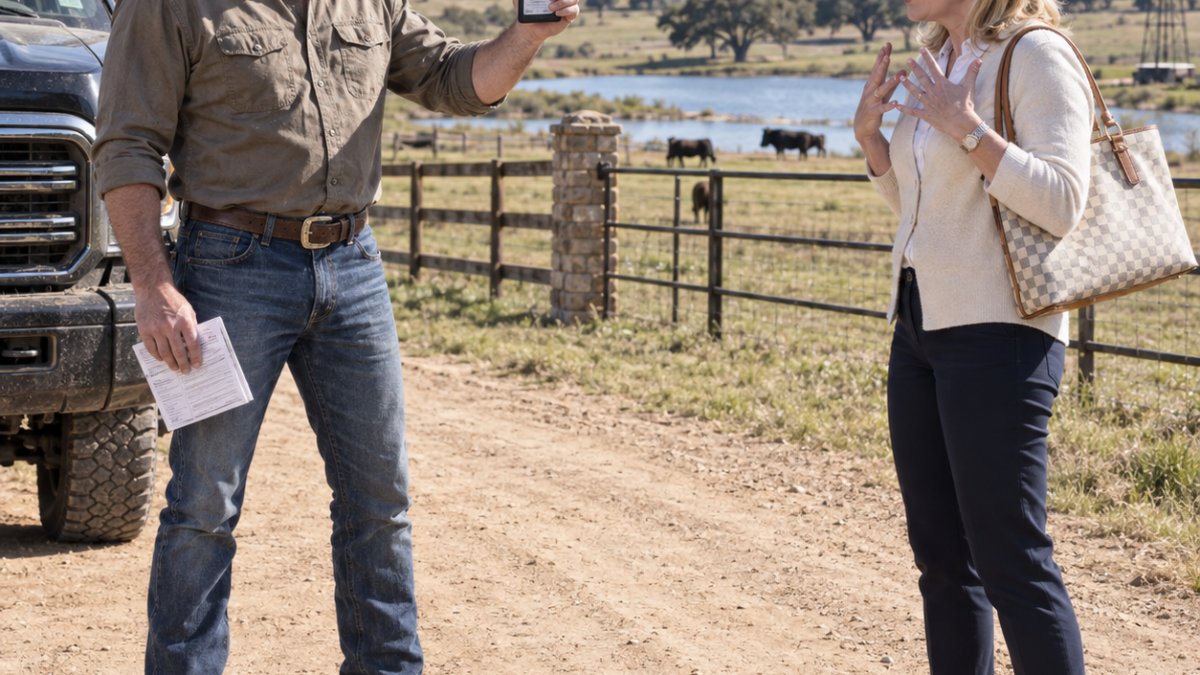
PART 2
STATE WILDLIFE LAW ENFORCEMENT.
Karen read it once.
Then again.
Her eyes moved from the badge to my face.
“You’re a game warden?”
“Senior conservation officer.”
The guard nearest me took his hand away from his holster.
Karen recovered quickly.
“A wildlife officer doesn’t have jurisdiction over private property matters.”
“That’s true.”
She blinked.
I pointed toward the hogs.
“But you accused me of poaching.”
No one spoke.
I continued.
“Those animals were taken under a state depredation authorization that I personally helped issue after documenting agricultural damage across this watershed.”
Karen’s mouth tightened.
“That doesn’t invalidate our environmental regulations.”
“It invalidates your claim that I unlawfully took protected game.”
“Our board has broader standards.”
“Your board has no jurisdiction here.”
One of the guards looked toward Karen.
She ignored him.
Then she made the mistake of trying to intimidate me again.
“We have attorneys who disagree.”
“Give me their names.”
“What?”
“The attorneys who told you your HOA can create criminal wildlife offenses on land it doesn’t own.”
“That information is privileged.”
“Of course.”
I put the credential case away.
Then I took out my phone.
Karen’s attention snapped toward it.
“What are you doing?”
“Documenting the encounter.”
“You may not record private association enforcement activity.”
“We’re standing on my ranch.”
Her cheeks reddened.
“Turn it off.”
“No.”
One of the guards said quietly, “Ms. Hollis, maybe we should leave.”
Karen looked at him as if he had betrayed her.
“Mr. Mercer has been given lawful notice.”
“No,” I said. “I’ve been given a piece of paper.”
I held up the access acknowledgment.
“And this is what you actually came for.”
She said nothing.
“You attached an access agreement to an $8,000 wildlife fine.”
“It’s a settlement option.”
“For a violation you invented.”
“It resolves multiple issues.”
“It gives your developer a road across protected land.”
Karen stepped closer.
“For two years, you have obstructed reasonable growth that would benefit this entire region.”
“My father put that wetland under a conservation easement.”
“Your father is dead.”
The sentence landed harder than she intended.
The guards felt it too.
One looked away.
Karen realized what she had said, but pride stopped her from taking it back.
My father, Daniel Mercer, had died three years earlier from pancreatic cancer.
He spent his final spring walking the western wetland with me, leaning on a hickory cane while we marked old nesting areas, spring seeps, and stands of bald cypress.
He knew developers were circling.
The conservation easement was the last major legal document he signed.
When the notary asked whether he understood that it would permanently restrict development on that portion of the ranch, Dad laughed.
“That’s the idea.”
Now Karen stood on the land he protected and referred to his death like an administrative inconvenience.
I folded the papers again.
“Leave.”
Her eyes narrowed.
“You’ll hear from counsel.”
“I hope so.”
“You think a badge makes you untouchable?”
“No.”
I looked at the armed men behind her.
“I think laws matter more than costumes.”
That one reached the guards.
Their expressions changed.
Karen turned sharply.
“Let’s go.”
The black SUVs disappeared down my dirt road fifteen minutes later.
I stood beside my truck until the dust settled.
Then my phone rang.
Dave Colson, my supervisor with the state wildlife agency.
“How’d it go?”
“She tried to fine me eight thousand dollars for poaching.”
He laughed once.
“You’re kidding.”
“She attached a road-access agreement.”
The laugh disappeared.
“Send it.”
“Already scanning.”
“Did you show credentials?”
“When one of her people tried to take my rifle.”
A pause.
“Any threats?”
“Enough to document.”
“Good. Don’t push her.”
“I know.”
“Jack.”
“I know.”
He lowered his voice.
“The task force is close.”
That was the part Karen could not see.
Our conflict had started almost fourteen months earlier, but by the morning of the poaching fine it had already become one small piece of a much larger investigation.
Ridgeline Preserve had begun as a legitimate luxury development.
Expensive homes.
Private roads.
A small clubhouse.
A lake.
Karen Hollis originally served as president of the residents’ association.
Nothing unusual there.
Then the original developer got into financial trouble.
A second company appeared.
Ridgeline Expansion Partners.
Karen became deeply involved in both the HOA and the expansion company.
That was when the pressure on Mercer Ranch began.
The developers needed an access route west.
The county road on their eastern side could support normal residential traffic, but heavy equipment for the next construction phase would require widening, bridge work, and expensive utility relocation.
Crossing my conservation tract would save them millions.
The first offer was $2.4 million.
I refused.
The second was $3.1 million plus annual access payments.
I refused again.
Karen came to the ranch personally after that.
She sat at my kitchen table with a glossy presentation folder.
“You’ll still own the property.”
“A four-lane construction road through a wetland isn’t conservation.”
“It would only be two lanes.”
“Still no.”
“You haven’t heard the final number.”
“I don’t need to.”
She studied me.
“Everybody has a number.”
“My father didn’t.”
“I’m not negotiating with your father.”
“No.”
I closed the folder.
“You’re negotiating with the promise I made him.”
She left angry.
Within three weeks, the letters started.
Aesthetic nuisance.
Unmanaged vegetation.
Standing water harboring mosquitoes.
Wildlife noise.
Dust from state vehicles.
Unauthorized fencing.
Association dues.
The notices would have been funny if they hadn’t become increasingly aggressive.
The ranch was not in the HOA.
Not one acre.
The Ridgeline declaration recorded at the county showed that clearly.
So I ignored the first few letters.
That was almost a mistake.
My job had trained me to take patterns seriously.
I investigated poaching rings, illegal timber harvests, wetland destruction, wildlife trafficking, and environmental fraud.
People who commit those crimes often test boundaries first.
A small trespass.
A fake document.
A moved marker.
A threat disguised as paperwork.
Then they escalate.
One morning I found the northern survey marker missing.
I replaced it.
Two weeks later, it moved again.
That was when I installed trail cameras.
Not at the houses.
Not aimed toward private yards.
On my own boundary.
The first useful video arrived six nights later.
Two men in Ridgeline security jackets entered at 1:17 a.m.
One carried a metal detector.
The other carried survey paint.
They removed a boundary pin, walked nearly nine feet onto my land, and drove another marker into the ground.
They photographed it.
Then left.
I saved the footage.
Installed a second camera.
Three weeks later, they returned.
This time I caught a white Ridgeline maintenance truck.
License plate visible.
One man was identifiable.
I wrote an official incident report.
Dave read it.
“You want to confront them?”
“No.”
“Good.”
“Why good?”
“Because there may be more here.”
There was.
A county clerk contacted our agency after receiving a strange amendment involving the conservation tract.
Someone had filed a revised property description that appeared to shift part of the Ridgeline boundary west.
The document contained a notarized signature supposedly belonging to my father.
There was one problem.
The notarization date was seven months after Dad died.
I remember sitting at my desk looking at his name.
DANIEL E. MERCER.
The signature was close.
Not perfect.
Close enough to fool someone who never watched Dad sign birthday cards with hands weakened by chemotherapy.
I called the county clerk.
“Please preserve the original.”
“You believe it’s forged?”
“My father was dead when it was signed.”
Silence.
Then: “Understood.”
That document moved everything out of neighborhood-dispute territory.
State investigators became involved.
Then financial investigators.
Ridgeline’s association attorney, a man named Thomas Bell, contacted the attorney general’s office through his own lawyer.
He had begun seeing documents carrying his name that he had never drafted.
Board resolutions that had never been voted on.
Environmental reports from consultants he could not verify.
Fake statutory citations.
He provided copies quietly.
The picture widened.
Ridgeline Expansion Partners was heavily leveraged.
Investors had funded the second phase based on representations that access rights across Mercer Ranch were nearly secured.
They weren’t.
Without the road, construction costs increased dramatically.
Without construction, scheduled investor payments became difficult.
Karen’s organization was running out of time.
Investigators traced association money into companies connected to expansion work.
They found suspicious interstate transfers.
Forged easement documents.
Questionable appraisal reports.
Payments to surveyors.
By the time Karen handed me the $8,000 poaching fine, a joint task force was already building a case.
I did not tell Sarah everything.
Not at first.
She knew there was an investigation.
She knew I was saving evidence.
She did not know how close federal authorities were to moving.
Sarah had married a wildlife officer.
She understood danger.
That did not mean she enjoyed it.
That evening she found me photographing the poaching notice.
“She came here with armed guards?”
“Four.”
“And you forgot to mention that at dinner?”
“I was going to.”
“When?”
“After dinner.”
She put both hands on the counter.
“Jack.”
“I never drew a weapon.”
“That is not comforting.”
“They stayed controlled.”
“Until one tried to take your rifle.”
I looked at her.
“Who told you?”
“Luke.”
Our son was twenty-three, worked the southern pasture, and possessed exactly none of my instinct for withholding information.
“Traitor.”
“Your son has survival skills.”
She took the notice from me.
Eight thousand dollars.
Her eyes stopped on the access acknowledgment.
“She’s getting desperate.”
“Yes.”
“That worries me.”
“Me too.”
“When does this end?”
I didn’t have an answer I could give her.
Soon, I hoped.
But investigations don’t move because someone’s spouse is tired.
“I need you to promise me something,” she said.
“What?”
“No heroics.”
“I don’t do heroics.”
Sarah stared at me.
“Your entire personality is organized around saying that while doing something stupid.”
“That seems unfair.”
“Promise.”
“I promise.”
The next three months were quieter.
Too quiet.
The poaching fine was never formally withdrawn.
Instead Karen sent a “final demand” increasing the amount with administrative penalties.
$9,250.
Then $11,000.
I filed every letter.
Investigators obtained more warrants.
Thomas Bell continued cooperating.
One surveyor agreed to talk after prosecutors confronted him with camera footage.
He admitted Karen had paid cash bonuses to “correct” disputed markers.
He claimed she told him the property descriptions were being updated pursuant to a settlement.
There was no settlement.
One Ridgeline board member resigned unexpectedly.
Then another.
Karen replaced them with loyalists.
The expansion company announced publicly that road construction would begin “pending final administrative clearance.”
That language concerned me.
There was no clearance.
Then, on a Monday evening, Luke found survey paint across the western meadow.
Bright orange marks ran toward the wetland.
I photographed them.
Called Dave.
He arrived before dark.
“These are road stakes.”
“I know.”
“They’re not ours.”
“I know.”
He looked toward Ridgeline.
“She’s moving.”
That night the task force held an emergency conference.
The original plan had been to execute search and arrest warrants the following week.
Investigators still wanted one final batch of banking records.
The commander moved the operation forward.
Tuesday morning.
Six a.m.
I barely slept.
At 5:12, I left the house in civilian clothes.
Sarah walked me to the mudroom door.
“You said no heroics.”
“This isn’t heroics.”
“You’re wearing body armor under your jacket.”
“Occupational safety.”
She touched my face.
“Come home.”
“I will.”
I met the task force fourteen miles away.
State wildlife officers.
State police.
Federal agents from the environmental-crimes and financial-investigation teams.
County deputies who had been deliberately excluded from earlier planning because investigators were still examining whether local officials had improperly assisted Ridgeline.
Warrants were reviewed.
Assignments confirmed.
Communications checked.
A drone team launched from a field south of the ranch.
At 6:41, the first live image appeared on a monitor.
Black SUVs.
Nine of them.
A bulldozer.
Private security.
My stomach tightened.
“What the hell is she doing?”
The drone zoomed.
Six conservation workers were repairing a section of perimeter fence on the state easement.
Ridgeline security surrounded them.
Karen stepped from the lead SUV.
One agent beside me whispered, “She picked today.”
The task-force commander looked at the feed.
“Hold.”
I wanted to move immediately.
Those were my people.
Dale Simmons, the crew supervisor, had worked beside me for eleven years.
He had a wife.
Grandkids.
Bad knees.
The guards shoved his crew against the fence.
“Commander.”
“Hold.”
“We have an assault in progress.”
“I see it.”
The legal teams were documenting.
Body armor went on.
Weapons checked.
Another drone angle showed zip ties.
My hands curled.
Then Dale did something that almost made me laugh.
Even with his hands bound, he started arguing.
I could not hear him clearly, but I knew the posture.
Dale did not possess a quiet setting.
Karen held up a paper.
Dale laughed directly in her face.
The commander said, “Your friend?”
“Unfortunately.”
A guard took Dale’s phone.
Karen pointed toward the bulldozer.
The operator started forward.
The bucket lowered toward the new conservation fence.
“Now?” I asked.
The commander looked at the warrant packet.
“Convoy move.”
Engines started.
Before we reached the property, the drone operator spoke.
“She entered the field office.”
“With who?”
“One security guard.”
The office was small.
Desk.
Two filing cabinets.
Radio equipment.
A secure evidence locker bolted to the floor.
Anything sensitive was already duplicated or removed.
But one working folder remained on my desk.
RIDGELINE EXPANSION.
Copies only.
Bank-transfer summaries.
Photographs.
Fraudulent filings.
Evidence logs.
I had been reviewing it the previous afternoon.
The drone could not see inside.
But the office had a security camera.
Ben, our technical investigator, pulled up the feed.
Karen entered.
The security guard forced the door.
She searched the desk.
Opened drawers.
Then saw the folder.
“Oh, don’t,” Ben murmured.
Karen opened it.
Her face changed.
She flipped pages faster.
Then she shoved the entire folder into her handbag.
Ben looked at the commander.
“We have burglary and evidence theft on camera.”
“Preserve it.”
The convoy accelerated.
Karen emerged from the office.
Her guards began moving the workers toward vans.
We crested the hill.
I will remember the next thirty seconds for the rest of my life.
Nine private SUVs.
One bulldozer.
Six workers with bound wrists.
Karen holding her handbag against her side.
Then our vehicles spread across the road.
Emergency lights activated.
Doors opened.
Commands erupted.
“ARMED SECURITY! DO NOT REACH!”
“HANDS WHERE WE CAN SEE THEM!”
“STEP AWAY FROM THE WORKERS!”
The transformation was immediate.
Karen’s men had looked powerful when they were surrounding people holding fence pliers.
Now they were facing actual sworn officers operating under judicial warrants.
Hands went up.
Sidearms remained holstered.
One man started shouting that he was licensed security.
A state trooper ordered him to stop moving.
He did.
I stepped from the lead truck wearing my agency tactical vest.
WILDLIFE LAW ENFORCEMENT.
Badge centered on my chest.
Karen saw me.
Her face went completely still.
It was the second time I had watched her realize she had misunderstood who I was.
The first was the day of the $8,000 fine.
This was different.
That day she could still tell herself I was one inconvenient officer.
Now she saw the warrants.
The task force.
The state police.
The evidence team.
The tactical agents.
Everything she had dismissed as bluff and bureaucracy had arrived at once.
“You,” she whispered.
I walked to Dale first.
“You hurt?”
“My dignity.”
“Anything useful?”
“My wrists.”
An agent cut the zip tie.
Dale rubbed his hands.
“Took you long enough.”
“You’ve been detained eighteen minutes.”
“Felt like nineteen.”
I almost smiled.
Then I looked at the security chief.
His name was Rick Sloan.
Former municipal police officer.
Private security license.
He knew enough law to understand the situation.
“Mr. Sloan,” I said, “show me the court order authorizing your detention of state conservation workers.”
He looked toward Karen.
“Show me the warrant.”
Nothing.
“Show me the instrument authorizing your company to seize state equipment.”
His jaw tightened.
“We were advised the association had administrative authority.”
“By whom?”
Karen stepped forward.
“This is a civil land dispute.”
The task-force commander said, “Ma’am, stay where you are.”
She ignored him.
“Jack, tell these people to stand down.”
That almost impressed me.
Even then, she thought command was about volume.
I looked at Sloan.
“Who gave the detention order?”
His shoulders dropped.
“Ms. Hollis.”
Karen spun toward him.
“Rick.”
He kept talking.
“She said the board had authority to hold them until a tribunal review.”
“What tribunal?”
“I don’t know.”
“Did you verify it?”
“No.”
Karen shouted, “My attorneys approved this!”
Thomas Bell was not there.
But his sworn statement was.
And according to Bell, he had specifically warned her weeks earlier that private security had no detention authority beyond narrow circumstances involving immediate safety or lawful citizen detention.
She had ignored him.
Agents separated the guards.
Weapons were secured.
The conservation workers were released.
Then the bulldozer operator stepped down.
One investigator documented the section of destroyed fence.
Another photographed tire tracks.
The task force commander approached Karen.
“Karen Elaine Hollis?”
She lifted her chin.
“Yes.”
“I have federal and state warrants pertaining to Ridgeline Expansion Partners, the Ridgeline Property Association, and related entities.”
Her face tightened.
“I want my lawyer.”
“You’ll have that right.”
“What is this about?”
He began identifying the nature of the investigation.
Wire fraud.
Forgery.
Conspiracy.
Theft and misuse of association funds.
Fraudulent property filings.
Obstruction.
Environmental violations.
State charges arising from the morning’s armed detention and property destruction would be evaluated separately.
Karen actually laughed.
“You have no evidence.”
That was when I looked at her handbag.
She saw me look.
Her hand closed over the strap.
The commander followed my gaze.
“Ma’am, place the bag on the ground.”
“No.”
“Place it down.”
“That contains privileged legal documents.”
My stomach almost dropped.
She had just made it worse.
An agent stepped forward.
Karen clutched the bag.
“That is my property.”
“You are being detained pursuant to warrant. Put the bag down.”
She finally did.
A female agent secured it.
The warrant authorized seizure of records and devices connected to the suspected fraud.
Inside, beneath Karen’s wallet and keys, was the Ridgeline folder she had taken from my office.
The evidence technician held it up only long enough to photograph its location before bagging it properly.
Karen looked at me.
“You stole those documents from our private files.”
Nobody said anything for a second.
Then the task-force commander asked, “Which documents?”
Karen stopped.
She knew.
The folder contained copies gathered from multiple sources—county records, subpoenas, Thomas Bell’s disclosures, surveillance photographs, banking summaries.
By accusing me of stealing them from her private files before anyone had described the contents, Karen had volunteered something her attorney would later spend months trying to explain.
Not a full confession.
Nothing that simple.
But consciousness of knowledge.
Awareness.
Connection.
And all of it captured on multiple body cameras.
“You set me up,” she said.
“No.”
I looked toward my broken office door.
“You broke into my office.”
“You left that file where anyone could see it.”
“It was inside a locked building.”
Her face went pale.
For the first time, Karen had no answer.
The handcuffs went on at 7:26 a.m.
Not mine.
A state investigator made the arrest.
That mattered to me.
I did not want anyone later claiming I had personally used my badge to settle a ranch dispute.
I stood several feet away while Karen was advised of her rights.
She looked toward the wetland.
Then the guards.
Then me.
“You think you won?”
“No.”
I meant it.
Six workers had been zip-tied against a fence.
My father’s name had been forged.
Association residents had lost money.
Protected land had been damaged.
Nothing about that felt like winning.
“This should never have gotten this far,” I said.
Her mouth twisted.
“You could have sold the road.”
There it was.
Even then.
“That wetland was never yours to buy.”
“Everything has a price.”
I thought about Dad.
His cane sinking into soft earth.
His thin hand resting on a cypress trunk.
His signature on the real conservation easement.
“No,” I said. “Some things have a cost.”
Agents placed Karen in a transport vehicle.
The raid on Ridgeline headquarters was happening simultaneously.
Computers seized.
Files secured.
Servers imaged.
Phones collected under warrant.
A locked office safe contained original corporate ledgers.
Several notary stamps investigators believed had been used improperly.
Property descriptions.
Investor presentations.
Copies of forged environmental reports.
And a planning binder labeled WEST ACCESS STRATEGY.
That binder hurt more than I expected.
One section contained a timeline.
Pressure Mercer.
Environmental notices.
Fee accumulation.
Lien option.
Boundary correction.
Road mobilization.
The $8,000 poaching notice appeared in handwritten notes as:
WILDLIFE LEVERAGE—FORCE ACCESS SIGNATURE.
I stared at that line when prosecutors showed it to me weeks later.
Wildlife leverage.
That was all my father’s ranch had become to Karen.
Leverage.
But there was something else in the binder.
A list of Ridgeline homeowners.
Next to some names were notes.
COMPLIANT.
DIFFICULT.
FINANCIAL PRESSURE.
BOARD OPPOSITION.
Karen had not only targeted me.
She had been controlling residents inside her own association with fines, liens, selective approvals, and threats.
A widower had been fined nearly $14,000 over landscaping.
A young couple had been threatened with foreclosure over disputed architectural penalties.
Another resident had been pressured into selling a small adjacent parcel to a company tied to Ridgeline Expansion.
The case grew again.
The association itself was placed under temporary independent management while the financial records were audited.
Residents were furious.
Some were embarrassed.
A few defended Karen initially.
“She kept the neighborhood beautiful.”
“She got things done.”
“She was tough, but property values increased.”
I understood why people said it.
Bad leadership rarely survives if it produces nothing useful.
Karen had negotiated landscaping contracts.
Road repairs.
Security patrols.
She answered emails at midnight.
She remembered every covenant.
She made people feel as though someone was in control.
That was part of why the truth was difficult.
Control and corruption can live in the same person.
Competence and abuse can too.
The federal and state cases took more than a year.
That surprised neighbors who expected arrests to mean instant resolution.
Real cases move slower.
Evidence has to be authenticated.
Defendants get counsel.
Motions get filed.
Charges get challenged.
Some counts survive.
Some change.
Some disappear.
Rick Sloan, the security chief, cooperated early.
He admitted Karen had repeatedly represented that the association possessed legal authority it did not have.
He turned over texts.
One from the night before the raid read:
NO COUNTY INVOLVEMENT. WE HANDLE THIS INTERNALLY. DETAIN ANYONE INTERFERING UNTIL I ARRIVE.
Another:
MERCER WILL FOLD ONCE HE SEES WE’RE SERIOUS.
Sloan’s cooperation did not erase what he had done.
He had armed men detain workers without verifying authority.
But prosecutors took his cooperation into account.
Thomas Bell, the HOA’s former attorney, became one of the government’s most important witnesses.
He testified that he warned Karen repeatedly.
He also described documents created in his name without authorization.
The financial trail was worse than even he knew.
Investigators traced association money through consulting entities into Ridgeline Expansion.
Investor funds crossed state lines based on property-access representations that were false.
Several local officials came under scrutiny.
One surveyor was charged.
A former county employee admitted accepting payments for expedited paperwork.
Not everyone Karen knew was criminal.
That distinction mattered.
I hated the way rumor turned every person who had ever attended dinner at her house into a conspirator.
Evidence had to decide guilt.
Not proximity.
Ridgeline residents elected an interim board.
Their first president was a retired nurse named Elena Ruiz.
She came to my ranch one afternoon carrying no clipboard.
That alone made me like her.
“I owe you an apology,” she said.
“You don’t.”
“Our association sent you those fines.”
“Karen sent them.”
“Using our letterhead and our money.”
I didn’t answer.
Elena looked toward the western meadow.
“Can I see the wetland everyone has been fighting about?”
“Sure.”
We walked.
It was late spring.
Red-winged blackbirds moved through the reeds.
A pair of wood ducks lifted from the creek.
Elena stopped on the boardwalk Dad and I had built.
“This is what the road would have crossed?”
“Right through there.”
She stared for a long time.
Then said, “They told us it was scrubland.”
I smiled without humor.
“Scrubland photographs better in an investor presentation.”
She looked embarrassed.
“We never came out here.”
“You weren’t invited.”
“Still.”
She leaned on the railing.
“Karen told everyone you were some anti-development rancher who wanted us gone.”
“I don’t care that the neighborhood exists.”
“You hated us.”
“For a while.”
She appreciated the honesty.
“What changed?”
“The morning six of my workers were tied to a fence.”
Elena looked surprised.
“That made you hate us less?”
“It made me realize none of those workers were detained by your eighty-seven homeowners.”
She nodded slowly.
“Karen did that.”
“And the people who followed her.”
We walked back toward the barn.
Before leaving, Elena stopped.
“The new board wants to formally rescind every fine issued against Mercer Ranch.”
“They were never valid.”
“I know.”
“And the $8,000 poaching fine?”
“Eleven thousand two hundred and fifty by the time she finished adding fees.”
I laughed.
“I stopped opening them.”
“We’re voiding all of it.”
“Good.”
“There’s something else.”
She handed me an envelope.
Inside was a copy of a board resolution.
Ridgeline acknowledged that Mercer Ranch was outside HOA jurisdiction and that the association possessed no access easement through the protected tract.
I read it.
Then looked at her.
“This matters.”
“I thought it might.”
I signed nothing.
I didn’t need to.
The board had simply corrected its own records.
That evening Sarah found the resolution on the table.
“Frame this one?”
“No.”
“The wildlife fine?”
“No.”
“Karen’s first letter?”
“Absolutely not.”
She smiled.
“You’re getting healthier.”
“Terrifying.”
The civil cases settled before the criminal case ended.
The association’s insurers, developers, security company, and several responsible parties contributed to different settlements depending on their roles.
The conservation fence was rebuilt.
Damaged wetland areas were restored.
The ranch’s legal expenses were reimbursed through negotiated resolutions.
Ridgeline homeowners recovered portions of improperly assessed charges.
The state receiver commissioned a full audit.
The most satisfying change was not financial.
The proposed western road disappeared permanently from the development plan.
A new access route was eventually built from the east.
It cost the developer more.
That was not my problem.
One afternoon, Luke and I watched excavators working on the distant ridge.
“They could’ve done that from the beginning,” he said.
“Yes.”
“Why didn’t they?”
“Money.”
“How much?”
“Millions.”
He shook his head.
“So they spent millions fighting you to avoid spending millions.”
“Pretty much.”
“That’s stupid.”
“Greed often looks intelligent until the bill arrives.”
Luke laughed.
“You rehearsed that.”
“No.”
“Yes, you did.”
The criminal case ended the following winter.
Karen accepted a plea agreement after several pretrial rulings went against her and cooperating witnesses made the defense increasingly difficult.
She pleaded guilty to serious fraud-related charges and conspiracy counts tied to the false property filings and financial scheme.
State charges relating to the armed detention and property destruction were resolved separately as part of the overall disposition.
The sentence was substantial.
Not the theatrical lifetime punishment neighbors predicted.
But years of incarceration.
Restitution.
Forfeiture of illicit proceeds.
Supervised release.
Restrictions on future financial and fiduciary activity.
Martin Hales, her expansion-company partner, received his own sentence.
The surveyor was convicted.
The corrupt county employee pleaded guilty.
Rick Sloan lost his security license in addition to the criminal consequences he faced.
The private security company dissolved.
I attended Karen’s sentencing.
Sarah asked whether I needed to.
“No.”
“Then why go?”
I thought about it.
“Because I was there when she handed me the first serious threat.”
“The eight-thousand-dollar fine?”
“Before that.”
“The road offer?”
“Before that.”
She understood.
Dad.
I wanted the last page of the story to include him somehow.
In court, Karen looked smaller.
Not physically.
The courtroom simply removed all the scenery that had once amplified her power.
No black SUVs.
No security men.
No board letterhead.
No designer office.
No crowd waiting for orders.
Just a defendant seated beside counsel.
The prosecutor described the scheme.
The defense described Karen’s work ethic, charitable donations, lack of previous criminal record, family ties, and the legitimate projects she had completed for Ridgeline.
Both were true.
That mattered.
People are rarely only the worst thing they’ve done.
Then victims spoke.
An association resident described nearly losing her home over disputed fines.
Dale described being zip-tied against a fence by men claiming authority they did not possess.
Thomas Bell described discovering his professional reputation had been used to legitimize documents he never approved.
Then my name was called.
I walked to the lectern.
I had written three pages.
I used less than one.
“My father spent his life on Mercer Ranch,” I said. “Near the end, when he knew he didn’t have much time, he protected eight hundred acres so they would remain wetland after both of us were gone.”
I looked at the judge.
“The defendant did not simply ask to buy that promise. She tried to manufacture authority to erase it.”
Karen stared at the table.
“When money did not work, she used false fines. When fines did not work, false property records appeared. When paperwork failed, armed men entered protected land.”
I paused.
“But the damage wasn’t only to me. It was to residents who trusted the association, employees who trusted official-looking documents, and workers who arrived one morning expecting to repair a fence and ended up restrained at gunpoint.”
I folded my statement.
“I don’t ask the court for revenge. I ask that the sentence recognize how many ordinary people had to absorb the cost of one person deciding that ‘no’ was something she could rewrite.”
Then I sat down.
Karen spoke before sentencing.
For the first time, I heard her without anger.
She apologized to residents.
To her family.
To employees.
She acknowledged that her obsession with completing the expansion had become something she justified one step at a time.
“The first lie made the second one easier,” she said.
That sentence stayed with me.
Because it sounded true.
She said she had convinced herself the road would eventually benefit everyone.
She believed that once construction succeeded, investors were repaid, and property values rose, the means would be forgotten.
Then every obstacle became a threat.
Every critic became an enemy.
Every rule became negotiable if the goal felt important enough.
I did not forgive her in that courtroom.
Forgiveness was not something a judge could order.
But I understood her better.
That was different.
The judge imposed sentence.
Karen was taken away.
No dramatic collapse.
No screaming.
She simply turned once before the side door.
Our eyes met.
Then she was gone.
The ranch became quiet again.
At first, quiet felt suspicious.
I would hear an engine on the access road and look up expecting black SUVs.
It would be Luke in the feed truck.
A survey flag would appear near a fence line and my chest would tighten.
Then I’d remember it was one of ours.
Sarah noticed.
“You keep waiting for another round.”
“Habit.”
“You’re home.”
“I know.”
“Do you?”
That question bothered me.
A month later, I packed every Karen-related letter into three banker boxes.
Fake fines.
Property notices.
Road proposals.
Copies of forged filings.
Legal correspondence.
The $8,000 poaching notice sat on top.
Luke picked it up.
“You keeping this?”
“Evidence retention period says yes.”
“After that?”
I thought.
“Maybe the agency museum wants an example of how not to cite a game warden for poaching.”
He laughed.
I eventually framed one thing.
Not the fine.
Not the badge.
Dad’s conservation easement.
A certified copy.
Sarah hung it beside the mudroom door.
“That’s the document that actually won,” she said.
“She had forged copies too.”
“No.”
Sarah touched the frame.
“This one existed before Karen.”
She was right.
The task force exposed the fraud.
My badge stopped a guard from taking my rifle.
The warrants ended the raid.
The courts imposed consequences.
But the foundation of everything was an old man signing a legal document while cancer was killing him because he wanted birds and deer and cypress trees to have somewhere left to exist.
The following spring, Ridgeline’s new board contacted the state.
They wanted to fund a public conservation overlook on their own property facing the wetland.
I almost refused.
Old instincts.
Then Elena came to the ranch.
“No road.”
“I know.”
“No vehicle access.”
“I know.”
“No HOA control over the easement.”
“Jack.”
“Just checking.”
She laughed.
“We want a small platform on our side. Interpretive signs. Birding scopes. School groups.”
“Why?”
“Because half our residents moved here for nature and apparently none of us knew what nature was behind the gate.”
I looked toward the wetland.
“Talk to the agency.”
“We did.”
“Then why are you asking me?”
“Because we want you to help design the signs.”
I groaned.
“I arrest poachers. I don’t make signs.”
“You’re a biologist.”
“Unfortunately.”
Luke volunteered me.
The overlook opened six months later.
One panel explained wetland hydrology.
Another showed migratory bird routes.
The third described conservation easements.
No mention of Karen.
I insisted.
The land did not need to become a monument to a criminal case.
Kids came.
Birders came.
Ridgeline residents came.
Mrs. Ruiz organized volunteer trash cleanups along their eastern drainage.
For the first time, the development and ranch interacted without somebody trying to own the other.
Dale retired the next year.
At his retirement cookout, I gave him a set of plastic zip ties mounted in a shadow box.
He stared at it.
“You’re an idiot.”
“Read the plaque.”
He did.
FOR EMERGENCY FENCE REPAIR ONLY.
He laughed so hard beer came out his nose.
Later, when most people had left, we sat near the reconstructed fence.
Dale watched two herons crossing the marsh.
“You know what still bothers me?”
“What?”
“That woman picked the exact morning of the raid.”
“I know.”
“What are the odds?”
“Bad.”
“Good for us.”
“Terrible for my blood pressure.”
He sipped coffee.
“You looked pretty impressive stepping out of that truck.”
“Don’t start.”
“Big vest. Badge.”
“Dale.”
“Federal convoy.”
“I’m leaving.”
He grinned.
“Karen sure froze.”
I shook my head.
“That badge had almost nothing to do with what happened.”
“It had something.”
“Maybe.”
I looked across the wetland.
“The badge only mattered because actual authority has limits.”
Dale frowned.
“That sounds like one of your lectures.”
“It probably is.”
“Retirement soon?”
“Thinking about it.”
“Do it before you become unbearable.”
Too late.
Two years after Karen’s sentencing, I turned in my full-time commission.
Not completely.
The state convinced me to remain a reserve officer and consultant for environmental-crimes training.
But I stopped carrying the daily caseload.
My last official morning began before sunrise.
I walked the western boundary alone.
The fence was intact.
Markers correct.
No fresh tire tracks.
No fake notices stapled to posts.
At the overlook across the wetland, someone was already standing with binoculars.
A teenage girl.
Probably waiting for birds.
I stopped near the spring where Dad and I had rested on his final walk.
There was an old stump there.
I sat.
In my jacket pocket was the credential case Karen had seen years earlier.
The leather was worn smooth.
I opened it.
Silver badge.
Photograph.
Identification.
For decades, that metal had opened gates, ended arguments, and sometimes made people suddenly polite.
But it had never been the source of authority by itself.
The source was everything behind it.
Statutes.
Training.
Courts.
Procedures.
Evidence.
Limits.
Accountability.
Karen’s great mistake had not been failing to recognize my badge.
It was believing authority came from looking powerful.
From armed guards.
Letterhead.
Luxury offices.
Black SUVs.
Aggressive notices.
People stepping aside when she approached.
She mistook compliance for legitimacy.
For a while, so did everyone around her.
I closed the credential case.
When I got home, Sarah was on the porch.
“Done?”
“Mostly.”
“Mostly?”
“Reserve commission.”
She sighed.
“I knew it.”
“I told them emergencies only.”
“Your definition of emergency includes turtles in storm drains.”
“Those turtles matter.”
She handed me coffee.
Luke drove up a few minutes later.
He had taken over more of the ranch operation and was now talking about adding a small habitat-restoration business.
I blamed my career.
He blamed my genes.
We walked to the western pasture.
A group of feral hogs had rooted near one fence the night before.
Luke pointed.
“Poaching opportunity.”
I looked at him.
“Don’t.”
“Eight thousand dollars.”
“Keep talking and you’re repairing the fence alone.”
He laughed.
We found the damaged section.
Nothing serious.
While Luke gathered tools, I noticed something caught on the wire.
A laminated card.
For one ridiculous second, I thought it was another violation notice.
I pulled it loose.
RIDGELINE PRESERVE COMMUNITY WILDLIFE DAY.
Saturday.
Guided bird walk.
Wetland education.
Native-plant workshop.
I started laughing.
Luke looked over.
“What?”
I showed him.
He read it.
“Community Wildlife Day.”
“Yeah.”
“Think they’ll fine us?”
“Get the pliers.”
That evening, Sarah and I walked to the pond.
The sun dropped behind the western ridge.
Herons moved toward the reeds.
Somewhere in the timber, a barred owl called.
No engines.
No shouting.
No bulldozer tracks.
Just the ordinary sounds Dad had wanted protected.
Sarah slipped her hand into mine.
“Worth it?”
I knew what she meant.
The years.
The investigation.
The threats.
The courtrooms.
The morning six men were tied against my fence.
“I wish it had never happened.”
“That’s not what I asked.”
I looked across the water.
“Yes.”
Not because Karen went to prison.
Not because the fake fines vanished.
Not because she froze when she saw the badge she had never expected me to carry.
Those things belonged to the conflict.
What mattered was what remained after it.
The wetland.
The ranch.
The people who worked there.
The residents next door who were finally neighbors instead of enemies.
And my father’s promise, still written into the land long after his handwriting stopped existing anywhere else.
A few weeks later, I put the $8,000 poaching notice in the same archive box as the rest.
Before closing the lid, I looked at it one last time.
Karen had believed that paper gave her authority.
She was wrong.
Paper can be powerful.
A deed.
A warrant.
A conservation easement.
A court order.
But only when it stands on something real.
That notice never did.
I closed the box.
Outside, Luke called for help with the fence.
Sarah told him I was retired.
He shouted back that cattle didn’t recognize retirement.
I laughed and went outside.
The badge stayed in the drawer.
The ranch didn’t need it anymore.
[TITLE]
Karen Hit Me With an $8,000 “Poaching” Fine on My Own Ranch—Then She Saw the Wildlife Badge Behind My License
[FACEBOOK OPENING — 700–800 WORDS]
Karen Hollis drove six miles past the gates of her luxury development, crossed a cattle guard onto land my family had owned for four generations, and handed me an $8,000 “poaching penalty” for legally removing feral hogs from my own ranch.
When I told her she had no authority over a single fence post on my property, she pointed toward four armed private-security men behind her and warned that if I refused to pay, her association would seize my hunting equipment, block my access road, and begin legal proceedings against the land itself.
I had spent fourteen months letting Karen believe I was nothing more than a quiet rancher who watched birds and repaired fences, but when one of her guards reached for the locked rifle case inside my truck, I finally pulled the worn leather credential holder from my back pocket.
“Eight thousand dollars?”
I looked at the cream-colored notice again.
REGIONAL PROPERTY ENHANCEMENT BOARD.
WILDLIFE PROTECTION VIOLATION.
UNAUTHORIZED TAKING OF PROTECTED GAME.
Karen stood beside my truck in polished boots that probably cost more than some of my fence sections. Behind her idled two black SUVs. Four men in dark tactical uniforms stood near them with sidearms on their belts.
None wore a state badge.
None carried a sheriff’s patch.
Fifty yards away, three feral hogs lay inside my utility trailer, tagged and documented under a state depredation program.
“These aren’t protected game,” I said.
Karen lifted her chin.
“They were killed inside the Ridgeline Community Wildlife Zone.”
“There is no Ridgeline Community Wildlife Zone.”
“Our board created it last month.”
“Your board governs houses on the other side of that ridge.”
“Our authority extends to environmental impacts affecting Ridgeline residents.”
I almost laughed.
My name is Jack Mercer. I’m fifty-one, and Mercer Ranch covers roughly 2,300 acres of pasture, timber, and wetland in the Carolina foothills.
My great-grandfather bought the first parcel in 1919.
My father expanded it.
Before he died, we permanently protected nearly eight hundred acres of wetland under a conservation easement.
That land was the reason Karen hated me.
Ridgeline Preserve had been built east of the ranch, a gated development full of stone entrances, landscaped medians, and expensive houses advertised as “luxury living in harmony with nature.”
Then its developers planned a second phase.
They needed an access road wide enough for heavy equipment.
The cheapest route went directly through our protected wetland.
They offered me millions.
I refused.
First came polite letters.
Then aggressive letters.
Then ridiculous fines for brush height, “excessive wildlife noise,” state vehicles parked near my barn, and boundary violations that existed only on maps Karen’s organization had recently started producing.
Now she was accusing me of poaching.
One of the security guards stepped toward my truck.
Karen pointed toward the rifle case locked behind the seat.
“Confiscate that weapon pending tribunal review.”
I looked at him.
“Don’t touch my truck.”
He stopped.
His hand drifted near his belt.
Karen smiled.
“Jack, this does not need to become difficult.”
“You crossed onto my ranch with armed men and handed me an $8,000 fake wildlife ticket.”
“It is not fake.”
“Then show me the state statute.”
She raised the clipboard.
“Our board has adopted supplemental wildlife protections.”
“Your board can regulate landscaping inside your development. It cannot invent wildlife crimes on my property.”
Her smile hardened.
“You’re becoming confrontational.”
“No. I’m becoming precise.”
She pulled another paper from behind the penalty notice.
“Pay the fine, surrender the rifle for inspection, and sign this acknowledgment. We can settle the matter privately.”
I took it.
The second document had almost nothing to do with wildlife.
It granted Ridgeline temporary construction access across the western conservation tract.
There it was.
The road.
I looked at Karen.
“This is what you came for.”
“It resolves several outstanding disputes.”
“You attached a road easement to a poaching fine.”
“It’s a settlement.”
“For an offense you made up.”
Karen stepped closer.
“Your refusal to cooperate is holding up an investment worth tens of millions of dollars.”
“My father protected that wetland permanently.”
“Your father is dead.”
The words hung between us.
Her guards looked away.
My father had died three years earlier from pancreatic cancer. The conservation easement had been one of the last documents he signed.
I folded the papers.
“Leave.”
Karen’s voice turned cold.
“You think this ranch makes you untouchable?”
“No.”
“You think because you know some people at the state wildlife office—”
One guard opened my passenger door.
I shut it again.
His shoulders squared.
“Sir, step back.”
“No.”
Karen nodded toward him.
“Secure the firearm.”
That was enough.
I reached behind me.
The guard stiffened.
Karen smiled because she thought I was reaching for my wallet.
Instead I pulled out a battered black credential case, opened it slowly, and held it where all four men could see.
The silver badge caught the sunlight.
Karen’s eyes dropped to the words stamped across it.
STATE WILDLIFE LAW ENFORCEMENT.
Her smile vanished.
[END OF FACEBOOK OPENING]
[FULL STORY CONTINUATION]
“You’re a game warden?”
Karen’s voice had changed.
Not frightened.
Not yet.
But the certainty was gone.
“Senior conservation officer,” I said.
The guard beside my truck took his hand away from his holster.
Karen recovered quickly.
“That doesn’t give you authority over a private property-association matter.”
“You’re right.”
She blinked.
I pointed toward the hogs.
“But you didn’t fine me for a property violation. You accused me of poaching.”
I pulled the state depredation authorization from my truck.
“The hogs were removed legally. They’ve been tearing up pasture, damaging nesting areas, and destroying crops across this watershed.”
Karen barely glanced at it.
“Our regulations exceed minimum state requirements.”
“You don’t have wildlife regulations.”
“We have attorneys.”
“Give me their names.”
She hesitated.
I saw it.
Karen hated questions she couldn’t answer by simply declaring herself correct.
I lifted my phone and started recording.
“What are you doing?” she snapped.
“Creating a record.”
“You are not permitted to record association enforcement proceedings.”
“We’re on my ranch.”
Her face flushed.
One of the guards leaned toward her.
“Ms. Hollis, I think we should leave.”
She shot him a look sharp enough to cut wire.
Then she pointed at me.
“This isn’t over.”
“I know.”
What Karen didn’t know was that the badge wasn’t the biggest thing she had failed to notice.
For fourteen months, I had been building a case.
The pressure started after Ridgeline offered $2.4 million for the access route.
Then $3.1 million.
Then an annual usage payment.
Every proposal had the same problem.
The land was permanently protected.
Dad had known developers would eventually come.
During his final spring, when chemotherapy had reduced him to a man half his old weight, we walked the wetland together.
He leaned on a hickory cane and stopped beside a stand of cypress.
“You keep this,” he told me.
“I will.”
“I don’t mean for yourself.”
I knew what he meant.
The easement was recorded two weeks later.
No road.
No subdivision.
No commercial development.
Protected permanently.
Karen treated “permanent” as an opening negotiating position.
After I refused Ridgeline’s money, survey stakes began moving.
The first time I blamed cattle.
The second time I installed cameras.
Three nights later, footage showed two Ridgeline security employees entering my ranch at 1:17 a.m.
They removed a boundary marker.
Moved it nearly nine feet.
Hammered it back into the ground.
Then photographed it.
I saved everything.
A month later, the county clerk called.
Someone had filed a revised boundary description affecting the conservation tract.
The document contained my father’s notarized signature.
There was one problem.
The supposed signature was dated seven months after Dad died.
That changed everything.
This was no longer an HOA annoyance.
It was potential fraud.
State investigators became involved.
Then federal financial investigators.
Ridgeline’s own attorney, Thomas Bell, quietly approached authorities after discovering board resolutions he had never drafted and environmental reports bearing signatures from consulting firms he could not verify.
The investigators found more.
Shell companies.
Suspicious transfers.
Association funds routed toward Ridgeline Expansion Partners.
Property documents that appeared altered.
Out-of-state financing based partly on representations that access across Mercer Ranch was nearly secured.
Karen’s fake fines weren’t random.
They were pressure.
Every notice was designed to make me tired, expensive, and desperate enough to sign.
The $8,000 poaching fine simply made the scheme obvious.
My wife Sarah understood that too.
That night, she sat at the kitchen table studying the notice.
“Eight thousand became nine thousand two hundred fifty with administrative fees?”
“That’s what the follow-up email says.”
She stared at me.
“For killing feral hogs you were legally authorized to remove.”
“Yes.”
“And if you pay it, they want you to sign the access document.”
“Yes.”
She folded the notice carefully.
“She’s getting desperate.”
“I think so.”
Sarah looked toward the dark windows.
“That scares me more than when she was just arrogant.”
She was right.
Desperate people make unpredictable decisions.
Three months later, Luke—our twenty-three-year-old son—found orange survey paint crossing the western meadow.
The markings ran straight toward the wetland.
I called my supervisor, Dave Colson.
He drove out that afternoon.
“These are road stakes,” he said.
“I know.”
“Any permit?”
“No.”
“Any easement?”
“No.”
Dave stared toward the Ridgeline ridge.
“She’s moving ahead anyway.”
By then, investigators had federal and state warrants nearly ready for execution.
The task force originally planned to move the following week.
The new survey markings accelerated everything.
Tuesday morning.
Six a.m.
I left home before sunrise.
Sarah stopped me at the mudroom door.
“You promised no heroics.”
“I’m not leading the entry team.”
“That wasn’t my question.”
I touched her cheek.
“I’m coming home.”
The task force staging area was fourteen miles away.
State wildlife officers.
State police.
Federal agents.
Financial investigators.
Environmental-crimes specialists.
A drone team launched first.
At 6:41 a.m., the live feed appeared.
Nine black SUVs.
A bulldozer.
Private security.
Then my stomach dropped.
Six conservation workers were repairing fencing near the easement boundary.
Karen’s men surrounded them.
“What the hell is she doing?”
The drone zoomed tighter.
Armed guards forced the workers toward the fence.
Dale Simmons, the crew manager, argued with them.
Karen stood in the middle holding a clipboard.
Then the guards started fastening plastic zip ties around wrists.
I stepped toward the screen.
“We need to move.”
The task-force commander said, “We are.”
Another camera angle showed Karen pointing toward the bulldozer.
Its blade lowered.
The machine advanced toward our conservation fence.
Then Karen walked toward the small field office.
A security guard followed her.
The door was forced open.
Inside that office was a manila folder labeled RIDGELINE EXPANSION.
Copies of banking summaries.
Photographs of guards moving markers.
Fraudulent filings.
Investigator notes.
Nothing existed only in that folder.
Everything had already been duplicated and preserved.
But Karen didn’t know that.
The office security camera showed her opening it.
She flipped through the pages.
Her face changed.
Then she shoved the whole folder into her handbag.
One federal investigator stared at the monitor.
“She just stole evidence.”
The commander gave the order.
“Move.”
Our convoy came over the ridge less than ten minutes later.
Karen’s private guards had looked intimidating surrounding fence workers.
They looked much less impressive when actual law enforcement vehicles blocked every exit.
Agents poured out.
“DO NOT REACH FOR YOUR WEAPONS!”
“HANDS UP!”
“STEP AWAY FROM THE WORKERS!”
The guards obeyed.
Fast.
I stepped from the lead vehicle wearing my wildlife-law-enforcement vest.
Karen saw me.
Her entire body froze.
The same man she had once fined $8,000 for “poaching” was walking toward her with a state badge on his chest and a federal-state task force surrounding her security team.
I went to Dale first.
“You hurt?”
“My wrists.”
An agent cut the zip tie.
Dale rubbed his hands.
“Took your sweet time.”
“You’ve been detained eighteen minutes.”
“Longest eighteen minutes of my life.”
Then I faced the security chief, Rick Sloan.
“Show me the warrant authorizing you to detain state conservation employees.”
He said nothing.
“Show me your commission.”
Nothing.
“What legal authority are you operating under?”
Sloan looked toward Karen.
Then back at me.
“We were told the association had administrative authority.”
“Who told you?”
Karen stepped forward.
“This is a civil dispute.”
The task-force commander ordered her to remain where she was.
Karen ignored him.
“Jack, tell these people to leave.”
Even then, she thought I controlled everything personally.
I didn’t.
That was the difference between real authority and hers.
Real authority has limits.
Procedures.
Judges.
Warrants.
Oversight.
The commander identified Karen and informed her that federal and state warrants were being executed involving Ridgeline Expansion and related entities.
She laughed.
“You have no evidence.”
I looked at her handbag.
Her grip tightened.
An agent noticed.
“Ma’am, place the bag on the ground.”
“No.”
“Put it down.”
“It contains confidential material.”
Eventually she obeyed.
The search was conducted under warrant.
Inside the bag was the folder from my office.
Karen saw the evidence technician remove it.
Then she panicked.
“That file belongs to me!”
Silence.
The investigator looked at her.
“You recognize these documents?”
Karen realized what she had said.
Too late.
It wasn’t a magical confession.
It didn’t instantly prove every allegation.
But her words mattered.
So did the security video showing her breaking into the office and taking the folder.
Her attorney would later argue context.
Investigators would argue knowledge and consciousness of wrongdoing.
Either way, the moment was now evidence.
Karen looked at me.
“You set this up.”
“No.”
“You left it there intentionally.”
“It was inside a locked office.”
Her face went pale.
At 7:26 a.m., she was handcuffed by a state investigator.
I deliberately remained several feet away.
I never wanted anyone claiming I had personally arrested an HOA president because she fought with me over land.
As agents walked Karen toward the transport vehicle, she turned.
“You could have sold us the road.”
I thought about Dad.
His cane in the wet grass.
The conservation easement.
The promise.
“That land was never mine to sell away from what he protected.”
“You think you won?”
I looked at Dale’s bruised wrists.
The broken office door.
The damaged fence.
“No.”
And I meant it.
The raid on Ridgeline headquarters happened simultaneously.
Agents seized servers, financial files, and property records.
A locked safe contained questionable notary materials and ledgers.
One planning binder was labeled WEST ACCESS STRATEGY.
Inside was a line that made me sit completely still when prosecutors later showed it to me:
WILDLIFE LEVERAGE—FORCE ACCESS SIGNATURE.
My $8,000 “poaching” fine had never been about wildlife.
It was simply another weapon.
The investigation also revealed Karen had pressured Ridgeline residents with fines, liens, selective approvals, and vendor decisions.
The association was placed under temporary independent management.
A retired nurse named Elena Ruiz eventually became interim president.
She visited the ranch a few months after the raid.
No guards.
No clipboard.
Just Elena.
She asked to see the wetland.
I walked her out.
Red-winged blackbirds moved through the reeds.
Wood ducks lifted from the creek.
Elena stared across the water.
“This is what they wanted to put a road through?”
“Yes.”
“They told us it was mostly scrubland.”
“Developers have interesting definitions.”
She smiled sadly.
“Our board wants to formally rescind every fine against Mercer Ranch.”
“They were never valid.”
“I know.”
She handed me a resolution anyway.
It acknowledged that my ranch had never been under HOA jurisdiction and that Ridgeline possessed no easement across the conservation tract.
I read it.
“This matters.”
“I figured.”
The civil cases settled before the criminal prosecutions ended.
The conservation fence was rebuilt.
Damaged habitat was restored.
Improper association charges were refunded.
Ridgeline’s proposed western road disappeared permanently.
A different access route was built from the east at much greater cost to the developer.
Luke watched the excavators working on the distant ridge.
“They could’ve done that in the beginning?”
“Yes.”
“So they spent years trying to steal your road because the legal route cost more.”
“Pretty much.”
He shook his head.
“That might be the dumbest expensive decision I’ve ever seen.”
“Greed often looks efficient until somebody sends the final invoice.”
Karen’s case took more than a year.
Real justice moved slower than neighbors expected.
Lawyers filed motions.
Evidence was challenged.
Witnesses testified.
Rick Sloan cooperated.
Thomas Bell testified about documents created in his name.
Investigators traced fraudulent property filings and suspicious financial transactions.
Eventually Karen accepted a plea agreement involving serious fraud and conspiracy charges.
Other defendants faced separate consequences.
I attended sentencing.
Sarah asked why.
I didn’t know how to explain it at first.
Then I realized.
“For Dad.”
In court, Karen looked different without the machinery around her.
No black SUVs.
No armed guards.
No board letterhead.
No people waiting for permission to speak.
Just a woman sitting beside her attorney.
When my turn came, I walked to the lectern.
“My father spent his final months protecting part of Mercer Ranch because he wanted that wetland to outlive both of us,” I said.
Karen looked down.
“When money didn’t buy that promise, pressure followed. Then false documents. Then fake fines. Then armed men.”
I paused.
“I don’t ask for revenge. I ask the court to recognize how many people paid the price because one person decided that hearing ‘no’ meant she needed more power.”
Karen later spoke.
What surprised me most was that she didn’t sound defiant anymore.
She said she had convinced herself completing the Ridgeline expansion would solve everything.
Investors would get paid.
Property values would rise.
Residents would benefit.
Once she accepted the first dishonest step, each one after it became easier to justify.
“The first lie made the second one easier,” she said.
That stayed with me.
She received a substantial sentence, restitution obligations, and restrictions that would follow her long after incarceration.
I didn’t celebrate.
I felt tired.
The ranch slowly returned to normal.
The first few months, every engine on the access road made me look up.
Every fresh survey flag tightened my chest.
Then one afternoon Sarah found me packing the old case files into banker boxes.
The $8,000 poaching notice was on top.
“You keeping that?”
“For required evidence retention.”
“After that?”
I smiled.
“Maybe I’ll frame it in the wildlife office.”
She shook her head.
“No.”
“What?”
“Frame this instead.”
She handed me a certified copy of Dad’s conservation easement.
I looked at his signature.
“That document actually protected the land,” she said.
She was right.
My badge hadn’t saved Mercer Ranch.
The federal convoy hadn’t.
The dramatic raid hadn’t.
Those things enforced the law after someone tried to break it.
The document Dad signed while cancer was killing him was what mattered first.
Sarah framed it.
We hung it near the mudroom door.
The next spring, Ridgeline’s new board funded a small wildlife overlook on its side of the wetland.
No road.
No vehicles.
No ownership claim.
Just a platform, birding scopes, and educational signs.
The first Saturday it opened, families from the development came to watch herons.
I stood at a distance with Luke.
He nudged me.
“You going to charge them eight thousand dollars for unauthorized bird watching?”
“Keep talking and you’re fixing the south fence alone.”
He laughed.
Two years later, I stepped down from full-time wildlife enforcement.
I kept a reserve commission, mostly because the state knew I’d never completely retire.
On my last official morning, I walked the western boundary alone.
The fence was straight.
The markers were where they belonged.
The wetland was quiet.
I stopped where Dad and I had rested during one of his final walks.
My credential case was in my jacket.
I opened it.
The badge was scratched.
The leather worn.
For years, people saw that badge and assumed it was power.
It wasn’t.
Power without limits was exactly what Karen had believed in.
A badge only mattered because of everything behind it.
Law.
Evidence.
Judges.
Procedure.
Accountability.
Karen’s biggest mistake wasn’t failing to recognize that I carried one.
It was believing her own letterhead, money, armed guards, and confidence could create authority where none existed.
I closed the credential case.
When I got home, Sarah was on the porch with coffee.
“Done?”
“Mostly.”
She sighed.
“You kept reserve status.”
“Emergencies only.”
“Your definition of emergency includes turtles stuck in storm drains.”
“They’re wildlife.”
She handed me the mug.
Luke drove up ten minutes later.
“Got hog damage near the western fence.”
I groaned.
He smiled.
“Careful. Wouldn’t want anyone accusing you of poaching.”
“Get the tools.”
“Eight-thousand-dollar fine.”
“Luke.”
He laughed and walked toward the barn.
That evening, Sarah and I went down to the wetland.
The sun disappeared behind the ridge.
A pair of herons crossed low over the reeds.
No bulldozers.
No security vehicles.
No fake notices.
Just water moving through grass exactly where Dad had wanted it to remain.
Sarah slipped her hand into mine.
“Was it worth all of it?”
I thought about Karen.
The court.
The workers tied to the fence.
The years of investigation.
Then I looked across the wetland.
“I wish none of it had happened.”
“That wasn’t my question.”
I smiled.
“Yes.”
Not because Karen went to prison.
Not because she froze when she saw my badge.
Not because the fake fine disappeared.
Those things belonged to the fight.
What mattered was what remained after the fight ended.
The ranch.
The wetland.
My family.
The workers who could repair a fence without armed strangers ordering them to the ground.
And my father’s promise still written into the land years after his voice was gone.
A week later, I finally placed the $8,000 poaching notice inside the archive box.
Before closing the lid, I looked at it one last time.
Karen had believed that because she printed authority onto a piece of paper, authority became real.
It didn’t.
Paper can matter enormously.
A deed matters.
A warrant matters.
A court order matters.
A conservation easement matters.
But only because real law stands behind it.
Her notice never had that.
I closed the box.
Outside, Luke shouted that he needed help fixing the hog-damaged fence.
Sarah called back that I was retired.
Luke yelled, “Cattle don’t recognize retirement!”
I laughed, left the badge in the drawer, and walked outside.
For the first time in years, Mercer Ranch didn’t need me to defend it.
It just needed me to live there.
[END OF STORY]








