PART 2: I Spent Just 7 Minutes With the Shelter Dog No One Could Reach—Four Days Later, He Was Still Waiting for Me
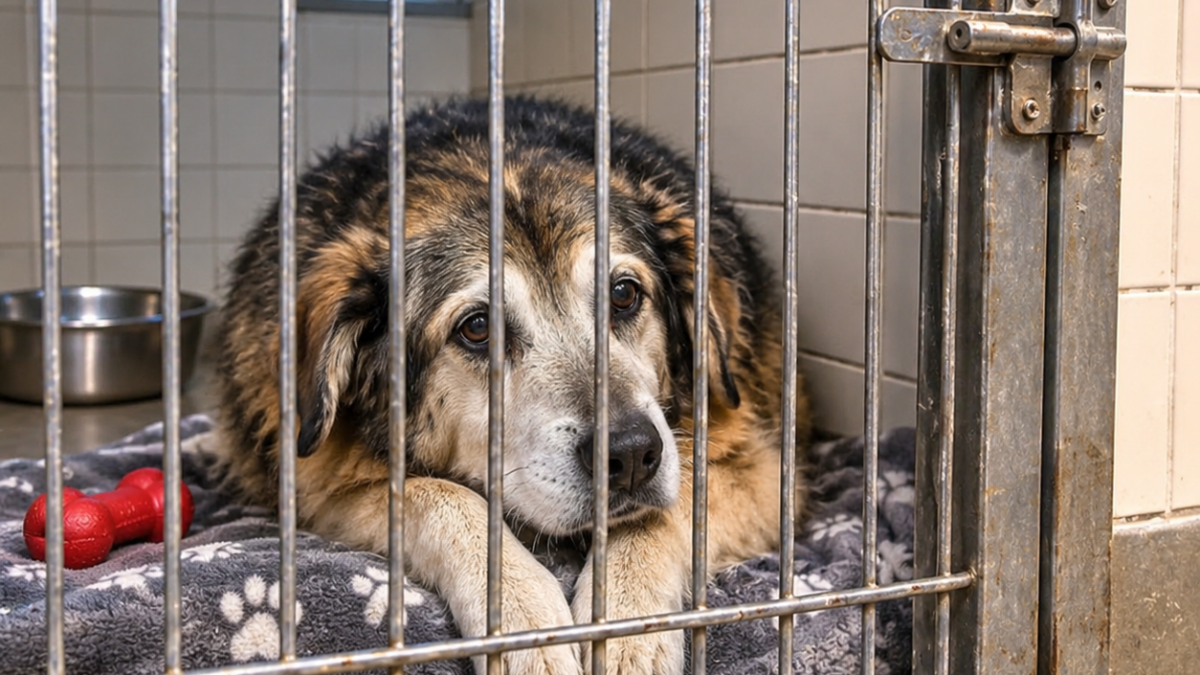
PART 2
Malo ran.
Not away from me.
Toward me.
He crossed the kennel so fast his paws slid on the concrete.
Then he hit the gate with his chest—not violently, not barking, simply trying to get closer.
A sound came out of him.
I had never heard a dog make anything like it.
Half whine.
Half cry.
“Malo…”
His tail moved wildly.
Élodie covered her mouth.
I crouched.
The dog shoved his nose through the gap beneath my hand.
Then his whole body seemed to fold against the gate.
“Open it.”
Élodie looked at me.
“What?”
“Open the door.”
“Marcel, wait.”
“He’s going to hurt himself.”
She unlocked the kennel.
Before the door was fully open, Malo pushed through.
I expected him to jump.
Instead, he stopped directly in front of me.
For one heartbeat, we stared at each other.
Then Malo pressed his head into my chest.
Hard.
I fell backward onto one knee.
His body shook.
I put both hands around his neck.
“All right.”
Malo pushed closer.
“All right, I’m here.”
He whined.
I felt something wet against my cheek.
At first, I thought he had licked me.
Then I realized my own face was wet.
I was crying.
Which annoyed me.
I had spent thirty-eight years in a factory where men considered a cut finger a personal insult and grief something you discussed only after several glasses of wine.
Yet there I was, kneeling on a shelter floor with a dog I had met once, crying into charcoal-gray fur.
Élodie whispered:
“He’s never done this.”
Malo lifted his head.
Looked at me.
Then immediately checked the corridor behind me.
I wondered if he expected me to disappear again.
“I’m not going anywhere.”
That was a foolish thing to say.
I had only come for a visit.
But Malo did not know that.
Neither, apparently, did my heart.
Élodie brought his food bowl.
“Let’s try something.”
Malo stayed pressed against my leg.
She placed the bowl nearby.
He sniffed.
Turned away.
Élodie looked disappointed.
“He still won’t.”
I sat on the floor.
Picked up one piece of kibble.
Held it in my palm.
“Malo.”
His eyes moved to me.
Then the food.
He sniffed.
Ate it.
Élodie froze.
I offered another.
He ate.
Then another.
Within ten minutes, Malo had eaten almost half his bowl.
Élodie sat against the opposite wall.
“You understand this is completely ridiculous.”
“What?”
“We’ve tried chicken.”
“Maybe he prefers retired factory workers.”
“Apparently.”
I stayed nearly two hours.
Every time I moved toward the kennel door, Malo became tense.
So I sat again.
Eventually Élodie said:
“Marcel, you do have to go home sometime.”
“I know.”
Malo looked at me.
I pointed at him.
“Don’t start.”
His ears dropped.
“That is emotional manipulation.”
Élodie laughed.
“You said you weren’t adopting.”
“I am not.”
“Of course.”
I stood.
Malo stood too.
I walked to the door.
He followed.
When Élodie closed the gate between us, Malo did not bark.
That somehow felt worse.
He stared.
I put my hand through.
“I’ll come tomorrow.”
Élodie turned sharply.
“You will?”
I looked at her.
Apparently I would.
“Yes.”
Malo licked my fingers.
The next morning, I returned.
He recognized my car before I entered the building.
Élodie told me later.
When he heard the engine outside, he stood.
By the time I entered the corridor, he was already waiting.
The tail started before he saw me.
“You’re creating expectations,” Élodie warned.
“I know.”
“Consistency matters to dogs like Malo.”
“I know.”
“If you come every day and then disappear—”
“I said I know.”
She stopped.
I looked at Malo.
“What am I doing?”
Élodie answered gently.
“I think you’re asking the right question.”
I began visiting every morning.
Not for long.
Thirty minutes.
Sometimes an hour.
I brought a newspaper the third day.
Élodie laughed.
“You’re reading to him?”
“I’m reading.”
“Beside him.”
“Yes.”
“So you’re reading to him.”
“I refuse this conversation.”
Malo lay near my feet while I read.
He still startled when someone entered too fast.
Still withdrew if a stranger reached toward his head.
But with me, he softened.
On the fifth morning, he placed one paw on my shoe and fell asleep.
I did not move for forty minutes.
My foot went numb.
It felt worth it.
A week passed.
Then two.
The shelter behaviorist, Claire, asked to speak with me.
“I want to be very clear,” she said. “What’s happening is real, but we need to avoid romanticizing it.”
“I don’t romanticize anything.”
“You call your refrigerator ‘the cold box.’”
“That is efficient language.”
She ignored me.
“Malo has trauma.”
“I understand.”
“He has attached to you quickly because something about your presence feels safe to him.”
“Why?”
“We may never know.”
“Maybe I remind him of someone.”
“Possible.”
“Smell?”
“Possible.”
“My voice?”
“Possible.”
“My incredible personality?”
“Unlikely.”
I liked her immediately.
Claire explained that Malo’s attachment could become unhealthy if we made me his only source of safety.
“So I should stop visiting?”
“No.”
My chest tightened before I could stop it.
She noticed.
“Interesting.”
“What?”
“You looked terrified.”
“I did not.”
“You did.”
I crossed my arms.
“What do you suggest?”
“We use you as a bridge.”
“A bridge to what?”
“The rest of the world.”
So we started working.
When a volunteer entered, I remained beside Malo.
When someone offered food, I stayed.
Malo learned other hands could bring good things while I was present.
Then I sat farther away.
Then outside the kennel.
Progress came in inches.
One volunteer named Sarah became the second person Malo voluntarily approached.
I felt absurdly jealous.
“She stole my dog.”
Claire smiled.
“Your dog?”
I looked at her.
She raised an eyebrow.
“I meant the dog.”
“Of course.”
I stopped saying that.
At home, my routine began changing too.
I woke earlier.
Showered before nine.
Stopped eating lunch in front of the television every day.
I had somewhere to go.
Someone noticed when I arrived.
My daughter near Angers called one evening.
“You sound different.”
“What does that mean?”
“Busy.”
“I am busy.”
“Doing what?”
I hesitated.
“Dog.”
Silence.
“Dad?”
“There’s a dog.”
“You adopted a dog?”
“No.”
“Do you want to?”
“No.”
“Then why did you say ‘there’s a dog’ like someone announcing a grandchild?”
I told her the story.
Her name was Sophie.
She listened quietly.
Then said:
“Dad.”
“Yes?”
“You’re adopting that dog.”
“No.”
“You absolutely are.”
“I am sixty-six.”
“That is not dead.”
“He’s large.”
“You’re also large.”
“I have a small yard.”
“You have a yard.”
“I travel sometimes.”
“When?”
I hated adult children who remembered facts.
“Occasionally.”
“Last trip?”
“That isn’t relevant.”
“Dad.”
“Three years ago.”
She laughed.
“I’m not adopting him.”
“Okay.”
The next morning, Malo greeted me with his usual trembling excitement.
I sat.
He pressed his side against my leg.
I looked down.
“You need to stop doing that.”
Tail.
“You are causing family problems.”
Tail again.
“This is not funny.”
He sighed and put his head on my knee.
I stayed two hours.
Three weeks after that first phone call, the shelter proposed a test.
A day visit.
Malo would leave the shelter with me for several hours.
Walk.
My house.
Return before evening.
I felt panic.
Élodie noticed.
“You look like we asked you to perform surgery.”
“What if he hates my house?”
“Then we learn.”
“What if he loves it?”
She smiled.
“That seems to be the real problem.”
Malo wore a harness.
Double leash.
Identification tag.
The whole procedure felt like transporting an international criminal.
When we reached my car, he stopped.
Refused to enter.
I opened the rear door.
“Come on.”
Nothing.
I sat on the edge of the seat.
Waited.
Five minutes.
Malo sniffed.
Then placed one paw inside.
Another.
Finally climbed in.
During the drive, he remained standing.
I kept looking in the mirror.
“You can sit.”
He did not.
At my house, he refused to cross the threshold.
That surprised me.
He had been desperate to stay with me.
Yet the doorway frightened him.
I stepped inside.
Left the door open.
Sat on the floor.
Malo stood outside.
Five minutes.
Ten.
Then he stretched his neck forward.
Sniffed.
One paw.
He immediately withdrew.
“It’s okay.”
I did not pull.
Eventually, he entered.
The first thing he did was inspect every room.
Not curiously.
Urgently.
Kitchen.
Living room.
Hallway.
Bedroom.
Back to the front door.
He looked at me.
Then at the door.
I understood.
“You’re checking exits.”
His body stayed tense.
I opened the back door into the garden.
Malo went outside.
Walked the perimeter.
Returned.
Then something changed.
He lay down in the kitchen.
Not close to me.
But inside.
I made coffee.
He watched.
“This is my life.”
His ears moved.
“It’s not exciting.”
I sat at the table.
“You’d hate it.”
Malo stood.
Walked over.
Lay beneath my chair.
I stared.
“That was manipulative.”
The first day visit became five hours.
He ate.
Slept.
Walked through the neighborhood.
He startled at a garbage truck.
Cowered when a man raised an umbrella.
But he recovered.
At four, I drove him back.
The moment we reached the shelter parking lot, Malo began trembling.
Not excited.
Fear.
He refused to leave the car.
My stomach turned.
“Come on.”
Nothing.
Élodie came outside.
She saw.
“Oh.”
Malo pressed himself into the far side of the back seat.
“He thinks I’m leaving him.”
Élodie stayed quiet.
I felt sick.
I climbed into the back beside him.
“Malo.”
He would not look at me.
“I’m coming tomorrow.”
Nothing.
“It’s not permanent.”
His body shook.
I looked at Élodie.
“I can’t do this.”
She crouched outside.
“We need to handle this carefully.”
“I can’t put him back.”
“Marcel.”
“Look at him.”
“I am.”
I thought of my empty house.
The dog beneath my kitchen chair.
Four days of crying after six minutes.
Eight months behind bars.
I said:
“What would it take to foster him tonight?”
Élodie stared.
“Tonight?”
“Yes.”
“That’s not normally how—”
“Tell me what forms.”
Thirty minutes later, I signed enough paperwork to purchase a small country.
Temporary foster.
Emergency contact.
Veterinary agreement.
Behavior guidelines.
Return plan.
Everyone kept saying temporary.
I said it too.
Malo went back into my car.
At my house, he entered more quickly.
Then spent the first hour following me from room to room.
When I went to the bathroom, he waited outside.
When I made dinner, he lay in the kitchen.
When I sat on the sofa, he remained three feet away.
At eleven, I pointed toward the dog bed the shelter had provided.
“That’s yours.”
Malo looked at it.
Then at me.
I went to bed.
At midnight, I heard movement.
I opened the bedroom door.
Malo was lying in the hallway.
Facing the front door.
“You can come closer.”
He did not move.
I returned to bed.
At two, I checked again.
Same place.
At four.
Same.
The next morning, I woke with him lying beside the bedroom door.
Not inside.
Closer.
Progress.
I made coffee.
Malo followed.
For the first time in years, I spoke before eight in the morning.
“Do you want breakfast?”
Malo’s ears lifted.
I laughed.
“Apparently that word works.”
He ate his entire bowl.
I called Élodie.
“He ate.”
“How much?”
“All of it.”
Silence.
“All?”
“Yes.”
“Oh.”
“What does ‘oh’ mean?”
“Nothing.”
“You’re crying.”
“I am not.”
“You sound exactly like I did.”
“Enjoy your foster dog, Marcel.”
“Temporary.”
“Of course.”
Temporary lasted one week.
Then two.
Malo returned to the shelter for behavior sessions and veterinary checks, but he came home with me.
Every time.
At three weeks, Élodie handed me adoption paperwork without explanation.
I looked at it.
“No.”
She nodded.
“Okay.”
“You brought the form.”
“Yes.”
“I said temporary.”
“I know.”
“I am not emotionally prepared.”
“Neither was Malo.”
Low blow.
I took the papers home.
Placed them on the kitchen table.
Ignored them for two days.
Malo never touched them.
On the third morning, Sophie visited.
She walked in.
Malo retreated behind me.
She stopped immediately.
“Hi, Malo.”
No reaching.
Good.
She sat.
After twenty minutes, Malo approached.
Sniffed her hand.
Retreated.
Sophie looked at me.
“He’s beautiful.”
“He’s gray.”
“That is a color, not an argument.”
I showed her the papers.
“What should I do?”
She stared at me.
“You’re asking?”
“Yes.”
“Dad, when Mom died, I worried about you.”
I looked away.
“You said you were fine.”
“I was.”
“No.”
Her voice softened.
“You survived.”
I said nothing.
“You stopped doing things.”
“That happens.”
“You stopped inviting people over.”
“I like quiet.”
“I know.”
She looked at Malo.
“He does too.”
“That’s not a reason to adopt.”
“No.”
Then she smiled.
“But maybe it’s a reason to stop pretending you don’t want to.”
That night, I signed.
The next day, Malo officially became mine.
Or I became his.
The shelter staff applauded.
I hated that.
Malo hated it more.
He hid behind my legs.
“Stop clapping.”
Everyone laughed.
Élodie gave me a folder.
Medical records.
Behavior plan.
Microchip transfer.
One old photograph.
“What’s this?”
“Malo when he arrived.”
I looked.
My stomach turned.
He was thinner.
Much thinner.
A rope was visible around his neck.
Not a collar.
Rope.
“Where was this taken?”
“Near the house where he was found.”
“Who owned the house?”
“No idea at the time.”
“At the time?”
Élodie hesitated.
“What?”
“Someone contacted us after we posted the adoption update.”
I looked at her.
“Who?”
“A former neighbor from that property.”
My body tightened.
“What did they say?”
Élodie closed the office door.
The abandoned house had belonged to a man named Bernard Leduc.
He had moved away months before Malo was found.
Neighbors remembered the dog.
Not fondly because of the dog.
Sadly.
Malo had spent most of his time outside.
Tied near an old shed.
The man rarely walked him.
Sometimes days passed before people saw anyone bring food.
One neighbor had occasionally thrown food over the fence.
Another had heard shouting.
“What kind of shouting?”
“Mostly at Malo.”
I looked at the photograph again.
“Was he hit?”
“We can’t prove that.”
“Did the neighbor see anything?”
“One says she saw Bernard kick toward him once.”
My hands tightened.
“Toward?”
“She couldn’t say if contact was made.”
I understood the careful language.
Authorities had been given the information.
An investigation was opened because the abandonment and condition of the dog might meet thresholds for neglect.
I felt rage.
Immediate.
Hot.
Primitive.
“Where is he?”
Élodie stared.
“Why?”
“I want to speak to him.”
“No.”
“He did that to my dog.”
“Marcel.”
“My dog.”
It was the first time I said it without thinking.
Élodie noticed.
So did I.
She softened.
“Yes.”
Then she said:
“Which is why you stay away from him.”
I hated that she was right.
“What happens?”
“If authorities find enough evidence, legal consequences.”
“And if they don’t?”
“You take Malo home.”
“That’s it?”
She looked at me.
“That is not ‘it.’”
I stared at her.
She pointed toward the kennel corridor.
“For eight months, Malo hid from people.”
Then toward me.
“Now he sleeps in your hallway.”
“He destroys your cushions?”
“He destroyed one.”
“Progress.”
I almost laughed.
Élodie continued.
“You want revenge?”
I did not answer.
“Take him home.”
I looked down at the photograph.
Rope.
Thin body.
Terrified eyes.
Then thought of Malo that morning.
Sleeping upside down in my living room.
I understood.
Not immediately.
But enough.
We went home.
Malo met me at the door.
I had only been gone three hours.
He acted like I had returned from war.
“Ridiculous.”
Tail.
“You have abandonment issues.”
Tail.
“So do I, apparently.”
I sat on the floor.
Malo pushed his head against my chest.
Exactly like at the shelter.
I wrapped my arms around him.
“You win.”
Recovery did not become magically easy because he had a home.
There were bad days.
A dropped cooking pot sent him running into the bathroom.
A man wearing a dark work jacket made him flatten himself behind my legs.
When I raised my voice during a phone argument, Malo disappeared beneath the dining table.
That destroyed me.
I had not been yelling at him.
It did not matter.
The sound itself was enough.
I sat on the floor ten feet away.
“Malo.”
He would not come.
I lowered my voice.
“I’m sorry.”
An hour later, he emerged.
I never forgot that.
Fear does not care who caused the original wound.
It reacts to resemblance.
So I changed.
Not dramatically.
I stopped slamming cupboards.
Stopped swearing at the television so loudly.
Warned him before using the vacuum cleaner.
My house became quieter in a different way.
Not lonely quiet.
Safe quiet.
Malo changed too.
Three months after adoption, he played.
Actually played.
I bought him a rope toy.
He ignored it for a week.
Then one morning, while I was drinking coffee, something hit my foot.
Toy.
I looked down.
Malo stood five feet away.
Tail moving.
“No.”
He lowered his front legs.
Play bow.
I stared.
“You’re seven years old.”
Tail.
“I am sixty-six.”
Tail.
“We have dignity.”
Malo grabbed the toy.
I pulled.
He pulled back.
Five minutes later, I was laughing so loudly my neighbor knocked to ask whether everything was okay.
Everything was.
For the first time in a long time.
Malo began meeting my family.
My son Julien came from Toulouse with his wife and two children.
I worried.
Children are loud.
Fast.
Malo was afraid of both.
We prepared carefully.
No hugging him.
No cornering.
No reaching over his head.
Let him approach.
My grandson, Thomas, was nine.
He took the instructions more seriously than the adults.
He sat on the floor reading a comic book.
Ignored Malo.
After half an hour, Malo approached.
Sniffed the comic.
Thomas did not move.
Another ten minutes.
Malo lay near him.
Thomas whispered:
“Grandpa.”
“What?”
“He picked me.”
I smiled.
“Yes.”
By dinner, Malo was under the table between both grandchildren.
Sophie later accused me of spoiling him.
“He has his own blanket on the sofa.”
“He needs it.”
“He has three beds.”
“Different rooms.”
“You cook chicken for him.”
“Sometimes.”
“You said people who cooked for dogs had lost perspective.”
“I was younger.”
“You were sixty-five.”
“Ancient history.”
The legal investigation into Bernard continued quietly.
Months later, I was told there was enough evidence for animal-neglect proceedings tied to Malo and other conditions documented at the property.
I did not attend every hearing.
I attended one.
I should not have.
Seeing Bernard made me furious.
He looked ordinary.
Late fifties.
Gray hair.
Clean shirt.
No obvious monster.
When his lawyer described Malo as “a difficult dog who had always been fearful,” my hands shook.
Difficult.
Malo, who had pressed his head against my chest rather than ask for anything.
Malo, who apologized with his whole body when frightened.
Malo, who still crouched when a man moved too quickly.
Difficult.
During a break, Bernard walked past me in the hallway.
He did not know who I was.
Or maybe he did.
I do not know.
I wanted to stop him.
Tell him what Malo looked like now.
Tell him the dog he tied outside had learned to sleep on furniture.
Tell him children loved him.
Tell him he had gained weight.
Tell him he played.
Tell him he no longer waited for permission before drinking water.
But I remembered Élodie.
Take him home.
So I did.
The case eventually resulted in penalties and restrictions related to animal ownership.
People asked whether I felt satisfied.
Not really.
Law is necessary.
Consequences matter.
But punishment did not teach Malo to trust.
Time did.
Food.
Routine.
Quiet hands.
The same person coming back.
Again and again.
That was the real revenge.
Bernard had taught Malo that people disappear, shout, and hurt.
I could not erase that.
I could contradict it.
Every day.
At 7:00.
Breakfast.
At 8:00.
Walk.
At noon.
Nap.
At 4:00.
Garden.
At 6:30.
Dinner.
At 10:00.
Last trip outside.
Then:
“Bed.”
Malo would walk to my bedroom door.
Eventually, he stopped sleeping in the hallway.
One night, I woke and felt something heavy against the side of the bed.
Malo.
He had entered the room on his own.
He lay beside the bed.
I reached down.
Touched his head.
He did not move.
The next morning, I woke smiling.
That irritated me too.
A year passed.
Then two.
Malo became known in the neighborhood.
Not friendly with everyone.
That was fine.
He did not owe the world affection.
He had a circle.
Me.
Sophie.
Julien.
Grandchildren.
My neighbor Alain, who brought him pieces of apple.
The veterinarian.
Élodie, when we visited the shelter.
Yes, we returned.
The first time, Malo froze in the parking lot.
I almost turned around.
Then Élodie came outside.
“Malo?”
His ears lifted.
He recognized her.
Tail.
Small at first.
Then more.
We walked around the outside area.
Did not enter the kennel corridor.
No need.
Élodie crouched.
“Look at you.”
Malo approached.
She touched his cheek.
Then looked at me.
“He’s different.”
“He’s fatter.”
“Also that.”
Malo had gained twelve pounds since adoption.
Healthy weight.
Better coat.
Eyes softer.
But the biggest change happened when I stepped away to speak with someone.
Malo watched.
He did not panic.
I walked behind a building.
Returned two minutes later.
He was still beside Élodie.
Waiting calmly.
She whispered:
“That.”
“What?”
“That’s the difference.”
I understood.
He believed I was coming back.
Trust is not believing nobody will ever leave.
It is believing departure is not always abandonment.
I learned that too.
My children left after visits.
They came back.
Friends went home.
They called later.
Even my wife’s absence, though permanent, no longer meant I had to close every door afterward.
Malo opened something in me I had not realized I had locked.
I started volunteering at the shelter once a week.
Nothing complicated.
Laundry.
Walking calmer dogs.
Repairs.
I was good at repairs.
Factory life had taught me machines.
Shelters always have broken gates.
Loose hinges.
Leaking taps.
Élodie joked:
“You came to pet dogs.”
“Yes.”
“Now you work here for free.”
“This was your plan.”
“Obviously.”
One afternoon, a man around my age came into the shelter.
Retired.
Recently widowed.
He told me he was “just looking.”
I laughed so hard he seemed offended.
“What?”
“Nothing.”
He stopped in front of a small black dog.
I watched.
Did not interfere.
Some lessons deserve room.
Three years after adoption, Malo became ill suddenly.
Not critically.
A stomach problem.
But he needed two nights at the veterinary clinic.
The moment they led him away from me, his old panic returned.
He planted his paws.
Refused.
Looked at me.
My heart shattered.
I went with him as far as they allowed.
“Malo.”
He shook.
“I’m coming back.”
His eyes stayed on me.
“I know you don’t believe me.”
I crouched.
“But I am.”
The veterinarian allowed me to leave my sweater in his kennel.
That night, I did not sleep.
The next morning, I called at seven.
“How is he?”
“Stable.”
“Eating?”
“Little.”
“I’m coming.”
“Visiting hours—”
“I’m coming.”
They allowed ten minutes.
Malo heard my voice before he saw me.
He stood.
Tail.
Whine.
I sat beside his enclosure.
“There.”
I touched his nose through the bars.
“I came back.”
The second day, again.
When he was discharged, Malo walked out and shoved his entire body into my legs.
I nearly fell.
The veterinary assistant laughed.
“He loves you.”
I looked at Malo.
“Yes.”
By then I could say it without embarrassment.
“I know.”
Years moved faster after that.
Maybe because life had shape again.
My seventy-first birthday.
Malo beside the table.
My grandchildren bigger.
Sophie taking photographs.
Malo’s muzzle slowly turning white.
At ten, arthritis appeared.
At eleven, he needed medication.
At twelve, stairs became difficult.
I installed a ramp.
Sophie stared at it.
“You built that yourself?”
“Yes.”
“For the dog.”
“Yes.”
“You complained for three years about fixing the back step for humans.”
“Humans can lift their feet.”
She called me impossible.
Malo agreed by sleeping.
We walked shorter distances.
He still wanted them.
Morning air.
Same neighborhood.
Same trees.
He no longer feared umbrellas.
He still disliked men who moved too quickly.
Some wounds fade.
Some remain.
The point is not erasing every scar.
The point is building enough good around it that the scar is no longer the whole body.
When Malo was thirteen, I started thinking about the first seven minutes more often.
Seven minutes.
That was all.
How could a dog decide so quickly?
I asked Claire, the behaviorist, years later.
She shrugged.
“Maybe your posture.”
“That’s boring.”
“Maybe your voice.”
“Better.”
“Maybe your smell reminded him of someone safe.”
“Possible.”
“Maybe you did one important thing.”
“What?”
“You did not ask anything from him.”
I thought.
That first day, I had not called repeatedly.
Not offered food.
Not tried to make him perform.
I sat.
Talked.
Held out a hand.
Waited.
Claire said:
“Animals with histories like Malo’s spend their lives having choices removed.”
“Where to live.”
“When to eat.”
“Whether someone touches them.”
“You gave him a choice.”
I looked at her.
“So he chose.”
Maybe.
I liked that answer.
At fourteen, Malo slowed dramatically.
His heart weakened.
Kidney values worsened.
Nothing catastrophic at first.
Management.
Medication.
Diet.
Regular checks.
I was seventy-three.
We were two old men complaining about joints.
Every morning I said:
“Who gets up first?”
Malo looked at me.
“Coward.”
Eventually, he stood.
Then I stood.
Some days I think we kept each other mobile through competition.
One winter morning, Malo refused the walk.
That frightened me.
He loved walks.
I clipped the leash.
He stayed on his bed.
“Malo?”
Eyes open.
Tail movement.
No effort to stand.
I sat beside him.
“Not today?”
He placed his head on my leg.
We stayed home.
The next day he walked.
Short distance.
Then another day home.
His world shrank gradually.
Living room.
Garden.
Kitchen.
My bedroom.
He did not seem unhappy.
He seemed old.
There is a difference.
I watched carefully because loving an old animal requires brutal honesty.
Are you preserving life for him?
Or avoiding grief for yourself?
The question frightened me.
I had once been the man who feared attachment.
Now I feared letting go.
Élodie visited.
She was no longer “the young employee.”
Years had passed for all of us.
She sat on the floor beside Malo.
He recognized her.
Tail.
Weak.
But there.
“You gave him a long time.”
I shook my head.
“He gave me one.”
She smiled.
“Both can be true.”
Malo reached fifteen.
Far older than anyone expected for a large shepherd mix.
On his fifteenth birthday, the shelter posted an old photo from his adoption.
Malo beside me.
I looked terrified.
He looked more terrified.
The caption said:
SOME ADOPTIONS TAKE MONTHS. THIS ONE TOOK SEVEN MINUTES.
I complained.
Then printed it.
Three months later, Malo stopped eating breakfast.
Chicken included.
That was serious.
The veterinarian examined him.
His heart.
Kidneys.
Arthritis.
Age.
All of it.
There was no dramatic new disease.
His body was simply reaching the point old bodies reach.
“How long?”
I asked.
The veterinarian did not answer directly.
“Watch his days.”
I hated that advice because it put responsibility where it belonged.
With me.
For two weeks, Malo had good mornings.
Then bad afternoons.
He still enjoyed the garden.
Then only sunny patches near the door.
He still ate chicken.
Then only from my hand.
One evening, he did not want even that.
I sat beside him.
“You have become expensive and difficult.”
His tail moved once.
“Good.”
I laughed through tears.
“If you can insult me, I can insult you.”
He breathed slowly.
The next morning, he could not stand without help.
He tried.
Front legs.
Back legs trembling.
Then collapsed.
He looked at me.
Not frightened.
Tired.
I knew.
I called the veterinarian.
Then Sophie.
Then Élodie.
I did not need to call everyone.
I wanted them.
My house filled quietly.
No crowd.
Just people Malo knew.
Sophie sat beside him.
Julien drove up later.
The grandchildren, adults now, sent messages and then arrived too.
Élodie brought the old photograph from the shelter.
The first one.
Malo pressed against the fence beneath my fingers.
I looked at it.
“He was younger than I remember.”
“You were too.”
“Be respectful.”
She laughed.
The veterinarian came in the afternoon.
Malo was on his bed near the window.
Sunlight across his gray face.
I sat beside him.
“You know, this was supposed to be temporary.”
Sophie made a broken laugh.
Malo’s eyes moved toward me.
“You ruined retirement.”
Tail.
Barely.
“You made me volunteer.”
Breath.
“You cost me money.”
Sophie whispered:
“Dad.”
“I’m telling the truth.”
I touched Malo’s head.
“You destroyed one sofa cushion.”
Two, Sophie mouthed.
I ignored her.
“You scared me every time you got sick.”
My voice broke.
“And you made the house noisy.”
That one was a lie.
Malo had never been noisy.
But life around him had been.
Children visiting.
Shelter people.
Neighbors.
Conversations.
The telephone ringing more.
My own voice.
I leaned closer.
“You know what you did, old boy?”
His eyes stayed on mine.
“You gave me somewhere to be.”
Tears fell onto his fur.
“For seven minutes, I thought I was helping you.”
I laughed.
“Arrogant.”
Malo breathed.
“Turns out you were interviewing me.”
Another weak tail movement.
Everyone laughed softly.
The veterinarian gave the first medication.
Malo relaxed.
His head became heavy against my leg.
I kept talking.
I told him about the first day.
The fence.
The phone call.
How ridiculous he had been waiting for me.
I told him about the first night at my house.
The hallway.
The rope toy.
The grandchildren.
I told him Bernard never won.
I had never said that aloud before.
“Malo.”
His eyes were almost closed.
“The man who taught you to fear people lost.”
My hand rested on his chest.
“He lost a long time ago.”
Not because a judge punished him.
Not because I hated him.
Because Malo had lived eight years after him.
Eight years of food.
Beds.
Walks.
Children.
Sunlight.
Veterinary care.
Christmas.
Rain.
Chicken.
Sofa cushions.
Trust.
The past had become one chapter.
Not the book.
“That’s enough revenge for me.”
Élodie wiped her face.
I looked at Malo.
“You can rest.”
The veterinarian waited.
I nodded.
Malo’s breathing slowed.
He was touching me when it stopped.
Exactly as he had been touching me the first day.
Head against my body.
No fear.
No kennel.
No gate.
No waiting.
Just home.
For weeks afterward, I still woke at the same time.
Reached for the leash.
Then remembered.
The house became silent again.
But it was not the same silence I had known before Malo.
That silence had been empty because nothing had happened.
This silence was full.
His bowl.
His bed.
Gray hairs in impossible places.
Scratch marks near the garden door.
A photograph of him with my grandchildren.
Memory makes a different kind of noise.
Sometimes painful.
Sometimes warm.
I continued volunteering at the shelter.
People were surprised.
“You don’t need to anymore,” someone said.
I looked at them.
“I never needed to in the first place.”
A few months after Malo died, a frightened dog arrived.
Not gray.
Brown.
Smaller.
Female.
She stayed at the back of the kennel.
Would not approach visitors.
Élodie found me watching.
“No.”
I said it immediately.
She laughed.
“I didn’t say anything.”
“I’m not adopting.”
“Of course.”
“I mean it.”
“I know.”
I crouched.
The dog watched.
I placed my hand near the gate.
Nothing.
Five minutes.
Nothing.
Ten.
Then she stood.
Took one step.
I closed my eyes.
“Élodie.”
“Yes?”
“This is harassment.”
She laughed.
I did not adopt that dog.
A young couple did three weeks later.
But I helped her trust enough to meet them.
That mattered.
Over the next years, I became the man staff called when a senior dog or frightened dog needed someone willing to sit quietly.
I did not train them.
I did not have special skills.
I sat.
Sometimes talked.
Sometimes read.
Sometimes did nothing.
People underestimate doing nothing.
For frightened animals, it can be a gift.
No command.
No reaching.
No demand.
Choice.
Malo taught me that.
At seventy-five, I gave a short talk to new shelter volunteers.
I hated public speaking.
Élodie tricked me.
She said there would be coffee.
There was coffee.
There were also twenty people waiting.
I told them:
“If an animal doesn’t come to you, that doesn’t mean you failed.”
Someone asked:
“Then what do we do?”
“Wait.”
“How long?”
“As long as you can.”
“What if they never come?”
“Then you still showed them one person who didn’t force them.”
I thought of Malo.
Seven minutes.
Four days of waiting.
Eight years of life.
Another volunteer asked:
“Why do you think he picked you?”
I smiled.
“I spent years trying to answer that.”
“And?”
“I think because I wasn’t trying to be picked.”
That was the closest I ever came to understanding.
I visited Malo’s photograph at the shelter sometimes.
They had placed it among successful adoptions.
His story became something volunteers told.
I corrected them when they made it too perfect.
“He didn’t trust me immediately.”
“But he did.”
“Not completely.”
“He panicked.”
“He regressed.”
“He destroyed things.”
“He had nightmares.”
“He got old.”
“Recovery is not a straight line.”
I needed them to know.
Love does not cure trauma like medicine cures infection.
It builds another history beside it.
Day after day.
Enough days, and the new history becomes larger.
That happened to me too.
My wife’s death remained.
Retirement remained.
Loneliness remained part of my life story.
Malo did not erase any of it.
He built years beside it.
So did my children.
Grandchildren.
Shelter.
Friends.
That is what healing looked like.
Not subtraction.
Addition.
The former owner eventually became irrelevant.
That may have been the most satisfying part.
At first, I wanted consequences badly.
Then, as Malo healed, Bernard’s name came up less.
Then almost never.
One day I realized an entire year had passed without me thinking about him.
That was victory.
Malo did not spend his life defined by the person who hurt him.
Neither should I.
The person who abandoned him became a footnote.
The dog who survived became a life.
There is a photograph on my wall now.
Not Malo looking frightened at the shelter.
Not the adoption day.
My favorite picture was taken by my grandson years later.
I am asleep in an armchair.
Mouth open.
Terrible photograph of me.
Malo is asleep beside the chair.
His head rests on my shoe.
Both of us gray.
Both of us old.
Neither of us aware of the camera.
Whenever someone asks why that photograph matters, I tell them:
“Because nobody was waiting.”
They usually do not understand.
I do.
That first week, Malo waited at the shelter door for me.
Before Malo, I had spent years not waiting for anyone.
By the time that photograph was taken, neither of us was waiting.
We were simply there.
Together.
I thought I had gone to the shelter because my days were too long.
I thought I wanted to pet a few animals and go home.
I thought Malo was one sad dog among many.
Then he put his muzzle beneath my fingers.
Six minutes.
Maybe seven.
And somehow, that was enough.
Enough for him to decide I was safe.
Enough for me to return.
Enough to turn a quiet house into a home again.
People sometimes ask whether I believe in animals “choosing their person.”
I do not know.
I do not like turning dogs into mystics.
Maybe Malo smelled something familiar.
Maybe my voice reminded him of one person in his past who had once been kind.
Maybe he simply needed someone at exactly the moment I happened to kneel down.
But I know this:
I entered that shelter believing nobody needed me.
Malo was a dog who believed nobody would stay.
For seven minutes, those two beliefs met through a metal fence.
Four days later, he was waiting for me.
Eight years later, when he closed his eyes in my living room with his head against me, I finally understood the phone call Élodie had made so long before.
“Would you come back?”
That was the entire story.
Not whether I could save Malo.
Not whether I was ready to adopt.
Not whether his past could be erased.
Would I come back?
The first time, I said yes because I had nothing else to do.
After that, I kept saying yes.
Morning after morning.
Year after year.
And eventually Malo stopped wondering whether I would return.
That was all he had ever needed to learn.
Someone could leave the room.
Someone could close a door.
Someone could drive away.
And still come back.
So did I.
Every time I could.
Until the day he no longer had to wait for me at all.
The shelter manager told me the big gray dog had barely eaten since I left, that he ran toward the kennel door every time he heard footsteps in the hallway, and that after four days of waiting for someone he had known for less than seven minutes, even the staff no longer knew how to calm him. I was sixty-six years old, retired, living alone in a quiet little house where some days passed without anyone needing me for anything, and I had gone to that shelter with absolutely no intention of adopting a dog—certainly not a frightened seventy-pound shepherd mix who had spent most of his life learning that human hands were something to avoid. But when I returned and Malo lifted his head, saw me at the end of the corridor, and suddenly rose on trembling legs, I was about to learn that sometimes an animal does not choose the person who is most prepared to save him—sometimes he chooses the person who needs saving just as badly.
My name is Marcel.
At the time, I had been retired for three years.
I had worked almost my entire adult life in a factory.
For decades, my days had been structured by noise.
Machines.
Shift changes.
Coworkers shouting over one another.
Metal clanging.
Break-room coffee.
The same drive home at the same hour.
Then one day, all of it stopped.
At first, retirement felt like freedom.
No alarms.
No supervisor.
No waiting for weekends.
But freedom becomes strange when there is nobody waiting to share it with you.
My wife had died several years earlier.
My children lived far away.
My daughter Sophie was near Angers, and my son Julien lived closer to Toulouse.
They called.
They visited when they could.
I never blamed them for having their own lives.
But my house had become painfully quiet.
Some evenings, I would sit at the kitchen table and realize that the last words I had spoken aloud were “thank you” to the woman at the bakery that morning.
I told myself I liked being alone.
That was easier than admitting I had simply become used to it.
One Tuesday in November, I drove to an animal shelter near Niort.
I did not have a plan.
I had always liked animals, and I thought perhaps I would pet a few dogs, speak to some volunteers, and go home with something to think about besides myself.
A young employee met me near reception.
“Are you looking to adopt?”
“No.”
She smiled.
“That was very quick.”
“I don’t want to waste your time.”
“I’m Élodie.”
“Marcel.”
She offered to show me around.
We walked through several rows of kennels.
Some dogs barked the moment they saw us.
Others jumped against the gates.
One Labrador carried a tennis ball and repeatedly dropped it as if negotiating.
Then I noticed a large gray dog at the back of a kennel set slightly apart from the others.
He was sitting against the wall.
Perfectly still.
Dark charcoal coat.
Broad chest.
Probably seven years old.
He did not bark.
He did not approach.
He simply watched.
“What about him?”
Élodie lowered her voice.
“That’s Malo.”
“How long has he been here?”
“Almost eight months.”
I stared.
“Eight months?”
“Yes.”
“Why?”
“He had a difficult life before coming here.”
“Is he aggressive?”
“No.”
She shook her head.
“Mostly afraid.”
Malo’s eyes stayed on us.
“He doesn’t trust people easily.”
I stayed outside the gate.
Something about him bothered me.
Maybe his silence.
Maybe the way he watched other dogs receive attention without asking for any himself.
I crouched.
Placed my hand near the bars.
“Hello, old boy.”
His ears dropped.
He stayed where he was.
“That’s all right.”
I did not reach farther.
“You don’t have to come.”
For several seconds, nothing happened.
Then Malo stood.
Élodie stopped moving.
He took one step.
Paused.
Another.
Then another.
Finally, he reached the gate.
Slowly, he pressed his muzzle against the bars beneath my fingers.
I touched the top of his head.
Malo closed his eyes.
That was all.
No dramatic movement.
No tail wagging.
No licking.
Just closed eyes.
But Élodie’s face changed.
I stayed there for six or seven minutes.
I talked quietly.
“You know, I’m not fond of noise either.”
Malo stayed.
“At my age, peace becomes a hobby.”
His body gradually loosened.
When I finally stood, he opened his eyes.
“Take care of yourself.”
Then I left.
I thought about him once in the parking lot.
Maybe twice on the drive home.
I believed that was the end.
Four days later, my phone rang while I was making lunch.
Unknown number.
“Mr. Marcel?”
“Yes?”
“This is Élodie from the shelter.”
I immediately remembered.
“Malo?”
Silence.
That frightened me.
“How is he?”
“That’s actually why I’m calling.”
She explained that after I left, Malo began waiting near the front of his kennel.
Every time footsteps entered the corridor, he stood.
Every time the person turned out not to be me, he returned to the back.
By the second day, he had started whining.
By the third, he barely touched his food.
They checked him medically.
Nothing new.
They tried extra walks.
Different volunteers.
Treats.
No change.
“But why me?”
“I don’t know.”
“I was there for seven minutes.”
“We know.”
“That doesn’t make sense.”
“No.”
Then Élodie asked:
“Would you come back?”
I stared at my cold kitchen.
At the single plate on my table.
Nobody waiting.
Nothing planned.
“When?”
“This afternoon?”
I drove there an hour later.
Élodie met me at reception.
This time, she looked tired.
“Thank you.”
“You’re making this sound serious.”
“It feels serious.”
As we walked, she told me more.
Malo had been found near an abandoned house.
Underweight.
Terrified.
He would crouch if someone raised an arm too quickly.
For weeks, staff had to place food down and walk away before he would eat.
Eight months of patient work had helped.
But nobody had seen him approach a stranger the way he had approached me.
“We’re not asking you to adopt him,” she said.
“Good.”
“I mean it.”
“So do I.”
“We just want to see how he reacts.”
At the end of the corridor, Malo lay with his head on his paws.
He looked tired.
I stepped closer.
His eyes opened.
He saw me.
For one second, he froze.
Then his ears shot up.
His body started trembling.
He leapt to his feet.
And ran.
Straight toward me.
His paws slid on the concrete.
He hit the gate with his chest—not violently, just trying to get closer.
A broken little sound escaped him.
Half whine.
Half cry.
“Malo…”
I crouched.
He pushed his nose through the bars.
His entire body shook.
Élodie whispered:
“He’s never done this.”
“Open the door.”
“Marcel—”
“He’s going to hurt himself.”
She unlocked it.
Malo came out.
He stopped directly in front of me.
Then pushed his head into my chest.
Hard.
I lost my balance and dropped to one knee.
His whole body trembled.
I wrapped my arms around his neck.
“All right.”
He pressed closer.
“I’m here.”
Something wet touched my cheek.
For a second I thought he had licked me.
Then I realized I was crying.
That annoyed me.
I had spent decades working around men who treated emotion like faulty machinery.
Yet there I was, crying into a dog’s fur.
Élodie brought his food.
“Let’s try.”
Malo ignored the bowl.
I picked up one piece of kibble.
Held it in my palm.
He sniffed.
Then ate.
Another.
Another.
Within minutes, he had eaten almost half his meal.
Élodie sat against the opposite wall.
“This is ridiculous.”
“What?”
“We tried chicken.”
“Maybe he has terrible taste.”
I stayed nearly two hours.
Every time I shifted toward the door, Malo became tense.
Eventually Élodie said:
“You have to leave at some point.”
“I know.”
Malo looked at me.
I pointed at him.
“Don’t.”
His ears dropped.
“That is emotional manipulation.”
Élodie laughed.
I promised to return the next day.
I did.
Then the next.
Soon I was visiting every morning.
Thirty minutes.
Sometimes an hour.
One day, I brought a newspaper.
Élodie caught me reading beside Malo.
“You’re reading to him?”
“I’m reading near him.”
“That is reading to him.”
“I refuse to discuss this.”
Malo slept with one paw on my shoe.
My foot went numb.
I stayed anyway.
A behaviorist named Claire eventually spoke to me.
“What’s happening between you and Malo is real,” she said. “But we need to use it carefully.”
“What does that mean?”
“He trusts you.”
“I noticed.”
“But we don’t want you to become the only person he can tolerate.”
“So I stop coming?”
My stomach tightened.
Claire noticed.
“No.”
She smiled slightly.
“You looked terrified.”
“I did not.”
“You did.”
She explained that I could become a bridge.
Staff would approach while I sat beside Malo.
Someone else would offer food.
Another volunteer would hold the leash.
At first, Malo refused.
Then slowly, he began accepting others.
A young volunteer named Sarah became the second person he approached willingly.
I felt jealous.
I hated that.
“She stole my dog.”
Claire raised an eyebrow.
“Your dog?”
“I meant the dog.”
“Of course.”
Meanwhile, my own life was changing.
I woke earlier.
Shaved more often.
Stopped eating lunch in front of the television every day.
I had somewhere to be.
My daughter Sophie noticed.
“You sound busy.”
“I am.”
“With what?”
I hesitated.
“There’s a dog.”
Silence.
“Dad.”
“What?”
“You adopted a dog?”
“No.”
“Do you want to?”
“No.”
“You said that too fast.”
I told her about Malo.
When I finished, she laughed.
“You’re adopting him.”
“No.”
“You are.”
“I’m sixty-six.”
“That isn’t an argument.”
“He’s large.”
“So are you.”
“I have a small yard.”
“You have a yard.”
“I travel.”
“When?”
“That is not relevant.”
“Last trip?”
I hated adult children with memories.
“Three years ago.”
She laughed harder.
A few weeks later, the shelter proposed a day visit.
I would take Malo home for several hours.
Walk.
House.
Return.
The idea terrified me.
“What if he hates my place?”
Élodie smiled.
“What if he loves it?”
That was worse.
Malo did not want to enter my car.
We waited.
Eventually, he climbed in.
At my house, he refused to cross the doorway.
I sat inside with the door open.
No pulling.
No coaxing.
After nearly fifteen minutes, he placed one paw inside.
Then another.
Finally, he entered.
He inspected every room urgently.
Kitchen.
Living room.
Hallway.
Bedroom.
Front door.
Back door.
Then I understood.
“You’re checking the exits.”
His body remained tense.
I opened the garden door.
He walked outside.
Circled the fence.
Returned.
Then, for the first time, he lay down in my kitchen.
I made coffee.
“This is my life.”
Malo watched me.
“Very boring.”
He stood.
Walked over.
Lay beneath my chair.
Five hours later, I drove him back.
The moment we reached the shelter parking lot, he panicked.
He refused to leave the car.
Pressed himself against the far seat.
I looked at Élodie.
“He thinks I’m abandoning him.”
She said nothing.
“I can’t do this.”
“Marcel—”
“What would it take to foster him tonight?”
She stared.
“Tonight?”
“Yes.”
Twenty minutes later, I was signing forms.
Temporary foster.
That phrase appeared everywhere.
Temporary.
Malo came home.
That first night, he slept in the hallway facing the front door.
At midnight, I checked.
Still there.
At two.
Still there.
At four.
Same place.
The next morning, I made coffee.
Malo followed.
“Breakfast?”
His ears shot up.
He ate his entire bowl.
I called Élodie.
“He ate.”
“All of it?”
“Yes.”
She was quiet.
“You’re crying.”
“I am not.”
“Good. Then neither am I.”
Temporary lasted three weeks.
Then Élodie gave me adoption papers.
I stared at them.
“No.”
“Okay.”
“You knew I’d say no.”
“Yes.”
“I’m not ready.”
She shrugged.
“Take them home.”
I left them on my kitchen table for two days.
On the third day, Sophie visited.
Malo hid behind me at first.
She sat on the floor and ignored him.
After twenty minutes, he approached.
Sniffed her.
Retreated.
Then returned.
“He’s beautiful.”
“He’s gray.”
“That is not a personality flaw.”
I showed her the paperwork.
“What should I do?”
She looked at me.
“Dad, after Mom died, you said you were fine.”
“I was.”
“You were surviving.”
I looked away.
She continued.
“You stopped doing things.”
“I like quiet.”
“So does he.”
“That isn’t a reason to adopt.”
“No.”
Then she smiled.
“But maybe it’s a reason to stop pretending you don’t want to.”
That night, I signed.
The next morning, Malo officially became mine.
At the shelter, everyone clapped.
Malo immediately hid behind my legs.
“Stop clapping.”
People laughed.
Élodie handed me his records.
Inside was an old photograph.
Malo when he had first been found.
Thin.
Terrified.
A rope around his neck.
Not a collar.
Rope.
My stomach tightened.
“Who did this?”
Élodie hesitated.
The abandoned house had belonged to a man named Bernard.
Neighbors said Malo had spent most of his time tied outside near a shed.
Rarely walked.
Sometimes left without visible food for long periods.
One person had occasionally thrown scraps over the fence.
Another reported shouting.
Possibly kicking.
The authorities had opened an investigation.
My anger was immediate.
“Where is he?”
Élodie stared at me.
“Why?”
“I want to talk to him.”
“No.”
“He did that to my dog.”
It was the first time I said it.
My dog.
Élodie noticed.
“Yes,” she said softly. “Which is why you don’t go near him.”
I hated that.
“What if nothing happens?”
She pointed toward the door.
“You take Malo home.”
“That’s not justice.”
“It might be the part that matters most.”
I did not agree then.
I eventually did.
Recovery was not a miracle.
It was repetitive.
A dropped pan sent Malo hiding in the bathroom.
A man raising an umbrella made him crouch.
Once I shouted during a phone call.
Malo disappeared under the table.
I had not been shouting at him.
His body did not care.
I sat on the floor several feet away.
“I’m sorry.”
He stayed hidden for almost an hour.
That day taught me something.
Trauma does not ask whether danger is real.
It reacts to resemblance.
So I changed.
I closed cabinets gently.
Stopped yelling at the television.
Warned Malo before using the vacuum cleaner.
My home became quieter.
But not lonely.
Safe.
Three months after adoption, Malo played for the first time.
I had bought him a rope toy.
He ignored it for a week.
One morning, it landed on my foot.
I looked down.
Malo stood several feet away.
Tail moving.
“No.”
He lowered his front legs.
Play bow.
“You’re seven years old.”
Tail.
“I’m sixty-six.”
Tail.
“We have dignity.”
He grabbed the toy.
I pulled.
He pulled harder.
Five minutes later, I was laughing so loudly my neighbor came to the door.
Everything was fine.
Better than fine.
Months later, the neglect case went to court.
I attended once.
Bernard looked ordinary.
That angered me more.
No monster.
No dramatic villain.
Just an ordinary man who had made cruel choices.
His lawyer described Malo as “difficult.”
My hands shook.
Difficult.
The dog who apologized with his whole body when frightened.
The dog who pressed his head against my chest.
The dog who still hesitated before entering unfamiliar rooms.
During a break, Bernard passed near me.
I wanted to stop him.
Tell him Malo had gained weight.
Tell him children loved him.
Tell him he slept on my sofa.
Tell him he had learned to play.
Instead, I remembered Élodie.
Take him home.
So I did.
The case ended with legal penalties and restrictions related to animal ownership.
People asked whether I felt satisfied.
Not really.
Punishment mattered.
But it did not heal Malo.
Routine did.
Food.
Quiet hands.
The same person returning.
Again.
Again.
Again.
That became the real revenge.
Bernard had taught Malo that people disappeared.
I contradicted him every day.
Breakfast.
Walk.
Garden.
Dinner.
Bed.
For years.
At some point, Malo stopped sleeping near the front door.
One night, I woke and found him lying beside my bed.
I reached down.
Touched his head.
He stayed asleep.
That small thing felt enormous.
Years passed.
Malo became part of the neighborhood.
Then part of my family.
My grandchildren learned to sit quietly and let him approach.
My daughter complained that I cooked chicken for him.
“You said people who cooked for dogs had lost perspective.”
“I was younger.”
“You were sixty-five.”
“Ancient history.”
At ten, Malo developed arthritis.
At eleven, medication.
At twelve, stairs became difficult.
I built a ramp.
Sophie stared.
“You complained for three years about fixing the back step.”
“Humans can lift their feet.”
At thirteen, Malo’s muzzle was nearly white.
Mine was too.
We became two old men complaining about joints.
Every morning, I asked:
“Who gets up first?”
Malo stared.
Eventually, one of us did.
At fourteen, his heart weakened.
His kidneys began declining.
We adjusted food.
Medication.
Walks became shorter.
His world shrank.
But he still enjoyed the garden.
Still wanted chicken.
Still pressed his head against me when I sat on the floor.
I watched him carefully.
Because loving an old animal means asking an ugly question.
Are you keeping him alive for him?
Or because you are afraid of being alone again?
I had once been terrified of attachment.
Now I was terrified of losing it.
One winter morning, Malo refused his walk.
The next day, he walked.
Then another bad day.
Then two good ones.
Eventually the bad days began winning.
He stopped finishing breakfast.
Then stopped wanting chicken.
One morning, he tried to stand.
His back legs shook.
He collapsed.
He looked at me.
Not frightened.
Tired.
I knew.
I called the veterinarian.
Then Sophie.
Then Élodie.
My house filled quietly.
People Malo trusted.
The veterinarian arrived that afternoon.
Malo lay near the window.
Sunlight across his gray face.
I sat beside him.
“You know, this was supposed to be temporary.”
Sophie laughed through tears.
Malo’s tail moved weakly.
“You ruined retirement.”
Another movement.
“You made me volunteer.”
Breath.
“You cost me money.”
Sophie whispered:
“Dad.”
“I’m telling the truth.”
I touched Malo’s head.
“You destroyed two cushions.”
“Three,” Sophie said.
“Not helping.”
Everyone laughed softly.
Then my voice broke.
“You know what you really did?”
Malo looked at me.
“You gave me somewhere to be.”
Tears fell onto his fur.
“I thought I was helping you.”
I smiled.
“Arrogant.”
The veterinarian gave the first medication.
Malo relaxed against my leg.
I kept talking.
The shelter.
The first phone call.
The hallway.
The rope toy.
The grandchildren.
Then I told him something I had never said before.
“Bernard lost.”
Élodie looked at me.
I kept my hand on Malo’s chest.
“The man who taught you to fear people lost a long time ago.”
Malo breathed slowly.
“Not because a judge punished him.”
“Because you lived.”
“You got eight more years.”
“Food.”
“Beds.”
“Walks.”
“Children.”
“Rain.”
“Sun.”
“Chicken.”
“Christmas.”
“Love.”
I swallowed.
“Your past became one chapter.”
“Not the whole story.”
His eyes were almost closed.
“That’s enough revenge for me.”
The veterinarian waited.
I leaned down.
“You can rest.”
I nodded.
Malo died with his head against me.
Exactly how he had first touched me at the shelter.
No kennel.
No gate.
No waiting.
Just home.
For weeks afterward, I kept reaching for the leash in the morning.
The house became silent again.
But not the old silence.
Before Malo, silence had been empty because nothing happened.
After Malo, silence was full.
His bed.
His bowl.
Gray hairs under furniture.
Scratch marks near the garden door.
Photographs.
Memory makes noise too.
I kept volunteering at the shelter.
People were surprised.
“You don’t have to come anymore.”
“I never had to.”
Years later, new volunteers would ask why some frightened dogs responded to me.
I never claimed special talent.
I sat quietly.
That was all.
No grabbing.
No commands.
No demands.
Sometimes people underestimate the gift of asking nothing.
One volunteer once asked:
“Why do you think Malo chose you?”
I had spent years wondering.
Maybe my voice reminded him of someone.
Maybe my smell.
Maybe I moved slowly.
Then Claire once gave me an answer I liked.
“You gave him a choice.”
That first day, I had not called him repeatedly.
Had not tried to make him perform.
Had not forced contact.
I sat.
Waited.
He chose.
Maybe that was it.
On the wall in my house is a photograph my grandson took years later.
I am asleep in an armchair.
Terrible picture.
Mouth open.
Malo is asleep beside me with his head on my shoe.
Both of us gray.
Both old.
Neither aware of the camera.
Whenever someone asks why that is my favorite photograph, I tell them:
“Because nobody was waiting.”
They usually do not understand.
I do.
When I first met Malo, he spent four days waiting for me at a shelter door.
Before Malo, I had spent years not waiting for anyone.
By the time that photograph was taken, neither of us was waiting anymore.
We were simply there.
Together.
I had walked into the shelter believing nobody needed me.
Malo had spent most of his life believing nobody stayed.
For seven minutes, those two beliefs met through a metal gate.
Four days later, he was waiting.
And for the next eight years, I kept answering the same question.
Would I come back?
At first, I said yes because I had nothing else to do.
Then because he needed me.
Eventually because I needed him too.
Morning after morning.
Year after year.
I kept coming back.
Until one day, Malo no longer had to wonder.
Someone could leave a room.
Someone could close a door.
Someone could drive away.
And still return.
That was the lesson his old life had never taught him.
So I taught it the only way a dog can really understand.
Not with words.
With repetition.
I left.
I came back.
I left.
I came back.
Again.
Again.
Again.
Until waiting stopped feeling like fear.
And became trust.








