PART 2: I Pulled a Nailed-Shut Crate From the River at Sunrise—What That Mother Cat Had Done Inside Left Me Shaking
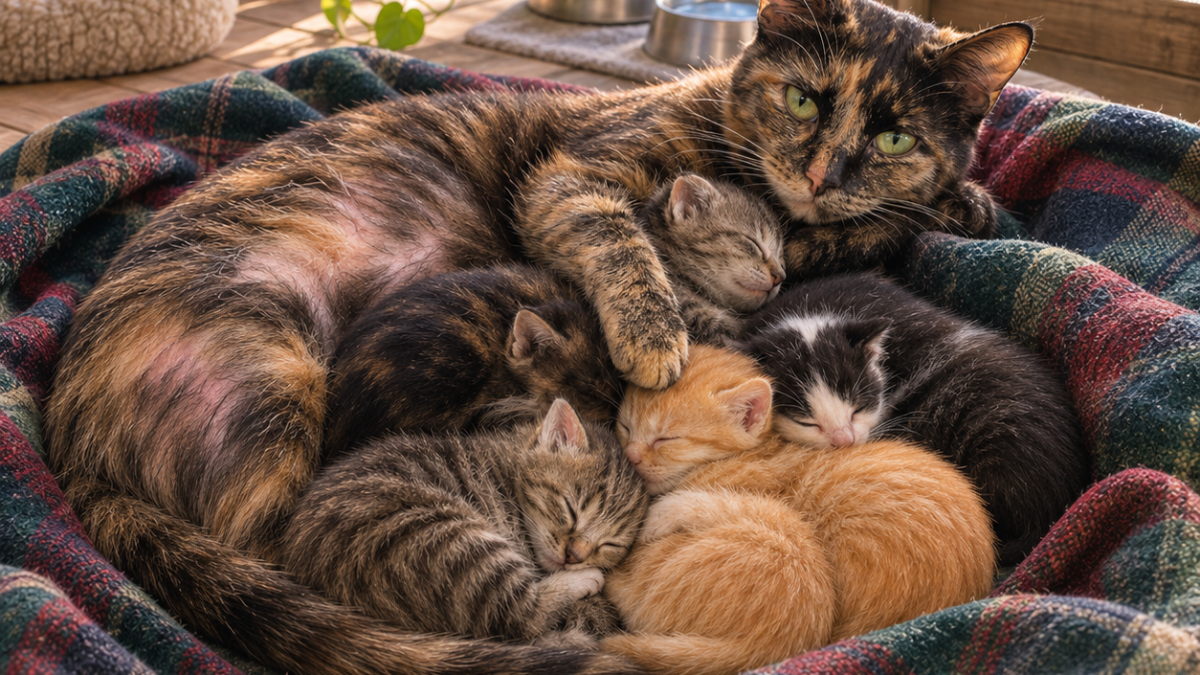
At sunrise, I hooked a half-submerged wooden crate out of the river, and the moment it landed in my boat, something weakly moved inside a box that had been nailed shut, wrapped in wire, and left to sink.
I had spent more than fifty years working those South Carolina waters, but when I finally pried the lid loose and saw what was lying in two inches of muddy river water, I fell backward against the side of my boat and forgot how to speak.
What frightened me even more was the realization that the crate had not drifted into the river by accident, because somebody had gone to extraordinary trouble to make sure whatever was inside never came back out.
My name is Thomas Mercer, and in April of 2023 I was seventy-one years old, retired, widowed, and living alone in a weather-beaten cabin along a quiet stretch of river in South Carolina’s Lowcountry.
I still went out most mornings before sunrise to check my crab traps. It gave me a reason to get out of bed after my wife, Ellen, died. The river didn’t ask how I was doing. It didn’t expect conversation. It just kept moving.
That morning, the water was almost four feet higher than normal after three days of hard spring rain. Broken branches, old fence boards, plastic buckets, and pieces of farm debris drifted downstream.
Then I saw the crate.
It was caught against a fallen cypress tree about fifteen feet from the eastern bank. Only the top few inches remained above water.
I almost passed it.
I wish I could tell you some heroic instinct made me turn around, but the truth is simpler.
Something about it bothered me.
The crate was too carefully sealed.
I shut off the outboard and let the current carry me closer.
When I grabbed the side and pulled, I nearly lost my balance.
It was heavy.
Far heavier than soaked wood should have been.
I dragged it into the boat, where it landed with a dull thud.
Then I saw the wire.
Baling wire had been wrapped around the crate again and again, twisted so tightly it had cut grooves into the wood. The lid had been fastened with long nails driven nearly flush.
I remember muttering, “What in God’s name…”
Then something moved inside.
Not scratching.
Not banging.
Just one weak shift against the boards.
I froze.
“Hello?”
Nothing.
I knelt beside the crate.
Another movement.
Fainter this time.
I grabbed the fishing pliers from beneath my seat and started cutting wire.
My hands began trembling.
I wasn’t cold.
Some part of me already understood that whatever I was about to find had been deliberately trapped.
The wire snapped strand by strand.
Then I wedged my small pry bar under the lid.
The first nail wouldn’t move.
Neither would the second.
“Come on.”
I pulled harder.
The wood groaned.
A third nail loosened.
Water sloshed around my boots while the current pushed my boat against the cypress.
It took me several minutes to free one corner.
Then another.
Finally, the lid lifted.
I looked inside.
And fell backward.
A tortoiseshell cat was lying on her side in muddy water.
For one awful second, I thought she was dead.
Then her chest moved.
Fast.
Shallow.
Her eyes were open but unfocused.
And beneath her front legs were five newborn kittens.
I stared.
They were piled together on something raised above the water.
At first I thought it was cloth.
Then I touched it.
Fur.
Her fur.
I looked at the mother again.
Large patches along her belly, sides, and hindquarters were completely bare.
Some were raw.
A few were bleeding.
She had ripped her own coat from her body and packed it beneath her babies, building a nest just high enough to keep their faces above the rising water.
My mouth went dry.
“No…”
One kitten moved.
Then another.
All five were alive.
The mother tried to raise her head when I reached inside.
She couldn’t.
I pulled off my flannel shirt and wrapped the kittens first, then eased her against my chest.
She weighed almost nothing.
I remember saying, “I’ve got you. I’ve got you now.”
Then I noticed something burned into one side of the crate.
Three letters.
A faded farm mark I recognized.
I had seen that mark before.
Not on the river.
On property less than two miles upstream.
And while I stood there holding that nearly frozen mother cat against my chest, I realized I might know exactly where the crate had come from.
PART 2
The mark was almost hidden beneath mud and water stains.
BRH.
I stared at those letters until the boat drifted sideways and bumped hard against the fallen cypress.
“Thomas,” I told myself. “Move.”
Whatever BRH meant could wait.
The cat couldn’t.
I laid my flannel shirt in the bottom of the boat and formed it into a shallow nest. The kittens barely made a sound as I transferred them from their mother’s fur raft onto the dry fabric. They were tiny enough to fit in one hand, their eyes still sealed and their ears folded close to their heads.
The mother tried to follow them.
She lifted her head maybe an inch.
Then it dropped.
“I know,” I whispered. “They’re right here.”
I placed her beside them.
She immediately stretched one front leg over the kittens.
That nearly broke me.
Even half-frozen, dehydrated, and too weak to sit up, she was still trying to cover them.
I started the engine.
My old aluminum boat had never moved that fast in its life.
Normally, the run back to my dock took seven or eight minutes if I wasn’t in a hurry.
That morning, I made it in four.
I tied up badly, left one line loose, grabbed the crate, and carried all six cats toward my truck.
The mother’s head rested against the edge of my shirt.
Every few seconds I looked down just to make sure her chest was still moving.
“Stay with me.”
I don’t know how many times I said it.
Probably twenty.
Maybe fifty.
The closest veterinary clinic was a little more than twenty minutes away on dry roads.
Those roads weren’t dry.
Rainwater still covered several low stretches, and twice I hit potholes hard enough to make the crate bounce on the passenger seat.
Each time, I reached over.
“I’m sorry.”
The mother didn’t move.
I drove faster.
The clinic opened at seven thirty.
I arrived at seven twelve.
The front door was still locked.
I started banging.
“Hello!”
Nothing.
I hit the glass again.
“Please!”
A woman in blue scrubs appeared from a hallway.
She saw me.
Then the crate.
She unlocked the door.
“We’re not open yet.”
“I pulled them out of the river.”
Her face changed.
“How many?”
“Six.”
That was all it took.
She shouted toward the back.
Within seconds, two more people came running.
They took the crate from me and carried it through the swinging doors.
I followed until someone stopped me.
“Sir, we need room.”
“I’m staying.”
“You can stay. Just let us work.”
I stood in the hallway with river water dripping from my pants.
My hands were scratched from the wire.
One fingernail had torn.
I hadn’t noticed.
A veterinarian came out after several minutes.
She was younger than I expected, maybe in her late thirties, with dark hair tied behind her head.
“I’m Dr. Rebecca Hale.”
“Thomas Mercer.”
“Mr. Mercer, where exactly did you find them?”
I told her.
She listened.
“Was the crate floating?”
“Barely.”
“Open?”
“Nailed shut.”
Her expression tightened.
“Show me.”
We went outside to my truck.
The crate sat on the passenger-side floor where I had left it after carrying the cats inside.
Rebecca bent down.
She touched one of the cut wires.
“These were wrapped around it?”
“Yes.”
“And the lid?”
I pointed toward the long nails sticking through the top board.
“I had to pry every one.”
She looked at me.
“You need to call law enforcement.”
“I plan to.”
“Call animal control too.”
“Are they going to live?”
She paused.
I hated that pause.
“The kittens are cold and dehydrated, but they’re responsive. That’s encouraging.”
“And the mother?”
“She’s critical.”
I looked through the clinic doors.
“What does that mean?”
“It means we’re worried about her temperature, dehydration, infection, and nutritional state. She’s severely underweight.”
“She just had five kittens.”
“That makes everything harder.”
I rubbed my hands over my face.
Rebecca lowered her voice.
“We’re going to do everything we can.”
I nodded.
“What do you need from me?”
“Right now? Permission to treat.”
“Do it.”
“There will be costs.”
“I said do it.”
She studied me for half a second.
Then nodded.
“All right.”
I signed papers I barely read.
When the receptionist asked who owned the cat, I stared at her.
“Nobody.”
She looked uncomfortable.
I corrected myself.
“I mean, I don’t know.”
“What should we put for name?”
I almost said “cat.”
Then I remembered Ellen.
She used to name everything.
Possums under the porch.
Her garden spiders.
A stubborn blue heron that came to our dock every summer.
She would have hated leaving an animal without a name.
“River,” I said.
The receptionist smiled faintly.
“River?”
“Yeah.”
“All right. River.”
I sat in the waiting room.
The clinic smelled like disinfectant and wet dog.
Somewhere in the back, a machine beeped.
I looked at my hands.
There was dried blood across one knuckle.
Some of mine.
Some might have been River’s.
I couldn’t tell.
The receptionist brought me coffee.
“You look like you need this.”
“Thank you.”
I held the cup.
Didn’t drink.
Then I remembered BRH.
I pulled out my phone.
The signal was weak inside the building.
I walked outside.
BRH could have stood for anything.
But there was a farm upstream called Briar Hollow Ranch.
Everybody around there knew it.
It used to be a working cattle property.
By 2023, it was mostly rundown pasture, storage sheds, and a few rental trailers.
The owner was a man named Calvin Rusk.
I had known Calvin’s father.
His father was hard but decent.
Calvin was different.
He inherited the place about eight years earlier and immediately started selling equipment, leasing sections, and letting the rest go.
I had seen those same letters—BRH—burned into old wooden produce crates stacked beside one of his barns.
That did not prove anything.
I knew that.
Crates change hands.
People reuse them.
Farm material ends up everywhere.
Still, I called the county sheriff’s office.
A deputy named Aaron Pike met me at the clinic about forty minutes later.
He was tall, broad-shouldered, and young enough that I remembered him as a high school boy buying bait from a gas station.
“Mr. Mercer.”
“Aaron.”
He smiled slightly.
“Haven’t heard anybody call me that in uniform for a while.”
“I knew you when you had acne.”
“That’s exactly why.”
We went outside.
I showed him the crate.
His smile disappeared.
He photographed everything.
Wire.
Nails.
Mud.
The burned letters.
“You recognize the mark?” he asked.
“Briar Hollow.”
“You sure?”
“I’ve seen their old crates.”
“That doesn’t mean this came from there recently.”
“I know.”
He looked toward the clinic.
“You see anyone throw it in?”
“No.”
“Any vehicles near the bank?”
“No.”
“Anything else unusual?”
I thought.
“There’s an old drainage access road on the east side. Runs close to where I found it.”
“Private?”
“Partly.”
“Who uses it?”
“Farmers. Utility crews. Hunters sometimes.”
He took notes.
Then Rebecca came outside.
“I need both of you.”
We followed her in.
River lay on a warming table beneath thick towels.
An IV line ran into one front leg.
I barely recognized her.
Wet tortoiseshell fur clung to her body in patches. Large areas of skin were exposed along both sides. Some were bright pink.
Others had open wounds.
Her kittens lay in a heated incubator nearby.
All five were moving.
Rebecca pointed toward River.
“Her weight is four pounds eleven ounces.”
I stared.
“That’s all?”
“Yes.”
“What should she weigh?”
“Eight to nine pounds, depending on frame.”
Pike wrote it down.
Rebecca continued.
“She’s severely dehydrated. Based on skin turgor, mucous membranes, blood values, and her overall condition, I’d estimate twelve to fifteen percent.”
“Is that bad?”
“For a cat this size, yes.”
River shivered despite the warming pads.
Rebecca checked a monitor.
“Her temperature was ninety-four point eight when she arrived.”
I knew normal was higher.
“How much higher should it be?”
“Usually around one hundred to one hundred two and a half.”
I swallowed.
“What about the kittens?”
“Cold but surprisingly stable. Temperatures between ninety-five point two and ninety-six point eight. Their lungs sound clear. They’re dehydrated but viable.”
Pike frowned.
“Warmer than the mother?”
“Yes.”
Rebecca looked at River’s exposed skin.
“We believe she transferred as much warmth as she could to them.”
I looked at the kittens.
Then the bare patches.
“She really pulled all that fur out herself?”
Rebecca nodded.
“Most likely.”
“Could stress do that?”
“Stress grooming can cause hair loss, but this is different.”
She gently touched one wounded area.
“The pattern is consistent with deliberate plucking and biting. There’s fur packed under the kittens. She appears to have removed it, gathered it, and built up a dry layer.”
Pike stopped writing.
Nobody spoke.
Rebecca looked at us both.
“If your timeline is accurate, she may have been inside that crate for two to four days.”
“How do you know?”
“Kittens appear about a week old. The mother’s hydration and nutritional state suggest she had been without reliable food or clean water for at least several days. The water line and saturation inside the crate give us additional clues, although it’s not exact.”
Pike asked, “Could she have given birth before she was put inside?”
Rebecca considered.
“Possible.”
“Or inside?”
“Also possible.”
I looked at River.
For some reason, the second possibility felt worse.
Not that there was a good version.
But imagining her giving birth in darkness, trapped inside a sealed box while river water seeped through the boards, made something cold settle behind my ribs.
Pike stepped outside to make calls.
I stayed with River.
Her eyes opened.
They were green.
Cloudy with exhaustion.
I reached toward her.
Then stopped.
“Can I touch her?”
Rebecca nodded.
“Gently.”
I put two fingers against River’s head.
She barely reacted.
Then one of the kittens squeaked from the incubator.
River’s ear moved.
Her eyes opened wider.
She tried to lift herself.
“No,” Rebecca said softly. “Not yet, mama.”
River struggled again.
I placed my hand beside her face.
“They’re here.”
She stared at me.
I knew she didn’t understand English.
Still.
“They’re alive.”
Her head lowered.
Rebecca looked at me.
“We need to keep her here.”
“How long?”
“I can’t tell you yet.”
“Do whatever she needs.”
She nodded.
When I left the clinic that morning, I had no cat with me.
Just an empty crate in the back of my truck.
And a feeling I hadn’t had in years.
Anger.
Real anger.
After Ellen died, I had become quieter.
I stopped arguing with people.
Stopped caring much about neighborhood disputes, county gossip, or who had done what to whom.
I fished.
Worked around the cabin.
Talked to a few friends.
Went to church sometimes.
That was enough.
But staring at that crate, I felt something wake up.
Someone had hammered every one of those nails.
Someone had twisted that wire.
Someone had heard something moving inside.
Maybe kittens.
Maybe a pregnant cat.
Maybe both.
And then someone had put that crate into moving water.
That wasn’t carelessness.
That took time.
Effort.
Intention.
I drove home.
The cabin felt wrong.
Too quiet.
Ellen’s old chair still sat near the window.
I had never moved it.
Her gardening gloves were still in a drawer.
Her blue ceramic mug remained on the shelf even though the handle had cracked years ago.
I made coffee and sat at the kitchen table.
Outside, the river moved past as if nothing had happened.
Around noon, Deputy Pike called.
“We found the access point.”
I straightened.
“What access point?”
“Place where the crate likely entered the water.”
“How?”
“Your description helped. Mud on one bank is disturbed. Tire tracks. Drag marks.”
“Briar Hollow side?”
“Yes.”
I stood.
“So it was Rusk.”
“Slow down.”
“Aaron—”
“Mr. Mercer, listen to me. The land is adjacent to Briar Hollow property. That does not mean Calvin Rusk put the crate in the water.”
“Who else?”
“We’re working on it.”
“What did he say?”
“We haven’t interviewed him yet.”
“Why not?”
“Because I called you before going there.”
I stopped.
“You’re going now?”
“Yes.”
“I’m coming.”
“No.”
“Aaron.”
“That is not a request.”
I looked toward my truck keys.
“You don’t want me there?”
“Correct.”
“You think I’ll do something stupid?”
“I think you are angry.”
“I’m seventy-one.”
“Age has never prevented anybody from making bad decisions.”
I almost laughed.
Didn’t.
“What can I do?”
“Stay home. If you remember anything about the crate or area, call.”
Then he added, “And Mr. Mercer?”
“Yeah?”
“Do not contact Calvin Rusk.”
“I won’t.”
That was a lie.
Not a deliberate one.
At the moment I said it, I believed it.
An hour later, someone drove up my gravel road.
A black pickup.
I knew the truck.
Calvin Rusk stepped out.
He was forty-three, thick through the shoulders, with a beard trimmed too carefully for a man who claimed he spent his days working cattle.
I stood on my porch.
He walked toward me.
“You talk to the sheriff?”
I didn’t answer.
He stopped below the steps.
“Thomas.”
“What do you want?”
“Heard you found something in the river.”
Small towns have no walls.
News travels through people you never knew were listening.
“A crate.”
His eyes moved toward my truck.
I had left the crate in the bed.
That was a mistake.
He saw BRH.
His jaw tightened.
“Those crates haven’t belonged to us in years.”
“I didn’t say they did.”
“You told the sheriff.”
“I told him what I recognized.”
Calvin climbed one step.
I came down one.
“Stay there.”
He stopped.
“Don’t make this something it isn’t.”
I stared at him.
“What is it?”
“I don’t know.”
“You came here to tell me.”
“No. I came here because deputies showed up at my property asking questions.”
“Good.”
His mouth tightened.
“You think I threw cats in the river?”
“I didn’t say that.”
“You’re looking at me like you did.”
I thought about River trying to lift her head when her kitten cried.
“You know who uses those old crates?”
Calvin glanced toward the river.
“Half the county.”
“Bull.”
“Dad sold hundreds of them.”
“Who has them now?”
“How the hell should I know?”
I stepped closer.
“Somebody wrapped one in wire and nailed it shut.”
His eyes flickered.
Only for a second.
Then he said, “People do sick things.”
That reaction stayed with me.
Not surprise.
Not confusion.
Just a flat statement.
I asked, “You hear about the kittens?”
His jaw moved.
“No.”
“There were five.”
He looked away.
“All alive.”
“Good.”
“The mother ripped out most of her fur to keep them above water.”
Calvin’s expression changed then.
Not guilt exactly.
Something uncomfortable.
He rubbed his beard.
“That’s rough.”
“Rough?”
“What do you want me to say?”
“I want you to tell me who did it.”
“I don’t know.”
A vehicle came up the road behind him.
Deputy Pike.
Calvin cursed under his breath.
Pike got out.
“I told you not to contact Mr. Rusk.”
“I didn’t.”
Calvin turned.
“I came here.”
Pike looked at me.
I lifted both hands.
“See?”
That did not improve his mood.
He walked toward Calvin.
“Mr. Rusk, we need you back at the property.”
“I already answered questions.”
“We found something.”
Calvin’s face changed.
“What?”
Pike did not answer.
“Your truck, please.”
Calvin stared at him.
Then at me.
For the first time since he arrived, he looked nervous.
He left.
Pike remained.
“What did you find?”
“Thomas.”
“You drove all the way here.”
“To stop this from becoming worse.”
“What did you find?”
He sighed.
“A section of baling wire.”
My pulse jumped.
“At Briar Hollow?”
“Near the river access.”
“Same wire?”
“We don’t know yet.”
“Anything else?”
“A hammer.”
I laughed once.
No humor in it.
“A hammer.”
“In an equipment shed.”
“Everybody with a farm has a hammer.”
“Exactly.”
“You believe him?”
“My job isn’t belief.”
“What is your job?”
“Evidence.”
He looked at me.
“And right now, you’re making mine harder.”
That shut me up.
Pike softened.
“I know you care about those cats.”
“I don’t even own them.”
“You named the mother.”
I stared.
“How do you know?”
“Clinic called animal control. Paperwork says River.”
I looked toward the water.
Pike said, “Let us do this correctly.”
“What if you can’t prove it?”
“Then we keep looking.”
“And if nobody gets punished?”
He didn’t answer immediately.
“Then River still lives.”
That landed.
I looked at him.
“So do her kittens.”
He nodded.
“That matters too.”
He was right.
I hated that he was right.
For the next sixteen days, River lived at the veterinary clinic.
I visited every morning.
At first, she barely tolerated me.
She watched my hands.
Flinched when I reached too quickly.
Kept her body between me and the kittens whenever they were returned to her for supervised nursing.
Rebecca warned me not to take it personally.
“She has no reason to trust anybody.”
“I pulled her out.”
“She doesn’t know what you pulled her out of.”
That was fair.
On day three, River ate without assistance.
On day four, she stood for almost thirty seconds.
On day five, one kitten crawled away from the pile and River pushed it back with her nose.
I laughed.
“You’ve got your hands full.”
Rebecca stood beside me.
“They’ll be walking soon.”
“All five?”
“If things keep going this way.”
I had started calling them numbers.
One through Five.
Rebecca hated that.
“They need names.”
“They’re going to families eventually.”
“So?”
“I’m not naming five kittens.”
On day six, I named one.
The smallest female had a white patch beneath her chin.
I called her Pearl.
Then I named a male Cypress because he had been found against a cypress tree.
Then Marsh.
Then Cricket.
Then Earl because I ran out of ideas and he had an old man’s face.
Rebecca laughed until she had tears in her eyes.
“Earl?”
“He looks like an Earl.”
“He’s ten days old.”
“Still.”
River watched us from her bedding.
By the end of the first week, she let me scratch beneath her chin.
That was all.
Two fingers.
Three seconds.
Then she pulled away.
I respected it.
By day ten, she leaned toward my hand.
By day twelve, she purred.
Quietly.
Almost like she regretted it.
I didn’t move.
I sat there with my hand beside her face and listened to the faintest purr I had ever heard.
Something inside me broke open.
Ellen had loved cats.
Not enough to convince me to own one.
She used to joke that I was “emotionally overcommitted to fish.”
I remembered the last argument we ever had.
Not a real argument.
One of those married conversations where both people know they are mostly teasing.
A stray orange cat had started sleeping beneath our porch.
Ellen wanted to bring him inside.
I said no.
“He’ll tear the furniture.”
“You hate the furniture.”
“He’ll shed.”
“You shed.”
“I do not.”
She looked at my gray hair on the back of the couch.
“You absolutely do.”
We laughed.
The orange cat disappeared before she could win.
A year later, Ellen was gone too.
Cancer.
Fast and unfair.
I hadn’t thought about that stray in years.
Sitting beside River, I wondered whether Ellen would have liked her.
Of course she would have.
Ellen liked anything that needed somebody.
On day thirteen, Deputy Pike came to the clinic.
He stood outside River’s room.
“You got a minute?”
I followed him into the hallway.
“What happened?”
“We got lab results on the wire.”
“And?”
“Consistent gauge and coating with a spool seized from Briar Hollow.”
“Consistent.”
“Not unique.”
“So nothing.”
“Not nothing.”
He handed me his phone.
A photograph showed a wooden workbench.
On it sat a spool of green-coated baling wire.
Next to it were nails.
Long nails.
Same type as the crate.
I looked at him.
“You arrested Calvin?”
“No.”
“Why?”
“Because owning wire and nails isn’t a crime.”
I handed back the phone.
“Then why are you here?”
“Because we found a witness.”
My pulse changed.
“Who?”
“Teenage boy. Lives in one of the rental trailers behind Briar Hollow.”
“What did he see?”
“Not enough yet.”
“Aaron.”
“He saw someone carrying a crate toward the river access two nights before you found it.”
“Calvin?”
“He says he couldn’t see the face.”
My shoulders dropped.
“But he saw the vehicle.”
I looked up.
“What vehicle?”
“White utility ATV.”
Calvin owned one.
Everyone knew that.
“So arrest him.”
“Three people on that property use it.”
“Who?”
“Calvin. His foreman, Jace Wilkins. And Calvin’s nephew, Dean.”
I knew Jace.
Quiet man.
Worked for the Rusks most of his life.
Dean was twenty-something.
Always seemed angry at the world.
“Which one?”
“We’re still working.”
“What else did the kid see?”
Pike hesitated.
“He heard something.”
“What?”
“Cats.”
The hallway seemed to narrow.
“Before the crate went in?”
“Yes.”
I closed my eyes.
Pike continued.
“He says he heard a cat crying near the equipment shed earlier that evening.”
I opened my eyes.
“Pregnant?”
“He wouldn’t know.”
“Then somebody had her there.”
“Possibly.”
“Did you search the shed?”
“Yes.”
“And?”
“Hair.”
My stomach turned.
“Cat hair?”
“Sent for testing.”
I leaned against the wall.
Pike said, “There’s more.”
I waited.
“The boy told us he had seen River before.”
I looked through the small window into her room.
She was curled around the kittens.
“Where?”
“Briar Hollow.”
I turned back.
“He says she lived around the feed shed for months.”
“Was she theirs?”
“Not officially.”
“Did Calvin feed her?”
“Sometimes workers did.”
“Then why put her in a box?”
“We don’t know who did.”
I almost snapped.
Then remembered what Pike had told me.
Evidence.
Not belief.
“Find out.”
“We’re trying.”
That afternoon, I sat beside River longer than usual.
She had been theirs.
Or close to theirs.
She had lived around their sheds.
Known those voices.
Known that property.
Maybe known whoever picked her up.
I imagined her trusting a hand.
Then darkness.
Wire tightening.
Nails hammered above her.
I stood so quickly the chair scraped.
River startled.
I immediately regretted it.
“Sorry.”
She stared.
I sat again.
“I’m not mad at you.”
Her eyes narrowed.
“You’ve already had enough angry men.”
She lowered her head.
I stayed until closing.
The next morning, someone had slashed two tires on my truck.
I found it sitting crooked in my driveway.
Both passenger-side tires flat.
Clean cuts.
Not road damage.
A note had been pushed beneath my windshield wiper.
MIND YOUR OWN DAMN BUSINESS.
I stood there for a long time.
Then called Pike.
He arrived twenty minutes later.
He photographed the tires.
Bagged the note.
Looked at me.
“You contact anyone?”
“No.”
“Rusk?”
“No.”
“Wilkins?”
“No.”
“Dean?”
“No.”
“Tell anybody about our investigation?”
“People know.”
“Who?”
“The whole county probably.”
Pike stared at the note.
“This just became witness intimidation if it connects.”
“I’m not a witness to the dumping.”
“You found the evidence.”
“Close enough.”
He looked up my road.
“You have cameras?”
“One trail camera by the shed.”
“Check it.”
I had forgotten about it.
The camera faced the side of the property where deer sometimes crossed.
It did not capture the driveway clearly.
But it caught headlights at 2:14 a.m.
Then a person walking away.
Baseball cap.
Dark jacket.
Thin build.
Could have been anybody.
Then the person turned.
For one frame, the face appeared in profile.
Pike stared at the tiny screen.
“Dean.”
I knew it too.
Calvin’s nephew.
“You sure?”
“I’ll take the card.”
“What happens now?”
“Now I go talk to him.”
I grabbed my keys.
Then remembered the tires.
Pike said, “Don’t.”
“I wasn’t.”
“You were.”
“I was thinking.”
“Think here.”
He left.
Three hours later, Dean Rusk was arrested.
Not for River.
Not yet.
For criminal mischief and intimidation tied to my truck.
He admitted slashing the tires.
Denied the note.
Denied the cat.
Denied the crate.
Denied everything else.
Then he made one mistake.
He blamed Jace.
According to Pike, Dean said, “If you want to know who dumps animals, ask Jace.”
That was the first time anyone had used the word “animals.”
Plural.
The sheriff’s office went back to Briar Hollow.
This time with animal control and a warrant that covered more than one shed.
They found three empty pet carriers behind the equipment barn.
A dog collar.
Two food bowls.
And, in a burn barrel, partially charred veterinary paperwork from a low-cost spay-and-neuter clinic.
The paperwork belonged to no one on the property.
That was when the investigation changed.
River might not have been the first animal.
Pike called me that night.
“I need you to prepare yourself.”
“For what?”
“We found remains.”
I sat down.
“What kind?”
“Animal.”
“How many?”
“We don’t know yet.”
I closed my eyes.
“Cats?”
“Possibly.”
I thought about River.
Her kittens.
The crate.
“Who?”
“We’re not there yet.”
“Calvin?”
“Thomas.”
“I know. Evidence.”
“Yes.”
I hated that word by then.
But I had learned to respect it.
Because anger could be wrong.
Evidence could stand up after anger burned out.
Two days later, Jace Wilkins walked into the sheriff’s office with an attorney.
He wanted to talk.
That was what Pike told me later.
Jace admitted River had lived around the feed shed.
He admitted she became pregnant.
He admitted Calvin complained about cats getting into feed and leaving messes around equipment.
He admitted Dean had suggested “getting rid of them.”
But according to Jace, the crate had been Calvin’s idea.
Calvin denied it.
Dean blamed Jace.
Jace blamed Calvin.
Three men.
Three stories.
Then investigators found the missing piece.
A text message.
Dean to Calvin.
Sent three days before I found River.
GOT THE CAT BOXED. U WANT ME TO TAKE IT DOWN?
Calvin replied:
WAIT TIL DARK. USE OLD RIVER ROAD. DONT LEAVE IT HERE.
I read the screenshot in Pike’s office.
My hands went cold.
There it was.
Not every detail.
Not “throw her in the river.”
Not “nail the crate.”
But enough to destroy the story that nobody knew anything.
Pike watched me.
“Keep reading.”
There was another message.
Dean:
SHE HAD KITTENS OR SOMETHING. HEAR NOISE.
Calvin:
NOT OUR PROBLEM.
I put the phone down.
For several seconds, I couldn’t speak.
“Those kittens were already born?”
“Possibly.”
“Or being born.”
“Yes.”
“And he knew.”
“Dean’s message indicates he knew there was additional animal noise.”
I stood.
“Where is Calvin?”
“Thomas.”
“Where?”
“Interview room.”
I looked toward the door.
Pike stood too.
“You are not going in there.”
“I just want to see him.”
“No.”
“He knew.”
“Yes.”
“He knew.”
“I heard you.”
I hit the edge of the desk with my palm.
Not hard.
Hard enough.
Pike let me.
I stared at the floor.
“What happens now?”
“Charges.”
“What kind?”
“Animal cruelty. Possibly multiple counts. Illegal disposal. Evidence tampering depending on what we establish. Dean faces separate charges. Jace’s involvement is still under review.”
“Is Calvin going to jail?”
“That will be up to prosecutors and a judge.”
I laughed bitterly.
“Of course.”
Pike leaned forward.
“Thomas, listen to me.”
I looked at him.
“You wanted evidence.”
“Yes.”
“You wanted somebody held accountable.”
“Yes.”
“This is how it happens.”
“Slow.”
“Yes.”
“Not satisfying.”
“Usually not.”
I sat down again.
He was right.
Again.
Real justice did not look like movies.
There was no thunder.
No dramatic confession under a spotlight.
No perfect sentence that repaired what had happened.
There were screenshots.
Lab reports.
Witness statements.
Search warrants.
Ugly photographs.
Forms.
Lots of forms.
And somewhere across town, River was learning how to trust a human hand again.
That mattered more.
On day sixteen, Rebecca told me River could leave.
“Great.”
She smiled.
“You sound nervous.”
“I’m not.”
“You are.”
“I own fish.”
“You own six cats now.”
I stared at her.
“No.”
She handed me a folder.
“Discharge instructions.”
“I’m fostering.”
“For how long?”
“Until homes are found.”
Rebecca looked through the glass.
River lay on a blanket while five kittens climbed over her.
“You keep saying that.”
“I mean it.”
“Of course.”
I pointed at her.
“Don’t start.”
She laughed.
The bill was a little over six hundred dollars after the clinic discounted several services and a rescue group covered part of the medication.
I didn’t have six hundred dollars.
Not really.
I had money saved for replacing part of my dock.
The dock could wait.
I paid.
When I carried River to my truck, she panicked at the crate.
Not the wooden one.
A normal plastic pet carrier.
Still.
The moment she saw the door, she backed away.
I understood.
“No crate.”
Rebecca said, “Thomas—”
“I’m not putting her in one.”
“You can’t let her loose in the cab.”
“I’ve transported worse things.”
“Such as?”
“Ellen.”
Rebecca blinked.
“My wife.”
“I understood.”
“She hated seatbelts.”
Rebecca laughed despite herself.
In the end, we used a large wire dog kennel with the door left open inside the back seat area while I drove slowly.
River stayed beside her kittens.
When we reached my cabin, I opened the truck door.
She did not move.
I carried the kittens inside first.
One by one.
Pearl.
Cypress.
Marsh.
Cricket.
Earl.
River watched.
Then I returned.
“You coming?”
She stared at the porch.
I held out my hand.
She leaned forward.
Stopped.
Then stepped out.
Her paws touched the wooden porch.
She looked toward the river.
Her entire body froze.
I cursed myself.
Of course.
The river.
The sound.
The smell.
The moving water.
She turned and tried to get back into the truck.
I closed the door.
“Okay.”
She crouched.
“It’s okay.”
I sat on the porch.
Didn’t touch her.
For nearly twenty minutes, we stayed there.
River facing away from the water.
Me facing her.
Finally, she stood.
Walked toward the cabin.
Crossed the threshold.
That was the first night six cats slept under my roof.
I slept approximately forty minutes.
Earl climbed a curtain.
Pearl got behind the couch.
Cricket screamed whenever River moved more than three feet away.
Cypress discovered an electrical cord.
Marsh somehow ended up inside one of Ellen’s old boots.
River paced.
I paced.
At two in the morning, I called Rebecca.
She answered.
“What’s wrong?”
“All of them.”
She sighed.
“Be specific.”
“There are too many.”
“You have five kittens.”
“Yes.”
“That hasn’t changed.”
“One is inside a boot.”
“Remove the kitten from the boot.”
“That seems simplistic.”
“Thomas.”
I could hear laughter in her voice.
“Fine.”
“And River?”
“She keeps walking.”
“New environment.”
“She won’t lie down.”
“Give her time.”
I looked toward the kitchen.
River was standing near the wall, watching the door.
“She thinks somebody’s coming.”
Rebecca went quiet.
“Maybe.”
“What do I do?”
“Show her they’re not.”
That was good advice.
Harder than it sounded.
For the next several nights, River slept sitting upright.
Exactly like she had at the clinic at first.
I placed beds everywhere.
Ignored them.
Blankets.
Ignored them.
An old cushion from Ellen’s chair.
That she sniffed.
Then walked away.
On the fourth night, I woke around three because the cabin was too quiet.
I got up.
River was in Ellen’s old chair.
Lying down.
Five kittens pressed against her belly.
I stood in the hallway.
She opened her eyes.
Saw me.
Didn’t move.
I whispered, “Good.”
Then went back to bed.
The screened enclosure took me three weeks to build.
It cost more than I expected and looked slightly crooked because my knees weren’t what they used to be.
I attached it to the side porch using pressure-treated lumber, heavy mesh, and a roof panel to keep out rain.
My neighbor, Charlie Boone, came over.
“What is this?”
“Cat porch.”
He stared.
“You don’t like cats.”
“I never said that.”
“You called my sister’s Siamese ‘a decorative rat.’”
“That cat bit me.”
“Because you called it a decorative rat.”
“Cats don’t speak English.”
Charlie looked through the screen.
River sat on a shelf watching us.
“That the river cat?”
“Yeah.”
He had heard the story.
Everybody had.
He became quiet.
“She looks good.”
“She’s getting there.”
One of the kittens attacked his shoelace through the screen.
Charlie jumped.
I laughed.
“Terrifying.”
“Shut up.”
He crouched.
Pearl reached through and grabbed him again.
Charlie smiled.
“You keeping them?”
“No.”
“Sure.”
“I’m finding homes.”
“Sure.”
A month later, I had found zero homes.
That was not because nobody wanted them.
People did.
Rebecca knew families.
The rescue group had applications.
One church member offered to take two kittens together.
Every time someone asked, I said I needed another week.
Then another.
River’s fur began returning.
First as soft fuzz.
Then thicker patches.
Some areas grew unevenly.
A few spots never fully recovered.
Whenever I saw those patches, I remembered the crate.
The water.
The mound of fur.
One afternoon, River was sleeping on the screened porch while the kittens chased insects against the mesh.
I sat in Ellen’s chair.
Charlie stopped by.
“You haven’t adopted them out.”
“No.”
“You’re not going to.”
“I might.”
“You named one Earl.”
“That has nothing to do with it.”
“You built them a porch.”
“Temporary.”
“You spent six hundred dollars.”
“Medical necessity.”
“You bought a cat tree.”
“It was on sale.”
Charlie laughed.
“You’re done.”
“Done with what?”
“You own cats.”
I looked through the screen.
River had rolled onto her side.
Pearl was sleeping against her back.
Earl had wedged himself into a corner and somehow fallen asleep upside down.
I sighed.
“Maybe.”
Charlie grinned.
Then his expression changed.
“Calvin’s out.”
I looked at him.
“What?”
“Bond.”
I stood.
“When?”
“Yesterday.”
“How do you know?”
“Saw his truck.”
My stomach tightened.
I called Pike.
He confirmed it.
“Normal process,” he said.
“You didn’t tell me.”
“You’re not a party to every procedural update.”
“He slashed my tires.”
“Dean did.”
“Calvin told him to dump River.”
“Allegedly.”
“You have texts.”
“And his case is moving.”
I hated the word “moving.”
It sounded like nothing.
Pike said, “Do not go near Briar Hollow.”
“I won’t.”
“Do not respond if he contacts you.”
“I won’t.”
“Thomas.”
“I said I won’t.”
Two nights later, someone fired a gun near my property.
One shot.
Then another.
I was in bed.
Every cat scattered.
River disappeared beneath the kitchen table.
I grabbed my shotgun.
Then stopped.
I did not go outside.
That mattered.
The younger version of me might have.
The angrier version definitely would have.
Instead, I called 911.
Deputies arrived.
They found shell casings on the road shoulder about half a mile away.
Legal caliber.
No direct evidence anyone had fired toward my cabin.
Could have been somebody shooting into the ditch.
Could have been intimidation.
Could have been coincidence.
I didn’t sleep.
River didn’t either.
At dawn, I found her beneath my bed with all five kittens crowded around her.
I lay on the floor.
“Sorry.”
She watched me.
“I promised nobody was coming.”
Her eyes stayed fixed on mine.
“I’m trying.”
The next day, I installed cameras.
Real ones.
Charlie helped.
Pike increased patrols along the road.
For a week, nothing happened.
Then a truck appeared at the end of my driveway just after midnight.
White Ford.
No plates visible.
It stopped for eleven minutes.
Never entered.
Never honked.
Never flashed lights.
Just sat.
My camera recorded the whole thing.
Pike identified the truck as belonging to Dean’s mother.
Dean was prohibited from contacting me.
He claimed someone else had borrowed it.
The judge modified his bond conditions and ordered GPS monitoring.
That was the first consequence I saw with my own eyes.
No dramatic revenge.
No violence.
Just a judge looking over his glasses and saying, according to Pike, “Mr. Rusk, you appear to have misunderstood how seriously this court takes intimidation.”
Dean went quiet.
Calvin’s case took longer.
His attorney argued the texts were ambiguous.
“Get rid of them” could mean relocate.
“Use Old River Road” did not necessarily mean dumping.
Jace complicated everything.
At first, he cooperated.
Then he changed his story.
Said he never saw the crate.
Then said he had.
Then claimed Dean alone handled it.
The prosecutor called me once.
Her name was Laura Bennett.
She spoke carefully.
“Mr. Mercer, I need you to understand that cruelty cases can be difficult.”
“I understand.”
“Physical evidence is strong in some areas, weak in others.”
“Okay.”
“Your testimony is mostly about discovery.”
“I know.”
“We may seek plea agreements.”
I hated that.
“How much?”
“I can’t discuss offers yet.”
“What does River get?”
There was a pause.
“Excuse me?”
“What does she get out of a plea?”
“Mr. Mercer—”
“She nearly died.”
“I know.”
“Five kittens nearly drowned.”
“I’ve seen the photographs.”
“Then what does she get?”
Laura’s voice softened.
“She gets to survive.”
That was Pike’s answer all over again.
I leaned against my kitchen counter.
River sat on the windowsill.
“She did more than survive.”
“I’m glad.”
“I want him to understand what he did.”
Laura was quiet.
Then she said, “Victim impact can be addressed at sentencing.”
“She’s a cat.”
“You’re the finder and current caretaker. You may be allowed to submit a statement about the condition in which you found her.”
I stared at River.
“All right.”
Months passed.
The kittens grew.
They stopped looking like fragile little creatures and became five noisy adolescents who believed every surface in my cabin existed for their personal use.
Earl slept on my pillow.
Pearl stole socks.
Cypress learned how to open one kitchen cabinet.
Marsh developed a fascination with the toilet.
Cricket climbed everything.
River remained smaller than all of them.
Her fur improved but never became perfect.
Three pale patches remained visible on her sides.
At night, she groomed the kittens one by one.
Even when they resisted.
Even when Earl was nearly twice the size he had been when he fit in my palm.
I watched from my chair.
Sometimes River would pin one of them with a paw and clean its face while the kitten twisted dramatically.
“Leave him alone,” I told her once.
She stared at me.
Then resumed grooming.
“Fine.”
She had earned the right.
The trial never happened.
Calvin took a plea.
Dean did too.
Jace received reduced charges after agreeing to testify about what happened.
The final version, as established through statements, messages, and physical evidence, was uglier than I expected.
River had lived around Briar Hollow for months.
Workers occasionally fed her.
When she became heavily pregnant, Calvin complained that he didn’t want kittens around the feed shed.
Dean caught her.
Placed her into an old produce crate.
Jace claimed he objected when Dean started nailing the lid.
Dean claimed Calvin had instructed him to make sure she didn’t return.
Calvin denied ordering her drowned.
But the text told Dean to use Old River Road after Dean said the cat was boxed and there were sounds suggesting kittens.
Nobody claimed responsibility for putting the crate directly into the water.
That part remained disputed.
But prosecutors established enough.
Cruelty.
Abandonment.
Conspiracy related to the disposal.
Tampering.
Intimidation in Dean’s case.
The burned animal records led to an additional investigation, although investigators could not prove every suspected earlier incident.
At sentencing, I sat in the second row.
I had not been inside a courtroom in decades.
Calvin wore a suit.
Dean wore one too.
Jace sat with his attorney near the side.
None looked at me.
Laura called my name.
I walked forward.
My knees hurt.
Not from fear.
Age.
Mostly.
I had written a statement.
Three pages.
I unfolded it.
Then looked at Calvin.
For months, I had imagined this moment.
I had imagined anger.
Accusations.
Some perfect line that would make him feel everything River had felt.
Instead, I saw a middle-aged man staring at a table.
Small.
Ordinary.
Not a monster from a story.
Just a human being who had decided another living creature did not matter.
Somehow, that was worse.
I looked at the judge.
“My name is Thomas Mercer.”
My voice sounded rough.
“I found that crate on April seventeenth.”
I described the river.
The wire.
The nails.
The water.
River lying on her side.
Five kittens on a mound made from their mother’s fur.
Nobody moved.
I told them how little she weighed.
How cold she was.
How she had pulled fur from her own body until her skin bled.
How every kitten survived.
Then I stopped reading.
I looked at Calvin.
“I keep thinking about the nails.”
His eyes lifted.
“You had to hit them more than once.”
His lawyer shifted.
The judge said nothing.
I continued.
“One nail can be a mistake. Maybe two. But that box had enough nails that whoever sealed it had time to hear what was inside.”
Calvin looked away.
“That’s what bothers me.”
My hands were shaking.
“Not just that somebody wanted to get rid of a cat. People abandon animals every day. It’s wrong, but I understand cowardice.”
I swallowed.
“What I don’t understand is how a person hears a living thing trapped in a box and keeps hammering.”
The courtroom was silent.
I looked down at my written statement.
I didn’t need it anymore.
“She didn’t know whether anybody was coming.”
My voice broke.
I waited.
Then continued.
“She had five babies in rising water. She couldn’t pry the lid open. She couldn’t cut the wire. She couldn’t swim out.”
I thought about River on Ellen’s chair.
“So she used the only thing she had.”
I looked at the judge.
“Herself.”
Nobody moved.
“She tore out her fur. Built them something dry. Kept them warmer than she kept herself.”
I looked at Calvin again.
“You threw away something you decided was worthless.”
His face tightened.
“And she spent the next few days proving she had more decency than the people who put her there.”
His attorney started to stand.
The judge raised one hand.
He sat again.
I took a breath.
“I’m not asking this court to hate anybody.”
That surprised even me.
“I spent a long time angry.”
I looked toward Laura.
“Anger’s heavy.”
Then back at the judge.
“I’m asking you to make sure this matters.”
I folded the paper.
“That’s all.”
The judge thanked me.
I returned to my seat.
I didn’t feel victorious.
I felt empty.
Then lighter.
Calvin received jail time, probation afterward, fines, restitution, and a long prohibition on owning or possessing animals under the terms approved in the case.
Dean received his own sentence, including consequences for the intimidation.
Jace avoided jail but faced probation, community service, and animal-related restrictions after his cooperation.
Briar Hollow was inspected.
The remaining animals on the property were removed or transferred where required.
The farm eventually went up for sale.
Calvin’s family blamed me.
Some people in town said I had ruined him.
That was almost funny.
I hadn’t written the texts.
I hadn’t nailed the crate.
I hadn’t told Dean to use the river road.
I had pulled a box from the water.
That was all.
The rest belonged to them.
One Sunday after church, a woman I barely knew cornered me near the parking lot.
She was related to Calvin somehow.
Cousin, maybe.
“You happy now?”
I looked at her.
“About what?”
“You got what you wanted.”
“I wanted a cat not to be thrown in a river.”
Her face reddened.
“You know what I mean.”
“No.”
“You destroyed a family.”
I thought about River tearing fur from her body.
“No.”
I said it quietly.
“They made choices.”
She stared.
I continued.
“I found the receipt.”
Then walked away.
That was the closest thing I ever got to revenge.
Not seeing Calvin punished.
Not hearing his relatives whisper.
Not watching Briar Hollow sold.
It was refusing to carry responsibility for consequences he created himself.
By the end of summer, the kittens were nearly grown.
The rescue group called.
A family wanted Pearl and Cricket together.
I said no.
Rebecca called me.
“What are you doing?”
“Thinking.”
“You’ve been thinking for four months.”
“They’re bonded.”
“The family wants both.”
“River would miss them.”
“River would adjust.”
I looked toward the screened porch.
All six cats were piled in a patch of sunlight.
“I don’t like the family.”
“You haven’t met them.”
“Exactly.”
Rebecca laughed.
“Thomas.”
“No.”
“You’re keeping them.”
I sighed.
“Yes.”
There was silence.
Then she said, “Finally.”
“I don’t need commentary.”
“You own six cats.”
“I’m aware.”
“You said you didn’t like cats.”
“I said I never owned one.”
“Six is a strong correction.”
I hung up on her.
Then called back because I needed vaccination appointments.
The first winter was chaos.
Cats everywhere.
One slept on the kitchen counter despite my objections.
Cypress claimed the windowsill.
Cricket lived on the screened porch whenever weather allowed.
Pearl followed me into the workshop.
Marsh preferred the laundry basket.
Earl slept with River.
And River slept beside me.
The first time she climbed onto my bed, I pretended not to notice.
She walked in a circle.
Lay near my feet.
Ten minutes later, she moved to my knees.
By morning, she was beside my chest.
I woke with one paw against my arm.
“Ellen would laugh at me.”
River opened one eye.
“Six cats.”
She purred.
“I know.”
That spring, nearly a year after I found her, the river rose again.
Not as high.
Still enough.
I stood on the porch watching brown water move beneath the cypress trees.
River came outside into the screened enclosure.
The sound of rushing water reached us.
She froze.
Her body dropped low.
I immediately stood.
“It’s okay.”
She looked toward the river.
For months, she had avoided that side of the enclosure whenever current was loud.
I had never forced her.
I sat down beside the mesh.
She remained crouched.
Then Earl came out.
He walked past her.
Stopped.
Rubbed against her side.
Pearl followed.
Then Cypress.
Then Marsh.
Then Cricket.
Within seconds, all five grown kittens surrounded their mother.
River looked at them.
One by one.
Then began grooming Earl’s face.
He tolerated it for perhaps three seconds before trying to escape.
I laughed.
River swatted him gently and pulled him back.
The river kept moving.
She stayed.
That moment meant more to me than the courtroom.
More than Calvin’s sentence.
More than any newspaper story or church gossip.
River could hear the water and still choose not to run.
She was home.
A few months later, Charlie and I were sitting on my porch when he asked why I had kept all six.
“You know you could’ve found good homes.”
“I know.”
“So why?”
I looked through the screen.
River was cleaning Pearl’s face.
Earl slept upside down.
Cypress was staring at a moth.
“Because somebody nailed that box shut.”
Charlie waited.
I continued.
“Somebody decided she was garbage.”
He said nothing.
“The first thing she did in that darkness was keep those babies alive.”
My throat tightened even after all that time.
“She was drowning.”
I looked toward the river.
“And she built them a boat.”
Charlie frowned slightly.
“A boat?”
“Out of herself.”
He understood.
I shook my head.
“I’m seventy-one years old. I’ve spent most of my life on this river. I’ve watched refrigerators float past after hurricanes. Dead trees. Deer. Boats without owners. Once saw half a porch come down after a flood.”
Charlie smiled.
“I remember.”
“But I’ve never seen anything like what was inside that box.”
River looked toward me.
I smiled.
“People ask what I pulled out of the river.”
Charlie waited.
“I tell them I pulled out the best thing anybody ever threw away.”
Apparently Charlie repeated that at church.
Then somebody else repeated it.
Soon people I didn’t know were quoting me back to myself.
I hated that.
River did not care.
She cared about breakfast.
Years of loneliness change a person in ways you don’t notice while they’re happening.
After Ellen died, I stopped using half the cabin.
Her side of the closet stayed untouched.
I stopped cooking real meals.
Stopped turning on the radio.
Stopped inviting people over.
Nobody was angry with me.
Nobody pushed.
Friends checked in less often because I always said I was fine.
Eventually, they believed me.
Maybe I believed me too.
Then six cats arrived.
Suddenly doors couldn’t remain closed because somebody would scream.
Food had to be measured.
Vet appointments had to be remembered.
Litter had to be cleaned.
Furniture had to be defended unsuccessfully.
I started waking earlier.
Laughing more.
Cursing more too, especially when Cricket knocked things off shelves.
The cabin became noisy.
Messy.
Alive.
Ellen’s chair became River’s.
Her old sewing basket became a kitten bed until I moved the needles.
The porch Ellen always wanted screened finally got screened.
Sometimes I wondered if River had saved me too.
I never said that aloud.
Sounded sentimental.
But late at night, when the cabin settled and rain touched the roof, I would wake with River against my side and think about the morning I almost passed that crate.
Ten more minutes.
Maybe less.
The current would have pulled it from the tree.
The box would have sunk.
I would never have known.
That thought still visits me.
I do not enjoy it.
So I replace it with another.
I remember pulling the lid away.
Seeing five tiny bodies raised above water.
Seeing River’s bare skin.
Seeing what she had made.
A small island.
Four inches high.
Barely enough.
But enough.
That is the part I keep.
Today River is healthy.
Not perfect.
Healthy.
A few faint bald areas remain along her sides where the fur never fully returned.
You can see them when sunlight comes through the bedroom window.
I used to hate those patches.
Now I don’t.
They are part of her.
The kittens are grown.
I still call them kittens.
River does too, apparently.
Every evening, usually after dinner, she gathers them close.
Not all at once.
They are too large now.
But one by one she catches them.
Pearl first if Pearl allows it.
Then Marsh.
Cypress usually cooperates.
Cricket fights.
Earl acts offended by the entire process.
River cleans their faces anyway.
I sit in my chair.
Sometimes I read.
Sometimes I pretend to.
Mostly I watch.
A person could build a whole religion around a mother cat washing the face of a grown son who outweighs her.
Not because it is dramatic.
Because it is ordinary.
That is what she fought for.
Not applause.
Not justice.
Not revenge.
Ordinary days.
Warm floors.
Food bowls.
Sunlight.
A safe place where her babies could become adults and annoy her.
One evening, during another spring storm, the power went out.
The cabin went black.
Rain hammered the roof.
The river rose against the pilings.
Years earlier, darkness and rising water had meant a sealed crate.
This time, I lit an oil lamp.
River walked into the bedroom.
All five cats followed.
I sat on the edge of the bed.
Thunder rolled.
River jumped beside me.
Then Pearl.
Then Earl.
Then the others.
Within minutes, I was trapped under nearly sixty pounds of cat.
“You people are ridiculous.”
River purred.
I scratched the side of her neck.
Lightning flashed through the window.
For an instant, I saw the bare patches on her side.
Small.
Faded.
Still there.
I thought about the hands that had hammered nails above her.
Then about my own hands cutting wire.
Then Rebecca’s hands warming kittens.
Pike’s hands collecting evidence.
Laura’s hands turning pages in court.
Charlie’s hands helping me build a porch.
All those choices.
All those ordinary human hands.
Some destroy.
Some repair.
That may be the closest I have come to understanding any of it.
River climbed higher and rested her head against my leg.
Outside, the river kept rising.
Inside, nobody was trapped.
Nobody was cold.
Nobody was waiting in darkness for air to run out.
The storm passed before midnight.
By morning, sunlight came through the windows.
I made coffee.
River jumped onto the bed and began grooming Pearl.
Earl stretched across my pillow.
Cypress sat on the kitchen counter even though he knew he wasn’t allowed there.
I opened the back door to the screened porch.
Fresh marsh air entered the cabin.
River walked outside.
She stood where she could see the river.
She looked at it for a long time.
Then she lay down in the sun.
No shaking.
No hiding.
Just River.
I carried my coffee outside and sat beside her.
The five grown kittens slowly joined us.
One on the railing.
One near my boots.
Two curled together.
Earl somehow ended up in my lap.
I looked toward the place downstream where that fallen cypress had once trapped a wooden crate long enough for me to notice it.
The tree was gone now.
Floodwaters eventually carried it away.
Nothing marked the spot.
No sign.
No memorial.
The river had erased every physical trace of that morning.
But beside me, River stretched into the sunlight.
Five healthy cats surrounded her.
That was evidence enough.
Someone had tried to make her disappear.
They had sealed her inside a box, wrapped it in wire, and trusted the river to finish the job.
Instead, the crate caught on a tree.
I happened to look twice.
And River, trapped in darkness with almost nothing left, had refused to stop being a mother.
She could not break the nails.
She could not cut the wire.
She could not stop the water.
So she did the one thing still within her power.
She gave pieces of herself away until her babies had somewhere dry to breathe.
I used to think survival meant being strong enough to save yourself.
River taught me something different.
Sometimes survival looks like a frightened animal lying in cold water while five newborns sleep on a nest made from her own fur.
Sometimes courage is not escaping.
Sometimes it is giving warmth away when you are freezing.
Sometimes justice is not revenge.
It is watching the thing someone tried to destroy grow so large, safe, noisy, and loved that the cruelty which once defined its life becomes only the beginning of the story.
River still sleeps on my bed.
Earl usually does too.
Pearl claims the windowsill.
Marsh prefers the laundry basket.
Cricket spends warm afternoons on the screened porch.
Cypress breaks the kitchen-counter rule almost every day.
And every night, River still cleans their faces.
They are bigger than she is now.
Healthy.
Heavy.
Completely spoiled.
She gathers whichever ones she can reach and washes them with the same patient care she gave them when their eyes were closed and muddy river water was rising beneath them.
I watch from Ellen’s old chair.
I don’t interrupt.
There is nothing I need to add.
The nails are gone.
The wire is gone.
The crate is gone.
The people responsible faced the consequences they created.
But the family they tried to erase is still here.
Sometimes, just before I turn out the lights, River looks across the room at me.
I remember the first morning I saw those green eyes inside that box.
Barely focused.
Barely alive.
Now they are clear.
Calm.
Home.
I reach down and touch the small bald patch on her side.
She pushes her head into my hand.
Outside, the river moves through the darkness exactly as it always has.
Inside, six cats sleep safely beneath my roof.
And the best thing anyone ever threw away is no longer drifting toward the bottom.
She is lying beside me.
Warm.
Loved.
With every one of her babies still breathing.
[END OF STORY]








