PART 2: I Inherited My Grandfather’s Mountain Cabin—Then I Found the HOA President Renting It to Strangers
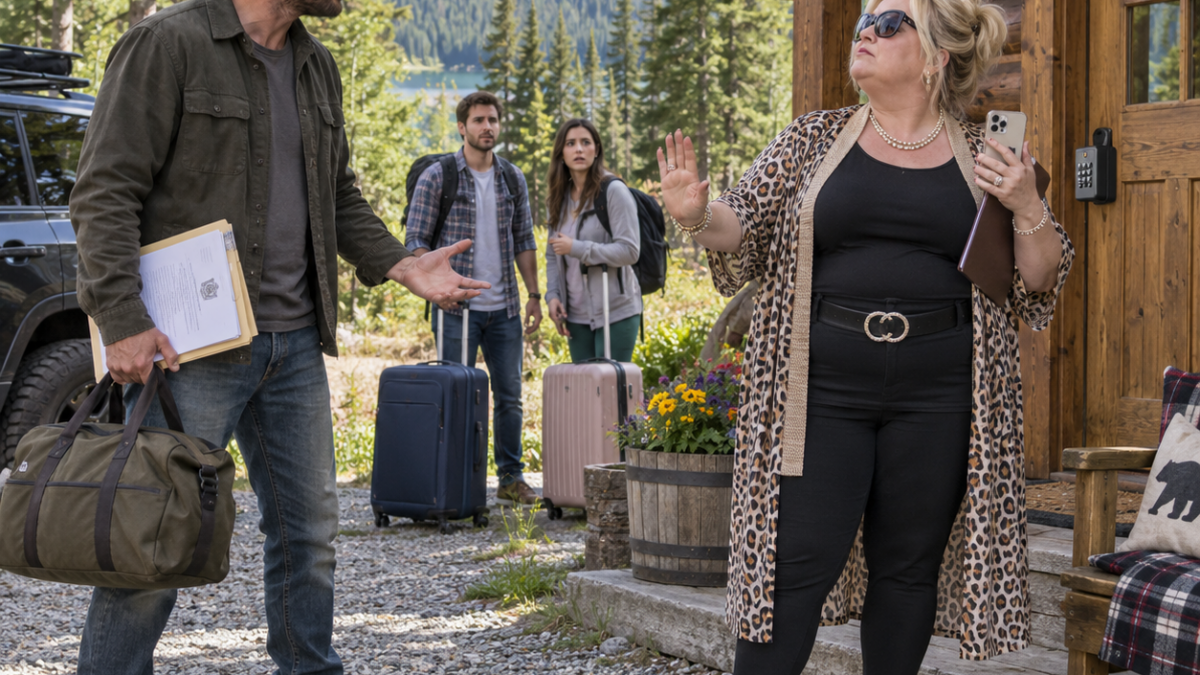
PART 2
The moment Karen’s golf cart disappeared from my rearview mirror, the calm left me.
My hands tightened around the steering wheel until my knuckles went white.
I had spent ten years learning how to control adrenaline.
How to breathe when noise and confusion were trying to make decisions for you.
How to separate anger from action.
But nothing in the Marines had prepared me for seeing tourists sitting on the porch where my grandfather used to drink black coffee before sunrise.
Nothing prepared me for hearing a stranger tell me I would receive “my share” of my own inheritance.
I pulled onto a gravel turnout halfway down the mountain.
Killed the engine.
And sat there.
Gunny’s ashes were in a plain walnut box on the passenger seat.
I put one hand on the lid.
“I’m sorry,” I said.
The words came out before I realized I was speaking.
“I should’ve gotten here sooner.”
The rational part of me knew that was nonsense.
The estate took time.
There had been paperwork.
My discharge.
Travel.
Funeral arrangements.
Probate.
None of that mattered emotionally.
What mattered was that while I had been handling the end of my grandfather’s life, someone had walked into his home and turned it into a mountain vacation package.
I reached into the center console and pulled out his compass.
The brass case was dented near the hinge.
The glass had one thin scratch across it.
I could still hear him.
**Never fight angry, Jake. Angry men make expensive mistakes.**
I breathed until my hands stopped shaking.
Then I drove into Pine Ridge.
The Pine Ridge Inn was the kind of motel that probably looked exactly the same in 1987.
Two floors.
Brown doors.
An ice machine that sounded like farm equipment.
A faded sign promising color television and free Wi-Fi.
I rented a room for a week.
The clerk slid the key card toward me.
“Vacation?”
“No.”
I looked toward the mountain through the lobby window.
“Property dispute.”
She made a face.
“Up at Creekwood?”
I looked back at her.
“How’d you know?”
She shrugged.
“Most property disputes are.”
That told me something.
I carried my duffel inside, set Gunny’s ashes on the dresser, opened my laptop, and called the one person who knew every inch of the legal history of that cabin.
Mr. Charles Abernathy answered after two rings.
“Jake?”
“Yeah.”
“You make it?”
“Sort of.”
He heard something in my voice.
“What happened?”
I told him.
The tourists.
Airbnb.
Karen.
The fines.
The so-called protective custody provision.
For ten seconds he said nothing.
Then the seventy-three-year-old attorney delivered a string of profanity so inventive that I wrote down two of the phrases for future use.
When he finished, he said, “She rented Thomas’s cabin?”
“Yes.”
“To tourists?”
“Yes.”
“She actually stood there and admitted it?”
“Yes.”
“Did you record her?”
“No.”
“Damn.”
“I took pictures.”
“Good.”
“She claims the HOA has an abandonment clause.”
“She claims unicorns file tax returns too?”
I almost smiled.
“Abernathy.”
“Jake, listen carefully. Your grandfather’s parcel predates that development. The HOA has limited road-maintenance authority because of an agreement Thomas signed years ago, but his land was never fully annexed into their declaration.”
I sat straighter.
“Say that again.”
“He paid toward private road maintenance. That did not give them ownership rights. It did not give them the right to seize his house. It certainly did not give them the right to operate a vacation rental.”
“What about liens?”
“For legitimate contractual assessments, possibly. But possession? No.”
He was getting angrier again.
“Thomas fought with them for years because they kept pretending their authority extended farther than it did.”
“Karen says the cabin was abandoned ninety days after he died.”
“That isn’t how inheritance works.”
“So this is illegal?”
“Almost certainly, yes. But I don’t want you marching back there tonight.”
“I wasn’t planning to.”
“You were thinking about it.”
I looked at the keys on the desk.
“Maybe.”
“Don’t.”
His voice softened.
“Your grandfather beat Karen by never giving her the mistake she wanted. You do the same.”
I remembered Karen threatening to have me arrested.
“She wants me angry.”
“Exactly.”
“So what first?”
“Evidence.”
That word settled me.
Evidence I understood.
“Send me everything you have,” Abernathy continued. “Photos. Notices. Names. And find the rental listing before she realizes she needs to delete it.”
I opened a browser.
Thirty seconds later, I found the cabin.
My breath caught.
**THE EAGLE’S NEST MOUNTAIN RETREAT**
I had to read the title twice.
Eagle’s Nest was Gunny’s name for the property.
Never official.
Never recorded.
Something private.
Something he used when I was a kid.
“Found it,” I said.
“What?”
“She used his name.”
“Screenshot everything.”
I clicked through the photos.
The living room.
The kitchen.
The porch.
The upstairs loft where I slept as a boy.
The creek.
The firepit.
The old wooden dining table Gunny built.
Then I reached a picture of the fireplace.
And stopped.
On the mantel sat my grandfather’s military display.
Purple Heart.
Bronze Star.
Good Conduct Medals.
Unit insignia.
Photographs.
His service ribbons.
All arranged beside a ceramic bear and fake pine branches like rustic decorations in a themed hotel.
My throat closed.
“Jake?”
“She put his medals in the listing.”
Abernathy went quiet.
“What?”
“They’re on the mantel.”
“Save it.”
“I am.”
“Do not go up there tonight.”
I took screenshots of every image.
Every review.
Every available date.
Every host response.
Karen’s profile picture showed her standing outside the Creekwood clubhouse wearing a cardigan and the same expression she’d used while explaining that I would receive a share of my own money.
The listing described the property as:
**A lovingly maintained community mountain retreat managed by Creekwood Estates.**
Community.
I opened the booking calendar.
Nearly every weekend for the next four months was taken.
Many weekdays too.
Thanksgiving.
Christmas week.
New Year’s.
I pulled out a calculator.
“Charlie.”
“Yeah?”
“She has this place booked constantly.”
“How much?”
“Nightly rate is three-twenty-five. Higher on holidays.”
“How long has the listing been active?”
I found the earliest review.
“Almost three months.”
“Start documenting reviews.”
I did.
Guests praised Karen by name.
**Karen was a wonderful host.**
**Easy check-in.**
**Beautiful private cabin.**
**Perfect romantic getaway.**
One review thanked her for delivering extra firewood.
Another said she had accepted a cleaning fee in cash.
That interested me.
I saved everything.
Then I opened the county clerk’s online records.
I downloaded the officially recorded Creekwood covenants.
Karen had quoted “Article 14, Section 3.”
There was an Article 14.
It concerned common-area insurance.
No Section 3 about abandoned property.
No protective custody.
No rental pool.
No authority to seize homes after an owner’s death.
Nothing remotely close.
I called Abernathy back.
“She invented it.”
“I know.”
“No, I mean literally. The clause doesn’t exist.”
A dry laugh.
“Welcome to Thomas Miller’s last fifteen years.”
“What did Gunny call her?”
“The Creekwood Coven.”
Despite everything, I laughed.
“He never told me that.”
“He didn’t want you worrying while you were overseas.”
That hit harder than expected.
I stared at the Airbnb picture of his medals.
“How long was he fighting them?”
“On and off for years. Roof color. Flagpole. Driveway gravel. Firewood stacked where Karen could see it.”
“But she couldn’t enforce those rules.”
“Thomas knew that.”
“So did Karen?”
“She should have.”
I leaned back.
“She was waiting for him to die.”
Abernathy didn’t answer immediately.
“I wouldn’t put that in writing without evidence.”
“But you’re thinking it.”
“I’m thinking she saw an opportunity.”
That was enough.
The following morning, I drove to his office.
Abernathy practiced law out of a converted Victorian house that smelled like paper, coffee, and old wood.
He had represented Gunny for almost forty years.
When I walked into his conference room, he had already spread maps and documents across the table.
“Sit.”
I sat.
He slid a deed toward me.
“Original purchase. 1978.”
Another.
“Road-maintenance agreement from 1996.”
Another.
“Creekwood incorporation documents.”
He tapped the map.
“Your grandfather’s forty acres sit adjacent to the original subdivision boundary. This road crosses a private easement, and Thomas agreed to contribute to upkeep because he used it.”
“But his property never joined the HOA.”
“Correct.”
“Then why did Karen send violations?”
“Because Thomas usually threw them away.”
I stared at him.
“What?”
Abernathy smiled.
“Sometimes he mailed them back with corrections.”
“That sounds like him.”
“One year she fined him for having an American flag that was too large.”
“What happened?”
“He sent her a photocopy of the flag code and a note that said, ‘Find a hobby.’”
I laughed despite myself.
“God, I miss him.”
Abernathy’s expression softened.
“So do I.”
For a moment, the case disappeared.
We were just two men missing the same stubborn old Marine.
Then Abernathy pushed a legal pad toward me.
“We do this correctly.”
“What do you recommend?”
“Cease-and-desist first. Demand termination of rental activity, return of keys, preservation of records, accounting of income, return of personal property.”
“And if she refuses?”
“Civil filing. Injunction. Accounting claim. Conversion. Possibly trespass. Depending on what the evidence shows, we refer the financial side to law enforcement.”
“What about the current renters?”
“Airbnb needs notice that the host may lack authority.”
“I don’t want innocent families showing up.”
“Then we’ll send notice.”
We worked for three hours.
The letter Abernathy produced was devastating because it wasn’t dramatic.
No insults.
No threats about ruining anyone.
Just facts.
**The property located at 14 Eagle Ridge Road is privately owned by Jacob Miller pursuant to recorded deed…**
**Creekwood Estates HOA has no ownership or possessory interest…**
**Any continued short-term rental activity following receipt of this notice will be considered knowing interference with the owner’s property rights…**
Three demands.
Stop all rentals within seventy-two hours.
Return all keys, access codes, and personal property.
Provide a complete accounting of every dollar collected.
“Certified mail?” I asked.
“Yes.”
“Can I also serve her at the board meeting?”
Abernathy studied me.
“Why?”
“Because she used public authority to justify what she did.”
“So?”
“People should know.”
He leaned back.
“You’re thinking tactically.”
“Always.”
“You’re also thinking emotionally.”
“Probably.”
He considered it.
“Public service isn’t illegal. But you remain calm.”
“I will.”
“No threats.”
“I know.”
“No Marine speeches.”
“I wasn’t planning one.”
He raised an eyebrow.
“Jake.”
“Fine.”
Wednesday evening, I drove back up the mountain.
The Creekwood clubhouse was a low prefab building with brown siding and a fake stone façade.
Twenty-three people sat inside.
Karen was at the front.
Pastel blue this time.
A binder open before her.
I slipped into the back row.
She was discussing mailbox posts.
Specifically whether a resident’s new mailbox leaned approximately three degrees away from vertical.
I sat there listening to a grown woman discuss the moral crisis of a crooked mailbox while she was illegally renting my grandfather’s house.
The absurdity almost broke me.
Then Karen saw me.
Her mouth tightened.
She finished her ruling.
“Moving on.”
I stood.
“Actually, before you do.”
Karen raised her gavel.
“You are not recognized.”
“I don’t need recognition to serve legal notice.”
The room became quiet.
I walked forward.
Each step sounded too loud on the linoleum.
I placed the envelope on the table.
“Karen Miller, you’ve been served with formal notice regarding 14 Eagle Ridge Road.”
Her eyes dropped to it.
I continued.
“You are required to stop advertising or renting the property, return all keys and personal property, and provide a complete accounting of money collected through unauthorized rentals.”
Her face reddened.
“This is inappropriate.”
“No.”
“It is.”
She looked toward the board.
“This is private litigation.”
I turned toward the homeowners.
“My name is Jake Miller.”
Several older residents immediately recognized the surname.
“Thomas Miller was my grandfather.”
Whispers.
“The cabin known as Eagle’s Nest belongs to me. The HOA has been renting it to tourists without permission.”
The room erupted.
Karen struck the gavel.
“Order!”
I didn’t raise my voice.
“She cited an HOA provision that doesn’t exist. My grandfather’s parcel was never fully annexed into this association. My attorney has demanded the rentals stop.”
Karen stood.
“That is a gross mischaracterization!”
I looked at her.
“Then answer the letter.”
“You’re trying to intimidate this board.”
“No. I’m trying to get my house back.”
A woman in the second row covered her mouth.
An older man shook his head.
Karen grabbed the envelope.
“You will leave immediately.”
I nodded.
“Gladly.”
I turned.
“Jake.”
The voice came from the audience.
A tall man in his seventies stood.
Straight back.
White hair.
Marine haircut that never fully left.
“Bill Jensen.”
I recognized the name from Gunny’s Christmas cards.
“Colonel?”
“Retired.”
He shook my hand.
“Your grandfather was a good man.”
“Thank you.”
Karen hammered the gavel.
“This meeting will come to order!”
Bill didn’t sit.
“Did you rent Thomas’s cabin?”
Karen glared at him.
“We are not discussing pending legal matters.”
“That’s a yes.”
The room murmured again.
I walked out.
A woman followed me.
“Mr. Miller?”
I turned.
She was tiny, maybe seventy, wearing a knitted purple sweater.
“I’m Eleanor Gable.”
“Ma’am.”
“Your grandfather fixed my garden fence twice.”
I smiled.
“He liked fixing things.”
Her eyes filled.
“He never charged me.”
“That sounds like him.”
She hesitated.
Then whispered:
“Karen put a lien notice on my house.”
“For what?”
“My birdbath.”
I thought I’d misheard.
“The birdbath was two inches taller than the revised landscape guideline.”
“How much?”
“By the time I paid the fines and fees, almost two thousand dollars.”
My anger returned.
Another man walked out.
Colonel Jensen.
“That woman has been terrorizing this mountain for years,” he said.
Eleanor looked frightened.
“Bill.”
“What? It’s true.”
He turned to me.
“If you’re fighting her, you’re not alone.”
I looked from him to Eleanor.
That was the moment the dispute widened.
Karen had taken my cabin.
But she had built her power by taking smaller pieces from everyone else.
Money.
Time.
Sleep.
Dignity.
Confidence.
The seventy-two-hour deadline expired.
The Airbnb listing stayed active.
Karen didn’t return the keys.
Didn’t provide records.
Didn’t answer Abernathy.
Instead, I received an HOA fine.
Five hundred dollars.
Reason:
**Conduct unbecoming a community member and unauthorized disruptive statements at an official meeting.**
I stared at it for almost a minute.
Then photographed it and sent it to Abernathy.
He called immediately.
“She fined you for serving legal notice?”
“Apparently.”
“On property that isn’t fully subject to her enforcement rules?”
“Apparently.”
A long silence.
Then:
“I am going to enjoy discovery.”
Two days later, another notice appeared under my truck’s windshield wiper at the motel.
**Commercial vehicle parked in prohibited guest area.**
Two hundred dollars.
My Ford F-150.
At a motel twelve miles outside Creekwood.
Karen was no longer enforcing anything.
She was improvising intimidation.
I photographed that too.
Then came the newsletter.
Colonel Jensen forwarded it.
**COMMUNITY SECURITY ADVISORY**
The message warned residents about a “disruptive outsider” spreading false claims regarding HOA leadership.
It accused the unnamed person of refusing inherited obligations.
It described challenges to the board as threats to “peace, harmony, and property values.”
Eleanor called me crying.
“She means you.”
“I know.”
“She’ll turn people against you.”
“Maybe.”
“You don’t understand.”
Her voice dropped.
“She makes examples of people.”
I looked at the growing evidence file on the motel desk.
“I think that’s what she’s trying to do.”
That night, just before midnight, my phone rang from a blocked number.
I answered.
Silence.
Then breathing.
Slow.
Deliberate.
No words.
Thirty seconds.
Then the line disconnected.
I sat in the darkness.
Not frightened.
Disgusted.
I saved the call information.
The next morning, Abernathy said one thing:
“She is getting sloppy.”
We filed the civil complaint.
But he wanted more than a lawsuit.
He wanted clear evidence that Karen personally knew she lacked authority and continued taking money anyway.
The solution arrived accidentally.
An Airbnb cancellation.
Friday through Sunday.
The Eagle’s Nest was suddenly available.
I stared at the calendar.
Then called a man I hadn’t spoken to in almost a year.
Marcus Cole answered:
“If this is you asking me to help move furniture, I’m hanging up.”
“Worse.”
“How much worse?”
“HOA president stole my grandfather’s cabin.”
Silence.
Then laughter.
Not because it was funny.
Because Marcus had a dark sense of humor.
“Start over.”
I explained.
Marcus and I had served together.
After leaving the Marines, he’d started a licensed private-investigation and security company.
He was smart enough to know what could and couldn’t be done legally.
“Can you document a rental check-in?” I asked.
“You’ve got counsel involved?”
“Yes.”
“Property owner consent?”
“Me.”
“Law enforcement aware?”
“Not yet.”
“Then get them aware.”
Abernathy contacted Sheriff Frank Garrison.
The sheriff had known Gunny.
That helped get his attention.
Not special treatment.
Attention.
We met in a diner Saturday morning.
Sheriff Garrison looked through the evidence.
The deed.
HOA documents.
Airbnb listing.
Cease-and-desist receipt.
Continued bookings.
The invented violation.
The threatening call record.
He closed the folder.
“This woman actually rented your place after being formally told to stop?”
“Yes.”
“Upcoming booking?”
“Today.”
“Your investigator is the guest?”
“Marcus is.”
The sheriff frowned.
“Don’t turn this into some television sting.”
“We won’t.”
“If your investigator lawfully books the property, he can document his own transaction. But no baiting somebody into committing a crime they weren’t otherwise going to commit.”
“Understood.”
“I can send a deputy for a civil standby when you retake possession if counsel confirms the ownership documents.”
Abernathy nodded.
“I’ll provide everything.”
Marcus booked the cabin under his own company travel account with an associate named Elena Diaz.
No fake identity.
No spy movie nonsense.
Just a normal reservation.
Karen accepted within six minutes.
**Looking forward to hosting you at Eagle’s Nest!**
I read the message three times.
Even after formal notice.
Even after the lawsuit filing.
She was still doing it.
Check-in was 2:00.
At 1:55, Marcus drove up.
I waited down the mountain with Abernathy and a deputy.
Marcus had a body camera, legal under the circumstances as advised by counsel, and Diaz kept written notes.
At 2:04, my phone buzzed.
**She’s here.**
At 2:11:
**Keys delivered.**
At 2:13:
**She described herself as the manager.**
Then:
**Asked us for $150 cleaning fee. Cash or electronic.**
Abernathy looked at me.
“Let them choose normally.”
Marcus paid electronically.
Better record.
At 2:19:
**Payment confirmed. She left.**
We drove up.
My truck turned onto the gravel road I’d traveled hundreds of times as a child.
The pines leaned over it.
The creek flashed through the trees.
Then the cabin appeared.
Marcus stood on the porch.
He didn’t smile.
He simply held the door open.
“Welcome home, brother.”
I stopped.
For ten years, through deployments, injuries, funerals, bad nights, and worse mornings, I had pictured this doorway.
Gunny standing inside.
Coffee in one hand.
Calling me soft because I wore expensive hiking boots.
Instead, the house smelled like artificial lemon cleaner.
The living room furniture had been rearranged.
Someone had mounted a smart television on the wall.
Printed checkout instructions sat on the dining table.
**STRIP BEDDING BEFORE DEPARTURE.**
**REMOVE ALL TRASH.**
**QUIET HOURS 10 PM.**
I wanted to rip every page apart.
I didn’t.
“Photograph everything,” Abernathy said.
Marcus and Diaz began room-by-room documentation.
I went to the fireplace.
The mantel was nearly empty.
A fake plant.
A ceramic bear.
A guest book.
No medals.
The display case sat inside a linen closet.
Empty.
My heart started pounding.
“Marcus.”
He came over.
“They’re gone.”
“What?”
“Gunny’s medals.”
He looked at the case.
“Were they definitely here?”
I pulled up the Airbnb screenshot.
There they were.
Purple Heart.
Bronze Star.
Service ribbons.
Photographed on the mantel.
Marcus’s expression hardened.
“We document it.”
I picked up the empty case.
My hands shook.
The cabin theft had been about ownership.
This was different.
Those medals were not decorations.
I remembered being eight years old, asking Gunny why he never wore them.
He had shrugged.
“Metal doesn’t make the man.”
Yet when I left for boot camp, I’d found him polishing that Bronze Star at the kitchen table.
Not because he loved awards.
Because it reminded him of men who never came home.
I walked onto the porch.
Deputy Harris stood near the driveway.
“What happened?”
“Military medals missing.”
“Known to have been here?”
I showed him the screenshot.
He became serious.
“I’ll note it.”
Then we heard a golf cart.
Fast.
Karen came around the bend like she was entering a race.
Gravel sprayed.
She stopped sideways in the drive.
For one instant, she didn’t see the deputy.
She saw me.
“What are you doing here?”
I held the empty medal case.
“This is my house.”
“I have paying guests!”
Marcus stepped forward.
“I’m one of them.”
Karen froze.
He continued.
“I booked through your account.”
Her face changed.
Then she saw Abernathy.
Then Deputy Harris.
All the confidence went out of her posture.
Not completely.
Karen had spent years surviving by doubling down.
She did it again.
“This is harassment!”
Deputy Harris stepped forward.
“Ma’am, lower your voice.”
“You need to remove him!”
She pointed at me.
“He is interfering with a contractual rental!”
The deputy looked toward me.
Then Karen.
“Who owns the property?”
“The HOA manages—”
“Who owns it?”
Karen hesitated.
“His grandfather was delinquent.”
Abernathy held up the recorded deed.
“Jacob Miller is the current recorded owner.”
Karen’s lips tightened.
“This is a civil matter.”
“Then stop trying to have the owner removed,” the deputy said.
She turned on Abernathy.
“You have no right to bring police here.”
“Actually,” he said, “we requested a civil standby because you continued renting disputed property after receiving written notice.”
Karen looked at Marcus.
“You’re not really guests.”
Marcus held up his phone.
“Reservation says otherwise.”
Her eyes darted around.
I raised the empty display case.
“Where are my grandfather’s medals?”
That landed.
For less than a second, Karen looked toward the golf cart.
Tiny movement.
Most people wouldn’t notice.
I did.
“I don’t know anything about medals.”
“They were photographed in your listing.”
“You’re accusing me of stealing?”
“I’m asking where they are.”
“They could’ve been taken by guests.”
“Then where are your inventory reports?”
“What?”
“You said you were managing the property.”
Her face flushed.
“You don’t get to interrogate me.”
“No.”
I looked at Deputy Harris.
“I get to report missing property.”
The deputy nodded.
“I’ll take the report.”
Karen’s breathing quickened.
“This is ridiculous.”
A Buick came up the drive.
Colonel Jensen.
Behind him, Eleanor Gable.
I hadn’t invited them.
Apparently word traveled faster than any communications system I’d ever worked with.
Jensen got out.
He took one look at the empty medal case.
His face became stone.
“Where are Tom’s medals?”
Karen threw up her hands.
“Oh, for God’s sake.”
Wrong answer.
Jensen walked toward her.
Not threatening.
Just straight.
“You displayed that man’s decorations like tourist props?”
“They were part of the cabin.”
“They were his.”
“Colonel,” I said.
He stopped.
Eleanor stood beside her car.
She looked at Karen differently than she had at the meeting.
No fear.
“I paid you two thousand dollars because you told me I could lose my home.”
Karen looked at her.
“This isn’t about you, Eleanor.”
“That was the problem.”
Karen blinked.
Eleanor continued.
“You always decided who something was about.”
Abernathy stepped forward.
“Karen, the civil complaint has been filed. You’ll be served formally. All rental proceeds and records related to this property are subject to discovery.”
“This is extortion.”
“No.”
He adjusted his glasses.
“This is litigation.”
Deputy Harris asked Karen to leave the property.
She refused at first.
Then threatened lawsuits.
Then fines.
Then demanded the deputy call his supervisor.
Finally, when he explained that Jake—the recorded owner—was asking her to leave and she had no demonstrated possessory right, she climbed into her golf cart.
Before driving away, she pointed at me.
“You will regret this.”
I looked at her.
“Return the medals.”
She drove off.
That evening, Colonel Jensen called an emergency HOA meeting under the association’s bylaws.
This time the clubhouse overflowed.
People stood outside the doors.
Karen arrived with an attorney.
Not the usual HOA lawyer.
Personal counsel.
That alone told everyone the situation had changed.
The vice president called the meeting.
Jensen stood.
“I move for an immediate vote to suspend President Karen Miller pending investigation into unauthorized use of private property and financial activity conducted in the association’s name.”
Karen’s attorney objected.
The homeowners shouted him down until Jensen raised one hand.
“Quiet.”
Remarkably, they became quiet.
He looked at the room.
“We are not a mob.”
Then he looked at Karen.
“And we are not subjects.”
Eleanor spoke.
She told them about the birdbath fine.
Another homeowner described a lien threat over an RV parked overnight while his brother recovered from surgery.
A widow described being fined because her trash cans stayed curbside while she was in the hospital.
A father talked about receiving violation notices after he criticized Karen’s landscaping contract.
Then Abernathy spoke—not as HOA counsel, but as my attorney.
He explained only what the documents showed.
Recorded ownership.
Limited road agreement.
No abandonment clause.
Airbnb listing.
Written cease-and-desist.
Continued rental afterward.
He did not call Karen a thief.
He didn’t have to.
When the vote came, even the two board members who had spent years sitting silently beside her voted for suspension.
Karen stood.
“You cannot do this.”
Jensen answered.
“We just did.”
She looked around the room.
People she had fined.
Threatened.
Lectured.
Ignored.
Nobody came to her defense.
She walked out.
Not defeated yet.
But no longer protected by the title she’d used as armor.
The legal process took months.
Real justice often does.
There was no dramatic next-morning courtroom.
No judge immediately slamming a gavel.
There were depositions.
Subpoenas.
Bank records.
Airbnb account records.
Maintenance invoices.
Cleaning receipts.
Tax documents.
Emails.
Text messages.
Spreadsheets.
The kind of evidence that doesn’t look exciting but quietly destroys lies.
The Airbnb records were devastating.
Karen had first listed the cabin twelve days after Gunny’s funeral.
Twelve days.
Not ninety.
That fact made me physically ill.
Her entire “abandoned for ninety days” story collapsed.
She had begun preparing the listing while the estate was still being processed.
Photos had been taken before I even received final probate paperwork.
Rental income had been directed into an account controlled through an HOA-associated management arrangement.
From there, funds had been used for a mixture of claimed expenses, HOA accounts, and transfers that the forensic accountant couldn’t reconcile cleanly.
The total gross rental income was far higher than Karen had suggested.
More importantly, no legitimate board authorization existed for taking possession of Eagle’s Nest.
There were no proper minutes approving it.
No recorded lien authorizing possession.
No court order.
No lease.
No agreement signed by Gunny.
Nothing.
Karen’s invented Article 14 Section 3 appeared only in a customized binder she’d used during enforcement.
When the actual HOA secretary was asked where that language came from, she said:
“I assumed Karen had gotten it from counsel.”
Counsel denied ever drafting it.
The fake provision was one of the most damaging discoveries.
Then investigators looked into other homeowners’ complaints.
Patterns emerged.
Not every fine was fraudulent.
Some people genuinely violated valid rules.
But Karen had frequently stretched rules far beyond their written meaning.
Late fees compounded rapidly.
Hearing rights were inconsistently explained.
Threats of liens appeared in letters for disputes far too preliminary to justify the tone.
People paid because fighting cost time and money.
Eleanor’s birdbath case became symbolic.
The original fine had been $75.
After disputed administrative charges, legal letters, and late fees, she had paid nearly two thousand dollars just to make the problem disappear.
“How did you sleep at night?” she asked Karen during a deposition break.
Abernathy gently stopped her.
But Karen answered anyway.
“They could’ve appealed.”
Eleanor stared.
“I did.”
Karen said nothing.
Meanwhile, the medals remained missing.
That ate at me more than the money.
I could rebuild the cabin.
Money could be repaid.
But Gunny’s medals were irreplaceable.
Yes, replacement medals could be ordered.
That wasn’t the point.
Those had been his.
Touched by him.
Stored in the same cedar box for decades.
One evening, months into the case, I sat alone in the cabin.
I had moved back permanently.
Most of the Airbnb décor was gone.
I found Gunny’s old curtains packed in a storage shed.
His cast-iron pans had been moved to the basement.
His rocking chair had been placed in the attic because Karen apparently considered it “too worn” for guests.
I brought everything back.
Slowly.
I wasn’t restoring a museum.
I was removing the feeling of being a hotel.
That night, I put his ashes on the mantel beside the empty medal case.
“You always said medals didn’t matter,” I told him.
The fire popped.
“But you also never threw them away.”
I poured whiskey into one of his old glasses.
For the first time since he died, I cried.
Not quietly.
Not elegantly.
I sat in his chair and cried like the boy who had lost the only man who ever made him feel completely safe.
When it passed, I slept better than I had in months.
Three days later, Abernathy called.
“They found them.”
I stood so fast the chair hit the wall.
“What?”
“The medals.”
“Where?”
“Karen’s attorney contacted us.”
“Why?”
“Settlement discussions.”
My voice went cold.
“She had them.”
“Apparently.”
“Where?”
“Jake.”
“Where?”
“In her home.”
I closed my eyes.
Sheriff Garrison had been right.
Trophies.
She had taken them.
Whether she intended to keep them permanently or believed they belonged to the “managed” cabin inventory didn’t matter to me emotionally.
She had removed a dead Marine’s medals from his house and kept them in hers.
“When do I get them?”
“Tomorrow.”
I barely slept.
At ten the next morning, I sat in Abernathy’s office.
A cardboard box waited on the conference table.
No ceremony.
No dramatic music.
I opened it.
Bubble wrap.
Then velvet.
Purple Heart.
Bronze Star.
Good Conduct Medal.
Vietnam service decorations.
Unit ribbons.
His old rifle qualification badge.
Everything.
I picked up the Bronze Star.
The metal was cool.
I remembered being nine years old.
“Did you get that for being brave?”
Gunny had snorted.
“I got it because other men were braver.”
I had never understood what he meant.
Now I did.
Abernathy sat quietly.
After several minutes, I said:
“I don’t care how much money she pays me.”
“I know.”
“I want this part in the settlement.”
“What part?”
“She admits the medals were mine. No ambiguity. No claim they were HOA property.”
“We can demand acknowledgment of return.”
“And she never comes onto the forty acres again.”
“We can demand a no-entry provision.”
“And every key.”
“Yes.”
“And the rental account records.”
“Already have them.”
I looked at the medals.
“And the renters?”
“What about them?”
“Some of them paid deposits for future stays.”
“We’ll make sure they’re refunded.”
That mattered.
They weren’t the enemy.
Most had no idea.
One family even sent me an apology through Airbnb.
I wrote back.
**You did nothing wrong.**
Because they hadn’t.
Karen had made everyone collateral damage.
The final settlement took another six weeks.
It did not give me everything anger wanted.
No public confession broadcast across the state.
No dramatic prison sentence.
No judge ordering Karen to stand in front of the neighborhood and apologize.
Real settlements aren’t morality plays.
But it gave me what mattered.
Every dollar of net rental proceeds attributable to Eagle’s Nest was returned.
Additional damages compensated for unauthorized use, personal property loss, legal expenses, and documented harm.
The HOA’s insurance covered certain portions connected to board conduct; Karen was personally responsible for others under the negotiated terms.
The medals were formally acknowledged as my property.
All keys were returned.
Karen agreed to stay off the property.
The HOA disclaimed any ownership or rental authority over Eagle’s Nest.
The fake abandonment provision was formally rejected as unauthorized.
And, because the financial investigation went beyond my private case, the association established a process for reviewing questionable fines and charges imposed during Karen’s presidency.
Dozens of homeowners filed claims.
Eleanor was first.
Colonel Jensen drove her to the clubhouse.
When she received her reimbursement check, she didn’t celebrate.
She stared at it.
Then said:
“I wish my husband were here.”
I hadn’t known.
“What happened?”
“Cancer. Two years ago.”
She folded the check.
“He wanted to fight Karen. I told him it wasn’t worth the stress.”
Her eyes filled.
“He died thinking we should’ve fought.”
I didn’t know what to say.
She looked at me.
“So I’m putting this into the garden.”
“All of it?”
“Yes.”
“What are you planting?”
“Something too tall.”
I laughed.
She did too.
That was the first time I saw Eleanor laugh.
The HOA scheduled elections.
Jensen was asked to run for president.
He resisted for approximately eleven minutes.
Then accepted.
His campaign consisted of one sentence:
**If elected, I promise to make this job as boring as possible.**
He won overwhelmingly.
At the first meeting, he placed the massive HOA rule binder on the table.
Then he placed the actual recorded covenants beside it.
“First order of business,” he said. “We stop pretending these are the same thing.”
The review took months.
Some rules stayed.
Fire safety mattered.
Road access mattered.
Drainage mattered.
Wildfire mitigation mattered a lot in the mountains.
But subjective nonsense disappeared.
“Aesthetically discordant” was removed.
The birdbath height rule disappeared.
Decorative restrictions were simplified.
Fine authority moved from one person to a committee.
No penalty above a modest amount could be imposed without a hearing.
Lien threats required legal review.
Board members had to disclose conflicts.
Financial statements became accessible online.
Major contracts required bids.
Meeting minutes recorded actual votes.
And my favorite reform:
No HOA official could enter private property without permission except in narrowly defined emergencies or where a recorded agreement explicitly allowed it.
Jensen looked at me during the vote.
“Any objections?”
I raised my hand.
The room turned.
“I’d like to amend it.”
His eyebrow lifted.
“To say what?”
“No pink golf carts.”
The clubhouse exploded in laughter.
Even Jensen lost composure.
“Motion denied.”
I joined the board reluctantly.
Jensen wanted me on architectural review.
I stared at him.
“You’re joking.”
“Absolutely not.”
“The committee that harassed my grandfather?”
“Exactly.”
“Why me?”
“Because you’ll hate the job enough to limit its power.”
He had a point.
At my first meeting, I proposed reducing the committee’s authority to structural safety, drainage, wildfire requirements, and clearly defined common-impact issues.
A homeowner asked:
“What about paint color?”
“What about it?”
“Well, don’t we need approved colors?”
I looked around the room.
“Do any of us own the side of somebody else’s house?”
Silence.
Jensen smiled.
The motion passed.
Life on the mountain changed slowly.
Fear doesn’t disappear because a board vote says it should.
For months, residents still lowered their voices when discussing HOA issues.
People asked permission for things that no longer required permission.
Eleanor submitted an application for her new garden fence.
I called her.
“You don’t need approval for that anymore.”
“You’re sure?”
“Yes.”
“What if somebody complains?”
“Then I’ll tell them it’s your fence.”
She laughed nervously.
A year earlier, that laugh would have been fear.
Now it sounded like someone learning freedom.
The Airbnb listing disappeared permanently.
For several weeks, strangers still arrived.
Bookings made before the shutdown.
People pulled into my driveway with suitcases and confusion.
I kept printed information in the mudroom.
“I’m sorry,” I’d tell them. “The prior host wasn’t authorized.”
Most were angry.
Some were embarrassed.
One couple had planned an anniversary trip.
I felt terrible.
I helped them find another cabin.
Another family had driven nine hours.
I let them use my phone when their service dropped.
None of that was legally my responsibility.
But Gunny believed hospitality wasn’t a transaction.
“You don’t punish guests because the host lied,” he used to say.
Eventually, the bookings stopped.
The quiet returned.
One morning I woke before sunrise.
No tourists.
No legal calls.
No certified letters.
Just wind in pine branches.
I made coffee.
Sat on the porch.
And watched fog lift from the creek.
That was the first morning the cabin felt like mine.
Not because the deed said so.
Because nobody was trying to take it.
I began deciding what to do with Gunny’s ashes.
For months I’d avoided the question.
Part of me wanted to scatter them across the ridge.
Another part wanted them beside the creek.
Finally, I found a letter.
It was tucked inside an old field manual.
My name was written on the envelope.
**JAKE — WHEN I’M DONE ARGUING WITH EVERYBODY**
That was Gunny.
I sat at the kitchen table and opened it.
The handwriting was shaky.
He must have written it near the end.
**Kid,**
**If you’re reading this, congratulations. You finally got the cabin without having to listen to me complain about property taxes.**
I laughed.
Then kept reading.
**Don’t turn this place into a shrine. Live here or sell it. I mean that. A house nobody lives in becomes a coffin with windows.**
I stopped.
Karen had almost turned it into the opposite.
A business with no soul.
Gunny continued.
**If you keep it, keep the creek clean, don’t cut the big pine behind the shed, and help Eleanor with her fence if I’m not around. She’ll pretend she doesn’t need help.**
I wiped my eyes.
**As for me, put a little of my ashes by your grandmother on the south ridge. The rest can go in the creek if it’s legal. Check before you do anything stupid.**
Classic Gunny.
Then the last part.
**You spent enough years fighting other people’s wars. Don’t make a war out of the rest of your life. Find something worth building.**
I read that line repeatedly.
**Find something worth building.**
For months, I’d defined the cabin by what I had fought to recover.
But Gunny didn’t want my life to become an endless defense perimeter.
So I started building.
Literally, at first.
The old woodshed leaned ten degrees downhill.
Colonel Jensen helped me straighten it.
He was terrible with a level but excellent at giving orders.
“You know,” I told him, “retirement hasn’t softened your command style.”
“Your generation needs guidance.”
“You’re twelve years older than me.”
“Exactly.”
Eleanor replanted the edge of her yard.
Her new garden included sunflowers.
Huge ones.
Some grew eight feet tall.
One Saturday, she called.
“Jake?”
“Yeah?”
“I think I may be aesthetically discordant.”
I laughed.
“Congratulations.”
The community organized a wildfire-prevention weekend.
People cleared dead brush.
Repaired culverts.
Marked emergency water points.
Things an HOA actually could help coordinate.
No threats.
No fines.
Just neighbors working.
I brought my chainsaw.
Jensen brought a clipboard.
“You’re becoming Karen,” I told him.
He threw a work glove at me.
The biggest surprise came from Marcus.
He visited six months after everything ended.
We sat beside the creek.
“You staying?” he asked.
“Looks that way.”
“What about work?”
“I can consult remotely.”
“You? Civilian consultant?”
“Try not to sound horrified.”
“What’s the plan?”
I looked toward the cabin.
“Not sure.”
He nodded toward the porch.
“Ever thought about veterans retreats?”
I looked at him.
“What?”
“Not Airbnb.”
He grinned.
“Relax.”
“Bad choice of words.”
“I’m serious. Short stays. Guys coming out. Need somewhere quiet. Fishing. Hiking. No therapy pitch. Just space.”
I thought about Gunny’s letter.
**Find something worth building.**
“What would that look like?”
Marcus shrugged.
“Maybe nothing formal. One guy at a time.”
The idea stayed with me.
A month later, I invited a Marine I’d served with named Tyler.
He had been out for two years.
Divorce.
Job trouble.
Couldn’t sleep.
Didn’t want counseling.
Didn’t want advice.
Mostly didn’t want people asking whether he was okay.
He stayed four days.
We fished.
Fixed a section of fence.
Didn’t talk much.
On the third evening, sitting beside the fire, he said:
“I forgot quiet could feel good.”
That sentence became the beginning.
I never turned Eagle’s Nest into a business.
Never listed it.
Never charged anyone.
But over the next several years, veterans passed through.
Some stayed one night.
Some a week.
A corpsman who had lost his wife.
An Army mechanic struggling after retirement.
A Navy veteran whose son had died.
No program.
No brochures.
Just a spare room, coffee, creek water, and work that needed doing.
Jensen called it “Jake’s Unlicensed Emotional Support Cabin.”
I told him to shut up.
Eleanor baked too much food whenever somebody visited.
The mountain became what Gunny had always made it for me.
A place to come back to.
One spring afternoon, a car stopped at the end of my driveway.
I was repairing the porch steps.
The driver’s door opened.
Karen got out.
I hadn’t seen her in almost two years.
She looked smaller.
Not physically.
Just ordinary.
No golf cart.
No binder.
No HOA title.
Jeans.
Gray sweater.
She stayed beside the road.
That mattered.
She knew the settlement prohibited her from entering without permission.
I set down the drill.
Walked toward her.
Stopped ten feet away.
“What are you doing here?”
“I know I’m not supposed to come onto the property.”
“So don’t.”
“I won’t.”
She held an envelope.
“I wanted to give you this.”
“What is it?”
“A letter.”
“You could’ve mailed it.”
“I wanted you to know I actually came.”
I didn’t move closer.
“What do you want, Karen?”
She looked past me toward the cabin.
“I don’t know.”
That was the first honest-sounding thing I’d ever heard her say.
“I’ve had a lot of time.”
“I imagine.”
“My husband left.”
I said nothing.
“The house sold.”
Still nothing.
“I moved to Asheville.”
“Okay.”
She looked uncomfortable.
“I found some things while packing.”
My body tightened.
“What things?”
“Photos.”
She held out the envelope.
I approached cautiously.
Inside were photographs.
Gunny.
Old HOA meetings.
Road work.
One photo showed him standing beside a snowplow, pointing angrily at something off camera.
Another showed Karen, younger, shaking his hand.
I looked up.
“Where did you get these?”
“Old association files.”
“Why did you have them?”
“I took files home.”
“Of course you did.”
She flinched.
“I deserved that.”
I kept looking.
One picture stopped me.
Gunny sat at a picnic table beside several neighbors.
Eleanor was there.
Jensen.
Karen.
Everyone laughing.
“What happened?” I asked.
“To what?”
“This.”
She stared at the photo.
“I became president.”
“That isn’t an answer.”
She breathed out.
“At first I thought I could fix everything.”
“What needed fixing?”
“Nothing serious.”
“Then why?”
“My husband and I came from a neighborhood where property values collapsed. Foreclosures. Abandoned houses. Drugs. I thought rules would prevent that.”
“And eventually leaves became dangerous.”
She almost smiled.
“I suppose.”
“You made people afraid.”
“I know.”
“You took my house.”
Her eyes lowered.
“I know.”
“You took his medals.”
“I know.”
That one still hurt.
“Why?”
She swallowed.
“I told myself they were part of the rental presentation.”
“That’s garbage.”
“Yes.”
I hadn’t expected agreement.
She looked toward the cabin.
“The truth?”
“I’d prefer that.”
“I hated your grandfather.”
I felt anger rise.
She continued quickly.
“Because he was the only person who never cared that I was president.”
Despite myself, I understood.
“He laughed at me.”
“That sounds like him.”
“He’d come to meetings, wait until I finished explaining some rule, and ask whether I’d lost my mind.”
I almost laughed.
Karen’s eyes filled.
“When he died, I thought…”
She stopped.
“What?”
“I thought I’d finally win.”
There it was.
Ugly.
Small.
Human.
“And you did all this for that?”
“I don’t know anymore.”
I folded the pictures.
“Winning against a dead man.”
She nodded.
“I know how it sounds.”
“It sounds exactly like what happened.”
She wiped her cheek.
“I am sorry.”
For two years, I had imagined hearing those words.
They didn’t feel the way I expected.
No triumph.
No sudden forgiveness.
Just tiredness.
“I accept that you said it.”
She looked at me.
Not quite the response she wanted.
“I don’t know whether I forgive you.”
“I understand.”
“But I don’t want to spend the rest of my life hating you.”
Her shoulders dropped slightly.
“That’s more than I deserve.”
“Probably.”
She gave a sad laugh.
Then nodded toward the cabin.
“Your grandfather would be glad you kept it.”
“You don’t know that.”
“No.”
She stepped back toward her car.
“Goodbye, Jake.”
“Karen.”
She paused.
“One thing.”
“What?”
“Eleanor’s sunflowers are nine feet tall.”
For the first time, Karen laughed.
A small, genuine laugh.
“I heard.”
“She says they’re a violation.”
Karen looked up the mountain.
“Tell her I approve.”
I shook my head.
“She doesn’t need your approval.”
Karen closed her eyes.
Then smiled.
“Right.”
She drove away.
I never saw her again.
That evening, I took the photos inside.
One went onto the mantel.
Gunny sitting with the neighbors before everything went bad.
I placed it beneath his medals.
Not to pretend Karen hadn’t harmed people.
Not to rewrite history.
But to remember that people rarely become monsters in one decision.
They get there one justification at a time.
One exception.
One compromise.
One moment where control feels easier than trust.
That lesson mattered when I joined the HOA board.
It mattered more when people started treating me like the man who had “saved Creekwood.”
I hated that phrase.
I had evidence.
Abernathy had law.
Jensen had courage.
Eleanor had a voice.
Marcus documented facts.
Hundreds of residents eventually chose not to be afraid.
No one person saved anything.
And I made sure the board remembered that.
Whenever someone said:
“We should just let Jake decide.”
I answered:
“No.”
Whenever Jensen joked that I had earned veto power:
“No.”
Whenever a homeowner asked me privately to make an exception without review:
“No.”
Not because I loved process.
Because I had seen what happens when a community becomes dependent on one person’s judgment.
Even good judgment can become entitlement if nobody questions it.
Three years after I returned, Jensen stepped down as president.
He nominated Eleanor.
She nearly fainted.
“I am eighty-one years old.”
“So?” he said.
“I don’t want the job.”
“Perfect qualification.”
She refused.
Eventually, a younger woman named Rachel Kim became president.
She was a civil engineer.
Loved spreadsheets.
Hated drama.
Meetings became almost painfully efficient.
Gunny would’ve adored her.
The HOA stopped being a character in everyone’s daily life.
That was success.
The best association was one people barely noticed until the road washed out or wildfire season came.
One October morning, I carried Gunny’s ashes up the south ridge.
Eleanor came.
Jensen came.
Abernathy too.
Marcus drove in.
I expected something formal.
Jensen wore a tie.
Gunny would have mocked him mercilessly.
We buried part of the ashes beside my grandmother’s memorial stone.
Then I carried the rest down toward the creek.
I had checked the regulations, exactly as instructed.
“Always following orders,” Marcus said.
“Only when the dead Sergeant Major leaves written instructions.”
At the water, I opened the container.
For a moment, I couldn’t move.
The creek ran over stone.
Same sound as when I was ten.
Same bend.
Same pine roots.
Eleanor touched my arm.
“You found your way back.”
I reached into my pocket.
The brass compass.
“Yeah.”
I released the ashes.
The current took them.
Not dramatically.
No cinematic cloud.
The water simply carried them downstream.
Quiet.
Natural.
Gone.
I cried again.
Didn’t care who saw.
Afterward we returned to the cabin.
Coffee.
Whiskey for those who wanted it.
Eleanor brought pie.
Jensen complained that the crust was too thick.
She threatened to bury him on the ridge.
Everything felt alive.
Not haunted.
That night, after everyone left, I sat beside the fireplace.
Gunny’s medals rested above it.
The Bronze Star caught firelight.
The Airbnb photos were long gone.
The fake guest book was gone.
Karen’s silk flowers were gone.
His old rocking chair was back.
His compass sat on the table.
I thought about the first day.
Karen in pink.
Tourists on the porch.
Her binder.
Her absurd claim that I’d receive a quarterly share of my own cabin.
At the time, I believed reclaiming the property would be the ending.
It wasn’t.
The deed gave me ownership.
The fight gave me responsibility.
Gunny left me forty acres, a cabin, a creek, and more maintenance problems than one man should reasonably inherit.
But what he’d really left was a place.
A place where Eleanor’s husband had once fixed fence posts with him.
Where Jensen had drunk beer after veterans’ meetings.
Where I learned to cast a line.
Where tired men could now sit without explaining why they were tired.
That was inheritance.
Not just the land.
What you chose to do with it.
The following spring, I rebuilt the porch.
Tyler came back to help.
So did another veteran named Omar.
We replaced rotten boards.
Reinforced joists.
Stained the railing.
When we finished, Eleanor walked up carrying lemonade.
She inspected the work.
“This railing is the wrong shade.”
I stared at her.
Jensen, standing behind her, nearly choked.
“What?”
She kept a perfectly straight face.
“I checked the architectural standards.”
“You did not.”
“It’s aesthetically discordant.”
Marcus had clearly been teaching her.
I pointed toward the road.
“Get off my property.”
She started laughing.
So did everyone else.
I looked at that porch.
The same place where strangers had sat during my worst homecoming.
Now my friends were there.
People Gunny knew.
People he never met.
People I had once known only through a fight.
The mountain air smelled like cedar stain and coffee.
A dog barked somewhere down the road.
The creek kept moving.
That was when I finally understood Gunny’s letter.
**Don’t make a war out of the rest of your life. Find something worth building.**
Karen believed possession meant power.
For a while, so did I.
I believed getting revenge would make the cabin feel like home again.
It didn’t.
The lawsuit couldn’t do that.
The money couldn’t.
Watching her lose office couldn’t.
Even getting the medals back couldn’t completely restore what had been violated.
Home returned through smaller things.
Putting Gunny’s chair beside the fireplace.
Helping Eleanor with a fence.
Watching Jensen fall asleep during a board meeting.
Giving Tyler a key and telling him he didn’t need permission to come back.
Learning where the roof leaked.
Discovering which window stuck in January.
Burning pancakes in the same cast-iron pan my grandfather used.
Knowing the sound the creek made before rain.
Belonging isn’t proven by a deed.
A deed protects it.
Belonging is built through repetition.
Care.
Memory.
Responsibility.
Years later, one of the former Airbnb guests contacted me.
The father from that first morning.
His name was Daniel Harper.
He sent an email.
**Mr. Miller, I don’t know if you remember us, but my family was at the cabin the day you arrived. I’ve thought about that morning many times. I hope things worked out.**
I answered.
**They did.**
Then, after thinking about it:
**If you’re ever back in the area, stop by. This time you don’t need Airbnb.**
Six months later, they did.
Daniel.
His wife, Megan.
Their kids, older now.
They stood awkwardly by the driveway.
“You’re sure?” Daniel asked.
“Come in.”
His daughter looked at the mantel.
“Were those medals here last time?”
“They were.”
“Then they disappeared?”
“Long story.”
We made burgers.
Their son fished the creek.
Megan kept apologizing until I finally said:
“You rented a cabin online. You didn’t steal it.”
Daniel shook his head.
“Still feels weird.”
“Then stop feeling weird.”
That evening, we sat on the porch.
Daniel looked across the ridge.
“This place is incredible.”
“Gunny thought so.”
“Do you rent it now?”
“No.”
“Never?”
“Nope.”
He smiled.
“Probably smart.”
I looked at the people around me.
Marcus had arrived earlier.
Eleanor was telling Megan how to grow roses at altitude.
Jensen was teaching the boy how to tie a fly.
“No,” I said.
“Not smart.”
Daniel looked at me.
“Then what?”
I thought about it.
“Personal.”
He nodded.
Some things shouldn’t become revenue streams simply because they can.
Some places need to remain places.
Years passed.
The big pine behind the shed survived several storms.
I never cut it.
Gunny’s rule.
Eleanor’s garden became ridiculous.
Sunflowers.
Roses.
Lavender.
An unauthorized ceramic frog the size of a small child.
When she turned eighty-five, the HOA officially named the community garden after her.
She cried.
Then complained the sign was too expensive.
Jensen finally stopped attending every board meeting.
Mostly because his hearing got bad and he said everyone sounded smarter when he couldn’t hear them.
Abernathy retired.
Before closing his practice, he gave me Gunny’s original legal file.
Inside were years of letters between my grandfather and Karen.
Some were brutal.
One from Gunny read:
**Dear Mrs. Miller,**
**I acknowledge receipt of your fourth warning regarding my gravel driveway. The gravel continues to be gravel.**
**Regards,
Thomas Miller**
I laughed until my stomach hurt.
Then I found one letter Karen had sent years before.
Not angry.
Not controlling.
She thanked him for helping clear a fallen tree from the road after a storm.
At the bottom, she’d written:
**The neighborhood is lucky to have you.**
I stared at that sentence for a long time.
History is rarely clean.
People can be helpful before they become harmful.
Grateful before entitled.
Afraid before cruel.
Understanding that didn’t excuse anything Karen did.
But it reminded me to watch myself.
Any of us can become convinced our good intentions justify methods we’d condemn in someone else.
That was Karen’s real failure.
Not that she cared about Creekwood.
She probably did.
It was that she eventually believed caring gave her ownership.
And ownership, in her mind, gave her permission.
Permission to fine.
To threaten.
To fabricate.
To seize.
To rent.
To decide.
Gunny never believed that.
Even when he owned forty acres, he behaved like the mountain had loaned them to him.
He cleared trash from the creek.
Helped neighbors.
Left wildlife corridors.
Used deadfall for firewood.
Never built near the water.
“You don’t own land,” he once told me. “You outlive some trees on it if you’re lucky.”
I had thought it was old-man philosophy.
Now I understood.
One winter evening, snow began falling just before dark.
Thick.
Silent.
I stacked wood inside.
Made coffee.
Turned off my phone.
The cabin lights reflected in the windows.
Gunny’s medals sat above the fireplace.
His compass rested in my hand.
Outside, flakes covered the porch where Karen once stood telling me she controlled my inheritance.
Her golf-cart tracks were long gone.
The Airbnb guests were a memory.
The lawsuit files sat boxed in the attic.
Creekwood’s HOA sent only one email that week.
**Heavy snow expected. Volunteers needed tomorrow morning to check elderly residents and clear the community road.**
No threats.
No fines.
No aesthetic warnings.
Just neighbors.
I put on my coat.
Walked outside.
The mountain was almost completely silent.
Eleanor’s house glowed through the trees.
Jensen’s porch light was on.
Somewhere farther down the road, a snowblower started.
I looked back at Eagle’s Nest.
Smoke rose from the stone chimney.
Warm light filled the windows.
For the first time in years, nobody else had a claim on the place.
No guest reservation.
No invented lien.
No fake HOA article.
No woman with a binder.
Just me.
The house Gunny built.
And the life I had finally begun building inside it.
I touched the compass in my pocket.
“So this was the point, huh?”
The needle settled north.
I laughed.
Then I started walking toward Eleanor’s house to make sure she had enough firewood.
Because in the end, taking back my grandfather’s cabin wasn’t the best revenge.
Living the life Karen had tried to turn into a business was.
Keeping the medals above the fireplace was.
Hearing veterans laugh in Gunny’s kitchen was.
Watching Eleanor grow flowers nobody could fine her for was.
Seeing an HOA use its power to clear snow instead of terrorize widows was.
Karen had once told me the mountain belonged to the association.
She was wrong.
It didn’t belong to her.
It didn’t belong to me in the way she understood ownership either.
We were caretakers.
Neighbors.
People lucky enough to spend part of our lives beneath those pines.
Gunny understood that before any of us.
And years after I brought him home, whenever I stood on the porch at sunset and watched the shadows stretch across the ridge, I could still hear his voice.
**Be honorable.**
Not victorious.
Not feared.
Not obeyed.
Honorable.
That was the inheritance that mattered.
The cabin was simply where he left it for me to find.








