PART 2: I Inherited My Grandfather’s Coastal Peninsula—Then an HOA President Ordered Me Off the Marina They Built on My Land
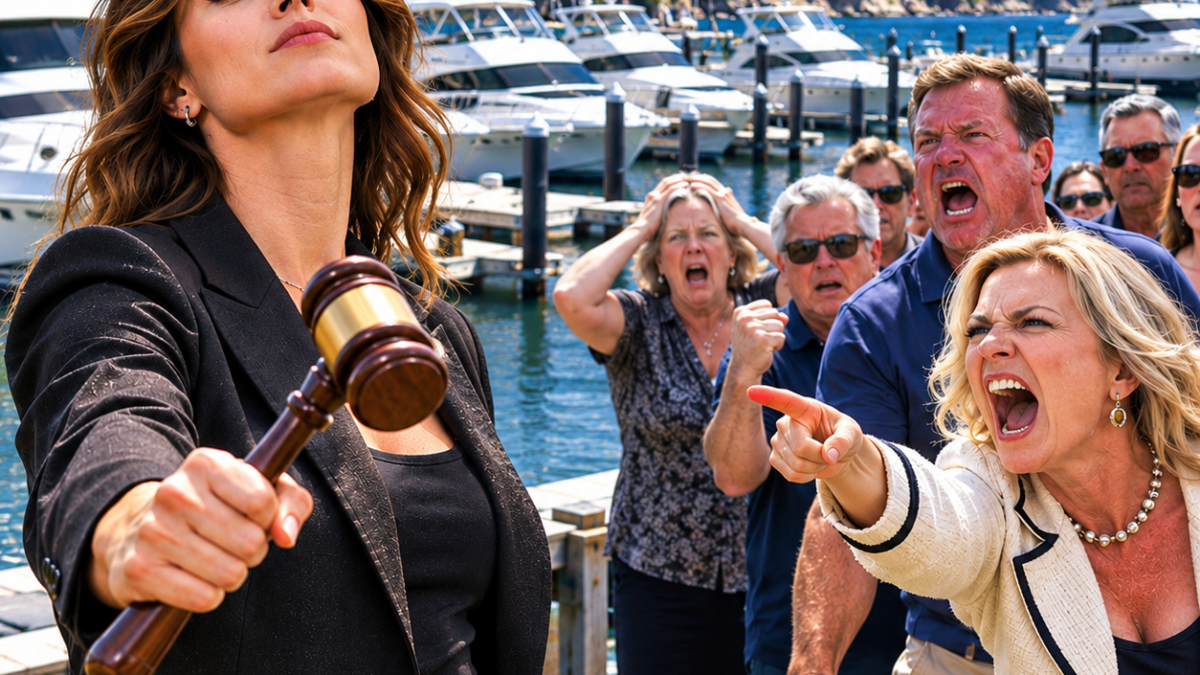
PART 2
Bolted to the bottom of the marina sign was a small brass plaque.
It had weathered enough that the letters weren’t obvious from the road.
I stepped closer.
Karen immediately snapped, “I told you to leave.”
I ignored her for another three seconds.
The plaque read:
**SEASIDE HAVEN MARINA
DEDICATED 2013**
2013.
That date mattered.
I didn’t yet know exactly how much, but I knew my grandfather had still been alive, mentally competent, paying taxes, and living on the peninsula in 2013.
He hadn’t sold the property.
Probate had confirmed that.
So how had an HOA dedicated a marina on his land while he was still living less than a mile away?
I photographed the plaque.
Karen raised her voice.
“Did you hear me?”
“I heard you.”
“You don’t have permission to photograph private facilities.”
I put my phone away.
“You should call your lawyer.”
Her face hardened.
“I already have one.”
“Call him anyway.”
Then I walked back toward my truck.
She followed me halfway.
“You come back here without authorization and I will have you removed.”
I stopped.
Turned.
“Karen, I don’t think you understand what just happened.”
She folded her arms.
“Oh, I understand perfectly.”
“No.”
I pointed toward the docks.
“You just told the legal owner of this peninsula that he was trespassing on a marina built on his property.”
“Your claim is disputed.”
“By who?”
“By Seaside Haven.”
“That isn’t a deed.”
Her face reddened.
“You’re not intimidating me.”
“I’m not trying to.”
I opened the truck door.
“I’m giving you a chance to understand how serious this might be before you make it worse.”
She laughed.
“You people always think waving around some ancient piece of paper gives you absolute control.”
“People?”
“Heirs. Speculators. Opportunists.”
That word stayed with me.
Opportunist.
I’d inherited property I hadn’t visited in twenty years, so maybe I fit the picture she’d already built in her head.
A stranger.
A man who saw dollar signs.
Someone who would take a settlement and disappear.
She had no idea why I was there.
Honestly, until that morning, neither did I.
My grandfather and my father had stopped speaking when I was sixteen.
The argument involved money, pride, and two men incapable of apologizing.
My father refused to discuss it.
My grandfather stopped calling.
I went into the Marines.
Life moved.
Twenty years became a lifetime.
Then, three months after I retired, a lawyer named Edwin Sharp called.
“Mr. McAllister?”
“Yes.”
“I represented your grandfather.”
I remember sitting at my kitchen table hundreds of miles away.
The first thing I asked was:
“Is he alive?”
There was a pause.
“No.”
I hadn’t expected the grief.
Not after two decades.
Not after all that silence.
But it hit anyway.
Edwin told me my grandfather had left the entire Cormorant Point property to me.
No other major heirs.
No conditions.
One handwritten note.
The line about land sharks.
I’d assumed it was one last piece of Captain Thomas McAllister theater.
He’d spent forty years working commercial boats before retiring to the peninsula.
He called bankers “barnacles.”
Developers were “land sharks.”
Politicians were “deck rats.”
Everyone had an ocean-themed insult.
But standing beside a multimillion-dollar marina that wasn’t on any document I’d received, his warning stopped sounding eccentric.
I drove away from Karen and passed through Seaside Haven slowly.
Now that I was looking with different eyes, I saw the development differently.
The houses themselves weren’t on my peninsula.
Most were clustered on the mainland tract purchased by the developer decades earlier.
But infrastructure crossed the line.
The paved road continued onto my land.
Decorative lighting.
Benches.
Trash cans.
Signs.
Walking paths.
A gazebo.
Then the marina.
This wasn’t a two-foot boundary dispute.
Somebody had absorbed acres.
I drove beyond the subdivision and found the old logging road my grandfather used when I was a boy.
The entrance was almost hidden by brush.
I shifted the truck into four-wheel drive.
Branches scratched along the sides.
My old pickup had been through Iraq, Utah, Colorado, and more bad roads than I could count.
A little coastal brush wasn’t going to stop it.
The trail climbed.
Then opened near the high bluff.
The cabin was still there.
Gray cedar siding.
Stone chimney.
Small porch.
Everything looked smaller than memory.
I parked.
For a moment, I didn’t move.
Twenty years vanished.
I could see my grandfather sitting on that porch cleaning fish.
Hear him telling me never to trust weather that changed too fast.
Smell pipe tobacco.
I got out.
Inside, the cabin smelled exactly as I remembered.
Wood.
Salt.
Dust.
Old tobacco embedded in walls.
The lawyer had arranged basic cleanup after the funeral, but nobody had disturbed much.
His mug still sat upside down near the sink.
His boots were by the door.
I placed the leather satchel on his oak table.
Then opened every document.
Deed.
1956 survey.
Later survey.
Tax records.
Probate title report.
No transfer.
No sale.
No HOA membership.
No marina easement.
No road easement serving Seaside Haven beyond a narrow utility strip on the mainland boundary that didn’t explain any of what I’d seen.
I spent the afternoon photographing the encroachment from the bluff.
My military career taught me documentation before confrontation.
People remember emotion differently.
Photographs don’t.
I used binoculars to identify structures.
Paved road.
Gazebo.
Dog-waste station.
Three picnic areas.
Landscaped overlook.
Marina.
Fuel cabinet.
Boat-storage racks.
Electrical pedestal boxes.
Thirty-eight boats that I could count from where I stood.
Maybe more.
Some were ordinary twenty-foot center consoles.
Others weren’t ordinary anything.
One sportfishing boat had to be fifty feet.
A sailboat near the end of the longest dock was larger still.
I estimated millions of dollars in private property moored at docks built on land I’d inherited.
At sunset, marina lights came on.
Little points of warm white stretching across my grandfather’s dark cove.
Beautiful.
And deeply wrong.
I went back inside.
I didn’t sleep.
Instead, I opened the sea chest at the foot of my grandfather’s bed.
The lawyer had mentioned journals.
There were twelve.
Hardbound notebooks.
Dates on the spines.
1996.
1998.
2001.
2003.
On and on.
My grandfather wrote like he spoke.
Short.
Blunt.
Often profane.
The first references to Seaside Haven appeared years before construction began.
A developer had bought adjoining acreage.
Grandfather didn’t care.
Then offers arrived for Cormorant Point.
He declined.
A second offer.
Declined.
Third.
Still no.
Then harassment.
Survey crews entering without permission.
Contractors dumping material near a boundary road.
A fence cut.
A developer representative claiming a historical access right.
My grandfather responded with certified letters.
He saved copies.
I found them in folders behind the journals.
Every envelope.
Every green return receipt.
Every response.
Then I found the marina entry.
**March 3, 2009**
> HOA people talking about docks in Tomcat Cove. Told Miller woman again land isn’t theirs. Survey makes it plain. She smiles like a shark before feeding.
Miller.
Karen?
I kept reading.
**May 14, 2009**
Formal certified letter sent to Seaside Haven board.
I found the copy.
It prohibited entry onto Cormorant Point and specifically mentioned marina planning.
Attached:
Survey.
Boundary map.
Return receipt.
Signed.
I stared at the signature.
Not Karen’s.
Another board officer.
But the letter had unquestionably reached the HOA.
Next journal.
2010.
Another protest.
2011.
Survey stakes disturbed.
2012.
Grandfather complained county contractors had entered the cove.
2013.
His handwriting became shakier.
But one entry stood out.
**June 19**
> They’ve started pilings. County says permit paperwork shows HOA ownership. That’s a damn lie. Need lawyer but Sharp says fight will cost more than I have. Sent another notice. No answer.
My chest tightened.
He had watched them build it.
Alone.
Old.
Angry.
Probably too proud to tell my father.
Certainly too proud to call me.
He kept writing.
**August**
> Marina going up. They think age equals surrender.
Then:
**December**
> Let them build. Paper stays paper. Dirt stays dirt. Whoever gets this after me needs proof more than anger.
I sat back.
That was my grandfather.
He hadn’t been defeated.
He’d been archiving.
For whoever came next.
For me.
The next morning, I drove into town.
I needed counsel.
Not the probate lawyer.
This wasn’t estate administration anymore.
I asked Edwin who handled land litigation locally.
He gave me three names.
One kept coming up everywhere I asked.
Sarah Jenkins.
Her office was above a hardware store.
No marble lobby.
No glass conference room.
A wooden staircase that complained about every step.
Her receptionist pointed toward an open door.
Sarah Jenkins was in her late forties, sleeves rolled up, reading a survey map.
She looked up.
“Jack McAllister?”
“Yes.”
“Ed Sharp said you had a boundary issue.”
“That’s one way to describe it.”
“How bad?”
“There’s a marina.”
She blinked.
“On the boundary?”
“On my land.”
“How much marina?”
“All of it.”
Now I had her attention.
I laid everything on her conference table.
She didn’t react emotionally.
That made me trust her.
She read the deed.
Compared surveys.
Checked parcel numbers.
Asked about probate.
Taxes.
Chain of title.
Potential easements.
Then she looked at the photographs.
“That’s the Seaside Haven marina.”
“Yes.”
“I’ve been there.”
“Apparently so have a lot of people.”
She looked at another photograph.
“Where’s this gazebo?”
“Eagle’s Perch.”
“Which is?”
“About nine hundred feet inside the boundary.”
She placed the photo down.
“How much of their road?”
“Close to a mile.”
Sarah removed her glasses.
“Jack, are you certain the HOA never received some conveyance from your grandfather?”
“I found no deed.”
“Recorded leases?”
“No.”
“Licenses?”
“Nothing.”
“What did he say?”
I opened his 2009 folder.
Sarah read the certified notice.
Then the return receipt.
Then another letter.
Her expression changed.
“Keep these quiet.”
“Why?”
“Because if they make the argument I think they’ll make, these matter.”
“What argument?”
“Adverse possession. Prescriptive rights. Some version of long use becoming legal entitlement.”
“They can steal land by staying long enough?”
“Don’t simplify it that much.”
“I’m a Marine. We simplify.”
She smiled.
“Then simplify this: their exact theory will depend on state law and the facts, but the letters matter because they show the owner wasn’t asleep.”
“Good.”
“Very.”
She tapped the journal.
“Was your grandfather competent when he wrote these?”
“Yes.”
“Any diagnosed cognitive decline?”
“Not until near the very end, according to his doctor.”
“Good.”
She looked again at the marina photographs.
“What do you want?”
Everyone kept asking that.
I hadn’t answered myself yet.
“I want my land.”
“Meaning?”
“Marina gone.”
Sarah studied me.
“All of it?”
“Yes.”
“Road?”
“On my peninsula, yes.”
“Gazebo?”
“Yes.”
“Landscaping?”
“Yes.”
“Boat owners?”
“They can take their boats.”
“Would you lease the marina to the HOA?”
“No.”
“Sell?”
“No.”
“Why?”
I looked at the old survey.
“Because my grandfather spent twenty years refusing.”
Sarah leaned back.
“He left you valuable land.”
“He left me a responsibility.”
That answer seemed to satisfy her.
“Then we start politely.”
I almost laughed.
“Politely?”
“We tell them exactly what we know and exactly what we demand.”
She drafted the cease-and-desist.
It identified me as the legal owner.
Cited recording information.
Enclosed current title verification.
Identified structures.
Demanded immediate cessation of expansion.
Demanded no additional residents or guests enter my property except for safe removal of personal property.
Demanded a thirty-day plan to remove encroachments and restore disturbed land.
We sent it certified to Karen.
Every director.
HOA counsel.
Their registered agent.
Sarah also sent notice to the marina management company.
Then we waited.
I moved into my grandfather’s cabin temporarily.
What I expected to last weeks would become much longer.
At first, I hated the quiet.
Then it became useful.
I walked the land every morning.
My grandfather’s trail network still existed beneath the brush.
I found rock walls he’d repaired.
An old boathouse foundation.
A weathered bench overlooking the cove.
Some of the land felt untouched.
Other sections carried HOA fingerprints everywhere.
Decorative gravel.
Lighting conduit.
Irrigation.
Signposts.
The contrast angered me.
Then, twenty-nine days after the cease-and-desist, Sarah called.
“They answered.”
“What did they say?”
“They sued you.”
I actually laughed.
“Of course they did.”
“Come in.”
The complaint claimed harassment.
Interference with community property.
Slander of title.
It sought an injunction preventing me from entering what they called the “Seaside Haven amenity district.”
Amenity district.
My grandfather would’ve loved that.
Their ownership theory relied on long, continuous, open use.
More than a decade.
They argued that the HOA had treated the marina and surrounding acreage as its own, spent millions maintaining it, and had thereby acquired rights.
Sarah tapped the complaint.
“They’re betting you’ll settle.”
“For money?”
“Probably.”
“How much do they think?”
“I imagine enough that you stop caring about the principle.”
“I care.”
“I know.”
She turned another page.
“They’re also asking for a temporary restraining order.”
“To keep me off my land.”
“Yes.”
“Can they get it?”
“Temporarily? Courts can preserve status quo while facts are sorted out.”
“Meaning Karen might legally keep me away from my own cove.”
“For a short period, potentially.”
That made my hands tighten.
Sarah noticed.
“Don’t do anything stupid.”
“I’m not.”
“Your face disagrees.”
I looked out her office window.
“This is exactly what they did to him.”
“Your grandfather?”
“Paper until the other person can’t afford paper anymore.”
“Then don’t play emotionally.”
She pushed the complaint toward me.
“Play longer.”
The HOA also began a public-relations campaign.
George later told me Karen held an emergency meeting and described me as a predatory heir trying to seize community assets after decades of neglect.
Residents approved a special legal assessment.
They were paying to fight me.
Then Karen made a mistake so unnecessary that Sarah almost couldn’t believe it.
She fined me.
Five hundred dollars.
My grandfather’s cabin allegedly violated Seaside Haven exterior-color standards.
Then $250 for my truck.
I carried the notices upstairs to Sarah’s office.
She read them.
Looked at me.
Then laughed.
“She fined the man she’s simultaneously claiming doesn’t own the property.”
“Apparently.”
“Keep these.”
“I planned to.”
“She can’t help herself.”
“No.”
“Good.”
That word surprised me.
“Good?”
“Every time she exercises HOA jurisdiction over your parcel while ownership is disputed, she shows what she actually wants.”
“Control.”
“Exactly.”
Then George called.
I didn’t know him.
He used a number I didn’t recognize.
“Mr. McAllister?”
“Yes.”
“My name is George Whitaker.”
“How’d you get my number?”
“Your lawyer’s cease-and-desist is now famous.”
I smiled.
“Okay.”
“I used to serve on the Seaside Haven board.”
My attention sharpened.
“What do you want?”
“To tell you Karen’s lying.”
I said nothing.
George continued.
“The HOA knew that marina wasn’t on our parcel.”
“Proof?”
“Yes.”
That one word changed the case.
We met at a diner thirty minutes inland.
George was in his late seventies.
Retired civil engineer.
Thin.
Gray hair.
Careful eyes.
He arrived carrying a battered accordion folder.
Before opening it, he said:
“I want you to understand something.”
“Okay.”
“Most homeowners didn’t know.”
“I assumed.”
“They bought houses advertised with marina rights.”
“Understood.”
“The people who use the docks aren’t all bad people.”
“I know.”
“Some have their life savings in those boats.”
“George.”
“Yes?”
“I don’t want their boats.”
That became ironic later.
At the time, I meant it completely.
George opened the folder.
Old meeting minutes.
Emails.
Engineering memos.
Preconstruction survey.
I picked it up.
The survey showed the marina footprint.
Then a bold property line.
The entire proposed structure sat on my grandfather’s side.
“Who ordered this?”
“The HOA.”
“When?”
“2011.”
Before construction.
“Who saw it?”
“Whole board.”
“Karen?”
“She was treasurer then.”
I looked at him.
“What happened?”
George’s mouth tightened.
“She said surveys weren’t always final.”
“She’s president now.”
“Yes.”
“What else?”
He handed me meeting notes.
There it was.
A recorded discussion.
George warning against construction without resolving title.
Karen arguing that long-term planned community use justified proceeding.
Then one line George remembered almost word-for-word.
**Better to ask forgiveness than permission.**
“You objected?”
“Repeatedly.”
“Why didn’t you stop them?”
“I lost.”
He looked ashamed.
“I resigned six months later.”
“Why keep everything?”
“Because I knew someday somebody would ask.”
I thought about my grandfather’s journals.
Two old men on opposite sides of the boundary.
Both saving paper for a future fight they might never see.
I shook George’s hand.
“Thank you.”
He pointed at me.
“Don’t punish the whole neighborhood.”
“I won’t.”
“Promise?”
“I’ll protect my land.”
He accepted that.
Sarah nearly hugged him when she saw the internal survey.
She restrained herself.
Lawyers have standards.
Mostly.
“This,” she said, “is devastating.”
“For them?”
“If authentic.”
George looked offended.
“Of course it’s authentic.”
“I believe you. Court won’t care what I believe.”
We verified it.
Metadata.
Board records.
Engineer testimony.
Original survey firm.
Real.
The HOA had commissioned a survey.
The survey told them the land wasn’t theirs.
They built anyway.
Sarah looked at me.
“Now they’re in trouble.”
“Good.”
“Don’t celebrate yet.”
“I wasn’t.”
“You were thinking about it.”
“Maybe.”
The lawsuit dragged.
Discovery requests.
Depositions.
Motions.
Arguments about old records.
The HOA’s lawyers were expensive and aggressive.
They sent document requests broad enough to include my childhood fishing photographs.
Sarah responded with equal precision.
Meanwhile, Seaside Haven residents received another assessment.
Then another dues increase.
George reported rising anger.
I started spending more time in town.
Not campaigning.
Just living.
Mary, who owned the diner, remembered my grandfather.
“Tom McAllister?”
“Yes.”
“That miserable old pirate?”
“Sounds right.”
“He once fixed my husband’s boat engine and refused money.”
“That also sounds right.”
When I showed her an old picture of the cove, her expression softened.
“They put the marina there?”
“Yeah.”
“Tom loved that place.”
“I know.”
“He used to sit out there when his wife died.”
I hadn’t known that.
Grandmother died before I was born.
Mary continued.
“He didn’t talk much after.”
I looked at the photo differently.
The cove wasn’t just land.
It had memories I didn’t even possess.
That made the idea of selling feel worse.
The local VFW welcomed me too.
Nobody cared about my property dispute until somebody recognized the McAllister name.
Then stories surfaced.
Grandfather helping during storms.
Towing stranded fishermen.
Arguing with town officials.
Being difficult and dependable in equal measure.
A retired Army engineer named Dave offered to connect me with his son, a licensed surveyor.
“I already have surveys.”
“Get another.”
“Why?”
“Because rich people like saying old surveys are old.”
Good point.
We commissioned a new modern survey.
GPS.
Control network.
Physical monuments.
Coastal boundary verification.
It matched my grandfather’s survey.
It matched the county plat.
It matched the HOA’s hidden survey.
Three independent sources.
Same line.
Sarah spread them across her desk.
“Beautiful.”
“You lawyers have strange taste.”
“You Marines call rifles beautiful.”
“Fair.”
The deposition finally came.
Karen arrived with two attorneys.
Navy suit.
Pearls.
Perfect hair.
She acted like the room belonged to her.
Sarah began gently.
Board history.
Offices held.
Marina planning.
Karen proudly described the marina as the achievement that transformed Seaside Haven into a premier coastal community.
She spoke about property values.
Community investment.
Leadership.
Then Sarah shifted.
“Mrs. Miller, you understand your association’s adverse-possession theory?”
“My lawyers have explained it.”
“That Seaside Haven’s use was open, continuous, and without permission for the required period?”
“Yes.”
“And that Mr. Thomas McAllister did not object?”
Karen looked directly at me.
“He never communicated with us.”
Sarah paused.
“Never?”
“No.”
“Not once?”
“Not to my knowledge.”
“Did you know him?”
“He was a recluse.”
“That wasn’t my question.”
Karen smiled tightly.
“I had met him.”
“How many times?”
“A handful.”
“Did he ever object to HOA activity?”
“Not formally.”
Sarah looked toward me.
Then back to Karen.
“I’m going to show you a document.”
She marked the 2009 certified letter.
Karen’s lead attorney read it first.
His expression changed immediately.
Tiny.
But I saw it.
Sarah placed a copy before Karen.
“Do you recognize this?”
“No.”
“Please read the first paragraph.”
Her attorney objected.
Sarah let him finish.
Then repeated the request.
Karen read:
> “This letter serves as formal notice that the Seaside Haven Homeowners Association, its officers, contractors, agents, residents, and guests are not authorized to enter, use, improve, build upon, or otherwise occupy the property known as Cormorant Point, including the cove identified in recent marina proposals.”
Her voice weakened.
Sarah produced the return receipt.
Then a second notice.
Then meeting records.
Then George’s documents.
“Mrs. Miller, is this the survey commissioned by Seaside Haven?”
“I don’t recall.”
“Your initials appear on the distribution sheet.”
“I reviewed many documents.”
“Does this survey show the proposed marina outside HOA property?”
Karen’s lawyer objected again.
Sarah waited.
Then:
“Did you review it?”
“I don’t remember.”
“Do you deny receiving it?”
“I said I don’t remember.”
Sarah changed documents.
“Meeting minutes. You were treasurer.”
Karen read.
Sarah asked:
“Did George Whitaker warn the board that the proposed marina was on McAllister land?”
“I don’t recall his exact statement.”
“Did you say it was better to ask forgiveness than permission?”
Karen’s face flushed.
“That sounds like something taken out of context.”
“So you may have said it.”
“I don’t remember.”
For the first time all day, she looked uncertain.
Sarah didn’t press theatrically.
That was her strength.
She let documents do the pressure.
At the lunch break, Karen and her attorneys disappeared into a conference room.
Sarah sat beside me.
“How do you feel?”
“Like my grandfather is in here.”
She looked at me.
“That good or bad?”
“Both.”
“They’ll still fight.”
“I know.”
“They may try settlement.”
“I want restoration.”
“I know.”
“You keep saying that.”
“Because I don’t want you changing your answer when they put a large number on paper.”
She knew me.
They did make an offer.
It was large.
Enough to buy a very comfortable retirement elsewhere.
I looked at the number.
Then at Sarah.
“No.”
She nodded.
Didn’t even ask.
The next phase came from environmental and construction review.
George’s archived marina files included permit applications.
Sarah hired a marine construction consultant named Mike Dorsey.
He was sixty-something, sun-burned, impatient, and unimpressed by expensive boats.
We inspected what we could legally inspect under the court’s discovery orders.
Mike crawled under dock sections.
Photographed electrical conduits.
Reviewed pilings.
Checked old dredging records.
His report was brutal.
Some construction was acceptable.
Other parts needed correction.
Electrical work had questionable documentation.
Dredging records didn’t align cleanly with later habitat observations.
The bigger issue wasn’t merely construction quality.
It was that every permit had been filed on a property-ownership representation that was now under direct challenge.
Sarah widened the case.
The HOA’s position became harder to sustain.
Then the court ruled on the central ownership question.
I remember the morning because fog covered the water.
Sarah called at 8:12.
“Jack.”
“Yes?”
“We got summary judgment on title and trespass.”
I stood inside the cabin kitchen.
Didn’t speak.
“Jack?”
“Say it again.”
“The court recognized your ownership based on the record before it and rejected the HOA’s claim to the marina footprint.”
I sat down.
For several seconds, all I could hear was the refrigerator motor.
“What happens now?”
“Now we discuss remedy.”
“Removal?”
“Yes.”
“And the boats?”
Pause.
“That’s complicated.”
Of course it was.
The marina contained dozens of privately owned vessels.
Many owners had been told their slips were legitimate HOA amenities.
They weren’t participants in the original land decision.
Sarah made that distinction clear.
“We are not treating innocent boat owners like Karen.”
“Good.”
“We send notice.”
“How long?”
“Court-approved removal window.”
“Then?”
“If they remove their vessels, they’re done.”
“And if they refuse?”
“We have enforcement options under the court’s order and liens tied to the encroachment and damages.”
That became the final strategy.
Not a surprise seizure.
Notice.
Documentation.
Time to leave.
Then consequences for people who intentionally ignored the order.
Karen, meanwhile, had scheduled Seaside Haven’s Founder’s Day celebration.
George called.
“You’ll appreciate this.”
“Probably not.”
“She’s making the marina the centerpiece.”
“When?”
“Saturday.”
“What time?”
“Party starts two. Local TV crew at four thirty.”
I rubbed my forehead.
“She’s inviting television while title litigation is going against her?”
“She hasn’t told residents about the ruling yet.”
That stunned me.
“What?”
“Email says the litigation remains ongoing and the board is confident.”
I called Sarah.
She already knew.
“Can she do that?”
“She can communicate badly.”
“She hasn’t told boat owners?”
“Apparently not.”
“That means people may leave boats there without knowing they’re under a removal order.”
Sarah became quiet.
Then:
“We serve Saturday.”
“At the party?”
“Yes.”
“That sounds theatrical.”
“She created the audience.”
We coordinated everything through proper channels.
Process server.
Sheriff’s deputy solely to keep peace.
Court notices.
Individual vessel notices where authorized.
No threats.
No vigilante nonsense.
No touching boats.
Just service.
I hated how much of the original plan depended on public confrontation.
Sarah reminded me:
“The point isn’t humiliation.”
“It will humiliate her.”
“That’s her consequence.”
“What’s our point?”
“Notice.”
Right.
Saturday was painfully beautiful.
Blue sky.
Light wind.
From the bluff, I could see colored banners around the marina.
A white tent.
Tables.
People in summer clothes.
Boats decorated with flags.
Brass musicians.
Karen had staged a victory celebration.
At four thirty, Sarah drove up the old road.
I followed in my truck.
Deputy Riley followed us.
Process server behind.
We parked above the marina.
As we walked down, conversations stopped.
People recognized me.
Then Sarah.
Then the deputy.
Karen stood near a podium in a yellow suit.
Her expression went from surprise to fury.
“What is this?”
Sarah answered.
“We’re here to serve notice pursuant to the court’s order.”
Karen pointed at Riley.
“Arrest him.”
Riley didn’t move.
“Ma’am, I’m here to prevent a disturbance.”
“He’s trespassing.”
Riley looked at her.
“Not according to the order I’ve seen.”
The news cameraman swung toward us.
Karen noticed.
That made everything worse for her.
Sarah held up the documents.
“Earlier this week, the court entered judgment recognizing Jack McAllister’s ownership of Cormorant Point, including the marina footprint.”
A man near the tent said:
“What?”
Another:
“Karen?”
She raised her voice.
“This is subject to appeal.”
Sarah nodded.
“You may pursue whatever appellate rights counsel advises. The current order remains enforceable unless stayed.”
Karen’s face tightened.
The process server began posting notices.
Bright orange.
Not subtle.
**COURT-ORDERED NOTICE**
Boat owners gathered.
“What does this mean?”
“Is the marina closing?”
“Can they do this?”
Sarah spoke clearly.
“No vessel is being taken today.”
That mattered.
Everyone quieted enough to listen.
“You are being notified that the marina has been determined to encroach on private property. Vessel owners have seventy-two hours under the current order and notice procedure to remove their boats voluntarily.”
Chaos.
Karen grabbed the microphone.
“This is intimidation.”
A man shouted:
“You told us we won!”
A woman near the dock:
“You said this lawsuit was frivolous!”
Karen tried to answer.
The news crew kept filming.
Then George stepped forward from the crowd.
He hadn’t told Karen he would speak.
He carried a folder.
“Tell them about the survey.”
Karen froze.
“George, this is not the time.”
“It was the time in 2011.”
Residents looked between them.
George held up the HOA’s own survey.
“You knew the marina wasn’t on HOA property before you built it.”
Karen shouted:
“That document was preliminary.”
“It showed the same line as the county survey.”
“We had legal advice.”
“Then show them.”
Karen’s board vice president stepped toward her.
“What survey?”
That was the moment.
Not the notices.
Not me.
Her own director asking what she had hidden.
Karen looked trapped.
“Everyone calm down.”
A boat owner shouted:
“My boat is sixty feet long. Where am I supposed to move it in three days?”
Sarah said:
“We can provide contact information for nearby commercial slips and haul-out facilities.”
The woman looked toward Karen.
“You did this.”
Karen’s voice cracked.
“No. He did.”
She pointed at me.
“This man waited until our celebration—”
I spoke.
“You’ve had my grandfather’s notices since 2009.”
Silence.
“You had your own survey.”
Silence.
“You sued me instead of telling them.”
I looked at the boat owners.
“They deserved to know before today.”
The anger turned.
Not toward me.
Toward her.
A man holding a wine glass yelled:
“I paid twenty thousand dollars in assessments for marina access.”
Another:
“You told us the land claim was fake.”
Karen’s vice president said:
“You told the board we had clean title.”
“I told you counsel believed—”
“Which counsel?”
She couldn’t answer cleanly.
The brass band had stopped playing.
One musician still held his trumpet halfway up.
It would’ve been funny in any other context.
Then one older woman began crying.
She stood beside a large yacht.
“My husband’s ashes are on that boat.”
I walked toward her.
“What’s your name?”
“Elaine.”
“Elaine, nobody is taking your boat today.”
She wiped her face.
“I can’t get a captain this fast.”
“Sarah?”
Sarah nodded.
“We’ll help coordinate.”
Karen shouted:
“You have no obligation to help them.”
I turned.
“Yes, I do.”
That was the difference I needed everyone to see.
The residents hadn’t stolen my land.
The board had made decisions.
People had trusted them.
I wasn’t going to punish somebody’s widow because Karen had lied.
Over the next seventy-two hours, the cove transformed.
Diesel engines.
Captains.
Tow services.
Boat owners making frantic calls.
Most vessels left.
Some owners apologized to me even though they owed me none.
One man said:
“I thought your grandfather gave the land to the HOA.”
“I know.”
“Karen showed us a map.”
“I know.”
“I feel like an idiot.”
“Don’t.”
He shook his head.
“I should’ve checked.”
“People don’t run title searches on amenities advertised with their house.”
He appreciated that.
A few people weren’t so reasonable.
One owner cursed me.
Another taped a note to his windshield.
**GO AHEAD. SUE ME.**
Several members of Karen’s inner circle told George they would not move.
They believed the order would be reversed.
Seventy-two hours ended.
About a dozen vessels remained.
Sarah confirmed every notice.
Every deadline.
Every required procedural step.
Then enforcement began.
No dramatic raid.
No shouting.
A professional marine towing contractor entered the cove.
Sheriff’s deputies observed.
Crews disconnected shore power.
Documented condition.
Attached tow lines.
One by one, the remaining boats left.
I stood on the bluff.
George came beside me.
“You enjoying this?”
“Less than I expected.”
“Really?”
“They’re beautiful boats.”
“That’s your takeaway?”
“They’re going to a storage yard because their owners trusted the wrong person and then got stubborn.”
George looked at me.
“Some of those owners helped Karen.”
“I know.”
“You don’t feel vindicated?”
“Ask me later.”
The HOA imploded before we reached the auction.
The Founder’s Day footage aired that night.
Not the feature Karen expected.
The report led with:
**COURT RULES PRIVATE LANDOWNER OWNS SITE OF HOA MARINA**
Local television showed the orange notices.
George’s hidden survey.
Boat owners confronting Karen.
Sarah explaining the title history.
Then other outlets picked it up.
The story became bigger than I wanted.
Strangers drove near the peninsula hoping to see the “stolen marina.”
I put up signs requesting privacy.
Some respected them.
Some didn’t.
The HOA’s insurer opened a coverage review.
Their law firm became far less enthusiastic.
Board members hired separate counsel.
Residents demanded emergency meetings.
George called two days later.
“Tonight.”
“What?”
“They’re removing her.”
“Karen?”
“Entire board possibly.”
“You sure?”
“Clubhouse is full already.”
I didn’t attend.
That was their governance.
George told me afterward.
Karen tried to blame everything on legal advice.
Then he projected the 2011 survey.
The meeting minutes.
My grandfather’s certified letters.
An internal email in which Karen had written:
**If we build first, no future owner will spend the money necessary to make us remove it.**
Sarah nearly dropped her coffee when George showed us that one.
There it was.
The strategy.
Build.
Wait.
Make removal too expensive.
Assume the old man dies.
Assume heirs sell.
Karen had gambled on exhaustion.
She lost because my grandfather had prepared.
Residents removed her.
Then the remaining board.
Emergency interim directors took over.
George reluctantly became acting president because everyone trusted him and he hated the idea.
Those are often the best candidates.
The auction happened a month after impoundment.
Owners had been given every required opportunity to reclaim the remaining vessels by satisfying the liens, storage, towing, and associated obligations.
Some settled at the last minute.
Others didn’t.
The final group went to public sale.
The yard smelled like diesel, salt, and hot asphalt.
Professional brokers came.
Curious townspeople.
Reporters.
Sarah stood beside me.
“You can still resolve individual claims before sale if required.”
“I know.”
“You look uncomfortable.”
“I am.”
“You thought this would feel better.”
“Maybe.”
Then I saw Karen.
Across the yard.
Alone.
Gray tracksuit.
No clipboard.
No board members.
No residents surrounding her.
She looked like someone who hadn’t slept properly in weeks.
Our eyes met.
I looked away first.
The auctioneer started.
A thirty-eight-foot cruiser.
Bid.
Counterbid.
Sold.
A sportfisher.
Sold.
A trawler.
Sold.
Prices were lower than retail.
Everybody knew distressed sales favored buyers.
Each hammer strike felt less like revenge and more like finality.
Then came the largest sailboat.
The **Empress**.
Karen’s closest ally had owned it.
George told me that woman had been one of the loudest voices supporting the marina project years earlier.
The boat was beautiful.
Sixty-five feet.
Tall mast.
Blue hull.
Teak work.
The bidding never got close to what it was worth.
A salvager bought it.
Hammer down.
Sold.
Across the yard, Karen made a small sound.
Not dramatic.
One broken sob she immediately tried to swallow.
I looked at her.
For months, I’d imagined seeing regret.
Now that it was there, I didn’t enjoy it.
She had persuaded people to follow her.
Some had followed willingly.
Some because they trusted her title.
Now everybody was paying.
I gave her one small nod.
Not victory.
End.
Then I walked away.
The new HOA board settled quickly.
Remove marina.
Remove road infrastructure on my parcel where required.
Remove gazebo and other amenities.
Restore disturbed areas under professional supervision.
Pay legal expenses and damages as negotiated.
Cooperate with environmental remediation.
The money mattered.
I’m not going to pretend it didn’t.
Litigation had consumed savings.
Experts cost money.
Surveys cost money.
Restoration cost money.
But the part I cared about was item one:
**Cormorant Point returned free of unauthorized HOA occupation.**
Demolition started in fall.
Watching the marina come apart was strange.
Years earlier, construction had felt like theft to my grandfather.
Now removal felt almost surgical.
Sections of dock lifted.
Electrical lines disconnected.
Pilings extracted.
Fuel equipment removed carefully.
Pavement broken.
Gazebo dismantled.
Lighting fixtures taken away.
Picnic stations gone.
The cove looked wounded at first.
Mud.
Machinery.
Raw ground.
Then winter came.
Rain softened disturbed soil.
Grass and coastal vegetation started returning.
The environmental group Sarah connected me with evaluated the salt marsh and seagrass.
Some areas needed active restoration.
Others would recover if left alone.
That was what I wanted.
Leave it alone.
The hardest decision came afterward.
Developers called.
Of course they did.
One offer made the HOA settlement look small.
Luxury eco-resort.
Private villas.
“Minimal environmental footprint.”
Another proposed conservation-minded estates.
Another wanted a boutique hotel.
Glossy brochures.
Architect renderings.
Infinity pools.
Boardwalks.
My grandfather had described these people perfectly.
Land sharks.
They changed vocabulary.
Not appetite.
I burned the brochures in the wood stove.
Sarah found out.
“You know paper shredders exist.”
“Less satisfying.”
“You Marines.”
“That’s becoming discriminatory.”
She smiled.
Then became serious.
“What are you going to do with two hundred acres?”
“Protect most of it.”
“From who?”
“Me too.”
That was important.
Ownership isn’t protection if the next owner can undo everything.
So I worked with a conservation organization.
Lawyers.
Biologists.
Surveyors.
Tax specialists.
We created a permanent conservation easement covering more than 180 acres.
No resort.
No subdivision.
No future marina.
Habitat protected.
Public rights limited and controlled.
I kept roughly five acres around the cabin for myself and reserved necessary access.
The day I signed, Sarah looked at me.
“You know this reduces some development value.”
“Good.”
“Most clients don’t say that.”
“I’m not most clients.”
“No.”
She smiled.
“You’re considerably more annoying.”
George became president of Seaside Haven through a proper election.
He called me the next week.
“We need to talk.”
“That sounds ominous.”
“Walking trail.”
“No.”
“Listen first.”
“No.”
“Jack.”
“What?”
“People miss access to the coast.”
“They had access by illegally occupying it.”
“I know.”
“That’s a terrible argument.”
“I’m not asking for a marina.”
“What are you asking?”
“A narrow pedestrian route. Conservation trust controls it. Daytime. No vehicles. No docks. No parties. No HOA ownership.”
I almost refused.
Then I remembered my grandfather.
He loved privacy.
But he also pulled strangers’ boats out of storms.
He wasn’t selfish about the sea.
He just hated entitlement.
There was a difference between access granted and access assumed.
I agreed.
A small trail.
Clearly marked.
Pack in, pack out.
No dogs off leash.
No motorized traffic.
No fires.
No overnight use.
The first weekend, families walked the route.
Kids stood at Eagle’s Perch where the gazebo had been and watched seabirds.
Nobody needed a membership card.
That surprised Seaside Haven more than anything else I’d done.
Karen would’ve built a gate.
I opened a trail.
On my terms.
Legally.
Voluntarily.
A year after the auction, the cove looked different.
No docks.
No power pedestals.
No white hulls.
Seagrass moved with the tide.
Gulls landed where pilings had been.
The gravel service road to my cabin was simple.
Functional.
At the entrance, I installed a cedar gate.
I spent an afternoon carving one word into a wooden sign.
**McALLISTER**
No “PRIVATE.”
No threat.
No HOA warning.
Just the family name.
I hung it.
Then stepped back.
That evening, George came up carrying two beers.
“You becoming sentimental?”
“Absolutely not.”
“Carved sign says otherwise.”
“Get off my land.”
He handed me a bottle.
We sat on the porch.
The sunset turned the cove orange.
For a long time neither of us spoke.
Then George said:
“Karen’s house is going into foreclosure.”
I looked at him.
“She got sued by several boat owners.”
“I expected that.”
“Fraud and misrepresentation claims.”
I nodded.
“She lost a lot.”
“Yeah.”
“You happy?”
I looked toward the water.
“No.”
“Pity?”
“Not really.”
“What, then?”
“Finished.”
George nodded.
“I understand.”
I don’t think I would’ve understood that answer a year earlier.
At the beginning, I wanted Karen exposed.
Then defeated.
Then removed.
But eventually, continuing to hate her felt like continuing to let her own part of the peninsula.
She had already taken enough.
I wasn’t giving her space in my head too.
Months later, I ran into one of the former boat owners in town.
Elaine.
The woman whose husband’s ashes were aboard her yacht.
She had moved her vessel before the deadline.
She stopped me outside the hardware store.
“Jack.”
“Elaine.”
“I owe you an apology.”
“No.”
“Yes.”
“For what?”
“I believed Karen.”
“You had no reason not to.”
“I called you a thief.”
I smiled.
“Not to my face.”
“I said worse at home.”
“Then my feelings remain intact.”
She laughed.
Then became serious.
“Thank you for helping me find a captain.”
“Of course.”
“My husband loved that boat.”
“I remember.”
She looked toward the road leading to Cormorant Point.
“I’m sorry about your grandfather.”
“Did you know him?”
“No.”
“I wish more of us had.”
“So do I.”
That became the emotional cost I hadn’t anticipated.
My grandfather had lived surrounded by people using his land, and most had never known his name.
Karen’s story became the community’s story.
The marina was theirs.
The cove was theirs.
The park was theirs.
Thomas McAllister disappeared.
When I inherited Cormorant Point, I thought I was defending real estate.
By the end, I was restoring a man’s place in his own history.
I found an old photograph of him standing beside the cove in 1962.
Young.
Dark hair.
Fishing rod.
I enlarged it.
Framed it.
Hung it inside the cabin.
Below it, the original 1956 deed.
Not because I wanted visitors impressed by ownership.
Because I wanted people to know somebody had loved this place before it became an amenity.
The local historical society asked to copy some journals.
I agreed.
Not the personal ones.
Only entries related to the peninsula and development.
The story became part of town history.
Not “Marine defeats HOA.”
I hated that headline.
More accurately:
**Cormorant Point Land Dispute Resolves After Decades of Conflicting Development Claims**
Boring.
Better.
George still preferred the dramatic version.
Every time somebody visited, he’d say:
“This is Jack. He auctioned their yachts.”
“I did not personally run the auction.”
“Nobody cares.”
“The distinction matters.”
“Not at the VFW.”
He was right.
At the VFW, I became “Boat Auction Jack.”
Terrible nickname.
Could’ve been worse.
Sarah occasionally came to the cabin.
Mostly to remind me of paperwork.
One afternoon she brought a folder.
“What now?”
“Final conservation recording.”
“I thought that was done.”
“This is the last county acknowledgment.”
I signed.
She looked out toward the cove.
“You actually did it.”
“What?”
“Made it impossible for somebody to build another marina.”
“That was the idea.”
“You know your grandfather couldn’t do this.”
I looked at her.
“He didn’t have the money, lawyers, or political support.”
“No.”
She tapped the file.
“But he kept enough records for you to.”
I swallowed.
“Yeah.”
“That was his part.”
I understood.
Grandfather hadn’t lost.
He had held long enough to pass the fight.
Maybe he knew exactly what he was doing when he saved every certified receipt.
Every survey.
Every journal.
He couldn’t remove the marina.
But he could preserve the truth until someone else had the strength to act on it.
That idea changed the way I saw inheritance.
People think inheritance is receiving what someone owned.
Sometimes it’s receiving what they couldn’t finish.
The peninsula came with responsibility.
Anger.
Unanswered family questions.
One of those questions still bothered me.
Why me?
Why not my father?
The answer came from a letter tucked inside a journal I hadn’t opened.
Addressed to me.
Never mailed.
**Jack,**
**Your father and I are both fools. You probably know that already. If this land ever comes to you, don’t mistake stubbornness for strength the way we did. Hold what matters. Let go of what doesn’t.**
I stopped reading.
There was more.
**Your father wanted me to sell when your mother was sick. I thought he wanted money. He wanted help. I was too proud to hear him. He was too proud to ask twice. That’s how families lose twenty years.**
My father had died five years before my grandfather.
Neither reconciled.
I sat alone at the table with that letter until after dark.
All the fighting over land suddenly felt smaller.
Grandfather had protected two hundred acres while losing his son.
He knew it.
That’s why the next line hurt.
**Don’t make land more important than people, but don’t let people who don’t love it destroy it either. You’ll have to learn the difference.**
I cried then.
First time since the funeral.
Maybe first time in years.
The marina battle had given me a clean enemy.
Deed versus trespass.
Truth versus lie.
My family wasn’t clean.
Nobody won.
That letter became more important than the deed.
I kept it in the leather satchel.
Years later, when George’s grandchildren visited the trail, I let them skip stones in the cove.
At first, it bothered me.
Those were my memories.
Grandfather teaching me.
Then I heard one boy yell:
“I got six!”
Exactly what I’d shouted fifty years earlier.
I smiled.
Land preserved doesn’t have to mean land frozen.
My grandfather wanted wildness.
Not emptiness.
The conservation trust improved the trail carefully.
A wooden footbridge over a wet area.
Small interpretive signs about coastal habitat.
One included Thomas McAllister’s name.
I objected.
George ignored me.
“Dead men can’t complain.”
“He complained constantly.”
“Fair.”
Seaside Haven changed too.
Without the marina, some residents sold.
Not everyone wanted the community anymore.
Others stayed.
The HOA reduced dues because marina maintenance disappeared.
Board meetings became transparent.
Budgets posted.
Legal opinions summarized.
Major capital projects required independent title verification.
That last rule became known unofficially as the McAllister Clause.
I hated that too.
George loved naming things after me.
Eventually he stepped down.
A younger woman named Rebecca became president.
First thing she did was visit my cabin.
She stopped at the gate.
Called instead of entering.
Already an improvement.
“Mr. McAllister?”
“Jack.”
“This is Rebecca Hall, new Seaside Haven president.”
“My condolences.”
She laughed.
“I’ve heard you use that line.”
“George?”
“George.”
I opened the gate.
She walked up carrying a folder.
“I wanted to introduce myself and review the trail agreement.”
“Good.”
“No clipboard?”
She smiled.
“Absolutely not.”
We sat on the porch.
She asked thoughtful questions.
Parking.
Trail maintenance.
Emergency access.
Environmental responsibilities.
No entitlement.
No assumptions.
Before leaving, she said:
“I’ve read the old records.”
“I’m sorry.”
“Karen wasn’t wrong about everything.”
That surprised me.
“No.”
“Some of the community problems she was trying to solve were real.”
“I know.”
“She just stopped distinguishing leadership from ownership.”
That was well put.
Rebecca continued:
“I think that’s what scares me about this job.”
“Good.”
She blinked.
“Good?”
“People who are worried about having too much power usually handle it better than people who are excited about it.”
She nodded slowly.
“I’ll remember that.”
Karen’s name eventually faded.
Years passed.
The public walking trail became popular enough that the conservation trust introduced limited parking.
I resisted.
Then accepted a small gravel lot outside the protected zone.
No gift shop.
No visitor center.
George joked that I was becoming a bureaucrat.
“Next you’ll create an HOA.”
“I’ll burn the peninsula first.”
He laughed.
The cabin changed little.
I repaired the roof.
Updated plumbing.
Added insulation.
Built a small workshop.
Nothing extravagant.
My grandfather’s chair remained by the window.
His sea chest remained at the foot of the bed.
Some mornings, fog covered everything.
The cove disappeared.
On those mornings, I understood why he loved the place.
You could believe the modern world had vanished.
One summer morning, I heard engines offshore.
For a second, old anger returned.
Then two Coast Guard boats passed farther out.
Nothing to do with me.
That was when I realized how deeply the marina fight had conditioned me.
For months, every engine meant intrusion.
Every envelope meant threat.
Every unfamiliar car meant lawyer.
It took years before the peninsula stopped feeling like a battlefield.
That’s an ugly thing about prolonged conflict.
Even after you win, your body keeps expecting the next attack.
Sarah told me that once.
“You’re still patrolling.”
“I walk my property.”
“You patrol.”
“Semantics.”
“You carry binoculars.”
“Birding.”
“You don’t know birds.”
“Working on it.”
She laughed.
Eventually I stopped checking every boundary marker weekly.
Stopped photographing unknown vehicles.
Stopped keeping the legal binder on the kitchen table.
I moved it to a shelf.
Then a cabinet.
Then one day, into the sea chest.
That’s when I knew I was done.
The title battle was over.
The auction was over.
Karen was gone.
The land wasn’t going anywhere.
My grandfather had held it from 1956 until death.
I could trust the paperwork to hold overnight.
George died before me.
Heart attack.
Quick.
He was eighty-four.
At his memorial, Rebecca asked whether I wanted to speak.
I didn’t.
Then I saw his old engineer’s folder on a table.
The one containing the hidden marina survey.
I changed my mind.
I stood.
Looked at his family.
“I met George because he called me to betray his own HOA.”
Laughter.
Good start.
“He’d tell you he did it because he hated Karen.”
More laughter.
“He did hate Karen.”
Even Rebecca laughed.
“But that wasn’t why.”
I held up the folder.
“He kept records for years because he knew something wasn’t right. He couldn’t stop it then. But when someone finally could, he handed over the truth.”
I thought of my grandfather.
“Sometimes courage isn’t winning the argument the first time.”
My voice cracked slightly.
“Sometimes it’s saving the evidence until somebody else can.”
George would’ve mocked me for getting sentimental.
I missed him.
After the memorial, his granddaughter handed me a small box.
Inside was the original copy of the HOA’s internal survey.
“Grandpa wanted you to have it.”
“I don’t need it anymore.”
“She said you’d say that.”
Of course he did.
There was a note.
**Put it with Tom’s papers. Old men should keep each other company.**
I laughed until I cried.
The survey went into the sea chest.
Beside my grandfather’s.
Two records.
Two men.
One boundary.
A few years after that, a hurricane tracked toward the coast.
Not a direct hit, but close enough for evacuation warnings.
Seaside Haven evacuated.
So did I eventually.
Before leaving, I walked to the cove.
No marina.
No boats tied in rows.
No fuel dock to break apart.
No electrical infrastructure exposed to surge.
Just marsh.
Rock.
Trees.
The storm flooded part of the old marina footprint.
Seagrass bent.
Debris washed in.
Then water went back out.
The land recovered.
The conservation group later told me the restored marsh absorbed wave energy that would’ve hammered developed shoreline.
I thought about the marina.
Expensive docks in that surge.
Maybe they’d have survived.
Maybe not.
Didn’t matter.
The land had been allowed to behave like land again.
The most satisfying part of the story was never actually the auction.
People love that part.
Expensive boats.
Court order.
Karen watching.
It sounds like revenge.
And yes, there was revenge in me then.
I’d be lying otherwise.
But auctions end.
Money moves.
People disappear.
What lasted was quieter.
The cove returning.
My grandfather’s name on a trail sign.
Children skipping stones.
Salt grass growing where fuel pumps once stood.
A gate that said McAllister.
A cabin that no longer felt abandoned.
One autumn afternoon, I found an elderly woman sitting on the bench at Eagle’s Perch.
I recognized her after a moment.
Karen.
Older.
Thinner.
Gray hair.
No power suit.
No clipboard.
I stopped.
She looked up.
“Jack.”
I hadn’t seen her in years.
“Karen.”
“I hope it’s okay that I’m here.”
I almost smiled at the question.
Public trail hours.
She was allowed.
“Yes.”
She looked toward the cove.
“I hadn’t been back.”
I sat at the other end of the bench.
Neither of us spoke for a while.
Then she said:
“It looks different.”
“Yes.”
“Empty.”
“Wild.”
She nodded.
“George would’ve corrected me too.”
“He would.”
She smiled faintly.
“I heard he died.”
“Last year.”
“I’m sorry.”
“Thank you.”
Another silence.
Then Karen said:
“I hated you.”
“I know.”
“Do you hate me?”
“No.”
She looked at me.
“Really?”
“Not anymore.”
She looked toward the water.
“I ruined a lot of lives.”
I didn’t answer.
Some statements don’t need help.
She continued.
“I thought I was protecting the neighborhood.”
“At first?”
“Yes.”
“And later?”
She folded her hands.
“Later I was protecting myself.”
That honesty surprised me.
“When did that change?”
“I don’t know.”
She thought.
“Maybe when George first challenged the marina. If he was right, then I had supported something enormous that was wrong.”
“So you doubled down.”
“Yes.”
“Why?”
She laughed quietly.
“Because I was an idiot.”
I didn’t argue.
Then she looked at me.
“Your grandfather terrified me.”
That surprised me.
“He was eighty.”
“He would stare at me like he could see straight through every argument.”
“He did that.”
“I told myself he was a bitter old man.”
“He was.”
Karen laughed.
For the first time, we shared something almost normal.
Then her eyes filled.
“I remember the letter.”
I said nothing.
“The 2009 letter.”
“You testified you didn’t.”
“I lied.”
I looked at her.
She wiped one eye.
“Not consciously at first. I’d spent so long telling everyone there hadn’t been a proper objection that I almost believed it.”
“You signed for other notices too.”
“I know.”
“Why come here?”
She looked at the cove.
“To see what I fought so hard to keep.”
“And?”
A gull landed on exposed rock below us.
Karen watched it.
“Nothing.”
I understood what she meant.
Not nothing as worthless.
Nothing constructed.
Nothing controlled.
Nothing owned by the HOA.
Just land.
“I spent years telling people the marina made Seaside Haven special,” she said.
“Did it?”
“Maybe.”
She paused.
“But this is beautiful too.”
I almost said *more beautiful.*
Didn’t.
She stood.
“I shouldn’t keep you.”
“You’re not.”
She looked toward the trail.
Then back.
“I’m sorry, Jack.”
There it was.
Years late.
Still real.
“For the land?”
“For what I did to your grandfather.”
That hurt more.
I swallowed.
“He never heard it.”
“I know.”
“I can’t give you forgiveness for him.”
“I know.”
I looked at her.
“But I appreciate you saying it.”
Karen nodded.
Then walked down the trail.
I never saw her again.
That evening, I opened my grandfather’s journal.
The line I’d read years earlier stared back:
**Don’t let the land sharks get it. They’re always circling.**
I used to think Karen was the land shark.
She was.
But not alone.
Developers.
Lawyers.
Investors.
Me, potentially.
Anybody could become one if we saw land only as leverage.
That’s why the conservation easement became the decision I’m proudest of.
Not the auction.
The auction punished stubbornness.
The easement prevented repetition.
My ownership will end someday.
Everybody’s does.
But the agreement I recorded won’t vanish with me.
Nobody after me gets to turn the cove into another trophy.
Maybe a future McAllister will curse me.
That’s fine.
Grandfathers are allowed to be inconvenient.
I eventually amended my own estate plan.
Cormorant Point’s protected acreage goes to the conservation trust under the recorded terms.
The cabin parcel goes to my niece, Emily.
She brought her children every summer.
The first time I told her, she said:
“Uncle Jack, I can’t afford two hundred coastal acres.”
“You’re not getting two hundred developable acres.”
“Oh.”
“Read the documents.”
She groaned.
“Family tradition.”
Exactly.
I showed her every boundary.
Every restriction.
Every responsibility.
Then the sea chest.
Grandfather’s journals.
Letters.
George’s survey.
My case files.
She stared.
“Do I really need all this?”
“Yes.”
“Why?”
“Because people forget.”
She looked toward the cove.
“Anyone trying to build another marina?”
“Not yet.”
“Then why keep it?”
I smiled.
“Ask George.”
“George is dead.”
“Exactly.”
She didn’t appreciate that answer.
Someday she would.
The final section of trail opened on the anniversary of the conservation easement.
Rebecca asked me to say a few words.
I refused.
Then she threatened to let George’s granddaughter speak about me instead.
I accepted.
About forty people gathered.
Town residents.
Seaside Haven families.
Veterans.
Conservation staff.
Kids.
I stood beside the cedar sign.
No notes.
I said:
“My grandfather bought this land because he liked that nobody had improved it.”
Laughter.
“He would’ve hated this crowd.”
More laughter.
“But he would’ve liked the reason you’re here.”
I looked toward the cove.
“For a while, people confused access with ownership.”
Nobody moved.
“They’re not the same.”
I pointed toward the trail.
“This path exists because access was granted.”
Then toward the marsh.
“That stays because ownership came with responsibility.”
I stopped.
That was enough.
Rebecca whispered:
“That’s it?”
“Yep.”
“George would’ve talked twenty minutes.”
“George liked himself.”
She laughed.
After everyone left, I sat on the porch.
The sun lowered.
The cabin boards creaked as they cooled.
Tide came in.
The same tide my grandfather watched.
I took his handwritten note from the leather satchel.
The paper had softened at the folds.
**Don’t let the land sharks get it, Jack. They’re always circling.**
For years, I read that as an order to fight.
Now I read it differently.
Protect what matters.
Know why you’re protecting it.
Don’t confuse value with price.
Don’t confuse control with stewardship.
And when somebody builds something enormous on a lie, don’t be afraid to make them take it back down.
I smiled.
Grandfather would’ve appreciated that last part.
The marina is gone now.
The auction boats scattered to owners I never met.
Karen’s old house belongs to somebody else.
Seaside Haven still exists.
Its residents still argue over budgets and landscaping because apparently civilization requires people to debate shrubs.
Rebecca retired from the board.
A new president took over.
They sent me the annual trail-maintenance contribution on time.
No drama.
Sarah eventually closed her practice.
At her retirement dinner, she introduced me as “the client who made me learn more about yacht storage liens than any sane attorney should.”
I told her she loved every minute.
She denied it badly.
Dave still comes up to fish.
Elaine occasionally sails past the cove and waves.
Emily’s kids know how to skip stones.
And me?
I stayed.
I repaired the porch.
Rebuilt my grandfather’s old fishing skiff.
Learned enough about birds that Sarah can no longer accuse me of fake birding.
Some mornings, I drink coffee at Eagle’s Perch.
The sea changes every hour.
There are days so calm the cove looks like glass.
Other mornings wind turns it gray and angry.
Nothing about it is uniform.
Nothing matches an approved palette.
Nothing asks permission.
That’s what my grandfather loved.
One morning, I found a little boy from Seaside Haven standing on the trail with his father.
The boy pointed toward the water.
“Was there really a giant marina here?”
His father looked embarrassed.
“Don’t bother Mr. McAllister.”
“It’s okay.”
I walked over.
The boy repeated:
“Was there?”
“Yes.”
“Where?”
I pointed.
“From that rock almost to the other side.”
His eyes widened.
“All those boats?”
“A lot.”
“Did you really sell them?”
His father groaned.
I laughed.
“Some boats eventually went to a court-authorized public auction after their owners didn’t remove or reclaim them.”
The boy looked disappointed.
“That’s not as cool.”
“Most true stories aren’t.”
His father smiled.
The boy looked around.
“Why’d you get rid of the marina?”
I considered giving him the easy answer.
Because it was mine.
Because they stole the land.
Because the court said so.
Instead:
“Because it wasn’t supposed to be here.”
He looked at the empty cove.
Then nodded.
Children sometimes understand boundaries faster than adults.
They continued down the trail.
I stood there thinking about the first morning I arrived.
Karen on the dock.
Clipboard.
Boats behind her.
**You are trespassing.**
The sentence had seemed outrageous.
Now, years later, it almost felt useful.
It forced the truth into the open.
If Karen had smiled and offered me a settlement immediately, maybe I would’ve taken it.
Maybe the marina would still be there.
Maybe my grandfather’s fight would’ve ended with a check.
Instead, her certainty pushed me toward his journals.
His letters.
His history.
And eventually toward a decision worth more than any purchase offer.
The peninsula stayed.
That is what mattered.
I don’t know what happened to every person involved.
Most moved on.
That’s normal.
Cases that once consume your life become boxes in storage.
News stories vanish.
People forget.
The land doesn’t.
Every high tide covers the old piling holes.
Every winter storm moves sand.
Every spring green returns.
Nature has its own way of erasing arrogance.
Slowly.
Without speeches.
The last physical piece of the marina I kept was a short section of weathered dock plank demolition crews found near the cabin trail.
Someone asked whether I wanted it.
I almost said no.
Then I took it.
I made a small shelf.
Nothing symbolic.
At least that’s what I tell people.
On it sits my grandfather’s pipe.
A compass.
His fishing reel.
And the brass plaque from the marina sign.
**SEASIDE HAVEN MARINA — DEDICATED 2013**
George had removed it legally during demolition and given it to me.
For years, I kept it facedown.
Then one day I turned it over.
Not as a trophy.
As evidence of how confidently people can dedicate something they never owned.
Underneath it, I placed a second small plate.
Not official.
Hand-carved.
**REMOVED. LAND RESTORED.**
Grandfather would’ve approved.
Probably would’ve called it sentimental nonsense first.
Then approved when nobody was looking.
I stood on the porch tonight with the Atlantic wind coming through the pines.
Emily’s kids were down at the cove.
I could hear them arguing over who had the better skipping stone.
One shouted five.
The other claimed seven.
Liars, both of them.
I smiled.
The sun was going down.
No marina lights came on.
No yachts hummed at the dock.
No security guard asked for a guest pass.
No HOA president stood on the shoreline deciding who belonged.
Just water.
Rock.
Salt grass.
Family.
The land my grandfather refused to surrender.
The land I nearly knew only as paperwork.
The land that cost years of conflict to recover.
People still ask whether auctioning those boats was the best revenge I could’ve imagined.
It wasn’t.
The best revenge would have kept Karen at the center of the story.
She isn’t.
Not anymore.
The ending belongs to my grandfather.
To the cove.
To the children walking the trail.
To land that will still be wild long after I’m gone.
I inherited Cormorant Point believing my grandfather had left me two hundred acres.
He left me something harder.
A choice.
Take the money.
Take revenge.
Or take responsibility.
For a while, I did all three in different proportions.
In the end, responsibility was the only part worth keeping.
I sat in my grandfather’s chair as the last light faded over the Atlantic.
Below me, the tide moved quietly into the cove, covering every trace of where those illegal docks had once stood.
And for the first time since the day Karen Miller ordered me off my own peninsula, there was nothing left for me to reclaim.
I was already home.
[END OF STORY]








