PART 2: I Inherited a 12-Unit Apartment Building With No HOA—Then a “President” Demanded $4,200 and Threatened to Foreclose
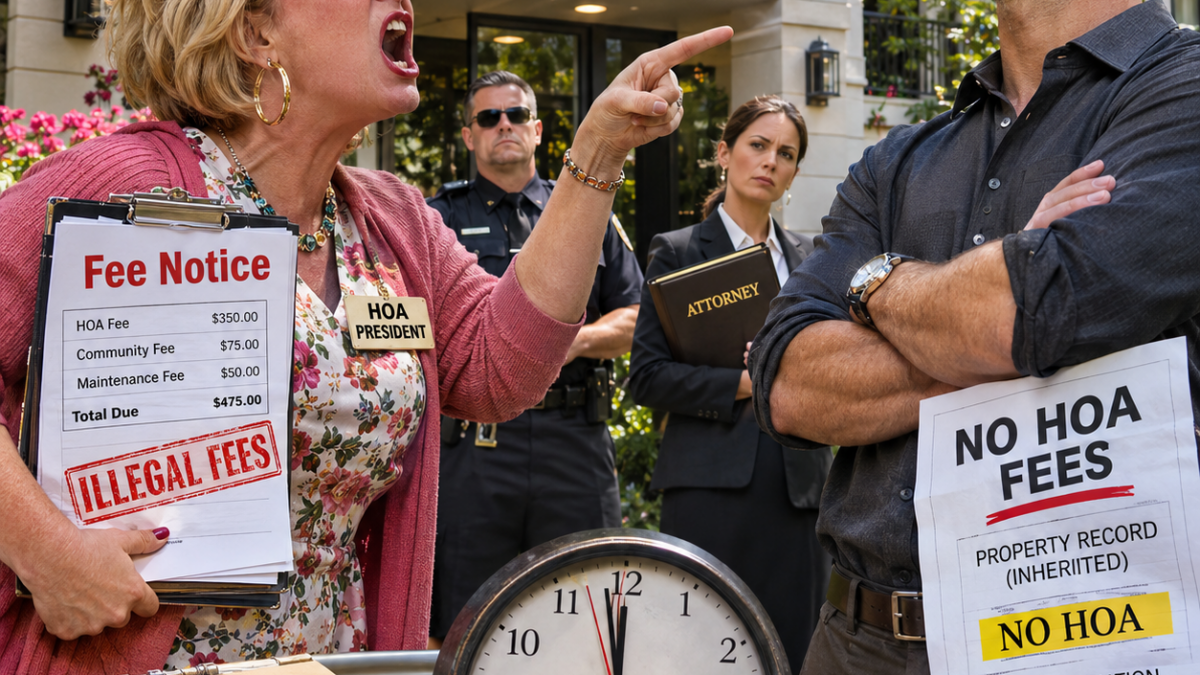
PART 2
I sat there for several seconds with my fingers resting on the keyboard.
Then I searched again.
Maplewood Commons.
Maplewood Commons Homeowners Association.
Maplewood HOA.
The property address.
Patricia Rogers.
Nothing.
I went back through the estate records.
Grandma’s deed was clean.
Her title history was clean.
No declaration of covenants.
No association documents attached to the property.
No transfer of management authority.
No board.
No recorded assessment rights.
Nothing that explained why a tenant in Unit 1A had greeted the legal owner of the building like an applicant asking permission to enter.
I closed the laptop.
Then opened it again.
That is the embarrassing part.
Despite everything I knew professionally, I doubted myself.
Fraud does that.
When somebody speaks with enough confidence, puts a logo on a letterhead, uses words like *bylaws* and *board authorization*, and behaves as though your questions are childish, part of your brain starts searching for the mistake you must have made.
Maybe Grandma signed something I had not found.
Maybe Arizona had some unusual legal structure I did not understand.
Maybe the documents were stored elsewhere.
I spent another hour checking.
The answer stayed the same.
Whatever Patricia was running at Maplewood Commons, it was not the organization she claimed it was.
I leaned back in the hotel chair.
Then I looked at the year on the photograph I had taken of the sign.
2017.
That date bothered me.
It was the year Grandma started forgetting things.
At first it had been little things.
She would call me twice in the same afternoon and tell me the same story.
She forgot appointments.
Once she mailed my birthday card to an address where I had not lived in three years.
By 2018, the changes were impossible to deny.
She could still tell you exactly how much she paid for Maplewood Commons in 1989, but she might forget whether she had eaten breakfast.
I remember one phone call especially.
“Megan?”
“Yeah, Grandma?”
“Did you already call me today?”
I had.
Twice.
“No,” I said.
I did not want to scare her.
She laughed softly.
“I thought maybe you did.”
That laugh stayed with me.
Now another thought came.
Someone had created an HOA at exactly the time my grandmother became less able to challenge it.
I did not know whether that was coincidence.
Not yet.
But I knew what I needed next.
Records.
The following morning, I returned to Maplewood Commons carrying copies of the deed, probate order, will, and Grandma’s death certificate.
I also turned on the recording application on my phone before leaving the car.
Patricia met me at the office.
This time, she smiled warmly.
“Megan. I’m glad you came back.”
“I said I would.”
“I think we started badly yesterday.”
“I think we started with paperwork.”
She laughed.
“Come inside.”
That surprised me.
Twenty-four hours earlier, I had supposedly needed board approval to cross the doorway.
Now she was inviting me in.
The office looked smaller than I remembered.
Grandma’s desk was still there.
So were two metal filing cabinets she had owned since the 1990s.
But almost everything personal was gone.
I noticed that immediately.
No family photographs.
No little porcelain elephant I bought her when I was twelve.
No faded picture of my mother.
Instead, framed photographs of tenant barbecues and “HOA cleanup days” covered the wall.
Patricia sat behind Grandma’s desk.
That bothered me more than I expected.
She opened a thick folder.
“I wanted to help you understand the structure.”
“Great.”
She spread papers across the desk.
Meeting minutes.
Fee schedules.
Rules.
Violation procedures.
A document titled:
**MAPLEWOOD COMMONS HOA MEMBERSHIP AGREEMENT**
At the bottom appeared my grandmother’s typed name.
Eleanor Lawson.
And underneath it, a signature.
Patricia tapped the page.
“Your grandmother signed this in 2017.”
I picked it up.
I had seen Grandma’s signature hundreds of times during probate.
Before her memory problems, she had a strong hand.
The capital E in Eleanor angled sharply.
The L in Lawson looped back.
By 2017, those lines had changed.
Her hand trembled.
The letters became smaller.
Uneven.
This signature looked like Eleanor Lawson at fifty-five.
Not Eleanor Lawson at seventy.
“Can I see the original?”
Patricia’s eyes shifted.
“It’s in secure storage.”
“Where?”
“Our records facility.”
“What facility?”
She folded her hands.
“For insurance purposes, originals aren’t kept here.”
That made no sense.
“What insurance company?”
“Megan, you’re getting lost in unnecessary details.”
“Then help me.”
I placed the agreement down.
“What does the HOA charge?”
“One hundred fifty dollars per unit per month.”
“All twelve units?”
“Yes.”
I did the math before she finished speaking.
$1,800 a month.
$21,600 a year.
Seven years.
More than $150,000.
“What does that pay for?”
“Maintenance. Landscaping. Security lighting. Administrative services. Reserves.”
I looked through the office window.
The fountain in the courtyard had been dry since I was fifteen.
The exterior paint was peeling near the third-floor railings.
A section of landscaping beside the parking lot was mostly gravel and dead shrubs.
“Where are the financial statements?”
“Board members have access.”
“I own the building.”
Patricia’s smile stiffened.
“The HOA is separate from ownership.”
“Then who owns the HOA?”
“That isn’t how associations work.”
“Who are the board members?”
She did not answer immediately.
“Where are the elections?”
“Megan.”
“Where’s the bank account?”
Her face hardened.
“I understand this is overwhelming.”
There it was.
The pivot.
She leaned forward.
“You’ve just lost your grandmother.”
I said nothing.
“She was declining for several years.”
My fingers tightened around the edge of the folder.
Patricia lowered her voice.
“She needed help.”
“She had property managers before.”
“She stopped trusting them.”
“That doesn’t answer my question.”
“She trusted me.”
I looked at her.
Patricia continued.
“Toward the end, Eleanor couldn’t keep up with everything. Bills. Repairs. Collections. Tenants. She would forget things.”
Her tone became sympathetic.
Almost gentle.
“I stepped in.”
The words hit me differently than they should have.
Not because I believed her.
Because she sounded proud.
As though my grandmother’s confusion had been an opportunity for community service.
I asked, “Did she authorize you to collect tenant money?”
“You’re looking at the agreement.”
“The copy.”
Patricia’s eyes narrowed.
“I don’t appreciate your implication.”
“I didn’t make one.”
“You’re questioning your grandmother’s judgment.”
“No.”
I held her gaze.
“I’m questioning yours.”
That ended the warmth.
She stood.
“I think we’re done.”
“I’ll need all financial records.”
“Board access only.”
“I’ll request them formally.”
“You can request whatever you like.”
“I will.”
I gathered my papers.
At the door, Patricia said, “The current assessment is due on the fifteenth.”
I stopped.
“What assessment?”
“Three hundred dollars for your grandmother’s owner unit.”
“She didn’t live here.”
“The account remains.”
“Grandma is dead.”
“There are also accumulated late fees.”
I turned slowly.
“How much?”
Patricia reached for another file.
“Approximately forty-two hundred dollars.”
“You’re charging my grandmother late fees after her death?”
“The association has expenses.”
I stared at her.
She did not blink.
“Your grandmother understood that.”
That sentence stayed with me all day.
Not because it was cruel.
Because Patricia believed it.
Or had repeated it often enough that belief no longer mattered.
That evening, I built my first spreadsheet.
Twelve units.
Seven years.
$150 per month.
Potential collections:
$151,200 before special assessments, penalties, and late charges.
Then I compared that amount with visible maintenance.
The numbers did not reconcile.
Not even close.
Four days later, Patricia sent me a certified letter.
The envelope had **URGENT LEGAL NOTICE** printed in red.
Inside was a three-page “Notice of Intent to File Lien.”
Unpaid assessments.
Late fees.
Administrative charges.
Reserve contribution.
Total:
$4,200.
Fourteen days to pay.
Then Maplewood Commons HOA would allegedly record a lien against the property and begin foreclosure proceedings.
For about thirty seconds, I was scared.
I am not embarrassed to admit that.
The paper looked real.
Case citations.
Reference numbers.
A notary stamp.
Formal language.
The word *foreclosure* has a way of bypassing rational thought.
Then I remembered the searches.
An association that had no legal existence could print whatever it wanted.
Printing was not recording.
I drove directly to the Maricopa County Recorder’s Office.
I requested the title history.
The clerk handed me the result.
Thirty-four years.
Clean.
No HOA liens.
No recorded covenants.
No association assessments.
No instrument giving Maplewood Commons HOA authority over anything.
I held Patricia’s letter beside the official title report.
One was paper.
The other was evidence.
That distinction became my anchor.
I started documenting every claim Patricia made and checking it against an independent source.
If she said something was recorded, I checked.
If she cited a rule, I searched.
If she claimed Grandma signed something, I compared handwriting.
The more I checked, the less real her world became.
But psychologically, the constant pressure worked.
There were nights I lay in bed thinking:
*What if I missed something?*
Then I would get angry at myself.
I was a CPA.
Forensic accounting was literally part of my work.
I had found embezzlement hidden inside procurement systems more complicated than this building.
Yet Patricia had me wondering whether a fake lien on nonexistent HOA authority might somehow destroy my inheritance.
That was when I understood what seven years of this must have done to the tenants.
My phone rang as I left the recorder’s office.
Unknown Phoenix number.
“Hello?”
A woman whispered, “Is this Megan Lawson?”
“Yes.”
“Eleanor’s granddaughter?”
“Yes.”
A door closed somewhere on the other end.
“I live in Unit Seven.”
“What’s your name?”
“I’d rather not say yet.”
“All right.”
“That woman has records.”
“Patricia?”
“Yes.”
“What kind?”
“A notebook.”
I stopped walking.
“Black cover. She keeps it in her apartment.”
“What’s in it?”
“Everything.”
“Define everything.”
“Who paid. How much. When. Cash or check. Late fees. Special assessments. She makes people sign when they pay cash.”
My pulse quickened.
“How long?”
“Since this started.”
“Seven years?”
“Yes.”
The woman’s breathing sounded unsteady.
“I’ve paid almost thirteen thousand dollars.”
“For HOA fees?”
“And assessments.”
“What assessments?”
“Security. Roof reserve. Fountain repair.”
I looked back toward my car.
“The fountain was never repaired.”
“I know.”
“Where is the notebook now?”
“Usually her desk drawer.”
“Management office?”
“No.”
“Unit 1A.”
That made me stop completely.
“Patricia lives in Unit 1A?”
Silence.
“You didn’t know?”
“No.”
“She’s been there since before the HOA.”
The woman lowered her voice further.
“She was just another tenant.”
My mind shifted instantly.
Tenant.
Not board president.
Tenant.
“Thank you.”
“I have to go.”
“Wait. What’s your—”
The line disconnected.
I went back to the hotel and opened Grandma’s rental records.
Unit 1A.
Lease dated 2016.
Tenant:
Patricia Rogers.
Monthly rent:
$1,200.
Then I opened Grandma’s bank statements.
I searched deposit descriptions.
Unit 2.
Unit 3.
Unit 5.
Checks.
Transfers.
Cash deposits.
Then Patricia.
Nothing.
I checked another month.
Nothing.
Another.
Nothing.
I went backward.
Then forward.
Seven years.
No identifiable rent from Unit 1A.
I sat motionless.
At $1,200 per month, that was $14,400 per year.
Over seven years, more than $100,000.
Added to the possible HOA collections, the numbers were no longer irritating.
They were enormous.
Patricia had apparently been living rent-free while collecting money from tenants in the name of an organization I could not verify had ever legally existed.
And according to the caller, she had written everything down.
That black notebook became the center of the case.
The next question was how to get it lawfully.
Before I could answer that, Patricia changed tactics.
Three days later, every tenant received an email.
Andrew Brown from Unit 9 eventually gave me a copy.
The subject read:
**URGENT SECURITY ALERT — UNAUTHORIZED INDIVIDUAL**
The message warned residents that someone claiming to own Maplewood Commons had been approaching tenants and soliciting personal information.
It suggested identity theft.
Financial fraud.
Harassment.
Tenants were instructed not to cooperate with me.
My name was not included.
It did not need to be.
When I visited the building later that day, people reacted differently.
A woman I had spoken to briefly near the mailboxes turned away.
A man on the second-floor balcony said, “Leave people alone.”
Another tenant pulled her little boy closer when I passed.
I had grown up visiting that courtyard.
Grandma used to set out folding chairs during Christmas parties.
Tenants had watched me race around the fountain when I was nine.
Now I was the stranger.
The scammer.
The threat.
I kept walking toward the management office.
My key no longer worked.
I tried again.
Nothing.
Patricia had changed the lock.
I stood there longer than I should have.
Through the glass, I could see Grandma’s desk.
Her old filing cabinets.
The calendar she kept on the wall.
But the family photographs were gone.
Every one.
In their place hung HOA notices.
Fee schedules.
A large printed sign:
**PATRICIA ROGERS — PRESIDENT**
I pressed my palm against the glass.
That hurt more than the money.
Grandma’s office had been one of the few places that still felt like her.
Now it looked like Patricia’s campaign headquarters.
“She took the pictures down last month.”
I turned.
An older man stood behind me.
Gray beard.
Work boots.
Weathered face.
“Excuse me?”
“The family pictures.”
He nodded toward the office.
“She said they were clutter.”
He extended his hand.
“Andrew Brown. Unit Nine.”
I knew the name from Grandma’s records.
“You’ve been here a long time.”
“Twenty-three years.”
He smiled sadly.
“Eleanor rented to me when I still had hair.”
We sat beside the dry fountain.
Andrew told me things I had forgotten.
When he lost his job in 2008, Grandma let him delay three months of rent.
When he had a heart attack, she drove him to the hospital because the ambulance was delayed.
When his wife died, Grandma brought food every night for a week.
“She treated people like people,” Andrew said.
Then he looked toward Unit 1A.
“Patricia never understood that.”
“When did all this start?”
“After Patricia moved in.”
“She arrived in 2016?”
“Yeah.”
“What was she like?”
Andrew laughed quietly.
“Complained about everything.”
“Noise?”
“Kids.”
“Parking.”
“Plants.”
“Packages.”
“Your grandmother kept trying to make her happy.”
He shook his head.
“That was Eleanor’s problem.”
“What?”
“She thought if someone was unhappy, kindness would fix it.”
In 2017, Patricia began “helping.”
Collecting packages.
Posting maintenance notices.
Keeping track of repair appointments.
Grandma’s memory was already declining.
According to Andrew, Patricia suggested creating an HOA-like structure so everyone could “share responsibility.”
“Did anyone vote?”
“Not that I remember.”
“Elect a board?”
He shook his head.
“See financial statements?”
“No.”
“Sign covenants?”
“No.”
“Then why did everyone pay?”
Andrew looked embarrassed.
“Eleanor seemed to allow it.”
That answer hurt.
Not because it proved Patricia right.
Because it explained everything.
Tenants trusted Grandma.
Grandma was confused.
Patricia stood beside her and claimed authority.
Nobody wanted to be the person accusing the helpful tenant of exploiting an elderly landlord.
By the time doubts appeared, the system already felt established.
Andrew reached inside his jacket.
He handed me a thick envelope.
“Receipts.”
I opened it.
Seven years.
HOA payments.
Some signed by Patricia.
Some stamped.
Every month.
Every assessment.
“I kept them.”
“Why?”
“Something felt wrong.”
He looked at me.
“Your grandmother ran this place for decades without an HOA.”
“Then suddenly Patricia says we need one and nobody gets to see the books.”
He nodded toward the office.
“I should’ve said something.”
“You didn’t know.”
“I knew enough to wonder.”
His voice dropped.
“That’s the part that bothers me.”
I understood.
People often imagine fraud continues because nobody notices.
That is not always true.
Sometimes many people notice one small thing.
Nobody sees enough to feel certain.
Andrew told me about an emergency tenant meeting Patricia had scheduled for Saturday.
“Mandatory?”
“That’s what her notice says.”
“Topic?”
“Security.”
He looked at me.
“You.”
I almost smiled.
“She’s holding a vote to keep me out of my own property.”
“Basically.”
Then Andrew added one more detail.
“She’ll bring the notebook.”
I looked at him.
“She always brings it.”
“To meetings?”
“Every time.”
“For payment records.”
My mind started moving.
“When is the meeting?”
“Seven.”
“Community room?”
“Yes.”
I stood.
Andrew looked up.
“What are you going to do?”
“I don’t know yet.”
That was not entirely true.
I knew exactly what kind of person I needed.
An attorney.
A real one.
I found Jack Rogers through a state bar referral.
No relation to Patricia.
I checked twice.
Jack practiced property and landlord-tenant law and had experience with association disputes.
When his assistant asked what the matter involved, I said:
“A woman created a fake HOA in my grandmother’s twelve-unit apartment building and may have collected more than $150,000.”
Silence.
Then:
“Can you come today?”
Jack’s office was downtown.
Small.
Organized.
He was in his late fifties with silver hair and the calm expression of someone who charged by the hour partly because panic was expensive.
I spread everything across his conference table.
Deed.
Probate.
State search.
County title search.
Patricia’s membership agreement.
The suspicious signature.
Lien threat.
Andrew’s receipts.
Grandma’s bank statements.
Lease for Unit 1A.
The tenant email.
Jack did not interrupt much.
When I finished, he asked:
“You’re a CPA?”
“Yes.”
“Forensic work?”
“Some.”
He nodded.
“That explains the spreadsheets.”
“Are they excessive?”
“No.”
He looked at my timeline.
“They’re beautiful.”
That was the first time I had laughed in weeks.
Then he became serious.
“Based on what you’ve shown me, there is no lawful HOA structure attached to this property.”
My shoulders loosened.
Hearing it from him mattered.
“The fee collections are a serious problem.”
“How serious?”
“Potentially criminal.”
“And the forged signature?”
“If it is forged.”
“It is.”
“You suspect it is.”
I hated that correction.
Jack did not.
“Words matter.”
He pointed at the agreement.
“We need an examiner or original exemplars before we call it forgery.”
“Fine.”
“The rent issue is separate.”
“Seven years.”
“Potentially more than a hundred thousand dollars.”
He shook his head.
“That part is astonishing.”
“She lives in the building she claims to govern.”
“Rent-free.”
“Yes.”
He looked at Andrew’s receipts.
“These are useful.”
“How useful?”
“Strong evidence she personally collected money.”
“But?”
He smiled faintly.
“There’s always a but.”
“What do we still need?”
“Flow of funds.”
He tapped the table.
“Where did the money go?”
“The black notebook.”
I told him.
Jack leaned back.
“A handwritten ledger?”
“Names, dates, amounts.”
“If it exists.”
“It does.”
“You haven’t seen it.”
“Andrew has.”
“Good.”
He thought for a moment.
“We cannot break into Unit 1A.”
“I wasn’t planning to.”
“We cannot take the notebook.”
“I know.”
“We need voluntary production, discovery, subpoena, warrant, or some other lawful route.”
“She brings it to meetings.”
Jack looked at me.
“When?”
“Saturday.”
Then I explained Patricia’s plan.
Mandatory meeting.
Vote on security.
Attempt to exclude me.
Jack’s expression changed slowly.
“She wants to hold a governance meeting on your property.”
“Yes.”
“For an organization that has no documented authority.”
“Yes.”
“And she plans to use the payment ledger in the room.”
“Yes.”
He smiled.
“That is helpful.”
We spent three hours planning.
Not a trap.
Not in the theatrical sense.
Questions.
That was Jack’s strategy.
He wrote them on a yellow legal pad.
When was Maplewood Commons HOA registered?
Who incorporated it?
Where were the covenants recorded?
Who elected the board?
When?
Where were the ballots?
Who were the current directors?
Which bank held HOA funds?
Who were the authorized signers?
Where were annual financial statements?
What vendors had been paid?
Where were reserve funds?
If Patricia told the truth, the structure collapsed.
If she lied, witnesses heard it.
If she refused, tenants would see the refusal.
Then there was the notebook.
Jack looked at me.
“Do not demand possession.”
“I know.”
“Do not touch it.”
“I know.”
“Do not accuse her of stealing in the room.”
I frowned.
“That seems difficult.”
“Ask questions.”
“She’s going to lie.”
“Then let her.”
“Why?”
“Because liars who believe they control a room usually give you more than people who know they’re cornered.”
That sounded familiar.
Grandma once told me something similar about bargaining at flea markets.
Jack prepared a letter establishing my ownership rights and my right to access common portions of the property.
He also contacted Phoenix police through a non-emergency channel to advise that there was a developing financial dispute involving potentially fraudulent fee collection and that evidence might surface during the meeting.
No demands.
No dramatic raid request.
Just documentation.
The night before the meeting, I drove past Maplewood Commons.
Patricia’s light was on.
I imagined her preparing the agenda.
Security measures.
Harassment.
Community protection.
Maybe a vote declaring me banned.
I wondered whether she was afraid.
Then I realized it did not matter.
Fear did not excuse what she had done.
But I also reminded myself that I did not yet know everything.
Maybe some money had actually gone toward maintenance.
Maybe Grandma had agreed to some arrangement Patricia later abused.
Maybe the signature was not forged.
Professionally, I knew the danger of falling in love with your own theory.
So I made myself a promise.
Tomorrow, I would follow evidence.
Even if some of it helped Patricia.
Saturday arrived.
Twenty tenants filled the ground-floor community room.
Some looked curious.
Some irritated.
Some genuinely suspicious of me.
Patricia stood behind a folding table at the front.
Navy blazer.
Pearls.
Stack of papers.
And beside them:
A black notebook.
I felt my heartbeat change.
Andrew had been right.
Jack stood beside me near the back.
“Do nothing stupid,” he whispered.
“Your confidence in me is inspiring.”
“I bill extra for bail.”
Before the meeting started, Jack passed my deed and legal letter forward.
Patricia read them.
Then looked up.
Her eyes found me.
For a second, the mask slipped.
Then the smile returned.
“It seems we have a guest.”
People turned.
“Miss Lawson has decided to attend despite not being a member of this community.”
I walked forward.
Jack followed.
Patricia gestured toward an empty chair.
“You may observe.”
“I’m not here as an observer.”
Her smile hardened.
“This is a tenant association meeting.”
“No.”
I placed my deed on the table.
“This is a meeting occurring inside property I own.”
Murmurs.
Patricia looked at Jack.
“And you are?”
“Jack Rogers. Counsel for Ms. Lawson.”
“Of course.”
The sarcasm was unmistakable.
Patricia turned toward the room.
“We have an agenda.”
“So do I,” I said.
Jack gave me a look.
I corrected myself.
“Questions.”
Patricia sighed.
“Briefly.”
I asked the first.
“When was Maplewood Commons HOA registered?”
She blinked.
“Excuse me?”
“With the state.”
“Our registration is being updated.”
Jack glanced at me.
I kept my voice neutral.
“So it is not currently registered?”
“There are administrative issues.”
“Was it ever registered?”
“That is a board matter.”
A tenant near the wall frowned.
I asked:
“Where are the recorded covenants?”
Patricia’s fingers touched the notebook.
“Our governing documents are secured.”
“Where are they recorded?”
“You’ve already asked for records.”
“I checked the county recorder.”
Her eyes narrowed.
“There are no recorded CC&Rs associated with Maplewood Commons.”
The room stirred.
Patricia lifted her chin.
“This is exactly why people should consult professionals before making claims based on internet searches.”
“County records aren’t internet rumors.”
“Enough.”
I moved to the next question.
“Who elected the board?”
“We’ve had regular governance procedures.”
“When?”
“Annually.”
“Who voted?”
“Members.”
“Where are the records?”
“Confidential.”
Andrew stood.
“Not to me.”
Patricia looked at him.
“Andrew, sit down.”
He did not.
“I’ve lived here twenty-three years.”
His voice shook slightly.
“I’ve paid your fees for seven.”
He held up his receipt envelope.
“I have never voted in an HOA election.”
A woman in the back said:
“Neither have I.”
Another:
“Me neither.”
Patricia raised both hands.
“Everyone needs to calm down.”
I asked:
“Where are the financial statements?”
“You don’t have access.”
“I own the building.”
“You are not an HOA board member.”
Andrew laughed once.
“What board?”
That changed the room.
People began talking over one another.
Patricia slapped her palm against the table.
“Order.”
The word came automatically.
The way she had probably used it dozens of times.
But nobody quieted immediately.
Finally, I pointed toward the black notebook.
“You keep payment records.”
Her hand moved to it.
“Yes.”
“Then show everyone.”
The room became quiet.
Patricia stared at me.
“Excuse me?”
“Show them.”
“That is not how financial reporting works.”
“You’ve collected money from these tenants.”
“Lawful assessments.”
“Then show them the accounting.”
Her fingers tightened around the notebook.
“You track payments in there, correct?”
She said nothing.
Andrew spoke.
“You checked my balance from that book last month.”
Patricia looked at him.
“You don’t understand what you’re doing.”
“No.”
He shook his head.
“I think I finally do.”
I said:
“If the organization is legitimate and the money was used as represented, the ledger should help you.”
Her face changed.
Not dramatically.
Just color leaving.
Her grip loosened.
Then tightened again.
“I don’t have to show you anything.”
Her voice sounded different.
Higher.
Jack stepped forward.
“There is another problem, Mrs. Rogers.”
She looked at him.
He spoke calmly.
“My client owns this property.”
“No recorded association encumbers the building.”
“No recorded covenants grant assessment authority.”
“No state corporate record supports the entity you claim to represent.”
He pointed toward the tenants.
“If you have been collecting mandatory fees under claims of legal authority that did not exist, the issue is no longer merely an internal dispute.”
Patricia clutched the notebook against her chest.
“This is a lie.”
Andrew stood fully.
“Then prove it.”
She stared at him.
“You’ve taken money from me every month.”
“I’ve maintained this community.”
“Where?”
He gestured toward the courtyard.
“The fountain is broken.”
Someone laughed bitterly.
“The lights barely work.”
Another tenant called out:
“My ceiling leaked for six months.”
A woman near the back said:
“You charged us a roof assessment.”
Voices rose.
Patricia backed toward the side of the table.
“You people have no idea what I’ve done for you.”
That sentence made the room angrier.
I did not need to say anything.
Seven years of isolation were ending in real time.
People compared payments.
Assessments.
Threats.
Late fees.
The pattern became visible because everyone was finally speaking in the same room.
Patricia grabbed her purse.
And the notebook.
She moved toward the door.
Jack quietly said my name.
“Megan.”
I knew what he meant.
Do not touch her.
Do not block her.
Do not turn this into something physical.
I stayed where I was.
Patricia reached the parking lot.
Several tenants followed, demanding answers.
I walked outside behind Jack.
A Phoenix police cruiser entered the lot.
Then another.
A woman in plain clothes stepped from the first vehicle.
Short gray hair.
Badge clipped at her waist.
She approached Jack.
“Mr. Rogers?”
“Yes.”
“Detective Francis Meyers. Financial Crimes.”
Patricia froze beside her car.
The detective looked at her.
“Mrs. Patricia Rogers?”
“This is harassment.”
Detective Meyers did not react.
“We need to speak with you regarding financial activity connected to an organization calling itself Maplewood Commons HOA.”
Patricia pointed at me.
“She has been causing problems since she arrived.”
“I understand there is a property dispute.”
“It isn’t a dispute.”
Patricia’s voice rose.
“She is not approved.”
The detective paused.
“Approved by whom?”
Patricia opened her mouth.
Nothing came out.
Meyers looked at the notebook.
“What are you holding?”
“Personal records.”
“Related to the HOA?”
“No.”
Andrew said from behind us:
“That’s the payment ledger.”
Patricia spun around.
“Stay out of this.”
The detective raised a hand.
“Everybody except Mrs. Rogers, please give us space.”
We stepped back.
She turned to Patricia.
“If the notebook contains private personal material, keep it.”
Patricia’s grip loosened slightly.
“If it contains records concerning fee collections, tenant payments, or the association, it may be relevant to an investigation.”
Patricia hugged it tighter.
“You need a warrant.”
“If necessary, we can pursue appropriate process.”
Meyers’s voice remained calm.
“I’m not asking you to waive your rights.”
That mattered.
She was not bullying Patricia.
She was giving her a choice.
Patricia looked at the tenants.
At me.
At Jack.
Then at the notebook she had carried proudly into the meeting.
Her own symbol of authority.
For seven years, those pages had told everyone who owed her money.
Now they meant something else.
“Fine.”
She thrust it toward Meyers.
“Take it.”
The detective accepted it carefully.
“You’ll see everything is legitimate.”
Meyers opened to a random page.
Her eyes moved down the entries.
Then back up.
“Mrs. Rogers, I’d like you to accompany us to the station for an interview.”
“Am I under arrest?”
“Not at this time.”
“I need a lawyer.”
“That would be wise.”
The sentence landed heavily.
Patricia looked at me.
For the first time, I saw fear without anger covering it.
She got into the cruiser voluntarily.
The door closed.
Twenty tenants watched it pull away.
Nobody celebrated.
That surprised me.
There was anger, yes.
But mostly disbelief.
Andrew came beside me.
“Seven years.”
I looked at him.
“I paid her for seven years.”
“I know.”
“You got here three weeks ago.”
“I didn’t build the case in three weeks.”
He frowned.
I looked up at the building.
“My grandmother spent thirty-four years building something worth protecting.”
That night, the courtyard became an unofficial audit room.
People brought receipts.
Bank statements.
Canceled checks.
Emails.
Threatening notices.
One tenant had been charged $600 for “emergency security improvements” that never appeared.
Another paid a special landscaping assessment despite doing her own patio landscaping.
A young couple had paid late fees after refusing to pay an assessment until Patricia showed them a budget.
She never did.
The stories were remarkably similar.
“You pay because everyone else pays.”
“Your lease requires cooperation.”
“You can be evicted.”
“The HOA can lien your tenancy.”
Words that sounded legal enough to frightened people.
Detective Meyers returned later.
She found Jack and me sitting beside the broken fountain.
“The ledger is comprehensive.”
“How comprehensive?”
“Seven years.”
My stomach tightened.
“Names?”
“Yes.”
“Amounts?”
“Yes.”
“Payment methods?”
“Yes.”
“Notes?”
She gave me a tired smile.
“She even documented cash.”
Jack asked:
“Where did the money go?”
“We’ll need subpoenas.”
“So you don’t know yet.”
“Not yet.”
I appreciated that answer.
Facts first.
Meyers looked at me.
“We’ll need formal statements from tenants.”
“I’ll help coordinate.”
“Your own records are useful.”
She nodded toward my folder.
“Especially the title search, state searches, lease documents, and your grandmother’s bank history.”
I asked:
“What about Patricia’s rent?”
“We noticed that.”
“Seven years.”
“If your records establish nonpayment, your attorney can pursue the civil side.”
Jack nodded.
Meyers continued.
“Depending on what the financial investigation shows, there may also be criminal implications.”
I looked toward Unit 1A.
Patricia’s curtains were closed.
“Did she come back?”
“No.”
“She obtained counsel and was released after questioning.”
Meyers closed her notebook.
“This will take time.”
That was exactly what I expected.
Interviews.
Bank subpoenas.
Document analysis.
Signature examination.
No dramatic overnight conviction.
Real investigations move slowly.
But the most important thing had already happened.
The secrecy was gone.
The following Monday, I entered the management office legally.
Jack arranged for a locksmith after documenting my title.
The old lock came off.
The new one went on.
I stood alone in Grandma’s office.
Patricia’s PRESIDENT sign still hung on the wall.
I took it down.
Underneath, the paint was darker.
A rectangle remained.
I opened drawers.
Mostly legitimate property records.
Some HOA documents.
No family photographs.
Then Andrew knocked.
“I know where the pictures are.”
He led me to a storage closet.
A cardboard box sat on the top shelf.
Inside were decades of photographs.
Grandma holding me as a baby.
My mother beside the fountain.
Grandma receiving a community-service award.
Christmas parties.
Tenant cookouts.
Her life.
Patricia had not destroyed them.
She had simply boxed them away.
That somehow hurt more.
I placed them back on the office wall.
Not all at once.
One frame at a time.
A week later, a forensic document examiner compared the 2017 “membership agreement” signature with Grandma’s authenticated signatures.
Jack called me.
“It’s not hers.”
I sat down.
“How confident?”
“Highly.”
“Traced?”
“Likely simulated from an older exemplar.”
I closed my eyes.
There it was.
One question I had kept open.
Answered.
Grandma had not willingly created Patricia’s organization.
Patricia had manufactured Grandma’s consent.
The investigation followed the money next.
According to records later produced through the case, substantial amounts of the so-called HOA fees had gone into accounts Patricia controlled personally.
Some money paid real expenses.
That surprised me.
A landscaper.
Replacement bulbs.
A small insurance policy.
Cleaning supplies.
That fact mattered because fraud is often more believable when it contains a little truth.
Patricia had apparently spent enough to make the system look functional.
But nowhere near what she collected.
The rest went elsewhere.
Personal expenses.
Credit-card payments.
Car payments.
Travel.
Jewelry.
And cash withdrawals.
The fake HOA was not merely badly managed.
It was income.
Her income.
Her rent-free apartment was another benefit.
The longer investigators looked, the clearer the timeline became.
Patricia moved into Unit 1A in 2016.
Grandma’s cognitive decline worsened in 2017.
Patricia began “helping.”
Then came the membership agreement.
The HOA sign.
The fee schedule.
The first assessments.
The unpaid rent.
Each step made the next easier.
What bothered me most was how small it must have seemed at first.
One hundred fifty dollars.
A maintenance fee.
Not enough to hire a lawyer over.
Not enough for most tenants to risk their housing.
Then another month.
Another year.
A special assessment.
Late fee.
Threat.
Seven years.
That is how more than $150,000 disappears without anyone standing up and screaming.
The grand jury process began months later.
Patricia’s attorney tried to frame the entire matter as informal property management.
He argued Grandma had given verbal permission.
That tenants voluntarily contributed.
That “HOA” was simply community shorthand.
Jack called me after reading one filing.
“Do not get angry.”
“I’m already angry.”
“Then get less angry.”
“She forged Grandma’s signature.”
“Yes.”
“She threatened foreclosure.”
“Yes.”
“She told tenants the fees were mandatory.”
“Yes.”
“She claimed legal authority.”
“Yes.”
“And now she says everyone was just donating?”
Jack paused.
“That is why evidence exists.”
He was right.
There were receipts labeled HOA FEE.
Emails saying PAYMENT REQUIRED.
Threats of penalties.
The fake lien notice.
The forged membership agreement.
The black ledger.
Bank records.
Andrew’s testimony.
Other tenants.
And Patricia’s own correspondence.
Her paperwork had been designed to make a nonexistent organization feel permanent.
Now every page helped prove the opposite.
Three months after the meeting, Patricia accepted a plea agreement.
Four felony counts.
Theft by deception.
Fraud.
Forgery.
And an offense related to the value she had taken through years of unpaid occupancy.
The financial losses were significant.
Restitution ordered to tenants totaled roughly $156,000.
My claim for unpaid rent and related losses was approximately $108,000.
Patricia did not have enough money to repay everything immediately.
Her available assets were frozen and liquidated as permitted through the case.
Savings.
A vehicle.
Jewelry.
Other property.
Money came back in pieces.
No single check erased seven years.
That was the part people misunderstand about restitution.
The judge can order numbers.
The victims still lived through the years behind them.
At sentencing, I sat near the back.
Andrew attended.
So did three other tenants.
Patricia stood before the judge looking nothing like the woman who had blocked my doorway.
No blazer.
No pearls.
No PRESIDENT sign.
Just a defendant.
The court imposed four years in state prison, with eligibility rules governed by the sentence and applicable law, along with restitution obligations.
Patricia stared straight ahead.
The judge asked whether she wished to speak.
Her lawyer whispered to her.
She stood.
“I believed I was helping manage a property that needed structure.”
Andrew shifted beside me.
Patricia continued.
“I admit mistakes were made.”
That phrase almost broke my composure.
Mistakes.
Seven years.
A fake organization.
A forged signature.
Threatening my grandmother’s estate with foreclosure.
Rent she never paid.
Money taken from tenants.
“Mistakes.”
The judge did not argue with her.
That impressed me.
He simply referred to the record.
The record was enough.
When court ended, Andrew asked:
“You okay?”
“I thought I would feel better.”
“About what?”
“Seeing consequences.”
He nodded.
“And?”
“I’m tired.”
He smiled sadly.
“Your grandmother used to say tired means go home.”
I looked at him.
“She said that?”
“Every time I complained after work.”
I laughed.
Then I cried.
Not much.
Enough.
I kept Maplewood Commons.
Almost everyone told me to sell.
My coworkers in Chicago thought I had lost my mind.
Twelve units.
Phoenix.
Old plumbing.
A broken fountain.
A history of fraud.
Tenants who distrusted authority.
And me living more than a thousand miles away.
One colleague said:
“Take the money and buy something clean.”
But Maplewood Commons was never clean.
Not in that sense.
It carried Grandma everywhere.
In the concrete.
The office.
The courtyard.
The lease files.
The old photos.
She had spent thirty-four years building it.
I was not going to let seven years of Patricia redefine the other twenty-seven.
I hired a licensed property management company.
I verified everything.
Insurance.
Credentials.
References.
Accounting controls.
Separate client trust accounts.
Monthly reporting.
Jack drafted new leases.
Each one included a sentence that made me smile:
**There is no homeowners association governing Maplewood Commons, and no separate HOA assessment is due from tenants.**
Rent stayed unchanged for the first year.
Some accountants would call that bad optimization.
I called it necessary.
People needed stability more than I needed an immediate increase.
Andrew became my unofficial building historian.
He refused payment.
“Absolutely not.”
“You’re doing work.”
“I’m gossiping professionally.”
“That sounds like work.”
“Your grandmother helped me.”
I stopped arguing.
When a tenant had a problem and was afraid to contact management, Andrew usually knew first.
Unit 4 needed a refrigerator.
Unit 11 had a leaking bathroom ceiling.
The woman in Unit 7—the anonymous caller—eventually introduced herself.
Her name was Lena.
She apologized for not giving it sooner.
“You had every reason to be careful,” I told her.
“I watched Patricia ruin people for questioning fees.”
“You called me anyway.”
“I was tired.”
That word again.
Tired.
Not heroic.
Not fearless.
Just finished being afraid.
Trust returned slowly.
One tenant challenged every maintenance charge.
Another demanded written confirmation before letting workers into her apartment.
Someone asked for proof that the new property manager was licensed.
I loved every question.
“Ask,” I told them.
“Please ask.”
At the first tenant meeting after Patricia’s sentencing, I placed a binder on the table.
Actual operating budget.
Actual repair expenses.
Actual insurance.
Actual reserve plan.
Andrew flipped through it.
“You’re really showing us everything?”
“Everything you have a right to see.”
“That’s going to spoil us.”
“Good.”
We repaired the exterior paint.
Replaced two failing air conditioners.
Fixed stair lighting.
The fountain remained dry.
Every contractor who inspected it gave me a different estimate.
At some point, I started thinking Grandma had kept it broken on purpose because she enjoyed complaining about it.
Then, one week after Patricia’s sentencing, I finally cleaned the bottom drawer of Grandma’s desk.
Tax documents.
Old warranties.
A receipt from 1996.
A restaurant menu.
Then an envelope.
My name was written across the front.
**Megan.**
The handwriting was shaky.
Recent.
I sat down before opening it.
Inside was one sheet of paper.
Dated three months before Grandma died.
I started reading.
**My dear Megan,**
**I know something is wrong with the building.**
I stopped.
Then continued.
**The woman in 1A, Patricia, has been taking money. I see it, but I cannot prove it. My mind is not what it was. I forget things. I lose papers. She knows this. She uses it.**
My hand started shaking.
**I am writing this now while I can still write, so you will know when I am gone. Please look carefully. Please protect what I built. I trust you. You are always the smart one.**
**Love, Grandma.**
I read it again.
Then once more.
For months, I had been telling myself Grandma did not understand.
That Patricia had exploited her without her knowing.
The truth was worse.
Grandma had known enough to be afraid.
She knew something was being taken.
She knew her own mind could no longer hold the evidence long enough to fight.
Imagine knowing you are being deceived while also knowing your memory is becoming unreliable.
Imagine trying to distinguish between what happened and what you may have forgotten.
That was what Patricia had used.
Not just old age.
Uncertainty.
Grandma had been trapped inside the same doubt Patricia later tried to create in me.
Except Grandma had left one last record.
A letter.
Paper.
Evidence.
I put it down.
Then I cried harder than I had at the funeral.
I had been too busy then.
Probate.
Travel.
Work.
Arrangements.
Phone calls.
Then Patricia.
There had always been another task.
Another document.
Another problem.
Now there was nothing left between me and grief.
I sat in Grandma’s chair with the letter in my lap until the office grew dark.
Andrew found me there.
He knocked once on the open door.
“You all right?”
“No.”
He looked at the letter.
Then at me.
“Want company?”
I nodded.
He sat across from me.
I handed him the page.
He read it silently.
When he finished, he removed his glasses.
“She knew.”
“Yes.”
His eyes filled.
“Damn.”
“She knew and couldn’t stop it.”
Andrew shook his head.
“No.”
“What?”
“She did stop it.”
I looked at him.
He held up the letter.
“Just later.”
I laughed through tears.
“That is a very generous interpretation.”
“It’s the correct one.”
He handed it back.
“Eleanor knew who to leave the building to.”
For once, I did not argue.
A year after I arrived in Phoenix, Maplewood Commons looked different.
Not luxurious.
I did not want luxurious.
Grandma never did.
The stucco was freshly painted.
The courtyard lighting worked.
The landscaping was simple and alive again.
There was a professional management office with financial records tenants could actually request.
The fake HOA sign was gone.
I kept it in storage.
I thought about throwing it away.
Then decided against it.
Some evidence should survive after the case is over.
The fountain was the last project.
Every contractor told me replacing the old pump and cracked underground line would cost more than the fountain was worth.
I almost left it dry.
Then Lena said:
“Your grandmother used to complain every summer that she would fix it next year.”
Andrew laughed.
“She said that for twenty years.”
So I fixed it.
Not because it increased property value.
Not because the tenants needed a fountain.
Because some promises deserve to be inherited too.
The day the repair crew turned it on, water sputtered out unevenly.
Stopped.
Andrew looked at me.
“Very on brand.”
Then the pump caught.
Water rose.
Not high.
Nothing impressive.
Just a clear stream falling into an old tiled basin that had been dry for most of my adult life.
Tenants came out.
Children watched.
Lena took a picture.
Andrew stood beside me.
“You going to put up a plaque?”
“No.”
“HOA memorial?”
“Absolutely not.”
He laughed.
I looked toward Grandma’s office window.
Her photographs were back on the wall.
One showed her shortly after buying Maplewood Commons.
She was forty-two.
Standing in the courtyard.
Same fountain behind her.
Same building.
Different life.
She had arrived in Phoenix after coming to America in 1975.
She cleaned houses for fifteen years.
Saved money.
Bought the building.
Managed it herself.
Raised a family.
Helped tenants.
Forgot things near the end.
Got exploited.
Left a letter.
And somehow the thing she built remained.
That mattered more to me than Patricia’s sentence.
People sometimes asked whether I had gotten revenge.
I never knew how to answer.
If revenge meant watching Patricia go to prison, that was not what I had wanted when I arrived.
If revenge meant getting money back, restitution never returned everything.
If revenge meant humiliation, the emergency meeting certainly provided enough.
But none of those moments felt like victory.
The closest thing to victory happened on a quiet Wednesday afternoon when a new tenant came to the office to sign a lease.
She was twenty-six.
New job in Phoenix.
Nervous.
She read every page.
Good.
When she reached the financial section, she asked:
“Are there any association fees?”
“No.”
“No HOA?”
“No HOA.”
She looked relieved.
“Really?”
“Really.”
She signed.
Then asked:
“Who handles the building?”
I pointed toward the property management information.
“They do the daily work.”
“And you?”
“I own it.”
She smiled.
“Simple.”
I looked around Grandma’s office.
“Very.”
That evening, I placed Grandma’s letter in a frame.
Not publicly.
It belonged to me.
I hung it beside my desk at home.
Whenever work became frustrating, I sometimes read the last lines.
**Please protect what I built.**
For a long time, I thought she meant the building.
Twelve apartments.
Stucco.
Roof.
Parking spaces.
Office.
Fountain.
Eventually, I realized she meant more.
She had built trust.
A place where Andrew could miss three months of rent after losing his job without becoming homeless.
A place where tenants knew the owner by name.
A place where a woman who came to America with little money could become the person other people depended on.
Patricia had stolen money.
But the deeper damage was that she turned trust into a weapon.
She used Grandma’s reputation to make tenants pay.
Then used their obedience to convince Grandma the system was legitimate.
When I arrived, she tried to do the same thing to me.
Procedures.
Applications.
Approvals.
Fees.
Documents.
All designed to make me ask permission to own what already belonged to my family.
The answer was not to become more controlling than Patricia.
It was to make authority boring again.
Clear leases.
Real receipts.
Independent management.
Bank statements.
Repair invoices.
No secret board.
No invented rules.
No one-person government occupying Unit 1A.
That apartment stayed empty for almost two months after Patricia was gone.
I avoided entering it.
Eventually, I had to.
The property manager needed to inspect it before renovation.
It was ordinary.
That surprised me.
Beige walls.
Old carpet.
Small kitchen.
Cheap blinds.
No secret vault.
No dramatic stacks of stolen cash.
The desk where she had kept the black notebook sat near a window.
I stood beside it.
Seven years of control had come from this little room.
Not because Patricia possessed extraordinary power.
Because people believed she did.
The property manager asked:
“Keep the desk?”
“No.”
We donated it.
A young couple eventually rented Unit 1A.
They had no idea what had happened there until Andrew tried to tell them the entire story on move-in day.
I stopped him.
“Let them live.”
He grinned.
“You’re no fun.”
“They’ll hear eventually.”
“They absolutely will.”
He was right.
Buildings remember.
People talk.
But memory is different from control.
Patricia became history.
Not management.
Two years later, I was still flying between Chicago and Phoenix.
I had considered moving permanently.
I had considered selling.
I had considered converting Maplewood Commons into something newer and more profitable.
I did none of those things.
Not yet.
The building earned enough to maintain itself.
Tenants stayed.
The property manager did good work.
Andrew continued his unpaid intelligence service despite repeated attempts to compensate him.
The fountain broke once.
Of course it did.
We fixed it.
Again.
One evening, during a visit, I sat beside it with Andrew.
Children were drawing chalk flowers across the courtyard.
He said:
“You know what Eleanor would hate?”
“What?”
“All this attention.”
I laughed.
“That’s true.”
“She’d say we’re wasting time talking about her.”
“What would she want us doing?”
Andrew looked toward the building.
“Checking the roof.”
I stood.
“Monsoon season.”
“Exactly.”
We walked upstairs.
The roof was fine.
For once.
When I returned to Grandma’s old office, sunlight fell across the framed photographs.
I stopped at one.
Grandma at forty-two.
Keys in her hand.
Maplewood Commons behind her.
She looked terrified.
I had never noticed that before.
I always saw pride.
Now I saw fear too.
Maybe she did not know whether the building would succeed.
Maybe she had spent every dollar she had.
Maybe she wondered whether twelve families would actually pay rent.
Maybe courage had never looked like confidence.
Maybe it looked like buying a building when failure would ruin you.
Then showing up the next morning anyway.
I thought about my first day.
Patricia blocking the entrance.
Demanding approval.
Telling me I had no access.
At the time, she seemed powerful.
Now the memory almost felt absurd.
But I never wanted to laugh at the version of myself standing there.
That woman was grieving.
Confused.
Trying to be polite because she did not yet know what kind of fight she had entered.
She did something important.
She asked for paperwork.
That was all.
One reasonable question.
Then another.
Where are the bylaws?
Where is the registration?
Where are the covenants?
Where is the money?
Who elected you?
Where is the accounting?
Patricia survived for seven years because most people were too isolated to ask those questions together.
The moment everyone asked at once, the structure collapsed.
The legal time bomb beneath Patricia’s little empire was never some exotic statute or secret clause.
It was simpler.
Her entire authority depended on nobody checking.
Nobody comparing.
Nobody demanding originals.
Nobody adding seven years of small payments into one large number.
Nobody looking at Grandma’s bank statements and noticing Unit 1A had vanished from the deposits.
Nobody asking why a building that collected more than $150,000 in maintenance fees still had peeling paint and a dead fountain.
She did not fall because I was smarter than everyone else.
I had advantages.
Training.
Records.
Ownership rights.
An attorney.
Tenants willing to speak.
But the truth had always been there.
It was sitting in Andrew’s envelope.
In Lena’s bank statements.
In county records.
In state databases.
In the handwriting Patricia tried to imitate.
In a black notebook she carried into her own meeting.
And finally, in a letter hidden in the bottom drawer of Grandma’s desk.
I once asked Jack what he thought would have happened if I had filled out Patricia’s first application.
He laughed.
“She probably would’ve invented a reason to reject you.”
“You think?”
“She couldn’t let you into the records.”
“Because I’d see everything.”
“Exactly.”
I looked at the copy I had saved.
Social Security number.
Bank information.
Credit authorization.
“What would she have done with this?”
Jack’s expression changed.
“We’ll never know.”
That answer bothered me.
Then I decided it did not matter.
Sometimes the best outcome is a question that never gets answered because you refused to give someone the opportunity.
The original clipboard ended up in the evidence file.
So did the $4,200 lien threat.
The fake fee schedules.
The forged agreement.
The security email calling me a possible identity thief.
I kept copies.
Not because I planned to reopen the case.
Because Grandma kept records.
I finally understood why.
Memory is fragile.
Paper is patient.
One afternoon, three years after Patricia’s sentencing, Andrew called me in Chicago.
“Emergency.”
My heart jumped.
“What happened?”
“The fountain.”
I closed my eyes.
“What now?”
“It’s making a noise.”
“What kind?”
“A fountain noise.”
“Andrew.”
“I think the pump is dying.”
“I thought somebody was hurt.”
“I am hurt. Emotionally.”
I laughed so hard a coworker looked over the divider.
“I’ll call maintenance.”
“Your grandmother would’ve left it broken.”
“My grandmother also saved receipts from 1992.”
“Fair.”
I hung up.
Then sat there smiling.
That was inheritance now.
Not court hearings.
Not detectives.
Not forged paperwork.
A broken fountain.
A leaking sink.
A tenant who needed a new garbage disposal.
Ordinary problems.
Real ones.
Problems that did not require deciding whether reality itself had been fabricated.
When I visited the following month, the fountain was running again.
Andrew sat beside it with coffee.
I joined him.
He handed me a second cup.
We listened to the water.
After a while, he said:
“She’d be proud.”
I knew who he meant.
I looked at the office window.
“At the building?”
“At you.”
I shook my head.
“Grandma wasn’t sentimental.”
“That’s not a no.”
I smiled.
“No.”
A little girl from Unit 6 ran past us and dipped her hand into the fountain.
Her mother called:
“Don’t drink that!”
Andrew whispered:
“Excellent advice.”
I laughed.
The sun dropped behind the building.
Lights came on one by one.
Twelve families settling into their evenings.
Dinner.
Homework.
Television.
Laundry.
Normal life.
No mandatory HOA meeting.
No fee envelope sliding under doors.
No president counting payments in a black notebook.
Just rent.
Repairs.
Receipts.
And a building that finally made sense again.
I thought about Grandma’s final letter.
**I know something is wrong.**
She had been right.
**Please look carefully.**
I had.
**Please protect what I built.**
I was still trying.
The fountain splashed beside me.
Andrew complained that the new pump was too loud.
I told him he was impossible.
He said Grandma used to tell him the same thing.
Then we sat there until the courtyard lights came on.
For the first time, I understood why I had never been able to sell Maplewood Commons.
I had inherited twelve apartments.
But Grandma had left me something harder to put on a deed.
Responsibility.
And after seven years of someone pretending authority was whatever she said it was, the best thing I could do with that responsibility was keep everything simple enough that nobody ever had to wonder who was telling the truth again.
I looked at the fountain, working at last.
At Grandma’s photographs through the office window.
At Andrew drinking coffee beside me.
Then at the entrance where Patricia had once stood blocking my way.
The fake HOA sign was long gone.
There was nothing there now except the building’s name.
**MAPLEWOOD COMMONS.**
No “HOA.”
No invented board.
No president.
Just the place my grandmother bought in 1989.
The place she asked me to protect.
And this time, nobody needed permission to tell the truth.
[END OF STORY]








