PART 2: I Inherited 1,000 Acres—Then Discovered a 400-Home HOA Had Been Built on My Grandma’s Land
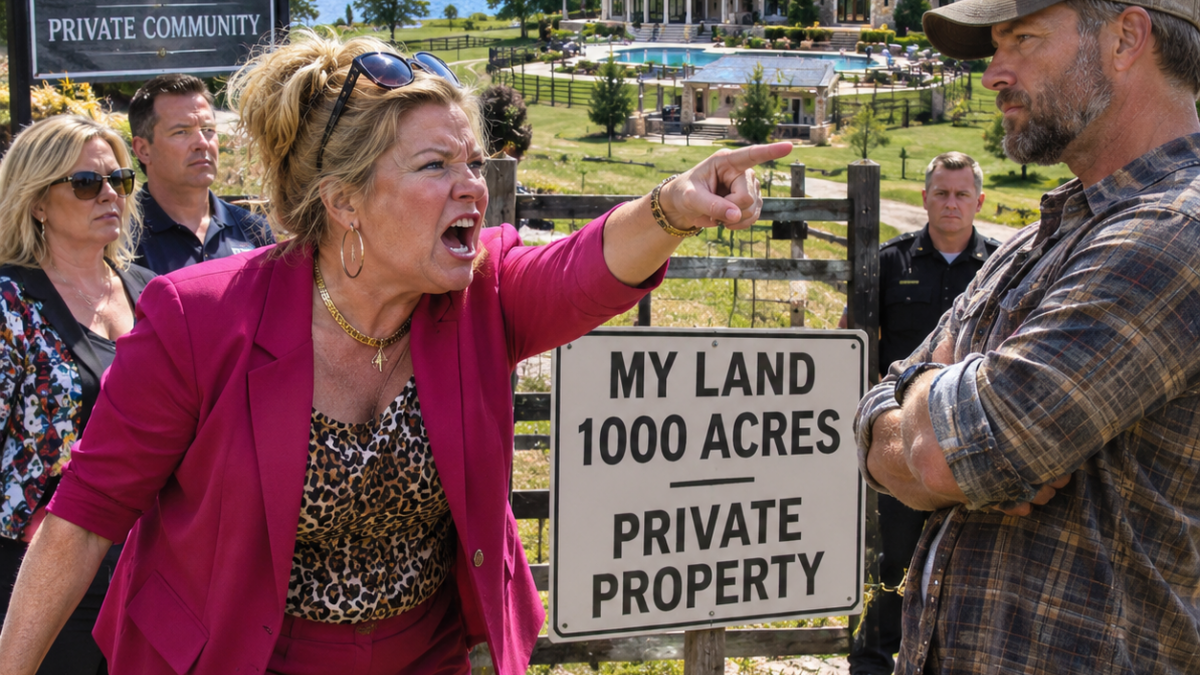
PART 2
I left the community center without arguing.
That probably surprised Diane.
It surprised me too.
Every part of me wanted to put the deed back in front of her and demand an explanation.
But my grandmother had taught me something when I was nine years old.
We had been repairing a fence on the north side of her property.
I complained because the old post would not come out.
Grandma leaned on her shovel and said, “Stop pulling harder.”
“What am I supposed to do?”
“Find out what’s holding it.”
At nine, I thought she was talking about fence posts.
At thirty-seven, I finally understood she had been talking about almost everything.
So instead of pulling harder, I went looking for what was holding Meadowbrook Estates together.
The county clerk’s office was twenty minutes away.
I spent three hours in the records room.
The first thing I searched was Margaret Gray.
The results were almost boring.
Which was exactly what I wanted.
1963.
Purchase recorded.
Annual property taxes.
Assessments.
Boundary updates.
No sale.
No transfer.
No mortgage encumbrance covering the full parcel.
No development agreement signed by her.
Nothing.
Sixty years of continuous ownership.
Then I searched Meadowbrook Estates.
That was when the story changed.
The HOA had been incorporated roughly sixteen years earlier.
Development paperwork described the land as formerly unimproved acreage acquired under a community development agreement.
I read that sentence twice.
Then I found the supposed authority.
**GRAY FAMILY TRUST.**
I leaned closer to the screen.
There was no seller listed.
No purchase price.
No recorded deed transferring title from my grandmother.
The development paperwork simply referred repeatedly to authorization granted by the Gray Family Trust.
I knew every major document in my grandmother’s estate.
There was no trust.
Her attorney had specifically told me there was no trust.
I called him from the hallway.
“Did Grandma ever establish something called the Gray Family Trust?”
“No.”
“Ever?”
“Not through my office.”
“Could she have done it somewhere else?”
“Margaret?”
“Yes.”
He almost laughed.
“She called trusts ‘fancy ways for lawyers to hide nouns.’”
Despite everything, I smiled.
That sounded exactly like her.
“So no.”
“No.”
I lowered my voice.
“Then why is there an entire neighborhood claiming a Gray Family Trust gave them development rights?”
Silence.
“What neighborhood?”
“Meadowbrook Estates.”
Another silence.
Then:
“Ethan, where are you?”
“County clerk.”
“Photograph everything.”
“I already am.”
“Do not sign anything.”
“I wasn’t planning to.”
“And do not accuse anyone publicly yet.”
I looked back through the glass doors of the records room.
“Why?”
“Because if somebody invented a legal entity to authorize development on Margaret’s land, this is much bigger than an ownership dispute.”
I hung up.
For the next hour, I photographed every relevant page.
The more I read, the stranger it became.
Every major approval referenced something else.
Development agreement.
Trust certification.
Legal opinion.
Permit application.
HOA incorporation.
Each document seemed to support the next.
But when I followed them backward, they all led to the same thing.
The Gray Family Trust.
The trust that had never existed.
That evening, Diane emailed me.
**INVITATION TO RESOLUTION MEETING**
The tone was pleasant.
Professional.
The board wanted to “clarify misunderstandings.”
They hoped for an “amicable resolution.”
Someone named Neil Bridges was copied.
HOA legal counsel.
The final sentence read:
**We are confident that this matter can be resolved in a way that protects the interests of all parties and reflects the strength of Meadowbrook Estates’ legal position.**
I read it twice.
It was not an invitation.
It was a warning wearing a tie.
I accepted.
The meeting took place the following week.
When I walked into the community center, approximately two hundred residents were already seated.
That was my first shock.
My second was the stage.
Long table.
Microphones.
Projection screen.
Meadowbrook logo.
Three people sitting at the front.
Diane.
A man introduced as Roger Stanton, HOA vice president.
And Neil Bridges.
Neil looked around forty-five.
Expensive suit.
Perfectly calm face.
Three thick binders sat in front of him.
Diane stood.
“Mr. Gray.”
She smiled like a host welcoming someone to dinner.
“We appreciate you coming.”
Every head turned toward me.
I suddenly understood.
This was not a private negotiation.
It was theater.
And I had been cast as the villain.
I sat at a small table facing them.
Alone.
Diane spoke first.
“We understand estate matters can be emotional.”
There it was.
Emotional.
Not legal.
Not factual.
Emotional.
“Our intention tonight is simply to give residents confidence and to help Mr. Gray understand the legal history of our community.”
Neil opened the first binder.
He began presenting documents.
Incorporation papers.
Meeting minutes.
Tax documents.
Insurance records.
Maintenance agreements.
Development plans.
Homeowner covenants.
Fifteen years of paperwork.
Pages.
Tabs.
Stamped copies.
Official seals.
He moved quickly.
Too quickly for anyone to read.
That was deliberate.
The point was not substance.
It was weight.
Look how much paper we have.
Look how established we are.
Look how impossible it would be for all of us to be wrong.
Neil finally slid a summary toward me.
“Meadowbrook Estates was developed under lawful authority provided by the Gray Family Trust.”
I looked at him.
“That trust never existed.”
Murmurs moved across the room.
Diane’s smile tightened.
Neil remained composed.
“That is not our understanding.”
“My grandmother never created it.”
“We have legal certification.”
“From whom?”
Neil reached into another binder.
He produced a single document.
Heavy paper.
Formal letterhead.
Notary stamp.
Legal language.
At the bottom was a signature.
Attorney Richard Daws.
The document certified that the Gray Family Trust existed and had legally authorized the development.
I looked at the date.
Sixteen years earlier.
“May I have a copy?”
Neil hesitated.
“You may review it.”
I took out my phone.
“Then I’ll photograph it.”
Diane interrupted.
“Before we get bogged down in technicalities—”
“Technicalities?”
She ignored that.
Roger Stanton leaned forward.
“We are aware that you may feel you have inherited a claim.”
“A claim?”
He kept going.
“And we are prepared to help avoid expensive litigation.”
He slid a sheet of paper toward me.
“Goodwill settlement.”
I read the number.
$75,000.
At first, I honestly thought I was misreading it.
“You’re offering me seventy-five thousand dollars.”
“As a gesture of goodwill.”
“For one thousand acres.”
“We are not purchasing land.”
“Then what am I selling?”
Neil answered.
“Your potential claims.”
I read the agreement.
It required me to acknowledge the Gray Family Trust as legitimate.
Acknowledge that Meadowbrook’s development had been legally authorized.
Release the HOA.
Release the developers.
Release board members.
Release residents.
Waive future claims.
Seventy-five thousand dollars.
For land worth millions.
For my grandmother’s name.
For sixty years of ownership.
For silence.
I looked up.
Diane smiled.
“This allows everyone to move forward.”
I thought of Grandma Margaret.
She once drove thirty miles back to a hardware store because a cashier accidentally gave her twelve dollars too much change.
The cashier had laughed.
“You could’ve kept it.”
Grandma answered:
“It wasn’t mine.”
Now two hundred people were watching to see whether I would accept seventy-five thousand dollars for something that actually was mine.
I placed the agreement down.
“The Gray Family Trust never existed.”
Diane’s eyes hardened.
Neil lifted the certification.
“We have documentation.”
“So do I.”
“Then perhaps your counsel can contact ours.”
“I intend to.”
Diane leaned back.
“The offer will not remain available forever.”
I stood.
Two hundred residents watched.
Some angry.
Some afraid.
Most suspicious.
I looked at them.
Not at Diane.
At them.
Because for the first time, I understood the cruelty of the situation.
These people were not criminals.
They had bought houses.
Paid mortgages.
Raised children.
Planted trees.
Buried pets.
Held birthday parties.
They believed they owned their homes.
Diane’s greatest protection was not paperwork.
It was them.
Four hundred innocent families standing between her and accountability.
I said only:
“I’ll be in touch.”
Then I walked out.
That night, I researched Richard Daws.
The attorney who supposedly certified the trust.
The first result I found was an obituary.
He had died eleven years earlier.
The second result was from the state bar.
License suspended.
Reason:
Document fraud.
My stomach tightened.
The suspension occurred years after the certification was supposedly issued.
That did not automatically invalidate what he had done before.
But it changed the question.
Who exactly had built Meadowbrook’s legal foundation?
And why did every road lead to a man later disciplined for falsifying documents?
Three days later, the HOA sent me a trespass warning.
I almost admired the audacity.
The letter said I had entered Meadowbrook without authorization.
I had attended a meeting they invited me to.
On land I legally owned.
A week later came another letter.
Harassment.
Intimidation.
Concerned residents.
No names.
No dates.
No specific conduct.
Then came the court filing.
Temporary restraining order.
The HOA claimed I had engaged in a pattern of aggressive behavior and unauthorized entry.
They attached the earlier letters as evidence.
They also attached statements from three residents.
Each said I had frightened them.
One claimed I had “raised my voice threateningly” during the community meeting.
I had barely spoken.
Another said I had approached residents after the meeting.
I left alone.
The third said my continued presence created fear.
That one was technically true.
Not because I had done anything.
Because Diane had convinced them to fear me.
The hearing was scheduled for the following week.
If the judge granted it, I could be legally barred from entering Meadowbrook.
My own thousand acres.
That was the moment I stopped thinking this was defensive behavior.
They were not trying to protect themselves from me.
They were trying to prevent me from reaching the land long enough to prove it belonged to me.
I documented everything.
Letters.
Envelopes.
Postmarks.
Emails.
Hotel receipts.
Phone records.
Gas receipts.
Where I had been.
When I had been there.
Who contacted whom.
Then I began researching the law behind Meadowbrook’s claimed development authority.
Community development agreements required recorded consent.
No consent from Grandma existed.
Trust ownership required documentation.
Nothing had ever been filed creating the Gray Family Trust.
Every foundational Meadowbrook document eventually pointed to Richard Daws’s certification.
One sheet of paper.
That was the base.
Everything else had been built on top.
It reminded me of one of Grandma’s barns.
From outside, it looked solid.
But once we discovered termites in a support beam, she told me:
“The roof isn’t the problem.”
“It’s leaking.”
“The leak is what you can see.”
She kicked the rotten beam.
“This is why it’s leaking.”
I needed someone who knew where to kick.
That person was Helen Roberts.
Property attorney.
Two counties away.
No connection to Meadowbrook.
Her website listed title disputes, developer fraud, land-use litigation, HOA conflicts.
Her reviews used words like relentless, obsessive, and terrifying.
Exactly what I wanted.
I called.
The receptionist asked for a summary.
“I inherited a thousand acres.”
“Okay.”
“And found four hundred houses on it.”
Silence.
“Excuse me?”
“An HOA claims a trust my grandmother never created gave them permission.”
Another pause.
“I’m going to put you on hold.”
Helen called me forty minutes later.
No small talk.
“Tell me about the trust.”
I explained everything.
She interrupted constantly.
Not rudely.
Precisely.
“Recorded where?”
“Nowhere.”
“Certification signed by whom?”
“Richard Daws.”
“Bar number?”
I gave it.
“Development date?”
I told her.
“Grandmother’s chain of title?”
“Continuous.”
“Restraining order pending?”
“Yes.”
When I finished, Helen was silent.
Then she said:
“If your facts are accurate, you do not have a neighborhood boundary dispute.”
“What do I have?”
“Potential systematic fraud.”
The words sat heavily between us.
“But we proceed carefully.”
“Why?”
“Because right now they are making you the defendant before you can prove you are the victim.”
She understood immediately.
“That restraining order is not about safety.”
“No.”
“It’s about narrative.”
“Yes.”
“What do you need?”
“Everything.”
I sent her the documents.
That evening she emailed.
Not a long email.
One paragraph.
She had searched archived county permit materials.
Not current digital records.
Older scans.
The original Meadowbrook development application included a survey report.
The surveyor had flagged boundary problems.
Serious ones.
That report had disappeared from the approved file.
Helen ended:
**I’m trying to locate the surveyor. If he kept his records, we may have found the thread.**
The surveyor was alive.
Henry Caldwell.
Seventy-three.
Retired.
Ninety miles away.
Helen and I drove to his home on Saturday.
Henry met us in a kitchen that smelled like coffee and sawdust.
He remembered Meadowbrook immediately.
“I told them they couldn’t build it.”
I stared.
“You knew?”
“I knew the property description was wrong.”
Henry pulled a folder from an old filing cabinet.
Sixteen years earlier, developers hired him to survey the proposed site.
His findings were clear.
Their claimed development boundaries overlapped almost entirely with land legally owned by Margaret Gray.
My grandmother.
He prepared a report.
Submitted it.
Told them construction could not proceed without proof of acquisition or consent.
A few months later, he drove past.
Bulldozers.
Road grading.
Utilities.
Construction.
“I called the county,” he said.
“What did they tell you?”
“No boundary problem was on file.”
Helen leaned forward.
“Did you keep copies?”
Henry laughed softly.
“I’m a surveyor.”
He brought us to his garage.
Boxes of records.
Field notes.
Maps.
Correspondence.
Then he spread the Meadowbrook file across the kitchen table.
There it was.
Grandma’s legal boundary.
The proposed development footprint.
Almost total overlap.
And Henry’s written conclusion:
**Development should not proceed absent verified ownership transfer or written authorization from the Gray family.**
I looked at him.
“Why didn’t you do anything?”
He looked away.
“I tried.”
“After your report disappeared?”
“I asked questions.”
“And?”
“People stopped returning calls.”
“That was enough?”
Helen glanced at me.
I knew I sounded harsh.
Henry did too.
He nodded slowly.
“At the time, yes.”
He folded his hands.
“I had a business.”
“Employees.”
“Family.”
He looked at the report.
“I told myself it wasn’t my responsibility after I filed it.”
His voice dropped.
“I’ve regretted that for sixteen years.”
I softened.
“I’m sorry.”
“No.”
He shook his head.
“You don’t owe me that.”
When we left, Helen carried copies of everything.
Survey.
Report.
Field notes.
Correspondence.
On the drive back, she said:
“This is bigger now.”
“Because the county buried it.”
“Someone did.”
“Can we prove who?”
“Not yet.”
She looked toward me.
“But someone received a professional survey telling them the developer did not own the land.”
“And construction continued.”
“Yes.”
“What does that mean?”
“It means whatever happened was not a simple paperwork mistake.”
Helen filed records requests directly with state-level offices.
She also hired Walter Puit.
Thirty years managing land records.
Retired.
His specialty was title history.
Manipulated records.
Missing documents.
Chronology problems.
He called me the first day.
“I only need one thing from you.”
“What?”
“Patience.”
I almost laughed.
“Apparently everybody needs that from me.”
“Because if there’s a legitimate transfer, I’ll find it.”
“And if there isn’t?”
“Then all the paper in the world won’t create one.”
Meanwhile, Helen answered the restraining order.
But she did more than defend me.
She countered.
She asked the court to order the HOA to produce:
Original trust documents.
Original authorization.
Development agreement.
Correspondence.
Permit approvals.
Acquisition records.
Anything showing legal consent by Margaret Gray.
That changed the tone.
We were no longer saying:
Please stop accusing me.
We were saying:
Show us what you own.
Three days later, my face appeared on the front page of the local newspaper.
**INHERITANCE DISPUTE THREATENS MEADOWBROOK COMMUNITY**
I bought the paper at a gas station.
Diane was quoted throughout.
She called me a distant relative.
I was Grandma’s only grandchild.
She described my claim as dubious.
She said four hundred families were being terrorized by uncertainty.
She cited the restraining-order petition as evidence of my “concerning conduct.”
The article did not mention:
The nonexistent trust.
Henry’s survey.
The uninterrupted title.
Nothing.
Only me.
Greedy heir.
Outsider.
Threat.
Within forty-eight hours, the story spread online.
Someone created a page called:
**PROTECT MEADOWBROOK FAMILIES**
My photograph.
My name.
Posts claiming I wanted four hundred families evicted.
Someone said I targeted elderly property owners.
Someone claimed I was a serial litigant.
Another said I planned to demolish the neighborhood.
None of it was true.
Truth moved slowly.
Fear had Wi-Fi.
The restraining-order hearing happened Thursday.
Twenty residents stood outside the courthouse holding signs.
SAVE OUR HOMES.
STOP THE LAND GRAB.
A woman saw me.
“How do you sleep at night?”
I stopped for half a second.
Helen touched my elbow.
“Keep walking.”
Inside, Diane sat in the gallery.
Blue suit.
Concerned expression.
She looked like the victim.
I looked like the man trying to take away everyone’s home.
The HOA called three residents.
Helen cross-examined the first.
“You stated Mr. Gray threatened you.”
“Yes.”
“What words did he use?”
The woman hesitated.
“Well…”
“Exact words.”
“I don’t remember.”
“Did he approach you?”
“He was in the room.”
“That is not what I asked.”
“No.”
“Did he raise his voice at you?”
“I felt that his tone was…”
“Did he raise his voice?”
“No.”
Second witness.
Claimed I confronted residents after the meeting.
Helen produced security footage.
I exited alone.
Third witness.
Claimed I had repeatedly entered Meadowbrook.
“Did you personally see him?”
“No.”
“Then how do you know?”
“Community alerts.”
“Sent by whom?”
“The HOA.”
The judge denied the restraining order.
Insufficient evidence.
Legally, we won.
Emotionally, I felt destroyed.
Outside, someone threw a paper cup.
It hit my shoulder.
I stopped.
Helen grabbed my sleeve.
“No.”
I looked back.
Residents were photographing me.
“Keep walking.”
We reached her car.
I stared out the rear window.
“These people hate me.”
“They’re afraid.”
“Same result.”
“No.”
Helen started the engine.
“Fear can change when facts change.”
Three days later, my biggest client terminated our contract.
Reputational concerns.
I lost seventeen thousand dollars of pending work.
That night I sat in a hotel room eating chips and vending-machine crackers for dinner.
My bank balance had started to concern me.
Legal bills.
Hotels.
Travel.
Lost work.
The HOA had four hundred households paying dues.
I had savings.
Not unlimited savings.
For the first time, I considered quitting.
Not because I thought I was wrong.
Because being right was becoming expensive.
That is something nobody tells you.
People say:
Fight for what is yours.
They do not say how many nights you will lie awake calculating legal fees.
How many friends will stop calling because your situation feels complicated.
How humiliating it feels to watch strangers discuss your morality online.
How exhausting it is to explain yourself again and again.
I called Grandma’s number.
It had been disconnected.
I knew that.
I called anyway.
A recording answered.
I hung up.
Then I sat in darkness.
I remembered one summer afternoon when I was fourteen.
A developer had come to Grandma’s porch.
I was inside.
He offered her money for fifty acres near the road.
It was more money than I had ever heard in one conversation.
Grandma said no.
The man increased it.
She said no again.
Finally he became irritated.
“Mrs. Gray, you’re being emotional.”
Grandma stared at him.
“No.”
“Then what’s the problem?”
“You keep offering money for something I haven’t offered to sell.”
That ended the meeting.
Standing in that hotel room years later, I understood.
I called Helen the next morning.
“I’m not quitting.”
She was quiet.
Then:
“Good.”
“Why?”
“Walter finished.”
I stood.
“And?”
“Your grandmother’s chain of title is perfect.”
“How perfect?”
“Unbroken from 1963 until probate transferred it to you.”
“No gap?”
“None.”
“No transfer?”
“None.”
“No encumbrance?”
“Nothing that could authorize Meadowbrook.”
My eyes closed.
“So we win.”
Helen’s voice stayed serious.
“We can win the ownership question.”
“There’s another question?”
“There’s always another question.”
She had found a filing.
Quiet title.
The HOA had filed it quietly three weeks earlier.
They claimed adverse possession.
Continuous community use.
Longstanding reliance.
They wanted a judge to declare Meadowbrook the lawful owner.
“If we missed it?”
Helen answered:
“If no adequate response was filed and the court accepted their theory, they could potentially obtain an order that would make everything much harder.”
“How long?”
“Nineteen days.”
I sat down.
Then everything made sense.
The newspaper.
The protests.
The restraining order.
My client.
The harassment.
It was not random.
It was pressure.
Drain money.
Destroy reputation.
Exhaust me.
Make me give up.
While the clock ran.
I whispered:
“They almost did it.”
“Yes.”
Diane did not need to prove she was right.
She needed me to disappear before a judge looked too closely.
Helen called an emergency meeting.
Her office.
Next evening.
Walter was there.
Whiteboard.
Documents.
Timelines.
At the center Helen had written:
**GRAY FAMILY TRUST**
Then drawn a giant X through it.
Walter began.
“Margaret Gray purchased the property in 1963.”
He placed the first certified record down.
“Taxes paid continuously.”
Next.
“No transfer.”
Next.
“No sale.”
Next.
“No trust.”
Next.
“Probate to Ethan Gray.”
He pushed the full title report toward me.
“You are the legal owner.”
Helen opened another file.
“Now the fraud.”
Every Meadowbrook foundational record traced to the trust certification.
Signed by Richard Daws.
Then she showed me a forensic document report.
I read one paragraph.
Again.
Then again.
The signature attributed to Richard Daws showed indicators of simulation.
Tracing.
Forgery.
I looked up.
“His signature is fake?”
“Yes.”
“So not only did the trust not exist…”
“The certification itself appears forged.”
My skin went cold.
Walter added another document.
Henry’s survey.
Filed before construction.
County received it.
Then it vanished.
“Who approved the permits?” I asked.
“Alan Torres.”
“Who is he?”
“Deputy commissioner at the time.”
Walter pushed another page forward.
“He retired eight years ago.”
“So?”
“Six months after the final approvals, he purchased a vacation home.”
“Mortgage?”
“None.”
I stared.
“You think he was bribed.”
“I think there is a question.”
Helen leaned against the table.
“Here is what we can prove today.”
She counted.
“Your title is valid.”
“The trust never existed.”
“The certification appears forged.”
“Henry warned the county before construction.”
“The warning disappeared.”
“The permit was approved anyway.”
“And the official connected to approval received unexplained wealth.”
I looked at the whiteboard.
“File everything.”
Helen watched me.
“You understand what happens?”
“Yes.”
“Four hundred families may discover their titles are compromised.”
“I know.”
“Banks.”
“Insurance.”
“Mortgages.”
“I know.”
“This becomes public.”
“That’s the point.”
Helen nodded.
“We file tomorrow.”
Seventy-two hours later, we were in court.
The hallway was packed.
Meadowbrook residents.
People who had protested.
People who had called me greedy.
People who had shared lies about me.
Some still looked hostile.
Others looked uncertain.
Fear had changed direction.
Judge Eleanor Marsh presided.
Late fifties.
Reading glasses.
Quiet voice.
Helen told me:
“She hates speeches.”
“What does she like?”
“Evidence.”
For the first time in months, that sounded comforting.
The hearing began.
Helen stood.
“Your Honor, this case is simpler than the volume of paper suggests.”
Neil Bridges shifted.
Helen continued.
“Margaret Gray owned one thousand acres continuously beginning in 1963.”
Exhibit one.
“Upon her death, the property transferred through probate to her sole heir, Ethan Gray.”
Exhibit two.
“There is no legitimate deed transferring any portion of the property to Meadowbrook Estates.”
Exhibit three.
“The HOA relies on a purported Gray Family Trust.”
Exhibit four.
“No such trust has ever existed.”
Exhibit five.
“The certification used to establish that trust contains a forged signature.”
The room changed.
People leaned forward.
Forensic report.
Authenticated exemplars.
Signature comparison.
Helen moved methodically.
No drama.
Then Walter’s title history.
Sixty years.
Then Henry’s survey.
Prepared before construction.
Clear warning.
Development overlapped Grandma’s property.
County received report.
Then report disappeared.
Then Alan Torres.
Permit approval.
Later unexplained property purchase.
Neil Bridges finally stood.
He argued good faith.
He argued reliance.
He argued families.
He argued history.
He argued that Meadowbrook had existed for sixteen years.
He called our challenge an attempt to exploit “technical irregularities.”
Judge Marsh interrupted.
“Counselor.”
Neil stopped.
“The forged certification is a technical irregularity?”
Silence.
“Your Honor, the association relied upon—”
“That was not my question.”
Neil swallowed.
“No.”
Judge Marsh removed her glasses.
“Does the HOA possess any deed transferring this property from Margaret Gray?”
Neil looked at his table.
“No, Your Honor.”
“Any bill of sale?”
“No.”
“Any written consent signed by Margaret Gray?”
“No.”
“Any recorded trust agreement?”
“No.”
“Any independent evidence the Gray Family Trust existed?”
Neil hesitated.
“The certification—”
“I said independent.”
Long silence.
“No.”
That was the sound of Meadowbrook’s legal position dying.
Not a gavel.
One word.
No.
Then Diane stood.
Abruptly.
“Your Honor.”
Neil turned.
“Diane.”
Judge Marsh looked irritated.
“Mrs. Crawford, sit down.”
“The trust was authorized.”
“Mrs. Crawford—”
“We were told it was authorized.”
Neil stood.
“Please.”
Diane’s voice rose.
“The attorney handled everything.”
People turned.
“We relied on his certification.”
Judge Marsh struck the gavel once.
“Sit down.”
Diane froze.
Then slowly sat.
Helen stood.
“Your Honor, Mrs. Crawford has just confirmed what the documents show.”
Neil objected.
Helen continued.
“The HOA’s entire ownership claim rests on a certification it never independently verified.”
Judge Marsh looked at Neil.
Then Diane.
Then the exhibits.
“I have heard enough for today.”
The room was motionless.
“The quiet-title action is dismissed.”
A woman behind me gasped.
“I am ordering an independent evidentiary review of all foundational Meadowbrook documents.”
Judge Marsh paused.
“And the trust certification will be referred to the district attorney for investigation of potential criminal fraud.”
The gavel came down.
Diane lowered her head.
Neil closed his binder.
For months, those binders had looked like weapons.
Now they looked like paper.
I should have felt triumphant.
Instead, I turned toward the gallery.
A woman was crying.
An older man stared at the floor.
A couple held hands.
People whispered.
Someone said:
“What happens to our house?”
That question hit me harder than the ruling.
Our legal position had won.
But four hundred families had just learned their homes might be standing on land legally owned by a stranger.
Me.
Outside, reporters waited.
Helen asked:
“Statement?”
I thought about it.
Then said:
“One sentence.”
I faced the cameras.
“My grandmother owned this property for sixty years, and all I have asked from the beginning is that the records be examined honestly.”
A reporter shouted:
“Are you going to evict the residents?”
I stopped.
Every camera turned.
I did not know the answer yet.
So I said:
“I’m not making decisions about innocent families today.”
Then I left.
The criminal investigation moved quickly.
Diane Crawford.
Fraud.
Conspiracy.
Theft by deception.
Roger Stanton.
Co-conspirator.
Neil Bridges faced allegations related to fraudulent filings.
He claimed he had relied on the HOA.
Then investigators discovered emails indicating he had received Henry Caldwell’s survey.
The survey he never disclosed.
Alan Torres was subpoenaed.
Eventually he admitted receiving what he called “consulting fees.”
Prosecutors used a different word.
Bribery.
The system started collapsing.
People who had been loyal to Diane became cooperative.
Former county employees remembered things.
Developers hired lawyers.
Old email accounts were searched.
Every person involved began explaining why someone else was more responsible.
That part was almost predictable.
Powerful groups look permanent until consequences arrive.
Then everyone suddenly remembers they were only following instructions.
The court formally restored my ownership.
All one thousand acres.
Including Meadowbrook.
Legally, the homes standing on that land became an enormous problem.
Forty-seven million dollars in structures.
Four hundred families.
Mortgages.
Banks.
Insurance companies.
Developers.
Title companies.
I had rights that felt frightening.
Helen explained them carefully.
“Depending on how the final orders are structured, you may have the ability to demand possession.”
“How many homes?”
“All.”
I stared at her.
“You mean evict them.”
“Yes.”
“And the houses?”
“Structures on your land.”
“So I could own them.”
“Potentially.”
“And demolish them.”
“If legally authorized after the process.”
I laughed once.
Not because it was funny.
“Diane told everyone I wanted to destroy the neighborhood.”
“Yes.”
“And now I actually could.”
Helen watched me.
“Yes.”
I spent three days alone.
I walked the property.
Not Meadow Lane.
Not the community pool.
The edges.
The old parts.
Places developers had missed.
There were still fence posts from Grandma’s time.
Weathered wood.
Rusty wire.
One afternoon, I found the remains of an old gate.
I remembered helping Grandma repair it.
I was twelve.
She caught me throwing stones at a bird.
Not hitting it.
Just frightening it.
She took the stones away.
“What did the bird do?”
“Nothing.”
“Then why are you bothering it?”
“I was bored.”
She looked at me for a long time.
“Having the power to hurt something isn’t a reason to use it.”
At twelve, I rolled my eyes.
Standing beside the old fence twenty-five years later, I wished she were there.
“What am I supposed to do?”
Wind moved through the grass.
No answer.
So I thought about what she would not do.
Grandma would not forgive Diane easily.
She could hold a grudge with professional skill.
But she would never punish four hundred innocent families for the crimes of a handful of people.
I called Helen.
“I want a settlement for the residents.”
“Meaning?”
“They keep their homes.”
Silence.
“How?”
“We make it legal.”
The next week was complicated.
Lawyers.
Appraisers.
Financing experts.
Insurance.
The solution we built was not simple.
But it was fair.
Every current resident would have an opportunity to acquire secure legal rights to their home and lot at fair market terms.
Where existing financial structures could be preserved or credited, we would account for them.
For residents unable to purchase immediately, I offered long-term leases at below-market rates.
First right of refusal.
No surprise eviction.
No punishment for crimes they did not commit.
The common areas were different.
Park.
Pool.
Community center.
Walking paths.
I placed them under a conservation and community easement.
They could remain shared spaces.
But the old HOA would be dissolved.
A new organization would be formed.
Transparent records.
Independent legal review.
Recorded votes.
Open financial statements.
No hidden ownership structures.
No Diane Crawford.
When we announced the proposal, I expected anger.
Instead, I received letters.
Hundreds.
Some apologized.
Some thanked me.
Some admitted they had shared false posts about me.
One call stayed with me.
A woman named Sarah.
I recognized her voice.
Courtroom.
Third row.
She had been crying after Judge Marsh’s ruling.
“Mr. Gray?”
“Yes.”
“I don’t know if you remember me.”
“I think I do.”
“We thought you were going to take our house.”
“I know.”
“My husband and I bought it eleven years ago.”
She began crying.
“Our daughter learned to walk in that living room.”
I said nothing.
“We believed Diane.”
“I understand.”
“No.”
Her voice broke.
“We treated you terribly.”
I looked out the hotel window.
“I understand that too.”
“You’re letting us stay.”
“I’m giving you a legal path to keep what you bought in good faith.”
“That’s mercy.”
“No.”
“Mr. Gray—”
“Sarah.”
She stopped.
“I’m not forgiving what Diane did.”
“I know.”
“This is not about protecting her.”
“I know.”
“I’m doing this because you didn’t forge anything.”
Silence.
“You didn’t bury the survey.”
“No.”
“You didn’t invent the trust.”
“No.”
“You bought a home.”
She cried harder.
I looked down.
“So keep your home.”
The criminal cases continued.
Roger Stanton accepted a plea.
Diane negotiated.
Five years with possible early release conditions, restitution, and a permanent ban from serving on any HOA or community board.
Neil fought longer.
Emails damaged his defense.
Torres cooperated.
More county officials were investigated.
Every update produced headlines.
This time my picture was usually not beside the word threat.
Funny how fast public opinion changes when court exhibits become searchable.
People who once avoided me began stopping me.
At first, I hated it.
A man approached outside a coffee shop.
“Mr. Gray?”
“Yes.”
“I owe you an apology.”
I recognized him.
He had held a SAVE OUR HOMES sign.
“You threw the cup?”
His face turned red.
“No.”
“Then you’re ahead of somebody.”
He almost smiled.
“I believed what Diane said.”
“Why?”
“She had run the neighborhood for years.”
“That isn’t an answer.”
He looked uncomfortable.
“It was easier.”
There it was.
The most honest explanation I had heard.
Easier.
Easier to trust authority.
Easier to assume the outsider was dangerous.
Easier to share a post than read a deed.
Easier to protect your own fear than investigate someone else’s truth.
“I appreciate you saying that.”
He extended his hand.
I shook it.
The new Meadowbrook board held its first open meeting three months later.
I attended.
Not as owner demanding obedience.
As the person whose signature was required on several transition documents.
The room was crowded again.
Same hall where Diane had offered me seventy-five thousand dollars.
But everything felt different.
No stage.
No giant HOA logo.
Tables arranged in a square.
Residents could see each other.
Sarah was elected secretary.
A retired accountant became treasurer.
Henry Caldwell attended as a guest.
When he entered, I watched him stop near the doorway.
He looked at the floor.
Sixteen years earlier, he had warned everyone.
Nobody listened.
Now people stood and applauded.
Henry looked embarrassed.
He sat beside me.
“I don’t deserve that.”
“Yes, you do.”
“I stayed quiet.”
“You kept the records.”
He stared at his hands.
“Bare minimum.”
“Sometimes bare minimum survives long enough to matter.”
He nodded.
Then whispered:
“Your grandmother would’ve been dangerous.”
I smiled.
“You have no idea.”
The civil settlement took months.
Title companies needed agreements.
Banks needed assurances.
Residents needed confidence.
Some people sold.
Most stayed.
New deeds were recorded properly.
Actual deeds.
With actual owners.
No invented trust.
Every time I signed a stack, I thought about Diane’s binders.
Paper could conceal fraud.
But paper could also repair it.
The difference was whether the document described reality or tried to replace it.
One afternoon Helen placed the last conservation easement in front of me.
“This preserves the park, pool, walking areas, and community center.”
“In perpetuity?”
“Correct.”
“New HOA cannot sell them?”
“Not without satisfying the restrictions.”
“And transparency requirements?”
“Incorporated.”
I signed.
Helen watched me.
“You realize you could have taken all of it.”
“I did take it.”
She raised an eyebrow.
“I took back legal ownership.”
“You know what I mean.”
“Yes.”
“You could have forced people out.”
“I know.”
“Sold the whole thing to a developer.”
“I know.”
“You would have made more money.”
“Probably.”
Helen leaned back.
“Most clients don’t make this choice.”
I smiled.
“Most clients weren’t raised by Margaret Gray.”
She laughed.
Then became serious.
“You could have justified almost anything.”
“That’s exactly the problem.”
“What?”
“Diane spent sixteen years justifying things because she could.”
Helen said nothing.
“I don’t want to become the next person who says having power makes something right.”
She nodded slowly.
“Fair.”
I looked at the easement.
“Grandma would have blamed me.”
“For what?”
“If I threw four hundred innocent families out just because the law suddenly gave me leverage.”
Helen smiled.
“And you would’ve blamed yourself.”
“Yes.”
“That might be worse.”
“It would.”
A year after I first drove into Meadowbrook, I returned to the edge of the property.
The old farmhouse had been found.
Technically, it had never disappeared.
Development stopped short of a wooded section because drainage made construction expensive.
Grandma’s house sat behind a line of trees.
Abandoned.
Roof leaking.
Porch sagging.
But still there.
I walked through the front door.
The air smelled like dust.
Her kitchen table remained.
A faded curtain moved in the broken window.
I stood in the hallway.
For months, I had been thinking about Grandma as evidence.
Margaret Gray.
Title holder.
Taxpayer.
Legal owner.
Plaintiff’s predecessor.
But standing in that house, she became Grandma again.
The woman who burned toast.
The woman who cheated at cards and denied it.
The woman who drank coffee so strong it could probably remove paint.
The woman who sat on the porch during thunderstorms and counted seconds between lightning and thunder.
I found pencil marks on the kitchen doorframe.
My height.
Age eight.
Ten.
Twelve.
Fourteen.
At fourteen, she had written:
**Finally taller than me. Still not smarter.**
I laughed.
Then I cried.
Not dramatically.
I just stood there with one hand on the doorframe while tears came.
The lawsuit had taken over my grief.
I had never really mourned her.
I had been too busy defending what she left.
I whispered:
“I got it back.”
The empty house said nothing.
“I didn’t know what to do with it.”
Still nothing.
“I hope I didn’t screw it up.”
Wind moved the curtain.
For some reason, that felt like enough.
I restored the farmhouse.
Not perfectly.
I kept the scratches in the floor.
The porch posts.
The kitchen table.
The height marks.
The property around it became protected open land.
Meadowbrook families could use some walking trails under the easement.
Kids began riding bicycles near places where I had caught fireflies decades earlier.
At first, I felt strange watching them.
Then I liked it.
Land changes even when ownership does not.
Grandma’s thousand acres were never going back to what they had been in 1963.
Four hundred homes existed.
Roads existed.
Lives existed.
Justice could correct ownership.
It could punish fraud.
It could not rewind time.
That lesson was harder than winning.
Two years after the first hearing, Meadowbrook held a community picnic.
I almost did not attend.
Sarah convinced me.
“People want to thank you.”
“I hate being thanked.”
“Margaret Gray raised you badly.”
“She would agree.”
I went.
Children ran around the park.
The pool was open.
Music played.
There was no giant portrait of Diane.
No president’s reserved table.
The new HOA president, a quiet high-school teacher named Daniel Reyes, found me near the food tables.
“Can I ask you something?”
“Sure.”
“Do you still think of this as your land?”
I looked around.
Legally, some parts were now individually transferred.
Common areas were under easements.
Protected land remained mine.
“It depends what you mean.”
“I mean when you look at Meadowbrook.”
I thought about it.
“No.”
Daniel seemed surprised.
“What do you see?”
“A warning.”
He laughed.
“That’s bleak.”
“And a second chance.”
“That’s better.”
I watched a little girl chasing bubbles.
“She didn’t build any of this fraud.”
“No.”
“Neither did you.”
“No.”
“So it isn’t useful to look at her home and think stolen land forever.”
Daniel nodded.
“Then what should people remember?”
“The paperwork.”
He smiled.
“Seriously?”
“Absolutely.”
He laughed.
I did too.
Then I said:
“People should remember that legitimacy isn’t created by age.”
He stopped laughing.
“A lie doesn’t become true because people rely on it for sixteen years.”
“That’s fair.”
“But…”
I looked around.
“Fixing a lie doesn’t require destroying every innocent life built around it.”
Daniel stared at me.
“That should probably be on the community center wall.”
“No.”
“Why?”
“Because then it becomes another slogan nobody reads.”
Late that afternoon, an older resident approached.
I recognized her.
She had been in the room during the seventy-five-thousand-dollar offer.
She smiled nervously.
“My husband and I were angry with you.”
“Most people were.”
“He said you were greedy.”
“That was popular.”
She looked down.
“We had paid off our mortgage.”
I nodded.
“We thought you were going to take thirty-five years of our life.”
“I understand.”
She looked back at her husband sitting under a tree.
“He has cancer now.”
“I’m sorry.”
“We probably won’t have many years left in that house.”
Her eyes filled.
“But we get to spend them there.”
I did not know what to say.
She touched my arm.
“Thank you.”
That night, I sat on Grandma’s restored porch.
The community picnic music had faded.
Fireflies appeared near the grass.
Exactly like when I was a child.
Helen had once asked whether I regretted not maximizing what I could have taken.
At first, the answer was easy.
No.
But I thought about it more honestly.
There were moments.
Of course there were.
When Diane’s plea deal made the news, part of me wanted prison for the rest of her life.
When Roger claimed he “didn’t fully understand” what he was signing, I wanted every person in Meadowbrook to hear how cowardly that sounded.
When Neil insisted he was only acting as counsel, I remembered the restraining order.
My destroyed contract.
The lies.
I was not saintly.
I wanted revenge.
Real revenge.
The kind where people who hurt you lose everything.
Then I watched Diane enter court for sentencing.
She looked smaller.
No blazer armor.
No community-center stage.
No residents applauding.
No binders.
Just a defendant.
The judge imposed the sentence.
Restitution.
Supervision.
Restrictions.
A permanent ban from HOA leadership.
When Diane turned to leave, our eyes met.
For a moment I expected hatred.
Instead, she looked exhausted.
I felt something unexpected.
Nothing.
Not sympathy.
Not satisfaction.
Nothing.
She had occupied so much of my mind that I thought seeing her punished would change me.
It did not.
The punishment belonged to the court.
My life belonged to me.
That was the real release.
Months later, Grandma’s estate attorney delivered one final box.
Documents found in offsite storage.
Old tax receipts.
Photographs.
Letters.
At the bottom was a notebook.
Grandma’s handwriting.
Most entries were ordinary.
Fence repairs.
Feed costs.
Rainfall.
Property tax.
Then I found an entry from sixteen years earlier.
The year Meadowbrook construction began.
**Men came again about east acreage. Told them no. Asked about trust. Told them I don’t have one. They acted like I was confused. I am old, not dead.**
I laughed.
Then kept reading.
**County man called. Said paperwork shows authorization. Told him his paperwork is wrong. He said development will proceed. Called attorney. Keep copies.**
Next entry.
**Road work started beyond trees. Too far for me to walk now. Called again. Nobody listens.**
My chest tightened.
Grandma had known.
Not the scale.
Maybe not the four hundred homes.
But she knew something was happening.
The final relevant entry was only two lines.
**If Ethan ever has to deal with this, tell him not to let anger choose for him. Anger is useful fuel and terrible steering.**
I closed the notebook.
That woman.
Even dead, she was still correcting me.
I framed that page.
It hangs in the farmhouse now.
Not the deed.
Not the court order.
Not the newspaper headline.
That page.
**ANGER IS USEFUL FUEL AND TERRIBLE STEERING.**
Because that was the entire story.
Diane’s anger at being challenged made her reckless.
The HOA’s fear made it cruel.
Residents’ fear made them believe lies.
My anger nearly made me quit.
Then nearly made me want to punish people who had never harmed Grandma.
Evidence gave me power.
Grandma’s lesson told me what not to do with it.
Years later, Meadowbrook still exists.
But legally now.
The houses have valid titles.
The common property is protected.
The new association publishes financial records.
Meetings are recorded.
Legal counsel changes periodically.
No single president controls everything.
The old Gray Family Trust appears in training documents as a case study in what never to rely upon.
Henry Caldwell sometimes comes to the annual meeting.
People treat him like a minor celebrity.
He hates it.
Walter retired again after helping clean up the title mess.
Helen still calls occasionally.
Usually when she has another strange land case.
“You attract these,” she once told me.
“I inherited one.”
“That’s how it starts.”
My business recovered.
The client who dropped me eventually asked to resume our contract.
I declined.
Politely.
Some doors do not need reopening.
I converted part of Grandma’s undeveloped acreage into a protected preserve.
Native grass.
Walking trails.
A small fishing area.
No luxury construction.
No gates.
Near the farmhouse, I restored the old fence instead of replacing it.
One original post still leans slightly.
People ask why I leave it.
Because Grandma did.
That is enough.
On the fifth anniversary of the court ruling, I stood at the Meadowbrook entrance.
The old stone sign remained.
But the words underneath had changed.
The new board had removed:
**A COVENANT-PROTECTED COMMUNITY**
In its place:
**A COMMUNITY BUILT ON TRANSPARENCY, RESPONSIBILITY, AND HOME**
I thought it was a little dramatic.
But I let them keep it.
A teenage boy rode past on a bicycle.
“Mr. Gray!”
I looked up.
He waved.
I waved back.
His family had been among the first to sign a corrected deed.
He was probably six when all of this began.
He would grow up remembering Meadowbrook as his neighborhood.
Not stolen land.
Not a fraud case.
Home.
That felt right.
I drove toward the farmhouse.
The sun was setting.
Porch light on.
Trees moving in the wind.
When I parked, I found Sarah sitting on the steps.
“Breaking and entering?”
She laughed.
“Community easement.”
“Doesn’t cover my porch.”
“You going to sue me?”
“I know a good attorney.”
She handed me an envelope.
“What’s this?”
“Open it.”
Inside was a photograph.
The first community meeting.
The one where Diane offered me seventy-five thousand dollars.
I stood near the back.
Alone.
Two hundred residents facing me.
Underneath the photograph, Sarah had written:
**We were wrong. Thank you for not making our mistake permanent.**
I looked at her.
“Who wrote this?”
“Residents.”
On the back were signatures.
Hundreds.
I turned the photo over again.
There I was.
The outsider.
Greedy heir.
Threat.
The man everyone wanted gone.
I barely recognized him.
Sarah said:
“You could hang it inside.”
“No.”
“Why?”
“I’m putting it in Grandma’s records.”
“Why?”
“Paperwork.”
She laughed.
“Of course.”
After she left, I sat on the porch.
The evening became quiet.
Fireflies moved across the field.
Somewhere deeper inside Meadowbrook, a dog barked.
A basketball bounced.
Children shouted.
Normal sounds.
Life.
I used to think the court victory was the ending.
Judge Marsh asking Neil Bridges whether he possessed a single valid deed.
His answer.
No.
Diane standing.
Losing control.
The forged certification exposed.
The criminal charges.
It felt like an ending.
It was not.
Then I thought the sentencing was the ending.
It was not.
Then the corrected property settlement.
Not that either.
The real ending happened slowly.
A resident received a secure deed.
A family stayed in their house.
The park remained open.
A corrupt board disappeared.
A retired surveyor was finally believed.
An old farmhouse stood again.
And one angry grandson learned that winning does not require becoming the cruelest person left standing.
Grandma owned those thousand acres for sixty years.
Technically, I inherited land.
But what she really left me was a test.
Could I defend what belonged to us without treating everyone standing on it like an enemy?
Could I punish fraud without punishing innocence?
Could I hold power without using every inch of it?
Diane failed that test.
She believed control justified everything.
Fake paperwork.
Legal intimidation.
Media attacks.
Restraining orders.
Quiet-title tricks.
She thought if she could create enough documents, enough fear, enough public certainty, reality would eventually surrender.
Reality did not.
But I could have failed too.
The court gave me enormous power.
Evictions.
Demolition.
Forty-seven million dollars in structures.
Four hundred families.
If I had used all of that power simply because I could, I might have been legally right.
And still become exactly the kind of person Grandma spent her life refusing to be.
So I kept the part that was mine.
The truth.
The restored property rights.
The responsibility.
And I left innocent people the part that was theirs.
Their homes.
Their memories.
Their future.
Before going inside that night, I walked to the old fence.
Placed my hand on the leaning post.
“I figured it out, Grandma.”
The wind moved through the grass.
I smiled.
“You were right.”
I looked toward the lights of Meadowbrook.
A community that had once wanted me arrested for standing on my own inheritance.
A community whose leadership had tried to erase me.
A community that was now legitimate because everyone finally stopped pretending the lie underneath it did not matter.
“They took the land.”
I paused.
“But I got it back.”
The porch light glowed behind me.
“And I didn’t take their lives with it.”
That was the part I hoped she would have been proud of.
Because in the end, Diane Crawford and everyone who helped build Meadowbrook’s fraud did lose everything that mattered to them.
Their authority.
Their credibility.
Their legal protection.
Their positions.
Their ability to hide behind fake paperwork.
But the four hundred families they had used as shields did not have to lose everything too.
That was not weakness.
It was the one decision Diane never understood.
Having the power to destroy someone does not make destruction justice.
Sometimes the strongest revenge is letting guilty people live with the consequences they earned while refusing to create new victims just to satisfy your anger.
I turned toward the house.
The old porch boards creaked beneath my feet.
Just like they had when I was a child.
For the first time since this began, I was no longer the greedy outsider, the accused trespasser, the man fighting an HOA, or even the owner of a thousand acres.
I was Margaret Gray’s grandson.
I was home.
And this time, every piece of paper finally told the truth.








