PART 2: I Found Her Dying Beside a Road—Then the Microchip Revealed Who Had Left Hope There
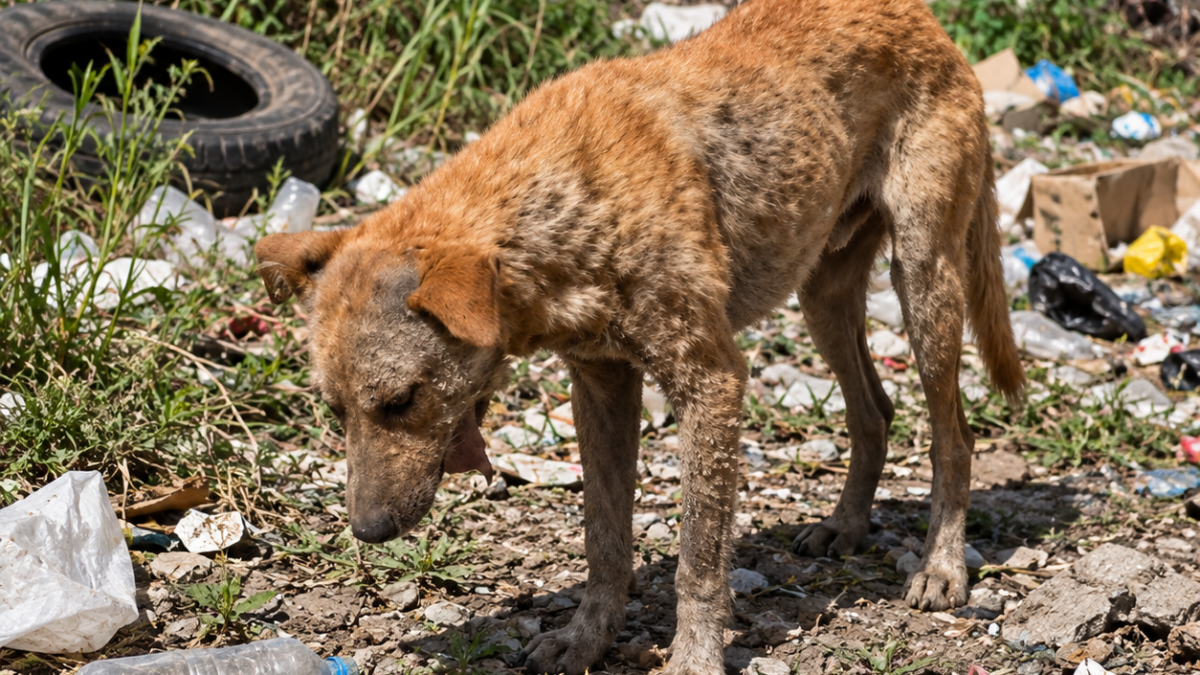
PART 2
“What is it?”
Dr. Ramirez hesitated.
That frightened me more than if she had answered immediately.
“Is the chip registered?”
“Yes.”
“So call the owner.”
“We are.”
I stared at her.
“Then why do you look like that?”
She glanced toward the treatment room before lowering her voice.
“Because the registration shows Hope was reported dead eight months ago.”
For a second, I thought I had misunderstood her.
“Dead?”
“Yes.”
“But she’s right there.”
“I know.”
“Maybe the chip information is wrong.”
“That’s possible.”
“What’s the owner’s name?”
“I can’t give you private information yet. We have to contact them and follow procedure.”
I paced once across the waiting room.
“So somebody reported her dead?”
“That is what the registry indicates.”
“When?”
“Eight months ago.”
I looked through the little window again.
Hope lay perfectly still beneath the blanket.
One technician was shaving fur around her wound.
Another adjusted the IV line.
Eight months.
The number settled in my stomach.
“What kind of person reports a living dog dead?”
Dr. Ramirez didn’t answer.
Neither of us had enough information.
Not yet.
She returned to the treatment room while I sat down.
I should have left.
At least that was what logic said.
I had found a stray.
I had delivered her somewhere safe.
Professionals were helping her.
My responsibility should have ended there.
Instead I stayed.
An hour passed.
Then another.
At six-thirty, a technician named Jasmine brought me coffee.
“You’re still here?”
“Apparently.”
She smiled.
“Hope noticed.”
“What do you mean?”
“She gets restless when the door opens. Then she settles when she hears you talking.”
I looked toward the hallway.
“She knows my voice?”
“Dogs surprise people.”
Around seven, Dr. Ramirez returned.
“Her bloodwork is bad, but not catastrophic.”
I stood.
“What does that mean?”
“Severe anemia. Malnutrition. Infection. Her kidneys are stressed from dehydration, but they’re functioning.”
“And the wound?”
“She’ll need surgery once she’s more stable.”
“What caused it?”
“We can’t know for certain yet. It may have started as trauma that became infected because it wasn’t treated.”
“Could she have been hit by a car?”
“Possibly. But I’d expect other injuries.”
She paused.
“There’s also scarring around her neck.”
My jaw tightened.
“From what?”
“A collar. Or possibly something she was tethered with for a long time.”
I didn’t say anything.
“Daniel,” Dr. Ramirez said, “we also found thick calluses on her elbows and pressure points. She may have spent significant time lying on a hard surface.”
“Like concrete?”
“Yes.”
The dog beside the roadside was becoming a story written in injuries.
I hated every page.
“Did you reach the registered owner?”
Dr. Ramirez nodded.
“And?”
“They said their dog died last winter.”
I stared at her.
“They said Hope is dead?”
“They said the dog associated with that microchip died.”
“Did you send them a picture?”
“We told them we had a living female dog matching the registration.”
“What did they say?”
“They said we must be mistaken.”
“That’s convenient.”
“It may be true.”
“You believe that?”
She gave me a professional look.
“I believe evidence.”
That was fair.
Then she added, “We’ve contacted county animal control because the circumstances are unusual.”
“Will they come tonight?”
“Tomorrow morning.”
“Can I see her?”
“Briefly.”
She led me into the treatment area.
The smell of antiseptic hit me first.
Hope lay inside a kennel on a padded blanket.
An IV line ran into one front leg.
Someone had cleaned her face.
Without the dust, I could see that she was younger than I had assumed.
“Seven?” I asked.
Dr. Ramirez shook her head.
“Probably three or four.”
That stopped me.
Three or four.
She looked fifteen.
Hope opened her eyes.
“Hey, girl.”
One ear moved.
I sat outside the kennel.
“You made it through the first part.”
Her nose twitched.
“I don’t know what happens next.”
She shifted her head toward me.
“But I’m not going anywhere tonight.”
I regretted the promise almost as soon as I made it.
Not because I wanted to leave.
Because promises to damaged animals feel dangerous.
They don’t understand your circumstances.
They only understand whether you show up.
So I stayed until the clinic closed to visitors.
Before I left, Jasmine gave me a look.
“You’ll come back tomorrow?”
“Yes.”
“Good.”
Hope was asleep when I walked out.
For the first time that day, she no longer looked like she was waiting to die.
I barely slept.
I kept seeing the roadside.
The bottles.
The flies.
The way she crouched when I approached.
At six-fifteen the next morning, I was back at the clinic carrying a paper bag with breakfast for the staff.
Dr. Ramirez raised an eyebrow.
“Bribery?”
“Gratitude.”
“Better answer.”
“How is she?”
“Still here.”
It was the best news I had heard in twenty-four hours.
Hope had made it through the night.
Her temperature had improved.
Her blood pressure was stronger.
She had eaten three spoonfuls of recovery food.
“Three spoonfuls?”
“That’s a victory right now.”
I looked through the kennel door.
“Can I feed her?”
“If she’ll eat for you.”
Hope opened her eyes when I sat beside her.
Jasmine handed me a small bowl.
“Tiny amounts.”
I scooped some food onto a spoon.
“Come on.”
Hope sniffed.
Nothing.
I waited.
“Apparently I’m not a very good waiter.”
Her tongue touched the food.
Then she took it.
I laughed.
The sound startled both of us.
“That’s it.”
Another spoonful.
Then another.
She stopped after four.
I would later learn that recovery from starvation isn’t about putting a large bowl in front of a dog and celebrating when it disappears.
Their bodies need time.
Careful meals.
Monitoring.
Patience.
Hope had spent long enough being denied things.
Now even feeding her required restraint.
At eight-thirty, a county animal control investigator arrived.
Officer Marcus Reed.
Tall, late forties, calm voice.
He asked me where I had found her.
I gave him the exact mile marker.
“Anything nearby?”
“Trash. Bottles. Tire.”
“Houses?”
“Closest one is probably half a mile.”
“Did you see another vehicle?”
“No.”
He wrote everything down.
Then he photographed Hope.
Her body.
The scars.
The wound.
The condition of her nails.
The marks around her neck.
Hope trembled when his camera clicked.
I stood near her head.
“It’s okay.”
Officer Reed looked at me.
“She trusts you.”
“I met her yesterday.”
“Sometimes that’s enough.”
He scanned the microchip himself.
Same number.
Same registration.
He compared it against a printed report.
Then he took Dr. Ramirez into the hallway.
They spoke quietly.
I caught one sentence.
“That matches.”
I stood.
“What matches?”
Officer Reed looked at me.
“We have an old animal-control record involving the registered address.”
“What kind of record?”
“I can’t discuss an active investigation.”
“That usually means it’s bad.”
He didn’t respond.
“Is Hope going back there?”
“No decision has been made.”
I stepped toward him.
“She is not going back to someone who reported her dead.”
His expression stayed calm.
“I understand your concern.”
“Concern?”
Dr. Ramirez put a hand on my arm.
“Daniel.”
I stopped.
Officer Reed closed his notebook.
“For now, Hope remains here as evidence in a possible neglect and abandonment case.”
That word mattered.
Evidence.
Not stray.
Not lost.
Evidence.
“When will you know?”
“When we know.”
I hated that answer.
But he was right.
Hope stabilized enough for surgery two days later.
The wound had become a deep abscess.
Dr. Ramirez removed dead tissue, cleaned the area thoroughly, and placed drains.
Hope also had a fractured tooth, an old untreated injury to one rear leg, and intestinal parasites.
None alone explained her condition.
Together they painted a picture of prolonged neglect.
I paid the initial bill.
When the receptionist told me the amount, I swallowed.
Then handed her my card.
“You don’t have to cover everything,” she said.
“Yes, I do.”
“Why?”
I glanced at the hallway.
“Because I told her I wasn’t going anywhere.”
Hope stayed hospitalized for six days.
I visited every day.
On day three, she wagged her tail.
Not a full wag.
Just one small movement against the blanket.
Jasmine saw it.
“You got a tail.”
“I got a tail.”
On day four, Hope stood without help.
For eleven seconds.
On day five, she walked from the kennel to me.
Six steps.
I counted every one.
She stopped with her forehead against my knee.
I bent down.
“You’re making this very difficult, you know.”
Hope licked my wrist.
That was when I knew.
If she became legally available, I wanted her.
I didn’t tell anyone yet.
It felt too soon.
But apparently everyone already knew.
Jasmine caught me filling out a foster-care information sheet.
“You’re subtle.”
“Go away.”
She laughed.
On day six, Officer Reed returned.
He asked to speak with me privately.
We went outside.
The morning was already hot.
“What happened?” I asked.
“We located the registered owners.”
“And?”
“The husband’s name is Brent Holloway. The wife is Melissa.”
I memorized them immediately.
“They owned Hope?”
“They owned a dog named Hope.”
“So it’s her.”
“We’re building the case.”
“What did they say?”
“Initially, that Hope died.”
“Still?”
“Yes.”
I stared at him.
“What changed?”
“We obtained veterinary records.”
He opened a folder.
“Hope received vaccines at Westside Animal Hospital two years ago. Her microchip was scanned there. Same number.”
“So there’s no question.”
“Very little.”
“What did they say when you showed them her picture?”
Officer Reed’s mouth tightened.
“Mr. Holloway said the dog in the clinic was not theirs.”
“And Mrs. Holloway?”
“She cried.”
That told me enough.
“Then what?”
“She later gave a separate statement.”
Officer Reed stopped there.
“What statement?”
“I can’t provide details yet.”
“Marcus.”
It was the first time I had used his first name.
He looked at me.
“Please.”
He exhaled.
“She says Hope did not die.”
I already knew that.
Still, hearing it officially made my stomach turn.
“She says Brent didn’t want the dog anymore after they moved.”
“What does that mean?”
“Their new landlord didn’t allow dogs above a certain size.”
“So they dumped her?”
“That is part of what we’re investigating.”
I looked toward the clinic window.
“Eight months ago?”
“That’s when the microchip registry was changed.”
“And she’s been surviving outside for eight months?”
“We don’t know.”
“Where was she?”
Officer Reed said nothing.
That silence was different.
“You know.”
“We have information she may have been kept somewhere else first.”
“Where?”
“I can’t—”
“Was she chained?”
His eyes shifted.
The scar around Hope’s neck flashed through my mind.
“Was she chained?”
Officer Reed answered carefully.
“We found a location associated with the family. There was a short chain attached to an outdoor structure.”
My hands curled.
“Was there water?”
“We’re documenting everything.”
“Was there food?”
“Daniel.”
“Was there shelter?”
He looked at me.
“Not adequate.”
I turned away.
I had spent days imagining Hope lost.
Confused.
Wandering.
Somehow that possibility had hurt less.
But she hadn’t simply gotten lost.
Someone had made decisions.
Someone had looked at that dog and decided what happened next.
“What happens to them?”
“Evidence goes to the county prosecutor.”
“That’s it?”
“That’s how it starts.”
I laughed bitterly.
“Hope almost died.”
“I know.”
“And the legal system starts with paperwork.”
“It ends with paperwork too, if it works.”
I didn’t understand what he meant then.
I would.
Hope came home with me as an official medical foster.
The paperwork made it clear that the county still technically controlled her placement while the investigation continued.
I signed every page.
Then I brought her outside.
The moment she saw my truck, she stopped.
Her tail tucked.
I crouched.
“That truck took you away from the road.”
Hope didn’t move.
“It’s okay.”
She began trembling.
Suddenly I understood.
A vehicle might also have been how she reached that road.
I sat on the pavement.
“Take your time.”
People walked around us.
Cars came and went.
I didn’t pull the leash.
After several minutes, Hope stepped closer.
She sniffed the tire.
Then the open door.
I lifted her only after she leaned into me.
At my house, I had prepared the laundry room.
Bed.
Water.
Baby gate.
Clean blankets.
Dr. Ramirez had warned me not to overwhelm her with too much space.
Hope entered.
Sniffed.
Then froze when I reached toward the door.
I stopped.
Her breathing changed.
Fast.
Shallow.
She stared at the doorway.
“You think I’m locking you in?”
I sat down.
The door stayed open.
For the first week, it remained open almost all the time.
Hope chose the floor near the kitchen instead.
So I moved her bed there.
That became lesson one.
Rescue wasn’t teaching Hope to fit my expectations.
It was learning why she had the ones she did.
Lesson two arrived with a broom.
I lifted it to sweep beneath the table.
Hope collapsed.
Not backed away.
Collapsed.
She flattened herself against the floor and covered her face.
The broom fell from my hand.
“Oh, God.”
I crouched several feet away.
“I’m sorry.”
She shook.
I sat there for twenty minutes.
That night I carried every broom, mop, and long-handled tool into the garage.
Hope never had to see one again.
Lesson three was food.
She ate as though someone might steal it.
Fast.
Terrified.
Between bites she looked over her shoulder.
Dr. Ramirez suggested I sit nearby without touching her.
So every meal, I sat six feet away.
Then five.
Then four.
After two weeks, Hope stopped looking behind her.
After three, she left a piece of kibble in the bowl.
That single piece made me cry.
Because leaving food meant she believed there would be more.
The investigation moved quietly.
Hope didn’t.
She was changing every day.
Her coat began to shine.
Her ribs became less visible.
The wound closed.
Her eyes became brighter.
I discovered that she loved tennis balls but had no idea what to do when I threw one.
The first time, she watched it roll across the yard and looked at me as if I had lost something important.
“You’re supposed to bring it back.”
Nothing.
“That’s how this works.”
She sat down.
“Fine.”
I retrieved the ball myself.
Hope followed.
We repeated that six times.
Eventually I realized she had trained me to play fetch in reverse.
A month passed.
Then two.
Hope gained eighteen pounds.
She learned that the couch was soft.
She learned that refrigerators sometimes produce cheese.
She learned that squirrels were enemies.
She learned my work boots meant I was leaving.
That became a problem.
The first morning I returned to regular work, she panicked.
I found scratch marks near the door.
Nothing destructive beyond repair.
But the message was clear.
People leave.
Sometimes they don’t come back.
So I changed the routine.
Every time I left, I said the same thing.
“Hope, I’m coming home.”
At first the words meant nothing.
Then repetition gave them meaning.
I left for five minutes.
Returned.
Ten.
Returned.
Thirty.
Returned.
Eventually, a full day.
Returned.
One evening, I opened the door and Hope was standing in the hallway.
Tail moving.
Not frantic.
Not terrified.
Just happy.
I dropped my tool bag.
“Told you.”
She ran to me.
That was the first time she ran.
Really ran.
Not fleeing.
Not surviving.
Running because someone she loved had come home.
I dropped to my knees.
She hit me in the chest hard enough to knock me backward.
I laughed on the floor while Hope climbed onto me.
“You’re heavy now.”
Her tail slapped the wall.
“That’s a compliment.”
Three months after I found her, Officer Reed called.
“We have charges.”
I sat down.
“What charges?”
“Animal abandonment and aggravated neglect under the applicable county statute. There are additional citations related to failure to provide veterinary care.”
“Both of them?”
“Brent is the primary defendant. Melissa cooperated with investigators.”
“What does that mean?”
“She provided photographs and messages.”
“What photographs?”
He was quiet for a moment.
“The location where Hope was kept.”
I didn’t want to see them.
Then I did.
Maybe that sounds strange.
But I had spent months caring for the results.
I wanted to understand the cause.
Officer Reed advised me to wait until the case became public.
A week later, portions of the evidence appeared in the court filing.
The photographs made me sick.
Hope had been tethered behind an unused workshop on property belonging to Brent’s brother.
The chain was less than ten feet long.
There was a plastic doghouse with a cracked roof.
The ground around it was bare dirt.
One photograph showed an empty bucket.
Another showed Hope lying beneath the edge of the building because the doghouse had no shade in the afternoon.
Then came the messages.
Melissa: She needs a vet. That wound is worse.
Brent: I’m not paying $800 for that dog.
Melissa: Then surrender her.
Brent: They’ll charge questions and paperwork. I’ll handle it.
Another exchange, two weeks later:
Melissa: Where is Hope?
Brent: Gone.
Melissa: What does that mean?
Brent: It means we don’t have a dog anymore.
My stomach tightened.
There were more.
Melissa: Did you take her to a shelter?
No answer.
Three days later:
Melissa: Brent, please tell me you didn’t leave her somewhere.
Brent: Drop it.
The microchip record was changed to “deceased” the following morning.
I stopped reading.
Hope was lying beneath my desk.
I slid down onto the floor beside her.
She rolled onto her side.
Her scar was still visible where the fur had grown thinner.
“You weren’t supposed to survive, were you?”
Hope opened one eye.
“Well.”
I scratched behind her ear.
“You made a liar out of him.”
That felt like the first piece of revenge.
Not hurting Brent.
Not humiliating him.
Hope simply being alive.
Every pound she gained contradicted what he had tried to erase.
Every tail wag.
Every run across the yard.
Every night sleeping safely in my house.
He had marked her dead.
Hope refused the designation.
The case drew local attention after the court documents became public.
I wanted none of it.
Hope wanted even less.
A reporter approached me outside the clinic.
“Mr. Carter, can we speak about Hope?”
“No.”
“Just a few questions.”
“She’s not a story.”
“She already is.”
I stopped.
That annoyed me.
Then I realized she was right.
Not in the way the reporter meant.
Hope’s story wasn’t mine to own.
But perhaps it could matter.
I agreed to one interview under conditions.
No photographing my address.
No showing the exact roadside location.
No sensational footage of Hope’s wounds.
No turning her suffering into spectacle.
The reporter agreed.
We filmed in the clinic garden.
Hope sat beside me.
“What made you stop?” she asked.
“I almost didn’t.”
“Why did you?”
I looked at Hope.
“Because she was standing.”
The reporter waited.
“I know that sounds strange. But she looked like she had nothing left, and she was still standing. I thought if she could keep standing, the least I could do was stop.”
The segment aired that night.
Donations poured into the clinic’s emergency rescue fund.
Enough to cover Hope’s treatment.
Then enough for other dogs.
One viewer donated cooling kennels.
Another paid for microchip scanners.
A construction company built shaded runs for the county shelter.
I began to understand that sometimes the public nature of a terrible act could produce good things.
Brent apparently understood something else.
Attention had consequences.
His attorney filed a motion claiming the online publicity made a fair hearing impossible.
The judge denied it.
Then Brent did something that shocked me.
He claimed Hope had already been unhealthy when he received her.
Received her?
He had owned her since she was a puppy.
His attorney argued that the severe condition in which she was found could have developed after she wandered away.
Except Hope hadn’t wandered away.
Melissa’s messages were evidence.
So were roadside cameras.
That was Officer Reed’s paperwork ending with paperwork.
Investigators had located security footage from a farm supply store three miles from where Hope was found.
At 11:42 p.m. the night before I saw her, a pickup matching Brent’s vehicle passed eastbound.
At 11:58, it returned westbound.
Another camera on a private property caught the same truck stopping near the shoulder.
The image was dark.
No license plate was clearly visible.
But a man could be seen getting out.
Something moved near the truck.
Then the man drove away.
Prosecutors combined that footage with cell-phone location data obtained through the investigation.
Brent’s phone had been near the roadside at the same time.
He had marked Hope dead months earlier.
Then when her condition became expensive and difficult to hide, he had driven her out at night and left her.
That was the prosecution’s theory.
Brent’s attorney called it circumstantial.
The judge called it admissible.
The first time Brent saw Hope after her rescue was outside the courthouse.
I wish I could say I planned it.
I didn’t.
Hope wasn’t supposed to be there.
The prosecutor had asked Dr. Ramirez to bring her for a possible identification hearing, although ultimately it wasn’t needed.
I was holding Hope’s leash near the courthouse side entrance when Brent arrived.
He stopped.
Hope stopped too.
I felt the leash tighten.
Her body lowered.
Tail tucked.
I looked down.
“Hope?”
She backed behind my leg.
Brent stared at her.
For the first time, the man I had hated for months became real.
Mid-forties.
Clean shirt.
Work boots.
Wedding ring.
Ordinary.
That bothered me.
I had imagined someone who looked cruel.
But cruelty rarely has the decency to advertise itself.
Brent’s attorney touched his shoulder.
“Keep walking.”
Brent didn’t.
He looked at Hope.
“She looks good.”
I thought I had misheard him.
“What?”
His attorney immediately said, “Mr. Holloway, don’t.”
But Brent repeated it.
“She looks good.”
Something hot went through me.
I wanted to tell him exactly what she had looked like when I found her.
I wanted to ask whether he remembered the flies.
The infected wound.
The ribs.
The fear.
Instead I looked at Hope hiding behind me.
Then back at him.
“She looks alive.”
His face changed.
That was all I said.
She looks alive.
Four words.
But I saw them land.
Because according to the microchip registry, she wasn’t supposed to be.
According to the story he had told, she was already gone.
According to whatever calculation he had made when he left her beside that road, she would become somebody else’s problem—or no one’s.
But there she stood.
Twenty-eight pounds heavier.
Coat shining.
Wound healed.
Blue collar around her neck.
Her name engraved on a new tag.
HOPE CARTER.
At least temporarily.
The adoption had not been finalized yet.
That still depended on the court.
Brent looked at the tag.
Then he looked at me.
“You changed her name?”
“No.”
His eyebrows moved.
“That was always her name.”
I let the silence sit between us.
“You named a dog Hope,” I said quietly, “and then left her without any.”
His attorney stepped between us.
“That’s enough.”
He was right.
It was.
Hope and I walked away.
The hearing lasted two days.
Melissa testified.
I had complicated feelings about her.
She had known Hope was neglected.
She had pushed for veterinary care.
She had suggested surrender.
But she had also failed to stop what happened.
During testimony, the prosecutor asked why.
Melissa cried.
“I was afraid of my husband.”
The courtroom became still.
She described Brent’s temper.
Financial control.
The way arguments ended when he punched walls or broke things.
She said she had once tried to take Hope to a rescue herself.
Brent took the truck keys.
“Why didn’t you call police?” the prosecutor asked.
“I should have.”
“Why didn’t you?”
“I kept telling myself it wasn’t bad enough yet.”
That sentence stayed with me.
Not bad enough yet.
How many terrible things survive because someone is waiting for them to become worse before acting?
Melissa testified that after moving into an apartment that prohibited Hope, Brent placed her at his brother’s unused workshop.
He promised it would be temporary.
Instead, Hope remained there for months.
Melissa brought food when she could.
Then Brent stopped allowing her access.
When she saw the wound, she demanded veterinary care.
Brent refused.
Eventually he told her Hope was gone.
She thought he had surrendered her.
Then he changed the microchip registry.
“Why mark her dead?” the prosecutor asked.
Melissa looked toward Brent.
“He said if anybody found her, there would be fewer questions.”
There it was.
Not rumor.
Not inference.
The reason.
Fewer questions.
Hope’s entire existence had been reduced to an inconvenience in a database.
The defense tried to undermine Melissa.
They suggested she was angry because the marriage had collapsed.
They noted that she had not personally witnessed Brent leave Hope beside the road.
Both were true.
But then Officer Reed testified.
He presented photographs.
Microchip records.
Veterinary records.
Text messages.
Camera timestamps.
Location data.
The timeline fit almost perfectly.
Dr. Ramirez testified last.
She described Hope’s condition clinically.
Severe dehydration.
Marked muscle wasting.
Chronic untreated infection.
Parasites.
Old tethering injuries.
Pressure calluses.
Anemia.
The defense asked whether a dog could develop some of those issues while living loose outdoors.
“Yes,” Dr. Ramirez said.
“So you cannot testify that Mr. Holloway caused each condition?”
“No.”
Brent’s attorney nodded as though he had scored something.
Then Dr. Ramirez continued.
“But the chronicity of several conditions predates the estimated roadside abandonment. This dog lacked appropriate care for a substantial period before she was found.”
The prosecutor asked one final question.
“If Hope had remained beside that road without intervention, what would likely have happened?”
Dr. Ramirez looked toward me.
Then toward the judge.
“She would have died.”
The judge did not rule immediately.
Three weeks.
That was how long we waited.
Hope didn’t care.
She had discovered sprinklers.
The first time one turned on unexpectedly, she jumped three feet sideways.
Then attacked the water.
For ten minutes she ran through the spray snapping at droplets.
I stood laughing until my stomach hurt.
Three weeks earlier, I had sat in a courtroom listening to someone explain why this dog nearly died.
Now she was chasing water.
That was what saved me from becoming consumed by anger.
Hope did not wake up planning revenge.
She woke up planning breakfast.
She didn’t spend afternoons imagining Brent suffering.
She spent them asleep upside down on my couch.
Dogs are better at surviving the past than people are.
They remember.
But when given safety, many of them learn to live forward.
I tried to learn from her.
Then Officer Reed called.
“Judge issued the ruling.”
My chest tightened.
“And?”
“Guilty on the primary neglect and abandonment counts.”
I sat down.
Hope looked up from the couch.
“What happens now?”
“Sentencing later. But there’s something you’ll care about immediately.”
“What?”
“The court ordered permanent forfeiture of Hope.”
My eyes burned.
“She’s free?”
“She will not be returned to Brent.”
“And Melissa?”
“She signed a voluntary relinquishment.”
“So…”
Officer Reed laughed softly.
“Yes, Daniel.”
I covered my face.
“You can adopt your dog.”
My dog.
I looked at Hope.
She wagged.
“You hear that?”
She sat up.
“You’re stuck with me.”
Hope jumped off the couch and trotted toward me.
“Terrible decision.”
She leaned into my chest.
“The worst.”
I hugged her.
And for the first time since finding her, I allowed myself to believe no one could take her away.
The adoption happened at the same clinic where I had first carried her inside.
Jasmine decorated the front desk with a ridiculous banner.
WELCOME HOME, HOPE.
“You know she’s been living with me for months.”
“Details.”
Dr. Ramirez signed the medical clearance.
Officer Reed signed the county release.
I signed the adoption papers.
“Full legal name?” the receptionist asked.
I looked at Hope.
“Hope Carter.”
“Date of birth?”
“No idea.”
Dr. Ramirez leaned over.
“Estimated April first.”
I smiled.
“Seriously?”
“Approximately.”
“So my dog was born on April Fools’ Day?”
Hope sneezed.
“Actually, that fits.”
The receptionist laughed.
Then she asked, “Emergency contact?”
I stopped.
Strange question to make me emotional.
For months, Hope’s emergency contact had been the clinic.
Before that, a family that had marked her dead.
Now I wrote my sister’s name.
Then my own address.
A home.
A phone number where somebody would answer.
The receptionist printed a new microchip registration.
STATUS: ACTIVE.
I stared at that word.
Active.
Alive.
Owned.
Home.
I folded the page carefully.
Jasmine handed me a small gift bag.
Inside was the original intake collar they had cut from Hope after rescue.
Dirty.
Stained.
Far too loose now.
“I thought you might want it.”
I held it for a second.
Then shook my head.
“No.”
“You sure?”
“Throw it away.”
Jasmine smiled.
“Good answer.”
I clipped Hope’s new blue leash to her collar.
“Let’s go home.”
She walked through the clinic doors beside me.
No stretcher.
No IV.
No one carrying her.
Hope walked out herself.
Sentencing took place a month later.
I attended without Hope.
She had already given enough of herself to that case.
The prosecutor read the veterinary costs.
The investigation expenses.
The evidence of prolonged neglect.
Brent’s attorney asked for leniency.
He had no prior criminal record.
He was employed.
He had begun counseling.
He expressed regret.
Then the judge asked Brent if he wanted to speak.
He stood.
For a moment, he said nothing.
“I made a bad decision.”
The judge waited.
Brent looked toward the gallery.
“I thought leaving the dog near houses meant somebody would find her.”
My jaw tightened.
The judge’s expression did not change.
“You changed the microchip registry to indicate that the animal was deceased.”
Brent looked down.
“Yes.”
“Why?”
“I panicked.”
“You left an injured, underweight dog beside a road in extreme heat.”
“Yes.”
“You did so at night.”
“Yes.”
“You did not contact a shelter.”
“No.”
“You did not contact animal control.”
“No.”
“You did not seek veterinary treatment.”
“No.”
The judge paused.
“A bad decision is forgetting to renew a registration. What you did involved a sequence of decisions.”
That sentence gave me more satisfaction than any angry speech could have.
A sequence of decisions.
Exactly.
Neglect rarely happens in a single dramatic moment.
It happens in bowls not filled.
Appointments not made.
Pain ignored.
Chains not removed.
Messages dismissed.
Doors closed.
Then one final drive down a dark road.
The judge sentenced Brent according to the statute available to the court: probation, fines, restitution toward Hope’s veterinary care and the county’s costs, mandatory animal-care education, community service, and a multiyear prohibition on owning or controlling animals.
Some people online complained the sentence was too light.
Others said it was too harsh.
I had stopped caring what strangers thought.
The part that mattered to me was simpler.
Brent could not own another animal during the prohibition period.
Hope was safe.
The court record told the truth.
And he had to pay restitution into the same emergency veterinary fund that had helped save her.
There was something fitting about that.
The money from the man who refused to treat one injured dog would now help treat others.
That was revenge I could live with.
Not destruction.
Conversion.
Something harmful turned useful.
Melissa contacted me several weeks later.
I almost ignored the message.
It said:
I understand if you never answer. I only want to know whether Hope is okay.
I stared at it for a long time.
Then I sent one photograph.
Hope lying on her back across my couch, paws in the air, asleep beneath a blanket.
Melissa replied almost immediately.
Thank you.
Then:
I’m sorry.
I didn’t respond.
Not because I hated her.
Because forgiveness is complicated when the person asking wasn’t the primary abuser but also wasn’t the rescuer.
Months later, we met by accident.
Hope and I were walking at a park.
A woman stopped twenty feet away.
Melissa.
Hope saw her.
I felt the leash tighten.
Melissa didn’t approach.
“Hi, Hope.”
Hope watched.
No tail.
No growl.
Just watching.
Melissa’s eyes filled.
“I won’t come closer.”
I nodded.
“She looks beautiful.”
“She is.”
“May I ask one thing?”
“What?”
“Is she happy?”
I looked down.
Hope was sniffing grass.
A butterfly moved near her nose.
She followed it for a few steps.
Then sneezed.
“Yes.”
Melissa started crying.
“Good.”
She turned to leave.
“Melissa.”
She stopped.
“You testified.”
She looked back.
“Yes.”
“That mattered.”
Her mouth trembled.
“I should have done more sooner.”
“Yes.”
I wasn’t going to lie.
She nodded.
“I know.”
Then she walked away.
Hope watched her leave.
After a moment, she looked up at me.
“Ready?”
Tail wag.
We continued walking.
That was all.
No dramatic reunion.
No miraculous forgiveness.
Sometimes healing means being allowed to keep walking.
A year after I found Hope, I drove back to County Road Nine.
I had avoided it.
But on the anniversary, I felt pulled there.
Hope sat beside me.
When I slowed near the shoulder, her body changed.
She recognized it.
I knew immediately.
Her ears lowered.
Her breathing quickened.
I almost kept driving.
Then I stopped farther down where there was shade.
I opened the door.
“You don’t have to get out.”
Hope stayed inside.
I sat on the tailgate.
Cars passed occasionally.
The same weeds grew near the ditch.
Someone had cleaned most of the trash.
I could see the spot where she had been standing.
My throat tightened.
“You stood there all day, didn’t you?”
Hope watched me from the truck.
“I’m sorry it took me so long to stop.”
She climbed down.
Slowly.
I froze.
Hope walked toward me.
Then toward the shoulder.
Not all the way.
She stopped maybe thirty feet from the place.
Sniffed the air.
I didn’t pull her.
After several seconds, she turned around.
Walked back.
Pressed against my leg.
“All right.”
I crouched.
“We’re done here.”
Before leaving, I placed a metal water bowl beneath a tree farther from the road.
Not as a memorial.
Hope wasn’t dead.
As a promise.
I began carrying extra water and dog food in my truck after that.
I also programmed the county animal control number into my phone.
Hope changed the way I saw roads.
Now every shape mattered.
Every animal.
Every possibility.
Once you stop for one, it becomes harder to drive past the next.
Two years passed.
Hope became almost unrecognizable compared with the roadside dog.
She weighed sixty-three pounds.
Her coat was golden brown with dark markings along her back.
The fur around the surgical site grew in unevenly, leaving a small patch where skin remained visible.
I loved that patch.
Not because of what caused it.
Because it proved something had healed.
Hope became certified through a local therapy-dog program after Dr. Ramirez jokingly suggested it.
I laughed when she first mentioned it.
“Hope?”
“Why not?”
“She used to collapse when she saw a broom.”
“She doesn’t now.”
“She steals socks.”
“Not disqualifying.”
“She hates vacuum cleaners.”
“Most civilization does.”
The training took months.
Hope learned to remain calm around wheelchairs.
Walkers.
Medical equipment.
Sudden noises.
She struggled at first with rolling carts.
Then one day she simply decided they weren’t dangerous anymore.
Her first therapy visit was at a rehabilitation center.
We met an eighty-two-year-old man named Arthur who had lost part of his leg to diabetes.
He hadn’t spoken much since surgery.
Hope approached him slowly.
She rested her head on his knee.
Arthur looked down.
“What happened to her?”
I told him the short version.
Roadside.
Starving.
Injured.
Recovered.
Arthur touched the patch near her hindquarters.
“They said she wouldn’t make it?”
“They weren’t sure.”
He scratched her ear.
“Me neither.”
Hope stayed with him twenty minutes.
When we left, Arthur told his nurse he wanted to go outside the next morning.
The nurse later told me it was the first therapy goal he had agreed to in a week.
That became Hope’s work.
Not saving people in some dramatic movie way.
Just standing beside them.
Exactly as she had stood beside that road.
Only now the waiting had purpose.
She visited veterans.
Children recovering from surgery.
Older adults.
People learning to walk again.
Hope understood stillness.
She never demanded affection.
She offered presence.
Perhaps animals give away the medicine they once needed most.
Hope had needed somebody simply to notice.
So that became what she gave.
On the third anniversary of her rescue, the clinic announced a small program.
They called it Hope’s Roadside Fund.
I hated the name at first.
“It sounds cheesy.”
Dr. Ramirez shrugged.
“People donate to cheesy names.”
She was right.
The fund covered emergency stabilization for unidentified animals found injured in the county.
The first patient was a cat hit by a car.
Then a senior Beagle found dehydrated behind a warehouse.
Then two puppies abandoned near an irrigation ditch.
Every time I saw the invoices, I thought about Brent’s restitution payment sitting among the earliest deposits.
Money from neglect helping finance rescue.
Life has strange ways of rearranging meaning.
Officer Reed retired the following spring.
At his small retirement gathering, he found me near the back.
“Still carrying dog food in your truck?”
“Always.”
“You know you became annoying after Hope.”
“How?”
“Every loose dog within ten miles somehow became my problem.”
“That sounds like your job.”
“I was off duty half the time.”
Hope walked over.
Officer Reed crouched.
“Look at you.”
She licked his chin.
He laughed.
“She hated me at first.”
“You had a camera.”
“I was gathering evidence.”
“She didn’t care.”
He scratched her neck.
“Daniel.”
“Yeah?”
“That case changed some procedures.”
“What procedures?”
“Animal control now automatically flags deceased microchip updates when there’s a recent complaint history tied to the address.”
I stared at him.
“Because of Hope?”
“Partly.”
He stood.
“Also, patrol officers got new scanners.”
I smiled.
“So she caused administrative reform?”
“Don’t tell her. She’s arrogant enough.”
Hope leaned against his leg.
He handed me an envelope.
“What’s this?”
“Something from the case archive. Cleared for release.”
Inside was a photograph.
Not one of the terrible ones.
It was an old veterinary intake photograph from when Hope was around nine months old.
Healthy.
Bright eyes.
Pink tongue.
Sitting upright.
On the back, someone had written:
HOPE — LOVES RIDES, CHEESE, AND EVERYBODY.
I stared at it.
Loves rides.
The dog who had trembled at my truck.
Someone had once taught her cars meant adventure.
Then someone else taught her they meant abandonment.
And eventually, I had helped teach her they meant coming home.
I framed that photograph.
It sits in my living room.
Beside it is another.
Hope covered in sprinkler water, mouth open, eyes bright.
Before.
After.
Not to prove what people did to her.
To prove what safety did.
Years later, people still sometimes ask why I named her Hope.
I always correct them.
“I didn’t.”
The name had already belonged to her.
Maybe that is the strangest part.
Someone had named her Hope before failing her.
For a long time I was angry about that.
The hypocrisy of it.
Then I understood something.
A name isn’t a guarantee.
It can be a prophecy waiting for somebody else to fulfill it.
Hope was about eight when gray hairs began appearing around her muzzle.
Dr. Ramirez found arthritis in one hip.
“Nothing dramatic.”
“Don’t say dramatic around us.”
She smiled.
“Fair.”
We shortened walks.
Added joint supplements.
Bought orthopedic beds.
Hope had four beds.
She used the couch.
Of course.
One winter evening, I sat beside her while rain hit the windows.
She was asleep with her head on my leg.
I thought about the first day.
Dust.
Heat.
Trash.
The wound.
That empty look.
Then I looked around my house.
Photographs.
Toys.
Blankets.
A basket full of tennis balls she still refused to retrieve correctly.
Hope opened her eyes.
“You realize you ruined my life.”
Tail thump.
“I used to have furniture without dog hair.”
Another thump.
“I could leave food on the counter.”
She lifted her head.
“That part got your attention?”
Hope stretched.
Then rested her head against me.
I scratched behind her ear.
“Worth it.”
At ten, Hope’s therapy work slowed.
At eleven, we retired her completely.
She had earned laziness.
Her world became smaller.
Backyard.
Porch.
Kitchen.
Couch.
Occasional short rides.
Her favorite trip remained Dr. Ramirez’s clinic, strangely enough.
Probably because Jasmine still worked there and kept cheese in a drawer.
One afternoon, a young veterinary assistant came into the room.
She looked at Hope.
“Is this the Hope?”
I raised an eyebrow.
“There are multiple?”
“The roadside case.”
I nodded.
“My professor used her case in an animal-welfare lecture.”
I looked at Dr. Ramirez.
“You knew about this?”
She shrugged.
“The court record is public.”
The assistant crouched.
“We studied the microchip evidence.”
Hope sniffed her.
“Congratulations,” I said. “You’re meeting educational material.”
Hope licked the assistant’s face.
The woman laughed.
“She seems happy.”
“She is.”
That sentence never stopped satisfying me.
She is.
Not she survived.
Not she recovered.
Not she was rescued.
She is happy.
Survival was the beginning.
Happiness was the victory.
Hope turned twelve—or approximately twelve—in April.
I made her a ridiculous dog-safe cake.
Officer Reed came.
Dr. Ramirez came.
Jasmine came.
Melissa sent a card through the clinic.
She had done that once a year after the trial.
I never told Hope who the cards were from.
Obviously she couldn’t read them.
But I kept them.
The message that year said:
Thank you for giving her the life I was too afraid to protect.
I hope she has forgotten the worst of us.
I folded the card.
I didn’t think Hope had forgotten.
Animals remember differently.
A sound.
A smell.
A movement.
A road.
But forgetting isn’t required for healing.
Safety can become louder than memory.
That afternoon, Hope stood in my backyard surrounded by people who loved her.
Twelve years old.
Gray muzzle.
Crooked back leg.
Scar still visible.
Tail moving.
She ate cake too quickly.
Then stole part of Officer Reed’s.
“That dog is a criminal.”
“Arrest her.”
“I’m retired.”
“Convenient.”
Everyone laughed.
Hope had no idea what was funny.
She only knew there was more cake.
I watched her and thought about the man who had changed her microchip status to dead.
If revenge means making someone experience what they inflicted, then no, Hope never got revenge.
I’m glad.
That kind of revenge would have made us resemble the cruelty we hated.
But if revenge can mean proving cruelty wrong, then Hope got it every day.
He left her to disappear.
She became known.
He marked her dead.
She lived for years.
He treated veterinary care as wasted money.
Her case funded treatment for hundreds of animals.
He left her beside garbage.
She later walked through hospitals wearing a therapy-dog vest while strangers whispered that she was beautiful.
He turned away.
Thousands of people stopped.
That was enough.
More than enough.
The last chapter came quietly.
Hope was thirteen, maybe fourteen.
By then I had stopped pretending numbers were precise.
Her kidneys began failing.
Slowly at first.
More water.
Less appetite.
Weight loss.
Bloodwork.
Medication.
Special food.
Dr. Ramirez sat beside me after one appointment.
“You know where this is going.”
“I do.”
“Not today.”
“Okay.”
Hope still had good days.
So we took them.
I stopped measuring her life in months.
Measured it in breakfasts eaten willingly.
Tail wags.
Porch naps.
Interested looks when cheese appeared.
Days when she walked to the mailbox.
Days when she wanted to lie in the sun.
Dr. Ramirez taught me the same quality-of-life system she used with hospice families.
Pain.
Hunger.
Hydration.
Hygiene.
Happiness.
Mobility.
More good days than bad.
I kept the chart on my refrigerator.
For three months, the good boxes won.
Then it became even.
Then one week, the bad boxes did.
I hated the chart.
But I needed it.
Love makes people excellent at seeing what they want.
Sometimes you need paper to show you what is true.
Hope stopped eating breakfast.
Then dinner.
She drank but vomited afterward.
One morning she tried to stand and couldn’t.
I helped her.
She looked at me.
There was no panic.
Just exhaustion.
I knew that look.
I had seen it once before beside a dusty road.
The first time, it said:
Please notice me.
This time it said:
Please know me well enough.
I called Dr. Ramirez.
She came that afternoon.
Hope lay on her favorite blanket beneath the porch window.
Rain had fallen earlier.
The air smelled clean.
Jasmine came too.
Officer Reed stopped by for ten minutes, kissed Hope’s head, and left crying.
I had never seen him cry.
Then it was only me, Dr. Ramirez, and Hope.
“You can still change your mind,” she said.
I shook my head.
“No.”
Hope was tired.
I could see it.
“I promised her I’d stop when she couldn’t keep going.”
Dr. Ramirez nodded.
I sat on the floor.
Hope’s head rested in my lap.
“You remember that road?”
Her eyes moved.
“I do.”
I stroked her ears.
“I’m sorry I almost kept driving.”
Her tail moved once.
“You made me stop.”
Another breath.
“You changed everything.”
Dr. Ramirez gave the first injection.
Hope relaxed.
Her breathing became slow.
I leaned close.
“You’re not beside the road.”
I swallowed hard.
“You’re home.”
Hope’s eyes remained half-open.
“You’re not waiting.”
I kissed her forehead.
“I noticed you.”
My voice broke.
“I still see you.”
Dr. Ramirez touched my shoulder.
A minute later, Hope was gone.
I stayed on the floor for a long time.
There was no urgency.
No traffic.
No heat.
No flies.
No pain.
Just quiet.
Hope had spent the first part of our story standing because she could not trust the world enough to fall.
She ended it asleep in my arms.
That felt like justice too.
I buried Hope’s ashes beneath a young oak tree in my backyard.
The clinic offered an urn.
I wanted the tree.
Something living.
Something that would create shade.
Officer Reed helped dig.
Dr. Ramirez brought a small stone.
Jasmine brought the old photograph.
Healthy puppy Hope.
We placed a copy in a sealed box with her blue collar.
On the stone, I had only four words engraved.
SHE WAS STILL STANDING.
People who don’t know the story probably think it means strength.
It does.
But not the way they assume.
Hope wasn’t strong because suffering didn’t hurt her.
She was strong because after suffering, she still allowed something good to reach her.
That is different.
The Roadside Fund still operates.
Years after Hope’s death, animals still arrive at Dr. Ramirez’s clinic with “Hope Fund” written on their intake paperwork.
A dog hit by a truck.
A cat burned during a house fire.
A neglected senior surrendered too late.
A puppy found beneath a bridge.
I sometimes pay the fund anonymously.
Dr. Ramirez knows.
She pretends she doesn’t.
One summer afternoon, I was at the clinic dropping off a donation when a young man rushed through the door carrying a dog.
Female.
Thin.
Weak.
Wrapped in a dirty towel.
“I found her near Highway Six!”
The staff moved immediately.
Stretcher.
Gloves.
Fluids.
Questions.
I stepped aside.
The man stood shaking.
“Is she going to die?”
A technician answered carefully.
“We’re going to do everything we can.”
He looked toward me.
I recognized his face.
Not literally.
The expression.
Confusion.
Fear.
The sudden realization that five minutes ago your life was normal and now you were emotionally attached to an animal you didn’t know existed.
“What do I do?” he asked.
I almost laughed.
Instead I pointed toward a chair.
“You stay.”
He stared at me.
“What?”
“Stay.”
“Do you work here?”
“No.”
“Then how do you know?”
I looked through the treatment-room door.
The injured dog lay beneath a blanket.
For a second, I saw Hope.
Not as she died.
As I found her.
Dusty.
Thin.
Still standing.
“Because sometimes,” I said, “stopping is only the first part.”
The young man sat.
I sat beside him.
Neither of us left.
Later, Dr. Ramirez came out.
“The dog has a chance.”
The young man covered his face.
Then he asked the question I once had.
“Does she have a name?”
“No collar.”
“No microchip?”
“None.”
He looked through the window.
“What should I call her?”
I smiled.
“That part is yours.”
He thought for a moment.
“Grace.”
Dr. Ramirez wrote it down.
Grace.
A new dog.
A new story.
Not Hope again.
It didn’t need to be.
Hope’s job had never been to repeat herself.
Only to change what happened next.
That evening, I drove home alone.
My truck still carried a water bowl, two leashes, canned dog food, towels, and a first-aid kit behind the seat.
Habits Hope had left me.
As I passed County Road Nine, I slowed.
The old place looked different now.
Cleaner.
More houses.
More traffic.
The tree where I had once placed a water bowl had grown.
I thought about stopping.
Instead, I kept going.
Not because the road didn’t matter anymore.
Because it no longer owned the ending.
Hope had been found there.
But that was not where her story belonged.
Her story belonged in every meal she ate without fear.
Every night she slept without a chain.
Every sprinkler she attacked.
Every patient she comforted.
Every abandoned animal whose treatment was paid by a fund carrying her name.
Every officer who scanned a microchip because her case changed procedure.
Every veterinarian who studied the evidence.
Every stranger who learned that neglect is not one bad moment but a series of choices—and that rescue can also be a series of choices.
Stop.
Approach.
Carry.
Treat.
Return.
Stay.
Hope taught me that.
People sometimes ask whether I saved her life.
I never answer yes.
I drove past first.
Remember that.
I saw her and kept moving.
Fifty yards.
Maybe a little more.
Then something made me look backward.
That is the detail I never remove from the story.
Because it means rescue does not always begin with perfect people making immediate heroic decisions.
Sometimes it begins with an ordinary person realizing he is about to make the wrong decision and turning around.
I turned around.
Hope did the harder part.
She trusted me.
A stranger.
A man walking toward her after other humans had taught her that footsteps could mean pain.
She still moved toward my hand.
She still pressed her forehead into my palm.
She still gave the world another chance.
That was Hope’s greatest act of courage.
Not surviving the infection.
Not gaining weight.
Not testifying silently in a courtroom simply by remaining alive.
Trusting again.
Her former owner once changed one field in a database.
STATUS: DECEASED.
For months, that lie sat inside a computer while Hope remained somewhere on a chain, alive and hurting.
Years later, I received a renewal email for her microchip registration.
Hope had already died by then.
The email asked me to update her status.
I stared at the screen for a long time.
ACTIVE.
DECEASED.
Two options.
My hand rested on the mouse.
I cried before selecting the second one.
The word felt cruel.
Wrong.
But this time it was not a lie.
This time Hope had not been discarded.
She had not vanished beside a road.
She had lived.
Fully.
Loved.
Safe.
Seen.
I clicked “deceased.”
Then a box appeared:
Would you like to add a memorial note?
I typed:
Found alive after being listed dead. Loved every day after.
I stopped.
Then added one more sentence.
She never had to wait beside a road again.
I saved it.
Closed the computer.
Walked outside.
The oak tree moved in the evening breeze.
Its branches were large enough now to make a patch of shade.
I sat beneath it.
For a while, I listened to the leaves.
And I thought about the first time I saw Hope standing in the heat among trash and discarded bottles.
Too weak to continue.
Too frightened to ask.
Still waiting.
I used to believe the most important moment of her story was when I stopped my truck.
It wasn’t.
It was the moment after.
When I walked toward her.
When she looked at my outstretched hand.
When everything humans had taught her said not to trust it.
And she did anyway.
Hope’s real revenge was never what happened to the man who abandoned her.
It was what happened because she survived him.
He tried to erase one suffering dog.
Instead, that dog changed a clinic, helped change county procedures, funded treatment for other animals, comforted strangers, and changed one ordinary man forever.
He left her beside a road expecting her to disappear.
She became impossible to forget.
And that is the ending Hope deserved.
[END OF FIRST COMMENT / FULL STORY]








