PART 2: I Found a Freezing Puppy Beneath an Abandoned Bus Stop—Then I Learned Who Had Left Him There
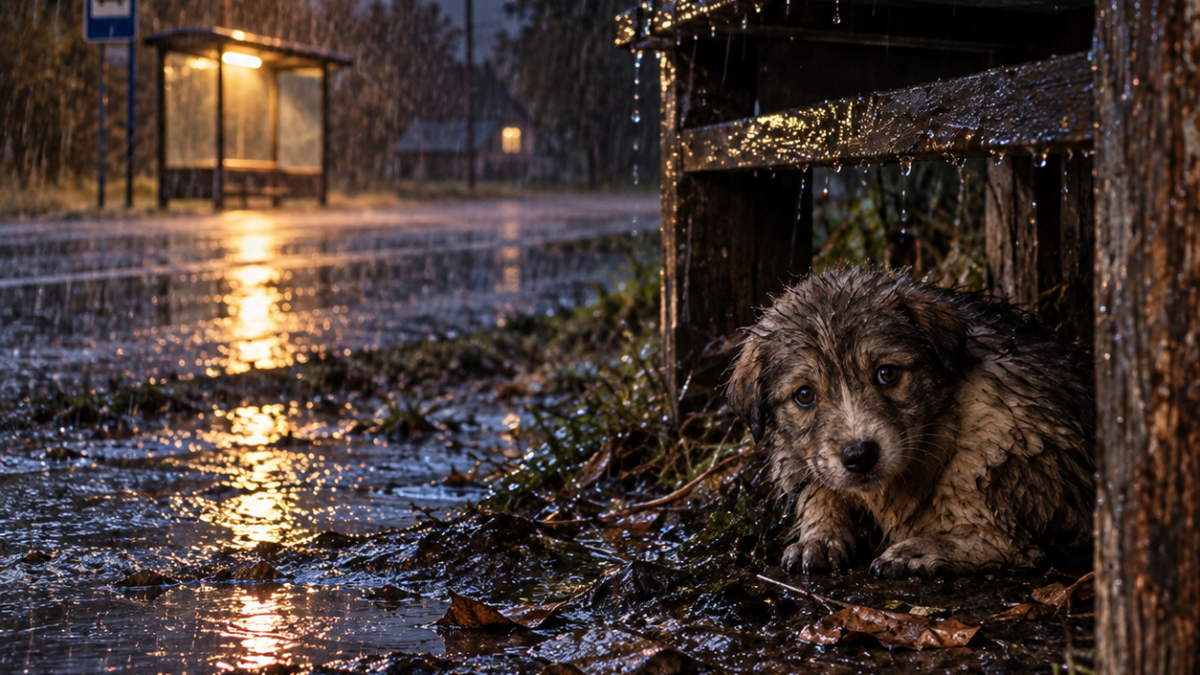
PART 2
For several seconds, I simply stood there staring at the tag.
HARLAN KENNELS.
The name was almost impossible to miss if you had lived anywhere in our county during the previous ten years.
Harlan Kennels sat outside town on thirty acres of fenced farmland. Its owner, Wesley Harlan, bred hunting dogs, shepherd mixes, and what his advertisements called “family protection puppies.”
He sponsored banners at the county fair.
His business name appeared on youth baseball uniforms.
Every December, he donated dog food to a local shelter and made sure somebody photographed him doing it.
People liked Wesley.
Or at least, they liked the version of Wesley that came into town wearing pressed jeans, clean boots, and a smile broad enough to make you believe he’d remembered your name when he probably hadn’t.
I knew him differently.
Not well.
But enough.
Five years earlier, Wesley had offered to buy the lower six acres of my property because his land bordered mine.
I refused.
He offered again.
I refused again.
The third time, he stopped asking politely.
“Henry,” he had told me across the counter at Miller’s Hardware, “you don’t use that pasture anymore.”
“It’s mine.”
“That’s not a reason.”
“It is to me.”
He smiled.
Not kindly.
“Everything changes hands eventually.”
I remembered that sentence as I turned the brass tag over in my fingers.
Everything changes hands eventually.
The puppy shifted beneath the towel.
That snapped me back.
Whatever history Wesley and I had could wait.
The puppy couldn’t.
I carried him to my old Ford pickup and drove toward the veterinary clinic while rainwater sprayed from the tires.
The clinic was twelve miles away.
I made it in nine.
Dr. Laura Bennett met me at the door.
She was in her early forties, with brown hair tied back and the kind of calm expression that made frightened animals trust her before they trusted anyone else.
She took one look at the puppy and stopped smiling.
“How long was he outside?”
“I don’t know.”
“Where did you find him?”
“Under a crate by the old bus stop.”
She pulled the towel back.
The puppy’s eyes opened halfway.
“Temperature’s low.”
“How low?”
“We’ll check.”
A technician carried him into the treatment area.
I followed until Laura raised one hand.
“Henry.”
“I’m staying.”
“You can stay. Just not in there while we stabilize him.”
I looked through the glass door.
The puppy disappeared onto a metal table under warm blankets.
“Is he dying?”
Laura’s face softened.
“I don’t know yet.”
I hated that answer.
It was also the only honest one.
I sat in the waiting room with mud drying on my trousers.
Only then did I realize my cane was missing.
Twenty minutes passed.
Then thirty.
At forty-two minutes, Laura came back.
“He’s warmer.”
I stood.
“That’s good?”
“Yes.”
“Anything else?”
“Severely underweight. Dehydrated. Fleas. Possible intestinal parasites. There’s a small abrasion around his neck.”
I thought about the broken wire.
“The tag.”
I pulled it from my pocket.
Laura read it.
Her expression changed.
“You recognize it too.”
“Yes.”
She looked through the treatment-room window.
“This puppy came from Harlan Kennels?”
“That’s what the tag says.”
“Maybe.”
I frowned.
“Maybe?”
“Tags can be moved.”
“Why would somebody move it?”
“I don’t know.”
She handed it back.
“We scan every stray.”
A few minutes later, she returned with a microchip scanner.
The puppy was chipped.
Registration came back almost immediately.
Owner:
Harlan Canine Services LLC.
Not Wesley personally.
His company.
Laura stared at the screen.
“Now we know.”
“Call him.”
She looked at me.
“You sure?”
“If somebody lost one of my animals, I’d want to know.”
She nodded.
The call lasted less than a minute.
I watched Laura’s face.
Professional at first.
Then confused.
Then cold.
She hung up.
“What did he say?”
Laura crossed her arms.
“He asked for the chip number.”
“Okay.”
“I gave it to him.”
“And?”
“He said that puppy was transferred.”
“Transferred where?”
“He wouldn’t say.”
“When?”
“Three days ago.”
“Before the storm.”
“Yes.”
“Then why is he under a bus stop?”
“That’s what I asked.”
I waited.
“He said it wasn’t his responsibility once the puppy left his property.”
Something tightened behind my ribs.
“Who took him?”
“He said client confidentiality.”
“A dog breeder has client confidentiality now?”
“Apparently when it’s convenient.”
The puppy survived the afternoon.
By evening his temperature was stable enough that Laura let me see him.
He was asleep inside a heated kennel.
His gray fur had dried into soft uneven tufts.
One paw twitched in his sleep.
“What happens now?” I asked.
“Legally, he’s still registered to Harlan Canine Services.”
“You sending him back?”
Laura looked at me.
“No.”
That surprised me.
“Can you do that?”
“I’m placing a mandatory medical hold until animal control reviews the circumstances.”
“Good.”
She glanced toward me.
“You were ready to argue.”
“I still can.”
“I know.”
I sat beside the kennel.
The puppy opened his eyes.
“Need a name,” I said.
“Not officially.”
“Everything deserves a name.”
Laura smiled.
“What are you thinking?”
I looked outside.
Water still dripped from the eaves.
“Storm.”
The puppy sneezed.
Laura laughed.
“I think that’s a vote against.”
“Fine.”
The puppy lifted his head.
His eyes stayed on me.
“Maybe Noah.”
“Because of the rain?”
“Don’t ruin it.”
“Noah it is.”
The next morning, Wesley Harlan came to the clinic.
He didn’t call first.
He walked through the door wearing a tan work jacket with HARLAN KENNELS embroidered over the chest.
I was already there.
I’d brought an old blanket from home because Noah seemed to sleep better on fabric that didn’t smell like disinfectant.
Wesley saw me.
Stopped.
“Henry.”
“Wesley.”
He smiled as though we’d run into each other at church.
“Didn’t know you were involved.”
“I found him.”
His eyes shifted toward the kennel area.
“Where?”
“You already know where.”
The smile disappeared for half a second.
Then returned.
“Actually, I don’t.”
“The old bus stop.”
“That’s strange.”
“Very.”
Laura came from the treatment room.
“Mr. Harlan.”
“I came for my property.”
I felt my jaw tighten.
Laura did not.
“His name is Noah.”
Wesley looked at her.
“His file number is HK-47.”
I will remember that sentence until I die.
Not his name.
Not puppy.
Not dog.
File number.
HK-47.
Laura rested both hands on the counter.
“He remains under veterinary hold pending review.”
“He’s registered to my company.”
“That does not override the investigation.”
“What investigation?”
“Potential abandonment.”
Wesley laughed.
“That’s ridiculous.”
“You said yesterday he was transferred.”
“He was.”
“To whom?”
“Private buyer.”
“Name?”
“No.”
Laura’s voice sharpened.
“If the animal was legitimately transferred, ownership records should show it.”
“They weren’t updated yet.”
“Then provide a bill of sale.”
“I don’t carry my office records around.”
“Send it.”
“I will.”
“Today.”
He looked at me.
“You’re enjoying this.”
“No.”
He smiled.
“You always were stubborn.”
“You always mistook stubborn for not letting you take what wasn’t yours.”
Laura looked between us.
Wesley’s jaw tightened.
“This has nothing to do with your land.”
“It does if the same man is lying.”
He stepped closer.
“I’m not lying.”
“Then prove it.”
Silence.
Then Noah cried from the treatment room.
A weak, high sound.
Wesley didn’t even turn his head.
That told me more than anything else.
“How many puppies do you have right now?” I asked.
“None of your business.”
“One nearly froze to death in a ditch.”
“Bus stop.”
I stared at him.
He had corrected me.
I had said ditch.
He said bus stop.
Laura noticed.
So did I.
“You said you didn’t know where I found him.”
Wesley’s expression changed.
Just enough.
He recovered.
“You told me two minutes ago.”
“No.”
I pointed toward him.
“I said bus stop when you first came in.”
Laura shook her head.
“You asked where. Henry said, ‘You already know.'”
Wesley looked from me to her.
Then smiled again.
“Fine. Maybe I heard it yesterday.”
“From who?” Laura asked.
“No idea.”
He turned toward the door.
“My attorney will call.”
“Good,” Laura said.
He stopped with one hand on the handle.
Then looked at me.
“You should stay out of things that don’t concern you.”
I leaned on the counter.
“You left a six-week-old puppy in a storm three hundred yards from my mailbox.”
His eyes hardened.
“Prove it.”
Then he left.
Laura waited until the door closed.
“Did you notice?”
“He knew.”
“We don’t know that.”
“You heard him.”
“I heard a suspicious inconsistency.”
“That’s lawyer language.”
“I’m a veterinarian.”
“Same tone.”
She almost smiled.
Then the county animal control officer arrived.
Her name was Dana Ruiz.
Fifty, compact, gray beginning to show in her black hair, and absolutely unimpressed by everybody.
She interviewed me.
Then Laura.
Then called Wesley.
He repeated his transfer story.
By lunch, he emailed a bill of sale.
Buyer:
Caleb Turner.
Address:
Two counties away.
Price:
$300.
Transfer date:
Three days earlier.
Dana drove there that afternoon.
No Caleb Turner lived at the address.
The house belonged to a retired teacher named Margaret Ellis.
She had lived there eighteen years.
Never heard of Caleb.
Never bought a puppy.
Wesley’s paperwork was false.
That didn’t yet prove he left Noah at the bus stop.
But the story had cracked.
Dana requested an inspection of Harlan Kennels.
Wesley refused voluntary access.
That made the county move slower.
People get angry about that.
They think if something looks suspicious, officials should storm in immediately.
That isn’t how it works.
Property rights still exist.
Warrants require cause.
Records require process.
And people who know how to operate close to the line understand exactly how much time that buys them.
Wesley used that time.
Two days later, three vans left Harlan Kennels before sunrise.
A neighbor saw them.
When animal control finally entered with legal authorization, only fourteen dogs remained.
Business records showed forty-three.
“Where are the rest?” Dana asked.
Wesley had answers.
Always answers.
Some sold.
Some transferred.
Some at training locations.
Some with employees.
Paperwork would follow.
Dana didn’t believe him.
Neither did I.
But belief wasn’t proof.
Noah improved.
Within a week, he was standing.
Within ten days, he barked at a mop.
Within two weeks, he discovered that Laura’s shoelaces were apparently his mortal enemy.
I visited every morning.
Then every afternoon.
Finally Laura said, “Henry, you realize he knows the sound of your truck now.”
“No.”
“He starts whining before you come through the door.”
“Coincidence.”
She smiled.
“Sure.”
I hadn’t owned a dog since my wife, Margaret, died.
We had a black Lab named Charlie.
Charlie lasted another four years after her.
When he died, I told myself I was too old for another dog.
Too old for puppies.
Too old for vet bills.
Too old for losing something I loved again.
Noah did not ask my permission to change that.
The first afternoon Laura let me take him into the clinic yard, he walked three feet, tripped over his own paws, then crawled into my lap and fell asleep.
I looked at her.
“This is manipulation.”
“He’s six weeks old.”
“Exactly. Starting early.”
“You taking him home if ownership is cleared?”
“No.”
Noah stretched against my stomach.
Laura raised one eyebrow.
“No?”
“No.”
“Okay.”
Three weeks later, county officials uncovered the first real break.
One of Wesley’s former employees came forward.
Her name was Jenna Price.
Twenty-six.
She had worked at Harlan Kennels for fourteen months.
She quit six weeks before the storm.
Dana interviewed her for hours.
Afterward, she called me.
“Henry, I need you not to post anything, confront anyone, or call Wesley.”
“I haven’t posted anything in my life.”
“You know what I mean.”
“What did she say?”
“I can’t discuss details.”
“You called me.”
“Because you’re a witness.”
“To finding Noah.”
“Exactly.”
“What aren’t you telling me?”
She sighed.
“You were right that HK-47 wasn’t just a random puppy.”
I sat straighter.
“What does that mean?”
“Jenna remembers him.”
“How?”
“He was part of a litter born at Harlan Kennels.”
“Then why fake the transfer?”
“Because he wasn’t supposed to be sold.”
My stomach tightened.
“Why?”
Dana paused.
“He had a heart murmur.”
I looked toward the kitchen where Noah was chewing one of my old slippers.
Laura had noticed a mild murmur during treatment but said some puppies grew out of them.
“What did Wesley do?”
“According to Jenna, puppies with medical problems were difficult to sell.”
“Difficult isn’t impossible.”
“No.”
“Then?”
“She says Wesley had a practice.”
There are moments when you know you’re about to hear something you cannot unhear.
“What practice?”
“He called it clearing inventory.”
I closed my eyes.
“Meaning?”
“Animals that couldn’t be profitably placed disappeared from active records.”
“Sold?”
“Sometimes.”
“Rescued?”
“Sometimes.”
“And the others?”
“We don’t know.”
I looked at Noah.
Tiny.
Alive because an old man happened to hear him after a storm.
“Dana.”
“Yes?”
“What happened to the other puppies?”
Silence.
“That’s what we’re trying to find out.”
Jenna provided messages.
Not enough to show direct abandonment.
Enough to show motive.
Wesley complained about “defects.”
He told employees not to spend veterinary money on puppies unlikely to sell.
One message:
STOP POURING MONEY INTO FAILURES.
Another:
IF THEY DON’T MOVE, MOVE THEM OUT.
Nothing explicitly criminal.
Cold.
Ugly.
But ambiguous.
Then Jenna gave investigators something better.
A notebook.
Wesley’s handwritten breeding log.
Litters.
Birth dates.
Colors.
Sex.
Prices.
Health notes.
Next to several puppies were short codes.
S.
T.
R.
X.
Noah’s litter had seven puppies.
Six names or sale numbers.
One entry:
GRAY M — MURMUR — X.
HK-47.
Noah.
“What does X mean?” Dana asked Jenna.
Jenna said she had asked once.
Wesley told her:
“Don’t worry about dogs that aren’t part of inventory anymore.”
The case widened.
The county located several former employees.
One refused to speak.
One claimed ignorance.
Two cooperated.
They described puppies being removed from the main kennel late at night.
Most were supposedly taken to rescues.
No rescue records matched several dates.
Then Dana found the vans.
One had been caught by a gas station camera during the storm night.
11:48 p.m.
Harlan Kennels logo visible.
Location:
Less than two miles from my house.
The driver couldn’t be identified from the image.
Wesley said an employee must have used the van.
Which employee?
He didn’t know.
Who had keys?
Several people.
Again:
Possible.
Convenient.
Not enough.
Then my neighbor gave us the detail that broke everything open.
Eighty-two-year-old Frank Walsh lived half a mile beyond me.
His porch camera mostly recorded deer, raccoons, and the mail carrier.
He almost deleted the storm footage.
His granddaughter stopped him.
At 12:26 a.m., a Harlan Kennels van drove slowly past his house.
At 12:41, it returned.
The old bus stop lay between Harlan Kennels and Frank’s property only if someone took the back road.
Fifteen minutes.
Enough time to stop.
Leave a crate.
Return.
Dana enhanced the footage.
Same van.
Same damage to the right rear bumper.
Wesley owned three similar vans.
Only one had that damage.
His.
He changed the story again.
Now he said he’d personally driven through the area checking storm damage.
“Why?” Dana asked.
“Business.”
“What business?”
“Private.”
“At midnight?”
He refused to answer.
Then he made a mistake.
He called me.
It was nearly ten at night.
I almost didn’t answer.
“Henry.”
“Wesley.”
“You’ve made your point.”
“I haven’t made any point.”
“You’re feeding this.”
“What?”
“The investigation.”
“I found a puppy.”
“You’ve hated me for years.”
“I said no when you tried to buy my land.”
“Same thing.”
“No.”
He was breathing hard.
“You don’t understand what it costs to run a kennel.”
“Probably because I don’t own one.”
“Veterinary bills. Feed. Staff. Insurance. People want perfect puppies and complain when genetics gives them something imperfect.”
“So you left Noah in a storm?”
Silence.
I regretted asking directly.
Then Wesley said, “You can’t prove that.”
He hung up.
I called Dana.
She wanted the call log and exact wording.
“Did he confess?”
“No.”
“Did he deny it?”
“No.”
That mattered.
Not enough.
But it mattered.
Noah’s legal custody transferred temporarily to the county.
The county authorized foster placement.
Laura handed me the paperwork.
“I’m not taking him.”
“Sign.”
“I’m serious.”
“Henry.”
“I am seventy-three.”
“So?”
“I have arthritis.”
“So does half this county.”
“I live alone.”
“You’ve done that for twenty years.”
“He’ll outlive me.”
Laura stopped.
That was the real reason.
I looked down.
Noah sat on my boot.
“I don’t want him to lose another person.”
Laura’s voice softened.
“Henry, none of us can promise anybody forever.”
“I’m old.”
“You’re alive.”
“That’s not the same.”
“No. But it’s enough for today.”
I stared at the paper.
She continued.
“You found him because you walked outside in a storm when most people would have stayed in bed.”
“The rain had stopped.”
“You know what I mean.”
Noah chewed my shoelace.
I signed.
The first night home, Noah cried.
Not continuously.
Every time the wind pushed rain against the windows.
He would wake.
Whimper.
Search the room.
I moved his bed beside my chair.
At two in the morning, he still couldn’t settle.
So I put his blanket in my lap.
He climbed up.
Within minutes, he slept.
I stayed in that chair until sunrise.
My back hated me.
I did it again the next night.
And the next.
By the fourth night, Noah slept through the rain.
The investigation into Harlan Kennels took three months.
Those months changed our village.
People chose sides.
That is what people do when facts threaten someone familiar.
Some defended Wesley.
“He donated to shelters.”
“He gave my daughter a puppy.”
“He sponsors the fair.”
“He was always kind to me.”
All could be true.
That did not answer what happened to Noah.
Others decided every dog Wesley had ever touched must have been abused.
That wasn’t supported either.
I learned something unpleasant during those months.
People often prefer extreme stories because extreme stories are simpler.
Monster.
Saint.
Good.
Evil.
Reality is harder.
Wesley had raised healthy puppies.
Some families genuinely loved dogs purchased from him.
He had also created a system where sick or less profitable animals could become disposable.
Both things could be true.
The case needed the second truth proven, not the first erased.
Investigators eventually located twenty-one of the missing dogs.
Some had been sold legitimately.
Four were with trainers.
Three had been transferred to rescues with poor paperwork.
That left five puppies unaccounted for.
One was Noah.
Four remained missing.
Then a teenager named Kyle Benson came forward.
Seventeen.
He worked weekends cleaning kennels.
He had been terrified to speak.
His mother finally convinced him after seeing Noah’s photograph in a local report.
Kyle sat in the county office with both hands shaking.
I wasn’t present.
Dana told me later only what became public.
Kyle said Wesley sometimes instructed him to load crates into a van after closing.
“What was inside?”
“Puppies.”
“Alive?”
“Yes.”
“Where did they go?”
“I don’t know.”
“Did you ever ride along?”
“Once.”
That once mattered.
They drove back roads.
Stopped near farms.
Roadside pull-offs.
Abandoned properties.
Wesley removed crates.
Not always puppies.
Sometimes older dogs.
Kyle asked why.
Wesley said:
“Someone will find them.”
The investigator asked:
“Did they have food?”
“Sometimes.”
“Water?”
“I don’t remember.”
“Was this during dangerous weather?”
Kyle began crying.
“Sometimes.”
Then the question:
“Were you with him the night Noah was abandoned?”
Kyle shook his head.
“No.”
“How do you know Noah was abandoned by Wesley?”
Kyle swallowed.
“Because Mr. Harlan was angry the next morning.”
“About what?”
“He said one of the rejects got found.”
Rejects.
Noah was lying beneath my kitchen table when Dana told me that.
He was chewing a wooden spoon he’d stolen from a drawer I still don’t understand how he opened.
A reject.
I looked at his ears.
One up.
One sideways.
His round stomach.
His ridiculous feet.
I wanted revenge in that moment.
Not justice.
Revenge.
I wanted Wesley to lose what mattered to him.
His business.
Money.
Reputation.
Land.
Everything.
That frightened me.
My wife Margaret used to say anger is useful until it starts driving.
So I did what she would have told me.
I waited.
And documented.
The county executed another search of Harlan Kennels.
This time, financial investigators came too.
The breeding business had another problem.
Tax records didn’t match puppy sales.
Cash sales disappeared.
Animals listed as transferred had sometimes been sold.
Veterinary certificates had been reused.
Microchip registrations were delayed deliberately.
The system that allowed unwanted puppies to vanish also allowed money to vanish.
That was how Wesley began losing control.
Not because one furious old man attacked him.
Because paperwork did.
Records.
Dates.
Cameras.
Chip numbers.
Witnesses.
The boring machinery of accountability.
Wesley called me again.
This time I recorded legally after being advised how to handle contact.
“Happy now?” he asked.
“No.”
“My business is closed.”
“Temporary suspension.”
“Same thing.”
“No.”
“You did this.”
“I found Noah.”
“You turned everyone against me.”
“I told the truth about where I found him.”
“You’ve wanted my property ruined since I offered to buy yours.”
That made me laugh.
He went quiet.
“What?”
“You think I wanted your land?”
“You wanted to stop me expanding.”
“I wanted my six acres.”
Silence.
Then:
“You know what happens if this business goes under?”
“No.”
“Thirty years gone.”
“Then you should’ve protected it.”
His voice hardened.
“I protected it every day.”
“No. You protected the profitable parts.”
He hung up.
That was the last direct conversation we had before court.
The veterinary cardiologist evaluated Noah when he was four months old.
I dreaded the appointment.
His murmur remained.
The cardiologist performed an ultrasound.
Noah hated the gel.
Tried to lick the machine.
Finally, the doctor smiled.
“Mild pulmonic flow murmur. No serious structural defect.”
I stared.
“Meaning?”
“He should have a normal life.”
“Normal?”
“Normal.”
I sat down.
Laura had come with me.
She put a hand on my shoulder.
“Henry?”
I covered my face.
For weeks Wesley’s notebook had lived in my head.
GRAY M — MURMUR — X.
A puppy marked disposable for a condition that might not even affect his life.
Laura understood.
“He was never broken.”
I looked at Noah.
“No.”
“He wasn’t.”
That sentence became important later.
The trial began the next spring.
By then Noah weighed forty-one pounds.
The tiny gray body under the crate had become a lanky adolescent dog with too much energy and no respect for personal space.
He attended none of the proceedings.
I refused every request from reporters to photograph him outside court.
He wasn’t evidence anymore.
He was my dog.
Wesley’s attorney tried to portray the case as an overreaction.
A business owner with imperfect paperwork.
A few animals moved informally.
No proof every missing puppy had been abandoned.
Some owners satisfied.
Some dogs healthy.
All true in isolation.
Then the prosecutor built the pattern.
Noah’s chip.
False transfer.
Fake buyer.
Van footage.
Frank’s camera.
Kyle’s testimony.
The breeding log.
The “X” code.
Messages describing failures.
Employee testimony.
Missing animals.
Financial irregularities.
One fact followed another.
Wesley sat at the defense table wearing a dark suit.
The first time he looked old.
Not weak.
Just smaller than the man who once stood in the hardware store telling me everything changes hands eventually.
I testified on the third day.
The prosecutor asked me to describe the morning after the storm.
I did.
The sound.
The crate.
The mud.
The cold body.
The tag.
Then Wesley’s attorney stood.
“Mr. Miller, you have had a property dispute with my client.”
“No.”
“You refused to sell land he wanted.”
“That’s not a dispute.”
“He made multiple offers.”
“Yes.”
“And you rejected them.”
“Yes.”
“So there was conflict.”
“He wanted something. I said no.”
“Did you dislike him?”
“After this? Yes.”
“Before.”
I thought.
“I didn’t trust him.”
“So you were biased.”
“No.”
“Why not?”
“Because distrust didn’t put Noah beneath that crate.”
His attorney paused.
“You did not see Mr. Harlan place the puppy there.”
“No.”
“You did not see his van stop.”
“No.”
“You did not hear him order anyone to abandon a dog.”
“No.”
“So you cannot personally say who placed Noah there.”
“No.”
He nodded.
“Thank you.”
I leaned slightly toward the microphone.
“But I can tell you what Noah looked like when whoever did it left him there.”
The lawyer frowned.
“No further answer was requested.”
The judge told me to answer only questions.
Fair.
I sat back.
Then Laura testified.
She was clinical.
Precise.
Hypothermia.
Dehydration.
Malnutrition.
Parasites.
Neck abrasion.
Cardiac murmur.
The prosecutor asked:
“Would the murmur have justified euthanasia?”
“No.”
“Would it have prevented adoption?”
“No.”
“Was it treatable?”
“It didn’t require treatment.”
“Then what medical reason existed to classify this puppy as a failure?”
“None that I can identify.”
Wesley stared straight ahead.
Kyle testified last among the major witnesses.
He looked terrified.
Still only eighteen by then.
Wesley’s lawyer pressed him hard.
“You participated in loading animals.”
“Yes.”
“You never called police.”
“No.”
“You accepted wages.”
“Yes.”
“You continued working.”
“Yes.”
“So when did you decide your employer was suddenly cruel?”
Kyle looked at Wesley.
Then down.
“When I saw Noah alive.”
The courtroom became silent.
“What does that mean?” the lawyer asked.
Kyle swallowed.
“I thought the puppies we left would get found.”
“You believed that?”
“I wanted to.”
“Wanted to?”
“Mr. Harlan said people found strays all the time.”
The lawyer stepped closer.
“And Noah was found.”
Kyle looked at him.
“Barely.”
That word landed.
Barely.
Because that was the case.
Not theoretical harm.
Not paperwork.
Noah had nearly died.
Barely alive.
Barely warm.
Barely able to crawl toward me.
The verdict didn’t solve everything.
Wesley was convicted on multiple animal cruelty and abandonment-related offenses supported by the proven incidents, along with business and recordkeeping violations connected to the kennel operation.
Not every missing animal allegation resulted in conviction.
Evidence matters individually.
That disappointed some people.
I understood why.
But justice isn’t stronger when we pretend uncertainty doesn’t exist.
It’s stronger when we punish what can be proved.
Harlan Kennels lost its operating license.
Wesley received financial penalties, restitution requirements, restrictions on owning and breeding animals, and a sentence that included custodial consequences under the court’s ruling.
The business closed.
Permanently.
Then came the part that felt almost too perfectly written to be real.
Wesley had loans against the kennel property.
Closing the business triggered defaults.
Taxes were owed.
The property entered a court-supervised sale.
Thirty acres.
Kennels.
Barn.
Training field.
The land that had once bordered my six acres.
For weeks, buyers showed interest.
One was a development company.
Another breeder.
Then a local animal welfare nonprofit approached me.
They wanted the property.
Not for breeding.
For a rehabilitation center.
They needed financing.
They had donors, but not enough.
I was not wealthy.
But I had something.
Six acres.
The six acres Wesley had tried to buy.
The lower pasture connected directly to the kennel property.
The nonprofit needed access, drainage rights, and room for a quarantine building.
Without my land, the project became much harder.
Their director, Maria Chen, sat at my kitchen table.
“We don’t want you to feel pressured.”
I laughed.
“You know how many times Wesley tried to pressure me into selling this field?”
“I’ve heard.”
“What do you need?”
“An easement would help.”
“How long?”
“Permanent.”
“No.”
Her face fell.
I smiled.
“I’m donating the pasture.”
She stared at me.
“Henry.”
“Six acres.”
“You understand the value?”
“Yes.”
“You should speak to your children.”
“I have.”
I had called my daughter first.
She cried.
My son said Margaret would have loved it.
That decided me.
Maria looked under the table.
Noah was asleep across my feet.
“What do you want the center called?”
“Not after me.”
“Henry—”
“No.”
I looked at Noah.
“Call it Second Morning.”
She tilted her head.
“Why?”
“Because some animals only need somebody to make sure they reach the next one.”
The nonprofit won the sale with donor support and grants.
Harlan Kennels became Second Morning Animal Recovery Center.
The breeding sheds were torn out.
Isolation kennels became rehabilitation rooms.
The old office became a veterinary treatment wing.
The training field became fenced exercise space.
And my lower pasture became part of the property Wesley had once wanted to expand his business.
That was revenge.
I can admit it.
Not destructive revenge.
Not violence.
Not humiliation.
Transformation.
The ground he wanted for profit became land where animals recovered from people like him.
The first dog admitted was a twelve-year-old hound abandoned after his owner went into assisted living.
The second was a shepherd with a broken pelvis from a vehicle accident.
Then came litters.
Strays.
Cruelty seizures.
Old breeding dogs.
Noah became the unofficial greeter.
This was not my idea.
Maria began bringing him during construction because he loved everyone.
Workers gave him food.
Then donors.
Then volunteers.
Eventually his photograph appeared on the center’s website.
I complained.
“They’ll think he’s in charge.”
Maria smiled.
“He thinks he’s in charge.”
Fair.
Noah grew into a strong dog.
Forty-eight pounds.
Gray coat.
White chest.
One ear still slightly crooked.
His heart remained fine.
He ran.
Swam.
Chased birds.
Stole my socks.
Destroyed one couch cushion and appeared genuinely offended when I blamed him.
At night he slept beside my bed.
Not in it.
We had rules.
At least I believed we did.
Around his first birthday, I woke with his head on my pillow.
Apparently rules had changed.
The strangest change was mine.
For twenty-two years, mornings had been quiet.
Coffee.
Radio.
Walk.
Birds.
Loneliness disguised as routine.
With Noah, routine became company.
He waited beside the kitchen cabinet while I made coffee.
Followed me to the well.
Sat while I fed birds.
Chased the neighbor’s cat exactly once.
The cat corrected that behavior permanently.
Every time we passed the old bus stop, Noah slowed.
Not always.
But often.
He smelled the grass.
Looked beneath the rotten bench.
Then continued.
One autumn, the county removed the shelter.
Too damaged.
Unsafe.
I asked if I could have one piece of the wood.
They thought I was strange.
Probably correct.
I took one board.
A carpenter at Second Morning used it to make a small bench.
The bench sits outside the recovery center.
No plaque about suffering.
No dramatic quote.
Just a brass strip with two words:
FOUND HERE.
People ask what it means.
Sometimes I tell them.
Sometimes I don’t.
Not every story needs to be explained every time.
Three years after I found Noah, Wesley appeared again.
I was seventy-six.
He had finished the custodial portion of his sentence and was living outside the county.
One afternoon, a pickup stopped at the edge of my driveway.
Wesley got out.
Noah was on the porch.
He stood.
Not barking.
Watching.
I stepped outside.
“Wesley.”
“Henry.”
He looked older too.
Maybe we both did.
No lawyers.
No cameras.
No county officials.
Just two old men and one dog.
“I won’t stay.”
“Then why are you here?”
He looked toward Second Morning beyond the pasture fence.
From my porch, you could see the new rehabilitation building.
“I wanted to see it.”
“You’ve seen it.”
His jaw tightened.
“You donated the six acres.”
“Yes.”
“Of course you did.”
I waited.
He looked at Noah.
“That’s him?”
“You know it is.”
“He got big.”
“That’s what puppies do when they live.”
The words came out before I decided whether to say them.
Wesley flinched.
Good.
I’m not proud of enjoying that.
I did.
He shoved his hands into his jacket.
“You think you’re better than me.”
“No.”
“Everyone does.”
“I think Noah deserved better than what he got.”
He looked at the dog.
“He wasn’t supposed to suffer.”
I laughed once.
“How exactly did you think a puppy left under a crate in a storm would feel?”
Wesley’s eyes hardened.
“I didn’t put him there.”
I stared at him.
After everything.
Still.
“Then why come?”
He looked away.
“I made decisions.”
“That’s a careful sentence.”
“I had too many dogs.”
“Then breed fewer.”
“You don’t understand.”
“No. I don’t.”
“Customers backed out. Vet bills went up. Staff quit. One bad month becomes six.”
“So Noah became a number.”
His eyes returned to mine.
“I didn’t think anybody would care about one mixed puppy with a murmur.”
There it was.
Not a confession to physically placing him.
Something worse in a different way.
A confession of value.
He hadn’t believed Noah mattered.
I stepped down from the porch.
Noah came with me.
Wesley instinctively moved backward.
Noah stopped.
He didn’t growl.
Didn’t bark.
He simply stood beside my leg.
“You were wrong,” I said.
Wesley looked at him.
“I know.”
That surprised me.
For a second, the anger inside me shifted.
Not disappeared.
Just changed shape.
He looked toward the recovery center again.
“That land was supposed to be mine.”
“That’s why you’re here?”
“No.”
“Then why?”
He took a long breath.
“Because I wanted to know if ruining me fixed anything.”
I almost answered quickly.
Then I didn’t.
I looked toward Second Morning.
Volunteers were walking two dogs in the far field.
One old.
One young.
Noah leaned against my knee.
Finally I said:
“You think this is about ruining you.”
“What else would it be?”
“Making sure nobody else gets treated like Noah.”
He looked at me.
“Same result.”
“No.”
“Feels the same from where I’m standing.”
“That’s your problem.”
Silence.
Then I said something Margaret would have said.
“Consequences feel like revenge when you’ve spent too long without them.”
Wesley stared at me.
I could tell the sentence hurt.
It was supposed to.
Not cruelly.
Precisely.
He nodded once.
Then returned to his truck.
Before getting in, he looked back at Noah.
“What’s his name?”
I knew he knew.
But I answered anyway.
“Noah.”
“Not HK-47.”
“No.”
He nodded.
Then drove away.
I never saw him again.
Years passed.
Second Morning grew.
The center added a small neonatal room.
A medical foster network.
Low-cost spay and neuter clinics.
A partnership with two county shelters.
The property that once produced puppies became a place that tried to reduce unwanted litters.
I appreciated the irony.
Noah aged beside me.
Gray appeared around his muzzle.
Then around his eyes.
My knees worsened.
We became slower together.
Our morning walk to the well took fifteen minutes instead of eight.
Then twenty.
Neither of us cared.
One morning, when I was eighty-one, I fell near the shed.
Not dramatically.
One bad step.
One wet patch.
Down.
My hip hurt enough that I couldn’t stand.
I reached for my phone.
Not there.
Left it on the kitchen table.
Noah was twelve.
Arthritis.
Poor hearing.
Sleeping on the porch.
I called his name.
Nothing.
Again.
“Noah!”
His head lifted.
He saw me.
Got up slowly.
Walked toward me.
“Go home.”
He stood beside me.
“Go.”
Nothing.
“Get Maria.”
Noah didn’t know Maria as a command.
But he understood something.
He looked toward the house.
Back at me.
Then walked away.
I thought he’d gone to his bed.
Instead, he went through the open gate toward Second Morning.
Ten minutes later, Maria came running with two staff members.
Noah limped behind them.
“Henry!”
“I’m fine.”
“You are lying on the ground.”
“Observation.”
She knelt.
“Can you move your leg?”
“Not much.”
The ambulance took me to the hospital.
Fractured hip.
Surgery.
Rehabilitation.
My children wanted me to move.
My daughter said living alone wasn’t safe.
She was right.
I hated that.
I eventually agreed to move into a small assisted-living apartment ten minutes from Second Morning.
There was one condition.
Noah came.
The facility allowed dogs under fifty pounds.
Noah weighed fifty-two.
The director looked at the scale.
Looked at me.
Looked at Noah.
Then wrote forty-nine point eight on the form.
Some rules deserve flexible arithmetic.
My farmhouse was sold to my daughter.
She didn’t want strangers buying it.
The pasture remained with Second Morning permanently.
Every morning, Noah and I walked the facility courtyard.
Short distances.
Slow.
He stopped smelling flowers.
I stopped pretending I wasn’t tired.
People there loved him.
Widows.
Veterans.
Former teachers.
A man named Carl who spoke almost to nobody but talked to Noah for twenty minutes every afternoon.
Noah became what dogs sometimes become without anyone training them.
A reason people got out of bed.
At thirteen, his heart murmur had still never caused meaningful trouble.
The thing Wesley used to classify him as disposable had become almost irrelevant.
Age brought other problems.
Kidneys.
Arthritis.
Then cancer.
The veterinarian found the mass during a routine exam.
I knew before she finished explaining.
There are expressions doctors learn.
I had seen them with Margaret.
With Charlie.
Now Noah.
“How long?”
“We can’t know exactly.”
“Months?”
“Probably.”
“Pain?”
“Manageable right now.”
“Treatment?”
“Possible, but aggressive.”
I looked at Noah.
He was trying to steal a treat from the technician’s pocket.
“Would it give him good time?”
“Maybe.”
“Or bad time?”
“Possibly.”
I chose comfort.
Some people would have chosen treatment.
Neither choice is easy.
We got four good months.
Then two mixed ones.
Then one week where I knew.
Noah stopped finishing breakfast.
He slept more.
One afternoon he didn’t want to walk.
The next morning, he stood beside the door anyway.
Routine.
Anchor.
I clipped on the leash.
We walked twenty yards.
He stopped.
Looked at me.
Then turned back.
That was his answer.
Laura came to see us.
Yes, the same Laura.
Older.
A little gray in her hair now.
She sat on the floor beside Noah.
“He found you under a bus stop,” she said.
“I found him.”
Laura looked at me.
“Did you?”
I smiled.
Fair.
My daughter came.
My son drove six hours.
Maria brought Noah’s old blanket from Second Morning.
Even the facility director visited.
That evening, I put Noah’s bed beside my chair.
Exactly where it had been during his first night in my farmhouse years earlier.
Rain began outside.
Light at first.
Then harder.
The sound took me back.
Storm.
Bus stop.
Wooden crate.
A tiny gray body.
Noah lifted his head at the rain.
For one second, I wondered if he remembered.
Then he placed his muzzle on my shoe.
I sat beside him on the floor.
My repaired hip complained.
I didn’t care.
“You’re not cold anymore.”
His tail moved.
One soft thump.
“Never again.”
The next morning, Laura helped him die peacefully.
My hand stayed beneath his head.
I kept saying his name.
Not file number.
Not reject.
Not miracle dog.
Just Noah.
When his breathing stopped, the room became quiet.
I’d experienced that quiet before.
Margaret.
Charlie.
Parents.
Friends.
It never gets easier.
But this time, something was different.
I didn’t feel cheated.
Fourteen years.
The puppy marked X in Wesley’s notebook got fourteen years.
Fourteen summers.
Fourteen winters.
Thousands of breakfasts.
Thousands of walks.
Mud.
Snow.
Shoes destroyed.
Furniture damaged.
One stolen Thanksgiving turkey leg.
Two emergency vet visits for things he absolutely should not have eaten.
A lifetime.
That was the revenge.
Not Wesley’s conviction.
Not the business closing.
Not the property sale.
Not even Second Morning.
Time.
Noah got time.
The thing someone decided wasn’t worth buying became priceless simply because he was allowed to keep living.
We buried his ashes beneath an oak at Second Morning.
I did not want a large memorial.
Maria ignored me slightly.
A small stone appeared anyway.
NOAH
FOUND AFTER THE STORM
HE STAYED.
The old bus-stop board sits nearby.
FOUND HERE.
Children sometimes sit on the bench.
Volunteers drink coffee there.
Dogs rest beneath it.
The first time I visited after Noah died, I expected grief to knock me flat.
Instead, a little brown puppy climbed onto my shoe.
Six weeks old.
Too large ears.
No manners.
I immediately stepped away.
“No.”
Maria laughed.
“I didn’t say anything.”
“Don’t.”
The puppy followed me.
“Absolutely not.”
“He needs a foster.”
“I’m eighty-seven.”
“You’re still complaining. That’s a good sign.”
“No.”
The puppy sat on my foot.
I looked at Maria.
“You planned this.”
“Wouldn’t dream of it.”
I fostered him for three weeks.
Only three.
Then a young family adopted him.
I was proud of myself.
Two months later, another senior dog needed temporary placement.
Twelve years old.
Hard of hearing.
No one wanted him because they feared losing him too soon.
I understood.
His name was Walter.
He came home with me.
Not because I had forgotten Noah.
Because I hadn’t.
Noah taught me that avoiding grief also means avoiding all the days that come before it.
Walter stayed nineteen months.
Good months.
When he died, I cried.
Then eventually fostered another.
People began joking that I ran the retirement wing of Second Morning from my apartment.
Maybe I did.
I am writing this now as an old man who once believed life became smaller with age.
It does in some ways.
Your body makes decisions without consulting you.
Your world becomes slower.
Friends disappear.
You stop buying things expected to last thirty years.
But love doesn’t ask your age before arriving.
That morning after the storm, I thought I was rescuing a puppy.
I carried him inside my coat because his body was cold.
I thought that was the whole story.
Warm him.
Feed him.
Find his owner.
Go back to my quiet routine.
Instead, he exposed a business that had learned to treat life like inventory.
He helped close a kennel.
He helped turn breeding land into a rescue center.
He gave frightened animals a place to recover.
He gave lonely people something to talk about.
He found help when I fell.
And most importantly, he forced an old widower to discover that protecting yourself from loss is not the same thing as living.
Wesley once told me everything changes hands eventually.
He was right.
Just not the way he expected.
His kennel changed hands.
His land changed purpose.
My pasture became part of something larger.
The brass tag disappeared into an evidence box, then eventually into a drawer at Second Morning.
HK-47 stopped meaning anything.
Noah became a name children knew.
A dog volunteers remembered.
A life.
The morning I found him, he could barely crawl from beneath that crate.
He moved toward me anyway.
That’s the image that has stayed.
Not the trial.
Not Wesley.
Not the reporters.
Not the ribbon-cutting at Second Morning.
A tiny gray puppy in mud.
Cold.
Terrified.
Still trying to move toward warmth.
Some creatures spend their entire lives teaching us without ever knowing they are teaching.
Noah taught me that being discarded says nothing about your worth.
It only reveals the blindness of the person who discarded you.
He taught me that justice can punish someone, but the better victory is building something they can no longer destroy.
And he taught me that sometimes revenge is not watching the person who hurt you lose everything.
Sometimes it is watching what they called worthless grow old surrounded by people who know exactly what it was worth.
Wesley marked Noah with an X.
Fourteen years later, I still think that may have been the greatest mistake he ever made.
Because Noah did not disappear.
He lived.
And every year he lived proved Wesley wrong.
There was one part of Noah’s story I rarely told because, for a long time, I didn’t know whether it belonged to his rescue or to mine.
It happened about six months after Harlan Kennels closed, when Second Morning Animal Recovery Center was still mostly scaffolding, mud, half-finished kennels, and volunteers who showed up every Saturday carrying paintbrushes, sandwiches, and more enthusiasm than practical construction knowledge.
By then, Noah was nearly a year old.
He had grown out of the trembling little bundle I carried home beneath my coat and into a long-legged gray dog with a white chest, oversized paws, and one ear that stood perfectly straight while the other seemed permanently undecided.
His heart murmur caused no symptoms.
He could run.
He could jump.
He could steal a sandwich from a kitchen counter with the precision of a professional thief.
And although Laura insisted I had spoiled him, I preferred to think he had finally received the amount of affection that should have been his from the beginning.
One cold Saturday morning, I took him with me to Second Morning.
The old breeding property looked almost unrecognizable.
The rows of cramped kennel runs had been removed.
Volunteers were tearing down a corrugated-metal storage building that had once held feed and medical supplies.
The isolation barn had new windows.
Maria was arguing with an electrician.
Someone had brought donuts.
Noah was moving from person to person as if he owned the place.
Then a truck stopped at the gate.
The conversations faded almost immediately.
Everyone knew the man who got out.
Wesley Harlan’s younger brother.
His name was Daniel.
Unlike Wesley, Daniel had never worked full-time at the kennel, though county records showed he had owned a small percentage of the company years earlier.
He had cooperated with investigators.
No charges had been filed against him.
Still, his surname carried weight there.
Maria walked toward the gate.
“Can I help you?”
Daniel removed his cap.
He looked uncomfortable.
“I brought something.”
Nobody moved.
He opened the back of his truck.
Inside were three large plastic storage boxes.
“Records,” he said.
Maria’s expression hardened.
“The investigators already took the business files.”
“Not these.”
I stepped closer.
Daniel saw me.
“Mr. Miller.”
“Henry.”
His eyes dropped toward Noah.
Noah had stopped moving.
He stood beside my leg staring at Daniel.
Not afraid.
Not friendly.
Just watching.
Daniel swallowed.
“That him?”
“Yes.”
He nodded slowly.
“He looks good.”
“He is.”
For a second I wanted to ask whether that surprised him.
I didn’t.
Maria pointed toward the boxes.
“What records?”
Daniel opened the first one.
Inside were photographs.
Hundreds.
Puppies.
Adult dogs.
Litters.
Handwritten notes.
Copies of old vaccination certificates.
Customer letters.
Some went back almost twenty years.
“My mother kept everything,” Daniel said. “After she died, Wesley put these in an old storage unit. I found them last week.”
Maria glanced through the top stack.
“Why bring them here?”
Daniel looked toward the buildings.
“Because I don’t want them.”
“That’s not an answer.”
He took a long breath.
“Because some of those dogs might still be alive.”
That changed the atmosphere.
Laura, who happened to be helping paint the future treatment room, came over.
“What do you mean?”
Daniel pulled out a folder.
“My mother handled the kennel before Wesley expanded it. Back then, every puppy got a page. Where it went. Who bought it. Medical problems. Returns. Everything.”
“And later?” I asked.
“Wesley stopped doing that.”
We all knew.
Daniel continued.
“But I found notes my mother made about dogs Wesley later marked as transferred. She kept asking where they went.”
Maria took the folder.
“Could these help locate the missing animals?”
“Maybe.”
We spent the next five hours in the old office.
Noah slept beneath my chair while six adults went through two decades of someone else’s decisions.
The records were messy.
Not evidence of a secret conspiracy.
Not proof that every missing dog had been harmed.
But they contained names.
Phone numbers.
Photographs.
Old addresses.
Chip numbers.
Enough to reopen questions about several dogs that had vanished from Wesley’s later records.
One page showed a small white female terrier.
Name: Daisy.
Returned by an elderly owner after a stroke.
The newer Harlan records showed Daisy transferred to a rescue three years later.
That rescue had no record of her.
Daniel found a handwritten note from his mother.
Wes says Daisy went south. Ask which rescue.
No answer was written beneath it.
Another page showed a black shepherd mix called Jasper.
Returned for separation anxiety.
Then listed as sold.
No buyer.
No transfer.
Nothing.
Maria looked at me.
“This could take months.”
“Then it takes months.”
Daniel sat quietly in the corner.
Eventually I asked, “Why now?”
He stared at the floor.
“What?”
“You had access to this family storage for years.”
“I didn’t know what was in the boxes.”
“Why look now?”
He glanced toward Noah.
“That dog.”
I waited.
“When the story came out, I defended Wesley.”
Maria folded her arms.
Daniel continued.
“I told people he wasn’t cruel. I told them the media exaggerated it. I said employees were blaming him because the business was struggling.”
“Why?” Laura asked.
“Because he’s my brother.”
It was honest.
Painfully ordinary.
Daniel rubbed his palms together.
“Then I watched that veterinarian testify about Noah’s heart murmur.”
He nodded toward the sleeping dog.
“A condition that didn’t even need treatment.”
“No,” Laura said.
“And Wesley had marked him with an X.”
Nobody answered.
Daniel looked at me.
“I kept thinking about what I’d have done if I found him under that crate.”
“You probably would’ve carried him inside.”
“I’d like to think so.”
He gave a bitter smile.
“Which means I was defending something I would’ve hated if somebody else had done it.”
That sentence stayed with me.
He wasn’t asking for forgiveness.
He wasn’t claiming innocence by association.
He was simply admitting that loyalty had made him dishonest with himself.
Before leaving, Daniel walked toward Noah.
He stopped six feet away.
“Can I?”
I looked at Noah.
His tail wasn’t tucked.
His body was loose.
“Let him decide.”
Daniel crouched.
He did not call.
Did not reach.
Noah smelled the air.
Then walked forward.
He sniffed Daniel’s hand.
Daniel’s eyes filled.
“I’m sorry.”
Noah licked his fingers.
It was not forgiveness.
Dogs do not sign moral absolutions with their tongues.
It was simply a dog accepting a hand that, at that moment, did him no harm.
Daniel cried anyway.
The records helped locate two more dogs.
Daisy was alive.
She had been informally given to a woman in another county who later moved to Tennessee.
No proper transfer record had been filed.
No crime in her case that anyone could establish.
Just reckless paperwork and a life that had vanished from the official system.
She was twelve when investigators found her.
Sleeping on a floral blanket in a warm kitchen.
Loved.
Jasper’s story took longer.
His chip eventually led to a shelter in another state.
He had arrived there two years earlier as a stray.
The shelter had adopted him to a young couple.
They agreed to speak with Maria.
Jasper was still alive.
Older.
Gray around the muzzle.
Afraid of thunderstorms.
Loved car rides.
Slept between the couple every night.
When Maria showed me the photograph, I stared for a long time.
Not every missing dog had ended badly.
That mattered.
If we turned every unknown into a tragedy, we would be doing the same thing Wesley had done in reverse—reducing animals to a story convenient for us instead of respecting what was actually true.
Some were lost.
Some sold.
Some rescued.
Some never found.
And some, like Noah, survived because ordinary people interrupted their routines.
Second Morning officially opened the following spring.
The morning of the opening ceremony, I nearly stayed home.
I hated ceremonies.
I hated microphones more.
Maria had scheduled me to speak.
I had spent the previous night trying to write something.
Every version sounded false.
Heroic.
Polished.
Too clean for what had actually happened.
So I folded the paper and put it in my pocket.
When my name was called, I stood beside Noah in front of maybe two hundred people.
Volunteers.
Donors.
County officials.
Families.
Some reporters.
Laura.
Dana.
Kyle.
Even Daniel stood near the back.
I looked at all of them.
Then at the renovated kennel buildings behind us.
“I wrote a speech.”
People laughed.
“I’m not going to use it.”
More laughter.
Noah sat on my boot.
“I found this dog under an overturned crate after a storm.”
I rested one hand on his head.
“At the time, I thought the story was simple. Puppy is cold. Old man brings puppy inside. Vet saves puppy. End of story.”
I looked toward Laura.
She smiled.
“But it wasn’t the end.”
The crowd became quiet.
“Because once you ask why one animal was thrown away, sometimes you discover a system that learned to stop asking whether an animal mattered.”
I paused.
“And once you discover that, you have two choices.”
Noah leaned harder against my leg.
“You can spend the rest of your life hating the people who built that system.”
I looked toward the old breeding barn.
“Or you can build something else.”
Behind me were recovery rooms.
Exercise yards.
A treatment wing.
Foster volunteers.
A small neonatal room with warming beds.
“I’m still angry.”
A few people shifted.
“I don’t think anger is always bad. Anger got people to ask questions. It got witnesses to stop being quiet. It made some of us refuse easy explanations.”
I looked down at Noah.
“But anger should be fuel, not a home.”
That was something Margaret used to say in different words.
I understood it now.
“So if anyone asks what this place is supposed to be, it isn’t revenge.”
I paused.
“Even though I admit there’s a little satisfaction in seeing what this land became.”
People laughed again.
“Second Morning exists because an animal should never have to prove he’s profitable before somebody decides he’s worth saving.”
That was all.
No applause line.
No dramatic conclusion.
I stepped away from the microphone.
The applause came anyway.
Later, Kyle found me beside the food table.
He had grown since the trial.
Not physically.
Something in his face.
He looked less like a frightened teenager and more like someone who understood that adulthood was mostly a collection of decisions nobody could make for you.
“Mr. Miller?”
“Henry.”
He nodded.
“Can I ask you something?”
“Sure.”
“Do you hate Wesley?”
I considered lying.
“No.”
Kyle looked surprised.
“I did.”
“What changed?”
“I got tired.”
He waited.
“Hate takes a lot of maintenance.”
He smiled slightly.
“Do you forgive him?”
“No.”
Now he looked even more confused.
“I thought those were opposites.”
“They aren’t.”
I watched Noah attempt to convince a volunteer that he had never been fed in his life.
“You can stop giving somebody space in your head without pretending what they did was acceptable.”
Kyle looked toward the recovery building.
“I still feel guilty.”
“You should feel something.”
He lowered his eyes.
I continued.
“You helped load dogs.”
“Yes.”
“You stayed quiet.”
“Yes.”
“You also testified.”
“Too late.”
“Maybe.”
He looked at me.
I refused to tell him timing didn’t matter.
It did.
Some damage had happened while he was silent.
But guilt that only punishes you is useless.
“What are you doing next month?” I asked.
“What?”
“Maria needs weekend volunteers.”
He blinked.
“You want me here?”
“I didn’t say I wanted you.”
That made him laugh.
“I said they need volunteers.”
He showed up the following Saturday.
Then the next.
Within a year, Kyle was working full-time with an animal rescue transport service.
He was especially good with frightened dogs.
He never approached quickly.
Never pulled.
Never shouted.
Once, I asked why.
He said, “Because I know what happens when people think obedience matters more than fear.”
That was his revenge against the person he had once been.
Mine came in smaller forms.
Every morning after Second Morning opened, I walked Noah along the edge of the pasture.
Sometimes we stopped near the boundary fence where Harlan Kennels’ old property met my donated land.
There used to be a sign there.
HARLAN KENNELS — QUALITY DOGS SINCE 1996.
After the business closed, someone removed it.
The posts stayed.
For months they stood empty.
Maria eventually asked whether we should put up a Second Morning sign.
I said no.
“Why?”
“Main entrance already has one.”
“So leave the posts empty?”
“Yes.”
She shrugged.
I liked them that way.
Two wooden posts holding nothing.
A reminder that names disappear faster than consequences.
Years later, after Noah’s death, I went back to those posts alone.
At eighty-seven, I walked slowly.
Walter, my old foster dog, stayed at the apartment because it was too hot.
I carried something in my coat pocket.
The brass tag.
RETURN TO HARLAN KENNELS.
After the trial, it had remained in evidence storage.
Later, with the case fully closed, Dana asked whether I wanted it.
At first I said no.
Then I changed my mind.
For years it sat in a drawer.
I took it out that morning.
The metal had darkened.
The broken piece of wire was still attached.
I stood between the empty posts.
For a moment, I considered burying it.
That felt too dramatic.
I considered throwing it away.
That felt dishonest.
So I took it to the Second Morning office.
Maria was older too.
Still bossy.
Still incapable of making coffee that didn’t taste burned.
I placed the tag on her desk.
“What’s this?”
“You know.”
She picked it up.
Her face softened.
“What do you want me to do with it?”
“Put it somewhere nobody sees it.”
She frowned.
“Why keep it?”
“Records.”
She understood.
Not memorial.
Not decoration.
Record.
The tag belonged in an archive because people forget.
Institutions forget.
Communities forget.
Sometimes the ugliest mistake is the one everyone agrees to stop mentioning because enough time has passed.
Second Morning kept the tag in a file with copies of Noah’s original intake documents, the court judgment, and the history of the property.
Not displayed.
Preserved.
The dog was remembered for his life.
The system that failed him was remembered for what it did.
Those are different kinds of memory.
Both matter.
A few months after Noah died, I received a letter.
No return address.
Inside was a single page.
Wesley.
I knew the handwriting before I reached the signature.
Henry,
I heard the dog died.
I am sorry.
I don’t expect you to care what I think.
You were right about one thing.
I stopped seeing individual dogs.
I saw numbers, costs, litters, customers, and problems.
By the time I realized what that had made me, everybody else had already seen it.
I don’t know if knowing that matters to you.
I hope he had a good life.
Wesley.
I read it twice.
Then put it down.
Walter was asleep beneath my chair.
Maria happened to visit that afternoon.
I showed her.
“What are you going to do?”
“Nothing.”
“Write back?”
“No.”
“Keep it?”
I thought.
“Yes.”
“Why?”
“Same reason as the tag.”
Record.
People sometimes want apologies to function like erasers.
They don’t.
Wesley’s letter didn’t warm Noah beneath the crate.
Didn’t undo the cold.
Didn’t return the missing years to other animals.
But it proved something I hadn’t expected.
He finally understood the central failure.
Not merely abandonment.
Not merely false records.
He had stopped seeing lives.
That was the disease beneath all of it.
Once a living thing becomes an inventory problem, almost anything can be justified afterward.
I never answered him.
But I didn’t burn the letter either.
It went into the archive.
Years later, a veterinary student came to Second Morning researching animal-welfare failures in commercial breeding operations.
She asked me what lesson mattered most.
I was ninety by then.
My hearing was poor.
My hands shook.
Walter was gone.
Another foster, a thirteen-year-old beagle named Penny, slept at my feet.
I said, “The dangerous part isn’t when somebody starts hating animals.”
The student waited.
“Most people who cause these systems don’t think they hate animals.”
“What is the dangerous part?”
“When they stop seeing one animal at a time.”
She wrote that down.
I pointed toward Penny.
“If she’s Dog 214, you can lose her in paperwork.”
Penny opened one eye.
“If she’s Penny, and she snores, hates rain, steals toast, and needs medication at seven every morning, she’s harder to erase.”
The student smiled.
“That was Noah’s story?”
“No.”
I looked out toward the pasture.
“Noah’s story was that somebody tried to erase him anyway.”
“And failed?”
I thought about fourteen years.
My farmhouse.
Second Morning.
The old bus stop.
Laura.
Kyle.
Daniel.
Maria.
Every dog that came through those gates.
“Yes.”
I smiled.
“They failed spectacularly.”
That night, back in my apartment, I looked at the photograph of Noah beside my bed.
He was young in it.
Maybe three.
Standing in tall summer grass.
Tongue out.
Crooked ear.
Mud on his paws.
Nothing about the photograph suggested tragedy.
That was why I loved it.
No storm.
No crate.
No tag.
No Wesley.
Just Noah.
When people survive something terrible, we often freeze them inside the worst moment because that is how we first learned their story.
I didn’t want that for him.
He was more than what happened under the bus stop.
He was the dog who woke me at 5:30 because birds existed.
The dog who refused carrots but ate an entire paper napkin once.
The dog who discovered snow at two years old and spent twenty minutes biting it.
The dog who sat beside Margaret’s grave with me even though he had never known her.
The dog who brought help when I fell.
The dog who grew old.
The dog who died loved.
That is why, when people ask me whether finding Noah changed my life, I tell them they’re asking the wrong question.
Finding him took perhaps thirty seconds.
Hearing the cry.
Lifting the crate.
Picking him up.
What changed my life was everything after.
Keeping him warm.
Driving to the veterinarian.
Going back the next day.
Signing foster papers.
Opening the door every morning.
Walking in rain.
Paying bills.
Cleaning mud.
Worrying.
Laughing.
Losing him.
Love wasn’t the rescue.
Love was the repetition.
Fourteen years of choosing him again.
And again.
And again.
Wesley made one decision on a stormy night that almost ended Noah’s life.
I got fourteen years of decisions afterward.
That will always be the part I remember most.
Because someone once marked Noah with an X, as though the story stopped there.
It didn’t.
That X was only where the rest of his life began.








