PART 2: I Bought 8,000 Snow-Covered Acres for Christmas—Then the HOA Locked the Only Bridge to My New Home
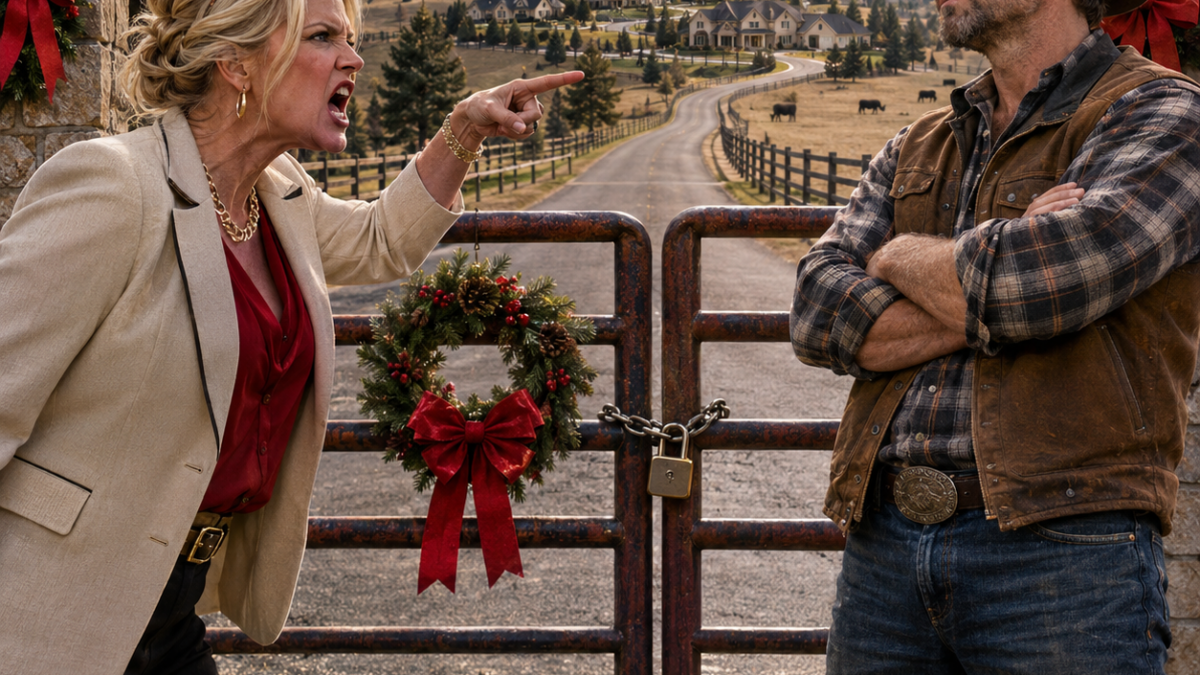
PART 2
The funny thing about county government is that people imagine every office simply vanishes after five o’clock, on weekends, and especially on Christmas.
That isn’t entirely true in a mountain county.
Road crews still work.
Sheriff’s deputies still answer calls.
Emergency dispatch still functions.
And the county recorder, it turned out, had recently created a digital access line for title companies and law enforcement because winter property disputes were not exactly unusual in an area where one snowstorm could turn a questionable easement into a life-or-death problem.
I called the number listed in my closing packet.
A recorded message answered.
County offices were closed for the holiday.
Then came the option I needed.
“For urgent property-record verification involving blocked access, emergency routes, or law-enforcement matters, press four.”
I pressed four.
Victoria stared at me.
“You cannot honestly expect someone to answer.”
Someone answered.
“County records emergency line. This is Melissa.”
I looked at Victoria.
“Merry Christmas, Melissa.”
There was a pause.
“Merry Christmas. What can I help you with?”
“My name is Ethan Cole. I recently purchased the Black Ridge Ranch parcel. Eight thousand acres west of Mountain Crest.”
Keyboard tapping.
“I know the transfer.”
“Good.”
“I need to confirm whether the old steel bridge on County Route Twelve Spur is included in my deed.”
More typing.
“Give me the recording number if you have it.”
I had it.
Unlike Victoria, I had spent the three weeks before closing reading almost every page my attorney sent.
Not because I expected an HOA fight.
Because eight thousand acres came with things people don’t think about when they hear the word ranch.
Water rights.
Mineral reservations.
Grazing leases.
Utility easements.
Timber access.
Conservation restrictions.
Old fence agreements.
Road maintenance.
Rights-of-way.
And one bridge.
I read the number.
Melissa entered it.
The line went quiet.
I could hear a distant Christmas song playing somewhere in her office or house.
Then:
“Yes.”
Victoria shifted.
I turned slightly away so I could hear.
“Yes what?”
“The bridge is included.”
“Inside the deeded boundary?”
“Yes. The legal description runs to the centerline of the river and includes the bridge structure and approach on the west side.”
I looked toward Victoria.
She was watching my face.
“Any ownership interest recorded to Mountain Crest HOA?”
More typing.
“No ownership.”
“Any easement?”
Another pause.
“Yes.”
Victoria’s face brightened.
I waited.
Melissa continued.
“There is an access easement benefiting the subdivision.”
“What kind?”
“Nonexclusive ingress and egress.”
“Ownership?”
“No.”
“Maintenance rights?”
“Shared maintenance agreement recorded with the original developer.”
I took a breath.
“That’s what I needed.”
“Do you need a certified copy?”
“Email first. Certified after the holiday.”
“I can send the recording image right now.”
“Please.”
My phone vibrated less than a minute later.
PDF.
Recorded deed.
Legal description.
Bridge parcel.
Easement.
Everything.
I thanked Melissa.
Before hanging up, she added:
“Mr. Cole?”
“Yes?”
“If somebody has physically blocked a recorded access route, you may want to contact the sheriff.”
Victoria heard that part.
Her mouth tightened.
“Thank you.”
I ended the call.
For a moment, there was only the sound of wind against the steel bridge.
Victoria crossed her arms.
“Well?”
I held up the phone.
“The county says I own it.”
“That’s one clerk.”
“The deed says I own it.”
“The HOA has an easement.”
“Yes.”
That word changed the energy.
Victoria stepped forward.
“Exactly. Which means you cannot interfere with our access.”
“I’m not interfering with your access.”
I pointed toward the gate.
“You are.”
Her face flushed.
“This gate is for community security.”
“On my bridge.”
“The easement allows us to control passage.”
“No.”
“You haven’t reviewed our attorney’s interpretation.”
“I don’t need his interpretation to understand the difference between access and ownership.”
Victoria shook her head.
“You just bought here. You don’t know how things work.”
“I know how deeds work.”
“That bridge has functioned as part of Mountain Crest for more than twenty years.”
“That may explain your habits.”
“It establishes precedent.”
“Maybe for use.”
I looked directly at her.
“Not ownership.”
She opened the blue folder again.
“You’re making this unnecessarily adversarial.”
I almost laughed.
“I arrived at my property on Christmas morning and found a locked gate across a bridge I apparently own.”
“We were protecting our residents.”
“From me?”
“From uncontrolled traffic.”
“What uncontrolled traffic?”
“Ranch operations. Contractors. Deliveries. Heavy equipment.”
“I haven’t moved any heavy equipment yet.”
“But you will.”
There it was.
Not a legal issue.
A future fear.
Victoria continued.
“Mountain Crest is a private residential community. Our homeowners paid significant premiums for quiet, security, and limited traffic.”
“And I paid for eight thousand acres with a recorded access route.”
“Our residents were here first.”
I looked toward the mountains.
“No.”
She frowned.
“The ranch was here first.”
That silenced her for half a second.
The ranch had existed in one form or another for generations.
Mountain Crest had been carved from a small section along the river much later.
The old owner of Black Ridge Ranch had apparently granted access across the bridge when the development was built.
That didn’t make the bridge theirs.
It meant somebody had been reasonable enough to let the neighborhood use a crossing.
A gift of practicality had slowly been rewritten in people’s minds as ownership.
That happens more often than you would think.
Victoria folded the map.
“The gate stays.”
“No.”
Her eyes sharpened.
“Excuse me?”
“You put a gate on my property.”
“It serves the easement.”
“Without my permission.”
“The board authorized it.”
“Your board doesn’t govern my land.”
“It governs the easement.”
“You have the right to cross.”
I pointed toward the chain.
“Not to lock me out.”
Several residents had begun appearing.
Christmas coats.
Snow boots.
Coffee cups.
People had probably seen us from nearby houses.
One older man stood near a stone mailbox.
A younger couple watched from a driveway.
Two children in pajamas pressed their faces against a window.
Victoria noticed the audience.
Her posture changed.
She became more formal.
“Mr. Cole, the HOA has maintained this bridge for decades.”
“Good.”
“Which gives us rights.”
“Yes.”
She seemed surprised.
I continued.
“Access rights.”
She looked irritated.
“You’re playing with semantics.”
“No.”
I shook my head.
“This is literally the kind of situation where semantics become property law.”
A man in a red jacket walked closer.
“Victoria?”
She turned.
“It’s handled, David.”
He looked at me.
Then the gate.
“Is this the new ranch owner?”
“Yes.”
He extended a hand.
“David Mercer.”
“Ethan Cole.”
We shook.
He seemed uncomfortable.
“Sorry about this. We were told the bridge belonged to the HOA.”
I glanced toward Victoria.
“So was I.”
Her face hardened.
David looked toward her.
“Doesn’t it?”
“Of course it does in practical terms.”
That answer was weaker than the one she had given me ten minutes earlier.
I noticed.
So did David.
“In practical terms?”
Victoria snapped the folder shut.
“Our attorney can resolve this.”
“Great.”
I looked at my phone.
“Merry Christmas.”
She stared.
“You’re not crossing.”
I looked at the locked chain.
Then at her.
“I’m going home.”
“Not through Mountain Crest.”
“The bridge belongs to me.”
“You will not break an HOA lock.”
“No.”
I reached into my truck.
Victoria stiffened.
I pulled out the bolt cutters I kept behind the rear seat.
Living on a ranch changes what qualifies as normal equipment.
David took a slow step back.
Victoria stared at the cutters.
“You wouldn’t.”
I rested them against my shoulder.
“I’m not damaging the gate.”
“Then what are you doing?”
“The chain is attached to my bridge.”
“That chain belongs to the HOA.”
“Then I’ll remove the gate hardware instead.”
Her face turned red.
“You touch that gate and I’m calling the sheriff.”
“Perfect.”
I put the cutters down.
“Let’s call him.”
Victoria pulled out her phone.
She was already dialing.
I walked back to my truck.
Sarah would have laughed at that moment.
Except there was no Sarah in my story.
That was part of why the ranch mattered.
I had been married once.
Not recently.
Not happily at the end.
After twenty-three years together, my wife, Laura, and I had reached that strange adult tragedy where neither person had done anything unforgivable, but the life between them had gradually become something neither recognized.
There were no affairs.
No dramatic betrayal.
Just distance.
Work.
Travel.
Different dreams.
By the time we finally separated, our two children were adults.
We signed papers in a lawyer’s office.
Then went to lunch together.
That somehow hurt more.
Laura moved to Oregon to be closer to our daughter.
I stayed behind and sold the logistics company I had spent twenty-eight years building.
For the first time since I was twenty-two, nobody needed me in an office on Monday.
I didn’t know what to do with that.
Black Ridge Ranch had appeared almost accidentally.
An old client mentioned it.
The previous owner’s family wanted to sell everything as one tract instead of letting developers cut it apart.
I visited in October.
The aspens were yellow.
The first snow dusted the peaks.
I stood beside the river and felt something I hadn’t felt in years.
Stillness.
So I bought it.
My son called me insane.
My daughter asked whether I had joined a survivalist cult.
Laura said:
“Actually, Ethan, that sounds exactly like you.”
“What does that mean?”
“You’ve spent your whole life solving other people’s routes.”
She paused.
“Maybe you finally bought one of your own.”
That sentence stayed with me.
And now, on Christmas morning, somebody had literally locked that route.
Maybe the universe had a sense of humor.
Sheriff Daniel Brooks arrived twenty minutes later in a four-wheel-drive county SUV.
I knew him because he had been at the ranch closing.
Not officially.
The seller’s attorney was his cousin.
Small county.
People overlap.
Brooks climbed out.
Tall.
Gray mustache.
Heavy winter jacket.
He looked at the gate.
Then Victoria.
Then me.
“Merry Christmas.”
“Merry Christmas, Sheriff.”
Victoria stepped forward.
“Thank you for coming. This man is threatening to destroy HOA property.”
Brooks looked at me.
“Are you?”
“No.”
“Good.”
Victoria’s eyebrows shot up.
“He brought bolt cutters.”
“I own bolt cutters.”
Brooks nodded.
“Most people out here do.”
Victoria looked insulted by the county’s tool culture.
She held out her map.
“This bridge is part of Mountain Crest.”
Brooks didn’t take it.
“Do you have a deed?”
“The HOA has controlled it for decades.”
“That wasn’t my question.”
I liked Brooks immediately.
Victoria opened another document.
“We have an access agreement.”
“Okay.”
Brooks looked toward me.
“Ethan?”
I handed him my phone with the freshly emailed county record.
He put on reading glasses.
Scrolled.
Read.
Zoomed in.
Then walked a few yards toward the bridge.
He looked at the steel identification plate.
Back to the document.
Then to Victoria.
“Looks like Mr. Cole owns the bridge.”
She stared.
“That cannot be correct.”
“It’s recorded.”
“Our attorney said—”
“Your attorney isn’t the county recorder.”
“The HOA has rights.”
“Yes.”
Brooks looked at the gate.
“Access rights.”
He pointed toward the chain.
“This is a problem.”
Victoria’s tone sharpened.
“Sheriff, with respect, this is a civil matter.”
“Mostly.”
He nodded.
“Until somebody knowingly prevents the owner of property from accessing his property or damages something that isn’t theirs.”
“I am protecting HOA residents.”
“Then protect them without locking out the bridge owner.”
One of the watching homeowners whispered something.
Victoria heard.
Her cheeks darkened.
“This is absurd.”
Brooks looked at me.
“Do you want to close the bridge?”
“No.”
That answer surprised almost everyone.
Especially Victoria.
Brooks nodded slowly.
“What do you want?”
“I want the gate unlocked.”
“And?”
“I want the HOA to stop telling people it owns something it doesn’t.”
Victoria stepped forward.
“We have never—”
I looked at her.
“You told me you owned it twenty-five minutes ago.”
She stopped.
David, the man in the red jacket, looked down.
Brooks took off his glasses.
“Seems straightforward.”
Victoria crossed her arms.
“I’m calling our attorney.”
“Please do.”
Brooks glanced toward the sky.
“I was supposed to be eating cinnamon rolls twenty minutes ago.”
That may have been the first time anyone smiled.
Even David.
Victoria did not.
Mark Dalton arrived in a dark Range Rover thirty-five minutes later.
He wore a charcoal wool coat and the expression of a man who charged by the hour even on Christmas.
He stepped out carrying a leather document case.
“Sheriff.”
“Mark.”
They knew each other.
Again.
Small county.
Mark looked at me.
“You’re Mr. Cole.”
“Ethan.”
“I represent Mountain Crest.”
“I gathered.”
Victoria began speaking immediately.
“The county has made a clerical error.”
Mark held up one hand.
That was interesting.
He didn’t tell me to stop.
He told her.
“Let me review.”
Victoria went quiet.
Mark looked over my deed.
Then the easement.
Then the old subdivision map.
His face never dramatically changed.
Good lawyers are trained not to show pain.
But I watched his eyes.
First the bridge line.
Then the HOA boundary.
Then the easement language.
Back to the deed.
Finally:
“Where did you get this?”
“County records.”
“Today?”
“Yes.”
He glanced at Victoria.
“You installed the gate when?”
“Yesterday.”
He looked back at her.
“On whose authorization?”
“The board.”
“Did the board receive a title opinion first?”
Victoria hesitated.
Mark’s face changed then.
Not much.
Enough.
“I was told we controlled the bridge.”
“By whom?”
“The management company.”
“Ownership or access?”
“They said it was ours.”
Mark pinched the bridge of his nose.
Sheriff Brooks looked toward me.
I looked away because I was dangerously close to laughing.
Mark returned to the document.
“The HOA has a perpetual access easement.”
“Yes.”
I waited.
He read aloud.
“‘Nonexclusive vehicular and pedestrian ingress and egress over the existing bridge and western approach for the benefit of owners, guests, invitees, contractors, municipal services, emergency personnel, and service providers serving Mountain Crest.’”
He stopped.
Victoria looked relieved.
“You see?”
Mark did not share her relief.
He continued.
“‘Maintenance costs to be shared according to usage as agreed with the fee owner.’”
He looked at me.
“Fee owner.”
Victoria said nothing.
Mark turned another page.
“The HOA does not own the bridge.”
Silence.
A child laughed somewhere in one of the houses.
Christmas music drifted faintly from a porch speaker.
Victoria’s voice was quieter now.
“But we have the right to control access.”
“No.”
Mark shook his head.
“You have the right to access.”
“That’s what I mean.”
“No.”
He looked at her.
“It very much is not.”
I could have kissed him.
Not literally.
It was Christmas, but there were limits.
Mark continued.
“The easement is nonexclusive. It doesn’t grant gate-control authority. It doesn’t give the HOA the right to exclude the owner.”
Victoria’s face had gone pale.
David spoke from near the road.
“So Ethan owns the bridge?”
Mark looked toward him.
“Yes.”
“And the road after it?”
“Portions differ.”
He looked at my deed.
“But the bridge itself and western approach are inside Mr. Cole’s parcel.”
Someone else asked:
“Could he close it?”
Mark glanced at me.
“Not to easement beneficiaries without legal cause.”
That mattered.
I could not simply wake up angry and strand the neighborhood.
The HOA had legitimate access rights.
I respected that.
But they were rights across my property.
Not ownership of it.
Victoria looked toward the gate.
“This was intended for security.”
Mark’s tone became almost painfully patient.
“You cannot improve security by installing a gate on property you don’t own without permission from the owner.”
“I believed we owned it.”
“That belief should have been verified.”
She stared at him.
“I hired you to defend the association.”
“I am defending the association.”
Mark nodded toward the gate.
“By preventing you from making this worse.”
For the first time that morning, nobody had anything to say.
Then a gust of wind pushed snow across the road.
I looked toward my ranch.
Smoke was rising from the chimney in the distance.
I had left the heat low but on.
There was food inside.
A tree I had cut from the property and decorated alone two nights earlier.
A bottle of bourbon.
Two steaks.
One for Christmas dinner.
One because I still had not learned how to shop for one person.
I wanted to go home.
So I looked at Mark.
“Here’s what I propose.”
Victoria opened her mouth.
Mark raised his hand again.
I continued.
“Unlock the gate.”
He nodded.
“Immediately.”
“Agreed.”
“Remove it after the holiday unless we reach a written agreement allowing it.”
Mark nodded again.
“Reasonable.”
“If Mountain Crest wants controlled access, cameras, maintenance rules, snowplowing arrangements, whatever, we put it in writing.”
Victoria said:
“And ranch traffic?”
“We negotiate practical rules.”
“You could run hundreds of trucks through here.”
“I could.”
Her face tightened.
“I’m not planning to.”
Mark looked at me.
“What are you planning?”
I glanced toward the valley.
“Cattle eventually.”
“Timber?”
“Selective management.”
“Guest operations?”
“Maybe.”
Victoria shook her head.
“This changes the character of the community.”
I looked at her.
“No.”
“The ranch was already here.”
That sentence landed differently now.
The gate came down before noon.
Not dramatically.
Sheriff Brooks didn’t arrest anyone.
Nobody got handcuffed.
Mark called the HOA management company.
The code was obtained.
Chain unlocked.
One maintenance worker removed the temporary locking mechanism.
The gate itself swung open.
I walked back to my truck.
Victoria stood beside her SUV.
She looked angry.
Embarrassed.
Maybe frightened.
I understood why.
Her residents had watched her confidently claim something that was not true.
People forgive mistakes.
They are less forgiving when certainty comes before facts.
I opened my truck door.
Victoria called:
“Mr. Cole.”
I turned.
“This isn’t finished.”
“I know.”
She seemed surprised again.
“I’ll see you at the meeting.”
“What meeting?”
“The one we’re going to have to create an access agreement.”
I looked toward Mark.
He smiled faintly.
“That would be advisable.”
Then I drove across my bridge.
The tires hummed over the steel deck.
Snow-covered river below.
Christmas morning.
My first crossing as the man who actually owned it.
I expected triumph.
Instead I felt tired.
Maybe that’s what happens when you get older.
Winning is less exciting than getting home.
The ranch road climbed gradually beyond Mountain Crest.
Within five minutes, houses disappeared behind pine trees.
Another ten and the valley opened.
Black Ridge Ranch.
Eight thousand acres.
My eight thousand acres.
I stopped the truck before reaching the house.
Got out.
Snow still falling.
There was no engine noise.
No HOA president.
No lawyer.
Just wind.
A hawk crossed the gray sky.
I stood there longer than necessary.
Then my phone rang.
My daughter, Claire.
“Merry Christmas, Dad.”
“Merry Christmas.”
“You sound weird.”
“I had a morning.”
“Oh no.”
“What?”
“You bought a ranch three days ago. What did you already break?”
“Nothing.”
“Did a cow attack you?”
“I don’t own cows yet.”
“Then what?”
“An HOA tried to lock me out of my bridge.”
Silence.
Then:
“I need you to start from the beginning.”
By the time I finished, Claire was laughing so hard she had to put the phone down.
“This is not funny.”
“They put a gate on your bridge?”
“Yes.”
“And then showed you a map proving it wasn’t theirs?”
“Yes.”
She started laughing again.
“You’re a terrible daughter.”
“I’m a realistic daughter.”
My son, Luke, called five minutes later.
Claire had apparently texted him.
“Dad.”
“No.”
“Did you buy an HOA?”
“I bought a ranch.”
“Apparently with an HOA attached.”
“Not attached.”
“Adjacent.”
“Thank you.”
“So what are you going to do?”
“Write an agreement.”
“That’s boring.”
“I am hoping the rest of my retirement is extremely boring.”
He laughed.
“Good luck with that.”
Christmas dinner was quiet.
But not lonely.
There’s a difference.
I cooked one steak.
Put the other back in the refrigerator.
Opened bourbon.
Lit the fireplace.
The tree stood near the stone wall.
I had decorated it badly.
Too many lights on one side.
Not enough on the other.
Claire had sent ornaments from when the kids were young.
Luke at eight holding a fish.
Claire missing her two front teeth.
One ornament Laura and I had bought on our first Christmas together.
For a moment, the ranch felt enormous.
Eight thousand acres is a romantic number until you are the only person sitting inside it.
I looked at that old ornament.
Then toward the dark window.
Maybe peace was not the absence of people.
Maybe it was the absence of being controlled by people.
That felt closer.
I poured another inch of bourbon.
My phone buzzed.
A message from Sheriff Brooks.
**Gate open?**
I replied.
**Open.**
Then:
**Good. Merry Christmas.**
A second message.
**Mark Dalton owes me cinnamon rolls.**
I laughed alone in my kitchen.
That was my first Christmas at Black Ridge Ranch.
And I believed the bridge fight was probably over.
I was wrong.
Not because Victoria had any better legal argument.
She didn’t.
Because people rarely give up control the moment paperwork proves they never had it.
Two days after Christmas, I received an email from Mountain Crest HOA.
**SPECIAL BOARD MEETING — ACCESS SECURITY AND BRIDGE MANAGEMENT**
I almost deleted it.
Then I saw the agenda.
1. Historic HOA control of bridge.
2. Safety concerns created by Black Ridge Ranch acquisition.
3. Heavy-vehicle restrictions.
4. Gate authorization.
5. Fee allocation.
6. Legal options.
I called Mark Dalton.
He answered on the second ring.
“You represent them.”
“Yes.”
“So why am I calling you?”
“I was wondering the same thing.”
“Did you write this agenda?”
“No.”
“That’s encouraging.”
“I advised them not to take any action affecting the bridge until we negotiate with you.”
“Did Victoria listen?”
“Ethan.”
“Yes?”
“You met Victoria.”
“Fair.”
He sighed.
“I cannot advise you.”
“I know.”
“But I can tell you the board has five members.”
“Okay.”
“Not all five agree with her.”
That was useful.
“Meeting open?”
“Homeowners only for formal business.”
“Then I’m not going.”
“You’ll receive written proposals.”
“Fine.”
“Would you like counsel?”
“I already hired someone.”
That surprised him.
“Who?”
“Rachel Kim.”
Silence.
Then a low laugh.
“Oh.”
“You know her?”
“Unfortunately.”
“Good unfortunately or bad unfortunately?”
“For me?”
“Bad.”
“Excellent.”
Rachel Kim had handled part of my ranch closing.
She was forty-something, sharp, patient, and possessed the unnerving habit of letting people talk until they had given away more than they intended.
When I called her Christmas afternoon, she listened to the entire story.
Her first question was:
“Did you cut the lock?”
“No.”
“Good.”
“Sheriff verified the deed.”
“Good.”
“HOA lawyer verified the easement.”
“Very good.”
“They’re meeting again.”
“Of course they are.”
That was when I knew hiring her had been the correct decision.
We met the following morning.
Rachel spread the deed, easement, plat, and maintenance agreement across a conference table.
“This is actually pretty clean.”
“That’s what I thought.”
“They have access.”
“Yes.”
“You own the bridge.”
“Yes.”
“They cannot prevent your access.”
“Yes.”
“They may have legitimate maintenance concerns.”
“Yes.”
“They cannot invent new restrictions without negotiating.”
“Yes.”
She looked up.
“Why are you smiling?”
“Because it’s nice when a lawyer says exactly what I hoped.”
“Enjoy the moment. It won’t happen often.”
Then she became serious.
“Ethan, what do you want?”
“Peace.”
“That is not a legal term.”
“It should be.”
“What does peace look like?”
I thought.
“Residents continue using the bridge.”
“Obviously.”
“Garbage. Delivery. Emergency. Guests. All normal.”
“Okay.”
“No gate I can’t control.”
“Good.”
“If they want a gate, dual control or automatic access.”
“Reasonable.”
“HOA contributes to maintenance based on usage.”
Rachel nodded.
“They already have that obligation.”
“Then we formalize it.”
“Anything else?”
I hesitated.
“Apology.”
Rachel looked surprised.
“For you?”
“No.”
“For the residents.”
Her eyebrows lifted.
“Explain.”
“They were told the HOA owned the bridge.”
“Yes.”
“They supported a gate because they believed that.”
“Yes.”
“Victoria needs to correct the record.”
Rachel studied me.
“That is not legally necessary.”
“I know.”
“Then why?”
“Because if we don’t correct the story, this happens again in five years.”
She nodded slowly.
“That I agree with.”
The HOA proposal arrived after their meeting.
It was exactly as bad as expected.
They wanted:
Permanent gate control.
HOA approval for ranch commercial vehicles.
Restrictions on delivery hours.
Advance notice for gatherings above ten people.
Annual “bridge usage contribution” from me.
And an HOA right to temporarily restrict my access during “community security events.”
I read it twice.
Then forwarded it to Rachel.
Her reply was one sentence.
**I needed a laugh today.**
We rejected it.
Rachel drafted a counterproposal.
No HOA control over ranch traffic.
Automatic gate, if any, controlled jointly.
HOA responsible for a defined percentage of bridge maintenance based on easement usage.
No tolls.
No arbitrary closures.
Emergency access guaranteed.
County and sheriff provided access codes if a gate were installed.
Clear written acknowledgment that the bridge and western approach belonged to Black Ridge Ranch.
And one more provision.
The HOA would notify every homeowner that its interest was an easement, not ownership.
Victoria hated that part.
I knew because she called me herself.
I almost didn’t answer.
“Ethan.”
“Victoria.”
“This public acknowledgment language is unnecessary and inflammatory.”
“Which part?”
“The part where we supposedly admit we never owned the bridge.”
“You never owned the bridge.”
“We have always treated it as part of the community.”
“That isn’t ownership.”
“There you go again.”
“With definitions?”
“This is exactly why negotiations are becoming difficult.”
“No. Negotiations are difficult because your first proposal gave you authority over my ranch.”
“You bought property beside an established residential community. You have responsibilities.”
“Yes.”
“I’m glad you admit that.”
“I have responsibilities to my deed, the law, safety, and being a decent neighbor.”
“And the HOA?”
“I’m not in it.”
She exhaled sharply.
“You keep hiding behind that.”
I laughed.
“Hiding behind not being a member?”
“You benefit from the neighborhood.”
“How?”
“You use our roads.”
“Your easement crosses my bridge.”
“That bridge has been maintained with HOA funds.”
“And the agreement says maintenance is shared.”
“You haven’t contributed.”
“I owned it for a week.”
Silence.
“Send me the bills.”
That caught her.
“What?”
“Documented bridge maintenance for the period I own it. I’ll pay whatever share the recorded agreement requires.”
She didn’t respond.
I continued.
“That’s what good faith looks like, Victoria.”
“You’re trying to embarrass me.”
“No.”
“I’m trying to remove ambiguity.”
“We never had ambiguity.”
“You told me you owned the bridge.”
She stopped.
I lowered my voice.
“I’m not asking you to stand in the clubhouse and say you lied.”
“I didn’t lie.”
“Fine.”
“Say the prior understanding was incorrect.”
She was quiet.
Then:
“I’ll discuss it with the board.”
“Good.”
The next problem came from snow.
A heavy storm hit three days before New Year’s.
Eighteen inches overnight.
Wind.
Drifts.
The county plow cleared the public road.
Mountain Crest’s contractor cleared their streets.
Nobody cleared the bridge.
Why?
Because suddenly everyone was afraid to touch it.
The HOA said it was mine.
Their snow contractor said his agreement ended at the HOA boundary.
My ranch plow was still being transported from another state.
By nine in the morning, the bridge had nearly two feet of drifted snow across parts of the deck.
Then I received a call.
David Mercer.
The homeowner in the red jacket.
“Ethan?”
“Yes.”
“My wife’s pregnant.”
That got my attention.
“How pregnant?”
“Thirty-eight weeks.”
I stood up.
“Okay.”
“She’s having contractions.”
“Call 911.”
“We did.”
“Good.”
“Ambulance can get here.”
“But?”
“The bridge.”
I looked out my window.
Snow.
I had a pickup with a plow blade attachment, but it wasn’t heavy equipment.
Enough maybe.
“Tell them I’m clearing it.”
I put on boots.
Called Sheriff Brooks.
Then drove down.
By the time I reached the bridge, David was standing outside his house.
Victoria was there too.
For once, no folder.
No argument.
Just fear.
“The ambulance?”
“Ten minutes.”
I lowered the plow.
The snow was deep.
First pass slow.
Second better.
The steel deck was slick beneath.
Two HOA residents came with shovels.
Then three more.
Victoria grabbed one.
Nobody discussed ownership.
Nobody discussed easements.
We cleared the bridge.
The ambulance arrived.
Crossed.
Reached David’s house.
His wife, Emily, was transported safely.
Before the ambulance left, David came running toward me.
“They’re taking her.”
“Go.”
He grabbed my shoulder.
“Thank you.”
“Go.”
He climbed into his SUV and followed.
The baby was born that afternoon.
A girl.
Christmas week.
David texted me a photograph.
Tiny red face.
White hospital blanket.
**Grace Elizabeth Mercer. 7 lbs 4 oz. Emily is great. Thank you for opening the road.**
I stared at the photo for a long time.
Then another message arrived.
From Victoria.
**Thank you for helping today.**
Nothing else.
I replied:
**Of course.**
That snowstorm changed the argument more than any legal letter.
People could suddenly see the bridge for what it was.
Not a symbol.
Infrastructure.
Nobody cared whose Christmas wreath complied with guidelines when an ambulance needed to cross.
The community meeting happened New Year’s Eve afternoon.
This time I was invited.
Not as a member.
As the owner of the bridge.
The clubhouse was warm.
A stone fireplace burned at one end.
Christmas decorations still hung everywhere.
Garlands.
Lights.
A tree covered in ornaments made by residents’ children.
About sixty homeowners attended.
Rachel sat beside me.
Mark Dalton sat beside the HOA board.
Victoria looked tired.
Not defeated.
Different.
Human, finally.
The board vice president, a retired accountant named George Bennett, called the meeting to order.
He began with something I did not expect.
“Before we discuss the bridge agreement, there is a correction that needs to be made.”
Victoria stared at the table.
George continued.
“For many years, residents were informed or allowed to believe that the Mountain Crest HOA owned the steel bridge at the western entrance.”
People glanced around.
“That information was incorrect.”
Silence.
“The HOA possesses a recorded nonexclusive access easement.”
George looked toward me.
“The bridge itself is owned by Black Ridge Ranch, currently owned by Mr. Ethan Cole.”
Someone whispered:
“Well, damn.”
George almost smiled.
“We are correcting our records accordingly.”
I looked toward Victoria.
She still hadn’t looked up.
Then she did.
“I want to add something.”
George hesitated.
Then nodded.
Victoria stood.
I expected defense.
Instead:
“When Mr. Cole arrived Christmas morning, I told him the HOA owned the bridge.”
Her voice was steady.
“I believed that at the time.”
She looked toward the homeowners.
“But I had not independently verified it.”
A woman near the aisle folded her arms.
Victoria continued.
“That was my responsibility.”
Then she looked at me.
“I should not have authorized the gate installation before confirming the title.”
Rachel shifted beside me.
I said nothing.
Victoria swallowed.
“I’m sorry.”
Not dramatic.
Not perfect.
But real enough.
A murmur moved through the room.
Then David stood in the back.
His face looked exhausted.
Probably because he now had a newborn.
“I want to say something too.”
George nodded.
David looked at the crowd.
“Three days ago, most of us were still arguing about who should control the bridge.”
He paused.
“Then my wife went into labor.”
Several people smiled.
“Grace is doing great.”
Applause.
David waited.
“The ambulance crossed because Ethan went out in a snowstorm and cleared the bridge.”
He looked at me.
“He didn’t ask whether we had apologized.”
The room became very quiet.
“He didn’t ask whether I supported Victoria.”
He laughed slightly.
“I did, by the way.”
A few people laughed too.
“He just cleared the road.”
David looked toward the bridge through the clubhouse windows.
“Maybe that’s what we should be talking about. Not who wins.”
Then back to everyone.
“How do we keep the bridge open?”
That became the meeting.
Finally.
Not ownership.
Function.
Rachel presented our proposal.
Mark explained the HOA’s obligations.
Maintenance.
Snow removal.
Inspection.
Insurance.
Emergency access.
Gate security.
Resident access.
Ranch access.
We negotiated.
Not perfectly.
There were arguments.
One resident worried about cattle trucks at five in the morning.
I agreed not to schedule routine heavy commercial deliveries during quiet nighttime hours when reasonably avoidable.
Another resident worried about tourists if I opened cabins.
I said any future commercial hospitality use would follow county permitting and traffic requirements, not HOA approval.
They accepted that reluctantly.
The gate became the hardest issue.
Some homeowners genuinely liked the security.
I understood.
So we redesigned the idea.
Automatic gate set beyond the bridge on the HOA side.
Not on my bridge.
Resident codes.
Emergency override.
No interference with ranch access.
Separate ranch turn.
The HOA would pay for it.
That solved the ownership problem.
Then maintenance.
A structural engineer would inspect the bridge annually.
Costs shared based on the old agreement and actual usage.
The HOA accepted most routine winter plowing because its residents generated the majority of daily traffic.
I accepted responsibility for ranch-caused damage beyond normal use.
Reasonable.
Predictable.
Written.
At the end, Rachel looked toward me.
“Anything else?”
I thought about Christmas morning.
Victoria.
The locked gate.
The map.
The sheriff.
Then the snowstorm.
Grace.
I shook my head.
“No.”
George called for an HOA vote approving the agreement.
Hands rose.
Almost unanimous.
One opposed.
There is always one.
The meeting ended at six-thirty.
New Year’s Eve.
People began leaving for parties.
Victoria approached me near the Christmas tree.
For a moment, neither of us spoke.
Then she said:
“You could have made this much worse for us.”
“Yes.”
She gave me a tired smile.
“I appreciate the honesty.”
“You could have made it worse for me too.”
“I almost did.”
“Yes.”
She looked toward the window.
Snow reflected the lights from the clubhouse.
“I really thought the bridge belonged to us.”
“I know.”
“You think I’m an idiot.”
“No.”
She looked surprised.
“I think you were too certain.”
That seemed to land.
After a moment:
“I’ve been president six years.”
“That sounds exhausting.”
“It is.”
“Why do it?”
She considered.
“My husband died seven years ago.”
I hadn’t known.
“He handled everything before that. Finances. Repairs. Insurance. He was the person people called.”
She looked toward the residents leaving.
“After he died, I needed something that felt… useful.”
Her voice softened.
“The board needed someone.”
“So you became president.”
“Yes.”
“And then?”
She smiled without humor.
“Apparently I became very good at telling people what to do.”
I looked at her.
“That happens.”
“You’re being kind.”
“No.”
I shook my head.
“I’m being accurate.”
She laughed once.
Then rubbed at one eye.
“I spent Christmas morning arguing with a stranger over a bridge I didn’t own.”
“Yes.”
“When you say it like that…”
“That is how it happened.”
She looked at me.
“Why didn’t you close it?”
“Legally, I couldn’t just eliminate the easement.”
“You could have made access miserable.”
“Probably.”
“You could have sued us.”
“Yes.”
“Why didn’t you?”
I looked toward the tree.
A handmade ornament near the bottom said:
**MERCER FAMILY — CHRISTMAS 2025**
I thought about Grace.
“Because I bought the ranch for peace.”
Victoria nodded slowly.
“Did you find it?”
“Ask me next Christmas.”
That made her smile.
The countdown to midnight happened at the ranch.
Not because I planned a party.
Because somehow David invited me to his house, I declined, he told other people I was alone, George called, then somebody suggested everyone bring food to Black Ridge because I had the larger fireplace.
By eight o’clock, twenty-three people were in my house.
I had owned the ranch ten days.
There were children running through rooms I still hadn’t unpacked.
Casseroles appeared.
Someone brought champagne.
George brought chili.
Sheriff Brooks came after his shift carrying cinnamon rolls.
“For the ones I missed Christmas morning.”
Mark Dalton showed up with his wife.
Rachel arrived around ten.
Victoria came last.
She stood at the door holding a pie.
I looked at it.
“Peace offering?”
“Apple.”
“That didn’t answer my question.”
“Yes.”
I let her in.
At eleven-fifty, we all went outside.
The sky had cleared.
Stars over the valley.
Snow reflected moonlight.
The mountains were dark silhouettes.
Someone counted down.
Ten.
Nine.
Eight.
Children screamed the numbers.
Three.
Two.
One.
Happy New Year.
People hugged.
Champagne opened.
I stood a few steps away watching.
My phone buzzed.
Claire.
**Happy New Year, Dad. Alone on your giant mountain?**
I took a picture.
Twenty-three people.
Bonfire.
Snow.
Sheriff holding a cinnamon roll.
Victoria arguing with Rachel about pie crust.
I sent it.
Claire replied almost immediately.
**You lasted 10 days.**
Then:
**Proud of you.**
That one caught me.
I looked toward the house.
For months after the divorce, my biggest fear had been that peace and loneliness were the same thing.
They weren’t.
Peace leaves room for people.
It just doesn’t force them on you.
By spring, the bridge agreement was fully implemented.
New automatic gate on the HOA side.
Camera.
Emergency override.
Clear signage.
**PRIVATE BRIDGE — BLACK RIDGE RANCH**
**MOUNTAIN CREST ACCESS BY RECORDED EASEMENT**
**PLEASE DRIVE SAFELY**
Victoria hated the wording at first.
Then admitted it was accurate.
The old gate hardware disappeared.
The HOA paid for the first inspection.
The engineer found the bridge structurally sound but recommended repainting steel sections and repairing drainage.
We split costs according to the agreement.
No drama.
When ranch equipment needed crossing, I sent residents advance notice when practical.
Not because they had authority over me.
Because waking fifty families with a cattle trailer at four in the morning is rude even when legal.
That difference mattered.
Choice instead of control.
By June, I bought cattle.
Not hundreds.
Thirty-two head to start.
The first livestock trailer crossed the bridge at eleven in the morning.
David stood nearby with his daughter in a carrier.
Grace slept through the whole thing.
Victoria watched from a distance.
When the truck cleared the bridge, she walked over.
“Well.”
“Well what?”
“The neighborhood survived.”
“I had confidence.”
She looked toward the cattle.
“Those things smell.”
“They’re cows.”
“I’m aware.”
“Just checking.”
She shook her head.
“You are enjoying this.”
“A little.”
Then something happened I never expected.
Mountain Crest asked whether I would allow residents to use part of the ranch trail system for a Christmas charity walk.
That was eleven months after the gate incident.
George called me.
“We want to raise money for the county food bank.”
“Good.”
“The route would start at the clubhouse, cross the bridge, then use about two miles of your lower meadow trail.”
I paused.
“You want fifty HOA residents walking around my ranch.”
“Maybe a hundred.”
“That sounds like my nightmare.”
“I knew you’d say that.”
“Why ask me?”
“Because Victoria said you would.”
I nearly dropped the phone.
“Victoria said what?”
“That you pretend to hate people more than you actually do.”
“I am reconsidering the bridge agreement.”
George laughed.
“Will you think about it?”
I did.
Then agreed.
Conditions.
Stay on marked route.
No vehicles beyond the designated area.
No dogs off leash.
Volunteers.
Insurance.
Everything written.
Rachel teased me.
“Look at you partnering with the HOA.”
“I’m partnering with a food bank.”
“Whatever helps you sleep.”
The walk happened the Saturday before Christmas.
Snow again.
Not heavy.
Enough to make everything beautiful.
Families crossed my bridge on foot.
Children in red hats.
Dogs wearing ridiculous sweaters.
Volunteers carried hot chocolate.
Sheriff Brooks stood near the crossing directing traffic even though almost none existed.
Victoria wore a bright red coat.
At the ranch entrance, people donated food.
Canned vegetables.
Rice.
Pasta.
Baby formula.
Hundreds of pounds.
I stood beside the barn watching boxes stack up.
David walked over holding Grace.
She was almost one.
“Want to hold her?”
“No.”
He handed her to me anyway.
Children are apparently not subject to property law.
Grace stared at me.
I stared back.
“You caused a lot of trouble.”
David laughed.
“She wasn’t even born.”
“Exactly.”
Grace grabbed my beard.
I didn’t have much beard.
She found what existed.
Victoria approached.
“You look terrified.”
“I am.”
“It’s a baby.”
“They’re unpredictable.”
“So are ranchers.”
Grace laughed.
I gave her back to David.
Victoria looked toward the bridge.
A long line of people was crossing.
“Hard to believe this started with a gate.”
“Most bad ideas start small.”
She glanced at me.
“I deserved that.”
“Probably.”
Then she became quiet.
“I’m stepping down.”
I looked at her.
“As president?”
“Yes.”
“Why?”
“Six years is enough.”
She smiled.
“And I think I need to discover whether I’m useful when I’m not telling people where they can park.”
“That sounds healthy.”
“George is running.”
“He’ll be terrible.”
“He probably will.”
“Perfect.”
She laughed.
“What are you going to do?”
“Ranch.”
“No HOA presidency?”
“I would rather chew through the bridge with my teeth.”
“That’s vivid.”
“I want no ambiguity.”
Victoria looked toward the families.
“You know, I hated you that first morning.”
“I know.”
“I thought you were going to be one of those rich outsiders who buys a giant property and acts like everybody else is trespassing on his planet.”
“Reasonable fear.”
“You could have been.”
“Yes.”
“But you weren’t.”
I didn’t answer.
She continued.
“I think that made me more embarrassed.”
“Why?”
“Because I treated you like the problem before you had actually done anything.”
Snow caught in her hair.
“I’m sorry about that too.”
That apology mattered more than the first one.
Not because I needed it.
Because it meant she understood.
The walk raised more than twenty thousand dollars for the food bank.
George insisted on presenting me with a plaque.
I refused.
He ordered one anyway.
It read:
**BLACK RIDGE BRIDGE COMMUNITY PARTNERSHIP — WHERE ACCESS BECAME CONNECTION**
I told him it sounded like something written by a committee.
He said it was.
The plaque ended up in the barn.
Not on the bridge.
The bridge didn’t need a monument.
It had enough identity problems already.
Christmas Eve came quietly.
My children arrived that afternoon.
Claire flew in from Oregon with her husband.
Luke drove up with his girlfriend.
For the first time, the ranch house felt like mine because my children were arguing in the kitchen.
Claire stood at the window.
“So that’s the bridge?”
“You’ve crossed it twice today.”
“I know. I expected something more dramatic.”
“It’s a bridge.”
“This whole family spent a year talking about it.”
“Your brother did.”
Luke entered.
“Dad literally became bridge Batman.”
“I hate both of you.”
Laura called that evening.
Claire put her on video.
She saw the tree.
The fire.
The kids.
Then me.
“You look happy.”
It was not a casual sentence.
Twenty-three years of marriage sits behind certain words.
I looked around.
“I am.”
“Good.”
She smiled.
“I’m glad you bought the valley.”
“Even with the HOA?”
“Especially with the HOA.”
“Why?”
“You always needed a project.”
“That was not a project.”
“It became one.”
We laughed.
There was no regret in the conversation.
Just history.
Sometimes that is what healing looks like.
Not wanting the past back.
Just being grateful it happened.
Christmas morning, one year after Victoria had locked the bridge, I woke before everyone else.
Snow had fallen overnight.
Almost exactly like the year before.
I made coffee.
Put on a coat.
Drove down toward the river.
No gate on the bridge.
The HOA’s automatic security gate stood farther east where it belonged.
My bridge was open.
Snowplowed.
Quiet.
I parked on the west side and walked onto the deck.
The river moved dark beneath ice along the banks.
Sunrise began touching the mountain.
For a moment, I was alone.
Then headlights approached from Mountain Crest.
A pickup.
George.
He stopped.
Rolled down the window.
“Merry Christmas.”
“Merry Christmas.”
“Why are you standing on a bridge at seven in the morning?”
“Why are you driving around at seven?”
“My wife forgot cinnamon.”
“That sounds more legitimate.”
He pointed toward town.
“Bridge open?”
I looked down.
“Seems like it.”
“Good.”
He drove across.
No permission requested.
None needed beyond the easement already written decades ago.
That was how it should be.
A few minutes later, another vehicle came.
Victoria.
She stopped beside me.
Window down.
“Merry Christmas, Ethan.”
“Merry Christmas.”
She held out a small wrapped box.
“What’s this?”
“Before you panic, it is not an HOA notice.”
“I wasn’t worried until you said that.”
I took it.
Inside was an old photograph.
Black-and-white.
The steel bridge.
No Mountain Crest.
No paved subdivision road.
Just the bridge, river, and ranch valley beyond.
A handwritten date on the back.
**December 1962.**
“Where did you find this?”
“The original developer’s archives.”
I looked at the photograph.
“Thought you’d like it.”
“I do.”
She smiled.
“There’s more.”
Below the photo was a copy of an old note.
Apparently from the ranch owner at the time.
**Bridge kept open through winter for neighbors, mail, school route, and emergencies. Keep crossing clear after storms.**
I read it twice.
Victoria said:
“Turns out it was connecting people before either of us got here.”
I looked toward the steel trusses.
“That sounds right.”
She shifted the car into drive.
“Enjoy Christmas.”
“You too.”
Then she crossed the bridge.
I stood there holding the photograph.
That old note changed the entire story for me.
I had spent a year thinking about ownership.
My deed.
Their easement.
My bridge.
Their access.
Legal boundaries.
Necessary boundaries.
But whoever owned Black Ridge in 1962 had apparently understood something simpler.
A bridge is valuable because it lets people cross.
Ownership matters.
Rights matter.
Respect matters.
But the purpose of a bridge is connection.
Maybe that was why the fight had felt so wrong from the beginning.
Victoria used the bridge as a gate.
I initially saw it as property.
The old rancher saw it as a way through winter.
He may have been wiser than both of us.
When I returned to the house, Claire was awake.
She saw the photograph.
“Oh, that’s cool.”
I handed it over.
She read the note.
Then looked at me.
“You’re getting emotional.”
“No.”
“You are.”
“It’s cold.”
“You’re inside.”
“Coffee.”
“That doesn’t make sense.”
Luke appeared behind her.
“What happened?”
“Dad’s crying over infrastructure.”
“I am not crying.”
He read the note.
Then went quiet.
“That’s actually pretty good.”
“Thank you.”
Claire smiled.
“You should frame it.”
I did.
It hangs in my office now.
Beside the ranch map.
Not the HOA map.
Mine.
The one showing eight thousand acres, river, forest, meadow, roads, and the old steel bridge.
The HOA election happened in January.
George became president.
Victoria stayed on one committee.
Community events.
Apparently she was excellent at Christmas decorations when nobody gave her authority over property.
The bridge agreement remained.
No lawsuits.
No liens.
No emergency meetings.
The annual inspection became routine.
Every fall, Mountain Crest and Black Ridge split maintenance as agreed.
Every winter, the bridge was plowed before either side worried about who was responsible.
David and Emily had a second child.
A boy.
They named him Daniel.
Sheriff Brooks claimed it was after him.
David denied this.
Grace grew up believing my ranch was partly hers because she had taken her first horse ride there.
I never corrected her.
The charity walk became annual.
By year three, more than two hundred people participated.
I opened another trail.
Then another.
The county food bank began scheduling trucks to collect donations directly at my barn.
Luke eventually moved closer and helped manage part of the ranch operation.
Claire visited every Christmas.
Laura came once too.
That surprised everyone.
She stayed in the guest cabin.
She and I drank coffee one morning overlooking the valley.
“Could we have lived here?” she asked.
I knew what she meant.
Together.
Years earlier.
I thought carefully.
“No.”
She nodded.
“Me neither.”
Then she smiled.
“But you can.”
“Yes.”
“I’m glad.”
That was enough.
My peace had never required erasing the people from my old life.
Only understanding where they belonged.
Same lesson as the bridge, maybe.
Boundaries do not have to become walls.
One December evening several years later, I was repairing a fence when Victoria drove up.
She was moving.
Not because of scandal.
Not because she had been driven out.
Her daughter had moved two states away and had twins.
Victoria wanted to be closer.
She parked beside the barn.
“I thought you should hear from me.”
“Congratulations?”
“Grandmother.”
“That sounds dangerous.”
“It is.”
She smiled.
“House closes Friday.”
“You’ll miss the neighborhood.”
“I will.”
Then she looked toward the bridge.
“Some parts.”
I laughed.
She handed me a folder.
I stared.
“Victoria.”
“What?”
“After all these years, you brought an HOA folder.”
“This one is different.”
Inside were copies of every updated agreement.
Inspection.
Maintenance schedule.
Emergency procedure.
County verification.
All organized.
“You already have all this.”
“I know.”
“Then why?”
She shrugged.
“I thought the next president should never be able to say they didn’t know.”
That was perhaps the most Victoria gesture imaginable.
Once she used folders to assert control.
Now she used one to preserve clarity.
I closed it.
“Thank you.”
She nodded.
At her SUV, she paused.
“You remember what you said that first Christmas?”
“I said a lot of things.”
“You said the problem was that I was too certain.”
I remembered.
“Yes.”
“I think about that.”
“Hopefully not every day.”
“No.”
She smiled.
“But enough.”
I watched her leave.
No victory.
No defeat.
Just a person moving into the next part of her life.
Years earlier, I might have wanted some grand revenge.
Maybe I would have imagined chaining the bridge shut.
Making HOA residents drive hours around.
Charging outrageous tolls.
Standing at the gate while Victoria begged.
That would make a satisfying internet story.
It would also make me exactly the kind of person I had been angry at.
Power feels different when it finally lands in your hand.
You discover whether you wanted justice or simply wanted your turn.
I could have made the bridge a weapon.
Instead, we made it infrastructure.
That was the revenge I eventually preferred.
Victoria had tried to use access to remind me who had power.
The final result was a written agreement that reminded everyone power had limits.
The HOA got secure, guaranteed access.
I got unquestioned ownership and control of my ranch operations.
Emergency services got a reliable route.
Residents got a safer system.
The bridge got maintained better than it had in decades.
Nobody lost.
Except the old assumption that authority belonged to whoever spoke the loudest.
One Christmas, long after Victoria moved, I walked the bridge with Grace Mercer.
She was nine.
David had told her the story.
Badly.
“Dad says you fought Miss Victoria on Christmas.”
“We did not fight.”
“He said there was a sheriff.”
“There was.”
“And a lawyer.”
“Two eventually.”
“And bolt cutters.”
I sighed.
“Yes.”
Grace looked delighted.
“Did you cut the gate?”
“No.”
“Why not?”
“Because I didn’t need to.”
She considered that.
“That’s boring.”
“Correct.”
She kicked snow off the railing.
“Dad says I was born because of the bridge.”
“No.”
“You cleared it.”
“That part is true.”
“If you didn’t, I would have been born at home.”
“Your father would have survived.”
“He says he would have fainted.”
“That is probably true.”
She looked down at the river.
“Who owns this?”
“The bridge?”
“Yes.”
“I do.”
“And Dad?”
“He has the right to cross.”
“And everybody?”
“Mountain Crest residents do.”
She frowned.
“So you own it, but they use it?”
“Yes.”
“That’s weird.”
“Adults made a lot of paper explaining it.”
“Why?”
“Because adults are scared somebody else is getting more than they are.”
She thought about that.
Then:
“Can’t everybody just use it?”
I laughed.
“That is essentially what the paper says.”
She nodded.
“Then why did you need the paper?”
I looked toward Mountain Crest.
Then toward the ranch.
“Because sometimes people need rules so they can stop arguing long enough to do the obvious thing.”
She seemed satisfied.
Then ran ahead.
Kids do that.
They move toward the other side without asking who owns the middle.
I stood there watching her.
Snow falling lightly.
Christmas lights visible at the Mountain Crest entrance.
Ranch lights glowing in the opposite direction.
For years, that bridge had been described as the only access.
That made it sound fragile.
A choke point.
A vulnerability.
A thing that could be controlled.
But standing there, I realized “only access” could mean something else.
It could mean the one place everybody had to meet.
My side.
Their side.
Ranch.
Neighborhood.
Private ownership.
Shared use.
The bridge forced us to figure out how to coexist.
Maybe that was why the conflict eventually made the community stronger.
Nobody could pretend we did not depend on one another.
Not after Grace’s birth.
Not after winter storms.
Not after charity walks.
Not after years of snowplows, ambulances, garbage trucks, cattle trailers, delivery vans, school friends, and neighbors crossing the same steel deck.
Christmas has a way of making people talk about peace as though peace is something soft.
Candles.
Snow.
Music.
Quiet rooms.
I used to think that too.
But real peace is engineered.
Like a bridge.
It requires load limits.
Foundations.
Maintenance.
Expansion joints.
Room for movement.
Clear ownership.
Reliable access.
And people willing to repair damage before it becomes collapse.
That first Christmas at Black Ridge, I thought I had bought peace with eight thousand acres.
I was wrong.
Land can give you silence.
Silence is not peace.
Peace came later.
When Victoria admitted she had been wrong.
When I chose not to use ownership as revenge.
When David trusted me after his daughter’s birth.
When residents stopped seeing the ranch as a threat.
When I stopped seeing Mountain Crest as an obstacle between me and town.
When everybody learned that the bridge could belong to one person without becoming a weapon against everyone else.
That was the real Christmas story.
Not the gate.
Not the deed.
Not the sheriff.
Not even the satisfying moment when the HOA’s own map proved Victoria wrong.
Those were just the conflict.
The story was what happened after.
I had arrived at Black Ridge wanting to be left alone.
Instead, the first people I met tried to lock me out.
And somehow, years later, those same people became the reason the ranch never felt lonely.
Life has a cruel sense of humor sometimes.
It also has a generous one.
I still wake early every Christmas morning.
Habit.
The house is usually full now.
Luke’s family.
Claire’s family.
Children.
Dogs.
Too much food.
Too many boots by the door.
Somebody inevitably complains that the Wi-Fi is slow.
I consider that proof the ranch is functioning correctly.
Before everyone wakes, I make coffee.
Drive down to the river.
Stop beside the bridge.
I carry Victoria’s old photograph in the truck glove box.
1962.
Same steel lines.
Different world.
Sometimes I take it out.
Look at the handwritten note.
**Bridge kept open through winter for neighbors, mail, school route, and emergencies. Keep crossing clear after storms.**
Simple.
No legal language.
No HOA covenants.
No property dispute.
Just responsibility.
Keep crossing clear.
That is what I do.
Then I drive back toward the house.
As I climb the hill, I can see smoke from the chimney.
Christmas lights.
Kids eventually appearing at the windows.
The ranch no longer feels like eight thousand empty acres.
It feels like home.
And every year, right before I turn onto the final stretch, I look in the rearview mirror.
The bridge is still there.
Open.
Snow cleared.
Connecting two pieces of land that once spent Christmas morning arguing over who had the right to cross.
That memory still makes me smile.
Victoria thought she was protecting her neighborhood.
I thought I was protecting my property.
We were both looking at the same bridge and seeing boundaries.
It took a county deed, a sheriff, two lawyers, a snowstorm, a newborn baby, and one very long year for us to understand that the most important thing about a bridge was never where the property line ran.
It was that people could get home.
And on Christmas, that mattered more than winning.








