PART 2: I Adopted the Oldest Cat in the Shelter — The Next Morning, a Stranger Left Me a Letter That Changed Everything
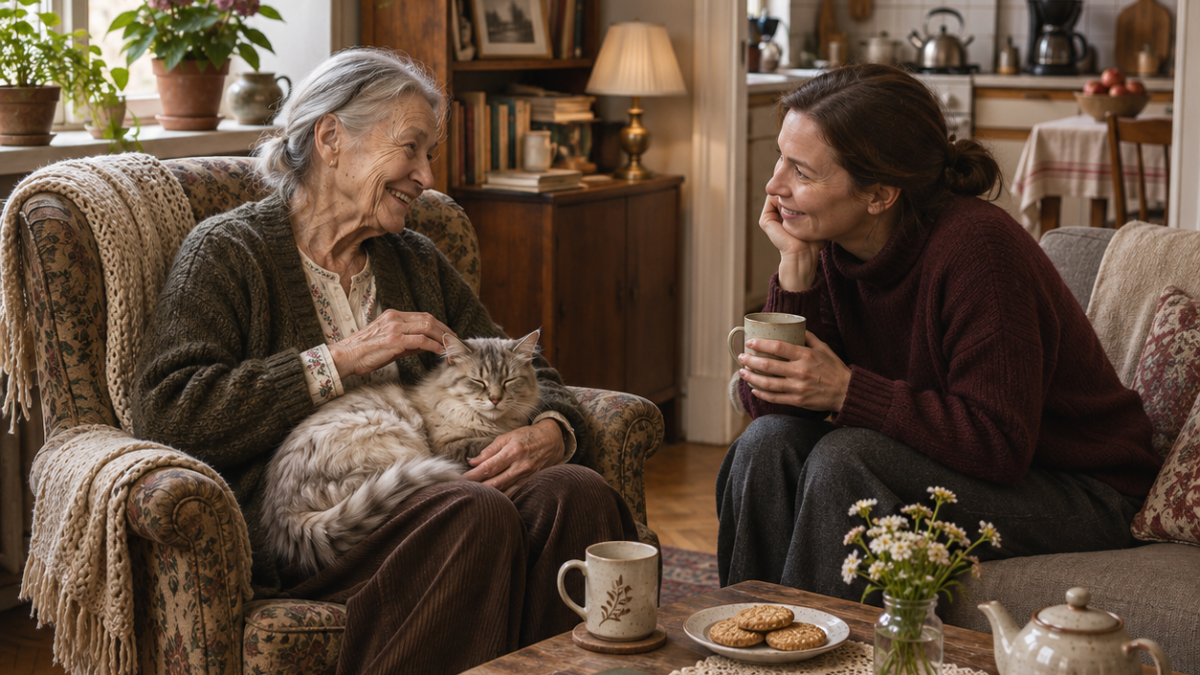
The shelter called the morning after I adopted Jasper and asked, in a strangely careful voice, whether I would be willing to read a letter from someone who had been coming back to see him for months.
I had known that fifteen-year-old cat for less than one night, but somehow the thought that someone out there was still looking for him made me hold the phone a little tighter.
What I didn’t know then was that bringing Jasper home would open a door between three lonely lives—and eventually force me to decide whether loving someone meant protecting them from pain or allowing them to keep the small pieces of happiness they still had left.
I adopted Jasper on a Thursday.
I was fifty years old, living alone in an apartment that was perfectly fine and somehow felt emptier every month.
Nothing dramatic had happened to the place.
The rent was paid.
The heat worked.
The refrigerator hummed reliably in the kitchen.
My mail sat in a neat stack beside the coffee maker, and I had become very good at keeping things clean because there wasn’t much else to disturb them.
That was almost the problem.
Nothing moved unless I moved it.
No one left a glass beside the sink.
No one forgot to turn off a light.
No footsteps crossed the hallway while I was making dinner.
Most evenings, I came home, changed into soft clothes, ate something simple, and turned on the television mostly because silence felt heavier after dark.
There were nights when I stood in the kitchen eating crackers over the sink because preparing an actual meal for one person felt strangely theatrical.
Plate.
Fork.
Napkin.
Chair.
All of that effort just to sit across from an empty place.
I wasn’t miserable.
That would almost have been easier to identify.
I was simply disappearing into routine.
Wake up.
Work.
Come home.
Sleep.
Repeat.
Then one cold Thursday afternoon, I found myself driving past the county animal shelter.
I had passed it dozens of times before.
That day, for reasons I still can’t fully explain, I turned into the parking lot.
I told myself I was only going to look.
People say things like that when they are lonely but not yet ready to admit they want something to come home with them.
The shelter smelled faintly of disinfectant, laundry detergent, and animals.
Dogs barked somewhere beyond the front desk.
Cats watched silently from rows of cages.
A young couple was looking at kittens near the entrance.
A little boy kept pointing excitedly at a tabby who was doing everything possible to get his attention.
I walked past them.
Past the kittens.
Past the younger cats.
Past the ones who stood on their hind legs and reached through the bars.
Jasper was in the last cage on the bottom row.
He was curled on a faded gray towel.
At first, I thought he was sleeping.
Then one cloudy eye opened.
The card on his cage said:
**JASPER — 15 YEARS OLD**
Below that:
**Quiet home preferred. Loves soft beds. Gentle senior.**
His fur must once have been beautifully white, but age had softened it into a dull winter gray.
One ear was torn.
His left eye was cloudy.
His body looked thin beneath his coat.
There was nothing dramatic about him.
He didn’t cry.
He didn’t paw through the bars.
He didn’t perform.
He simply looked tired.
I knelt.
“Hello, Jasper.”
His head lifted slowly.
Then, with the careful effort of an old animal who had learned to negotiate every stiff joint, he stood.
He crossed the cage.
And pressed his entire side against the door.
That was all.
No meow.
No paw.
No begging.
Just that quiet pressure against the bars.
As if he had stopped trying to convince anyone he deserved to be chosen.
Something inside me gave way.
Twenty minutes later, I was filling out adoption papers.
That evening, I carried Jasper into my apartment in a cardboard carrier that smelled like old blankets.
I opened the door and expected him to hide beneath the sofa.
Instead, he walked out.
Looked around once.
Then headed slowly down the hallway.
He went straight into my bedroom.
He stood beside the bed for several seconds, gathering himself.
Then jumped.
Or tried to.
His front paws made it.
His back legs didn’t.
I caught him gently and lifted him the rest of the way.
“Don’t worry,” I whispered. “Nobody saw.”
He walked in two slow circles beside my pillow.
Then curled up.
That night, for the first time in months, I fell asleep listening to something breathe beside me.
Just before sunrise, I opened my eyes.
Jasper was watching me.
Not suspiciously.
Not nervously.
Just watching.
I rested one hand against his side.
A purr started beneath my fingers.
Weak.
Uneven.
Like an old engine turning over after years in storage.
I smiled into the pillow.
And somewhere between that sound and the pale morning light, my apartment stopped feeling like a place where I was waiting for time to pass.
The phone rang while I was making coffee.
The shelter.
The woman asked how Jasper had done.
“Perfectly,” I said.
Then she hesitated.
“There’s something else.”
I stopped stirring my coffee.
“A woman came by this morning asking about him again.”
Again.
That word stayed with me.
“She left a few things,” the woman continued. “His old collar. A photograph. And a letter for whoever adopted him.”
I looked toward the patio door.
Jasper sat in a narrow strip of winter sunlight.
“She doesn’t want him back,” the shelter worker added quickly. “She just wanted you to know something about him.”
I watched Jasper turn his cloudy eye toward me.
“Read it,” I said.
And by the time she reached the final line, I understood that I had not simply adopted an old cat.
I had stepped into the middle of a promise somebody else thought she had broken.
PART 2
The shelter worker cleared her throat before she began.
“The woman’s name is Elaine.”
Jasper remained beside the glass door, his face lifted toward the sunlight.
I carried my coffee to the kitchen table and sat down.
The shelter worker continued.
“Elaine says Jasper originally belonged to her sister.”
I looked at Jasper.
His ears moved slightly when he heard his name.
“She raised him from the time he was a kitten. When Elaine’s sister became sick, Elaine promised she would take care of Jasper.”
There was a pause.
“She kept him for three years after her sister died.”
Something about that made the room feel smaller.
I had assumed Jasper had arrived at the shelter through one of the usual sad reasons.
Someone moved.
Someone had a baby.
Someone became allergic.
Someone decided an aging pet had become inconvenient.
I had not considered that he might be connected to someone’s grief.
“Why did she surrender him?”
The shelter worker hesitated.
“Her circumstances changed.”
“What does that mean?”
“She had to move into assisted housing.”
I closed my eyes briefly.
“They don’t allow pets?”
“Not where she is.”
That answer explained more than I wanted it to.
The shelter worker began reading Elaine’s letter.
It was not long.
That made it harder.
Long letters have room to explain.
Short ones leave the important things exposed.
Elaine had written that her sister, Margaret, brought Jasper home as a kitten.
He had been small enough to sleep inside the crook of her elbow.
Margaret had lived alone too, but according to Elaine, she had never seemed lonely because Jasper followed her everywhere.
Kitchen.
Bathroom.
Garden.
Laundry room.
At night, he slept beside her pillow.
Exactly where he had slept beside mine.
When Margaret became sick, Jasper stayed close.
When she could no longer move easily through the house, he learned the sound of her walker and would wait beside the bedroom door.
When home nurses came, he watched them.
When Margaret died, Jasper reportedly spent nearly two days sitting outside her closed bedroom.
Elaine took him home.
She wrote that caring for Jasper was not an obligation.
It was the last promise she had made her sister.
For three years, she kept that promise.
Then her money became tight.
Her health changed.
Her daughter, Carol, helped move her into a small assisted-living facility.
The room allowed almost nothing personal beyond a bed, a lamp, a few photographs, and two drawers.
No animals.
Elaine wrote:
“I tried every argument I could think of. I offered a deposit. I offered to keep him only in my room. I even asked whether his age could count as an exception because he mostly sleeps anyway. They said no.”
I put my coffee down.
The shelter worker continued reading.
Elaine had surrendered Jasper because she had nowhere safe to keep him.
She wrote that she had visited the shelter several times afterward.
Not because she expected to take him home.
Because she was afraid he would think she had abandoned him.
That sentence nearly broke me.
Then came the last line.
“Please keep his name. He’s already lost so much.”
I didn’t say anything.
The shelter worker didn’t either.
Jasper stood.
He walked slowly toward me.
His nails clicked faintly against the floor.
Then he brushed against my ankle.
Once.
That was all.
I bent down and touched his back.
“Did Elaine leave a phone number?”
“She did.”
“Can I have it?”
The woman sounded relieved.
“Yes.”
I wrote it down.
Then I stared at the numbers for several minutes.
I told myself I should wait.
Elaine didn’t know me.
I didn’t know her.
Maybe calling immediately would be strange.
Maybe emotional.
Maybe she needed distance.
Then Jasper jumped onto the empty chair beside me.
Or tried to.
Again, I helped him.
He settled there and looked at me.
“Fine,” I said. “You’re very persuasive.”
I dialed.
A woman answered after four rings.
“Hello?”
“Is this Elaine?”
“Yes.”
“My name is…”
I almost laughed because suddenly I didn’t know how to describe myself.
The woman who now owned her cat?
Jasper’s new person?
A stranger who had slept beside him once?
“I adopted Jasper yesterday.”
Silence.
Not dead silence.
Breathing.
A small intake of breath.
Then:
“Oh.”
I rushed on.
“The shelter read me your letter.”
“I hope that was all right.”
“It was.”
“I didn’t want to interfere.”
“You didn’t.”
“Is he okay?”
Her voice changed when she asked.
Every bit of control she had used disappeared.
That question came from somewhere deep.
“He’s okay.”
A breath left her.
“He slept on my bed.”
Another pause.
“He still does that?”
“Apparently.”
“Beside your pillow?”
I smiled.
“Yes.”
Elaine began crying.
Not loudly.
The quiet crying people do when they are embarrassed to be crying in front of a stranger.
“I’m sorry,” she said.
“Don’t be.”
“I told myself I wouldn’t do this.”
“Elaine.”
“I just worried.”
“I know.”
“No, you don’t.”
Her voice shook.
“I kept thinking about him waking up in that cage and not knowing where I was.”
I looked at Jasper.
He had closed his eyes.
“I think he’s adjusting.”
“Does he eat?”
“He ate half a can of food this morning.”
She laughed through her tears.
“Only half?”
“He gave me a look suggesting I had failed him personally by not offering the rest.”
“That sounds like Jasper.”
The laugh became steadier.
I asked her about his routines.
That was how the conversation changed.
Grief became practical information.
He liked warm water mixed into wet food.
He hated closed bathroom doors.
He preferred his water bowl far away from his food.
He liked blankets folded twice.
Not once.
Not three times.
Twice.
He occasionally woke at three in the morning and announced something to no one in particular.
His cloudy eye had been that way for years.
His torn ear came from a fight when he was young.
He had never won a fight in his life.
“He was always more confident than capable,” Elaine said.
I laughed.
We talked for nearly forty minutes.
Then I asked the question I had been thinking about since the letter.
“Would you like to see him?”
Elaine went silent.
I immediately wondered if I had gone too far.
“You don’t have to,” I added. “I just thought—”
“Yes.”
The answer came quickly.
Then softer:
“Yes. I would.”
So a week later, Elaine came to my apartment for tea.
I was more nervous than I wanted to admit.
I cleaned everything twice.
Then felt ridiculous because she was coming to see a cat, not inspect my baseboards.
Jasper seemed to know something was happening.
He spent most of the morning restless.
He walked from the bedroom to the living room.
Then back again.
At noon, the buzzer sounded.
I opened the building door.
Elaine stood downstairs.
She was smaller than I expected.
Late seventies, maybe.
Silver hair cut short.
A blue wool coat.
One hand gripping the strap of her handbag.
The other holding a small paper bag.
When she entered my apartment, she didn’t look around.
She looked for Jasper.
He was beside the heater.
At first, he didn’t move.
Elaine stopped.
“Hello, old man.”
Jasper lifted his head.
For three seconds, nothing happened.
Then he stood.
He walked toward her.
Slowly at first.
Then faster than I had seen him move.
Elaine knelt.
“Oh, sweetheart.”
Jasper pressed his face against her chest.
Her hands came around him.
And suddenly this woman I had met twenty seconds earlier was crying into the fur of a cat I had known for eight days.
I turned away.
Not because I was uncomfortable.
Because the moment felt private.
Elaine sat on my sofa.
Jasper climbed into her lap.
No hesitation.
No uncertainty.
He circled once, then tucked himself against her.
She buried her face in his neck.
“I told you I’d come back.”
My throat tightened.
I went to the kitchen.
“Tea?”
“Yes, please.”
I needed the distance.
A strange emotion had surprised me.
Jealousy.
It lasted perhaps five seconds.
But it was there.
I had brought Jasper home.
He slept beside me.
I fed him.
I gave him medicine for his stiff joints.
I had already started imagining our little routines.
Then Elaine arrived and Jasper became somebody else’s cat again.
Or perhaps he had never stopped being hers.
I stood beside the kettle feeling ashamed of myself.
Then I looked into the living room.
Elaine was whispering to him.
Jasper’s eyes were closed.
His purr was loud enough for me to hear from the kitchen.
And suddenly jealousy felt absurd.
Love was not a chair with one seat.
I made tea.
Elaine opened the paper bag she had brought.
Inside was Jasper’s old collar.
Blue fabric.
Faded almost gray.
A small brass tag with his name.
She handed it to me.
“I thought you should have it.”
I turned it over.
The back had an old phone number.
“Do you want him to wear it?”
She shook her head.
“He hasn’t worn it in years.”
“Then why give it to me?”
“Because it belongs with him.”
Then she showed me the photograph.
A younger woman sat on a garden bench.
Margaret.
She was smiling toward the camera.
Jasper, much younger and much whiter, lay across her lap.
He looked enormous.
“Your sister?”
Elaine nodded.
“She loved him more than most people.”
I smiled.
“Was he spoiled?”
“Terribly.”
“Good.”
Elaine laughed.
For the next two hours, she told me about Jasper’s life.
He once stole a roast chicken breast and dragged it beneath a bed.
He hated thunderstorms but loved vacuum cleaners for reasons no one understood.
Margaret used to sing to him badly.
He would leave the room when she started.
After Margaret died, Jasper stopped entering her bedroom for months.
Elaine never forced him.
Eventually, one winter morning, she found him sleeping on Margaret’s old sweater.
“I almost put it away,” she said.
“Why didn’t you?”
“Because he still needed it.”
Her fingers rested on Jasper’s back.
“Maybe I did too.”
That sentence stayed with me.
Elaine visited again the following Sunday.
Then the Sunday after that.
At first, I worried that the arrangement might become complicated.
Instead, it became simple.
Elaine arrived around two.
I made tea.
She brought something small.
Biscuits.
Jam.
A magazine.
Once she brought a ridiculous cat toy shaped like a fish.
Jasper ignored it completely.
Elaine was offended.
“You used to have taste.”
Jasper washed one paw.
I laughed.
Sunday afternoons became warmer.
Not dramatic.
Just fuller.
Elaine talked.
I listened.
Sometimes I talked too.
I told her how quiet the apartment had felt before Jasper arrived.
I admitted that I had gone to the shelter without planning to adopt anyone.
“You chose the oldest cat there?”
“I think he chose me.”
“They do that.”
“You sound very certain.”
“I’ve known him fifteen years.”
“Fair.”
She told me about moving into assisted living.
How difficult it was to give up furniture.
Books.
Her sister’s dishes.
A cedar chest.
Her own independence.
“Everybody keeps saying I’m lucky.”
“You don’t feel lucky?”
“I am.”
She corrected herself quickly.
“I have a safe room. Good nurses. My daughter visits. I don’t have to worry about stairs.”
Then she looked at Jasper.
“But being grateful doesn’t mean you stop missing what you lost.”
I understood that better than she knew.
There are people who believe loneliness is simply the absence of other people.
It isn’t.
Sometimes it is the absence of the specific life you expected to keep.
Elaine’s world had become smaller.
Mine had too.
Different reasons.
Same silence.
Jasper seemed to bridge it without effort.
On Sundays, my apartment smelled like tea and biscuits.
Elaine laughed.
I cooked occasionally.
She criticized my cooking.
Jasper slept between us.
Three people.
One cat.
A strange little circle.
Then, after three Sundays, someone knocked on my door on a Wednesday afternoon.
I opened it.
A woman stood there wearing a navy coat buttoned to her throat.
She looked to be around sixty.
Her hair was carefully arranged.
Her face looked tired in a way makeup could not hide.
“Are you Jasper’s owner?”
I hesitated.
“Yes.”
“My name is Carol.”
The name registered immediately.
Elaine’s daughter.
“Oh.”
“I’m sorry to come without calling.”
“That’s okay.”
“It probably isn’t.”
That sentence made me nervous.
I moved aside.
“Would you like to come in?”
Carol looked past me.
Jasper lay in his patch of sunlight beside the heater.
Her expression changed.
Softened.
Only briefly.
“He looks good.”
“He’s doing well.”
She nodded.
Then she did not enter.
“I need to ask you something.”
“All right.”
“Please stop letting my mother visit him.”
For a second, I thought I had misunderstood.
“I’m sorry?”
“The Sunday visits.”
“Yes?”
“I need them to stop.”
I stared at her.
“Why?”
Carol looked down.
Her hands were clasped tightly in front of her.
“Because she’s getting attached again.”
“She was never unattached.”
“I know.”
“Then I don’t understand.”
Carol took a breath.
“My mother is talking about Jasper as if she’s getting him back.”
“That’s not what she has said to me.”
“She’s rearranging her room.”
“What?”
“She measured the space beside her bed.”
My stomach tightened.
“She called the facility office again asking whether they might make an exception.”
I said nothing.
Carol continued.
“She bought cat food.”
That surprised me.
“She hasn’t brought food here.”
“She bought it for her room.”
Carol’s voice cracked slightly.
“She bought a bed too.”
I thought about Elaine.
Her small room.
Her limited belongings.
Her Sundays.
“She knows Jasper lives here.”
“Does she?”
“Yes.”
“Are you sure?”
I hesitated.
Carol saw it.
“That’s exactly what I mean.”
Her frustration increased.
“I’m not accusing you of anything. I know you’re trying to be kind.”
“Then why stop the visits?”
“Because kindness can hurt people too.”
That sounded rehearsed.
Or perhaps repeated to herself many times.
“My mother has lost a lot.”
“So has Jasper.”
“I know that.”
“Then why separate them again?”
Carol’s jaw tightened.
“Because I was the one who dealt with what happened after she surrendered him.”
I stopped.
“She barely slept.”
Carol’s eyes filled.
“She called the shelter every day.”
“I didn’t know.”
“She stopped eating properly.”
“Elaine never told me that.”
“She wouldn’t.”
Carol looked past me at Jasper.
“I had to clean out her apartment. I had to find a home for furniture she had owned forty years. I had to move her into a room where she could fit half her life into two drawers.”
Her voice rose slightly.
“And every night she asked whether Jasper would think she had abandoned him.”
I felt my anger disappear.
Carol was not Eleanor.
Not a villain.
Not someone trying to control an old woman for convenience.
She was frightened.
“I’m sorry,” I said.
Carol shook her head.
“I’m not asking for sympathy.”
“Maybe you deserve some.”
That caught her off guard.
She looked away.
“I just don’t want her broken again.”
Jasper stood.
He began walking toward us.
Carol noticed.
Her body became stiff.
He stopped at her feet.
For several seconds, he looked up.
Then he rubbed his cheek against her shoe.
Carol swallowed.
“Does he remember me?”
“I don’t know.”
She bent slowly.
Her hand touched his head.
Jasper leaned into it.
Then he purred.
Carol closed her eyes.
That tiny sound changed the room.
I waited.
She stroked his torn ear.
“My aunt used to say he had no sense of personal space.”
“He doesn’t.”
Carol smiled despite herself.
Then the smile disappeared.
“I’m serious about my mother.”
“I know.”
“She keeps thinking she can get pieces of her old life back.”
“Maybe she can.”
“No.”
The sharpness returned.
“You don’t understand.”
“Then explain it.”
Carol looked at me.
“Every time she loses something now, I am the one who has to explain why.”
Her words came faster.
“She can’t drive anymore. I explained it.”
“She can’t live alone. I explained it.”
“She can’t keep all her furniture. I explained it.”
“She can’t have Jasper. I explained it.”
Carol’s voice finally broke.
“I am so tired of being the person who takes things away from her.”
The hallway went silent.
That was the real problem.
Not Jasper.
Carol.
Elaine.
Love twisted into responsibility.
“I’m sorry,” I said again.
Carol wiped beneath one eye quickly.
“I don’t want to be cruel.”
“I know.”
“She thinks I am sometimes.”
“I doubt that.”
“She does.”
Jasper sat between us.
Carol looked down at him.
“I’m asking you to stop giving her something she can’t keep.”
I repeated the words quietly.
“Something she can’t keep.”
“Yes.”
I thought of Elaine sitting on my sofa.
Her shoulders relaxed.
Her laughter.
Her hand resting on Jasper.
“I don’t think she’s asking to keep him.”
“She bought a bed.”
“She’s grieving.”
“She’s planning.”
“Maybe.”
Carol stared at me.
“What happens when she realizes again that he’s not coming back?”
I didn’t have an answer.
That frightened me.
For several days after Carol left, I thought about cancelling Sunday.
I picked up my phone twice.
Put it down twice.
I considered telling Elaine I had plans.
That Jasper wasn’t feeling well.
That I needed space.
All lies.
Saturday night, Jasper slept beside my pillow.
I watched his side rise and fall.
“What do you think?”
One ear moved.
“You are no help.”
He purred.
I slept badly.
Sunday morning, I cleaned the apartment.
At one fifty-five, the buzzer sounded.
Elaine.
She came carrying homemade biscuits.
The moment she entered, she looked at me.
“You spoke to Carol.”
It wasn’t a question.
“Yes.”
She sighed.
“I knew she would come.”
“You knew?”
“She told me she might.”
“And you didn’t warn me?”
“I hoped she wouldn’t.”
Elaine removed her coat.
Jasper approached.
She bent and kissed his head.
“Hello, trouble.”
I made tea.
We sat.
For several minutes, neither of us mentioned Carol.
Finally I said:
“You bought cat food.”
Elaine stared into her cup.
“Yes.”
“And a bed.”
“Yes.”
“You asked the facility again.”
Her mouth tightened.
“Yes.”
“Elaine.”
“I know.”
“Do you?”
She looked at me.
For the first time since meeting her, I saw anger.
Not at me exactly.
At the question.
At herself.
At life.
“I know he isn’t coming back.”
“Then why buy those things?”
“Because I wanted to.”
“That isn’t really an answer.”
“It’s the answer I have.”
I waited.
Elaine’s fingers tightened around her teacup.
“The bed was on sale.”
I almost laughed.
She looked embarrassed.
“I saw it in a store.”
“And?”
“It was blue.”
I said nothing.
“Margaret used to buy him blue things.”
Her voice weakened.
“So I bought it.”
“Where is it?”
“Under my bed.”
“What about the food?”
“I gave it to the shelter.”
I breathed out.
“And the facility?”
“I asked.”
“Why?”
“Because sometimes you ask a question even when you know the answer.”
That sentence hurt.
Elaine looked toward Jasper.
“I know I cannot take him back.”
“Carol doesn’t think you know.”
“My daughter thinks pain is something that can be prevented if she arranges enough things.”
There was no cruelty in the sentence.
Only sadness.
“She loves you.”
“I know.”
“She’s exhausted.”
“I know that too.”
Elaine’s eyes filled.
“She has spent years taking care of me.”
“You don’t like that.”
“I hate it.”
“Why?”
“Because she is my daughter.”
The answer was immediate.
“I changed her diapers. I stayed awake when she had fevers. I packed her lunches. I held her when her husband left.”
Elaine looked down.
“Now she tells me when to take pills.”
There it was.
Not resentment.
Grief.
Again.
Loss of role.
Loss of independence.
Loss of identity.
“Carol thinks Jasper is keeping you from accepting your life now.”
Elaine’s mouth trembled.
“Maybe she’s right.”
The admission surprised me.
I leaned forward.
“What do you think?”
“I think…”
She looked at Jasper.
“I think Sunday is the only day I feel like myself.”
The room became very quiet.
“Not a patient.”
She continued.
“Not a resident.”
“Not Carol’s responsibility.”
She placed one hand on Jasper’s back.
“Just Elaine.”
I looked away because tears had filled my eyes.
That was the decision.
Not mine alone.
But mine enough.
“We can keep Sundays.”
Elaine looked up.
“But.”
She waited.
“No pretending Jasper is coming home.”
Her eyes lowered.
“No buying beds.”
A small smile.
“That seems wasteful.”
“No more asking the facility every week.”
“I’ve only asked twice.”
“Elaine.”
“Fine.”
“We enjoy the time we have.”
She nodded.
“That’s all.”
“Yes.”
“No promises about the future.”
“No.”
She looked at Jasper.
“He never cared much about the future anyway.”
“That explains his financial planning.”
Elaine laughed.
The tension broke.
That Sunday felt different.
More honest.
A little sadder.
But safer.
Carol called me Monday.
“My mother told me.”
“I figured she would.”
“She said you’re continuing.”
“Yes.”
Carol exhaled.
“So you ignored everything I said.”
“No.”
“That sounds exactly like what you did.”
“I listened.”
“And decided I was wrong.”
“I decided you were scared.”
Silence.
“That isn’t fair.”
“No.”
I softened my voice.
“It isn’t criticism.”
“What is it?”
“I think you’re trying to make sure your mother never hurts again.”
“Would that be so terrible?”
“Yes.”
She didn’t answer.
“Carol.”
“What?”
“You can’t protect someone from grief by removing everything they might eventually lose.”
“That’s not what I’m doing.”
“Maybe not intentionally.”
Her breathing changed.
I continued carefully.
“She knows Jasper won’t live with her again.”
“She bought a bed.”
“She gave away the food.”
That surprised Carol.
“What?”
“She donated it.”
Silence.
“She knows.”
I said.
“She just hates knowing.”
Carol was quiet for a long time.
Then:
“And the visits?”
“Once a week.”
“No extra days?”
“Not unless we talk.”
“Why are you negotiating with me?”
“Because you matter too.”
Another silence.
“I don’t want to matter.”
“That’s obviously false.”
She almost laughed.
Almost.
“I’m serious.”
“So am I.”
I told her what Elaine had said.
Sunday was the only day she felt like Elaine.
Not a resident.
Not a patient.
Not a responsibility.
Carol did not speak.
Finally:
“She said that?”
“Yes.”
Her voice changed.
“I didn’t know.”
“Maybe she didn’t know how to tell you.”
I heard Carol inhale shakily.
“I’m trying.”
“I know.”
“Everyone acts like I’m controlling her.”
“I don’t.”
“You probably should.”
“No.”
I thought of the woman standing at my door, crying because she was tired of being the person who took things away.
“You’re trying to keep your mother safe.”
“Yes.”
“But safe and alive are not exactly the same thing.”
Carol didn’t answer.
I worried I had gone too far.
Then she whispered:
“I’ll think about it.”
The following Sunday, Elaine arrived alone.
The next Sunday too.
Then the third Sunday came.
At two o’clock, my buzzer sounded.
I expected Elaine.
When I opened the downstairs door, two women stood there.
Elaine.
And Carol.
Carol held a small paper bag.
“I brought something.”
I let them in.
Jasper was asleep.
Elaine took her usual chair.
Carol sat stiffly at the kitchen table.
I made tea.
For the first fifteen minutes, conversation was painfully polite.
Weather.
Traffic.
A television program Elaine liked.
Then Jasper woke.
He looked at Elaine.
Then Carol.
He walked toward them.
Stopped between the chairs.
And sat down.
Elaine laughed.
“He’s making us choose.”
Carol looked at me.
“What does he want?”
“Usually food.”
“I brought treats.”
She opened the bag.
Elaine stared.
“You bought him treats?”
“Don’t make a thing of it.”
“I’m absolutely making a thing of it.”
Carol rolled her eyes.
For a moment, they were simply mother and daughter.
Not caregiver and resident.
Not protector and protected.
Mother and daughter.
Carol gave Jasper one treat.
Then another.
“Enough,” Elaine said.
Carol looked offended.
“You used to give him six.”
“He was younger.”
“He was fat.”
“He was handsome.”
“He was shaped like a sofa cushion.”
Jasper purred.
I laughed.
Elaine laughed.
Then Carol laughed too.
Something changed after that.
Not everything.
Life rarely changes all at once.
Carol still worried.
Elaine still occasionally pushed against restrictions.
They still argued.
Sometimes Sunday visits were cancelled because Elaine was tired.
Sometimes Carol came alone.
Sometimes nobody came and Jasper and I spent the afternoon on the sofa.
But the fear around the arrangement softened.
Carol began understanding that seeing Jasper was not preventing Elaine from moving forward.
It was helping her carry the past without disappearing into it.
Elaine began understanding that Carol’s rules came from fear, not cruelty.
And I began understanding something uncomfortable about myself too.
I had thought I was rescuing Jasper because he needed me.
That story had felt good.
Simple.
Old cat.
Lonely woman.
Warm home.
But rescue is rarely that clean.
Jasper had belonged to people before me.
He carried history into my apartment.
Habits.
Memories.
Losses.
I had not replaced those things.
I had inherited them.
The more I understood that, the easier everything became.
I stopped thinking of Elaine’s visits as Jasper being temporarily returned to his “real” family.
I was his family.
Elaine was too.
So was Carol, in her own way.
Love had simply become larger than ownership.
Winter became spring.
Jasper discovered the balcony door.
He liked sitting in sunlight but hated wind.
He would step outside, feel one breeze, and immediately look offended.
Elaine thought this was hilarious.
“He always hated weather.”
“That seems unreasonable.”
“He preferred controlled environments.”
“Like an HOA president?”
Elaine stared at me.
“What?”
“Nothing.”
She laughed anyway.
His appetite improved.
His coat became softer.
He gained a little weight.
Not much.
Enough that Elaine noticed.
“You’re getting fat.”
Jasper stared at her.
“You heard me.”
He turned his back.
Carol laughed.
“He remembers insults.”
“He remembers everything.”
I watched them.
Those Sundays became the center of my week.
Not because something dramatic always happened.
Because nothing had to.
Tea.
Biscuits.
A sleeping cat.
Sometimes that is enough to rebuild a life.
One afternoon, Elaine brought Margaret’s photograph again.
“I want you to keep this.”
“I thought you wanted it.”
“I have another copy.”
She handed it over.
I studied the younger Jasper.
His fur was bright white.
Eyes clear.
Both ears whole.
“He was beautiful.”
“He knew.”
Elaine pointed at Margaret.
“She used to say he was vain.”
“Was he?”
“He spent twenty minutes grooming after anyone touched him.”
As if summoned by insult, Jasper began washing his shoulder.
We laughed.
Then Elaine became quiet.
“I used to think keeping my promise to Margaret meant keeping Jasper with me forever.”
I waited.
“But maybe promises change.”
“What do you mean?”
“She asked me to keep him safe.”
Elaine looked around my apartment.
Warm blanket.
Food bowls.
Sunlight.
His bed.
“She didn’t say I had to be the only person who did it.”
My eyes filled.
“You did keep him safe.”
“For three years.”
“For fifteen.”
She shook her head.
“Margaret did the first twelve.”
“You made sure the next three happened.”
“And now you.”
I reached across the table.
Elaine took my hand.
“I’m sorry I had to give him up.”
“You don’t have to apologize to me.”
“I know.”
She looked at Jasper.
“I think I’m apologizing to him.”
Jasper was asleep.
Elaine smiled through tears.
“He never did appreciate dramatic speeches.”
That summer, Carol began joining us more regularly.
Not every week.
Enough.
I learned more about her life.
She had two adult children.
A divorce she described as “mercifully ancient history.”
A job in hospital administration.
A tendency to answer messages immediately.
A habit of making lists for everything.
Elaine teased her.
“You were born forty-five years old.”
Carol responded:
“And you were born without a survival instinct.”
They loved each other fiercely.
That was obvious.
It was also obvious they knew exactly how to hurt each other.
Families are often like that.
The people who know how to comfort us best also know where every bruise is.
One Sunday, Carol arrived angry.
Not at me.
At Elaine.
“What happened?” I asked.
Elaine sat on the sofa with her arms crossed.
“Nothing.”
Carol stared.
“She tried to take the bus here alone.”
“I am capable of taking a bus.”
“You got on the wrong one.”
“It changed routes.”
“It has used the same route for six years.”
Elaine glared.
“It was confusing.”
Carol’s voice rose.
“That’s exactly why I drive you.”
“I don’t need permission to leave my own building.”
“No one said you did.”
“You act like I do.”
The room became tense.
Jasper disappeared into the bedroom.
Smart cat.
I considered leaving too.
Instead, I made tea.
They continued arguing.
“I’m not a prisoner.”
“I know.”
“Then stop treating me like one.”
“I am trying to keep you from getting lost!”
“I was not lost.”
“You called me from a gas station four miles in the wrong direction!”
“I knew where I was.”
“You didn’t know how you got there.”
Elaine’s face changed.
That landed.
Carol immediately regretted it.
I saw it.
Elaine stood.
“Maybe I should go.”
“Mom.”
“No.”
“Please.”
“I’m tired.”
I walked toward Elaine.
“Stay.”
She shook her head.
“I shouldn’t have come today.”
Then Jasper appeared.
He walked slowly from the hallway.
Elaine looked at him.
Her anger collapsed.
She sat again.
Jasper climbed beside her.
Carol wiped her eyes.
“I’m scared.”
Elaine looked at her.
Carol repeated:
“I’m scared.”
That was the first time I had heard her say it so directly.
“I don’t know how much help you need anymore.”
Carol’s voice shook.
“And I don’t know how to ask without making you feel like I’m taking your life away.”
Elaine looked down.
“I don’t know how much help I need either.”
Nobody spoke.
That honesty was more useful than any argument.
Carol sat beside her mother.
Not touching.
Close.
“I’m sorry.”
Elaine nodded.
“I’m sorry too.”
Then:
“But the bus route really is badly marked.”
Carol laughed through tears.
“You’re impossible.”
“I raised you.”
“That explains a lot.”
Jasper settled between them.
Peace by exhaustion.
Again.
That afternoon taught me something important.
The conflict around Jasper had never been only about Jasper.
He had become a symbol.
For Elaine, he represented independence.
Memory.
Her sister.
Home.
For Carol, he represented the moment her mother’s life had become impossible to manage safely.
For me, he represented the possibility that my own life might still contain connection.
We were all asking an old cat to carry more meaning than any creature should.
Fortunately, Jasper didn’t care.
He wanted lunch.
Months passed.
His movement slowed slightly.
Senior cats have their own calendar.
You notice changes in tiny ways.
A jump becomes hesitation.
A favorite chair becomes too high.
A walk down the hall includes a pause halfway.
I bought a small pet step for the bed.
Jasper ignored it for three days.
Then used it when he thought I wasn’t watching.
Elaine laughed when I told her.
“He hates admitting he needs help.”
Carol looked at her mother.
“Sounds familiar.”
Elaine pointed a biscuit at her.
“Don’t start.”
We all laughed.
One rainy Sunday, Elaine didn’t come.
She had a cold.
Carol called.
“She’s fine.”
“Are you sure?”
“Yes.”
“Does she need anything?”
“She needs to stop telling the nurses she’s not sick.”
“That sounds like her.”
“Could Jasper…”
Carol hesitated.
“What?”
“Could you send a picture?”
I smiled.
“Of course.”
I took Jasper’s photograph.
He was asleep upside down, one paw in the air.
Carol sent it to Elaine.
Ten minutes later, my phone rang.
Elaine.
“That is a terrible picture.”
“He looks comfortable.”
“He looks dead.”
“He is snoring.”
“I can practically hear it.”
“You complained until you got proof of life.”
“I wanted a dignified photograph.”
“Next time I’ll book a studio.”
Elaine laughed.
Sunday happened by phone that week.
Not the same.
Still something.
A year earlier, none of us had known one another.
Now an old woman was arguing about a cat photo through my phone.
Life is strange.
By autumn, my apartment had changed.
Not physically much.
A second teacup stayed beside the kettle because Elaine preferred it.
Carol had left a cardigan over a chair and forgotten it for three weeks.
A container of biscuits appeared regularly in my freezer.
Jasper toys gathered in corners.
Photographs appeared on the refrigerator.
One showed Elaine holding Jasper.
One showed Carol feeding him a treat.
Another showed all three of us sitting awkwardly together while Jasper faced the wrong direction.
My apartment no longer looked like a place where one person lived carefully enough not to leave evidence.
There was evidence everywhere.
I loved that.
Then came Jasper’s adoption anniversary.
One year.
I did not plan a celebration.
Elaine did.
Naturally.
She arrived carrying a small paper crown.
“No.”
I said immediately.
“Yes.”
“He will hate that.”
“He has endured worse.”
Carol followed carrying a cake.
“For us,” she clarified.
“Thank God.”
Elaine placed the crown on Jasper.
He tolerated it for approximately two seconds.
Then shook it off.
“You’re ungrateful,” she told him.
Jasper walked away.
We laughed.
After cake, Elaine handed me a small box.
“What is this?”
“Open it.”
Inside was Jasper’s blue collar.
Cleaned.
The brass tag polished.
I looked at her.
“I thought you gave this to me.”
“I did.”
“So?”
“Look at the back.”
The old phone number had been removed.
In its place were three names.
Mine.
Elaine.
Carol.
And underneath:
**HOME HAS MORE THAN ONE ADDRESS.**
My throat closed.
“Elaine.”
She shrugged.
“Carol helped.”
I looked at Carol.
She pretended to be interested in cake.
“It was Mom’s idea.”
“I still don’t think he should wear it.”
“He doesn’t have to.”
Elaine smiled.
“It belongs with him.”
I picked up the collar.
One year earlier, Elaine had written:
Please keep his name.
He’s already lost so much.
Now his collar carried three names.
Not because the loss disappeared.
Because something had grown around it.
We did not erase Margaret.
We talked about her often.
We did not pretend Elaine had never surrendered Jasper.
We did not pretend Carol had never wanted the visits stopped.
We did not pretend I had never felt jealous.
We simply stopped believing love had to be tidy.
That winter, Carol asked me something while Elaine was in the bathroom.
“Do you ever regret saying no to me?”
“What?”
“When I asked you to stop the visits.”
“No.”
She smiled.
“That was fast.”
“I’ve had time to think.”
“I was angry with you.”
“I know.”
“I thought you were being selfish.”
“I probably was a little.”
Carol looked toward the hallway.
“I was selfish too.”
“You were afraid.”
“So were you.”
That surprised me.
“Of what?”
“Losing him.”
I looked at Jasper.
“Yes.”
Carol’s voice softened.
“You had just found something that made your apartment feel alive again.”
“You noticed.”
“I understand more now.”
She sighed.
“I thought if Mom loved him less, losing him would hurt less.”
“And?”
“She wouldn’t love him less.”
“No.”
“She would just have less time with him.”
We both looked down.
That was the truth.
Hard.
Simple.
Love does not become safer because you starve it.
Elaine returned.
“What are you two whispering about?”
“You.”
“Good things?”
“No.”
She sat down.
“I assumed.”
Sunday continued.
Spring returned again.
Jasper became sixteen.
His cloudy eye remained cloudy.
His torn ear remained torn.
His walk became slower.
But he still appeared beside the kitchen whenever he heard a can open.
He still slept beside my pillow.
Still sat in sunlight.
Still climbed into Elaine’s lap.
Still allowed Carol exactly two minutes of petting before turning away dramatically.
We joked that he had three women trained.
He probably did.
One afternoon, Elaine asked me whether I thought Margaret would be angry with her.
The question came unexpectedly.
“Why would she be?”
“For giving him up.”
I considered my answer carefully.
“Do you think she would rather Jasper have stayed with you somewhere unsafe?”
“No.”
“Do you think she would want you homeless?”
“No.”
“Do you think she would prefer him in a shelter forever instead of here?”
Elaine smiled faintly.
“No.”
“Then I think you know.”
She looked down.
“I wish I could hear her say it.”
“That part I understand.”
Elaine touched Jasper’s head.
“Grief is ridiculous.”
“Yes.”
“You spend years learning how to live with someone being gone, and then something small happens.”
“A photograph.”
“A smell.”
“A cat.”
“And suddenly you’re back at the beginning.”
Elaine nodded.
Then she said something I never forgot.
“Maybe grief doesn’t mean you go backward.”
“What does it mean?”
“Maybe it means love has found another door.”
I wrote that sentence down later.
I still have it.
The years had not made Elaine less sad about Margaret.
They had made sadness capable of sitting beside joy.
That was different.
Carol changed too.
She stopped trying to anticipate every possible disappointment.
Not completely.
She was still Carol.
She carried extra tissues.
Checked weather forecasts.
Asked about medication.
Made lists.
But she also began allowing moments to exist without asking what they might cost later.
One Sunday, I heard her say to Elaine:
“You look happy.”
Elaine looked suspicious.
“Is that allowed?”
Carol laughed.
“Today.”
That was enough.
As for me, I started cooking again.
Real meals.
Soup.
Roast chicken.
Pasta.
Not because I suddenly loved cooking.
Because Sunday had become dinner.
Sometimes Elaine stayed.
Sometimes Carol.
Once both.
My tiny kitchen became crowded.
I complained.
I loved it.
I stopped eating crackers over the sink.
Not entirely.
Some habits survive.
But now when I did, Jasper usually sat nearby judging me.
“You’re one to talk,” I told him.
He blinked.
My life had expanded quietly.
No dramatic romance.
No sudden career change.
No lottery win.
Just people.
Tea.
Cat hair.
Sunday.
A year and a half after I adopted Jasper, I visited the shelter.
I brought food and blankets.
The same woman who had called me the morning after the adoption was working.
She recognized me.
“How’s Jasper?”
“Still bossy.”
“That’s good.”
“Elaine still visits.”
The woman smiled.
“She does?”
“Yes.”
“And her daughter?”
“She brings treats.”
The shelter worker laughed.
“I remember Elaine coming here.”
“How often?”
“A lot.”
I hesitated.
“Was she really that worried?”
The woman’s smile disappeared.
“Yes.”
“She told me she visited.”
“She sat outside his cage sometimes for an hour.”
My chest tightened.
“Why didn’t anyone tell me?”
“We didn’t know who would adopt him.”
“She never asked to take him?”
“No.”
“Never?”
“She knew she couldn’t.”
The worker looked toward the cat room.
“She just wanted him to know she was still there.”
I thought about Elaine’s letter.
Please keep his name.
He’s already lost so much.
I drove home crying.
Not because the story was sad.
Because love sometimes looks like sitting outside a cage when you have no power to open it.
That Sunday, I told Elaine I had visited the shelter.
She looked embarrassed.
“They told you?”
“Yes.”
“How many times did you go?”
“Too many.”
“Why?”
“I told you.”
“No.”
I sat across from her.
“Tell me again.”
Elaine looked at Jasper.
“Because when Margaret was dying, she was frightened.”
I waited.
“She kept asking what would happen to him.”
Elaine’s voice shook.
“I promised.”
The room became still.
“Then when I surrendered him…”
She stopped.
“I felt like I had lied to a dead woman.”
My eyes filled.
“So I kept going back.”
“Yes.”
“To prove what?”
“That I hadn’t disappeared.”
Jasper lifted his head.
Elaine reached for him.
“I wanted him to see me.”
Her hand trembled.
“Even if he hated me.”
“He didn’t.”
“I know that now.”
“He never did.”
Elaine cried.
I moved beside her.
For the first time, I hugged her.
Not politely.
Not carefully.
I held her.
Jasper squeezed awkwardly between us.
We both laughed through tears.
That was probably Jasper’s greatest talent.
He interrupted grief before it became unbearable.
Carol arrived later.
She found us drinking tea.
Elaine’s eyes were red.
“What happened?”
“Your mother has been dramatic.”
“I learned from family.”
Carol looked at me.
I told her.
The shelter.
The visits.
The cage.
Carol sat down.
Her face changed.
“I didn’t know you went that often.”
Elaine shrugged.
“I didn’t want you worried.”
Carol stared at her.
“You didn’t want me worried?”
“Yes.”
“Do you hear yourself?”
Elaine started laughing.
Carol did too.
Then she cried.
We all did.
Jasper went to sleep.
Again.
Completely unimpressed.
That was our family by then.
Not perfect.
Not conventional.
A fifty-something woman who had accidentally adopted an elderly cat.
A woman in assisted living who still loved him.
A daughter who once tried to protect her mother by taking away the thing that made her happiest.
And Jasper.
Old.
Cloudy-eyed.
Torn-eared.
Stubborn.
Somehow holding all of us together.
One evening after Elaine left, I stood beside the patio door.
Snow had begun falling.
Jasper sat beside me.
I thought about the first night.
The apartment before him.
How careful and clean and silent everything had been.
I used to think loneliness meant no one needed me.
Now I understood that was only part of it.
Loneliness was also having nowhere for affection to go.
I had carried small unused pieces of myself around for years.
A cup of tea I could have made for someone.
A story I could have told.
A chair someone could have sat in.
A reason to cook dinner.
Jasper had not filled every empty place.
That would be too sentimental.
He had simply given me a reason to open the door.
Elaine walked through it.
Then Carol.
Then life.
On Jasper’s seventeenth birthday—or the date the shelter used because nobody knew the exact one—we kept things simple.
No crown.
I refused.
Elaine complained.
Carol sided with me.
We gave Jasper a soft blanket.
He preferred the cardboard box it came in.
Of course.
Elaine looked at him and shook her head.
“Seventeen years.”
“That’s ancient.”
“Watch yourself.”
“I meant for cats.”
“You’re getting closer.”
Carol laughed.
Jasper slept.
We drank tea.
At some point Elaine said:
“Do you remember the first letter?”
“Yes.”
“I was terrified you would throw it away.”
“I almost didn’t know what to do with it.”
“I worried you would think I was interfering.”
“I did for about five minutes.”
Elaine looked offended.
“Five?”
“Maybe ten.”
Carol asked:
“What changed?”
I looked at Jasper.
“He slept beside my pillow.”
Elaine smiled.
“He did that with Margaret.”
“I know.”
“And with me.”
“I know.”
Carol looked at both of us.
“He never slept beside me.”
Elaine said:
“He has standards.”
“Mom.”
We laughed.
Then Carol became serious.
“I’m glad you called her.”
She looked at me.
“That morning.”
“Me too.”
“If you hadn’t…”
She stopped.
There are sentences nobody needs to finish.
If I had not called.
Elaine might have spent years wondering.
Carol might have spent years believing protecting her mother meant shrinking her world.
My apartment might have remained quiet.
Jasper might have had a good home.
But not this home.
Not ours.
The difference mattered.
Late that afternoon, Elaine stood to leave.
She leaned down.
Kissed Jasper between the ears.
“I’ll see you Sunday.”
Carol helped her with her coat.
At the door, Elaine turned.
“Promise me something.”
“What?”
“If I’m ever not able to come…”
I already disliked the sentence.
“Elaine.”
“Listen.”
“No.”
“Please.”
I sighed.
“All right.”
“Tell him I didn’t stop caring.”
My throat tightened.
“He knows.”
“Promise anyway.”
“I promise.”
She smiled.
Then:
“And don’t change his name.”
I laughed.
“Never.”
After they left, Jasper climbed onto the sofa.
I sat beside him.
“You really have caused a lot of trouble.”
He blinked.
“I had a perfectly boring life before you.”
Purr.
“Exactly.”
I rested my hand on his side.
That old uneven motor.
Still running.
That night, I thought about the strange arithmetic of love.
Margaret loved Jasper.
Then Margaret died.
Elaine loved Margaret and Jasper.
Then Elaine lost Jasper without losing the love.
I adopted Jasper.
Carol tried to protect Elaine.
I resisted Carol.
Carol resisted me.
Somewhere along the way, love stopped behaving like possession and started behaving like connection.
Nobody replaced anybody.
That was the important part.
I did not replace Margaret.
I did not replace Elaine.
Carol did not become less important because her mother found happiness in my apartment.
Jasper did not betray one person by loving another.
That idea seems obvious when written down.
It is much harder to feel.
People often imagine love as a set amount.
If someone gives part of it somewhere else, there must be less remaining.
Jasper never understood that.
He could sleep beside my pillow.
Sit in Elaine’s lap.
Take treats from Carol.
Remember Margaret.
All of it could be true.
No competition.
No betrayal.
Only layers.
Maybe animals understand this better than we do.
They do not make speeches about loyalty.
They simply remember kindness.
Years later, when I think about the day Carol came to my door asking me to stop the visits, I no longer think she was wrong.
Not exactly.
She was protecting her mother with the only tool she trusted.
Control.
Reduce risk.
Avoid disappointment.
Prevent pain.
I understood that impulse because I had done something similar with myself.
I made my life small enough that almost nothing could hurt me.
No one depending on me.
No one waiting.
No one leaving.
It worked.
Nothing hurt very much.
Nothing mattered very much either.
Then Jasper arrived.
Then Elaine.
Then Carol.
Pain became possible again.
So did joy.
That was the bargain.
One Sunday near the end of winter, the three of us sat around my kitchen table while Jasper slept on Elaine’s coat.
Carol looked around the apartment.
“You know what’s strange?”
“What?”
“This used to be so quiet.”
I stared.
“You were here once before the visits started?”
“No.”
“Then how would you know?”
“Mom described it.”
Elaine looked innocent.
“I said peaceful.”
“You said lonely.”
Elaine looked at me.
“I didn’t mean—”
“It was.”
She relaxed.
Carol smiled.
“Not anymore.”
No.
Not anymore.
There were biscuits on the counter.
Three cups.
A half-finished puzzle Carol had started and abandoned.
A cat bed beside the radiator.
A blue collar hanging from a small hook near the kitchen.
A photograph of Margaret on the refrigerator.
Evidence.
Of people.
Of history.
Of love surviving relocation.
Elaine looked at me.
“What are you thinking?”
“That Jasper ruined my apartment.”
She nodded.
“He’s very talented.”
“Completely destroyed the silence.”
“Tragic.”
Carol raised her cup.
“To Jasper.”
Elaine lifted hers.
“To Jasper.”
I joined them.
Jasper slept through the toast.
Naturally.
In the beginning, I thought I adopted an old cat because I was lonely.
That was true.
But incomplete.
I thought I was saving him from a cage.
Also true.
Also incomplete.
Jasper already belonged to a story before I met him.
He carried Margaret’s love.
Elaine’s promise.
Carol’s fear.
His own losses.
When I carried that cardboard carrier into my apartment, I carried all of it in without knowing.
For a while, I wanted the story to become simple.
Jasper was mine now.
New beginning.
Fresh start.
But love rarely gives us fresh starts.
It gives us continuations.
What mattered was not erasing where Jasper had been.
It was giving everything he had already loved somewhere safe to continue.
Elaine could not bring him home.
But she could still be part of his life.
Carol could not prevent every future heartbreak.
But she could stop treating happiness like a dangerous thing.
I could not promise Jasper would live forever.
I could give him warmth.
Food.
A bed.
Sunlight.
My hand beside him at night.
Sunday afternoons.
Familiar voices.
His old name.
His old collar.
His history.
That was enough.
More than enough.
Sometimes people talk about animal rescue as though there are two sides.
A helpless animal.
A heroic person.
One saves the other.
My experience was nothing like that.
Jasper did not arrive helpless.
Old, yes.
Tired, yes.
But he carried something I needed.
He knew how to stay.
How to sit quietly beside grief without demanding it disappear.
How to accept a new home without forgetting the old one.
How to love the person in front of him without betraying the person who came before.
That old cat taught all three of us something.
Elaine learned that letting someone else care for Jasper did not mean she had broken her promise.
Carol learned that protecting her mother did not require removing every fragile happiness.
And I learned that opening your life to love means opening it to history, complication, and eventually loss.
You cannot keep only the safe parts.
I once believed my apartment was peaceful.
It wasn’t.
It was empty.
There is a difference.
Peace has warmth inside it.
A kettle.
A voice.
An old cat purring.
Someone knocking at the door on Sunday afternoon.
Elaine still visited whenever she could.
Carol still worried.
I still complained about Jasper waking me at three in the morning.
Nobody became perfect.
We became connected.
That was better.
One evening, Elaine stayed later than usual.
The sun was disappearing beyond the buildings.
Jasper lay across her lap.
She stroked him slowly.
“You know,” she said, “Margaret would have liked you.”
I smiled.
“You don’t know that.”
“I do.”
“Why?”
“She hated people who talked too much.”
“That’s rude.”
“You listen.”
I looked at Jasper.
“I think he taught me.”
Elaine smiled.
“She would have liked this.”
“This apartment?”
“This.”
She gestured.
Me.
Her.
Jasper.
Two cups of tea.
The photograph on the refrigerator.
“All of it.”
My eyes filled.
“I hope so.”
Elaine looked down at Jasper.
“I think promises sometimes get answered in ways we don’t expect.”
I didn’t respond.
I didn’t need to.
Jasper began purring.
The room became still.
Not empty.
Still.
That was different too.
Later, after Elaine left, I stood in the doorway watching her walk slowly toward Carol’s car.
Carol opened the passenger door.
Elaine got in.
They argued about the seat belt.
I could hear them from upstairs.
I laughed.
Then I closed my door.
Jasper was waiting in the hallway.
“You hungry?”
He turned toward the kitchen.
“Obviously.”
I followed.
My apartment was warm.
The bills still sat beside the coffee machine.
The refrigerator still hummed.
The same rooms.
The same walls.
But nothing felt like it had stopped expecting anything from me anymore.
There would be Sunday.
Tea.
Elaine.
Carol.
Jasper.
Maybe biscuits.
Probably an argument.
Definitely cat hair.
Life.
That was what Jasper had brought home.
Not just companionship.
Life.
And if I had learned anything from loving an old animal, it was this:
Sometimes saving someone does not mean returning everything they lost.
Sometimes you cannot return the old house.
The old owner.
The old room.
The old years.
Sometimes those things are gone.
What you can do is make sure love still has somewhere to go.
A safe bed.
A familiar lap.
A Sunday afternoon.
A person willing to open the door.
Jasper never belonged to only me.
I am grateful for that now.
He belonged to Margaret’s memory.
To Elaine’s promise.
To Carol’s reluctant tenderness.
To my quiet apartment.
To all the places where somebody had once put down a hand and felt him lean into it.
Maybe that is what home really is.
Not one address.
Not one person.
Not one perfect ending.
Maybe home is simply every place where you are still recognized.
Every place where someone remembers what makes you comfortable.
Every place where your name is spoken with affection.
Every place where you are allowed to arrive carrying your entire history and nobody asks you to leave part of yourself at the door.
Jasper had lost a great deal.
But in the end, he had not been abandoned.
He had been carried forward.
And somehow, while we were all trying so hard to make sure the old cat still felt loved, Jasper quietly did the same thing for us.
He gave Elaine somewhere her past was welcome.
He gave Carol permission to stop guarding every door.
And he gave me something I had not realized I had stopped expecting.
Someone to wait for.
Someone to let in.
Someone to miss when Sunday was late.
A reason to make tea.
A reason to cook.
A reason to listen for the elevator in the hallway.
A reason to look at a quiet room and know that quiet did not mean empty anymore.
Sometimes an animal enters your life and changes the furniture.
Sometimes they change your routine.
Sometimes they destroy your sleep.
And once in a while, if you are very lucky, an old cat with a torn ear and one cloudy eye walks into your bedroom, lies down beside your pillow, and quietly teaches several human beings how to belong to one another again.
Jasper did that for us.
And every Sunday afternoon, when Elaine arrived and Carol eventually followed and that old uneven purr started somewhere between us, I understood something I had not known the day I carried him home.
I thought I was rescuing Jasper from loneliness.
I was wrong.
He was already on his way to rescuing all of us.
**THE END**








