PART 2: HOA Tried to Force My 1888 Family Land Into Their Covenant—Then Their Own Records Proved They Never Owned a Single Inch
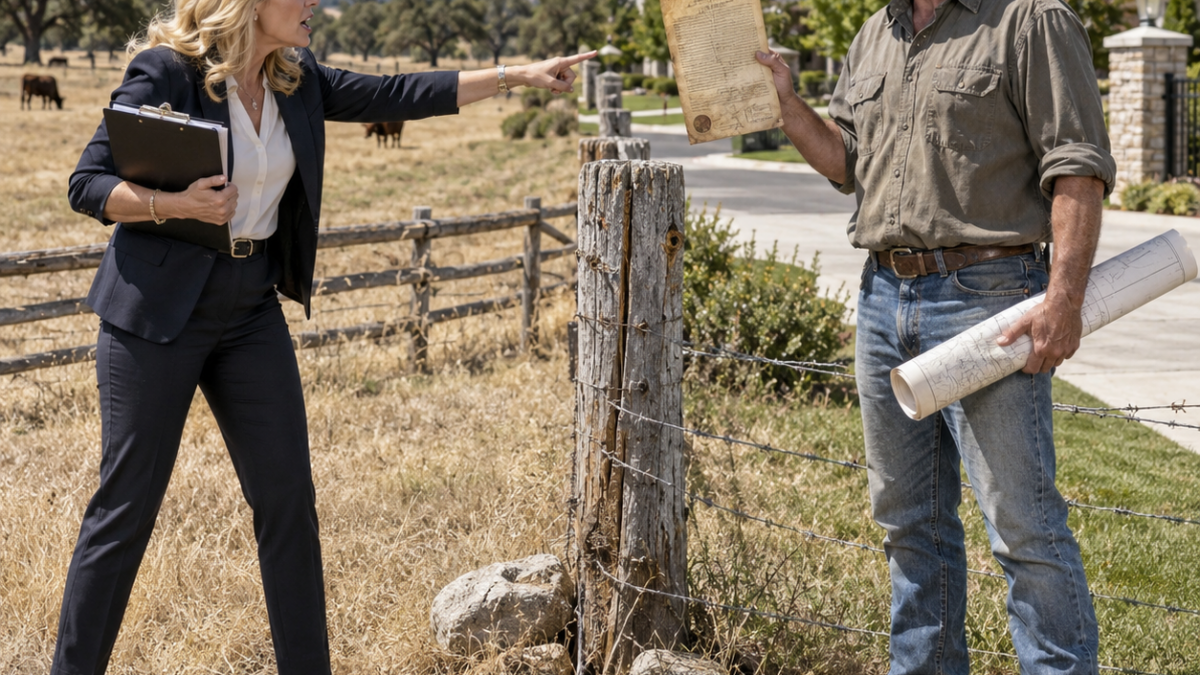
PART 2
The land grant was written in a kind of elegant nineteenth-century script that looked almost too delicate to have survived more than a century of Texas heat, dust, storms, probate proceedings, courthouse moves, and one minor fire in the old county records building.
The paper itself had darkened.
The ink had faded from black to brown.
But the words were still legible.
Elias Hayes.
Five acres, more or less, bounded by four marked live oaks and a seasonal creek.
I ran my finger just above the signature without touching it.
My great-great-grandfather had been a Texas Ranger for part of his young life, then a farmer for the rest of it.
Family stories made him sound larger than life when I was a boy.
According to my grandmother, Elias could break a horse before breakfast, repair a wagon by lunch, and outstare a banker before supper.
I later learned family legends have a way of improving with age.
But the barn was real.
The land was real.
And the grant was real.
That was enough for me.
I pulled the subdivision plat from another sleeve.
Cypress Creek Estates had been created in 2005 when a developer purchased almost all the ranch land surrounding us.
Almost.
He had wanted mine too.
The first offer came through a polite young man wearing loafers too expensive for the mud on my driveway.
The second offer came directly from the developer.
The third came with more money than I had ever seen printed on one page.
I still said no.
Not because I’m allergic to money.
I’m not.
But money buys another house.
It does not buy another place where your grandfather taught you to change a tire.
It does not recreate the nail marks where your father measured your height as a child.
It does not rebuild an oak beam cut by an ancestor whose hands you never touched but whose work still holds a roof above your head.
So Cypress Creek went around me.
Luxury entrance.
Curving streets.
Decorative ponds.
Two community parks.
A pool.
A clubhouse.
Hundreds of homes painted in a carefully controlled palette ranging from light beige to another kind of beige.
And right in the middle of it all sat my five acres.
The developer had actually turned the situation into a marketing advantage.
Original advertisements called the community:
“Modern Texas living beside the historic Hayes Homestead.”
I had a copy.
Karen apparently didn’t.
The plat was even clearer.
Every lot inside Cypress Creek was numbered.
Mine wasn’t.
Instead, a heavy boundary line went around my property.
Beside it:
EXCLUDED PARCEL—NOT SUBJECT TO SUBDIVISION DECLARATION.
You didn’t need law school to understand that sentence.
Apparently you did need more than a clipboard.
I spent the next morning at the county courthouse.
Not because I doubted my records.
Because I wanted certified copies.
When someone is unreasonable, photocopies become “unverified.”
Emails become “misunderstandings.”
Conversations become “he said, she said.”
Certified records are different.
They arrive with stamps, document numbers, dates, and the institutional indifference of government.
I liked institutional indifference.
It had no feelings for Karen.
The clerk helping me was maybe twenty-five.
He pulled up the subdivision plat first.
“Yep,” he said.
He enlarged the image.
“There you are.”
My parcel sat like a green island in a sea of numbered lots.
“Can I get three certified copies?”
“Sure.”
Then I gave him the older reference number.
His eyebrows rose.
“Eighteen eighty-eight?”
“Yes.”
“Original grant?”
“Yes.”
He disappeared into the records system.
A few minutes later he came back.
“Mr. Hayes, you don’t see many chains of title this clean.”
“My family wasn’t imaginative.”
He laughed.
“You all just kept the land.”
“That too.”
By noon, I had certified copies of my current deed, the 2005 subdivision plat, older survey references, and the original grant record.
I stopped at a print shop afterward.
I wrote Karen a letter.
Not an angry letter.
That would have been satisfying but useless.
The first paragraph acknowledged her violation notice.
The second identified my parcel using the exact legal description.
The third stated that the property had never been subjected to the Cypress Creek declaration.
Then I listed every supporting document.
Document number.
Recording date.
Book and page.
Subdivision plat reference.
I included the sentence:
Any further attempt by Cypress Creek Homeowners Association, its officers, agents, contractors, or representatives to enforce restrictive covenants against the Hayes parcel will be treated as knowingly unauthorized interference with private property rights.
Then:
Any entry onto the property for purposes of enforcement, removal, inspection, or modification without my express permission will be treated as trespass.
I finished with:
I trust that upon reviewing the enclosed certified public records, the Association will correct its records and consider the matter closed.
No insults.
No threats.
No mention of Karen’s personality.
Just facts.
Three copies.
One for her.
One for me.
One for my attorney if I ever needed one.
At the post office, I sent her package certified mail with return receipt.
A week later, the little green card came back.
Karen Miller.
Signature.
She had received everything.
For several days, nothing happened.
I let myself imagine she had shown the documents to the board attorney, been told she was wrong, and decided to quietly retreat.
I underestimated her.
The next envelope arrived ten days later.
CYPRESS CREEK HOMEOWNERS ASSOCIATION.
FINAL ENFORCEMENT NOTICE.
I opened it at my kitchen counter.
The original $100 truck fine remained.
The $100 barn fine remained.
Both had doubled because of noncompliance.
Then came a $50 administrative fee.
Total:
$450.
Behind the fine sheet was a letter signed by Karen.
Dear Mr. Hayes,
The Association acknowledges receipt of the documents you provided. However, after review, the Board has determined that your property falls within Cypress Creek’s aesthetic and safety sphere due to its location within the community boundaries.
I stopped reading.
Aesthetic and safety sphere.
That was not a legal concept.
That was something Karen had invented between breakfast and lunch.
I continued.
The historical documents you provided do not supersede the Association’s obligation to protect surrounding property values.
There it was.
She hadn’t misunderstood.
She had rejected reality.
That distinction mattered.
The subdivision’s own recorded plat said she had no authority.
I had shown her.
She had acknowledged receipt.
And she chose to proceed anyway.
I placed the letter in a clear document sleeve.
Then I found a binder.
On the spine I wrote:
CYPRESS CREEK HOA.
Tom Fuller would later call that binder the Book of Karen.
At the time, it had six pages.
It would eventually need three volumes.
I also called Ben Carter.
Ben and I had served together for almost eleven years.
He’d been a logistics officer.
I’d been a senior NCO.
We had argued over supply chains in Iraq, convoy schedules in Afghanistan, and once over whether powdered eggs technically qualified as food.
After leaving the Army, Ben used his GI Bill to attend law school.
He now handled property, contract, and business disputes in Austin.
He answered on the third ring.
“Jack Hayes.”
“Ben.”
“Either you finally sold the farm or somebody sued you.”
“Neither.”
“Then this is social?”
“No.”
“Damn. I was hoping we’d reached that stage.”
I explained Karen.
The truck.
The barn.
The land grant.
The fines.
Then I emailed him scanned copies.
He went quiet for a long time.
Finally:
“She sent this after receiving the plat?”
“Yes.”
“The one that literally says excluded?”
“That’s the one.”
Ben sighed.
“I have met some determined people.”
“That’s diplomatic.”
“You want me to send a cease-and-desist?”
“Not yet.”
“What do you want?”
“I want to know what happens if she keeps escalating.”
“Depends how stupid she gets.”
I smiled.
“That could become a very broad range.”
“Jack, right now she’s sending meaningless invoices.”
“Fines.”
“Meaningless fines. Annoying, but manageable.”
“And if she records something against the property?”
His voice changed.
“If they try to cloud your title over a debt they had no right to create after actual notice of the jurisdiction issue, call me before you do anything.”
“So we wait?”
“We document.”
That was language I understood.
The Army teaches you many things.
How to move when exhausted.
How to improvise when equipment fails.
How to make a plan while everyone around you is complaining about the plan.
But the lesson that transferred best into civilian life was simple:
If it isn’t documented, someday someone will swear it never happened.
So I documented.
Every letter.
Every envelope.
Every certified-mail receipt.
Every date.
Every fine.
The next week, another notice arrived.
$200.
CONTINUED NONCOMPLIANCE.
Then:
UNAPPROVED VEGETATION.
Apparently my patch of native wildflowers near the south fence violated approved landscaping standards.
Fifty dollars.
The irony was impressive.
The HOA was now fining plants growing on land that predated the HOA.
I filed that too.
Then I installed cameras.
Five of them.
Front porch.
Driveway.
Barn.
East fence.
West fence.
Weatherproof.
Continuous recording.
Cloud backup plus local storage.
Karen’s behavior had entered the phase where I no longer trusted her to stay behind paperwork.
Two days after installation, a white sedan appeared.
CYPRESS CREEK SECURITY.
It rolled slowly past my driveway.
Stopped.
Sat for fourteen minutes.
The driver scribbled on a clipboard.
Next morning, same thing.
Third day, same thing.
That afternoon, I carried a folding chair to the driveway.
I set it three feet inside my property line.
Then I sat down with lemonade.
The security car arrived.
Stopped.
The driver looked at me.
I waved.
He looked away.
I kept waving.
Eventually he rolled down the window.
“Can I help you?”
“I was about to ask you the same thing.”
“Routine patrol.”
“On a public road?”
“Yes.”
“Good weather for it.”
He stared.
I raised my glass.
“To public roads.”
He drove off.
I never saw him park there again.
Then Karen changed tactics.
The monthly HOA newsletter arrived.
On the front page:
PROTECTING OUR COMMUNITY BEAUTY AND VALUES.
She wrote about “certain peripheral properties” whose owners refused to respect community standards.
She referenced dilapidated structures.
Abandoned vehicles.
Uncontrolled vegetation.
Threats to property values.
No name.
None needed.
My barn could be seen from several homes.
So could my Ford.
That newsletter was meant to isolate me.
Instead, it introduced me to Tom Fuller.
I was repairing a section of fence when he approached.
Mid-thirties.
T-shirt.
Work boots.
The exhausted look of a man with young children and a mortgage.
He stayed on his side.
“Mr. Hayes?”
“Jack.”
“Tom Fuller.”
We shook hands over the fence.
“You’re the guy from the newsletter?”
I laughed.
“I believe I’m the unsightly debris.”
He smiled.
Then his expression became serious.
“Is it true your property isn’t in the HOA?”
“Yes.”
“And she’s still fining you?”
“Yes.”
“That’s insane.”
“I’ve used that word privately.”
He looked back toward his house.
A wooden swing set stood in the yard.
Blue canvas canopy.
Two little girls were climbing on it.
“She fined us three hundred for that.”
“The swing set?”
“Unapproved structure.”
“Did you apply?”
“Afterward.”
“Result?”
“Denied.”
“Reason?”
He pulled out his phone.
I read the email.
CANOPY COLOR NOT CONSISTENT WITH APPROVED VISUAL PALETTE.
I looked at the blue fabric.
Then at Cypress Creek.
Beige house.
Beige house.
Tan house.
Another beige house.
“I see the threat.”
Tom laughed despite himself.
“She’s adding daily fines.”
“Did you formally appeal?”
“I emailed.”
“That’s not what the bylaws require.”
He frowned.
“You’ve read them?”
“All one hundred fifty pages.”
“Why?”
“Insomnia.”
He laughed again.
Then I explained Article Twelve.
Written appeal.
Certified mail.
Ten-business-day deadline.
Mandatory hearing.
Tom listened carefully.
“You mean they have to hear it?”
“If you follow their procedure.”
“Karen told me the committee’s decision was final.”
“She left out the next section.”
He looked toward the swing set.
One of his daughters shouted, “Higher, Daddy!”
Tom’s expression changed.
“What do I write?”
“Facts.”
That evening I helped him structure the letter.
Not write it for him.
Structure it.
Identify violation.
Dispute basis.
Request hearing under Article Twelve.
Request evidence.
Request architectural standards supporting the color restriction.
Send certified.
Keep a copy.
Two days later, his wife Sarah told another resident.
Maria Alvarez.
Maria was a nurse.
She worked twelve-hour shifts.
Raised two kids.
Grew tomatoes and peppers behind her house.
Karen called the garden:
UNAUTHORIZED AGRICULTURAL CULTIVATION.
Maria came to my porch holding the violation letter like it had personally insulted her.
“She wants me to rip out tomatoes.”
“So I see.”
“My children planted those.”
“I understand.”
“She called them an agricultural nuisance.”
“I’m impressed your tomatoes achieved industrial scale.”
Maria stared at me.
Then laughed.
Then nearly cried.
That told me how much this had gotten to her.
I poured coffee.
We read the covenants.
Buried in the landscaping section was a clause encouraging residents to maintain attractive ornamental or productive gardens when screened and maintained.
Maria’s vegetable plot was landscaped.
Contained.
Clean.
Better maintained than half the flower beds the HOA supervised.
“Use their words,” I said.
She looked at me.
“Productive garden.”
“Exactly.”
“And demand the hearing?”
“Exactly.”
She smiled.
For the first time since she arrived, she looked less tired.
Word spread.
Not dramatically.
No secret underground headquarters.
No revolution music.
Just neighbors speaking over fences.
Parents talking at the pool.
People comparing letters.
Residents discovering Karen had told different people different versions of what the rules actually said.
I became the man with the binder.
People brought notices.
I pointed them toward procedures.
Appeal.
Request evidence.
Demand a hearing.
Keep everything.
Karen had spent years benefiting from the fact that almost nobody read the governing documents.
Once people did, her power started shrinking.
Tom got his hearing.
The room was small.
Karen presided.
Barry Knox, the treasurer, sat beside her.
Two other board members were present.
Tom showed photographs.
The canopy was clean.
The structure sat behind his fence.
He produced six examples of blue outdoor furnishings elsewhere in Cypress Creek that had never been cited.
Then he asked the architectural committee to identify the written standard prohibiting that specific shade.
They couldn’t.
Karen finally said:
“The committee has discretion.”
Tom replied:
“Discretion isn’t the same as unlimited authority.”
Karen glared toward the back of the room.
At me.
I smiled.
The board tabled the fine.
Not victory.
But not defeat.
Maria’s hearing went worse.
Karen came prepared for her.
She called the garden “incompatible.”
Maria quoted the productive-garden clause.
Karen said the rule applied to “traditional garden spaces.”
Maria asked where traditional was defined.
Karen said:
“Common sense.”
The appeal was denied.
Maria walked out furious.
“I’m done being scared of her.”
That was the night our little group became something more.
My fines crossed four thousand dollars.
Then the letter from the law firm arrived.
NOTICE OF INTENT TO LIEN.
Outstanding amount:
$4,750.
Pay within thirty days or Cypress Creek HOA intended to record a lien against my property.
I scanned it.
Called Ben.
“She said the word.”
“Lien?”
“Lien.”
“Send it.”
Twenty minutes later he called back.
“Do not pay.”
“I wasn’t planning to.”
“Do not argue.”
“Okay.”
“Do not call their attorney.”
“Fine.”
“Do not send Karen a photograph of the land grant with a sarcastic caption.”
“That wasn’t on my list.”
“It should never be on your list.”
“What do we do?”
“We let them decide whether they want to turn stupidity into a cause of action.”
Thirty days passed.
I checked the county records on day thirty-one.
And there it was.
CYPRESS CREEK HOMEOWNERS ASSOCIATION.
CLAIM OF LIEN.
$4,750 plus costs.
Against my parcel.
Signed:
Karen Miller, President.
I stood at the records counter looking at the page.
I expected anger.
Instead I felt something colder.
Finality.
She had received certified proof.
She had been told she lacked jurisdiction.
Her own subdivision plat excluded me.
And she recorded a lien anyway.
I ordered a certified copy.
Then I called Ben.
“It’s filed.”
Silence.
Then:
“All right.”
His voice had lost its humor.
“Now we stop playing defense.”
Ben filed suit.
Not merely to remove the lien.
Declaratory judgment establishing the obvious:
My parcel was outside Cypress Creek.
Claim concerning the wrongful cloud placed on my title.
Interference with property rights.
Harassment.
Attorney fees.
Damages.
And because of the board’s conduct and growing financial concerns:
A request for detailed association financial records and, if the court found grounds, independent accounting review.
The HOA was named.
Karen was named.
Board members involved in the lien decision were named.
When Ben emailed me the draft, I called him.
“Do we need every board member?”
“Anyone who participated in or authorized the filing needs counsel.”
“Some of them probably just followed Karen.”
“That is something their lawyers can sort out.”
I didn’t like it.
But Ben was right about one thing.
A board vote is not a magic shield.
You don’t escape responsibility simply because someone else spoke first.
The papers were served.
Karen’s reaction reached me through three separate neighbors within an hour.
Apparently she opened her front door, saw the process server, and said:
“You have got to be kidding me.”
He wasn’t.
Two board members resigned within forty-eight hours.
Karen released an HOA-wide statement calling my lawsuit “frivolous harassment by a disgruntled non-member attempting to damage the community.”
Non-member.
Finally, she had gotten something right.
Tom called.
“She just admitted you’re not a member.”
“I noticed.”
“Can your lawyer use that?”
“Already forwarded it.”
Ben replied with two words:
Thank her.
The HOA attorney filed a motion seeking dismissal.
Ben read it.
Then called me laughing.
“They still haven’t explained how an excluded parcel magically became subject to the covenants.”
“What do they say?”
“Community integration.”
“What does that mean?”
“It means they need an argument and don’t have one.”
Meanwhile, our neighbor group grew.
Tom and Maria helped organize a meeting at the public library.
We distributed flyers.
ARE YOU TIRED OF ARBITRARY FINES?
DO YOU WANT TO KNOW HOW HOA MONEY IS BEING SPENT?
DO YOU BELIEVE THE BOARD SHOULD FOLLOW ITS OWN RULES?
We expected fifteen people.
Fifty-three showed up.
Every chair filled.
People stood against the wall.
One elderly man held three years of violation notices in a grocery bag.
A woman named Helen had been fined because her red front door was too bright.
A retired mechanic had received a notice because his trash can remained visible until 8:14 p.m. on collection day.
Rules said six.
A widower named Samuel Reed had been fined after a windstorm tore shingles from his roof.
He told the board he needed three weeks to afford the deductible.
Karen started daily penalties on day eight.
“My wife died eighteen months ago,” he said quietly. “I’m still paying the hospital bills.”
The room fell silent.
“That woman stood in front of me and said hardship did not excuse noncompliance.”
His voice broke.
“That roof was fixed before the month ended.”
He looked around.
“I paid every fine because I didn’t know I could fight.”
Maria reached across and touched his arm.
Then David Chen stood.
Not the prosecutor from another story.
This David was an accountant who lived on Cypress Lane.
He had served briefly on the HOA finance committee.
“I resigned eleven months ago,” he said.
“Why?” Tom asked.
“Because the numbers didn’t make sense.”
The room sharpened.
David opened a folder.
“Landscaping cost almost doubled over three years.”
Murmurs.
“Pool maintenance is triple what comparable subdivisions pay.”
More murmurs.
“And legal expenses have increased every year despite the association having almost no major litigation before Jack’s case.”
Karen’s letters.
Fines.
Collection notices.
Attorney involvement.
Suddenly those costs looked different.
“I asked for vendor invoices,” David continued.
“What happened?” Maria asked.
“Karen told me I was undermining confidence in the board.”
Someone laughed bitterly.
“I asked again. She had me removed from the finance committee.”
The room erupted.
I stepped forward.
“My lawsuit includes a request for financial disclosure.”
Applause.
I raised my hand.
“This cannot become about revenge.”
The room quieted.
“Karen wants this to be Jack versus Karen.”
I pointed around.
“It isn’t.”
“This is about whether rules bind the board the same way the board claims they bind homeowners.”
Mr. Reed nodded.
“It’s about whether your money is yours before it becomes theirs.”
That landed.
Tom stood.
“We can recall them.”
Everyone looked at him.
He had the bylaws open.
“Twenty-five percent petition threshold.”
David checked.
“He’s right.”
Maria smiled.
“Then let’s get signatures.”
That meeting changed everything.
We formed the Concerned Homeowners of Cypress Creek.
Terrible name.
Effective organization.
Tom managed signatures.
Maria handled communications.
David handled finances.
I stayed focused on the lawsuit and property documentation.
We requested bank statements.
Contracts.
Detailed legal invoices.
Vendor ownership disclosures.
The HOA attorney denied most requests.
“Confidential.”
That became Ben’s favorite word.
“Every time they call something confidential that homeowners have a legal right to inspect,” he said, “they make my exhibits prettier.”
The local media entered next.
Maria suggested it.
Ben reviewed the press release.
No accusations we couldn’t support.
No inflammatory language.
Just facts.
Historic property.
Recorded exclusion.
Fines.
Lien.
Lawsuit.
Resident complaints.
Financial-record questions.
A Houston consumer reporter called.
Sarah Jenkins.
She arrived with a cameraman on a brutally hot afternoon.
She walked through the barn.
Touched one of the hand-hewn beams.
Filmed the Ford.
Asked about my grandfather.
I showed her his photograph standing beside the truck in 1962.
Young.
Broad smile.
Work shirt.
My grandmother sitting on the hood.
Then I put the land grant beside the 2005 plat.
The reporter stared.
“It literally says excluded.”
“Yes.”
“And the HOA received this?”
“Yes.”
“You have proof?”
I showed her Karen’s signed return receipt.
Sarah looked at the cameraman.
“Get that.”
Tom showed her the swing-set notice.
Maria showed the garden order.
Samuel showed the storm-damage fines.
David showed budget summaries.
Then Sarah did what reporters should do.
She went to Karen.
They caught her outside.
“Ms. Miller, Channel Eight. Can you explain why your HOA recorded a lien against property the recorded subdivision plat identifies as excluded?”
Karen froze.
“This is pending litigation.”
“Did you know the parcel was excluded before the lien was filed?”
“No comment.”
“Mr. Hayes provided certified documents showing the exclusion.”
“No comment.”
“Why did the HOA continue issuing fines?”
“His property negatively impacts community standards.”
“Does the HOA have jurisdiction?”
“I said no comment.”
“Is Cypress Creek spending homeowner money defending enforcement against a property outside Cypress Creek?”
Karen walked toward her front door.
The microphone followed.
She shut the door.
The piece aired at ten.
I hated the opening.
A photograph of me in Army dress uniform.
Music.
“Decorated veteran battles powerful HOA.”
Too dramatic.
But the documents spoke for themselves.
They showed the plat.
The lien.
The letters.
Neighbors.
Then Karen refusing to answer.
By morning, everybody knew.
Residents who had been afraid to sign the recall petition began calling.
We reached seventy percent.
Not twenty-five.
Seventy.
The petition went to the management company.
Certified.
Special recall meeting demanded.
At nearly the same time, the judge denied the HOA’s attempt to dispose of my case at the initial stage.
Discovery moved forward.
That word terrified the board more than any television story.
Discovery meant documents.
Emails.
Minutes.
Contracts.
Bank records.
Messages between Karen and vendors.
Messages between Karen and the attorney.
Ben’s requests were broad.
Financial records.
Enforcement records.
Executive-session minutes.
Communications concerning the Hayes property.
Communications concerning the lien.
Vendor relationships.
Legal billing.
Board authorization.
One remaining director called me.
His name was Richard.
He sounded sick.
“Jack.”
“Richard.”
“I want you to know I argued against the lien.”
“Talk to your lawyer.”
“I have minutes.”
“Then give them to your lawyer.”
“She kept saying you’d eventually pay.”
I was silent.
Richard continued.
“She said the association couldn’t let one holdout weaken its authority.”
“That sounds like Karen.”
“I’m resigning.”
“That’s your decision.”
“Can you tell Ben I tried to stop her?”
“No.”
He paused.
“Why?”
“Because I’m not your lawyer.”
That was difficult.
But necessary.
The recall meeting was scheduled for a Thursday.
The clubhouse held fewer than two hundred comfortably.
Nearly three hundred showed up.
The fire marshal restricted the interior.
People stood outside listening through open doors.
Karen sat at the front in a black pantsuit.
For months she had dressed like a suburban monarch.
That night she looked like a defendant.
She struck the gavel.
“The first item—”
Tom stood.
“Point of order.”
Her eyes flashed.
“You have not been recognized.”
“This meeting was called by membership petition. The petition controls the purpose.”
Karen banged the gavel.
“Sit down.”
David rose.
“The only agenda item is recall.”
Applause.
“Order!”
Maria stood.
“You don’t get to use order to cancel the vote.”
That drew louder applause.
Karen looked to the two remaining directors.
Neither met her eyes.
Something changed in her face.
She understood.
For years, authority had always flowed toward her.
That night, it was moving away.
I walked to the microphone.
The room quieted.
“My name is Jack Hayes.”
Someone outside shouted:
“We know!”
Laughter broke the tension.
I smiled.
“Fair enough.”
Then I held up the certified plat.
“My family has owned the five-acre Hayes property since 1888.”
I held up the next sheet.
“When Cypress Creek was created in 2005, my land was expressly excluded.”
Next.
“I provided the board certified proof.”
Next.
“Karen signed for it.”
Next.
“The HOA continued issuing fines anyway.”
Then the lien.
“And after receiving actual notice that it lacked authority, the association recorded this against my title.”
A low wave of anger moved through the room.
“This lawsuit is not the reason you should remove your board.”
Karen stared.
“This is.”
I pointed toward the audience.
“Samuel.”
He stood.
“Maria.”
She stood.
“Tom.”
He stood.
“Helen.”
She stood.
More followed.
Homeowners who had appealed arbitrary fines.
People whose requests had been ignored.
Residents whose money questions had gone unanswered.
“This is not about my barn.”
I looked at Karen.
“Or my truck.”
I turned back.
“It is about what happens when a board forgets it is supposed to serve homeowners instead of rule them.”
Maria spoke next.
She described her children planting tomatoes.
“My daughter cried when I told her we might have to rip them out.”
Karen rolled her eyes.
Half the room saw it.
That tiny gesture hurt her more than any speech.
Samuel spoke.
He brought his roof invoices.
“I wasn’t refusing to repair my house.”
His hands shook.
“I needed three weeks.”
He looked at Karen.
“You knew my wife had died.”
Karen looked down.
David gave the financial presentation.
Landscaping.
Pool maintenance.
Legal bills.
Vendor costs.
Market comparisons.
Then he displayed ownership records.
The pool contractor was connected to Karen’s brother-in-law.
Murmurs became shouts.
Karen grabbed the gavel.
“That is defamatory!”
David turned.
“I am showing public corporate filings.”
“You don’t know what you’re talking about!”
“I’m a CPA.”
Laughter.
“You were removed from the finance committee!”
“Yes.”
“Because you were disruptive!”
David nodded.
“I asked for invoices.”
That single sentence landed like a hammer.
Then came the vote.
Secret paper ballots.
Recall entire board.
YES or NO.
Karen paced.
Whispered to the attorney.
Glared at volunteers counting ballots.
Ben stood against the back wall.
Quiet.
Watching.
The count ended.
Tom took the result.
He looked stunned.
Then he read:
“For recall: 284.”
The room erupted.
“Against: 12.”
Karen stood so violently her chair fell backward.
“You ungrateful people!”
Silence followed.
Her voice cracked.
“I built this community!”
Someone shouted:
“No, you didn’t!”
“I protected your property values!”
Another voice:
“You stole our peace!”
Karen pointed at Maria.
“You’ll regret this.”
At Tom.
“You have no idea how complicated this is.”
At David.
“You’re going to bankrupt us.”
Then she found me.
“This is your fault.”
I walked toward her.
Not close.
Just close enough to be heard without the microphone.
“No.”
Her eyes burned.
“You could have paid the fine.”
“You could have read the plat.”
“You embarrassed me.”
“You filed a lien on my land.”
“You turned everyone against me.”
I looked around.
“They did that themselves.”
Then a process server stepped forward.
Ben had warned me this could happen depending on the timing of the court filing.
“Karen Miller?”
She turned.
He handed her papers.
Motion seeking temporary restrictions concerning disputed association assets and records pending further court action.
Karen stared.
The gavel remained on the table behind her.
Nobody touched it.
That image stayed with me.
Not the yelling.
Not the vote.
An empty gavel.
A symbol of authority nobody wanted badly enough to grab.
Tom was elected interim president.
He objected.
Loudly.
Maria nominated him anyway.
Residents approved.
David became treasurer.
Maria took community relations.
Other seats went to people without grudges and, more importantly, without relatives running suspicious companies.
First motion:
Withdraw enforcement against my property.
Passed unanimously.
Second:
Release and withdraw the lien.
Unanimous.
Third:
Issue a written acknowledgment that the Hayes parcel lay outside HOA jurisdiction.
Unanimous.
Fourth:
Open financial records to independent audit.
The applause shook the room.
I should have felt triumphant.
Instead I felt tired.
Months of conflict had trained my body to expect the next envelope.
The next fine.
The next escalation.
Suddenly there was no next attack.
Tom found me outside afterward.
“You okay?”
“I think so.”
“You don’t look like a man who just won.”
“We haven’t.”
“Karen’s gone.”
“That’s not the same as fixing the community.”
He considered that.
“No.”
Maria joined us.
“We start tomorrow.”
David appeared behind her.
“No.”
We looked at him.
“We start Monday.”
“Why Monday?” Maria asked.
“Because I have spent six months looking at suspicious budgets and tomorrow I’m going fishing.”
That was the first peaceful thing anybody had said all night.
The audit began the following week.
At first, even I wondered whether David’s concerns would amount to sloppy management rather than corruption.
Sloppy records happen.
Especially in volunteer organizations.
Then the auditor found the pool contract.
Cypress Creek actually did have a community pool.
The service itself was legitimate.
The price was not.
The contractor was owned by Karen’s brother-in-law.
Invoices ran nearly three times comparable rates.
Then landscaping.
A different company.
But payments flowed through a consulting agreement linked to someone Karen knew.
The audit identified unexplained fees.
Then legal spending.
Thousands and thousands of dollars.
Collection letters.
Fine notices.
Threats.
Enforcement.
Residents were paying attorneys to help the board intimidate the same residents.
The deeper the auditors went, the uglier it became.
One entry showed a recurring “community consulting fee.”
Payee:
Miller Management Strategies.
David stared at the document.
“Please tell me this isn’t what I think.”
The auditor looked uncomfortable.
Corporate registration showed Karen as owner.
The HOA had been paying the president’s private company.
No clear disclosure in the minutes.
No competitive process.
No meaningful description of services.
Tom sat back.
“You’ve got to be kidding.”
The auditor continued.
Payments totaled tens of thousands over several years.
Karen had managed to turn volunteer leadership into private compensation while presenting herself publicly as the overworked unpaid protector of Cypress Creek.
The new board referred the findings to counsel.
Ben amended portions of the civil case where appropriate and shared evidence through lawful channels.
The district attorney’s office began reviewing the audit.
Karen hired new lawyers.
Settlement discussions started.
Ben called me.
“They want this finished.”
“So do I.”
“Not like they do.”
“What are they offering?”
He explained.
HOA insurer would address covered portions of my claim.
Attorney fees.
Costs to clear the title.
Damages arising from the wrongful lien and enforcement campaign.
The association would permanently acknowledge my exclusion.
Karen would contribute personally to certain repayments as part of the broader resolution.
Other audit findings would remain subject to separate proceedings.
I listened.
“What do you recommend?”
“Take the civil resolution if the terms protect the land and compensate the damage.”
“And Karen?”
“Criminal decisions aren’t yours.”
That mattered.
Revenge tempts you into wanting control over someone else’s punishment.
Justice doesn’t always give you that control.
Sometimes it shouldn’t.
My priorities had been simple from the beginning.
My land.
My title.
My family history.
My legal costs.
An end to harassment.
Those were satisfied.
I agreed.
The lien was formally released.
I drove to the county courthouse to get the recorded release myself.
Same records counter.
Different clerk.
When she handed me the certified copy, I stood there longer than necessary.
LIEN RELEASED.
No balance.
No claim.
No Cypress Creek authority.
I folded the copy carefully.
Then I drove home.
The Ford sat beside the barn.
Exactly where Karen first saw it.
Nothing had changed.
That was the point.
I walked into my grandfather’s study.
Took out the original land grant.
Placed the lien release beside it.
Then now.
Two documents separated by more than a century.
One established the beginning.
The other protected the continuation.
I thought about Elias.
I never knew him.
But I wondered whether he could have imagined this place surrounded by houses.
Sprinkler systems.
SUVs.
Fiber internet.
An HOA arguing over tomato plants.
Probably not.
But I suspect he would have understood one thing.
Land matters differently when generations have left their fingerprints on it.
The criminal inquiry into Karen’s financial dealings continued.
Some claims in the neighborhood grew exaggerated.
People said she had stolen millions.
She hadn’t.
Others claimed federal agents were coming.
They weren’t.
I refused to repeat rumors.
What we knew was enough.
The audit documented undisclosed related-party dealings, questionable payments, and serious governance failures.
Prosecutors examined portions of those findings.
Karen eventually entered agreements resolving some matters and faced significant financial consequences.
She was required to repay money connected to improper transactions.
Restrictions and settlement terms removed her from any role in Cypress Creek governance.
Her house went up for sale.
I saw the sign on a Saturday morning.
I was sanding the Ford’s hood.
Tom walked over with two beers.
A little early.
I accepted anyway.
“Did you see?”
“I saw.”
“How do you feel?”
I wiped dust from my hands.
“Like I need finer sandpaper.”
He laughed.
“I mean about Karen.”
“I know.”
I looked toward her street.
“Not much.”
“That’s it?”
“What do you want me to say?”
“That justice feels amazing?”
“Sometimes.”
“And this time?”
I looked at the barn.
“Peace feels better.”
Tom nodded.
His daughters were on the swing set.
Blue canopy still bright.
Maria’s tomato garden was visible behind her fence.
Healthy.
Red fruit hanging from vines.
Samuel had a repaired roof.
The front door Helen was once forced to repaint was red again.
The new board changed more than leadership.
They changed the covenants.
Not by eliminating standards.
By eliminating stupidity.
Clear violation definitions.
Evidence requirements.
Written appeal procedures highlighted instead of hidden.
Hardship considerations.
Financial disclosure.
Vendor conflict-of-interest rules.
Multiple bids.
Board-member relationship disclosures.
Online financial reports.
Term limits.
And a formal provision acknowledging properties excluded by recorded plat.
Tom called that one the Hayes Amendment.
I hated the name.
The community loved it.
The text was simple:
No property not expressly subjected to the Cypress Creek declaration by valid recorded instrument may be governed, fined, assessed, encumbered, or otherwise subjected to Association authority merely by geographic proximity.
I read it twice.
“That should have been obvious.”
David shrugged.
“Most useful rules are.”
The first annual meeting under the new board lasted nearly three hours.
People complained.
People disagreed.
A man argued for twenty minutes about mailbox posts.
Maria opposed him.
Tom changed his mind halfway through another issue.
David publicly corrected a budget figure after a homeowner noticed a typo.
Nobody was punished.
Nobody was called disruptive.
Nobody received a fine the next day.
I sat in the back.
Samuel leaned over.
“This is exhausting.”
I smiled.
“Good governance usually is.”
“I miss tyranny.”
I looked at him.
He grinned.
“Shorter meetings.”
We both laughed.
The Ford restoration took another four months.
I had delayed it during the lawsuit.
Partly because I was busy.
Partly because leaving it unfinished became an act of defiance.
Karen called it a rust bucket.
So every faded panel stayed visible while her fines piled up.
After she left, I finally finished the work because I wanted to, not because anyone demanded it.
I rebuilt the carburetor.
Replaced worn hoses.
Repaired the bench seat.
Matched the original seafoam green as closely as I could.
Kept every dent my grandfather had put there that didn’t threaten the metal.
Tom came over the day I started it.
The engine turned twice.
Then caught.
Deep rumble.
A little smoke.
Beautiful.
Tom shouted over the noise.
“Karen would still hate it!”
“That’s not a design criterion!”
His girls ran toward us.
Sarah followed.
Maria came through the side gate.
Even David showed up, claiming he had heard the engine from his house.
We stood around the old truck while it idled.
My grandfather had last driven it regularly decades earlier.
Now it was alive again.
I sat behind the wheel.
The steering wheel felt enormous.
My hand rested where his had rested.
I remembered being eight years old, sitting beside him while he drove across the pasture.
No seat belt.
Windows down.
Dust everywhere.
He let me hold the wheel once.
My grandmother almost killed him.
I didn’t realize I was crying until Tom looked away politely.
Sarah did too.
Maria did not.
She hugged me.
“It’s okay.”
“I’m fine.”
“You’re crying.”
“Dust.”
“You just restored the truck.”
“Historic dust.”
She laughed.
I drove it slowly around the property.
Past the barn.
Past the old well.
Past the oak trees.
Then out the gate.
Onto the public road.
Through Cypress Creek.
People came outside.
Some waved.
A few filmed.
Mike from the corner lifted his coffee cup.
Samuel stood on his porch.
The Fullers’ daughters rode their bicycles behind me for half a block until their mother yelled at them to come back.
I drove past the clubhouse.
No violation letter waited there.
No security car followed.
No clipboard.
Just a truck.
On a road.
In a neighborhood.
When I came home, I parked beside the barn.
Exactly where it had been the morning Karen arrived.
Tom handed me a beer.
“She’s beautiful.”
“Yeah.”
He looked toward his daughters’ swing set.
“Funny.”
“What?”
“All this started because she couldn’t leave people alone.”
“That’s one way to describe it.”
“You know what she never understood?”
“What?”
Tom looked over my five acres.
“You weren’t threatening Cypress Creek.”
He gestured toward the homes.
“You were part of what made the place interesting.”
I smiled.
“The sales brochure said that.”
“You kept the brochure?”
“Of course.”
“Jack, you keep everything.”
“Correct.”
He laughed.
Then grew serious.
“I owe you something.”
“No.”
“You helped me fight.”
“You sent your own appeal.”
“You showed me I could.”
“That’s different.”
He looked at the swing set.
“My girls will remember that thing.”
“Probably.”
“Like you remember the truck.”
That stopped me.
The old Ford behind us.
The blue canopy across the fence.
Different objects.
Same idea.
Family memory attaches itself to ordinary things.
A truck.
A swing.
A tomato garden.
A red front door.
A barn.
People in power sometimes see only compliance.
Is it approved?
Is it uniform?
Does it match?
Families see something else.
Who built it.
Who played there.
Who came home through that door.
Who planted the first seed.
Who drove the truck.
Who raised the beam.
That was what Karen never understood.
Her version of property value was numerical.
Uniformity.
Resale.
Presentation.
Mine was different.
Not incompatible with money.
Just larger than money.
One evening, months after the settlement, I received a letter.
Handwritten address.
No HOA logo.
Karen.
I knew her handwriting from the return receipt.
I considered throwing it away unopened.
Instead, I sat on the porch.
The same place we first argued.
I opened it.
Jack,
I doubt you want to hear from me.
I am not asking you to forgive me.
I have spent months being told by lawyers what I should and should not say, so this letter is mine.
I believed Cypress Creek needed strong leadership.
I still believe I did good things for that community.
I also see now that I stopped distinguishing between what I believed was best and what I actually had authority to do.
When you challenged me, I took it personally.
The more you refused, the more determined I became to prove the board had control.
I should have stopped when you sent the land records.
I didn’t.
I told myself allowing your property to remain outside our standards would weaken the association.
Instead, my actions nearly destroyed it.
I do not expect an answer.
I wanted to acknowledge one thing.
Your land was never ours to govern.
Karen
I read the last sentence again.
Your land was never ours to govern.
It had taken lawyers.
A lien.
A lawsuit.
A recall.
An audit.
A television report.
Hundreds of signatures.
Thousands of dollars.
And months of conflict.
But there it was.
The sentence she should have said on my porch.
I folded the letter.
Placed it in the binder.
Final tab.
Then I closed the cover.
I never answered.
Not because I wanted to punish her.
Because some endings don’t require conversation.
The following spring, Cypress Creek held a neighborhood picnic.
I was invited.
For the first time since the subdivision appeared around my land, I went.
Not as the historic guy.
Not as the man who sued the HOA.
Just Jack.
Tom grilled burgers.
Maria brought salsa made from her supposedly dangerous tomatoes.
David put a handwritten sign beside the donation jar:
ALL FUNDS SUBJECT TO AUDIT.
People laughed.
Samuel sat beneath an umbrella talking with three other widowers.
The children took over the park.
Blue swing-set girl—Tom’s oldest—ran up to me holding a paper plate.
“Mr. Jack?”
“Yes?”
“Dad says your truck is older than Grandpa.”
“Your dad says too much.”
She giggled.
“Can I see it sometime?”
“Sure.”
“Can I ride in it?”
“Ask your mother.”
Her face fell.
She knew the answer.
Smart kid.
Later, Tom gave a short speech.
I tried to leave.
Maria blocked the exit.
“Sit.”
“I outrank you.”
“Not here.”
She pointed at the chair.
I sat.
Tom stood near the pavilion.
“A year ago, this neighborhood was afraid of its own board.”
The crowd quieted.
“People whispered instead of asking questions.”
He looked at Samuel.
“Some paid fines they never should have owed.”
Maria.
“Some were told their gardens were problems.”
His daughters.
“Some were told the color of a child’s swing set mattered more than common sense.”
Then me.
“And one man outside the HOA was told the history his family built on five acres could be erased because we had a rulebook.”
I disliked being the focus.
Tom knew.
He did it anyway.
“But this isn’t a story about Jack winning.”
Thank God.
“It’s a story about all of us remembering what an association is.”
He pointed toward the crowd.
“Association.”
“People choosing to act together.”
“Not a kingdom.”
“Not a police force.”
“Not a private business for whoever sits at the front table.”
He held up a folder.
“These are this quarter’s financial statements.”
David applauded far too enthusiastically.
Everyone laughed.
“They’re online.”
More laughter.
“And if you have questions, ask them.”
Tom smiled.
“Please.”
“Preferably before midnight.”
The picnic continued.
I walked home near sunset.
Five minutes from the park to my gate.
The Ford was parked by the barn.
The sky behind the oak trees had turned orange.
For the first time in years, Cypress Creek didn’t feel like something that had swallowed the world around my land.
It felt like neighbors.
That mattered.
Isolation can preserve something.
But belonging gives it another life.
I started inviting residents to the property twice a year.
Nothing fancy.
History afternoon.
Children could see the barn.
The old well.
The Ford.
I displayed copies—not originals—of the land grant.
I told them about Elias.
My grandfather.
The developer.
How Cypress Creek came to surround us.
One boy raised his hand.
“So you’re like a country inside another country?”
“Not legally.”
“But kind of.”
“Visually.”
He nodded, satisfied.
A girl asked:
“Why didn’t you sell?”
I looked around.
At the barn.
The oak trees.
The farmhouse.
The ground.
“How much would someone have to pay you for your favorite memory?”
She frowned.
“You can’t buy a memory.”
“Exactly.”
She understood better than Karen had.
As the years passed, the Hayes property became more closely connected to Cypress Creek without ever joining it.
That was the irony.
Karen had tried to force me inside the covenant.
All she accomplished was ensuring everyone understood I stood outside it.
But the people inside became my friends anyway.
Legal separation didn’t require social hostility.
Tom became one of my closest friends.
Maria’s children helped me plant vegetables one spring.
Samuel started coming over on Tuesdays for coffee.
David reviewed my property-tax statements once and complained they were boring.
“You need more complicated finances.”
“No.”
“You have no shell companies.”
“No.”
“No offshore assets.”
“David.”
“No gazebo consulting fund?”
“Go home.”
He laughed.
That was what victory eventually looked like.
Not revenge.
Ordinary jokes.
People borrowing tools.
Children crossing the yard.
Neighbors bringing food.
Years after Karen’s departure, a tornado warning hit our part of the county.
The storm crossed north of us but tore down trees and knocked out power across Cypress Creek.
The HOA emergency plan—rewritten under the new board—designated gathering points and equipment.
My barn became one.
Karen had once called it dilapidated.
An engineer had inspected it during the legal fight.
The old timber structure was stronger than half the decorative modern buildings in the subdivision.
After the storm, we opened it.
Extension cords.
Generators.
Water.
Chainsaws.
People brought supplies.
Families whose homes had roof damage stored belongings inside.
Tom looked up at the old beams.
“Structural integrity violation, huh?”
I smiled.
“Apparently.”
Maria’s youngest son slept on a blanket near the feed room while adults cleared branches outside.
Rain hammered the roof.
The barn stood.
One of the original oak beams bore a mark Elias had carved while building it.
E.H. 1889.
I touched it.
A hundred thirty-something years after he set that timber in place, it was sheltering families from a subdivision that did not exist in his wildest imagination.
That evening made the whole fight feel different.
Karen wanted the barn removed because it looked old.
But old does not mean useless.
Sometimes old means tested.
After power returned, the new HOA board voted to add the Hayes barn to the community emergency-resource map—with my permission.
I agreed.
Under one condition.
David groaned before I even spoke.
“No legal jurisdiction.”
Tom smiled.
“We know.”
“In writing.”
Maria laughed.
“Of course.”
They recorded it in the minutes.
Everybody had learned.
The barn remained mine.
The service was shared.
That distinction mattered.
I eventually donated copies of the original Hayes records to the county historical society.
Not the originals.
Those stay in my family.
The society created a small exhibition on rural parcels that survived suburban development.
My land grant appeared beside the Cypress Creek plat.
A little sign explained:
When Cypress Creek Estates was platted in 2005, the historic Hayes property was intentionally excluded from the subdivision declaration.
It did not mention Karen.
Good.
She was not the history.
The land was.
People sometimes make the mistake of believing conflict gives them importance.
Karen became famous locally for a few months.
Then forgotten.
The barn remained.
The truck remained.
The oak trees remained.
Cypress Creek remained.
And the lesson remained.
Authority should always be able to answer one question:
Where does your right to tell me what to do come from?
Sometimes the answer is a statute.
Sometimes a contract.
Sometimes a recorded covenant voluntarily attached to property.
Sometimes a court order.
But “because I’m president” is not an answer.
Neither is “because everyone around you follows our rules.”
My parcel was surrounded.
That never meant surrendered.
One Saturday, I found Tom standing near the south fence.
His oldest daughter—no longer little—was helping him repair a board.
“She’s going to college next year,” he said.
“That’s impossible.”
“Tell me about it.”
“What’s she studying?”
“Architecture.”
I laughed.
“What?”
“She says growing up around Cypress Creek made her interested in why people build places the way they do.”
“That sounds dangerous.”
“She also says she wants to specialize in historic preservation.”
That surprised me.
His daughter looked over.
“Dad!”
“What?”
“You’re talking about me.”
“We’ve been doing that since you were born.”
She rolled her eyes.
Then pointed toward the barn.
“Mr. Hayes, can I use that for a school project?”
“The barn?”
“The construction.”
“Sure.”
She spent hours measuring joinery.
Photographing hand-cut beams.
Sketching.
One afternoon she asked:
“Did your great-great-grandfather have plans?”
“Probably in his head.”
“No drawings?”
“Not that survived.”
She shook her head.
“This is incredible.”
Karen had called it dilapidated.
This young woman called it incredible.
Same barn.
Different eyes.
That mattered more than any fine ever could.
By the time Tom’s daughter left for college, the story of the HOA fight had become neighborhood legend.
Versions got ridiculous.
According to one child, Karen arrived with ten bulldozers.
According to another, I fought the board in the Supreme Court.
According to Mike, I personally arrested three lawyers.
I corrected them whenever possible.
Because the truth was better.
A woman came to my porch.
She was wrong.
I showed her proof.
She refused to accept it.
She escalated.
I documented.
Neighbors realized they had similar problems.
We organized.
Lawyers did their jobs.
A court did its job.
Homeowners did theirs.
The board changed.
The system corrected.
No gunfight.
No midnight ambush.
No secret government power.
Paper.
Meetings.
Evidence.
Votes.
Persistence.
It may sound less cinematic.
It was more powerful.
The older I got, the more I appreciated that.
I had spent enough of my younger life in places where disputes ended badly because institutions had failed or disappeared.
Civil systems can be frustrating.
Slow.
Expensive.
Sometimes absurd.
But there is something extraordinary about defeating abuse with certified mail.
My grandfather would have found that hilarious.
He hated paperwork.
I imagined telling him:
“Your truck caused an HOA lawsuit.”
He would have asked:
“What’s an HOA?”
Then I would have explained.
Then he probably would have said:
“Sounds like you should’ve shut the gate.”
Maybe he would have been right.
But I’m glad I didn’t.
Because shutting the gate would have protected my property.
Opening it to my neighbors helped protect theirs.
That became the part of the story I cared about most.
Karen came after my barn.
But Maria kept her garden.
Karen came after my truck.
But Tom’s daughters kept their swing set.
Karen tried to collect $4,750 she had no right to collect.
But Samuel learned how to challenge unfair fines.
David got access to the books.
The community got better financial controls.
Children grew up seeing adults disagree openly instead of whispering in fear.
You cannot put a dollar amount on that.
Years later, I found the first violation notice while cleaning the study.
FINAL WRITTEN WARNING.
REMOVE TRUCK.
REMOVE BARN.
THIRTY DAYS.
I sat down at my grandfather’s desk.
The paper looked ridiculous now.
But at the time, it had made me furious.
I almost threw it away.
Instead, I placed it beside Karen’s later letter acknowledging she had been wrong.
Beginning.
End.
Then I found the lien release.
Three documents.
The demand.
The consequence.
The correction.
I framed copies.
Not because I wanted to remember Karen.
Because I wanted to remember the process.
My grandson may see those documents someday.
If I have one.
Maybe he will think his grandfather was crazy for keeping so much paper.
He’ll probably be right.
But perhaps he’ll understand.
Rights survive when people use them carefully.
Property survives when people maintain it.
Communities survive when authority is questioned.
History survives when somebody decides inconvenience is not a good enough reason to erase it.
On the 140th anniversary of the land grant, the county historical society held a small ceremony at the farm.
I was much older by then.
The Ford still ran.
Tom had gray hair.
Maria had grandchildren.
David still complained about accounting practices at gatherings where nobody had asked him.
A historical marker went near the entrance.
Not because of the HOA fight.
Because of the land.
The inscription told the story of Elias Hayes.
Farmstead.
Generations.
Agricultural use.
Development surrounding the parcel.
Continued family stewardship.
My name appeared once.
Small.
I liked that.
The marker ended:
THE HAYES HOMESTEAD REMAINS AN EXAMPLE OF CONTINUITY AMID CHANGE.
That was better than anything about lawsuits.
Continuity amid change.
I stood beneath the oak trees while a few dozen people listened to the county historian.
Behind them, Cypress Creek stretched in every direction.
Roofs.
Trees.
Families.
Some descendants of people who fought beside me during the recall still lived there.
Some homes belonged to strangers.
That is the nature of communities.
People come.
People go.
Structures change.
Rules change.
The ground remembers longer.
After the ceremony, a boy approached the Ford.
“Is this the truck?”
His grandfather laughed.
“Yes, that truck.”
The boy looked confused.
“What did it do?”
“Nothing.”
“Then why was everyone fighting about it?”
Good question.
I crouched as far as my knees allowed.
“Sometimes people fight about an object when the real disagreement is about something else.”
“What?”
“Whether one person gets to control another person.”
He thought.
“Did she?”
“No.”
“Because you won?”
“No.”
I pointed toward the framed copy of the land grant displayed nearby.
“Because she never had the right in the first place.”
He nodded as if that was obvious.
Children often understand boundaries better than adults with titles.
The sun lowered.
People left.
Tom remained.
He stood beside me looking at the marker.
“One hundred forty years.”
“Yeah.”
“You ever think about selling now?”
I looked at him.
“Why?”
“Just asking.”
“No.”
He laughed.
“Still stubborn.”
“Consistent.”
He handed me a beer.
We walked toward the barn.
His old house sat beyond the fence.
The swing set was long gone.
His daughters had children of their own.
But once in a while, when the light hit the yard right, I could still picture two little girls flying beneath a bright blue canopy while their father watched.
That was the point.
The object disappears.
The memory remains.
My Ford would eventually stop running.
The barn would someday need beams replaced.
Even the land grant paper would become too fragile to handle.
Nothing physical lasts forever.
But stewardship can travel from one generation to the next.
That is what Elias passed down.
Not just five acres.
Responsibility.
When Karen stepped onto my property all those years ago, she thought I was defending clutter.
An old truck.
An old barn.
Uncontrolled flowers.
She never saw the invisible things attached to them.
My grandfather’s hands.
My father’s voice.
My grandmother calling us inside before dark.
My younger self leaving for the Army.
My older self coming home.
That was why I could not simply pay her fine and move on.
Paying would have meant accepting the premise that she had authority.
She didn’t.
The difference between compromise and surrender often comes down to whether the other side has a legitimate claim.
Karen didn’t.
Once she knew that and continued anyway, the fight stopped being about aesthetics.
It became about boundaries.
Years later, people still occasionally asked:
“Was it worth it?”
Usually they meant the stress.
Lawyers.
Meetings.
News cameras.
Months of conflict.
My answer was always:
“Yes.”
Not because I enjoyed it.
I didn’t.
Not because I wanted Karen ruined.
I didn’t.
It was worth it because the alternative would have been teaching everyone watching that persistence can manufacture authority where none exists.
That enough threatening letters can turn false into true.
That a recorded deed matters only until someone with a louder voice ignores it.
That a family legacy can be erased for convenience.
No.
Some lines matter specifically because crossing them seems small.
A truck.
A barn.
A tomato garden.
A swing set.
A red door.
Individually trivial.
Together, they define whether a home feels like yours.
The last time I drove the Ford before giving it to my nephew, I took the same route around Cypress Creek I had driven after restoring it.
The subdivision had changed.
More trees.
Different cars.
New families.
The clubhouse had been renovated.
The old HOA office where Karen once stored violation forms was now a reading room residents could reserve.
I liked that.
I drove slowly.
Someone waved.
I waved back.
At the north entrance, a sign stood beneath the Cypress Creek name.
COMMUNITY GOVERNED WITH TRANSPARENCY, RESPECT, AND ACCOUNTABILITY.
Tom hated the slogan.
He said it sounded like a bank commercial.
He was probably right.
But I understood why they kept it.
Every community has institutional memory.
Sometimes it lives in minutes.
Sometimes bylaws.
Sometimes scars.
Cypress Creek had all three.
I turned onto my road.
The five acres appeared ahead.
Barn.
Farmhouse.
Oaks.
Fence.
Home.
I parked the Ford where it had sat the morning Karen first arrived.
Turned off the engine.
Silence returned.
I rested my hands on the wheel.
The truck smelled faintly of old vinyl, oil, and years.
For a moment, I could imagine my grandfather sitting beside me.
Maybe he would look at the new houses and shake his head.
Maybe he’d be amazed.
Maybe both.
“You kept it,” I imagined him saying.
“The truck?”
“The place.”
I looked through the windshield.
“Yeah.”
That was enough.
I climbed out.
Closed the door.
The click echoed against the barn.
A hundred and thirty years earlier, Elias Hayes had accepted a piece of land.
Generations later, a subdivision grew around it and a woman with a clipboard tried to convince me that proximity had erased ownership.
She failed.
Not because I was stronger.
Not because I had more money.
Not because I yelled louder.
She failed because documents mattered.
Procedure mattered.
Neighbors mattered.
Courage mattered.
And eventually, truth mattered.
Karen once told me that my land had to conform because it affected everyone around it.
In a strange way, she was right about the second part.
My five acres did affect Cypress Creek.
Just not the way she intended.
The fight over my property taught an entire neighborhood to read its bylaws.
To request financial records.
To appeal arbitrary enforcement.
To vote out leaders who forgot whom they served.
To disclose conflicts.
To ask questions.
To stop being afraid of a gavel.
She tried to force my land into the HOA.
Instead, my land helped force accountability into the HOA.
That was the part that still made me smile.
One summer evening, I sat on my porch as the sun lowered behind Cypress Creek.
Children laughed somewhere beyond the fence.
A mower hummed.
A dog barked.
Sprinklers clicked.
The barn cast a long shadow across the field.
The Ford shone softly beneath its cover.
Inside the study, the original grant remained protected in its portfolio.
A number Karen once dismissed as irrelevant.
A number that outlasted her presidency.
Her fines.
Her lien.
Her lawyers.
Her power.
I lifted my coffee.
The same porch.
The same land.
Peace at last.
My family had held these five acres for generations before Cypress Creek existed.
And if I did my job correctly, somebody with Hayes blood would stand on this porch long after the current subdivision signs had faded.
That was the real victory.
Not that Karen lost.
That the land remained.
The barn remained.
The memories remained.
And the boundary she tried to erase became clearer than it had ever been.
Some people inherit money.
Some inherit houses.
I inherited a promise written into soil.
Protect what was handed to you.
Leave it strong enough for whoever comes next.
Karen thought she was fighting an old man with an old truck.
She was actually fighting 130 years of people who had refused to let go.
And that was a fight no HOA covenant was ever going to win.








