PART 2: HOA Tried to Annex My 100-Acre Vineyard—Then Their Fake Boundary Map Reached the Governor’s Desk
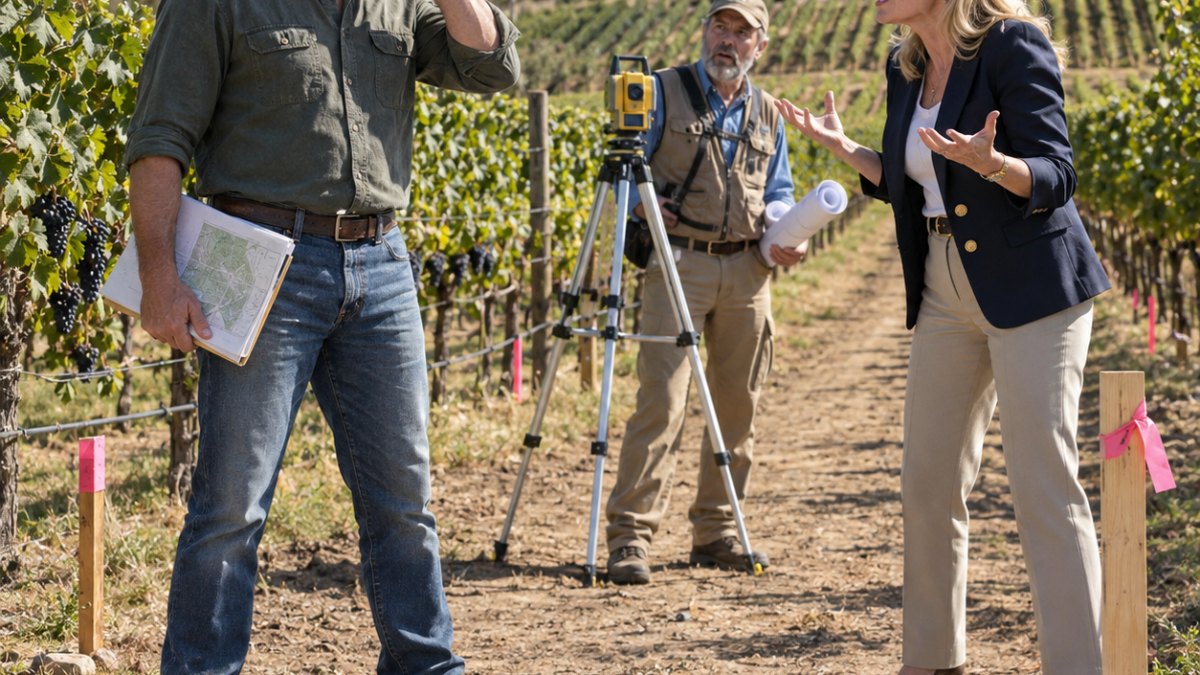
The morning Karen Miller planted a Serenity Meadows sign between my Cabernet rows, she handed me a $5,000 “annexation fee” and informed me that the hundred acres my family had owned for generations now belonged under her HOA’s authority. When I told her she was standing on agricultural land that had never been part of her subdivision, she smiled, pointed to a revised community map in her folder, and warned that refusing to pay could put a lien on the vineyard my wife and I had spent five years building. I thought I was dealing with one arrogant HOA president—until I learned she had already started preparing the neighborhood to believe my land was theirs.
“Major Thorne,” she said, holding out the invoice, “welcome to Serenity Meadows.”
I didn’t take it.
Behind her, an electric golf cart sat between two vineyard rows, its tires pressed into the damp grass. Ten feet away, a cheap metal sign announced SERENITY MEADOWS ESTATES as if somebody could change a property line by driving a post into the ground.
“My name is Jack Thorne,” I told her. “And you need to get off my land.”
Karen’s expression hardened. “This parcel has been incorporated under Section Four of the revised community charter.”
“No, it hasn’t.”
She tapped the page in her clipboard. “I’m the HOA president. I know what has been approved.”
I looked toward the old oak line marking the eastern boundary of my property. Serenity Meadows began beyond those trees and the county road. It always had.
My great-grandfather had bought this land after World War I. My grandfather worked it. My father kept it when development started swallowing farms around us, and before he died, he left me one handwritten instruction: Make something beautiful.
For thirty years I served in the Army Corps of Engineers. When I retired, my wife Sarah and I came home and planted vines.
Those first five years nearly broke us. We amended soil, installed drainage, fought mildew, replaced dead rootstock, and learned that a vineyard can humble a man quickly. Every row represented money we had saved and a future we hoped to leave our children.
Karen saw acreage.
I saw my father.
I pulled the Serenity Meadows sign out of the earth and laid it across the passenger seat of her golf cart.
“You misplaced this.”
Her face went red. “You cannot remove association property.”
“Then don’t put association property on my farm.”
She snatched the invoice against her chest. “You’re going to regret making this difficult.”
That was the first sentence she said that I believed.
After she drove away, Sarah came down from the farmhouse.
“What did she want?”
I handed her the invoice.
She read the total twice. “Can they actually do this?”
“No.”
I answered too quickly.
I knew my deed and the survey. But I did not yet know what Karen had filed, what she had told her board, or whether someone at the county had made a mistake.
When family land is involved, “probably impossible” is not good enough.
I called the county clerk.
A woman named Marge pulled my parcel while I sat at the dining-room table with the deed open in front of me.
“One hundred acres, agricultural zoning,” she said. “Parcel 73-04-B.”
“And Serenity Meadows?”
Her keyboard clicked.
Then stopped.
“No, sir. Your parcel is separate.”
My shoulders loosened.
Marge continued, “An HOA cannot simply absorb agricultural land through a charter amendment. A change like that would require formal filings, notice, hearings, and county action.”
“Has Serenity Meadows filed anything?”
“Not with us.”
I wrote those words on a legal pad.
Not with us.
That afternoon I called Frank Mercer, a retired pilot who lived inside Serenity Meadows and sometimes walked his golden retriever past my vines.
When I told him what happened, he groaned.
“You’ve got a Karen problem.”
“I need the bylaws.”
“You need more than that.”
“What does that mean?”
Frank lowered his voice.
“Two months ago, Karen proposed an ‘expansion committee.’ She said neighboring undeveloped parcels could strengthen the HOA financially.”
I looked through the window at one hundred acres of vines, meadow, barn, and family history.
“My vineyard is not undeveloped.”
“I know.”
“Did she name me?”
“Not in the minutes.”
“Frank?”
He exhaled.
“But in that room, Jack, everybody knew exactly which land she meant.”
An hour later, his email arrived with three years of board minutes attached.
I opened the first file, searched the word expansion, and found Karen Miller’s name beside a proposal I had never seen before.
Then I read the final sentence—and realized the sign in my vineyard had not been a bluff.
PART 2
The sentence read:
**The committee recommends preliminary steps toward incorporating adjoining parcels into the Serenity Meadows community footprint, beginning with properties necessary for long-term financial stability and recreational expansion.**
I read it three times.
Sarah leaned over my shoulder.
“Recreational expansion?”
I scrolled farther.
There were no parcel numbers.
No names.
Nothing that said Jack Thorne.
But another set of minutes from six weeks later included a discussion of “approximately one hundred acres of underutilized open land along the western agricultural boundary.”
One hundred acres.
Western boundary.
Agricultural.
Sarah pulled out the chair beside me.
“She’s talking about us.”
“Yes.”
“What does ‘financial stability’ mean?”
I opened the HOA budget Frank had also sent.
Then I understood.
Serenity Meadows had problems.
Big ones.
Their entrance monument needed repairs. The clubhouse roof was approaching replacement age. Their private stormwater ponds needed dredging. Their reserve account was significantly below what their own consultant had recommended.
There was also a proposal for a walking trail, a dog park, and a second community pavilion.
Expensive projects.
I ran the numbers twice.
If Karen somehow convinced residents that my vineyard could become part of their development—or could somehow be acquired cheaply after enforcement pressure—the land would solve several of her problems at once.
More dues.
More borrowing capacity.
More recreational land.
Possibly future development rights.
“This isn’t about my red barn,” I said.
Sarah looked at me.
“No.”
“It isn’t even about the vineyard.”
“What is it about?”
I pointed at the reserve report.
“Money.”
That frightened me more than Karen’s clipboard ever had.
A person arguing about aesthetics can eventually get bored.
A person who believes your property is the answer to a financial problem has an incentive to keep coming.
I spent the rest of the evening reading.
The original Serenity Meadows declaration clearly described the subdivision parcels.
Mine was not among them.
An amendment process existed, but nothing in those documents gave an HOA president the power to declare neighboring private property part of the association.
Frank had sent newsletters too.
The language started innocently.
**Planning for the future.**
Then:
**Exploring strategic growth.**
Then:
**Creating a unified community footprint.**
Finally, two weeks before Karen entered my vineyard:
**Exciting expansion opportunities are moving forward.**
No details.
Just enough repetition to make the idea sound inevitable.
Sarah poured two cups of coffee and pushed one toward me.
“What are you going to do?”
“Document everything.”
“You always say that.”
“Because it works.”
She didn’t smile.
I reached across the table.
“What?”
Her fingers tightened around mine.
“We put nearly everything into this place, Jack.”
“I know.”
“If she files something against the title—”
“I know.”
“Our operating loan renews in four months.”
That stopped me.
The vineyard was not a hobby.
Our first serious commercial harvest was approaching. We had equipment payments, nursery contracts, irrigation costs, insurance, and a small agricultural line of credit.
A title dispute could make bankers nervous even if the claim was nonsense.
Sarah saw my expression change.
“That’s what I’m afraid of.”
I stood and walked to the old walnut cabinet near the kitchen.
Inside was a metal document box.
I opened it and removed my father’s note.
The paper had been folded so many times that the creases were beginning to separate.
**Make something beautiful, Jack.**
Four words.
No legal language.
No grand speech.
My father had written them while dying from pancreatic cancer because he knew I would understand.
I slipped the note back into the box.
“She’s not taking this land.”
Sarah looked at me.
“Promise me you won’t turn this into one of your wars.”
That hurt because she knew me.
Retirement had not automatically removed thirty years of habits.
When I saw a threat, I planned.
When someone pushed, I tended to become more rigid.
More focused.
Sometimes too focused.
“I’ll use a lawyer before I use a shovel.”
“That is not exactly comforting.”
“It’s the best promise I’ve got.”
She shook her head.
Then she smiled despite herself.
“All right, Major.”
The first certified envelope arrived six days later.
It was thick enough that the mail carrier had to bring it to the porch.
Sarah signed for it.
When I got home from checking a drainage line, she had arranged the contents on the kitchen table.
Five violation notices.
One demand for payment.
One notice threatening an assessment lien.
And another copy of Karen’s $5,000 “annexation fee.”
I read the violations one by one.
My barn was the wrong color.
My split-rail fence was not approved.
My vineyard constituted unauthorized commercial activity.
My tractor was improperly stored.
My wildflower meadow violated Serenity Meadows lawn standards.
I almost laughed at the last one.
Almost.
Then I reached the total.
$10,400.
“Jack?”
Sarah was watching me.
“They’re claiming two months of dues too.”
“How can we owe dues to something we don’t belong to?”
“We can’t.”
At least that was the legal position I believed was obvious.
But official-looking paper has a psychological effect.
Letterhead does too.
A deadline printed in bold.
A warning about collection costs.
A reference to liens.
It is designed to make ordinary people think, Maybe they know something I don’t.
Karen was counting on that.
I laid everything out on the dining-room table.
Then I created three folders.
**BOUNDARY / ANNEXATION**
**FINES**
**LIEN THREAT**
Sarah leaned against the counter.
“You look happier.”
“I’m not happy.”
“You look like you used to when somebody handed you a broken project.”
“That I understand.”
“And people?”
“Less reliable.”
She laughed once.
Good.
I needed to hear it.
The next morning I walked the vineyard with my county survey, a camera, and a notebook.
I photographed the barn.
I photographed its location relative to my surveyed boundary.
I photographed the split-rail fence and the monument markers.
I documented the tractor.
The meadow.
The vines.
The county road.
The oak line.
Then I stood beside the place where Karen had planted her sign.
The hole was still visible.
I put a tape measure beside it and took another photograph.
That picture felt ridiculous.
A hole in the dirt.
But little facts become important when people later disagree about what happened.
At noon I drove to the county administration building.
Marge came to the public counter when I gave my name.
She was in her sixties, silver hair clipped behind her ears.
“You’re the vineyard gentleman.”
“Apparently I’m also an HOA resident now.”
She lowered her glasses.
“Not according to anything in this building.”
She printed the current parcel map.
Then the historical plat.
Then the subdivision plat for Serenity Meadows.
She stamped the copies.
I paid the fee.
Before I left, she said, “Mr. Thorne?”
“Yes?”
“Whatever they sent you, keep it.”
“I plan to.”
“And get counsel if they actually record something against your property.”
That warning followed me home.
That evening I drafted a response.
Not angry.
Anger gives people something to dismiss.
I identified the parcel.
Attached the county plats.
Stated clearly that my property was not subject to the Serenity Meadows declaration.
Rejected the fees and assessments.
Demanded that the HOA stop representing that it had authority over my land.
And warned that any attempt to cloud my title would be challenged immediately.
I did not call Karen a criminal.
I did not threaten prison.
I did not try to sound like a lawyer.
I wrote facts.
Sarah read it.
“This sounds like you.”
“Is that good?”
“It sounds like you’re explaining to a contractor why his bridge is about to fail.”
“Then it’s perfect.”
I sent it certified mail.
Karen signed the receipt herself.
For thirteen days, nothing happened.
No golf cart.
No letters.
No phone calls.
The silence bothered me more than the notices.
On the third day, I installed two more security cameras.
On the fifth, I backed up all documents to an off-site server.
On the eighth, Frank called.
His first words were, “You really made her mad.”
“That wasn’t the objective.”
“Doesn’t matter.”
“What happened?”
“She called an emergency board session.”
“About me?”
“Mostly.”
“Minutes?”
“Closed session.”
“Was counsel present?”
“Supposedly.”
I sat down at my workshop desk.
“What did she say?”
“According to Dave Patterson, she called you an insubordinate adjoining landowner.”
I stared at the phone.
“Insubordinate?”
“I’m telling you, Jack, you should frame that one.”
“Anything useful?”
“Yes.”
Frank’s tone changed.
“She told the board the vineyard was essential to her expansion plan.”
I stopped smiling.
“Those words?”
“Dave says close to it. She claims your property blocks the western trail corridor and future phases.”
“Future phases of what?”
“Development.”
There it was.
The word I had suspected.
Development.
My vineyard was not simply land she wanted to regulate.
It was land she wanted available.
“Frank, why is Dave telling you this?”
“Because Karen scares him.”
“That usually makes people quieter.”
“He signed up to help run an HOA, not fight a retired Army major over a farm.”
“Tell him I don’t want anything from him.”
“I already did.”
“And don’t pressure him.”
“I know.”
I paused.
“Frank?”
“Yeah?”
“Thank you.”
“You can buy the steak when this is over.”
The next move needed to be professional.
I found attorney George Bailey through a veterans legal clinic at our local VFW hall.
George was sixty-eight with unruly white hair and the posture of a man who had spent forty years leaning over conference tables.
He had served in the Marines when he was young, then built a career in commercial and real-estate litigation.
He claimed to be retired.
His calendar disagreed.
I put my binders on his table.
“How long have you been keeping these records?” he asked.
“Since she planted the sign.”
“You photographed the hole?”
“Yes.”
George looked at me over his reading glasses.
“You engineers are exhausting.”
“So I’ve been told.”
He spent nearly an hour reading before saying anything important.
Finally, he tapped Karen’s annexation invoice.
“This has no obvious legal basis.”
“That was my assessment.”
“You are not a member of this association.”
“No.”
“You never signed a declaration?”
“No.”
“Your deed doesn’t incorporate Serenity Meadows restrictions?”
“No.”
“And the county plat excludes you.”
“Yes.”
George leaned back.
“Then she cannot make your land part of the association by amending rules that bind other people.”
I exhaled.
Hearing it from a lawyer mattered.
“But.”
There is always a but.
George removed his glasses.
“The threat of recording an assessment lien is not something to ignore.”
“Marge said the same thing.”
“If they record a false claim against your title, we can move quickly to challenge it. But even a baseless recorded instrument can create problems until it’s released.”
“My operating credit renews this year.”
“Then we’ll notify your lender before Karen gets an opportunity to surprise them.”
I hated that.
Not because George was wrong.
Because Karen’s nonsense had now reached my bank.
My business.
Sarah’s security.
George saw it on my face.
“Jack.”
“What?”
“Being right does not mean you cannot be harmed.”
“I know.”
“Good. Because people get into trouble when they confuse those things.”
He closed the binder.
“I’ll send counsel a letter.”
“Already sent Karen one.”
“Excellent. Now she gets one from somebody who bills by the hour.”
George did not write theatrically.
His letter was three pages.
It identified my parcel.
Attached the governing documents and county records.
Stated the HOA had no covenant authority.
Demanded withdrawal of the invoices.
Put the association and its counsel on notice that recording an unsupported lien could expose them to litigation.
And requested preservation of all emails, minutes, maps, and communications concerning my property.
The final sentence was pure George:
**My client prefers to cultivate grapes, not litigation. Please allow him to return to that work.**
Sarah laughed when she read it.
“I like him.”
“He likes himself enough for all of us.”
Another week passed.
Then George called me at 8:12 on a Monday morning.
“Do you have coffee?”
“Yes.”
“Make it stronger.”
My stomach dropped.
“What happened?”
“She filed.”
I stood so quickly my chair rolled backward.
“What exactly?”
“A memorandum claiming an HOA assessment lien against your parcel.”
“After your letter?”
“After mine and yours.”
“How much?”
“Ten thousand four hundred, plus continuing dues, interest, legal fees, and collection expenses.”
I swore.
George continued.
“There’s more.”
Of course there was.
“What?”
“They attached a map.”
I already knew before he said it.
“A different boundary.”
“Yes.”
“How different?”
“Different enough that someone drew a new line around your parcel.”
I gripped the edge of my workbench.
“Who signed it?”
“Karen certified the association’s claim. Their counsel submitted the package.”
For the first time since this started, my calm slipped.
“She put a false map in the land records.”
“It appears inconsistent with the county plat, yes.”
“You sound very careful.”
“I am a lawyer. Careful is how I afford lunch.”
“George.”
His tone softened.
“I know.”
I turned toward the open workshop door.
Rows of vines marched down the slope.
Nothing physically looked different.
No bulldozer.
No fence.
No sheriff.
But somewhere in a government office was now a document claiming that my land carried an obligation to Karen’s association.
“That’s my father’s land.”
“I know.”
“No, George.”
My voice broke unexpectedly.
“That is the last thing he left me.”
Silence.
Then George said, “Come to my office.”
When I arrived, he had the recorded document spread across a conference table.
The altered map was almost insulting in its simplicity.
A thick blue line followed the Serenity Meadows boundary, then bulged west around my hundred acres and reconnected near the county road.
No county approval stamp.
No recorded subdivision amendment.
No surveyor’s seal establishing a lawful change.
Just a boundary conveniently expanded to swallow the vineyard.
George pointed at it.
“This is where they have a problem.”
“Only here?”
He gave me a look.
“Let me enjoy understatement.”
He had already prepared a petition seeking release of the lien and temporary relief to prevent enforcement while title was litigated.
He had also sent a demand to the HOA’s counsel asking them to withdraw the filing immediately.
“What if they refuse?”
“We go to court.”
“And Karen?”
“We do not decide whether she committed a crime.”
“What do we decide?”
“That she no longer gets to define the battlefield.”
Two days later Karen’s lawyer responded.
They refused to release the lien.
The email claimed the HOA possessed “equitable expansion rights” arising from long-range community plans.
George read that phrase aloud.
Then stared at me.
“Have you ever heard a sentence try this hard to sound expensive?”
“What are equitable expansion rights?”
“In this context? Something I’m looking forward to asking them to explain under oath.”
Karen became bolder.
My nursery supplier called me.
“Jack, we got a strange letter.”
“What kind?”
“Someone from Serenity Meadows says your property is under a legal ownership dispute.”
“It isn’t.”
“I figured.”
The nursery owner had known me for years.
But the damage was obvious.
Karen was trying to make my business partners nervous.
The county zoning office received complaints alleging that I was operating an illegal industrial facility.
A zoning officer named Paul Reyes drove out.
I showed him everything.
He looked at the vines.
The tractor.
The barn.
Then the complaint.
“Industrial processing?”
“We crush grapes.”
He stared at me.
“Dangerous heavy-equipment storage?”
I pointed at the tractor.
“That menace right there.”
Paul shook his head.
“I’m closing this as unfounded.”
“Can I get that in writing?”
“You’re the guy with the binders, aren’t you?”
“I’m becoming famous.”
“Not in a good way.”
Frank called that evening.
“You need to see something.”
Ten minutes later, a photograph hit my phone.
A printed notice on the Serenity Meadows clubhouse bulletin board.
**SPECIAL COMMUNITY MEETING**
**Celebrating the Future of Serenity Meadows**
Agenda:
1. Ratification of western parcel expansion.
2. Preliminary concepts for community green space.
3. Future trail access.
4. Refreshments.
I stared at the phrase **community green space**.
They were discussing future uses for my property.
Property Sarah and I had spent five years planting.
Property we still owned.
Property they had not bought.
Property they could not vote themselves into possessing.
Sarah read the notice over my shoulder.
Her face went pale.
“They’re going to stand in a room and discuss what to do with our vineyard?”
“Yes.”
“Go.”
I looked at her.
“You’re not worried I’m making this a war anymore?”
“I am.”
She folded her arms.
“But apparently they scheduled the battle and added refreshments.”
George loved the notice.
Actually loved it.
“This woman has voluntarily created a public meeting where she intends to explain the theory behind her conduct.”
“You sound happy.”
“I spent forty years begging opposing parties to talk too much.”
“What’s the plan?”
“You attend.”
“And?”
“You listen.”
“That’s it?”
“At first.”
George had already sent formal complaints and evidence to the appropriate state consumer-protection and property-association authorities, and he had requested county review of the recorded boundary document.
He also advised the sheriff’s office that the meeting could become contentious and asked whether a deputy could be available nearby solely to preserve the peace.
“No arrests,” he warned me.
“I didn’t ask for arrests.”
“No dramatic takedown.”
“I didn’t ask for that either.”
“No pointing across the room and yelling ‘fraud.’”
“George.”
“I’ve met retired majors.”
I leaned back.
“What am I allowed to do?”
“Present records.”
That I could do.
For the next four nights, Sarah and I worked at the dining-room table.
Not on a revenge presentation.
On a factual one.
Slide one:
Official county plat.
Slide two:
Serenity Meadows recorded boundary.
Slide three:
The map attached to Karen’s lien.
Slide four:
Side-by-side comparison.
Slide five:
My first certified notice.
Slide six:
Proof Karen received it.
Slide seven:
George’s legal notice.
Slide eight:
Date of lien filing.
Slide nine:
The HOA’s “victory celebration.”
No insults.
No cartoons.
No inflammatory language.
Only chronology.
On the night before the meeting, our daughter Emily drove in from Charlottesville.
She was thirty-two and worked as a physical therapist.
She walked into the kitchen, saw our papers, and said, “This looks like one of Dad’s old deployments.”
Sarah pointed at me.
“Tell him.”
Emily kissed my cheek.
“Dad, you are absolutely terrifying when you organize office supplies.”
“I’ll take that as support.”
Then she saw the altered map.
Her smile disappeared.
“They really drew our farm into their neighborhood?”
“Yes.”
“Can they take it?”
“No.”
Again, I answered too quickly.
Emily noticed.
“Dad?”
“They can make things expensive. They can make things messy. But they cannot just vote themselves ownership.”
She sat down.
“When Grandpa left you this place, you made me promise I’d never sell the oak field.”
I remembered.
She had been sixteen.
My father’s funeral was two days behind us.
We had walked the property because neither of us wanted to sit inside with casseroles and condolences.
Emily had picked an acorn from the ground and asked if the farm would still be here when she had children.
“Yes,” I had told her.
At sixteen, she believed fathers could promise things like that.
At sixty-one, I knew better.
Land survives only if somebody protects it.
“I remember,” I said.
Emily looked toward the dark window.
“Then don’t let her turn it into a dog park.”
Meeting night came cold and clear.
George picked me up at six.
Sarah came with us.
I had asked her whether she wanted to stay home.
She looked at me as if I had lost my mind.
“This is my vineyard too.”
Fair enough.
By the time we reached the clubhouse, cars lined both sides of the street.
Frank’s work.
He had quietly told neighbors that anyone curious about the proposed western expansion should attend.
More importantly, he had told several residents who had old grievances with Karen that documents would be discussed.
The clubhouse held perhaps eighty people comfortably.
There were more than a hundred.
Karen sat at the front beneath a blue-and-gold Serenity Meadows banner.
She wore a sparkling navy jacket.
Beside her were four board members.
Dave Patterson would not look at me.
At a side table were cookies, coffee, and a sheet cake decorated with green icing.
Sarah saw it.
“They bought a cake?”
Frank appeared beside us.
“Wait until you see what it says.”
We walked closer.
**A GREENER FUTURE FOR SERENITY MEADOWS**
Sarah stared at it.
“I want that cake.”
“What?”
“When this is over, I want a piece.”
Even George laughed.
At seven, Karen tapped her gavel.
“Good evening, neighbors.”
Her voice filled the room.
She was good at this.
That mattered.
People often imagine controlling personalities as obviously unpleasant to everyone.
Karen wasn’t.
Not always.
She remembered birthdays.
Organized holiday drives.
Got potholes repaired.
Sent flowers when residents were hospitalized.
To many people, especially those who had never crossed her, she was energetic and effective.
That was part of how she accumulated power.
“Tonight,” she continued, “we celebrate an important step in protecting the long-term character and financial health of our community.”
A slide appeared behind her.
An artist’s rendering.
Walking trails.
A pond overlook.
Trees.
Benches.
And where my vineyard stood, an enormous green park labeled:
**SERENITY WEST COMMONS**
My wife inhaled sharply.
I felt her hand find mine.
Karen continued.
“For too long, the western acreage adjoining our neighborhood has been poorly maintained and used for activities inconsistent with the residential character surrounding it.”
Frank muttered, “It’s a vineyard.”
Karen described “unauthorized commercial agriculture.”
Potential traffic.
Chemical use.
Machinery noise.
Then she moved to opportunity.
A trail network.
Open space.
A pavilion.
Future community gardens.
My farm disappeared beneath colored renderings one slide at a time.
The room applauded occasionally.
Not everyone knew.
That was the part I had underestimated.
Some residents genuinely believed Serenity Meadows had acquired legal control.
Karen had told the story often enough that it sounded settled.
Then she held up a copy of the recorded lien.
“The final legal impediments are now being addressed.”
George leaned toward me.
“She just called your ownership a legal impediment.”
“I heard.”
“Wonderful.”
“I’m beginning to understand why you never really retired.”
Karen smiled at the room.
“I see Mr. and Mrs. Thorne have joined us.”
Heads turned.
She had been waiting for this.
“Mr. Thorne has expressed concerns regarding the transition.”
Concerns.
That was one word for it.
“I believe in transparency,” Karen said. “So I’m willing to allow him five minutes.”
George whispered, “Take seven.”
I stood.
Sarah squeezed my hand.
I carried my binder to the front.
Frank had already connected my laptop to the projector.
Karen gestured toward it.
“I assume this is your response.”
“Yes.”
“Five minutes.”
“I’ll be concise.”
The official county map appeared.
I faced the room.
“This is parcel 73-04-B.”
I pointed.
“My family’s property.”
The hundred acres were outlined in black.
“This is Serenity Meadows.”
Separate.
Clear.
A man in the third row raised his hand.
Karen snapped, “Questions afterward.”
I clicked.
The Serenity Meadows recorded subdivision plat appeared.
Same boundary.
Then I clicked again.
Karen’s lien map appeared beside it.
There was an audible murmur.
The difference was obvious.
The western boundary had been redrawn around my property.
I did not say forged.
I did not say criminal.
I said, “This is the map submitted with the HOA’s recorded claim against my land.”
Someone called from the back, “Why is the line different?”
Karen grabbed her microphone.
“Mr. Thorne is presenting outdated material.”
I clicked again.
A certification from the county clerk appeared.
Dated four days earlier.
“These are the county’s current records.”
Karen’s jaw tightened.
“The association has separate authority.”
“Then I’d like to see it.”
She sat straighter.
“Our revised charter.”
“Does your charter contain my signature?”
“That is irrelevant.”
“Does the recorded declaration include my parcel?”
“You know expansion procedures are more complicated than—”
“Did the county approve a boundary change?”
She stopped.
The room changed.
It was subtle.
People leaned forward.
One board member looked down.
I clicked again.
My first letter appeared.
“Before the lien was recorded, I notified the association that my parcel was separate.”
Next slide.
Certified receipt.
Signed by Karen Miller.
“I know you received that notice.”
Karen’s face reddened.
Next slide.
George’s letter.
“The association also received formal notice from counsel.”
I turned toward the residents.
“After those notices, the HOA recorded a claim against my property anyway.”
Silence.
A woman near the aisle stood.
“Karen, did the county approve the expansion or not?”
Karen banged the gavel.
“Sit down.”
“Did they?”
“This meeting will remain orderly.”
“Answer her,” someone else said.
Then another voice.
“Did we buy that vineyard?”
“No,” I said.
Karen shouted, “Mr. Thorne, you are out of order.”
I stepped away from the microphone.
George stood.
“My name is George Bailey. I represent Jack and Sarah Thorne.”
Karen pointed at him.
“You are not a resident.”
“No.”
“Then you have no standing to speak.”
“I’m not asking your board to vote on anything.”
George lifted a folder.
“I’m informing you that my clients have filed to challenge the lien and have submitted the underlying documents for review by appropriate state and county authorities.”
The room erupted.
Karen struck the gavel repeatedly.
“Order!”
A tiny elderly woman stood in the second row.
I had never met her.
Her white hair was pulled into a bun.
She held a photograph.
“My name is Helen Gable.”
Karen froze.
Frank whispered, “Gnomes.”
Helen’s hands trembled.
“You put a lien threat on my house because of these.”
She held up the photograph.
Seven wooden garden gnomes stood beneath a maple tree.
“My husband carved them before he died.”
Karen sighed.
“Mrs. Gable, your matter was resolved years ago.”
“I took out a loan.”
“This is not relevant.”
“You charged me more in legal fees than the fines.”
“It was resolved.”
Helen’s voice cracked.
“My husband built that porch.”
The room went quiet.
“I had to borrow against the house he left me because you told me I could lose it.”
Karen looked impatient.
“Helen—”
“Don’t call me Helen.”
That hit harder than shouting.
Another resident stood.
Then another.
A young woman near the back said Karen had fined her family over a playset while her husband was deployed overseas.
A man complained about repeated inspections after challenging a roof-color citation.
Another woman produced letters involving a temporary wheelchair ramp for her mother.
Not every complaint meant the HOA had acted illegally.
George reminded people of that later.
But together they revealed something more important in that room.
Fear.
People had spent years thinking they were alone.
Karen had power partly because every homeowner believed their fight was private.
Now they were hearing one another.
Frank walked to the microphone.
“Karen, I want the board to answer one question.”
“No.”
“You told us the western acreage had been legally incorporated.”
“It is being incorporated.”
“That is not what you said.”
Karen’s eyes flashed.
“What exactly are you accusing me of, Frank?”
“I’m asking whether we own Jack’s land.”
“The association has rights.”
“That’s not the question.”
A man beside Karen leaned toward his microphone.
It was Dave Patterson.
His hand shook.
“We don’t own it.”
Karen turned on him.
“Dave.”
He swallowed.
“We never voted to acquire it.”
“Dave, stop.”
“And we never received county approval.”
The room became completely silent.
Karen stared at him.
“You agreed to the expansion plan.”
“I agreed to exploring expansion.”
“You voted yes.”
“To studying it.”
Her voice dropped.
“Be very careful.”
Dave looked at the hundred people watching him.
Then back at Karen.
“No.”
It was the smallest word spoken all night.
And it broke something.
Karen’s authority had always depended on people believing resistance was more dangerous than obedience.
Dave had just tested that theory in public.
Nothing happened.
No lightning.
No collapse.
No immediate punishment.
He simply remained seated.
Frank raised his voice.
“Then why are we holding a victory celebration?”
Nobody answered.
From the rear of the room, a man in a charcoal suit walked forward.
He had been standing beside the wall for nearly twenty minutes.
I recognized him because George had pointed him out earlier.
John Fields.
An investigator assigned to a state consumer-protection division reviewing complaints involving property associations.
He did not flash a badge dramatically.
He simply introduced himself.
“Mrs. Miller, after the meeting I’d like contact information for association counsel and the records custodian.”
Karen stared at him.
“Why?”
“We received documentation involving Mr. Thorne’s property and have opened a preliminary review.”
“This is a private HOA matter.”
“That may be. Our review will determine what falls within our jurisdiction.”
A sheriff’s deputy stood near the rear door.
Not moving.
Not arresting anyone.
Just watching.
Karen looked around the room.
For the first time that night, she seemed to understand that the meeting no longer belonged to her.
She gathered her papers.
“This meeting is adjourned.”
Frank stood.
“Before you leave, twenty-eight percent of the membership has signed a petition requesting a special meeting to consider removal of the board.”
Gasps.
Karen looked at him.
“You did what?”
Frank held up several pages.
“The threshold in our bylaws is twenty-five percent.”
“You’ve been organizing against me.”
“I’ve been talking to my neighbors.”
“You have no idea what damage you’re doing.”
Frank’s voice stayed level.
“I think that’s exactly what everybody wants to find out.”
Karen walked off the dais.
She did not take the cake.
Sarah did.
Not the whole thing.
One piece.
We stood in the parking lot afterward while neighbors crowded around George and Fields.
Sarah took a bite.
“Well?”
I asked.
She chewed thoughtfully.
“Too sweet.”
I laughed for the first time in weeks.
But the real fight had just started.
Karen still held office.
The lien still existed.
My bank still needed reassurance.
The state had opened only a preliminary review.
And the HOA’s lawyers had not surrendered.
The next morning, George filed our action challenging the recorded claim.
The court did not magically erase the document that day.
Legal systems do not work like television.
There were filings.
Responses.
Deadlines.
Arguments.
The HOA’s attorney claimed their actions arose from a good-faith interpretation of association authority.
George attacked the premise.
Show the covenant.
Show the deed restriction.
Show the county action.
Show my consent.
Show anything tying parcel 73-04-B to Serenity Meadows.
They could not.
Two weeks later, under pressure from its insurer and after independent counsel reviewed the documents, the HOA released the lien.
I stood at the county clerk’s counter while Marge handed me the stamped release.
“There you go.”
I read the parcel number.
Then the recording reference.
Then the signature.
Released.
One word.
My throat tightened.
Marge noticed.
“You okay?”
“Yeah.”
“You don’t look okay.”
I folded the copy carefully.
“My father spent his whole life worried this property would get swallowed by development.”
Marge softened.
“He kept it.”
“So far.”
“So did you.”
I drove home without turning on the radio.
Sarah was pruning young vines near Block Three.
I parked beside the lane and walked toward her.
She saw the document.
“Is that it?”
I handed it over.
She read.
Then pressed the paper against her chest.
“It’s gone?”
“The lien is.”
She closed her eyes.
For weeks, Sarah had been the calm one when I became obsessive.
She made meals I forgot to eat.
Reminded me to sleep.
Told me when my anger was becoming strategy’s enemy.
Now she began crying.
Quietly.
I pulled her against me.
“I’m sorry,” I said.
“For what?”
“For bringing this into the house.”
“You didn’t bring it.”
“I made it bigger.”
Sarah stepped back.
“No, Jack.”
She wiped her cheek.
“She made it bigger.”
I looked across the vines.
“What if I’d just paid?”
Sarah gave me a tired smile.
“You would have hated yourself.”
“Probably.”
“And eventually you would’ve hated me for asking you to.”
“I would never—”
“You would.”
I started to object.
Then stopped.
She knew me too well.
“Maybe.”
“Definitely.”
Three days later Serenity Meadows held the special membership meeting.
This time there was no cake.
The association retained independent counsel to supervise the process.
Ballots were verified.
Proxies checked.
The turnout was the largest in the development’s history.
Karen spoke for twenty-two minutes.
She said the expansion plan had been misunderstood.
She said outsiders had manipulated residents.
She accused Frank of exploiting fear.
She accused me of using my military background to intimidate civilians.
That one almost made George choke.
Then Karen made her strongest argument.
And to be fair, part of it was true.
Serenity Meadows had genuine financial challenges.
The reserve fund was weak.
Infrastructure needed work.
Some owners had demanded better amenities without wanting higher dues.
Karen had spent years trying to solve those problems.
“I made difficult decisions,” she told the room. “That is leadership.”
There were residents who nodded.
She had supporters.
Not everyone suddenly hated her.
Some remembered Christmas events she had organized.
Some credited her with improving landscaping.
Some believed the controversy had become a witch hunt.
That mattered.
Real communities are rarely divided into heroes and villains.
Then Frank spoke.
He did not attack her.
He displayed the association budget.
Reserve studies.
Contracts.
Minutes.
And finally the western expansion materials.
“Karen may sincerely believe she was protecting Serenity Meadows,” he said. “But no president gets to solve our financial problems by pretending we possess authority over property we don’t own.”
The vote was not unanimous.
It was not even close to unanimous.
Sixty-eight percent voted to remove Karen from the board.
Two other directors resigned before their removal votes.
Dave Patterson survived his vote after publicly acknowledging that he should have challenged the expansion plan earlier.
Frank became interim president pending regular elections.
His first sentence after taking the chair was:
“Somebody please throw away that gavel.”
The room laughed.
Karen didn’t.
She stood near the exit, gripping her purse.
As I passed, she said my name.
“Jack.”
I stopped.
Her eyes were red.
“You destroyed me.”
The easy response would have been satisfying.
Something sharp.
Something about maps.
Or liens.
Or power.
Instead I said, “I wanted you to leave my vineyard alone.”
“You could’ve handled this privately.”
“I tried.”
“You humiliated me.”
“You scheduled a victory celebration about taking my land.”
Her jaw tightened.
“You knew exactly what would happen.”
“No.”
I looked toward the room where neighbors were still talking.
“I knew exactly what documents I had.”
For several seconds, neither of us spoke.
Then Karen said, “This isn’t over.”
George appeared beside me.
“On that point, Mrs. Miller, we agree.”
She walked away.
The investigation expanded slowly.
Much more slowly than rumors.
Fields and his team requested records.
The HOA’s new board cooperated.
Independent accountants reviewed expenditures.
Residents submitted old enforcement files.
George began representing several of them.
What investigators found was not a single cartoonish master plan.
It was years of blurred boundaries.
Karen had grown accustomed to approving expenses with minimal scrutiny.
Contractors connected socially or through extended family had received work.
Some bids had not been competitively obtained.
Legal invoices were unusually high.
A small consulting company had received payments described as “community compliance services.”
The company’s registered agent had a familiar surname.
Karen’s maiden name.
When George showed me the corporate registration, I stared at it.
“You’re kidding.”
“I wish.”
“What did they do?”
“That is the expensive question.”
The accountants traced payments.
Investigators interviewed vendors.
Former board members were questioned.
Some transactions had innocent explanations.
Others did not.
Then Helen Gable’s old legal invoices produced another thread.
Residents who settled enforcement disputes sometimes paid administrative and “consulting” charges that ended up, through multiple payments, connected to the same company.
I remember the afternoon Fields came to the vineyard.
He sat with George and me on the porch.
Sarah brought coffee.
Fields placed a folder on the table.
“We are past the preliminary stage.”
I did not ask him for details he couldn’t provide.
“What do you need from me?”
“Your original documents.”
“You have copies.”
“We may need authenticated originals later.”
I nodded.
He looked toward the vines.
“Mr. Thorne, your property dispute is one part of this now.”
“How big?”
“Potentially much larger.”
George folded his arms.
“The law firm?”
Fields looked at him.
“You know I’m not discussing targets.”
“That means yes.”
“It means I’m not discussing targets.”
George smiled.
I sometimes wondered whether lawyers entertained themselves by irritating investigators.
Fields turned back to me.
“Keep doing what you’re doing.”
“Growing grapes?”
“Preferably.”
That was the best advice anyone gave me.
So I returned to the vineyard.
Not completely.
There were depositions.
Meetings.
Statements.
Court dates.
But I stopped waking at three in the morning to check the property cameras.
I stopped reading Karen’s old newsletters before breakfast.
Sarah and I went back to worrying about things vines actually cared about.
Rain.
Humidity.
Birds.
Frost.
The following spring, we had the best flowering since planting.
Then a late cold snap threatened Block Two.
At two in the morning, Sarah and I were outside setting up frost protection.
Our son Luke drove in from Richmond without being asked.
Emily arrived an hour later with coffee.
By sunrise, all four of us stood between the rows, exhausted and freezing.
Luke looked toward Serenity Meadows.
“Remember when they wanted to put a walking trail through here?”
Sarah handed him a coffee.
“Do not summon that woman.”
He laughed.
Emily looked at the vines.
“Grandpa would’ve loved this.”
Nobody spoke for a moment.
That was why I had fought.
Not to defeat Karen.
Not for a headline.
Not because I enjoyed legal war.
For that sunrise.
For my wife beside me.
For my children complaining about frozen fingers.
For rows of vines standing where my father had once imagined an orchard.
The civil cases moved first.
The association’s new board negotiated settlements with residents whose fines or fees had been imposed improperly.
Helen recovered a significant portion of what she had paid.
The military family received reimbursement.
Several old liens were reviewed and released.
The HOA’s insurer covered part of the losses.
Other money came from settlements with vendors and professionals.
George organized a broader civil action involving dozens of residents.
I joined only for the portion connected to my title damage and costs.
“You could pursue more,” George told me.
“How much more?”
“Potential damages. Business interference. Legal expense. Possibly punitive claims depending on what discovery supports.”
“What do you recommend?”
“I recommend nothing. I explain options.”
“That’s lawyer language for ‘I have an opinion but want me to ask twice.’”
He grinned.
I looked across his office.
“I want the lien permanently gone.”
“It is.”
“I want my legal costs covered.”
“Reasonable.”
“I want written acknowledgment that Serenity Meadows has no claim over my property.”
“We can get that.”
“And I want safeguards so another board can’t try this again.”
“That is an association governance issue, but yes.”
George waited.
“What about money?”
“I don’t want Karen’s house.”
He nodded slowly.
“Then don’t ask for it.”
Our portion eventually settled.
My legal expenses were reimbursed.
The HOA recorded a formal boundary acknowledgment tied to the settlement.
My parcel was expressly recognized as outside Serenity Meadows.
The association agreed that any future attempt to acquire or incorporate adjoining land would require lawful voluntary agreements and all applicable governmental approvals.
That document mattered more to me than a giant check.
I stored one certified copy in the safe.
Another went to the bank.
A third went into my father’s metal box.
Months later, prosecutors announced charges arising from the financial investigation.
Karen was charged.
So were individuals connected to the professional side of the scheme.
I will not pretend I understood every count.
Fraud.
Misappropriation.
False records.
Conspiracy allegations.
Karen pleaded not guilty initially.
Her lawyer argued that sloppy management and aggressive enforcement had been transformed into criminal accusations because of neighborhood politics.
For a while, I wondered whether the entire case might collapse.
George reminded me that investigations are not verdicts.
“Documents can look terrible and still have explanations,” he said.
“You sound less excited than you did at the beginning.”
“I know more now.”
“That usually ruins everything.”
“Especially law.”
A plea agreement came months later.
Karen admitted to financial misconduct involving association funds and to knowingly making false representations in connection with some property and enforcement records.
Other charges were dismissed as part of the agreement.
She received incarceration followed by supervised probation and was ordered to pay substantial restitution.
Her agreement also barred her from serving in a fiduciary role in Serenity Meadows, and the civil settlement prevented her from holding another position of authority within the association.
I did not attend sentencing.
Frank did.
When he came by the vineyard afterward, he stood beside the barn for a long time before mentioning it.
“How was she?” I asked.
“Scared.”
That answer surprised me.
Not defeated.
Not arrogant.
Scared.
“Did she speak?”
“She apologized.”
“Did you believe her?”
Frank thought about it.
“I believe she finally understood that none of it was a game.”
That was enough for me.
I did not need to know whether Karen became a different person.
I did not need a final confrontation in a courtroom.
Some endings are less satisfying when you keep watching.
The bigger consequence came from something neither Karen nor I had expected.
Public attention.
The vineyard dispute had attracted local coverage because the facts were easy to understand.
A homeowners association had claimed authority over a neighboring farm.
A false boundary map had been recorded.
Residents alleged abusive enforcement.
Financial investigators later uncovered broader misconduct.
Other property owners began contacting George.
Different counties.
Different associations.
Different facts.
But recurring themes.
Confusing lien procedures.
Large collections costs.
Poor access to records.
Boards acting without clear notice.
Homeowners unable to understand how to challenge decisions without hiring expensive lawyers.
George called me one morning.
“How do you feel about Richmond?”
“I feel like it’s ninety minutes away.”
“I mean the legislature.”
“I feel even worse about that.”
He laughed.
A state delegate had introduced legislation addressing several association-governance issues.
It did not abolish HOAs.
It did not eliminate legitimate assessments.
It did not make every homeowner complaint valid.
Instead, the proposed changes focused on procedure.
Clear notice.
Access to records.
Limits on certain fines.
Better dispute-resolution options.
Stricter requirements surrounding property liens.
Clear governmental approval for boundary changes.
George wanted me to testify about what had happened.
“I’m not an activist.”
“You’re a witness.”
“I grow grapes.”
“You also have unusually organized binders.”
“That is not a qualification for public office.”
“Thank God.”
I agreed to testify.
Sarah came with me.
I had expected something dramatic.
It wasn’t.
Committee rooms rarely are.
Fluorescent lighting.
Nameplates.
Microphones.
Stacks of paper.
People checking phones.
I sat behind a little sign with my name on it.
When my turn came, I described the sign in my vineyard.
The $5,000 annexation invoice.
The fines.
The lien threat.
The altered boundary map.
I explained what it did to a small agricultural business when a questionable claim appeared against its title.
Then I told them about Helen.
The playset family.
The residents who had been too frightened or too financially exhausted to challenge the association.
I also told them something I had learned from Frank.
“Most people who serve on community boards are not Karen Miller.”
A few heads came up.
“They’re volunteers. They’re neighbors. They’re trying to keep roofs repaired, ponds maintained, and budgets balanced.”
George later told me that sentence helped.
Because it made the argument less about destroying associations and more about accountability.
“I don’t believe every rule is tyranny,” I told the committee. “I believe power needs a procedure for challenging mistakes before those mistakes become threats against somebody’s home.”
When I finished, Sarah touched my shoulder.
“You didn’t say battlefield once.”
“I’m growing.”
The bill changed in committee.
Then changed again.
Some provisions were removed.
Others narrowed.
Association groups objected to parts they believed would make legitimate collections harder.
Homeowners’ advocates argued the protections were still too weak.
Lawyers fought over language.
That was democracy in its least cinematic and probably most useful form.
Compromise.
Months passed.
The vineyard entered veraison, grapes darkening from green toward purple.
I stopped checking legislative updates every hour.
George did enough of that for both of us.
Then one afternoon he called.
“It passed.”
“Which version?”
“The version nobody is completely happy with.”
“So a successful law.”
“Exactly.”
The measure cleared the legislature and went to the governor.
A week later, I received an invitation to attend the signing ceremony.
I almost declined.
Sarah did not allow it.
“You are going.”
“I have spraying scheduled.”
“Luke can spray.”
“I need to inspect Block Four.”
“Emily can inspect Block Four.”
“I own this vineyard.”
Sarah pointed toward the invitation.
“And apparently you accidentally helped change state law.”
So I bought a new tie.
The ceremony was smaller than I expected.
Advocates.
Legislators.
Association representatives.
Attorneys.
A few people whose stories had helped shape the reform.
Helen Gable came.
She wore a blue dress and a tiny garden-gnome pin.
When she saw me looking at it, she smiled.
“My son had it made.”
“You’re dangerous now.”
“I always was.”
The governor spoke about protecting property rights while preserving the ability of legitimate community associations to function.
Then came the signatures.
Multiple pens.
Photographs.
Handshakes.
When my turn came, the governor shook my hand.
“Major Thorne?”
“Jack is fine.”
“I’ve heard about your vineyard.”
“That makes me nervous.”
He smiled.
“I understand this started with a boundary dispute.”
“With a sign in my Cabernet.”
“That is a very Virginia sentence.”
I laughed.
Then he said, “Thank you for coming here and telling the committee what happened.”
I looked at the signed bill on the table.
For a moment I remembered Karen’s invoice.
The cheap sign.
My father’s note.
Sarah crying when the lien was released.
Helen standing in the clubhouse with a photograph of her husband’s gnomes.
“I was trying to keep one hundred acres,” I said.
“Sometimes that’s where legislation starts.”
The reforms were narrower than the myths that later grew around our case.
No governor had personally swooped in to save my vineyard.
No phone call from the statehouse had magically destroyed Serenity Meadows’ expansion.
The truth was slower and better.
Documents became a complaint.
A complaint became an investigation.
Residents found one another.
A court challenge removed the lien.
Evidence exposed financial misconduct.
Stories reached lawmakers.
Lawmakers argued.
A bill passed.
The governor signed it.
The result created stronger procedures around HOA governance, liens, records, and boundary changes.
No future Karen could simply hammer a sign into a neighboring farm and make annexation real by saying it loudly enough.
That was enough.
Three years after the morning Karen drove her golf cart into my vineyard, our first serious vintage was ready.
We called it **Thorne Legacy Cabernet**.
Sarah designed the label.
No soldiers.
No gavels.
No angry HOA president.
Just the outline of an old oak tree.
The same oak line that had marked the edge of our property before Serenity Meadows existed.
Harvest morning began before sunrise.
Luke brought his children.
Emily came with her husband.
Frank arrived carrying two boxes of breakfast sandwiches.
George Bailey arrived twenty minutes late and claimed lawyers were constitutionally exempt from agricultural labor.
Helen brought a wooden garden gnome.
I stared at it.
“No.”
She placed it beside the crush pad.
“He’s quality control.”
“He’s terrifying.”
“He has standards.”
Arthur from the winery next door looked at me.
“I wouldn’t challenge her.”
Neither would I.
By noon, grape bins lined the crush area.
Purple juice stained our gloves.
My grandson Ben, who was six, tried to eat more grapes than he put into his bucket.
Sarah pretended not to notice.
At one point I stepped away from everyone and walked to the edge of the vineyard.
The old boundary stood exactly where it always had.
Oak trees.
County road.
Then Serenity Meadows beyond it.
But the neighborhood looked different.
Frank’s board had rewritten large portions of the association’s rules.
Not eliminated them.
Improved them.
Residents could inspect financial records more easily.
Enforcement required clearer procedures.
Appeals went before people who had not initiated the original citation.
Large expenditures were competitively bid.
The community had abandoned the western expansion proposal completely.
Instead of trying to seize my land for a walking trail, they negotiated an agreement with the county to connect their neighborhood to an existing public greenway on land everybody actually had the right to use.
Imagine that.
Permission.
Frank still joked about it.
“Revolutionary concept.”
Serenity Meadows had more color now too.
Blue doors.
Red doors.
Children’s playsets.
Gardens that looked like somebody lived there.
Helen’s gnomes had multiplied at an alarming rate.
One resident installed a bright yellow mailbox and became briefly famous.
Property values did not collapse.
Civilization survived.
I heard Sarah call me from the crush pad.
“Jack!”
“What?”
“Stop admiring your dirt and help your family!”
I looked down.
Something was lying beside my boot.
An acorn.
I picked it up.
For an instant I was back at my father’s funeral with sixteen-year-old Emily.
Will the farm still be here when I have kids?
I had told her yes.
Now her daughter was ten.
Her son was six.
And both were fifty yards away staining their clothes with grapes grown on the land I had promised would remain.
I put the acorn in my pocket.
Later that evening, after everyone left, George and I sat on the porch with the first bottled sample of Thorne Legacy.
He held the glass toward the sunset.
“Not bad.”
“That is devastating praise from you.”
“I’m a lawyer. Enthusiasm creates liability.”
I laughed.
For a while we watched the last light move across the vines.
Then George said, “Can I ask you something?”
“You usually do without permission.”
“Why didn’t you pay?”
“The fines?”
“The first demand. Ten grand and change. You could have written the check, sued later, saved yourself months of hell.”
I took a sip.
The wine was young.
Tannic.
Still rough around the edges.
Like the vineyard.
“Because I knew what came next.”
“What?”
“Another invoice.”
George nodded.
“And after that?”
“Another rule.”
“And after that?”
“Eventually a question about whether this land was really mine.”
George raised his glass.
“To stubborn engineers.”
“Retired stubborn engineers.”
“Those are worse.”
A week later, Frank called me from the HOA storage room.
“I found something.”
“If it’s another map, burn it.”
“Better.”
He sent a photograph.
The original Serenity Meadows sign Karen had planted in my field.
Apparently investigators had photographed it and later returned it with association materials after it no longer had evidentiary value.
“What do you want me to do with it?” Frank asked.
“Throw it away.”
I hung up.
Then called him back.
“Actually, don’t.”
Sarah knew I was planning something because I spent Saturday morning in the workshop with the door closed.
She found me around noon.
The metal sign was bolted to a wooden crosspiece.
An old flannel shirt hung beneath it.
Work jeans.
Straw hat.
Sarah stopped in the doorway.
“No.”
“Yes.”
“You made Karen into a scarecrow.”
“I made the sign into a scarecrow.”
“The distinction will save you in court.”
We carried it to the eastern edge of the vineyard.
Not on the property line.
Ten feet inside.
Exactly where there could be no confusion.
I drove the post into the soil.
The old words were still visible across its chest:
**SERENITY MEADOWS ESTATES**
The scarecrow leaned slightly left.
Sarah adjusted the hat.
“Needs a name.”
“I think we both know the name.”
She laughed.
From the county road, Frank honked as he drove past.
Then he reversed.
His window came down.
“Is that what I think it is?”
“No.”
“Jack.”
“It’s agricultural equipment.”
He started laughing so hard his golden retriever began barking from the passenger seat.
By the following weekend, half of Serenity Meadows had heard.
Helen arrived with a miniature wooden clipboard and wired it into the scarecrow’s hand.
“That seems excessive,” I told her.
She stepped back to inspect her work.
“No. Now it’s accurate.”
I kept it there.
Not as a trophy.
At least that is what I told Sarah.
Weather faded the sign.
Rain softened the old shirt.
Birds eventually decided the scarecrow was useless.
One built a nest beneath the straw hat.
I refused to disturb it.
The following spring, a new family visited for a vineyard tour.
Their little boy pointed toward the figure.
“Why does your scarecrow have a neighborhood sign?”
His mother looked embarrassed.
“Ethan, don’t bother Mr. Thorne.”
“It’s okay.”
I knelt beside him.
“That sign used to belong to the neighborhood next door.”
“Why does the scarecrow have it?”
“Long story.”
“Is he guarding the grapes?”
I looked across the road toward Serenity Meadows.
Then back at the vines.
“Something like that.”
The boy seemed satisfied.
Children usually are when adults resist explaining everything.
He ran after his parents.
I stayed by the boundary for a moment.
The old sign moved slightly in the wind.
Years earlier, seeing those words planted in my vineyard had filled me with anger.
Now they made me smile.
The land was still ours.
The barn was still red.
The tractor still sat beside it when I was too tired to put it away.
Wildflowers still filled the lower meadow every spring.
Bees worked the clover.
My grandchildren ran between vines their great-great-grandfather had never lived to see.
And beyond the oak trees, Serenity Meadows remained exactly where it belonged.
Next door.
Not over us.
Not under us.
Beside us.
One evening near harvest, I walked the rows alone.
The sunset settled purple over the Blue Ridge.
I stopped beneath the old oak at the eastern edge and took my father’s note from my wallet.
The original had become too fragile, so Sarah had laminated a copy for me.
Four words.
**Make something beautiful, Jack.**
I looked across one hundred acres of vines.
Then toward the ridiculous scarecrow standing watch over them.
“You could’ve been more specific, Dad.”
The only answer was wind moving through grape leaves.
I folded the note and slipped it back into my pocket.
Then I heard my granddaughter shouting from the porch.
“Grandpa! Grandma says dinner!”
“I’m coming.”
I started toward the farmhouse.
Behind me, the old Serenity Meadows sign rattled softly against the scarecrow’s wooden frame.
For years, Karen had thought serenity meant control—identical lawns, approved colors, clean boundaries expanded whenever she needed more territory.
I had learned something different.
Sometimes serenity is a red barn that nobody gets to repaint.
Sometimes it is a vineyard planted by tired hands.
Sometimes it is an old oak marking a line everyone finally agrees to respect.
And sometimes it is simply being able to walk across the land your father left you without wondering whether somebody else has filed a piece of paper claiming it as their own.
Sarah stood on the porch waiting.
“Jack!”
“Coming.”
I looked back once.
The scarecrow’s flannel sleeve lifted in the evening wind like a lazy wave.
Then I went home.
[END OF STORY]








