PART 2: HOA Spent $5 Million Building a Luxury Clubhouse on My Land—Then the Judge Asked Me to Stand
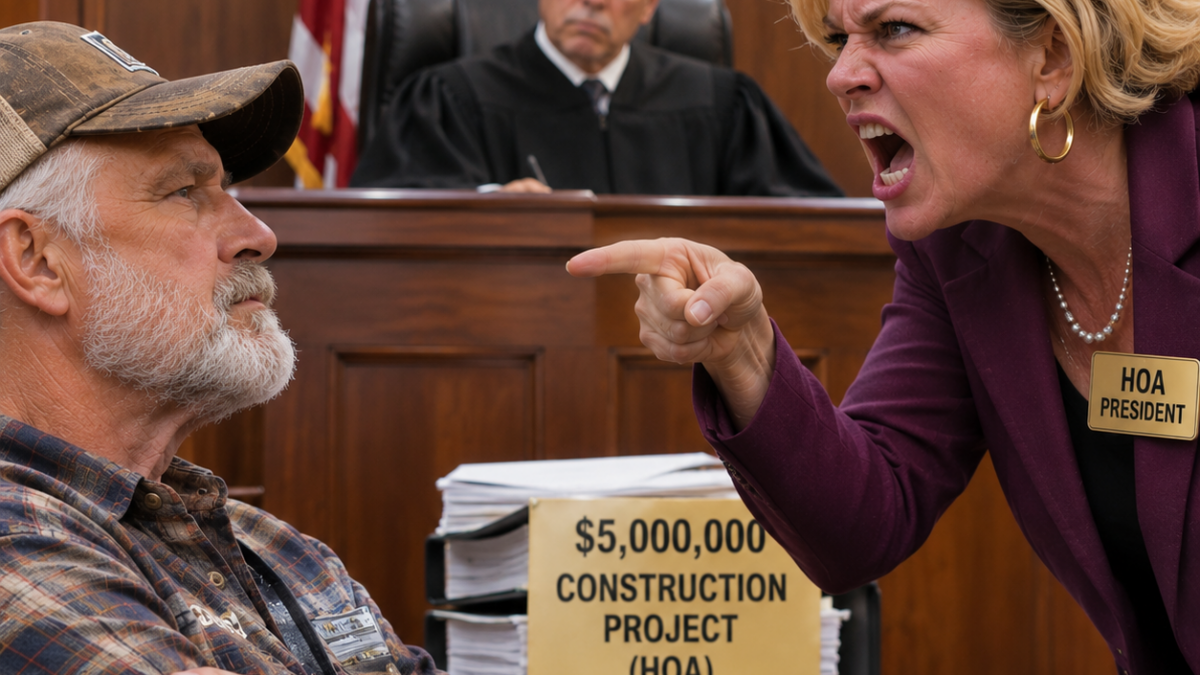
PART 2
Marlo didn’t answer immediately.
He didn’t need to.
The date sat there between us.
My father had been dead almost eleven months when someone supposedly put his signature on that authorization.
I read the page again because my mind kept trying to make the numbers rearrange themselves.
They didn’t.
“Your father could not have signed this,” Marlo said.
“No.”
“Do you recognize the signature?”
“Sort of.”
“Sort of?”
“It looks like his.”
That was the part that made me feel sick.
Whoever created the document hadn’t scribbled a random name.
The C had the right shape.
The pressure on the final letters looked close.
Even the short downward stroke Dad made at the end was there.
But something about the whole thing felt too smooth.
Dad’s signature had become rougher in his last years.
Arthritis.
This one looked like the signature he used when I was younger.
Marlo leaned back.
“Do you have genuine samples?”
“Hundreds.”
“Good.”
“Good?”
“For comparison.”
I stared at him.
“Somebody forged a dead man’s name and they’re building a clubhouse on top of it.”
“I agree that the date presents a serious problem.”
“That’s a lawyer answer.”
“It’s the answer I can defend today.”
He printed the document.
“Where did this come from?”
“HOA permit submission.”
“So the county approved construction using this?”
“Among other materials.”
“Did nobody check whether the signer was alive?”
“Government offices often verify that documents appear complete. They don’t necessarily perform forensic investigations on every signature.”
I rubbed both hands over my face.
“How much have they built?”
“According to the permit file, project cost is approaching five million.”
“That doesn’t make it more theirs.”
“No.”
“Then we stop them.”
Marlo nodded.
“That’s what we try to do.”
He drafted a demand that afternoon.
Clean.
Precise.
No anger.
It cited my deed, the absence of any recorded sale, and the impossible date on the supposed authorization.
Immediate work stoppage pending title review.
Preservation of documents.
No further entry onto the disputed parcel.
I expected the letter to scare them.
Instead, two days later Verina called an emergency HOA meeting.
I didn’t attend at first.
A neighbor sent me the recording.
Verina stood at the front of Ravenwood’s clubhouse holding a microphone.
Behind her was a rendering of the project.
The thing they were building on my land wasn’t a shed.
It was a luxury community complex.
Private restaurant.
Fitness center.
Event pavilion.
Outdoor terraces.
Gardens.
Parking.
She told the residents Ravenwood had already committed nearly five million dollars.
Then she used my name.
“A single individual is attempting to halt a project that belongs to all of us.”
People murmured.
She continued.
“Mr. Callahan waited until substantial resources had been invested before raising objections.”
That part hit me.
I hadn’t waited.
I hadn’t known.
But she said it with the confidence of someone announcing weather.
By the end of the meeting, residents were asking why one man should be allowed to jeopardize millions of dollars.
One man called me selfish.
Another asked whether I was demanding a payout.
Verina never corrected them.
Over the next week, I felt the story spread.
At the hardware store, a man who usually nodded at me walked past without looking up.
At the gas station, two Ravenwood residents stopped talking when I entered.
Someone I barely knew asked:
“How much do you want?”
“For what?”
“The land.”
“It isn’t for sale.”
He laughed.
“Everything’s for sale.”
That sentence followed me home.
I had never thought of the parcel as an investment.
Dad didn’t either.
At least I didn’t think he did.
He bought it when the area was mostly farm roads and open ground.
When developers began building Ravenwood nearby, he refused offer after offer.
I always assumed he was stubborn.
That seemed to run in the family.
Now I wondered whether he knew something he never told me.
Marlo filed for an emergency injunction.
The goal was simple.
Freeze construction until title could be resolved.
We went into the preliminary hearing with my deed and the impossible authorization date.
Ravenwood arrived with Gideon Rusk.
If confidence were evidence, Gideon could have won any case in America.
He was broad-shouldered, silver-haired, and had spent three decades learning how to make uncertainty sound like stupidity.
He argued that Ravenwood possessed longstanding contractual development rights.
That the authorization had been incorporated into later approvals.
That the association had relied on official records in good faith.
That stopping a nearly completed project would cause catastrophic financial damage.
Marlo argued ownership came first.
The judge listened.
Then she denied our request for immediate emergency relief.
Not the case.
Just the injunction.
There was enough conflicting documentation, she said, that she wanted a fuller record.
The words felt devastating.
I walked outside the courthouse and heard construction equipment in my head.
Marlo touched my shoulder.
“We didn’t lose title.”
“They’re still building.”
“For now.”
“They’re pouring concrete on my land.”
“I know.”
“They’re going to finish before we get back here.”
“I know.”
“How are you this calm?”
“I’m not.”
He looked at me.
“I’m trained not to let the other side enjoy it.”
I drove straight to the property.
The foundation had doubled in size.
Forms.
Rebar.
Concrete.
Every hour made the problem more expensive.
That was probably the point.
If they could complete enough of the project, maybe everyone would decide returning my land was too inconvenient.
Maybe I would accept money.
Maybe a judge would look at five million dollars in finished construction and search for a compromise.
I stood at the fence watching a concrete pump.
For the first time, I felt genuinely afraid.
Not because I thought the deed was wrong.
Because I began to understand that being right and being protected were not always the same thing.
That night I opened Dad’s safe again.
The sealed envelope sat there.
I touched it.
Still didn’t open it.
Instead, I began digging.
If the court wanted a full record, I would build one.
Survey work had taught me patience.
Boundaries are boring until somebody moves one.
Then every boring number matters.
I pulled county maps.
Old plats.
Permit applications.
Contractor filings.
HOA minutes.
Corporate registrations.
Construction invoices.
The updated site survey caught my attention first.
The western boundary had shifted.
Not by hundreds of feet.
It didn’t need to.
Just enough to place the clubhouse foundation inside Ravenwood’s claimed development footprint.
I compared it to Dad’s survey.
Then to county GIS.
Then to older subdivision plats.
The line was wrong.
I called Marlo.
“Come over.”
“It’s ten-thirty.”
“I know.”
“Is someone bleeding?”
“A boundary is.”
Silence.
“I’m coming.”
He arrived forty minutes later.
I had three maps taped to the kitchen wall.
“Here.”
He studied them.
“What am I seeing?”
“This line.”
“Explain.”
“Original property corner is here.”
I pointed.
“Modern construction survey places it here.”
“How far?”
“Enough.”
“For?”
“The clubhouse.”
He stepped closer.
“You’re sure?”
“I’m a survey technician.”
“That was not my question.”
I looked at him.
“Yes.”
He nodded.
“Then we need the person who can testify to the original.”
That took almost two weeks.
His name was Otis Bellamy.
Sixty-seven.
Retired surveyor.
He had worked with the crew that originally mapped Dad’s parcel.
We found him living less than an hour away.
I drove out myself.
Otis lived in a one-story house behind an orchard.
He opened the door wearing suspenders and looked annoyed before I even introduced myself.
“You selling something?”
“No.”
“Religion?”
“No.”
“Politics?”
“Definitely not.”
“What then?”
“Calder Callahan.”
His expression changed.
“His boy?”
“Elias.”
He let me in.
I laid the modern site plan on his dining table.
Then Dad’s recorded survey.
Otis put on glasses.
For several minutes, he didn’t speak.
His finger moved slowly over the paper.
Finally:
“Who drew this?”
“The newer one?”
“Yes.”
I told him.
He grunted.
“What?”
“This line moved.”
“How far?”
He used a ruler.
Did the math.
Then looked at me.
“Enough to put that foundation on your property.”
Hearing it from him did something different.
I already knew.
But now another person knew.
Someone who had been there before Ravenwood existed.
“Could it be a mistake?”
Otis leaned back.
“Any line can be wrong.”
“That’s not what I asked.”
“No.”
He stared at the plan.
“This isn’t the kind of error I’d expect from accidental monument selection.”
“What does that mean?”
“It fits the building too well.”
The words sat between us.
The foundation had not accidentally crossed a boundary.
The boundary had been drawn to fit the foundation.
Otis got up.
Went into another room.
Returned with a rolled survey in a protective tube.
“I kept this.”
“Why?”
“Your father made me.”
He unrolled it.
Nineteen years old.
Dad’s signature in one corner.
Red ink stamped nearby.
**DO NOT ALTER PROPERTY LINE.**
I stared.
“Why would he write that?”
Otis looked at me.
“You really don’t know?”
“No.”
“Then your father kept more from you than I realized.”
I drove home with the survey on the passenger seat.
That night I finally opened the envelope.
Not the warning envelope from the safe.
Not yet.
I mean I finally allowed myself to wonder whether my father’s silence had been protection or a burden.
Dad died thinking he had kept something away from me.
Instead, he left me walking into it without knowing what shape it had.
I was angry with him.
That surprised me.
I loved my father.
But grief does not make people perfect.
I sat in his study and said aloud:
“You could’ve told me.”
No answer.
Just the safe.
The next morning, Ravenwood sent me a violation notice.
Eighteen thousand five hundred dollars.
INTERFERENCE WITH COMMUNITY OPERATIONS.
I laughed.
Then I read it again.
They were fining a nonmember for objecting to construction on his own land.
Verina’s public campaign got uglier.
Flyers appeared.
One called me an opportunist.
One said I was trying to extort Ravenwood.
Someone posted a picture of me at the construction fence with the caption:
**THIS MAN WANTS TO DESTROY OUR COMMUNITY CENTER.**
I started receiving messages from numbers I didn’t know.
Most were insults.
A few were threats vague enough to deny.
One said:
**Take the money and disappear.**
There had been no money offer yet.
Not officially.
That came from Gideon Rusk.
He asked to meet at Marlo’s office.
He brought a settlement agreement.
“Seventy-five thousand dollars.”
I stared at him.
“For what?”
“In exchange for release of any claim affecting the project.”
“You mean my land.”
“We dispute that characterization.”
“I don’t.”
He smiled.
“Mr. Callahan, the association has nearly five million dollars invested.”
“That’s not my problem.”
“It will become everyone’s problem if this continues.”
“You built on land you don’t own.”
“Again, disputed.”
“My father was dead when your authorization says he signed it.”
Gideon’s smile disappeared.
“The provenance of that document is under review.”
“Seventy-five thousand says you’re nervous.”
He leaned forward.
“You are standing in front of a multimillion-dollar asset.”
“No.”
I looked at him.
“I’m standing on my land.”
I left.
Construction continued.
Marlo dug into the finances.
That’s where the next piece fell.
Ravenwood had financed a substantial portion of the clubhouse through a construction loan.
The loan documents treated the disputed parcel as part of the project’s value.
If title failed, the collateral assumptions failed.
If construction stopped, repayment provisions could trigger.
Contractors could sue.
The HOA’s finances could collapse.
Suddenly Verina’s panic made sense.
She wasn’t protecting a clubhouse.
She was protecting a financial structure balanced on my property.
One wrong document could bring down all of it.
The anonymous call came on a Thursday.
11:17 p.m.
I almost didn’t answer.
“Hello?”
A man’s voice.
Low.
“If you keep pushing this, they won’t stop at the land.”
“Who is this?”
Silence.
“Who are you?”
“Your father knew.”
My grip tightened.
“Knew what?”
Another pause.
“He knew about this once.”
The line disconnected.
I called back.
Blocked.
I checked outside.
Nothing.
But sleep was done.
I went to Dad’s study.
Opened the safe.
This time I removed everything.
Deed.
Tax papers.
Old insurance.
Receipts.
At the bottom was a USB drive.
Small.
Black.
A strip of masking tape across it.
RAVENWOOD 2003.
I sat down.
Dad died before cloud storage became part of normal life.
The drive looked ancient.
I plugged it into my laptop with an adapter.
For several seconds nothing happened.
Then a folder opened.
Maps.
Emails.
Contracts.
Photographs.
Scans.
And one audio file.
I clicked.
Static.
Then my father’s voice.
I stopped breathing.
“Elias, if you’re hearing this, somebody finally tried to do what I believed they would.”
I covered my mouth.
Dad sounded healthy.
Younger.
Strong.
“If they tell you this land was transferred, do not believe them without the original record.”
I shut my eyes.
For the first time in years, he was in the room.
Not really.
But close enough to hurt.
He explained.
Long before Ravenwood became Ravenwood, investors approached him.
They wanted his parcel because it controlled a critical connection point for future development.
Dad refused.
The offers increased.
Then the pressure did.
Surveyors appeared without permission.
Cars watched the land.
People began talking as though the sale were inevitable.
Dad became convinced someone might eventually create paperwork claiming rights he never granted.
He couldn’t prove anything then.
So he documented.
Every offer.
Every map.
Every letter.
Every name.
One company appeared repeatedly.
**Ashcroft Development Holdings.**
I paused the recording.
Read it again.
Ashcroft.
Verina Ashcroft.
My hands started shaking.
Dad continued.
“If this reaches you, understand something. The most dangerous person isn’t always the one trying to take your land.”
A pause.
“It’s the one who convinces everybody else it was never yours.”
The recording ended.
I sat in silence.
Then printed the emails.
Three separate files tied Ashcroft Development Holdings to the original investment group.
Verina wasn’t just an HOA president defending a project.
Her family had been connected to attempts to acquire Dad’s land before Ravenwood existed.
I drove to Marlo’s office before sunrise.
He walked in carrying coffee and found me waiting outside.
“What happened?”
I handed him the pages.
He read.
Then stopped.
Read again.
“Where did you get these?”
“Dad.”
“He kept them?”
“Everything.”
Marlo leaned against the door.
“If we establish this connection…”
“What?”
“This stops looking like a property disagreement.”
“What does it look like?”
He met my eyes.
“A calculated scheme to obtain an asset through fraudulent documentation.”
That sentence scared me.
Because fraud meant intent.
And intent meant someone had known.
The first major hearing came weeks later.
The courtroom was full.
Residents.
Press.
Board members.
Contractors.
People who had called me greedy.
People who had avoided me.
Verina sat beside Gideon.
Gray suit.
Perfect posture.
She looked directly at me.
Gideon went first.
Authorization.
HOA minutes.
Updated survey.
County zoning.
Construction permits.
Five million dollars invested in reliance on official documents.
To anyone walking in cold, it looked good.
That was the frightening part.
A lie doesn’t have to look sloppy.
Sometimes it arrives bound in leather.
Marlo introduced the deed.
Original survey.
Death certificate.
Impossible authorization date.
Otis’s preserved map.
The moved line.
Judge Miriam Holloway listened.
Sixty-one.
Patient.
Unreadable.
She ordered independent handwriting review.
The examiner found irregularities consistent with copying or simulation.
But not enough, standing alone, to name who created it.
Verina smiled faintly.
Not victory.
Relief.
The hearing adjourned.
The construction team accelerated.
They wanted the clubhouse finished before our next date.
Concrete became walls.
Walls became roof framing.
Every morning I watched the building grow.
I began to hate it.
Not because it was ugly.
It was beautiful.
Stone veneer.
Timber beams.
Huge glass openings facing the woods.
That somehow made it worse.
Beauty built on theft is still theft.
One night Marlo said:
“We need something they cannot explain.”
I thought of Dad’s envelope.
The sealed one.
The warning.
**If they ever build on this land, take this to court.**
I went home.
Sat at Dad’s desk.
Held the envelope.
Then opened it.
Inside was one document.
Original 2003 land registry filing.
Notarized.
Certified.
Dad’s signature.
And another signature beside it.
My body went cold.
Verina Ashcroft.
I stared at her name.
Then at the date.
Twenty-three years earlier.
The document acknowledged the exact boundary of Dad’s parcel.
Acknowledged his exclusive ownership.
Acknowledged that the land was not being conveyed to the development group.
Verina had signed it herself.
She knew.
Not because someone told her recently.
Not because lawyers had briefed her.
Because she had personally put her name beside my father’s ownership decades earlier.
I barely remember driving to Marlo’s.
He read the document.
Then sat down.
“She signed this.”
“Yes.”
“She cannot credibly claim she never knew the boundary.”
“No.”
“Why would your father have this?”
“He knew.”
“He knew she might come back.”
I looked at the paper.
“Why didn’t he use it then?”
“Maybe he didn’t need to.”
“Then why hide it?”
Marlo looked at me.
“Maybe he believed someday you would.”
That night someone texted me.
Unknown number.
**DO NOT BRING THAT DOCUMENT TO COURT.**
A photograph followed.
My house.
Taken from across the street.
Current.
Lights on.
My truck in the driveway.
I sat in darkness for nearly an hour.
For the first time, I considered stopping.
Not selling.
Just stopping.
There’s a difference.
Let the lawyers negotiate.
Take money.
Move.
Leave the land.
End the phone calls.
End the watching.
End waking at every engine.
I played Dad’s recording.
Not for evidence.
For his voice.
“If they tell you this land was transferred, do not believe them.”
I whispered:
“I know.”
The next morning, I sent the threat to Marlo.
He told me to preserve it.
Contact law enforcement.
No heroics.
No public post.
No confrontation.
Then Verina made her final public move.
Another HOA meeting.
“We will not let one man destroy a five-million-dollar investment belonging to this community.”
She circulated a petition.
Some residents signed.
Fewer than before.
Two board members started questioning construction costs.
Verina removed them from committee roles.
That was her mistake.
One of them knew Celia Morrow.
Former HOA secretary.
Celia contacted me.
We met away from Ravenwood.
She carried a small hard drive.
“I should have done this months ago.”
“What is it?”
“Accounts.”
Marlo came with me.
He asked Celia whether the records were lawfully in her possession.
She explained that she had retained copies during her tenure as secretary and through regular records access.
Marlo didn’t touch the drive until he was satisfied.
Then we reviewed it.
Invoices.
Payments.
Vendor bids.
Transfers.
The project costs didn’t match.
A construction company tied to Verina’s family had received inflated payments.
Money moved from HOA operating accounts into intermediaries.
Some transfers had descriptions that didn’t match actual services.
Marlo worked through the night.
By morning, he had a timeline.
He never called it theft.
He never called it embezzlement.
He said:
“These transactions require explanation.”
That was enough.
The clubhouse wasn’t only about community improvement.
Its construction was financially valuable to people connected to Verina.
And taking my land increased the entire project’s value.
The pressure had motive.
The false paperwork had purpose.
The boundary move had profit behind it.
Verina asked to meet.
Private.
Marlo insisted on being nearby.
She chose a hotel conference room.
No lawyers at first.
Just me and her.
She looked tired.
Still controlled.
But tired.
“Two million dollars.”
I thought I had misheard.
“What?”
“You transfer the disputed parcel. We resolve all claims. Mutual confidentiality.”
“You offered seventy-five thousand.”
“That was before this became irrational.”
I almost laughed.
“You built five million dollars of improvements on land you didn’t own, and I’m irrational?”
“We acted on documents.”
“You signed the document confirming Dad owned it.”
Her eyes changed.
There.
That was when I knew she understood what I had.
She recovered quickly.
“That document has been mischaracterized.”
“You remember it.”
“I signed hundreds of documents.”
“You remember this one.”
“Two million dollars, Elias.”
“No.”
Her jaw tightened.
“What do you actually want?”
It was the first honest question she had asked me.
I leaned forward.
“I want you to admit it was never yours.”
She stared at me.
Then said:
“Fine.”
But she didn’t mean it.
The smile afterward told me.
She was still planning.
The final hearing came three weeks later.
Every seat was filled.
People stood along the back wall.
Verina sat beside Gideon.
Marlo and I sat opposite.
My father’s original filing rested inside a protective sleeve in front of me.
I touched the edge once.
Then stopped.
Marlo built the case slowly.
My deed.
County records.
Death certificate.
The authorization dated after Dad’s death.
Otis Bellamy’s original survey.
The shifted boundary.
Forensic handwriting findings.
Ashcroft Development Holdings records.
Dad’s archived emails.
Verina’s 2003 signed acknowledgment.
Celia’s financial files.
Loan documents.
Project payments.
Every piece supported another.
Gideon attacked what he could.
He questioned Otis’s memory.
Questioned whether old corporate connections proved anything.
Questioned the meaning of Verina’s signature.
Questioned whether accounting anomalies belonged in a title case.
Judge Holloway let him.
Then she let Marlo answer.
Verina testified.
She walked to the witness stand in a gray suit.
Hand raised.
Oath given.
Gideon asked the questions first.
She described Ravenwood’s project.
Community benefit.
Permits.
Legal advice.
Reliance.
Then Marlo stood.
“Ms. Ashcroft, when did you first learn Mr. Callahan claimed ownership of the disputed parcel?”
“When this controversy began.”
“You had no prior knowledge?”
“No.”
“Never?”
“Not that I recall.”
Marlo lifted the 2003 filing.
“Is that your signature?”
Gideon stood.
“Objection. Asked and addressed in prior submissions.”
Judge Holloway looked over her glasses.
“Overruled.”
Marlo repeated:
“Is that your signature?”
Verina stared at it.
“Yes.”
“What did you understand the document to acknowledge?”
“Routine boundary information.”
“Whose boundary?”
“I don’t recall.”
“Please read paragraph four.”
She did.
Her voice slowed.
“‘The undersigned acknowledges that the Callahan parcel remains separately owned and is not conveyed by this development agreement.’”
The courtroom was silent.
Marlo asked:
“Was that unclear?”
Gideon objected.
Judge Holloway allowed a narrower question.
Marlo tried again.
“Did you sign that sentence?”
“Yes.”
“So when you told the court you had no prior knowledge of Mr. Callahan’s ownership, that was incorrect?”
Verina’s fingers tightened.
“I did not remember a document from twenty-three years ago.”
“Did you remember offering Calder Callahan money for the parcel?”
Her head snapped up.
That email had been on Dad’s USB drive.
Gideon objected.
Overruled for limited purpose.
Marlo displayed the offer.
Ashcroft Development Holdings.
Verina copied on correspondence.
My father’s refusal.
“Still no memory?”
Her voice hardened.
“My family company explored many acquisitions.”
“Did this one include Mr. Callahan’s land?”
“Yes.”
“So your family attempted to purchase land you now claim the HOA already had permission to develop.”
“That is an oversimplification.”
“Is it inaccurate?”
Gideon objected again.
Judge Holloway looked tired of him.
“Counsel, let the witness answer.”
Verina said:
“The legal situation evolved.”
Marlo returned to the forged authorization.
“Did the legal situation evolve enough for a dead man to sign a new document?”
The gallery reacted.
Gideon was on his feet.
Judge Holloway struck the phrasing and told Marlo to reframe.
He apologized.
Then asked:
“Do you have any explanation for how Calder Callahan’s signature appeared on an authorization dated after his death?”
“No.”
“Did you rely on that authorization?”
“Our attorneys did.”
“Did you submit it?”
“The association submitted a document package.”
“Under your presidency?”
“Yes.”
“Did you know the date of Mr. Callahan’s death?”
“No.”
I watched her.
Maybe that part was true.
It didn’t save the rest.
When testimony ended, Judge Holloway asked if either side had anything further.
Marlo looked at me.
I knew what came next.
Dad’s audio recording.
We had debated using it.
It was emotional, but also relevant to history and the preserved records.
Marlo had laid foundation for the supporting documents.
Judge Holloway allowed it for limited purposes.
I pressed play.
Dad’s voice entered the courtroom.
The effect on me was worse than I expected.
I had listened dozens of times.
But hearing him in that room, with people who had called me greedy and dishonest sitting behind me, felt different.
He described the original offers.
The pressure.
The development group.
His refusal.
His fear that someone might fabricate rights later.
Then:
“The most dangerous person isn’t always the one who wants to take the land. It’s the one who convinces everyone else it was never yours.”
Nobody moved.
When the recording stopped, I placed the original 2003 filing on the table.
Judge Holloway requested it.
The clerk carried it to her.
She read.
Once.
Then again.
She compared it to the certified registry copy.
She looked toward Verina.
Then toward me.
“Mr. Callahan.”
My heart slammed.
“Please stand.”
I stood.
For one second, I thought she was about to reprimand me.
Maybe exclude something.
Maybe tell me the emotional recording had gone too far.
Then she said:
“You are the legal and rightful owner of the disputed parcel.”
Behind me, someone gasped.
I didn’t move.
She continued.
“The recorded chain of title establishes no valid transfer of ownership to Ravenwood.”
She turned toward Verina.
Her voice sharpened.
“Ms. Ashcroft, your association spent approximately five million dollars constructing improvements on land it did not own.”
Verina stood partially.
“No, Your Honor. We had permission.”
Judge Holloway looked at the papers.
“The purported authorization bearing Calder Callahan’s signature is dated after his death.”
Gideon began:
“Your Honor—”
She raised a hand.
“The court is speaking.”
Silence.
“The evidence further establishes that Ms. Ashcroft personally acknowledged the Callahan boundary years before this project began.”
Verina’s face lost color.
The judge continued.
“This court therefore rejects the association’s claim that its development rights arose from a good-faith misunderstanding of the parcel boundary.”
Gideon requested additional review.
Denied.
He asked for time to address remedies.
Granted in part.
But ownership was settled.
Construction stopped immediately.
The disputed authorization could not support development rights.
The court referred issues involving the suspect signature and financial records for proper investigation.
I sat down.
My knees were shaking.
Marlo leaned toward me.
“Breathe.”
I did.
For months, I had imagined victory.
I thought I would feel powerful.
I didn’t.
I felt tired.
Like I had been carrying Dad’s safe on my back and someone had finally let me put it down.
Outside the courthouse, reporters waited.
I kept walking.
One called:
“Mr. Callahan, what happens to the five-million-dollar clubhouse?”
Another:
“Will you force Ravenwood to demolish it?”
Another:
“Are you suing the residents?”
I said nothing.
That mattered to me.
Verina had spent months turning the case into a public performance.
I did not want my victory to become one.
The remedies process came later.
The portions of the clubhouse built on my land could not remain simply because Ravenwood had spent money on them.
After engineering and legal review, the association was required to remove the unauthorized structures from my parcel and restore the site as part of the final resolution.
Damages were assessed.
Records were corrected.
The association submitted to an outside financial audit.
The forged authorization became part of a separate investigation.
Verina was removed as HOA president within days.
Residents demanded it.
Some who had supported her apologized.
Some didn’t.
I didn’t need all of them to.
Celia became one of the most important witnesses in the financial inquiry.
Otis’s old survey became foundational evidence.
The county formally thanked him for preserving it.
He called me afterward.
“Your dad would’ve enjoyed this.”
“What?”
“Being right twenty years late.”
I laughed.
“He would’ve complained it took too long.”
“That too.”
Gideon Rusk faced professional scrutiny over how disputed documents had been presented and what his office had known when.
I never pretended to know everything about his responsibility.
That was for investigators and licensing authorities.
One lesson had been burned into me too deeply by then:
Evidence first.
Accusation second.
The HOA’s financial problems were real.
Five million dollars doesn’t vanish because the building was illegal.
Residents were angry.
Some faced assessments.
The board changed.
Lenders asked questions.
Contractors wanted payment.
For a while, I felt guilty.
That surprised me.
These people had called me greedy.
Some had treated me like a criminal.
Yet I knew most of them had not created the forged document.
They had trusted leaders.
Badly.
One afternoon Harold Jenner, a Ravenwood resident I had seen at several meetings, came to my door.
He was holding an envelope.
“I owe you an apology.”
“You don’t have to.”
“I do.”
He looked embarrassed.
“My wife and I signed Verina’s petition.”
“I know.”
“You saw it?”
“Public filing.”
He nodded.
“She told us if you won, our home values would collapse.”
“I figured.”
“I called you an extortionist.”
“That part I didn’t know.”
His face reddened.
“I’m sorry.”
I stepped aside.
“Coffee?”
He looked surprised.
“Seriously?”
“Don’t make me regret it.”
He laughed.
That conversation lasted two hours.
He told me how Verina used fear.
Not abstract fear.
Specific fear.
Retirement savings.
Home values.
Association insolvency.
Contractor lawsuits.
She made residents believe I was standing between them and financial disaster.
The cruel part was that by the end, some of those fears were real.
Because she had created them.
The clubhouse came down in sections.
Watching demolition was strange.
The first excavator I had seen on my property had started the nightmare.
Now another excavator was removing it.
Stone veneer came off.
Timber beams disappeared.
Concrete broke.
Trucks hauled debris away.
One worker asked:
“Does this feel good?”
I thought before answering.
“No.”
He looked surprised.
“Why not?”
“Because none of it needed to happen.”
That was the truth.
I didn’t enjoy watching five million dollars turn into rubble.
I enjoyed seeing my boundary respected.
Those were not the same thing.
Verina asked to meet one final time before leaving Ravenwood.
I almost refused.
Marlo said:
“You don’t owe her a conversation.”
“I know.”
“So why go?”
“Because I want to hear what she says when there’s nothing left to negotiate.”
We met at an empty coffee shop outside the neighborhood.
She looked different.
Less polished.
Not ruined.
Just tired.
She sat across from me.
For several seconds, neither of us spoke.
Finally:
“You got what you wanted.”
“No.”
Her eyes narrowed.
“You kept the land.”
“That’s not what I wanted.”
“What did you want, Elias?”
“For you not to build on it.”
“That’s semantics.”
“No.”
I leaned back.
“If you had respected the deed, none of this happens.”
She looked toward the window.
“You don’t understand what Ravenwood was facing.”
“Then explain.”
She told me.
The clubhouse had become the centerpiece of a financial plan.
Ravenwood was competing with newer developments.
Amenities mattered.
Property values.
Membership demand.
Resale.
Her family company saw opportunity.
She saw a way to make the community more prestigious and strengthen its finances.
“And Dad’s land?”
“Was the only practical location.”
“So you bought it.”
“We tried.”
“He said no.”
“Yes.”
“Then what?”
She didn’t answer.
“Then what, Verina?”
Her hand tightened around the coffee cup.
“We believed there were historical development rights.”
“You signed a document saying there weren’t.”
“I convinced myself the later paperwork changed that.”
“The paperwork signed by my dead father?”
She closed her eyes.
“I never created that document.”
“Did you know it was wrong?”
Silence.
That was enough.
Not proof of who forged it.
But an answer to something more personal.
“You knew there was a problem.”
“I knew there were inconsistencies.”
“And you kept building.”
“Yes.”
Finally.
No speech.
No excuse.
Just yes.
“Why?”
She looked at me.
“Because by the time I admitted we might be wrong, we had already spent too much money for me to survive being wrong.”
That was the most honest thing she ever said to me.
Not greed alone.
Not evil.
Fear.
Pride.
Money.
Reputation.
A decision made wrong, then defended because correcting it became more expensive every day.
“You could’ve stopped.”
“I know.”
“When?”
“Much earlier.”
I nodded.
She asked:
“Do you hate me?”
I thought about the threats.
The flyers.
The construction.
Dad’s signature.
The picture of my house.
“No.”
She looked surprised.
“I don’t trust you.”
“That’s fair.”
“And I don’t forgive what you did.”
She nodded.
“But hate would mean you still get more of my time.”
Her eyes filled slightly.
She looked away.
“I am sorry about your father.”
I almost laughed.
Not because it was funny.
Because Dad had been dead before this started.
Yet somehow she had still managed to drag him into court.
“You used his name.”
“I know.”
“That’s the part I’m not sure I’ll ever get past.”
She nodded again.
“I know.”
We left separately.
I never spoke to her again.
Months later, investigators traced the fraudulent signature work back through records involving a document specialist hired under a separate business name connected to the old development network.
I learned only what was formally confirmed.
Forensic comparisons tied features of the disputed authorization to other altered filings.
The evidence strengthened the conclusion that the document had been deliberately manufactured.
That mattered.
Not because I needed somebody in handcuffs to feel whole.
Because Dad had been right.
Someone really had prepared for the day when repetition might replace ownership.
The county recorder eventually issued final confirmation.
Parcel ownership:
Elias Callahan.
No Ravenwood claim.
No development authorization.
No disputed community right.
Clean.
I held the letter in Dad’s study.
Then opened the safe.
I placed the original deed inside.
The 2003 filing beside it.
Dad’s USB drive.
And a photograph.
Dad and me standing on the parcel when I was maybe fourteen.
He had one hand on my shoulder.
I looked miserable.
Probably because I wanted to go home and play video games instead of walking boundary markers.
I smiled at the picture.
“Sorry.”
I don’t know what I was apologizing for.
Not understanding.
Being angry.
Taking so long.
Maybe everything.
Marlo stood with me at the property one afternoon after demolition ended.
Bare earth stretched where the clubhouse had stood.
“What will you do?”
“Nothing.”
He laughed.
“Nothing?”
“Grass.”
“Very ambitious.”
“Maybe some trees.”
“Now you’re getting reckless.”
I looked toward the old pines.
“Dad wanted it left open.”
“You could sell.”
“I know.”
“Worth a lot more now.”
“I know.”
“You’re not tempted?”
I thought about Verina’s two-million-dollar offer.
Then the five million spent building.
Then what land near Ravenwood was worth.
“Not enough.”
Marlo smiled.
“That sounds like your father.”
I repaired the old boundary fence.
Not because a fence proved ownership.
The court had handled that.
I repaired it because Dad had built part of it.
I reset every marker.
Otis came once to help me verify the corners.
He complained about my equipment.
“You survey people trust electronics too much.”
“You survey people used chains.”
“Chains don’t lose satellite signal.”
“Neither does math.”
He grunted.
I took that as approval.
Ravenwood changed too.
A new board took over.
Financial controls tightened.
Residents could review major project expenditures.
Outside counsel had to verify property rights before the HOA committed to construction affecting adjacent parcels.
The clubhouse was gone.
Instead, the new board renovated an existing smaller building already owned by the association.
Less glamorous.
Legally theirs.
Harold invited me to the reopening.
I almost declined.
Then I went.
Nobody booed.
That felt like progress.
A woman I had never spoken to came up.
“My daughter’s wedding was supposed to be in the old pavilion.”
“I’m sorry.”
She shook her head.
“I was angry with you.”
“I figured.”
“Then I saw the documents.”
I waited.
She smiled awkwardly.
“The new hall is fine.”
“Good.”
She walked away.
That was how most healing happened.
Not speeches.
Small conversations.
People adjusting to truth.
One evening, about a year after I first saw the Ravenwood sign on my land, I walked the perimeter again.
Same habit.
Same route Dad taught me.
The grass had started growing where the clubhouse foundation once sat.
Uneven.
Thin.
But green.
I stopped at the old corner marker.
For months, that marker had represented the fight.
Now it was just steel in the ground.
I liked that.
At the gate stood a new sign.
Simple.
No logo.
No dramatic warning.
**PRIVATE PROPERTY
CALLAHAN**
That was all.
I could have written:
NO HOA.
TRESPASSERS PROSECUTED.
PROPERTY WON IN COURT.
I didn’t need any of that.
Dad never needed to shout either.
He had trusted the record.
It just took twenty-three years for the record to be asked the right question.
The sunset dropped behind the pines.
I thought about the moment Judge Holloway said:
“Mr. Callahan, please stand.”
For one second I had been terrified.
Then she gave me back something that, legally, I had never lost.
That was the strange part.
The land had always been mine.
The deed had always been valid.
The boundary had always been where Dad said it was.
Truth had not changed in that courtroom.
Only who was finally forced to acknowledge it.
I walked back toward the house.
Halfway there, I stopped.
Turned.
Looked once more at the open ground.
No clubhouse.
No excavators.
No Ravenwood sign.
Just grass.
Pines.
Quiet.
Exactly what Dad had left me.
Exactly what I intended to leave standing.
The days after Judge Holloway ruled in my favor did not feel like victory.
They felt like waking up after a storm and realizing you still had to walk outside and count what had been damaged.
The injunction went into effect immediately. By the following morning, the construction site was silent for the first time since I had discovered the excavator tearing through my father’s land. No concrete trucks. No saws. No men shouting measurements across the foundation. Yellow tape stretched across the main entrance, and a court notice had been posted beside the same place where Ravenwood’s glossy development sign once stood.
I parked along the road and walked to the fence alone.
The clubhouse was nearly complete.
That was the cruelest part.
Five million dollars had built something beautiful.
Stone walls rose against the pines. Massive timber beams framed a roof that would never be finished. Tall windows reflected trees that had survived only because construction had not reached them yet. The event pavilion stretched toward the eastern side of the parcel, and the unfinished restaurant terrace looked out over land my father once walked with me when I was a kid.
For a few seconds, I tried to imagine what it would have looked like finished.
People in suits drinking wine.
Wedding photographs beneath string lights.
Residents bragging about their private club.
Nobody knowing that the entire thing rested on a boundary someone had deliberately moved.
A truck stopped behind me.
Marlo got out.
He stood beside me without speaking.
Finally he asked, “How does it feel?”
I kept looking at the building.
“Wasteful.”
“That’s not the answer I expected.”
“I thought I’d enjoy this more.”
“You thought winning would feel like revenge.”
“Maybe.”
He put his hands in his coat pockets.
“Most worthwhile victories don’t.”
I looked toward the clubhouse.
“They could have built this somewhere else.”
“Yes.”
“They could have asked me.”
“Yes.”
“They could have offered to buy the land honestly.”
“Yes.”
“And instead everybody loses millions.”
Marlo turned toward me.
“Everybody didn’t make that choice.”
I knew what he meant.
I had spent months seeing Ravenwood as one thing.
The HOA.
The residents.
Verina.
Gideon.
The construction company.
The people who signed petitions against me.
The neighbors who looked away at the gas station.
But now that the fight was over, the differences between them were becoming visible again.
Most Ravenwood homeowners had never seen the original deed.
They had never seen Dad’s death certificate beside an authorization supposedly signed nearly a year later.
They had never seen the old Ashcroft Development correspondence.
They had never heard Dad’s recording.
They had been told one story by someone they trusted.
I understood that.
Understanding did not erase what happened.
But it changed what I wanted afterward.
I didn’t want Ravenwood destroyed.
I wanted the lie removed.
The court scheduled separate proceedings to determine damages and what should happen to the portions of the clubhouse sitting on my property.
Ravenwood’s new board asked whether I would consider selling the occupied section rather than requiring removal.
The number they offered was substantial.
Not two million dollars.
Less.
But still more money than I had ever imagined receiving for a section of undeveloped land.
Marlo placed the proposal in front of me.
“You should at least read it.”
“I already know my answer.”
“You are allowed to think before being stubborn.”
“I inherited the stubbornness.”
“That is unfortunately supported by evidence.”
I smiled.
Then read the offer.
For the first time since this began, nobody threatened me.
Nobody told me what would happen if I refused.
Nobody claimed authority they didn’t have.
The new board’s letter simply said they were trying to reduce the financial harm to residents who had not personally participated in the misconduct.
That made saying no harder.
I sat with the document for three days.
I walked the land.
I stood where the main dining room had been built.
I walked behind the unfinished fitness center.
I found one of Dad’s old metal boundary markers half buried beneath construction gravel.
Workers had bent it almost flat.
I knelt and brushed dirt away with my hands.
That decided it.
Not because the marker had monetary value.
Because someone had literally built over the thing that told them where to stop.
I called Marlo.
“I’m not selling.”
“You sure?”
“Yes.”
“Even if they increase the offer?”
“Yes.”
“All right.”
“You’re not going to argue?”
“I’m your lawyer, Elias. Not your financial adviser.”
“You’ve been acting like both.”
“I bill differently for that.”
The court ultimately required Ravenwood to remove the unauthorized portions of the development from my property and restore the site to a reasonable condition.
Demolition began six weeks later.
I came out the first day because I thought I needed to see it.
The same kind of excavator that had started the nightmare rolled onto the site.
This time the operator stopped at the property line and waited.
A site manager walked over.
“Mr. Callahan?”
“Yes.”
“We need your written access authorization before equipment crosses.”
For a moment, I just stared at him.
He looked concerned.
“Is something wrong?”
“No.”
I took the clipboard.
Read the form.
Then signed.
Permission.
Such a simple thing.
It had taken nearly a year, hundreds of legal hours, a courtroom full of evidence, and five million dollars in wasted construction to teach people to ask for it.
The demolition took weeks.
Stone came down first.
Then timber.
Then sections of roofing.
Concrete was broken into pieces and hauled away.
Whenever possible, materials were salvaged rather than destroyed. The new Ravenwood board insisted on it, partly to recover money and partly because several residents had started demanding that the association stop wasting more than had already been lost.
I appreciated that.
One afternoon, an older woman stood outside the fence watching the crews.
I recognized her from the courtroom.
Her name was Margaret Dean.
She had signed Verina’s petition.
She saw me and walked over.
“Mr. Callahan?”
“Elias is fine.”
She held her coat closed against the wind.
“I wanted to say something.”
I waited.
“My husband and I supported the project from the beginning.”
“I know.”
“We thought you were trying to profit from it.”
“I know that too.”
Her eyes moved toward the demolition.
“Verina told us you waited until construction was almost finished before claiming the property.”
“I found out after they started.”
“I know that now.”
We stood in silence while an excavator lifted part of a timber frame.
Margaret said, “We put our savings into that house.”
I wasn’t sure what she meant.
She continued.
“When Verina said the project would collapse property values if it stopped, I panicked. I have two years until retirement.”
That was the first time one of the residents explained their fear instead of their anger.
“I’m sorry you got caught in it,” I said.
She looked surprised.
“You’re apologizing to me?”
“No. I’m saying I understand why you were afraid.”
“That’s more generous than I deserve.”
“Probably.”
She laughed softly.
Then her eyes filled.
“I called you a thief at that meeting.”
“I remember.”
“I’m sorry.”
I nodded.
“Thank you.”
She walked away.
That conversation repeated itself in different forms over the next several months.
Not everyone apologized.
I didn’t expect them to.
Some people avoided me.
Some still believed the court had been unfair.
A few insisted I should have accepted money and allowed the clubhouse to remain.
That was their right.
What changed was that nobody could tell me their opinion carried ownership.
Verina disappeared from Ravenwood almost immediately after being removed as president.
Her family still had business interests in the area, but she no longer controlled the HOA.
The outside audit of Ravenwood’s finances continued.
Celia Morrow testified about the invoices she had questioned.
Auditors reviewed payments connected to the construction company associated with Verina’s family.
Some expenditures turned out to have explanations.
Others did not.
I learned quickly not to celebrate every rumor.
Marlo reminded me whenever gossip started moving faster than evidence.
“Remember how this happened to you.”
That sentence was enough.
I refused to accuse Verina of things investigators had not proved.
There was already plenty that had been proved.
She had known where Dad’s boundary was.
She had personally signed the old acknowledgment.
She had continued promoting construction after questions arose.
She had allowed a development authorization carrying the signature of a dead man to support Ravenwood’s claim.
And she had offered me two million dollars once she realized the original evidence still existed.
Those facts did not need embellishment.
Months later, the investigation into Dad’s signature finally produced an answer.
Marlo called me early one morning.
“They found the document source.”
I sat up in bed.
“What does that mean?”
“The authorization.”
“Who made it?”
“Not Verina personally, according to what they have so far.”
I waited.
“A document specialist worked for one of the old development entities connected to Ashcroft interests. Investigators compared the disputed filing against other records prepared through the same operation.”
My hand tightened around the phone.
“Can they prove it?”
“They have enough evidence to establish that the authorization was deliberately manufactured rather than innocently misfiled.”
I closed my eyes.
For months, a small part of me had wondered whether there was some impossible explanation.
Maybe a date had been entered incorrectly.
Maybe Dad signed an earlier document that somebody copied badly into a later file.
Maybe incompetence had created something that merely looked criminal.
That possibility was gone.
“Did Verina order it?”
“Elias.”
“I’m asking.”
“They haven’t established everything about who instructed whom. Don’t jump farther than the evidence.”
I hated that answer.
But I understood it.
“So Dad was right.”
“Yes.”
I looked toward the old safe across the room.
“He spent years thinking someone might do this.”
“Apparently.”
“And nobody believed him because he couldn’t prove it then.”
Marlo was quiet.
Finally he said, “He made sure you could.”
After we hung up, I went into Dad’s study.
The room still looked almost the same as when he was alive.
Old desk.
Books he had no reason to keep.
A cracked ceramic mug holding pens that no longer worked.
The fireproof safe.
I played his recording again.
Not all of it.
Just the last section.
“The most dangerous person isn’t always the one who wants to take the land. It’s the one who convinces everybody else it was never yours.”
This time I didn’t feel angry.
I felt tired for him.
Dad had carried the suspicion alone for years.
He had documented things nobody else understood.
Saved surveys.
Preserved correspondence.
Recorded his own voice because maybe he knew there would come a day when he would not be alive to explain himself.
For a long time, I had resented him for not telling me.
Then something finally became clear.
Maybe he wasn’t trying to hide the truth from me.
Maybe he was trying to let me have a life that wasn’t defined by his fight.
I sat at his desk and looked at the photograph of us on the property when I was fourteen.
“You tried,” I said quietly.
That was all.
The county recorder sent the final corrected title confirmation in late summer.
No Ravenwood claim.
No disputed development authorization.
No ambiguity.
Elias Callahan.
Sole legal owner.
I drove straight from the recorder’s office to the property.
By then, almost every trace of the clubhouse was gone.
Crews had removed the foundations.
Topsoil had been restored.
Drainage had been repaired.
The ground looked wounded, but open.
Grass seed had begun taking in several places.
Tiny green shoots pushed through brown soil.
I stood where the main ballroom would have been.
Nothing remained.
I could see the pines again.
For months, the building had blocked part of that view.
I hadn’t realized how much I missed it.
Marlo came out later that afternoon.
He carried two coffees.
“Celebration?”
“No.”
“You’re impossible.”
“You knew that.”
He handed me one anyway.
We walked along the restored boundary.
“What happens now?” he asked.
“I leave it alone.”
“You could build something.”
“I know.”
“A house?”
“No.”
“Workshop?”
“I already have one.”
“Sell five acres?”
“No.”
“You enjoy saying that word now.”
I smiled.
“Maybe.”
We reached the bent boundary marker I had found during demolition.
I had straightened it as much as I could.
Otis Bellamy later helped me reset it properly.
Marlo nudged it with his shoe.
“All of this over a line.”
“No.”
He looked at me.
“All of this because somebody decided the line didn’t matter.”
He nodded.
“Fair.”
Ravenwood elected a completely new board that fall.
The new president, Margaret Dean, was the woman who had once called me a thief.
That surprised both of us.
She came to my house after the election.
“I wanted you to hear this directly.”
“What?”
“We’re changing the development review rules.”
“How?”
“Any project affecting property outside Ravenwood requires independent title verification before a dollar gets approved.”
“That seems obvious.”
“It does now.”
She smiled awkwardly.
“We’re also creating an online financial portal for residents.”
“Celia’s idea?”
“Yes.”
“Good.”
Margaret hesitated.
“There’s something else.”
She handed me a folder.
Inside was the original conceptual plan for the clubhouse.
Ravenwood had voted to abandon it permanently.
Instead, they would renovate an existing association-owned building inside the neighborhood.
Smaller.
Cheaper.
No disputed property.
“We thought you should know.”
“Why?”
“Because I think for a long time we made you feel like you were the reason we couldn’t have something.”
She looked toward my land.
“You weren’t.”
I nodded.
“Thank you.”
The following spring, Ravenwood reopened its renovated community hall.
Margaret invited me.
I nearly threw the invitation away.
Then I thought about Dad’s recording.
The danger of convincing everyone that someone else does not belong.
I went.
The room was smaller than Verina’s five-million-dollar clubhouse would have been.
Nothing extravagant.
A kitchen.
Meeting space.
A modest fitness room.
A patio overlooking Ravenwood’s own gardens.
Everything sat on land the HOA actually owned.
Harold Jenner saw me near the entrance.
“You came.”
“Apparently.”
“You want food?”
“Is it HOA-approved?”
He laughed hard enough to spill his drink.
People were awkward around me for the first twenty minutes.
Then less awkward.
Someone asked about surveying.
Someone complained about county taxes.
A teenager asked whether the story about the forged signature was real.
His mother looked horrified.
“Daniel.”
“What?”
I smiled.
“Parts of the case are public record.”
“That means yes.”
His mother dragged him away.
I laughed for the first time inside a Ravenwood building.
That mattered more than I expected.
I left before dark.
Driving home, I passed the end of Ravenwood’s main road.
For months, that road had felt like a line between sides.
Now it was just a road.
Years passed faster after that.
Not many.
Just enough for grass to cover almost every scar left by the demolition.
Young pines began growing where heavy equipment once stood.
I planted some.
Others arrived on their own.
Nature has very little respect for court drama.
Give it rain and time and it starts reclaiming everything.
Otis died two years after the case.
His daughter called me.
She found a box labeled CALLAHAN among his surveying records.
Inside were field notes from the original survey.
Measurements.
Weather conditions.
A photograph of Dad standing beside a boundary stake with Otis.
On the back, Dad had written:
A line only works if people agree to respect where it is.
I framed the photograph.
It sits in Dad’s study now.
Beside the safe.
Celia eventually moved out of Ravenwood.
Before she left, she stopped by.
“I never thanked you,” I told her.
“For what?”
“For coming forward.”
She shook her head.
“I should’ve done it sooner.”
“You did it.”
“That doesn’t erase the months I stayed quiet.”
“No.”
I understood that feeling.
“But if everybody waits until they’ve behaved perfectly before doing the right thing, nobody ever does it.”
She smiled.
“Your father say that?”
“No.”
“Sounds like something he would.”
Maybe.
By then I had stopped trying to separate which lessons belonged to him and which ones I had learned because of him.
My own life changed less dramatically.
I kept surveying.
Kept the house.
Kept the land.
I never married.
Never turned the property into some grand legacy project.
Occasionally developers still contacted me.
The parcel had become famous enough locally that people understood its strategic value.
One offered more than Verina had.
I said no.
Another proposed a conservation subdivision.
No.
One man flew in from another state and spent thirty minutes explaining how much money I was “leaving on the table.”
I listened politely.
Then asked:
“Whose table?”
He did not enjoy that.
Eventually the calls slowed.
The land remained what Dad wanted.
Open.
Quiet.
Mine.
On the fifth anniversary of the ruling, I walked the perimeter at sunset.
I wasn’t commemorating anything intentionally.
I realized the date only because my phone showed an old calendar reminder Marlo had created years earlier.
FINAL HEARING — 9:00 AM.
I stood at the corner marker and remembered Judge Holloway.
“Mr. Callahan, please stand.”
I could still feel the fear in my legs.
Then:
“You are the legal and rightful owner.”
At the time, those words felt like she had given something back.
Years later, I understood them differently.
She had not given me ownership.
Dad’s deed had done that.
The law had done that.
History had done that.
What Judge Holloway gave me was recognition.
There is a difference.
Truth can exist for years without being recognized.
A boundary can remain correct while someone draws another line over it.
A man can own land while an excavator digs into it.
A dead man can be telling the truth while people use his signature to tell a lie.
Recognition is the moment everyone else is finally required to stop pretending otherwise.
I walked toward the gate.
The sign was still there.
PRIVATE PROPERTY
CALLAHAN
The wood had weathered.
The black letters had faded slightly.
I considered replacing it.
Then decided I liked it that way.
Dad’s old fence had never looked perfect either.
I rested my hand on the top rail.
Across the road, Ravenwood’s entrance lights came on automatically.
Cars passed.
People went home.
Nobody slowed to stare at my property anymore.
Nobody cared.
That might have been the best ending possible.
For almost a year, everybody had cared too much about those acres.
Investors.
Lawyers.
Residents.
Reporters.
Verina.
Me.
Now they had become ordinary again.
Grass.
Pines.
Fence.
Silence.
I looked toward the section where the clubhouse had stood.
You could barely tell anymore.
A shallow difference in the soil.
A few younger trees.
Nothing else.
Five million dollars had once stood there.
Stone.
Concrete.
Steel.
Glass.
It had looked permanent.
The deed had looked like nothing.
A few folded pages in a fireproof box.
In the end, the paper lasted longer.
I went home as darkness settled.
Before closing Dad’s study for the night, I opened the safe.
The original deed lay where I had returned it.
Beside it was the 2003 filing bearing Verina’s signature.
Dad’s USB drive.
The county’s final confirmation.
And the old photograph of him beside the property line.
I closed the safe.
Locked it.
Then stood there with my hand resting on the handle.
“I kept it,” I said.
No dramatic answer came back.
No voice from the past.
No revelation.
Just the quiet house.
That was enough.
The next morning, I walked the boundary again, exactly as my father used to.
At the far corner, sunlight was coming through the pines.
The grass was wet.
A bird lifted out of the brush when I passed.
I reached the marker that had once been buried beneath Ravenwood’s construction gravel.
Straight now.
Exactly where it belonged.
I brushed dirt from the top with my boot.
Then kept walking.
Behind me, nothing moved the line.
Nothing needed to.
[END OF EXPANDED ENDING]








