PART 2: HOA Sold My 3,000-Acre Family Ranch for Pennies—Then Their Own Land Scheme Put Every HOA House on the Line
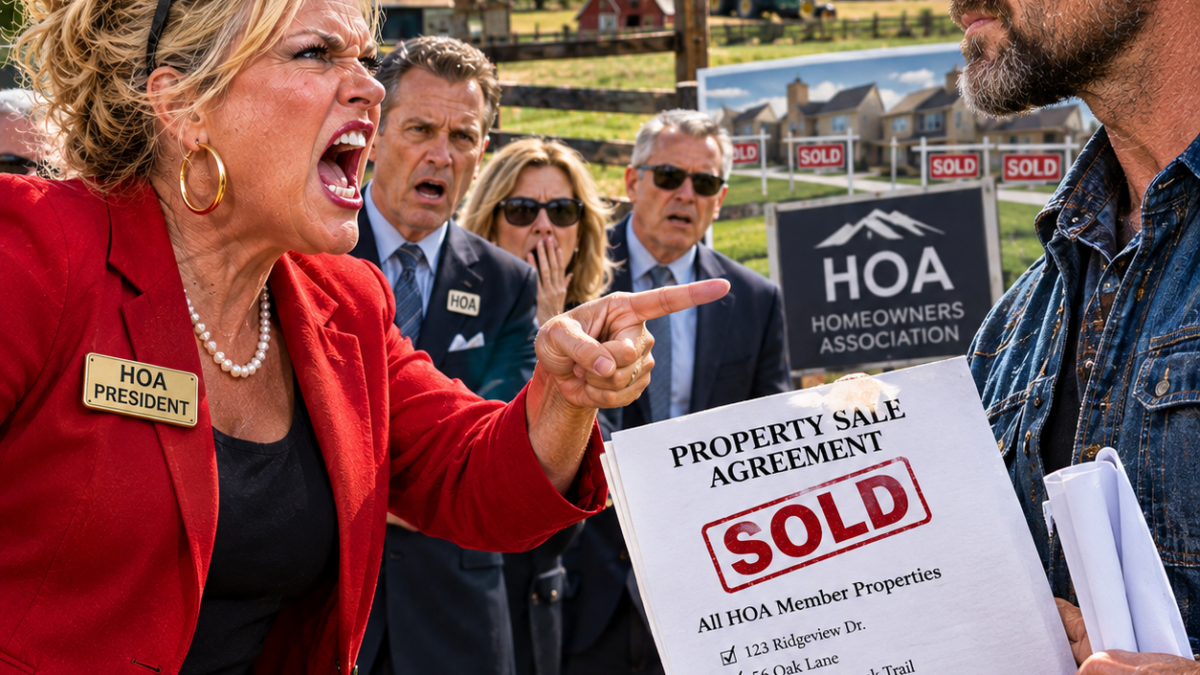
PART 2
I didn’t call Rebecca.
That surprised my daughter.
Her name is Emily.
She had inherited her mother’s inability to tolerate foolishness quietly and my unfortunate habit of reading footnotes for entertainment.
She called that evening.
“You’re not going to confront them?”
“No.”
“Dad.”
“I’m reading.”
“You always say that right before somebody gets a very expensive letter.”
“Not this time.”
“What are you finding?”
“Enough to know I don’t understand it yet.”
There was a pause.
Then her voice softened.
“You okay?”
That question was harder.
“I’m fine.”
“That means no.”
“I’m working.”
“Same thing you did when Mom got sick.”
I stared across the kitchen.
Her chair was still there.
I had never moved it.
“I’ll call you tomorrow.”
“Dad.”
“I promise.”
After we hung up, I spread the papers across the kitchen table.
My grandfather’s handwriting appeared in the margins of one old survey.
Fence moved after flood, 1968.
North spring shared with Miller parcel.
Little pieces of family history recorded because people thought boundaries mattered.
They did.
Willow Creek’s HOA had existed for less than five years.
The alleged boundary adjustment supposedly swallowing my ranch had been recorded only months earlier.
No hearing notice.
No owner consent.
No annexation agreement.
No legitimate document I could find explaining how three thousand acres of working agricultural property had suddenly become subject to a suburban HOA.
There was only repetition.
Every new filing referenced another new filing.
A loop.
Document A claimed authority because of Document B.
Document B pointed to Document C.
Document C referred back to A.
It looked impressive until you followed the chain to its beginning.
Then there was nothing.
The next HOA meeting was Thursday night.
I attended.
The Willow Creek community center smelled like burnt coffee, new carpet, and expensive air freshener.
About thirty residents sat in folding chairs.
At the front, five board members sat behind a long table.
Rebecca in the center.
White blazer again.
Same smile.
I waited through landscaping.
Pool hours.
Garbage collection.
A complaint involving a boat parked six inches too far forward.
Then public comment.
I stood.
Rebecca’s smile disappeared by maybe ten percent.
“Mr. Mercer.”
“Ms. Dalton.”
“You’re not a Willow Creek homeowner.”
“Exactly.”
A few people laughed.
Rebecca didn’t.
I walked toward the front carrying one folder.
“I have one question.”
“You’ve received the association’s documentation.”
“I have.”
“Then I’m not sure—”
“Show me the survey.”
Silence.
I placed my deed on the table.
“Show me the recorded survey establishing that my ranch was lawfully annexed into Willow Creek.”
Rebecca looked toward the HOA attorney.
Young guy.
Expensive haircut.
He opened his binder.
Rebecca said:
“The boundary adjustment is a matter of public record.”
“Good.”
I smiled.
“Show me.”
The room changed.
Not dramatically.
A few residents looked at each other.
One board member stared down at his papers.
Rebecca shuffled documents.
“The county has it.”
“I came from the county.”
Her hands stopped.
“It may not yet be reflected in every public-facing system.”
“It’s supposedly old enough to support forty thousand dollars in assessments.”
The attorney spoke.
“Mr. Mercer, this isn’t the appropriate venue for a legal dispute.”
“It became a legal dispute when your client filed assessments against my ranch.”
Rebecca leaned forward.
“Your agricultural operation imposes costs on this community.”
“That’s not my question.”
“Your livestock damage roads.”
“County roads.”
“Drainage from your land affects Willow Creek.”
“Then pursue a legitimate drainage claim.”
“You’re being deliberately adversarial.”
“No.”
I tapped the deed.
“I’m being precise.”
Then, again:
“Show me the survey.”
Nobody did.
That was the first crack.
I could see it in the other board members.
One looked toward Rebecca.
Another whispered to the attorney.
I packed my documents.
“Thank you.”
Rebecca called after me.
“This matter isn’t over.”
I looked back.
“I know.”
Two days later, I received a letter from a downtown law firm.
Heavy paper.
Fancy logo.
Legal threats always look better on expensive paper.
The letter claimed my cattle were crossing into HOA common areas.
It demanded immediate containment.
It threatened fines per animal, per day.
I walked the eastern fence line that afternoon.
Every post solid.
Every wire intact.
No gaps.
No cattle tracks beyond the boundary.
I photographed everything.
At 4:30 the next morning, I woke to cattle bawling.
Anyone who has worked cattle knows the sound.
There’s normal noise.
Then there’s the sound that gets you out of bed before your brain catches up.
I pulled on boots.
Grabbed a flashlight.
Drove east.
Three sections of fence had been cut.
Not broken.
Cut.
Clean.
Bolt cutters.
My cattle had wandered straight onto Willow Creek grass.
Almost too perfectly.
By sunrise, the sheriff’s department was there.
So was a local television crew.
And Rebecca Dalton.
She stood near one of the decorative stone entrances giving an interview.
I could hear pieces while I reset fence posts.
“Public safety…”
“…children…”
“…repeated warnings…”
“…reckless ranching practices…”
The reporter looked toward me.
“Mr. Mercer, would you like to respond?”
“No.”
“HOA officials say your livestock entered residential areas.”
“I’m fixing a deliberately cut fence.”
“Are you accusing somebody?”
“I’m describing what I found.”
“Do you know who cut it?”
“Not yet.”
Rebecca stood thirty yards away.
Watching.
I didn’t give her the argument she wanted.
I fixed fence.
Real labor has a way of making staged outrage look cheap.
That afternoon, I installed trail cameras.
Seven of them.
Eastern fence.
Service road.
Cattle gate.
Two hidden in trees facing access points.
I also added motion lights near the main barn.
Then I waited.
The truth arrived faster than expected.
Not through a camera.
Through a teenager.
He appeared at my house around nine the next night.
Skinny kid.
Maybe seventeen.
Hoodie.
Hands shaking.
“Mr. Mercer?”
“Yeah.”
“I need to tell you something.”
I opened the screen door but didn’t invite him inside.
“What?”
He stared at his shoes.
“I helped cut the fence.”
My stomach went cold.
I didn’t raise my voice.
“Why?”
“My aunt told me it was community cleanup.”
“Your aunt?”
He swallowed.
“Rebecca.”
There it was.
“How exactly does cutting cattle fence qualify as cleanup?”
“She said the fence was illegal and had to be removed.”
“Then why at four in the morning?”
He looked close to tears.
“I didn’t know.”
“You knew enough to come here.”
He nodded.
“Who was with you?”
He hesitated.
“Two maintenance guys.”
“Names.”
He gave them.
One I recognized from Willow Creek.
One I didn’t.
“Did anyone tell you cattle could get out?”
“They said they’d already been moved.”
I stared at him.
“My cattle were ten feet from that fence.”
“I’m sorry.”
“Sorry doesn’t put wire back up.”
“I know.”
“Does your father know?”
His face went pale.
“No.”
“He will.”
“Please.”
“No.”
He looked up.
“You going to call police?”
“Maybe.”
His breathing sped up.
“Mr. Mercer—”
“First, you’re going home.”
He looked confused.
“Then you’re telling your father exactly what you told me.”
His eyes widened.
“I can’t.”
“You can.”
“My aunt—”
“Your aunt sent a minor onto private agricultural property in darkness to cut a livestock fence.”
Silence.
“She doesn’t get to control the next part.”
The next evening, the kid’s father stood on my porch holding his hat.
His name was Mark Dalton.
Rebecca’s brother.
He looked sick.
“I’m sorry.”
I nodded.
“He told me everything.”
“Good.”
“I’ll pay for the damage.”
“This isn’t about fence wire.”
“I know.”
“Do you?”
Mark looked toward the eastern pasture.
“He shouldn’t have done it.”
“No.”
“My sister told him it was legal.”
“That’s worse.”
He closed his eyes.
“I know.”
“Mark, this isn’t about cattle.”
He looked at me.
“It’s about the land.”
His expression changed.
Just slightly.
Enough.
“You know something.”
“No.”
“You reacted before I finished.”
He shook his head.
“I don’t know anything.”
“That’s not the same sentence.”
Mark looked toward his truck.
Then back at me.
“Just be careful.”
“Of Rebecca?”
“Of everybody.”
Then he left.
Three days later, Willow Creek recorded a lien against my ranch.
Forty-seven thousand dollars.
Emergency assessment plus fines.
It was legally ridiculous.
It was also dangerous.
Those two facts can exist together.
People assume bad claims cannot hurt them because bad claims are wrong.
That is not how systems work.
A bad document filed in the right place at the right time can become a very real problem before anyone decides whether it should have existed.
Then came foreclosure notice.
Expedited.
Thirty days.
I read it twice.
Then once more.
The procedural language was just clean enough to frighten me.
They were moving fast.
Too fast.
That meant one of two things.
Either Rebecca was reckless beyond imagination.
Or she knew exactly what she was doing.
I sat on the porch that evening while a storm moved over the foothills.
Lightning far west.
Wind lifting dust from the road.
My wife used to love storms.
She would sit beside me with a blanket around her shoulders and pretend she wasn’t cold.
For a second, I could almost hear her.
Do something.
Not angrily.
Just practically.
That was how she handled most problems.
I went back inside.
Opened my old legal research account.
Called two former colleagues.
Ordered county records.
Requested every foreclosure Willow Creek had ever initiated.
Every lien.
Every boundary filing.
Every deed transfer involving HOA actions.
For the next week, I barely slept.
My dining room turned into a law office again.
Red pens.
Sticky notes.
Parcel maps.
Corporate registrations.
Tax records.
I remembered who I had been before grief reduced my world to cattle and coffee.
I had been very good at this.
The auction went forward on Wednesday morning.
People later asked why I didn’t stop it.
Because I wanted the record.
Because the process itself was evidence.
Because whoever stood on the other side of the transaction mattered.
There were two bidders.
The ranch sold for an amount that made me feel physically ill.
Three thousand acres.
Family land.
Water.
Barns.
Grazing rights.
History.
Gone in minutes.
A man held a plastic gavel.
Nobody looked at me.
Rebecca stood near the back.
Not smiling openly.
She didn’t need to.
One bidder won.
A company called:
**WC Development Coordination Partners LLC.**
I wrote it down.
At the county clerk’s office, I pulled the deed.
Then the corporate registration.
The company was owned by another LLC.
That one by another.
Then a family trust.
Corporate structures are like Russian nesting dolls designed by accountants.
Most people stop after two layers.
I didn’t.
Eventually, the chain reached a trust whose beneficiary records connected directly to Rebecca Dalton and her husband.
I sat at the clerk’s research terminal and stared at the screen.
There it was.
She had not merely enforced an HOA lien.
She had engineered a process that transferred my ranch into an entity tied to herself.
I felt something in me go very still.
Then I kept digging.
The ranch wasn’t the first.
There were older foreclosure files.
Smaller acreages.
Vacant land.
A retired couple’s parcel.
A widow’s irrigation lot.
An old feed-store property.
Different shell companies.
Same addresses.
Same registered agents.
Same attorney network.
Same development partners.
Same pattern.
Lien.
Accelerated enforcement.
Cheap acquisition.
Transfer.
Development.
I stayed until the clerk told me the office was closing.
Then I went home.
Made coffee.
Kept reading until sunrise.
By then, I wasn’t trying to recover only my ranch.
I was looking at what appeared to be a system.
And if the records meant what I thought they meant, Willow Creek Estates wasn’t simply an overreaching HOA.
It was a machine that had been used to move property.
The next morning, I called Emily.
“I need you.”
She didn’t ask whether I was okay.
She heard my voice.
“What did you find?”
“Bring your laptop.”
“Dad.”
“And call Michael Trent.”
My old law partner.
“You haven’t spoken to Michael in years.”
“He’ll answer.”
“Why?”
“Because he hates fraudulent liens almost as much as he hates golf.”
She paused.
“How bad?”
“Bad.”
Emily arrived that afternoon.
Michael the next morning.
He was seventy-two, overweight, sarcastic, and still capable of reading a fraudulent filing faster than most young attorneys could read a menu.
He walked into my kitchen.
Looked at the stacks.
“Retirement looks terrible on you.”
“Good to see you too.”
He hugged me.
Harder than expected.
Then looked toward my wife’s empty chair.
His expression softened.
“I’m sorry I didn’t come sooner.”
“Sit down, Michael.”
He nodded.
Work was easier.
By the end of the week, my kitchen had become a war room.
Emily traced financial relationships.
Michael reconstructed foreclosure timelines.
A retired investigator named Luis Ortega reviewed the shell companies.
I focused on the land documents.
Then I found the survey.
The document Rebecca had refused to produce at the HOA meeting.
The supposed boundary survey placing my ranch within Willow Creek authority.
At first glance, professional.
Stamped.
Signed.
Recorded.
The surveyor’s name was Thomas Bell.
I knew Tom.
Worked with him decades earlier.
Good surveyor.
Annoyingly precise.
He once made me refile a legal description because one bearing was off by less than a degree.
I stared at the signature.
Then at the date.
Something was wrong.
I searched his obituary.
Thomas Bell had been dead for two years when he supposedly signed Willow Creek’s boundary survey.
Emily stood behind me.
“Dad?”
I pointed.
She read.
Then stopped breathing for a second.
“They forged a dead surveyor’s signature?”
“Yes.”
Michael looked over.
“Are you sure?”
“I attended his funeral.”
Nobody spoke.
Luis finally said:
“That’s not HOA nonsense anymore.”
“No.”
“What is it?”
I looked at the forged document.
“Evidence.”
The next week changed everything.
We stopped responding directly to Willow Creek.
Every communication went through counsel.
Michael began preparing complaints.
Emily cross-referenced vendor payments, tax filings, and property transfers.
Luis located former residents willing to speak.
One was an elderly man named Frank Jensen.
His five-acre parcel had been foreclosed three years earlier after disputed drainage assessments.
He had assumed he lost because he couldn’t afford a lawyer.
When we showed him the shell-company chain connected to his buyer, he sat in silence for almost a minute.
“I thought I was stupid.”
“No,” Emily said.
“I signed things.”
“Because they told you the process was lawful.”
His eyes filled.
“My wife died before we could move back.”
That sentence hit me.
Different story.
Same grief.
He touched the copy of the deed.
“Can anything be done?”
Michael answered carefully.
“We’re looking.”
Frank nodded.
“Don’t promise.”
“We won’t.”
That became our rule.
No promises.
Evidence first.
Then another former owner.
Then another.
Stories differed.
Pattern remained.
Pressure.
Fines.
Liens.
Confusing notices.
Cheap transfers.
Development entities.
People too old, too poor, too exhausted, or too frightened to fight.
Silence was their business model.
Meanwhile, Rebecca escalated.
Health department complaints.
Animal-control complaints.
Environmental complaints.
A complaint claiming my equipment leaked hazardous fluids.
Anonymous allegations that I was operating an illegal slaughter facility.
Then a contractor lien appeared against ranch equipment for work nobody had performed.
Michael held it up.
“They’re panicking.”
Emily said:
“They’re stupid.”
“Those aren’t mutually exclusive.”
Then came a complaint to the state bar alleging I was practicing law without authorization.
I laughed harder than I had in months.
Emily stared at me.
“What’s funny?”
“I kept my license active.”
She smiled.
“Oh.”
Michael grinned.
“This one’s going on the wall.”
But harassment has a purpose.
Exhaustion.
It makes every day about them.
Every call requires a response.
Every complaint costs hours.
Every false document forces you to prove reality again.
At three in the morning one night, I found myself sitting at the kitchen table staring at another stack.
My wife’s chair across from me.
I suddenly felt ancient.
Not legally.
Physically.
“What am I doing?” I whispered.
No answer.
Then I remembered something she told me during chemotherapy.
I had been complaining about an opposing attorney who buried us in pointless discovery requests.
She listened.
Then said:
“He’s not trying to win the argument. He’s trying to make you too tired to keep having it.”
I had laughed then.
Now I understood how deeply true it was.
Rebecca didn’t need me to believe she owned the ranch.
She needed me too exhausted to prove she didn’t.
That thought gave me energy.
Not anger.
Clarity.
The ranch itself had been purchased through foreclosure.
Directly undoing the transfer would take time.
Maybe years.
But the source story we had uncovered gave us another possible strategy.
My grandfather’s land had long qualified as agricultural acreage.
Much of the surrounding territory did too before Willow Creek arrived.
Michael discovered a rarely used agricultural preservation mechanism in state law that had been discussed for that corridor years earlier but never completed.
I read the provisions.
Then read them again.
The mechanism was not magic.
It required hearings.
County approval.
Land qualification.
Conservation purpose.
Public process.
Proper valuations.
And layers of scrutiny.
Everything Rebecca hated.
But if established lawfully, it could dramatically change what happened next to land in the affected district.
The irony was almost too clean.
Willow Creek had used fraudulent boundaries to pretend my agricultural ranch belonged inside its suburban jurisdiction.
We were going to ask the county to recognize what the region had actually been all along.
Agricultural land.
Michael looked at me.
“You understand where this could go.”
“Yes.”
“Some homeowners could get crushed.”
“I know.”
“People who had nothing to do with Rebecca.”
“I know.”
Emily watched me.
“Dad.”
I rubbed my face.
I hated that part.
The source of Rebecca’s power was not only her board.
It was a development built on layers of manipulated property transactions.
If the preservation process moved forward, portions of that development could be affected.
Homes.
Families.
People who had bought in good faith.
Revenge feels clean when you imagine it.
Reality puts children in the houses.
That mattered.
“We do this by the book,” I said.
Michael nodded.
“No games.”
“No fabricated valuation.”
“Obviously.”
“No unnecessary taking.”
Emily added:
“And we protect innocent owners wherever possible.”
“Yes.”
That was the difference between us and Rebecca.
At least, it had to be.
Otherwise all I would prove was that I had learned to use a bigger weapon.
While Willow Creek continued sending threats, our filings moved quietly.
Not secretly.
Proper notices were served.
Hearings scheduled.
Agricultural qualifications documented.
Water use.
Historic grazing.
Soil classifications.
Existing ranch operations.
The process was boring.
Excruciatingly boring.
Which meant it was real.
Rebecca apparently ignored the first notice.
She probably assumed it was another nuisance filing.
By the second, her attorney understood.
By the third, she called me.
I let voicemail take it.
Her message:
“Mr. Mercer, whatever you think you’re doing, you need to understand you are interfering with hundreds of families.”
I replayed that sentence.
Then looked at the foreclosure deed transferring three thousand acres of my family’s ranch to her shell company.
Hundreds of families.
Now she remembered innocent people.
Emily listened.
“She’s scared.”
“She should be.”
“That doesn’t mean the residents deserve this.”
“I know.”
“Do you?”
I looked at my daughter.
She had her mother’s eyes.
That was unfair sometimes.
“Yes.”
“Then don’t become her.”
I didn’t answer immediately.
Finally:
“That’s why you’re here.”
She nodded.
“Good.”
Our strategy changed slightly.
We separated residents from board leadership.
Homeowners who had purchased property normally would be notified, heard, and offered representation.
The focus of our fraud claims remained Rebecca, the board members who participated, related development companies, attorneys, contractors, and the shell entities tied to prior acquisitions.
The preservation proceeding was broader, but we pushed for structures that prioritized conservation while minimizing unnecessary personal devastation.
Still, there was no painless version.
Some properties were built where records suggested development rights had been acquired through fraudulent transfers.
Some infrastructure sat on land implicated in the scheme.
Nothing about that was going to end neatly.
Then Luis brought us audio.
A former Willow Creek maintenance supervisor had agreed to speak.
On recording, he described Rebecca ordering fence cuts.
Not directly.
She was smarter than that.
But close enough.
“She said Mr. Mercer’s livestock needed to demonstrate the safety risk.”
Michael paused the audio.
Emily looked at me.
I felt cold.
Luis continued.
There were discussions of creating violations.
Using cattle escapes.
Pressuring county officials.
A county employee had allegedly been offered consulting work after approving certain filings.
Now we had potential bribery issues.
Tax irregularities.
Fraud.
Conspiracy.
Forgery.
The case stopped being a civil property dispute.
Michael contacted federal counsel he trusted.
Luis spoke with state investigators.
Emily prepared document sets.
I went back to the ranch.
For one day, I did nothing legal.
I fixed irrigation.
Moved cattle.
Repaired the same eastern fence they had cut months earlier.
At sunset, I sat beside the pasture.
My wife used to say I only understood life after I had reduced it to property law.
She was probably right.
But the land was teaching me something law couldn’t.
Ownership isn’t just possession.
It is stewardship.
My grandfather had held that ranch for my father.
My father for me.
I had thought I was fighting because Rebecca stole something that belonged to me.
Sitting there, I realized that wasn’t quite right.
I was fighting because I had been trusted with something older than my grief.
That made the next part easier.
The county commission hearing took place on a Thursday.
By then, reporters knew enough to attend.
News cameras filled the rear of the chamber.
Willow Creek board members arrived together.
Rebecca wore a dark blue suit.
Not white.
Maybe somebody advised her not to look theatrical.
She still looked confident.
Her attorney spoke with reporters outside.
“This is a disgruntled former landowner abusing procedural mechanisms to retaliate against a thriving community.”
Former landowner.
I heard that phrase from across the hall.
Michael leaned toward me.
“Don’t.”
“I didn’t say anything.”
“You thought loudly.”
Emily smiled.
Inside, Rebecca spoke first.
Property values.
Public safety.
Children.
Community stability.
Agricultural nuisance.
Potential contamination.
She asked the commission to restrict my ranching operations while the land dispute remained pending.
She spoke beautifully.
I understood why people believed her.
Control often sounds like competence from a podium.
When she finished, there was polite applause from some Willow Creek residents.
Then my name was called.
I walked forward with one folder.
No boxes.
No dramatic slideshow.
Just paper.
I gave my name.
Explained my legal background.
Explained my family’s ranch.
Then:
“I am not here today primarily to dispute an HOA fine.”
Rebecca shifted.
“I am here to submit evidence indicating an organized pattern of fraudulent liens, forged land records, related-party property transfers, tax irregularities, and potentially corrupt transactions connected to multiple foreclosures in this county.”
The room changed.
Cameras moved.
Rebecca’s attorney stood.
“Commissioner, this is inappropriate—”
The chair held up one hand.
“Sit.”
I opened the folder.
“Exhibit one.”
The forged survey.
“Purportedly signed by licensed surveyor Thomas Bell.”
I paused.
“Mr. Bell died two years before the signature date.”
Noise moved through the room.
Rebecca’s face changed.
Not panic yet.
Confusion.
Maybe she hadn’t expected me to find that particular piece.
“Exhibit two.”
Corporate chain.
WC Development Coordination Partners.
Related entities.
Trust.
Rebecca’s connection.
“Exhibit three.”
Previous foreclosure transfers.
Same pattern.
“Exhibit four.”
Maintenance testimony and recorded statement relating to intentional fence cutting designed to create a livestock violation.”
Now panic.
Rebecca whispered rapidly to her attorney.
I continued.
Vendor payments.
Related parties.
Inspection fees.
Questionable contractor liens.
Then I played a short excerpt from the audio.
Not enough to sensationalize.
Enough.
Rebecca stood.
“This is outrageous!”
The commissioner said:
“Sit down.”
“He is retaliating because he lost his property through lawful foreclosure.”
I looked at her.
For months, I had imagined that moment.
Imagined fury.
A speech.
Some perfect line.
Instead, I felt calm.
“Ms. Dalton.”
She stared.
“You didn’t beat me.”
Her mouth opened.
“You forged a boundary.”
I held up the survey.
“You manufactured violations.”
Another page.
“You used a lien built on authority your association never lawfully possessed.”
The foreclosure record.
“Then a company connected to you bought three thousand acres for a fraction of their value.”
Silence.
“That isn’t enforcement.”
I looked at the commission.
“It is acquisition.”
Then Michael stood.
He submitted copies of complaints already delivered to appropriate state and federal authorities.
Emily submitted the financial tracing.
Luis sat behind us.
Rebecca began yelling.
“This is harassment!”
The county attorney rose.
“Ms. Dalton, stop speaking.”
She didn’t.
“He is trying to steal our homes!”
That sentence struck the room.
Residents looked afraid.
Some looked at me.
Not Rebecca.
Me.
And I understood what Emily had been warning about.
I could become the villain in their story very easily.
So I turned toward the residents.
“I don’t blame you for buying your homes.”
Rebecca stopped.
The room quieted.
“I don’t blame families who were shown clean title documents.”
A woman in the second row started crying.
“I blame the people who created those documents.”
I looked at Rebecca.
“The people who transferred land they did not own.”
Then back to the commission.
“I want my ranch returned.”
No hesitation.
“And I want every fraudulent acquisition investigated.”
I paused.
“But I am not asking this county to punish innocent homeowners simply because Rebecca Dalton used them as cover.”
Emily exhaled.
I heard it behind me.
That distinction became crucial.
The agricultural preservation district had moved far enough through lawful process that the commission could consider it.
Rebecca had mocked it in public filings.
Now the county attorney confirmed that proceedings were legitimate and would continue independently of the fraud investigation.
Some development land was potentially subject to acquisition or conservation restrictions under those proceedings.
Rebecca laughed once.
“You can’t do this.”
I looked at her.
“Not the way you did.”
She stopped.
“I’m doing it with hearings.”
Silence.
“Recorded notice.”
I held up another document.
“Verified signatures.”
Another.
“Independent valuation.”
Another.
“Public review.”
Then:
“Everything you avoided.”
Deputies entered the chamber during a recess.
Not dramatically.
Nobody burst through doors.
They spoke to the county attorney.
Then to Rebecca’s lawyer.
Then to Rebecca.
Her face drained.
She stood.
For a second, our eyes met.
I expected satisfaction.
Instead, I thought about my wife.
She would have hated this room.
Too many cameras.
Too much noise.
Rebecca was escorted out.
Several other individuals were questioned.
Accounts were frozen later.
Development entities faced investigation.
Licenses were reviewed.
The story went public.
Very public.
And public stories become simple.
**RETIRED LAWYER TAKES DOWN CORRUPT HOA.**
**HOA STEALS RANCH—RANCHER FIGHTS BACK.**
**MASSIVE LAND FRAUD PROBE ROCKS LUXURY DEVELOPMENT.**
Simple headlines.
Complicated lives.
The ranch foreclosure was challenged.
With the forged survey and authority problems exposed, the chain collapsed quickly compared with what I had feared.
My ranch came back.
Three thousand acres.
Every acre.
The first morning after the transfer was formally reversed, I drove to the eastern boundary.
Stopped.
Got out.
Touched the fence.
I expected something.
Triumph.
Maybe tears.
Nothing.
Then I saw my grandfather’s old corner post.
Weathered cedar.
Still standing.
I put one hand on it.
That did it.
I cried.
Not dramatically.
Quietly.
For my grandfather.
My father.
My wife.
For myself.
For how close I had come to letting exhaustion decide the ending.
Emily found me there later.
She didn’t say anything.
Just stood beside me.
Eventually:
“Mom would be unbearable right now.”
I laughed through the tears.
“She’d say she told me so.”
“She would absolutely say that.”
“About what?”
“That you should never retire.”
I laughed harder.
Then we both cried.
The preservation process continued.
This is where the story became difficult.
Some Willow Creek properties were built on land tied directly to questionable acquisitions.
Others were clean.
Some infrastructure crossed parcels affected by the preservation district.
Legally, certain homes and development interests faced acquisition or loss of development rights.
That was where the dramatic version of the story says:
**So I sold every HOA member’s house.**
Reality was messier.
Some residents fought.
Some settled.
Some were compensated under the lawful process.
Some homes were eventually removed from development plans.
Some parcels returned to agricultural use.
And yes, several people who had paid enormous suburban prices were confronted with valuations tied to agricultural use because of the preservation framework affecting the underlying land.
It was brutal.
I didn’t enjoy it.
That surprised people.
One Willow Creek homeowner named Sarah Bennett came to my ranch office.
She was maybe thirty-five.
Two children in the truck.
She held paperwork in one shaking hand.
“My house is on the acquisition list.”
I nodded.
“I know.”
“We paid six hundred thousand dollars.”
“I know.”
“The valuation is nowhere near that.”
“I know.”
Her eyes filled.
“Do you think this is fair?”
There it was.
The question everyone wanted answered.
Was this revenge?
Was I doing to them what Rebecca had done to me?
I stood.
“Come inside.”
She didn’t.
“Answer me.”
“No.”
She stared.
“No, I don’t think it’s fair.”
That seemed to make her angrier.
“Then stop it.”
“I can’t simply stop every legal proceeding.”
“You started this.”
“No.”
“You created the district.”
“I helped establish it.”
“Same thing.”
“Sarah, Rebecca’s companies were acquiring rural land through fraudulent processes before I ever filed anything.”
“I didn’t know her.”
“I know.”
“I didn’t vote for her.”
“I know.”
“I bought a house.”
“I know.”
She started crying.
Her children watched from the truck.
I hated everything about that moment.
“You want revenge,” she said.
“No.”
“Then prove it.”
That night, I called Emily.
“We need a homeowner fund.”
“For what?”
“Legal representation.”
“For Willow Creek?”
“Yes.”
“Dad.”
“They need independent counsel.”
“Some are fighting our preservation proceeding.”
“They still deserve lawyers.”
Silence.
Then Emily said:
“Mom would approve.”
That was enough.
We established a temporary legal assistance fund for innocent purchasers caught in the fraud.
Michael objected at first.
“You understand some of these lawyers will be arguing against us.”
“Yes.”
“You’re paying opposing counsel.”
“Indirectly.”
“This is insane.”
“Probably.”
He rubbed his face.
“Fine.”
Sarah became one of the first homeowners represented.
Her case was complicated.
Ultimately, her family relocated under a negotiated agreement better than the initial valuation she feared.
Not perfect.
Not painless.
But fairer.
She came back once before moving.
“I still hate what happened.”
“So do I.”
“I hated you for a while.”
“I know.”
“You knew?”
“You weren’t subtle.”
She almost smiled.
Then:
“Thank you for helping.”
“You didn’t create the fraud.”
“No.”
She looked toward the ranch.
“Neither did you.”
That mattered.
The investigations expanded.
Rebecca’s personal version of the story collapsed under records.
The shell companies.
Forged survey.
Foreclosure patterns.
Financial transfers.
Her cousin’s involvement.
Contractors.
Former board members began cooperating.
One board member claimed he never understood what Rebecca was doing.
Maybe true.
Maybe convenient.
Another admitted he suspected problems but enjoyed the development profits too much to ask questions.
That honesty was uglier.
The HOA eventually dissolved under the weight of litigation, investigations, and invalid governance issues.
A trustee handled remaining community functions during transition.
The big Willow Creek sign came down.
I watched from the ranch road.
No cheering.
No crowd.
A work crew unbolted it.
Loaded it onto a flatbed.
Drove away.
The entrance looked strange without it.
Then normal.
The old sales office closed.
Later, it became a classroom.
That wasn’t planned at first.
It came from Emily.
“What happens to all this when the cases end?”
I looked at the development map.
“Pasture.”
“All of it?”
“Maybe.”
“Dad.”
“What?”
“You’re thinking like Grandpa.”
“He was usually right.”
“He also thought indoor plumbing was suspicious until 1962.”
Fair.
Emily wanted education.
Agricultural conservation.
Property-rights legal clinics.
Programs for rural owners.
My wife had been a teacher before we married.
Suddenly, the idea felt obvious.
We created the Margaret Mercer Land & Property Foundation.
Named after my wife.
The first time I saw her name on the paperwork, I had to leave the room.
Emily found me outside.
“Too much?”
“No.”
“Then why are you crying?”
“Because your mother is going to kill us for naming something after her.”
Emily laughed.
“She would.”
The foundation did three things.
Preserved working agricultural land.
Offered low-cost legal help to property owners dealing with predatory liens, fraudulent association claims, or confusing land records.
And taught people how to read the documents controlling their own property.
That last one became my obsession.
We held workshops.
I would stand in front of forty farmers and homeowners holding a deed.
“This is boring.”
They laughed.
“No, seriously.”
I held it higher.
“This may be the most boring document you own.”
Then:
“Read it anyway.”
We taught:
Recorded boundaries.
Easements.
Liens.
HOA declarations.
Assessment authority.
Notice requirements.
How to request public records.
When to stop arguing with a board and call a lawyer.
People came from other counties.
Then other states.
Emily opened her own property-rights practice nearby.
She was better than me.
I told everyone that.
She hated it.
“Stop saying that.”
“Why?”
“Clients now expect miracles.”
“Perform.”
“Dad.”
She had her mother’s compassion.
That made her dangerous in a different way.
I had spent my career loving documents.
Emily loved the people trapped underneath them.
A better lawyer.
The old Willow Creek land changed.
Some sections became pasture.
Some remained residential under restructured arrangements.
Some houses were acquired and eventually removed.
Some became staff housing or educational facilities.
Several former residents stayed in the region.
It was never the clean sweep the viral title makes it sound like.
But the development Rebecca had treated as her private empire no longer existed in the same form.
Her power was gone.
More importantly, the mechanism she used to steal land was gone.
Years passed.
One spring morning, three school buses came up the ranch road.
Kids poured out.
City kids.
Bright sneakers.
Phones.
Zero understanding of cattle.
One boy asked whether cows slept standing up.
Another thought hay and straw were identical.
A girl touched soil with both hands like she had never seen dirt outside a flowerpot.
I stood near the old sales office.
Now the foundation education center.
Emily walked up.
“You’re smiling.”
“I smile.”
“Not often.”
“Defamation.”
She nodded toward the children.
“Mom would like this.”
I looked away.
“Yeah.”
“She’d hate the name.”
“Absolutely.”
We stood quietly.
A group of kids ran across what used to be a landscaped sales lawn.
One teacher shouted:
“Stay together!”
Nobody listened.
My wife would have understood that too.
The ranch felt different.
Not restored exactly.
You cannot restore time.
My grandfather was gone.
Dad gone.
My wife gone.
The fence line had changed.
Roads existed where grazing land used to be.
Some scars remain even after fraud is corrected.
But the land felt settled.
That was enough.
One afternoon, Mark Dalton showed up.
Rebecca’s brother.
The teenager’s father.
His son was older now.
College.
Mark stood at my gate.
Actually waited.
That small courtesy mattered.
I walked down.
“What can I do for you?”
“I wanted to say thank you.”
“For?”
“My son.”
“I almost had him charged.”
“I know.”
“He confessed.”
“I know.”
“You made him tell me.”
“Yes.”
Mark looked toward the pasture.
“He works in land surveying now.”
That surprised me.
“Really?”
“Says after all this he wanted to understand boundaries.”
I laughed.
“That’s either healthy or deeply ironic.”
“Both.”
Then Mark became serious.
“My sister ruined a lot of lives.”
I said nothing.
“I spent years asking myself whether I should’ve stopped her.”
“Could you?”
“I could’ve said more.”
“Yes.”
His honesty surprised me.
“I knew she was getting involved in land.”
“How much?”
“Not the fraud.”
“Then what?”
“I knew she wanted your ranch.”
That hurt even after all those years.
“Why?”
“The development needed expansion.”
Of course.
“Your property controlled the cleanest path toward phase three.”
There it was.
Not cattle.
Not hay.
Not smell.
Expansion.
Three thousand acres were not an inconvenience.
They were inventory.
Mark continued.
“She said you were alone.”
I looked at him.
“She said your wife had died.”
My hands went cold.
“And?”
“That you didn’t have the energy for a long legal fight.”
For several seconds, I could hear only wind.
That was the cruelest part.
Not that Rebecca targeted land.
That she had looked at grief and seen opportunity.
“She was wrong.”
“Yes.”
Mark looked at me.
“She was.”
I walked away before I said something I would regret.
That night, I went to my wife’s grave.
First time in months.
I sat in the grass.
No dramatic conversation with the dead.
I never got good at that.
Finally:
“They thought losing you made me weak.”
Wind moved through the trees.
“I almost believed it too.”
Nothing answered.
Then:
“But I’m still here.”
That was enough.
Rebecca’s ultimate legal consequences were complicated and long.
Fraud cases are.
There were pleas.
Trials.
Asset recovery.
Financial penalties.
Other defendants.
I attended only what I needed to.
At one hearing, Rebecca looked directly at me across the courtroom.
Older.
No white blazer.
No clipboard.
Just a woman whose certainty had finally run out.
During a recess, she passed near me.
Deputy nearby.
She stopped.
“You destroyed everything.”
I almost laughed.
Not because it was funny.
Because even then she couldn’t see it.
“No.”
“You took people’s homes.”
“I helped expose fraudulent land transfers.”
“You created that preservation district to punish us.”
“I used a lawful public process.”
“For revenge.”
“Maybe revenge was part of what I felt.”
That surprised her.
I continued.
“I’m not going to pretend I was pure.”
Her eyes narrowed.
“When I found out you bought my ranch through a company connected to you, I wanted you to lose everything.”
Silence.
“But feelings aren’t filings.”
She stared.
“We followed procedures.”
“That’s the difference.”
“You hurt innocent people.”
“Yes.”
Her face changed.
She hadn’t expected agreement.
“And I’ll carry that.”
I stepped closer.
“But you put them in the path.”
Her mouth tightened.
“You built homes on land acquired through fraud.”
“You sold those homes to families.”
“You used them as insulation.”
I looked directly at her.
“So if one day somebody challenged you, you could point at the children and say, ‘Look who you’re hurting.’”
She said nothing.
“That was your final shield.”
A deputy told us to move.
Rebecca walked away.
That was the last conversation we ever had.
For a long time, I wondered whether I had gone too far.
That isn’t a question revenge stories usually allow.
They want certainty.
Villain wrong.
Hero right.
Punishment satisfying.
Life doesn’t work that way.
Was Rebecca wrong?
Absolutely.
Did the people participating knowingly deserve consequences?
Yes.
Did every Willow Creek homeowner deserve what happened to them?
No.
Some suffered because they bought property inside a corrupt system they didn’t understand.
That bothered me.
Still does.
But pretending the fraud didn’t exist would not have protected them forever.
It would only have delayed the collapse.
The best we could do was make the correction less cruel than the theft.
That became the foundation’s guiding principle.
Justice without unnecessary destruction.
Emily put the phrase on a wall.
I told her it sounded like a law-school brochure.
She ignored me.
Years later, Sarah Bennett—the homeowner who had confronted me about her house—joined the foundation advisory board.
That shocked both of us.
At her first meeting, she said:
“I’m here because I hated him.”
She pointed at me.
Everyone laughed.
“I genuinely did.”
“Thank you, Sarah.”
“You’re welcome.”
She continued.
“But when my family needed independent representation, his foundation paid for it.”
She looked around the room.
“That’s the difference between accountability and revenge.”
I didn’t say anything.
She had summarized it better than I ever could.
The ranch continued.
Calving season.
Dry summers.
Fence repair.
Water disputes.
Snow.
Nothing stopped because I won a court case.
That was comforting.
One morning, one of the foundation interns found me repairing a gate.
“You do this yourself?”
“Sometimes.”
“I thought you were a lawyer.”
“Retired.”
“Aren’t you rich now?”
I stared at him.
“Go carry that post.”
He learned quickly.
The viral version of my story grew stranger over time.
According to the internet, I legally auctioned every house in Willow Creek and bought them all for $100 each.
False.
Another version said I discovered I secretly owned the mineral rights under the subdivision and evicted everyone overnight.
Also false.
One claimed I had been a Supreme Court attorney.
Definitely false.
The truth was both more boring and more frightening.
An HOA had used manipulated paperwork and corrupt relationships to create authority.
It worked because most people trusted the paper.
Then one person who knew how paper worked started reading.
That was it.
The lesson was not:
Find a clever loophole and destroy everyone.
The lesson was:
Verify.
Who recorded the lien?
What document created authority?
Where is the survey?
Who signed it?
When?
Who owns the company buying the property?
Who profits?
If Rebecca had answered my first question honestly, the entire scheme would have collapsed months earlier.
**Show me the survey.**
Four words.
That was the beginning of the end.
She couldn’t show it because the real survey didn’t exist.
Only a forgery.
Once people lie about something fundamental, every later document becomes fragile.
It doesn’t matter how official the envelope looks.
A structure built on a false foundation is still false.
That became what I taught in workshops.
One farmer asked me:
“What if I can’t afford a lawyer?”
“Start with records.”
“What if I don’t understand them?”
“Ask.”
“Who?”
“County clerk. Legal aid. Land office. Somebody.”
I pointed toward the room.
“But don’t throw the envelope away because it scares you.”
That’s what predators count on.
Fear turns documents into magic.
They aren’t magic.
They are words.
Dates.
Signatures.
Authority either exists or it doesn’t.
I spent my life learning that.
It still almost failed me when grief made me tired.
That humility never left.
My grandson eventually came to live on the ranch for a summer.
Emily’s oldest.
He was sixteen.
Too much phone.
Too much confidence.
Exactly like I probably was.
One morning I took him to the original eastern boundary.
The same area where the fence had been cut.
“See that post?”
“Yeah.”
“Your great-great-grandfather put that there.”
He looked at it.
“It’s crooked.”
“So was he.”
My grandson laughed.
Then he noticed a scar in the wood.
“What happened?”
“Long story.”
“HOA?”
Kids know everything now.
“Partly.”
“Mom told me you destroyed them.”
“Your mother exaggerates.”
“She said you say that.”
We walked.
I showed him survey markers.
Explained legal descriptions.
He looked bored.
Good.
Tradition.
Then I told him why boring things matter.
At the end, he asked:
“Would you do it again?”
That stopped me.
“What part?”
“All of it.”
I looked across the land.
“No.”
He seemed surprised.
“But you won.”
“I’d rather Rebecca had never targeted us.”
“Okay, but if she did?”
I thought.
“Yes.”
“Even knowing people would lose homes?”
“That’s the part I would work harder to prevent.”
He nodded.
“You feel guilty?”
“Sometimes.”
“Mom says you helped them.”
“Some.”
“Then why guilty?”
I smiled.
“Because decent people are supposed to notice collateral damage.”
He rolled his eyes.
“Lawyer answer.”
“Family curse.”
We continued walking.
The foundation grew.
Not huge.
I didn’t want huge.
We helped hundreds of property owners.
Sometimes the HOA was wrong.
Sometimes the homeowner was.
That surprised people.
A man once came in furious because his HOA wouldn’t let him build a commercial repair shop in his front yard.
We reviewed the covenants.
The HOA was right.
He became furious at us too.
Justice is less fun when it disagrees with you.
We told him anyway.
That was important.
If the foundation became an anti-HOA revenge machine, we would repeat the same mistake Rebecca made.
Authority must come from documents.
Not from who we liked.
My wife would have appreciated that.
She was relentlessly fair.
Annoyingly so.
One summer evening, I sat on the porch watching children from an agricultural camp chase each other near the old sales office.
The sun turned everything orange.
Emily came out carrying two glasses of iced tea.
“No coffee?”
“You’re eighty.”
“Not dead.”
“Debatable before noon.”
She handed me a glass.
We watched the kids.
After a while:
“You ever miss practicing?”
“No.”
“That fast?”
“I miss winning.”
She smiled.
“That sounds more honest.”
“I don’t miss billing.”
“Nobody does.”
She looked toward the fields.
“You know Mom would be proud.”
“I know.”
It took me years to be able to say that.
Emily leaned back.
“She wanted this.”
“The foundation?”
“Not exactly.”
“What?”
“For you not to disappear after she died.”
That hit harder than expected.
I looked away.
“She told me.”
“When?”
“Near the end.”
I stared at my daughter.
“You never told me.”
“You weren’t ready.”
“Emily.”
“She said you’d go back to the ranch and become a ghost.”
My eyes burned.
“That sounds like her.”
“She said somebody would eventually have to annoy you enough to wake you up.”
I started laughing.
Then crying.
“She would hate Rebecca.”
“Absolutely.”
We sat there until dark.
For the first time, I considered the possibility that the fight had done something for me beyond returning land.
It had forced me back into life.
Before Willow Creek, my days were cattle, fences, coffee, silence.
Safe.
Empty.
Then Rebecca came with her clipboard.
I hated her for what followed.
Still, fighting her required me to call Emily.
Michael.
Luis.
Neighbors.
Former clients.
Investigators.
I had to become connected again.
Grief had convinced me solitude was healing.
Some of it was.
Too much became disappearance.
The fight interrupted that.
That didn’t make Rebecca good.
It meant life is strange enough to use terrible things for purposes nobody intended.
Michael died several years later.
Heart attack.
At his memorial, his son handed me an envelope.
“Dad wanted you to have this.”
Inside was the original copy of the first fraud timeline he had built in my kitchen.
At the top, in his handwriting:
**THESE IDIOTS HAVE NO IDEA WHO THEY MESSED WITH.**
I laughed so loudly people turned.
Then I cried.
I framed that one.
Not the forged survey.
Not Rebecca’s mugshot.
Not the foreclosure reversal.
Michael’s note.
Because the story wasn’t ultimately about Rebecca.
It was about the people who showed up.
My daughter.
My old partner.
Luis.
Mark’s kid confessing.
Former landowners willing to reopen painful history.
Residents like Sarah who chose accountability over bitterness.
Nobody wins a fight like that alone.
The internet loves lone heroes.
Real life is teams.
The ranch looks different today.
You can still see remnants of Willow Creek.
Old roads.
Foundations.
Some homes that remained under lawful agreements.
Trees residents planted.
I never removed everything.
History happened.
Pretending otherwise would be another kind of lie.
Some sections became grazing land again.
Others conservation areas.
A small part became community gardens for remaining residents.
That suggestion came from Sarah.
I initially thought it was ridiculous.
She told me:
“You can’t keep teaching people community is voluntary while controlling every acre yourself.”
I hated when people used my own principles against me.
So we built gardens.
They’re successful.
Too successful.
People now leave zucchini on my porch.
Nobody needs that much zucchini.
The big irony?
Willow Creek became more of a community after the HOA collapsed.
People organized snow clearing voluntarily.
Shared equipment.
Built a small fire-response group with county oversight.
Asked permission before crossing land.
Held potlucks.
No clipboard empire.
No fake authority.
Just neighbors.
One afternoon, a man who had once supported Rebecca came to the foundation.
His name was Charles.
He had applauded at that county meeting when she spoke against my ranch.
I remembered.
He knew I remembered.
“My daughter is having a deed problem.”
I waited.
“You going to help?”
“That’s what we do.”
He looked surprised.
“You don’t hate me?”
“I don’t know you well enough.”
He almost smiled.
Then:
“I backed Rebecca.”
“I remember.”
“I said you were dangerous.”
“Also remember.”
“You still help?”
“Does your daughter’s deed care who you supported?”
He looked down.
“No.”
“Then sit.”
That was one of the moments I knew the foundation was doing what it should.
Law shouldn’t become revenge.
Not when practiced correctly.
Documents do not get feelings.
That’s part of their value.
The ranch deed today sits in a fireproof safe.
Original papers separately archived.
Every survey digitized.
Every boundary marker documented.
Emily jokes I became paranoid.
She’s right.
A little.
But I still leave gates open when neighbors need to move equipment.
Still let kids fish one pond.
Still lease grazing fairly.
Protection doesn’t have to become isolation.
That was another lesson.
Rebecca saw property as leverage.
I try to see it as responsibility.
Some days I succeed.
Some days I’m still an old lawyer yelling at people to close gates.
Nobody is perfect.
Years after everything, a reporter contacted me for an anniversary story.
“Do you consider what you did revenge?”
“No.”
“Justice?”
“Sometimes.”
She laughed.
“That’s not a very strong quote.”
“It’s accurate.”
“Did you legally sell every HOA member’s house?”
“No.”
She looked disappointed.
“But homes were acquired.”
“Some.”
“At agricultural value.”
“In certain parts of the preservation process, valuations reflected legally applicable land-use classifications.”
She stared.
“You really are a lawyer.”
“Unfortunately.”
“So the viral title is exaggerated?”
“Of course.”
“What really happened?”
I thought.
“They tried to use fake authority to take one ranch.”
“And?”
“We proved the authority was fake.”
“That’s it?”
“No.”
I looked toward the fields.
“Then we discovered they’d done versions of it before.”
“Then what?”
“We made sure they couldn’t do it again.”
She waited.
“That’s your ending?”
“Yes.”
“Not very dramatic.”
I smiled.
“It is if you own land.”
The article turned out decent.
For once.
One sentence made the headline:
**“I DIDN’T WANT THEIR HOUSES. I WANTED THEM TO STOP STEALING LAND.”**
That was true.
Had I felt revenge?
Absolutely.
When I discovered Rebecca’s shell company, I wanted to burn her empire down legally.
I was angry enough to imagine every Willow Creek house disappearing.
But emotion is not a moral framework.
Emily reminded me of that.
The residents reminded me.
My wife’s memory reminded me.
The satisfying ending wasn’t families losing homes.
It was the system losing the ability to manufacture victims.
That is a much harder victory.
And a better one.
The last time I walked the full eastern boundary, I was moving slower.
Age.
My grandson came with me.
He was in law school by then.
God help him.
“You did this to yourself,” I told Emily when she told me.
“You’re the one who taught him deeds when he was sixteen.”
“Child abuse.”
We reached my grandfather’s old corner post.
Still crooked.
Still standing.
My grandson placed a hand on it.
“You going to leave the ranch to Mom?”
“Depends.”
“On?”
“Whether she stops insulting my coffee.”
He laughed.
Then became serious.
“You scared it could happen again?”
“Rebecca?”
“Something like it.”
I looked toward the remaining houses beyond the fields.
“Yes.”
He seemed surprised.
“You won.”
“Winning once doesn’t repeal human nature.”
“What stops it?”
I thought.
“Records.”
He rolled his eyes.
“Grandpa.”
“Attention.”
“Better.”
“People willing to ask questions.”
He nodded.
Then I added:
“And people willing to say no before no becomes expensive.”
We continued walking.
Wind pushed through the grass.
Cattle moved in the distance.
The land looked almost exactly the way I remembered from childhood in some directions.
Completely different in others.
That is what ownership really is.
Temporary custody of something that keeps changing.
My grandfather never imagined an HOA.
My father never imagined luxury houses along the eastern fence.
I never imagined my ranch would become evidence in a fraud investigation.
My grandson will face something I cannot imagine.
All I can leave him are habits.
Read.
Verify.
Document.
Ask.
Don’t confuse official-looking paper with lawful authority.
Don’t confuse being tired with being defeated.
And don’t confuse winning with destroying everyone standing on the other side.
The ranch is quiet again.
Not the silence I returned to after my wife died.
That silence was empty.
This one is full.
Children sometimes laugh near the education center.
Cattle bawl.
Tractors start.
Emily argues with clients on the phone.
Foundation staff come and go.
Neighbors use the gardens.
School buses leave tire tracks.
Life.
My wife and I once dreamed of retiring here because we imagined quiet.
Turns out we had the wrong definition.
Peace isn’t the absence of sound.
It is the absence of fear.
No letter arrives now claiming my own cattle are trespassing on HOA land.
No one photographs my tractor.
No one calls hay bales unsightly.
Nobody tells me a ranch older than their subdivision must “come into compliance.”
My deed is mine.
My fences are mine.
The responsibility is mine too.
Sometimes in the evening, I sit on the porch with coffee.
Still too much coffee.
The storms roll over the foothills just like they did the night I read that foreclosure notice.
Back then I thought I was about to lose everything.
Maybe part of me already had.
My wife.
My career.
My sense of purpose.
Then Rebecca took the ranch on paper.
Strange thing about hitting bottom.
People think there’s nothing left there.
Sometimes there is one thing.
The ground.
And if you know exactly where your ground is, you can stand up.
Rebecca thought grief made me weak.
She was half right.
It made me tired.
It made me indifferent.
It made me willing to let parts of my life disappear.
What she didn’t understand was that grief had also removed some of my fear.
When you have already watched the person you love most die, a threatening HOA letter does not carry quite the same terror.
A lien still matters.
A foreclosure still hurts.
But fear?
Different scale.
They kept escalating because they believed exhaustion would eventually make me surrender.
Instead, every escalation gave me another document.
Another signature.
Another date.
Another witness.
Another thread.
Until the machine they built became the evidence that destroyed it.
That’s what I remember most.
Not Rebecca being escorted from the county chamber.
Not the ranch deed returning to my name.
Not the investigations.
The folder.
My original folder.
**HOA HARASSMENT.**
It still exists.
It sits in the foundation archive.
Young lawyers occasionally ask to see it.
The first page is a violation notice complaining about my tractor.
They usually laugh.
I don’t.
Because that is how big things often begin.
Something stupid enough to ignore.
A tractor.
A rooster.
Hay.
A smell.
Then a fine.
Then an assessment.
Then a lien.
Then land.
Abuse rarely introduces itself at maximum volume.
It tests.
Sees what you tolerate.
Then takes another step.
That is why the first document matters.
Not because every HOA letter is corruption.
Most aren’t.
But because authority should always survive scrutiny.
If they have the right, they can show you.
If they can’t show you, keep asking.
**Show me the survey.**
Four words.
Rebecca never answered.
Everything else came from that silence.
My grandson once asked what I would put on my tombstone.
I told him:
**HE READ THE FINE PRINT.**
Emily said she would refuse to approve it.
So I changed my answer.
Maybe:
**HE KEPT THE LAND.**
Closer.
But still not right.
Because eventually somebody else will own it.
That is how property works.
Maybe the real thing I kept wasn’t the ranch.
It was the right to choose what happened next.
Rebecca tried to take that.
She failed.
And when everything was finished, I used that choice to make sure somebody else might have a better chance when their own letter arrives.
That is enough for me.
More than enough.
Because the ranch still wakes every morning.
Wind across the grass.
Cattle near the creek.
Sunlight on the old corner posts.
And if you stand near the eastern boundary where Willow Creek once tried to swallow everything, you can still see one weathered fence line running straight across the land.
Nothing dramatic.
Just posts and wire.
But I know what it means.
On one side:
Authority.
On the other:
Authority ends.
For years, Rebecca Dalton believed lines only mattered when powerful people respected them.
She was wrong.
Lines matter most when someone powerful decides they don’t.
That is when somebody has to stand there.
Read the deed.
Check the map.
And say:
No.
This is where you stop.
I just happened to know exactly where the line was.








