PART 2: HOA Secretly Passed a Bylaw to Claim My Family’s Land—Then an Anonymous Envelope Showed Up in My Mailbox
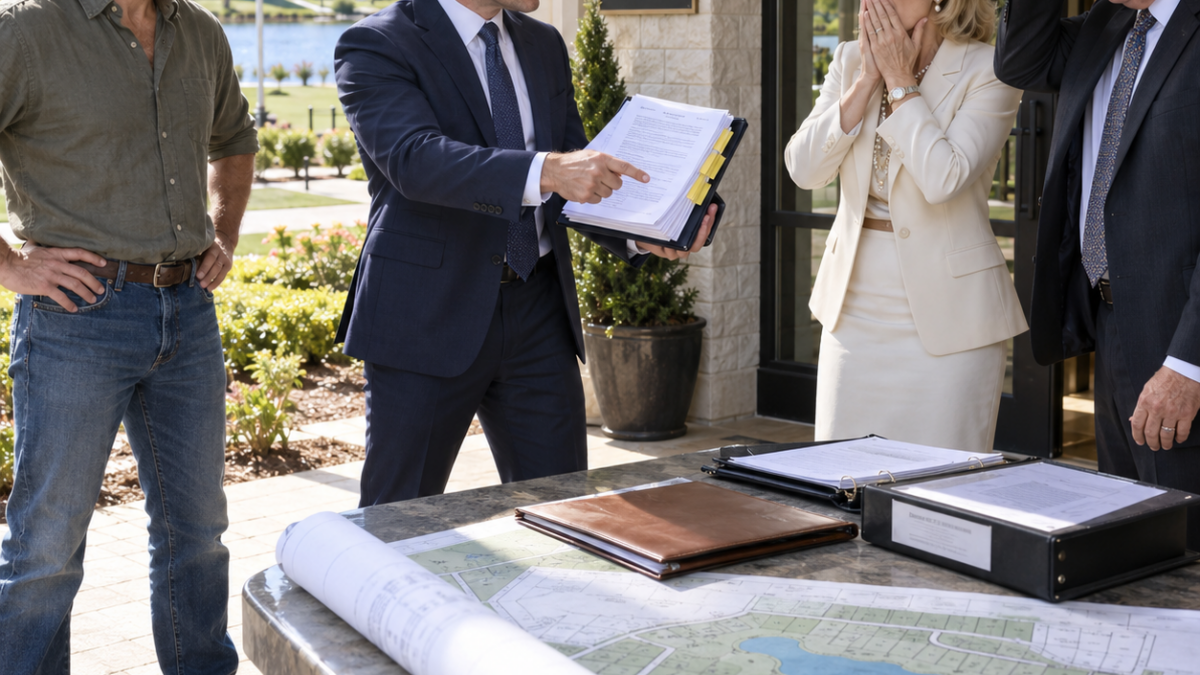
The HOA president stood across my grandfather’s rusted fence with two surveyors and calmly informed me that fifty yards of my family’s land—including my workshop and my father’s half-restored tractor—now belonged to her neighborhood.
When I refused to move, she threatened demolition, thousands of dollars in fines, a lien against my property, and eventually the kind of legal fight that could force me to sell land my family had owned since 1922.
Three weeks later, after someone tried to tow my father’s tractor off my own driveway, I opened my mailbox and found a plain white envelope with no stamp, no return address, and my name written across the front by someone whose hand had been shaking.
I’m Jack Miller, and for most of my adult life boundaries were something I took seriously.
I spent three tours in the Army as an engineer. Overseas, the difference between one side of a line and the other could matter more than anybody wanted to admit.
Back home, the line that mattered to me was Miller’s Creek.
The creek curled along the eastern side of our 120 acres, cutting through oak woods before disappearing beneath a stone bridge my grandfather helped build.
My great-grandfather bought the property in 1922.
The original deed still hung in my office.
Its language was old-fashioned but unmistakable:
Along the center line of Miller’s Creek to the old oak.
The oak had been struck by lightning decades ago, but the enormous stump still sat above the bank.
When Whispering Pines Estates was developed on the neighboring farmland in the late nineties, their own survey showed exactly the same boundary.
For more than twenty years, nobody questioned it.
Then Karen Peterson became HOA president.
My first argument with her wasn’t about land.
It was about noise.
I run a small metal-fabrication business from a workshop beside the pasture. I’m careful about the hours because I know grinders and plasma cutters aren’t birdsong.
One afternoon Karen marched to my fence while I was working.
“Your industrial activities are disturbing our community,” she announced.
I shut off the grinder and lifted my visor.
“I stop heavy work by five.”
“Our residents are entitled to peaceful enjoyment.”
“And I’m entitled to use property zoned for this work.”
She tightened her grip on the clipboard.
“Our covenants impose standards beyond county minimums.”
“On your members.”
Her expression changed.
“I beg your pardon?”
“My property isn’t in Whispering Pines.”
“You affect Whispering Pines.”
“That doesn’t make me part of it.”
She walked away looking less embarrassed than offended.
I should have understood then.
Karen didn’t see a boundary.
She saw resistance.
Six weeks later she returned with the surveyors.
One of them was already driving a stake into my ground when I came outside.
“Stop.”
The man froze.
Karen unrolled a map.
“The association recently corrected a historical surveying error.”
She traced a line across the page.
Her line crossed the creek, climbed the bank, cut through my workshop, and swallowed nearly fifty yards of my property.
I stared at it.
“That’s fake.”
Her smile hardened.
“It has been adopted into the association records.”
“The county record says the creek is the boundary.”
“The county records are outdated.”
I actually laughed once.
I couldn’t help it.
Karen’s face flushed.
“This is now designated community green space. Your workshop must be removed within thirty days.”
I looked at the wooden stake.
Then at the workshop.
Through the open doors I could see my father’s 1968 Ford tractor sitting on jack stands.
He had taught me to drive it when my feet barely reached the pedals.
I’d promised him before he died that someday I would restore it.
Now Karen was telling me the dirt beneath it belonged to her HOA.
“Get off my property.”
Her smile disappeared.
“It isn’t your property anymore.”
I stepped between her surveyors and the next stake.
“You have ten seconds.”
They looked at her.
Karen looked at me.
Then she gathered the map.
“You’ll receive formal notice.”
Two days later, I did.
Five thousand dollars for an unauthorized structure.
Two thousand for storing agricultural equipment on supposed community land.
Another five hundred because my meadow grass violated Whispering Pines landscaping standards.
At the bottom was the sentence that made my hand tighten around the paper:
Failure to comply may result in a lien against the subject property.
The next morning, a tow truck rolled up my driveway toward Dad’s tractor.
I blocked it with my pickup.
The driver took one look at my deed, Karen’s work order, and the argument he was about to inherit.
“Not touching this,” he muttered.
He backed out.
That evening, I walked down for the mail.
Bills.
Advertisements.
Then the white envelope.
No postage.
No return address.
Just:
MR. MILLER.
I opened it beneath the mailbox light.
Inside were two folded sheets.
The first carried the Whispering Pines HOA letterhead.
The second was handwritten.
I unfolded the official page first.
And when I read the date at the top, I realized someone inside Karen’s own board had just risked everything to put this in my hands.
PART 2
The meeting had taken place three weeks earlier.
A “special executive session.”
The agenda description was so vague I almost admired it.
**Boundary Clarification and Community Asset Recovery.**
I read the first paragraph twice.
Karen had convened the meeting with only four of the five board members present.
Karen Peterson.
Gary Smith.
Brenda Jones.
And David Chen, the treasurer.
The fifth member had been absent.
According to the minutes, Karen presented what she described as a “newly discovered historical plat” showing that Whispering Pines extended west of Miller’s Creek.
She told the board that the original development survey contained an error.
She claimed the association had a fiduciary duty to “recover improperly excluded community property.”
Community property.
My family’s woods.
My workshop.
My father’s tractor.
Gary moved to adopt the revised boundary.
Brenda seconded.
David Chen abstained.
Three votes in favor.
None against.
Motion carried.
Then came the line that stopped me.
**President Peterson proposed amendment of the association’s internal land-use map and authorization of enforcement action against any unauthorized structures located within the recovered area.**
They had written themselves permission to take my property.
Not legally.
Not actually.
But inside their own little paper universe, they had created a chain of authority:
Fake map.
Secret meeting.
New bylaw.
Violation.
Fines.
Lien.
Pressure.
Sale.
I unfolded the handwritten page.
It contained no greeting.
No signature.
Just a message.
*Mr. Miller, I am the HOA treasurer. I cannot stand by and watch this happen.*
I looked toward Whispering Pines.
Most of the neighborhood was hidden behind trees from where I stood.
Porch lights glowed through the branches.
Quiet houses.
People eating dinner.
Children doing homework.
Nobody looking like they belonged inside a conspiracy.
I kept reading.
*The map Karen presented was not discovered in an archive. She had someone create it. Our previous attorney warned her it had no legal force. She removed him from the matter and retained different counsel.*
My pulse slowed.
That happens to me when something becomes serious.
Everything gets sharper.
*The goal is not the workshop. Karen wants the strip along the creek as a community buffer and future trail corridor. She believes the fines will become leverage to force you to settle or sell.*
I read that sentence three times.
*She plans to move for a lien at the next meeting if you do not pay.*
Then:
*HOA funds are being used for this. Please be careful.*
No signature.
Only:
*A friend.*
I folded both pages and put them back into the envelope.
For several minutes I remained beside the mailbox.
A truck passed on the county road.
Its headlights moved across the fence, briefly illuminating the meadow beyond it.
Dad’s tractor was barely visible beside the workshop.
I remembered sitting on the fender when I was eight while he replaced a hydraulic hose.
“Never trust pressure you can’t see,” he told me.
At eight years old I thought he was talking about machinery.
Maybe he was.
Dad had a way of saying things that became more useful after he was gone.
I carried the envelope inside.
My kitchen table became a command post.
I laid the leaked minutes beside the original 1922 deed.
Then the 1958 survey.
Then the 1998 survey prepared when Whispering Pines was developed.
Every legitimate document put Miller’s Creek in exactly the same place.
Karen’s map was the only one that moved it.
I called the county records office first thing the next morning.
“Land records.”
“This is Jack Miller. I was in yesterday checking filings on parcel 18-442.”
“Yes, sir.”
“I need certified copies of everything connected to the eastern boundary.”
“That might take a little while.”
“I’ll wait.”
By noon I had another stack.
Nothing had changed.
No correction.
No amended deed.
No boundary agreement.
No court order.
No revised plat.
Nothing.
The county clerk, Brenda Watkins, looked over Karen’s map when I showed her.
Her forehead creased.
“Where did this come from?”
“The HOA.”
“This isn’t filed here.”
“They say it corrects a historical error.”
“With what supporting instrument?”
“I was hoping you could tell me.”
She turned the page around.
“Mr. Miller, people can draw whatever they want on paper. That doesn’t alter a recorded boundary.”
“I know.”
“You’re asking because they’re doing more than drawing?”
I slid the fines across the counter.
Brenda read them.
Her expression changed.
“I can’t give you legal advice.”
“I understand.”
“But if this were my property…”
She pushed the papers back.
“…I’d get legal counsel today.”
I already knew who I wanted.
Sarah Jenkins and I had met at a veteran-support fundraiser two years earlier.
Former Army JAG.
Major.
Five-foot-six.
Soft-spoken until someone lied to her.
Then frightening.
After leaving the service, she built a small practice handling property disputes, business litigation, and cases involving people who mistook organizational authority for unlimited authority.
I called from my truck.
“Jenkins Law.”
“This is Jack Miller.”
A pause.
“Engineer Jack Miller?”
“That sounds more flattering than reality.”
“I remember you. VFW fundraiser.”
“That’s me.”
“What did you break?”
“Nothing.”
“Then who broke something around you?”
I looked at Karen’s map on the passenger seat.
“My HOA neighbor is trying to annex part of my farm.”
Silence.
“You don’t belong to the HOA.”
“Correct.”
“And you used the word annex.”
“I chose it carefully.”
“When can you get here?”
“Forty minutes.”
“I have a cancellation in fifty.”
“I’ll see you in forty.”
Her office occupied the second floor of an old brick building downtown.
No mahogany walls.
No giant shelves of untouched law books.
Clean desk.
Two monitors.
Whiteboard.
Coffee that could strip paint.
I laid everything across her conference table.
The deeds first.
Then surveys.
Then Karen’s map.
Then violations.
Then tow paperwork.
Finally the anonymous envelope.
Sarah read without speaking.
Ten minutes passed.
Then twenty.
She set the leaked minutes down.
“Where did you get this?”
“Mailbox.”
“You know who sent it?”
“The note says HOA treasurer.”
“David Chen?”
“That’s the name in the minutes.”
“Have you contacted him?”
“No.”
“Good.”
I leaned back.
“Why good?”
“Because right now we don’t know whether this is authentic, partially authentic, altered, bait, or exactly what it appears to be.”
I nodded.
“That’s why I called you.”
She held up the note.
“This is useful intelligence. It is not yet evidence I would bet your farm on.”
“My legitimate records are enough to establish the boundary.”
“For the boundary, yes.”
“What about the rest?”
“We verify.”
Sarah pointed at Karen’s map.
“Where did she claim this came from?”
“Historical archive.”
“Whose archive?”
“She never said.”
“Good.”
“That sounds bad.”
“It’s good because vague lies are harder to defend once discovery begins.”
She opened the 1998 plat.
“This is strong.”
She placed the original deed beside it.
“This is stronger.”
Then the tow order.
“This is reckless.”
Finally, the HOA fine notice.
“And this…”
She tapped the lien language.
“…is where Karen made your problem my kind of problem.”
“What do you mean?”
“She can annoy you with a fake map. She can tell people she thinks she owns the moon. The moment an organization starts using fraudulent or unsupported documents to threaten a cloud on title, you pay attention.”
“Can she file a lien?”
“She can attempt things she shouldn’t. Whether it survives is different.”
“I don’t want to wait until I’m untangling one.”
“Neither do I.”
Sarah stood and walked to the whiteboard.
She wrote three words.
**TITLE. PROCESS. MOTIVE.**
“First, we establish title beyond argument.”
She underlined it.
“Second, we establish what the board actually did and whether they followed their own procedures.”
Another underline.
“Third, we find out why.”
“The note says trail corridor.”
“The note says a lot. We corroborate.”
She turned.
“Jack, here is the important part. I need you boring.”
“I’m sorry?”
“Boring.”
She pointed at me with the marker.
“No threatening emails. No confrontations. No driving a tractor through their clubhouse. No patriotic speeches about property rights at Karen’s front door.”
“I hadn’t planned the tractor thing.”
“You thought about it.”
I didn’t answer.
Sarah smiled.
“Exactly.”
Then her expression became serious.
“You are a veteran who runs metalworking equipment and just blocked a tow truck. Karen would love to turn this into a story about an aggressive outsider intimidating a residential community.”
“I threatened the driver with trespass charges.”
“Reasonable. Stop giving her additional footage.”
“So what do I do?”
“Live normally. Document everything. Photograph vehicles entering your property. Keep cameras legal and focused on your land. Call me before responding to written communication.”
“And the residents?”
“What about them?”
“The note says she has done this kind of thing before.”
Sarah thought.
“Talk to people.”
“Isn’t that the opposite of boring?”
“Listen. Don’t recruit. Don’t promise lawsuits. Don’t tell them what to say.”
She capped the marker.
“People under abusive systems collect paper.”
I thought of my father.
She continued.
“If Karen has been using violations as retaliation, somebody has the letters.”
I left her office with instructions and something I hadn’t felt since Karen showed up with the surveyors.
Structure.
A plan.
That afternoon I drove home along Miller’s Creek.
Dad used to say lawyers were like torque wrenches.
“Expensive,” he’d complain, “but cheaper than snapping the bolt.”
I wished he could have met Sarah.
He would have liked her.
He would have hated why I needed her.
The next week taught me how effectively fear can hide behind landscaping.
Whispering Pines looked peaceful.
Trim lawns.
Matching mailboxes.
Stone entrance monuments.
Children’s bicycles tucked neatly inside garages.
But mention Karen and people changed.
Eyes moved toward windows.
Voices dropped.
Conversations ended.
I tried speaking with a man walking a golden retriever near the creek.
“We’ve never had a problem with the HOA,” he said too quickly.
“I didn’t ask if you had.”
“We like it here.”
“I’m glad.”
He tugged the leash.
“Have a good evening.”
Then he walked away.
A woman getting mail told me she “didn’t involve herself in politics.”
A younger father looked genuinely alarmed when I mentioned the property-line dispute.
“Man, I’ve got kids. I can’t get crossways with the board.”
I understood.
I also began to understand Karen.
Her authority didn’t come from the bylaws.
It came from people believing resistance cost more than obedience.
A two-hundred-dollar fine.
A lawyer.
Three evenings wasted.
Embarrassment at a board meeting.
Threats about liens.
Most families had jobs and children and bills.
Karen had time.
She weaponized inconvenience.
I couldn’t break that culture by knocking on doors.
The storm did it for me.
It rolled in on a Saturday afternoon.
I was rebuilding the hydraulic pump on Dad’s tractor when the weather radio issued a severe thunderstorm warning.
Twenty minutes later, wind hit the property hard enough to bend the treetops.
Rain hammered the metal roof.
Then I heard a crack from across the creek.
Not thunder.
Wood.
A flash of blue-white light followed.
Power line.
I killed the shop power and stepped outside.
Smoke rose from Whispering Pines.
I threw my chainsaw, tow straps, traffic cones, gloves, and trauma kit into the truck.
By the time I reached Pine Hollow Court, a forty-foot pine had fallen across the road.
A power line sagged beside it, popping against wet pavement.
Residents stood beneath garage overhangs watching.
“Back up!” I shouted.
A man started toward the tree.
“Don’t touch anything.”
He stopped.
I positioned the truck sideways at a safe distance and set cones.
“Line may still be energized.”
An older man hurried over.
“My wife’s oxygen concentrator is inside.”
“You have backup?”
“Portable bottle. Couple hours.”
“Fire department coming?”
“Neighbor called.”
I checked the downed tree.
The live line limited what we could safely move.
So I did what I could.
Cleared smaller debris outside the electrical hazard.
Opened enough shoulder space for emergency access.
Kept people back.
When the fire crew arrived, I gave the lieutenant a quick summary.
He looked at the cones.
“Army?”
“Engineer.”
“Thought so.”
The power company isolated the line.
Then we attacked the tree.
Once it was safe, my larger saw and truck made quick work of the trunk.
We cleared one lane.
The older man whose wife used oxygen shook my hand.
“George Henderson.”
“Jack Miller.”
His eyebrows lifted.
“You’re the guy Karen is fighting.”
“Apparently.”
He looked at the chainsaw.
Then the cleared road.
Then back at me.
“Well, she forgot to mention this part.”
That sentence opened the first door.
Three days later, I saw George trimming hedges.
He waved me over.
“My wife made too much coffee.”
“That a complaint?”
“Invitation.”
Inside, his wife Ellen put pie on the table without asking whether I wanted any.
George waited until she sat.
Then he said, “Tell us what Karen is doing.”
So I did.
Not the leaked note.
Sarah had told me to keep that close until verified.
But I told them about the map.
The fines.
The tow truck.
George stared at me.
“She tried to take your workshop?”
“Part of the land too.”
Ellen shook her head.
“That woman.”
George glanced toward the front window.
Then laughed bitterly.
“You want to hear our great crime?”
“Sure.”
He pointed outside.
Near the flower bed stood a garden gnome.
Red hat.
Blue coat.
Faded smile.
“That.”
I looked at him.
“That?”
“Our granddaughter gave it to Ellen.”
“Karen fined you?”
“Two hundred dollars.”
Ellen reached into a kitchen drawer and produced the notice.
**Unapproved lawn ornament inconsistent with community aesthetic standards.**
I read it twice.
“Did you pay?”
George looked embarrassed.
“Eventually.”
“Why?”
“Because the fine doubled.”
Ellen touched his hand.
“And because our granddaughter was staying with us while her mother was going through a divorce. George didn’t want conflict around her.”
There it was.
Karen never attacked only property.
She found the moment people were least able to fight.
Ellen said, “Mary Carlisle has a story.”
“Who?”
“Three streets over. Retired teacher.”
George lowered his voice.
“Karen went after her roses.”
I thought he was joking.
He wasn’t.
The following Thursday, I found myself in George’s basement with six Whispering Pines homeowners drinking coffee from mismatched mugs.
Mary Carlisle was seventy-two and had spent thirty-one years teaching third grade.
Her roses had won county horticultural awards.
Karen cited them as “excessively dense ornamental growth.”
“What does that even mean?” I asked.
Mary slid the notice across the table.
“I asked the same question.”
“What happened?”
“She inspected my yard every week for a month.”
Mary’s voice tightened.
“I started cutting healthy branches because I was afraid of another fine.”
A young couple, Ben and Alicia Morales, had been cited because their children’s plastic slide was visible from the road.
Another homeowner had received three notices about a hairline crack in his driveway.
Another had been fined after his trash container remained beside the garage overnight while he was at the hospital with his mother.
The stories were petty.
That made them powerful.
Tyranny at neighborhood scale rarely announces itself with tanks.
Sometimes it arrives laminated.
I listened.
I photographed nothing without permission.
I took notes only after asking.
Then George said, “What are you going to do?”
I looked around the basement.
“Fight my case.”
“Only yours?”
“My lawyer told me not to recruit people into litigation.”
Disappointment moved across a few faces.
“But,” I added, “she also told me documents matter.”
I explained that anyone willing could preserve notices, emails, meeting records, and fines.
No exaggeration.
No anonymous rumors.
Paper.
Mary leaned back.
“You think this could remove her?”
“I don’t know.”
It was important to say that.
“I know she can’t legally move Miller’s Creek with a board vote.”
George smiled.
“That’s a start.”
A week later, my mailbox contained another envelope.
This time it was thicker.
Inside were financial summaries.
Highlighted legal expenses.
No note.
Sarah had me scan them and keep the originals untouched.
Then she called.
“Your anonymous friend is probably David Chen.”
“Probably?”
“Don’t upgrade probability into fact yet.”
“What did you find?”
“These legal payments.”
“What about them?”
“Look at the firm.”
Peterson & Howe.
I had noticed the name.
Sarah had noticed the people.
“Karen Peterson,” I said.
“Exactly.”
“Howe?”
“Martin Howe is married to Karen’s sister.”
I sat down.
“How much?”
“Based on what you sent me, more than thirty thousand in roughly a year.”
“For the land dispute?”
“Not all of it. Various ‘consulting’ matters.”
“Legal?”
“Maybe. We need invoices.”
“What does it prove?”
“Right now? Relationship plus expenditure. That deserves disclosure. It doesn’t automatically prove theft.”
I smiled.
“I knew you’d say that.”
“You’re learning.”
Then she added, “But combined with your secret-session minutes, we have enough to send a serious demand.”
Her letter ran twenty pages with attachments.
No insults.
No dramatic adjectives.
That was Sarah’s style.
She demolished people politely.
The opening established my chain of title.
1922 deed.
1958 survey.
1998 subdivision plat.
Current tax map.
Then she addressed the HOA’s alleged corrected plat.
No recording.
No deed.
No mutual boundary agreement.
No court judgment.
No governmental approval.
She demanded the HOA identify the source document supporting its claim.
Next came procedure.
The executive meeting.
The bylaw amendment.
The lack of legal authority to annex a nonmember’s parcel through internal governance.
Then the fines.
Then the threatened lien.
Finally, she demanded preservation of records related to the map’s creation, legal advice, board communications, contractor contacts, and expenditures.
That part mattered most.
**Preservation.**
Once they knew litigation was likely, deleted records could become their own problem.
Sarah gave them seven days to rescind the claim and fines.
On day six, their new lawyer responded.
His name was Richard Sloan.
Downtown firm.
Heavy letterhead.
Expensive tone.
He called our position “factually deficient and legally misguided.”
He described Karen’s map as a legitimate “association boundary clarification.”
He claimed I had “willfully interfered with lawful community governance.”
Sarah read that sentence twice.
Then smiled.
“What?”
“They’re claiming governance authority over a man who isn’t a member.”
“That’s bad?”
“For them.”
The letter ended with a threat.
Pay all fines within seven days or the HOA would pursue remedies including a lien and foreclosure where permitted.
Sarah set it down.
“Now we file.”
The complaint named Whispering Pines Estates HOA.
Karen Peterson individually.
Gary Smith individually.
Brenda Jones individually.
Sarah refused to sue every board member.
“David abstained,” she said.
“What about the one who was absent?”
“No basis.”
“Good.”
“You sound relieved.”
“I don’t want collateral damage.”
“Keep that instinct.”
The complaint sought declarations confirming my boundary and invalidating the HOA’s claim.
It challenged the fines.
Alleged interference with property rights.
Sought damages from the attempted tow and harassment.
Requested emergency injunctive relief against liens, entry, towing, or demolition.
And based on the financial information, requested an accounting and appropriate oversight if the evidence justified it.
Sarah toned down some of the claims I wanted.
I accused Karen of theft.
She deleted it.
I wrote conspiracy.
She rewrote the factual conduct and let the causes of action do the work.
I wrote fraud six times.
She allowed it where she believed the facts supported it and removed it where I was venting.
“You’re ruining my prose.”
“I’m saving your case.”
The judge granted temporary relief quickly enough to stop the HOA from filing a lien or entering my land while the dispute proceeded.
It wasn’t victory.
But for the first time in weeks I slept six hours straight.
Then Karen made her next mistake.
She held the regular HOA meeting as though nothing was happening.
Our process server entered while she was speaking.
I wasn’t there.
Sarah advised me not to turn service into theater.
But George called afterward.
“You missed it.”
“I was supposed to.”
“He walked right up.”
“George.”
“Karen said, ‘Can this wait?’”
I closed my eyes.
“What happened?”
“He said, ‘No, ma’am.’”
I could hear George grinning.
“He served her. Then Gary. Then Brenda.”
“How did people react?”
“Nobody breathed for ten seconds.”
“Don’t enjoy this too much.”
“I’m old. Let me have things.”
By the next morning, Whispering Pines knew.
That was when fear started changing sides.
My secure email account filled with documents.
Not gossip.
Real records.
Warnings.
Appeal denials.
Photos residents had been ordered to correct.
Emails from Karen.
One told a family that continued questions were “evidence of unwillingness to function harmoniously within the community.”
Another warned an elderly widower that “board patience is not unlimited.”
Mary sent every rose-bush notice.
The Morales family sent slide violations.
George sent the gnome file, which was absurdly thick.
Then David Chen called me.
No anonymous envelope this time.
His actual voice.
“Mr. Miller?”
“Yes.”
“This is David Chen.”
I stood from my desk.
“I know who you are.”
A pause.
“Can we meet?”
“Where?”
“Not in Whispering Pines.”
Sarah arranged her conference room.
David arrived looking like a man who hadn’t slept in weeks.
He shook my hand.
“I sent the documents.”
“I figured.”
“I’m sorry.”
“For what?”
He looked down.
“I should have stopped it.”
Sarah closed the conference-room door.
“Mr. Chen, before you say more, you need to understand I represent Jack, not you or the HOA.”
“I know.”
“You may want independent counsel.”
“I understand.”
She slid a legal pad toward him.
“Why did you come?”
David looked at me.
“Because Karen is telling people the leaked minutes are fake.”
I almost laughed.
Sarah didn’t.
“Are they?”
“No.”
“Did you prepare them?”
“I took them as treasurer because the secretary left early.”
“Were they approved?”
“A cleaned-up version was later circulated.”
“What changed?”
David opened his briefcase.
He produced two sets.
The original.
The final.
Sarah placed them side by side.
The final version removed one sentence.
Karen had said the disputed land could become a “buffer trail and amenity corridor enhancing eastern home values.”
Another removed reference to legal advice.
The original stated:
**Treasurer Chen advised that prior counsel questioned whether the association possessed authority to alter a recorded property boundary.**
The final minutes simply said:
**Treasurer Chen abstained.**
I stared at him.
“They deleted the attorney warning.”
“Karen said the minutes were too detailed.”
“Who made the map?”
David swallowed.
“A designer.”
“Name?”
“Creative Solutions LLC.”
Sarah’s pen stopped.
“Who hired them?”
“Karen.”
“HOA paid?”
“Yes.”
“What was the assignment?”
“I never saw the contract. Invoice said ‘plat rendering.’”
“Before or after the meeting?”
“Before.”
“Was the map represented as historical?”
David closed his eyes.
“Yes.”
There are moments in a fight when suspicion becomes architecture.
The walls lock into place.
The room suddenly has shape.
This was one.
Sarah’s voice remained flat.
“Do you have the invoice?”
David pulled out a copy.
Fifteen hundred dollars.
**Plat map rendering and historical-style document preparation.**
I actually laughed.
Not because it was funny.
Because sometimes arrogance becomes so complete that it documents itself.
Sarah looked at David.
“Why did you stay on the board?”
His face tightened.
“My wife asked me the same thing.”
“Answer me.”
“I thought if I left, nobody would question anything.”
“Did you question enough?”
“No.”
At least he didn’t hide from it.
“I kept telling myself I was the responsible one in the room.”
He rubbed both hands over his face.
“Then I watched them vote to take a man’s land.”
Silence.
“I went home and couldn’t sleep.”
He looked at me.
“My grandfather lost property during the war before my family came to this country. My father talked about it until the day he died. Not the acreage. The helplessness.”
His eyes reddened.
“I realized I had become one of the men sitting at a table while somebody else’s property was being taken on paper.”
I didn’t know what to say.
So I said the only thing that felt honest.
“You sent the envelope.”
He nodded.
“That mattered.”
Sarah took over.
For two hours she went through documents.
Dates.
Votes.
Payments.
Emails.
David didn’t have everything.
Good witnesses rarely do.
Real life is messy.
But he had enough to give us direction.
Sarah issued discovery requests.
The HOA’s attorneys resisted.
Some material came voluntarily.
Other records required motions.
We fought over scope.
The judge ordered production of communications directly relating to my property claim, the map, fines, legal spending connected to the dispute, and specified governance records.
No magical “hand us everything you own.”
Targeted categories.
That was enough.
The records arrived in batches.
Emails first.
Gary to Karen:
**How aggressive do we want to be with Miller?**
Karen:
**Aggressive enough that keeping the strip costs him more than cooperating.**
Another:
**If fines attach to the disputed portion, settlement becomes easier.**
Brenda:
**Are we sure the county won’t reject this?**
Karen:
**The HOA decides HOA boundaries. Stop overthinking.**
I read that one twice.
Then came Creative Solutions.
The designer’s emails were almost painful.
**Attached is the revised concept showing the community line west of the creek as requested. I have distressed the original background layer to resemble the older developer materials you provided.**
Sarah looked at me.
“Historical archive.”
“Created Tuesday.”
“Apparently history moves fast.”
The designer had assumed he was making a conceptual presentation graphic.
There was no indication he knew Karen planned to present it as an authentic old map.
That distinction saved an innocent person from being dragged into something unfairly.
The next batch involved legal counsel.
Karen’s original attorney had written an email warning that the association could not alter the external legal boundary of a nonmember parcel through amendment of HOA governing documents.
Clear.
Simple.
She replied:
**I disagree with your unnecessarily conservative interpretation.**
Two weeks later, his engagement on the issue ended.
Then Peterson & Howe began billing.
Her brother-in-law’s firm.
Again, the relationship alone didn’t prove corruption.
The invoices did, however, raise increasingly uncomfortable questions.
Broad “strategy consultation.”
“Asset recovery planning.”
“Enforcement leverage.”
The bills climbed.
All paid from homeowner dues.
Then came internal texts.
Karen to Gary:
**Once Miller realizes we can bury him in fees, he will negotiate.**
Gary:
**How low do you think he’ll sell?**
Karen:
**The creek strip isn’t useful to him without peace.**
I set the page down.
That sentence hurt more than I expected.
Not useful to him.
The creek was where my father taught me to skip stones.
Where Mom’s ashes had been scattered after she died.
Where Dad and I repaired fence together the last fall before his cancer made walking difficult.
The workshop wasn’t some inconvenient shed.
The tractor wasn’t junk.
The land wasn’t a buffer.
Karen had translated my family into acreage.
I left Sarah’s office and drove home without turning on the radio.
At sunset I walked to the creek.
The water moved slowly between exposed rocks.
The old oak stump remained above the bank.
I rested one hand on it.
My father had been seventeen when lightning destroyed that tree.
He used to describe the explosion like artillery.
He and Grandpa saved slabs from the trunk.
One was still my kitchen table.
That is what land does over generations.
It stops being measurable only in acres.
It becomes the place where stories attach themselves.
I had been treating Karen as an administrative nuisance.
Reading her text changed that.
**The creek strip isn’t useful to him without peace.**
She understood peace mattered to me.
She intended to make peace expensive.
For the first time since the dispute began, I wanted revenge.
Not legal remedy.
Not correction.
I wanted her scared.
I wanted her standing at her mailbox wondering what was coming.
I wanted every letter to make her stomach tighten.
I wanted her house threatened.
I wanted her to understand.
I called Sarah.
She answered on the second ring.
“Talk me out of something.”
“What?”
“I haven’t decided.”
“Then we’re early. Good.”
I told her about the text.
“You’ve already read it.”
“I know.”
“She knew.”
“Yes.”
“She knew exactly what she was doing.”
“I know.”
“I want to hit back.”
“You are.”
“No. I mean personally.”
Silence.
Then Sarah said, “Where are you?”
“Creek.”
“Go to the tractor.”
“What?”
“Go sit by your dad’s tractor.”
“That’s strange legal advice.”
“Do it.”
I walked uphill.
The workshop doors were open.
Dad’s Ford sat underneath the lights.
Its engine was still partly disassembled.
“What now?”
“Why are you restoring it?”
I ran my hand over the faded hood.
“Because I told him I would.”
“Would your father care more about that tractor running or Karen suffering?”
I almost told her the question was manipulative.
It was.
It also worked.
“The tractor.”
“Then stop making Karen the center of your life.”
I sat on a stool.
Sarah continued.
“I’m not asking you to forgive her. I’m asking you not to become stupid because she was cruel.”
I laughed once.
“You always this comforting?”
“I bill extra for warmth.”
“What happens next?”
“Her deposition.”
I looked at the tractor.
“When?”
“Three weeks.”
“And until then?”
“Fix something.”
So I did.
I rebuilt the carburetor.
Cleaned rust from the fuel tank.
Ordered piston rings.
Reconditioned the head.
Work gave anger somewhere to go.
Meanwhile, the dispute escaped Whispering Pines.
A reporter called.
Sarah told me to say little until we had a public filing worth discussing.
Then a local television station obtained the complaint.
“Veteran Landowner Sues HOA Over Alleged Boundary Scheme.”
I hated the word veteran being used like decoration.
But the coverage forced people to look at the maps.
The official county plat.
Karen’s altered version.
Side by side, they were devastating.
Sarah and I organized a public information meeting at the county library.
Neutral ground.
No clubhouse.
No HOA microphone.
No Karen controlling the agenda.
I resisted inviting reporters.
Sarah disagreed.
“Transparency works both directions.”
“What if this turns into a circus?”
“Then behave like the least interesting person in the circus.”
That became the rule.
No chanting.
No insults.
No “Queen Karen” signs.
No threats.
Documents.
George spoke first after me.
He brought the gnome.
Actually brought it.
Set the little concrete figure on the podium.
The room laughed.
Then George held up the fine.
“The funny part ends here.”
He told them how afraid he had been of escalating penalties.
Mary spoke about cutting healthy roses because she was scared.
Her voice cracked.
“I taught children for thirty-one years to speak up when something wasn’t right.”
She looked toward the cameras.
“And then I spent two years being frightened of a homeowners association.”
Ben Morales described his children asking why their toys were embarrassing.
Then David stood.
The room changed.
Sitting HOA treasurer.
He walked to the front carrying a red folder.
“My name is David Chen.”
Karen was not present.
Her attorney had advised her not to attend.
David didn’t reveal every privileged or disputed detail.
Sarah had prepared him carefully.
He confirmed the special meeting occurred.
Confirmed he abstained.
Confirmed he had concerns regarding the absence of verified title evidence.
Then he said:
“I failed to make those concerns public soon enough.”
Nobody spoke.
“The board’s purpose is not to make residents afraid of it.”
He placed his folder down.
“I forgot that.”
That line led the ten o’clock news.
Karen responded the following morning through counsel.
She called the accusations politically motivated.
She said the map dispute arose from “good-faith interpretation of historical development materials.”
Good faith became difficult to maintain once her deposition began.
We met in a conference room at Sarah’s firm.
Karen arrived ten minutes early.
Navy suit.
Pearls.
Hair perfect.
Richard Sloan beside her.
A court reporter set up at the end of the table.
I sat behind Sarah.
She leaned toward me.
“No reactions.”
“I know.”
“I mean it.”
“I know.”
“If she says your father personally deeded her the moon, you do not make a face.”
“Understood.”
Karen was sworn.
Sarah began gently.
Name.
Address.
Education.
HOA role.
Length of service.
Karen relaxed.
She liked talking about leadership.
“I was elected because residents wanted higher standards.”
“How many votes did you receive?”
Richard objected to relevance.
Sarah moved on.
“What are your duties as president?”
Karen spoke for almost five minutes.
Property values.
Financial stewardship.
Consistency.
Fiduciary responsibility.
Community character.
Sarah nodded.
Then she placed the original county plat in front of her.
“Have you seen this?”
“Yes.”
“What is it?”
“An outdated map.”
“Was it the recorded subdivision plat when Whispering Pines was developed?”
“I believe so.”
“Do you have evidence that the county recording was ever amended?”
“Our internal records—”
“My question was about the county recording.”
Karen’s jaw tightened.
“No.”
Sarah placed Karen’s altered map beside it.
“Where did this map come from?”
“A historical development file.”
I felt my hands tighten beneath the table.
Sarah didn’t blink.
“Which file?”
“I don’t recall.”
“Physical or digital?”
“Physical originally, I believe.”
“Who found it?”
“I did.”
“When?”
“I don’t remember the exact date.”
Sarah slid the Creative Solutions invoice across.
“Do you recognize this?”
Karen’s eyes moved over it.
“It appears to be an invoice.”
“For plat-map rendering.”
“Yes.”
“Paid by the HOA.”
“Yes.”
“Two days before your special board meeting.”
Richard leaned forward.
“Asked and answered.”
Sarah ignored the performance.
“Mrs. Peterson, did Creative Solutions create the map you presented?”
“They enhanced it.”
“Enhanced what?”
“Historical materials.”
“Which historical materials?”
“I’d have to review the archives.”
Sarah produced the designer’s email.
Richard objected.
Sarah marked it as an exhibit.
Then read one sentence.
**Attached is the revised concept showing the community line west of the creek as requested.**
Karen’s face changed.
Not much.
Enough.
Sarah looked up.
“Did you request that the designer move the line west of Miller’s Creek?”
“We asked them to prepare a clearer interpretation.”
“Did you tell the board this was a newly discovered historical plat?”
“I explained that the map reflected historical intent.”
“That wasn’t my question.”
Karen looked at Richard.
He said, “You can answer.”
“I don’t remember the exact wording.”
Sarah pulled the original minutes.
Then the cleaned-up version.
“Do you recognize these?”
“Yes.”
“Why does the earlier version state that you presented a ‘newly discovered plat map from historical archive materials’?”
Karen leaned back.
“Minutes are not transcripts.”
“True.”
Sarah’s voice remained almost gentle.
“Did you tell the board the map had been created two days earlier by Creative Solutions?”
“I believe everyone understood it had been rendered.”
“Did you tell them the boundary itself had been moved at your instruction?”
“That mischaracterizes what happened.”
“How?”
“The map reflected the association’s rightful interpretation.”
Sarah placed the former counsel’s email on the table.
“Your previous lawyer told you the HOA had no authority to alter Mr. Miller’s recorded property boundary.”
Richard objected vigorously.
Privilege issues had been litigated before the deposition; some communications were producible based on how the HOA put advice and process at issue, while others remained protected.
Sarah stayed within the permitted record.
Karen said, “Lawyers disagree.”
“You removed that attorney from the matter afterward?”
“We retained counsel better suited to the association’s needs.”
“Your brother-in-law’s firm?”
Richard’s chair moved.
“Objection.”
Karen answered anyway.
“Martin is an excellent attorney.”
“Did you disclose the relationship?”
“It wasn’t relevant.”
“To a vote involving tens of thousands of dollars in HOA legal spending?”
“He was qualified.”
“That wasn’t my question.”
The deposition continued for four hours.
Sarah never shouted.
That was what made it brutal.
She asked dates.
Karen guessed.
Sarah produced emails.
She asked whether she authorized the tow.
Karen said the management office did.
Sarah produced a message:
**Send recovery for the tractor. If Miller wants it back, he can come to the board.**
She asked about the fines.
Karen called them routine.
Sarah displayed a text to Gary:
**Hit him hard enough that negotiation starts before counsel gets expensive.**
Karen said it was “informal shorthand.”
Sarah asked what it meant.
Karen couldn’t explain without making it worse.
Then came the creek-strip text.
**The creek strip isn’t useful to him without peace.**
Sarah slid it across.
“What did you mean?”
Karen stared.
“That continued conflict would reduce the practical utility of disputed property.”
Sarah paused.
Even Richard looked uncomfortable.
“You intended the conflict to create pressure?”
“No.”
“Then why discuss the property being less useful to him without peace?”
“I was describing reality.”
“A reality you were creating?”
“No.”
“You had already imposed thousands in fines.”
“To enforce our rights.”
“You had threatened a lien.”
“Lawful enforcement.”
“You had ordered a towing company onto his property.”
“There was abandoned equipment on community land.”
“A community-land claim your prior counsel told you was unsupported.”
Richard interrupted.
“This is argumentative.”
Sarah nodded.
“Fair.”
Then she changed direction.
“Mrs. Peterson, what did you believe would happen if Mr. Miller refused to sell or settle?”
Karen hesitated.
“We would litigate.”
“With homeowner dues?”
“If necessary.”
“How much had the HOA spent before Mr. Miller filed suit?”
Karen didn’t know.
David’s numbers suggested more than twenty thousand tied directly or indirectly to the matter.
By the end, Karen’s confidence had thinned into irritation.
Then hostility.
Then exhaustion.
No dramatic confession.
No “I stole the land.”
Real depositions aren’t movies.
What we got was better.
Commitments.
Contradictions.
Statements pinned to documents.
Her own explanation under oath.
The transcript turned ambiguity into a timeline.
Creative Solutions invoice.
Map.
Secret meeting.
Counsel warning.
Altered minutes.
Fines.
Tow order.
Lien threat.
Pressure texts.
Every piece had existed before.
Sarah simply connected them.
The day after we received the transcript, she filed for partial summary judgment on the boundary and enforceability issues.
“The land question should not need a trial,” she said.
“What about damages?”
“Those may require more.”
“And Karen?”
“Don’t confuse legal claims.”
I smiled.
“You say that often.”
“Because you do it often.”
While the court considered the motion, Whispering Pines exploded politically.
Residents obtained enough signatures under their governing documents to call a special membership meeting.
The agenda listed three items.
No confidence.
Recall.
Interim governance.
Karen tried to challenge the petition.
Failed.
She sent a community-wide email accusing “outside agitators” of trying to seize control.
That phrase made George furious.
“You’re the outside agitator now.”
“I live outside.”
“Technicality.”
“I’m not attending unless invited.”
“You’re being invited.”
“By who?”
“One hundred eighty-six people.”
He wasn’t far off.
The clubhouse reached capacity before the meeting began.
I waited outside near the parking lot.
Sarah stood with me.
“You nervous?”
“I’m not voting.”
“You’re still nervous.”
“Yes.”
Through the windows we could hear raised voices.
Then David appeared at the door.
“They passed a motion inviting you to speak.”
“Karen allow it?”
David almost laughed.
“The members allowed it.”
I entered.
I had never seen Karen look at me that way.
Not angry.
Not smug.
Cornered.
She sat at the head table with Gary and Brenda.
The gavel rested beneath her hand.
George stood near the front.
Mary sat beside Ellen.
The Morales family occupied the second row.
Residents lined the walls.
David called for order because Karen’s attempts had only increased the noise.
He outlined the issues.
The secret session.
The false boundary claim.
The cost of litigation.
The undisclosed or inadequately documented conflicts involving legal spending.
The discovery records.
The attempted tow.
Then Karen stood.
“I have served this community without pay for six years.”
The room quieted.
“I have answered calls at midnight. I have dealt with drainage failures, vandalism, unpaid dues, irresponsible contractors, disputes between neighbors, and emergencies most of you never knew happened because I handled them.”
That was probably true.
I watched residents listen.
Karen continued.
“I made difficult decisions because leadership is not a popularity contest.”
For a moment, she sounded almost reasonable.
That mattered.
Nobody becomes powerful because every decision they make is wrong.
Karen had undoubtedly done useful things.
That made what followed more believable, not less.
She looked toward David.
“Some people found it easier to criticize than to lead.”
Then toward me.
“And one wealthy outside landowner decided to weaponize litigation against volunteers trying to protect your investment.”
Murmurs rose.
She seized on them.
“Ask yourself who benefits when your HOA is weakened.”
George called out, “Your brother-in-law didn’t seem to suffer.”
The room erupted.
Karen slammed the gavel.
“Order!”
Someone else shouted, “What about the map?”
Another:
“You tried to steal his land!”
“I did no such thing!”
Karen’s voice cracked.
“The association asserted a legitimate claim based on historical interpretation.”
David raised the designer invoice.
“This historical document?”
Laughter.
Karen hit the gavel again.
Nobody stopped.
The noise wasn’t respectful.
But underneath it was something more important.
People were no longer frightened.
George stood.
“I move that Jack Miller be permitted five minutes.”
Voices seconded him from all over the room.
Karen shouted, “He is not a member.”
David looked at the bylaws.
“The members can permit a guest speaker.”
“They cannot override the chair.”
A man in the back said, “Watch us.”
Sarah leaned close to me.
“Keep it short.”
A vote passed overwhelmingly.
I walked forward.
Karen wouldn’t look at me.
I stood beside the table.
No podium.
No speech prepared.
I thought about the previous months.
Dad’s tractor.
The tow truck.
Mary’s roses.
The gnome.
David’s shaking handwriting.
Sarah’s conference room.
Karen’s text about peace.
Then I spoke.
“I don’t live in Whispering Pines.”
A few people smiled.
“I never wanted to.”
That got more laughter.
“But I’ve lived beside you for a long time.”
I looked toward Karen.
“I didn’t file this case because I wanted your HOA destroyed.”
Then at the residents.
“I filed it because your board claimed land that has belonged to my family since 1922 and threatened to put a lien on my property when I refused to accept a boundary they created themselves.”
The room became quiet.
“I’m going to tell you something my lawyer has told me about fifty times.”
Sarah folded her arms.
“Rules matter.”
I continued.
“Your covenants matter to those who agreed to them. Your board procedures matter. Your votes matter. Your finances matter.”
I looked at David.
“But rules do not become less important when the person breaking them holds the gavel.”
No applause yet.
Good.
I didn’t want applause.
“I can defend my land in court.”
I paused.
“I cannot fix your community.”
Now people leaned forward.
“That part belongs to you.”
I gestured toward Karen, Gary, and Brenda.
“If you believe this board represents you honestly, vote to keep them.”
Karen finally looked at me.
“If you don’t, then don’t sit here waiting for a judge, a lawyer, or an outsider from across the creek to rescue you.”
George nodded.
“This is your money.”
I looked at Mary.
“Your homes.”
At the Morales family.
“Your children.”
Then David.
“Your board.”
I stepped away.
“That means the decision has always been yours.”
I returned to my seat.
The recall vote followed.
Paper ballots.
Verification.
Counting.
Recounting.
Nobody trusted anything by then.
Three volunteers from opposing sides observed.
Karen remained seated.
Gary whispered constantly to her.
Brenda stared at her hands.
When David received the tally, his face changed.
He walked to the front.
“Total valid ballots: one hundred ninety-one.”
No one moved.
“For recall: one hundred eighty-four.”
A breath went through the room.
“Against: seven.”
Karen’s hand slipped from the gavel.
No screaming.
Not at first.
She stared at David.
“You counted wrong.”
“We counted twice.”
“You counted wrong.”
Two observers shook their heads.
Karen looked at Brenda.
Brenda was crying.
Gary stood and began stuffing documents into his briefcase.
Karen remained frozen.
Then she picked up the gavel.
For half a second I thought she might strike the table.
Instead she let it fall.
It hit the edge.
Dropped to the floor.
The wooden crack echoed through the clubhouse.
That was the loudest sound of the night.
Karen grabbed her purse.
At the door she turned.
Everyone waited.
Months earlier she would have silenced them with a look.
Now nobody lowered their eyes.
She left without speaking.
Gary followed.
Brenda remained long enough to say something nobody expected.
“I’m sorry.”
Her voice barely carried.
Alicia Morales asked, “For what?”
Brenda wiped her face.
“For being afraid of her until everyone else had to pay for it.”
Then she left too.
The board was finished.
My lawsuit wasn’t.
The court issued its ruling on the land question several weeks later.
I went with Sarah.
The hearing was less cinematic than people imagine.
No jury.
No packed gallery.
No dramatic pounding gavel.
Maps.
Briefs.
Questions.
The judge examined the recorded chain of title and the HOA’s authority.
Then he stated what should have been obvious from the beginning.
An association’s internal bylaws could not unilaterally rewrite the recorded property boundary of land outside the association.
Karen’s “corrected” map had no legal effect.
The fines based on that claim were invalid.
The HOA was permanently barred from asserting ownership based on the fabricated internal plat.
My workshop remained mine.
The creek remained the boundary.
I should have felt triumphant.
Instead I closed my eyes.
For one second I heard my father.
**Paper first, Jackie. Always keep the paper.**
Sarah nudged me.
“You okay?”
“Yeah.”
“You just won your land.”
I looked at her.
“No.”
She frowned.
“My family never lost it.”
Then she smiled.
“Lawyer answer.”
“You’ve corrupted me.”
Remaining claims involving damages, fees, individual conduct, and financial issues continued.
With the new interim leadership in place, the HOA stopped paying lawyers to defend Karen’s personal decisions blindly.
They negotiated.
The association accepted responsibility for its role.
My attorney’s fees related to the title fight were paid.
The court later awarded additional damages based on the wrongful enforcement campaign, including a substantial punitive component against the conduct the judge found especially egregious.
The total was enough to matter.
But the money never felt like the ending.
The receiver did.
Because the financial records had become too compromised and internal controls too questionable, the court approved temporary independent financial oversight while the community elected a replacement board and completed a forensic review.
Karen had spent months telling people she alone protected the neighborhood’s finances.
Now accountants opened every drawer.
The audit took months.
It was tedious.
Invoices.
Receipts.
Vendor relationships.
Card statements.
Reimbursements.
Contracts.
The boring work truth usually requires.
They found the legal fees to the related law firm.
No-bid maintenance deals involving friends and associates.
Personal expenses that had been charged to the association and described as community costs.
Reimbursements lacking proper support.
Funds shifted between budget categories without required approvals.
Not every suspicious item was criminal.
Some were sloppy.
Some were incompetence.
Some had innocent explanations.
Others didn’t.
The receiver referred the strongest findings to law enforcement.
I stayed out of that process.
Sarah insisted.
“You got what you needed.”
“What if they ask me questions?”
“Answer truthfully.”
“What if they don’t?”
“Then go fix the tractor.”
Months later, a grand jury returned charges against Karen involving alleged embezzlement and theft from association funds.
The newspaper called me.
I gave one sentence.
“The criminal case belongs to the state, Karen, and her attorney; my concern was protecting my property.”
George said my quote was boring.
“That was the goal.”
“Could have said karma.”
“No.”
“Could’ve said chickens coming home.”
“No.”
“What about—”
“No.”
He sighed.
“You remove all joy.”
Karen’s criminal case moved slowly.
There were hearings.
Negotiations.
Arguments over records.
I stopped following every development.
At some point I realized checking the court docket every week meant Karen still controlled a piece of my life.
So I quit.
The new Whispering Pines board elected David Chen interim president.
He initially refused.
The residents insisted.
His first meeting lasted almost three hours because he allowed questions.
George complained.
“This democracy thing is exhausting.”
“You wanted transparency.”
“I wanted transparency ending by eight thirty.”
Mary joined a covenant committee.
They removed or clarified several subjective aesthetic provisions.
The garden-ornament rule disappeared.
George held a small ceremony.
“You’re not actually doing this.”
He placed the gnome in the center of his front lawn.
“I’ve waited years.”
Ellen brought champagne.
“It’s ten in the morning.”
“We’re retired.”
Fair point.
The Morales family put their slide back.
Later, when the children outgrew it, Ben removed it himself.
That distinction mattered.
Mary’s roses grew wild again.
Not neglected.
Wild in the way roses sometimes should.
The new board published financial statements online.
Vendor bids above a certain threshold were disclosed.
Board-member conflicts had to be recorded.
Closed sessions were limited.
Appeals went through a panel.
None of that was glamorous.
That is what good governance usually looks like.
Boring systems designed so one personality cannot become the system.
One Saturday, David walked across the stone bridge and came to my workshop.
Dad’s tractor was almost complete.
Fresh fluids.
Rebuilt engine.
Original bodywork cleaned but not over-restored.
I wanted the dents.
Dad put most of them there.
David stood beside it.
“Looks good.”
“Better than your budget reports.”
“That hurts.”
“What brings you over?”
He held an envelope.
I stared.
“No.”
He laughed.
“This one has a return address.”
Whispering Pines Estates.
Inside was a formal apology.
Not from Karen.
From the association.
It acknowledged that the board had improperly asserted authority over my land.
It apologized for the fines, towing attempt, and harassment.
At the bottom were five signatures from the new directors.
I read it once.
Folded it.
Put it on the workbench.
David seemed disappointed.
“That’s it?”
“What do you want?”
“I don’t know. A moment.”
“You watch too much television.”
He ran one finger along the tractor’s hood.
“My father had one like this.”
“Ford?”
“Different model.”
We stood quietly.
Then David said, “I still think about that meeting.”
“The secret one?”
“Every week.”
“You abstained.”
“I should have voted no.”
“Yes.”
He looked at me.
Again, the comforting lie would have been easy.
You did your best.
You couldn’t have known.
But he had known enough.
His regret deserved honesty.
David nodded.
“I appreciate that.”
“Why?”
“Everyone else keeps telling me not to blame myself.”
“You shouldn’t spend the rest of your life blaming yourself.”
I picked up a wrench.
“But you should remember the moment.”
He looked toward the creek.
“So it doesn’t happen again.”
“Exactly.”
A few weeks later, the tractor was ready.
I had delayed starting it.
That embarrassed me.
The engine had been assembled.
Fuel connected.
Battery charged.
Cooling system filled.
Everything checked.
But each evening I found another tiny thing to inspect.
A hose clamp.
Wire routing.
Timing.
Sarah drove out one Saturday and caught me polishing the battery terminal.
“You’re afraid.”
“No.”
“Jack.”
“I want it right.”
“You restored military equipment in places where people were actively trying to kill you.”
“That’s different.”
“How?”
“This was Dad’s.”
There it was.
She leaned against the workbench.
“What if it doesn’t start?”
“I fix it.”
“Then why are you polishing the same terminal for ten minutes?”
I threw the rag at her.
She caught it.
“Start the tractor.”
George and Ellen came over.
Then David.
Then Mary somehow heard.
Then the Morales family appeared.
I looked around my own workshop.
“What is this?”
George shrugged.
“Community.”
“I hate community.”
“No, you don’t.”
“Today I do.”
I climbed onto the tractor.
The vinyl seat was new.
The steering wheel was original.
My hand fit the worn grooves where Dad’s hands had rested for forty years.
I remembered being nine.
Dad beside me.
“Clutch slow.”
“I am.”
“Slower.”
“It’s slow.”
“Your definition’s wrong.”
I turned the key.
The starter engaged.
The engine turned.
Nothing.
George cleared his throat.
I pointed at him.
“One word and the gnome dies.”
He raised both hands.
I waited.
Second attempt.
The engine coughed.
Once.
Twice.
Then caught.
The old Ford roared to life.
Smoke puffed from the exhaust.
Ellen cheered.
Mary clapped.
The Morales kids jumped.
David grinned.
Sarah looked at me.
I couldn’t speak.
I placed one hand on the steering wheel.
The vibration traveled up my arm.
Dad had been gone six years.
For one stupid second, that engine made the distance feel smaller.
I put the tractor in gear.
George shouted, “Where are you going?”
“Victory lap.”
I drove down the pasture.
Along the old fence.
Toward Miller’s Creek.
The same line Karen had tried to erase.
I crossed above the workshop and followed the eastern edge.
Whispering Pines came into view through the trees.
Kids played near a new community playground.
Two neighbors talked beside mailboxes.
Mary’s roses spilled over her fence.
George’s gnome stood proudly where any passing authoritarian could see it.
Nobody cared that my tractor was loud.
Nobody sent a notice.
I stopped near the old oak stump.
Turned off the engine.
Silence settled over the creek.
Not empty silence.
Water moving.
Leaves.
Children somewhere beyond the trees.
I climbed down.
My hand rested on the stump.
“You were right, Dad.”
No answer.
I smiled.
“Paper first.”
The wind moved through the branches overhead.
I thought about the first day Karen had walked onto the land.
Her map rolled beneath one arm.
Her surveyors.
Her certainty.
She believed power came from writing something down and making other people afraid enough to accept it.
For a while, she almost proved herself right.
Not because the law supported her.
Because resistance is expensive.
Time.
Money.
Stress.
Sleep.
Most abuse of petty authority survives by making the cost of saying no feel larger than the cost of surrender.
That was Karen’s real system.
The fake map was only paper.
The fines were only numbers.
The gavel was only wood.
Her power came from everyone imagining what might happen if they challenged them.
Then one person inside her own board stopped cooperating.
A plain envelope appeared in my mailbox.
One truth met another.
The original minutes.
The invoice.
The emails.
The residents’ letters.
The attorney warning.
The tow order.
The financial records.
Karen had tried to bury me in paperwork.
In the end, paperwork was what buried her authority.
But I don’t think of David’s leaked minutes as revenge.
I used to.
During the worst weeks, I imagined the final satisfaction would be watching Karen lose.
Watching her board collapse.
Watching her face when a judge ruled against her.
Watching investigators carry records from her office.
Some of those things happened.
None felt as good as I expected.
The moments I remembered were different.
Mary refusing to cut another rose.
The Morales children dragging their slide back into the yard.
George putting his ridiculous gnome exactly where Karen once forbade it.
David admitting he should have voted no.
Sarah telling me to fix something instead of letting anger consume me.
Dad’s tractor starting.
Those were victories.
Not because somebody else suffered.
Because something stolen had returned.
Confidence.
Choice.
Peace.
I climbed back onto the tractor.
Before restarting it, I looked across the creek.
Whispering Pines still existed.
Same streets.
Same houses.
Same lawns.
It had not collapsed without Karen.
Property values had not vanished.
Civilization had somehow survived a garden gnome.
The world had not ended because a child’s toy remained visible overnight.
All that disappeared was the assumption that one person’s preferences were law.
I turned the key.
The tractor caught immediately this time.
I drove home slowly.
Months later, the county replaced a small culvert near Miller’s Creek.
The survey crew came first.
A young surveyor knocked on my workshop door.
“Mr. Miller?”
“Yeah.”
“We’ll be working near your eastern boundary.”
He unrolled a map.
For half a second, my body reacted before my mind did.
Then I saw the line.
Miller’s Creek.
Exactly where it belonged.
He pointed.
“County record shows centerline of the creek.”
“I know.”
“You want to verify markers with us?”
I almost laughed.
“Yes.”
We walked the boundary.
At the old oak stump, he checked the coordinates.
“Interesting monument.”
“My deed references the original tree.”
“How old?”
“Property’s been in the family since 1922.”
He whistled.
“Long time.”
“Long enough.”
He placed a new survey flag.
Bright orange.
Nothing dramatic.
A thin wire.
A strip of plastic.
But I stood looking at it after he left.
A boundary isn’t sacred because it’s a line on a map.
It matters because people agree that ownership, promises, and limits mean something.
Karen’s biggest mistake wasn’t misunderstanding a survey.
She understood it.
Her emails proved that.
Her mistake was believing enough procedural theater could replace reality.
Call a meeting.
Change a bylaw.
Create a map.
Issue a fine.
Send a truck.
Threaten a lien.
Repeat the story until everyone is too tired to object.
She nearly turned fabrication into fact through momentum alone.
That scared me more than I admitted.
Because the truth does not always win automatically.
Sometimes the truth sits in a filing cabinet while a confident liar holds the microphone.
Truth needs someone to retrieve it.
Copy it.
Preserve it.
Stand beside it.
Sometimes truth arrives anonymously in a white envelope because the person holding it is frightened.
Courage does not always look courageous.
David’s hand had been shaking when he wrote my name.
He told me that later.
He had parked two streets away and walked to my mailbox after midnight.
“You were afraid I had cameras.”
“I did.”
His face fell.
“I deleted that week’s footage.”
“Why?”
“Because you came forward.”
He shook his head.
“You trusted me after I sat in that meeting.”
“You abstained.”
“I didn’t stop them.”
“No.”
He looked at me.
“You really don’t let anybody off easy.”
“That includes me.”
Because I made mistakes too.
I underestimated Karen.
Then I became obsessed with beating her.
I nearly turned legitimate anger into something personal enough to damage me.
I treated some residents as cowards before understanding what they had to lose.
I assumed David’s silence meant complicity before learning how fear and guilt had trapped him.
And for a while I cared more about winning than getting my own life back.
Sarah saw that before I did.
A year after the lawsuit ended, she came to the farm for a veteran-support fundraiser we hosted in the pasture.
Yes.
Hosted.
Me.
The man who once claimed he bought 120 acres specifically to keep people away.
George never lets me forget it.
We raised money for adaptive workshops for injured veterans.
I demonstrated metal fabrication.
Another veteran showed woodworking.
A friend taught basic engine repair.
Dad’s tractor sat near the barn polished just enough to look loved but not museum-perfect.
Sarah found me beside it after sunset.
“You kept the dents.”
“Of course.”
“Sentimental.”
“Historical integrity.”
“Sure.”
We watched people fold tables.
Across the creek, several Whispering Pines residents were helping.
George was giving orders nobody had requested.
David was stacking chairs.
Mary had brought roses for every table.
The Morales kids were chasing each other across the pasture.
Sarah nodded toward them.
“You realize Karen accidentally expanded your social circle.”
“Don’t ruin the evening.”
“I’m serious.”
“I was happier antisocial.”
“No, you weren’t.”
She knew.
I looked at the workshop.
The creek.
My father’s tractor.
“Maybe.”
Sarah smiled.
“That’s tremendous personal growth from you.”
“Bill me.”
“Already did.”
The criminal case against Karen eventually resolved.
I learned about it from the newspaper, not because I went looking.
She accepted responsibility on several financial counts as part of an agreement that included restitution, probationary conditions, and restrictions connected to handling organizational funds.
Other charges were resolved under the agreement.
Some residents thought the punishment was too light.
Others thought public disgrace and restitution were enough.
George asked me.
“What do you think?”
We were standing beside his gnome.
“I think I’m not the judge.”
“That’s disappointingly mature.”
“I’m practicing.”
“Stop.”
Karen sold her home not long afterward.
I saw the moving truck from the county road.
For a moment, old anger stirred.
I considered driving the tractor past.
Maybe slowly.
Maybe loudly.
Then I remembered Sarah’s question.
Would Dad care more about the tractor running or Karen suffering?
I turned toward my workshop instead.
I had a railing commission due.
Karen left Whispering Pines without seeing me.
That felt better than any victory lap I could have staged.
She no longer deserved choreography.
Years passed.
The creek kept moving.
Floods changed its banks slightly, but not the legal centerline.
The old oak stump continued rotting.
Dad’s tractor became reliable enough that I actually used it instead of worshiping it.
One spring afternoon, I hooked a mower behind it and cut the pasture.
As I approached the eastern edge, I saw George waving from across the creek.
I shut down.
“What?”
He held up the garden gnome.
Its head had broken off.
I stared.
“No.”
“Emergency.”
“No.”
“You fabricate metal.”
“That is ceramic.”
“Engineering problem.”
“That is trash.”
George clutched it to his chest.
“My granddaughter gave me this.”
Cheap shot.
I sighed.
“Bring it over.”
I made a small steel pin.
Epoxied it through both sections.
Reattached the head.
George inspected the repair.
“Better than original.”
“Go away.”
He started toward the door.
Then stopped.
“Jack?”
“What?”
“I was scared of her.”
I looked up.
Years had passed, but I knew exactly who he meant.
“I know.”
“I hated that.”
He turned the gnome in his hands.
“I hated knowing she could ruin my week with one envelope.”
I set down my wrench.
“Fear isn’t the same as agreement.”
“Took me too long to understand.”
He smiled.
“Anyway. Thanks.”
“For the gnome?”
“For crossing the creek.”
He left before I could answer.
That night I walked down to the boundary.
The water was low.
I could step across on exposed stones if I wanted.
Funny thing about boundaries.
They matter.
But they don’t have to separate people.
Karen had treated Miller’s Creek like territory she needed to conquer.
Later, some residents treated it like a line dividing their neighborhood from the man who fought their board.
Eventually it went back to being what it always was.
A creek.
Children from Whispering Pines sometimes fished from their side.
I worked from mine.
George shouted across it.
Mary brought roses over the bridge.
David occasionally carried budget reports to my workshop because, for reasons I still don’t understand, he believed I wanted to read them.
Life became ordinary again.
That was the ending I hadn’t known I wanted.
Not a courtroom.
Not an indictment.
Not Karen leaving.
Ordinary.
One morning I found another envelope in my mailbox.
Plain white.
No return address.
For a second, my stomach tightened exactly as it had years earlier.
Then I opened it.
Inside was a photograph.
George.
Mary.
David.
The Morales family.
Dozens of Whispering Pines residents standing near their clubhouse.
Behind them was a new community sign.
No slogan.
Just:
**WHISPERING PINES ESTATES**
On the back someone had written:
*Thanks for reminding us whose community it was.*
No signature.
I stood beside the mailbox for a long time.
Then I walked inside and placed the photograph in the frame with the old leaked minutes.
Not because I wanted to remember Karen.
Because I wanted to remember David’s first envelope.
One anonymous act of conscience had not won the case.
My deed did that.
The county records did that.
Sarah’s work did that.
The residents did that.
The court did that.
But that envelope had changed the direction of the fight.
Someone inside the system had looked at what was happening and decided silence was no longer neutral.
That choice gave me the first glimpse behind Karen’s paperwork.
Then evidence did the rest.
I eventually moved the original 1922 deed out of my office.
Sunlight was beginning to fade the ink.
I put it in archival storage and hung a reproduction.
Dad would have approved.
The real documents went into a fireproof cabinet.
Deeds.
Surveys.
Court order.
Settlement records.
And, strangely, the gnome-repair receipt George insisted I create because he claimed “all historically important transactions deserve documentation.”
I charged him one dollar.
He still owes me.
The final time I drove Dad’s tractor along Miller’s Creek that year, autumn leaves covered the bank.
I stopped beside the old oak stump.
The new county survey marker stood nearby.
Across the water, somebody in Whispering Pines was mowing a lawn.
A child shouted.
A dog barked.
My engine idled.
I thought about Karen’s first sentence to me.
**That creek was never the real boundary, Mr. Miller.**
She had been wrong.
But not only geographically.
The real boundary had never been water.
It was the point where one person’s authority ended and another person’s rights began.
Karen crossed it because she believed paperwork, position, and intimidation could move it.
My lawyer moved it back where it belonged.
The residents did the same inside their community.
And I learned that protecting a boundary does not always mean building a higher fence.
Sometimes it means opening an old file.
Sometimes it means making a phone call.
Sometimes it means standing up in a basement full of frightened neighbors.
Sometimes it means admitting you should have voted no.
And sometimes it means placing two folded sheets into a plain white envelope, walking through the dark, and trusting that the person who finds them will know what to do.
I put the tractor in gear.
The old Ford rolled forward.
Its tires followed the fence line my grandfather knew, my father defended, and Karen failed to erase.
When I reached the workshop, I looked back once.
Miller’s Creek caught the afternoon light.
On the other side, George’s repaired gnome stood beneath his mailbox.
I laughed.
Then I closed the workshop door and shut off the tractor.
The engine ticked softly as it cooled.
My land was still mine.
Their community was finally theirs.
And for the first time since Karen unrolled that fake map at my fence, nobody on either side of the creek was afraid of the next envelope.
[END OF STORY]








