PART 2: HOA Rewrote the Rules to Steal My Land and Bulldoze My Late Wife’s Roses—Then I Found the 1978 Deed They Forgot Existed
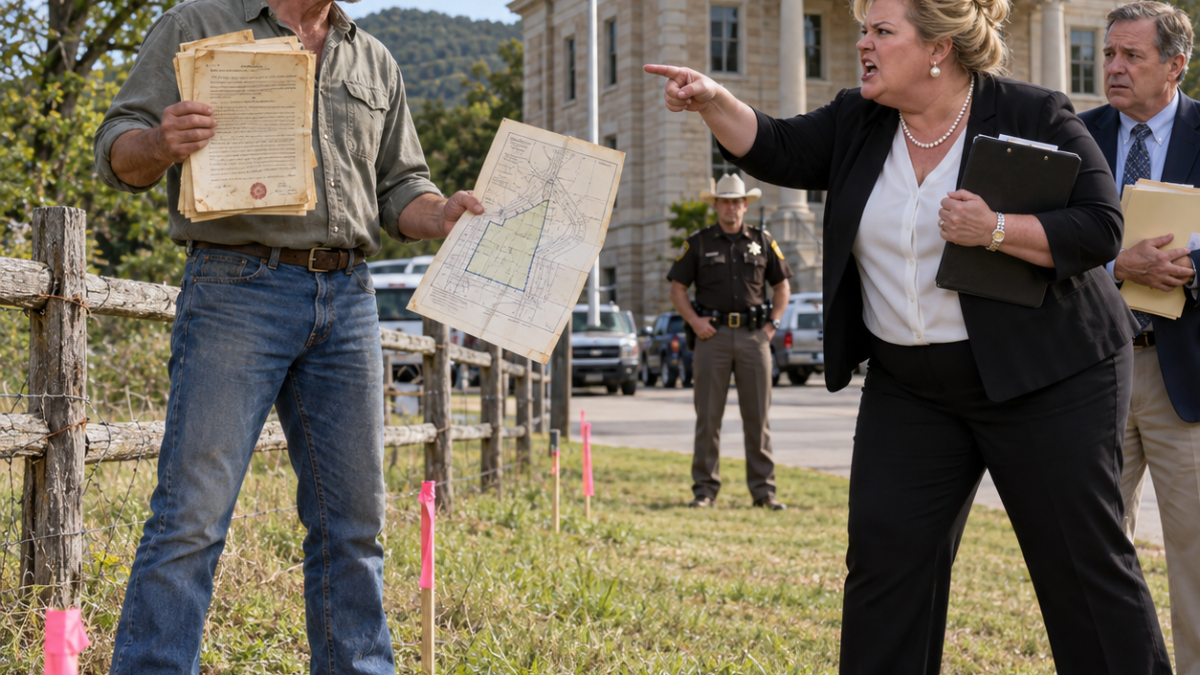
The bulldozer was already idling beside my driveway when the HOA president told me ten feet of my yard no longer belonged to me.
Behind me stood the roses my late wife had planned for our retirement, and in front of me stood a woman holding one sheet of paper she believed gave her the right to erase them.
I had spent twenty-five years learning that the most dangerous orders were sometimes the ones that looked perfectly official until somebody bothered to read the documents underneath them.
“According to the amended covenants, Mr. Miller, this strip is now common property.”
Karen Carmichael stood on my lawn with a clipboard tucked beneath one arm and the expression of someone delivering a verdict.
Two HOA board members hovered beside her.
Gary Richards avoided looking directly at me.
The other woman simply stared toward the roses.
But I barely noticed either of them.
I was looking at the bulldozer.
Its yellow blade sat only yards from the first rosebush Sarah had chosen before she died.
“Turn it off,” I said.
Karen smiled.
“We’re preparing the area for the Oakwood Preserve Reflection Garden.”
I looked at her.
“You’re preparing my property?”
“It is no longer your property.”
She lifted a printed page.
“Amendment 14-B. Passed by the board and ratified by the association. Ten feet along this boundary has been redesignated for common use.”
My pulse slowed instead of speeding up.
That happened to me when I became angry enough.
Twenty-five years in the Army had taught me that panic burned oxygen and anger made people careless.
So I looked past Karen.
At the roses.
Sarah had stood beside me on that exact strip five years earlier, holding my hand while we toured the house for the first time.
“A whole wall of roses right here, Jack,” she had said. “Something beautiful with enough thorns to survive us.”
She never got to see them bloom.
A sudden illness took her before I retired.
After the funeral, I moved into our forever home alone.
For months, half the boxes stayed unopened because unpacking them felt like admitting she wasn’t coming.
Then I found Sarah’s gardening notebook.
Page after page contained sketches, plant names, colors, distances, little arrows showing where she wanted each rose.
So I planted them.
Every bush.
Every color.
Every ridiculous detail.
Those roses became the only promise I had left that I could still keep.
And Karen had brought a bulldozer to erase them.
“Show me the certified notice,” I said.
Her smile tightened.
“What?”
“The certified notice informing me that the association intended to vote on an amendment affecting my property rights.”
“Notices were posted.”
“Where?”
“The community bulletin board.”
“The corkboard beside the pool?”
“Yes.”
I almost laughed.
“Show me the homeowner vote.”
“It was properly approved.”
“Show me the vote count.”
Her eyes hardened.
“You don’t dictate HOA procedure.”
“No. Your bylaws do.”
She turned toward the bulldozer operator.
“Proceed.”
The machine lurched.
I walked directly in front of it.
The operator immediately stopped.
Karen’s face went crimson.
“Move.”
“No.”
“You are obstructing official HOA business.”
“I’m preventing destruction of private property.”
She raised her phone.
“I’ll call the police.”
“Please do.”
That was not the answer she expected.
Thirty minutes later, two sheriff’s deputies stood in my yard.
Karen talked first.
She waved Amendment 14-B in the air, describing me as an unreasonable homeowner refusing to comply with properly adopted community rules.
I said nothing until she finished.
Then I handed the older deputy my recorded survey.
He examined it.
Walked the line.
Looked at the markers.
Then he read Karen’s amendment.
“Ma’am,” he finally said, “this HOA paper does not change a recorded deed.”
Karen blinked.
“The association voted—”
“You cannot vote someone else’s property into common ownership.”
Her mouth opened.
Nothing came out.
“For today,” he continued, “the equipment leaves.”
The bulldozer operator wasted no time.
Karen turned toward me.
The hatred in her eyes was almost physical.
“This isn’t over.”
I looked past her at Sarah’s roses.
“No,” I said quietly.
“It isn’t.”
That night, I covered my dining-room table with HOA bylaws, meeting minutes, surveys, amendments, and property records.
At 1:43 in the morning, I found the first lie.
By sunrise, I knew Karen had not merely bent the rules.
She had invented them.
But it was what my attorney told me to find in the old courthouse records that changed everything.
Because somewhere beneath decades of dust, microfilm, and forgotten survey notes was a document Karen never knew existed.
And once I found it, she would have much more to worry about than my roses.
PART 2
At 6:17 the next morning, I was still sitting at the dining-room table.
The coffee in my mug had gone cold hours earlier.
I hadn’t noticed.
The HOA documents covered almost every inch of the table, layered beneath yellow sticky notes and handwritten observations.
Sarah used to tease me about the way I organized problems.
“You don’t relax, Jack,” she once told me. “You conduct operations against inconvenience.”
She wasn’t wrong.
In the Army, I had spent most of my career in engineering and logistics.
People imagine military engineering as explosions and bridges.
Sometimes it is.
More often, it is contracts.
Maps.
Survey markers.
Specifications.
Approvals.
Inspection reports.
Thousands upon thousands of pages where one sentence can decide whether a project succeeds or fails.
Karen had made the mistake of assuming paperwork belonged to people like her.
People with titles.
Clipboards.
Committees.
What she didn’t understand was that paperwork had been my battlefield for twenty-five years.
And the documents spread across my table told me she had walked into this fight almost completely unarmed.
I picked up the Oakwood Preserve bylaws again.
Article IX.
Amendments.
I read the language for perhaps the tenth time.
Any amendment materially affecting use rights associated with residential parcels required approval by sixty-seven percent of the membership.
Not sixty-seven percent of the board.
The membership.
Every homeowner had to receive written notice at least thirty days before the vote.
The HOA’s records were supposed to include the date of mailing, quorum, number of ballots issued, number returned, and final tally.
Amendment 14-B had none of those things.
The meeting minutes Karen’s assistant gave me were five lines long.
“Board discussed Common Area Beautification Initiative.”
“President Carmichael moved adoption of Amendment 14-B.”
“Motion seconded by Gary Richards.”
“Motion passed.”
That was it.
No homeowner vote.
No quorum.
No ballots.
No notices.
Nothing.
Even worse, the amendment itself didn’t merely regulate landscaping.
It claimed that a strip of privately owned land had become association property.
That sentence kept pulling my attention back.
I understood enough property law to know it was wrong.
But wrong and legally impossible were not always the same thing.
I needed someone who lived inside that distinction.
I called David Chen at 7:02.
He answered with the irritated grunt of a man who had been asleep.
“Who died?”
“Hopefully nobody.”
“Jack?”
“Yeah.”
“What time is it?”
“Seven.”
“There are two sevens in a day?”
“I need a lawyer.”
There was a pause.
“What did you do?”
“Nothing.”
“Then what did somebody do to you?”
That was David.
We had served together briefly overseas when he was assigned to JAG and I was supervising an engineering unit.
He possessed two qualities I respected enormously.
He understood law.
And he enjoyed arguing with arrogant people.
I told him about Karen.
The roses.
The bulldozer.
The amendment.
The deputies.
By the time I finished, he was fully awake.
“She brought heavy equipment onto your property?”
“Yes.”
“And told the operator to proceed after you objected?”
“Yes.”
“She claims the HOA changed your property boundary through a covenant amendment?”
“Yes.”
Silence.
Then:
“Jack.”
“What?”
“Please tell me you did not punch anyone.”
“No.”
“Excellent. Retirement has improved you.”
“Can an HOA do what she’s claiming?”
“No.”
That answer came instantly.
“No qualifications?”
“Oh, there are always qualifications. Lawyers would starve without qualifications. But generally, no. An association can regulate property within authority granted by recorded covenants. It cannot simply vote itself ownership of a piece of your deeded parcel.”
“That’s what the deputy said.”
“The deputy was right.”
I looked at the roses through the dining-room window.
“So we send a letter?”
“We could.”
“But?”
“But I know that tone.”
“What tone?”
“Your ‘I would like to make this person regret several life choices’ tone.”
I didn’t answer.
David sighed.
“Send me everything.”
I scanned the documents.
Deed.
Survey.
Amendment.
Bylaws.
Meeting minutes.
Photographs of the bulldozer.
Sheriff’s incident number.
Two hours later, David called back.
“This is bad.”
“For me?”
“For them.”
He sounded almost cheerful.
“The amendment procedure alone is defective. They didn’t meet the membership requirement. There’s no evidence of certified notice. No recorded tally. But I don’t want to start there.”
“Why not?”
“Because procedures can turn into arguments. They’ll claim there are missing records. Emergency authority. Implied consent. Whatever nonsense they can invent.”
“So what do you want?”
“The original plat.”
“I have my survey.”
“Not good enough.”
“My survey shows the boundary.”
“I know.”
He paused.
“I want the neighborhood’s birth certificate.”
“The what?”
“The original recorded subdivision plat. Oakwood Preserve. When the developer first carved the property into lots and common areas.”
I leaned back.
“What are you expecting to find?”
“Something simple.”
“Such as?”
“Whether that ten-foot strip was ever common property.”
Karen’s entire position rested on the phrase “restored to common ownership.”
Restored.
As if my land had somehow belonged to the HOA before I bought it.
David continued.
“The deed controls your parcel. But if we can show the master plat expressly excluded that strip from common dedication, then we don’t merely prove your ownership.”
“We prove she lied.”
“Exactly.”
I looked at the thick stack of HOA records.
“County courthouse?”
“Recorder’s office. Ask for the original master plat, probably late seventies or early eighties.”
“Anything else?”
“Yes.”
His voice changed.
“While you’re there, pull the deeds and permit history for Karen and the other board members.”
“Why?”
“Because people obsessed with enforcing rules against others often develop selective blindness about their own houses.”
I smiled.
“Still cynical.”
“Still employed.”
The county records building downtown had not changed much since the Cold War.
Fluorescent lights.
Beige tile.
Metal chairs designed by someone who hated the human spine.
Behind the counter sat a woman named Denise whose expression suggested she had personally witnessed every deed dispute since the invention of private property.
“Oakwood Preserve,” I said. “Original subdivision plats. Around 1978.”
She slowly looked over her glasses.
“Phase?”
“I don’t know.”
“Lot?”
“One forty-two.”
She typed.
“Phase Three.”
Then she pointed toward the back wall.
“Microfilm.”
Of course it was microfilm.
For the next three hours, I scrolled through grainy black-and-white images.
Subdivision after subdivision.
Road easements.
Drainage plans.
Utility corridors.
Surveyor stamps.
My eyes began burning.
At one point, I nearly skipped past it.
OAKWOOD PRESERVE — PHASE III.
PLAT BOOK 74.
PAGE B.
I stopped.
Zoomed.
Found the cul-de-sac.
Then Lot 142.
My lot.
My pulse picked up.
The lines were unmistakable.
The rear boundary extended the full distance shown on my modern survey.
The ten-foot strip belonged to Lot 142.
I sat motionless.
Karen was wrong.
Completely.
But then something tiny in the margin caught my attention.
A handwritten surveyor’s note.
I enlarged it.
The letters blurred.
I adjusted focus.
Then read:
“10′ utility and drainage easement along rear of Lots 140–144 to remain private property of lot owner; excluded from common area dedication.”
I read it again.
Excluded from common area dedication.
There it was.
Not merely a property line.
An explicit statement from the neighborhood’s original creation.
The exact strip Karen claimed belonged to the association had been deliberately excluded from association ownership.
Almost fifty years earlier.
I laughed.
Not loudly.
Just one quiet burst in that dim records room.
Denise looked over.
“You find something?”
“Yes, ma’am.”
“Good something?”
“For me.”
She nodded as though she had watched this exact moment a thousand times.
“Get it certified.”
“I was about to ask.”
“Three copies?”
“Twelve.”
That finally earned an eyebrow.
“Expecting a war?”
“Already in one.”
While she prepared the certified plats, I followed David’s second instruction.
Karen Carmichael.
Gary Richards.
Two other board members.
I ordered deeds.
Permit histories.
Variances.
Code-enforcement records.
The results were almost comical.
Gary had an unapproved satellite dish mounted on the side of his house.
One of the other board members had built a storage enclosure that violated the HOA’s own setback requirements.
Karen’s property was better.
Much better.
Her backyard contained a large elevated deck.
County records showed no building permit.
No inspection.
No variance.
According to the restrictions she had enforced against other residents, the deck violated both rear setback and architectural-approval requirements.
I stared at the photograph attached to an old property appraisal.
Karen had hosted HOA Christmas parties on that deck.
Apparently community standards ended at the edge of her patio furniture.
I called David from the parking lot.
“Found it.”
“The plat?”
“Better.”
I read the surveyor’s note.
David was silent for several seconds.
Then:
“Game over.”
“That easy?”
“The title issue? Nearly.”
“And the rest?”
“That depends on how far you want to go.”
I thought of the bulldozer.
Mrs. Gable’s house next door.
Karen’s threat.
Sarah’s roses.
“All the way.”
“Good.”
“What does that mean?”
“It means we stop treating this as a dispute over ten feet.”
I leaned against my truck.
“What do we treat it as?”
“A pattern.”
I understood immediately.
One victim could be described as difficult.
Ten victims became something else.
“I need neighbors.”
“You need evidence.”
“They’ll have both.”
That afternoon, I went next door.
Eleanor Gable was seventy-eight years old.
Widowed.
Five feet tall on a generous day.
She had lived in Oakwood Preserve since 1981.
She was standing beside her petunias when I walked over.
“I heard you found something downtown,” she said.
News traveled fast in neighborhoods run by people who monitored garbage-can schedules.
“How did you hear?”
“I’m old, Mr. Miller. We invented surveillance.”
I laughed.
“Can I show you?”
We sat at her kitchen table.
Her house smelled like lemon oil and cinnamon tea.
I unfolded the certified plat.
Eleanor put on reading glasses.
When I showed her the note, she read it twice.
“So that land was never theirs.”
“No.”
“Not even in 1978?”
“No.”
She took off her glasses.
“That woman brought a bulldozer anyway.”
“Yes.”
Eleanor’s mouth became a thin line.
“Would you like to see my Karen box?”
“Your what?”
She disappeared into the hallway.
Returned carrying a cardboard storage box.
It landed on the table with a thump.
Inside were years of violation notices.
Trash cans.
Garden hoses.
Newspaper placement.
Wind chimes.
Mailbox paint.
Mulch.
The mulch dispute had generated seventeen letters.
Seventeen.
Then Eleanor handed me the final notice.
Lien.
$1,500.
I looked up.
“She put a lien on your house?”
“I paid before they could proceed.”
“For mulch?”
“For the fine, late fees, administrative charges, legal processing fee, inspection fee, and whatever other words she needed to reach fifteen hundred dollars.”
“Why didn’t you fight?”
Eleanor looked toward a framed photograph of her late husband.
“Because I was scared.”
That answer hit harder than I expected.
“My husband and I built this place. Every room. Every tree.”
She folded her hands.
“When the letter said they could eventually foreclose, I thought about losing his workshop. His chair. The porch where he died.”
Her eyes watered.
“So I paid.”
I felt a familiar anger rising.
Not hot.
Cold.
Useful.
“Eleanor.”
“Yes?”
“Did you ever receive certified notice of Amendment 14-B?”
“No.”
“A ballot?”
“No.”
“Invitation to a membership vote?”
“No.”
“Would you sign an affidavit saying that?”
Fear crossed her face.
Karen had trained people well.
Eleanor glanced toward the box.
Then toward the window.
“My husband used to say the worst bullies are the ones everybody helps by staying quiet.”
She looked back at me.
“I’ve been quiet too long.”
That afternoon, she signed.
Eleanor became the first.
The Rodriguezes became the second.
Miguel Rodriguez was a contractor.
He understood the master plat in approximately twelve seconds.
“She just made it up?”
“Yes.”
“The boundary?”
“Yes.”
“The vote?”
“Looks that way.”
He stared at the certified copy.
Then walked inside.
Returned with a folder.
“My wife has been telling me to throw these away.”
Violation notices.
Basketball hoop.
Fence application.
Toddler toys.
Work truck.
A wooden privacy fence Karen personally denied because, according to her, “chain-link is the only approved material.”
The covenants contained no such requirement.
Miguel pointed at Karen’s handwritten notation.
“She invented that too?”
“Yes.”
He swore softly.
“What do you need?”
“Everything.”
“You got it.”
The next week changed Oakwood Preserve.
Not publicly.
Not yet.
But quietly.
Doors that had stayed closed started opening.
A single mother named Rebecca showed me eight fines involving her son’s bicycle and chalk drawings on the driveway.
A retired Marine named Walter Brooks produced letters threatening him over an American flagpole six inches above Karen’s preferred height.
One couple had been fined because visiting relatives parked a pickup truck overnight.
Another had been billed for “excessive seasonal decoration” after leaving Christmas lights up until January 8.
Another resident had been denied permission to add a small wheelchair-access ramp until he threatened to involve federal accessibility authorities.
Each case alone sounded petty.
Together, they looked systematic.
Question Karen once, and suddenly your property developed ten violations.
Pay quietly, and the pressure disappeared.
By Friday, my dining table no longer belonged to me.
It belonged to Oakwood Preserve.
Folders sat in rows.
Eleanor.
Rodriguez.
Brooks.
Turner.
Campbell.
Nguyen.
Wilson.
My own file was thickest.
David arrived Saturday.
He walked inside, saw the table, and stopped.
“You really did build a command post.”
“Coffee?”
“Immediately.”
For two hours, he reviewed everything.
Then he found Karen’s deck records.
His expression changed.
“Oh, Jack.”
“What?”
“This is wonderful.”
“Illegal deck?”
“Unpermitted. Setback issue. No HOA architectural approval on file.”
“She’s been enforcing those exact rules.”
“Yes.”
“And Gary?”
David flipped pages.
“Satellite dish. Looks prohibited by the same aesthetic standard he used against Mr. Turner.”
I sat across from him.
“So what now?”
“We give Karen a choice.”
“What choice?”
“Stop.”
“That’s it?”
“It’s the reasonable first step.”
“And when she refuses?”
David smiled.
“We sue.”
His cease-and-desist letter was twelve pages.
It cited my deed.
The plat.
The invalid amendment procedure.
The sheriff incident.
Potential trespass.
Attempted property damage.
Breach of fiduciary duty.
Selective enforcement.
It demanded that Amendment 14-B be formally rescinded.
All fines against me withdrawn.
No HOA employee, board member, or contractor enter my property without permission.
No work be performed within my deeded boundary.
A preservation order went further.
All emails.
Texts.
Drafts.
Minutes.
Financial records.
Ballot records.
Communications concerning Amendment 14-B.
Preserve everything.
Karen received it Monday at 10:12.
At 10:41, she called.
I let it go to voicemail.
“Mr. Miller, this absurd letter changes nothing. The board has acted lawfully. Your attorney’s threats will not intimidate us. Oakwood Preserve will defend its governing authority by every means available.”
I forwarded the voicemail to David.
He replied with three words.
“Perfect. Save it.”
Karen’s written response arrived two days later.
She refused every demand.
According to her attorney, Amendment 14-B had been “properly enacted by the governing board pursuant to its broad authority to preserve community character.”
David called me.
“She’s committing.”
“To what?”
“Her version.”
“Meaning?”
“When someone gets caught standing on bad facts, sometimes they retreat.”
“And Karen?”
“She’s building a house there.”
Our next move did not begin in court.
It began with the HOA bylaws.
Article VI permitted homeowners to force a special membership meeting if twenty percent of lots signed a petition.
By Sunday, we had thirty-eight percent.
Karen rejected the petition.
Of course she did.
Her letter claimed several signatures were “questionable.”
David sent another notice.
Twenty-four hours later, Karen announced the special meeting.
Tuesday.
7:00 p.m.
Community clubhouse.
But the lawsuit had already been filed.
Quiet title.
Declaratory judgment.
Trespass.
Breach of fiduciary duty.
Fraud.
Request for punitive damages.
The HOA itself was named.
Karen personally.
Gary.
The other board members who had signed the amendment.
Then came discovery.
David requested everything.
Every text.
Every email.
Every draft.
Original meeting minutes.
Attendance logs.
Ballots.
Certified-mail receipts.
Financial records connected to the beautification project.
Karen’s lawyer objected.
David moved to compel.
The judge ordered production.
Two weeks later, Karen handed us the gift that destroyed her.
A second version of the Amendment 14-B meeting minutes.
I recognized immediately that something was wrong.
The version I had purchased from the HOA office contained no attendees.
No vote tally.
No homeowner discussion.
This new version was three pages.
Twenty homeowners listed.
A vote tally.
Descriptions of comments.
A paragraph claiming members had discussed “the benefits of reclaiming neglected easement areas for common aesthetic purposes.”
David placed the two versions side by side.
“When did you get yours?”
“The day after the bulldozer incident.”
“Receipt?”
I handed it over.
He smiled.
“Excellent.”
“What?”
“Your copy has provenance.”
He tapped the new minutes.
“This one has imagination.”
I scanned the attendance list.
Then stopped.
Rodriguez, Miguel and Ana.
“Wait.”
“What?”
“They weren’t there.”
“You know?”
“Their daughter’s school play.”
David looked at me.
“What school play?”
“They told me Karen scheduled an inspection the next morning and complained because their car wasn’t home that night. They were out of town.”
His expression sharpened.
“Call them.”
Ana Rodriguez answered.
“Yes,” she said. “March twelfth. Emma’s regional school performance.”
“Where?”
“Raleigh.”
“That’s almost two hours away.”
“We stayed overnight.”
“Photos?”
“About six hundred. I’m her mother.”
“Receipts?”
“Hotel. Restaurant. Gas station.”
“Would you swear under oath you weren’t at that HOA meeting?”
She laughed bitterly.
“Gladly.”
Three other supposed attendees also denied being present.
One man had been hospitalized.
Another had been traveling for work.
Eleanor’s name appeared too.
She nearly dropped the paper.
“I was visiting my sister in Ohio.”
Karen had not merely cleaned up the minutes.
She had fabricated witnesses.
David scheduled her deposition.
The morning of it, he seemed irritatingly relaxed.
We sat in a conference room downtown.
Karen arrived wearing navy blue.
Pearls.
Hair immaculate.
Her new lawyer was a broad man named Patterson who had perfected the expression of someone perpetually offended on behalf of paying clients.
The court reporter administered the oath.
David began gently.
Name.
Address.
Board position.
Years served.
Responsibilities.
Karen spoke confidently.
She enjoyed describing herself.
She described her dedication.
Volunteer hours.
Commitment.
Community standards.
Then David introduced Amendment 14-B.
“You personally proposed this amendment?”
“Yes.”
“You believed it was necessary?”
“Absolutely.”
“You participated in the meeting where it was adopted?”
“Yes.”
“And homeowners were present?”
“Yes.”
“How many?”
“I don’t remember exactly.”
David placed the new minutes before her.
“Does this refresh your recollection?”
She looked.
“Yes.”
“Twenty homeowners?”
“That appears correct.”
“Were these official minutes?”
“Yes.”
“Accurate?”
“Yes.”
“Complete?”
“Yes.”
Patterson shifted.
David continued.
“Mr. and Mrs. Rodriguez attended?”
“Yes.”
“You specifically remember them?”
Karen hesitated.
“There were many people.”
“But you produced this document under court order as the true record.”
“Yes.”
“And it says they attended.”
“Yes.”
David nodded.
Then he placed my original copy beside it.
Karen froze.
“This document was obtained from your office by Mr. Miller on May fourteenth.”
She said nothing.
“Five lines.”
Silence.
“No attendance list.”
Silence.
“No vote total.”
Patterson leaned forward.
“Counsel, what exactly is your question?”
David did not look at him.
“Mrs. Carmichael, why are there two versions?”
“The shorter one was probably a draft.”
“A draft?”
“Yes.”
“Stored in the official records cabinet?”
“I don’t manage every clerical detail.”
“Yet the draft was the only version available when Mr. Miller made his statutory records request.”
“I don’t know.”
“Who prepared the final version?”
“Our secretary.”
“Name?”
Gary was not secretary.
The secretary at the time had resigned six months earlier.
Karen picked another name.
David already knew the answer.
He produced an affidavit from the former secretary.
She stated she had never created, reviewed, or seen the expanded minutes.
Karen’s cheeks reddened.
Patterson whispered to her.
David waited.
Then:
“Mrs. Carmichael, you testified the Rodriguezes were present.”
“Yes.”
David slid a photograph across the table.
Emma Rodriguez on a stage.
Timestamp: March 12.
Then hotel receipts.
Then Ana and Miguel’s sworn affidavits.
Karen stared.
“They could have arrived later.”
“The performance was one hundred miles away.”
“I don’t know their schedule.”
“But your minutes say Mr. Rodriguez spoke during discussion.”
Karen said nothing.
David continued.
“Mrs. Gable?”
“What about her?”
“Your minutes say she voted in favor.”
“I assume she did.”
“You assume?”
“I don’t personally remember every ballot.”
David slid forward Eleanor’s airline itinerary.
Ohio.
Then Walter Brooks’s hospital admission.
Then another resident’s employment travel records.
By the fourth contradiction, Patterson asked for a break.
David refused to end the deposition.
Karen returned fifteen minutes later visibly shaken.
Then he brought out the plat.
A certified copy.
He unfolded it across the table.
“Mrs. Carmichael, have you seen this?”
“No.”
“This is the original recorded master plat for Oakwood Preserve Phase III.”
She looked toward Patterson.
David pointed.
“Lot 142.”
No response.
“Please read the note.”
“I don’t have my reading glasses.”
David silently handed her his.
I almost laughed.
She put them on.
Read.
Her lips moved slightly.
“Out loud, please.”
“Ten-foot utility and drainage easement…”
“Continue.”
“…along rear of Lots 140 through 144 to remain private property of lot owner…”
Her voice weakened.
“Continue.”
“…excluded from common area dedication.”
David leaned back.
“So this strip was never HOA property.”
Patterson interrupted.
“Objection. Calls for a legal conclusion.”
David nodded.
“Fine.”
He looked at Karen.
“When you sent a bulldozer to Mr. Miller’s property, had you reviewed this master plat?”
“No.”
“Had anyone?”
“I don’t know.”
“Had you reviewed Mr. Miller’s deed?”
“We had association records.”
“That wasn’t my question.”
Karen looked at him.
“No.”
“His survey?”
“No.”
“County records?”
“No.”
“You attempted to take possession of ten feet of his land without checking the deed?”
“We relied on our authority.”
“What authority?”
“The amendment.”
“The amendment you created based on the claim that the land was common property.”
“Yes.”
“But you never checked whether it was common property.”
Patterson objected.
David ignored the performance.
Then came the final blow.
Karen’s deck.
David produced county records.
“Is this your house?”
“Yes.”
“Your deck?”
“Yes.”
“Did you obtain a county permit?”
“I don’t remember.”
“There is none.”
“That may be a county error.”
“HOA architectural approval?”
“I don’t need to approve my own—”
She stopped.
The room went perfectly still.
David leaned forward.
“You don’t need to approve your own?”
Patterson closed his eyes.
Karen tried again.
“I mean the board was aware.”
“Show me the approval.”
“I don’t have it.”
“You personally fined homeowners for structures lacking written approval, correct?”
“Where appropriate.”
David placed Miguel Rodriguez’s fence denial on the table.
Then Walter’s flagpole citation.
Eleanor’s lien.
He formed a neat row.
“When appropriate?”
Karen stared.
David’s voice stayed quiet.
That made it worse.
“Mrs. Carmichael, did the rules apply differently to you?”
“No.”
“Then where is your permit?”
No answer.
“Where is your HOA approval?”
No answer.
“Where are the ballots approving Amendment 14-B?”
No answer.
“Where are the certified-mail receipts?”
No answer.
“Why are there two versions of the minutes?”
Patterson finally said, “My client will not answer further questions on that subject pending advice of counsel.”
David sat back.
“We’re done.”
Karen removed David’s reading glasses and placed them on the table.
Her hand trembled.
For the first time since I met her, she did not look powerful.
She looked small.
I expected to feel triumph.
Instead, I thought about Sarah.
She would have hated this room.
Not because Karen was being exposed.
Because Sarah disliked cruelty even when the target had earned consequences.
“Don’t enjoy people at their worst, Jack,” she once told me after an ugly command investigation overseas. “Make them answer for it. That’s different.”
I carried those words out of the building.
The special HOA meeting happened seven days later.
Karen chose the smallest room in the clubhouse.
It did not help.
By six forty-five, residents filled every chair.
By six fifty-five, people stood against the walls.
At seven, the hallway was full.
At seven three, somebody opened the side doors so homeowners outside could hear.
Karen sat at the front between Gary and the remaining board member.
She tapped the microphone.
“Order.”
Nobody stopped talking.
“ORDER.”
The room gradually quieted.
She began with a speech about civility.
Then misinformation.
Then “outside legal harassment.”
Someone in the back shouted:
“Recall vote!”
Applause thundered.
Karen’s face tightened.
The bylaws gave our group thirty minutes before the vote.
I carried my laptop to the front.
Miguel helped connect the projector.
The first image appeared on the wall.
The 1978 master plat.
“This neighborhood began here,” I said.
No dramatic introduction.
No insults.
Just the document.
Karen tried to interrupt.
I held up one hand.
“You had your turn for years.”
The room reacted with scattered applause.
I pointed to Lot 142.
“My home.”
Then the note.
I enlarged it.
EXCLUDED FROM COMMON AREA DEDICATION.
“This is the ten-foot strip Karen’s board claimed it owned.”
I looked around the room.
“The county record says the opposite.”
I showed my deed.
My modern survey.
Photographs of the bulldozer.
Sarah’s roses.
When that image appeared, I had to stop for a moment.
A photograph taken the previous spring.
Pink.
Crimson.
White.
Full bloom.
I swallowed.
“My wife planned these roses before she died.”
The room went still.
“I planted them after I lost her.”
I looked toward Karen.
“The board sent a bulldozer to remove them for a so-called reflection garden.”
Someone near the front whispered, “My God.”
I continued.
“This is not really about roses.”
Next slide.
Eleanor’s lien notice.
“This is about what happens when people are afraid to challenge authority.”
Eleanor sat in the first row.
I looked at her.
“Mrs. Gable, do I have your permission?”
She stood.
“Yes.”
Her voice shook.
Then strengthened.
“Yes, you do.”
I told the story.
Wrong mulch.
Fines.
Fees.
Lien threat.
Emergency savings.
Karen stared down at the table.
Next slide.
Rodriguez fence denial.
Then the actual covenants.
No chain-link requirement.
Next.
Walter’s flagpole.
Next.
Rebecca’s bicycle fines.
Next.
Karen’s unpermitted deck.
A sound traveled through the room.
Not quite laughter.
Not quite anger.
Something between.
I clicked again.
The original meeting minutes.
Five lines.
Then the new minutes.
Three pages.
Twenty names.
Vote count.
Discussion.
“These documents supposedly describe the same meeting.”
People started murmuring.
I highlighted Eleanor’s name.
Rodriguez.
Brooks.
“Mrs. Gable was in Ohio.”
I displayed her itinerary.
“The Rodriguezes were one hundred miles away.”
Photo of Emma’s school performance.
“Mr. Brooks was hospitalized.”
Medical admission record.
I faced the room.
“Yet the second set of minutes says all of them attended and voted.”
Karen stood.
“This is privileged litigation material!”
David spoke from the back.
“No, it isn’t.”
Every head turned.
Karen glared.
David folded his arms.
“These were documents produced by the HOA as purported official records.”
Karen pointed at me.
“He is manipulating you!”
Eleanor stood.
Slowly.
No microphone.
She didn’t need one.
“Karen.”
The room quieted.
Eleanor was tiny.
Karen looked almost twice her size.
But power had shifted.
“You threatened to take my home.”
Karen opened her mouth.
Eleanor continued.
“My husband died in that house.”
Silence.
“I paid you fifteen hundred dollars because I was terrified.”
Karen shook her head.
“You violated—”
“Mulch.”
Someone laughed bitterly.
Eleanor’s voice trembled.
“Mulch.”
She pointed toward me.
“And then you brought a bulldozer to destroy a dead woman’s roses.”
Karen’s face flushed.
“I was enforcing community standards!”
“No.”
Eleanor shook her head.
“You were enjoying power.”
That sentence ended Karen Carmichael’s presidency.
Not officially.
Not yet.
But emotionally.
The room erupted.
Residents stood.
Stories flew from every direction.
“You fined my daughter!”
“You threatened us over our driveway!”
“You denied my fence!”
“You charged me three hundred dollars for a trash can!”
Gary tried to disappear into his chair.
Karen grabbed the microphone.
“If you people cannot conduct yourselves with dignity—”
Miguel shouted:
“Vote!”
Everyone joined.
“VOTE!”
“VOTE!”
“VOTE!”
Ballots were distributed.
Karen demanded verification.
David had arranged independent volunteers.
Names checked against the membership roll.
One ballot per lot.
Private marking.
Locked collection box.
Counted in public.
I stood against the wall.
Didn’t watch the first half.
I watched Eleanor.
She sat gripping her purse.
When the final number was announced, she closed her eyes.
Karen Carmichael: recalled.
Gary Richards: recalled.
Remaining board members: recalled.
The margin was overwhelming.
For several seconds, Karen didn’t move.
Then:
“This vote is invalid.”
Nobody answered.
“You don’t have authority to remove this board!”
David walked forward holding the bylaws.
“They do.”
Karen turned toward him.
“You.”
“Yes.”
“You orchestrated this.”
“No.”
David looked around.
“You did.”
That was crueler than anything he could have shouted.
Karen grabbed her purse.
Her chair toppled behind her.
She walked toward the exit.
The crowd moved aside.
Not respectfully.
Simply because nobody wanted to touch her.
At the door, she stopped.
Turned.
Looked at me.
I expected anger.
Instead, there was disbelief.
As if the world itself had broken an agreement with her.
Then she left.
The door slammed.
Nobody cheered.
That surprised me.
There was applause when the results were announced.
But after she left, the room became strangely quiet.
People seemed to realize that removing a bully did not automatically repair what fear had damaged.
Eleanor was elected interim president.
She protested immediately.
“I am seventy-eight years old.”
Miguel laughed.
“That means you’re the only person here with enough patience.”
“I have no patience.”
“Even better.”
She agreed to serve for ninety days.
Her first act was to move that Amendment 14-B be formally repudiated.
Unanimous.
Her second was to suspend disputed fines until independent review.
Unanimous.
Her third was unexpected.
“Mr. Miller.”
I looked up.
“Yes?”
“Would you come here?”
I walked to the front.
Eleanor stood beside me.
“On behalf of Oakwood Preserve, I apologize for what was done to you and to Sarah’s garden.”
My throat tightened.
She knew Sarah’s name because I had told her.
Hearing it there hurt.
In a good way.
I nodded.
“Thank you.”
But the civil case remained.
The new board immediately hired independent counsel.
Unlike Karen’s attorney, the new lawyer did something remarkable.
He read the documents.
Within a week, Oakwood Preserve formally conceded my ownership of the disputed strip.
The HOA withdrew Amendment 14-B.
Agreed the bulldozer should never have been sent.
Agreed to pay reasonable legal costs arising from actions taken by the former board in its official capacity.
That could have ended most of it.
I would have been satisfied.
David wasn’t.
“What about Karen?”
“What about her?”
“She was individually named.”
“The board has fixed it.”
“The board fixed the HOA’s position.”
He tapped the deposition transcript.
“She still fabricated records.”
“I know.”
“She tried to seize your land.”
“I know.”
“She used association authority to terrorize people.”
“I know.”
He looked at me.
“What are you thinking?”
I thought about Sarah’s advice.
Accountability without cruelty.
“I want a legal judgment protecting the property.”
“You’ll get it.”
“I want attorney fees.”
“Yes.”
“I want the court to address the fraud.”
“Yes.”
I paused.
“I don’t want revenge for entertainment.”
David studied me.
“That’s not why I’m here.”
“Sometimes you sound like it.”
He smiled slightly.
“I’m a litigator, Jack. We express affection through exhibits.”
The court date arrived in October.
Autumn had turned the roses darker.
Sarah always preferred fall.
She said summer roses showed off.
Autumn roses had earned their beauty.
I cut one crimson bloom that morning.
Set it in a glass beside her photograph.
Then put on my suit.
County courtrooms have a particular silence.
Not peaceful.
Controlled.
People whisper because consequences might be listening.
Judge Nadia Al-Hassani entered precisely at nine.
She was perhaps sixty.
Silver-streaked hair.
Reading glasses low on her nose.
No patience for performance.
David had moved for summary judgment.
His argument was simple.
There were no genuine facts left to dispute.
My deed said I owned the land.
The master plat said the land was excluded from common dedication.
The HOA now agreed.
The amendment procedure was defective.
The bulldozer incident was documented.
Two versions of official minutes existed.
Multiple listed attendees denied attendance.
Karen’s deposition contradicted recorded evidence.
Karen sat across the aisle.
New lawyer.
Different suit.
Same pearls.
But she no longer looked like the woman who had stood beside the bulldozer.
David rose.
“Your Honor, strip away the rhetoric and this case is uncomplicated.”
He placed the certified plat on the evidence display.
“My client owns property.”
He displayed my deed.
“The former HOA board attempted to assert ownership of part of that property.”
Amendment 14-B.
“The defendants based that claim on an amendment they lacked authority to enact.”
Bylaws.
“They failed to provide required notice.”
Records-request receipt.
“They later produced a materially different version of the meeting minutes.”
Both versions side by side.
“And the former president testified under oath that the second version was accurate despite substantial evidence showing multiple listed participants were elsewhere.”
He returned to the plat.
“Most importantly, the defendants’ basic premise was false from the beginning. The disputed ten-foot strip was never common property.”
He enlarged the survey note.
Judge Al-Hassani leaned closer.
“Excluded from common area dedication.”
“Yes, Your Honor.”
Karen’s lawyer rose.
He argued that the HOA had acted in a good-faith attempt to clarify an ambiguous easement.
Judge Al-Hassani interrupted.
“What is ambiguous?”
“The historical intent—”
“No.”
She removed her glasses.
“I asked what language is ambiguous.”
He looked toward the display.
“Your Honor, the broader development scheme—”
“The document says private property of lot owner.”
“Yes, but—”
“And excluded from common area dedication.”
“Yes.”
“Where is the ambiguity?”
The lawyer tried another approach.
He argued Karen relied on association counsel.
David produced discovery responses showing no attorney had reviewed Amendment 14-B before the bulldozer incident.
The lawyer argued administrative error explained the minutes.
Judge Al-Hassani looked at him.
“An administrative error placed people at a meeting they can prove they did not attend?”
Silence.
“And created remarks attributed to those people?”
Silence.
“And created a vote count?”
“Your Honor—”
“No. I’m asking.”
The lawyer finally said:
“I cannot speak to how the discrepancy occurred.”
Judge Al-Hassani turned toward Karen.
“Mrs. Carmichael.”
Her lawyer stood quickly.
“Your Honor, my client is represented—”
“I am aware.”
The judge looked down at the deposition.
“I have reviewed this transcript several times.”
Karen’s face went pale.
Judge Al-Hassani continued.
“The record reflects that you repeatedly affirmed the accuracy of the expanded minutes.”
Karen whispered to her lawyer.
He stood.
“My client relied on the records supplied to her.”
David raised one eyebrow.
The judge noticed.
“So did your client create these minutes?”
“We dispute any suggestion—”
“That was not my question.”
The lawyer looked at Karen.
Karen looked down.
The courtroom became silent enough that I heard someone turn a page behind me.
Eleanor sat in the gallery.
Miguel beside her.
Walter.
Rebecca.
Neighbors who six months earlier had barely spoken to one another.
Judge Al-Hassani finally said:
“The court does not need to resolve potential criminal responsibility today.”
Karen exhaled.
Too early.
“But this court is required to address evidence of fraud affecting this proceeding.”
Karen stopped breathing.
The judge read her ruling.
Amendment 14-B was void.
Not merely repealed.
Void from inception.
My deeded boundary was affirmed.
The ten-foot strip belonged to me.
The HOA could never claim ownership based on that amendment.
A permanent injunction prohibited interference with my use of the property based on the invalid provision.
Then legal fees.
The HOA, under its prior board, had forced the litigation.
My reasonable fees were awarded.
The new board had already agreed.
Then Judge Al-Hassani turned to the individual conduct.
“Mrs. Carmichael’s actions exceeded mere negligence.”
Karen stared ahead.
“The evidence demonstrates deliberate enforcement of an unsupported claim after the plaintiff raised clear objections and produced a facially valid survey.”
My heart began pounding.
“The court further finds that the former president’s conduct was aggravated by an attempt to cause physical alteration of the property through heavy equipment.”
Karen closed her eyes.
“And by subsequent production of inconsistent official records.”
The judge paused.
“Punitive damages are appropriate.”
Karen’s lawyer stood.
“Your Honor—”
“Sit down.”
He did.
“Fifty thousand dollars.”
Eleanor gasped behind me.
I didn’t move.
Punitive damages.
Personally against Karen.
Fifty thousand dollars.
But Judge Al-Hassani was not finished.
“Additionally, the court directs the clerk to transmit the relevant portions of the civil record, including the deposition transcript and disputed meeting minutes, to the district attorney for whatever review that office deems appropriate.”
Karen turned toward her attorney.
He whispered something.
Her mouth opened.
No sound came.
Judge Al-Hassani signed the order.
“This court will not permit voluntary associations to convert private governance into private confiscation.”
Then she looked directly at Karen.
“A position of limited community authority is not ownership of the people beneath it.”
Gavel.
Done.
Outside the courthouse, everyone talked at once.
Miguel hugged me.
I am not a hugging man.
Apparently Miguel didn’t care.
Walter shook my hand.
Rebecca cried.
Eleanor reached me last.
She held both my hands.
“Sarah would be proud.”
That almost broke me.
“You never met her.”
“No.”
Eleanor smiled.
“But I know what you protected.”
I looked toward David.
He pretended to be checking his phone.
I knew better.
Later, sitting alone in my truck, I finally cried.
Not because of Karen.
Not because of money.
Because for months, I had framed the entire fight as defending land.
Ten feet.
Property rights.
A deed.
But Eleanor was right.
I had been protecting a promise.
Sarah and I had moved through twenty-five years of Army life promising ourselves that eventually there would be one place nobody could order us away from.
Germany.
Texas.
Virginia.
Georgia.
Kuwait.
Back to Texas.
Another deployment.
Another set of boxes.
Always temporary.
Oakwood was supposed to be permanent.
Sarah never got permanence.
She got sick before we could live it.
The roses were the piece of that future I could still give her.
Karen almost destroyed them because she wanted a prettier common garden on a map.
She never understood why I stood in front of the bulldozer.
It wasn’t courage.
It wasn’t military discipline.
It was grief.
There are moments when grief stops making you weak and becomes the strongest thing in the room.
A week after judgment, the HOA reimbursed David’s fees.
He tried to return part of them.
“You said you were doing this pro bono.”
“I lied.”
“I noticed.”
“The HOA is paying.”
“So?”
“So you’re buying dinner.”
“Fine.”
“At somewhere expensive.”
“Now I understand your legal strategy.”
The punitive-damages judgment against Karen created immediate financial problems.
I never learned every detail.
Nor did I try.
I knew a lien eventually appeared.
I knew her house went on the market.
I knew the unpermitted deck became an issue during the sale.
One Saturday morning, a crew arrived and began dismantling it.
I was pruning roses when I heard saws.
Eleanor walked over.
“Poetic.”
“What?”
She nodded toward Karen’s disappearing deck.
“You should probably say something wise about people who build things without permission.”
“No.”
“Disappointed.”
“I’m trying to become mature.”
“At your age?”
“Exactly.”
Gary resigned from every neighborhood committee.
He sent me a written apology.
Not an impressive one.
Three paragraphs mostly explaining how Karen had pressured him.
I wrote back one sentence.
“Take responsibility before you explain pressure.”
Two days later, he sent a second letter.
Shorter.
Better.
“I signed something I knew had not been properly approved. I was afraid of confronting Karen, and I let that fear become your problem. I am sorry.”
I accepted that apology.
The third board member apologized to Eleanor and several other homeowners.
Some residents wanted lawsuits over every old fine.
David recommended a structured review instead.
The new board hired an independent attorney and accountant.
Improper fines were refunded where documentation supported the claims.
Liens arising from invalid or selectively enforced violations were released.
Procedures changed.
No more one-person fines.
No more undocumented “special rules.”
No more approvals based on what the president remembered the covenants saying.
Written standards.
Written votes.
Conflict-of-interest rules.
Open records.
Appeal rights.
Meeting minutes posted within ten days.
Eleanor insisted on one additional rule.
“No HOA president’s face on the newsletter.”
That passed unanimously.
Oakwood began healing in small ways.
The Rodriguezes built their wooden fence.
Exactly as they had originally requested.
Miguel invited me over after finishing it.
“Approved?”
He grinned.
“Yes.”
“By whom?”
“My wife.”
“The only authority that matters.”
Walter installed a shorter replacement flagpole voluntarily.
“Why shorter?”
He shrugged.
“The tall one whistled in the wind. Drove me crazy.”
“So Karen was accidentally right?”
“Never say that again.”
Rebecca’s son left his bicycle on the porch for three straight days.
No fine.
Eleanor changed her mulch.
I noticed one morning.
“You switched.”
“It was ugly.”
I stared at her.
“You paid fifteen hundred dollars defending mulch you thought was ugly?”
“This was never about mulch, Jack.”
Fair enough.
Karen’s house sold in January.
I happened to be collecting mail when the moving truck arrived.
I did not watch.
That evening, I found an envelope in my mailbox.
No stamp.
My name handwritten.
Inside was one page.
Karen.
Her letter surprised me.
Not because it apologized.
It barely did.
She wrote that she still believed she had tried to improve the community.
That she had allowed the position to consume her.
That she had begun thinking opposition meant disrespect.
That she convinced herself rules were flexible when the goal seemed important enough.
Then came the sentence I read three times.
“I stopped seeing neighbors as people and started seeing them as problems to manage.”
That was the first honest thing I had ever heard from her.
At the bottom:
“I am sorry about your wife’s roses.”
I folded the letter.
Sarah would have asked whether I forgave her.
I knew that.
She believed forgiveness had less to do with absolving somebody else than refusing to let them rent space inside you forever.
So I did.
Privately.
Not because Karen deserved restoration from me.
Because I was tired of carrying her.
I never answered the letter.
Sometimes silence is enough.
Spring came early the following year.
The roses exploded.
Crimson.
Pink.
White.
Yellow.
The old garden looked almost indecently alive.
I was tying back one climbing cane when a car stopped near the curb.
A young couple stepped out.
They were the new owners of Karen’s house.
Daniel and Priya.
Their little girl, maybe six years old, followed them.
Daniel raised a hand.
“Mr. Miller?”
“Jack.”
“We wanted to introduce ourselves.”
We shook hands.
Priya looked toward the roses.
“They’re beautiful.”
“Thank you.”
Their daughter pointed.
“Can I smell them?”
Her mother immediately said, “Ask first.”
“She just did.”
The little girl approached carefully.
She smelled a pink rose.
Then smiled.
“This one smells like candy.”
“That was my wife’s favorite.”
“Where is she?”
Adults hate children for questions like that because children ask them without fear.
“She died.”
The girl became serious.
“Oh.”
She looked at the roses.
“Did she plant these?”
“She planned them.”
“You planted them?”
“Yes.”
“For her?”
“Yes.”
The child thought about that.
Then said:
“That’s nice.”
And went back to smelling flowers.
Priya’s eyes filled.
Daniel cleared his throat.
“We heard some of the story.”
“I’m sure you did.”
“We want you to know we’re not planning to annex anything.”
I laughed.
“Appreciated.”
They became good neighbors.
Not perfect.
Nobody is.
Daniel played music too loudly sometimes.
Their dog escaped twice.
I backed my truck partly into their driveway once.
None of us created a committee about it.
The neighborhood picnic returned that summer.
Eleanor refused to call it an official HOA event.
“Official events need insurance paperwork.”
So everybody called it Eleanor’s Picnic.
She hated that even more.
Tables appeared in the common green.
Kids ran everywhere.
Miguel grilled.
Walter brought enough potato salad to feed an infantry company.
Rebecca organized games.
Daniel and Priya came.
Their daughter brought me a construction-paper rose.
“For your wife.”
I had to look away for a second.
“Thank you.”
“Will you put it with the real ones?”
“It might get wet.”
“Oh.”
“I’ll put it inside.”
She accepted that.
The paper rose went beside Sarah’s photograph.
It stayed there.
The district attorney eventually reviewed the meeting-minute issue.
Karen entered an agreement related to falsified association records.
There was no dramatic prison sentence.
No handcuffs on television.
She received probation, financial penalties, and community service.
Some neighbors were disappointed.
They wanted spectacle.
I didn’t.
By then I understood something.
Punishment is not the same as repair.
Her title was gone.
Her authority was gone.
She had paid damages.
The court permanently protected my land.
The neighborhood had changed its governance.
People received refunds.
Liens were lifted.
Fear was gone.
I didn’t need to watch Karen suffer forever to know we had won.
The $50,000 judgment eventually arrived through her insurer and personal settlement arrangements after additional proceedings.
I stared at the check for a long time.
David asked what I planned to do with it.
“I don’t know.”
“Boat.”
“No.”
“Motorcycle.”
“No.”
“Extremely irresponsible vacation.”
“No.”
“Jack, you’re disappointing.”
I finally knew.
The original HOA plan had been a “reflection garden.”
A ridiculous name for stealing my roses.
But Sarah had loved gardens.
So I used part of the money to create one.
Not on my ten-foot strip.
That remained private.
Across the street stood a legitimate common parcel already owned by the HOA.
I went to Eleanor.
“I want to propose something.”
“If it involves me remaining president, denied.”
“You’ve said that for eleven months.”
“I’m trapped.”
I showed her the plan.
Benches.
Native flowers.
Small trees.
No monuments to the lawsuit.
No plaque naming me.
Just a community garden.
One modest stone near the path.
FOR SARAH — BEAUTIFUL THINGS CAN HAVE THORNS AND STILL BE WORTH IT.
Eleanor read it.
Then cried.
“I hate you.”
“You approve?”
“Obviously.”
The HOA voted.
This time, everybody received notice.
The meeting had a quorum.
Minutes were accurate.
Nobody forged attendance.
I joked that we were losing our edge.
The garden opened the following spring.
Children planted wildflowers.
Walter installed a flag nearby.
Correct height.
Mostly to irritate himself.
The Rodriguezes built two benches.
Daniel wired low landscape lights.
Priya organized volunteers.
Eleanor supervised everything from a folding chair while denying she was supervising.
The little girl from Karen’s former house planted the first rose.
I had selected one from Sarah’s favorite variety.
When she pushed soil around the roots, she looked up.
“Is this your wife’s?”
“Sort of.”
“Will she know?”
I swallowed.
“I hope so.”
That evening, after everybody left, I sat alone on one of the benches.
The common garden was across from my property.
I could see Sarah’s original roses along the boundary.
Nothing had been bulldozed.
Nothing had been taken.
The strip remained mine.
The deed remained in my safe.
The certified plat remained in the property file.
But the fight no longer felt like the most important thing that had happened there.
That was how I knew it was finally over.
Two years after Karen arrived with the bulldozer, Eleanor called me.
“Emergency.”
“What happened?”
“HOA problem.”
My stomach tightened automatically.
“What?”
“Someone wants to paint their front door orange.”
I waited.
“That’s the emergency?”
“It is aggressively orange.”
“Is orange prohibited?”
“No.”
“Then why are you calling me?”
“I wanted to experience what Karen felt.”
“Enjoying it?”
“Not really.”
“Approve the door.”
“I already did.”
The door was spectacularly ugly.
It became my favorite door in Oakwood.
Eleanor finally retired from the board.
Miguel became president.
His first speech lasted seventy-four seconds.
“I don’t care what color your mulch is.”
Huge applause.
“Pay your dues.”
More applause.
“Don’t build anything dangerous.”
Applause.
“Be decent to your neighbors.”
Standing ovation.
I leaned toward Eleanor.
“He’ll never survive politics.”
“Too sensible.”
Life became ordinary again.
The greatest luxury I have ever known.
Mow grass.
Fix fence.
Trim roses.
Drink coffee.
Complain about weather.
Remember Sarah.
Some memories hurt less when they are allowed to live somewhere physical.
For me, that place was the garden.
Every spring, the roses returned.
Not perfectly.
A few bushes struggled.
One died.
I replaced it.
At first, replacing one felt wrong.
As though the original plant itself carried Sarah.
Then I realized she would have laughed at me.
“Jack,” she would have said, “it’s a plant. Buy another rose.”
Grief can make objects sacred.
Healing teaches you the person mattered more than the object.
Still, I protected those roses.
I would do it again.
One afternoon, I was organizing files in my study when I found Amendment 14-B.
Karen’s original page.
COMMON AREA BEAUTIFICATION INITIATIVE.
The document that started everything.
For a moment, I considered throwing it away.
Instead, I placed it beside the certified 1978 plat.
The lie beside the truth.
The difference was almost funny.
Karen’s amendment had bold headers.
Official-looking font.
Association logo.
Signatures.
Lots of language about authority.
The plat was old.
Faded.
Hard to read.
A tiny surveyor note sat in the margin.
Yet that faded sentence had defeated everything Karen printed.
I thought about how often life works like that.
The loudest paper is not always the strongest.
The newest rule is not always the law.
The person holding the title is not always the person holding the truth.
Sometimes the thing protecting you has been sitting quietly in a courthouse for forty years waiting for someone patient enough to find it.
I closed the folder.
Walked outside.
The evening light had turned Sarah’s roses gold around the edges.
Across the street, people were sitting in the community garden.
Eleanor.
Miguel.
Priya.
Kids running along the path.
Nobody was reflecting very quietly in the reflection garden.
Sarah would have loved that.
She hated solemn places.
I walked toward the roses.
Touched one crimson bloom.
For years after Sarah died, I thought keeping my promise meant preserving everything exactly as she left it.
Her notebooks.
Her side of the closet.
Her coffee mug.
Her garden plan.
I eventually learned promises can grow too.
I had promised her a home.
I defended it.
Then the neighborhood became part of that home.
I had promised her roses.
They became a garden.
I had promised myself I would never let somebody erase what we built.
In the end, stopping Karen was only half the victory.
The other half was refusing to let the fight turn me into someone who only knew how to defend.
There had to be something after defense.
Something worth defending for.
One evening, Eleanor joined me at the fence.
“You ever think about what would’ve happened if you hadn’t found that plat?”
“Too often.”
“She would’ve won?”
“Eventually? Probably not.”
“Why?”
“My deed was still strong.”
“But it would’ve been harder.”
“Yes.”
Eleanor studied the roses.
“You know what scares me?”
“What?”
“I lived here forty years and never knew what that old plat said.”
“Most people don’t.”
“We trust people to tell us the rules.”
“Yes.”
“And sometimes the people telling us haven’t read them either.”
“Also yes.”
She shook her head.
“Terrifying.”
“It’s why we keep records.”
She smiled.
“You really were born seventy years old.”
“Army did it.”
“No. Army just gave you folders.”
The sun dropped lower.
Across the neighborhood, porch lights came on.
Somewhere, children shouted.
A basketball hit pavement.
Once, Karen would have found something wrong with the sound.
Too late.
Too loud.
Wrong equipment.
Unapproved placement.
Now it just sounded like people living.
A month later, the new board formally amended the governance rules.
One provision required independent legal review before any future amendment could affect property-use rights.
Another required all property-boundary questions to be verified against county records.
Miguel jokingly proposed naming it the Miller Rule.
I objected.
Eleanor seconded it.
Traitor.
The homeowners approved it.
So somewhere in Oakwood’s current governing documents is a paragraph inspired by one bulldozer, one bad amendment, one courthouse search, and Sarah’s roses.
Future residents will probably never know why.
That’s fine.
The best protections are sometimes the ones people never have to think about.
On the third anniversary of Sarah’s death, I went to the community garden early.
No ceremony.
No speech.
I sat beside the little memorial stone.
Beautiful things can have thorns and still be worth it.
Sarah had said that about roses.
I think she meant people too.
Maybe life.
Definitely love.
I brought one flower from our original garden.
Placed it beside the stone.
Then I laughed because Sarah would have hated that.
“You cut a perfectly good rose to put beside another rose garden?”
I could hear her saying it.
I picked it back up.
Took it home.
Put it in a glass on the kitchen table.
Better.
That afternoon, Priya’s daughter knocked on my door.
She was older now.
Missing one front tooth.
“Mr. Jack?”
“Yes?”
“My mom says I can ask you.”
“That sounds dangerous.”
“Can I pick one rose?”
“Which?”
“The candy-smelling one.”
“What for?”
“Teacher appreciation.”
I pretended to think.
“One.”
She selected carefully.
Cut it with pruning shears while I supervised.
Held it like treasure.
Before leaving, she asked:
“Were these really almost bulldozed?”
“Yes.”
“All of them?”
“Yes.”
“Why?”
I considered explaining HOA governance.
Property law.
Fraudulent amendments.
Power.
Fear.
Instead:
“Somebody forgot they weren’t hers.”
The child nodded as though this were perfectly understandable.
“Good thing you remembered.”
After she left, I stood there for a long time.
Good thing you remembered.
Maybe that was the story.
Not that I defeated Karen.
Not that a judge awarded fifty thousand dollars.
Not that she lost her position.
Not that residents recalled the board.
Not that forged minutes were exposed.
Those were pieces.
The deeper story was remembering.
Remembering what the land actually was.
Remembering what the rules actually said.
Remembering that neighbors had rights.
Remembering that fear works best when everyone suffers separately.
Remembering why Sarah chose those roses.
Remembering who I wanted to be after she was gone.
A person can lose a lot and still have something left worth protecting.
Karen looked at my ten-foot strip and saw land.
She saw an opportunity for a project.
Control.
Another place to put the HOA logo.
I saw Sarah standing barefoot in unfinished grass, pointing excitedly toward a future she would never get to live.
No amendment could make those two visions equal.
That night, I sat on the porch.
The roses moved slightly in the warm breeze.
Across the street, the reflection garden lights came on.
The orange front door down the block practically glowed.
Walter’s flag moved gently above his porch.
A basketball bounced somewhere behind the Rodriguezes’ new wooden fence.
Eleanor walked past with a flashlight even though she insisted she was no longer checking neighborhood problems.
“Patrol?” I called.
“Exercise!”
“Flashlight?”
“Coyotes!”
“We haven’t had coyotes.”
“Yet.”
She continued walking.
I laughed.
Then everything became quiet again.
Not Karen’s quiet.
Her quiet had been the silence of people afraid somebody was watching.
This was different.
Doors open.
Kids outside.
Neighbors talking.
Ordinary freedom.
I thought about the morning the bulldozer arrived.
Karen standing beside its blade.
One sheet of paper in her hand.
Absolute certainty on her face.
For a few seconds, even I had wondered whether she had somehow done it.
Whether she had found some rule I didn’t know.
Whether my property had changed without me understanding how.
Power does that.
It makes reasonable people doubt obvious things.
That is why documents mattered.
Not because paperwork is noble.
Because memory fails.
Authority exaggerates.
People lie.
Ink waits.
The courthouse record had waited since 1978.
Through changing boards.
Changing homeowners.
Sarah’s life.
Sarah’s death.
My retirement.
Karen’s rise.
Then one afternoon, a tired widower sat at a microfilm machine and found a sentence nobody else had bothered to read.
Excluded from common area dedication.
Seven words.
They saved the roses.
Saved my property.
Helped remove a corrupt board.
Exposed forged records.
And forced an entire neighborhood to remember that an HOA existed to serve homeowners.
Not rule them.
I stood and walked down to the roses.
The pink variety Sarah loved had opened that morning.
I bent closer.
It smelled faintly sweet.
Candy.
I smiled.
“You were right,” I whispered.
Beautiful things really could have thorns.
So could people.
So could promises.
And sometimes, when someone tried to take what wasn’t theirs, those thorns were exactly what kept something worth loving alive.
The board rewrote its rules.
Karen signed her amendment.
She brought a bulldozer.
She produced new minutes.
She swore under oath.
She had the title.
The microphone.
The board.
The letterhead.
And for a while, the fear.
But none of it was stronger than one old deed, one forgotten plat, and the truth written quietly in the courthouse decades before she ever decided my land belonged to her.
The roses are still there.
So am I.
And now, every spring when they bloom, I don’t see the day Karen nearly destroyed them.
I see Sarah standing on that empty patch of grass years ago, squeezing my hand and smiling at something only she could see.
A wall of roses.
A forever home.
A place worth fighting for.
She was right about that too.








