PART 2: HOA Reported Me for ‘Stealing Water’. Then the Deed Showed I Own the Reservoir
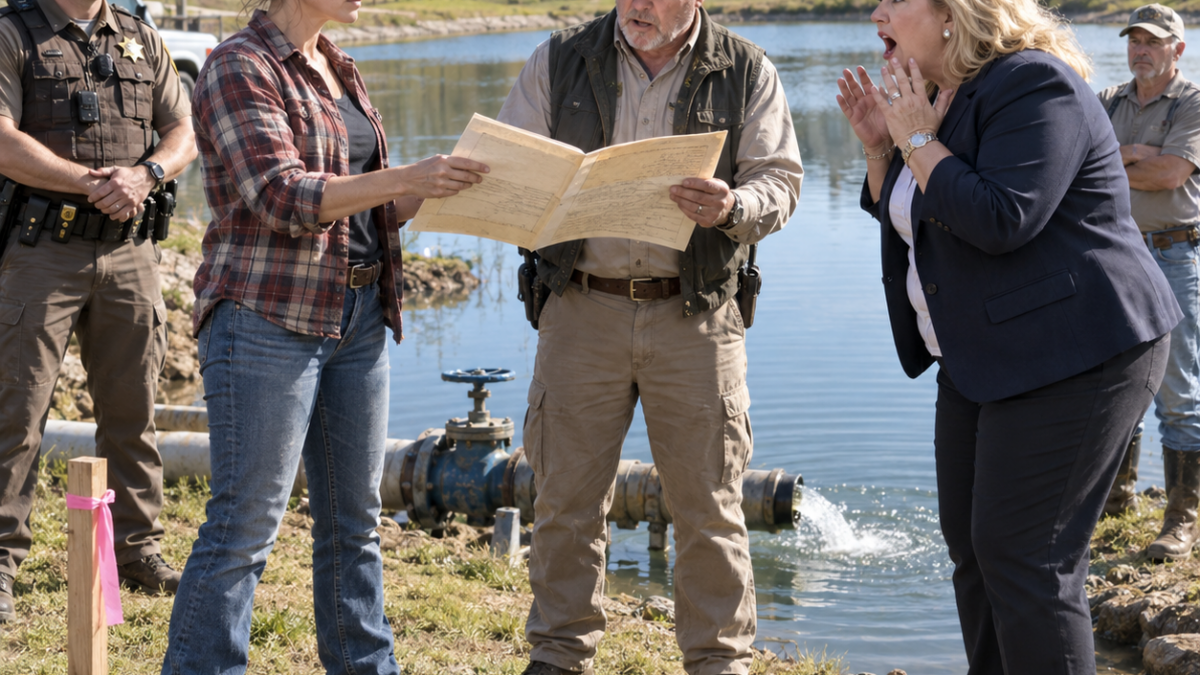
The HOA president stood on my front lawn and accused me of stealing water from an entire neighborhood while my neighbors watched from behind their curtains. She gave me forty-eight hours to pay $10,000 or face a lien, a police report, and the possibility of having my water shut off. What she didn’t know was that one forgotten document buried beneath nearly a century of county records was about to turn her accusation into the worst mistake of her life.
“My name is Jack Callahan,” I said quietly. “And before you threaten me again, you may want to make sure your facts are right.”
Karen Whitmore smiled as if I had just told her a joke.
She was the president of the Lakeside Meadows Homeowners Association, and she had arrived with two board members, a man carrying a clipboard, and enough paperwork to make the scene look official.
The clipboard man had been introduced as a “certified hydro inspector.”
Karen held out a violation notice.
“Documented theft of community water,” she said. “The initial penalty is ten thousand dollars. Additional legal costs will be assessed separately.”
I stared at her.
Then I looked at the pipe she was talking about.
A weathered two-inch galvanized line came out of the ground beyond my vegetable garden and disappeared downhill through a stand of brush toward the reservoir.
That pipe had been there decades before Lakeside Meadows existed.
So had my house.
My property was the old Miller farmstead—thirty acres of pasture, oak trees, an old stone house, a barn, and a ridge overlooking the reservoir.
I had bought it five years earlier after retiring from the Army Corps of Engineers.
After twenty-five years of construction projects, logistics problems, inspections, bureaucracy, and deployments, I wanted one thing.
Quiet.
For five years, that was exactly what I’d had.
Then Karen became HOA president.
Technically, I wasn’t even a member of her association. My land predated the subdivision by nearly a century. I only paid Lakeside Meadows for use and maintenance of the paved road running through the development to my driveway.
Karen hated that arrangement.
She could order every other homeowner to repaint a mailbox or trim a hedge.
She couldn’t order me.
She had already complained about my fence, my barn, my garden, and once even the color of an equipment shed.
Each time, I showed her the documents proving my property wasn’t bound by the HOA covenants.
Apparently, she had decided she needed a bigger weapon.
“This irrigation line was installed long before your development existed,” I told her.
Karen laughed.
“I don’t care who installed it.”
“You should.”
“Our inspector determined that you’re tapping into the community water system.”
“He’s wrong.”
Todd, one of her board members, stepped forward.
“You’re stealing from all of us.”
I felt something cold settle inside me.
Not anger.
Something more useful.
Focus.
I had spent enough years dealing with bad intelligence to know the danger of reacting before understanding the battlefield.
So instead of arguing, I raised my phone.
I had been recording.
“For the record,” I said, “are you threatening to interfere with my water access and place a lien on my property based solely on this inspection?”
Karen’s expression changed for half a second.
Then pride took over.
“You have forty-eight hours.”
She turned and walked away.
Across the road, Mrs. Gable—an elderly widow Karen had once fined over the height of a birdbath—gave me a frightened wave from her porch.
That bothered me more than Karen’s threat.
People were afraid of her.
And she knew it.
I went inside and carried the violation notice into my study.
I opened the acquisition file from when I’d purchased the Miller property.
Survey.
Title insurance.
Road agreement.
Historical plats.
Old irrigation diagrams.
Then I compared the HOA’s alleged water-main location with my licensed survey.
They weren’t even close.
Their water line ran almost fifty feet from my irrigation pipe.
My pipe ran downhill.
Toward the reservoir.
I called an old Army friend, Dave Jensen, now a civil-engineering consultant.
He studied the inspection report and laughed.
Then his voice became serious.
“Jack, the report is garbage. But garbage can still cost you a fortune if they drag you into court.”
“So what would you do?”
“Find something they can’t argue with.”
After we hung up, I looked at the thick title abstract from the Miller farm.
More than a hundred pages.
Ownership transfers.
Easements.
Covenants.
Water references.
I began reading.
Hours passed.
Then, buried in an old deed entry from the late 1920s, I saw six words that made me stop.
MILLER RESERVOIR COMPACT — NOVEMBER 12, 1928.
The actual compact wasn’t attached.
It was only referenced.
I stared at those words for a long time.
Then I closed the folder, grabbed my coat and keys, and headed for the county courthouse.
Because suddenly I wasn’t looking for proof that Karen was wrong anymore.
I was trying to find out exactly what the Miller family had owned before Lakeside Meadows ever existed.
PART 2
The county records office was in the basement of the old courthouse, down a stone staircase that seemed to lose ten degrees of temperature with every step.
By the time I reached the bottom, my anger had burned away.
That was good.
Anger makes you hurry.
Documents punish people who hurry.
A clerk with silver hair and half-moon glasses listened while I explained what I needed.
“Miller Reservoir Compact,” she repeated. “Nineteen twenty-eight?”
“Yes, ma’am.”
She pointed toward a row of enormous leather-bound books.
“Recorded instruments from that period haven’t all been digitized. You’ll want November.”
I thanked her and pulled the 1928 ledger from the shelf.
It felt like lifting a tombstone.
I carried it to a wooden table beneath a fluorescent fixture and began turning pages.
The handwriting was elegant and maddening.
Property transfers.
Mortgages.
Probate filings.
Marriage settlements.
Timber rights.
For almost two hours, nothing.
Then I saw the name.
Miller.
I stopped.
At the top of the page was the recording date.
November 12, 1928.
Below it:
MILLER RESERVOIR COMPACT.
My pulse changed.
I read the first paragraph.
Then the second.
Then I started over.
The Miller family had constructed the reservoir by damming a creek entirely within the boundaries of their farm. They had paid for the dam, spillway, earthwork, and water-control structures themselves.
That part wasn’t surprising.
What came next was.
The family had anticipated selling pieces of their farm someday.
So their lawyer had created an arrangement separating ownership of the surrounding land from ownership of the reservoir.
Any parcel later sold out of the Miller farm could receive a permanent right to draw water for residential purposes.
But the reservoir itself—the lakebed, dam, spillway, shoreline control, and underlying water rights—would remain attached to the original farmstead unless explicitly conveyed separately.
I read that section three times.
My original farmstead.
My parcel.
I pulled out the deed from my briefcase.
The legal description matched.
I checked the title abstract.
The chain was unbroken.
There had never been a later conveyance of the reservoir.
The conclusion was almost absurdly simple.
Lakeside Meadows did not own the reservoir.
I did.
I sat there in silence.
For fifty years, hundreds of people had looked down the hill at that body of water and called it the Lakeside Meadows reservoir.
HOA newsletters called it “our community lake.”
Board minutes referred to “HOA water assets.”
Residents paid assessments for pump maintenance and water testing.
Karen had accused me of stealing water from something she believed belonged to them.
But the homeowners had only inherited deeded usage rights.
The ownership had never left the Miller farmstead.
My farmstead.
I looked around the silent archive room.
Nobody else reacted.
A man three tables away was reading an old property-tax record.
The clerk was stamping documents.
Somewhere upstairs, a door closed.
The world hadn’t changed for anyone else.
But mine had.
I took photographs of every page, then asked the clerk about certified copies.
She disappeared into the records room and returned twenty minutes later with stamped reproductions.
I held them carefully.
They didn’t feel dramatic.
Just paper.
That was the strange thing about power.
Sometimes it arrives with sirens.
Sometimes it’s three yellowed pages and a county seal.
Outside, I called Dave.
“You sitting down?” I asked.
“That depends on whether you’re about to ruin my afternoon.”
“I found the reservoir compact.”
Silence.
“Send it.”
I photographed the certified pages and emailed them.
Nine minutes later, he called back.
The first thing I heard was laughter.
Not a chuckle.
Full, helpless laughter.
“Jack.”
“What?”
“Please tell me Karen actually accused you of stealing water from this reservoir.”
“She did.”
“She filed the violation in writing?”
“Yes.”
“She threatened your property?”
“Yes.”
Dave inhaled slowly.
“Oh, this is spectacular.”
“Explain.”
“You own the source.”
“I know what the document says.”
“No, Jack. Think about it from the system side. Their intake exists because their parcels possess access rights. The pipe network belongs to the community once it leaves the source infrastructure, sure. But the reservoir itself? The lakebed? The dam? The primary rights?”
“Mine.”
“Exactly.”
I leaned against my truck.
“And my irrigation pipe?”
“It’s drawing directly from your own water source on your own property under infrastructure that predates the subdivision.”
“So their theft allegation—”
“Is nonsense.”
He paused.
“Actually, it’s better than nonsense.”
“How?”
“You can’t steal your own property.”
I looked back at the courthouse.
For the first time since Karen had stepped onto my lawn, I smiled.
Dave wasn’t done.
“Don’t call her.”
“I wasn’t planning to.”
“Good. Because this just became legal, not engineering. Get a lawyer. A serious one.”
That afternoon I called a retired military attorney I knew from my service years.
He listened.
Then he gave me one name.
Arthur Vance.
“Property rights litigator,” he said. “Expensive. Very experienced. Absolutely humorless when people abuse title law.”
“Sounds charming.”
“You don’t need charming.”
He gave me the number.
Arthur answered his own phone.
I gave him the shortest version I could.
HOA.
Water-theft accusation.
Old irrigation pipe.
Ten-thousand-dollar fine.
Threatened lien.
Reservoir compact.
There was a long silence after I emailed the documents.
Finally, he said, “Mr. Callahan?”
“Yes.”
“I want to make sure I understand this correctly.”
“All right.”
“The association is accusing the titled owner of the reservoir of stealing water from that reservoir.”
“Yes.”
“And they’re threatening to enter your property to interfere with infrastructure connected to that reservoir.”
“Yes.”
Another silence.
Then he said, very quietly, “Do not contact them again without me.”
The next morning I drove two hours to his office.
Arthur Vance looked exactly like the kind of attorney who made other attorneys check their paperwork twice.
Late sixties.
Gray hair.
Tailored suit.
No wasted movement.
He had arranged copies of my deed, title abstract, irrigation diagrams, survey, and the Miller Reservoir Compact across his conference table.
He tapped one paragraph.
“This is the center of the case.”
“The ownership clause.”
“Yes.”
He slid the HOA violation toward me.
“And this is what makes their conduct dangerous.”
“Because it’s wrong?”
“Being wrong isn’t illegal. People are wrong every day.”
He pointed at Karen’s signature.
“But escalating a claim after receiving evidence that contradicts it can become something very different.”
“What do you suggest?”
Arthur leaned back.
“We give them an opportunity to correct themselves.”
I frowned.
“That sounds generous.”
“It isn’t.”
He almost smiled.
“You don’t win a dispute like this by shouting first. You win by creating a clean record.”
He drafted a response.
Professional.
Short.
Almost boring.
We disputed the violation.
We explained that the irrigation system predated the subdivision.
We pointed out flaws in their inspector’s report.
We demanded withdrawal of the penalty and confirmation that the HOA would not enter my land.
We did not tell them I owned the reservoir.
I noticed the omission.
Arthur noticed me noticing it.
“You want to show them the compact.”
“I’d enjoy it.”
“So would I.”
“Then why don’t we?”
“Because if they are reasonable, they’ll withdraw the violation and this ends.”
“And if they’re not?”
“Then their response becomes evidence.”
That made sense.
It wasn’t revenge.
Not yet.
It was a door.
Karen could walk through it and stop.
Or she could keep going.
We sent the letter certified.
For ten days, nothing happened.
I returned home and tried to resume normal life.
I repaired a section of fencing.
Trimmed branches near the barn.
Changed oil in my tractor.
Every morning, I carried coffee to the porch and looked toward the reservoir.
It had always been part of the property.
But knowing the legal history changed how I saw it.
The Millers had built it nearly a century earlier because a family farm needed dependable water.
They had planned for people they would never meet.
They had preserved the water rights through depressions, wars, development booms, and generations of land sales.
And nobody at Lakeside Meadows had bothered to read the original document.
On the eleventh day, an envelope arrived.
Lakeside Meadows Homeowners Association.
I opened it at my kitchen table.
By the second paragraph, I knew Arthur had been right.
Karen had rejected our dispute.
The original $10,000 penalty had doubled.
Twenty thousand dollars.
Then came the next paragraph.
The HOA would send a contractor onto my property the following week to permanently cap the “illegal connection.”
They intended to bill me for the work.
I kept reading.
The final paragraph made me sit back.
Because of what Karen called “the seriousness and duration of the theft,” the HOA had reported the matter to the county sheriff.
I called Arthur.
“She escalated.”
“How far?”
“Twenty-thousand-dollar fine. Work crew coming to cap the pipe.”
“Anything else?”
“She filed a police report.”
There was silence.
Then I heard his chair move.
“Email me the letter.”
I did.
He called back fifteen minutes later.
His voice had changed.
No amusement.
No strategy-game tone.
Now it was sharp.
“Jack, from this point on, do not speak with any board member without a witness or recording.”
“Understood.”
“We’re filing for emergency relief today.”
Arthur obtained a temporary restraining order prohibiting the HOA and its contractors from entering my land or interfering with the irrigation infrastructure until ownership and access rights were resolved.
Then he sent a detailed submission to the district attorney’s office and the sheriff’s department.
Not because Karen had made a mistake.
Because we believed she had escalated an unsupported accusation into a police complaint after being formally challenged.
Arthur was careful with the language.
That was one thing I respected about him.
He never exaggerated.
He didn’t need to.
The documents were enough.
Then he turned to the water issue itself.
“If they believe they own the reservoir,” he said, “there may be regulatory records reflecting that assumption.”
“So?”
“So somebody needs to determine whether their water-source paperwork matches the actual title.”
He notified the state environmental agency responsible for public and community water systems.
The letter included the recorded compact.
It requested review of Lakeside Meadows’ legal authority to operate its intake from a privately owned source.
That was when the situation stopped being a feud between Karen and me.
It became a board problem.
A compliance problem.
An insurance problem.
And potentially a very expensive problem.
The first panicked phone call came from the HOA’s attorney.
His name was Bill Peterson.
I’d seen his name on violation letters before.
He called my house at 9:17 on a Tuesday morning.
“Mr. Callahan?”
“Yes.”
“This is Bill Peterson. I represent Lakeside Meadows.”
“I know.”
“I think we may have a misunderstanding.”
I almost laughed.
Instead I said, “My attorney handles the matter now.”
“Of course. Yes. Naturally.”
He cleared his throat.
“I’ve received correspondence from Mr. Vance.”
“Then you know how to reach him.”
“Mr. Callahan, this appears to have become unnecessarily adversarial.”
That sentence nearly impressed me.
Karen had stood on my lawn, called me a thief, threatened a lien, doubled a fine, threatened to physically alter my property, and filed a police complaint.
But now that the title documents had surfaced, things were “unnecessarily adversarial.”
I kept my voice neutral.
“Bill, I didn’t start this.”
“I understand.”
“No. I don’t think your clients did.”
He exhaled.
“Would you be open to a conversation?”
“With Arthur present.”
“Yes. Yes, absolutely.”
“Call him.”
I hung up.
Two days later, notices appeared throughout Lakeside Meadows.
EMERGENCY COMMUNITY MEETING.
LEGAL AND FINANCIAL MATTERS.
ATTENDANCE STRONGLY ENCOURAGED.
Mrs. Gable called me that evening.
Her voice was quiet.
“Jack?”
“Hello, Margaret.”
She was the only person in the neighborhood who called me by my first name regularly.
“Is this meeting about you?”
“Partly.”
“Are we losing our water?”
“No.”
I answered immediately because I could hear fear in her voice.
“Listen to me. I have no intention of depriving anyone of water.”
“You’re sure?”
“Absolutely.”
She went quiet.
“Karen told people you were trying to take control of the neighborhood.”
“I’m trying to protect my property.”
“I believed that.”
“Thank you.”
Another silence.
Then she said, “She fined me again.”
“For what?”
“My birdbath.”
I closed my eyes.
“What now?”
“She says the replacement bowl isn’t approved.”
I looked across my kitchen toward the window.
Margaret Gable was seventy-six.
Her husband had died three years earlier.
Her birdbath sat beneath a maple tree and had probably offended nobody in human history except Karen.
“How much?”
“Two hundred dollars.”
“Don’t pay it yet.”
“I don’t want trouble.”
“I know.”
That sentence stayed with me.
I don’t want trouble.
That’s how people like Karen accumulated power.
Not because their rules were always strong.
Because ordinary people wanted peace more than confrontation.
So they paid.
They removed the birdbath.
They moved the basketball hoop.
They repainted the mailbox.
They apologized.
Every surrender made the next demand easier.
“I’ll see you at the meeting,” I told her.
The clubhouse was packed.
Some residents were standing along the walls.
Karen sat at the center of the board table.
I almost didn’t recognize her.
She still wore the same armor of authority—perfectly arranged folders, nameplate, gavel—but her face had lost its certainty.
Todd sat beside her.
He looked like he hadn’t slept.
Bill Peterson stood near the podium with a stack of papers.
I sat in the back.
Arthur had advised me to attend alone unless things became confrontational.
“Don’t make it about revenge,” he’d said.
“It already feels like revenge.”
“Then resist the feeling.”
“Why?”
“Because the documents are stronger than anger.”
The meeting began.
Bill spoke first.
“We are currently addressing certain unforeseen title issues involving the community water system.”
Immediately, hands went up.
“What title issues?”
“Is the state shutting us down?”
“Why did inspectors come to the pump station?”
“What did the HOA do?”
Karen seized the microphone.
“Everyone needs to remain calm. This situation has been exaggerated by an outside property owner who has chosen to pursue aggressive legal action against our community.”
Outside property owner.
That was me.
Someone shouted, “Is that Callahan?”
Heads turned.
I stood.
Karen’s face tightened.
I walked to the microphone.
Nobody spoke.
“My name is Jack Callahan.”
A few people nodded.
Most knew me by sight.
“I own the old Miller farmstead on the ridge.”
Karen leaned toward her microphone.
“This meeting is for Lakeside Meadows members.”
Bill touched her arm.
“Let him speak.”
I looked around the room.
“I know many of you have heard that I was accused of stealing community water.”
Nobody moved.
“That accusation is true in one sense.”
Karen’s eyes widened.
“I was accused.”
A nervous ripple moved through the room.
“It just wasn’t accurate.”
I explained the irrigation pipe.
I explained the 1950s farm system.
Then I explained the survey showing that the HOA water main was nowhere near the pipe they accused me of tapping.
Karen interrupted.
“That is disputed.”
I looked at her.
“No, Karen. It isn’t.”
Bill lowered his eyes.
I continued.
“When I received the violation, I reviewed the title history of my property.”
Then I held up the certified copy.
“The Miller farm had a reservoir agreement recorded with the county in 1928.”
Karen stood abruptly.
“This document has not been independently verified.”
Bill said, “Karen.”
She ignored him.
“Mr. Callahan is attempting to manipulate this community.”
I waited.
She stopped.
Then I read the relevant language.
Slowly.
No dramatics.
No shouting.
The original Miller family had retained ownership of the reservoir, lakebed, dam, spillway, and associated primary water rights with the original farmstead.
Parcels sold from the farm received rights to draw water.
Rights of use.
Not ownership.
I lowered the paper.
“This means the residents of Lakeside Meadows have valid water-access rights.”
Several shoulders visibly relaxed.
“But the reservoir itself was never transferred to the HOA.”
A man in the second row asked, “Then who owns it?”
I looked at him.
“The farmstead does.”
He frowned.
“You mean you?”
“Yes.”
Nobody spoke.
Then someone whispered, “Oh my God.”
Karen slammed her hand against the table.
“That’s not possible.”
“It is.”
“Our deeds say we have water rights.”
“You do.”
“Then we own the water.”
“No.”
I kept my voice calm.
“You have a recorded right to use the source for residential supply. That is not the same thing as owning the source.”
Karen looked toward Bill.
“Tell him.”
Every face turned toward the attorney.
Bill swallowed.
“The document appears authentic.”
Karen stared at him.
“What?”
“The title company has also confirmed the chain of ownership.”
Something changed in the room.
Not loudly.
Not dramatically.
It was almost physical.
For years, Karen had spoken with the confidence of someone who expected nobody to challenge her.
Now her own attorney had contradicted her in public.
Margaret Gable stood.
Her hands trembled.
“Karen?”
Karen looked at her.
“What?”
Margaret’s voice was small.
But the room was so quiet everyone heard it.
“You fined me two hundred dollars this week because my birdbath was one inch taller than the one I had before.”
Karen blinked.
“That is not relevant.”
“It is to me.”
A few people murmured.
Margaret continued.
“You threatened my son when he put a basketball hoop in my driveway for my grandchildren.”
“That structure violated—”
“You sent me six letters last year.”
Karen’s jaw tightened.
Margaret’s voice strengthened.
“I was afraid every time I saw an envelope from the HOA.”
A woman behind her said, “So was I.”
Another man stood.
“You fined me over my work truck.”
Someone else shouted, “She threatened foreclosure over late fees.”
Karen grabbed the microphone.
“This meeting is getting out of control.”
That was precisely the problem.
For the first time, she wasn’t controlling it.
Todd tried to call for order.
Nobody listened.
Stories came from every corner.
A retired firefighter fined because his flagpole was six inches too tall.
A single mother threatened over children’s bicycles left outside overnight.
A couple ordered to remove a garden bench because its stain wasn’t on the approved color list.
None of these things had anything to do with my reservoir.
And yet they had everything to do with why the room had exploded.
Karen hadn’t built authority.
She had built resentment.
My dispute merely cracked the wall.
Then Margaret said the sentence that ended Karen’s presidency before any vote ever did.
“You called this man a thief without even checking who owned the thing you accused him of stealing.”
Silence.
Karen looked at me.
For the first time since I had known her, there was no contempt in her expression.
Only fear.
I should tell you that I enjoyed it.
Part of me did.
I’d be lying if I said otherwise.
She had tried to humiliate me publicly.
Now the same community she had ruled was demanding answers.
But another part of me looked around that room and felt something heavier.
These people weren’t cheering because I had won.
They were angry because they had spent years believing they couldn’t fight back.
That mattered more.
I left before the meeting ended.
Karen called after me.
“Callahan!”
I stopped near the door.
“You think you’ve won?”
The room quieted again.
I turned.
“No.”
She looked almost relieved.
Then I said, “I think you still don’t understand what you’ve done.”
I walked out.
The following morning, Arthur called me at 7:05.
“You watching the news?”
“No.”
“Turn it on.”
A local reporter stood outside the county courthouse.
The caption beneath her read:
HOA PRESIDENT UNDER INVESTIGATION AFTER WATER-THEFT DISPUTE.
I muted the television.
“What happened?”
“The sheriff referred Karen’s complaint and the title evidence to the prosecutor.”
“Charges?”
“Not yet.”
Arthur’s voice was careful.
“Investigation. Let the process happen.”
He was right.
The distinction mattered.
Three weeks later, the district attorney’s office announced that Karen had been charged with filing a false police report.
The prosecution’s position was that she had made a theft allegation despite documentation raising serious questions about the claim and had represented disputed matters as established facts.
Karen pleaded not guilty initially.
Her attorney issued a statement calling the matter a misunderstanding arising from complex property records.
Arthur released only one sentence on my behalf.
“My client asked to be left in peace, and the public records will speak for themselves.”
That was all.
I didn’t give interviews.
I didn’t stand in front of cameras.
I didn’t celebrate.
Karen’s real punishment had already begun.
The HOA’s insurance carrier reviewed the board’s conduct.
The environmental agency opened a formal water-source compliance audit.
The new title information raised questions about decades of operating records.
Nobody was threatening to shut off drinking water, but the HOA had to establish a valid legal agreement with the actual reservoir owner.
Me.
Then the insurance carrier sent the board a letter.
Arthur read it aloud in his office.
Certain intentional conduct by individual board members might fall outside policy coverage.
Todd called me that afternoon.
I almost didn’t answer.
“Jack?”
His voice sounded nothing like the man who had stood on my lawn calling me a thief.
“What do you need, Todd?”
“I need you to understand that not everyone on the board wanted this.”
“You signed the letter.”
“I know.”
“The one doubling my fine.”
“I know.”
“The one authorizing people to enter my property.”
He was silent.
“The one supporting the police report.”
“Karen told us the inspector was certain.”
“So you signed.”
“I made a mistake.”
“That sounds different from what you said on my lawn.”
Another silence.
Then his voice cracked slightly.
“Are you going to sue us personally?”
I looked toward the reservoir.
“Talk to your attorney.”
“Jack—”
“Todd, when Karen stood on my lawn threatening my home, you smiled.”
He didn’t answer.
“You weren’t worried about fairness then.”
“I know.”
“And now you’re scared because the consequences reached your house.”
His breathing changed.
“Yes.”
That answer surprised me.
At least it was honest.
“I don’t want to destroy anybody,” I said.
“Then help us.”
“I’ll listen when your board is ready to take responsibility.”
Two days later, Bill Peterson contacted Arthur.
The board wanted a settlement conference.
Karen would not attend.
Her criminal attorney had advised against it.
Arthur scheduled the meeting at his office.
Beforehand, he and I sat alone.
“What do you want?” he asked.
“I want the fine gone.”
“Obviously.”
“My legal bills paid.”
“Reasonable.”
“I want them to acknowledge the reservoir title.”
“Yes.”
“And I want Karen off the board.”
Arthur folded his hands.
“Anything else?”
I thought about Margaret.
The birdbath.
The basketball hoop.
The fear in her voice.
“I want the board replaced.”
“That is ultimately a membership issue.”
“Then structure it so the residents get a vote.”
He nodded.
“And the water?”
That was the biggest question.
Technically, Lakeside Meadows already had deeded water-access rights.
But Arthur believed a modern operating agreement was necessary to clarify maintenance responsibilities, regulatory compliance, testing, pumps, emergency repairs, and reservoir infrastructure.
“What could I charge?”
“Potentially quite a lot.”
“I don’t want quite a lot.”
Arthur studied me.
“You understand the leverage you have?”
“Yes.”
“Then why give it away?”
“Because three hundred families didn’t stand on my lawn.”
He leaned back.
“Go on.”
“They didn’t file the report.”
“No.”
“They need water.”
“Yes.”
“I don’t want them waking up every morning wondering whether I’m going to become the next Karen.”
Arthur’s expression softened slightly.
“So what do you want?”
“One dollar.”
He stared at me.
“A year.”
“Jack.”
“For ninety-nine years.”
He removed his glasses.
“You’re going to make me explain to another attorney that my client acquired extraordinary leverage over a reservoir serving an entire residential development and decided to monetize it for one dollar per year.”
“Yes.”
“Do you enjoy making my job difficult?”
“A little.”
He laughed.
“All right.”
“But I want protections.”
“Now you’re speaking my language.”
We drafted what Arthur called the Good Neighbor Water Agreement.
The HOA would retain secure residential access.
I would retain acknowledged title to the reservoir.
Routine treatment and distribution expenses would remain the responsibility of the community.
Major work affecting the dam, spillway, lakebed, shoreline structures, or source infrastructure required written coordination with the owner.
The HOA could not enter my farm or modify my private infrastructure without authorization except for a genuine emergency.
And the board agreed that harassment or retaliatory enforcement against my property would constitute a material breach.
Arthur worded that section far more carefully than I just did.
Lawyers don’t write “Stop bothering Jack Callahan or you lose your privileges.”
But that was essentially the spirit.
The board arrived at Arthur’s office looking exhausted.
Todd wouldn’t meet my eyes.
Two other directors looked as though they’d aged ten years.
Bill began.
“We’d like to resolve this constructively.”
Arthur slid the proposed terms across the table.
“Then you’ll find these unusually constructive.”
Bill read.
His eyebrows rose when he reached the water fee.
“One dollar?”
“Per year,” Arthur said.
Todd looked at me.
“Why?”
“Because I don’t want your money.”
Nobody spoke.
“I want my property rights respected.”
Todd kept staring.
“And the residents shouldn’t pay for what we did?”
“No.”
He swallowed.
That was the moment my anger finally changed.
Not disappeared.
Changed.
For weeks, I had imagined forcing them to feel everything they had tried to make me feel.
Fear.
Uncertainty.
Powerlessness.
But sitting across from them, I realized the most satisfying revenge wasn’t making frightened people more frightened.
It was removing the system that had allowed one person’s arrogance to terrorize everyone else.
Arthur continued through the terms.
The $20,000 fine would be voided immediately.
Every associated fee would be removed.
My documented legal expenses would be reimbursed.
The HOA would issue a public written apology.
It would also acknowledge in its permanent property records that the reservoir belonged to the Miller farmstead parcel.
Karen would resign from the board.
The existing board would step down following an orderly transition.
A special election would be scheduled.
A resident committee would review enforcement procedures and propose amendments creating clearer notice requirements, appeal rights, spending transparency, and limits on unilateral fines.
Bill looked across the table.
“You understand that we can’t legally guarantee Karen never runs again unless the governing documents permit that restriction.”
Arthur nodded.
“Then amend them lawfully if the membership approves.”
I added, “Let the residents decide.”
That was important.
I wasn’t interested in becoming their unelected ruler just because I owned the water source.
Karen’s mistake had been believing possession of power automatically justified using it.
I wasn’t going to make the same one.
The directors signed.
Todd was last.
He stared at the signature line.
Then he put down the pen.
“I owe you an apology.”
The others looked up.
“You already agreed to a public one.”
“No.”
He shook his head.
“I mean me.”
I waited.
“When Karen said you were stealing water, I didn’t check anything. I liked being on the side that had authority.”
His voice was low.
“I liked people knowing I was on the board.”
Nobody interrupted.
“And when you challenged us, I wanted you embarrassed.”
I remembered his smile on my lawn.
“I know.”
He nodded.
“I am sorry.”
I believed him.
That didn’t erase what he’d done.
But accountability isn’t the same thing as pretending damage never happened.
“I accept the apology,” I said.
His shoulders dropped.
The special election took place six weeks later.
For the first time anyone could remember, more than eighty percent of Lakeside Meadows households participated.
Karen’s allies didn’t run.
Todd didn’t run.
A retired high school principal named Elaine Brooks was elected president.
She had lived in Lakeside Meadows for eighteen years and apparently considered unnecessary meetings a personal insult.
That alone made me like her.
Margaret Gable became board secretary.
When she told me, she was laughing.
“Can you believe it?”
“I can.”
“I’ve never been on a board in my life.”
“That’s probably why you’re qualified.”
She slapped my arm.
The new board’s first public meeting lasted forty-seven minutes.
No one was fined.
Nobody shouted.
The community did not collapse.
Within three months, the revised enforcement rules passed.
Minor violations received courtesy notices before penalties.
Residents received written explanations of their appeal rights.
Large legal expenditures required additional board review.
Meeting minutes became easier to access.
And selective enforcement became much harder.
Then something funny happened.
People started improving their homes more, not less.
When they weren’t afraid that every personal choice would trigger a violation letter, they painted porches, built gardens, repaired fences, planted trees.
A family on Cedar Lane installed a basketball hoop.
I drove past it one afternoon and saw three kids playing.
Nobody from the HOA measured it.
Margaret replaced her birdbath with one even taller than the old one.
I noticed it immediately.
“Is that thing compliant?” I asked her.
She put both hands on her hips.
“Would you like me to fine myself?”
“I’ll consider it.”
“You do that.”
Then she laughed so hard she had to lean against her porch rail.
The environmental review took longer.
State officials inspected the intake, reservoir records, treatment facilities, pumps, and maintenance history.
The system itself was in decent condition.
The main problem was documentation.
Decades of records had treated Lakeside Meadows as though it owned the source rather than possessing access rights.
That was corrected.
The ninety-nine-year agreement was filed with the county.
I signed it at my kitchen table.
Elaine signed for the HOA.
Margaret witnessed.
Arthur insisted the final version be recorded properly.
The annual consideration was exactly one dollar.
Elaine handed me a crisp bill.
“There.”
She smiled.
“Don’t spend it all at once.”
I held it up.
“I was thinking about retiring.”
Margaret snorted.
“You already retired.”
“Then I’ll retire harder.”
We laughed.
It was the first time in months that the reservoir felt like water again instead of evidence.
There was still one unfinished matter.
Karen.
Her criminal case moved slowly.
Court dates were scheduled.
Then postponed.
Witnesses were interviewed.
Her lawyer challenged portions of the investigation.
I stayed out of it except when asked for documents or testimony.
One afternoon, months after the original confrontation, I received a subpoena.
Arthur came with me.
Karen sat across the courtroom in a dark suit.
She looked smaller somehow.
Not physically.
Just without the HOA table, the gavel, the title, and the people following her around.
She was simply a defendant sitting beside an attorney.
For a few seconds, our eyes met.
I didn’t smile.
Neither did she.
The prosecution and her attorney had reached a plea agreement.
Karen pleaded guilty to filing a false report.
The judge asked whether she understood the charge.
“Yes, Your Honor.”
Her voice was barely audible.
“Louder.”
“Yes, Your Honor.”
The judge reviewed the circumstances.
Then he spoke about something I had thought about often during those months.
“Positions of community authority,” he said, “carry responsibility precisely because private citizens may feel pressure to comply even when an official’s claim is mistaken.”
Karen stared at the table.
“This court is particularly concerned when law enforcement is used as leverage in what should have remained a documented civil dispute.”
Her sentence did not destroy her life.
I was glad.
She received probation.
A significant fine.
Two hundred hours of community service.
And conditions requiring compliance with all court orders.
When the judge finished, Karen stood.
For a second I remembered the woman on my lawn.
Ten thousand dollars.
Forty-eight hours.
We’ll shut off your water.
The clock is ticking.
Now somebody else was explaining consequences to her.
Arthur leaned toward me.
“You all right?”
“Yes.”
“Feel victorious?”
I thought about it.
“No.”
He raised an eyebrow.
“Then what?”
“Finished.”
That was better.
Outside the courthouse, reporters waited.
I walked past them.
One called my name.
“Mr. Callahan, do you think justice was served?”
I stopped.
Arthur looked at me, probably wondering whether he needed to pull me away.
I turned toward the reporter.
“I think everybody should read documents before accusing somebody of a crime.”
A few people laughed.
I continued.
“And I think neighborhoods work better when people remember they’re neighbors.”
Then I left.
The local paper ran the story the next morning.
FORMER HOA PRESIDENT PLEADS GUILTY IN RESERVOIR DISPUTE.
I cut out the article.
Not because I wanted a trophy.
Because I wanted a reminder.
I taped it inside the door of the filing cabinet where I kept the Miller property records.
Behind it, I placed the certified reservoir compact.
Then I closed the drawer.
Spring came.
The reservoir turned blue beneath the clear sky.
Wildflowers appeared along the lower pasture.
The maple outside Margaret’s house leafed out.
One Saturday morning, I drove into town for lumber and passed something that made me slow down.
Karen was working with a county beautification crew near a public park.
Community service.
She wore work gloves and a reflective vest.
She was planting flowers around a walkway.
For one strange second, neither of us knew what to do.
Then she saw my truck.
Our eyes met.
I expected anger.
Instead she looked away.
I could have stopped.
Could have lowered the window.
Could have said something clever.
Maybe something about approved flower colors.
Maybe something about permits.
Months earlier, I probably would have enjoyed that.
I kept driving.
There are moments when revenge means striking back.
And there are moments when the greatest victory is realizing you no longer need to.
A week later, I decided to do something I’d never expected when the whole mess started.
I invited Lakeside Meadows to my farm.
All of them.
Nothing formal.
Just a Saturday barbecue near the barn.
Elaine sent the invitation through the community email list.
I expected thirty people.
More than two hundred showed up.
Cars lined the gravel drive.
People brought folding chairs, casseroles, pies, potato salad, lemonade, and more desserts than any group of humans could reasonably consume.
Dave drove in from the city.
Arthur came too, though he protested that attending social gatherings violated his professional image.
“You billed me enough,” I told him. “You can eat one hamburger.”
“I bill for hamburger consumption.”
“Of course you do.”
Margaret arrived carrying an apple pie.
“Family recipe.”
“What’s the secret?”
“If I told you, it wouldn’t be a secret.”
Children ran across the grass near the barn.
Neighbors who had barely spoken before the dispute stood in clusters laughing.
Todd came.
I hadn’t expected him.
For a moment, he remained near the edge of the gathering.
Then he approached.
“Didn’t know if I was really invited.”
“You live in Lakeside Meadows.”
“Yeah.”
“Then you were invited.”
He nodded toward the tables.
“Need help?”
I handed him a pair of tongs.
“Grill.”
He smiled.
“Yes, sir.”
Late in the afternoon, I escaped the crowd and walked toward the reservoir.
Margaret joined me.
For a while, we stood without talking.
The water was almost perfectly still.
Sunlight moved across it in long strips of gold.
“You know,” Margaret said, “for years I thought that was ours.”
“It is.”
She looked confused.
“Legally, no.”
I smiled.
“But look at it.”
Kids were skipping stones near the designated shoreline access.
A father was teaching his daughter how to cast a fishing line.
Two elderly couples sat in lawn chairs under a tree.
“A deed tells you who owns something,” I said. “It doesn’t tell you who gets to enjoy looking at it.”
Margaret smiled.
“I like that.”
“So do I.”
She held out the pie plate she’d carried with her.
One slice remained.
“You want it?”
“Absolutely.”
We split it with two plastic forks.
The next morning, I woke before sunrise.
Old habit.
I made coffee and stepped onto my porch.
The chairs and tables from the barbecue were stacked near the barn.
A few paper plates had escaped the trash bags overnight.
Otherwise the farm was quiet again.
The kind of quiet I had moved there to find.
I sat down.
Below me, mist floated above the reservoir.
My reservoir.
Legally.
But the thought didn’t carry the same triumphant feeling anymore.
When Karen had first accused me of theft, I had wanted to defeat her.
When I discovered the compact, part of me wanted to make her understand how completely she had underestimated me.
When the board doubled the fine, filed the police report, and threatened to enter my land, I wanted consequences.
They got them.
The fine disappeared.
My legal expenses were paid.
The board collapsed.
The reservoir title was formally recognized.
The neighborhood elected new leadership.
Karen lost her position and faced the court.
By every measurable standard, I had won.
But the moments I remembered most weren’t the ones where Karen lost.
I remembered Margaret standing in the clubhouse even though her hands were shaking.
I remembered Todd admitting that he liked having power.
I remembered Elaine handing me a one-dollar bill at my kitchen table.
I remembered two hundred neighbors eating hamburgers beside a reservoir they had spent decades believing belonged to them.
And I realized something.
The document from 1928 had never really been about power.
The Millers had built a reservoir because people needed water.
Then they protected future access to it because they understood something Karen never did.
Ownership carries obligations.
Authority carries obligations.
Strength carries obligations.
You can possess something without weaponizing it.
That was the difference between protecting your rights and becoming the kind of person you once fought.
I took another sip of coffee.
Down near the road, a truck slowed.
It was Margaret.
Her window came down.
“Jack!”
I raised a hand.
“You still have my pie plate!”
I looked beside me.
Sure enough.
Her glass pie dish was sitting on the porch table.
“You gave me the pie!”
“Not the plate!”
“I thought it came with the property.”
She pointed at me.
“Don’t make me report you for stealing it.”
For half a second, we both stared at each other.
Then Margaret burst out laughing.
I laughed too.
“Check the deed!” I called.
She laughed harder, waved, and drove away.
I sat there alone with my coffee and the empty pie plate.
Below me, the reservoir caught the first light of morning.
Months earlier, an HOA president had stood on my lawn and called me a thief.
She had threatened my home.
My reputation.
My peace.
She believed fear would make me surrender before I checked the facts.
Instead, her accusation sent me searching through ninety-eight years of history.
And buried in those records was the truth she should have found before she ever knocked on my door.
I had never stolen their water.
The neighborhood had a legal right to use it.
But the reservoir itself—the dam, the lakebed, the source Karen claimed I had robbed—had belonged to the old Miller farm all along.
Which meant it belonged to me.
In the end, I didn’t shut off anybody’s water.
I didn’t bankrupt the community.
I didn’t turn the reservoir into a weapon.
I charged them one dollar a year and gave them ninety-nine years of certainty.
Because justice isn’t becoming more powerful than the person who tried to hurt you.
Justice is having the power to hurt them back—and choosing instead to fix what they broke.
And every morning since, when I sit on that porch and watch the sun rise over the water, the peace feels a little different.
Not because nobody can challenge me again.
But because now everyone knows exactly where the line is.
And so do I.
The county records office sat beneath the old courthouse, down a narrow stone staircase where the air smelled like dust, paper, and decades nobody had bothered to digitize.
By the time I reached the basement, the anger Karen had stirred in me had cooled into something more useful.
Concentration.
I had learned a long time ago that anger made people rush.
And when you were dealing with engineering, contracts, or property law, rushing was how you missed the one line that mattered.
A gray-haired clerk looked up from behind the counter when I approached.
“I’m looking for a recorded agreement from 1928,” I told her. “Miller Reservoir Compact.”
She adjusted her glasses.
“Miller?”
“Yes.”
“November?”
I stared at her.
“You know it?”
“No. But those old reservoir and irrigation filings were usually recorded after harvest.”
She pointed toward a row of enormous leather-bound ledgers.
“Start there.”
The book for 1928 was heavy enough that I had to carry it with both hands.
I set it on a long wooden table beneath a humming fluorescent light and began turning the yellowed pages.
Mortgages.
Land transfers.
Timber agreements.
Probate notices.
More mortgages.
Thirty minutes passed.
Then an hour.
I kept going.
Finally, near the middle of the November filings, I saw the name.
Miller.
My hand stopped.
At the top of the page, in elegant handwritten script, were the words:
Miller Reservoir Compact.
Recorded November 12, 1928.
My pulse changed immediately.
I leaned closer.
The first section described how the Miller family had constructed a dam across a creek running through their farm. The work had created a reservoir large enough to irrigate crops and maintain livestock through dry summers.
The Millers had paid for everything themselves.
The dam.
The spillway.
The excavation.
The control gates.
That was interesting.
But it was not what made me sit straighter.
The next section explained what would happen if the Miller family ever sold parts of the farm.
Any parcel carved from the original acreage could receive a permanent right to draw water from the reservoir for residential use.
But ownership of the reservoir itself would remain attached to the original farmstead.
I read the paragraph again.
Then a third time.
The lakebed.
The dam.
The spillway.
The shoreline infrastructure.
The primary water rights.
All of it remained with the original unsold portion of the Miller property unless specifically transferred by a later deed.
I pulled my own deed from the folder in my briefcase.
My legal description matched the original farmstead.
Then I opened the title abstract.
The chain was clean.
No transfer of reservoir ownership had ever occurred.
The conclusion was so simple that for a moment it felt impossible.
Lakeside Meadows did not own the reservoir.
I did.
I sat back and stared at the page.
Karen had accused me of stealing water from the HOA.
She had threatened me with a $10,000 fine.
She had threatened a lien.
She had threatened to shut off my water.
And she had done it without realizing that the water source she claimed belonged to the association had never belonged to them at all.
The development had access rights.
That was all.
The homeowners were legally allowed to draw water.
But the source itself remained private property.
Mine.
I almost laughed.
Instead, I called the clerk over.
“I need certified copies.”
She studied the page.
“Of the whole instrument?”
“Every page.”
While she prepared them, I photographed the original record with my phone.
When she returned, she handed me a small stack stamped with the county seal.
“Important?”
I looked down at the documents.
“You could say that.”
Outside in the courthouse parking lot, I called Dave Jensen.
Dave had served with me years earlier and now operated a civil-engineering consulting firm.
“You busy?” I asked.
“I was about to pretend to be.”
“I found something.”
“That sounds dangerous.”
“I’m sending it.”
I emailed him photographs of the compact.
Nine minutes later, he called back.
He was laughing.
Not chuckling.
Laughing.
“Jack.”
“What?”
“Please tell me that woman actually accused you of stealing water from this reservoir.”
“She did.”
“In writing?”
“Yes.”
“And she threatened to shut you off?”
“Yes.”
His laughter stopped.
“Then get a lawyer.”
“That serious?”
“More serious than the pipe.”
He explained what I had already started to understand.
Their intake pumps might belong to the community.
Their treatment equipment might belong to the community.
Their distribution lines certainly did.
But the source?
The underlying reservoir?
The dam?
Those belonged to me.
“And your irrigation pipe,” he said, “was there before the development. It draws directly from the reservoir through your own land.”
“So the theft allegation is impossible.”
“Pretty much.”
He paused.
“Jack, don’t call Karen.”
“I wasn’t planning to.”
“Good. Because the satisfying move would be to wave this in her face.”
“And the smart move?”
“Let an attorney decide.”
That afternoon, I contacted Arthur Vance.
He was a property-rights litigator recommended by an old military attorney I trusted.
Arthur answered his own phone.
I gave him the short version.
HOA accusation.
Old irrigation pipe.
Ten-thousand-dollar fine.
Threatened lien.
Threatened water cutoff.
Historic reservoir agreement.
When I emailed the documents, he went silent for almost two minutes.
Finally, he said, “Mr. Callahan, I want you to do something very important.”
“What?”
“Nothing.”
I frowned.
“Nothing?”
“Do not call the HOA president. Do not confront the board. Do not post anything online. Do not discuss ownership with neighbors yet.”
“Why?”
“Because right now they think they are holding the winning hand.”
He paused.
“Let them keep believing that.”
The next morning, I drove to his office.
Arthur was in his late sixties, tall and thin, with gray hair and the patient expression of a man accustomed to watching other people make expensive mistakes.
He had arranged all the documents on a conference table.
My survey.
The HOA report.
The violation letter.
My deed.
The title abstract.
The 1928 compact.
He tapped Karen’s signed notice.
“This is careless.”
Then he tapped the compact.
“This is catastrophic.”
“For them?”
“Potentially.”
He leaned back.
“But we are going to give them a chance to stop.”
That surprised me.
After what Karen had done, I wanted pressure.
Arthur wanted procedure.
“We send a formal response,” he said. “We dispute their findings. We explain that the irrigation pipe predates the subdivision. We demand withdrawal of the fine.”
“And the reservoir?”
“We say nothing.”
I looked at him.
He almost smiled.
“You want to tell them.”
“Yes.”
“That would feel good.”
“Yes.”
“And it would be strategically foolish.”
He folded his hands.
“If they withdraw the violation, your problem ends. If they refuse after receiving a formal challenge, then we have a cleaner record showing deliberate escalation.”
He was right.
So we sent the letter.
Certified mail.
Return receipt requested.
Then we waited.
Ten days passed.
I tried to continue my normal routine.
I repaired fencing near the north pasture.
Cleaned the gutters on the barn.
Worked in the garden.
Every morning, I watched Karen cruise through Lakeside Meadows in her golf cart.
She looked completely confident.
On the eleventh day, the HOA’s response arrived.
I opened it at my kitchen table.
By the second paragraph, I knew Arthur’s prediction had been correct.
The HOA rejected my dispute.
The fine was doubled.
Twenty thousand dollars.
Then came the next threat.
A contractor would enter my property the following week to cap the “illegal water connection.”
The labor cost would be billed to me.
I kept reading.
The last paragraph changed everything.
Karen had reported me to the county sheriff for theft of community resources.
I called Arthur.
“She did it.”
“What?”
“Police report.”
Silence.
“Send me the letter.”
Fifteen minutes later, he called back.
His tone was different.
No humor.
No patience.
“From this point forward, you record every contact.”
“Understood.”
“We’re filing for an emergency restraining order.”
That afternoon, Arthur filed to prevent the HOA and its contractors from entering my property or touching the irrigation system.
Then he prepared a complaint package for the district attorney and sheriff’s office.
Every statement was supported.
Every timeline documented.
Every accusation attached.
He also notified the state environmental agency responsible for community water systems.
The question was simple.
If Lakeside Meadows had spent decades representing itself as the owner of the reservoir, what did its permits and operating documents actually say?
That was when the dispute stopped being Karen versus Jack Callahan.
It became an HOA compliance problem.
A title problem.
A potential insurance problem.
And a community-wide financial problem.
The first sign of panic arrived through a phone call.
“Mr. Callahan?”
“Yes.”
“This is Bill Peterson. Counsel for Lakeside Meadows.”
“I know who you are.”
“I believe we may have a misunderstanding.”
I almost laughed.
Instead, I said, “My lawyer handles the matter now.”
“Yes, of course.”
He hesitated.
“I’m hoping we can prevent this from becoming unnecessarily adversarial.”
I looked out my window.
Karen had accused me of a crime in front of my neighbors.
She had threatened my home.
She had threatened my water.
She had doubled the fine.
She had authorized strangers to enter my land.
And now things were “unnecessarily adversarial.”
“Call Arthur,” I said.
Two days later, every home in Lakeside Meadows received notice of an emergency meeting.
The clubhouse was packed.
People stood against the walls.
Karen sat behind the board table with Todd and the other directors.
Her folders were lined up perfectly.
Her nameplate sat in front of her.
But she looked different.
Pale.
Tired.
Defensive.
Bill Peterson stood at the podium.
“We are currently resolving certain unexpected questions regarding the title and ownership of the community’s water source.”
Hands flew up.
“What questions?”
“Are we losing water?”
“Why were state inspectors at the pump station?”
“Why are attorneys involved?”
Karen grabbed her microphone.
“There is no reason for panic. This matter has been exaggerated by an outside landowner who has chosen to attack this community.”
Heads turned toward me.
I stood.
Karen’s face tightened.
“This meeting is for members.”
Bill touched her arm.
“Karen. Let him speak.”
I walked to the microphone.
“My name is Jack Callahan. I own the old Miller farmstead.”
The room quieted.
“Many of you have heard that I was accused of illegally tapping the community water system.”
Several people nodded.
“That allegation is wrong.”
I explained the irrigation pipe.
Then the survey.
Then the fact that the HOA water main ran nearly fifty feet away from the pipe they claimed I was stealing from.
Karen interrupted.
“That remains disputed.”
I looked at Bill.
He stared at the table.
“No,” I said. “It doesn’t.”
Then I held up the certified reservoir compact.
“When the Miller family built the reservoir in 1928, they created a legal agreement governing future land sales.”
I explained the deeded access rights.
Then I explained the retained ownership.
Karen stood.
“This is ridiculous.”
I continued.
“The residents of Lakeside Meadows have lawful rights to draw residential water.”
A few people exhaled visibly.
“But the HOA does not own the reservoir.”
A man near the front frowned.
“Then who does?”
“The original farmstead parcel.”
He stared at me.
“You own the original farmstead.”
“Yes.”
The room went silent.
Karen looked at Bill.
“Tell them he’s wrong.”
Bill slowly lifted his head.
“The county recording appears valid.”
Karen froze.
“The title company has also confirmed the chain.”
For the first time since I had known her, Karen seemed unable to find words.
Then Margaret Gable stood.
Margaret lived two houses beyond the entrance to my driveway.
She was seventy-six, widowed, and normally so quiet that she apologized when other people bumped into her.
Her hands were shaking.
“Karen?”
Karen looked at her.
“What?”
“You fined me two hundred dollars this week.”
“This is not the time.”
Margaret’s voice grew louder.
“You said my new birdbath was too tall.”
A few people murmured.
“You threatened my son because he put a basketball hoop in my driveway for his children.”
“Margaret, please sit down.”
“No.”
That one word changed the room.
Margaret straightened.
“You sent me six violation letters last year. Every time I saw the HOA envelope, my stomach hurt.”
A woman behind her stood.
“Mine too.”
Then another resident spoke.
“You fined me for parking my work truck overnight.”
Another.
“You threatened foreclosure over late fees.”
Another.
“You made us remove our garden bench.”
Another.
“You told my wife her flowers were the wrong color.”
Karen slammed the microphone.
“This meeting is out of order.”
But nobody listened.
Her authority had depended on people believing resistance was more painful than obedience.
Now they had seen someone resist.
Worse for her, they had seen her be wrong.
Margaret pointed toward me.
“You called that man a thief without even checking who owned what you accused him of stealing.”
The room fell silent again.
Karen stared at me.
Not with anger.
With fear.
I should say I felt triumphant.
Part of me did.
But looking around at those residents, I realized this was bigger than my pipe.
Karen had spent years turning neighborhood governance into personal control.
My dispute had simply exposed the weakness beneath it.
I left before the meeting ended.
As I reached the door, Karen called after me.
“Callahan!”
I turned.
“You think you won?”
“No,” I said.
Her expression shifted.
Then I added, “I think you still don’t understand what you’ve done.”
The next morning, the local news reported that the sheriff’s office had referred the matter for prosecutorial review.
Three weeks later, Karen was charged with filing a false police report.
The state environmental agency also opened a formal review of the HOA’s source documentation.
The actual water system was functioning properly.
No one was going to lose drinking water.
But Lakeside Meadows needed a modern, legally correct agreement with the true reservoir owner.
Me.
Then the HOA’s insurance carrier began asking questions.
Intentional misconduct could fall outside certain policy protections.
Suddenly board members who had been smiling on my lawn were worried about personal exposure.
Todd called.
“Jack?”
“What?”
“I need you to know something.”
“I’m listening.”
“Karen pushed this.”
“You signed the letters.”
“I know.”
“You stood on my lawn and called me a thief.”
“I know.”
“You supported doubling the fine.”
Silence.
“Yes.”
“Then what exactly do you want me to understand?”
His voice dropped.
“I was wrong.”
I said nothing.
“I liked being on the board,” he continued. “People listened to us. I thought Karen knew what she was doing.”
“And when I challenged you?”
“I wanted you punished.”
At least he was honest.
Then he asked the question that had really caused the call.
“Are you suing us personally?”
“Talk to your lawyer.”
“Jack, please.”
I looked toward the water.
“I don’t want to destroy anyone.”
He exhaled.
“But?”
“But responsibility doesn’t disappear because consequences become uncomfortable.”
Two days later, the board requested settlement talks.
Karen did not attend.
Her criminal attorney advised against it.
Arthur and I met beforehand.
“What do you want?” he asked.
“The fines gone.”
“Easy.”
“My legal expenses covered.”
“Reasonable.”
“Recognition of the reservoir title.”
“Necessary.”
“Karen resigns.”
“Likely.”
“The residents elect a new board.”
Arthur nodded.
“And the water?”
I had thought about that more than anything.
I could have demanded a substantial lease.
The reservoir served hundreds of homes.
Legally, I had leverage.
Emotionally, part of me wanted to use it.
Then I remembered Margaret.
The families.
The children.
The people who had never supported Karen.
“One dollar,” I said.
Arthur stared at me.
“One dollar what?”
“Annual fee.”
He removed his glasses.
“For access to a reservoir serving an entire subdivision?”
“Yes.”
“For how long?”
“Ninety-nine years.”
“Jack.”
“I don’t need their money.”
“You understand what this could be worth.”
“I understand exactly what it’s worth.”
“Then why one dollar?”
“Because I’m not punishing three hundred families for one board’s arrogance.”
Arthur was quiet for a moment.
Then he nodded.
“Fine. But you need protections.”
“Absolutely.”
The final agreement was straightforward.
The HOA acknowledged my ownership.
The residents retained dependable water access.
The HOA remained responsible for treatment, pumps, and distribution.
Any work involving the dam, lakebed, spillway, or my private land required coordination.
The HOA could not use enforcement powers to harass me or interfere with my property.
The $20,000 fine disappeared.
All related fees were erased.
My legal expenses were reimbursed.
A public apology would be issued.
The current board would step down after an orderly transition.
Residents would hold a special election.
The board arrived at Arthur’s office looking exhausted.
Todd sat across from me.
When he saw the one-dollar fee, he frowned.
“You’re serious?”
“Yes.”
“Why?”
“Because I wanted respect, not revenue.”
Nobody said anything.
Todd stared at the agreement.
Then he signed.
The others followed.
Before leaving, he stopped beside me.
“I owe you a personal apology.”
“You already signed one.”
“That’s the HOA apology.”
He looked uncomfortable.
“I mean me.”
I waited.
“I enjoyed having authority.”
His voice was quiet.
“When Karen accused you, I didn’t check anything. I just assumed we were right because we were the board.”
I remembered his smug expression on my lawn.
“I know.”
“I’m sorry.”
I believed him.
That did not erase what he had done.
But remorse mattered.
“I accept your apology.”
Six weeks later, Lakeside Meadows held its special election.
Turnout was enormous.
A retired school principal named Elaine Brooks became president.
Margaret Gable was elected secretary.
When she called to tell me, she was laughing so hard she could barely speak.
“I’m on the board.”
“So I heard.”
“I don’t even know parliamentary procedure.”
“That may be your greatest qualification.”
The new board changed everything.
Courtesy notices replaced instant fines for minor problems.
Residents received real appeal rights.
Large legal expenses required additional review.
Meeting records became transparent.
And enforcement became consistent instead of personal.
The neighborhood visibly relaxed.
Basketball hoops appeared.
Gardens became more colorful.
People parked work trucks without acting like they were smuggling contraband.
Margaret installed a new birdbath.
It was noticeably taller than the old one.
I stopped by one afternoon.
“Margaret.”
“Yes?”
“That birdbath looks suspicious.”
She narrowed her eyes.
“You planning to report me?”
“I’m considering it.”
She pointed toward my truck.
“Get off my property.”
Then she started laughing.
The final water agreement was signed at my kitchen table.
Elaine handed me a single dollar bill.
“Annual lease payment.”
I held it up.
“Don’t know what I’ll do with all this wealth.”
Margaret poured coffee.
“Try not to change.”
Karen’s criminal case continued quietly.
Eventually, she accepted a plea agreement.
I attended the hearing because I had been subpoenaed.
She pleaded guilty to filing a false report.
The judge sentenced her to probation, a substantial fine, and two hundred hours of community service.
When he finished, Karen stood beside her attorney.
Months earlier, she had stood on my lawn and told me the clock was ticking.
Now someone else was explaining consequences to her.
Arthur leaned toward me.
“You feel victorious?”
I thought about it.
“No.”
“What do you feel?”
“Finished.”
Outside, a reporter asked whether justice had been served.
I gave one answer.
“I think people should read the documents before accusing their neighbors of crimes.”
Then I went home.
Spring arrived.
One Saturday, I invited everyone in Lakeside Meadows to my property for a barbecue.
Nearly the entire neighborhood showed up.
Children ran across the grass.
Parents talked beneath the oak trees.
Dave drove in.
Arthur came reluctantly.
Margaret brought apple pie.
Even Todd attended.
At first, he stood near the edge of the crowd.
Then he approached me.
“Need any help?”
I handed him grilling tongs.
“Burgers.”
He smiled.
“Yes, sir.”
Late in the afternoon, Margaret and I walked toward the reservoir.
Sunlight turned the surface gold.
She looked across the water.
“You know, I spent twenty years thinking that belonged to all of us.”
“It does in a way.”
She looked at me.
“The deed says otherwise.”
“A deed tells you who owns something.”
I nodded toward families sitting near the shoreline.
“It doesn’t decide who’s allowed to appreciate it.”
She smiled.
“I like that.”
Weeks later, I happened to see Karen performing community service near a county park.
She wore gloves and a reflective vest and was planting flowers around a public walkway.
She noticed my truck.
Our eyes met.
For a second, I considered stopping.
I could have said something clever.
Asked whether the flowers were an approved color.
Asked whether she had submitted a landscaping application.
Months earlier, that would have felt satisfying.
Instead, I kept driving.
That was when I realized the fight was truly over.
Not when the board signed.
Not when Karen resigned.
Not when the judge sentenced her.
It ended when I no longer needed her humiliation to feel whole.
The following morning, I sat on my porch with coffee.
Mist hovered above the reservoir.
My reservoir.
Legally, anyway.
But that fact no longer felt like a weapon.
The Millers had built it because their farm needed water.
Nearly a century earlier, they had protected access for people they would never meet.
They understood something Karen hadn’t.
Ownership created responsibility.
Authority created responsibility.
Power meant nothing if you only used it to frighten people weaker than you.
A truck slowed near my driveway.
Margaret lowered her window.
“Jack!”
I waved.
“You still have my pie plate!”
I looked beside me.
Her glass dish was sitting on the porch table.
“You gave me the pie.”
“Not the plate.”
“I assumed it transferred with the property.”
She pointed at me.
“Don’t make me report you for stealing.”
For a second, neither of us spoke.
Then we both burst out laughing.
“Check the deed!” I shouted.
She shook her head and drove away.
I picked up my coffee again.
Months before, Karen had stood in that same yard and accused me of stealing water.
She had been certain fear would make me pay before I checked the facts.
Instead, she pushed me into a courthouse basement.
Into an old leather ledger.
Into three yellowed pages recorded in 1928.
Those pages revealed the truth.
I wasn’t stealing from Lakeside Meadows.
Lakeside Meadows had the right to use the water.
But the reservoir itself had remained with the Miller farmstead for nearly a century.
And that farmstead belonged to me.
I could have used that discovery to punish everyone.
I could have demanded money.
I could have become exactly what Karen accused me of being—a man willing to control people through access to something they needed.
Instead, I charged one dollar a year.
Not because the reservoir was worthless.
Because peace was worth more.
Karen lost her position.
The board was replaced.
The neighborhood got better rules.
My property was protected.
The residents kept their water.
And the woman who once terrified people over birdbaths and basketball hoops learned that authority without accountability eventually collapses.
That was enough for me.
I looked across the reservoir as sunlight broke through the morning mist.
The water was calm.
So was I.
And after everything that happened, that quiet felt like the best victory of all.








