PART 2: HOA President Tried to Condemn My Farm Bunkhouse—Then Learned Who Picked the Strawberries Her Neighborhood Loved
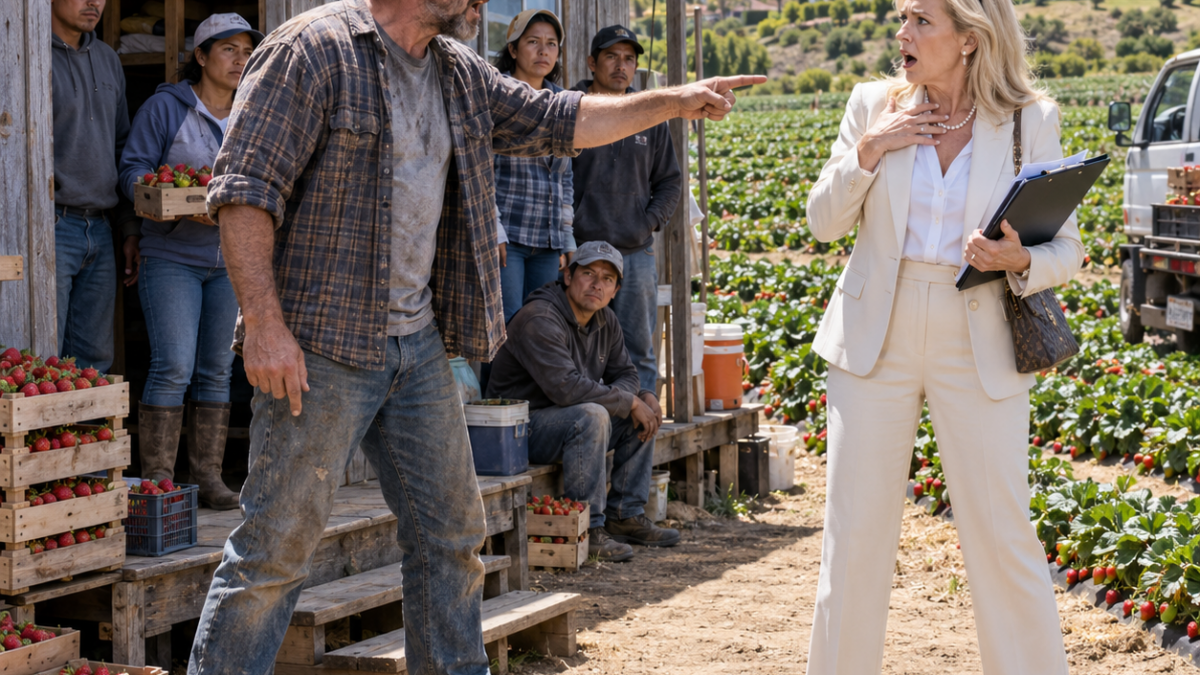
The HOA president stood ten feet inside my property line, pointed at the fifty-year-old bunkhouse on my farm, and told me the county would tear it down within thirty days if I didn’t do it myself. She called the building a dangerous eyesore and the men living inside it a problem for her neighborhood, apparently forgetting that those same hands harvested the strawberries her residents lined up to buy every spring. What Karen didn’t understand was that the little building she wanted erased was protected by decades of agricultural law—and her complaint was about to expose something far more dangerous to her than an old bunkhouse.
“This structure is unfit for human habitation,” she said, tapping her clipboard as though the plastic board itself gave her authority over forty acres of land my wife’s family had farmed for generations. “County Code 7.14B is very clear, Mr. Jackson.”
I looked past her toward the bunkhouse.
It wasn’t beautiful.
I would give her that.
The siding had faded to the soft gray of old lumber, the porch leaned just enough to reveal its age, and nobody would confuse it with the beige two-story houses beyond my eastern fence. But two years earlier I had installed a new roof. The electrical system had been upgraded. The plumbing worked. There were smoke detectors, fire extinguishers, clean beds, a small kitchen, a shower, and enough space for the twelve seasonal workers who stayed there during our strawberry harvest.
Miguel Alvarez had slept in that building every harvest season for fifteen years.
He had first arrived alongside his father as a teenager.
Now he was our crew foreman, a husband, a father of three, and one of the most skilled agricultural workers I had ever known.
Karen looked at the bunkhouse and saw a shack.
I saw twelve men who got up before sunrise because strawberries had to be picked cool and handled gently if they were going to reach market looking like strawberries instead of jam.
“You filed a condemnation complaint?” I asked.
“Preliminary complaint,” she corrected. “The county inspection is the next step.”
“And you’re standing on my land why?”
“This area is adjacent to the Whispering Pines community easement.”
“Adjacent isn’t the same as yours.”
Her mouth tightened.
“Your building touches the access corridor.”
“Four inches of foundation touches a county easement created in 1958.”
“So you admit there’s an encroachment.”
“I admit you’ve been reading documents you don’t understand.”
That landed.
Karen’s cheeks reddened.
Behind her, Whispering Pines Estates stretched across what used to be an orange grove—two hundred near-identical homes, trimmed lawns, decorative mailboxes, and an HOA that had spent the previous year complaining about my tractor starting before eight in the morning, dust crossing the fence during tilling, and the smell of fertilizer after rain.
My farm had been there long before their gates.
Agricultural zoning protected it.
The HOA had no jurisdiction over us.
Karen knew that.
So she had changed tactics.
She hadn’t filed the complaint as HOA president.
She had filed it as a private citizen claiming a public-health hazard.
Smart.
Not smart enough.
“You have thirty days,” she said. “Personally, I’d recommend demolishing it before the county has to become involved.”
I studied her.
“Who told you the building was unsafe?”
She glanced at the bunkhouse.
“Anyone can see it.”
“So nobody.”
“I have every right to report a potential hazard.”
“You do.”
That answer surprised her.
I continued.
“And the county has every right to inspect.”
Her smile returned.
“I’m glad you’re finally being reasonable.”
“I am.”
I stepped toward the fence and opened the gate.
“But you’ve made three mistakes, Karen.”
She stiffened.
“First, you’re trespassing.”
Her expression darkened.
“Second, the code you quoted doesn’t apply the way you think it does to a grandfathered agricultural structure.”
“You’re not an attorney.”
“No.”
I held the gate open.
“And third, you assumed those twelve men are something I can simply remove from the farm without affecting anyone on your side of that fence.”
She gave a small laugh.
“I don’t care who picks your strawberries.”
“I know.”
That was the problem.
She walked through the gate.
I closed it behind her.
That evening, I sat at our kitchen table with the county inspection notice beneath the yellow light while Sarah stood behind me with both hands resting on my shoulders.
“What happens if they condemn it?” she asked.
I looked through the window toward the bunkhouse, where twelve men were eating dinner after a twelve-hour day preparing the fields.
Then I looked toward the lights of Whispering Pines.
“We lose worker housing in the middle of harvest preparation.”
“And then?”
“We lose workers.”
“And then?”
I picked up a pen.
“Then a lot of people who think this is about an ugly building discover where their strawberries actually come from.”
At the top of a clean legal pad, I wrote two words.
**OPERATION STRAWBERRY.**
Then I opened the county code.
And before midnight, I found the first sentence Karen should have read before she came onto my farm.
PART 2
The sentence was buried beneath two pages of definitions, exceptions, cross-references, and bureaucratic language designed by people who had apparently believed ordinary English posed some kind of public danger. County Code 7.14B did indeed allow the county to condemn structures deemed unsafe for human habitation, but the operative standards were specific: structural instability, lack of sanitary facilities, severe electrical hazards, inadequate emergency access, contamination, infestation, or other conditions creating an actual threat to occupants or the public. “Old,” “visible from an HOA patio,” and “not painted beige” were not on the list.
Sarah sat across from me with a mug of tea while I read the section aloud, then read it again more slowly. She had grown up on the farm, inherited it from her grandparents, and knew every building on the property the way some people know rooms in a childhood home. The bunkhouse wasn’t sentimental in the same way the farmhouse was, but Sarah’s grandfather had built it with two neighboring farmers in the late 1960s, and seasonal workers had lived there during harvest for more than half a century. Generations of men had cooked meals in that little kitchen, dried muddy boots on the porch, called wives and children from beneath the oak tree beside it, and left names scratched into the underside of a roof beam where nobody saw them unless they knew to look.
“She’s not really worried about safety,” Sarah said.
“No.”
“She just hates seeing it.”
“Yes.”
“And the workers.”
I didn’t answer immediately.
Karen had never said anything openly racist or explicitly hostile to immigrant labor, at least not to me. She was too careful for that. She used words like “transient,” “unknown individuals,” “community character,” “family environment,” and “property values.” Sometimes prejudice puts on a suit before entering public meetings.
“She doesn’t know them,” I finally said.
“That hasn’t stopped her from judging them.”
“No.”
Sarah looked through the window toward the bunkhouse. “What do we do first?”
“Prove the building is safe.”
“And second?”
“Prove the easement doesn’t give her what she thinks it gives her.”
“And third?”
I looked toward Whispering Pines.
“Figure out why a woman with two hundred houses to supervise is spending this much energy on twelve men sleeping on a farm.”
The next forty-eight hours were among the least relaxing of my retirement.
For twenty-two years in the Marine Corps, I had lived by an uncomplicated principle: information collected before a problem becomes a crisis is worth ten times what it is afterward. Karen had already triggered the county process. I couldn’t stop an inspector from coming without making it look as if I had something to hide, so I stopped thinking about preventing the inspection and started thinking about controlling what the inspector would see.
The bunkhouse maintenance records went first.
New roof: twenty-four months old.
Electrical upgrade: eighteen months.
Septic service: eleven months.
Plumbing repair: six months.
Fire extinguishers: current.
Smoke detectors: current.
Carbon-monoxide detectors: current.
Water test: current.
Insurance inspection: passed.
I photographed every room.
Twelve beds, all with clean mattresses and lockers.
Two bathrooms.
Kitchen.
Dining table.
Refrigerator.
Emergency exits.
First-aid kit.
Window screens.
The place was plain, but plain and unsafe are different things.
Then I drove to the county records office.
The building itself had been erected decades before digital permit systems, but Sarah’s grandfather had kept paperwork with almost religious devotion. I found agricultural-use permits from the seventies, a septic approval from the eighties, and renovation records from the nineties. What I needed, though, was the easement.
It took a county clerk named Denise almost forty minutes to locate the scanned original.
1958.
Ten feet wide.
Utility and emergency access.
Granted to the county before the bunkhouse existed.
The language was straightforward enough that even Karen could have understood it if understanding had been her objective.
The county and recognized utility providers could enter the strip for maintenance of electrical, water, communication, and emergency-access infrastructure.
Nothing gave the adjoining subdivision ownership.
Nothing transferred enforcement authority to private residents.
Nothing allowed an HOA president to treat the easement as her personal inspection corridor.
The bunkhouse foundation touched the strip by several inches, but old aerial photographs showed the building had existed there for decades. If that created a modern setback issue, grandfathering would become important.
I made three certified copies.
One for me.
One for the inspector.
One for David Chen.
I hadn’t spoken to David in almost ten years.
We had served during overlapping periods, though our paths crossed only briefly in uniform. He had been a Marine judge advocate with a mind so annoyingly precise that ordinary conversation sometimes felt like deposition testimony. After leaving the Corps, he opened a property-and-commercial litigation practice thirty miles away.
He answered on the third ring.
“Chen.”
“Still answering your own phone?”
Pause.
“Jack Jackson?”
“You sound disappointed.”
“I assumed you were dead or finally farming in peace.”
“One of those was almost true.”
“What happened?”
“HOA president is trying to condemn my seasonal-worker bunkhouse.”
Another pause.
“You joined an HOA?”
“Absolutely not.”
“Then start over.”
I did.
Farm.
Whispering Pines.
Easement.
Karen.
County complaint.
Seasonal housing.
Strawberry harvest.
When I finished, David said, “She’s using a public enforcement process to solve a private aesthetic complaint.”
“That’s my read.”
“Any legitimate safety issue?”
“None I know of.”
“Inspection scheduled?”
“Two weeks.”
“Good.”
“Good?”
“Means we have time.”
“For what?”
“To make her regret confusing procedure with power.”
There it was.
The David Chen I remembered.
“First,” he said, “we notify the county that you’re represented, fully cooperative, and requesting counsel present during inspection.”
“Okay.”
“Second, I send Karen a letter.”
“HOA?”
“No.”
“Why?”
“Because she filed as a private citizen. I want her to understand that if she knowingly abuses public process to interfere with your lawful agricultural business, we’re examining personal exposure.”
“Tortious interference?”
“Potentially. Abuse of process depending on facts. Don’t get attached to labels yet.”
“Fine.”
“Third, do not call this a war in any correspondence.”
I looked at the legal pad where OPERATION STRAWBERRY appeared in capital letters.
“Why would I?”
“I know you.”
“You barely know me.”
“Exactly enough.”
The letter went out the following morning.
It was measured.
No theatrical threats.
No “destroy you.”
No “ruin you.”
Just an explanation that the farm disputed Karen’s claims, believed the complaint arose from a private aesthetic dispute rather than actual health concerns, and would seek recovery for provable losses if knowingly improper interference disrupted agricultural operations.
David copied county planning.
County counsel.
And the HOA’s registered office.
That last part mattered.
Karen had filed individually, but David wanted the board aware of what their president was doing.
Her response arrived three days later.
Not to David.
To me.
Five HOA violation notices.
I spread them across my kitchen table while Sarah read over my shoulder.
“Barn color?”
“Apparently red has become illegal.”
“Commercial vehicle?”
“My F-250.”
“You’ve had that truck eight years.”
“Karen is a patient observer.”
Sarah picked up another notice.
“‘Agricultural particulate migration impacting community aesthetic enjoyment.’ Jack, is she fining dirt?”
“Two hundred dollars.”
Sarah laughed.
Then she stopped.
“These aren’t enforceable.”
“No.”
“Why send them?”
“To make me tired.”
“Is it working?”
I looked toward the binder.
“No. It’s making David happy.”
I scanned everything.
His email reply arrived six minutes later.
**Keep every envelope. Do not respond directly. She is helping.**
Miguel found me replacing a smoke detector in the bunkhouse the next morning.
“You changed that last year,” he said.
“I know.”
He climbed onto the porch and looked at the packaging.
“County?”
“County.”
Miguel nodded slowly.
The men had heard enough to understand what was happening.
“What does she want?”
“The building gone.”
“And us?”
I hesitated.
Miguel smiled without humor.
“Same thing.”
“I won’t let that happen.”
He leaned against the porch railing.
Miguel was forty-two then, though years of outdoor work made guessing his age difficult. He had been coming to the farm since he was seventeen. His father had harvested Sarah’s grandfather’s strawberries. Miguel became crew leader under Sarah’s father, and when Sarah and I took over, he stayed because he understood the land better than either of us did.
He wasn’t disposable labor.
He was institutional memory.
He knew which field drained badly after late rain, which rows ripened first after a cold spring, which workers could train newcomers, which buyers rejected fruit too aggressively, and exactly how long strawberries could remain in a picking tray before heat began softening them.
Without Miguel, I could grow strawberries.
I couldn’t reliably run the harvest.
“She calls us transient?” he asked.
“Not directly to me.”
He nodded toward the bunkhouse.
“I have slept there fifteen harvests.”
“I know.”
“My father slept there.”
“I know.”
“My son wants to work here next summer before college.”
That I didn’t know.
“Mateo?”
“He thinks university costs money.”
“He’s correct.”
Miguel smiled.
Then became serious.
“People like her see temporary housing and think temporary people.”
The sentence hit me hard.
I sat on the porch step.
Miguel sat beside me.
“You’re not temporary here.”
“I know that because you treat us that way.”
His voice stayed calm.
“Not everybody does.”
For the first time, I understood that my anger about the bunkhouse was not identical to his.
I was angry because someone challenged my property and business.
Miguel was tired because someone had once again challenged whether people like him belonged anywhere visible.
“What do you want me to do?” I asked.
He looked surprised.
“You’re asking me?”
“It’s your home six months a year.”
He thought for a while.
“Don’t make us victims.”
“I won’t.”
“Don’t make us weapons either.”
That was better advice than most lawyers charge for.
“What then?”
“Show them the truth.”
“The truth being?”
He grinned.
“We pick very good strawberries.”
County inspector Harold Henderson arrived on a Tuesday at exactly ten in the morning.
Karen arrived at ten-oh-two.
Of course she did.
She came in a dark blue sedan with the HOA’s attorney, a man named Martin Graves who looked as if he’d rather be defending a shopping center than standing in dust beside a strawberry field.
David arrived thirty seconds later.
Henderson was fifty-something, tired-eyed, sunburned, and carried the same kind of clipboard Karen liked using, though in his hands it looked like a tool rather than a weapon.
“Mr. Jackson?”
“Yes.”
“Henderson, county building services.”
We shook hands.
“This is my counsel, David Chen.”
David shook his hand.
“We appreciate you coming.”
Karen approached before Henderson could answer.
“Mr. Henderson, thank goodness. I’ve prepared a packet showing—”
He raised one hand.
“I’ll take whatever documentation you have after I inspect.”
Her mouth closed.
That alone was worth getting out of bed.
We entered the bunkhouse.
Henderson did his job thoroughly.
Electrical panel.
Smoke alarms.
Water pressure.
Hot water.
Windows.
Flooring.
Kitchen.
Bathrooms.
Ceiling.
Emergency exits.
Fire extinguishers.
Septic documentation.
Occupancy.
He asked Miguel how many people slept there.
“Twelve at peak harvest.”
“How long?”
“About six months.”
“Any children?”
“No.”
“Any issues with water?”
“No.”
“Heat?”
“Window air units.”
“Fire escape plan?”
Miguel pointed to the laminated diagram beside the kitchen.
Henderson nodded.
Karen stood in the doorway with her arms folded.
Finally she couldn’t stay silent.
“You can see this is essentially a barracks.”
Henderson kept writing.
“It is seasonal agricultural housing.”
“In a family community.”
“It isn’t in your community.”
Karen looked offended.
“It borders us.”
“So does the county road.”
Martin Graves touched her elbow.
A subtle signal to stop talking.
She ignored him.
“Property values are directly affected by structures like this.”
Henderson finally looked up.
“That’s not the code I’m inspecting.”
Beautiful sentence.
He walked outside.
Measured the corner foundation.
Four inches.
Karen saw the tape.
Her entire face brightened.
“There.”
Henderson straightened.
“There what?”
“The encroachment.”
“Four inches into the county easement.”
“So it’s illegal.”
“No.”
Karen blinked.
“The building predates current setback requirements by decades.”
“But the easement—”
“Allows county and utility access.”
“Which this building obstructs.”
Henderson looked toward the full width of the corridor.
Nine feet eight inches remained unobstructed beside the corner.
“No meaningful obstruction.”
Karen turned to Graves.
He looked down at his folder.
Henderson faced me.
“Mr. Jackson, I’ll put this in writing, but based on today’s inspection, the structure is sanitary, structurally serviceable, properly maintained, and does not meet condemnation criteria under 7.14B.”
I nodded.
“Thank you.”
Karen stepped forward.
“I intend to appeal.”
Henderson looked tired again.
“That’s your right.”
“And?”
“And you’ll likely get the same answer unless conditions change.”
“This is outrageous.”
Henderson closed his clipboard.
“No, ma’am. It’s an inspection.”
He drove away.
Karen remained.
For several seconds, nobody spoke.
Then she looked at me.
“This isn’t over.”
David answered before I could.
“That’s probably true.”
Karen’s eyes shifted toward him.
He smiled pleasantly.
“Because my client has now incurred legal fees responding to a baseless complaint.”
Graves finally intervened.
“David.”
“Martin.”
“We should discuss this counsel-to-counsel.”
“We should.”
Karen turned toward her car.
She stopped when she reached the fence.
“Migrant barracks do not belong beside Whispering Pines.”
Miguel was standing near the bunkhouse.
He heard it.
So did David.
So did Graves.
Karen drove away.
Miguel looked at me.
“Not victims.”
“I remember.”
“And not weapons.”
“I remember that too.”
He nodded.
“Good.”
The county victory should have ended the matter.
Instead, it removed the last restraint Karen had.
Notices began arriving almost daily.
Porch light too bright.
Farm vehicle visible from the road.
Odor nuisance.
Dust nuisance.
Unapproved agricultural signage.
Excessive early-morning machinery.
The HOA had no legal jurisdiction over the farm, but Karen knew official-looking paper created psychological pressure even when it couldn’t create actual liability.
I filed everything.
David responded once.
One letter.
No more direct enforcement attempts against non-HOA agricultural property.
The notices continued.
Then George Walker knocked on my door.
George was a retired accountant who lived three doors from Karen.
I’d spoken to him once at his mailbox, enough to know he disliked conflict almost as much as Karen enjoyed it.
He came after dark.
That told me how nervous he was.
Sarah invited him inside.
He refused coffee.
Accepted water.
Then removed a folder from beneath his jacket.
“She doesn’t know I’m here.”
“Who?”
He gave me a look.
“Right.”
He placed financial reports on the table.
“HOA budgets.”
Three years.
Legal expenses had risen dramatically.
Thirty-eight percent of annual spending in the most recent year went toward counsel, compliance consultants, enforcement services, and “community outreach.”
“That’s a lot for an HOA,” I said.
“Way too much.”
He pointed to one vendor.
CREATIVE COMMUNITY SOLUTIONS LLC.
Payments every quarter.
Same rounded amounts.
Five thousand.
Seven thousand five hundred.
Six thousand.
“What do they do?”
“Karen says resident engagement consulting.”
“You ever met them?”
“No.”
“Website?”
“No.”
“Address?”
“PO box.”
“Contract?”
George shook his head.
“I’ve asked.”
“What does she say?”
“That executive committee approved it.”
“Who’s executive committee?”
“Karen, Linda, and Martin.”
“Martin the lawyer?”
“No. Different Martin.”
“Do the bylaws have an executive committee?”
George looked embarrassed.
“Not exactly.”
That was interesting.
“Why show me?”
George stared at his hands.
“Because she’s asking for another special assessment.”
“For what?”
“Beautification and security.”
“How much?”
“Eight hundred dollars per house.”
Two hundred homes.
One hundred sixty thousand dollars.
“Why?”
“She says legal threats around adjacent properties require a defensive reserve.”
I laughed once.
“So my bunkhouse is becoming a funding campaign.”
“Yes.”
George lowered his voice.
“And because I looked at the vendor registration.”
My attention sharpened.
“What did you find?”
“Creative Community Solutions lists an officer named Karen Ann Mercer.”
“Mercer?”
“Karen’s maiden name.”
Sarah, standing in the doorway, said, “She’s paying herself?”
George looked miserable.
“That’s what it looks like.”
“Does the board know?”
“I don’t know.”
“George, you’re treasurer.”
“I know.”
“You sign checks?”
“Not electronic vendor transfers.”
“Who does?”
“President and management liaison.”
I leaned back.
This had moved far beyond bunkhouse aesthetics.
David was less excited than I expected.
“Don’t call it embezzlement.”
“George thinks—”
“George is an accountant, not a prosecutor.”
“She’s paying a company registered under her maiden name.”
“That is suspicious. Suspicious isn’t convicted.”
“So what do we call it?”
“Undisclosed related-party payments requiring explanation.”
“That sounds boring.”
“Boring wins.”
Arthur Henderson the inspector would have approved.
David’s paralegal verified the corporate registration.
Creative Community Solutions LLC.
Officer: Karen Ann Mercer.
Mailing address: commercial mail center two counties away.
No obvious employees.
No public website.
The HOA had paid the company almost sixty thousand dollars over three years.
David told George to raise the matter internally.
I stayed out.
“Why?” I asked.
“Because that’s their HOA.”
“She started this.”
“And your goal is protecting your farm, not staging a takeover.”
Fair.
Then Sarah suggested Farm Day.
I originally thought she was joking.
“Invite Whispering Pines?”
“Everyone.”
“To pick strawberries?”
“Yes.”
“They’re afraid Karen will fine them for breathing wrong.”
“Then invite people outside Whispering Pines too.”
“What exactly is the objective?”
Sarah stared at me.
“You’ve been retired too long.”
“Meaning?”
“You don’t need an objective for everything.”
“I absolutely do.”
“The objective is to let people meet the human beings Karen keeps describing as a problem.”
Miguel approved.
“As long as nobody makes us give speeches.”
“No speeches.”
“Good.”
Saturday came bright and warm.
We placed a handmade sign at the gate.
**COMMUNITY FARM DAY — STRAWBERRY PICKING — ALL WELCOME**
Sarah made lemonade.
Shortcake.
Whipped cream.
I roped off three rows for visitors.
Miguel, Hector, Luis, Rafael, and several others volunteered to help families learn how to pick without bruising fruit or damaging plants.
The first arrivals were hesitant Whispering Pines families.
Parents kept checking the road as though attending might appear in their HOA files.
Children didn’t care.
Within ten minutes they were running through rows with baskets, faces stained red.
A little girl held up a strawberry almost as large as her palm.
Miguel crouched.
“Too white on the shoulder.”
She frowned.
“This one?”
“Perfect.”
She smiled as if she’d passed a professional exam.
Her father watched.
“You really inspect every berry?”
Miguel laughed.
“Not every one. Your hands learn.”
“How long have you done this?”
“Twenty-five years.”
The father’s expression changed.
He had probably imagined agricultural labor as unskilled work.
Most people do until they try it.
By eleven, more families arrived.
Whispering Pines residents walked through the bunkhouse because several asked.
They saw clean beds.
Kitchen.
Bathrooms.
Family photographs taped inside lockers.
Work boots lined beneath bunks.
Nothing frightening.
Nothing mysterious.
Just housing.
Then Karen’s black SUV stopped outside the gate.
She didn’t enter.
She sat behind tinted glass.
Three Whispering Pines families noticed.
Within minutes, they packed up.
One mother apologized.
“I just don’t need trouble.”
I understood.
That was Karen’s real authority.
Not bylaws.
Not titles.
Anticipation.
People changed behavior because they imagined consequences.
I watched the SUV.
Miguel came beside me.
“Let her sit.”
“I am.”
“No war face.”
“I don’t have a war face.”
“You do.”
Before I could answer, another car arrived.
Then another.
Then six more.
Families from town.
A church group.
Two teachers.
A retired couple.
Someone had shared our Farm Day invitation on a local Facebook group.
Within half an hour, the parking field was full.
Karen’s SUV became irrelevant.
One visitor changed everything.
Maria Flores ran a regional food blog called Valley Eats.
I’d heard of it because Sarah followed her restaurant recommendations.
Maria arrived with her husband and son, started taking pictures, and spent fifteen minutes asking questions about strawberry varieties.
Then she met Miguel.
She switched to Spanish.
Miguel relaxed instantly.
They talked while her son picked berries.
Maria asked about harvest timing.
Miguel explained that crews began before dawn because cool berries stayed firmer, bruised less, and lasted longer through distribution.
He showed her how fingers should roll the stem rather than crush the fruit.
He talked about coming to the farm with his father.
About returning each season.
About sending his children through school.
About knowing fields by smell after rain.
Maria listened.
Then she asked, “Can I photograph you?”
Miguel looked at me.
I shrugged.
“Your choice.”
He nodded.
Maria photographed him standing at the edge of the field holding a flat of strawberries.
Not posed like a victim.
Not anonymous.
A craftsman beside his work.
Karen drove away.
Maria’s article went live that evening.
**THE HIDDEN HANDS BEHIND OUR COUNTY’S BEST STRAWBERRIES**
It wasn’t about our dispute.
Thank God.
It was about labor.
Skill.
Food.
History.
She described the bunkhouse as “simple, clean seasonal housing steps from the fields.”
She quoted Miguel.
“Temporary harvest doesn’t mean temporary dignity.”
I hadn’t heard him say that.
He shrugged when I asked.
“Maria asks good questions.”
The article spread.
Restaurant owners shared it.
Farmers.
Parents.
Local food groups.
Whispering Pines residents shared it privately at first, then publicly.
The bunker Karen had tried to describe as a threat became associated with twelve recognizable men and a crop people loved.
That mattered when the next notice appeared.
County Board of Supervisors.
Agenda item:
**WHISPERING PINES COMMUNITY BEAUTIFICATION AND SAFETY INITIATIVE**
Karen intended to ask for public funds and county assistance targeting “blighted adjacent properties.”
One of the proposal photographs showed my bunkhouse.
Taken from far away.
Gray sky.
Zoomed tightly enough to exclude the new roof, maintained yard, fields, and main farmhouse.
David stared at the packet.
“She wants taxpayers to fund her vendetta.”
“Essentially.”
“She cites crime concerns.”
“We’ve had none.”
“Property values.”
“No study.”
“Safety.”
“County cleared us.”
David smiled.
“Then this is useful.”
“For us?”
“Very.”
George provided another piece.
The proposal included a request that certain funds be administered through an HOA “community outreach partner.”
Creative Community Solutions.
I stared at the document.
“She actually put the company in the proposal?”
“Yes.”
“Company registered to her maiden name?”
“Yes.”
“Does the county know?”
“They will.”
I called Miguel.
“I need you at the supervisors meeting.”
“For what?”
“Stand there.”
“No speech?”
“Only if you want.”
“Who else?”
“Hector and Luis if they’re comfortable.”
“Okay.”
Then David called Robert Thompson.
Thompson owned T Farms Produce, the regional distributor that bought nearly forty percent of our harvest and moved it into grocery stores, restaurants, and farmers markets across three counties.
He agreed to attend immediately.
“Workers live there?”
“Yes.”
“Demolish it and what happens?”
“We scramble for housing. Some crew doesn’t come. Harvest slows.”
“How much product?”
“Depends on timing.”
“Enough to affect my supply?”
“Yes.”
“I’ll be there.”
Maria came too.
George sat with several Whispering Pines residents.
Sarah wanted to attend but stayed with farm operations because harvest doesn’t pause for politics.
The county chamber held around a hundred people.
Five supervisors sat behind a raised dais.
Karen entered in a navy suit with HOA counsel and two board allies.
She saw me.
Then Miguel.
Then David.
She didn’t recognize Thompson.
That was unfortunate for her.
Her presentation began exactly as expected.
“Safety.”
“Families.”
“Property values.”
“Unknown transient individuals.”
The bunkhouse photograph appeared on the screen.
Karen called it a “dilapidated facility of uncertain occupancy.”
I saw Miguel’s jaw tighten.
“Not victims,” I whispered.
He nodded.
Karen continued.
Potential crime.
Strain on resources.
Visual blight.
No data.
No documented incidents.
No current code violations.
Just fear wearing bullet points.
When she finished, Chairman Harold Davies adjusted his glasses.
“Ms. Miller, do you have crime statistics tied to this property?”
Karen hesitated.
“The risks are widely understood.”
“That wasn’t my question.”
“No specific statistics, no.”
“Property valuation study?”
“No formal study.”
“Current condemnation finding?”
“The original complaint remains—”
Davies looked at a paper.
“Our inspector closed that complaint as unfounded.”
Karen’s lawyer leaned toward her.
Too late.
Davies looked at the audience.
“Property owner present?”
I stood.
“Yes, sir.”
“Come forward.”
David walked beside me.
I addressed the supervisors.
“My name is Jack Jackson. My wife and I own the forty-acre agricultural property shown in Ms. Miller’s presentation.”
I held up Henderson’s inspection report.
“The building described as unsafe passed county inspection.”
Folders had already been provided to the supervisors.
Davies turned pages.
I continued.
“The bunkhouse houses twelve seasonal agricultural workers during our strawberry season. Some have returned to this farm for more than a decade.”
I turned.
“Miguel, Hector, Luis, would you stand?”
They did.
No uniforms.
No costumes.
Clean work shirts.
Jeans.
Men.
“These are three of the people Ms. Miller’s presentation refers to as uncertain transient individuals. Miguel Alvarez has worked on this farm for fifteen years. His father worked here before him.”
Supervisor O’Connell looked toward Miguel.
“Mr. Alvarez, would you like to speak?”
He glanced at me.
I didn’t nod.
Didn’t encourage.
His choice.
Miguel walked to the microphone.
“My name is Miguel Alvarez.”
His voice was steady.
“I come here every harvest. I have a wife and three children. My oldest son starts college next year.”
He looked toward Karen only once.
“I sleep in the bunkhouse because strawberry picking starts before sunrise, and because housing close to agricultural work makes the season possible.”
He paused.
“The building is not beautiful.”
A few people smiled.
“But it is clean. It is safe. And when I am here, it is my home.”
Silence.
Miguel continued.
“I don’t ask anybody to like how it looks. I ask them not to talk about the people inside it like we are dangerous because they don’t know our names.”
He stepped away.
I had not prepared that.
Neither had Karen.
Davies nodded.
“Thank you, Mr. Alvarez.”
Then Robert Thompson spoke.
He introduced himself.
Several supervisors knew his company.
“My distribution business purchases produce from more than thirty farms in this region. Jackson Farms is one of our largest premium strawberry suppliers.”
He explained timing.
Labor.
Supply chains.
Restaurants.
Retail.
Loss.
Then he said the sentence that ended Karen’s attempt to frame the bunkhouse as one man’s ugly problem.
“If legitimate seasonal housing on functioning farms becomes vulnerable to aesthetic complaints from neighboring subdivisions, you are not regulating buildings. You are destabilizing agricultural production.”
Supervisor O’Connell wrote that down.
Maria spoke briefly about Farm Day and public reaction.
Then David stepped forward.
He did not discuss Karen’s personality.
Didn’t call her corrupt.
Didn’t mention revenge.
He directed the board to documents.
“Ms. Miller is requesting public funds.”
O’Connell nodded.
“Yes.”
“Some proposed administration would involve Creative Community Solutions LLC.”
Karen’s face changed.
Tiny.
But visible.
David continued.
“We believe supervisors should review the disclosed ownership information for that entity before considering any appropriation.”
O’Connell opened the financial tab.
She read.
Looked toward staff.
Then toward Karen.
“Ms. Miller.”
Karen approached the microphone.
“Yes?”
“Are you affiliated with Creative Community Solutions?”
Karen hesitated.
“It is a community consulting provider.”
“That wasn’t my question.”
“No.”
O’Connell leaned forward.
“Corporate filings identify Karen Ann Mercer as its managing officer.”
Karen’s lawyer stood.
“Supervisor, this appears outside the scope—”
O’Connell held up one hand.
“Is Karen Ann Mercer you?”
The room went silent.
Karen’s mouth opened.
Closed.
“Yes.”
Whispering Pines residents erupted in murmurs.
O’Connell continued.
“Your HOA has paid this firm?”
Karen looked toward her lawyer.
He whispered.
“Yes.”
“You are asking this county to fund an initiative in which a company you control may receive administrative work?”
Karen’s voice became defensive.
“All consulting services were legitimate.”
“Were they disclosed to homeowners?”
“Our board was aware.”
George stood from the audience.
“No, we weren’t.”
Every head turned.
Karen stared at him.
George’s hands shook, but his voice didn’t.
“I’m the HOA treasurer. I was not informed that Creative Community Solutions belonged to Karen.”
One of Karen’s board allies whispered, “Neither was I.”
The room changed instantly.
This was no longer my hearing.
It was hers.
Chairman Davies banged the gavel.
“Order.”
O’Connell looked furious.
“County staff will not process this funding request further.”
Karen started talking.
“This is being manipulated by Mr. Jackson—”
Davies interrupted.
“No.”
She stopped.
“This board has before it an inspection report establishing that the structure forming the basis of your proposal is not condemned, no data supporting your crime assertions, no property-value analysis, and now an apparent undisclosed financial interest in a proposed program recipient.”
He looked toward county counsel.
“I am directing counsel to refer the financial information to appropriate review authorities.”
Karen’s face went white.
“The beautification initiative is denied.”
Gavel.
One sound.
Years of Karen’s confidence seemed to collapse behind it.
The meeting video appeared online that afternoon because county meetings were public.
Maria posted a follow-up.
She did not call it Strawberrygate.
I was grateful.
Her headline was better:
**WHEN SUBURBIA MEETS THE FARM: A COUNTY FIGHT OVER WORK, HOUSING, AND WHO GETS TO BELONG**
The financial questions spread faster than the bunkhouse story.
Whispering Pines exploded internally.
George called an emergency meeting.
Karen posted a three-page message claiming she was the victim of political retaliation.
Creative Community Solutions, she said, had provided “valuable strategic services.”
Residents asked what services.
No clear answer.
They asked why her maiden name appeared on corporate records.
No answer.
They asked why legal expenses had consumed such a large share of dues.
No answer.
They asked why the front gate had been broken for four months while consultants collected tens of thousands.
No answer.
Two days later, the Whispering Pines clubhouse was packed.
I stood at the back beside David.
We weren’t voting members.
This was their house to clean.
George took the microphone.
Six months earlier, he could barely speak to me at his mailbox without checking whether Karen was watching.
Now he faced two hundred neighbors.
“My name is George Walker. I’ve served as treasurer for three years, and I owe this community an apology.”
Karen sat at the board table.
He continued.
“I allowed our president too much unilateral control because challenging her was unpleasant.”
A few uncomfortable laughs.
George didn’t smile.
“That is not an excuse.”
He projected financial statements.
Legal fees.
Consulting fees.
Administrative costs.
Special assessments.
Then Creative Community Solutions.
“I approved financial reports containing these payments. I did not know the vendor was controlled by our president under her maiden name. I should have investigated sooner.”
Karen grabbed her microphone.
“These statements are misleading.”
George looked at her.
“You’ll have time.”
She stared at him.
Nobody had ever told her that.
George continued.
“The county has referred these transactions for independent review. Tonight I am moving that association accounts be temporarily restricted to ordinary operating expenses pending a forensic audit.”
Second.
Vote.
Passed overwhelmingly.
“Second motion: no confidence in President Karen Miller and initiation of removal under Article Eleven.”
The room erupted.
Karen stood.
“This is a mob.”
A homeowner shouted, “Sit down.”
Another said, “Where’s our money?”
George raised both hands.
“Stop.”
The room settled.
“No accusations beyond what we can document.”
I smiled.
David noticed.
“What?”
“Boring wins.”
He smiled back.
Karen was given five minutes.
She used six.
She said she had protected standards.
Protected property values.
Modernized enforcement.
Professionalized community relations.
Fought external threats.
She claimed the consulting payments represented legitimate services.
Someone asked what services.
“Strategic communications.”
“What did we get?”
“Community messaging.”
A woman in the front row said, “You emailed us yourself.”
Laughter.
Karen became angry.
“This is exactly the disrespect I’ve dealt with for years.”
George called the vote.
Nearly unanimous.
Karen Miller was removed as HOA president.
Then removed from the board.
One ally resigned immediately.
Another stayed long enough to apologize.
George became interim president because nobody else wanted the position.
He called me the following morning.
“Why are you laughing?”
“President George.”
“Don’t.”
“Your Majesty.”
“I’ll hang up.”
“What do you need?”
“To apologize officially.”
“You already did personally.”
“HOA needs to.”
“That matters.”
“And every violation Karen issued against your farm is withdrawn.”
“They were never valid.”
“I know. Still doing it.”
“Fine.”
“Anything else?”
I thought about the bunkhouse.
“Miguel wants something.”
“What?”
“A gate.”
George sounded confused.
“There is a gate.”
“Not between communities. A real one in the shared fence section near the blackberry row.”
“For what?”
“So your residents can walk over during Farm Day without driving around.”
George was quiet.
“That all?”
“No.”
“Here it comes.”
“Stop calling twelve guys transients in official documents.”
Long pause.
“Done.”
The forensic audit took months.
I did not participate.
I had no desire to spend retirement studying HOA ledgers.
The investigators found enough irregularities that matters went to law enforcement and civil counsel. I heard accusations about undisclosed related-party payments, improper reimbursements, and false invoices. I refused to repeat rumors as facts.
Eventually public court records showed Karen faced charges related to misuse of association funds.
That was her fight now.
Mine had ended when the county inspector declared the bunkhouse safe.
Everything afterward was consequence.
A FOR SALE sign appeared in her yard before the criminal case resolved.
Miguel and I were checking strawberry blossoms when the sign went up.
He stared across the fence.
“She leaves?”
“Looks like.”
“Because of us?”
“Because of herself.”
Miguel smiled.
“Better answer.”
The next harvest season became the strongest in our farm’s history.
Partly weather.
Partly luck.
Partly because Maria’s article had turned our strawberries into something people actively sought out.
But success created a problem.
We needed more workers.
I expected Miguel to recommend expanding the bunkhouse.
Instead, he sat at my kitchen table and said, “If you build anything, ask us what we need.”
That should have been obvious.
It wasn’t.
“What do you need?”
“Privacy.”
“Meaning?”
“Not twelve beds in one room forever.”
I nodded.
“Families sometimes come.”
“Okay.”
“Better laundry.”
“Definitely.”
“Wi-Fi that doesn’t die every time somebody microwaves food.”
Sarah laughed.
“That explains a lot.”
Miguel continued.
“Covered outdoor kitchen would be good.”
I wrote everything down.
Then I looked at him.
“Anything else?”
“Don’t make it fancy.”
“Why?”
“Then you’ll charge rent.”
I laughed.
“We don’t charge you now.”
“I know. I am preventing future Jack.”
We renovated.
Not because Karen forced us.
Because she accidentally forced me to look harder.
We converted the bunkhouse into smaller sleeping rooms.
Improved ventilation.
Added laundry.
Upgraded the kitchen.
Built a shaded patio.
Installed reliable internet.
Added bilingual safety information.
Nothing luxurious.
Everything respectful.
When Harold Henderson returned for a voluntary reinspection, he walked through, nodded, and said, “You planning a hotel?”
“Don’t tell Miguel.”
He passed it.
Again.
George visited afterward carrying beer.
He stared at the building Karen had called a blight.
“You know what’s funny?”
“Usually when people ask that, the answer isn’t funny.”
“She could’ve just asked you to repaint it.”
“I would’ve said no.”
“Exactly.”
He handed me a beer.
“The board voted on something.”
“That sounds dangerous.”
“Blackberry hedge.”
“What?”
“We want to pay half.”
“No.”
“Why?”
“My land.”
“Shared benefit.”
“My fence.”
“Shared benefit.”
“You’re becoming an HOA president.”
He looked horrified.
“Take that back.”
We compromised.
The HOA bought plants.
My crew planted them.
A living border of blackberry bushes went along the fence.
For privacy.
For fruit.
For symbolism, if anyone needed symbolism.
Children from Whispering Pines helped.
So did Miguel’s crew.
The same fence line Karen had treated as a battlefield became a place where suburban parents and agricultural workers dug holes side by side.
No speeches.
No cameras.
Better that way.
At the end of strawberry season, Sarah proposed another barbecue.
This one private.
Everyone who had helped.
David came with his wife.
George and the new board.
Maria and her family.
Robert Thompson.
Old man Hemlock.
County inspector Henderson declined because he thought attending might look improper, then appeared the next morning and bought six flats of berries.
Miguel’s entire crew came.
Some brought wives.
Children.
Cousins.
The bunkhouse had string lights along the porch.
Music played from a small speaker.
English and Spanish moved across long tables without anyone keeping track of which language belonged where.
Sarah served strawberry shortcake.
Miguel found me near the barn.
“Jefe.”
“I’ve told you not to call me that.”
“Yes, jefe.”
“What?”
He looked toward the bunkhouse.
“Thank you.”
“For Wi-Fi?”
“Especially Wi-Fi.”
I laughed.
Then he became serious.
“For fighting.”
I shook my head.
“You fought too.”
“I stood.”
“Exactly.”
He looked toward Whispering Pines.
“You know what was hardest?”
“What?”
“Not her.”
That surprised me.
“What then?”
“Watching people look away.”
I understood.
“At Farm Day?”
“Before.”
He took a drink.
“When sheriff comes. When she takes pictures. When she says transient. People know it’s wrong, but they look away because it is easier.”
He shrugged.
“Then one person looks at you. Then another. Then it changes.”
I looked around.
George was talking with Hector.
Maria’s son was trying to teach old man Hemlock Spanish.
Badly.
Two Whispering Pines kids chased Miguel’s daughter around the strawberry packing shed.
“You think it’s fixed?”
Miguel followed my gaze.
“No.”
Honest answer.
“Better?”
“Yes.”
That was enough.
Karen moved out three weeks later.
I saw the truck.
Didn’t watch.
Didn’t need to.
Several neighbors treated her departure like liberation.
I couldn’t.
Whatever she’d done, a woman was leaving a home where she’d expected to spend years.
There was something sad about that.
Consequences can be deserved and still look sad from across a fence.
The new owners were a couple named Daniel and Rebecca Harris with an eight-year-old son named Owen.
Owen became obsessed with my tractor.
Every time I passed the fence, he waved like I was driving a parade float.
One afternoon, Daniel called across.
“Jack?”
I shut off the tractor.
“Yeah?”
“My son wants to know whether strawberries grow on trees.”
I stared at Owen.
He looked serious.
“No.”
“See?” Daniel said. “I told you.”
Owen frowned.
“What do they grow on?”
“Plants.”
“Can I see?”
I looked at Daniel.
“Bring boots Saturday.”
That became normal.
Kids from Whispering Pines came during planting demonstrations.
Miguel taught them how strawberries spread by runners.
Sarah taught them how to make jam.
I taught them mostly how not to stand behind machinery.
The bunkhouse stopped being “that building.”
It became part of the farm.
Nothing magical happened to its siding.
Still gray.
Still old.
Still not beige.
But familiarity changed what people saw.
That’s the part Karen never understood.
She believed appearances created safety.
Often understanding does.
Two years after the condemnation complaint, Whispering Pines hosted its first official community farm day with us.
Official.
I teased George mercilessly.
“You needed HOA approval to pick strawberries?”
“We have insurance now.”
“Cowards.”
“We also have printed signs.”
“Bureaucrats.”
“You love it.”
I did.
The HOA paid for portable handwashing stations.
Helped organize parking.
Collected donations for a local farmworker health clinic.
Not my idea.
Miguel’s.
By noon, more than two hundred people had visited.
At one point I stood on the hill above the field.
Below me were strawberries in long green rows.
Children.
Families.
Workers.
Neighbors.
The bunkhouse near the oak trees.
Whispering Pines beyond the fence.
Nothing about it looked dramatic.
That made me happier than all the public confrontations combined.
David joined me.
“You look disappointed.”
“Why?”
“Nobody to sue.”
“I’m adapting.”
“Poorly.”
He handed me lemonade.
“You realize Karen did you a favor.”
I looked at him.
“Careful.”
“She forced you to professionalize worker housing.”
“We were already safe.”
“Safe and good aren’t identical.”
I hated that he was right.
“She created marketing exposure.”
“Maria did.”
“Triggered HOA reform.”
“George did.”
“Strengthened the relationship between farm and subdivision.”
“Everyone did.”
David smiled.
“Exactly.”
“What?”
“She didn’t do those things.”
“No.”
“You did them in response.”
I looked down at the field.
That distinction mattered.
Pain doesn’t automatically improve anyone.
Conflict doesn’t automatically create community.
People decide what to build afterward.
That was the victory.
Not Karen losing.
Us building.
The strawberry crop became a strange bridge between two worlds that had once viewed each other suspiciously.
Whispering Pines residents learned that six-thirty tractor noise sometimes meant fruit needed to reach refrigeration before heat damaged it.
My workers learned which neighbors could be trusted to drive someone to urgent care if necessary.
The HOA installed Spanish-language emergency information at the community gate because seasonal workers sometimes walked through during events.
We shared storm alerts.
When a hurricane knocked out electricity one year, the HOA clubhouse generator powered refrigerators while my farm’s diesel generator kept their medical-equipment charging station running.
You don’t build that relationship through architectural standards.
You build it by needing each other at least once.
George finally stepped down as HOA president after three years.
He came to the farm with a bottle of bourbon.
“Free.”
“From what?”
“People.”
“That’s concerning.”
“They complain.”
“You volunteered.”
“Never again.”
“Who replaced you?”
“Rebecca Harris.”
“Karen’s house Rebecca?”
“Same.”
I laughed.
“History has humor.”
George poured two glasses.
“She wants to create an agriculture liaison committee.”
I almost spit bourbon.
“No.”
“Her words.”
“No committees.”
“She says one meeting a year.”
“Still no.”
“She nominated you.”
“I’ll burn the bunkhouse myself.”
George laughed until he coughed.
We compromised on no committee.
Just Rebecca’s phone number and mine.
Governance achieved by text message.
Years passed.
The bunkhouse survived longer than Karen’s complaint.
Longer than George’s presidency.
Longer than my patience for most public meetings.
Miguel’s son Mateo graduated from college with an agricultural-business degree.
He came back one summer not as a picker but to help us redesign crop planning.
That made Miguel so proud he became unbearable.
“College boy says your irrigation is inefficient.”
“College boy can dig irrigation.”
“He says data—”
“I have a shovel.”
Mateo laughed.
We upgraded irrigation.
He was right.
The farm grew.
Not dramatically.
I didn’t want a corporate operation.
But we added raspberries.
Then blackberries.
The blackberry hedge along Whispering Pines became ridiculously productive.
HOA residents claimed half belonged to them.
I pointed to the survey.
They laughed.
That joke never got old to me.
One morning, an elderly Whispering Pines resident named Mrs. Carter stopped at the fence.
She held a strawberry carton.
“Mr. Jackson?”
“Jack.”
“I’ve lived here since the development opened.”
“That makes you brave.”
She smiled.
“I voted for Karen.”
I didn’t know what to say.
Mrs. Carter continued.
“I thought she would protect us.”
“Okay.”
“I also complained about the bunkhouse once.”
That surprised me.
“You did?”
“Before the county issue.”
“Why?”
She looked embarrassed.
“I didn’t like seeing unfamiliar men walking near the fence.”
“Did they ever do anything?”
“No.”
“Then what scared you?”
She took a long time.
“I didn’t know them.”
There it was.
Most fear sounds ridiculous once spoken plainly.
Mrs. Carter looked toward Miguel, who was repairing irrigation fifty yards away.
“He fixed my tire last winter.”
I smiled.
“That sounds like him.”
“My son couldn’t come.”
She looked down.
“I never thanked him properly.”
“Go tell him.”
“Would that be awkward?”
“Probably.”
She laughed.
Then walked into the field.
I watched her approach Miguel.
They talked.
He smiled.
She touched his arm.
Nothing dramatic.
Nobody changed the world.
A woman corrected one small failure of her own.
Sometimes that’s how communities heal.
The bunkhouse received another new roof fifteen years after the one Karen had complained about.
I was older by then.
Too old to climb comfortably.
Miguel refused to let me near the ladder.
“You fall, Sarah kills me.”
“She’ll kill me first.”
“Exactly.”
Mateo organized contractors.
The workers stayed in temporary trailers for four days.
When construction finished, they painted the building.
Red.
Same color as the barn.
Rebecca from the HOA sent me a photograph.
Her text:
**UNAPPROVED COLOR. $200 FINE.**
I replied:
**COME COLLECT IT.**
She sent a strawberry emoji.
That was what HOA relations had become.
Mock threats.
Real respect.
Not bad.
Sarah and I eventually reduced our involvement in daily operations.
Mateo took more responsibility.
Miguel became operations manager.
He hated the title.
“Sounds like office.”
“You have an office.”
“I hate office.”
“You wanted Wi-Fi.”
“For soccer.”
Fair.
One September evening, after the last major strawberry shipment left, Miguel and I sat outside the bunkhouse.
Same porch.
Older men.
Different world.
“You remember Karen?” I asked.
He looked at me.
“Who?”
I laughed.
“You’re lying.”
“Yes.”
“Ever think about her?”
“No.”
“Really?”
“Sometimes when I see strawberries at fancy grocery store.”
I waited.
He grinned.
“I wonder if she still buys them.”
That brought back the strangest postscript.
About a month after Karen moved, I had seen her at an upscale farmers market.
She stood across the aisle beside an artisan cheese booth.
No clipboard.
No power suit.
Just a floral blouse and grocery bags.
Our eyes met.
Neither approached.
In her cart sat a pint of strawberries from a large out-of-state producer.
Pale berries.
Perfectly uniform.
Picked too early so they’d survive shipping.
I remember thinking the irony was almost unfair.
The woman who had tried to remove the men responsible for the best local strawberries could no longer bring herself to buy ours.
I didn’t wave.
Didn’t smile.
Didn’t need to.
I simply delivered our flats to the vendor and left.
For years I told that moment like it was the final victory.
It wasn’t.
This was.
Miguel sitting beside me.
Lights glowing inside the bunkhouse.
Mateo arguing with a distributor by phone.
Workers cooking dinner.
Whispering Pines children picking blackberries along the fence.
A building Karen had called unfit for human habitation still sheltering people decades later because it had been maintained, inspected, improved, and respected.
That was the ending.
A structure survives only if people keep caring for it.
So does a community.
The farm taught me that long before the HOA did.
Strawberries are fragile.
They bruise under careless pressure.
They rot quickly when neglected.
You can’t force them to ripen faster because your schedule says so.
You watch.
Wait.
Pick at the right moment.
Handle carefully.
Get them somewhere cool.
People aren’t fruit, obviously.
But dignity can be just as easy to damage when someone treats human beings as objects in a system.
Karen saw a bunkhouse.
Then “transients.”
Then a visual problem.
Then a legal strategy.
She never stopped long enough to see Miguel.
Hector.
Luis.
Rafael.
Men who woke before her.
Picked fruit she ate.
Sent money home.
Raised children.
Paid taxes.
Fixed tractors.
Cooked together.
Argued about soccer.
Missed their families.
Built a harvest with their hands.
Once the neighborhood saw them, Karen’s fear-based story became impossible to sustain.
That mattered more than David’s letters.
More than county code.
More than the audit.
Law can stop someone from demolishing a building.
It cannot make them recognize the humanity inside it.
People have to do that themselves.
Years after Karen left, Whispering Pines installed a small pedestrian gate along the blackberry fence.
The key stayed with Rebecca and me.
Residents could walk over during open farm events.
Workers could cross to the community store without going nearly a mile around the road.
Above it, Rebecca wanted a sign.
I resisted.
She insisted.
Finally she installed one without asking.
It read:
**GOOD NEIGHBORS USE THE GATE.**
I stared at it.
“That’s terrible.”
“You love it.”
“I tolerate it.”
“That’s emotional growth.”
“Get off my farm.”
She walked back through the gate laughing.
I left the sign.
Sarah still teases me about Operation Strawberry.
She found the old legal pad when we cleaned my office.
The first page had those two words in capital letters.
Beneath them I’d written:
1. Code.
2. Easement.
3. Inspection.
4. Karen.
5. Protect harvest.
Sarah held it up.
“Very dramatic.”
“I was under attack.”
“You were drinking coffee at the kitchen table.”
“Command center.”
“Kitchen.”
“War room.”
She kissed my cheek.
“Farmer.”
That word meant more to me than Master Sergeant by then.
Not because I had forgotten the Marines.
Never.
But life after service had taught me a different kind of discipline.
Military work had often been about controlling uncertainty.
Farming taught me humility before it.
Weather changes.
Markets fall.
Equipment breaks.
Workers get sick.
Rain comes at the wrong time.
Plants don’t care how well you planned.
You adapt.
Karen couldn’t adapt.
She wanted everything controlled.
Shrubs.
Paint colors.
Views.
Noise.
People.
The bunkhouse offended her because it represented something beyond the HOA’s ability to make uniform.
Work was messy.
Farms smelled.
Tractors made noise.
Workers lived where crops needed them.
Strawberries ripened according to sunlight, not neighborhood covenants.
Her mistake wasn’t disliking the building.
People are allowed to dislike things.
Her mistake was deciding dislike created authority.
It didn’t.
Not over my farm.
Not over county agricultural zoning.
Not over Miguel’s dignity.
Not over truth.
When people ask what finally defeated her, they usually expect me to say the county board, the forensic audit, the lawyers, or the homeowners who voted her out.
They’re all partly right.
But Karen’s real defeat happened much earlier.
It happened the moment residents crossed my gate during Farm Day and discovered the story she’d told them wasn’t true.
The “dangerous transient camp” was a clean bunkhouse.
The “unknown individuals” had names.
The “blighted farm” grew food their families bought.
The threatening farmer made strawberry shortcake.
Once fear meets reality, fear sometimes loses.
Not always.
But sometimes.
And when it does, no gavel can put the illusion back together.
Our final harvest before I formally retired was the best one I remember.
Not the biggest.
Best.
Weather stayed cool.
Fruit came in sweet.
Labor was steady.
Prices held.
No equipment disasters.
At sunset on the last picking day, we set up tables beside the bunkhouse.
No official invitation.
No speeches.
Everyone simply knew.
Workers.
Families.
Neighbors.
Rebecca brought food.
George brought beer despite being told not to.
Maria came with a camera but kept it in her bag.
Thompson sent a ridiculous cake shaped like a strawberry.
Miguel stood and raised a bottle.
I groaned.
“No speeches.”
“Mine now.”
Everyone laughed.
Miguel looked at me.
“First year I came here, I was seventeen.”
I knew.
“My father told me, work hard and maybe they ask you back.”
He looked toward the bunkhouse.
“I slept in that building with him.”
His voice softened.
“Later I came without him.”
Miguel’s father had died several years earlier.
“Then my brothers. Then cousins. Then friends. Then my son.”
Mateo lowered his head.
Miguel continued.
“One woman looked at the building and saw something ugly.”
He paused.
“I look at it and see almost my whole life.”
Nobody spoke.
Miguel turned toward me.
“Jack fought for the building.”
He shook his head.
“But really, he fought for people.”
My throat tightened.
I would have preferred being shot at.
Miguel smiled.
“Now he is old and annoying.”
Laughter exploded.
“Much better,” I said.
“He thinks he is retiring.”
More laughter.
“You told me this was a tribute.”
“It is.”
“I’m reconsidering.”
Miguel raised his bottle.
“To the bunkhouse.”
People raised drinks.
“To strawberries.”
More.
“To neighbors.”
More.
Then he looked at me.
“To knowing where the fence is.”
George laughed so hard he nearly spilled his beer.
We drank.
After everyone left, Sarah and I stayed outside.
String lights glowed around the bunkhouse porch.
Crickets filled the field.
The smell of strawberries still lingered faintly in the packing shed.
“You got your quiet life,” Sarah said.
I looked toward the empty tables.
“This isn’t quiet.”
She leaned against me.
“Different kind.”
She was right.
When I left the Marines, I thought peace meant isolation.
No demands.
No mission.
No one depending on me.
Farming taught me that peace can be noisy.
Workers laughing after dark.
Children crossing a field.
Neighbors arguing about tomatoes.
A tractor starting before seven.
A bunkhouse door opening before dawn.
Peace isn’t silence.
Sometimes peace is simply knowing the noise around you belongs there.
I looked toward Whispering Pines.
The houses still stood in orderly lines.
Lawns trimmed.
Mailboxes matched.
Nothing wrong with that.
My farm remained untidy by comparison.
Red barn.
Old bunkhouse.
Dust.
Rows of fruit.
Workers’ trucks.
Blackberry hedge.
Nothing wrong with that either.
Different worlds.
One fence.
One gate.
Mutual respect.
That was all we had ever needed.
Karen had tried to condemn a building because she couldn’t see its value.
The county saw a safe agricultural structure.
The market saw worker housing essential to production.
The neighborhood eventually saw human beings.
I saw home.
Not my home.
Ours.
And every spring, when the first strawberries ripen and the workers walk from the bunkhouse before sunrise, I remember the afternoon Karen stood inside my fence with her clipboard and told me the building had thirty days left.
She was wrong.
The bunkhouse is still here.
Miguel is still here.
The strawberries are still growing.
Whispering Pines is still standing.
Property values survived.
Children survived seeing a red barn.
Nobody was harmed by tractor dust.
And every year, families from that same neighborhood cross through the little gate beside the blackberry hedge, carry empty baskets into my fields, and return home with fruit harvested beside the men Karen once wanted removed from her view.
That’s the part that makes me smile.
Not because she lost.
Because everyone else finally learned what she never did.
A community isn’t protected by pushing inconvenient people out of sight.
It’s protected when neighbors know one another well enough to stop being afraid of what they don’t understand.
Karen saw a bunkhouse and tried to condemn it.
We opened the door.
And once people looked inside, her whole story collapsed.
The building stayed.
The workers stayed.
The harvest came in.
And the sweetest strawberries I ever tasted were the ones we picked the morning after the county told her, in writing, that she had absolutely no authority to take any of it away.








