PART 2: HOA President Kept Letting Herself Into My Home — She Never Noticed What I Changed at the Back Gate
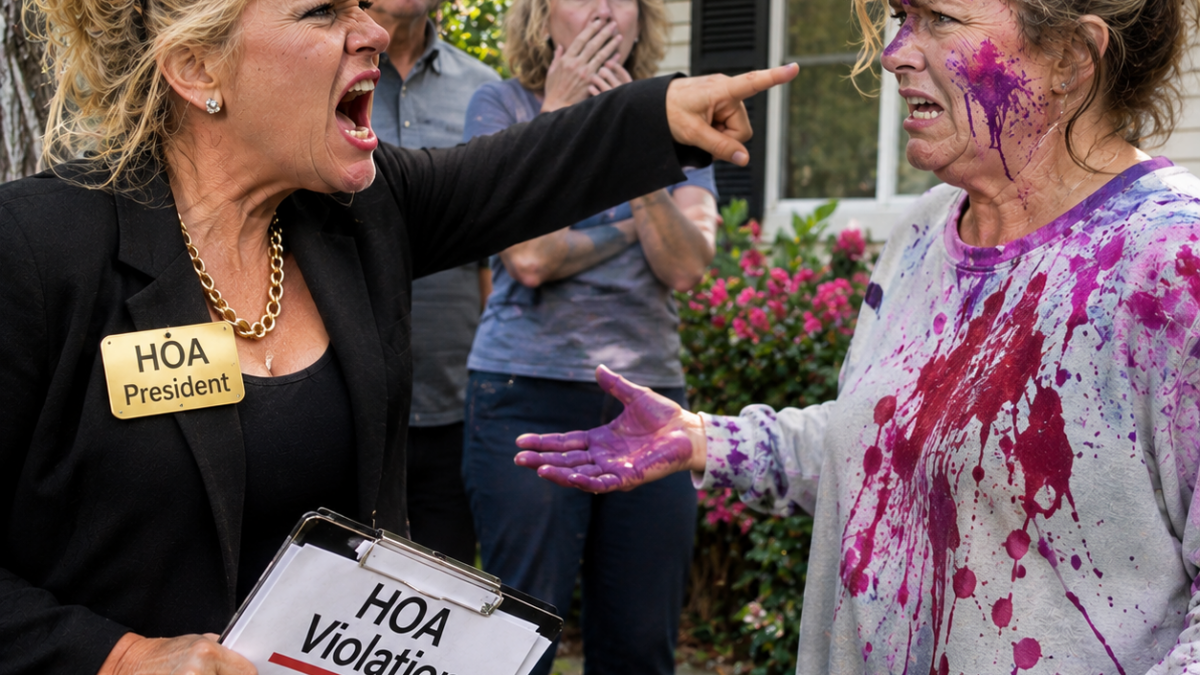
PART 2
The locksmith finished just before dinner.
Front door rekeyed.
Back door rekeyed.
Garage entry rekeyed.
Then I had him install a separate deadbolt on the front entrance with an entirely different key.
He handed me four copies.
“Anybody else have access?”
“Not anymore.”
“You sure?”
“No.”
He looked at me.
“That sounds like a story.”
“It’s becoming one.”
Lenora stood in the hallway with her arms folded.
The moment the locksmith left, she locked the deadbolt.
Then locked it again just to hear the bolt slide into place.
“That sound,” she said, “is worth whatever you paid.”
I understood.
Until you have experienced someone entering your home without permission, you don’t realize how much a lock represents.
It isn’t merely metal.
It is the assumption that the space behind it belongs to you.
Dolores had damaged that assumption.
Even after the locks changed, Lenora would sometimes glance toward the door when she heard a car slow outside.
That made me angrier than any fine.
I also called our insurance company.
Not because anything had been stolen.
Because I wanted the unauthorized-entry concern documented.
Date.
Time.
Prior key.
HOA president.
Lock change.
Every phone call got written into a notebook.
I had been an HVAC technician for thirty-one years.
If a compressor failed, I documented pressures.
If a blower motor overheated, I documented amperage.
If a customer complained that a system only failed at night, I wrote down when, how often, and under what conditions.
You don’t diagnose patterns from memory.
You diagnose from records.
I started treating Dolores exactly the same way.
The small forensic marking kit stayed on my garage workbench.
I had ordered it after reading about property-identification products used in retail theft prevention and law-enforcement operations.
Invisible under normal light.
Visible under ultraviolet illumination.
Designed to transfer when touched.
Harmless when used correctly.
I had no intention of coating a person.
No booby trap.
No dangerous chemical.
I wasn’t interested in hurting Dolores.
I wanted evidence.
There is a big difference.
But at that point, even I wasn’t ready to use it.
I still hoped the lock change would end the problem.
It didn’t.
December came.
Our deck project was almost finished.
The old deck had been built in 1994 and was beginning to rot at several joists, so Lenora and I decided to rebuild it on the existing footprint.
County permit.
Inspection scheduled.
No expansion.
No new structure.
My son-in-law, Thaddeus, came down from Cincinnati to help.
Thaddeus is the kind of man who speaks maybe eight words an hour and somehow makes all eight sound final.
We spent two cold days setting cedar boards.
By Sunday evening, the deck looked beautiful.
Lenora walked outside holding two mugs of tea.
Thaddeus stared at the finished railing.
“Good.”
That was his entire review.
From Thaddeus, that was five stars.
Monday afternoon, the certified letter arrived.
STOP-WORK ORDER.
HOA letterhead.
Dolores Fitch, President.
Our deck supposedly lacked approval from the Architectural Review Committee.
Fine:
$150 per day.
I read the covenants.
Then read them again.
Two problems.
First, deck repairs and replacements on the same footprint were specifically exempted from additional architectural approval.
Second, the Architectural Review Committee consisted of exactly zero people.
The covenants required three appointed residents.
Dolores had never appointed them.
The committee literally did not exist.
I sat at the kitchen table.
Lenora looked over my shoulder.
“She sent another one?”
“Yes.”
“Is she right?”
“No.”
“You sound happy.”
“I am starting to enjoy reading.”
That was new.
I sent a certified response.
County permit.
Photographs of the old deck.
Photographs showing identical footprint.
Highlighted exemption.
Highlighted committee requirements.
Copied Clarity HOA Solutions, the management company.
Copied Knox County Codes.
And copied Fitzgerald Dowd.
Fitz was another board member.
Retired schoolteacher.
Soft-spoken.
I had heard he wasn’t entirely comfortable with Dolores’s style.
Four days later, the stop-work order disappeared.
No apology.
No correction.
No letter saying:
We were wrong.
It simply vanished.
That was how Dolores handled defeat.
She pretended the battle had never happened.
Then she began coming through our side gate.
First time, she said she needed to check whether deck materials were being stored “within required setbacks.”
Second time, she stood in the backyard photographing the finished railing.
No advance notice.
No written notice.
No permission.
Lenora filmed her from an upstairs window.
I logged both incidents.
Date.
Time.
Duration.
Words spoken.
Beaumont attended the next board meeting and later told me Dolores had complained that homeowners changing locks were “obstructing HOA governance.”
When he repeated that phrase, I thought he was joking.
He wasn’t.
“She actually said that?”
“Twice.”
“Changing my own locks?”
“She says the association has inspection rights.”
“Inspection with notice.”
“Garrett, you’re talking like the words matter.”
I looked at him.
“They do.”
Beaumont smiled.
“That’s why she hates you.”
I researched Tennessee law.
Then called Knox County Sheriff’s Office on the non-emergency number.
I did not ask for Dolores to be arrested.
I asked to create a report documenting repeated unauthorized property entry.
The deputy who took the statement listened.
Asked questions.
Wrote slowly.
When I finished, he said:
“You’d be surprised how many neighborhood disputes begin with somebody deciding an HOA title is a badge.”
That made me feel less ridiculous.
The report number went into the binder.
Dolores had a folder now.
Then two.
January was brutally cold by Knoxville standards.
The new cedar deck had begun to soften from bright orange-brown toward silver at the edges.
Lenora hung outdoor string lights along the railing.
We sat outside under blankets one evening drinking tea.
“Normal people sit inside in January,” she said.
“Normal people didn’t build this deck.”
“That sounds like something Dolores would say.”
I looked at her.
She laughed.
For the first time in weeks, the house felt like ours again.
Then the next letter arrived.
Outdoor lights.
Fire hazard.
Violation of Section 7D.
I checked Section 7D.
Permanent exterior electrical fixtures.
Our lights plugged into an outlet.
Not permanent.
I replied.
Dolores escalated the issue to the board.
That was my first full HOA meeting.
Fifteen residents.
Apparently huge attendance.
Dolores sat at the center of the table.
Pearls.
Blazer.
Three-ring binder.
Slides about “community values.”
At one point she said:
“Certain newer residents appear to believe long-established standards do not apply to them.”
She never looked directly at me.
She didn’t need to.
Fitzgerald Dowd sat at the far end.
When Dolores called the vote on my lights, three board members voted to uphold the violation.
Fitz voted no.
He met my eyes.
Small nod.
That mattered.
I left without arguing.
Then filed a formal complaint about Clarity HOA Solutions’ administration of enforcement actions that appeared inconsistent with the governing documents and state requirements.
I copied Clarity’s parent company.
Included four documented unauthorized entries.
Selective enforcement.
Improper committee procedures.
A week later, Clarity sent Dolores a formal request demanding she identify the authority she relied on for several inspections.
Beaumont heard her reaction through the hedge between their lots.
His report:
“She used the word ‘undermined’ nine times.”
“Exactly nine?”
“I stopped counting at nine.”
Good.
February was when things changed.
One morning, I noticed a scratch beside the lock on our garage side door.
Small.
Fresh.
The handle had smudges.
I knew that door.
I used it maybe twice a week.
Something felt wrong.
I bought a cheap wildlife camera.
Mounted it high in the garage rafters.
Aimed at the door.
Didn’t tell anyone except Lenora.
Three mornings later, I checked the footage.
6:47 a.m.
Dolores.
Silver hair.
Dark coat.
Clipboard.
She approached the garage side door carrying a key.
Tried it.
Failed.
Tried again.
Then a third time.
She stood there for nearly a minute.
Looked toward the house.
Walked away.
I watched the recording four times.
Lenora watched once.
Then sat down.
“She still has another key.”
“Apparently.”
“From where?”
“I don’t know.”
“Garrett.”
Her voice broke slightly.
That hurt.
Not fear exactly.
Violation.
Our house had become a puzzle Dolores believed she was entitled to solve.
Lenora looked at me.
“I want this stopped.”
“So do I.”
“No more letters.”
I nodded.
“No more letters.”
That afternoon, I called Sable Mercer.
Sable had been my daughter’s college roommate years earlier.
Now she was a civil-litigation attorney in Nashville.
We hadn’t spoken in a while.
I explained everything.
Fourteen months.
Key.
Entries.
Letters.
Deck.
Garage attempt.
Video.
When I finished, she was silent.
Then:
“Garrett?”
“Yes.”
“She just gave you a case.”
“That good?”
“For you.”
“That bad?”
“For her.”
We talked ninety minutes.
She asked for everything.
Not summaries.
Documents.
I sent:
CC&Rs.
Amendments.
Violation letters.
Appeals.
Board minutes.
Sheriff report.
Lenora’s videos.
Wildlife-camera clip.
Clarity correspondence.
Selective-enforcement photographs.
Three days later, Sable called.
“This is bigger than trespass.”
I sat at my workbench.
“What did you find?”
“Financial records.”
I frowned.
“What financial records?”
“Your HOA filings.”
“And?”
“Do you know how funded the reserve account is?”
“No.”
“Eleven percent of projected need.”
“That bad?”
“Very.”
“Where did the money go?”
“That’s the question.”
Sable had requested records through the association.
Clarity eventually produced them.
Slowly.
Reluctantly.
Three years of expenses.
Vague descriptions.
Community liaison services.
Governance consulting.
Aesthetic audit coordination.
No obvious vendor details in the summary sheets.
So Sable requested invoices.
That took longer.
When they finally arrived, she found:
Fitch Property Consulting.
Sole proprietorship.
Registered owner:
Dolores Miriam Fitch.
I stared at the document she emailed me.
Payments from our HOA.
To Dolores’s company.
Over three years.
Total identifiable amount:
A little over $22,000.
I sat alone in the garage.
The heater clicked off.
For several seconds, the only sound was the refrigerator compressor in the corner.
Dolores had been fining neighbors over mailboxes and lights while approving payments to her own consulting business.
“She’s paying herself?”
Sable answered carefully.
“The documents show the association paid an entity she owns. What authorization existed, what disclosure was made, and whether the services were legitimate need investigation.”
“How much?”
“More than twenty-two thousand based on what I have.”
I thought of Beaumont.
Fitz.
The Okafor family who sold.
Every dues payment.
Every fine.
“She’s been taking money from everyone.”
“We need to prove exactly what happened.”
I knew.
But inside, something shifted.
This was no longer about Dolores making Lenora uncomfortable.
It was no longer just my gate.
My mailbox.
My deck.
My garage.
An entire neighborhood had been financing her private operation without knowing.
I told Lenora that evening.
We sat on the deck.
The supposedly dangerous string lights glowed above us.
She listened.
Then set down her tea.
“She’s been taking our money?”
“It looks like her company received it.”
“Without telling anyone?”
“Fitz says he never saw the invoices.”
Lenora stared toward the dark street.
“Finish it.”
“What?”
“The thing you’ve been thinking about.”
I knew what she meant.
The forensic marker.
I had hesitated because I didn’t want revenge turning into stupidity.
Sable and I discussed it first.
The goal was evidence of contact with places Dolores had no legitimate reason to touch.
Nothing harmful.
Nothing designed to injure.
No device.
No surprise force.
Just a transfer marker applied to surfaces already documented as repeated unauthorized access points.
Sable’s advice was simple:
“Do not create a hazard.”
“I won’t.”
“Do not provoke her.”
“I won’t.”
“Do not invite her inside.”
“I won’t.”
“If she enters anyway, let cameras and law enforcement handle it.”
That I could do.
The spring community meeting was in late April.
Financial reporting was required.
Board elections would be held.
Sable believed public presentation mattered.
Not because humiliation was the goal.
Because Dolores controlled private conversations.
She controlled one-on-one narratives.
In public, forty homeowners could hear the same facts at the same time.
She couldn’t tell five different versions.
So we built toward April.
I applied the invisible transfer marker only to the metal gate handle and the exterior garage latch—two places where existing video showed Dolores had already tried to enter without permission.
Under normal light:
Nothing.
Under ultraviolet light:
Bright orange-yellow.
I tested it on a glove.
Worked.
Then cleaned up.
The gate remained unlocked because we were still using it for yard access.
I did not send Dolores a message.
Did not tempt her.
Did not manufacture an incident.
I simply documented an access point.
Then waited.
Beaumont became my first real ally.
I showed him the financial records.
He sat down on his porch steps.
For once, no joke.
“That woman.”
He looked at the invoice.
Then again.
“How much?”
“Twenty-two thousand that we can identify.”
“My money’s in there.”
“Everybody’s.”
His jaw tightened.
“What do you need?”
“People at the April meeting.”
“How many?”
“Enough.”
“I can do that.”
Twenty years of Navy logistics apparently translates beautifully into neighborhood organizing.
Within two weeks:
Eleven households committed.
Then seventeen.
Then more.
Coralie Strand ran the Pinecroft Hollow neighborhood Facebook group.
Retired HR director.
Sixty-four.
Organized.
Terrifying in a completely constructive way.
She reviewed the invoices.
Then said:
“I need copies.”
“What for?”
“People believe rumors. They believe documents more.”
I liked her immediately.
Fitzgerald Dowd was harder.
Board member.
Three years.
He might have felt implicated.
I met him at a diner.
Placed the invoices in front of him.
He read every page.
Then started again from the beginning.
Finally:
“I have never seen these.”
“Any vote approving them?”
“Not that I remember.”
“Could there be one?”
“I’m checking.”
He folded his hands.
“Garrett, I need Sable’s number.”
That was the moment the board started coming apart from inside.
Sable filed regulatory complaints before the meeting.
Financial irregularities.
Access issues.
Governance problems.
Independent record.
That mattered.
If Dolores somehow shut down the April meeting, the documents would still exist somewhere she did not control.
Sable also contacted a consumer-and-housing reporter from the Knoxville News Sentinel.
Enough information to establish interest.
Not every detail.
He agreed to attend.
The audience was forming.
Dolores still didn’t know how much we had.
March passed.
I spent evenings organizing.
Binder.
Index.
Dates.
Copies.
Video timestamps.
Board minutes.
Financial invoices.
Lenora watched me from the kitchen doorway.
“You’re enjoying the tabs.”
“I like tabs.”
“You always liked labels.”
“Labels prevent mistakes.”
“You labeled our freezer shelves.”
“And nobody puts raw meat above vegetables.”
She smiled.
That ordinary conversation mattered.
Because this was what the fight was for.
Not winning.
Being able to stand in our kitchen joking about freezer shelves without wondering whether Dolores was about to unlock the front door.
Dolores sensed something.
People like her always do.
Neighbor conversations changed.
Residents requested financial records.
Coralie posted reminders about the April meeting.
Fitz began asking questions she didn’t like.
Her answer was another attack on my deck.
Certified letter.
A new architectural rule had supposedly been adopted March 14.
Retroactive approval required for decks completed after January 1.
Mine included.
Problem:
Fitz had never heard about the March 14 meeting.
Neither had most residents.
Clarity claimed notice was posted online.
I checked.
March 13.
11:58 p.m.
Meeting the next afternoon.
Three attendees.
All Dolores allies.
Sable reviewed it.
“Likely defective.”
“Why?”
“Insufficient notice, amendment procedure problems, quorum issues.”
“So another fake emergency.”
“Another document.”
That became our answer to everything.
Another document.
Then Dolores told Prescott I planned to sue the entire HOA and bankrupt everybody.
Prescott owned a riding mower that he loved with religious intensity.
Anxious man.
He started repeating the story.
That forced me to do something I had avoided.
Door-to-door conversations.
Not campaigning.
Correction.
“I’m not suing the homeowners collectively.”
“Then who?”
“Any legal action concerns specific conduct and individuals.”
“Will dues go up?”
“No lawsuit against the association as a whole has been filed by me.”
At each house, another story emerged.
Evangeline:
Garden allegedly too colorful.
The Brants:
Seven violations in six months.
New homeowners.
Youngest couple on the street.
Only same-sex couple in that section of the neighborhood.
Sable told me to document that pattern carefully without jumping to conclusions.
Beaumont calculated his own dues contribution over three years.
When he estimated how much of his money might have passed through questionable consulting charges, he became very quiet.
“Eight hundred.”
“Approximate.”
“Eight hundred dollars.”
“Yes.”
“I could have bought a new grill.”
That was Beaumont’s equivalent of a declaration of war.
Then the marker did exactly what it was supposed to do.
Thursday.
5:52 a.m.
Overcast.
Wildlife camera.
Dolores opened our back gate.
She still had a key to the old latch.
Entered.
Spent eleven minutes photographing our deck.
Walked the railing.
Took pictures of the lights.
Touched the garage latch.
Then left.
The camera captured everything.
I watched over coffee.
Lenora joined me.
Neither of us spoke until the video ended.
Then I took the UV flashlight outside.
Gate handle glowed.
Latch glowed.
Transfer marks.
I photographed both.
Sent the images and video to Sable.
Her response:
Perfect evidence. Do not confront her.
I didn’t.
Somewhere in Pinecroft Hollow, Dolores had traces on her hands she did not know were there.
Ten days before the meeting, she started calling neighbors.
Garrett is running a scam.
Garrett wants control.
Garrett fabricated state complaints.
She also asked Clarity to postpone the April meeting.
Clarity refused.
Their written response instructed the board to prepare full financial documentation and proceed as scheduled.
Fitz forwarded me a copy.
Dolores was losing the machinery she depended on.
That made her more dangerous.
Then she called me.
“Garrett.”
She used my name four times in two minutes.
That was always a warning sign.
She sounded warm.
Reasonable.
Almost friendly.
“I think this situation has gotten unnecessarily adversarial.”
“I agree.”
“We’re neighbors.”
“We are.”
“Surely reasonable adults can resolve misunderstandings without turning everything into formal complaints.”
“What misunderstanding?”
“The finances, for one. Those records are complicated.”
“They’re invoices.”
Pause.
“I’m aware.”
“And unauthorized access?”
“You continue to mischaracterize legitimate inspection authority.”
“No.”
Her voice hardened slightly.
Then softened again.
“I’d hate to see unresolved modification concerns complicate things further.”
There it was.
Threat dressed as concern.
I kept my voice flat.
“Dolores, I’ll see you at the community meeting.”
“It doesn’t have to go the way you’re planning.”
“I’m planning to attend.”
Long pause.
Then:
“Good evening, Garrett.”
She hung up.
The call went to Sable.
Her reaction:
“Keep that.”
By the final week, twenty-three households were in Coralie’s private information group.
Fitz had reviewed three years of board minutes.
Nine votes potentially conducted without proper quorum or notice.
The Brants had spoken to a housing-rights organization about selective enforcement.
Reporter confirmed.
Sable prepared a one-page financial summary.
Forty copies.
The meeting was no longer mine.
That mattered.
If I had walked into that room alone, Dolores could call it a grudge.
Forty homeowners made it governance.
The night before, Lenora was already asleep when I checked the binder one final time.
I walked outside.
Cedar smell.
Warm April air.
Dogwoods pale under streetlights.
I shone the UV flashlight across the gate.
Still bright.
I thought about Dolores’s hands.
Not with joy exactly.
Evidence is satisfying when you’ve spent fourteen months being told your reality isn’t real.
I went inside.
Slept.
The Pinecroft Hollow Spring Community Meeting began at seven.
By 6:45, forty-one homeowners had arrived.
Beaumont sat front row.
Commissioner, his Basset Hound, slept underneath his chair despite technically being prohibited from the clubhouse.
No one challenged him.
Smart.
Coralie poured coffee.
Fitz sat at the board table.
The reporter sat third row.
Dolores entered in pearls and a blazer.
Same as always.
That struck me.
Fourteen months of conflict and she had never once changed the costume.
She took her chair.
Opened her binder.
Smiled.
“Let’s begin.”
Routine matters.
Quickly.
Too quickly.
She wanted out before member comments gained momentum.
Then comment period opened.
I stood.
“Garrett Winslow, 214 Oak Hollow Drive.”
Dolores’s smile tightened.
“I’d like the board to present the current reserve fund balance and itemized administrative expenditures for the past three fiscal years.”
She folded her hands.
“Those records are available upon written request.”
“I requested them.”
“This is not the appropriate forum for detailed accounting.”
“It’s the annual financial meeting.”
Fitz leaned toward his microphone.
“I second the request.”
Dolores turned.
He continued.
“As a board member, I have not been given a complete current financial package.”
The room shifted.
People sat straighter.
A board member had just admitted he didn’t know where the money was.
Dolores said the figures were being finalized.
I held up the one-page summary.
“These numbers come from records Clarity HOA Solutions already produced.”
I passed copies.
Forty pages moved through forty pairs of hands.
Beaumont read.
Coralie read.
Prescott read.
The Brants read.
Murmurs.
$22,000.
Fitch Property Consulting.
Reserve depletion.
Dolores watched information travel beyond her control.
I saw the exact second she understood the room had changed.
Her shoulders stiffened.
Then I said:
“I also have documentation of seven unauthorized entries or attempted entries involving my property.”
Someone behind me:
“Seven?”
“Yes.”
I held up the thumb drive.
“Video evidence has been preserved for the sheriff’s office, counsel, and regulatory review.”
Dolores interrupted.
“These were lawful inspections.”
“Without required notice?”
“I had authority.”
“Inside my house?”
Silence.
“Using a key we didn’t know you had?”
Her face reddened.
“That key had historically been provided for emergencies.”
“Was there an emergency at 6:47 in the morning when you tried my garage?”
The room went still.
Dolores looked toward Fitz.
He didn’t help her.
I continued.
“On April tenth at 5:52 a.m., my back gate was opened without authorization by someone using a key.”
Dolores spoke immediately.
“I don’t know what you’re implying.”
“I’m not implying anything.”
I took the UV flashlight from my pocket.
“I treated the exterior gate handle and garage latch with an invisible forensic transfer marker because those locations had repeatedly been touched during unauthorized entry attempts.”
The reporter looked up sharply.
I switched on the light.
I did not point it directly at Dolores.
I didn’t need to.
I held it toward the front table.
The room’s overhead lights were bright, but the orange-yellow fluorescence on Dolores’s hands was still visible when she instinctively looked down.
Both palms.
Fingers.
Especially around the thumb and index finger.
She froze.
A woman in the second row whispered:
“Oh my God.”
Dolores stared at her hands.
Then at me.
“This is—”
Fitz’s voice cut through the room.
“Dolores.”
“This is harassment.”
“Dolores.”
“I have inspection authority!”
Fitz did not raise his voice.
“Sit down.”
She stared at him.
For three years, he had rarely challenged her.
Now he sounded exactly like the school principal he once was.
“Sit down.”
She didn’t.
She grabbed her bag.
Pearls shaking slightly against her collar.
Walked toward the exit.
Commissioner the Basset Hound chose that exact moment to produce a long exhausted groan.
Beaumont whispered:
“Even the dog’s tired of her.”
I almost laughed.
Almost.
Dolores reached the parking lot.
A Knox County deputy was already outside.
Not to ambush her.
Not because we had staged an arrest.
Sable had advised the sheriff’s office that new evidence connected to the existing unauthorized-entry report might emerge at the meeting and asked whether an officer could be available nearby.
The deputy spoke with Dolores.
No handcuffs.
No dramatic takedown.
Real life is slower.
He documented.
Asked questions.
Noted the visible marker.
Preserved the next step.
Inside, Fitz called the meeting back to order.
That impressed me more than anything.
He said:
“We still have financial business.”
The room applauded.
Not because he was dramatic.
Because for the first time in years, somebody acted like the HOA belonged to the homeowners instead of Dolores.
The meeting continued.
Fitz moved for an independent reserve audit.
Seconded.
Passed overwhelmingly.
Then a motion requiring all consulting contracts involving board members or relatives to be disclosed.
Passed.
Then a motion to suspend enforcement of questionable fines pending review.
Passed.
Dolores’s two closest allies sat silent.
One eventually voted yes on the audit.
The other abstained.
Power disappears fast when people realize it was never as solid as it looked.
Dolores resigned the next morning.
Email.
Effective immediately.
No apology.
She wrote that “recent hostility” made continued volunteer service impossible.
Beaumont printed the email.
Brought it over.
Read that sentence aloud.
Then looked at me.
“Volunteer service.”
“Apparently.”
“She paid herself twenty-two grand.”
“Allegedly for consulting.”
Beaumont stared.
“You’re getting too lawyerly.”
“Sable’s influence.”
The financial investigation took months.
That mattered.
Because stories like this often pretend justice happens overnight.
It doesn’t.
Records.
Interviews.
Invoices.
Bank statements.
Board authorization.
Vendor disclosures.
Clarity correspondence.
Everything had to be reviewed.
The Knox County District Attorney’s office opened a preliminary investigation into the payments to Fitch Property Consulting.
Until findings were final, Sable insisted on precise language.
Alleged self-dealing.
Potential fiduciary breach.
Questionable payments.
Dolores remained legally entitled to presumption of innocence.
I respected that.
Documentation cuts both ways.
If I wanted facts to protect me, I also had to let facts determine what happened to her.
Clarity HOA Solutions terminated its management contract with Pinecroft Hollow.
Their written explanation said they had raised financial-control concerns with the board before.
Dolores’s two allies decided not to seek reelection.
That told me plenty.
My civil case over the unauthorized entries and related conduct settled.
Terms confidential.
Legal fees covered.
Additional amount agreed.
Sable called.
“You satisfied?”
“Financially?”
“Generally.”
I looked at Lenora sitting across the kitchen table.
“Yes.”
Because the money was not the point anymore.
Lenora slept without checking the locks three times.
That was the point.
Emergency election in May.
Fitzgerald Dowd won president.
Thirty-eight to one.
We never learned who voted against him.
Beaumont developed several theories.
I told him to stop.
Fitz’s first action:
End the “new resident inspection program.”
He had searched every original governing document.
No basis.
Dolores had invented it.
Second:
Full reserve audit.
Third:
Suspend disputed enforcement actions.
Fourth:
Reconstitute committees with actual membership, notice, and minutes.
It was astonishing how normal governance looked when nobody was trying to rule.
Then Fitz reviewed the Brants’ violation history.
Seven notices in six months.
Most lacked clear support.
All rescinded.
He apologized publicly.
The Brants stayed.
That mattered.
Because Beaumont had told me Dolores once drove the Okafors out.
I never met them.
But I thought about them often.
People who got tired before anybody showed them how to fight.
Maybe if Fitz had been president sooner, they would still be here.
Maybe not.
You can’t repair every past harm.
But you can stop copying it.
June brought the block party.
Cul-de-sac.
Tables.
Music.
Cornhole.
Beaumont on the grill.
Commissioner wearing a red bandana and somehow consuming enough hot dog pieces to violate several laws of biology.
Evangeline brought vegetables from the garden Dolores once called “too colorful.”
The Brants brought dessert.
Prescott brought the riding mower for reasons nobody understood.
Lenora sat beside me.
Relaxed.
That was the detail I noticed most.
Not watching doors.
Not scanning for Dolores.
Just drinking lemonade.
Fitz stood with a beer.
Tapped the bottle lightly against a table.
“Can I have one minute?”
People quieted.
“We’ve completed the first phase of our financial review.”
He glanced toward me.
“Administrative expenses are being reduced substantially.”
Then:
“The board proposes redirecting those savings, together with any recovered funds legally available for community use, toward a scholarship program for children and young adults from Pinecroft Hollow.”
The cul-de-sac erupted.
Fitz waited.
Then said:
“For years, too much money went toward administration nobody understood.”
He looked around.
“Let’s spend some of it on people everybody understands.”
Lenora squeezed my hand.
I felt that sentence in my chest.
That was better than orange hands.
Better than Dolores walking out.
Better than winning.
The scholarship started modestly.
First year:
Two students.
One headed to community college for nursing.
Another into an electrical apprenticeship.
No giant ceremony.
Just checks.
Families.
Photographs.
Beaumont cried and denied it.
“I got smoke in my eyes.”
“There is no smoke.”
“Grill smoke.”
“The grill is fifty feet away.”
“Wind.”
I let him have it.
Our deck remained.
The string lights remained.
No fire.
No community collapse.
Lenora and I sat outside on summer nights.
Cicadas.
Tea.
Cedar smell.
Sometimes she reached over and took my hand.
One evening she said:
“I didn’t think I’d feel normal here again.”
That hurt.
“I’m sorry.”
“For what?”
“For letting her into our life so long.”
“You didn’t let her.”
“I didn’t stop her.”
Lenora looked at me.
“You changed the locks.”
“Eventually.”
“You documented.”
“Eventually.”
“You stayed.”
I nodded.
“So did I.”
She leaned against my shoulder.
That was the end of that conversation.
Sometimes forgiveness doesn’t need a speech.
The reserve audit eventually showed more problems than the original invoices suggested.
Not all criminal.
Some sloppy.
Some unauthorized.
Some poorly documented.
The board adopted new rules.
Two signatures for larger payments.
Conflict-of-interest disclosures.
Vendor invoices stored online.
Annual reserve reports delivered automatically.
Members could inspect records without begging.
Those reforms mattered more than any individual punishment.
A system should not require one good person forever.
It should survive ordinary people.
Prescott apologized.
Sort of.
He came by while I was trimming the fence.
“Hey.”
“Hey.”
He looked toward his mower.
Then toward me.
“I might’ve believed some stuff Dolores said.”
“I noticed.”
“She made it sound like you reported everybody.”
“I did report eleven mailbox deviations.”
He looked offended again.
“To prove selective enforcement.”
“Oh.”
“Not to fine anyone.”
“Right.”
Long pause.
“I left that note on your truck.”
“I still have it.”
“You kept it?”
“I keep everything.”
He laughed nervously.
“Could you maybe not?”
“No.”
Another pause.
“Fair.”
He walked away.
Two weeks later, he helped Beaumont fix the grill.
That was apology enough.
Coralie reorganized the neighborhood Facebook group.
New rules.
No anonymous accusations.
No posting private addresses in complaints.
No public shaming over active HOA disputes.
Take formal concerns through documented channels.
Beaumont complained the group had become boring.
Coralie replied:
“That’s the point.”
She was right.
Healthy communities are often boring.
Boring means your neighbor’s wind chime is not a constitutional crisis.
The forensic marker faded from Dolores’s hands eventually.
Of course it did.
Nothing physical was permanent.
The title people later gave the story made it sound like I branded her forever.
I didn’t.
The marker only lasted long enough to confirm contact.
What she couldn’t wash off was the record.
Video.
Date.
Invoices.
Meeting minutes.
Sheriff report.
Financial request.
Those remained.
Paper lasts longer than dye.
That was the real trap.
Several months after Dolores resigned, she moved.
Not far.
Different subdivision.
I heard she sold quickly.
I had no interest in following her.
Sable warned me:
“Do not turn victory into obsession.”
Good advice.
I did not check her new HOA.
Did not search her address.
Did not monitor her.
She left Pinecroft Hollow.
That was enough.
The Okafors eventually heard about what happened.
Beaumont found their contact information through an old Christmas card.
They had moved to North Carolina.
He called them.
Then asked if I wanted to speak.
I hesitated.
Finally said yes.
Mr. Okafor answered.
“Garrett?”
“Yes, sir.”
“Beaumont tells me you finally got her.”
“I wouldn’t put it that way.”
He laughed.
“You sound exactly like he said.”
I explained the reforms.
New board.
Inspections gone.
Financial controls.
Silence on the line.
Then:
“I wish that happened before we left.”
“So do I.”
“My wife hated that house by the end.”
“I’m sorry.”
“She used to love it.”
That line stayed with me.
Dolores had not merely pushed people out.
She had contaminated home.
I understood because she nearly did it to Lenora.
Mr. Okafor continued:
“Don’t feel guilty.”
“I didn’t say I did.”
“You do.”
Smart man.
“We weren’t ready to fight. You were.”
“I had Beaumont.”
“So did we.”
“Not enough.”
“No.”
He sighed.
“But you fixed it for whoever comes next.”
That helped.
Not completely.
Enough.
The scholarship program later added a small homeowner-rights workshop for new residents.
Fitz asked me to speak.
I said no.
He asked again.
I said no.
Lenora told me I was speaking.
So I spoke.
Twenty-five minutes.
No dramatic story.
Just documents.
“Read your CC&Rs.”
“Know what you signed.”
“Ask where authority comes from.”
“Keep written records.”
“Do not assume an HOA letter equals a court order.”
“Do not let anger become the other side’s evidence.”
A young homeowner asked:
“What about cameras?”
“Use them lawfully.”
“What about UV dye?”
The room laughed.
I smiled.
“Evidence should document conduct. It should never hurt anyone.”
That was all I said.
Because the important part wasn’t the product.
It was patience.
Beaumont got older.
Navy retirees apparently do that reluctantly.
His knees went.
Then his back.
He still grilled every Sunday.
Commissioner became slower too.
The Basset’s ears seemed to grow while the rest of him shrank.
One afternoon, Beaumont handed me a beer over the fence.
“You know what I still don’t understand?”
“What?”
“Why she kept going after you.”
“Control.”
“No.”
He shook his head.
“Why you?”
I thought.
“New resident.”
“You were sixty.”
“Still new.”
“You argued back.”
“That too.”
He looked toward our deck.
“I think it was Lenora.”
“What?”
“She saw your wife was happy here.”
“That’s ridiculous.”
“Maybe.”
He drank.
“People like Dolores don’t like happiness they didn’t authorize.”
I laughed.
“That’s the most Beaumont sentence you’ve ever said.”
“Write it down.”
I did.
A year later, Commissioner died.
Beaumont buried him under an oak tree in his backyard.
He asked me to help.
We dug quietly.
The dog had been part of nearly every important neighborhood moment by then.
Block parties.
Meetings.
Fence conversations.
Beaumont placed the red bandana in the grave.
Then said:
“He hated HOA meetings.”
“He slept through them.”
“Exactly.”
We filled the hole.
No ceremony.
A week later, Coralie put a small brass dog tag on the scholarship-fund bulletin board.
COMMISSIONER — UNOFFICIAL PARLIAMENTARIAN.
Beaumont pretended to hate it.
Kept a picture.
Fitz served two terms.
Then stepped down voluntarily.
That alone felt revolutionary.
At his last meeting, somebody asked what accomplishment he was proudest of.
He could have said:
Recovered funds.
Scholarships.
Governance reform.
He said:
“People stopped being afraid of certified mail.”
The room laughed.
Then became quiet.
Because everyone understood.
The next president was Evangeline.
The woman with the garden that was once “too colorful.”
Her first spring as president, Pinecroft Hollow organized a native-planting day.
Evangeline invited a horticulturist.
Children planted pollinator beds around the clubhouse.
Dolores would have hated the colors.
Lenora loved them.
We planted two black-eyed Susans near the entrance.
No symbolism intended.
Okay.
Some symbolism.
Sable remained our attorney.
Not the HOA’s.
Ours.
She became a friend.
Every Christmas she sent a card.
One year, the front showed a black light.
Inside she wrote:
STILL GLOWING?
Lenora laughed so hard she snorted.
I framed that card in the garage.
The civil investigation involving the consulting payments eventually resolved through a combination of restitution, agreements, and governance consequences that Sable advised me not to characterize beyond the public record.
That was fine.
By then, I no longer needed Dolores punished more.
The neighborhood had changed.
Our house felt safe.
That was the victory.
Years later, Lenora and I replaced the deck lights.
The old ones finally failed.
I stood at the hardware store holding two boxes.
“Warm white or daylight?”
“Warm.”
“Dolores hated warm string lights.”
Lenora stared at me.
“You are not choosing lighting based on a woman who moved away years ago.”
I put down the brighter box.
“Warm white.”
“Thank you.”
That was another sign.
Dolores no longer got a vote in my decisions.
Not even imaginary ones.
The mailbox post survived too.
The hand-carved one.
Gift from Thaddeus.
One winter, a delivery truck backed into it.
Snapped the base.
For a second, I stared at the broken wood and felt irrationally angry.
Lenora came outside.
“Garrett.”
“I fought fourteen months for that mailbox.”
“You fought for your house.”
“Still.”
Thaddeus built another.
Better.
When he installed it, he stepped back.
“Good.”
Five-star review.
The scholarship fund grew.
Not massive.
Useful.
A nursing student returned and spoke at a block party.
The electrical apprentice became a journeyman and eventually helped upgrade the clubhouse wiring at cost.
Another recipient studied accounting.
At her first annual meeting after graduation, she volunteered to serve on the finance committee.
Beaumont whispered:
“Dolores created her own natural predator.”
I elbowed him.
But he was right.
Transparent accounting became Pinecroft Hollow’s obsession.
No one complained.
One evening, Lenora and I sat on the deck after rain.
The cedar was old now.
Silver.
Beautiful.
She rested her feet on the railing.
“You remember when she tried to stop this?”
“Every board.”
“She was right about one thing.”
I looked at her.
“What?”
“The lights are technically a little much.”
I stared.
She smiled.
“Don’t you dare.”
I laughed.
The kind of laugh that comes from being safe enough to joke about something that once hurt.
That mattered.
Then came the morning that completed the story for me.
Not the meeting.
Not the UV light.
Not Dolores leaving.
A moving truck pulled into the Okafors’ old house.
New family.
Young couple.
Two children.
They had bought the property from the people who bought it after the Okafors left.
The husband walked over that afternoon.
“Mr. Winslow?”
“Garrett.”
“I’m David.”
“Welcome.”
He held a folder.
My stomach sank out of habit.
“We got this HOA packet.”
“Okay.”
“President Evangeline said you teach the homeowner workshop.”
“Sometimes.”
“Can I ask something?”
“Sure.”
“Does the HOA ever come inside?”
I looked at him.
“No.”
“Like inspections?”
“No.”
“Good.”
He exhaled.
“Our last condo association did.”
I glanced toward the fireproof box inside my house.
Then toward the back gate.
“No one comes inside your home unless you invite them or there is a lawful emergency.”
He nodded.
“That’s what I thought.”
I smiled.
“Here, that’s not just what you think.”
He looked confused.
“What do you mean?”
“It’s written down.”
That was the moment.
Rules protecting residents.
Not trapping them.
Written clearly.
Publicly.
Everyone understanding them.
That was what we had built after Dolores.
I helped David understand the documents.
Not because I was HOA police.
Because confusion is where people like Dolores grow.
Clarity is prevention.
He went home.
That evening, Lenora found me on the porch.
“You look pleased with yourself.”
“New guy asked if the HOA can enter houses.”
“What’d you say?”
“No.”
“Good.”
She sat beside me.
For a while, we listened to cicadas.
No drama.
No clipboard.
No door unlocking.
Just home.
Beaumont eventually moved closer to his daughter.
His knees couldn’t handle his property anymore.
The day the moving truck arrived, he came to our fence one last time.
No beer.
No burger.
Just Beaumont.
“You’re going to miss me.”
“Probably not.”
“Liar.”
“Yes.”
He looked toward Pinecroft Hollow.
“Different place.”
“Better?”
“Much.”
He held out his hand.
I ignored it and hugged him.
He complained for exactly four seconds.
Then hugged back.
Before getting in his daughter’s car, he said:
“Keep documenting.”
“I’m retired.”
“So?”
“Go away.”
He laughed.
Then did.
Fitz died several years later.
Stroke.
His family held the memorial at the community shelter.
Evangeline spoke.
Coralie spoke.
I did not.
I couldn’t.
His old board binder sat on a table.
Inside, somebody had placed the first motion he ever voted against Dolores on.
My string-light violation.
I laughed when I saw it.
Fitz’s daughter asked:
“What’s funny?”
“Your father once saved Christmas lights.”
She smiled.
“That sounds like him.”
He had done more than that.
He had looked across a room when silence was easier and voted no.
Sometimes systems change because one person says no early enough for everyone else to realize they can too.
The HOA eventually renamed the scholarship.
Not after me.
Not after Fitz.
Not after Beaumont.
Pinecroft Hollow Community Opportunity Fund.
Good.
No heroes.
Just purpose.
Lenora and I grew older.
Retirement became less about projects and more about mornings.
Coffee.
Birds.
Doctors.
Grandchildren visiting.
Thaddeus continuing to rate everything with one word.
The gate latch rusted.
I replaced it.
When I removed the old handle, I remembered the invisible marker.
For curiosity, I shone a UV light on it.
Nothing.
Completely gone.
Of course.
Years.
Weather.
Hands.
Time.
I stood there smiling.
Lenora came outside.
“What are you doing?”
“Checking something.”
“Still glowing?”
“No.”
“Good.”
She kissed my cheek.
“Some things should fade.”
She went inside.
I stayed there a moment.
She was right.
I kept the old handle anyway.
Not because of Dolores.
Because of what it represented.
A point where I stopped trying to make someone respect boundaries and started building evidence around the boundaries she refused to respect.
But I kept it in a drawer.
Not on the wall.
Not displayed.
Evidence belongs in context.
Not worship.
The last time anyone mentioned Dolores to me directly was at a neighborhood legal-rights workshop.
Young homeowner.
Maybe twenty-seven.
He had heard the story from his father.
“Are you the guy who put permanent dye on the HOA president?”
“No.”
He looked disappointed.
“It wasn’t permanent.”
“Oh.”
“It also wasn’t on her.”
“What?”
“It was on my gate.”
“Oh.”
“She put it on herself.”
That interested him more.
“So the trap was the dye?”
“No.”
“What was it?”
I thought about the answer.
“The records.”
He frowned.
“That’s less exciting.”
“Exactly.”
I explained.
The dye showed one visit.
The camera showed another.
The invoices showed money.
Board minutes showed procedure.
Letters showed selective enforcement.
The trap was that Dolores believed each action disappeared after she took it.
It didn’t.
They accumulated.
Until the neighborhood could finally see the whole shape of what she had been doing.
The young man nodded.
“So documentation.”
“Yes.”
“That’s boring.”
“Very.”
“Works?”
“Extremely.”
He wrote it down.
That evening, Lenora and I sat under the string lights.
Same deck.
Older cedar.
Older us.
A breeze moved through the oaks.
Somewhere down the street, children were playing.
The new family in the Okafor house had a basketball hoop.
Nobody had fined them.
Evangeline’s garden around the clubhouse was absurdly colorful.
Nobody had fined her.
Prescott still owned the mower.
Coralie still moderated Facebook like a federal agency.
The scholarship had helped more than twenty young people by then.
And our front door was locked.
Not double locked.
Just locked.
One turn.
Normal.
Lenora noticed me looking toward it.
“What?”
“Nothing.”
“You’re doing the thinking face.”
“I was remembering.”
“Dolores?”
“A little.”
She held out her hand.
I took it.
Then she said:
“Don’t give her tonight.”
That sentence landed.
So I didn’t.
I looked at the yard instead.
At the deck.
At the lights.
At the home we had nearly stopped feeling comfortable inside.
We had it back.
Not because Dolores had been publicly embarrassed.
Not because her hands glowed orange under a black light.
Not even because an attorney found twenty-two thousand dollars in questionable payments.
We had it back because fear had stopped deciding how we lived in it.
That was the part nobody photographed.
No reporter wrote it down.
No board minute recorded it.
But it was the part that mattered.
Lenora leaned against me.
The string lights moved slightly above us.
The night smelled like cedar, grass, and the faint sweetness of somebody’s flowers down the road.
For fourteen months, every unexpected click at the door had made us wonder whether somebody was coming in.
That night, the house behind us was quiet.
The gate was closed.
The locks were ours.
And when the wind moved through Pinecroft Hollow, nothing in me felt the need to get up and check them.
[END OF STORY]








