PART 2: HOA President Hired a PI to Follow Me—So I Audited Her Books and Found $340,000 Missing
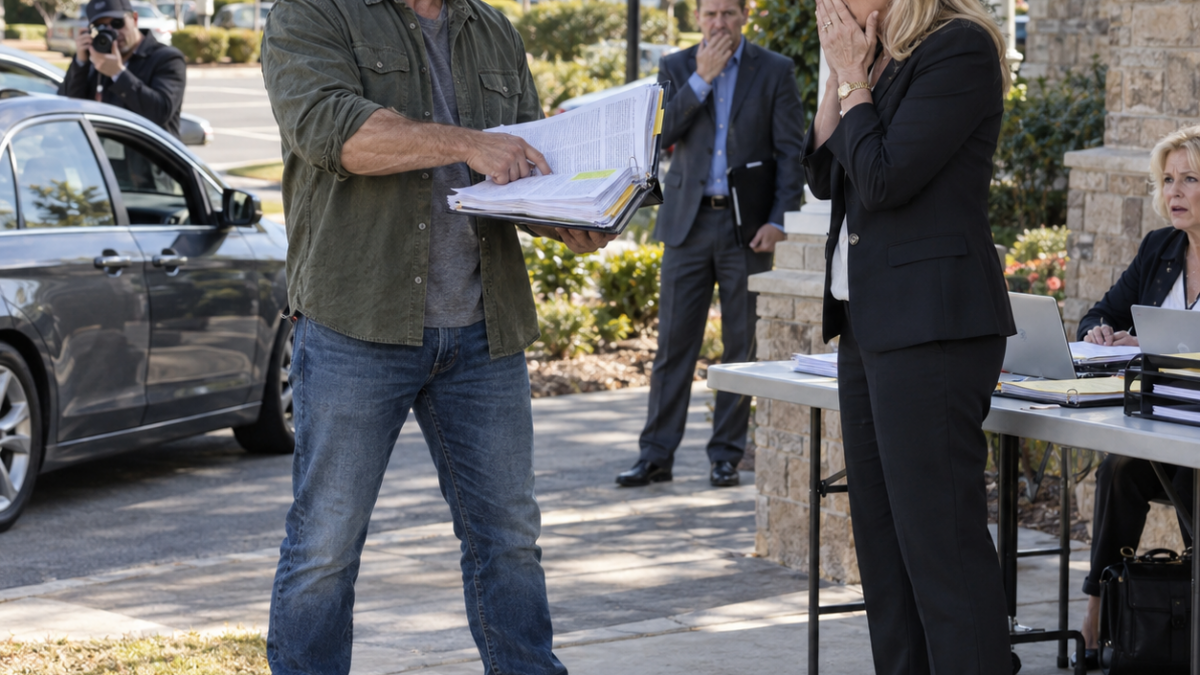
PART 2
The gray sedan stayed in my life for nine days.
Not constantly.
That would have been too obvious.
Some mornings it sat near the entrance to Oak Creek Meadows.
Other days it appeared behind me on the county road.
Twice I saw it near the small coffee shop where I met a former Army friend.
Once it was parked near Emily’s college town during a weekend when she came home for lunch with me.
That one bothered me.
I had spent years being watched professionally.
You learn to separate surveillance from fear.
Fear makes you imagine.
Documentation tells you what actually happened.
So I documented.
No confrontation.
No dramatic chase.
No trying to lose him.
I went about my ordinary routine.
Ranger did not share my restraint.
Whenever we passed the gray sedan, his ears went forward.
“You’re retired,” I told him.
He looked at me as though retirement was an administrative error.
On the tenth day, the sedan disappeared.
Karen did not.
Her violation letter arrived by certified mail.
**NOTICE OF CONTINUING NONCOMPLIANCE**
Three exterior security cameras remained installed.
Fine: $500 per day beginning Friday.
I appealed.
The appeal hearing was held in the clubhouse.
Karen sat at the center of the board table.
Four other directors surrounded her.
Most looked tired.
One man looked as though he had been born tired.
“Mr. Thorne,” Karen began, “this is a simple matter.”
“Good.”
“Your cameras are incompatible with Oak Creek Meadows’ architectural standards.”
“Which standard?”
She tapped the covenant book.
“Article Nine.”
“That article requires harmony. The cameras match the trim and are nearly invisible from the street.”
“They create an institutional appearance.”
I looked around.
“Three two-inch white camera domes make my house look institutional?”
Karen folded her hands.
“Residents have expressed concerns.”
“Which residents?”
“We don’t disclose complainants.”
“Then what specifically did they complain about?”
“Feeling watched.”
That word again.
Watched.
I leaned back.
“Karen, is the HOA surveilling me?”
The room changed.
One board member looked toward her.
Karen laughed.
“Don’t be ridiculous.”
“I’m asking because you told me, quote, ‘We’re all watching.’”
“I meant the community notices violations.”
“So no investigator?”
Her face remained still.
But the director to her right, Paul Nesbitt, turned his head.
That was enough.
Not proof.
A signal.
Karen dismissed my appeal.
The fines remained.
I paid none of them.
Instead I read the bylaws again.
Deep inside Article Fifteen was a provision most homeowners probably never noticed.
Members had the right, with reasonable notice, to inspect certain association financial records.
I sent a certified request.
Two years of:
Bank statements.
Invoices.
Vendor contracts.
Meeting minutes.
Special assessments.
Reserve-account transactions.
Karen’s response arrived five days later through the management company.
They would provide copies.
Estimated administrative fee: $987.
I laughed out loud.
Ranger lifted his head.
“They think paper costs nine hundred dollars.”
Ranger returned to sleep.
I wrote back.
Article Fifteen also allowed in-person inspection during normal business hours.
I requested a conference room.
Said I would bring a portable scanner.
No copying fee required.
Then I copied every director.
Karen had built her power on rules.
The easiest way to irritate someone like that is to know the rules better.
The management company scheduled me for Thursday.
When I arrived, a receptionist led me to a windowless room.
One cardboard box sat on the table.
“Financial records,” she said.
“For two years?”
“That’s what we were provided.”
She left.
The box was chaos.
Receipts mixed with bank statements.
Invoices out of order.
Meeting minutes folded between vendor bills.
If someone had intentionally tried to make examination unpleasant without technically refusing access, it would have looked exactly like that.
I smiled.
Twenty years in intelligence had given me unreasonable tolerance for badly organized information.
I scanned everything.
Five hours.
No analysis.
No arguments.
Just capture.
At home, I built directories.
Banking.
Minutes.
Vendors.
Reserve fund.
Assessments.
Contracts.
Ranger slept under the desk.
At 11:37 p.m., I found Patriot Services LLC.
$2,500.
General maintenance and consulting.
Next month.
$2,500.
Next.
Same.
Twenty-four months.
$60,000.
No detailed invoices.
No description of services.
No obvious contract in the box.
I searched meeting minutes.
The payments appeared only as part of monthly accounts payable.
Approved unanimously.
No discussion.
I opened state corporate records.
Patriot Services LLC.
Registered address: post-office box in Mason Ridge.
Registered agent: David Miller.
Common name.
Could mean nothing.
I needed somebody who understood association accounting better than I did.
Fortunately, a retired CPA lived next door.
George Wallace cared about roses the way some men care about football.
I waited until Saturday when he was pruning.
“George.”
He looked over the fence.
“Mark.”
“Your roses are showing off again.”
“They respond to competence.”
“My tomatoes apparently prefer neglect.”
“Your tomatoes need nitrogen.”
We talked fertilizer for five minutes.
Then I said:
“You ever look at HOA financial statements?”
His pruning shears stopped.
“Why?”
“Professional curiosity.”
“You don’t have professional curiosity about accounting.”
“Fair.”
I brought my laptop.
We sat on his back patio.
He put on reading glasses.
I showed him Patriot Services.
George stopped being my gardening neighbor within ten minutes.
The accountant returned.
“Where’s the contract?”
“Wasn’t included.”
“Supporting invoices?”
“No.”
“Board authorization?”
“Buried in monthly payables.”
He opened bank statements.
Checked dates.
Checked amounts.
Then leaned back.
“That’s ugly.”
“Illegal?”
“Slow down, soldier.”
“I didn’t say criminal.”
“You were thinking it loudly.”
He tapped the screen.
“This can be legitimate. Associations hire consultants. Poor documentation isn’t theft.”
“But?”
“But recurring identical payments with no invoice detail and no visible contract deserve explanation.”
He looked at the two-year total.
“Sixty thousand.”
“Exactly.”
George frowned.
“Karen has been president how long?”
“Fifteen years.”
His expression changed.
“We need more records.”
“That’s what I was thinking.”
“You’re not getting fifteen years by politely asking her.”
“Not directly.”
I showed him Article Fifteen, Section B.
A petition signed by twenty-five percent of voting interests could force an independent financial audit.
Oak Creek Meadows had 248 homes.
We needed 62 signatures.
George looked toward Karen’s house down the street.
“She’ll know it’s you.”
“She already hired somebody to follow me.”
“What?”
I showed him pictures of the sedan.
George stared.
“You know who he is?”
“Not yet.”
“Call police.”
“For being parked on public streets?”
“Following you?”
“I’ve documented it. If conduct crosses into harassment or trespass, I’ll report appropriately.”
George shook his head.
“You are disturbingly calm.”
“It’s mostly damaged wiring.”
“Army?”
“Probably.”
We began quietly.
No accusations.
No “Karen is stealing.”
We asked homeowners one question:
**Do you support an independent audit of the association’s finances?**
The first house belonged to Harold and Margaret Miller.
No relation to David Miller.
Harold was eighty-two.
Karen had fined him more than $3,000 over two ceramic garden gnomes.
The gnomes now lived in his garage.
He invited us inside.
George explained the audit.
Harold listened.
Then said:
“Will it annoy Karen?”
“Yes,” I said.
“Where do I sign?”
Margaret slapped his shoulder.
“Read it first.”
“Fine.”
They both signed.
The next family had been fined because their basketball hoop stood eighteen inches too close to the sidewalk.
Signed.
A widow named Mrs. Gable had paid penalties for placing birdseed on her porch.
Signed.
A young couple were angry about annual dues increasing while the pool heater stayed broken.
Signed.
Some refused.
“I don’t want trouble.”
“Karen has always been nice to us.”
“Why waste money on accountants?”
“Are you accusing her?”
Every time, I answered the same way.
“No. An audit determines facts.”
That distinction mattered.
At signature forty-one, Karen found out.
My phone rang.
“Mark.”
“Karen.”
“I hear you’ve been spreading accusations about me.”
“I haven’t accused you of anything.”
“You’re telling homeowners the association is corrupt.”
“No.”
“You’re collecting signatures for an audit.”
“Yes.”
“Which implies corruption.”
“It implies we need an audit.”
“You are creating division.”
“Transparency usually reduces division.”
“You have no idea how hard I work for this community.”
“That may be true.”
“You come here six months ago and suddenly decide everyone who has served for years is incompetent?”
“I found unexplained payments. I’m asking for independent review.”
Silence.
Then:
“What payments?”
Interesting.
I hadn’t told anyone specific vendor names.
“An audit can answer that.”
Her voice cooled.
“You need to be very careful.”
“About?”
“Defamation.”
“I haven’t publicly accused you.”
“About disrupting association operations.”
“I’m exercising a member right.”
“You Army men always think everything is a campaign.”
I looked out my office window.
A different vehicle sat two houses down.
Blue pickup.
Could have been nothing.
“Karen, did the HOA hire a private investigator to follow me?”
Silence.
Then she laughed.
“Paranoid.”
“Good. Then the audit won’t contain an invoice for one.”
She hung up.
George came over that evening.
“What did she say?”
“She called me paranoid.”
“You are paranoid.”
“Yes, but occasionally accurate.”
We reached sixty-two signatures on a rainy Monday.
By Wednesday we had seventy-one.
I drafted the formal demand.
**Pursuant to Article Fifteen, Section B, the undersigned homeowners hereby require an independent audit of association finances, contracts, reserve transactions, and vendor payments from January 1, 2008 through the present.**
I sent it to:
Every director.
Management company.
Association counsel.
And delivered a hard copy.
Forty-seven minutes later, Karen announced an emergency board meeting.
George read the email.
“She’s going to try to invalidate the petition.”
“Probably.”
“What if she succeeds?”
“Then we use whatever appeal mechanism applies.”
“You ever just panic?”
“Internally.”
“You should try showing it. Makes people trust you.”
The clubhouse filled two nights later.
Karen sat beneath the Oak Creek Meadows seal.
Four board members beside her.
She looked perfectly calm.
That worried me more than anger.
She opened with fifteen minutes about “community harmony.”
Then:
“A recently arrived homeowner has initiated what I can only describe as a reckless attempt to waste your money.”
People turned toward me.
Karen continued.
“Mr. Thorne is demanding a fifteen-year forensic audit that could cost this association fifteen thousand dollars.”
Murmurs.
“He has offered no evidence of wrongdoing.”
True.
I had not.
“He has instead relied on suspicion, innuendo, and his own unusual interpretation of ordinary financial records.”
I stood when recognized.
“My name is Mark Thorne, Lot 117.”
A few people chuckled.
They knew me.
I kept it formal.
“This petition does not require anyone to believe Karen stole money.”
Her eyes flashed.
“It requires us to verify association finances.”
I held up the bylaws.
“Article Fifteen says twenty-five percent of voting interests may require an audit. We have more than the required signatures.”
Karen interrupted.
“Several signatures may be invalid.”
“Then verify them.”
“That process takes time.”
“Fine.”
“This could cost fifteen thousand dollars.”
“I requested estimates.”
Her smile slipped.
“Three independent firms quoted between forty-eight hundred and sixty-seven hundred dollars depending on record condition.”
People began murmuring again.
I continued.
“If everything is correct, we spend roughly twenty-five dollars per household to prove our finances are sound.”
George stood.
“And if they’re not?”
Karen glared at him.
I answered.
“Then twenty-five dollars may be the cheapest money this association ever spends.”
The room shifted.
Karen tried another direction.
“What exactly are you suggesting auditors will find?”
There it was.
She wanted me to reveal Patriot Services.
I did not.
“I don’t know.”
“You’ve been implying otherwise.”
“I’m requesting an audit because I don’t know.”
She hated that answer.
You cannot defame somebody by refusing to make the accusation they want to fight.
George later called it my “weaponized boredom.”
The petition survived verification.
The audit was approved.
Sterling & Price Accounting—not related to the PI company we later found—was selected by homeowner vote after three firms submitted bids.
Karen could not stop it.
So she slowed it.
Records missing.
Password delays.
Old invoices allegedly destroyed in a storage-unit flood.
Reserve-account access requiring “additional authorization.”
The auditors remained professional.
George did not.
“There was no storage flood.”
“How do you know?”
“I was treasurer in 2011.”
That stopped me.
“You were?”
“For eleven months. Hated every minute.”
“Where were records stored?”
“Clubhouse archive room.”
“When did they move?”
“Karen started keeping older files after becoming president.”
“At her house?”
“Garage, I think.”
We obtained statements from two former directors confirming the same thing.
Association counsel ordered the records produced.
Boxes began arriving.
Then the auditors found Sterling Investigative Solutions.
One payment.
$7,500.
Memo:
**Special Assessment—Resident Vetting.**
Date matched the period the gray sedan had been following me.
I stared at it.
George said nothing.
I opened board minutes.
The same week, homeowners had been told a $7,500 emergency expenditure was required to repair the main irrigation line.
I knew that system.
I walked Ranger past its control valves every day.
There had been no system failure.
I checked maintenance logs from the landscaping contractor.
No major repair.
George whispered:
“She used the irrigation assessment to pay a PI.”
I leaned back.
For weeks I had been wondering whether I had imagined the significance of Karen saying “we’re all watching.”
Now the association books contained the answer.
We pulled corporate registration for Sterling Investigative Solutions.
Licensed investigator.
Owner: Michael Sterling.
I searched the photographs from my driveway.
Same man.
Same gray sedan.
Same plate.
My stomach turned.
Not because I was surprised.
Because Karen had used my neighbors’ money to investigate me personally.
I thought of Harold Miller paying fines over gnomes.
Mrs. Gable writing checks from a fixed income.
Families paying higher dues.
Then Karen spending $7,500 watching where I bought dog food.
George said:
“Now we go to the board.”
“No.”
He stared.
“No?”
“Not yet.”
“What more do you need?”
“A complete audit.”
“She paid a private detective with false assessment money.”
“Yes.”
“Mark.”
“If we confront now, we make everything about me.”
I pointed at Patriot Services.
“This is bigger.”
George looked at me for a long moment.
Then smiled.
“You’re enjoying this.”
“No.”
“A little.”
“Maybe three percent.”
The Patriot payments began in 2010.
At first $500 a month.
Then $750.
Then $1,200.
Then $1,800.
Eventually $2,500.
Small increases.
Enough that nobody felt the shock.
Over thirteen years, Patriot Services received approximately $210,000.
The auditors requested contracts.
None.
Detailed work product.
None.
Written scopes.
Inconsistent.
Then came the relationship.
David Miller, registered owner of Patriot Services, was Karen’s brother-in-law.
George discovered it through an old community newsletter.
A photograph from Karen’s sister’s fiftieth birthday.
Caption:
**Karen Johnson with sister Linda and brother-in-law David Miller.**
I stared at the page.
“You’re kidding.”
“I wish.”
But even that did not prove embezzlement.
Related-party contracts can be legal if disclosed, properly approved, and services are real.
So we kept going.
The auditors examined reserve accounts.
Oak Creek Meadows should have held roughly $480,000 based on past budgets, reserve studies, and scheduled contributions.
Actual balance:
$48,732.
George removed his glasses.
“Where is it?”
The answer took three more weeks.
Capital projects.
Clubhouse roof replacement.
$40,000.
I looked out my window toward the clubhouse.
Same roof.
Patches visible.
Pool resurfacing.
$60,000.
The pool surface dated back more than a decade.
Tennis court reconstruction.
$30,000.
The cracks had been filled, not reconstructed.
Drainage improvements.
Road-seal work.
Lighting upgrades.
Smaller projects.
Money withdrawn.
Vendors paid.
Work missing or grossly inconsistent with the invoices.
Three major vendors were controlled by David Miller through different LLCs.
The confirmed questionable capital transactions totaled about $130,000.
Patriot Services:
$210,000.
Total:
$340,000.
George and I sat in my study after midnight.
Ranger slept between us.
Neither of us spoke.
I had spent a career looking at numbers tied to equipment, personnel, movements, supply chains.
Numbers become abstract if you let them.
So I translated it.
$340,000 was the pool that children couldn’t use half the summer.
The clubhouse roof that leaked into buckets.
Road cracks damaging tires.
Reserve contributions from widows.
Young families.
Retirees.
People who believed dues were boring community maintenance.
George finally whispered:
“She stole from everyone.”
“We have evidence of potentially misappropriated funds.”
He looked at me.
“You can stop being intelligence officer for five seconds.”
“No.”
“Maddening man.”
We needed counsel.
Through an old military contact, I found Ben Carter.
Former JAG.
Now handling corporate fraud, civil litigation, and fiduciary disputes.
George and I spread everything across his conference table.
Official audit work papers.
Bank statements.
Corporate filings.
Sterling Investigative invoice.
Fake irrigation assessment.
Patriot payments.
Reserve withdrawals.
Photographs showing phantom projects.
Family connection.
Ben spent nearly two hours asking questions.
“Did you obtain any records improperly?”
“No.”
“Accessed private accounts?”
“No.”
“Pretended to be anyone else?”
“No.”
“Tracking devices?”
“No.”
“Good.”
“Why?”
“Because clever people destroy good cases by trying to be spies.”
George looked at me.
“I told you he’d like you.”
Ben turned a page.
“Do auditors agree on $340,000?”
“They classify it as unsupported or apparently misappropriated pending final legal conclusions.”
“Better language.”
He pointed at me.
“You use that.”
“Understood.”
“The PI?”
“Licensed investigator.”
“Following you isn’t automatically unlawful.”
“I know.”
“But using association funds under a false assessment for what appears to be a personal surveillance project is a governance and potentially fraud issue.”
“Yes.”
Ben leaned back.
“This is serious.”
George asked, “Criminal?”
“Potentially. That decision belongs to prosecutors.”
“Civil?”
“Almost certainly there are claims the association should evaluate.”
He looked at us.
“But first we finish the independent audit.”
The annual membership meeting was three weeks away.
Karen had probably expected it to restore her authority after months of audit chaos.
Ben had another idea.
“We present the report there.”
George grinned.
“Public hanging.”
Ben’s face hardened.
“No.”
George stopped smiling.
“This is not an execution. Karen is entitled to process like anyone else.”
He looked at me.
“You will present facts.”
“No theatrics.”
“No calling her a thief.”
“Understood.”
“No saying she embezzled unless the audit and counsel support exactly that wording.”
“Fine.”
“You’re disappointed.”
“Slightly.”
“We want homeowners to vote on referrals and recovery actions, not become a mob.”
That mattered.
For three weeks, I prepared.
Not a dramatic presentation.
A forensic one.
Slide one:
**Independent Audit—Scope and Methodology**
Slide two:
**$7,500 Special Assessment / Sterling Investigative Solutions**
Side by side:
Board record describing emergency irrigation repair.
Bank transaction to private investigator.
Sterling invoice describing “resident vetting.”
Slide three:
**Patriot Services LLC—$210,000**
Payments by year.
Slide four:
**Related-Party Relationship**
Public corporate filing.
Public family connection.
No conflict disclosure located in provided minutes.
Slide five:
**Capital Projects—$130,000 Unsupported/Unverified**
Roof.
Pool.
Tennis courts.
Drainage.
Slide six:
**Total Questioned Transactions: $340,000**
I hated that number every time I saw it.
Emily came home the night before the meeting.
She was twenty-one.
Smarter than me and fully aware of it.
She found me sitting at the dining table checking slides.
“You look like you’re invading a country.”
“HOA meeting.”
“Same thing, apparently.”
She kissed my cheek.
Then saw the screen.
“Three hundred forty thousand?”
“Questioned transactions.”
“Dad.”
“What?”
“That is stealing.”
“It may be.”
She sat.
“Why does she hate you?”
“I don’t know that she does.”
“She hired someone to follow you.”
“Yes.”
“Using your own dues.”
“Apparently.”
Emily stared at me.
“Mom would have gone nuclear.”
I smiled.
“Yes.”
Sarah had possessed exactly two settings when defending family.
Calm.
Biblical.
Emily reached across the table.
“Are you okay?”
That question hit differently from her.
“I wanted this house to be quiet.”
“I know.”
“I didn’t want another mission.”
“You made it one.”
“Probably.”
She squeezed my hand.
“Then finish it.”
I barely slept.
The clubhouse filled before the annual meeting.
Standing room only.
Karen sat center stage.
Four directors beside her.
George near the front.
Ben in the back as counsel observing.
Emily sat beside him.
I had asked her not to come.
She ignored me.
Her mother would have been proud.
Karen opened with a president’s report.
Landscaping successes.
Insurance renewal.
Community beautification.
Volunteer appreciation.
Then financial status.
“Despite temporary disruptions created by an unnecessary audit, Oak Creek Meadows remains financially sound.”
George almost choked.
Karen continued.
“Certain residents have attempted to weaponize ordinary bookkeeping discrepancies.”
She looked directly at me.
“Tonight, I hope we can move beyond divisive accusations.”
I stood when homeowner business began.
“Mark Thorne, Lot 117.”
Karen said:
“We know.”
A few people laughed.
I connected my laptop.
The first slide appeared.
Karen’s expression changed.
“I’d like to present the principal findings of the independent audit requested under Article Fifteen.”
Karen interrupted.
“The audit has not been accepted by this board.”
“The auditors issued their report to the association.”
“The board disputes numerous conclusions.”
“That’s your right.”
I clicked.
“Fact one.”
The fake irrigation assessment appeared beside the Sterling Investigative payment.
“On April twelfth, homeowners were told $7,500 was required for an emergency irrigation repair.”
People nodded.
I continued.
“Association banking records show a $7,500 payment during that same period to Sterling Investigative Solutions.”
Murmurs.
“The investigator’s invoice describes the work as ‘resident vetting.’”
I placed a still image of the gray sedan on screen.
“My home cameras recorded the owner of Sterling Investigative Solutions repeatedly conducting surveillance on me during this same period.”
Karen stood.
“This is outrageous.”
I raised a hand.
“I’m not finished.”
“You are accusing this board of—”
“I’m presenting the audit records.”
“Resident vetting was a legitimate security function.”
The room went quiet.
I looked at her.
Nobody had asked Karen whether the PI had been hired.
She had just acknowledged it.
“Then perhaps you can explain why homeowners were told the money repaired irrigation.”
Her face changed.
“It was part of a broader security concern.”
George called from the front:
“What irrigation concern requires binoculars outside Mark’s house?”
Several people laughed bitterly.
Karen struck the gavel.
“Order.”
I clicked the next slide.
Patriot Services.
A graph climbed year by year.
“Fact two. Over thirteen years, Oak Creek Meadows paid approximately $210,000 to Patriot Services LLC.”
Someone said:
“For what?”
“That is one of the audit’s unresolved questions. The records produced contain no consistent detailed invoices identifying work equivalent to these payments.”
Karen interrupted.
“Patriot provided legitimate consulting.”
“Can you identify the contract?”
“It existed.”
“Where?”
“Some older records were lost.”
“During the storage flood?”
“Yes.”
George stood.
“There was no storage flood.”
Karen’s head snapped toward him.
“You were not responsible for records.”
“I was treasurer in 2011.”
The crowd stirred.
“I saw those files.”
Karen pointed at him.
“You’re part of this.”
George shrugged.
“If ‘this’ means wanting receipts, yes.”
I clicked again.
David Miller’s corporate registration.
Then the community newsletter photo.
Karen beside her sister and David.
The room changed.
Not noise.
Silence.
“Public corporate records identify David Miller as Patriot Services’ registered owner.”
I let the next slide appear.
“Publicly available community material identifies Mr. Miller as Karen Johnson’s brother-in-law.”
A man near the back shouted:
“You paid your family two hundred grand?”
Karen slammed the gavel.
“This is defamatory.”
I said:
“It is a matter of public record that Patriot Services received approximately $210,000 and is registered to your brother-in-law. The audit found no conflict disclosure in the minutes provided.”
“I disclosed it verbally.”
“To whom?”
“The board.”
Every director beside her looked toward her.
One whispered:
“You never told us that.”
Karen turned.
“Yes, I did.”
“No,” Paul Nesbitt said. “You didn’t.”
The room erupted.
Karen shouted over them.
“This company performed valuable work.”
“Then invoices and work product can establish that,” I said.
I clicked again.
Capital projects.
Clubhouse roof: $40,000.
Pool resurfacing: $60,000.
Tennis courts: $30,000.
Other questioned expenditures.
Then photographs.
Leaking roof.
Old pool surface.
Cracked tennis court.
People stood.
Not because I asked.
Because they understood.
Mrs. Gable shouted:
“We paid for that pool twice!”
Harold Miller yelled:
“You fined me over two gnomes while paying your family?”
Karen pounded the gavel.
“Sit down!”
Nobody did.
I clicked to the final slide.
**TOTAL QUESTIONED / APPARENTLY MISAPPROPRIATED TRANSACTIONS: $340,000**
No sound for several seconds.
Then chaos.
“How much?”
“Three hundred forty thousand?”
“Where is the reserve fund?”
“My dues went up every year!”
Karen stood so fast her chair tipped backward.
“These numbers are manipulated!”
I did not move.
“By whom?”
“You!”
“The audit firm calculated them.”
“You fed them fraudulent information.”
“The source documents are association bank records.”
“You have been trying to destroy me since you moved here.”
“No.”
My voice stayed level.
“I installed three cameras.”
Her face became red.
“You came into this neighborhood like some paranoid soldier and started treating everyone like suspects.”
“No, Karen.”
I looked around the room.
“I asked where our money went.”
She pointed at me.
“You hired lawyers. You organized residents. You infiltrated our records.”
“I used the inspection rights in the bylaws.”
“You’ve been stalking me!”
That almost made George laugh.
I continued.
“I’m not a prosecutor.”
The room quieted slightly.
“I’m not a judge.”
Karen stared at me.
“I’m a homeowner.”
I picked up the motion Ben had drafted.
“The audit identifies transactions serious enough that independent authorities should review them.”
Then I read.
“I move that the membership direct association counsel to transmit the complete audit and supporting records to appropriate law-enforcement authorities for independent review, and that the association authorize civil counsel to pursue recovery of any funds determined to have been wrongfully diverted.”
George stood.
“Second.”
Karen shouted:
“No.”
The homeowners ignored her.
She pounded the gavel.
“I am president. I rule this motion out of order.”
Ben stood from the back.
Association counsel, a man named Charles Webb, also stood.
Charles had been watching Karen all evening with growing alarm.
“Karen,” he said.
“Sit down, Charles.”
“I’m association counsel.”
“I know who you are.”
“The members have rights under the bylaws to introduce this motion.”
Her face changed.
For the first time, her own lawyer was contradicting her publicly.
“You work for the board.”
“I represent the association.”
Not Karen.
The distinction landed.
A vote was called.
Hands rose.
Almost the entire room.
Karen looked at the four directors beside her.
Two raised their hands.
Her mouth fell open.
One director, Denise Carter, began crying.
“I didn’t know,” she whispered.
Karen turned on her.
“You approved every payment.”
“You told us Patriot handled compliance.”
“They did!”
“What compliance?”
Karen had no clean answer.
Then she saw my laptop.
What happened next took maybe four seconds.
She stepped away from the table.
Came toward me.
Emily stood.
“Dad.”
I moved slightly between Karen and her.
Karen reached for the laptop.
“Those files are stolen.”
“Don’t touch it.”
She grabbed the corner.
I let go.
Not worth fighting over hardware.
The laptop hit the floor.
Screen shattered.
Everyone froze.
Two uniformed officers entered from the hallway.
They had been requested by facility management as a precaution because the meeting had drawn a large crowd and emotions were high.
They had no arrest warrant.
No preplanned theatrical takedown.
One officer said:
“Ma’am, step away.”
Karen screamed:
“This is my meeting!”
“Step away from the equipment.”
“He’s stealing from us!”
I almost admired the inversion.
One officer guided her toward the side of the room.
She pulled her arm away.
“I know the mayor.”
“Ma’am, we’re asking you to calm down.”
“I will have your badge.”
The officer looked tired.
“Please step outside.”
Karen was escorted from the clubhouse to de-escalate the situation.
Not arrested.
Not yet.
The broken laptop became a property-damage issue.
I declined to turn the meeting into another spectacle.
Emily picked up one broken piece.
“You backed everything up, right?”
I looked at her.
She rolled her eyes.
“Stupid question.”
George walked over.
“You good?”
“Laptop isn’t.”
“Karen destroyed the evidence.”
“No.”
I pulled a USB drive from my pocket.
“She destroyed a display device.”
George smiled.
“Army.”
“Backups.”
The next morning, Ben, George, association counsel, and I met with investigators from the county prosecutor’s economic-crimes unit.
We provided:
Independent audit.
Original bank records.
Vendor data.
Corporate registrations.
Meeting minutes.
PI invoice.
Assessment records.
Photographs.
The digital recording of the annual meeting.
No dramatic promises came from the prosecutor.
She looked at the files and said:
“We’ll review it.”
That was appropriate.
Ben said afterward:
“You look disappointed.”
“I wanted her to say, ‘This is the cleanest fraud case I’ve ever seen.’”
“You watch too much television.”
“I barely watch television.”
“Then stop narrating your life like it.”
The investigation took months.
Subpoenas followed.
Bank records not previously available to homeowners.
Tax documents.
Business accounts.
Electronic communications.
Investigators traced money from Oak Creek Meadows into David Miller’s companies.
Some payments corresponded to actual work.
That mattered.
Not every dollar in a questionable relationship becomes theft.
But the investigators also found transactions with no legitimate association purpose.
Invoices created after payments.
Duplicate billing.
Funds routed through multiple related companies.
Emails discussing how to keep particular expenses below board-review thresholds.
One message from Karen to David read:
**Keep routine billing under 3K. Easier to move through monthly approvals.**
Another:
**Use project account for the tennis work. Nobody needs details.**
There had been no tennis reconstruction.
The PI expenditure was even uglier.
Investigators recovered messages between Karen and Michael Sterling.
Karen had asked him to “find leverage” on me.
Employment history.
Visitors.
Financial pressure.
“Anything that explains why he’s challenging the board.”
Sterling replied that he would conduct only lawful investigative activity.
That qualification probably helped him.
Then Karen wrote:
**I want to know who he meets and what he’s planning.**
She paid his company with association money.
And told residents the $7,500 funded irrigation repairs.
That became a key part of the financial case.
The board imploded before criminal charges were filed.
Denise resigned.
Paul resigned.
Two others resigned.
George joked that if one more person quit, Ranger might be appointed secretary.
A temporary board was installed under the bylaws.
Homeowners asked me to run for president.
Absolutely not.
“I spent twenty years avoiding command assignments whenever possible.”
Emily stared at me.
“You retired as a colonel.”
“Exactly. I learned.”
George became treasurer.
Perfect fit.
David Chen, a school principal who had quietly gathered audit signatures, became interim president.
His first meeting lasted forty-two minutes.
Karen’s meetings had averaged three hours.
Progress.
The new board froze discretionary spending.
Changed online banking permissions.
Required two signatures on significant payments.
Ordered competitive bids.
Published monthly financial summaries.
And, most painfully for George, created a receipts-retention policy.
He was delighted.
Normal people were horrified.
“What is wrong with you?” I asked.
“Receipts are beautiful.”
“You need hobbies.”
“I have roses.”
“More hobbies.”
Then Karen was charged.
Not with “being a terrible HOA president.”
Criminal law requires actual offenses.
Prosecutors alleged theft- and fraud-related conduct tied to specific transactions, records, and transfers.
David Miller faced his own charges.
Other participants were investigated separately.
Some cooperated.
Some were not charged.
Again, important distinction.
A board member approving a misleading payment because Karen deceived them was not automatically the same as Karen allegedly creating the deception.
Her defense attorney went on television.
He called the prosecution “a retaliatory campaign orchestrated by a disgruntled former intelligence officer.”
Emily sent me the clip.
Text:
**Congratulations, Dad. You are officially a supervillain.**
I replied:
**Finish your paper.**
She wrote:
**Deflection.**
The defense theory was predictable.
Karen had trusted vendors.
Patriot Services performed legitimate consulting.
Capital projects were partially completed.
Accounting was sloppy, not criminal.
The investigator was hired for community security.
Any missing documentation was caused by years of poor recordkeeping.
And I had manipulated homeowners because Karen tried to enforce legitimate camera rules.
Some of those points were reasonable things for a defense lawyer to explore.
Intent matters.
Accounting mistakes happen.
Related-party contracting alone is not necessarily theft.
So the prosecutors focused on records.
Emails.
Transfers.
False descriptions.
Invoices.
Work not performed.
Undisclosed relationships.
Board testimony.
The strongest evidence did not come from me.
That made me happy.
The accountant.
Banks.
Vendors.
Former board members.
David Miller’s financial accounts.
Karen’s own messages.
I testified during the trial.
Her lawyer, Stephen Grant, approached me carefully.
“Mr. Thorne, you were an Army intelligence officer for twenty years?”
“Yes.”
“Your job involved deception?”
“Sometimes.”
“Surveillance?”
“Yes.”
“Psychological operations?”
“Not my primary specialty.”
“But you understand them.”
“Yes.”
“You installed covert cameras.”
“Residential security cameras visible on my home.”
“You created something called Project Homecoming.”
“Yes.”
“A dossier on my client.”
“A folder documenting a dispute.”
“You watched her.”
“My cameras recorded my property.”
“You recruited neighbors against her.”
“I collected signatures for an audit.”
“You investigated her family.”
“I reviewed public corporate records tied to HOA vendors.”
He turned toward the jury.
“You turned a homeowners association disagreement into an intelligence operation.”
“No.”
He faced me again.
“No?”
“I used spreadsheets.”
A few jurors smiled.
Grant did not.
“You disliked Karen Johnson.”
“Eventually.”
“You wanted her removed.”
“Eventually.”
“You wanted to destroy her reputation.”
“No.”
“Yet you gave a public presentation accusing her of stealing $340,000.”
“I presented findings from an independent audit and repeatedly said legal conclusions belonged to authorities.”
“Did your presentation include a giant number?”
“Yes.”
“Three hundred forty thousand dollars?”
“Yes.”
“That is theatrical, isn’t it?”
“No.”
“What would you call it?”
“A total.”
More jurors smiled.
Grant changed direction.
“Did my client hire a private investigator because she believed you posed a threat?”
“I don’t know what she believed.”
“You had military cameras.”
“Consumer security cameras.”
“You used intelligence terminology.”
“Privately.”
“You monitored vehicles.”
“I documented a vehicle repeatedly watching my residence.”
“You believed people were watching you.”
“They were.”
He paused.
Fair point.
Then:
“Patriot Services performed consulting, correct?”
“I don’t know.”
“You don’t?”
“No.”
“You called it a shell company.”
“I don’t believe I used that term in my presentation.”
“But you believed it.”
“I believed the payments required audit.”
Grant became frustrated.
“You are very careful with words.”
“Yes.”
“Because you’ve been trained.”
“Yes.”
“Because you know how to manipulate an investigation.”
“No.”
“Then why?”
“Because accuracy matters.”
He sat down.
George testified after me.
That was far more entertaining.
Grant asked:
“Mr. Wallace, did you have personal hostility toward Ms. Johnson?”
George thought.
“She fined me for the color of my garage door.”
The courtroom laughed.
The judge stopped it.
Grant continued.
“So yes.”
“I thought the fine was stupid. That’s not the same as wanting her imprisoned.”
“Did you help Mr. Thorne investigate?”
“I helped perform financial analysis.”
“You’re retired.”
“That does not erase arithmetic.”
I looked down so nobody saw me smile.
The forensic accountants walked jurors through years of transactions.
Painfully.
Slowly.
Exactly as they should.
The government presented the $210,000 Patriot payments.
Then separated what could be linked to legitimate activity from what could not.
They presented the $130,000 in questioned capital expenditures.
Then showed vendor ownership.
Bank transfers.
Invoices.
Emails.
Some of the original audit estimates changed slightly as the criminal investigation developed.
That was normal.
The $340,000 figure remained the central documented amount of transactions the homeowners had uncovered that triggered the case, while prosecutors charged conduct according to evidence they believed they could prove beyond a reasonable doubt.
The Sterling PI payment came later in the trial.
Michael Sterling testified.
“Were you hired to investigate Mr. Thorne?”
“Yes.”
“By whom?”
“Karen Johnson.”
“Who paid you?”
“Oak Creek Meadows Homeowners Association.”
“What were you told the purpose was?”
“She said there were concerns about a resident attempting to destabilize the board.”
“Were you told homeowners approved an irrigation assessment?”
“No.”
“Did you repair irrigation?”
The courtroom laughed again.
“No.”
“What did you do?”
“Public-record research and lawful physical surveillance.”
“Did Mr. Thorne commit a crime?”
“None that I observed.”
“Violation?”
“Not that I documented.”
“What did you report?”
“Routine movement. Meetings. Visitors. Nothing significant.”
That somehow made me angrier than if Sterling had discovered something.
My neighbors had paid $7,500 for a professionally written report confirming that I bought coffee, walked Ranger, and visited my daughter.
Karen took the stand near the end.
Risky.
But she had spent fifteen years persuading rooms.
Her lawyer apparently believed a jury might be another room.
For the first hour, she was effective.
She described volunteer service.
Storm cleanup.
Negotiating lower landscaping rates.
Helping elderly residents.
Organizing holiday events.
Much of it was true.
Then she explained Patriot Services.
David had provided consulting.
Vendor coordination.
Compliance review.
Emergency project support.
The prosecutor asked:
“Where are the work records?”
“Some were lost.”
“Where?”
“A storage incident.”
“The flood?”
“Yes.”
“Investigators found no insurance claim, remediation invoice, storage-unit report, or damaged-record inventory. Why?”
“I don’t know.”
“You were president.”
“I delegated.”
“Who?”
“I don’t remember.”
The prosecutor moved to the capital projects.
“Did Oak Creek Meadows spend $40,000 on a clubhouse roof?”
“Yes.”
“When was the roof replaced?”
“There were multiple phases.”
“Roofing contractor says it performed $6,200 in patchwork. Where did the remaining funds go?”
Karen looked at her attorney.
“Project administration.”
“To a company owned by David Miller?”
“Yes.”
“Your brother-in-law.”
“Yes.”
“Did you disclose that relationship in board minutes?”
“I told people.”
“Who?”
“Various directors.”
Denise testified later she had never been told.
Paul said the same.
Then came the PI.
“Why did you hire Sterling Investigative Solutions?”
“Security.”
“What security threat?”
“Mr. Thorne was conducting an organized campaign against association leadership.”
“At the time you hired Sterling, what had he done?”
“Installed surveillance equipment.”
“On his own house?”
“Yes.”
“Requested records?”
“Eventually.”
“Hired anyone to threaten you?”
“No.”
“Threatened you?”
“No.”
“Entered your property?”
“No.”
“Why tell homeowners $7,500 was needed for emergency irrigation?”
“That assessment funded several urgent needs.”
“Show us the irrigation invoice.”
Karen had none.
“Was the main irrigation line broken?”
“I was told it required work.”
“By whom?”
“I don’t recall.”
Then the prosecutor displayed Karen’s email to Sterling.
**Find leverage.**
Karen’s confidence disappeared.
“What did you mean by leverage?”
“Information.”
“Information to do what?”
“Understand his motivations.”
“Why use association money?”
“He was threatening the association.”
“How?”
“By challenging me.”
The prosecutor paused.
“Challenging you?”
Karen realized the wording.
“The board.”
“Your email says ‘he is trying to remove me.’”
Silence.
The prosecutor let it sit.
That was the moment I understood the case had stopped being about accounting.
It was about ownership.
Karen had begun to believe the HOA belonged to her.
Money paid to the HOA became money available to defend her authority.
Board procedures became tools for her.
Vendors became family opportunities.
A private investigator became an acceptable association expense because my questions threatened her presidency.
The jury deliberated for three days.
They convicted Karen on multiple felony counts tied to specific fraudulent transactions and theft-related conduct.
She was acquitted on other counts.
David Miller was convicted on several related charges.
There were appeals.
Sentencing came months later.
Homeowners packed the courtroom.
Harold Miller brought Margaret.
George wore the same gray suit he had worn to his retirement dinner.
Emily came home from college.
I almost told her she did not need to attend.
Then remembered how well that worked at the HOA meeting.
During victim statements, homeowners spoke about money.
But mostly they spoke about trust.
Mrs. Gable:
“I paid every increase because I thought the association was in trouble.”
Carlos Henderson:
“My wife and I delayed replacing our air conditioner because special assessments kept coming.”
Harold:
“You made me feel like a criminal over garden gnomes while my dues were being sent to your family.”
Even the judge smiled slightly at that one.
George spoke about the reserve account.
“When you manage other people’s money, the boring parts are sacred.”
Only George could make fiduciary responsibility sound religious.
Then I spoke.
I had written four pages.
Used one.
“When I moved to Oak Creek Meadows, I wanted peace.”
Karen stared forward.
“I had already spent enough of my life looking for hidden threats.”
I glanced at Emily.
“My wife was gone. My daughter was building her future. I wanted a garden, a dog, and a house where nothing important happened.”
A few people smiled.
“Instead, three cameras led to a private investigator, which led to a request for records, which led to an audit, which led to $340,000 in transactions our community deserved to understand.”
I looked at the judge.
“This case has been described as revenge.”
I shook my head.
“It wasn’t.”
“I did not want Karen’s house. Her savings. Her humiliation. I wanted an explanation for why the pool heater stayed broken while dues rose. Why an eighty-year-old man was threatened over garden gnomes while association money paid somebody to follow me. Why our reserve account disappeared.”
I paused.
“I spent twenty years learning that authority without accountability becomes dangerous very quickly. Apparently that rule applies whether the authority comes with a uniform or a golf cart.”
George laughed loudly.
The judge looked over his glasses.
“Mr. Wallace.”
“Sorry, Your Honor.”
I finished.
“I ask the court for accountability. Nothing more.”
Karen spoke too.
At first, through her attorney.
Then herself.
She apologized to some residents.
Not all.
She maintained that she had intended to improve Oak Creek Meadows.
I believed part of that.
Nobody runs a community for fifteen years solely because they hate community.
Karen had probably begun wanting control because she believed control produced good results.
Then control became identity.
Then entitlement.
Then money.
Then secrecy.
Then protecting herself required one more lie after another.
She received a substantial prison sentence.
Not the hundred-year fantasy some neighbors demanded.
Real years.
Restitution.
Financial judgments.
Forfeiture connected to proven proceeds.
David Miller received his own sentence.
Insurance and the association’s fidelity coverage became part of the effort to recover losses.
Civil claims pursued additional assets.
Oak Creek Meadows never recovered every dollar immediately.
That is another thing revenge stories simplify.
Stolen money does not magically reappear because someone is convicted.
But significant funds were restored through insurance, restitution, settlements, and recovered assets.
George treated each recovered dollar like a returning prisoner of war.
The new board put the reserve fund in an account requiring stronger controls.
Two authorized signatures for large transfers.
Competitive bids over a fixed threshold.
Written conflict disclosures.
No related-party contract without independent review.
Monthly bank reconciliation by someone who did not authorize payments.
Quarterly financial summaries available to members.
Annual external review.
Karen would have called it cumbersome.
George called it beautiful.
The first major project was the clubhouse roof.
A real roofing company.
Three bids.
Contract.
Proof of insurance.
Before and after photographs.
Invoice.
Lien release.
George showed me the paperwork.
“Look at this.”
“I don’t want to.”
“Mark.”
“I believe you.”
“Detailed invoice.”
“I’m leaving.”
“Warranty documentation.”
“Goodbye, George.”
He followed me to the door explaining depreciation schedules.
The pool came next.
The heater was replaced.
The surface finally refinished.
The tennis courts repaired.
Road cracks sealed.
The association could not fix fifteen years overnight, but visible improvements mattered.
People began attending meetings.
Not because they loved governance.
Because they had learned what happened when nobody watched.
The Millers placed their garden gnomes back outside.
Not the original two.
Four.
Each almost three feet tall.
I stopped during a walk.
“Compensating for something, Harold?”
He grinned.
“Free expression.”
Margaret came outside.
“He bought six.”
Harold whispered:
“Two are reserves.”
I laughed all the way home.
The one person who struggled after everything was George.
Not financially.
Emotionally.
One evening he sat on my porch.
Ranger at his feet.
George stared toward the road.
“I lived here thirteen of the fifteen years she was doing it.”
“So?”
“I’m an accountant.”
“I know.”
“I complain when restaurants calculate sales tax wrong.”
“Also true.”
“How did I miss three hundred forty thousand dollars?”
“You weren’t the treasurer.”
“I was trained to see it.”
“You didn’t have records.”
“I should’ve asked.”
That sounded familiar.
Survivor guilt wears many uniforms.
I poured him coffee.
“George, you know why Karen got away with it?”
He looked at me.
“Because nobody cared?”
“No.”
“Because we trusted her.”
“Yes.”
“Is that better?”
“It’s different.”
He frowned.
“Communities have to trust people or nothing functions. You can’t personally audit every check.”
“So what’s the lesson?”
“Trust systems more than personalities.”
He looked toward the clubhouse.
“Checks and balances.”
“Exactly.”
“Receipts.”
“Please stop.”
He smiled.
Emily graduated the following spring.
Sarah should have been there.
That thought sat beside me through the entire ceremony.
Emily crossed the stage in a blue gown.
I stood before everyone else did.
Embarrassed her terribly.
Mission accomplished.
Afterward we went back to Oak Creek Meadows.
The neighborhood held a small barbecue by the newly repaired pool.
I didn’t organize it.
George did.
Naturally, he had a spreadsheet for food.
Emily found the spreadsheet.
“George.”
“Yes?”
“You assigned hamburger consumption estimates by age cohort.”
“It reduces waste.”
“I love you.”
“Finally, someone understands.”
Kids cannonballed into the pool.
Music played.
Nobody discussed Karen.
That was new.
For almost two years, her name had dominated everything.
Then ordinary life slowly pushed her out.
That was healthier.
A boy ran toward me dripping water.
“Mr. Thorne!”
“What?”
“My mom says you fixed the pool.”
“No.”
“She said you got the money back.”
“A lot of people did that.”
“So can I do a cannonball?”
“That question seems unrelated.”
“Please?”
“Go.”
He ran away.
Emily sat beside me.
“Are you going to stay here?”
“Why wouldn’t I?”
“I don’t know. This place nearly drove you insane.”
“Army beat it there.”
She smiled.
Then looked toward the water.
“Mom would like this.”
I swallowed.
“Yes.”
“You know what she would say?”
“I’m terrified to ask.”
“That you finally found a war you could win with Excel.”
I laughed harder than I expected.
Then the laughter stopped.
Sarah had been the first person to understand how much I carried home from military service.
She used to tell me:
“You don’t have to watch every door anymore.”
I never quite learned.
Maybe I never would.
But something had changed.
When the gray sedan first appeared, old instincts took over.
Threat.
Pattern.
Surveillance.
Countermeasure.
By the end, the real enemy had not been the man in the sedan.
Michael Sterling was just a licensed investigator doing a questionable job for a paying client.
The enemy wasn’t even Karen in the simple way I first thought.
It was unaccountable power.
Secrecy.
A board that stopped asking questions.
A community that believed financial reports because the same person had presented them for years.
And my own instinct to turn every conflict into an operation.
After the barbecue, I went home.
Three security cameras remained beneath my eaves.
Nobody asked me to remove them.
Ranger lay on the porch.
Gray around his muzzle now.
I sat beside him.
“Anything suspicious?”
He opened one eye.
“Good.”
Several months later, a letter arrived from Karen.
Prison mail.
I considered not opening it.
Then did.
Her handwriting was smaller than I expected.
**Mark,**
**I don’t expect an answer.**
Good start.
**There are things I still disagree with about how everything happened. But I have had a lot of time to think about Oak Creek Meadows and what I convinced myself I was entitled to do.**
I kept reading.
**At some point I stopped thinking of the association’s money as money belonging to families. It became numbers I moved to solve problems. Then people who questioned me became problems too.**
That line mattered.
**Hiring the investigator was wrong. I told myself I was protecting the association. I was protecting myself.**
I sat back.
Ranger snored.
**I know saying this does not return what was taken or repair what I did. I am sorry for bringing your daughter into surveillance reports. I am sorry for using the community’s money to watch you.**
That was the first time I learned Emily’s visits had appeared in Sterling’s report.
Anger returned instantly.
Then subsided.
It was over.
**I don’t know whether I deserve forgiveness. I am not asking for it.**
**Karen**
I showed the letter to Emily.
She read it.
“What do you think?”
“Honestly?”
“Yes.”
“I think she wrote it because prison therapy made her.”
“That cynical?”
“I’m your daughter.”
Fair.
Then Emily read it again.
“She admitted the PI thing.”
“Yes.”
“You forgive her?”
“No.”
“Will you?”
“I don’t know.”
Emily handed it back.
“Mom would.”
I looked at her.
“You sure?”
“She’d forgive her and then make sure she never controlled money again.”
Accurate.
I put the letter in the Project Homecoming folder.
Not because it was evidence anymore.
Because that folder had become a strange record of how my retirement began.
Threat.
Investigation.
Audit.
Collapse.
Repair.
Ranger died the next winter.
Quietly.
He was old.
I knew it was coming.
That didn’t help.
Emily drove home that night.
We sat on the floor beside his empty bed.
“He hated Karen,” she said.
“He hated golf carts.”
“He definitely hated Karen’s golf cart.”
“He had standards.”
We laughed.
Then cried.
After Ranger was gone, the house became too quiet.
For the first time, truly quiet.
I understood then that peace and silence are not the same thing.
Peace can include pool noise.
Children shouting.
George complaining about invoices.
Harold’s ridiculous gnomes.
Neighbors arguing about mulch.
Silence is just absence.
I had spent years chasing silence.
What I actually wanted was safety.
Belonging.
Ordinary life.
Oak Creek Meadows finally gave me that.
Two years after Karen’s conviction, the association held another annual meeting.
George had become treasurer permanently.
David remained president.
I attended because George threatened to personally deliver the budget to my house if I didn’t.
The meeting lasted fifty-three minutes.
Budget approved.
Pool schedule discussed.
Landscaping contract renewed after competitive bids.
Harold requested formal protection for garden gnomes.
Denied.
He called the board fascists.
Everyone laughed.
Then George presented the reserve balance.
Healthy.
Not perfect.
Recovering.
He displayed twelve months of reconciliations.
I whispered:
“You’re enjoying this too much.”
He whispered back:
“Transparency is erotic.”
“Never say that again.”
At the end, David recognized me.
I shook my head.
He ignored me.
“Before we adjourn, I want to acknowledge Mark Thorne.”
Applause started.
I hated it immediately.
“He asked the question many of us should have asked.”
I stood.
“David.”
He smiled.
“Too late.”
The applause grew.
I waited.
Then walked to the front.
“I appreciate it.”
I looked at the homeowners.
“But this did not happen because one retired Army guy discovered spreadsheets.”
George whispered:
“Blasphemy.”
I continued.
“It happened because seventy-one homeowners signed an audit petition.”
Harold raised his hand.
“Mostly because of gnomes.”
“Thank you, Harold.”
People laughed.
“George spent hundreds of hours tracing accounts.”
George nodded theatrically.
“Former directors told the truth about missing records. Auditors did their jobs. Lawyers did theirs. Investigators did theirs. Jurors did theirs.”
I looked around.
“That matters.”
Karen had built Oak Creek around herself.
Every decision led back to her.
The repair could not become another version of that with me in the middle.
“A community works when nobody is indispensable.”
George looked offended.
“I am clearly indispensable.”
“You’re replaceable too.”
“Cruel.”
I stepped away.
Meeting adjourned.
Outside, Harold caught me.
“Want to see something?”
“No.”
“You don’t know what it is.”
“It’s gnomes.”
He looked disappointed.
“How?”
“Pattern analysis.”
Four enormous gnomes stood across his front flower bed.
One wore camouflage.
He pointed at it.
“That’s you.”
“I hate this neighborhood.”
“No, you don’t.”
He was right.
Years later, I finally deleted Project Homecoming from the encrypted drive.
Not immediately.
I kept permanent records required for legal purposes through counsel and proper retention.
But the personal copies?
The photographs of the gray sedan.
Karen’s camera violation.
My obsessive notes.
I didn’t need them anymore.
Before deleting the folder, I opened the first video.
Karen standing on my lawn.
“You have forty-eight hours.”
Then:
“We’re all watching.”
I paused the frame.
There she was.
Completely confident.
No idea that the statement would lead me to the gray sedan.
The sedan to the audit.
The audit to Patriot Services.
Patriot Services to the reserve fund.
The reserve fund to $340,000.
People sometimes told the story later as if I had outsmarted Karen in one brilliant move.
I didn’t.
I asked a question.
Then another.
Then another.
That was all.
Where did the PI money come from?
What was Patriot Services?
Who owned it?
What services did it perform?
Where was the reserve balance?
Why did the clubhouse roof still leak?
Why had homeowners paid for pool resurfacing that never happened?
A lie can survive accusation.
Questions are harder.
Every answer has to connect to the next answer.
Karen’s did not.
I deleted the video.
Then I stepped outside.
Three cameras still sat under the eaves.
After all those years, they looked a little outdated.
Emily had been telling me to replace them.
I climbed a ladder.
Removed the first.
Then the second.
When George saw me taking down the third, he hurried across the lawn.
“Karen won.”
I laughed.
“What?”
“She wanted them removed.”
“That was years ago.”
“Principle.”
“I’m replacing them.”
“Oh.”
He looked relieved.
“You scared me.”
The new cameras were smaller.
Better.
Less noticeable.
I installed them legally and submitted the architectural form out of sheer spite.
David approved it in twelve minutes.
Application note:
**Looks fine. Please never audit me.**
I printed it.
Framed it.
Hung it in my study.
A few weeks later, Oak Creek held its summer pool party.
The clubhouse had a new roof.
The pool worked.
Roads had been resurfaced.
The reserve account was rebuilding.
Harold’s gnomes survived.
George sat beside me watching children line up for cannonballs.
He handed me lemonade.
“You miss it?”
“What?”
“The fight.”
I stared at him.
“No.”
“You were good at it.”
“So?”
“Some people need missions.”
“I had enough missions.”
“What do you need now?”
I looked around.
Emily was coming for dinner that night.
My garden needed weeding.
A new dog from the county shelter was asleep on my porch.
George’s roses were still annoyingly better than mine.
“Nothing dramatic.”
A boy ran past and jumped into the pool.
Water drenched my shoes.
George laughed.
“Careful what you ask for.”
I smiled.
For the first time since leaving the Army, I understood that peace was never going to mean nothing happened.
It meant the things happening were ordinary enough that you could laugh when they went wrong.
I had bought Oak Creek Meadows searching for silence.
Karen destroyed that silence almost immediately.
Then, in the strangest possible way, exposing what she had done gave the neighborhood something better.
Accountability.
Trust that had been tested instead of assumed.
Neighbors willing to ask questions.
A community capable of correcting itself.
Karen once believed three little cameras threatened her authority.
She was wrong.
The cameras only showed me the sedan.
The thing that actually brought her down was much less dramatic.
Bank statements.
Invoices.
Meeting minutes.
Signatures.
Receipts.
And one question that no amount of intimidation could permanently silence:
**Where did the money go?**
Once Oak Creek Meadows finally asked that question together, Karen’s power disappeared almost overnight.
The truth took longer.
It usually does.
But when it arrived, it came with receipts.
[END OF STORY]








